Monday, October 27, 2025

Trump Classifies “Anti-Capitalism” as a Political Pre-Crime

“This is, at the very least, a directive for surveillance and tracking of clearly constitutionally protected speech. Targets would fall under suspicion for simply holding any one of a list of standard left-wing beliefs.”

By Ben Burgis

Donald Trump’s designation of “antifa” as a “domestic terrorist organization” last week was a perfect encapsulation of both the administration’s authoritarianism and its clownishness. Anyone old enough to remember the Bush administration’s response to 9/11 should get a chill when they hear government officials throwing around the word “terrorism.” That term tends to function as an all-purpose hall pass to justify encroachments on civil liberties.

On top of that, “antifa” is not even the name of an organization, although the general label (referring to militant forms of self-declared “anti-fascist” organising) might describe varied and disparate small groups that do exist. Moreover, there’s no such category as a “domestic terrorist organization” in American law, so it’s unclear what practical import the order will have, if any.

The executive order used a catch-all term to condemn a vague set of actors to an uncertain fate. It was almost as if, with great fanfare, the president had promised to extrajudicially execute vampires by exposing them to sunlight.

A far more serious and disturbing move, around the same time, attracted far less notice. Trump signed a national security policy memorandum called “Countering Domestic Terrorism and Organized Political Violence,” known as NSPM-7. Such national security directives are far less common than executive orders. Where the latter tend to direct day-to-day government operations, the former can set sweeping new policies across the federal government’s military, law enforcement, and intelligence bureaucracies. As the name NPSM-7 indicates, this is only the seventh such directive Trump has issued since taking office.

As journalist Ken Klippenstein reports, NPSM-7 “directs a new national strategy to ‘disrupt’ any individual or groups ‘that foment political violence,’ including ‘before they result in violent political acts.’” Deputy White House chief of staff Stephen Miller, who’s long been one of the most zealously authoritarian members of the Trump administration, crowed that the moment marks “the first time in American history that there is an all-of-government effort to dismantle left-wing terrorism.”

In explaining exactly why this is so bleak, Klippenstein references the dystopian science fiction movie Minority Report, where people are arrested not for anything they’ve done but for “pre-crime” predicted by people with psychic powers. In this real-world case, the “indicia” (indicators) of future political violence listed in the report are:

  • anti-Americanism,
  • anti-capitalism,
  • anti-Christianity,
  • support for the overthrow of the United States Government,
  • extremism on migration,
  • extremism on race,
  • extremism on gender
  • hostility towards those who hold traditional American views on family,
  • hostility towards those who hold traditional American views on religion, and
  • hostility towards those who hold traditional American views on morality.

This is, at the very least, a directive for surveillance and tracking of clearly constitutionally protected speech. Targets would fall under suspicion for simply holding any one of a list of standard left-wing beliefs, subjectively rebranded as extremism, supposedly predisposing them to violence.

Do you think American imperialism is a problem? Do you organise protests against America’s wars abroad? Do you speak out against the American-backed genocide in Gaza? These could constitute “anti-Americanism.” Do you want to abolish ICE? That sounds like what the Trump administration might consider to be “extremism about immigration.” Your opinions are risk factors for violence, and by expressing them, you have committed pre-crime.

Even militant atheism — a position whose most prominent champions have included figures like Richard Dawkins, who are hardly radical leftists — is being classified as a kind of pre-crime presumptively linked to political violence. This is almost cartoonishly authoritarian. And unlike the executive order declaring a nonexistent organization to belong to a nonexistent legal category, it’s all too easy to see the path from this directive to surveilling and squelching speech the administration doesn’t like (and how private employers, too, could take it as a cue to crack down on employees with views in the proscribed categories).

What might be less obvious is how absurd the core premise is here. The directive’s premise is wildly inaccurate. People who hold the views that Trump and Miller might label as “extreme” — on race, gender, family, morality, religion, economics, and foreign policy, for example — are not more likely to commit political violence than anyone else. If anything, the opposite is true.

Structures of Power

In all of these cases, left-wing analysis directs people to think in terms of structures of power rather than blaming individual bad actors. If you blame a health insurance company denying a claim on a particular executive being a monster, for example, you might think a good solution is to shoot that executive. But if you understand that the problems with the American health care system are endemic to the system, such that whoever gets the job of the man you just shot will be subject to all the same horrible incentives and will act in similar ways, you’re more likely to engage in political organising to change that system.

You can’t kill a bad social structure with a gun. You need mass political action to reorganize society. The pervasiveness of this structural analysis on the Left explains why there are so many more Medicare for All activists and Bernie Sanders supporters than Luigi Mangiones. His violent action was so exceedingly rare that he became a household name overnight. The exception here proves the rule: left-wing structural analysis generally disinclines a person to acts of violence, pushing them instead toward mass campaigns for structural change.

While it can be applied, in different ways, to most of the “indicia” on Trump’s absurdly far-reaching list, the point might be clearest in the case of “anti-capitalism.” If the reason wealthy capitalists exploit people is not because they’re individually evil but because of their particular class interests, then individualistic acts of violence like assassinations are entirely beside the point. You could murder every single person occupying the top positions in the economic hierarchy right now, and if you didn’t change the underlying structure, the army of new oligarchs who replaced them would behave just like the old ones. Changing that reality involves organizing the working class as a whole to take political action.

In case you doubt the deep roots of this logic on the Left, Karl Marx made this very connection in his 1867 preface to his masterpiece Capital:

“To prevent possible misunderstandings, let me say this. I do not by any means depict the capitalist and the landowner in rosy colours. But individuals are dealt with here only in so far as they are the personifications of economic categories, the bearers of particular class-relations and interests. My standpoint, from which the development of the economic formation of society is viewed as a process of natural history, can less than any other make the individual responsible for relations whose creature he remains, socially speaking, however much he may subjectively raise himself above them.”

Leon Trotsky put an even finer point on it in his 1911 essay “Why Marxists Oppose Individual Terrorism”:

“The murder of a factory owner produces effects of a police nature only, or a change of proprietors devoid of any social significance. The capitalist state does not base itself on government ministers and cannot be eliminated with them. The classes it serves will always find new people; the mechanism remains intact and continues to function…

In our eyes, individual terror is inadmissible precisely because it belittles the role of the masses in their own consciousness, reconciles them to their powerlessness, and turns their eyes and hopes towards a great avenger and liberator who some day will come and accomplish his mission. . . . But the smoke from the confusion clears away, the panic disappears, the successor of the murdered minister makes his appearance, life again settles into the old rut, the wheel of capitalist exploitation turns as before; only the police repression grows more savage and brazen. And as a result, in place of the kindled hopes and artificially aroused excitement comes disillusionment and apathy.”

Anyone who cares about living in a free society needs to reject the notion that certain ideological perspectives need to be monitored and contained, regardless of the nature of those perspectives. Even genuinely vile ideas need to be fought at the level of ideas.

But it’s particularly absurd to treat “anti-capitalism” and similar structural analyses of power relations as “indicia” of violence. Trotsky and Marx, who were certainly anti-capitalists and probably the epitome of “extremists” in Trump and Miller’s eyes, were perfectly clear: anti-capitalist structural analysis leads to the inevitable conclusion that acts of political terror or one-off violence are worse than useless and should be dissuaded. The more people today encounter their ideas, the more likely they are to agree.

At a moment of escalating politically motivated lone-wolf attacks, the conservatives who rail against “radical Marxist indoctrination” on college campuses frankly should be hopeful that this becomes more than just a hallucination.


  • Ben Burgis is an author, columnist and Professor – you can follow him on Twitter/X, and subscribe to his podcast Give Them An Argument here.
  • This article was originally published by Jacobin Magazine on 2 October 2025.


Gold: what’s behind the boom? – Michael Roberts

“If companies, individuals and other governments can no longer trust that the dollar will hold its purchasing power for goods and services, they start to sell dollars for gold.”  

By Michael Roberts

This week the price of gold in US dollars hit $4000 per troy oz.  This is an historic high (at least in nominal dollars).  But even that high looks set to be surpassed, with investment bank Goldman Sachs forecasting $4900 per oz by year end.  And the gold price in other major currencies has also been rising.

What is behind this unprecedented rally?  And does it matter?  Before answering those questions let’s remind ourselves of the role of gold in capitalist economies.  Capitalist economies are monetary economies.  Capitalists employ workers to produce goods and services for sale on a market for a profit.  But goods and services are not exchanged for each other in a so-called barter system.  Instead, historically, different commodities were chosen to be universally accepted as money ie as a means of exchange, a unit of account in transactions and as a store of value. 

Gold eventually became that universal commodity- i.e. the money commodity.  It was ideal because it was not perishable, but malleable into coinage for exchange or ingots for hoarding; and accepted everywhere. As Marx put it: “The truth of the proposition that, ‘although gold and silver are not by nature money, money is by nature gold and silver,” is shown by the fitness of the physical properties of these metals for the functions of money.”

Gold was the main money commodity even before the capitalist system of production became dominant in the major economies.  But gold soon dominated the monetary and exchange system in capitalism.  Gold became the trusted measure of value.  However, as capitalism expanded production to new heights, there was not enough gold or gold coinage to support the expanding flow of transactions. It became necessary to create ‘fiat currencies’ ie. coinage or paper notes (or now mainly bank deposits) issued by banks or governments that could be created without limit to meet the growth in production of goods and services.

Governments now controlled the supply of money (not the demand) and thus they could ‘force’ people to accept the national currency unit in place of gold. To avoid fiat currencies getting out of line with gold as the universal value, national currencies were usually tied to gold at a fixed price – a so-called gold standard. Traders could then have confidence in the value of the national currency, while international transactions involving the export and import of goods and services were still settled for any imbalances by gold itself.

In the 20th century, capitalism became dominant globally and fiat currencies mainly replaced gold as the means of exchange, even in international transactions and in the store of value held by companies, banks and governments.  Foreign exchange reserves were now mainly in the dominant national fiat currency; the US dollar, with gold relegated to a minor role. The end of gold as the major form of money or even as the ultimate standard of value came with the decision of the US government in the 1970s to no longer exchange dollars for a fixed amount of gold.  The gold standard was ended and replaced by the dollar’ standard’.

Gold was still held in national government reserves, but it mainly became, not so much ‘money’,  but a financial asset, like company shares or bonds.  Gold became speculative ‘fictitious capital’ for investors to buy or sell to make capital gains; more money out of money. But gold never lost its historic role in the memes of capitalists, namely as the universal commodity or money that is acceptable for all.  So in periods when the value of fiat currencies appeared to be ‘debased’, hoarders turn back to gold. Gold became the financial asset to hold if the dominant fiat currency globally, namely the US dollar, started to weaken.  It was going back to the relic of the barbaric past.

There have been several upward bursts in the gold price (as measured in the main fiat currency, the dollar).  If economies look like heading into a slump; if inflation in economies rises sharply; if there is a risk of a financial crash – all these crises in capitalist production would mean a debasement of the national currency and internationally, the dollar. Thus gold becomes an attractive alternative to the government currency.  If companies, individuals and other governments can no longer trust that the dollar will hold its purchasing power for goods and services, they start to sell dollars for gold.

This time the gold price has risen so quickly because of a number of factors.  First, inflation returned with a vengeance after the pandemic slump.  Accelerating inflation meant that the real return (interest) on holding fiat currencies fell even though central banks hiked up their policy interest rates.  Gold does not earn interest, but with the real return on ‘cash’ staying low, gold became more attractive as a financial asset.

Then Trump arrived.  Trump’s tariff tantrums created huge uncertainty about global trade and, in particular, what will happen in the US economy. And it was not clear what the Trump administration’s intentions were: did they want the US dollar to stay strong to keep import prices stable or weaken in order to boost US exports?  So gold became even more attractive.  The US dollar’s value against other currencies dropped by over 10% in the first six months of the Trump presidency.

But another reason for the gold rally is that the metal is seen as a hedge against Trump’s tariff measures so many central banks in the so-called emerging economies (the Global South), facing rising US tariffs decided to increase their gold reserves as dollar become less necessary in international trade.

Financial speculation gains its own momentum.  Just as with the rocketing rise in the dollar price of cryptocurrencies like bitcoin, gold is another form of fictitious capital investment.  FOMO – fear of missing out – is the classic characteristic of financial speculation and gold along with bitcoin ( the US stock market is now again at record highs) are in forefront of FOMO.

Where does all this end?  First, it ends if the US dollar does not continue to fall – and actually since July, the dollar index against other currencies has stabilised at a level that is close to its historic average. 

Second, it ends this time if the world economy goes into a slump.  That would kill inflation and so boost the dollar.  In slumps, the gold price can rise as an asset to hold (hoard) in crises, waiting for better times.  But in its current boom, gold is increasingly driven by speculative demand.  Such speculation will collapse in a slump and so will stock, bitcoin and gold prices.


  • This article was originally published on Michael Roberts’ blog The Next Recession on 9 October 2025.
  • Michael Roberts is an economist and author – you can follow his work on his blog, as well as on Facebook and YouTube.
Supporters of Peace in Gaza Must Work to Ensure That No One Will Be Forced to Leave

Israeli and US leaders must commit to the Trump peace plan’s promise that no one will be expelled from Gaza.


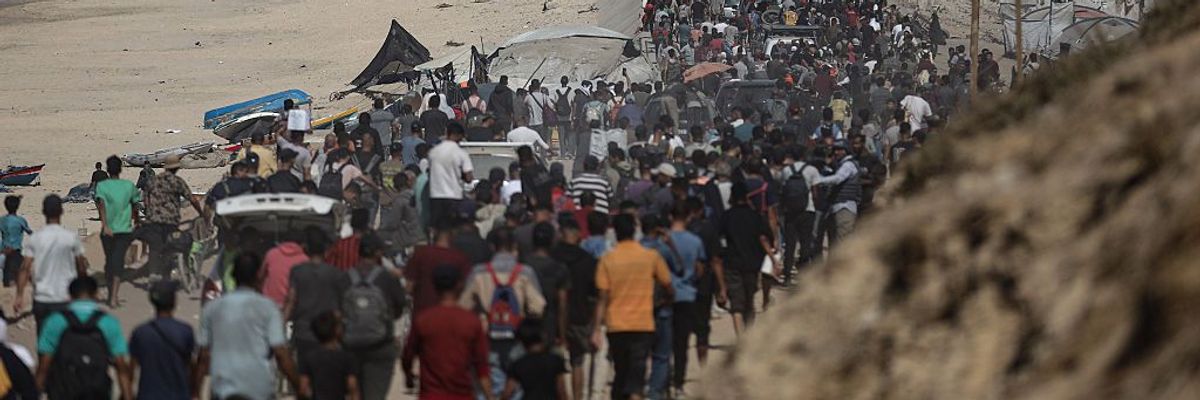
Palestinians, carrying the belongings they managed to take with them, move toward the northern part of the Gaza Strip via Rashid Street, which connects the north and south of the enclave, in Gaza City, Gaza on October 10, 2025.
(Photo by Khames Alrefi/Anadolu via Getty Images)

David Vine
Oct 26, 2025
Foreign Policy In Focus


Amid some extremely cautious optimism for peace following a tenuous and incomplete ceasefire in Gaza, any hope for Gaza’s future depends significantly on a little-noticed point in President Donald Trump’s original 20-point peace plan.

The plan’s 12th point says, “No one will be forced to leave Gaza, and those who wish to leave will be free to do so and free to return.” The plan goes even further, saying, “We will encourage people to stay and offer them the opportunity to build a better Gaza.”

RECOMMENDED...


‘We Must Keep the Pressure On’: Humanitarians Say Ceasefire Doesn’t Erase Gaza Genocide


Prominent Jewish Figures Call On World Leaders to ‘Refuse’ Complicity in Israeli Crimes in Gaza, West Bank

Although there are reasons to doubt many elements of the Trump “peace plan”—which neither side has agreed to in full—the assertion that no one will be forced to leave Gaza represents a major reversal: Prior Israeli and US government policy clearly aimed to force some or all Palestinians from the Strip.

Indeed, Trump’s previous plan to turn Gaza into the “Riviera of the Middle East” involved displacing Palestinians outside the Strip. Last March, Prime Minister Benjamin Netanyahu stated his support for the “realization of the Trump plan” and what some Israeli and US leaders euphemistically called “voluntary migration.”

Ending the displacement of Palestinians as well as the mass killing and destruction of Gaza’s infrastructure are clear requirements for anything approaching peace.

“This is the plan. We are not hiding it,” Netanyahu said. That same month, the Israeli cabinet approved the creation of a so-called Voluntary Emigration Bureau charged with moving Palestinians out of Gaza and to other countries such as Libya, Indonesia, and the Republic of the Congo.

The mass expulsion of Palestinians by the Israeli government has been a major feature of the last two years of violence following the October 7, 2023 attacks by Hamas and allied forces, which resulted in the deaths of around 1,200 Israelis and foreigners. In a new report published by Brown University’s Costs of War Project, I compiled the best available international data to document how the Israeli military has displaced almost everyone in Gaza over the past two years: 2,026,636 people or around 92% of the strip’s pre-war population. Many have been displaced multiple times: on average, three to four times for every displaced person. Around 45% of the displaced have been kids.

The displacement has extended to the West Bank, where some Israeli leaders have also supported ethnic cleansing. In the last two years, 43,624 Palestinians in the West Bank and East Jerusalem have been displaced from their homes by the Israeli military and police forces, government-backed Israeli settlers, Israeli government demolition orders, and other violent causes. Broader Israeli and US wars in the region have displaced an additional 3.2 million people in Iran, Lebanon, and Israel itself, as well as what are likely thousands more in Yemen and Syria.

According to numerous experts, the mass displacement of Palestinians—nearly 12,000 per day on average in Gaza alone—constitutes the war crime of “forcible transfer,” which is a crime against humanity under international law. Sens. Chris Van Hollen (D-Md.) and Jeff Merkley (D-Ore) concluded in a September 2025 report that “the facts demonstrated overwhelmingly” that Israel was “implementing a plan to ethnically cleanse Gaza of Palestinians and dealing a death blow to the vision of a future Palestinian state that would include Gaza and the West Bank.” Any implementation of the original Trump plan to displace Palestinians to other countries would constitute further war crimes and ethnic cleansing. It would also continue a pattern of ethnic cleansing dating to the founding of the Israeli state in 1948 and Israeli military forces’ expulsion of more than 700,000 Palestinians in what Palestinians call the Nakba—the catastrophe.

The lives of millions of Palestinians in Gaza and the West Bank, and ultimately the lives of millions of Israelis, hang in the balance as the world waits to see if Netanyahu’s government abides by the current ceasefire and commits to a full end to its war or if it re-commences its assault and genocide as it has in prior ceasefires.

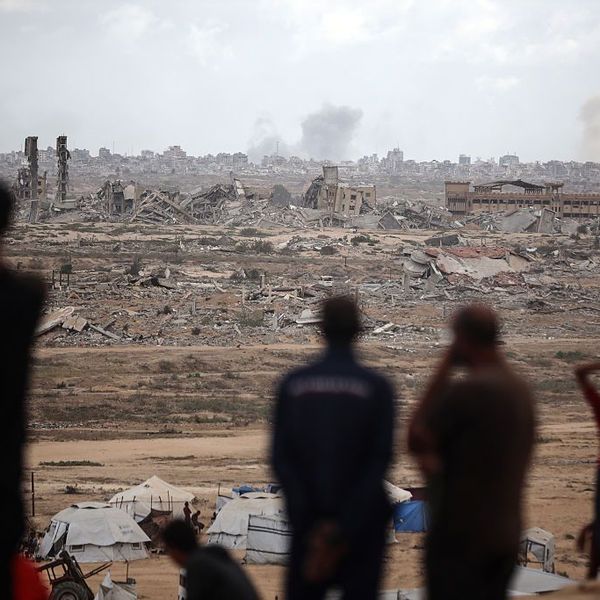
Since the announcement of a deal this month, thousands of displaced Palestinians have filled roads walking in search of their homes in a vast landscape of grey rubble. The sight of people trying to return home amid such destruction offers a glimmer of hope while reflecting the immensity of the challenges ahead.

“I’m going to Gaza City even though there are no conditions for life there—no infrastructure, no fresh water,” one of the displaced, Naim Irheem, insisted to one of the few news outlets reporting from Gaza. “Everything is extremely difficult, truly difficult, but we must go back. My son was killed, all my daughters were wounded. Still, I want to return. We’ll pitch a tent and live in it, however it can be done.”

Ending the displacement of Palestinians as well as the mass killing and destruction of Gaza’s infrastructure are clear requirements for anything approaching peace. Israeli and US leaders must commit to the Trump peace plan’s promise that no one will be expelled from Gaza.

This promise—and the entire peace process—may prove to be yet another cynical ruse, much like the Israeli government calling past expulsion “voluntary migration.” For now, supporters of peace must work to ensure that no one will be forced to leave Gaza, that the displaced can return home as international law requires, and that they receive aid and reparations for their displacement.

These must be among the first steps toward real peace and justice that will require holding perpetrators accountable for their crimes and addressing Palestinians’ rightful demands to return to homes from which they were displaced beginning in 1948.


© 2023 Foreign Policy In Focus


David Vine
David Vine is a collaborative writer, political anthropologist, and author of a trilogy of books about war and peace including "The United States of War: A Global History of America’s Endless Conflicts, from Columbus to the Islamic State," which was a finalist for the 2021 Los Angeles Times Book Prize in History. The other books are "Base Nation: How U.S. Military Bases Abroad Harm America and the World" and "Island of Shame: The Secret History of the U.S. Military Base on Diego Garcia." David’s other writing has appeared in The New York Times, The Washington Post, The Guardian, Politico, and Mother Jones, among others. David was a professor of anthropology at American University in Washington, D.C. for 18 years (2006-2024), achieving the rank of full professor in 2018.
Full Bio >

How the Nobel Committee Weaponizes Peace Prize

The Nobel Peace Prize has long lost any credibility when it comes to upholding actual peace. With Machado’s award, it followed a recent tradition of aligning itself with a violent and repressive Western foreign policy.


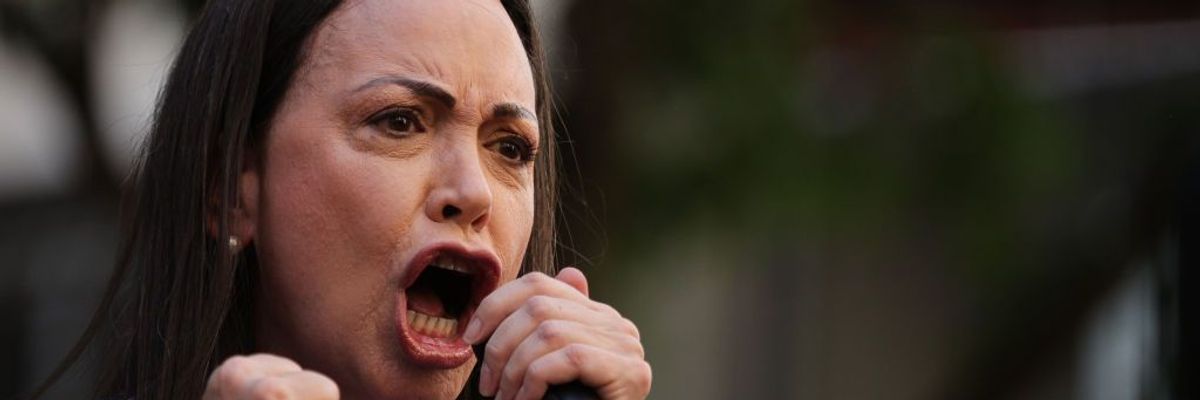
Opposition leader Maria Corina Machado, winner of the 2025 Nobel Peace Prize, gives a speech during an anti-government protest on January 9, 2025 in Caracas, Venezuela.
(Photo by Jesus Vargas/Getty Images)

Ricardo Vaz
Oct 26, 2025
FAIR

The awarding of the 2025 Nobel Peace Prize to Venezuelan far-right leader María Corina Machado took nearly everyone by surprise (with the exception of insiders who apparently used advance knowledge to profit on betting markets—New York Times, 10/10/25).

The Nobel Committee justified the award on the basis of Machado’s “tireless work promoting democratic rights” and “her struggle to achieve a just and peaceful transition from dictatorship to democracy.” However, Machado’s track record paints a very different picture (Sovereign Media, 10/11/25; Venezuelanalysis, 7/8/24).


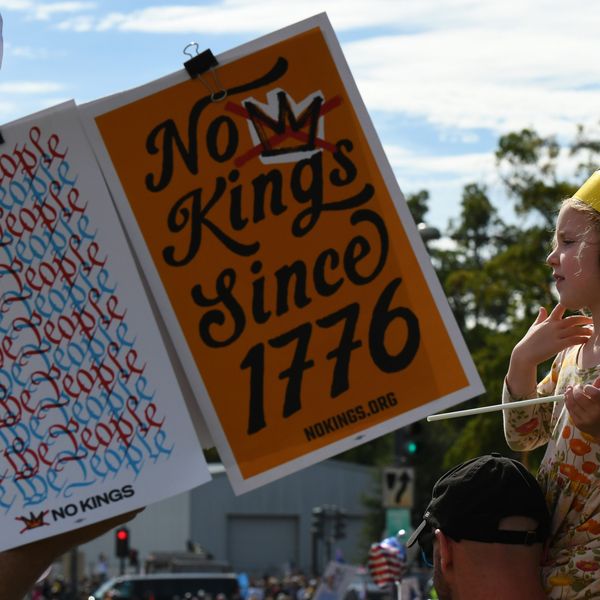
The No Kings Day Project Must Evolve From Protest to Civil Disobedience


Some Signs I Saw at the No Kings Rally

Rather than scrutinize the opposition politician’s credentials, the media establishment seized the opportunity to whitewash the most unpeaceful elements in her background in order to advance its cynical pro–regime change agenda targeting Venezuela’s socialist government (FAIR.org, 2/12/25, 1/11/23, 6/13/22, 4/15/20). Not coincidentally, Machado’s award coincided with an escalation of US military threats against Venezuela, meaning that corporate pundits used a “peace” prize as a platform for war propaganda.
Whitewashed profiles

The Nobel Prize meant corporate outlets had to give their readers an idea of Machado’s political trajectory. And though some had profile pieces (Reuters, 10/10/25; New York Times, 10/10/25), there was a concerted effort to conceal the most unsavory elements. The Financial Times (10/10/25) euphemistically stated that Machado “enter[ed] politics in opposition to Hugo Chávez”—president of Venezuela from 1999 through 2013—while the Guardian (10/10/25) summed up that she has been “involved in politics for more than two decades.”

No establishment outlet mentioned Machado’s first relevant political action: supporting the short-lived April 2002 coup against the Chávez government, and signing the infamous “Carmona Decree.” In one fell swoop, this decree did away with all democratically elected institutions, annulled the 1999 Constitution, and established a de facto dictatorship headed by the leader of Venezuela’s corporate business lobby. Machado later denied signing the decree, though her name appeared on a list published by Venezuelan newspaper El Nacional.

Looking past the undemocratic debut, establishment journalists instead started the story with the mid-2002 creation of Súmate, calling it an NGO dedicated to election monitoring or transparency (Bloomberg, 10/10/25; Washington Post, 10/10/25; Reuters, 10/10/25; New York Times, 10/10/25). Yet they did not mention that this alleged quest to safeguard democracy was funded by the US, or that the opposition made unfounded fraud claims after failing to unseat Chávez in a 2004 recall referendum (Venezuelanalysis, 8/21/04, 9/9/04).

Machado’s second act was also the antithesis of peace and democracy, as the opposition politician led the 2014 “La Salida” (“The Exit”) campaign of street violence to overthrow the Nicolás Maduro administration, leaving dozens dead. That same year, in order to denounce the Venezuelan government, she acted as an “alternate ambassador” for Panama at a meeting of the Organization of American States (BBC, 3/25/15). The stunt led to Machado losing her parliamentary seat.

Yet instead of scrutinizing the new laureate’s less-than-peaceful actions, corporate outlets chose to ignore or misrepresent them as “denouncing the regime’s abuses” (Washington Post, 10/10/25), “participating in anti-regime protests” (New York Times, 10/10/25) or “allegations she’d tried to foment a coup” (Bloomberg, 10/10/25). Only the Associated Press (10/10/25) offered a minimal concession that the Machado-led “anti-government protests…at times turned violent.”

Another key aspect of the opposition operator’s political career has been outspoken advocacy for US sanctions, which have caused economic devastation and led to tens of thousands of deaths (CEPR, 4/25/19). But Western media ignored Machado’s lobbying for collective punishment of the Venezuelan people—with the New York Times (10/16/25) a notable exception.

The US-backed figure has also made no secret of her plans to repress her political opponents. Machado is on the record making thinly veiled threats to “eradicate socialism,” and pledging to “neutralize” destabilizing groups should she eventually take power. Factoring in the Venezuelan far right’s history of racist violence (Venezuelanalysis, 3/28/14, 7/30/17), it is not unreasonable to predict a dirty war against Chavistas if Machado ever reached Miraflores.
The company you keep


The reporting on the Nobel Peace Prize plainly described Machado as belonging to the Venezuelan opposition, but few outlets bothered to disclose her political views, apart from euphemistically labeling her a “conservative” (New York Times, 10/10/25; Guardian, 10/10/25) or a supporter of “economic liberalism” (New York Times, 10/16/25; Reuters, 10/10/25).

Machado has heaped praise on far-right former presidents Álvaro Uribe of Colombia, who was responsible for serious human rights violations, and Brazil’s Jair Bolsonaro, who tried to foment a coup.

In February, Machado sent a video message during a “Patriots for Europe” summit, calling for far-right leaders’ support and openly referring to them as “allies.” The high-profile gathering featured neo-fascist parties like Spain’s Vox, Italy’s Lega and France’s Rassemblement National (RN). The same media establishment that paints the likes of Hungary’s Viktor Orban as a threat to democracy (Guardian, 2/7/25; NPR, 4/22/25) chose to ignore Machado’s quite open alignment with his politics.

But more damning is the complete erasure of Machado’s outspoken support for Israel, even amidst the recent genocide. Venezuela’s far-right leader has repeatedly praised Israel’s defense of “Western values” and “freedom,” while her party established an alliance with Benjamin Netanyahu’s Likud in 2020. In 2018, Machado penned a letter to the Israeli prime minister, asking him to lead a foreign intervention to “dismantle the criminal Venezuelan regime.”

At a time when the US/Israeli genocide in Palestine has sparked outrage around the world, no corporate outlet found it relevant to mention that this year’s “peace” laureate did not utter a single word of condemnation. On the contrary, according to Netanyahu himself, Machado told the prime minister she “appreciates” his “resolute” actions in a recent congratulatory phone call. Unsurprisingly, only Reuters (10/17/25) briefly reported on the Nobel laureate’s war criminal ally.
Beating the war drums

The media establishment’s careful whitewashing of Machado’s undemocratic past and genocidal allies is particularly damning, given the present context of a US military buildup and overt threats against Venezuela. One of the US-backed politician’s most persistent habits has been calling for a foreign intervention against her country (Sovereign Media, 10/11/25).

In the wake of her peace prize, Machado has wasted no time in lobbying for violent regime change. In a BBC interview (10/11/25), she argued that Venezuela needs to be “liberated” via a “coordination of internal and external forces,” an expression she also used in an interview with El País (10/10/25).

Borrowing a page from US administration’s book of redefining concepts such as “imminent threat” or “civilian,” Machado bombastically claimed that the Maduro government “has declared a war” against the Venezuelan people, and urged Trump to help her side “win” this war (BBC, 10/11/25; Infobae, 10/11/25; CNN, 10/15/25). The opposition leader has latched onto the administration’s “narcoterrorism” fairy tale that has been debunked over the years (FAIR.org, 9/24/19; Venezuelanalysis, 9/2/25), just like she supported the White House’s Tren de Aragua narrative, even if it meant a gruesome crackdown against Venezuelan migrants.

Machado has gone as far as to cheerlead the Trump administration extrajudicially executing her fellow citizens, arguing that the lethal US strikes in the Caribbean, which have killed at least 30 people, are “saving lives, not only Venezuelan lives, but also life of American people” (Daily Beast, 10/10/25).

But it is not just Machado using her new platform to promote US military intervention. The Washington Post editorial board (10/10/25) openly expressed that US interests would be “better served” with a “reliable American partner” like Machado. True to form, the Wall Street Journal (10/10/25, 10/12/25) also used Machado’s award to double down on calls for Trump to bomb Venezuela in the name of “freedom” and “democracy.”

The warmonger lineup was complete with the New York Times‘ Bret Stephens (10/10/25), who never needs excuses to endorse the murder of Venezuelans in the name of US interests (FAIR.org, 2/12/25). In this case, Stephens claimed that regime change is the only option to address the “catastrophe of Chavismo,” even if it means “full-scale military confrontation.”

The Nobel Peace Prize has long lost any credibility when it comes to upholding actual peace. With Machado’s award, it followed a recent tradition of aligning itself with Western foreign policy. And even more predictable was the corporate media seizing the opportunity to advance its war and regime-change propaganda against Venezuela.

© 2023 Fairness and Accuracy In Reporting (FAIR)


Ricardo Vaz is a political analyst and editor at Venezuelanalysis.
Full Bio >
Sen. Murphy: Trump Wants Shutdown ‘Because He Thinks He Can Exercise King-Like Powers’

“This is a leader who is trying to transition our government from a democracy to something much closer to a totalitarian state,” the Connecticut Democrat warned.


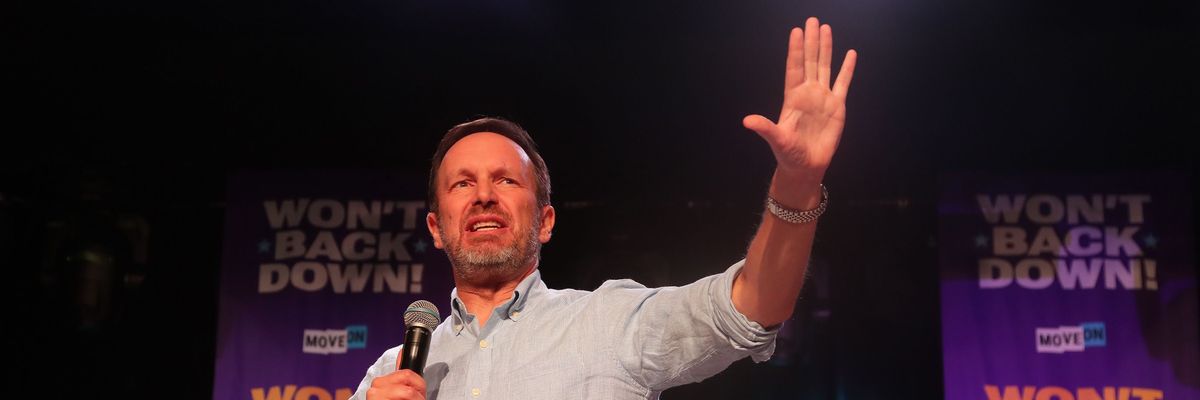
US Sen. Chris Murphy (D-Conn.) speaks during a Won’t Back Down event at the Van Buren in Phoenix, Arizona on August 3, 2025.
(Photo by John Medina/Getty Images for MoveOn)

Jessica Corbett
Oct 26, 2025
COMMON DREAM


Twenty-six days into the shutdown, US Sen. Chris Murphy argued on CNN‘s “State of the Union” Sunday that President Donald Trump “is refusing to negotiate... because he likes the fact that the government is closed, because he thinks he can exercise king-like powers, he can open up the parts of the government that he wants, he can pay the employees who are loyal to him.”

The second-longest government shutdown in US history began early this month because congressional Republicans want to maintain their funding plans, while Democrats want to help the millions of Americans facing healthcare coverage losses and surging insurance premiums by reversing the GOP’s recent Medicaid cuts and extending Affordable Care Act subsidies.

“Let’s be clear. We’re shut down right now because Republicans are refusing to even talk to Democrats about a bipartisan budget bill,” Murphy (D-Conn.) told CNN’s Jake Tapper. “Yes, we have priorities, just like they do. One of our priorities is pretty simple, making sure that premiums don’t go up by 75% on 22 million families this fall.”

“Now, the reality is, if they sat down to try to negotiate, we could probably come up with something pretty quickly,” the senator suggested, pointing to Trump’s $20-40 billion bailout for Argentina. “That’s enough money to relieve a lot of pressure of these premium increases. So, we could get this deal done in a day if the president was in DC, rather than being overseas. We could open up the government on Tuesday or Wednesday, and there wouldn’t be any crisis in the food stamp program.”

“I just don’t want to live in a world in which Donald Trump and a handful of billionaires decide which part of government works and which don’t.”

Trump arrived in Malaysia on Sunday and is set to spend the week traveling in Asia. His administration refuses to use a contingency fund to deliver food stamps—officially called Supplemental Nutrition Assistance Program (SNAP) benefits—during the shutdown, imperiling relief for about 42 million low-income people and drawing intense criticism from Democrats in Congress.

Federal workers, contractors, and service members are also at risk of not being able to buy groceries due to missed paychecks. However, one of the president’s rich friends—billionaire banking heir and railroad magnate Timothy Mellon, according to the New York Times—donated $130 million toward paying more than 1.3 million troops, which potentially violates federal law.

Asked about the donation, Murphy accused Trump of wanting to behave like a king, adding: “This is a leader who is trying to transition our government from a democracy to something much closer to a totalitarian state. And so this is part of what happens in totalitarian states: The leader, the regime only, decides what things get funded and what don’t, often in coordination with their oligarch friends.”

“So, I just don’t want to live in a world in which Donald Trump and a handful of billionaires decide which part of government works and which don’t, which is why I would rather have him at the negotiating table tomorrow, so that we can reopen the government and it can be a democratically elected Congress that decides what things get funded, not a handful of superrich dudes,” said the senator, who spoke at the second “No Kings” protest in the nation’s capital earlier this month.

Trump has used the shutdown to try to advance his purge of the federal workforce. He’s also continued his escalating push for regime change in Venezuela, blowing up boats he claims are running drugs and on Friday deploying an aircraft carrier—all without approval from Congress, which has the sole power to declare war, according to the US Constitution. Murphy has previously condemned the boat bombings as “another sign of Trump’s growing lawlessness.”


The president has also continued pushing his sweeping tariffs, which Murphy has called “a political weapon designed to collapse our democracy.” Just days before the US Supreme Court is set to hear arguments on the legality of the administration’s global trade policy, Trump on Saturday announced a new 10% tariff on goods from Canada—which will raise prices for American consumers—in response to the Ontario government’s advertisement featuring former President Ronald Reagan’s critique of import taxes.

Asked about the announcement, Murphy told Tapper: “I think it’s just further confirmation that these tariffs have nothing to do with us. Prices are going up on everything in this country. Manufacturing jobs are leaving... These tariffs really are just a political tool that the president uses to help himself, sometimes to enrich himself.”

Murphy also connected the tariffs to the Trump administration’s broader crackdown on dissent, from recent his designation of antifa as a domestic terrorist organization and a related National Security Presidential Memorandum 7 targeting a wide range of critics, to the US Department of Justice prosecuting the president’s political enemies and Federal Communications Commission (FCC) Chair Brendan Carr temporarily forcing late-night host Jimmy Kimmel off the air.

“Whether he likes it or not, even the government of Canada or the government of Ontario has the right to criticize him,” Murphy said, “but he’s now going to use the tariffs to try to punish people overseas from speaking out against him, just like he’s using the Department of Justice or the FCC to try to punish and control people who are speaking out against him here in America.”

“So these tariffs aren’t about rebuilding our economy,” he added. “They aren’t about helping regular consumers. They’re just about giving Trump additional power to try to benefit himself politically and financially.”

How to Stop Tyrant Trump From Destroying Our Country


The institutional forces arrayed against Trump are not rising to the occasion to counter his fast-expanding fascist dictatorship.


A crowd of mainly American protestors holds signs opposing President Donald Trump outside the US Embassy in London, England during a “No Kings” protest on October 18, 2025.
(Photo by Guy Smallman/Getty Images)


Ralph Nader
Oct 26, 2025
Common Dreams


In snarling defiance of the Constitution and federal laws, Tyrant Trump’s egomaniacal drive is destroying our country. He is tearing apart the social safety net, health and safety protections, the people’s access to economic justice, worker/union rights, and electoral standards. He is undermining the critical separation of powers and pushing the cowardly GOP Congress and the six GOP Supreme Court “Injustices” to enable his outlawry, corruption, and promote police state actions.

Exempted and rewarded are the giant corporations with massive tax breaks, weak law enforcement, and corporate welfare subsidies, bailouts, and de facto immunities for their corporate crimes. After all, President Donald Trump is first and foremost a gigantic self-enrichment machine, profiting from his shameless, leveraged use of the White House.


‘Utter Moral Failure’: Critics Aghast at New Reporting That Shows US Elites ‘Scared of Crossing Trump’


‘We the People Will Rule!’: Millions Turn Out for ‘No Kings’ Protests Against Trump Tyranny

The institutional forces arrayed against Trump are not rising to the occasion to counter his fast-expanding fascist dictatorship. Trump has thrown so many devastating dictates against those who have historically protected our democracy that they have become punch-drunk.

Let’s do an inventory:

1. The first responders should be America’s lawyers and their bar associations. Do you hear much from them? The state bar associations don’t seem to be troubled by Trump’s jettisoning of the rule of law. The giant American Bar Association has filed just one lawsuit against the “US government, more than two dozen federal departments and agencies, and the heads of those departments and agencies, asking a federal court to declare unconstitutional the Trump administration’s ongoing unlawful policy of intimidation against lawyers and law firms and to enjoin the government from enforcing the policy.” Otherwise, there has been no mobilization of some of the 1 million plus practicing lawyers to act on their professional duties as “officers of the court.” Too many corporate lawyers in their firms are doing just fine and are not willing to challenge the Trump attack on the rule of law.

2. Universities/colleges, former hotbeds of action on civil rights, environmental health, and opposition to illegal wars, are on the defensive, reeling from Trump’s extortionate bullying that threatens them with illegal cancellation of federal grants if they do not become vassals to his straitjacketed demands. Fortunately, nearly a dozen universities have rejected his outrageous commands, but they have not engaged in proactive opposition to Trump’s many cuts and closures of the federal government’s long-standing education programs.

3. The American labor movement, stripped of its protections by Trump’s takeover of the National Labor Relations Board, the Labor Department, Occupational Safety and Health Administration, and unilateral cancellation of the collective bargaining, union agreements with federal workers (whom he fires en masse), is not tapping its potential to fight back. Granted, the federal workers’ union has filed lawsuits, with some temporary success. But there hasn’t been an organized Day of Labor protest with millions of workers on the streets and in front of the White House and Congress saying to Trump: “You’re Fired.” The bureaucrats running the AFL-CIO, one block from the White House, and its member unions are nowhere near that stage of robust urgency these times demand. Labor leaders’ sinecures and pay are still intact, compared to their anxious and vulnerable rank and file.

4. The organized religions are supposed to be the custodians of civilized norms that undergird our laws. The scriptures call for individual and social behavior that is under direct attack by the Trump Dump in Washington, DC and his obeisant Republican governors. Religious leaders have been eerily quiet, fearful of being drawn into the Trumpsters’ cruel and vicious blasts of internet threats and slander. Their organizations, like the National Council of Churches, are also kept on the sidelines by a vociferous evangelical Christian nationalist minority in their ranks. Their courageous roles on the ramparts in the 1950s and 1960s civil rights struggles are distant, and are not motivating a robust response to Trump’s attacks on morality and justice.

5. The country’s professionals are frightened by Trump’s assault on scientific programs (climate, weather, pandemicenvironment, etc.) It is ignorant, callous, and unrelenting. It is as if Trump’s goal is to envelop America inside a 21st-century DARK AGES. Professionals are shocked at the lies, delusions, fantasies, and quackeries that he blasts from his ever-foulsome mouth. They watch powerlessly his dismantling of the Centers for Disease Control and Prevention, the National Institutes of Health, and the National Science Foundation. Imagine, the Environmental Protection Agency’s scientific research and analysis department is being closed.

Professional organizations are protesting with statements. They, however, need to put more muscle into their resistance to the Trump onslaught. Their best argument is that Trump is weakening our country’s national security by sabotaging our preparedness against pandemics, climate violence, and uncontrolled cybersecurity attacks, not to mention uncontrolled generative artificial intelligence dangers, which knowing critics have called the ultimate approaching omnicide. Professionals know how to dramatize these arguments.

6. The mass media has been attacked mercilessly by Trump, extortionately suing them, slandering them by name, expelling them from the White House press events, threatening their TV/radio licenses, and pending mergers. It used to be political suicide for politicians to be so brazenly trashing the media.

Reporters for the original content newspapers have been exposing Trump for years, daily and vibrantly. But their editors have not been keeping up with what is being reported with powerful editorials and op-eds calling for the impeachment and removal from office of Donald J. Trump—the most impeachable president by far in American history. (See: Letter to President Trump—22 Impeachable Offenses) It doesn’t help that Democratic leaders—Rep. Hakeem Jeffries (NY) and Sen. Chuck Schumer (NY)—have told their flocks never to mention the word “impeachment.” The anemic Democratic Party is mocked inside Trump’s circle.

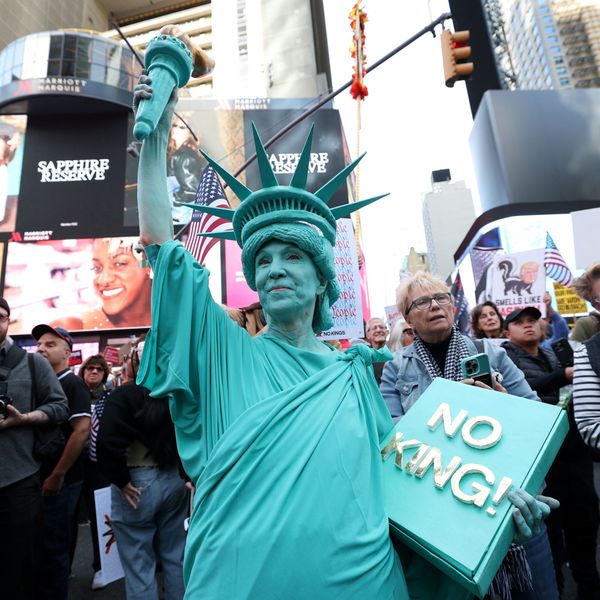
7. The civic community—the most fundamental bastion of democracy—is ahead of its elected politicians. This has been demonstrated by packed town meetings demanding aggressive accountability for our nation’s Chief OUTLAW. (See: my book Civic Self-Respect) Organized demonstrations have been growing and rising. On October 18, 7 million demonstrators in over 2,700 locations participated in the “No Kings” rallies.

A good guess is that nearly 5% of adults have exerted themselves upfront against the Trump/Elon Musk/Vice President JD Vance lust for total power. Remember in 2016, Vance called Trump “America’s Hitler.”

With those numbers of people power, future mass demonstrations already planned should ask their participants to pull out their cellphones and contribute to funding new, strong, full-time citizen groups at the grassroots and in Washington, DC to carry on with impressive impacts long after the protesters drift away when the rallies end.

Indivisible’s (indivisible.org) huge demonstrations could have raised $35 million with an average instant donation of just $5 per person. Such a plea needs careful planning, trustworthy transparency, and recruitment capabilities ahead of time.

There are so many other innovations ready and able to make town meetings, directly called by the people, and public rallies/marches far more effective. But they require their civic leaders to return the calls from experienced supporters who believe that “none of us are as smart as all of us.” Ezra Levin—call me—I have suggestions for you.


'Astonishing': Wall Street Journal editorial writer bashes Trump's ballroom 'fiasco'


Robert Davis
October 26, 2025  
RAW STORY

AFTER SUCH BARBARITY, 
THE FLAG SHOULD BE AT HALF MAST

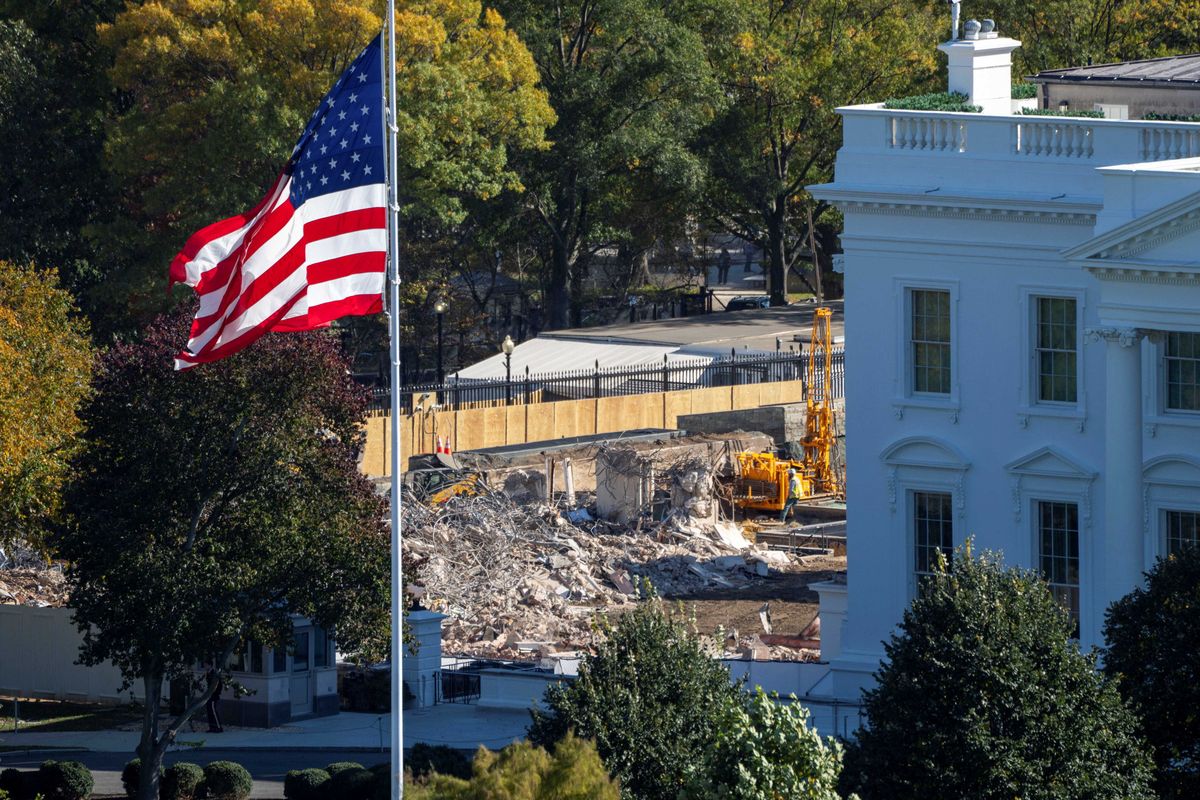
The demolition of the East Wing of the White House, the location of U.S. President Donald Trump's proposed ballroom is seen from an elevated position on the North side of the White House in Washington, D.C., U.S., October 23, 2025. 
REUTERS/ Andrew Leyden TPX IMAGES OF THE DAY

A member of the Wall Street Journal's conservative editorial board bashed President Donald Trump for tearing down the entirety of the East Wing of the White House to build a giant ballroom in a new opinion article published on Sunday.

Collin Levy, who joined the editorial board in 2007, argued that the president's ballroom pet project represents an "astonishing fiasco." She also speared Republicans for their silence as Trump demolishes a "symbol of power, legacy and national identity."

"We now live in a democracy in which a president, with neither public notice nor permission, demolished part of the White House and no one tried to stop him," Levy wrote. "Such is the astonishing fiasco unfolding at 1600 Pennsylvania Ave. A piece of American history lies in rubble as conservatives dismiss objections from historic preservationists as silly overreaction."

Levy also pushed back on some "bizarre" arguments offered by Republicans, such as that the East Wing deserved to be demolished because it was "primarily the province of first ladies." For instance, she noted that First Ladies have driven literacy initiatives and hosted countless military families in the East Wing.

"History is important, monuments matter," Levy continued. "And the home of the U.S. president isn’t just a building to be optimized for function. It is a symbol of power, legacy and national identity. Respect for the nation and all that it has built still matters. These aren’t trifles or overreactions. They are the foundations of the republic we built. That’s worth defending."


Read the entire op-ed by clicking here.


'An astonishing situation': Wikipedia co-founder bashes Trump's latest attacks on trust

Robert Davis
October 26, 2025 9:19PM ET
RAW STORY


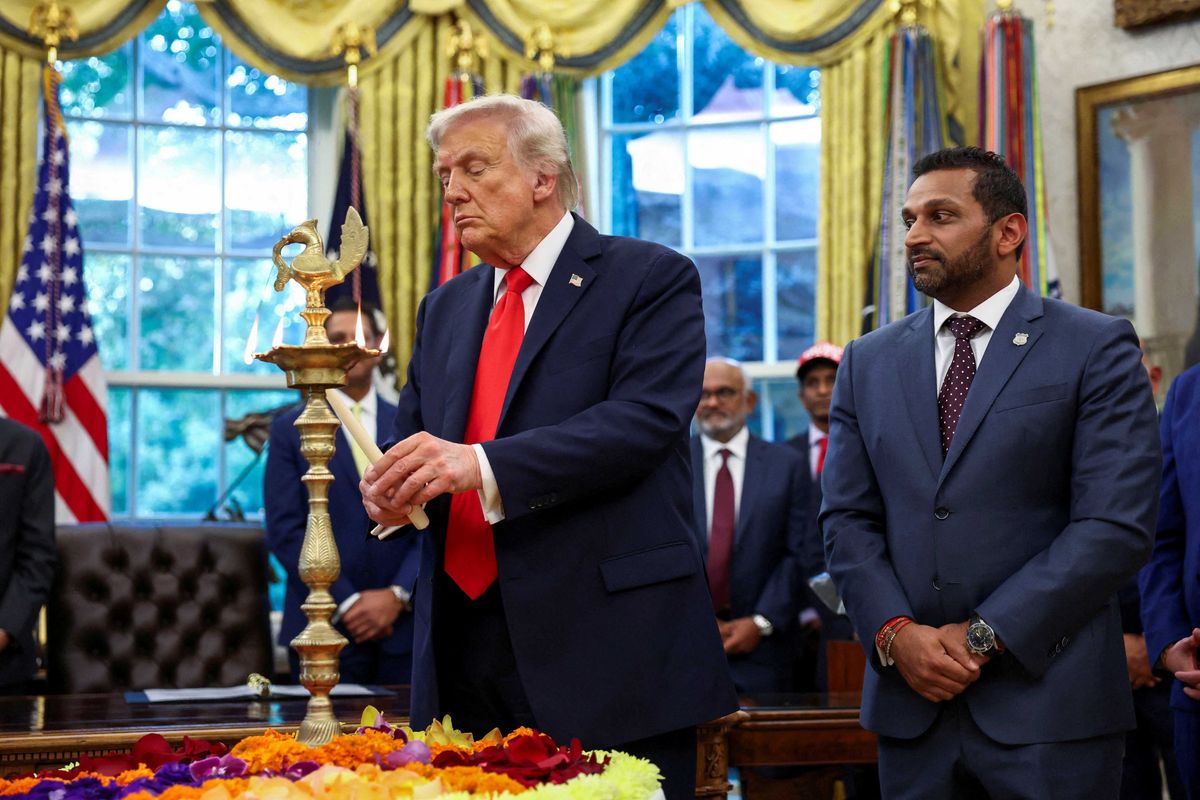
FBI Director Kash Patel looks on as U.S. President Donald Trump lights a candle as he participates in a Diwali celebration in the Oval Office of the White House in Washington,D.C., U.S., October 21, 2025. REUTERS/Kevin Lamarque

Wikipedia co-founder Jimmy Wales bashed President Donald Trump's attacks on the American press and the truth during an interview with Times Radio on Sunday.

Wales, who co-founded Wikipedia in 2001 with entrepreneur Larry Sanger, said during the interview that Trump's attacks are reminiscent of other strongmen across the globe. He added that there seems to be a "real undermining" of truth by people like Elon Musk, who have attacked Wikipedia for being a left-wing activist organization.

Wales addressed that criticism and the Trump administration's impact on free information during the interview.

"Some people, I suppose, would say free information that of itself is a liberal idea, but it's also a classical liberal idea, which the Republicans used to care a lot about, the sort of founding fathers and First Amendment and that kind of thing," Wales said. "And so it's not a lefty idea. It's fundamentally a very American idea to say we need a free press and a healthy, rich dialogue in society to be able to make better decisions."

Wales added that Trump has created an "astonishing situation" for Republicans.

"When you get a President of the United States elected who clearly contradicts himself, or denies that he said things that we can all play tapes of him saying, it's an astonishing situation," Wales said. "This is part of the reason I think trust is so important."