Monday, October 27, 2025


China's Navy Invests Heavily in Defense Diplomacy
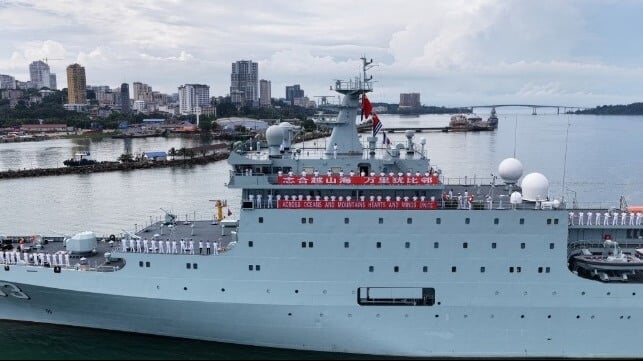
CNS Yimengshan pulls in to Sihanoukville, October 10 (Chinese Military Online)

Published Oct 27, 2025 1:50 PM by The Maritime Executive


In keeping with the massive expansion of the Chinese People's Liberation Army Navy (PLAN), a substantial increase has been seen in overseas operations - much of it devoted to defense diplomacy. The scale of activity can be illustrated by Asia-based activity noted since the beginning of October.

On October 13, the PLAN hospital ship CNS Silk Road Ark (A867) arrived in the port of Nuku'alofa in Tonga for a seven-day visit, during which its crew provided free health care. This is the fourth visit of Silk Road Ark to Tonga, and besides dispensing free health care to the civilian population, the PLAN crew on board also conducted training with the medical services of the Tonga Royal Navy. CNS Silk Road Ark has now set off for South America, though she is not expected to visit Venezuela.

Between October 19-21, the PLAN conducted joint training at sea with the Malaysian Navy off Port Klang. The PLAN Type 052D destroyer CNS Yinchuan (D175) exercised with the HDW-built Malaysian Navy Kasturi Class corvette KD Lekir (F26), primarily carrying out helicopter and search and rescue drills. At the same time, Type 071 landing ship CNS Jinggangshan (L999) hosted a party onboard for Army units who had been conducting ground-based joint humanitarian assistance and disaster relief training in Puchong, Selangor.

On October 21, the PLAN's Type 052D guided-missile destroyer CNS Baotou (F113) visited Mombasa in Kenya, and conducted exchanges with the Kenyan Naval Training College and the Kenyan Navy Hospital. The Baotou is the flagship of the 47th Naval Escort Group, currently handing over its duties to the 48th Naval Escort Group at the end of a 10-month tour of duty based in Djibouti. The 47th Naval Escort Group can be expected to make a number of courtesy calls in Asia on its way back to the Zhou Shan City homeport of the PLAN's East Sea Fleet.

The PLAN's 83rd Naval Task Force, comprised of the Type 680 training ship Qi Jiguang (AX83) and the Type 071 amphibious dock landing ship Yimengshan (L988) have been making a cruise in South East Asia, setting off from Hong Kong and visiting Port Sihanouk in Cambodia (October 10-14), before arriving on October 16 to exercise with Royal Thai Navy Chinese-built Type 071 landing ship HTMS Chang (LPD-792) off Sattahip in Thailand. At the beginning of the month, the Royal Thai Air Force had completed a joint aggressor flight training exercise, in which Chinese J-10 and J-11 fighters were able to maneuver against Royal Thai Air Force Gripens. The Chinese Task Force left on October 20 and set off to visit Singapore.

The PLAN dance troupe performs aboard CNS Jinggangshan in Port Klang (Chinese Military Online)

Emphasizing their enthusiasm for defense diplomacy, when making port calls, PLAN ships seem always to have a professional dance troupe onboard, along with the means to host a party showcasing traditional Chinese music and culture. It is not clear what wartime role this crew complement serves when at sea or at action stations.

The opinions expressed herein are the author's and not necessarily those of The Maritime Executive.

 

Video: Spanish Police Chase Down Boat Laden with 6,500 Kilos of Cocaine

UNLIKE KILLER AMERIKAN NAVY WHO BLAST SUSPECTED FISHING BOATS OUT OF THE SEA

drug smuggling boat
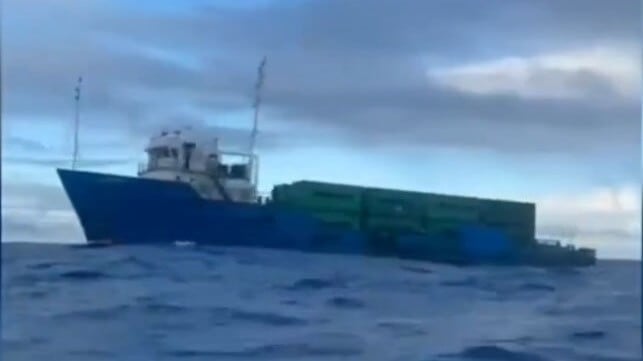
Spanish Police work with the Navy intercepted a supply ship smuggling 6,500 kilos of cocaine (Policía Nacional)

Published Oct 27, 2025 3:54 PM by The Maritime Executive


Spain’s National Police detailed a large drug bust that they report is a major blow to the smuggling operations. The bust involved international cooperation and a hunt to intercept the vessel as it made its way across the Atlantic.

This latest case began with a tip on October 8 from the U.S. Drug Enforcement Administration that reported a drug cartel was planning an effort to transport a large quantity of cocaine across the Atlantic. Ultimately, they tagged a supply ship leaving Panama’s Cristobal anchorage as the vessel suspected of undertaking the transport of the drugs.

The Spanish Navy was coordinating with the drug enforcement authorities and the police in an effort to locate the vessel as it crossed the Atlantic. Policía Nacional reports they used the information provided, as well as their experience with the modus operandi of the smugglers. They estimated the likely route of the vessel.

The Spanish Navy set up an interception effort to catch the vessel. At approximately 9:30 p.m. local time, on October 22, they identified the vessel and launched the interception. They were approximately 600 miles off the Canary Islands in international waters.

The vessel, registered in Tanzania, was a 54-meter (177-foot) supply ship. Pictures show containers stacked on the vessel’s deck.


The boarding party was able to gain access to the ship and rounded up nine crewmembers. During a search of the vessel, the police reported they became suspicious of structures they identified as not believed to be part of the ship. A closer search revealed cocaine hidden in these structures. The total haul is reported to be 6,500 kilos with an estimated street value of €340 million ($396 million).

The police report the ship was heading to the port of Vigo on the Spanish mainland. It is a busy commercial and fishing port. 

The nine crewmembers aboard the vessel were placed under arrest. The police hauled the ship into the Port of Arinaga, Gran Canaria, on October 26. 

It is the latest in a series of similar busts reported by the authorities, where the cartels have actually taken control of the ships and run them on smuggling trips. The Canary Weekly news outlet reports that Spain, in recent months, made large busts, including 13 tonnes of cocaine in Algeciras seized in November, 3.6 tonnes in Galicia in September, and 1.7 tonnes in Valencia earlier this month.


Amidst Soaring Port Corruption, Antwerp Struggles to Sustain Rule of Law

Port of Antwerp cocaine
Cocaine seized at Port of Antwerp, 2022 (file image)

Published Oct 27, 2025 3:54 PM by The Maritime Executive


Antwerp's giant container port is notorious for cocaine smuggling, and for all of the ills that go with it - gangs, violence, bribery and corruption. These vices have seeped out into the surrounding community for years, and have gotten so bad that one investigator warns that the city could turn into a "narco-state" - an economy dominated by the illicit influence of traffickers and lacking the rule of law. 

In an open letter published Monday on the website of Belgium's courts system, an anonymous investigating judge warned that a culture of corruption permeates Antwerp's docks and is working its way into the police and judicial system. 

"The investigations I led in recent years—and I'm only one of 17 investigating judges in Antwerp—have led to the arrests of key port employees, customs officers, police officers, counter staff in various cities and municipalities, and, unfortunately, also justice officials in prisons and even here in this building," the judge wrote. 

It starts on the quayside, and the money is so good that it is hard to resist. Moving a single container can earn a port worker more than $100,000. Retrieving one duffle bag of cocaine from a box can bring in $50,000. On the other hand, refusing to play the game and cooperate with the gangs can result in threats of violence, which are unfortunately quite credible. Smuggling gangs can even contract out an attack using open markets on social media. 

"A home attack with a bomb or weapons of war, a home invasion, or a kidnapping are all easily ordered online. You don't even need to go to the dark web; a Snapchat account is all it takes. Moreover, it's not even expensive; often, a few hundred euros is enough," the judge reported. 

The prevalence of violence in and around the smuggling system extends to the judiciary. Some investigators live under police protection due to serious threats from the gangs, and sometimes have to relocate to a safehouse for months at a time - all without government compensation for the extra expense. 

"It is already becoming more difficult to find judges willing to rule in such cases – they are often attacked personally," the judge warned. "How long will it be before a colleague feels compelled, for their own safety, to conjure up a procedural error to avoid having to sign a conviction?"

To resolve this, the judge called for comprehensive insurance against attack damage; the ability to issue rulings anonymously; the removal of magistrate's home addresses from public databases; blocking inmates' cell phones to prevent them from coordinating crime from within jail; and a system-wide protocol for responding to threats. 

"The consequences of cell phone use in prison appear to be seriously underestimated. Nearly all inmates appear to be able to use them, and in virtually all devices seized and read, we encounter new or continuing crimes," the judge warned. "You can read about the attacks in Antwerp in the newspaper. A very large number of these attacks appear to have been ordered from within the prison."

The problem could get worse before it gets better, if predictions about the volume of cocaine shipments to Europe prove accurate. The EU market is growing fast, thanks to widespread availability and falling cocaine prices, and it is among the likeliest destinations for any extra available product. Amidst soaring output in producing regions in South America, smugglers may be looking for a new home for kilos that would ordinarily flow to the United States via the Caribbean and Central American routes. Those supply lines are under heavy pressure from American airstrikes on smuggling boats, which have augmented the record-setting conventional interdiction efforts in the Eastern Pacific. 

"Experience shows that criminal networks respond with detours, new transit countries," German Drug and Addiction Commissioner Hendrik Streeck told Bild last week. "For Germany, that would mean possible shifts along sea and land routes, as well as in digital distribution. . . .The U.S. administration’s announced ‘war on drugs’ could further intensify this."


Salvage of Fire-Damaged Wan Hai 503 Faces Operational Challenges

fire-damaged containership
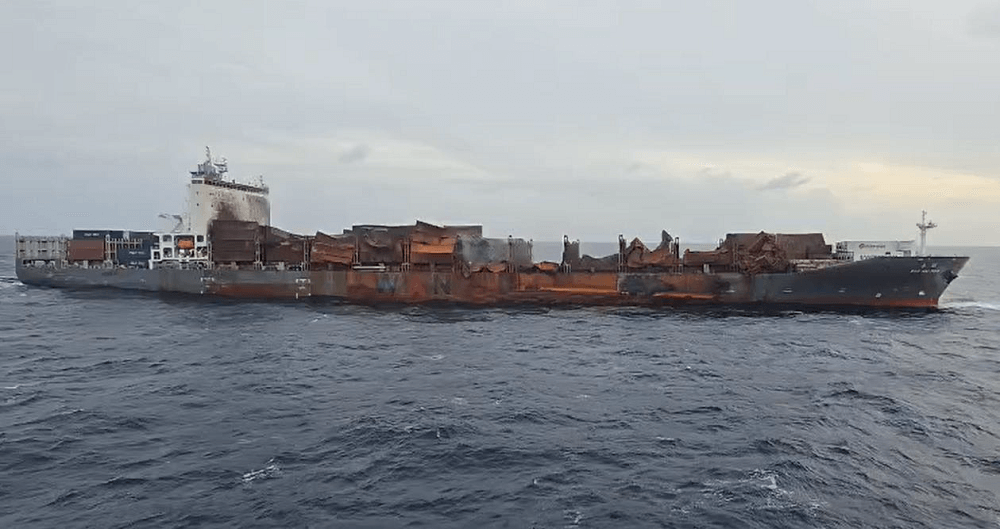
Wan Hai 503 pictured in mid-July after the fire was extinguished (DGS India)

Published Oct 27, 2025 4:50 PM by The Maritime Executive


More than a month after the fire-damaged containership Wan Hai 503 was granted permission for entry into its port of refuge, the owners, Wan Hai, report slow progress in the operation. The company highlighted some of the operational challenges for the salvage operation in its latest update.

The fire began on June 9 while the containership was approximately 54 nautical miles west of India in the Arabian Sea. Unable to control the fire, the captain made the decision to abandon the vessel, with 18 crewmembers saved and four reported as missing. The fire would burn for weeks, and even after it was reduced to smoldering, there was a long search for a port of refuge.

The ship was towed to the port of Jebel Ali, where it was granted permission to enter on September 11. An initial inspection showed stability and structural integrity were secure.

Wan Hai reports that as of October 18, a total of 356 containers have been unloaded in the ongoing operation. A further 1,366 remain aboard the vessel. Pictures showed that the containers forward of the deckhouse were exposed to the fire, with the area around Hold 4 heavily damaged. A smaller number of containers on the stern appeared to have been shielded by the deckhouse from the fire.


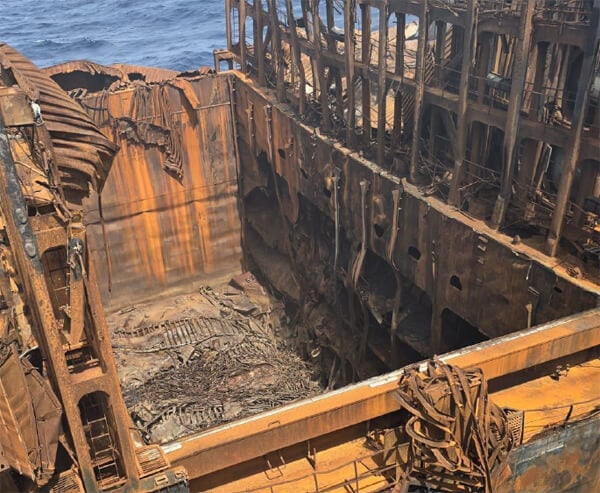
Picture from July 2025 showing the damage near the epicenter of the fire (DGS India)


The company reports that salvage teams found that the steel plates and securing structures for the containers in the main fire area had severely melted. Hatch covers had deformed due to the extreme heat. They are having to use specialized cutting techniques to open these sections of the ship.

Each container must be individually secured with slings to be lifted ashore. Many of the containers had deformed or collapsed. In addition, they report that the teams are having to deal with burnt debris and scrap materials. This requires heavy machinery for collection and transfer using flatbed trucks.

Wan Hai says the operation is being carefully supervised by salvage professionals to ensure the safety and efficiency. It is continuing to overcome the challenges and is actively working to accelerate the unloading process, while highlighting that safety remains the priority.


Grimaldi Car Carrier Disabled in English Channel by Engine Room Fire

Grande Roma car carrier
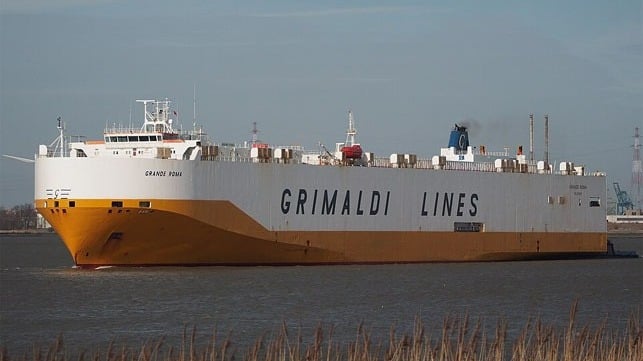
Grande Roma was disabled by an engine room fire in the English Channel (Alf van Beem photo 2015 - CC0 1.0)

Published Oct 27, 2025 2:10 PM by The Maritime Executive


A car carrier transiting the English Channel reported a fire and subsequently requested a tow. Unlike other recent incidents, however, the fire appears to have been limited to the engine room and not involving the cargo aboard the vessel.

Grimaldi Euromed’s car carrier Grande Roma (14,483 dwt) departed Antwerp, Belgium, on October 24, reporting a destination of Jebel Ali in the United Arab Emirates. The following day, October 25, the captain reported a fire aboard the vessel around 10:00 p.m. local time while it was in the English Channel.

The company reports that the crew employed the vessel’s CO2 system. They were also cooling the bulkheads. While the fire appeared to be out, the vessel was left without propulsion and was drifting in the Channel. Grimaldi reports the master of the vessel requested assistance.

The company hired the rescue tug Abeille Liberte, and it was able to reach the disabled vessel on Sunday morning and secured a tow line. The tow was underway, and as of late on Monday, October 27, the tow arrived in Le Havre, France. Grimaldi thanked the French and British authorities for their assistance. 

Built in 2003, the vessel is one of two 5,379 CEU vessels. She was built in China and is registered in Italy. The vessel is 196 meters (632 feet) in length.

Grimaldi has been pursuing a fleet modernization program. It is building larger, ammonia-ready car carriers in China along with other vessels for its fleet of cargo vessels and passenger ferries.

This is the second fire the company has had in the English Channel in 2025. Its vessel Grande Brasile, a ConRo, reported a fire in February. At first, the crew thought they had been able to control the fire, but several hours later, a second fire was discovered on one of the car decks. The vessel was abandoned and later towed to Belgium. In April 2025, the Grande Brasile was sold for scrap.


Top photo by Alf van Beem - CC0 1.0


Three Racing Trimarans Capsize in One Night on Transatlantic Race

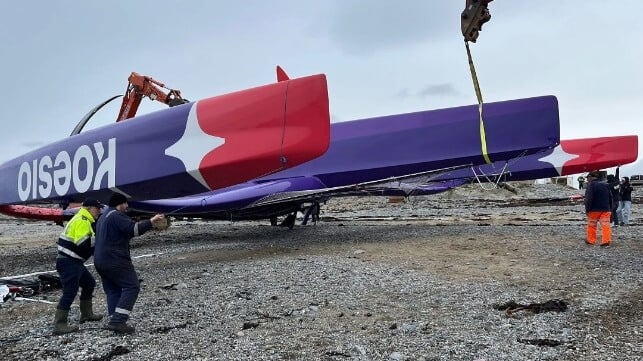
Koesio's hull on the beach at Guernsey (Erwan le Roux / Koesio)

Published Oct 27, 2025 5:20 PM by The Maritime Executive


The Transat Café l'Or ocean race got off to a rough start last weekend with the capsizings of no less than three high-spec Ocean Fifty racing trimarans, all within hours of each other. The incidents took nearly one-third of the entrants in the class out of the race, which was the fifth and last stretch of this year's Ocean Fifty season. 

The race got off to a swift start from Le Havre, but conditions worsened as the teams headed for Guernsey.

The Ocean Fifty trimaran Lazare x Hellio capsized within six hours of leaving the harbor. At 2227 hours Sunday night, the rescue coordination center CROSS Jobourg received a distress signal from the sailboat's EPIRB. In winds of up to 30 knots, the vessel had gone over. 

"We were close-hauled, the sea was unpleasant but not huge. It became very rough as we passed through the Alderney Race. That's when we capsized," skipper Tanguy Le Turquais told race organizers. 

Le Turquais speculated that the boat's port side pontoon may have hit something and ruptured, resulting in flooding and then an unexpected capsizing towards the bow (pitch-poling). "Part of the port float had torn off, which is what clearly caused the boat to capsize," he said. 

At 0225 the next morning, the competing boat Koesio was navigating in highly variable wind conditions of Guernsey when it was hit by a gust of about 40 knots. The skippers eased the sheets on the mainsail, but the sudden force of the wind was still enough to knock the boat over. The crew's initial instinct was to stay with their vessel to enable salvage, but the conditions were too dangerous. "The boat was sliding at nearly three knots towards Guernsey. The [CROSS Jobourg] called us back, telling us we had to leave. It was difficult, but it was the right decision," said skipper Erwan Le Roux. 

At 0505, trimaran Inter Invest went over in the same way just off Aber Wrac'h, Finistere.

In all three cases, the crews were airlifted to safety with no injuries reported. Lazare x Hellio has been towed into port at Cherbourg for evaluation, and Inter Invest has been taken successfully in tow. 

Koesio encountered a less desirable fate. The team sought to have the capsized boat towed before it drifted ashore, but this was not successful. The trimaran washed up on a beach at Guernsey and landed high and dry on the sand, still upside down. Images taken by skipper Erwan le Roux (top) show crews attempting to move it off the beach using heavy equipment. 

The Transat Café l'Or takes its name from the "coffee route" from Le Havre to South America. The courses are different for every vessel class, accounting for varying speed capabilities of each vessel design. 

The Ocean Fifty class is a trimaran design, non-foiling and restricted by class rules to ensure financial accessibility for smaller enterprises and corporations. The vessels are typically rebuilt and reused over multiple seasons, some for more than 10 years running. 


Crewmember Dies in Accident at Sea on P&O Cruise Ship

cruise ship Arvia
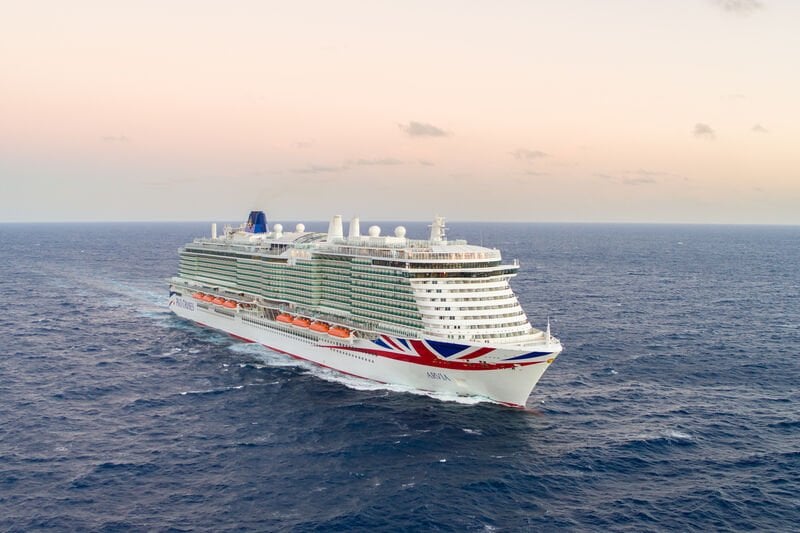
British cruise ship Arvia was at sea when the accident occurred killing one crewmember (P&O file photo)

Published Oct 27, 2025 7:21 PM by The Maritime Executive


The British press and maritime authorities are reporting that a crewmember was killed yesterday aboard the P&O cruise ship Arvia. The ship was two days into a two-week cruise to the Caribbean from the UK.

The Arvia, which is 185,581 gross tons, is one of the largest cruise ships in the world, and with her sister ship Iona, is the largest operating from the UK. The Arvia was introduced by the UK’s P&O Cruises in 2022 and is 344 meters (1,128 feet) in length with accommodations for more than 6,600 passengers and approximately 1,800 crew.

P&O confirmed in a brief statement that there had been an onboard accident. It said its thoughts and prayers were with the onboard friends and family members. The company provided no further details.

While registered in Bermuda, the cruise ship is under the authority of the British, and the UK’s Marine Accident Investigation Branch listed the incident today. It is posted it as a “lift shaft” (elevator) accident that happened on October 26. MAIB reports that it will investigate on behalf of the Bermuda Shipping and Maritime Authority.

The cruise had been en route to its first port in Tenerife. However, Puerto de A Coruña, on the northern Spanish coast, reported that the Arvia made a stop on October 26 from 3:00 p.m. into the night “following a workplace accident.” The ship stayed till around midnight and has resumed its trip to Tenerife.


River Cruise Ship Completes Dock-to-Dock Autonomous Voyage

river cruise ship
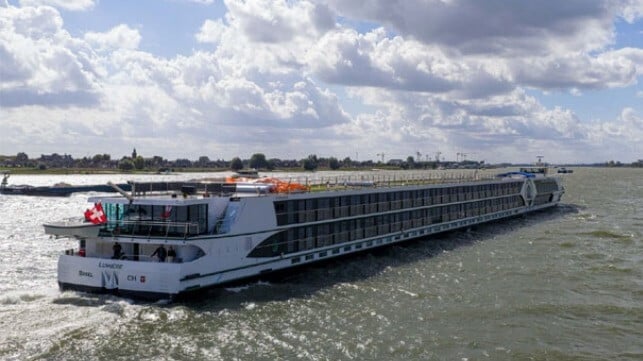
New river cruise ship Lumiere was used to demonstrate dock-to-dock autonomy (Bart Vos - Scylla)

Published Oct 27, 2025 6:19 PM by The Maritime Executive


A brand-new luxury river cruise ship has completed what is being reported as the first-ever inland dock-to-dock fully autonomous sailing. The 135-meter (443-foot) ship, which accommodates 130 passengers and 50 crew, was able to undock, sail a distance of approximately six nautical miles, and dock on the Netherlands’ Merwede River entirely in autonomous mode under the supervision of the vessel’s captain.

The trip was a demonstration of the new systems fitted aboard the Lumière, a river cruise ship that is completing construction and is owned by Scylia, a German travel company with over 40 river cruise ships that specializes in full-ships charters and the MICE (Meetings, Incentives, Conferences, and Exhibitions) segment. Next year, Lumière will be sailing on the Rhône for the tour company Tauck, which promotes that the ship was especially designed to be spacious with larger cabins and luxurious passenger amenities.

The autonomous demonstration voyage was completed on October 24 with the ship sailing from Hardinxveld-Giessendam to Gorinchem in the Netherlands in real-world conditions. The companies highlight that even a gale-force crosswind of Beaufort 8 (34–40 knots) did not affect the ship’s course.

“With the Dock2Dock project, we’re proving that autonomous technology is no longer futuristic - it’s happening now. Safely, efficiently, and sustainably,” says David Woudenberg, Head of Product Development at Shipping Technology.


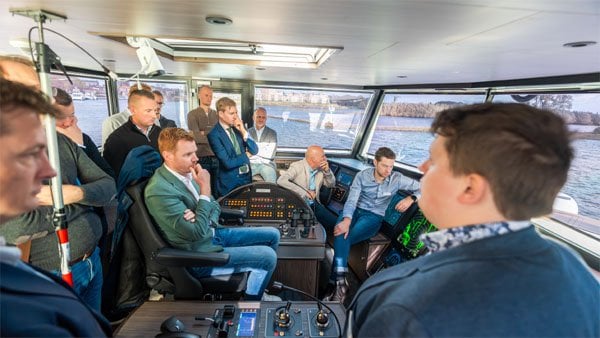
The demonstration ran the cruise ship autonomously from dock to dock (Shipping Technology)


The demonstration combined Retina’s M-Pilot maneuvering system with Shipping Technology’s ST BRAIN and Autonomous Lane Assist (ST Sailing). During the demonstration, the Retina M-Pilot controlled both the thrusters and the engines of the river cruise vessel, working seamlessly with Shipping Technology’s ST BRAIN and Autonomous Lane Assist (ALA). Together, the systems guided the vessel along the optimal route, automatically managing rudder and pod movements. The pilot system continuously factored in variables such as vessel load, engine RPM, and desired turning acceleration to determine the most efficient steering response.

They highlighted that the system performed exactly as intended. In addition to the safety factor, they also foresee other benefits, including reducing fuel consumption by route optimization. They also noted that normally, captains turn off their track pilot when approaching or leaving a berth, but the system automated the process while giving the captain the ability to stay fully in charge.

Tom Panjer, Founder of Retina BV, highlighted that the system “is particularly relevant for vessels with Z-drives. The system measures what happens 10 times per second, allowing controlled and safe operations.”

It was the latest in a series of tests for the pioneering river cruise ship. Bart Vos, a naval architect and project manager for Scylla, highlighted in an online posting that a few weeks ago, they also tested a battery power system on the vessel. Installed are two HP-inline Hybrid Powertrains with battery packs that can drive the ship at up to 11km/h in a fully electric mode. The system was tested, demonstrating that the ship has enough battery power to enter ports and pass locks with no emissions or noise. The battery can be either recharged with shore power or through a shaft generator principle, Vos explained.

The companies conducting the autonomous demonstration called it a pivotal moment for inland shipping. They said much of the focus has been on remote-controlled navigation. They emphasized that their autonomy system is not about removing the captain from the ship, but creating smarter tools and more efficient navigation. Furthermore, they said experienced captains will have more time, while less experienced crews will feel better supported. 


U.S. Navy Gets Out of the Way as Hurricane Melissa Turns North

CIRES
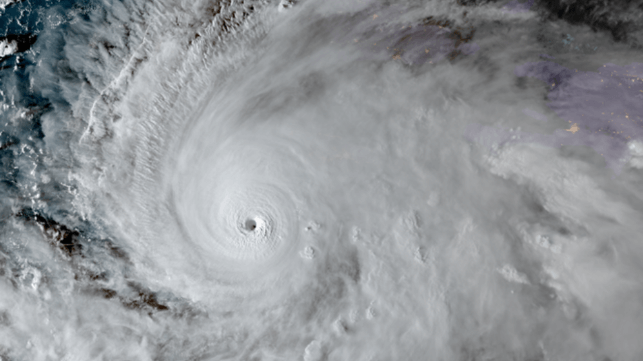
Hurricane Melissa, Oct. 27 (NOAA / CIRES)

Published Oct 27, 2025 7:27 PM by The Maritime Executive


Hurricane Melissa has taken a hard right turn and is now headed straight for Jamaica, packing Category 5 strength. It is on track to be the most powerful storm ever to hit the island, and will likely carry on into southeastern Cuba, not far from the U.S. Navy base at Guantanamo Bay. 

The National Hurricane Center predicts "damaging winds and heavy rainfall, causing catastrophic and life-threatening flash flooding and numerous landslides" across Jamaica, continuing through Tuesday. With wind speeds of 150 knots, the storm's destructive power is likely to cause "total structural failure," especially at higher elevations. 

The island's prime minister, Andrew Holness, has ordered the evacuation of residents in low-lying areas in Clarendon, St. Catherine, Kingston and St. Andrew, all in harm's way on the southern coast of the island. Up to 50,000 people could be displaced by the storm, officials estimate. The worst impacts could be from heavy rainfall, landslides and flooding: the storm's eye is advancing very slowly, and it will linger over Jamaica while dumping torrents of rain. 

The U.S. Navy has been building up forces in the Caribbean as part of a pressure campaign on Venezuela, and has had to reposition assets due to the danger posed by the storm. Destroyer USS Gravely has pulled into port in Port-of-Spain, Trinidad, where she will be able to wait out rough conditions. Seven other U.S. Navy vessels have changed their itineraries due to heavy weather in the area, officials told the New York Times. 

In addition, the Navy has evacuated about 1,000 personnel - including contractors, dependents and nonessential servicemembers - from the naval station at Guantanamo Bay. The base is to the east of the storm's projected trackline and has a lower - but nonzero - chance of experiencing storm-force winds. Evacuees were flown to Naval Air Station Pensacola for safety, and will be returned to Guantanamo Bay when the storm has passed. 

Hurricanes are fueled by warm water, and the waters underneath Hurricane Melissa are running about 2.5 degrees F warmer than average for this time of year. Climate Central, the fast-reaction climate science collective, estimated that climate change made these conditions 700 times more likely to occur. 


Boys don’t cry? How picture books can teach gendered ideas about pain


University of South Australia


From grazed elbows to bruised knees, pain is a common part of childhood. But how do young children learn about pain and make sense of it? According to new research from the University of South Australia, the answer may lie in the pages of their picture books.


In a new study that analysed hundreds of popular children’s picture books UniSA researchers found that pain and injury are depicted in about one in five stories, with the most common experiences being bumps, grazes, or falls.


Yet the ways in which pain was represented varied significantly between boy and girl characters, with outdated gender stereotypes persisting across storylines.


For example, not only were boys more likely to experience pain (53%) than girls (29%); but girls were more likely to cry (78%) when faced with pain than boys (22%).


Additionally, when characters were shown helping others, boys tended to offer advice or problem-solve, while girls were more likely to provide comfort and support, reinforcing the notion that girls are nurturing, and boys are practical.


Interestingly, the study also found that prosocial behaviour, such as helping or comforting others when they were hurt, was surprisingly rare. When help did occur, it was more often physical assistance than emotional support. Furthermore, there were more passive bystanders who observed pain (60%) than characters who responded to it (28%).


Lead researcher Dr Sarah Wallwork says while picture books present powerful opportunities for children to learn about the world, they can also be limiting when they perpetuate unhelpful messaging about pain, including gendered stereotypes.


“Shared reading provides important opportunities for young children to understand the world, including what to do when injured or in pain, or to have empathy and provide assistance when another may be hurt,” Dr Wallwork says.


“When picture books show boys brushing off injuries or girls tending to others, we risk reinforcing narrow social scripts about empathy, resilience, and care.


“Children internalise what they see. When boys are presented as stoic, it may encourage them to conceal their pain – a behaviour that has been linked to an increased vulnerability to pain later in life.


“Similarly, when girls are consistently portrayed as carers, it reinforces expectations that empathy and nurturing are ‘female’ traits.”


Co-researcher and UniSA PhD researcher, Dur-E-Nayab Mehar, says parents and educators can use shared reading to challenge these messages.


“By being mindful of the stories we share, we can start meaningful conversations with children about empathy, care and how to respond to others when they are injured or in pain,” Mehar says.


“Asking questions like ‘How do you think that character feels?’ or ‘What else could they do to help?’ can open up valuable discussions about both physical and emotional support.


“We need children to learn that it’s okay to feel pain, to express their emotions in healthy ways, to care and respond to others thoughtfully, kindly and in practical ways, regardless of gender.


“Perhaps then, the stories we share with children will help nurture compassion and empathy - where pain is acknowledged, support is given, and children grow in their ability to offer this support to others.”


The University of South Australia and the University of Adelaide are joining forces to become Australia’s new major university – Adelaide University. Building on the strengths, legacies and resources of two leading universities, Adelaide University will deliver globally relevant research at scale, innovative, industry-informed teaching and an outstanding student experience. Adelaide University will open its doors in January 2026. Find out more on the Adelaide University website.


…………………………………………………………………………………………………………………………