Thursday, October 30, 2025

Echoes Of Chaos: Rationality, Randomness, And The Hidden Threads Of History – Essay


October 30, 2025 
By Dr. Azly Rahman


Do we live in a rational world, one in which things make sense, explainable by the simple logic of cause and effect and correlation? Or is the world an unpredictable universe of chance and randomness, where unforeseen events cascade into tempests, and we, as pattern-starved mortals, scramble to impose meanings, explanations, and hard-won lessons upon the void? This perennial dilemma—rational order versus capricious flux—has haunted thinkers from the Stoics, who saw fate as a providential chain, to modern physicists grappling with quantum indeterminacy.

As the Stanford Encyclopedia of Philosophy elucidates, causal determinism posits that every event is inexorably linked to prior causes, yet it collides with fatalism’s resigned inevitability, where outcomes unfold regardless of our striving. In between lies randomness: not mere noise, but the wild heart of complexity, where free will dances uneasily with cosmic dice rolls.

Could an event from years, or even decades past—one seemingly trivial, a mere whisper in the gale—reshape today’s world in cataclysmic fashion? Envision a butterfly flapping its wings in the Amazon jungle of the 1970s: the faint ripples of air interact with zephyrs, amplifying into swells, then tempests, altering weather patterns continents away. Plausible? Emphatically so, as meteorologist Edward Lorenz demonstrated in his 1963 paper, coining the “butterfly effect” to describe chaos theory’s core insight: minuscule initial perturbations in nonlinear systems can yield wildly divergent outcomes.
Correlational happenstance?

No—profoundly consequential, as validated in James Gleick’s seminal Chaos: Making a New Science (1987), which traces how this principle upends predictability in weather, markets, and beyond. Yet, in our unease, we often cloak these chains in mysticism: deus ex machina yanked from the wings, fated determinism’s iron script, or the inscrutable “God’s will.”

What if unseen forces—synchronicities, karmic echoes, or quantum entanglements—govern these flaps, eluding our rational gaze? Ancient philosophers like Epictetus distinguished fate (the unchangeable web) from determinism (causal necessity), urging acceptance of the former while exercising will within the latter. Today, this evolves into debates on compatibilism: Can randomness harbor freedom, or does it mock our illusions of control?

This is the randomness we inhabit, the unpredictability we tame with stories, lest we assign every gale to ethereal puppeteers. Chaos theory, as explored in Li-Min Yi’s Chaos Theory in Politics (2014), reveals how such dynamics permeate societies: small policy tweaks birthing revolutions, ideological whispers igniting ideologies. Yet, as Brian Klaas argues in his Aeon essay, social sciences’ obsession with linear models blinds us to this fractal reality, yielding flawed predictions—from economic crashes to electoral upsets.


Global Reverberations: Butterflies That Reshaped Empires and Eras

History brims with such flaps, where obscurity blooms into apocalypse, underscoring chaos’s societal imprint as detailed in Chaos and Complexity Theory in World Politics (2011) by Sefika Sule Ercetin. Consider these archetypes, drawn from the annals:

The Sarajevo Sandwich (1914): Archduke Franz Ferdinand’s assassin, Gavrilo Princip, paused for a meal after a botched attempt; his driver took a wrong turn, delivering the Archduke straight to the gunman. This “insignificant” detour ignited World War I, toppling empires, spawning the Bolshevik Revolution, and seeding fascism’s rise—ripples that engulfed 100 million lives and redrew the globe. Deterministic chain or fated fulcrum?

As Margaret MacMillan’s The War That Ended Peace (2013) probes, it was both: causal tinderbox and synchronicitous spark.

Hitler’s Viennese Humiliation (1907): Rejected twice from Vienna’s Academy of Fine Arts—a bureaucratic whim rooted in his mediocre sketches—the young Adolf drifted into poverty and resentment. Absent this flap, no Mein Kampf, no Nazi ascent; instead, perhaps a benign postcard painter. This pivot, per John Toland’s Adolf Hitler (1976), funneled personal fury into the Holocaust’s machinery, altering demographics, ethics, and international law for generations.

Chernobyl’s Delayed Test (1986): A mere 30-minute postponement of a turbine rundown experiment exposed a reactor flaw, unleashing radiation across continents. This Soviet secrecy eroded public trust, hastening glasnost and the USSR’s 1991 dissolution—freeing Eastern Europe but birthing ethnic conflicts from the Balkans to the Caucasus. Consequential chaos, as Svetlana Alexievich’s Voices from Chernobyl (1997) laments, where one engineer’s fatigue scripted geopolitical rebirth.

The 1453 Constantinople Cannon (Ottoman Siege): Hungarian engineer Orban’s sale of a massive bombard to Sultan Mehmed II—a opportunistic deal after Byzantine refusal—breached the city’s walls, ending the Byzantine Empire. This “butterfly” fused East and West, catalyzing the Renaissance via refugee scholars and the Age of Exploration’s voyages, as Roger Crowley’s 1453 (2005) chronicles.

These vignettes, echoed in Bored Panda’s compendium of historical what-ifs, illustrate chaos’s societal theorem: nonlinearity amplifies the trivial into the transformative, often veiled in fatalistic narratives to soothe our dread.
Malaysian Ripples: Local Flaps in a Global Gale

In Malaysia’s socio-political tapestry, such effects manifest acutely, though they eddy within broader currents. Dr. Mahathir Mohamad’s 1969 revolt against Tunku Abdul Rahman—narrated in Kua Kia Soong’s May 13: Before and After (2007)—unleashed chaos amid ethnic riots, burying multicultural dreams under Umno-Ultra dominance.

This flap institutionalized race-based politics, curtailing non-bumiputera access to education and resources, a legacy of post-May 13 consolidation. Yesterday’s insurgent, Mahathir, ascended to hero; yet, had Najib Razak clinched the 2018 polls, chaos might have accelerated, widening class chasms without a “second Mahathirist Revolution” or probes into his prior tenure’s scandals.

Anwar Ibrahim’s Mahathir-patronized Islamization—drawing from Egypt’s Ikhwanul Muslimin and Iran’s 1979 Revolution—flapped ideological wings, fostering radicalism among elites and masses, priming calls for an Islamic state. Absent the 1997 Asian financial crisis—Soros-fueled, per critics—Anwar’s IMF acquiescence as finance minister might have averted his ouster, birthing no PKR. The “black eye” incident’s aftermath, amid 1980s Thatcher-Reagan abundance, now knots power transitions in trust’s Gordian tangle.

These Malaysian motifs, as dissected in Chaos Theory in the Social Sciences (1996) edited by L. Douglas Kiel and Euel Elliott, mirror global patterns: ideological butterflies in a vortex of deceit.
The Certainty of Uncertainties: Politics in Flux

In this Butterfly Effect cosmos, nothing endures. Lao Tzu’s dictum—”The only permanent thing is change”—resonates with Heraclitus’ flowing river and Machiavelli’s precept: no eternal foes or allies; survival demands cunning, lies, even blood. Régis Dandoy’s analysis of chaos in political science likens revolutions to nonlinear breakdowns, where Marx’s dialectics meet fractal unpredictability. Dictators thrive in this Kafkaesque absurdity, their longevity a taunt to justice’s Sisyphean toil.

As rational creatures, we demand scaffolds against the maelstrom, lest existential vertigo claim us. Yet, in Francisco Rodrigues’ 2025 meditation, chaos theory intersects existentialism’s anguish: freedom blooms in unpredictability, banality’s evil in denial thereof.

Does life have meaning? “I don’t know,” Socrates demurs, his ignorance a lantern in the dark—inviting us to craft purpose from the gale’s embrace.

ReferencesAlexievich, Svetlana. Voices from Chernobyl (1997). Referenced in the context of the Chernobyl disaster’s geopolitical ripples.
Crowley, Roger. 1453: The Holy War for Constantinople and the Clash of Islam and the West (2005). Cited for the Ottoman siege and its role in catalyzing the Renaissance.
Dandoy, Régis. Analysis of chaos in political science (undated, inferred from essay). Discussed in relation to revolutions as nonlinear breakdowns, linking Marx’s dialectics to fractal unpredictability.
Ercetin, Sefika Sule (ed.). Chaos and Complexity Theory in World Politics (2011). Used to illustrate chaos’s societal imprint through historical vignettes.
Epictetus. Ancient Stoic philosophy (undated). Referenced for distinguishing fate from determinism.
Gleick, James. Chaos: Making a New Science (1987). Core text on chaos theory, including the butterfly effect; also listed in further readings.
Heraclitus. Ancient Greek philosophy (undated). Invoked alongside Lao Tzu for the theme of flux and change.
Kiel, L. Douglas, and Euel Elliott (eds.). Chaos Theory in the Social Sciences: Meeting the Challenge of the Nexus of Knowledge and Practice (1996). Applied to Malaysian socio-political motifs as mirroring global patterns.
Klaas, Brian. “Without Chaos Theory, Social Science Will Never Understand the World” (Aeon, 2024). Argues for nonlinear models in social sciences; also in further readings.
Kua Kia Soong. May 13: Before and After (2007). Narrates Mahathir’s 1969 revolt and its chaotic aftermath in Malaysian politics.
Lao Tzu. Tao Te Ching (ancient, undated). Quoted for “The only permanent thing is change.”
Lorenz, Edward. “Deterministic Nonperiodic Flow” (1963 paper). Origin of the butterfly effect in chaos theory.
MacMillan, Margaret. The War That Ended Peace: The Paris Peace Conference of 1919 (2013). Probes the Sarajevo assassination as both causal and synchronicitous.
Machiavelli, Niccolò. The Prince (1532, undated in essay). Precept on no eternal foes or allies in politics.
Marx, Karl. Dialectics (19th century, undated). Linked to fractal unpredictability in revolutionary contexts.
Rodrigues, Francisco. Meditation on chaos theory and existentialism’s anguish (2025). Explores freedom in unpredictability.
Stanford Encyclopedia of Philosophy. “Causal Determinism” (2003 entry). Discusses tensions between determinism, fatalism, and randomness; also in further readings.
Toland, John. Adolf Hitler (1976). Examines Hitler’s Viennese rejection as a pivot to Nazism.
Yi, Li-Min. Chaos Theory in Politics (2014). Explores chaos dynamics in societies, including policy tweaks birthing revolutions; also in further readings.

Further Horizons: Readings in Chaos and the Human Condition

For deeper dives:

Chaos and History: James Gleick, Chaos: Making a New Science (1987)—the butterfly’s origin story.

Philosophy of Fate:

Stanford Encyclopedia, “Causal Determinism” (2003)—nuances between chains and choices.

Politics in Turmoil: Li-Min Yi, Chaos Theory in Politics (2014)—global applications.

Existential Echoes:

Brian Klaas, “Without Chaos Theory, Social Science Will Never Understand the World” (Aeon, 2024)—a clarion for nonlinear social inquiry


Dr. Azly Rahman

Dr. Azly Rahman grew up in Johor Bahru, Malaysia and holds a Columbia University (New York City) doctorate in International Education Development and Masters degrees in six fields of study: Education, International Affairs, Peace Studies, Communication, Creative Non-Fiction, and Fiction Writing. He has written 10 books and more than 500 analyses/essays on Malaysia. His 35 years of teaching experience in Malaysia and the United States spans over a wide range of subjects, from elementary to graduate education. He is a frequent contributor to scholarly online forums in Malaysia, the USA, Greece, and Montenegro. He also writes in Across Genres: https://azlyrahman.substack.com/about
Why Gaza Proves The World Still Flinches When Genocide And Geopolitics Collide – Analysis


Israeli tanks on operations in the Gaza Strip. Photo Credit: IDF Spokesperson's Unit, Wikipedia Commons


October 30, 2025 
Arab News
By Jonathan Lessware

In 1994, a month into the massacre of 800,000 people in Rwanda — the fastest killing of humans in the 20th century — a US defense official raised a concern about the language to be used about the slaughter.

“Be careful … genocide finding could commit (the US government) to actually ‘do something,’” he wrote in a document to be shared with other departments.

The skittishness of President Bill Clinton’s administration to use the accurate word to describe what was unfolding in Rwanda came amid an international failure to stop what was clearly a genocide.

Thirty years later, the same diplomatic dance around the “g-word,” as some US officials referred to it, has unfolded in Western capitals and global institutions over the war in Gaza.

Last month, the most significant and comprehensive report so far declaring that Israel has carried out acts of genocide in the conflict was published by a UN-appointed commission of inquiry.

Yet the US, most European countries, and the UN itself still refrained from describing Israeli actions in Gaza as a genocide.

Traditional alliances, including longstanding support for Israel, have become entangled in a reluctance by nations to shoulder the legal burdens of international law that they had signed up to.

The inertia of nations to accept that a genocide has taken place and to therefore act to try and stop it has infuriated Palestinians and the wider Arab and Islamic world. It begs the question: How many lives could have been saved if they had?

If the fragile ceasefire between Israel and Hamas were to collapse and the fighting resumes, would countries like the UK and Germany then accept what international law experts say is happing — that Israel is committing genocide against Palestinians?

The 1948 Convention on the Prevention and Punishment of the Crime of Genocide legally defines genocide as: “Acts committed with intent to destroy, in whole or in part, a national, ethnical, racial or religious group.”

The convention, which has been ratified by 153 states, obliges nations to both prevent and punish genocide.

In other words, once governments acknowledge that acts of genocide are taking place, then they must “do something” to stop them. It is this step that cuts to the heart of why nations are so resistant to use the term “genocide.”

“States tend to be reluctant to refer to any atrocity situation as genocide because of the obligations they have under the genocide convention, to prevent and punish genocide,” Melanie O’Brien, president of the International Association of Genocide Scholars, told Arab News.

“States, even though they voluntarily have joined the genocide convention, don’t actually want to refer to a situation as genocide and trigger those obligations, because then they will have a legal requirement to act.”

Soon after the Oct. 7, 2023, Hamas-led attack on southern Israel that triggered the war in Gaza, the spiraling death toll among Palestinian civilians sparked accusations of genocide.

As early as January 2024, the International Court of Justice said it was “plausible” Israel was violating the genocide convention, and ordered the country to “take all measures” to prevent genocidal acts.

The court is not expected to deliver a final judgement in a case brought by South Africa accusing Israel of genocide until late 2027 at the earliest.

Human Rights Watch and Amnesty International both published reports in December 2024 accusing Israel of committing genocide against Palestinians.

And in August, O’Brien’s IAGS, a body of 500 leading academics on the subject, passed a resolution stating that Israel’s actions in Gaza met the legal definition of genocide.

With the death toll soaring and an Israeli blockade earlier this year halting all aid supplies from reaching the territory, sparking famine in some areas, pressure grew for the international community to take tougher action.

Then came the report that Israel’s supporters were dreading.

On Sept. 16, the UN Independent Commission of Inquiry on the Occupied Palestinian Territory, including East Jerusalem, and Israel published a 72-page legal analysis of Israel’s conduct in Gaza.

The report was unequivocal.

The three-member panel of experts found that Israeli authorities and security forces had committed four of the five genocidal acts defined by the 1948 convention: killing; causing serious bodily or mental harm; inflicting conditions calculated to destroy the Palestinians; and imposing measures intended to prevent births.

The incitement to carry out these acts came from the highest political and military figures of the Israeli state, including Prime Minister Benjamin Netanyahu, President Isaac Herzog, and former Defense Minister Yoav Gallant, the report said.

In the days that followed its publication, the commission’s chair Navi Pillay, a former UN high commissioner for human rights who oversaw the International Criminal Tribunal for Rwanda, told Arab News that the report had brought both legal clarity and moral urgency.

She said the report meant that if nations continued to remain silent on Israel’s conduct in Gaza, they would be complicit in the commission of genocide.

“The genocide convention is very clear,” she said. “You must take action.”

Despite the damning contents of the report, it was not a judicial finding and did not carry direct legal authority. As a result, nations continued to refrain from accepting a genocide was taking place.

The UK, for example, was unmoved. After members of the ruling Labour Party last month called on the government to do all it could to prevent genocide in Gaza, Deputy Prime Minister David Lammy repeated the oft-used line that it was up to the ICJ “to determine the issue of genocide.”

It was the same reason given by senior UN officials, including Secretary-General Antonio Guterres, for avoiding the “g-word.”

Even Volker Turk, the UN high commissioner for human rights, said it was up to the courts to decide “whether it’s genocide or not.”

This position of waiting for a ruling from the ICJ on whether genocide is taking place is deeply flawed, legal and human rights experts say.

Michael Lynk, the former UN special rapporteur for human rights in the Palestinian territories, said that when a country puts its signature to the genocide convention or the Rome Statute that created the International Criminal Court, which also defines genocide, “it’s not supposed to be a performative exercise.”

“It’s supposed to put these high responsibilities on you when there is something in the world, which may qualify as a genocide,” he told Arab News.

“To activate or trigger the genocide convention … you don’t need to have, three years from now, judicial proof that there was a genocide going on.

“It’s meant to prevent a genocide or genocide in the making. If there is credible but non-judicial evidence that a genocide is supposed to be going on, that’s supposed to be the starting point for you to begin to activate and fulfill your responsibility.”

O’Brien agrees. “A genocide happens whether or not a court makes a finding of genocide,” she said. “It is frustrating that there is still reluctance to refer to the situation in Gaza as genocide, when it so clearly is.”

Despite its significance, the commission of inquiry report did not immediately slow Israel’s military campaign, which to date has killed more than 68,000 Palestinians, according to Gaza’s Health Ministry.

By failing to adopt the genocide label, critics say nations shirked their responsibility to bring pressure to bear on the Israeli government.

“The moment governments and institutions admit that it is a genocide, they would be bound by a series of legal obligations and duties to prevent the genocide,” Neve Gordon, an Israeli academic and professor of international law at Queen Mary University of London, told Arab News.

“For states this would include not only stopping arms trade with Israel but any other trade that might be construed as assisting the genocide.

“It would put on governments a duty to stop providing Israel with diplomatic support, as so many European governments continue to do.”

However, the report may have pushed governments to take other actions against Israel, or at the very least contributed to the groundswell of support for the ceasefire and its accompanying peace plan.

The UN conference on the two-state solution, hosted by Saudi Arabia and France in the days after the report’s publication, coincided with a raft of Western nations formally recognizing a Palestinian state.

The ceasefire itself came about after intense diplomacy involving the Donald Trump administration and several Arab and Islamic nations.

“Even to get to the spot where there is pressure by Trump to bring an end (to the war) and to be listening to this coalition of Arab and Muslim countries in part came because of the ripples, the wave actually created by the genocide report from the independent commission,” said Lynk.

Legally, the report will also resonate with the ongoing cases in international courts. Along with the ICJ case, the International Criminal Court has issued arrest warrants for Netanyahu and Gallant, for crimes against humanity and war crimes, along with warrants for Hamas leaders.

“While the commission of inquiry carries no direct legal power, the report will serve to bolster the claims made by the South Africa appeal in the ICJ genocide case because the conclusions the UN commission of inquiry reached are similar to the allegations made in the appeal,” said Gordon.

“With respect to the ICC, the report could theoretically also influence the prosecutor to issue more arrest warrants against Israeli political and military leaders and add charges to the ones included in the Netanyahu and Gallant warrants.”

O’Brien said this could help ICC prosecutors argue an elevated case for genocide against certain individuals because it “provides a great deal of details as to the evidence on the ground for proving genocide.”

When it was released, Israel dismissed the report, claiming it relied “entirely on Hamas falsehoods.”

But the external pressure from international experts and the courts has continued. Last week, the ICJ issued an advisory opinion that Israel had a legal obligation to facilitate the delivery of humanitarian aid to Gaza by the UN, including through the agency for Palestinian refugees (UNRWA). Israel effectively banned UNRWA from operating in the territory at the start of the year.

A further report published last week from the current UN special rapporteur on Palestine, Francesca Albanese, said primarily Western nations had “facilitated, legitimized and eventually normalized the genocidal campaign perpetrated by Israel.”

If the ceasefire holds and progress is made toward a lasting peace in the region, pressure will ease on the international community to use the “g-word” until there is a judicial finding under international law.

The lessons from history suggest that would be a short-sighted approach.

Clinton’s national security adviser, Anthony Lake, later reflected that it was “shameful” that his administration refused to use the term “genocide” until six weeks into the Rwanda bloodshed.

“This is being repeated now in the foreign ministries of the Global North over the anxiety of coming to an acceptance of the g-word,” Lynk said.


Arab News is Saudi Arabia's first English-language newspaper. It was founded in 1975 by Hisham and Mohammed Ali Hafiz. Today, it is one of 29 publications produced by Saudi Research & Publishing Company (SRPC), a subsidiary of Saudi Research & Marketing Group (SRMG).
US Suddenly Lifts Sanctions On Bosnian Serb Leader Dodik

Washington has ended sanctions imposed on the former Republika Srpska president Milorad Dodik, his associates, family members and companies connected to them.


Milorad Dodik wearing a Donald Trump ‘MAGA’ cap in Banja Luka. Photo: Milorad Dodik/X.


October 30, 2025 
Balkan Insight
By Azem Kurtic

In a sudden change of approach, the United States’ Office of Foreign Assets Control, OFAC on Wednesday lifted sanctions that had been imposed on the former president of Bosnia’s Serb-led Republika Srpska entity, Milorad Dodik, and on 47 individuals and companies connected to him.

Sanctions were also lifted from Zeljka Cvijanovic, the Serb member of Bosnia’s tripartite presidency and one of Dodik’s closest associates, Republika Srpska assembly speaker Nenad Stevandic, Dodik’s adult children, Igor and Gorica, and more than a dozen companies connected to them.

“Upon landing in Paris, I was greeted with good news – US sanctions have been lifted for 30 individuals and more than a dozen legal entities from Republika Srpska, including its top officials,” Cvijanovic wrote on X.

The US imposed sanctions on Republika Srpska officials in several rounds for undermining the 1995 Dayton peace accords, which ended Bosnia’s 1992-95 war, for participation in the organisation of the Day of Republika Srpska on January 9, which the Constitutional Court of Bosnia has declared unconstitutional, or for implementing unconstitutional laws.

On October 17, the US lifted sanctions on four individuals connected to Dodik – Danijel Dragicevic, chief-of-staff to the Republika Srpska president, Jelena Pajic Bastinac, secretary general of the entity’s presidency, Milenkovic Dijana, director of Radio Television of Republika Srpska and Goran Rakovic, who was head of protocol in the office of the Republika Srpska president. All of them were sanctioned for participation in organising the January 9 celebrations.

After that, the National Assembly appointed Ana Trisic Babic as the acting president of Republika Srpska until elections for a new Republika Srpska president are held on November 23.

Dodiks presidential mandate was finally revoked in August following a court verdict sentencing him to one year in prison and a six-year ban on holding presidential office for defying decisions of the High Representative, Bosnia’s international overseer.

Republika Srpska Assembly deputies also voted to retract six entity-level laws that had already been annulled by the state-level Constitutional Court.

Among them was the law on immovable property, which Republika Srpska used to assign state property in the entity to the entity authorities. Dodik had described this issue as a “red line not to be crossed”.

The decision to remove sanctions comes after the Serb-led entity invested heavily in lobbying the US after Donald Trump returned as US president in January. The lobbying was aimed mainly at removing sanctions on Dodik and his close associates, including Cvijanovic.


Balkan Insight

The Balkan Insight (formerly the Balkin Investigative Reporting Network, BIRN) is a close group of editors and trainers that enables journalists in the region to produce in-depth analytical and investigative journalism on complex political, economic and social themes. BIRN emerged from the Balkan programme of the Institute for War & Peace Reporting, IWPR, in 2005. The original IWPR Balkans team was mandated to localise that programme and make it sustainable, in light of changing realities in the region and the maturity of the IWPR intervention. Since then, its work in publishing, media training and public debate activities has become synonymous with quality, reliability and impartiality. A fully-independent and local network, it is now developing as an efficient and self-sustainable regional institution to enhance the capacity for journalism that pushes for public debate on European-oriented political and economic reform.

Russia tests nuclear-powered Poseidon torpedo, Putin says

Russia tests nuclear-powered Poseidon torpedo, Putin says
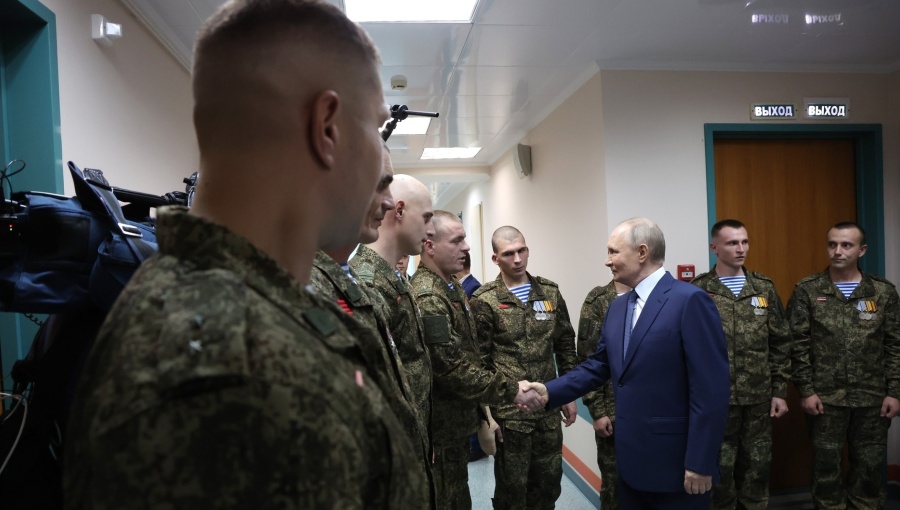
Putin spoke about the nuclear-powered Poseidon underwater torpedo during a hospital visit with soldiers wounded in Ukraine / Kremlin
By bne IntelliNews October 30, 2025

Russia has tested its nuclear-powered Poseidon underwater torpedo, President Vladimir Putin said, marking the country’s second strategic weapons trial in less than a week and prompting renewed debate over a potential new phase in nuclear deterrence.

Speaking during a hospital visit with soldiers wounded in Ukraine, Putin said the device was launched from a submarine and that its onboard nuclear power unit had been successfully activated. It was his most detailed public description of the programme in several years. He claimed the system could not be intercepted by existing technology.

“For the first time, we managed not only to launch it from its carrier submarine using the starting engine, but also to activate its nuclear power plant, on which the vehicle operated for a certain period of time,” Putin said, as quoted by the Kremlin.

“This is a major success because, like the Burevestnik, it has very compact dimensions. If the Burevestnik’s reactor is a thousand times smaller than that of a submarine, Poseidon’s is a hundred times smaller. Yet Poseidon’s power output significantly exceeds even that of our most advanced intercontinental missile, the Sarmat.”

The test follows Russia’s trial of the Burevestnik nuclear-powered cruise missile on October 21 and nuclear launch drills on October 22. The Kremlin described these actions as proof that Moscow would not yield to Western pressure over the war in Ukraine. The White House urged Russia to focus on ending the conflict rather than showcasing new weapons.

According to Reuters, analysts describe Poseidon as an autonomous, nuclear-powered torpedo designed to travel thousands of kilometres at high speed to strike coastal targets and contaminate shorelines. Open-source assessments cited by Russian media indicate the system is about 20 metres long, weighs roughly 100 tonnes and could carry a warhead of up to two megatons, possibly using a liquid-metal-cooled reactor. Putin and state media have previously outlined operational parameters suggesting a range of 10,000 km at around 185 km/h.

Poseidon challenges traditional arms-control categories by combining a nuclear propulsion system with an autonomous delivery mechanism that is neither a ballistic nor a cruise missile. Moscow presents such projects as a response to decades of United States missile-defence developments and Nato’s eastward expansion.

The announcement appeared aimed at both domestic and international audiences: at home, to demonstrate technological progress despite sanctions, and abroad, to signal that Russia retains advanced nuclear capabilities even as its conventional war in Ukraine continues.

US will resume testing nuclear weapons for first time in 30 years, Trump says

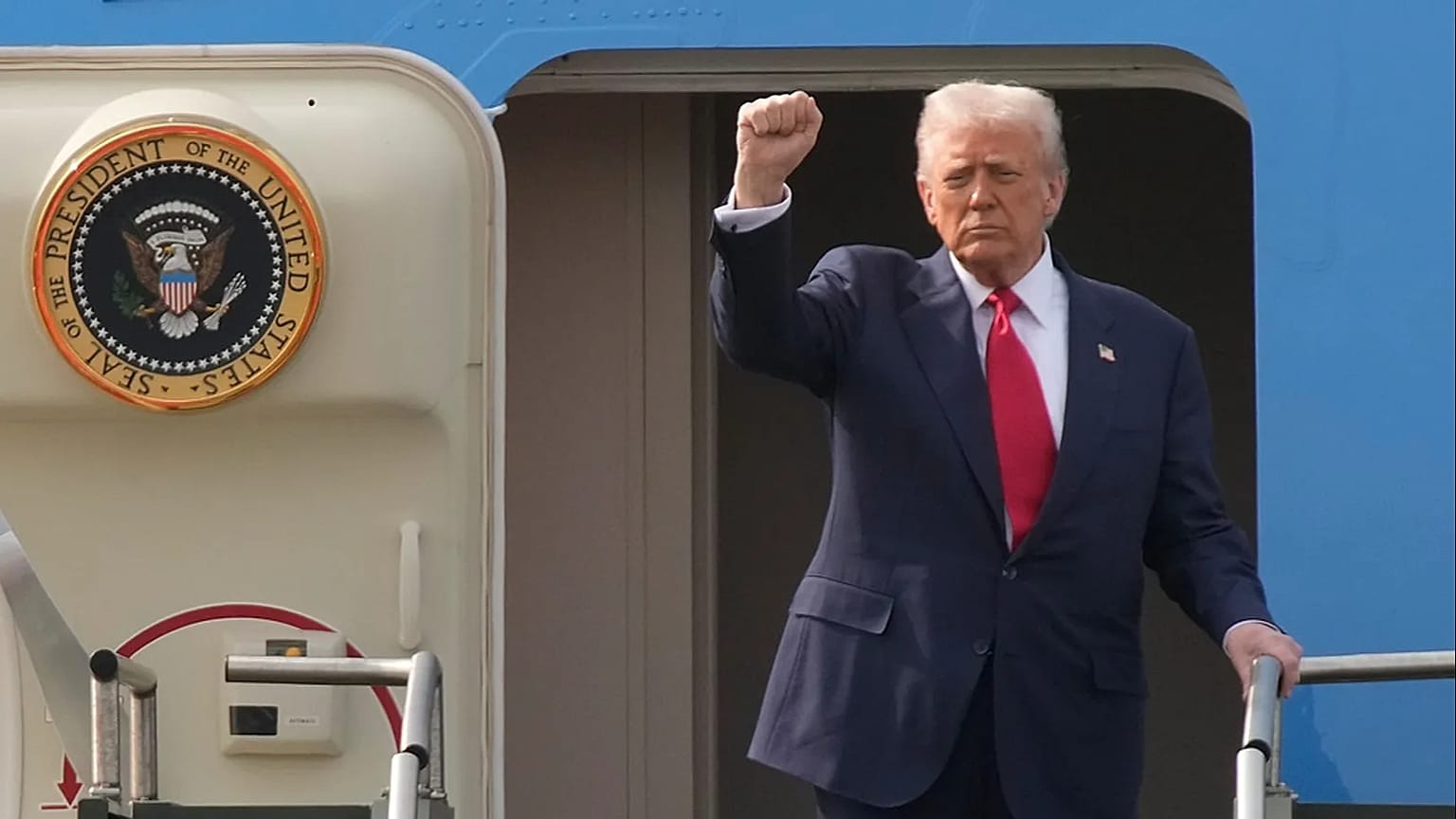
President Donald Trump boards Air Force One at Gimhae International Airport in Busan, South Korea, Thursday, Oct. 30, 2025, en route to Joint Base Andrews, Md. (AP Photo/Mark
Copyright Mark Schiefelbein/Copyright 2025 The AP. All rights reserved.

By Jeremiah Fisayo-Bambi with AP
Published on 

Trump said changes were necessary because other countries were testing their weapons. Russia has claimed it has recently conducted multiple nuclear arms tests.

US President Donald Trump on Thursday announced the US will resume testing nuclear weapons for the first time in three decades, saying it would be on an “equal basis” with Russia and China.

"Now is the appropriate time," Trump told reporters aboard Air Force One en route to Washington shortly after a meeting with China's president Xi Jinping in South Korea.

Trump first announced it on social media ahead of his meeting with Xi, stressing that "it had to do with others."

“Because of other countries' testing programs, I have instructed the Department of War to start testing our nuclear weapons on an equal basis,” he said in a post on Truth Social. “That process will begin immediately.”

The White House did not immediately respond to questions seeking more details, nor did Pentagon officials offer immediate clarity about Trump's announcement on the nuclear missile tests.

Is the nuclear arms race back?

Trump's astonishing announcement comes after Russian President Vladimir Putin this week announced that Moscow tested a new atomic-powered and nuclear-capable underwater drone and a new nuclear-powered cruise missile.

Putin did not announce any tests of Russia’s nuclear weapons, the last test of which occurred in 1990.

Also, ahead of the US leader's trip to South Korea, the final leg of his Asian tour, North Korea announced missile testing of what it claimed to be a 'sea-to-surface' missile weapon.

Last week, Pyongyang's leader Kim Jong-un unveiled some of his military's newest weapons, including what appeared to be a short-range ballistic system fitted with hypersonic glide vehicles.

While Trump did not specifically mention any of these in his post, including Russian tests, the US leader alluded to the nuclear stockpiles controlled by both Xi and Putin, saying, “Russia is second, and China is a distant third but will be even within 5 years.”

In 2023, Putin signed a bill revoking Russia’s ratification of a global nuclear test ban, which Moscow said was needed to put Russia on par with the US.

The Comprehensive Nuclear Test Ban Treaty, signed by then US President Bill Clinton but never ratified by the Senate, was adopted in 1996 and prohibits all nuclear explosions worldwide.

In 2023 Russia said it would only resume tests of its nuclear weapons if Washington did it first.


Hasina says supporters to boycott Bangladesh election

Hasina says supporters to boycott Bangladesh election
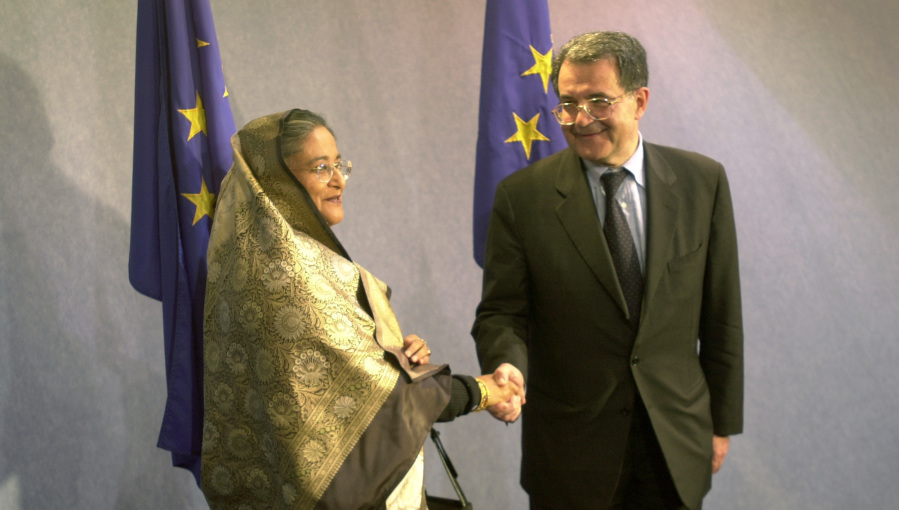
Hasina with former European Commission President Romano Prodi in Brussels when in power / © European Union, 2025
By bno Chennai Office October 30, 2025

Bangladesh’s former Prime Minister Sheikh Hasina revealed in an email interview with Reuters that she will continue to be in exile in India, insisting she will not return home for elections that exclude her party, the Awami League.

Hasina asserted that millions of her and Awami League’s supporters are expected to boycott the upcoming 2026 national polls after authorities barred the party from taking part. The 78 year old leader has lived in New Delhi since August 2024, when she fled after a student-led uprising ended her 15 year rule.

An interim administration headed by Nobel peace laureate Muhammad Yunus has governed Bangladesh since then and plans to hold elections in February 2026. The country’s Election Commission suspended the Awami League’s registration in May 2024, while the Yunus government imposed a ban on its political activity, citing threats to national security and ongoing war crimes probes against former senior officials.

Hasina said barring her party from elections would erode the credibility of the next government, arguing that the support of millions cannot simply be disregarded in a functioning democracy. The Awami League and its main rival, the Bangladesh Nationalist Party, have alternated in power for decades, with the BNP now expected to secure victory. Bangladesh has more than 126mn registered voters.

The former leader is currently facing trial at Bangladesh’s International Crimes Tribunal on charges of crimes against humanity linked to a violent crackdown on student protests between July and August 2024 that, according to a United Nations report, left about 1,400 people dead. A verdict is scheduled for November 13, 2025.

The Yunus led interim government has also said that it will seek the death penalty under the law for Hasina’s actions while she was in power, especially her conduct during the student led protests where she allegedly authorised the use of excessive force by security agencies and law enforcement.

Hasina has rejected the case as politically driven and says she will only return once constitutional rule and genuine law and order are restored.

Africa’s ‘Great Blue Wall’ Emerges As A New Model For Climate-Resilient Maritime Cooperation – Analysis


By Aritra Banerjee


As rising seas erode Africa’s coastlines and strain its maritime economies, experts at the Indo-Pacific Regional Dialogue (IPRD) 2025 turned their attention to the Great Blue Wall (GBW) — an ambitious African-led initiative that seeks to link ocean conservation with blue-economy growth.

Speaking virtually at the conference on 30 October, David Willima, a maritime researcher at the Institute for Security Studies, said the GBW could transform how Africa and the wider Indian Ocean region confront climate-linked security risks.

“Most of Africa’s coastal cities and island states — especially the big ones like Lagos, Abidjan, Dar-es-Salaam, Cape Town, Luanda, Alexandria — are in low-lying areas that are susceptible to flooding and inundation,” Willima noted. “When you look at Africa’s population and migration projections, a lot of these cities will each hold more than five million people by 2030. That translates to about 116 million Africans living in low-lying coastal areas — a huge number that will put enormous pressure on coastal resources.”

A Vision Born in Glasgow

Launched at the UN Climate Change Conference (COP 26) in Glasgow in 2021, the Great Blue Wall is a Western Indian Ocean (WIO) initiative designed to create a connected chain of “seascapes” — large, community-managed marine and coastal conservation zones.

Backed by the International Union for Conservation of Nature (IUCN) and regional partners such as the Western Indian Ocean Marine Science Association (WIOMSA), the GBW sets out measurable goals:

Protect 30 percent of the WIO’s marine area by 2030. Restore two million hectares of mangroves, seagrass beds and coral reefs. Generate one million blue-economy jobs and sequester 100 million tonnes of CO₂ through ecosystem restoration. Embed local ownership by making the initiative youth-driven and women-inclusive.

Willima stressed that the project’s strength lies in scaling across borders rather than simply scaling up. “It’s about connecting local efforts into a regional mosaic,” he said.

Coastal Insecurity Meets Climate Fragility

The Western Indian Ocean belt is already experiencing the twin shocks of insecurity and environmental stress. Northern Mozambique’s Cabo Delgado province — a frontline of an Islamist insurgency since 2017 — sits on the same coastline that hosts fragile ecosystems vital to local livelihoods. Elsewhere, Somalia’s piracy and illegal fishing crises, and resource theft in the Gulf of Guinea, illustrate how environmental and economic fragility feed maritime crime.

A 2017 study by WWF and partners valued the WIO’s ocean assets at USD 333.8 billion, with annual returns of around USD 21 billion from fisheries, tourism and carbon sequestration. Yet less than 8 percent of this marine expanse is protected. The WIO hosts 38 percent of the world’s coral reef species, many at risk from warming seas and pollution.

Mangroves — nature’s first defence against coastal erosion — are disappearing rapidly. A 2024 IUCN report warned that if current trends persist, the region’s mangroves could face functional extinction within five decades. The GBW, Willima argued, offers “a path to restore ecological resilience while anchoring youth in formal economic activity instead of the shadow economy.”

Strategic Resonance in the Indo-Pacific


While conceived for Africa’s eastern seaboard, the GBW resonates across the Indo-Pacific’s coastal corridors. Experts at IPRD 2025 observed that the initiative’s transboundary governance and community-centric approach could inform similar “seascape corridor” models from East Africa to Southeast Asia — advancing global “30 by 30” targets under the Kunming–Montreal Global Biodiversity Framework.

For India and its maritime partners, the GBW presents a framework to link climate security with ocean stability. Its focus on inclusive growth and ecological balance parallels India’s own SAGAR (Security and Growth for All in the Region) vision and blue-economy initiatives under the Indian Ocean Rim Association (IORA). By supporting regional capacity building and marine science collaboration, India could help extend the GBW’s success eastwards into the Indo-Pacific arc.

Funding, Governance and Scale


Despite its promise, the GBW faces real-world constraints. Only around 7 percent of the WIO’s waters enjoy protection today, and many states lack capacity for monitoring or enforcement. Financing remains a critical bottleneck, though a 2023 concept note submitted to the Green Climate Fund seeks to mobilise resources for a “regenerative blue economy.” Governance is complex: the initiative spans ten jurisdictions — from Comoros and Kenya to Madagascar, Mauritius, Mozambique, Seychelles, Somalia, South Africa, Tanzania and France’s Réunion — each with distinct legal regimes and capacities.

Yet progress is evident. Pilot projects in the Tanga–Pemba Seascape (Tanzania) and the Quirimbas Seascape (Mozambique) are already showcasing how local communities can lead coastal restoration and eco-tourism without external dependence. The GBW Secretariat, based in Nairobi under IUCN’s regional office, has also begun mapping a ten-year investment plan to connect scientific, financial and policy actors across the region.

Why the Indo-Pacific Should Watch Closely

1. Shared Vulnerabilities – From Mombasa to Mumbai to Manila, coastal cities face common threats — sea-level rise, salinity intrusion, and marine ecosystem loss. GBW’s data and policy frameworks could serve as templates for wider regional use.

2. Blue-Economy Synergy – Africa’s experience with community-driven marine management offers lessons for Indo-Pacific states building sustainable fishery and renewable ocean industries.

3. Geostrategic Stability – By reducing resource conflict and enhancing livelihood security, the GBW contributes to maritime peace — a key pillar of the Indo-Pacific vision championed by India and like-minded partners.

A Blueprint, Not a Panacea

Analysts agree that the GBW is no quick fix but a strategic blueprint for “nature-positive” development. Its success will depend on funding continuity, data transparency and political coherence among member states. But if it achieves its targets, the Western Indian Ocean could become a living laboratory for sustainable maritime governance — and a test case for the rest of the Indo-Pacific.

“It’s an economic and ecological lifeline,” Willima said, “that can keep the ocean — and the people who depend on it — alive.”

For Africa and the Indo-Pacific alike, the Great Blue Wall may well represent the next frontier of climate diplomacy — where security and sustainability finally meet at sea.


Aritra Banerjee is a Contributing Editor, South Asia at Eurasia Review with a focus on Defence, Strategic Affairs, and Indo-Pacific geopolitics. He is also the co-author of The Indian Navy @75: Reminiscing the Voyage. Having spent his formative years in the United States before returning to India, he brings a global perspective combined with on-the-ground insight to his reporting. He holds a Master's in International Relations, Security & Strategy from O.P. Jindal Global University, a Bachelor's in Mass Media from the University of Mumbai, and Professional Education in Strategic Communications from King's College London (King's Institute for Applied Security Studies).

Nigeria's NNPCL weighs technical equity partnerships to revive idle state-owned refineries

Nigeria's NNPCL weighs technical equity partnerships to revive idle state-owned refineries
/ NNPCL
By bne IntelliNews October 30, 2025

The Nigerian National Petroleum Company Limited (NNPCL) says it has begun a fresh review of the country’s three state-owned refineries, signalling yet another attempt to revive facilities that have remained largely idle despite repeated rehabilitation efforts.

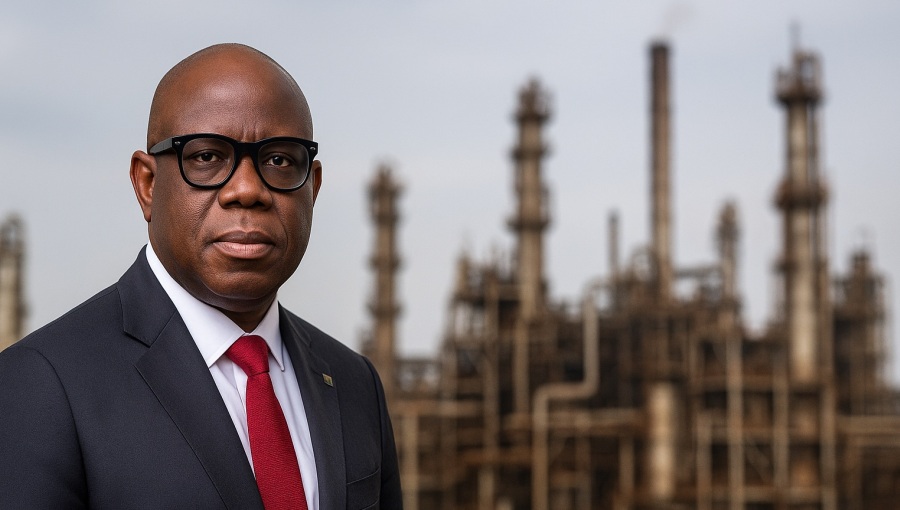
Group CEO Bayo Ojulari disclosed the development on his X account, noting that the company is assessing several options to restore reliable refining capacity. NNPCL could seek technical equity partners to “high-grade or repurpose” the plants, he said, in what would represent a shift from previous government-led overhaul programmes.

The approach would involve external operators taking equity positions in the Port Harcourt, Warri and Kaduna refineries, which operated at minimal capacity for more than a decade,  alongside responsibility for operational performance, maintenance and technology upgrades.

“We are filled with determination! We are looking ahead with optimism to ensure our refineries operate effectively. We are dedicating significant time to a detailed review and are eager to implement our insights,” Ojulari wrote on X.

“What fuels our drive is the understanding that the prosperity of the Nigerian states and the future success of Nigeria will always take precedence over any individual interests. This very commitment inspires us as we anticipate creating sustainable solutions for our refineries in the near future. #Nigerianrefineries #willwork”.

Despite spending an estimated $3bn on rehabilitation and turnaround maintenance in recent years, only a 60,000-bpd segment of the Port Harcourt complex briefly came online before operations were suspended after short test runs. For long stretches, domestic fuel supply has relied almost entirely on imports.

Securing qualified downstream partners would require clarity on plant ownership structures, feedstock supply arrangements, product pricing frameworks and long-term investment protection. Previous talks with international oil companies and trading firms stalled over concerns about regulated pricing and foreign exchange liquidity.

NNPCL says it remains committed to restoring local refining capacity to reduce import dependency and save foreign exchange. The company is also counting on the gradual ramp-up of production at the privately owned 650,000-bpd Dangote refinery, which began supplying fuel to the domestic market this year, although distribution volumes remain limited during its phased start-up.

That refinery’s owner, billionaire Aliko Dangote, estimated in July that the federal government may have spent over $18bn over the years to revamp the Port Harcourt, Warri and Kaduna refineries without results, ThisDay reported.

The Port Harcourt refinery rehabilitation project has been led by Maire’s (BIT: MAIRE) Tecnimont, under a contract awarded in 2021. Warri and Kaduna refineries have undergone separate repair programmes, though progress updates have been sporadic and timelines have slipped.

Ojulari indicated that the latest review is still at an early stage, and no decisions have been made on which facilities would be prioritised or whether repurposing could include conversion to petrochemical or modular refining configurations. He said NNPCL remains “optimistic” that the plants can be restored to efficient operation.


Erdogan says Turkey “couldn’t even produce a sewing needle” before he came to power, sparks storm of criticism

Erdogan says Turkey “couldn’t even produce a sewing needle” before he came to power, sparks storm of criticism
Delusions of grandeur? Erdogan has been accused of belittling Turkish eras of industrial development that came long before his rise to prominence. / DonkeyHotey, cc-by-2.0
By bne IntelliNews October 30, 2025

President Recep Tayyip Erdogan on October 28 sparked a storm of criticism after claiming that Turkey “could not even produce a sewing needle” 25 years ago.

Opposition politicians and critics said the statement amounted to a dismissal of decades of pre-Erdogan industrial development.

Erdogan and his Justice and Development Party (AKP) have ruled Turkey for nearly 23 years.

Turkey’s leader made the remarks during an inauguration ceremony held for Turkish contractor BMC’s new battle tank, the Altay, and next-generation armoured vehicle production facility in Ankara. The event took place a day before the 102nd anniversary of the founding of the Republic of Turkey.

“Let me take you back 20 to 25 years. Could we produce a sewing needle in our country back then? I’m not even talking about weapons. But now, thank God, Turkey is producing its own weapons. We couldn’t produce even 20 percent of our defence needs then, but now we’ve reached 80 percent,” Erdogan was quoted as saying by Turkish Minute.

Some critics pointed out that Turkey has been manufacturing sewing needles since the 1950s. Istanbul-based Atli Needle and Machinery Company, founded in 1951, produced the country’s first domestically made sewing needles, they said.

Main opposition Republican People’s Party (CHP) deputy chairman Yanki Bagcioglu, a former rear admiral, observed that Turkey had been building naval vessels decades before the AKP came to power.

“The country’s current technological capability is built on decades of effort. … While trying to glorify one era for political purposes, one should not belittle the earlier periods that laid the foundations for today,” he added.

Leader of the small opposition IYI Party, Musavat Dervisoglu, tweeted that aircraft factories, sugar factories, textile mills, iron and steel plants, shipyards, paper and cement factories, tobacco factories, power plants, dams, weapons factories and chlorine plants were all established within the first 15 years of the Turkish Republic.

Dervisoglu added that “we weren’t living in caves before the AKP came to power”.