Thursday, October 30, 2025

US to cut refugee admissions to 7,500 from 125,000

Jenipher Camino Gonzalez
DW with AP, Reuters
Issued on: 30/10/2025 

The US will cut the number of refugees allowed into the country to 7,500 next year, the White House has said, adding most would be Afrikaners from South Africa.

The US considers white South Africans a group suffering 'illegal or unjust discrimination'
Image: Jerome Delay/AP Photo/picture alliance

The administration fo President Donald Trump plans to allow only 7,500 refugees in 2026, according to a notice published on Thursday in the US Federal Registry.

The figure represents a dramatic reduction after his predecessor Joe Biden's administration had previously admitted 125,000 people from all over the world.

"The admissions numbers shall primarily be allocated among Afrikaners from South Africa," Trump's order said, along with "other victims of illegal or unjust discrimination in their respective homelands."

The statement did not elaborate on the origin countries of "other victims."

After taking office in January, Trump essentially halted refugee arrivals, only making an exception for white South Africans.

Trump has previously claimed that Afrikaners face persecution in South Africa, based on their race. The South African government has denied the claim.

The refugee program has been around since 1980, and the authority to set the cap on admissions rests with the president.

During his first term, Trump lowered the cap each year until it reached 15,000 in the last year of his presidency.

Rights groups decry program's 'politization'

Advocates for refugee rights in the US and abroad criticized the Trump administration's move, saying it undermined national security.

"By privileging Afrikaners while continuing to ban thousands of refugees who have already been vetted and approved, the administration is once again politicizing a humanitarian program," said Sharif Aly, president of IRAP, a global legal aid and advocacy organization.

The NGO Human Rights First said the decision was a "new low point" in US foreign policy.

Krish O'Mara Vignarajah, president & CEO of Global Refuge, warned that concentrating "the vast majority of admissions" on any one group "undermines the program's purpose as well as its credibility."

Aaron Reichlin-Melnick, a senior fellow at the American Immigration Council, said more than 2 million refugees have been admitted into the US under the program since 1980.

Reichlin-Melnick lamented what he saw as "a downfall for a crown jewel of America's international humanitarian programs."

Edited by: Sean Sinico

Absence of toxic foam in Indian river cheers Hindu devotees

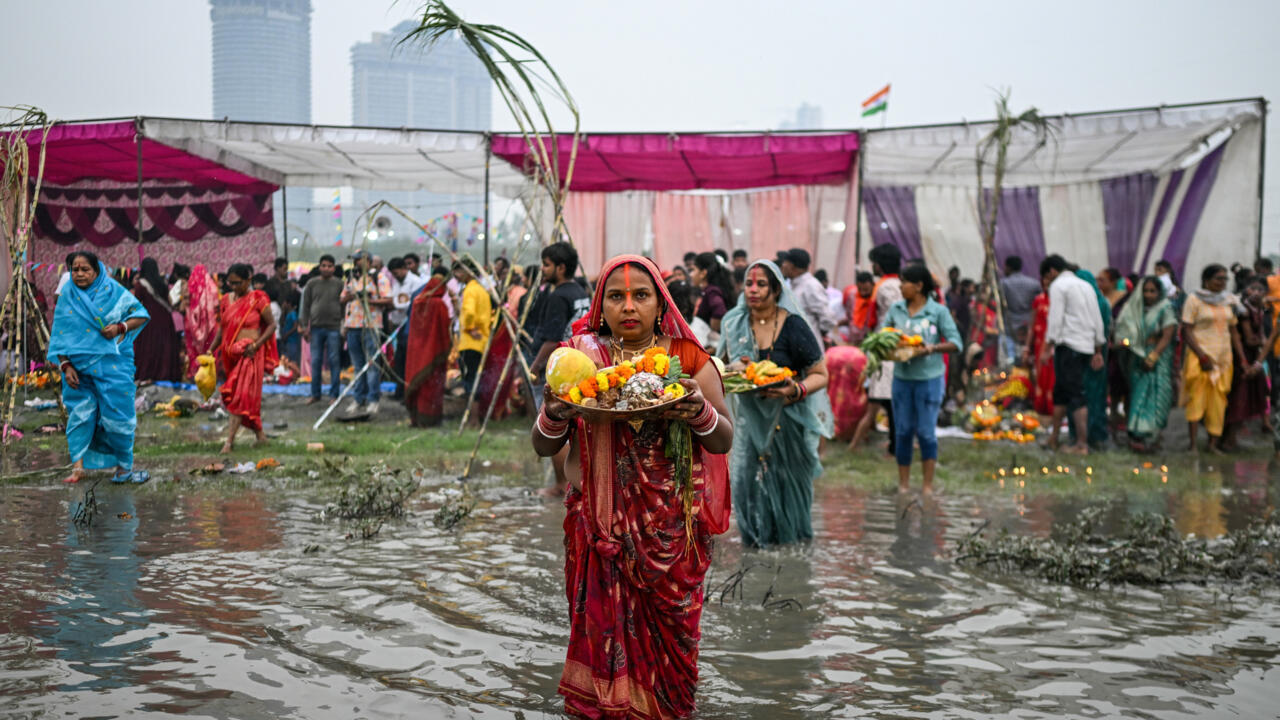
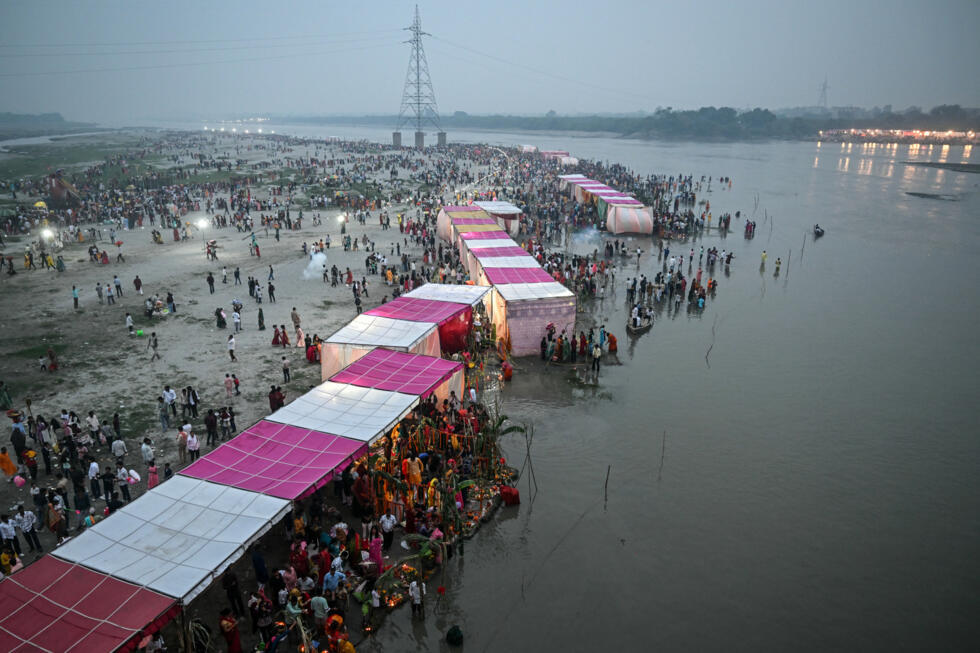
New Delhi (AFP) – Thousands of devotees waded into the foul waters of the Yamuna river in the Indian capital Monday for a Hindu festival, amid political wrangling over the sacred but severely polluted waterway.


Issued on: 27/10/2025 - FRANCE24

The Yamuna river, a major tributary of the Ganges, continues to suffer from severe pollution despite repeated clean-up pledges © Arun SANKAR / AFP

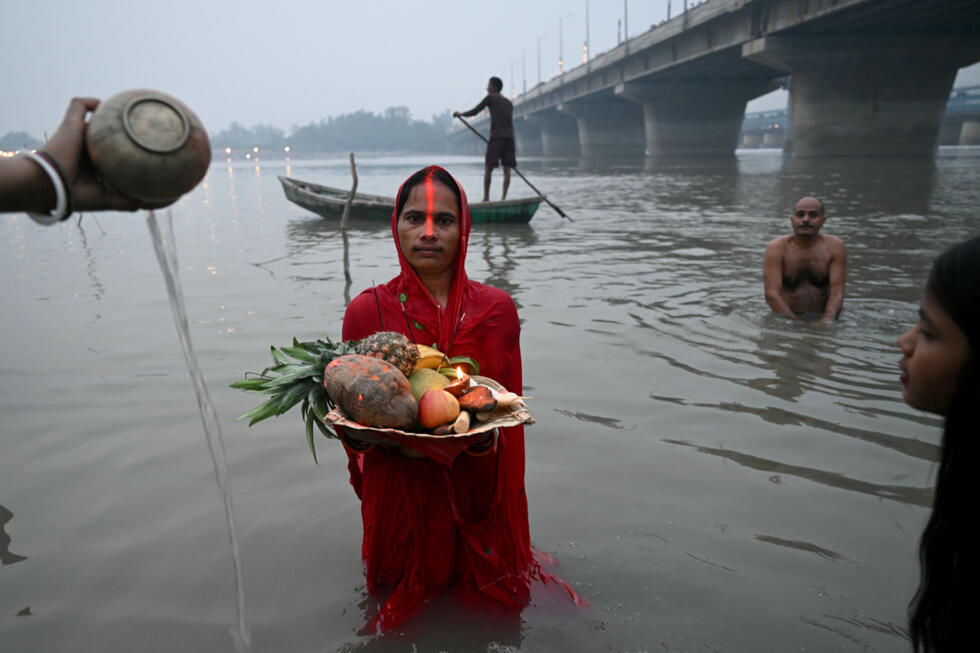
At dusk, worshippers stood waist-deep in the river's brown waters to offer prayers to the sun god Surya as the setting orb sank into the haze blanketing New Delhi's skyline, marking the annual Chhath festival.

Unlike previous years, the scene was free of the thick layers of white foam that have long symbolised the Yamuna's toxic condition.

"At least this time it feels like a river, even if dirty," said 35-year-old homemaker Kanchan Devi.

"Earlier it was like going into a filthy drain."

The Yamuna river, a major tributary of the Ganges, continues to suffer from severe pollution despite repeated clean-up pledges.

At one location in south Delhi in 2021, faecal bacteria levels exceeded safe health limits by 8,800 times.

Hindi worshippers in New Delhi offer prayers to the sun god Surya for the annual Chhath festival © Arun SANKAR / AFP


The river's dismal condition was a key issue in Delhi elections earlier this year that saw Prime Minister Narendra Modi's Bharatiya Janata Party (BJP) return to power in the sprawling megacity of more than 30 million people.

One of the Hindu nationalist party's main campaign promises was to clean the river.

Delhi's Chief Minister Rekha Gupta said Monday that becuase of her government's efforts, "after many years, our brothers and sisters will be able to worship the sun on the banks of the Yamuna."
'Cosmetic'

"This water is now in such a condition that aquatic creatures can live very well in it, whereas earlier, even a mosquito could not thrive in this water," Gupta told reporters.

But opposition leaders have called the clean-up "cosmetic", alleging that chemicals had been used to mask the froth without addressing the fundamental causes of the pollution: untreated sewage and industrial effluents.

Laboratory analysis conducted earlier this month indicated that the faecal count in the river had reduced since last year but remained far from safe at most sites.

Opposition leaders warn that chemicals had been used to mask the froth without addressing the fundamental causes of the Yamuna river pollution © Arun SANKAR / AFP


"All said and done, it is certainly better than before," said Sanjay Paswan, a carpenter.

"I have been coming here for a decade. The difference is clear."

Delhi's pollution crisis extends beyond its rivers.

The capital is routinely blanketed by toxic smog each winter, a deadly combination of emissions from crop burning, factories and traffic.

Despite years of government initiatives, little progress has been made, and the pollution is blamed for thousands of premature deaths annually.

Earlier this month, air quality worsened sharply, following widespread use of fireworks during the Hindu festival of Diwali.

Although bans have been imposed in previous years, enforcement has been weak due to the deep religious significance of fireworks for many devotees.

This year, the Supreme Court eased restrictions, allowing the use of so-called "green" firecrackers that are designed to emit fewer particulate pollutants.

At the Chhath festivities too, firecrackers lit up the sky, leaving the air acrid with the smell of burnt sulphur.

Revellers, though, said they were not concerned.

"At least the water is clean and so is the riverbank," said daily wage labourer Sanjay Prasad.

© 2025 AFP
Mexico prepares Day of the Dead national celebrations


Issued on: 27/10/2025 - FRANCE24

Thousands of people in vibrant costumes and skull-like makeup gathered for #Mexico City’s annual #Catrina parade, a tribute to one of Mexico’s most iconic symbols of the #DayoftheDead. The Catrina is a skeleton often dressed in elegant clothing that has turned into a symbol of the country’s annual celebration.

A year on, families of Spain's flood victims voice sorrow and rage at memorial ceremony


Issued on: 30/10/2025 - FRANCE24

Spain commemorated the anniversary of last year’s massive floods that killed over 230 people. A year later, citizens continue to express frustration over what they consider to be a botched government response, saying there could have been less deaths had the population been warned sooner. The heavily criticised leader of the Valencia region was heckled at the state memorial service for the victims of the country's deadliest natural disaster i
n a generation.

Dutch centrist D66 party wins big in election as far right loses support

Issued on: 30/10/2025 - FRANCE24

In the Netherlands, the centrist D66 party looks on course to beat the far right in the national election. Exit polls have predicted Rob Jetten's party will claim victory, which could lead him to become the country's youngest ever prime minister. Dutch far-right leader Geert Wilders who had come first in the last elections in 2023 said he was disappointed about his Freedom Party's result. Meanwhile the leader of the left-wing Dutch Greens Labour party stood down after a disappointing result.

Video by: Morgan AYRE


Centrist D66 narrowly leads far-right PVV in knife-edge Dutch vote, exit polls show

The centrist Democrats 66 (D66) have taken a slim lead in the Dutch parliamentary election, according to exit polls, narrowly ahead of the far-right Party for Freedom (PVV) in a tightly contested race that could reshape the country’s political landscape.


Issued on: 30/10/2025 - RFI

Leader of D66 (Democrats 66) Rob Jetten reacts on stage to the announcement of the Dutch parliamentary exit poll during a results evening of the party in Leiden on October 29, 2025. The Dutch headed to the polls on October 29, 2025 for a knife-edge election, with all eyes on the performance of the far-right, which is riding high in many top European countries. 
AFP - ROBIN UTRECHT

By:Jan van der MadeFollow

The current tally shows a 1700-vote gap between the centrist liberal D66 and the far-right PVV, with each party looking likely to win 26 seats in a close fight.

Having processed 98.6% of the vote, projections indicate that both the centrist liberal D66 and the far-right PVV will be the major winners. However, in the current scenario the PVV will be down from 37 seats, while D66 will gain 17.

By 5 o'clock in the morning, the margin between the parties stood at just over 2,000 votes.

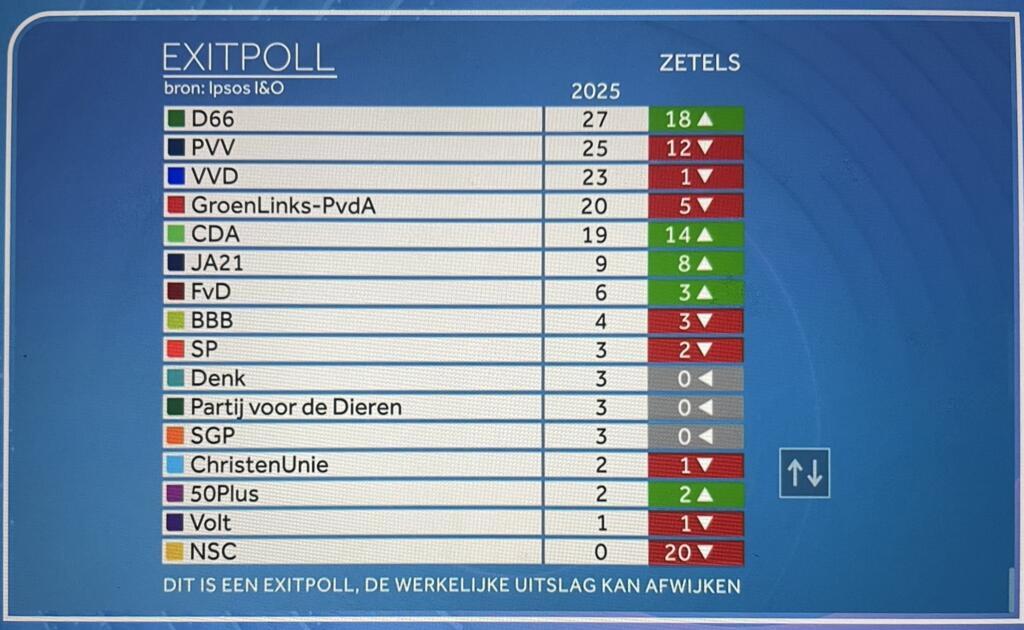
This represents a substantial shift from the previous evening. An Ipsos I&O poll published shortly after voting ended on Wednesday night had projected D66 to win 27 seats, with Geert Wilders' PVV close behind on 25 and the liberal-conservative People's Party for Freedom and Democracy (VVD) on 23.


The left-green alliance GL-PvdA is forecast to secure 20 seats and the Christian Democrats (CDA) 19, which would be a considerable gain.

Exit polls of Dutch elections, 29 October 2025. © Screenshot NOS TV


'Great day for democracy'

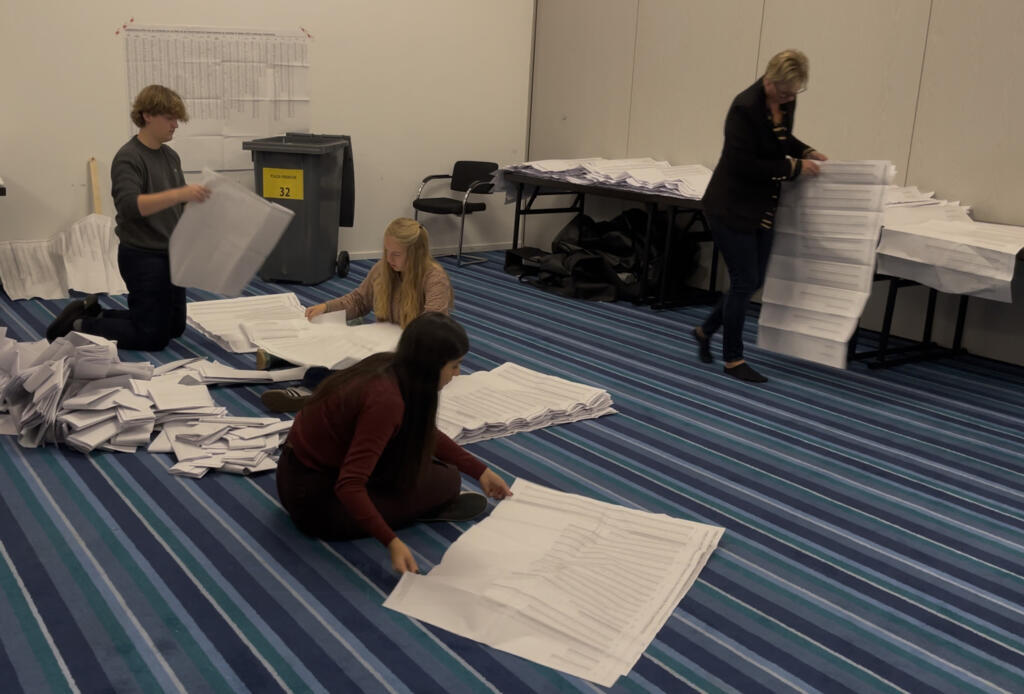
In a polling station in Rijswijk, a suburb of The Hague, Sven van den Berg led his team of volunteers in counting the votes after the polls closed at 21:00.

In total, he said around 850 people turned up to vote during the day, which was a little bit more than last time. “It was a great day for democracy,” one of the vote counters told RFI.


Sven van den Berg, head of a polling station in Rijswijk, The Netherlands, during national elections on 29 October 2025. © RFI/Jan van der Made


Meanwhile, at a jubilant gathering in Leiden, D66 leader Rob Jetten told supporters that the early figures showed “a vote of confidence in openness, in Dutch democracy, and in the future of Europe.”

Jetten, 38, has campaigned on a pro‑EU and progressive ticket, promising a coalition that would “restore pragmatism and stability” to Dutch politics.


Volunteers at a polling station in Rijswijk, The Netherlands, unfolding ballot sheets after elections, 29 October 2025. © RFI/Jan van der Made

Dutch voters cast ballots amid discontent over politics and stalled promises

All four parties in the governing coalition –⁠ the PVV, VVD, New Social Contract (NSC) and Farmer-Citizen Movement (BBB) –⁠ are projected to lose ground. Wilders reacted on X. “The electorate has spoken. We remain the second and perhaps even the largest party in the Netherlands," he wrote.

Among the smaller parties, JA21 is expected to move from one seat to nine, while Thierry Baudet’s Forum for Democracy (FVD) is expected to go from three to six seats. BBB was projected to fall back to four from seven, and the Socialist Party (SP) slipped to three from five. NSC, which entered parliament in 2023 with 20 seats, is now projected to lose all representation.

Other minor movements include the return of the pensioners’ party 50Plus with two seats, and small shifts affecting Christian Union (CU) at two, Volt at one, and Denk, the Party for the Animals (PvdD) and the orthodox SGP all holding steady on three.

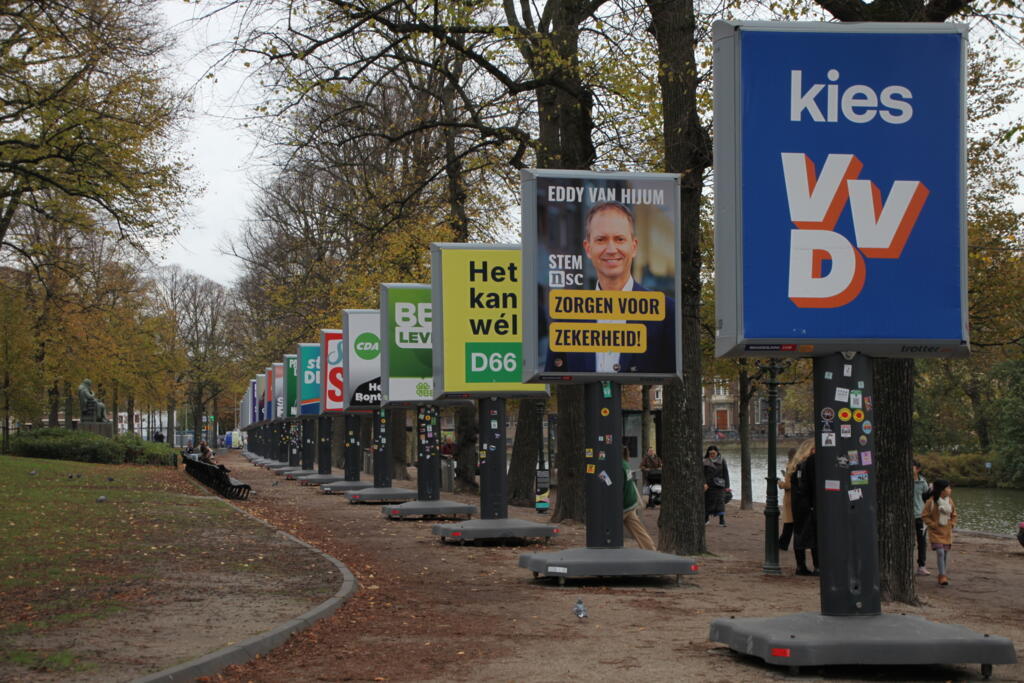
Election posters in The Hague, The Netherlands, 29 October 2025. © RFI/Jan van der Made

According to Ipsos I&O, about 80,000 voters took part in the nationwide “shadow election” at 65 polling stations, completing anonymised replicas of the real ballot. The firm emphasised that the exit poll serves only as an indication: in exceptional circumstances, the final tally could differ by as many as three seats.

Turnout was estimated at 76.3 percent, slightly down from 77.7 percent in 2023. Early official results were expected overnight, with smaller municipalities reporting first.

For much of Europe, the Dutch result is being watched as a barometer of the far right’s resilience after recent electoral surges in Italy, France and Austria. Whether Jetten’s centrist revival can hold when full counts arrive remains uncertain, but for the first time in years, the political tide in The Hague may be moving against Wilders.


More than 100 killed as Rio police launch deadliest-ever raids on drug gangs

The death toll from military-style police raids on drug gangs in Rio de Janeiro has risen, with the state public defender's office reporting 132 people killed and state police reporting 119 deaths. Residents have accused the police of carrying out execution-style killings in the deadliest anti-drug raids in the city's history.


Issued on: 29/10/2025 
By: FRANCE 24

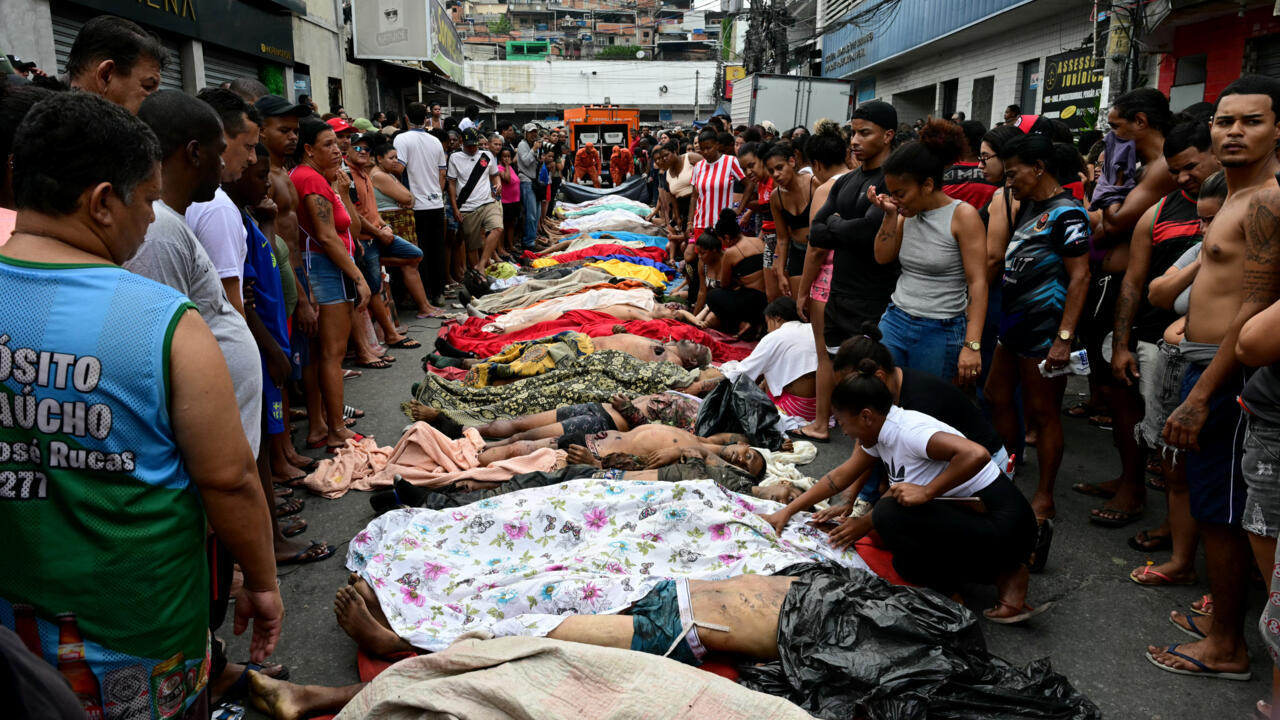
People line up bodies on Sao Lucas Square of the Vila Cruzeiro favela at the Penha complex in Rio de Janeiro, Brazil, on October 29, 2025, in the aftermath of Operacao Contencao (Operation Containment). © Pablo Porciuncula, AFP
05:29


Grieving residents laid out dozens of bodies in Rio de Janeiro's streets as the new death toll was announced, with some angry residents accusing the police of execution-style killings.

"The most recent update is 132 dead," the Rio state public defender's office, which provides legal assistance to the poor, told AFP. There was no immediate corroboration of the figure from other sources.

Rio state Governor Claudio Castro put the death toll from violence on Tuesday at around 60 but warned that the real figure was likely higher as more bodies were being taken to a morgue where the dead were being counted.

Four police officers were slain during the military-style operation, which involved 2,500 officers taking on Rio's most powerful criminal organisation, the Comando Vermelho or Red Command.

In Penha Complex – one of two densely populated, working-class neighbourhoods targeted in northern Rio – residents wept over a line of at least 50 corpses early Wednesday. A woman screamed as she hunched over the body of one of the victims, who were laid out in a line, covered in make-shift shrouds, some stained with blood.

Two girls, their faces streaked with tears, gently caressed the face of a dead man, wrapped in a sheet with a floral motif, and then hugged each other tightly.

"The state came to massacre, it wasn't a [police] operation. They came directly to kill, to take lives," one woman, who did not wish to give her name, told AFP.

Authorities said that "60 criminals" had been killed in fighting that unfolded during the drug raids in the Penha Complex and the Alemao Complex, located near Rio's international airport.

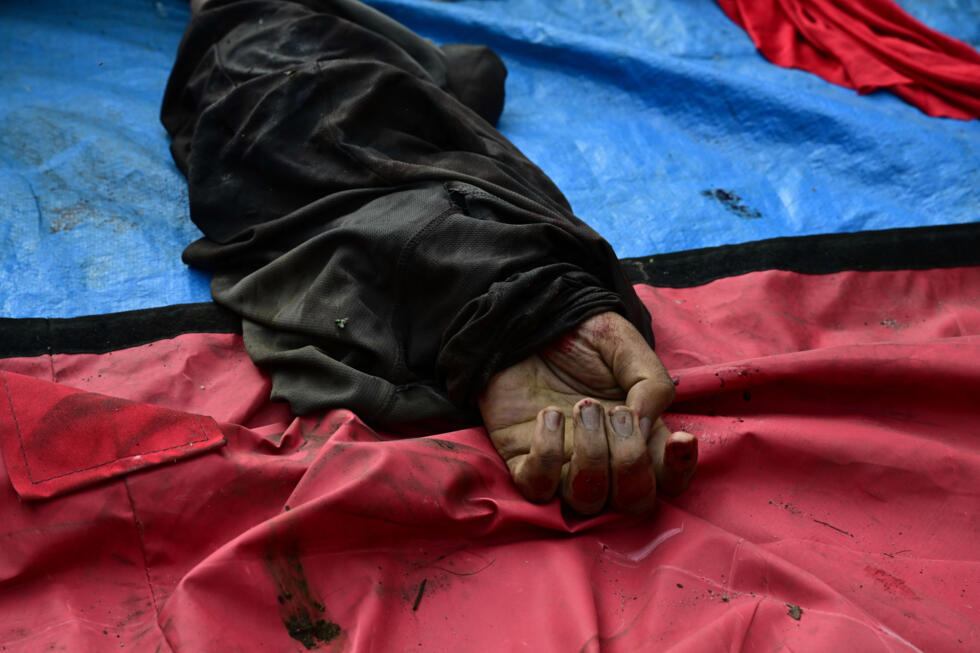
The hand of a dead man is seen among a line of bodies on Sao Lucas Square of the Vila Cruzeiro favela at the Penha complex in Rio de Janeiro, Brazil, on October 29, 2025, in the aftermath of Operacao Contencao (Operation Containment). Residents of a favela in Rio de Janeiro lined up more than 50 bodies at a plaza in their low-income neighborhood on Ocotber 29, a day after the bloodiest police operation in the city's history, AFP reported. © Pablo PORCIUNCULA / AFP

'Executions'

Angry residents accused the police of summary killings.

"There are people who have been executed, many of them shot in the back of the head, shot in the back. This cannot be considered public safety," said Raul Santiago, a 36-year-old resident and activist.

Lawyer Albino Pereira Neto, who represents three families that lost relatives, told AFP some of the bodies bore "burn marks" and that some of those killed had been tied up.

Some were "murdered in cold blood", he said.

Police raids in Rio's favelas, where drug gangs have a powerful presence, are a common occurrence. However, Tuesday's operation stood out for the scale and lethality.

The Office of the United Nations High Commissioner for Human Rights said it was "horrified" and called for "swift investigations".

A delegation from left-wing President Luiz Inacio Lula da Silva's government will travel to Rio on Wednesday for an emergency meeting with Castro.

Last year, approximately 700 people died during police operations in Rio, almost two a day.

The Human Rights Commission of the Rio state legislature will demand "explanations" of how the favela was turned into a "theater of war and barbarism", commission head Dani Monteiro told AFP on Tuesday.

The huge number of police officers who took part in the operation were backed by armoured vehicles, helicopters and drones as the streets of the favelas saw war-like scenes.

The police and suspected gang members traded heavy gunfire. Fires erupted around the neighbourhoods.

The authorities accused the suspects of using buses as barricades and of using drones to attack the police with explosives.

"This is not ordinary crime, but narcoterrorism," Rio state Governor Castro wrote Tuesday on X, where he shared a video from the fighting.

(FRANCE 4 with AFP)
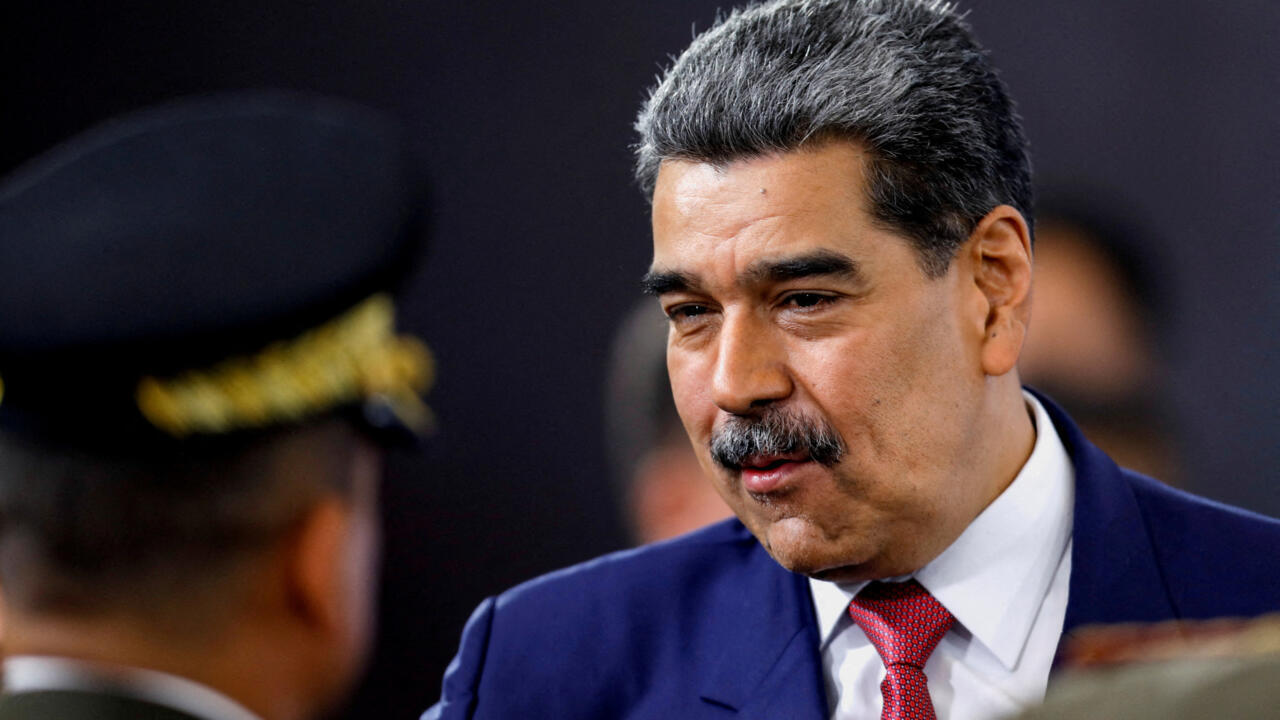
Maduro says Venezuela intercepted three drug planes amid US Caribbean deployment


Venezuelan President Nicolás Maduro said Wednesday that his country intercepted three aircraft allegedly used for drug trafficking, coinciding with a major US military operation against narcotics groups in the Caribbean. Caracas has accused Washington of using its deployment as a pretext for regime change.


Issued on: 30/10/2025 
By: FRANCE 24


Venezuela's President Nicolas Maduro prepares to leave at the end of a press conference. © Leonardo Fernandez Viloria, Reuters

Venezuelan President Nicolás Maduro said Wednesday his country had intercepted three planes allegedly used for drug trafficking, in operations coinciding with a US military deployment against narco groups in the Caribbean.

“The day before yesterday... a drug-trafficking plane entered through the Caribbean. Our aviation detected it in a second,” Maduro said at an official event.

“Today, two drug-trafficking aircraft entered from the north. And in accordance with our law, we have an interception law... bam, boom, bang!”

It was not immediately clear if this meant the planes were shot down.

Maduro said the action was taken “to make them respect Venezuela... What is that called? Exercising sovereignty.”

Caracas has sought to showcase anti-drug efforts in the face of a massive US military deployment within striking distance of the country.

Earlier Wednesday, Venezuela’s armed forces said they had destroyed two Colombian “narcotrafficking terrorist” camps on its territory and seized ammunition, all-terrain vehicles, tactical vests and fuel.

Washington calls its deployment an anti-drug operation, but Caracas fears it is a guise for military action to oust Maduro.

Trump says new strike kills six 'narcoterrorists' off Venezuela

US President Donald Trump’s administration says Maduro is a drug lord – an accusation he denies – and has issued a $50 million reward for information leading to his capture.

Maduro insists there is no drug cultivation in Venezuela, which he says is used as a trafficking route for Colombian cocaine against its will.

US strikes on alleged drug-smuggling boats in international waters in the Caribbean and Pacific have killed at least 57 people in recent weeks.

© France 24
01:39

Experts say the attacks amount to extrajudicial killings even if they target known traffickers.

The head of Venezuela’s armed forces strategic command, General Domingo Hernández Lárez, said Wednesday that pamphlets of the Colombian ELN guerrilla group were found during the camp raids.

The ELN (National Liberation Army) insurgency group holds territory near the Venezuelan border that experts say is an important source of coca and a gateway to the Caribbean coast – where Colombian cocaine begins its journey to the rest of the world.

(FRANCE 24 with AFP)

More than 2,400 young Moroccans face prosecution over Gen Z protests


More than 2,400 young Moroccans face trial for their participation in the so-called Gen Z protests that recently swept across the country, calling for fairer education and health care systems. Hundreds of people, many of them minors, have already been convicted for the protests. Human rights activists say some demonstrator confessions to police were made “under duress”.


Issued on: 29/10/2025 - 
By: 
FRANCE 24

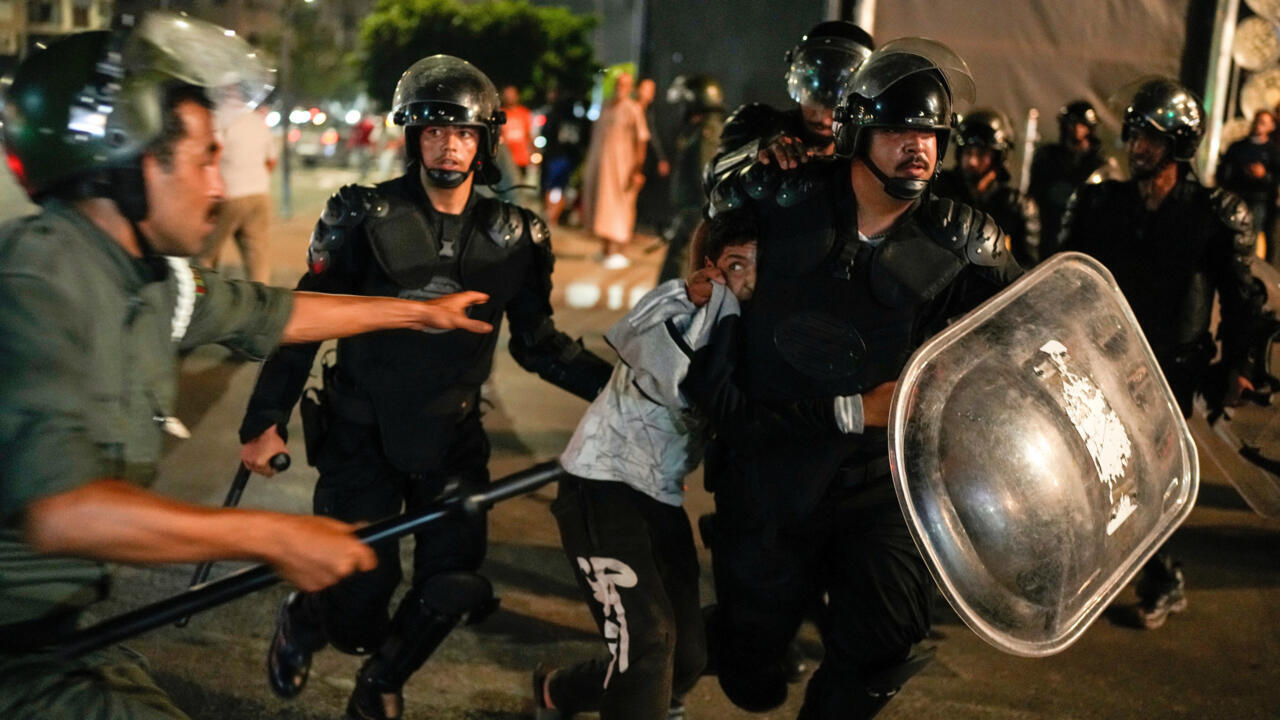
A boy is detained as youth led protests calling for healthcare and education reforms turned violent, in Sale, Morocco, Wednesday, October 1, 2025. © Mosa'ab Elshamy, AP


More than 2,400 people are facing prosecution in Morocco over recent GenZ 212 protests demanding better public education and health care, the public prosecutor’s office said Tuesday.

More than 1,400 were already in detention, Hassan Farhan, a judge and senior judicial official at the public prosecutor’s office, said in a press conference.

Read moreHow the Moroccan monarchy is trying to win back its estranged youth

Of the 2,480 defendants, about a fifth were charged with “rebellion as part of a group” and over a third with either “assaulting law enforcement officers” or “incitement to commit crimes and participation in armed gatherings”, Farhan said.

Moroccan courts had as of Monday convicted 411 people, including 76 minors, the prosecutor’s office added.

More than 60 people were sentenced to jail terms of up to 15 years, mainly for vandalism, looting, or arson, while some of the remainder received suspended sentences, prosecutors said.

Starting late last month, the online GenZ 212 collective organised a series of demonstrations seeking reforms in the health and education sectors, as well as “an end to corruption”.

In the initial days of the protests, when the gatherings were banned, police made hundreds of arrests.
Three dead

Two nights were marked by violence, including in Agadir, where three people were killed in clashes, though organisers insisted on their commitment to nonviolent protest.

Last week, the Moroccan Association for Human Rights (AMDH) called for “fair trials” for all defendants and denounced what it described as “police reports written under duress”.

Farhan said that “all conditions for fair trials” had been guaranteed, adding that the police records were all drawn up in accordance with the Moroccan law.

For two weeks, the demonstrations were held on a near-daily basis.

But they have gradually waned in both frequency and turnout, particularly after a speech by Morocco’s king calling for social reforms and the announcement of a draft $15 billion budget laying out improvements to health and education.

Social inequality has been a major challenge in Morocco, where deep regional disparities persist alongside a gap between the public and private sectors.

(FRANCE 24 with AFP)


Genocide warnings 'flashing red' after RSF takeover of Sudan's El-Fasher


Sudan’s Rapid Support Forces (RSF) have seized the western city of El-Fasher amid reports of extreme violence and mass killings. The capture of the key city in the Darfur region is a strategic boon for the paramilitary group, raising fears that Sudan’s ongoing civil war will enter a new phase of escalation.


Issued on: 29/10/2025 
FRANCE24
By: Joanna YORK

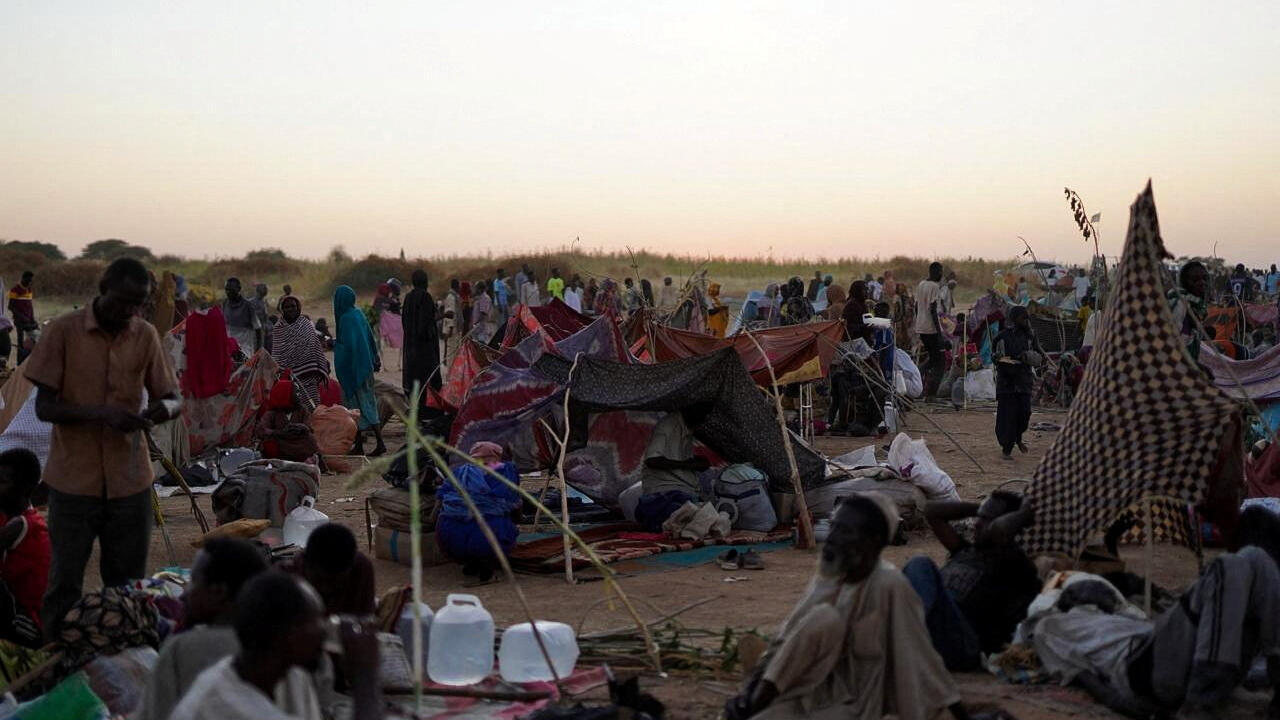
People sit at a camp for displaced families who fled from al-Fashir to Tawila in Sudan on October 27, 2025. © Mohammed Jamal, Reuters

Reports coming out of the western Sudanese city of El-Fasher on Tuesday evening, as the RSF paramilitary group seized the city, detailed unprecedented levels of bloodshed in a conflict that has already been defined by extreme violence.

Within 48 hours, RSF attacks on the city had left more than 2,000 civilians dead, according to armed groups allied to the Sudanese army.

The UN cited credible reports of “summary executions, attacks on civilians along escape routes, house-to-house raids, and obstacles preventing civilians from reaching safety” along with widespread sexual violence against women and girls.

Meanwhile, Yale University’s Humanitarian Research Lab found evidence suggesting “systematic mass killings” on such a scale that blood stains on the ground were visible in satellite imagery.

Papers on Sudan: A massacre so bloody, you can see it from space

It said the violence included attacks on health facilities, health workers, patients and humanitarian aid workers.

But the primary targets were non-Arab groups, including the Fur, Zaghawa and Masalit peoples.

The UN said around 177,000 civilians are still trapped inside the city by a 56-kilometre blockade built by the RSF that is sealing off food, medicine and escape routes.

Meanwhile, an estimated 26,000 have fled in recent days. Many travelled on foot to the town of Tawila, around 60 kilometres west of El-Fasher, arriving with “horrific” stories of “widespread ethnically and politically motivated killing and indiscriminate violence”, the UN said.

Read more‘Humanitarian aid in Sudan is constantly being blocked by all the belligerents’
Ongoing conflict

The RSF takeover in El-Fasher is the latest chapter in Sudan’s turbulent history.

Tensions flared once again after the 2019 ousting of President Omar al Bashir, who ruled Sudan for 30 years.

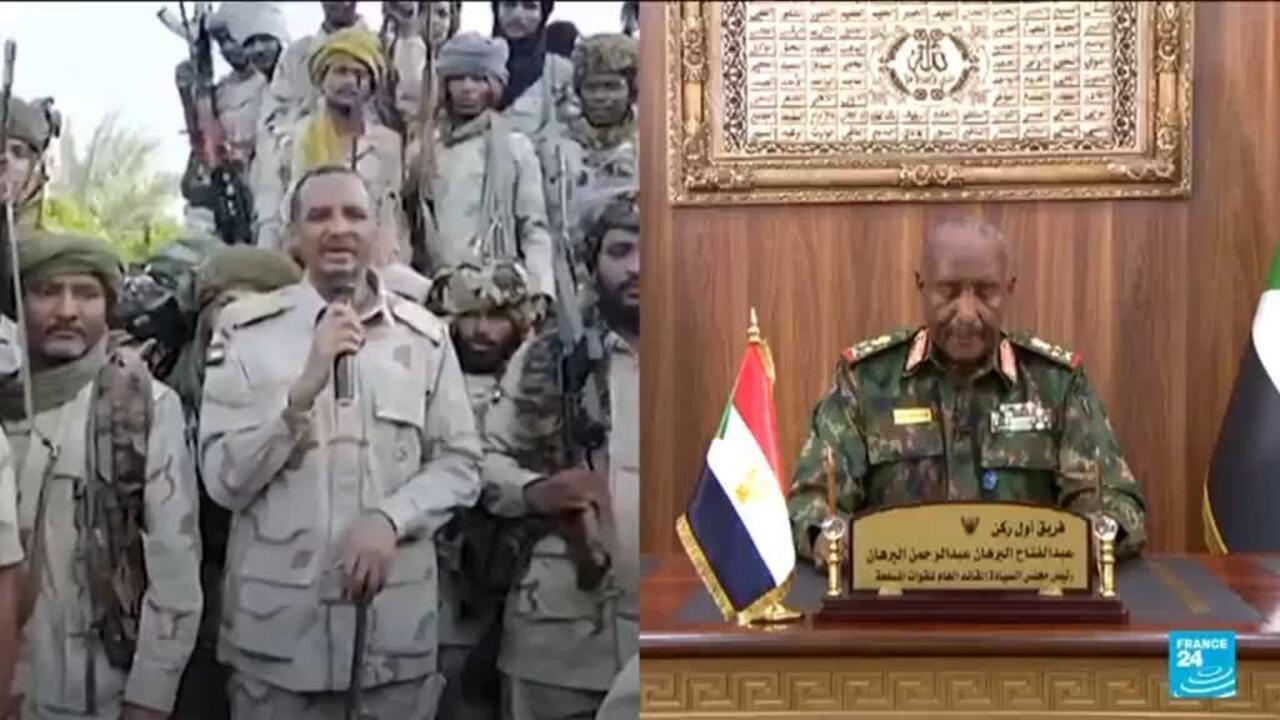
The current civil war began in April 2023 as a dispute between two high-powered generals: the head of the country’s armed forces Abdel Fattah al Burhan, and his former deputy Mohamed Hamdan Dagalo, the head of the RSF paramilitary group.


© France 24
02:24

The conflict has been marked by extreme violence – just over a year after fighting began, it had already claimed an estimated 150,000 lives. By July 2025, 12 million people had been displaced and parts of the country had been pushed into famine.

Both sides have been accused of attacking civilians and committing serious violations of international law.

Prior to the RSF takeover, El-Fasher was subject to an 18-month siege marked by starvation and bombardment.

In the city, “civilians were already weakened by famine and have suffered carpet bombing from government forces, as well as a long RSF-imposed siege”, said David Keen, professor of conflict studies at the London School of Economics and Political Science (LSE).

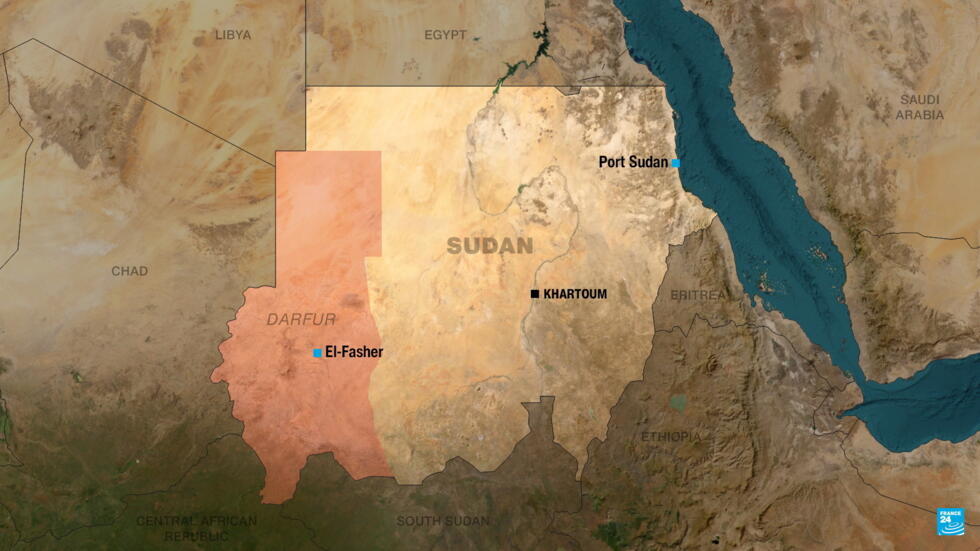
Currently, the army controls much of north and east Sudan, including most of the border with Egypt, which is said to be one of Burhan’s main backers.

It also holds urban centres in Port Sudan – the home of Burhan’s UN-recognised government – and in the capital Khartoum, where it regained control from the RSF in March.
Since the RSF takeover of the city of El-Fasher, the paramilitary group now controls the majority of west Sudan. © France Médias Monde graphics studio


Meanwhile, the RSF controls almost all of the western region of Darfur, now including El-Fasher, along with much of the central Kordofan region and a small territory along Sudan's border with Libya and Egypt.

The army claims the RSF is backed by the UAE, which the Emirates denies.
'Darfur's lynchpin'

Taking control of El-Fasher is a significant advance for the RSF.

Logistically, the city sits at a crossroad of trade routes, including trafficking routes to access fuel, ammunition and weapons from Libya and Chad.

Politically, the seizure of El-Fasher gives the RSF almost complete control of west Sudan, effectively partitioning the country into two territories.

“El-Fasher is Darfur’s lynchpin, the last major city not under RSF control and the political centre of non-Arab armed groups,” said Dr Matthew Sterling Benson-Strohmayer, Sudans research director at the LSE.

“Its fall grants the RSF near-total dominance of western Sudan, likely neutralising rivals and transforming Darfur from a periphery of rebellion into the heart of a paramilitary state,” he added.

The RSF declared in April that it was forming a rival government, raising the prospect that Sudan could split for a second time after South Sudan seceded in 2011.

In such a scenario, “the RSF’s patterns over the past twenty years suggest its rule will be defined by coercion”, said Sterling Benson-Strohmayer, including “systems of taxation, looting and tightly controlled aid”.
'A point of no return'

Experts fear that RSF rule in the western region will give the group free rein to eradicate the non-Arab groups that live there.

The paramilitary group is descended from the Janjaweed militias that were accused of committing genocide in Darfur between 2003 and 2005.

In 2023, the RSF was accused of carrying out massacres in West Darfur's capital, El-Geneina, killing up to 15,000 people from the Masalit group.

“In many ways, the current massacres mirror those in El-Geneina,” Keen said. “Retaliatory killings were widely expected to occur once RSF took El-Fasher, and these killings are now clearly taking place on a horrific scale.”

“We have been warned that mass killings of civilians would likely follow the fall of El-Fasher,” agreed Alex de Waal, director of the World Peace Foundation research organisation.

“All the warning signs for genocidal massacre are flashing red.”

Such violence may well mark a “point of no return”, he said, serving to “further polarise Sudan and jeopardise any chances of peace or state reconstruction”.

Already there is little appetite for negotiation between the army and the RSF.

"The prospects for peace are very minimal," Sudanese analyst Kholood Khair told AFP. "Neither the army nor the RSF, for strategic or battlefield reasons, is willing to commit to a ceasefire or genuine peace talks."

Typically, “when one side suffers a defeat, it wants first to avenge the defeat before talking. And when one side has scored a victory, it wants to press home its momentum before talking," said de Waal.

"This has long added up to a formula for continued war.”
Lebanese president orders army to 'confront any Israeli incursion' after raid kills worker


The Lebanese army has been ordered to confront any Israeli incursion on the country’s southern border, President Joseph Aoun announced on Thursday. The ramped-up rhetoric comes after an overnight attack in which Israeli soldiers crossed the border and entered a village, where they killed a municipal worker.


Issued on: 30/10/2025 - 
By: FRANCE 24

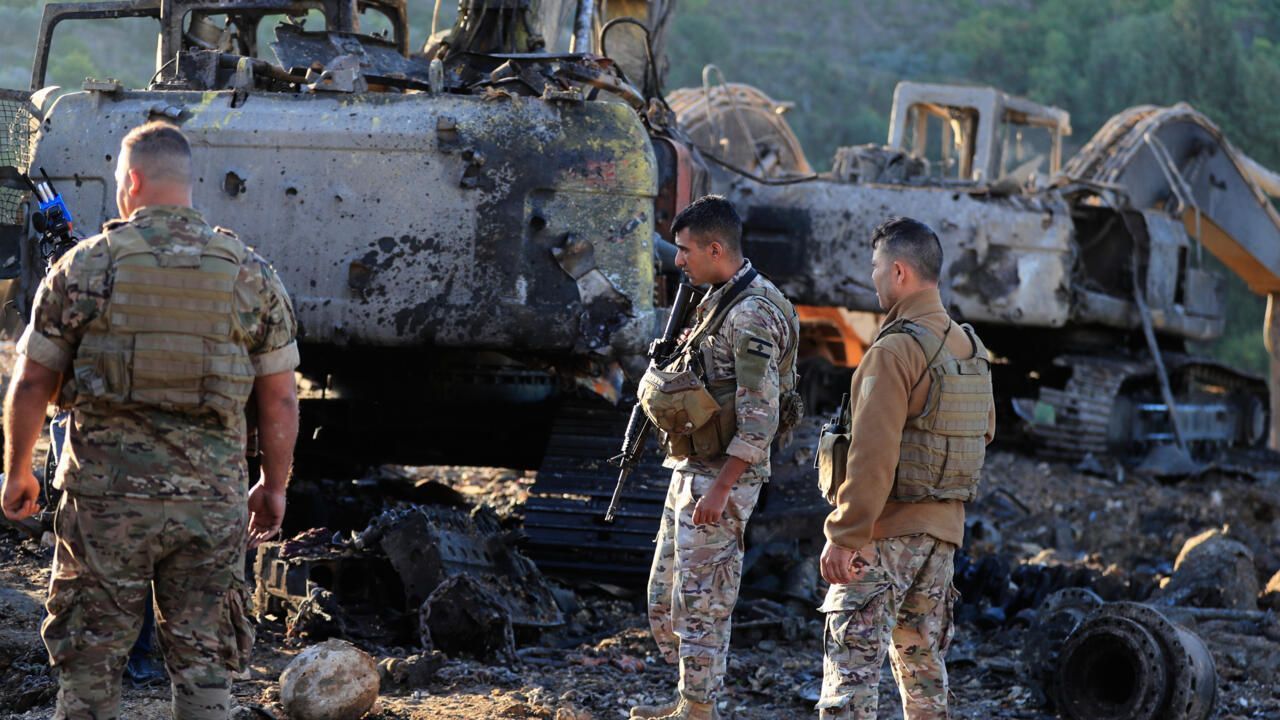
Lebanese army soldiers stand guard at a site that sold heavy machinery, where a large number of vehicles were destroyed in Israeli airstrikes, in the southern village of Msayleh, Lebanon, Saturday, October 11, 2025. © Mohammed Zaatari, AP/ File picture

Lebanese President Joseph Aoun on Thursday ordered the armed forces to oppose any Israeli incursions in the country’s south following an Israeli raid that killed a municipal worker.

Aoun ordered the army to “confront any Israeli incursion into liberated southern territory, in defence of Lebanese territory and the safety of citizens”, during a meeting with the army chief, according to a statement from the presidency.

Despite a November 2024 ceasefire with Lebanese militant group Hezbollah, Israel maintains troops in five areas in southern Lebanon and has kept up regular air strikes, which have recently intensified.

“In a grave and unprecedented attack, an Israeli enemy force penetrated the village of Blida at nearly 1:30am (1130 GMT), more than one kilometre from the border, supported by a number of vehicles,” Lebanon’s official National News Agency (NNA) reported.

“The force stormed the Blida municipality building, where employee Ibrahim Salameh was sleeping, and enemy soldiers proceeded to kill him,” it said.

Village residents cited by NNA said the raid lasted several hours, and that Israeli forces withdrew at dawn.

In the nearby border village of Adaisseh, NNA reported that Israeli forces blew up a hall for religious ceremonies at dawn.
Stepped-up Israeli strikes

Over the past few days, Israel has stepped up its strikes on Lebanon, often saying it is targeting Hezbollah positions.

On Tuesday, the spokesman for the UN rights commission, Jeremy Laurence, said Israeli forces had killed 111 civilians in Lebanon since the ceasefire went into effect.

Hezbollah was badly weakened during more than a year of conflict with Israel, and the United States has intensified pressure on Lebanese authorities to disarm the Iran-backed group.

One year after Israel killed Hassan Nasrallah, a weakened Hezbollah begins to regroup

On Wednesday, during a meeting of the ceasefire’s monitors in the Lebanese border city of Naqoura, US envoy Morgan Ortagus said Washington welcomed the “decision to bring all weapons under state control by the end of the year”.

The Lebanese army “must now fully implement its plan”, she added.

(FRANCE 24 with AFP)