Saturday, November 01, 2025


Britain is Losing Its Seafarers — and We Have Only Ourselves to Blame

British flag
(Chris Breeze / CC BY 2.0)

Published Oct 31, 2025 1:46 PM by Marinos Kokkinis


The number of British seafarers is shrinking, and we must look at ourselves as an industry to see why we are losing crew members. It is not just about numbers on a spreadsheet. It is about what kind of industry we want to be and whether we are prepared to value the people who make it work.

A new report commissioned by the Maritime Charities Group (MCG) has revealed that due to burnout and safety concerns, the UK’s diverse seafaring community is vanishing at an unprecedented rate. Currently, the community - defined as active seafarers, former seafarers, and dependent children - is estimated at more than half a million. By 2040, the community is projected to decline by 40 percent to around 300,000. In an extreme scenario, projections indicate a substantial 75 percent decrease to as low as 131,000.

These statistics make for alarming reading. The truth is uncomfortable. Life at sea is still too often marked by long hours, poor rest and isolation. These are not small irritations that can be solved with a motivational poster or a webinar about resilience. They are deep-rooted issues that make people leave and stop others from joining in the first place.

 Charities do what they can and many do excellent work, but they should not be expected to hold the industry together. We have normalized a culture where wellbeing is seen as optional, something to be discussed at conferences but rarely embedded in daily operations. That must change. Crew wellbeing is not a side topic. It is the foundation of safe, efficient and sustainable shipping.

Shipping companies have a responsibility to do more than talk. They need to provide proper mental health support, realistic rest schedules and a working environment that people actually want to return to. Modern learning tools can help too, keeping seafarers connected, skilled and part of a wider professional community instead of feeling left behind at sea.

 Policy has a role as well. It is no use talking about attracting young people into maritime careers if the conditions onboard are stuck in the past. Rules on rest, safety and leave must be enforced properly, and companies that invest in their people should be recognized for it. Without that, we will continue to see experienced crew walking away.

And then there is the story we tell about seafaring itself. For too long it has been portrayed as a lonely, tough life, and in many cases, it still is. But it can also be rewarding, global and full of opportunity. We need to show that side more clearly. Families, peer networks and even social media have a part to play in rebuilding pride and connection in a profession that has become invisible to many onshore.

 At OneCare Group, we see the difference when wellbeing, health and education are brought together. When seafarers have access to proper support, they stay longer, perform better and contribute to safer, stronger operations. It is not complicated. When you look after people, the whole industry benefits.

 If we keep treating seafarers as expendable, the decline will only accelerate. But if we are willing to listen, invest and modernize, we can rebuild a workforce that is proud to sail under the British flag again. The choice is ours.


Marinos Kokkinis is the CEO of OneCare Group


Top image: Chris Breeze / CC BY 2.0 

The opinions expressed herein are the author's and not necessarily those of The Maritime Executive.


Shipping Face Stark Reality as Seafarers' Happiness Plunges
seafarers
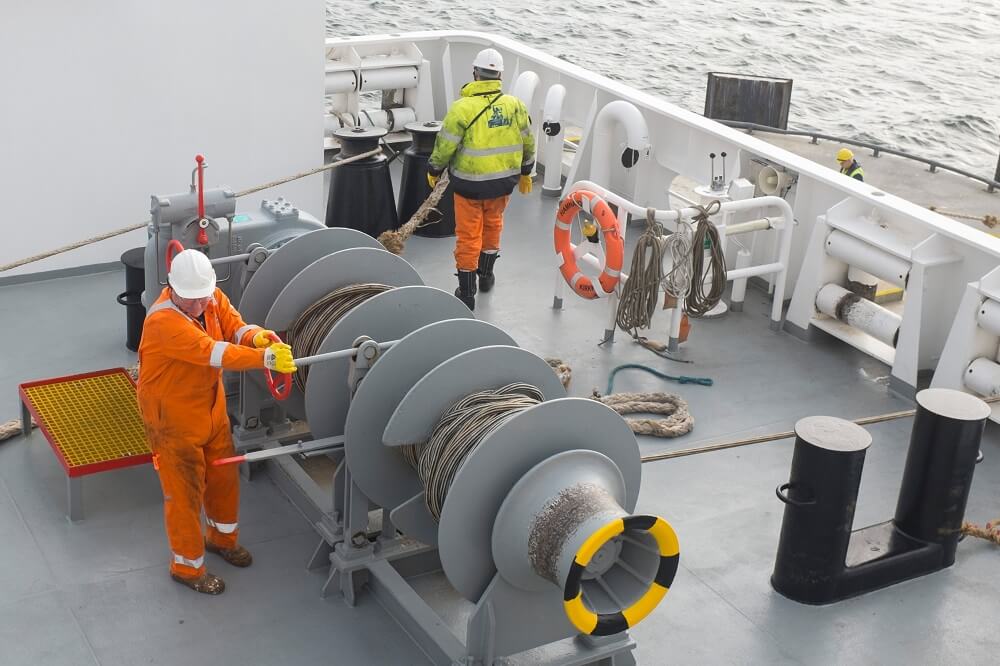
Seafarer happiness took a step decline in the most recent report (file photo)

Published Oct 31, 2025 6:58 PM by The Maritime Executive


The Mission to Seafarers released its latest edition of the Seafarers Happiness Index, and it shows that after a period of encouraging improvement earlier this year, perception of working and living conditions at sea has taken a turn for the worse. With most indicators that define the lives of seafarers on a decline, the index shows that the average happiness level has plunged to 7.05 out of 10 in the third quarter of 2025. This is a sharp decline from 7.54 in the previous quarter.

The quarterly survey offers a stark reality check to the shipping industry, which has yet again been reminded that seafarers continue to be disgruntled by deep-rooted challenges that undermine morale, safety, and retention across the global fleet. Apart from digital connectivity, every other aspect of life at sea, cutting across wages, health, training, food quality, to workload management, is deteriorating.

For the industry that is grappling with a worsening recruitment crisis, the index shows that professional development opportunities recorded the steepest drop during the quarter. With the training happiness level dropping to 6.99 from 7.75, the industry is being warned that seafarers feel disgruntled with compliance-driven learning that often replaces genuine mentorship and skills transfer.

Seafarers are also raising frustrations due to wages, which they highlight remain stagnant despite increasing responsibilities, inflation, and the demanding nature of seagoing life. On health and exercise, they contend that operational pressures are increasingly compromising their ability to maintain their physical fitness and overall health. While the quality and quantity of food are a major issue, seafarers are also raising dissatisfaction with shore leave. They reported limited opportunities to go ashore, with operational pressures and commercial considerations continuing to override welfare needs.

According to the report, one area that should be of significant concern to the shipping industry is crew interactions. While historically it has been the most resilient and highest-scoring area, relations among crewmembers are breaking they report, evidenced by a score of 7.68 down from 8.12 in the previous quarter.

During the quarter, seafarers also reported that manning levels are too low, while administrative tasks have increased dramatically, and fatigue management remains a major unresolved issue. For the period, the only positive was in the area of digital connectivity, an indication that investments by operators to offer reliable internet access are delivering the desired results. Disparities, however, exist between vessels, with some crews enjoying robust connections while others still struggle with high costs and limited data.

Notably, the survey shows crews working aboard containerships are the happiest, followed by those aboard bulk carriers and cruise ships. Those working on offshore, RoRo vessels, and ferries are the least happy.   

“These results are a clear warning sign,” said Ben Bailey, The Mission to Seafarers Director of Program. “Seafarers are telling us that mounting operational pressures, growing administrative burdens, and ongoing crew shortages are taking a serious toll on their well-being across the globe.”

He added that without meaningful actions to address the systemic challenges, the maritime sector risks deepening its recruitment and retention crisis. The report warns that the issues could also have far-reaching consequences in terms of safety, sustainability, and the stability of global trade.

The full Seafarers Happiness Index report is available online.


InterManager: Fatigue Regulations Need to Reflect Reality at Sea

The uncomfortable truth is that the system we have built makes hours of work and rest compliance almost impossible - and everyone knows it.
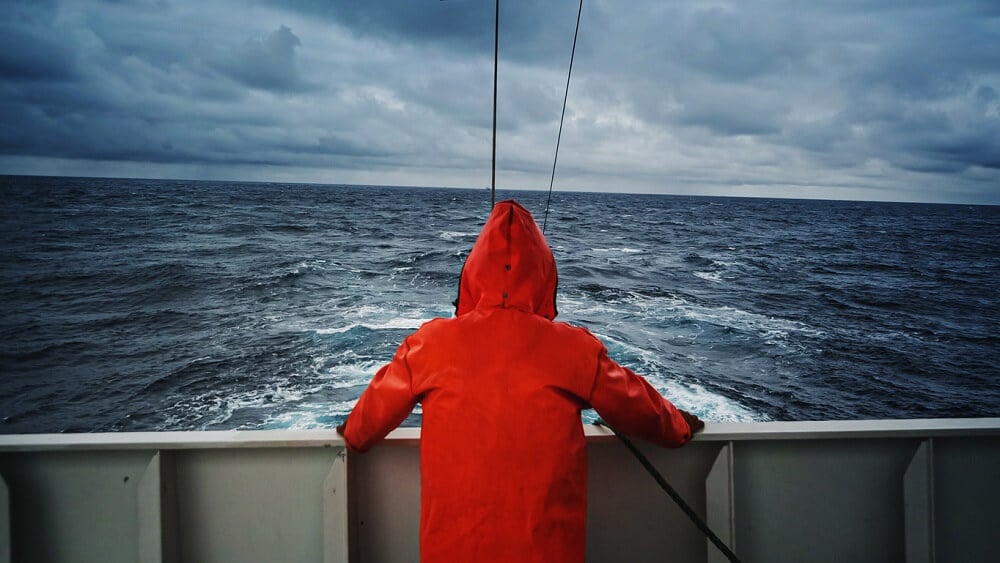
Seafarer
iStock

Published Oct 29, 2025 3:58 PM by Kuba Szymanski


Fatigue is not a new problem in shipping. It has been discussed, regulated, and reported for years, yet it remains one of the greatest threats to safety at sea.

Work schedules, crew size, and external conditions — such as adverse weather or busy port operations — can all play a role in building up cumulative fatigue. Even a single night of inadequate sleep can impair cognitive function, causing reduced alertness, slower response times, and lapses in concentration.

The uncomfortable truth is that the system we have built makes genuine compliance almost impossible - and everyone in the industry knows it.

At InterManager, we represent ship managers who are trying to do the right thing every day. They are responsible for running ships safely, supporting seafarers, and meeting a mountain of operational and commercial demands. They take fatigue seriously because they know it damages safety, morale, and retention. But we must be honest about the environment they work in.

When compliance is impossible

Today’s ships are expected to do more than ever before. Environmental regulations, reporting obligations, inspections, audits, and administrative requirements have multiplied. Yet manning levels have not kept pace. Crews are smaller, workloads are higher, and the paperwork never ends.

It should surprise no one that seafarers often struggle to meet the current rules on hours of rest. InterManager’s engagement with its members and seafarers shows that rest records are frequently falsified in order to show compliance. This is not because seafarers are dishonest, but because the system itself is unrealistic.

A seafarer cannot rest if the job is not done. When manning levels are too low for the workload, people will work until the work is finished, and then they will fill in the logbook to make it look right. That is not a failure of the crew or their managers; it is a failure of regulation to reflect reality.

The legacy of STCW 2010

The STCW Convention, last updated in 2010, was written for a different shipping world. It does not recognize the operational pressures of today’s vessels, where one person often carries the workload of two. Regulations on hours of rest and minimum safe manning look tidy on paper, but they do not match the conditions that exist at sea.

The result is predictable. Fatigue becomes part of daily life. Mistakes are made, near misses increase, and safety margins shrink. The industry has normalized a situation that is neither sustainable nor safe.

InterManager’s position is clear. We are calling for the revision of STCW to bring rules back in line with operational reality. Fatigue must be treated as a structural risk, not an individual failing.

The illusion of digital help

Technology is often presented as the answer. There is talk of digital tools that record hours of rest automatically or track workload more accurately. But many of these systems simply add more work and are not designed with seafarers in mind.

Every new app, every new portal, and every new reporting platform demands time and attention. Instead of lightening the load, they often make life more complicated. Digitalization must be human-centric - it must help seafarers and managers, not bury them under another layer of data entry and oversight.

The answer is not more systems but better systems - i.e., ones that remove duplication, automate reporting where possible, and give managers clear insight without demanding hours of input from already overstretched crews.

Trust and honesty

The falsification of rest hours is a symptom of a culture that values paperwork over people, andwe all know that fatigue reports are often adjusted to pass inspections. Everyone understands that compliance is more about appearance than accuracy, and this breeds distrust between seafarers, shore staff, and inspectors.

If we want to solve fatigue, we must rebuild that trust. Seafarers must feel safe to report reality without fear of punishment. Ship managers must be recognised as partners in finding solutions, not as targets for blame. And regulators must listen to those who are actually operating ships, not just those who write the rules.

Ship managers deserve support, not criticism

Ship managers are doing an extraordinary job under extraordinary pressure. They are responsible for thousands of ships and hundreds of thousands of seafarers, and they are expected to deliver compliance, safety, and profitability all at once.

They did not create the problem of fatigue, but they are the ones dealing with its consequences every day. InterManager stands behind them. Our members want realistic, safe, and sustainable operations, and are not asking for lower standards, just achievable ones.

We must stop pretending that manning levels set decades ago are sufficient for today’s ships. We must stop adding administrative burdens in the name of safety while ignoring the human cost. And we must ensure that regulations are written by people who understand what life at sea really looks like.

A quality club for a modern industry

InterManager is a global association of professional ship and crew managers who care deeply about the people keeping ships running. We believe true professionalism means honesty and having the courage to speak up when systems fail to work, even if that makes others uncomfortable.

Fatigue has been ignored for too long. It is time for the industry to show the same courage and authenticity that our seafarers demonstrate every single day.

Looking ahead

The revision of STCW offers an opportunity to make meaningful change. We can set realistic standards for hours of rest, modernise safe manning levels, and design digital tools that support human beings instead of overloading them.

InterManager will continue to push for these changes, not through criticism, but through collaboration. We will work with owners, regulators, and technology providers to ensure that safety starts with people, not paperwork.

Fatigue is not a weakness to be managed by individuals. It is a system-wide issue that demands system-wide reform. Let us start by acknowledging reality and by trusting the people who live it every day.

If we want a safer, more sustainable industry, we must first give our seafarers and ship managers the time, trust, and tools they need to rest - and to do their jobs properly.

Kuba Szymanski is Secretary General of InterManager.

The opinions expressed herein are the author's and not necessarily those of The Maritime Executive.

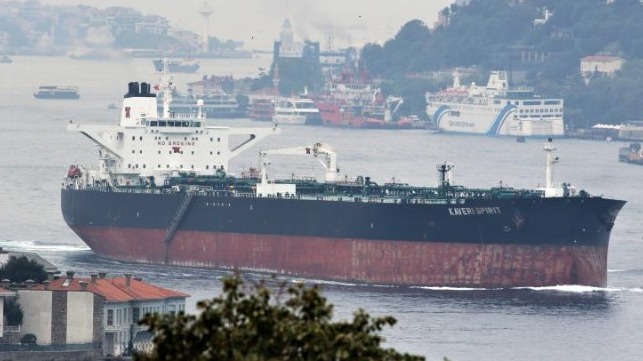
 

India-Bound Tanker Caught in STS Transfer of Russian Oil Off Oman

Samadha
Samadha, seen here as Kaveri Spirit (Cengiz Tokgöz / VesselFinder)

Published Oct 29, 2025 6:34 PM by The Maritime Executive


A report published in the Financial Times, quoting investigations carried out by TankerTrackers.com, a maritime intelligence company, has shown clear evidence of transshipments of sanctioned Russian oil at transfer locations in the Gulf of Oman. The cargo was destined for delivery to the Guru Gobind Singh Refinery in Punjab, a facility co-owned by Mittal Energy.

The investigation tracked the outward voyages of four sanctioned tankers, which each loaded in Murmansk. VesselFinder details the tankers as the Belgorod (Russian-flagged, IMO: 9412359), Danshui (Benin-flagged, IMO: 9589750), Dignity (Russian-flagged, IMO: 9283241) and Primorye (IMO: 9421960). All four of these vessels are sanctioned by the United States (OFAC), United Kingdom (OFSI) and the EU.

The receiving vessel in the transshipment from each of the four tankers was the Samadha (Sierra Leone-flagged, IMO: 9286281). The Samadha is owned by the Seychelles-registered Erika Freight Limited, which uses an address associated with multiple dark fleet vessels.

The transshipment area in the Gulf of Oman used by the tanker Samadha (Google Earth/Landsat/Copernicus/CJRC)

The trans-shipments in each case were identified in satellite imagery, taking place in an area 40 nautical miles due east of Sohar in the Gulf of Oman, outside Omani territorial waters. The four tankers from Murmansk switched off their AIS transponders as they approached the Gulf of Oman, whilst the Samadha sent out a spoofed AIS signal suggesting that it made a circular journey from India to Oman before turning back - all without meeting any of the Russian ships. The Financial Times' report published satellite imagery taken of each of transshipments as they took place. The value of the four loads transported between July and September has been estimated as $280 million.

The UK's OFSI sanctioned the Samadha on October 15, the EU having sanctioned the vessel on July 20 this year. The tanker for the moment remains free of OFAC sanctions. Sanctions databases link the Samadha at some point to what is now the NorthStandard P&I Association, but the post-sanctions insurance relationship is not clear.

In each instance the Samadha unloaded at Mundra on the Gujarati coast, the head of the 625-mile crude pipeline to the Guru Gobind Singh refinery.

The Guru Gobind Singh refinery is a joint venture between the state-owned Hindustan Petroleum Company and Mittal Energy Limited. The executive chairman of Arcelor Mittal is Lakshmi Mittal, who has recently announced that for tax reasons he will be giving up his UK residency.

The clear evidence of sanctions-breaking activities on the part of vessels sanctioned both by the EU and the UK's OFSI will present particular dilemmas for the regulatory and enforcement authorities. Arcelor Mittal has substantial steel and mining investments in both the EU and the UK. In an ongoing political dispute in the UK over a spy case dropped allegedly because it would upset the Chinese government, and hence jeopardize Chinese investments, the British government has shown a reluctance to take robust action against malefactors if its economic interests would be jeopardized. It also signed a trade agreement with India in July.

The United States has been seeking to tighten curbs on Indian consumers and Russian producers of Arco-grade crude, and has imposed sanctions on Russia's two biggest crude producers, Rosneft and Lukoil.

As for Samadha, the vessel may not need to conduct an STS transfer on her next voyage - at least, not in the role of the receiving ship. The latest AIS data puts the tanker off the coast of Russia's Kola Peninsula, en route to Murmansk. 

Top image: Samadha, seen here as Kaveri Spirit (Cengiz Tokgöz / VesselFinder)


AD Ports Signs to Run Daily Container Train to Sohar

Hafeet Rail trains will be able to carry 20-foot, 40-foot and 45-foot containers (Hafeet Rail)

Published Oct 29, 2025 5:06 PM by The Maritime Executive


Noatum Logistics, a subsidiary of the AD Ports Group, has signed an agreement with Hafeet Rail to run a daily container freight train between Sohar in Oman, and the Emirati railway hub at Al Ain, which in turn is directly through-connected to Khalifa Port, but also to the ports of Jebel Ali, and Fujairah. This will be the first cross-border connection of what is planned to be a GCC-wide network.  The train will be configured to carry 276 TEUs, equivalent to 15,000 tons of general cargo. A daily service in both directions will be offered from the start, to be expanded as demand increases.

Noatum Logistics already runs a similar such container service between Khalifa Port and Fujairah, and hence has the container handling infrastructure in place for dockside to rail operations.

The Hafeet Rail line between Al Ain and Sohar Port, not yet complete, is a joint project between Etihad Rail, Oman Rail and Mubadala Investment. When in service, there will be competition between Fujairah and Sohar Port to win traffic wishing to save on sailing time, insurance and shipping costs by avoiding passage through the Strait of Hormuz. The two ports are only 50 miles apart, but Sohar may have a marginal advantage as it is a safer distance from Iran, deeper into the Gulf of Oman and closer to the sea routes to Asia, Europe and Africa. 

The Port of Sohar is operated by Asyad, Hutchinson and the Port of Rotterdam, and has seen rapid expansion in recent years as the Sohar Industrial Zone has grown. Besides steel, ferrochrome, polypropylene, aluminum and foodstuff production complexes, the Zone also hosts a large rare earth refining facility producing antimony trioxide.

Sohar has attracted foreign direct investment of more than $26 billion, and acreage allocated to its industrial zone has had to be significantly increased since it was first set up in 2002. The port handled a 15% growth in container traffic during 2024, rising to 942,000 TEUs, but bulk cargo handling grew by 72%.

The planned rail network linking the UAE and Oman (Hafeet Rail)

In Hafeet Rail's next phase of construction, it is planned to add Port Sultan Qaboos in Muscat to the network. The final goal is then to add in Duqm and Salalah, providing a freight route for Saudi Arabia directly to the Arabian Sea. 

Saudi Arabia has long sought a trade route to the Arabian Sea which avoids the perils of both the Red Sea and the Strait of Hormuz.  Driving a route through Oman to Duqm and Salalah is a more realistic goal than attempting to create a similar egress through a permanently unstable Yemen.


HMS Prince of Wales Approaches Suez Canal

Red Sea: Norway's frigate HNoMS Roald Amundsen prepares in Exercise Bahr Guardian (Royal Navy)

Published Oct 29, 2025 2:35 PM by The Maritime Executive


The UK carrier strike group (CSG) led by HMS Prince of Wales (R09) is safely through the Bab el Mandeb and past the coastline controlled by the Houthis in the southern Red Sea, the transit having been conducted on October 26. The CSG is expected to pass through the Suez Canal on the evening of October 29.

Since completing joint training with the Indian Navy in the Arabian Sea, the Royal Navy successfully put up a smokescreen around the whereabouts of the CSG, giving out that the CSG was involved in Exercise Bahr Guardian - about which no details were published, but which may have entailed final work-up training for the Red Sea transit.

For part of the scheduled exercise activity, the carrier and its escorts were however tied up and seen alongside on October 21 in the port of Duqm, leaving the next day.

HMS Prince of Wales alongside in Duqm on October 21, with six other warships tied up further south (Sentinel-2)

The operation to transit the southern Red Sea will probably transpire to have been the most hazardous phase of the CSG's nine month deployment, particularly as having made the same transit (but in the opposite direction) back in June, the Houthis who might wish to threaten passage would know what to expect. A planning team from the UK's joint headquarters at Northwood helped plan a coordinated air and sea contingency operation to ensure that the passage went ahead without incident, with potential threats monitored and neutralized. This entailed deployment of extra surveillance assets, and also the mobilization of diplomatic support to secure assistance from parties who could assist.

At the time of the transit, the ever-acute MT Anderson observed that the US Navy presence in the Red Sea was at a minimum, with only the Arleigh Burke Class destroyer USS Forrest Sherman (DDG-98) on hand. The USS Forrest Sherman is likely to have assisted with provision of anti-drone and missile cover during the transit.

In recent days, the Norwegian Nansen Class frigate HNoMS Roald Amundsen (F311) as its most constant allied member has been operating as part of the CSG, as has the Japanese Murasame Class destroyer JS Akebono (F108) on an unusually far-distant deployment from home. Other ships in company are the Type 45 destroyer HMS Dauntless (D33) and the Type 23 frigate HMS Richmond (F239). According to @UKForcesTracker, the fleet resupply ship RFA Tideforce (A139) is already in the Mediterranean, waiting to support the CSG when it arrives. It is not clear where RFA Tidespring (A136) is, but she may possibly linger and escort HMS Lancaster (F229) on its return trip from Bahrain to the United Kingdom via the Cape. Which ships now make up the CSG should become clear following its transit of the Suez Canal. 

Once through the Suez Canal, the CSG is scheduled to conduct Exercise Falcon Strike 25, involving joint air operations training with Harrier aircraft of the Italian Navy.


Recycling Ships Under Two Conventions: Misconceptions About Basel and HKC

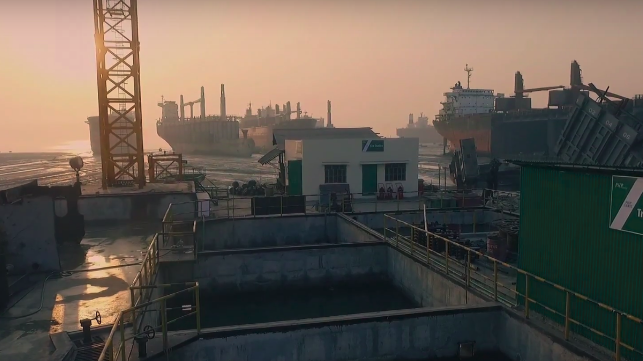
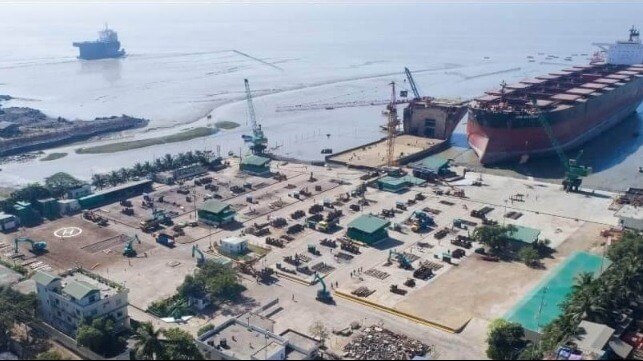
PHP Chittagong yard
File image courtesy PHP

Published Oct 29, 2025 10:22 PM by Dr. Nikos Mikelis


In November 2024, BIMCO launched a Ship Recycling Alliance to help accelerate safe and environmentally sound ship recycling of ships through the coordination of the voices of the ship recycling industry and the shipping industry. The alliance was also launched to help facilitate the global implementation of the Hong Kong International Convention for the Safe and Environmentally Sound Recycling of Ships 2009 (HKC) prior to its entering into force in June 2025.

As both industries navigate the entering into force of the HKC and the legal inconsistencies with the “Basel Convention on the Control of Transboundary Movements of Hazardous Wastes and their Disposal” (BC), together with its “Ban” amendment, BIMCO has repeatedly called for those inconsistencies to be solved. The BC is almost universally ratified (191 Parties), its Ban amendment has been ratified by 104 countries, while the HKC has 24 Parties so far.

Meanwhile, we are repeatedly seeing misconceptions relating to the complex interrelations of the two conventions and their co-existence. The recent article entitled “Breaking Ships, Building Consensus - How the Basel Ban and HKC Can Coexist” by Prof Ishtiaque Ahmed conveys misunderstandings on some central aspects of both Conventions and as a result draws erroneous conclusions. In view of the importance and timeliness of this matter, it is essential to provide a response.

In 2004, the governing body of the BC - realizing that its convention did not work as intended on end-of-life ships - formally requested IMO to develop a purpose-built convention for the recycling of ships (decision VII/26). The BC and its Ban amendment have no cognizance of the maritime concept of “flag State,” which is embedded in all IMO conventions and in UNCLOS. Instead, BC recognises the State of export (of the wastes), the State of import, and any transit States. Conveniently, for purposes of the BC, the State of export of an end-of-life ship has been considered to be the port from which the ship commenced its last voyage, with no consideration given to the ship’s flag State or the State where the shipowner is registered or domiciled.

From 26 June 2025, with BC, the Ban amendment, and the HKC all being in force, some practical questions arise for a ship that is heading for recycling:

(a) Should HKC be the sole Convention that regulates ship recycling (being the most recently developed; being subject specific; and having been developed following the initial request of the BC’s governing body)?

(b) Should both Conventions apply fully to end-of-life ships? And if so, what happens if some of the key requirements of the two Conventions are contradictory?

(c) Did the developers of the HKC design its requirements in ignorance of the requirements of the BC and its Ban amendment, or did they account for any necessary sharing of regulatory responsibility so that there would be no conflict?

Prof. Ahmed’s article promotes the view that both Conventions must apply at the same time to end-of-life ships. It offers an interpretation as to how the division of responsibility should work between the two Conventions and states that: “In this light, Basel regulates whether and under what conditions ships may cross borders for dismantling, while HKC sets the substantive standards for dismantling once a vessel has lawfully arrived at a facility.”

In other words, the article claims that the decision of where a ship is allowed to sail to be recycled should be taken by the BC and, where applicable, by its Ban amendment. Regarding HKC, it said: “HKC governs the dismantling process itself, not what happens beyond the facility gate”. And also: “In this light, Basel regulates whether and under what conditions ships may cross borders for dismantling, while HKC sets the substantive standards for dismantling once a vessel has lawfully arrived at a facility.”

This interpretation ignores a large part of the design of the HKC, which regulates the process that has to be followed before the flag State can issue the International Ready for Recycling Certificate (IRRC) which is needed before recycling can start. This process ensures that the shipowner, the flag State, the ship recycling facility and the authorities of the recycling State are all in agreement for the recycling to take place, having taken into account the capacity of the recycling facility to accept and dispose of hazardous materials, etc.

The article in question also contains some statements that mistakenly arrive at a conclusion as to which Convention should regulate what process, stating that “By prohibiting OECD-flagged vessels from being dismantled in non-OECD states, Basel directly constrains access to the very yards where global capacity is concentrated.”  This is a mistaken understanding, since the BC and its Ban amendment do not concern themselves with the flag of the ship, nor the nationality of its owner, but only with the ports of export, import and any transit States. According to the BC and its Ban amendment, a Chinese-owned, Chinese-flagged ship would be detained if it were to depart from a port in the EU to return to China for recycling. The BC would treat it as an illegal export of hazardous waste from an OECD country to a non-OECD country.

Another misconception that is likely causing confusion is the statement that: “Basel’s Ban need not mean permanent exclusion for non-OECD shipbreaking states. Rather, it creates an incentive to transform. By upgrading facilities to OECD-equivalent standards, institutionalizing strong worker protections, and establishing transparent downstream waste management systems, South Asian yards can credibly argue for “functional equivalency.” And again: “By investing in OECD-standard infrastructure, pursuing recognition and certification, and aligning domestic regimes with international best practice, non-OECD states including South Asia can maintain their central role in global recycling under both frameworks.” These statements are incorrect. There is no provisions in the BC that would allow an upgraded individual recycling facility in a non-OECD country to be recognized as “functionally equivalent”. In fact, there are already recycling facilities in South Asia that operate with better standards compared to some OECD based facilities, but the BC has no mechanism to recognize this.

The HKC’s developers accounted for sharing of regulatory responsibility with the BC in relevant domains, so that there would be no conflict between the two conventions. The BC has two main pillars to support its aims: (1) It restricts the transboundary movements of hazardous and other wastes, except where this is in accordance with the principles of environmentally sound management (ESM) and provides a regulatory system for when transboundary movements are permissible (with the process of the Prior Informed Consent – or PIC); and (2) the Convention focusses on the reduction of hazardous waste generation and the promotion of ESM of hazardous wastes, wherever the place of disposal.

HKC, in its regulation 20, makes a distinction between practices related to the environmentally sound management of wastes within and outside of the ship recycling facility. It requires the identification, labelling, packaging and removal of all hazardous materials from the ship and their ESM within the boundary of the ship recycling facility, while it states that practices related to the treatment and disposal of hazardous wastes outside the recycling facility shall be done in facilities approved by the State (in line with its obligations under the Basel Convention).

However, when it comes to BC’s PIC procedure and its Ban amendment, both of which are problematic in the context of shipping’s governance and operations, HKC replaces these with a process that relies in the consent being agreed between the ship’s flag state and the recycling state. In HKC, the recycling State is responsible for authorizing (or refusing to authorize) its recycling facilities and for setting any limitations it decides on the allowed types and quantities of hazardous materials, as well as on any limitations it may wish to impose on the types and sizes of ships to be recycled. It issues the facility with the Document of Authorization to conduct Ship Recycling (DASR for short). The flag State on the other hand is responsible for the type and quantities of hazardous materials that are found onboard its ships by issuing a statutory certificate that identifies their quantities and location (International Certificate on Inventory of Hazardous Materials, or ICIHM).

Before a ship can be sent for recycling, the recycling facility must obtain approval from the recycling State for the Ship Recycling Plan (SRP) that it has produced based on the specific ship’s particulars, plans and ICIHM. If the SRP is approved, the ship’s flag State conducts a final survey on the ship to confirm that the ship fulfils its ICIHM and that the SRP accounts for all the hazardous materials in its IHM and that it has been approved by the recycling State. Then the flag State issues the International Ready for Recycling Certificate (IRRC). Without a valid IRRC no recycling can be allowed to start by the recycling State.

In conclusion, the HKC was designed to replace the PIC and the Ban amendment of the BC with the IRRC process, which ensures the informed consent of flag, transit, and importing States prior to allowing any recycling to take place. At the same time, the HKC was always intended to coexist with the Basel Convention by relying on the obligation that the Parties to the BC already have to oversee the ultimate management and disposal of hazardous wastes outside the boundaries of recycling facilities.

Dr Nikos Mikelis is an Independent Consultant and Chairman of BIMCO’s Ship Recycling Alliance.

The opinions expressed herein are the author's and not necessarily those of The Maritime Executive.


When Consent Isn’t Enough: What Basel’s Article 11 Means for the HKC

PHP shipbreaking
File image courtesy PHP

Published Oct 29, 2025 10:15 PM by Dr. Ishtiaque Ahmed


Debate over whether the Hong Kong Convention’s (HKC) flag-state International Ready for Recycling Certificate (IRRC) can substitute for the Basel Convention’s Prior Informed Consent (PIC) goes to the heart of how the world manages end-of-life ships. Proponents claim the HKC delivers equivalent level of environmental protection through HKC compliant yards, Inventories of Hazardous Materials (IHM), and Ship Recycling Plans (SRP) tailored to vessels followed by issuance of IRRC by the ship’s flag state administration. Critics counter that Basel’s consent system is territorially grounded, requires import-state consent and transit controls, and—under the 2019 Ban Amendment ratified by 102 states—prohibits certain export flows that HKC would still permit. The Basel Conference of the Parties (COP) has yet to recognize HKC as Article 11-equivalent. Concerns persist over reflagging, conflicts of interest when the flag and recycling states coincide, weak downstream hazardous-waste controls, and uneven enforcement.

Two global instruments now shape the fate of ships at the end of their working life. The Basel Convention governs transboundary movement of hazardous waste, imposing shared responsibility through prior informed consent among exporting, importing, and transit states. The HKC regulates how recycling itself is conducted—through national yard authorization, ship-specific planning, and flag-state certification. They aim at the same outcome but from different vantage points: Basel controls the border; HKC organizes what happens inside the yard.

Basel’s system is territorial and collective. Exporters must notify; importers and transit states must consent in writing; and the exporter remains accountable until final environmentally sound management (ESM) is achieved. Each step is documented and traceable, creating a chain of custody that deters environmental dumping.

HKC, by contrast, is operational. It depends on the recycling state’s domestic authorization and internal safety systems: a traveling IHM, an SRP for each hull, and a yard holding a Document of Authorization to conduct Ship Recycle (DASR). Once these are in place, the flag state issues an IRRC certifying the vessel “ready for recycling.” Supporters argue this package functionally mirrors Basel’s PIC protections: if the yard and plan are approved and the IHM verified, the receiving state has already ensured capacity and compliance. For vessels declaring for recycling while at sea, HKC’s structure is also far more workable than reconstructing exporter identity mid-voyage.

Critics argue that structure cannot substitute for jurisdiction. Under the Basel Convention, the PIC process is more than administrative formality—it represents a sovereign-to-sovereign deal or agreement. Consent is exchanged directly between national authorities, ensuring that the exporter’s due diligence extends through to the waste’s final disposal. In contrast, the HKC’s IRRC, however robust, functions merely as a flag-state document. When a ship’s flag state is also its recycling state, this mechanism effectively becomes self-authorization, dismantling the external oversight and balance, a cardinal principle of Basel’s regulatory framework.

The deeper gap lies downstream. Basel’s definition of Environmentally Sound Management (ESM) extends beyond shipbreaking. It demands segregation, safe transport, treatment, and disposal of residues—sludges, asbestos, PCBs, contaminated steel, e-waste—with traceability and accountability at each stage. HKC’s scope largely stops at the yard gate. That silence undermines claims of “Article 11 equivalence,” which requires proof that alternative arrangements offer an equivalent level of environmental protection.

Attempts to treat HKC’s IRRC as a standing substitute for Basel’s PIC have repeatedly failed on these grounds. To date, the Basel COP have refrained from recognizing equivalence, citing persistent deficiencies in regulatory oversight and downstream waste management practices. The recent Ban Amendment compounds the divide: the Basel Ban Amendment now prohibits certain North–South hazardous-ship movements outright, while HKC would allow them. Certification cannot reopen a door that Basel Parties have lawfully closed.

For South Asian ship-recycling nations and steel buyers, this may appear legal hair-splitting. It is not. The consequences are concrete: whether residues leave yards under licensed transport, whether manifests reconcile volumes, whether treatment capacity matches output, and whether incidents are tracked and corrected. These elements distinguish paper compliance from actual protection.

The practical path forward is to make Article 11 of Basel do the work it was designed to do—permit flexibility only where outcomes demonstrably meet Basel’s protective floor. That requires building a bridge with verifiable load-bearing pillars.

Yard authorization under the HKC must be specific and conditional—anchored in verifiable accountability across the entire downstream chain not only up to the yard gate. Evidence, not assurances, should underpin compliance: executed contracts with licensed Treatment, Storage, and Disposal Facilities (TSDFs), digital waste-tracking systems, routine audits, and clear authority to suspend or revoke authorization when controls fail. This approach aligns with one of the HKC’s own provision, which encourages Parties to adopt measures more stringent than those prescribed. The Convention’s preamble also assumes that recycling states already implement Basel-level downstream management. Given Basel’s long-standing and nearly universal implementation since 1992, making the issuance of a DASR contingent upon a verified, Basel-compliant downstream management chain merely formalizes what the framework has always presumed.

Exporting authorities, too, retain a role even under an Article 11 pathway. Joint pre-arrival inspections could confirm that HKC-authorized yards and Basel-compliant downstream chains are ready for the specific vessel and its waste profile. A unified movement document—combining HKC’s SRP with Basel’s tracking protocol—would give all parties access to identical, real-time data. Transparency is enforcement’s most cost-effective ally. Public registries of authorized yards and their downstream partners, annual residue-flow reports, and anonymized incident summaries would assure trading partners and local communities that equivalence is earned, not asserted. Mutual recognition between states should depend on such visibility and periodic performance reviews.

Critically, this model does not force a choice between the two treaties. Basel defines where and under whose consent transboundary movement occurs; HKC defines how safe and environmentally sound dismantling takes place. Harmonized, they are complementary: Basel secures fairness and accountability across borders; HKC embeds safety and environmental management within yards. The goal is not fewer rules, but interlocking ones.

Domestic courts particularly in South Asia have echoed this caution: in jurisdictions where infrastructure and enforcement are still maturing, Basel’s full safeguards remain applicable. HKC frameworks can exceed international baselines, but never undercut them. Article 11 should be used to raise standards, not lower them.

Three Principles for Lawmakers and Industry

So, what should policymakers and industry leaders take away?

First, this debate is not about penalizing recycling—it is about securing it. Sustainable ship recycling is both an environmental and economic imperative; weak governance helps no one.

Second, any credible claim of equivalence depends on downstream control. Without traceable waste management from hull to final disposal, IRRC-as-PIC is aspiration, not assurance.

Third, Parties can design verification systems that are rigorous yet practical, marrying Basel’s border discipline with HKC’s operational depth.

Article 11 of the Basel Convention should be deemed satisfied only where HKC yard authorization is explicitly tied to a fully Basel-compliant downstream chain—approved TSDFs covering all stages: segregation, storage, transport, treatment, and final disposal. This must include audited contracts, traceable manifests, reconciled movement data, and independent oversight by the importing state’s competent authority. Only under these conditions can an HKC’s IRRC be treated as a functional substitute for Basel’s PIC, aligning HKC practice with Basel’s “equivalent level of protection.” This is how the Basel framework can ultimately provide a corrective to the inherent weaknesses that the HKC incorporated at the time of its adoption in 2009. HKC certification, therefore, is valid only if Basel’s downstream compliance is demonstrably in place. Non-OECD facilities may arguably obtain EU-style exemptions from the strict enforcement of the Basel Ban only by demonstrating safeguards equivalent to those under the Basel framework and by maintaining recycling yards that conform to EU or OECD standards

The international community must now build consensus on a unified ship recycling framework, with the EU model offering a practical path forward. If adopted, HKC consent at the upstream stage could ensure Basel-level protection across the entire chain—from hull to final disposal. Without such integration, the IRRC remains a mere aspiration rather than a binding legal or environmental safeguard.

Dr. Ishtiaque Ahmed is a Professor and Chair of the Department of Law at North South University, Bangladesh. A former merchant marine engineering officer, he holds a Doctor of the Science of Law (J.S.D.) from the University of Maine School of Law, USA, where he specialized in ship recycling law and policy. Dr. Ahmed is also an active Member of the Chartered Institute of Arbitrators in London (MCIArb.) , qualified Barrister of England and an Advocate in Bangladesh Supreme Court. His expertise lies at the intersection of maritime law, environmental regulation, and sustainable ship recycling. He can be reached at ishtiaque.ahmed@northsouth.edu

The opinions expressed herein are the author's and not necessarily those of The Maritime Executive.