Saturday, November 01, 2025


Coast Guard Recommends Criminal Charges for Deadly Miami Barge Collision

Miami barge
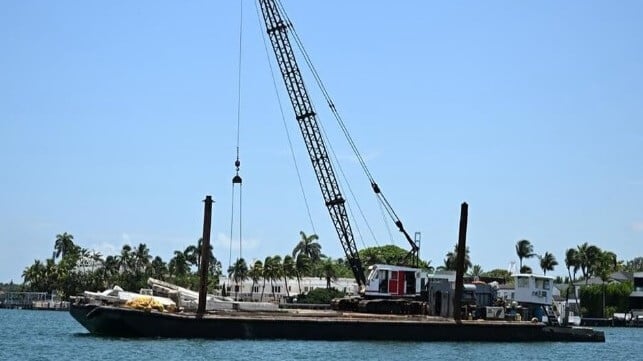
The pushboat Wood Chuck (bottom right) and its barge at the scene of the casualty (USCG)

Published Oct 30, 2025 10:05 PM by The Maritime Executive


The U.S. Coast Guard has recommended criminal charges of seaman's manslaughter in connection with the barge collision that killed three young girls in Miami's inner harbor earlier this year. 

On the morning of July 28, a barge hit a small sailboat near Hibiscus Island, a residential community off Miami Beach. The boat was operated by a sail training camp, and five young girls were aboard, led by a 19-year-old instructor. All went into the water, and some of them came up beneath the barge. Two were pronounced dead at Jackson Memorial Hospital, and two more were evacuated with critical injuries. One of the injured later succumbed.

The barge was propelled by the Wood Chuck, a small harbor pushboat. Lorenzo Palomares, an attorney for the tug's owner, told the Miami Herald that the skipper had seen the flotilla of sailboats and had attempted to steer away - but one boat darted out from the crowd and got in front of the barge, and there was too little time to avoid a collision. 

The Wood Chuck was less than 26 feet in length. Below this size, merchant mariner credential licensing is not required for workboat operations (46 U.S. Code § 8904), and certain small-tug firms in South Florida had been known to hire unlicensed crew as a matter of practice. Crew licensure and training has been part of the Coast Guard's investigation. 

"After conducting a thorough marine casualty investigation, we’ve referred this case to Department of Justice for criminal investigation to ensure full accountability and help deter similar cases in the future," said Coast Guard Sector Miami Commander Capt. Frank J. Florio. "As the process moves into this new phase, our thoughts and prayers are with those impacted by this tragic incident."

The Coast Guard did not name the suspects, saying only that it had recommended charges "against parties involved in the towing company." 

The seaman's manslaughter statute can be applied to crew, owners or charterers in connection with a fatal casualty, and is brought in cases of "misconduct, negligence, or inattention."


Video: Passengers Evacuated as Fire Destroys Nile River Cruise Ship

fire on Nile river cruise ship
Fire destroyed the luxury Nile river cruise ship (video online)

Published Oct 30, 2025 4:44 PM by The Maritime Executive


A total of 220 passengers, mostly foreign tourists, were successfully evacuated after a fire broke out on a Nile cruise ship. The Public Prosecutor’s office in Luxor, Egypt, has begun an investigation, but early indications are that it was caused by an electrical short starting in the vessel’s galley.

The Iberotel Crown Empress was built in 2004 as a luxury cruise ship designed for the Nile. It has 128 rooms with large panoramic windows and offered amenities including a swimming pool, spa, gym, and sun deck. 

The ship had started a 12-day cruise on the Nile from Luxor on Monday, October 27. The fire started around 6:15 p.m. local time on Tuesday, October 28, according to the media reports. Some of the passengers said they were alerted by other boats passing on the Nile and opened windows to observe large plumes coming from the ship.


The captain of the vessel diverted to an unofficial port at Esna on the Nile, but the evacuation was complicated by the fire being on the first deck. Some of the passengers were reportedly taken off by Good Samaritan boats on the river, while others were evacuated onto a boat alongside. 

All 220 passengers were removed from the vessel safely, but three crew members were taken to a hospital with non-life-threatening injuries.

The fire reportedly burned through the boat. A safety investigation is expected, with reports citing another major river boat fire on the Nile nearly 20 years ago. Five crew members were killed in November 2007 on the M/S Aurora near Luxor in a fire that started in the engine room of the ship. The 43 French tourists on board were safely evacuated.


Kongsberg to Demerge Maritime Business to Standalone Public Company

Kongsberg
Kongsberg maritime will become a standalone company to focus on growth opportunities in its sector (Kongsberg)

Published Oct 30, 2025 8:48 PM by The Maritime Executive


Norway’s Kongsberg announced strong financial results while telling the investment community that its divisions face divergent megatrends, which, while driving growth, are unique to the business units. As a result, the company said it would concentrate on its defense segments while demerging Kongsberg Maritime to become a standalone publicly traded company on the Oslo Stock Exchange.

The move follows others that have cited the expected investment in defense systems as well as the opportunities in maritime shipbuilding and systems. In Germany, German conglomerate Thyssenkrupp completed the spin-off of its marine shipbuilder TKMS, while Rheinmetall, a German defense technology company, recently acquired Naval Vessels Lurssen (NVL), a naval shipbuilder and repair operation.

Kongsberg cited the marked increase in geopolitical tensions and the trade wars while saying its growth in the most recent quarter was driven by Kongsberg Defense & Aerospace. It cited strong orders for its weapons stations while saying in maritime integrated vessel deliveries to the newbuild market and underwater contracts were key drivers. Maritime, however, had a one percent decline in revenues to more than $635 million, but with adjustments for one-offs in 2024, it said revenue was up two percent this quarter. Operating revenues were up nine percent in maritime.

“The units operate in different international markets that are undergoing change,” Geir Håøy, President and CEO of Kongsberg Gruppen ASA. “This places different demands on business models. Kongsberg Maritime holds a leading technology position and offers products and integrated solutions across a wide range of segments—from offshore vessels to the merchant fleet and naval segment.”

They noted that operating revenues have tripled since 2016 and today report the maritime business has a record high order backlog. They said the business is specialized and will be best suited with independent management to continue its growth. The proposal calls for giving one share of Kongsberg Maritime for each share holders currently have of Kongsberg. They expect to complete the demerger during the second quarter of 2026.

The standalone maritime business will be led by Lisa Edvardsen Haugan, who has been President of Kongsberg Maritime for the past three years. She has been with the group since 2007 and was previously EVP of Deck Machinery & Motion Control for three years, and before that finance roles at Kongsberg. 

“I’m proud to see that Kongsberg Maritime’s journey has brought us to a point where we are ready to stand on our own feet and continue growing in the years ahead. Globally, the maritime industry is entering a new era of growth, and we are uniquely positioned to take part in the value creation to come,” said Haugan in a posting. 

Mette Toft Bjørgen, currently Chief Financial Officer (CFO) in Kongsberg, will take the position as CFO in the new maritime business.


Samsung Heavy Industries Goes Beyond "MASGA" With Vietnamese Venture

PVSM
Courtesy PVSM

Published Oct 30, 2025 9:46 PM by The Maritime Executive


Korean shipbuilder Samsung Heavy Industries is a big player in the "Make American Shipbuilding Great Again" initiative, Seoul's successful plan to secure lower American tariffs by pledging investments in U.S. shipyards. But at the same time, SHI is also playing a key role in revitalizing Vietnamese shipbuilding, and could be poised to do the same in India. 

SHI's own yard capacity in Korea is largely booked out, thanks to the ordering boom of the last several years. The Korean shipbuilder is still taking in new business, but appears to be splitting it into two streams: simpler ships to be subcontracted out to foreign shipyards, like tankers, and high-tech ships to be built in-house, like LNG carriers and FSRUs. 

This is a windfall for Vietnam's domestic shipbuilding industry. Vietnam has a ready and available labor pool, including many shipfitters and welders who trained in Korea, but the local yards are not in the business of building ultra-large tonnage. SHI is fixing that with a three-ship, $238 million Suezmax tanker contract linked to UK-domiciled Zodiac Maritime. The vessels will be built at a subcontracted shipyard in Vietnam under SHI's supervision, creating shipbuilding capacity and economic activity for Vietnamese industry. 

The Vietnamese partner is Petrovietnam Marine Shipyard (PVSM), formerly known as Dung Quat Shipbuilding. PVSM is a subsidiary of state-owned PetroVietnam, and has the largest dry dock in the country. Its main line of work is in oil and gas offshore structure fabrication and repair. In May, PVSM announced that it would be getting new equipment and "advanced shipbuilding skillsets" from SHI through a cooperation agreement. For implementation, SHI said it would send a team of its own managers to work at PVSM to oversee quality management and provide training. In addition to overseas sales like the Zodiac deal, target markets for the SHI-PVSM partnership include "new modern ship models for the Vietnamese market." 

Samsung Heavy has also signed a partnership with Swan Defense and Heavy Industries (SDHI), operator of the largest drydock in India. SDHI's infrastructure is large enough to handle VLCCs; the deal gives SHI access to underutilized production capacity in another country with a large available workforce, and gives Swan access to Korean technology. 

In the United States, as part of the well-publicized trade deal between Seoul and the Trump administration, SHI has reached a partnership agreement with Vigor Industries centered on ship repair. It "may explore opportunities to support a U.S. shipbuilding renaissance," but for now the focus is a more modest initiative to provide maintenance, repair, and overhaul (MRO) capacity to the U.S. Navy. Vigor would serve as the prime contractor, but the work would be performed at  Samsung's own yards in South Korea.


Coast Guard Cutter Healy Returns to Seattle After 129-day Arctic Deployment

Healy in Arctic Ocean
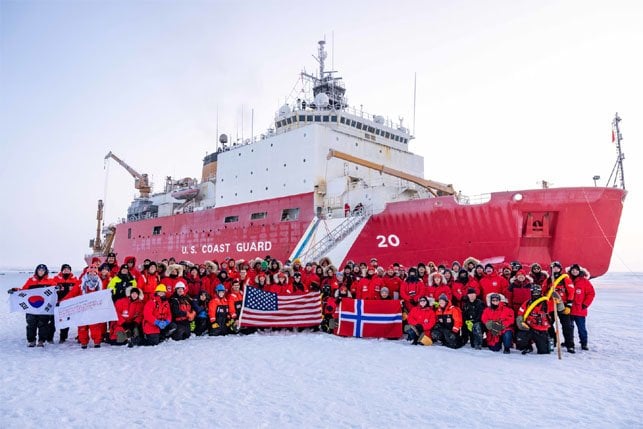
Crewmembers, researchers, and partner nation representatives on October 1 in the Arctic Ocean (USCG)

Published Oct 31, 2025 4:24 PM by The Maritime Executive


The U.S. Coast Guard Cutter Healy recently completed her annual missions to the Arctic. The vessel returned to Seattle, Washington, on October 26, following a 129-day patrol.

Healy, one of three Coast Guard polar icebreakers, steamed over 20,000 miles this deployment. She departed her homeport of Seattle on June 19 and, during her mission, was used to support Operation Arctic West Summer and Operation Frontier Sentinel as part of the USCG presence in the region.

Healy’s unique and specialized capabilities allow us to operate in the most remote regions, conducting the highest priority missions of the Coast Guard,” said Capt. Kristen Serumgard, commanding officer of Healy. “Healy’s dynamic crew of active duty and civilian personnel showcased tremendous adaptability, dedication and resilience, steaming over 20,000 miles through ice-covered waters to complete the mission.”

As a part of Operation Frontier Sentinel, Healy queried and monitored three foreign research vessels operating in ice-covered waters over the U.S. Extended Continental Shelf and U.S. Exclusive Economic Zone. A total of five China-affiliated research vessels were operating in the Arctic region over the summer, and Healy was one of several Coast Guard assets deployed to monitor activity in the region. The Coast Guard works in conjunction with U.S. Northern Command and Alaskan Command to constantly monitor foreign vessels operating in and near U.S. waters.

Healy’s crew also supported two missions involving the deployment and recovery of subsurface oceanographic equipment throughout the U.S. Arctic, East Siberian Sea, and Laptev Sea. This work was performed in conjunction with the Office of Naval Research, the National Science Foundation, and other partner agencies. USCG reports that the data collected will help build a more cohesive picture of the physical, biological, and chemical properties of the Arctic Ocean, improving maritime domain awareness north of the Arctic Circle.

As part of the Coast Guard’s Arctic District’s multi-faceted response to a series of devastating storms that struck Western Alaska communities, Healy also diverted to the affected region. She supported search and rescue and disaster relief efforts.

Commissioned in 1999, Healy is the largest cutter in the U.S. Coast Guard at 420 feet in length and 16,000 tons. Healy is designed to break 4.5 feet of ice continuously at three knots and can operate in temperatures as low as -50 degrees Fahrenheit, enabling year-round access to the Arctic Ocean.

With Polar Star and the recent addition of StorisHealy makes up the U.S. current polar icebreaker fleet. Construction is underway on the long-delayed new icebreaker Polar Sentinel, now expected for delivery in 2030, and the U.S. recently announced a new program with Finland to build up to 11 icebreakers at a projected cost of $6 billion. The program calls for expediting the construction using Finland’s capabilities so that the first new vessels will be delivered in 2028.


US Coast Guard Finishes a 16-Ship Life Extension, On Time and Under Budget

Hollyhock
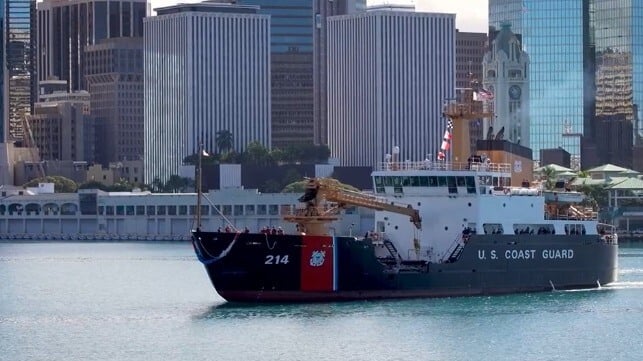
USCGC Hollyhock arrives at Honolulu (USCG)

Published Oct 30, 2025 11:15 PM by The Maritime Executive


The U.S. Coast Guard buoy tender USCGC Hollyhock is back in service and at work in the Pacific, where she will maintain the service's aids to navigation in Hawaii and in far-flung island territories. The vessel is the last of the 16 Juniper-class hulls to complete a midlife refit and life extension, and the class-wide overhaul program is now complete - on time and under budget, a rarity in a large-scale government shipyard project. 

For Hollyhock, the 800-day-long refit included upgraded machinery control systems, propellers and HVAC, along with hull repairs and replacement of obsolete equipment. Reliability and uptime will be key in the vast distances of the Pacific: When deployed on foreign-assistance missions to help out with buoy servicing in remote island chains, Hollyhock will often be the only American presence of any kind. "Our arrival enhances the Coast Guard’s capacity to maintain vital navigational aids that facilitate the safe flow of maritime commerce. This is especially crucial in Hawaii, where more than 90% of goods arrive by sea," said Cmdr. Jessica McCollum, commanding officer of the Hollyhock.

The refit program for the Junipers evolved from previous efforts to overhaul and extend the life of the medium-endurance cutter fleet; that earlier program was successful enough that some of the oldest examples of the WMEC class are still on patrol today, after six decades in seagoing operation. The buoy tender refit program spanned a difficult era for shipyard work - a 10-year timeline from the mid-2010s, which included two government shutdowns, COVID-19, a Coast Guard recruiting crisis, shipyard labor shortages and the post-pandemic period of heightened inflation - but through it all, the series of overhauls stayed on track. 

“This outstanding accomplishment highlights the Coast Guard’s commitment to delivering reliable, mission-ready vessels both efficiently and cost-effectively,” said Kenneth King, the program manager for midlife maintenance, in a statement upon redelivery. “Completing these 16 major maintenance availabilities on time and under budget exemplifies the service’s strategic approach to recapitalization, ensuring greater operational availability, reduced lifecycle costs and enhanced readiness to meet the Coast Guard’s critical missions.” 

By contrast, U.S. Navy repair programs generally struggled with delays and budget overruns during the same period - exemplified by the four-year effort to repair the brand new USS Gerald R. Ford, the six-year midlife refit for USS George Washington, and the $1.8 billion spent on refitting cruisers that were then decommissioned. These vessel classes all have far higher level of technical complexity than Coast Guard assets, and driving down maintenance cost and duration is a top priority for the Navy.

THE MUSK DEEP STATE

DOGE Staffer Takes Helm at Office of Naval Research

NRL
Part of the Naval Research Laboratory campus, a division of ONR (Antony-22 / CC BY SA 4.0)

Published Oct 30, 2025 5:57 PM by The Maritime Executive


The U.S. Navy has selected a former DOGE member, ex-McKinsey consultant Rachel Riley, to replace a senior Navy admiral as head of the Office of Naval Research. As the new civilian chief of ONR, Riley now oversees the Navy's research-grant enterprise, which pays university and contract scientists to produce the basic research essential to maintaining the Navy's technological edge.

Riley is a veteran of the DOGE-led staff reduction program at the Department of Health and Human Services. Under her leadership, according to Politico, the DOGE intervention team attempted to reduce headcount at HHS by 8,000 positions, with most of the layoffs concentrated in the research-focused National Institutes of Health (NIH); the number of layoffs was ultimately reduced to about 1,000. One of her last acts at HHS was to propose the elimination of the Center for Scientific Review at NIH, the body's grant-review bureau, according to Politico; the Center's grant function within NIH is similar to the research-funding mission of ONR.

Early in her career, Riley took a doctorate at Oxford as a Rhodes Scholar, then settled into a long-term job with McKinsey. She rose through the ranks in the Washington, D.C. and Atlanta offices, and she made partner in late 2022. Riley's public resume does not describe experience with engineering or research, other than her nine-month appointment to the DOGE team at Health and Human Services. 

Riley, 33, has been selected to assume the duties of previous ONR commander Rear Adm. Kurt Rothenhaus, a software engineering PhD who has served in the Navy for 33 years.

Rear Adm. Rothenhaus had run ONR since 2023; before that, he served in a variety of command roles related to the Navy's digital infrastructure development, including chief of the Navy’s Tactical Networks Program Office and head of the giant San Diego R&D complex, Naval Information Warfare Center Pacific (NIWC Pacific).

ONR grants underwrite the work of leading research universities' oceanography and engineering departments, as well as the functioning of the UNOLS "white hull" fleet of civilian research vessels. All of the T-AGOR-class research ships at American universities were built by the Navy, belong to ONR as the shipowner, and are chartered to their respective academic operators. It is also home to the Naval Research Laboratory (NRL), a Nobel-winning research establishment headquartered on the Potomac.

Over the years, ONR and NRL have delivered useful technological contributions to the nation's defense. Their accomplishments include the invention of radar; the idea of GPS; the SOSUS subsea surveillance system; the first surveillance satellite; and key contributions to marine HF radio technology. 

Top image: Part of the Naval Research Laboratory campus, a division of ONR (Antony-22 / CC BY SA 4.0)


Seatrium's 1st Royal NZ Navy Maintenance Under Partnership with Babcock

Seatrium

Published Oct 31, 2025 10:34 AM by The Maritime Executive


[By: Seatrium]

We are proud to announce the successful completion of maintenance and delivery of the HMNZS Aotearoa - marking the first Royal New Zealand Navy (RNZN) project delivered under our partnership with Babcock Australia & New Zealand.

Since April 2025, Seatrium has established a collaboration with Babcock Australia & New Zealand to deliver repairs and maintenance for RNZN vessels too large for the Devonport Naval Base dry-dock.

The successful and timely completion of HMNZS Aotearoa - reflects Seatrium’s technical excellence, reliability, and commitment to mission readiness for our partners. This achievement reinforces our commitment to expanding our defence and security portfolio through trusted, long-term partnerships - supporting the material availability of naval forces worldwide. 

Mr. Alvin Gan, Executive Vice President, Repairs and Upgrades, Seatrium, said, “We are honoured to partner Babcock as a favoured contractor for the RNZN. This agreement affirms our capabilities in specialised repairs for naval and maritime security projects and reflects our dedication to delivering excellence in customised maritime defence solutions. The successful and on-time completion of HMNZS Aotearoa lays the cornerstone for a productive collaboration over the next five years.”

The products and services herein described in this press release are not endorsed by The Maritime Executive


India’s PM Modi Celebrates Maritime Week as Maersk and DP World Invest $7B

India Maritime Week
India highlights its investment to grow maritime industries (Modi)

Published Oct 30, 2025 8:20 PM by The Maritime Executive


India’s Prime Minister Narendra Modi marked the resurgence of the country’s maritime industries as the government continues to promise large investments in shipbuilding and shipping to place India in the global market. Plans were confirmed for India’s new domestic containership company, while both Maersk and DP World announced new logistics investments valued at $7 billion.

Attending the Maritime Leaders Conclave, Modi said a decade ago, when his government started, “India’s maritime sector was filled with outdated laws and limited capacities. This was not acceptable… Today, the sector stands transformed as a symbol of modern infrastructure, global trust, and national pride.”

The government has invested in ports and used private partnerships with Modi says port capacity has doubled from 1,400 to 2,762 MMTPA. Cargo handling has risen from 972 to 1,594 MMT, and vessel turnaround time has been reduced from 93 hours to 48 hours.

India’s goal is to expand its shipbuilding industry to be among the top five worldwide. At the same time, the government wants to decrease the amount of cargo carried by foreign-flag carriers. To that end, the Modi government has instructed the Shipping Corporation of India to launch, in partnership with the ports, a domestic-flag container carrier. Known as Bharat Container Shipping Line, it will initially focus on regional shipping routes mostly in Asia, as India has a goal to carry at least 20 percent of its cargo on its own ships.

The government has also created a finance package to encourage investment, and Modi said the goal is more than 2,500 vessels. He also outlined landmark bills for Bill of Lading and modernizing port and maritime governance. He beckoned to the industry, “Come, Invest in India.”

DP World announced five new memoranda it signed during Maritime Week, pledging to invest $5 billion. They said this is in addition to $3 billion already invested in the past three decades and that it will focus on the integrated supply chain network as well as Indian shipbuilding. It said the agreements span from green coastal shipping to shipbuilding, ship repair, skills development, and advanced freight mobility.

DP World’s Unifeeder signed an agreement with a finance company, Sagarmala Finance Corporation, to advance green coastal and short-sea shipping across India. DP World said Drydocks World would invest with Cochin Shipyard in expanding the ship repair at Kochi, and they would also work on advanced skills development. With the Cochin Port Authority, it will enhance maritime infrastructure in Kerala, and with Deendayal Port Authority, it will install a 750-meter MagRail Booster pilot track.

Maersk’s APM Terminals also outlined $2 billion in planned investments. Maersk said that it intends to significantly expand its operational footprint in India through port infrastructure investments, vessel reflagging, and partnerships.

The company confirmed the reports that two vessels were reflagged to the Indian Registry in October, and it said it is deepening collaborations with Indian shipyards to explore repair, maintenance, and newbuilding opportunities. It is also exploring the local manufacturing of containers in India.

American Waterways Operators Highlight Industry's Importance to Security

American Waterways Operators

Published Oct 31, 2025 10:16 AM by The Maritime Executive


[By: American Waterways Operators]

The American Waterways Operators, the trade association of the American tugboat, towboat and barge industry, has released a new video on the industry's contributions to U.S. national and homeland security.

The two-minute video, The Tugboat, Towboat and Barge Industry: Supplying America, Securing America, notes that while the mariners who transport cargo and facilitate commerce on America's rivers, coasts, harbors and Great Lakes are critical to powering the economy, they also play a vital role in safeguarding our nation: By supporting the Coast Guard in securing our borders and waterways; by moving military cargo on domestic waters and guiding Navy ships in and out of U.S. ports; by delivering supplies to help American communities recover from disasters; and by ensuring a strong, reliable domestic maritime supply chain under American control.

AWO President & CEO Jennifer Carpenter stated: "The mariners who move America's commerce on our domestic waterways, though often unseen, are a backbone of the U.S. supply chain and key contributors to our nation's security. We are proud to have produced this video to help tell the story of their outsized impact on America's prosperity and security."

The video can be viewed here.

The products and services herein described in this press release are not endorsed by The Maritime Executive.


APEC’s Wake-Up Call: Build Shipyard Capacity Together or Fall Behind

Trump
Courtesy of the White House

Published Oct 29, 2025 6:18 PM by Jeffrey M. Voth


As the Asia-Pacific Economic Cooperation summit opened this week in Gyeongju, the United States and South Korea faced a defining test of industrial execution. On Oct. 20, U.S. Trade Representative Jamieson Greer cautioned that Beijing is pressuring foreign firms investing in America’s shipbuilding sector, a move that directly affects financing, supply chains, and workforce expansion for U.S. yards. His warning reframed what might have been a routine trade discussion into a practical question for the maritime industry: can allied shipyards expand output fast enough to offset China’s scale and sustain throughput across the Asia-Pacific region?

Beijing’s move to penalize foreign companies involved in new shipbuilding projects in the United States highlights how government policy can influence shipyard financing, supplier contracts, and delivery schedules. The retaliation is part of a broader effort to deter allied participation in sectors that challenge China’s yard throughput and cost advantage. For Washington and Seoul, the lesson is clear: industrial cooperation must move from policy statements to executable build plans that expand capacity, protect supply chains, and keep production lines running on both sides of the Pacific.

Just ahead of APEC, Huntington Ingalls Industries (HII), America’s largest shipbuilder, and HD Hyundai Heavy Industries (HHI), the world’s largest shipbuilder, signed an agreement Oct. 26 to collaborate on distributed shipbuilding and jointly pursue navy auxiliary and commercial ship projects. The announcement shows how industry leaders are already converting policy dialogue into production alignment: sharing design methods, tooling concepts, and quality-assurance practices to raise throughput, shorten schedules, and strengthen allied yard networks that can compete at China’s scale.

Against that backdrop, the U.S. and South Korea finalized a $350 billion trade and investment framework on Oct. 29.  The agreement splits into $200 billion in South Korean cash investments, capped at $20 billion annually to manage foreign exchange exposure, and a $150 billion shipbuilding initiative led by Korean firms using their own capital. The structure directly addresses Seoul's currency-stability concerns while unlocking the scale of investment needed to modernize facilities, expand subcontractor networks, and accelerate production timelines across allied yards. The question now shifts from whether an agreement could be reached to how quickly industry can convert the framework into operational capacity.

South Korea’s industrial strategy underscores its expanding role in global commercial shipbuilding and its alignment with U.S. efforts to rebuild domestic maritime capacity. Seoul is investing heavily in production technologies that include robotic welding systems, AI-enabled inventory and materials management, and fully digital assembly lines that integrate design data directly into yard operations. Leading South Korean firms such as HD Hyundai Heavy Industries, Hanwha Ocean, and Samsung Heavy Industries are applying these technologies to commercial tankers, containerships, and LNG carriers while partnering with U.S. shipyards to transfer production know-how and workforce training models. By linking Korean process innovation with American infrastructure and suppliers, both nations can expand output, accelerate delivery schedules, and restore competitiveness in global vessel construction and repair markets.

This commercial partnership is also reshaping the workforce behind modern shipbuilding. South Korea’s Ministry of Trade, Industry, and Energy continues to support joint education and training programs with U.S. universities and technical institutes to prepare the next generation of marine engineers, production managers, and skilled trades. Collaborations between institutions such as the University of Michigan and Seoul National University focus on advanced design, project management, and digital production systems that link classroom learning to yard applications. By aligning academic programs with industrial needs, both countries are building a workforce capable of sustaining higher throughput, adopting emerging technologies, and driving long-term competitiveness across the maritime sector.

These collaborative developments reflect a broader shift in how the maritime industry is approaching global supply-chain resilience. By pooling capital, sharing production technologies, and aligning workforce training, the United States and South Korea are building a commercial model that other partners could adapt to strengthen their own shipbuilding and repair capacity. The agreement demonstrates that open markets can coordinate industrial investment while still promoting fair competition and sustainable growth. It also shows that international cooperation among shipbuilders can offer a practical, commercially viable alternative to the state-driven production model that dominates much of the global market.

The U.S.-Korea trade deal reached on the sidelines of APEC will determine whether allied governments and industry leaders can turn plans into production. The framework for shipbuilding cooperation can accelerate investment, expand yard capacity, and align supply chains across the Pacific. Failure to deliver through execution would reinforce the perception that the United States and its partners can announce agreements but not deliver results.

What’s at stake is more than trade policy; it is whether allied shipyards can now build at the scale and speed required to sustain global commerce and restore balance in the maritime industry.

Jeffrey M. Voth is an engineering and technology executive focused on strengthening the US maritime industrial base.

The opinions expressed herein are the author's and not necessarily those of The Maritime Executive.