Saturday, November 01, 2025

Toxic Stew: Chemicals, Poisons, Sprays, Nanoparticles, VOCs, PFAS’s and the Evil Monsters Cooking up this Brew

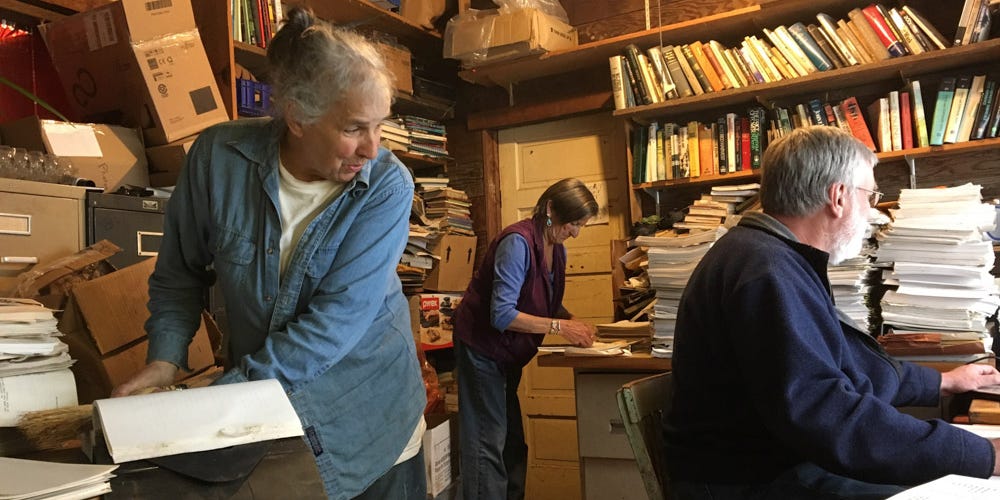
Carol Van Strum, 83, is still kicking in Siuslaw Forest, with donkeys, dog, chickens and a sky that opens up after dumping that rainforest serving rain

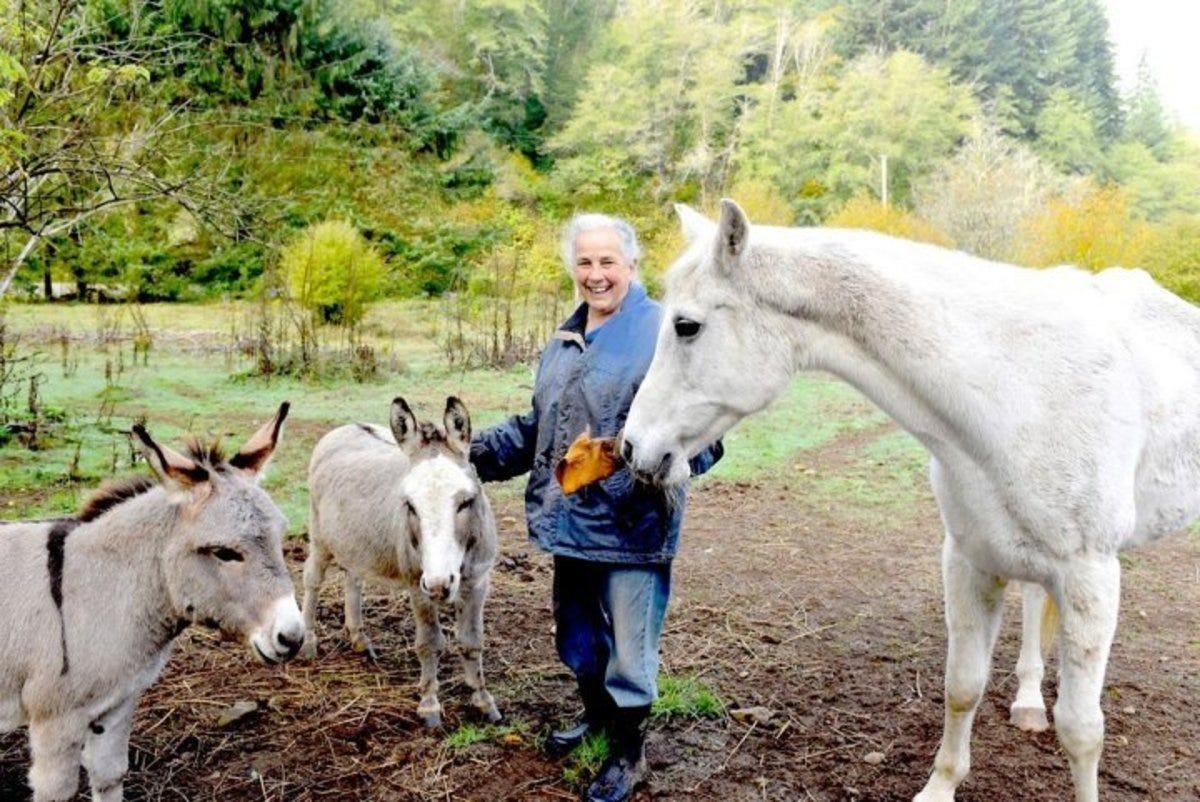
Toxic Avenger

If the Bill of Rights contains no guarantee that a citizen shall be secure against lethal poisons distributed whether by private individuals or by public officials, it is surely only because our forefathers, despite their considerable wisdom and foresight, could conceive of no such problem. — Rachel Carson, author of Silent Spring

Simple stuff: I interviewed Carol Van Strum for my radio show, Finding Fringe, ahead of its airing, Dec. 24, so I could give listeners a bit of reality here on the coast and in the world at large. She will be at the Yachats Commons (Oregon) Nov. 15 for the screening of the flick, The People vs. Agent Orange.
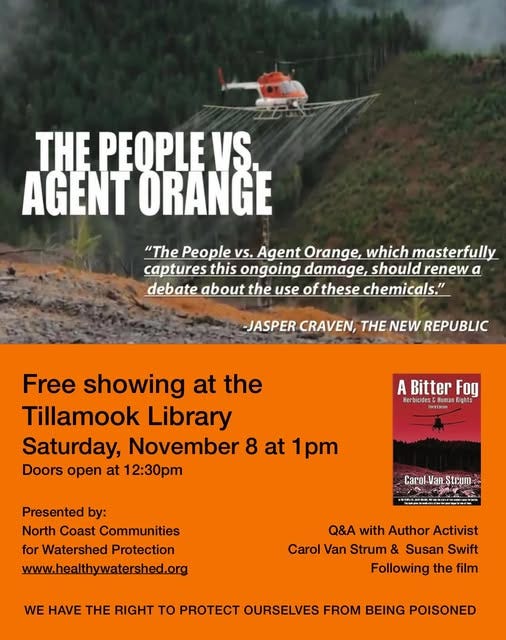
May be an image of text that says 'THE PEOPLE VS AGENT ORANGE "The People vs. Agent Orange, which masterfully captures this ongoing damage, should renew a debate about the use of these chemicals." -JASPER CRAVEN, THE NEW REPUBLIC Free showing at the Tillamook Library Saturday, November 8 at 1pm Doors open at 12:30pm Bitter Fog ferbicides CHunar Human Rights Presented by: North Coast Communities for Watershed Protection www.healthywatershed.org Carol Van. Strum ជ៉ង្ស្លមា្ម្មាយយោមពិជិត្ម Q&A with Author Activist Carol Van Strum & Susan Swift Following the film WE HAVE THE RIGHT to PROTECT OURSELVES FROM BEING POISONED'

We talked about the state of the state of the world, too, and the reality that this is not just a Trump thing, that the poisons in our bodies vis-a-vis air, food, water, airwaves have been pushed into us by Capitalists, by the dirty people we call scientists and technologists and engineers.

Operation Ranch Hand — 20 million gallons of Agent Orange dumped into an area the size of Mass., and that means, Cambodia, Laos and Vietnam. Birth defects, and even epigenetic issues two generations later.

Daddy got sprayed (USA daddy), and then raised that family, had kiddos, and, bam, surprise surprise — spina bifida, hormone imbalances, diseases, diabetes, you know it, thanks Dow and Hercules and the other chemical companies.

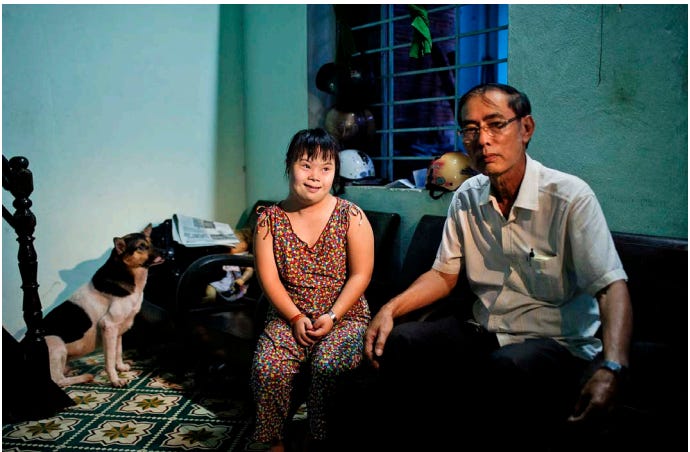
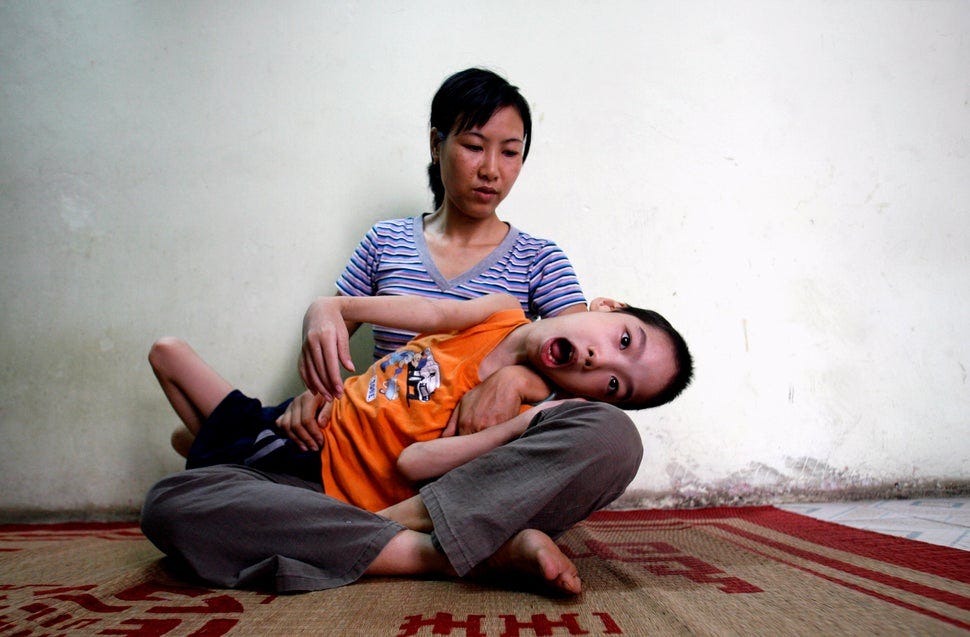
A woman with profound physical and mental disabilities attributed to Agent Orange is pictured on October 5, 2009, in Cam Tuyen, Vietnam. (Photo by David Guttenfelder/AP)

The effects remain one of the most contentious legacies of the Vietnam War. This report focuses on the hardships faced by Vietnamese people living with Agent Orange–related health problems and disabilities and suggests ways the US and Vietnamese governments can better address the legacy of Agent Orange to provide support to individuals and families, and to strengthen bilateral relations.
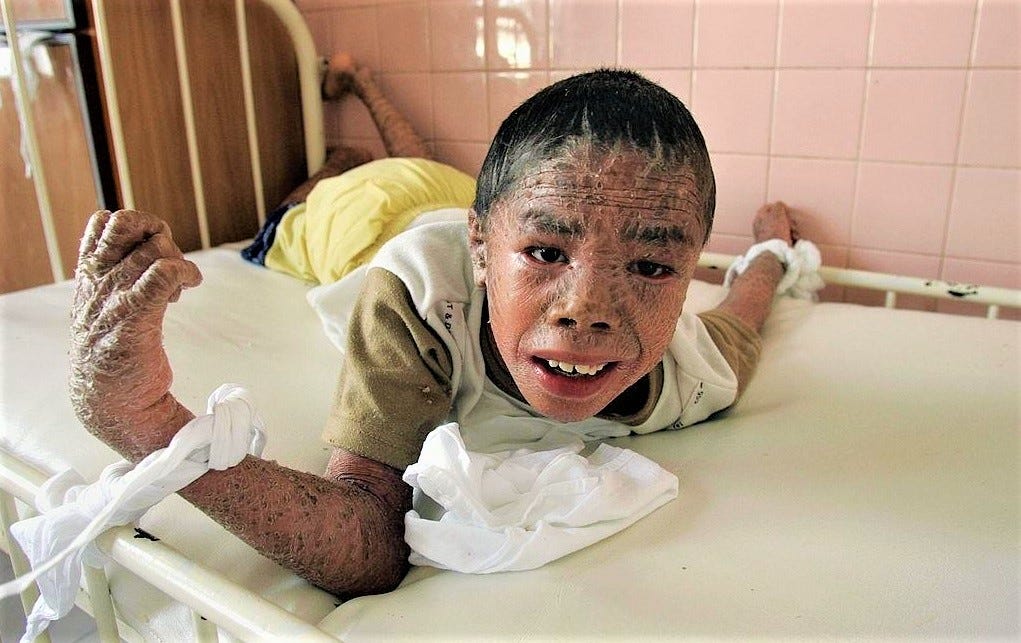
Agent Orange Victims: Haunting Photos Of The Unpunished War Crimes Of U.S. In Vietnam War

Read the report: It’s only 28 pages: Agent Orange Victims in Vietnam: Their Numbers, Experiences, Needs, and Sources of Support By Phan Xuân Dũng

Not a great image:
Summary

  • US-Vietnam cooperation in addressing the consequences of the use of Agent Orange during the Vietnam War has achieved remarkable progress, but much remains to be done to assist and reconcile with the multiple generations of Vietnamese affected.
  • Assistance for Agent Orange victims in Vietnam is provided by multiple international and nongovernmental actors. As of 2023, the US Congress has allocated more than $139 million for health and disability programs in eight provinces heavily sprayed with Agent Orange. These programs receive mostly positive feedback from participants, despite their limited scope.
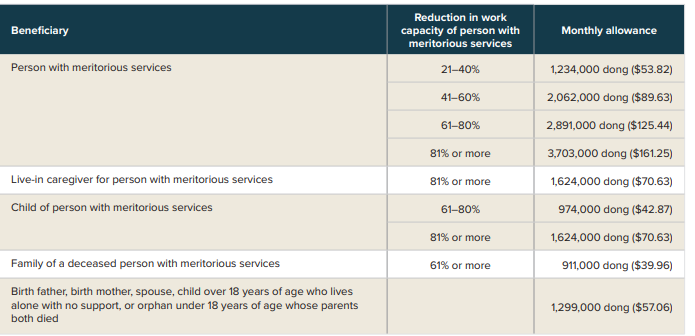
  • The Vietnamese government supports people affected by Agent Orange through general disability assistance and preferential treatment for those who participated in the war. However, this support does not meet the needs of all families and is not available to some subsets of victims.
  • To better address the health and disability effects of Agent Orange, Vietnam should develop a single preferential policy that applies to all cases and better inform international partners and donors. US policymakers should increase funding for and expand the scope of health and disability services, including livelihood and psychological support for affected people.

About the Report

This report examines the experiences of Vietnamese people affected by Agent Orange and other herbicides used by the US military during the Vietnam War and the assistance that has been provided to them by Vietnam and the United States. The report is based on the author’s document-based research and interviews with Vietnamese people affected by Agent Orange and representatives of agencies and organizations that provide assistance. Research was supported by the Southeast Asia program at the United States Institute of Peace.
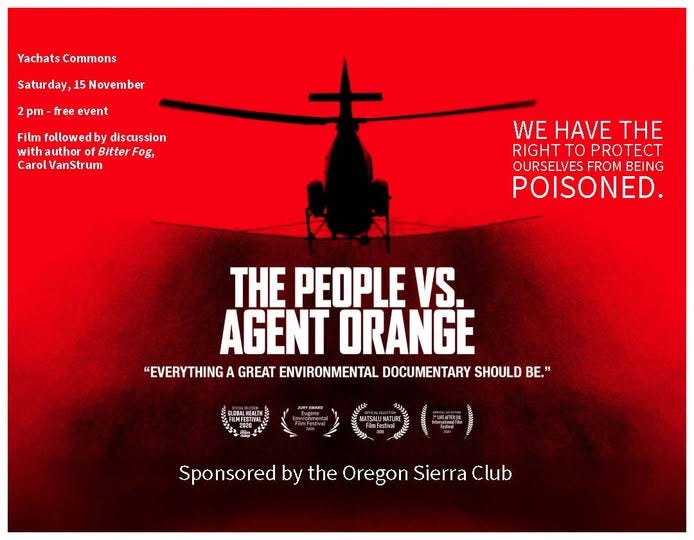
May be a graphic of helicopter and text that says 'YachatsCommons Yachats Commons Saturday,1 15 November Satur day, 2 pm ree event Film followed by discussion with author BitterFog, Fog, Bitter Carol CarolVanStrum VanStrum WE HAVE THE RIGHT TO PROTECT OURSELVES FROM BEING POISONED. THE PEOPLE VS. AGENT ORANGE "EVERYTHING A GREAT ENVIRONMENTAL DOCUMENTARY SHOULD BE." Sponsored by the Oregon SponsoredbytheOregonSieraClub Sierra Club'

Portraits of Jordan and Carol

It is an odd world, where we murdered brown people in Vietnam, and now we are buddies? We have murdered Cubans in the millions and Venezuelans and, it will be more of the same in those countries that end in “a” in South and Central AMerica == Guatemala, Nicaragua, Colombia, Venezuela, Bolivia, and then the “e” and “u” of our country’s madness = Peru, Chile, and the “l” of it — Brazil!

Chapter Excerpt

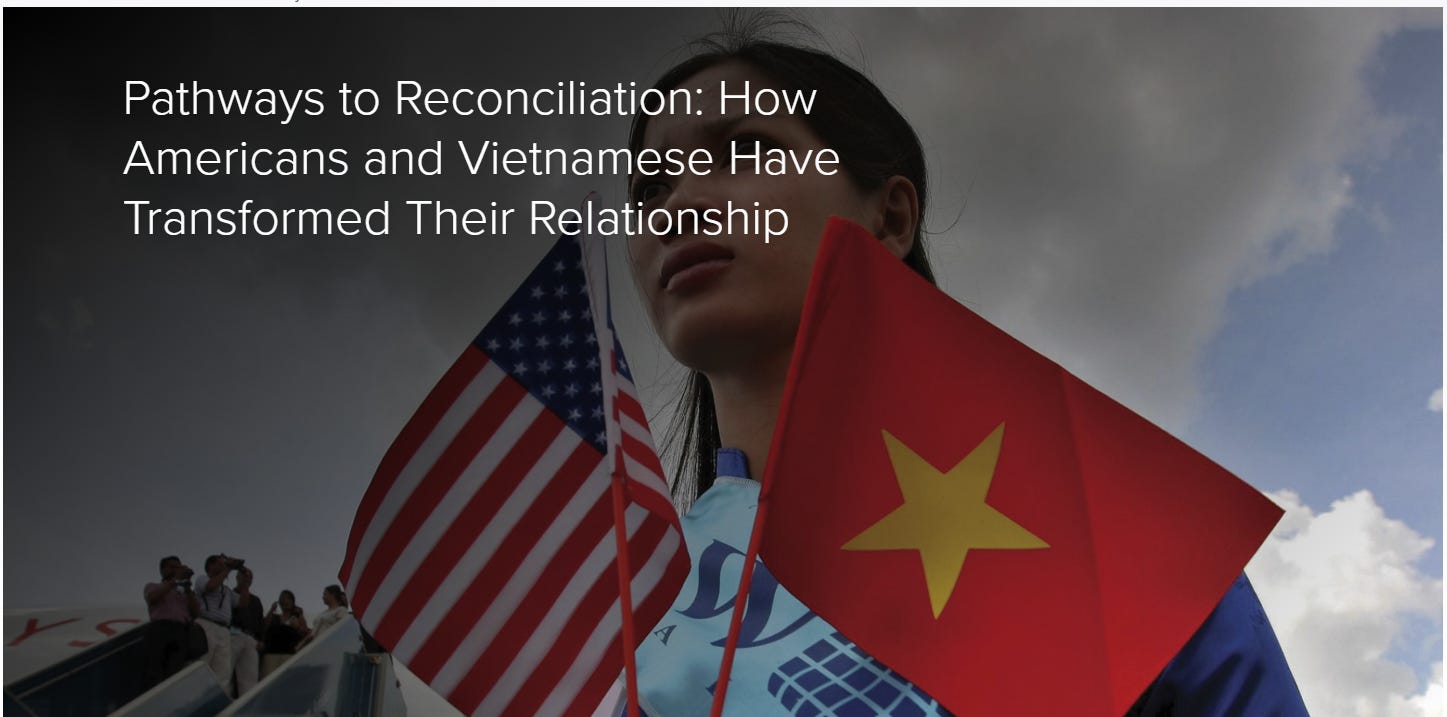
From Cold War enemies to partners, the United States and Vietnam have come a long way in restoring and fostering bilateral relations since normalization in 1995. However, the path toward rapprochement was not easy. It was an arduous process for those involved, ridden with a myriad of sensitive subjects, among which were the environmental and health consequences of the Agent Orange herbicide used by U.S. forces during the Vietnam War. Even after re-establishing formal diplomatic relations, the two countries failed to reach a common ground on the issue. During the stalemate, in 2002, the U.S. ambassador to Vietnam called Agent Orange the “one significant ghost” of the war that hindered complete reconciliation. Not until 2007 did the United States and Vietnam finally agree to jointly address this war legacy.

This paper unpacks the U.S.’ response to the Agent Orange fallout, an overlooked or less emphasized aspect of the warming U.S.-Vietnam bilateral ties that carries significant symbolic, political, legal, and humanitarian implications. The paper answers the following questions: What are the harmful effects of this chemical substance? Who are the victims of Agent Orange in Vietnam? How is Washington assisting Hanoi with mitigation efforts? How should U.S. assistance be con- ceptualized, and what is the rationale for the current approach? Why did the United States change tack after so many years of intransigence? Most importantly, what do the victims need and what more can the United States do to promote reconciliation with the Vietnamese whose lives have been debilitated by the toxic herbicide?

After providing an overview of the Agent Orange legacy in Vietnam, this paper elucidates the research’s theoretical underpinnings, which revolve around the concept of reparative justice. Subsequently, the paper examines the material and symbolic component of U.S. policies toward the issue of Agent Orange in Vietnam. Regarding material redress, there is no direct compensation or reparations. Instead, the U.S. Congress provides annual funds for environmental remediation projects and health programs to assist persons with disabilities living in areas sprayed with the herbicide. In terms of symbolic justice, Washington has not accepted culpability for the use of toxic defoliants. U.S. leaders avoid drawing causation between Agent Orange and the health effects seen in Vietnam but implicitly acknowledge this through their statements and actions. This ex-gratia approach allows Washington to evade the domestic political costs while securing strategic gains through improved bilateral relations with the Southeast Asian country. The paper argues that initiatives by a transnational network of victims’ supporters, including NGOs and American state actors, helped end the deadlock in bilateral negotiations and prompted American assistance. In the final section, the paper explores the perspective of Vietnamese Agent Orange victims and offers some policy recommendations for the United States. The paper underlines the need for a more victim-centered response, which will build long-term trust and confidence between the two countries and promote a more genuine relationship between the United States and the victims.
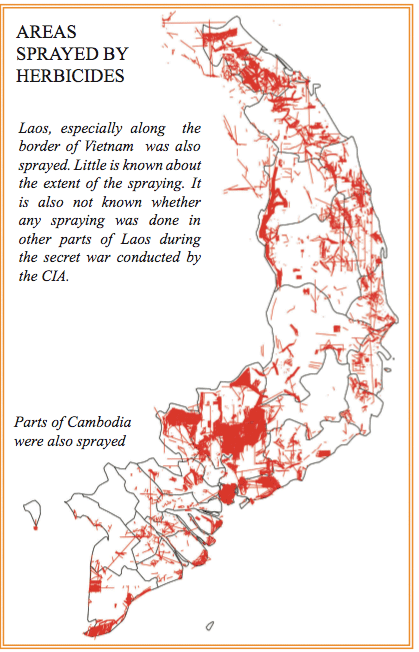
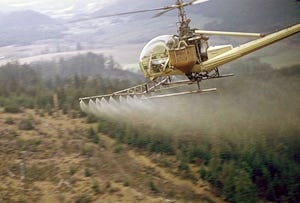
Agent Orange Record | Vietnam war, Vietnam, Vietnam war photos


Both pieces on Carol Van Strum ended up in Dissident Voicehere and here. I even did a review of that documentary, The People VS Agent Orange, which highlights Tran To Nga‘s fight in France — “Eternal Impunity of Capitalism’s Crimes“. Here’s one passage from that story I wrote:

Dr. James Clary was with the Air Force in Vietnam, which ran the program. He was ordered to dump the computer and erase all memory. Instead, he printed out a stack of documents two feet high – missions, sorties, coordinates, dates, gallons dropped throughout all of Southeast Asia and Laos.

“We had the information coming from Dow that there were real problems for people associated with this chemical. It was all locked up for 35 years.”

Playing down all the negative effects of this chemical was part of the Dow plan. Dioxin was the byproduct in the brew. Dow told the US government they were having difficulty producing the volume of the chemical the US wanted. The government told them to not worry about safety standards and quality control, and that a fast production process which produced more of the dioxin would not matter, since the crops and forest were being sprayed, and if people got in contact with it, the idea coming from both industrialists at Dow and those in government and the military was, “Hey, so what, this is a war . . . these are the effing Vietnamese.”

However, a former military man like Clary never saw it that way. He reiterated that 20 million gallons of it was dumped on Southeast Asia. The Ranch Hand program stopped in 1971, but then the chemicals were enlisted by the US on forest land – clear cuts that were sprayed to denude the razed land of any opportunistic weeds and shrubs. The money has to be made, and the stockpiled product has to go! Sell it to the state forestry department and timber outfits.
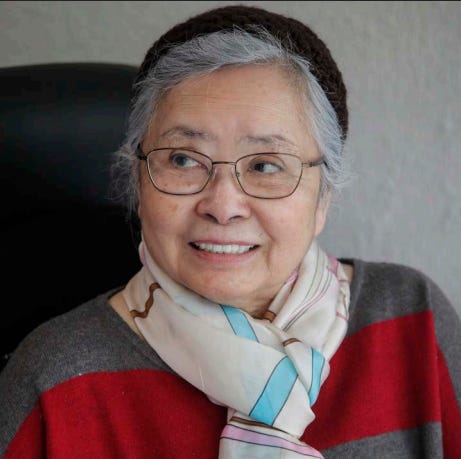
Trần Tố Nga, pictured at her home in Evry, France, on May 10, 2021, sued 14 chemical companies that produced and sold Agent Orange to the US military during the Vietnam War. Although her suit was dismissed by a French court, her campaign raised awareness of Agent Orange victims.
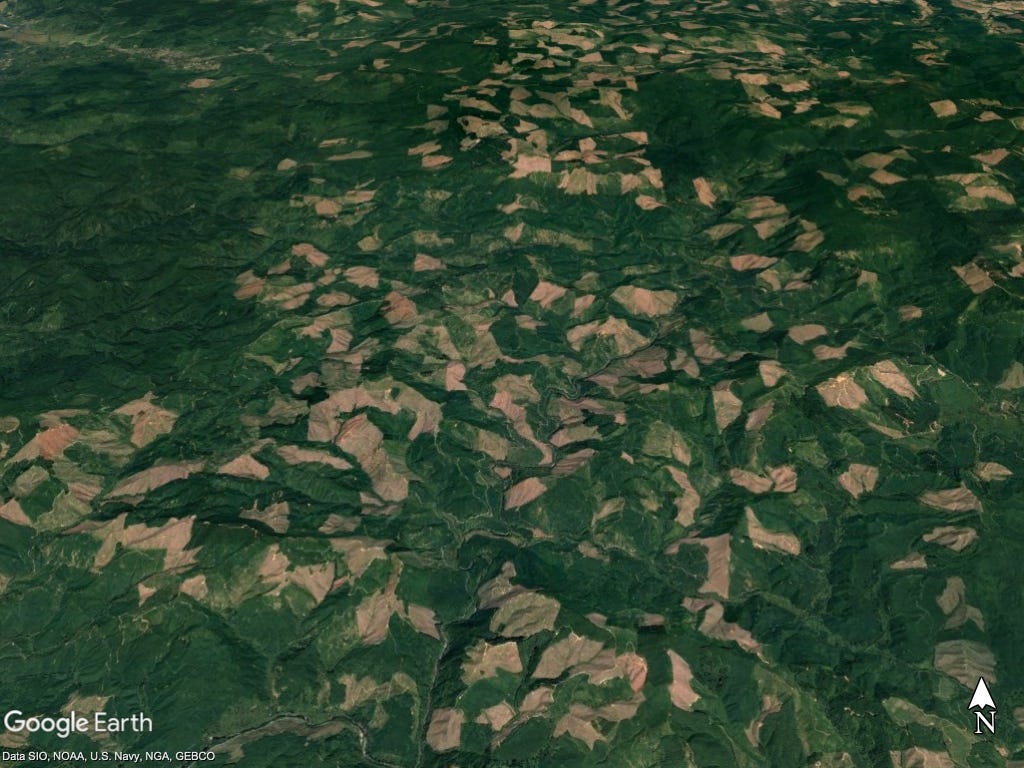
A bird's-eye view of Oregon's clear-cuts | Street Roots

“It’s like a sign that says ‘Dig Here’ and they’re not digging,” said Dr. David Ozonoff, a professor of environmental health at Boston University and co-editor-in-chief of the online journal Environmental Health, after reviewing ProPublica’s findings. “It raises questions about whether they want to know the answer or are just hoping the problem will naturally go away as the veterans die off.”

Joel Michalek, co-author of a major Air Force study into Agent Orange exposure and birth defects, said ProPublica’s analysis suggests the issue should be revisited. In the 1980s, he and his team found a higher rate of post-war birth defects in the children of veterans who handled Agent Orange than in the children of those who didn’t, but they later concluded that herbicide exposure was not the cause.

“You see parallel patterns of what we saw back then,” said Michalek, a professor of epidemiology and biostatistics at the University of Texas Health Science Center at San Antonio. “That, to me, is a signal.”

Rights of Nature | CELDF | Championing Nature & Communities

image734

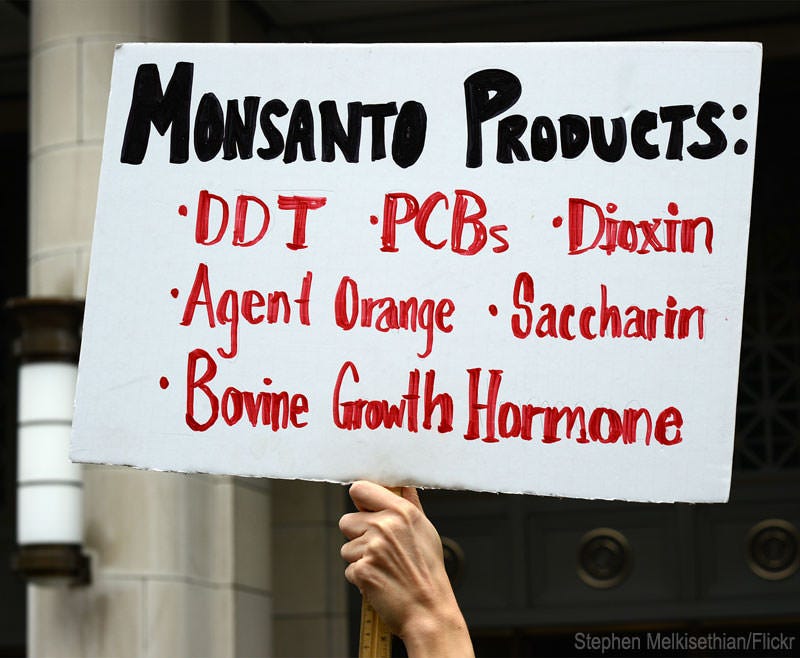
Sorry We Ruined Your Lives,” Monsanto Says With Cash - Hobby Farms

And so Vietnam is being recolonized by the Poison Manufacturers:

“Monsanto today, and for the last decade, has been focused solely on agriculture,” Charla Lord, a spokesperson for the company, said when asked to comment on the company’s past history in the country. “But we share a name with a company that dates back to 1901. The former Monsanto was involved in a wide variety of businesses including the manufacture of Agent Orange for the U.S. government. … The U.S. courts have determined that the contractors who manufactured Agent Orange for the government are not responsible for damage claims associated with the military use of Agent Orange because the manufacturers were government contractors carrying out the instructions of government.”

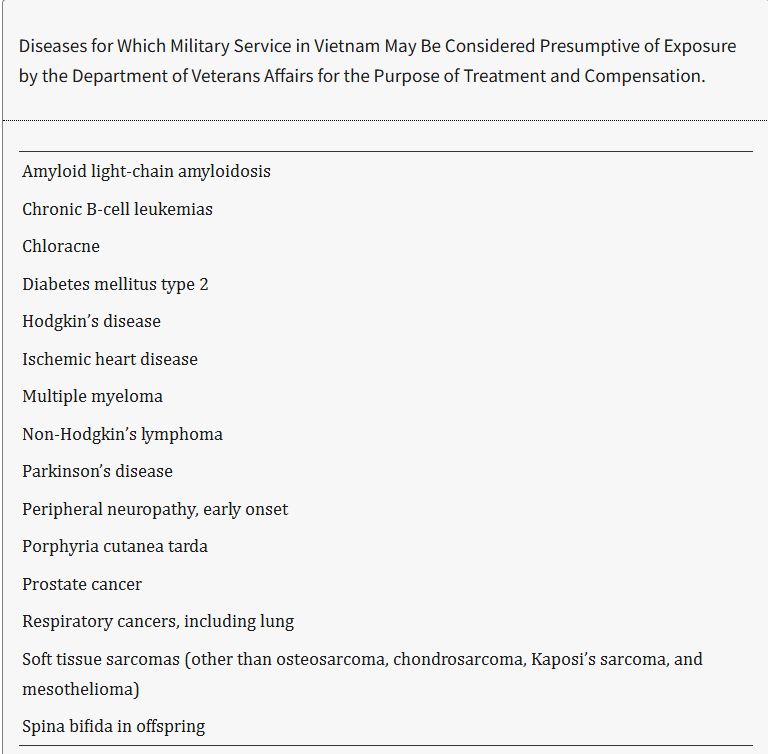
The U.S. government has also issued statements backing away from responsibility for deaths and devastation in Vietnam. Instead it acknowledges a number of dire conditions, diseases and fatalities as “presumed” to be associated with Agent Orange exposure in its own veterans.
55 Years After Agent Orange Was Used In Vietnam, One Of Its Creators Is Thriving Here - NOEMA

Some 69 miles northeast of Ho Chi Minh City in Dong Nai province, Nguyen Hong Lam and his generation of Vietnamese farmers associate Monsanto with its parties and its genetically modified seeds, rather than the Agent Orange attacks that they lived through. According to Lam, the parties, more officially known as launch events hosted by Monsanto, were held between 2012 and 2014, in line with the launch of Monsanto’s genetically modified crops in Vietnam. While Lam doesn’t affiliate Agent Orange with Monsanto, he does know the feeling of community that Monsanto created.

“There were parties that lasted even three days,” he said of the events, which were meant as promotional outreach to farmers. “Dozens of tents would be put up right in the fields to accommodate up to 400 farmers. They were always as much fun as wedding parties.”

Monsanto gatherings such as these were not uncommon here, especially with the company aiming to increase its contact with farmers around the country

“We do hundreds of these [launch] events in the field. Seeing is believing. Their livelihood depends on that,” Narasimham Upadyayula, CEO of Monsanto’s subsidiary Dekalb Vietnam, which is fully owned and operated by Monsanto, said. “We gave them a vision.”

All it takes is that soft Edward Bernays mind killing POWER of AmeriKKKa:
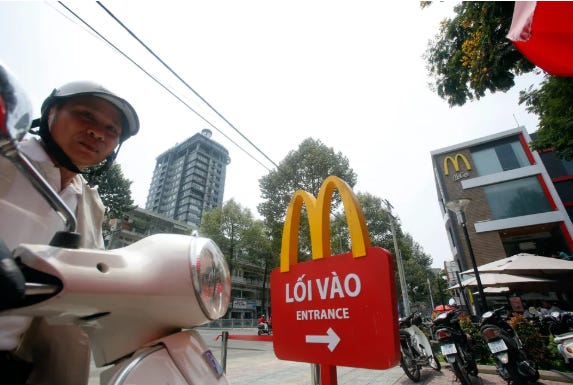
The Americanization and what it ushers in, including the expansion of companies like biotech giant Monsanto, risks burying the history of Agent Orange.
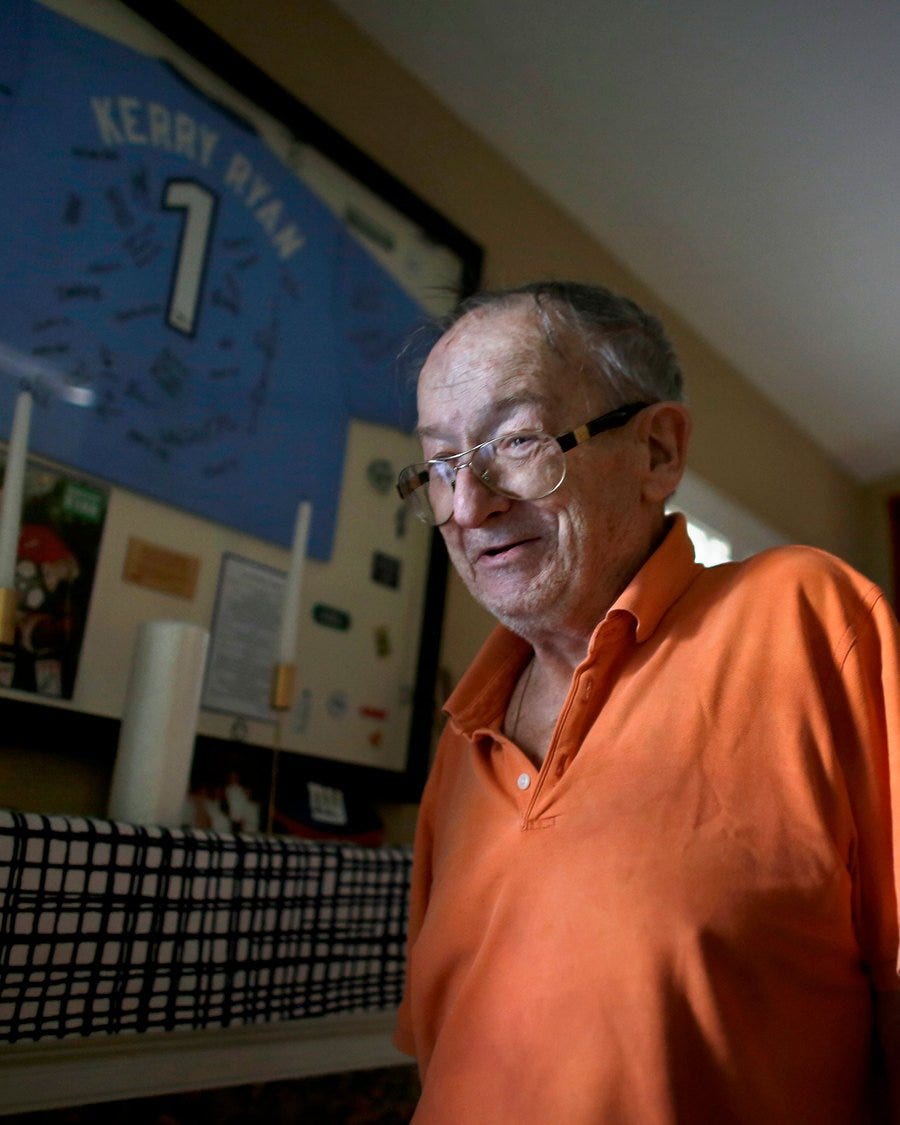
[Mike Ryan keeps a memorial in his living room for his daughter Kerry, who was born with myriad health problems. Ryan believes he was exposed to Agent Orange while serving in Vietnam. (Stephen M. Katz/The Virginian-Pilot)]

When the lawsuit settled in 1984 for $180 million, U.S. District Judge Jack Weinstein ruled that direct payments could only be made to disabled veterans or survivors of those who’d died, cutting off children like Kerry.

Weinstein, who’d expressed doubt that veterans had been harmed, was even more skeptical about their children, writing, “however slight the suggestion of a causal connection between the veterans’ medical problems and Agent Orange exposure, even less evidence supports the existence of an association between birth defects … and exposure of the father to Agent Orange.”

Mike Ryan wasn’t surprised. “I knew we had no shot,” he said.

In 1997, when the VA finally began offering compensation for children with spina bifida, the Ryans didn’t bother applying. Mike Ryan said it was never about the money; it was about recognition of the debt he believes his country owes his daughter kERRY. “She has 22 birth defects, and they want to pay only for spina bifida? Come on, give me a break.”

Kerry died in 2006 at the age of 35.

Mike Ryan, now 71, said he hadn’t kept up with scientific advancements that potentially confirm what he’s spent years arguing — that a father’s exposure to toxins can cause health problems in offspring. In the end, it won’t matter what researchers discover, he insisted.

“They will never admit it,” he said, “because if they do, then America is admitting to drafting the unborn.”
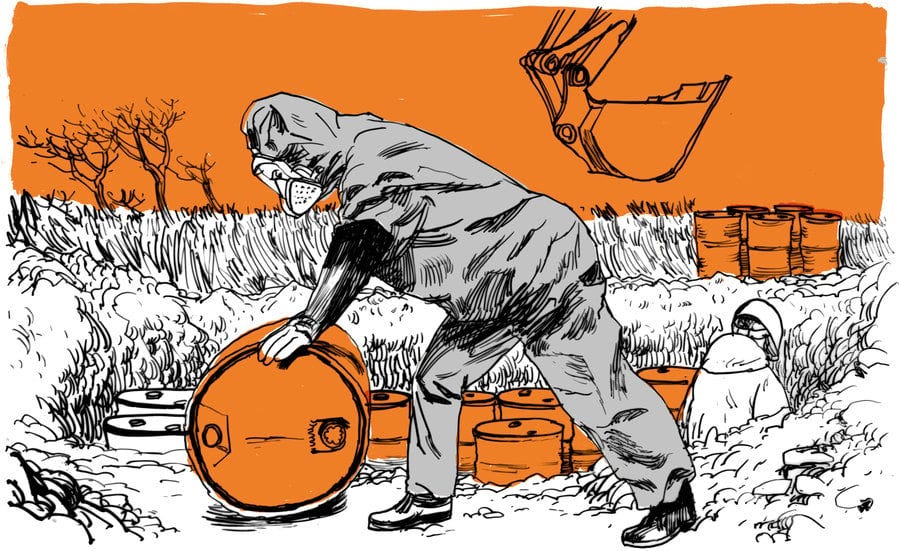
The Children of Agent Orange

For decades, Vietnam veterans have suspected that the defoliant harmed their children. But the VA hasn’t studied its own data for clues.

A new ProPublica analysis has found that the odds of having a child born with birth defects were more than a third higher for veterans exposed to Agent Orange than for those who weren’t.

‘If we are overly accommodating, we will inevitably surrender our culture.’ Nguyen Kim Phuong
 

9781903998410: Seeds of Deception

The U.S.’s lobbying efforts have been well-received.

Jeffrey Smith, author of the best-selling book “Seeds of Deception,” minced no words in interviews about the topic. “The [Vietnamese} government was getting skewed advice from the biotech industry and from their chief supporter—the U.S. government,” he said.

poison-papers-carol-vanstrum-3-1501077878

[Some of the more than 100,000 pages of discovery material related to the chemical industry that were stored in Carol Van Strum’s barn in rural Oregon],
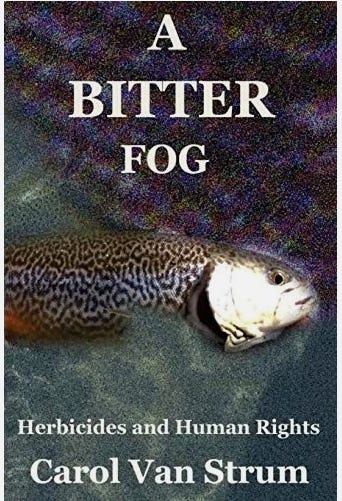
“If we are overly accommodating, we will inevitably surrender our culture. All we want is justice.” — Nguyen Kim Phuong, 86, who lived through both wars involving the French and the Americans. Phuong is forgiving about the war and is happy to see U.S.-Vietnam relations moving forward. But he is not happy to see Monsanto continually increasing its reach in his country, with little consequence for its actions.

Paul Haeder has been a teacher, social worker, newspaperman, environmental activist, and marginalized muckraker, union organizer. Paul's book, Reimagining Sanity: Voices Beyond the Echo Chamber (2016), looks at 10 years (now going on 17 years) of his writing at Dissident Voice. Read his musings at LA Progressive. Read (purchase) his short story collection, Wide Open Eyes: Surfacing from Vietnam now out, published by Cirque Journal. Here's his Amazon page with more published work AmazonRead other articles by Paul, or visit Paul's website.

The U.S. Supreme Court Is Not Above the Law Either


“I think we can do a lot, if a critical mass of organizations steps forward and develops a plan to go public and visible calling out the undemocratic and dangerous reality of what the Supreme Court majority is doing, particularly these shadowy, opaque, undemocratic ‘emergency’ decisions. Just like we have had and will be having, on October 18, successful mass actions of millions in the streets around the country calling for No Kings, worker justice, women’s rights, climate justice, racial justice and more, it is time for such a nationally coordinated action sometime this fall focused on this issue.”

This is what I wrote in a column about a month ago about the Supreme Court. Now that the mass mobilization for October 18 is over, as will be the fall elections as of November 5, I think, at that time, there’s a need for a much closer look at what an activist strategy could be to call out the conservative/MAGA majority on the Supreme Court.

I am fully aware that it is very rare for progressives to do something like this. There is understandable concern that doing so could be seen as “inappropriate,” or “too risky,” or “bad strategy.” After all, in the US system of government, judges have a lot of power. To some extent they are seen as, and often are, above the fray of politics, something seen as often corrupt and dishonest by a lot of people, on the right, left and center.

Of course, “above the fray of politics” sure doesn’t apply to this usually Trump-supporting Supreme Court.

Just in the last few months I have considered with others active in the climate movement whether we should publicly demonstrate calling for a key judicial body, not the Supreme Court, to do the right thing when it comes to a long-term campaign we are leading. We collectively decided it wasn’t the right thing to so.

But it’s different with this Supreme Court. First, there’s the fact that it was very much “politics” that is responsible for the 6-3 conservative majority. Two of the conservatives, Neil Gorsuch and Amy Conan Barrett, obtained their seats because of Republican Party political hypocrisy and raw power politics. Following Antonin Scalia’s death on February 13, 2016 and President Obama’s subsequent nomination of Merrick Garland to replace him, Senate Republicans refused to hold a hearing and vote on that nomination, saying it was too close to the upcoming Presidential election eight months later! This led to the seat being vacant for 14 months until Trump, in 2017, nominated Neil Gorsuch.

Conan Barrett was nominated only 40 days, not eight months, before the 2020 election to replace the deceased Ruth Bader Ginsburg. The Republicans didn’t care then about it being “too close” to a Presidential election, and she was confirmed.

So what would be the objective of some kind of activist campaign, or even just a national day of action, focused on the Supreme Court?

One would be, for sure, to remind the country of how Gorsuch and Conan Barrett were nominated, the hypocrisy involved which has led to a court now “out of balance” when it comes to representing the differing views of US law as well as the reality of US public opinion.

Another would be to draw attention to proposals that have been made to address the fundamental unfairness of the present Supreme Court reality. The most broadly-supported proposal, the TRUST Act (Transparency and Responsibility in Upholding Standards in the Judiciary) was put forward this spring by Senator Sheldon Whitehouse and Congressman Hank Johnson. It is co-sponsored by 26 Senators and 10 House members.

When might a national day, or national week, of action happen? It’d be good if it happened soon, but there are plenty of current fights that need a lot of support, and then there are the holidays, so sometime in the new year seems more realistic.

How about this? March 8 and March 15 are the birthdays of two deceased but still important Supreme Court justices: Oliver Wendell Holmes, Jr. on the 8th, and Ruth Bader Ginsburg on March 15. March 8 is also International Women’s Day.

Ginsburg was the second woman in US history to serve on the Supreme Court, so there’s a definite connection there.

Here’s what the Wikipedia entry for Holmes summarizes as his main contributions legally: “Holmes is one of the most widely cited and influential Supreme Court justices in American history, noted for his long tenure on the Court and for his pithy opinions – particularly those on civil liberties and American constitutional democracy – and deference to the decisions of elected legislatures.” Wow, very timely for sure!

Just like Trump, the Supreme Court is not above the law!

Ted Glick has been a progressive activist and organizer since 1968. He is the author of the recently published books, Burglar for Peace and 21st Century Revolution, both available at https://pmpress.org. Read other articles by Ted, or visit Ted's website.

Martyrs to the Unspeakable: A Luminous Tapestry of Truth


A Review


To weave a magnificent tapestry like the one James W. Douglass has created with Martyrs to the Unspeakable: The Assassinations of JFK, Malcolm, Martin, and RFK takes a steady hand, a hopeful heart, and a steadfast dedication to seeking truth and telling it through factually based and interwoven stories.

Because of its brilliant complexity and documented details, it is difficult to review, but I will say at the outset that it is a masterpiece, the culmination of Douglass’s life of writing about and fighting for peace and justice for our human family.

It is a book that could only be written by a man sustained by a spiritual faith that inspired his four subjects to face their own deaths without flinching, so that others might be saved. It is a testament to four leaders violently gunned down, written by a man whose faith in nonviolence is unshakeable.

Douglass grasps the prophet and artist’s secret that we all live by stories, and the martyred heroes’ tales he recounts in this book are sorely needed in this darkest of times when the death of our planet is at stake and the spiritual sustenance to prevent it is desperately needed.

The truths he recounts through these stories are sad and joyous, for they convey both the agony of terrible deaths but also the ecstasy of the hope that is resurrected through grasping the courage of four great men who defiantly dared to confront the unspeakable lies of their government and society. Four men who died trying to open others’ eyes to terrible truths hard to swallow.

The Tapestry

All tapestries take patience and a meditative eye to discern the deepest possible meanings that are woven into their intricate designs. I remember once standing for ten minutes in front of a series of very famous and confusing medieval tapestries at The Met Cloisters in NYC – The Hunt of the Unicorn – puzzling over their meaning. Ten minutes left me stumped.

The same is true of a review of this book, which can barely scratch the surface of its cumulative spiritual and political power and relevance; nor the thousands of threaded details that make it whole. But I will nevertheless scratch away to induce you to enter the ways of justice and compassion Douglass tells through the lives of these martyrs for truth. It takes time, but the spent time will tell you a story that is beyond time – it is eternal.

It is imperative, moreover, that one do something very unusual in these days of Internet skimming where manifold specious claims about who killed these four men, and why, are bandied about like Halloween candy for childish masked minds: One must slowly and carefully immerse oneself in the entire book with an open heart and mind and let the tales enter you.

It is commonly known that John F. Kennedy, Malcolm X, Martin Luther King, Jr., and Robert Kennedy were assassinated long ago; but it is the intricacies of their personal and political tales, how they dealt with betrayals, threats, and lies, and how their lives and missions intersected, where the meaning manifests itself. The facts are essential, but they are lumps of inert clay until the spirit moves them. These men, despite all their frailties, were moved by the spirit of compassion for others; they were men for others despite the risks to themselves. If this sounds too gushy to you, it could be because you are confusing them with most public figures whose primary concern is power, prestige, and self-survival at all costs.

Douglass’s genius is to cut to the heart of the matter – to find redemptive meaning in the great mishmash of facts and awaken this compassionate spirit in the reader, just as his subjects had to discover it in the circumstances into which life had tossed them. Just as we do.

Life is always what comes next.

One Story Out of Four

Douglass creates one story out of four – or more – and it is a story of hope despite the near despair the deaths of these men brought. As one who lived through them as a young man, I can attest to that despair, as I recall the time, place, even the weather and smaller details when first hearing the news, and how my heart sank into a dark pit. Deaths at mid-day, late afternoon, evening, and late at night, alarm bells to shatter the spirit. Angelus bells in reverse, or as Edgar Allen Poe puts it in “The Bells”:

Hear the loud alarum bells—
Brazen bells!
What tale of terror, now, their turbulency tells!
In the startled ear of night
How they scream out their affright!
Too much horrified to speak,
They can only shriek, shriek,
Out of tune,
…………………………………………………………….

Keeping time, time, time,
In a sort of Runic rhyme,
To the throbbing of the bells—
Of the bells, bells, bells—
To the sobbing of the bells

Yet despite the tolling of the devil’s bells, Douglass tells a tale of hope rooted in the similarities between kindred souls who lived their lives so courageously in full awareness that they would probably be killed for trying to bring peace on earth and good will to people everywhere. It was courage rooted in a faith most real, seeding for us the challenge that love can conquer hate if, as Douglass puts it, we “discern a way to walk with our martyrs out of the darkness.” That is a very hard task, rooted in the heart but dependent on a commitment to political non-violent resistance.

Because he is a theologian as well as an historian, it is important that I point out that this work is not a hagiography or a mythic creation, for the stories, while extraordinary, are factual, not fictional, and Douglass supports all his textual claims with extensive footnotes that source and clarify. The reader, when wondering, need just look down the page for elucidation and sources. The fact that he and his editor at Orbis Books, Robert Ellsberg, have returned to this esteemed and crucial – but largely abandoned – publishing tradition of footnotes on nearly every page, not endnotes, is most commendable and an example of their transparency and dedication to the truth. So challenge this, if you dare, the notes say! We are not putting these at the end of the book where you will have to go back and forth, working to connect them to the text. Just look down, and follow the factual trail yourself.

No, this is not a hagiography; it is a book about human transformation, the ways these men changed over time. For example, Douglass makes it clear that in the early 1960s John and Robert Kennedy were supporters of counterinsurgency policies in Vietnam and around the world. But they grew to see that they were wrong. They grew to see their earlier inclinations were right and they had taken a wrong path. So they changed. By 1965, with his brother dead as a result of such changes, Robert Kennedy gave a speech to the International Police Academy (IPA) on the occasion of the graduation of 146 CIA (AID)-recruited police trainees in which he rejected the Johnson administration’s counterinsurgency strategy in Vietnam. He was subjected to harsh criticism for this and was soon called a traitor for his opposition to the escalation of the war. When he was assassinated in 1968, he was adamantly opposed to the war.

Douglass, beside being a fastidious researcher, is an astute psychologist. He knows that human change is hard, halting, and complex, but it happens.

Martyrs to the Unspeakable: The Assassinations of JFK, Malcolm, Martin, and RFK is a companion volume to Douglass’s bestselling JFK and the Unspeakable, a book (first published in 2008) that made it  very clear that JFK was assassinated by the CIA because he had turned redemptively toward peacemaking, not war. That book, so meticulously documented and told so compellingly, showed why his life and death matter today because a message was sent from the streets of Dallas to every president since. They have all bowed to the message’s threat: You must support the nuclear warfare state – or else.

Those who have read that groundbreaking volume have been waiting for a sequel for a long time. Martyrs to the Unspeakable is it.

The End Is Our Beginning

So let me begin at the end with Douglass’s Epilogue that is not an afterthought, where in a few pages he tells the story of Count Folke Bernadotte, a Swede, who during WW II had led a Swedish Red Cross expedition that freed thousands of Jews and other prisoners from Nazi concentration camps. In 1948 he was appointed the United Nations Mediator in Palestine. Because he was attempting to fairly resolve the Palestinian/Israeli conflict, he was assassinated by the Zionist Stern Gang, also known as LEHI, at a roadblock in Jerusalem. The Stern Gang’s command included Yitzhak Shamir, a future prime minister of Israel. The assassin was Yehoshua Cohen, who would become the closest friend and security guard for the founder of Israel, David Ben-Gurion.

Douglass clearly wants the reader to know that there are other great courageous souls whose names are barely known and have been erased from history, unlike JFK, Malcolm, Martin, and RFK, whose stories he is resurrecting. These unknown martyrs to the unspeakable are a latent stream of hidden hope once one learns their stories.

Bernadotte’s companion in the car when he was assassinated was also killed. He was Colonel Andre Serot, a French observer for the U.N. team, who was in the car by chance since Ralph Bunche, Bernadotte’s close American assistant, had been delayed, and Bernadotte asked Serot, who was talking to him from the outside, to join him in the car. The assassins assumed Serot, who was dark complexioned, was Bunche, who was African-American and whom they had targeted with Bernadotte.

In a simple twist of fate that presaged today’s role-reversals with the genocide of Palestinians being carried out by Israel, Serot’s wife was one of the people Bernadotte had saved from a Nazi concentration camp.

“What we call the beginning is often the end /And to make an end is to make a beginning. /The end is where we start from,” wrote T. S. Eliot.

The Start

So let me now return to the ostensible beginning. The book, like Gaul, but unlike Caesar’s militaristic usage since it concerns the ways a modern empire murders its prophets of peaceis divided into three parts (est omnis divisa in partes tres): The Witness, The Way, and The Why, comprised of nine chapters, with the first and last containing important material about JFK, Israel, Russia, and nuclear weapons, much of which supplements what was provided in JFK and the Unspeakable. There is little new detail provided about the CIA’s assassination of John since that was covered extensively and proven definitively in the first book, but there is much about the CIA/FBI assassinations of Malcolm, Martin, and Bobby, thereby creating a trinity of shorter Unspeakables within this present longer volume. Douglass begins unequivocally:

[When a modern empire murders hope,] “it acts with the same resolve the Roman Empire did with roadside crucifixions to deter rebellion and thievery. Crucified with slaves and prophets who resisted the empire were common criminals. . . . In our day, the slaves and criminals are merged and said to have killed the prophets. We are given enslaved scapegoats with criminal backgrounds so we can feel like we have accused and punished someone for our government-led assassinations . . . . Lee Harvey Oswald . . . . ‘Black Muslims’ . . . . James Earl Ray . . . . Sirhan . . . . The scapegoats, set up by government agencies to take the onus off the empire, are an odd bunch. Yet, through compliant media, they are filtered into our consciousness as marginal culprits. A mighty movement for change has been derailed at crucial moments of our history, yet without credible motivations by the apparent perpetrators.”

JFK, RFK, and Israel

The stunning opening chapter recounts JFK’s fierce battle with David Ben-Gurion, Shimon Perez, and other Israelis to prevent Israel from developing nuclear weapons – nuclear disarmament being Kennedy’s obsession after the Cuban Missile Crisis in October 1962 nearly led to full-scale nuclear annihilation –  and sets the stage for all that follows. Douglass documents the ways John and Bobby Kennedy, united in purpose, tried assiduously to derail Israel’s development of nuclear weapons at its Dimona nuclear reactor, but, in the end, were defeated by Israel’s lies, deceptions, and delaying tactics. And as Douglass points out, they were ably assisted by the CIA’s treacherous counterintelligence chief James Jesus Angleton, who provided Israel with covert assistance in acquiring nuclear weapons.

The Kennedys were seeking a non-nuclear and neutralist Israel in opposition to Cold War Washington, as they pursued an Arab-Israeli peace within a larger U.S.-Soviet one. One aspect of this was their efforts to create a relationship with Egypt’s President Gamal Abdel Nasser. The Israelis thwarted them in all their efforts. JFK knew the Israelis were lying to him – as he told the journalist Charles Bartlett – “The sons of-bitches lie to me constantly about their nuclear capability.”

Additionally, his Justice Department, led by RFK, was trying to enforce the Foreign Agency Registration Act against the American Zionist Council (AZC) whose influence in the U.S. was enormous (as the Israel Lobby is more so today). But that effort also failed, as the AZC fought the Justice Department until JFK had been assassinated and Lyndon Johnson had replaced him, when the AZC prevailed. We are living with the consequences.

The chapter follows the CIA’s Allen Dulles, James Jesus Angleton, and Richard Helm’s plot to kill JFK and cover it up, and after that to assassinate RFK. Elected a Senator from New York State in 1964, Senator Robert Kennedy gave a maiden speech in the U.S. Senate on June 23, 1965 that was a direct challenge to Israel’s secret nuclear program and caused great consternation in Israel. A year later, despite RFK’s efforts, Israel secretly attained nuclear capability on November 6, 1966. Dedicated to the same peaceful pursuits as his brother and to fully investigate his brother’s assassination if he could get elected president and have the power to do so, RFK was marked out for death. After MLK, Jr. was assassinated on April 4, 1968 and Bobby was running for the presidency, he responded to the Rev. Walter Fauntroy telling him that he’d be the nominee of the Democratic Party. “Kennedy said, ‘Yes, that’s possible.’ He paused, then added, ‘But there are guns between me and the White House.’ Fauntroy was shocked.” Two months later the guns did their job – Bobby lay dead.


Chapter One also includes extensive interviews with his alleged assassin, Sirhan Sirhan, the hypnotized real Manchurian Candidate (see Shane O’Sullivan’s brilliant documentary, The Real Manchurian Candidate), concluding by drawing the threads together to show how they picture a beautiful dream of peace deferred as it exploded in violent protest clashes in many U.S. cities in the summer of 1968.

And that, dear reader, is just Chapter 1, but it should give you a sense of how deep into the darkness Douglass goes, contrary to so many writers who go not too far in but just far enough to say they’ve been there and who never pin the tail on the donkey, or if they do, it’s the wrong donkey. They play the jackass’s game and take those who follow them on a trip to nowhere on one of the CIA’s false trails.

Douglass knows that in order to find truth and hope, one must penetrate all the way to hell if one is ever to reach heaven. He has nothing to do with those who claim we will never know the truth, that we must endlessly debate the minutiae, and that in any case it doesn’t matter anymore. To those, he says: Here it is, and it damn well does matter today, for the U.S. intelligence forces that assassinated JFK, Malcolm, Martin, and Bobby are still at it.

To those who claim it was not the CIA, but Israel who was the culprit, he reminds us of Angleton’s (who was the head of the CIA’s counterintelligence and held the Israel desk) revelation of the CIA’s method of creating diversionary false trails in many directions, “the intent [of which] is to draw us more deeply into the false layers of the official story, each sending us farther into the intelligence world’s wilderness of mirrors . . . . all have the trappings of a CIA scenario with implications of possible Israeli involvement and other trapdoors for investigators to fall through.”  He adds: “The CIA controls its assassination plots and cover-ups. The clues the Agency dispenses tempt us into a boundless wilderness of false trails.”

However, they all lead back, like the tentacles of an underwater monster, to the CIA with its military intelligence, and police allies. The monster is a military-industrial-intelligence system whose goal is to become total global control. The Kennedys, like Malcolm and Martin, are then murdered with systemic vengeance for their having presumably become Cold War traitors. In reality, they are martyrs committed to realizing the most unspeakable reality of all  – a global vision of justice, peace, and unity.

Since Douglass’s opposition to Israeli’s long-time genocide of the Palestinians is adamantine (as is mine), no one can accuse him of being Israel’s defender. Yet today, with so many writers and commentators having fallen through a trapdoor and claiming Israel killed the Kennedys, one can expect them to criticize this book on that score. It is best not to follow their lead. I would recommend that readers judge for themselves, for in this reviewer’s informed opinion, Douglass is clearly correct, and Martyrs to the Unspeakable, building upon JFK and the Unspeakable, makes an irrefutable case.

Since I am writing a book review, not a book about a book, I will simply touch on what I find most compelling in the rest of the book, whose heart I have yet to mention, although the book’s trinitarian construction suggests the heart must be connected to the head and soul.

Chapter Two, “Malcolm Dances with the Unspeakable,” by far the shortest in the book at thirty pages, introduces the reader to Malcolm X’s family background, his entry into the fray for racial justice, the CIA plot with the FBI and the New York Police Department to kill him, and his growing internationalism, including his friendship with Fidel Castro and other anti-colonial leaders.

Despite its brevity – intentional, I think, as Douglass shrewdly lures the reader deeper into his profound story – it is extremely important since many readers, especially Caucasians, probably know far less about Malcolm than they do about the other three, and what they do know is no doubt tinged with afterimages of Malcolm’s militancy, distorted by a media that lied about him because they feared him and were doing the government’s bidding, as usual, something I remember vividly from my youth in NYC. Because he was so eloquent, justifiably angry, sartorially natty, and gave off a whiff of danger (celebrated by the culture at the time in famous rebel “angry white boy” film images, e.g. Marlon Brando, James Dean, et al.), they distorted his battle against white racism and violence. That he was Muslim was the coup de grâce (as today), and so Malcolm was crucified in the press.

The remainder of Part One, “The Witness,” is devoted to the FBI and J. Edgar Hoover’s long harassment of MLK, Jr. and his family, the plot to kill him and assassinate his character, his support for and relationship with the Kennedy brothers, their growing involvement in the civil rights struggle, and Bobby Kennedy’s run for the presidency fueled by his trips through Latin America and Mississippi and his growing defense of the poor (“So a revolution is coming – a revolution which will be peaceful if we are wise enough; compassionate if we care enough; successful if we are fortunate enough – but a revolution which is coming whether we will it or not. We can affect its character; we cannot alter its inevitability.”), and his assassination in Los Angeles. Of special note is the connection of the CIA and the Los Angeles Police Department in his murder and coverup, as well as the courageous testimony of the witness, Sandra Serrano. All these threads are woven together, ending with the Kennedys’ turn toward dialogue with Fidel Castro.

Into the Heart 

The middle section, “The Way,” about the ways Malcolm, Martin, and Bobby walked, despite knowing they would be killed, is, I would say, the heart of the book, its spiritual center. It is powerful and very moving. In the name of succinctness, let me quote a bit.

The Way of Malcolm

“J. Edgar Hoover’s solution to the problem [the international system of racial exploitation] – to pit the rising leaders of Black people against one another – was not new. They knew it as their master’s tactic. In the United States, it would mean selling guns to the ghetto, as brothers shot one another into emergency rooms and the grave, or ended up behind bars for the rest of their days.”

Returning from his transformative trip to Mecca, Malcolm wrote: “I’ve had enough of someone else’s propaganda. I’m for truth, no matter who tells it. I’m for justice, no matter who it is for or against. I’m a human being first and foremost, and as such I’m for whoever and whatever benefits humanity as a whole.” (emphasis in the original)

Malcolm: “We need to expand the civil-rights struggle to a higher level – to the level of human rights.”

In his struggle for human rights, he was undermined by treacherous lies, personal betrayals, government infiltration, spying, and paid informers, that led to his assassination, which he knew was coming as he walked his way to martyrdom.

“Malcolm could confront the Unspeakable with courage because of his total faith in Allah.”

“Malcolm X, who spoke truth to power with his life, pushed the U.S. security state up against the wall with his human rights campaign to the United Nations. It struck back with vengeance. He accepted the consequences of his truth-telling with serenity, saying to a friend two days before he died, “It’s time for martyrs now. And if I’m to be one, it will be in the cause of brotherhood. That’s the only thing that can save this country.”

The Way of Martin

“Martin King became a hard enemy of Washington on April 4, 1967, when he said in “Beyond Vietnam,” his Riverside Church Address, ‘I could never again raise my voice against the violence of the oppressed in the ghettos without having spoken clearly to the greatest purveyor of violence in the world today—my own government.’”

“’Beyond Vietnam’ took the speaker beyond civil rights, beyond political calculation, and as a citizen of conscience, beyond protection from the violent system he lived in.”

In this section on MLK, Douglass makes it very clear that this speech and his poor people’s campaign to follow – his revolutionary turn toward linking civil rights to war and economic justice for all – sealed his death warrant, and that he knew it. It did not, however, deter him. He knew his way, and where the way was leading him, but his deep religious faith led him on.

Many know this, but few know what Douglass writes in this section where through his interview with Glenda Grabow, a key witness in King’s assassination, he makes significant connections between the government’s assassinations of King and John Kennedy through the shadowy figure of a man named Raul, who was connected to Jack Ruby. The links Douglass makes, based on facts not conjecture, will make the reader’s head spin.

MLK to Harry Belafonte: “I made my peace with death.”

Belafonte: “You made your peace with death?”

King: “Yeah. It no longer preoccupies me. It doesn’t threaten me.”

As with all wonderful tapestries, this one is so multifaceted and deep, that when you turn a page and read closely, you are constantly startled by what you see through the pictures Douglass draws with his words. One after another, the connections he makes take your breath away.

The Way of RFK

“While Martin Luther King, Jr. was turning toward a way of life crowned by his death, Senator Robert F. Kennedy was on his halting journey of truth into the horror of the Vietnam War, the threatened nuclear destruction of the world, and his own murder.”

“As we have seen, the CIA was in covert control of the RFK murder investigation from the very morning of RFK’s shooting, June 5, 1968. Senior Los Angeles FBI official Roger LaJeunesse and the FBI were immediately elbowed aside by LAPD Chief of Detectives Robert Houghton with the support of the federal government. Houghton installed instead at the head of Special Unit Senator (SUS) an elite unit of his own officers. It was commanded by covert CIA operatives. LaJeunesse knew the detailed CIA history of his friend, Lieutenant Manuel Pena, who had become the SUS officer-in-charge.”

Douglass provides detailed evidence of the CIA’s assassination of RFK and its coverup, the former, as with all these assassinations, requiring the latter.

He provides testimony of the coroner, Dr. Thomas T. Noguchi, that Bobby was shot from behind his right ear from a distance of “one to one and a half inches,” ruling out Sirhan, who was feet in front of him, as his killer.

Douglass jumps to RFK and JFK’s relationship with French President Charles De Gaulle, who luckily escaped the CIA’s coup and assassination attempts, and whose advice on Vietnam Bobby sought on January 31, 1967 when they met in France. As befits his method, he intersects this strand into the big picture, as Penelope in The Odyssey describes the great fabric she weaves around a violent interruption – “fine of thread and very wide”.

“The most obvious, least spoken truth about the killing of John and Robert Kennedy, comes from looking at their assassinations side by side. Not only can their assassinations be seen as serial murders, but they are also linked by necessity. Killing JFK meant killing RFK . . . or else. . . . Killing John Kennedy to keep the Cold War going meant killing Bobby Kennedy for the same reason.”

De Gaulle knew the CIA had killed JFK, and so did Bobby.

“By making the crucial decision to run for president in 1968, RFK chose a still deeper way. The depth of his compassion compelled him to seek the office through which he could help most . . . those most in need . . . while knowing the risk in taking such a step. By embarking on his last campaign for the sake of the living, but at the risk of his own death, Bobby Kennedy chose to live out a way of compassion and justice for all—by living and taking his chances.”

Part Three: The Why is devoted to the convergence of an analysis with the martyrdom of Malcolm and Martin. They came to see all the connections between the genocide on which the U.S. was founded, its history of slavery, its racism, the capitalistic economic system of injustice affecting all races – the issue of human rights – and colonialism.

“The assassinations of Malcolm and Martin have close parallels, because they can be traced to the same source: their government’s covert action protocol. Both men were set up.”

Both men were executed by the U.S. government.

Investigating the assassinations of Martin and Malcolm over the past six decades has been a pilgrimage in their lives of witnessing to the truth. From it, I have learned how naïve I was about systemic evil. While there is nothing new about prophets being murdered by the system, I was not aware how thoroughly our own system carries out such murders—and why. I believe the key to this untold history is the fact that our government was the first to develop and use nuclear weapons. . . . The rise of our national security state after World War II, as justified by the Cold War that our nuclear weapons created, was the effective end of democracy in this country. It was climaxed by the execution of President Kennedy, which foreshadowed the state killings of Malcolm X and Martin Luther King, Jr., together with Robert Kennedy’s.

So it is fitting that Douglass’s final chapter – a tour de force – is “The Kennedys, the Russians, and the Bomb.” No one who lived through the near nuclear end of the world that occurred in the few weeks of mid-October 1962 – the Cuban Missile Crisis –  will forget it. Or should. As a young college freshman at the time, it is seared in my memory despite the beer, girls, and basketball that were my conscious pursuits. If today’s college students read just this chapter, they would immediately understand how tenuous a hold we all have on life because of nuclear weapons. And they would see how shallow and dangerous are the men who have assumed the presidency since then with their devotion to nuclear weapons.

Douglass opens Chapter Nine, as if it is the month for giving birth to all the gravid tales that led to it, with words that remind one of the poet T. S. Eliot’s question –  “. . . were we led all that way for Birth or Death?” – as follows:

The intertwined stories of John and Robert Kennedy take us into the depths of our human story.

The president, with the support of his attorney general brother on behalf of the American people, risked committing the darkest evil one can imagine, initiating a nuclear war. [during the October 1962 Cuban Missile Crisis]

In an enlightened reversal, the Kennedy brothers then turned toward peace with their Russian and Cuban enemies, Nikita Khrushchev and Fidel Castro, who emerged from the nuclear darkness with them.

As a result, JFK and RFK were assassinated as Cold War traitors by their own national security state, with RFK’s murder delayed until his last campaign turned him, at his California primary victory, June 4, 1968, toward the prospect of becoming president himself.

The moral consequences of our denial of the truth of their martyrdom for peace have included our country’s waging perpetual war around the world and the ever-more-likely extinction of our species. [my emphasis]

And between this beginning and his end, he gives a detailed history lesson – both wonderful and dreadful – of how the Kennedys, despite their advisers and maniacal generals such as Edward Lansdale, Curtis LeMay, and Lyman Lemnitzer, were able to make friends of their enemies and prevent nuclear war.

Douglass concludes as follows:

We can see the hope of life in our valley of death through the testimony of our prophets. Because they asked why, kept turning, and were willing to die, JFK, Malcom, Martin, and RFK all had to go. That is our story now. We are on the same bloody, glorious path of humanity they blazed for our long night’s journey into light.

May we learn on that way to bow to the light in every human personality on Earth until we see it in communion with the lives of all creatures.

Martyrs to the Unspeakable is a masterpiece, a tapestry of profound importance. It is a testament to the martyrs who died trying and to its author who has lived to tell their tales. It is a breathtaking and inspiring book.


Edward Curtin: Sociologist, researcher, poet, essayist, journalist, novelist....writer - beyond a cage of categories. His new book is At the Lost and Found: Personal & Political Dispatches of Resistance and Hope (Clarity Press). Read other articles by Edward, or visit Edward's website.

Trump: Starting, Thwarting, and Claiming He Is Good at Stopping Wars


Donald Trump: “If I were president, and I say this, I will end that war in one day. It’ll take 24 hours. I know Zelenskyy well; I know Putin well. I would get that ended in a period…
Interviewer interrupts: “You can broker that deal?”
Donald Trump: “100 per cent. It would be easy; that deal would be easy…. but I would get that deal done within 24 hours that war has to be stopped…

— “Trump says he could end the Ukraine war in 24 hours if he were president,” 4 May 2023

Trump has been the US president in his second term now for over 9 months, and the fighting is still ongoing between Russia and Ukraine+NATO. Currently however, Russia is reported to have encircled many Ukrainian soldiers, as Trump is demanding Russia agree to a ceasefire — a demand rejected by Vladimir Putin. Trump seeks to elude his previous hyperbolic boast by stating it is “Biden’s war.”

He also throws the United Nations under the bus, ignoring his administration’s blame for the failure to end certain wars. Meanwhile, he is praising himself for ending a brief outbreak of fighting between Thailand and Cambodia.

“But, I mean, the United Nations has such great potential. I wish they could do it. They didn’t get involved with us at all. We just did the deal and reported the deal, and everybody was sort of amazed that we got it done so quickly and so nicely,” said Trump.

Trump with characteristic immodesty states that, for him, stopping wars is “much more serious than a hobby, but it’s something that I’m good at, and it’s something I love to do.”

What is Trump’s secret recipe for stopping wars? With the cessation of fighting between Cambodia and Thailand, Trump reduced his “reciprocal” tariffs for Cambodia and Thailand to 19 per cent — down from threatened rates of 49 per cent and 36 per cent, respectively.

What does it mean to “be good” at stopping wars and to fail miserably to live up to his braggadocio to end wars, as exemplified by the Russia special military operation against Ukraine+NATO?

Does Trump also pat himself on his back for the predictably broken ceasefire by Israel against Gaza? Trump’s administration was also involved with thwarting the UN and the International Criminal Court in ending Israel’s committing a genocide.

And what does being good at stopping wars mean when Trump’s government is at the same time starting wars elsewhere? Case in point, the US-backed downfall of the Syrian government to the renamed al Qaeda outfit, Hayat Tahrir al-Sham (HTS). And the attacks on Yemen and Iran should be kept in mind. Currently, what would be risible if it were not so serious a violation of international law and disregard for human life, the Trump administration has been bombing Venezuelan fishing boats. No presumption of innocence, no attempt to intercept peacefully, and no evidence of drug running as claimed by Trump. These are the actions of a warmonger who campaigned for a Nobel Peace Prize, an ignominious peace award.

Given further background, what credence should one confer to Trump’s boast of being good at stopping wars?

Kim Petersen is an independent writer. He can be emailed at: kimohp at gmail.com. Read other articles by Kim.