It’s possible that I shall make an ass of myself. But in that case one can always get out of it with a little dialectic. I have, of course, so worded my proposition as to be right either way (K.Marx, Letter to F.Engels on the Indian Mutiny)
Wednesday, November 05, 2025
Turkmenistan Joins the Green Energy Race With Caspian Coast Power Project
Turkmenistan has begun construction of a 1.6 GW combined-cycle power plant along its Caspian shoreline.
The project, involving international firms, aims to strengthen domestic supply and enable exports to Türkiye and the Caucasus.
The initiative aligns with regional efforts to establish a trans-Caspian electricity network linking Central Asia to the West.
Natural gas-rich Turkmenistan wants to join a regional green-energy trend. Officials have announced that construction of an energy-efficient power plant on the Caspian shoreline is underway, adding that the facility aims to produce enough electricity to meet domestic needs and export excess power westward.
Turkmen Energy Minister Annageldi Saparov, speaking at an economic forum on November 3, revealed that a combined-cycle power plant with a projected annual generating capacity of almost 1.6 gigawatts is in the works at an unspecified location on the Caspian coast. He said international companies were involved in the project, but did not name them.
Combined-cycle plants involve the use of a gas-powered turbine to generate electricity, then turning the residual heat created by that operation into steam, which is used to power a second turbine, thus generating additional electricity.
“The successful implementation of this project will significantly increase the installed capacity of the Turkmen energy system, improve the energy supply to domestic consumers, and create additional opportunities for electricity exports to the Caucasus countries and Türkiye,” the government-connected Turkmenistan Golden Age new outlet quoted Saparov as saying.
During a November 2 meeting with the head of Turkish energy company Çalik Holding, Turkmen President Serdar Berdymukhamedov said Ashgabat hoped to eventually conclude an agreement with Turkey on electricity exports “across the Caspian Sea,” the official Turkmenistan Today news agency reported.
The only viable way at present for Turkmenistan to export electricity to Turkey would be for Ashgabat to join the trans-Caspian power line project launched by Azerbaijan, Kazakhstan and Uzbekistan. Berdymukhamedov, in his November 2 comments, did not indicate whether Turkmen participation in the trans-Caspian venture has been raised with project sponsors.
Eni and Argentina’s state-backed energy major YPF have signed a non-binding agreement with XRG, a subsidiary of the Abu Dhabi National Oil Company (ADNOC) Group, to explore potential collaboration on the 12 million tonnes per annum (MTPA) liquefied natural gas (LNG) phase of the Argentina LNG (ARGLNG) project — a cornerstone development aimed at turning the country into a major LNG exporter by 2030.
The agreement establishes a framework for cooperation toward a Joint Development Agreement (JDA), potentially paving the way for XRG’s participation in the project and helping advance the Final Investment Decision (FID).
ARGLNG is an ambitious, integrated upstream-midstream initiative designed to harness the vast gas reserves of Argentina’s onshore Vaca Muerta shale formation. The project targets the export of up to 30 MTPA of LNG by the end of the decade, developed in multiple phases.
Under the Final Technical Project Description signed by Eni and YPF in October, the first phase includes two floating liquefied natural gas (FLNG) units with a combined capacity of 12 MTPA—equivalent to about 18 billion cubic meters of natural gas annually. The project scope encompasses gas production, processing, and transportation, as well as the valorization and export of associated liquids.
The potential entry of ADNOC’s XRG would add financial and technical strength to the partnership, aligning with ADNOC’s expanding global LNG portfolio and deepening its strategic collaboration with Eni. The two companies already work together on major projects in the United Arab Emirates and other international markets.
Argentina’s Vaca Muerta shale play—one of the world’s largest unconventional gas resources—has been central to the country’s plans to shift from an energy importer to a significant exporter. The ARGLNG project represents a major step in that direction, offering both a boost to domestic production and an avenue to capture global LNG demand, particularly in Asia and Europe.
If realized, ARGLNG would position Argentina among the top LNG exporters by the next decade, marking a transformative milestone for the nation’s energy sector and a new frontier for international oil and gas cooperation.
By Charles Kennedy for Oilprice.com
ADNOC Secures 15-Year LNG Supply Deal with Shell for Ruwais Project
Abu Dhabi National Oil Company (ADNOC) has signed a 15-year sales and purchase agreement with Shell International Trading Middle East Limited for up to 1 million tons per annum (mtpa) of liquefied natural gas (LNG) from the Ruwais LNG project, marking ADNOC’s first long-term LNG deal with Shell and the eighth such offtake agreement for the facility.
The agreement, signed during ADIPEC 2025, converts a prior Heads of Agreement into a definitive deal and brings ADNOC’s total contracted LNG volumes from Ruwais to more than 8 mtpa—over 80% of the project’s 9.6 mtpa capacity—just 16 months after the project’s final investment decision (FID).
The Ruwais LNG project, currently under development in Al Ruwais Industrial City, is set to become the first LNG export terminal in the Middle East and Africa powered entirely by clean energy. Once operational in Q4 2028, it will more than double ADNOC Gas’s existing LNG capacity to roughly 15 mtpa. The plant’s two 4.8 mtpa liquefaction trains will leverage artificial intelligence and advanced technologies to improve safety, efficiency, and emissions performance.
The deal with Shell, which holds a 10% stake in the Ruwais project through its subsidiary Shell Overseas Holdings Limited, underscores ADNOC’s rapid progress in commercializing Ruwais and its commitment to expanding its lower-carbon LNG portfolio. The speed with which ADNOC has secured long-term offtake commitments—achieving in just over a year what typically takes several years for large-scale projects—sets a new industry benchmark.
For Shell, the agreement strengthens a strategic partnership with ADNOC that spans more than half a century and supports its efforts to grow its LNG trading and marketing business amid tightening global gas supplies and rising demand for lower-carbon energy sources.
The Ruwais facility’s low-carbon profile aligns with ADNOC’s broader decarbonization strategy and the UAE’s national push to position itself as a leading global supplier of cleaner energy. The deal also highlights the growing importance of long-term LNG contracts as buyers seek supply security in an increasingly volatile global energy market.
By Charles Kennedy for Oilprice.com
Ørsted Posts Massive $262 Million Q3 Loss As Offshore Challenges Mount
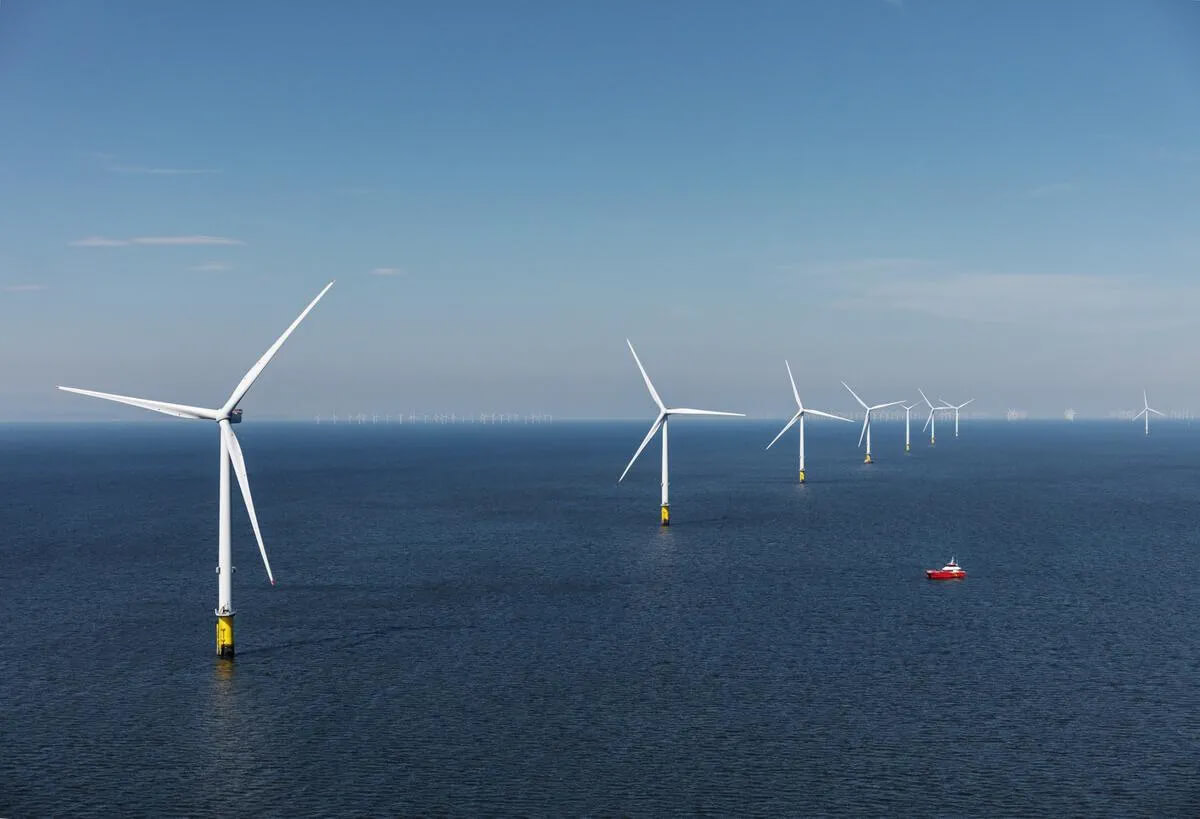
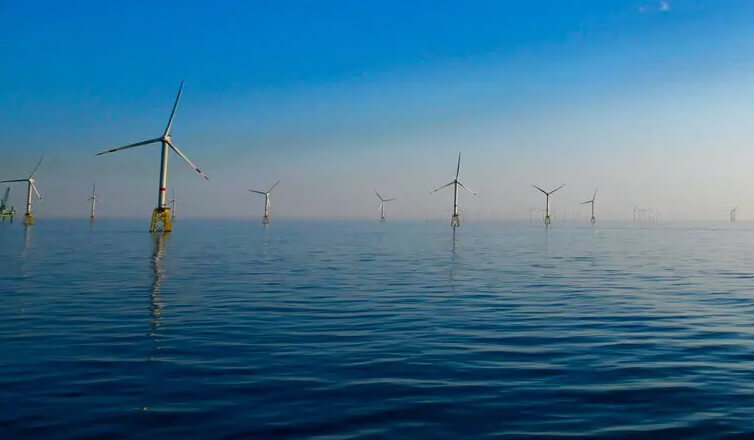
Ørsted, the world’s largest offshore wind developer, reported on Wednesday a loss for the third quarter amid soaring impairment charges as the offshore wind industry faces backlash in the United States and rising costs in all geographies.
Ørsted, which has recently completed a huge rights issue equal to some $9.35 billion, booked a loss of $262 million (1.7 billion Danish crowns) for the third quarter, compared to a profit of $796 million (5.17 billion crowns) for the same quarter of 2024.
Impairment losses soared by 519% to $240 million (1.757 billion crowns) in July to September this year, which turned out to be one of the most tumultuous periods in the history of the company.
Faced with numerous headwinds, Ørsted last month said it would slash its workforce numbers by 2,000 by 2027, eliminating a quarter of its current roles.
Fresh off its $9.35 billion rights issue to raise funds from existing shareholders, Ørsted announced it is taking another step in the execution of its strategic priorities by reducing its organization by about 2,000 positions by the end of 2027.
The Denmark-based offshore wind developer has faced mounting challenges in the United States, where the Trump Administration is obstructing the construction of offshore wind projects, including the fully permitted 704-megawatt (MW) Revolution Wind being built by Ørsted offshore Rhode Island and Connecticut.
Regulatory changes, cost inflation, and high interest rates have impacted project economics in the offshore wind industry in the past two years. The impact has been felt by Ørsted, which turned to its existing shareholders to raise capital to cover immediate financing needs, manage risks from regulatory uncertainty in the U.S., and strengthen its capital structure.
In comments on the Q3 results today, CEO Rasmus Errboe said,
“Our key focus is to continue delivering on our business plan, which will enable Ørsted to remain a global leader of offshore wind with a strong foothold in Europe.”
The international investment community continues to see compelling investment opportunities in the offshore wind energy sector, with the respected Apollo-managed funds announcing they will invest $6.5 billion in the UK, while Copenhagen Infrastructure Partners is reported to be planning a $3 billion investment in the Philippines. The moves come despite the repeated headlines about the troubles in the offshore wind energy sector.
Danish developer Ørsted has struck a deal with Apollo to sell a 50 percent stake in the under-construction Hornsea 3 project, which will be one of the largest offshore wind farms ever built. Located in the North Sea, the project will have a total of up to 231 turbines and a capacity of 2.9 GW. Onshore work has been underway since 2023, with the project expected to be completed in 2027.
Ørsted reports that it chose to partner with Apollo in part for its ability to deliver a long-term, comprehensive equity and financing solution for the large-scale infrastructure project. It cites the investment group’s expertise and scaled capital, along with Ørsted’s strategy to divest of shares in projects to reduce risks, as the group faces deep financial troubles.
“The divestment represents an important milestone for Ørsted as we continue to deliver on our partnership and divestment program, which is a cornerstone of our business plan,” said Trond Westlie, Ørsted Group CFO.
The Hornsea 3 transaction is subject to regulatory approvals and is anticipated to close before year-end 2025. The Apollo Funds are expected to invest approximately $3.25 billion upon close, with the remaining $3.25 billion to be funded as the project reaches certain construction and development milestones in the coming years.
Apollo Partner and Co-Head of European Credit Leslie Mapondera noted that this is the latest large-scale transaction in Europe for the group, where it is investing behind energy infrastructure, transition assets, AI, and other key priorities. The investment in Hornsea 3 follows a series of recent large-scale capital solutions Apollo Funds have provided for European energy infrastructure, including a €3.2 billion investment to support expansion of the German energy grid, a £4.5 billion financing commitment to EDF for its Hinkley Point C nuclear power plant, and more than $4.5 billion of investments with BP in its TANAP and TAP pipelines.
While Apollo has been making large investments in Europe, President Ferdinand Marcos of the Philippines met with representatives of Copenhagen Infrastructure Partners today to discuss the company’s first offshore wind development in Southeast Asia. The Philippines reports that CIP will build a $3 billion offshore farm project south of Manila in the central Philippines. The project will be on the East Coast in the Philippine Sea.
The reports said CIP was attracted to the project because of the strategic location of the Philippines and the government’s commitment to shifting to renewable energy.
SouthCoast Wind Loses Court Appeal to Block BOEM Review of Permits
SouthCoast Wind received its permits but is now in court fighting a Trump mandated review designed to kill the project (SouthCoast)
The offshore wind energy sector in the U.S. suffered another setback on Tuesday, November 4, as part of the efforts of the Trump administration to derail future projects. The U.S. District Court for the District of Columbia granted a federal motion that clears the way for the Bureau of Ocean Energy Management to review the approvals and permits issued to the project during the Biden administration.
District Judge Tanya Chutkan filed a five-page opinion and order in the suit seeking to challenge the permits for the SouthCoast Wind project off Massachusetts. The opinion cites the Secretary of the Interior’s “broad discretion” under the Outer Continental Shelf Lands Act and, in so doing finds BOEM has the authority to review the previously granted approvals.
Chutkan writes that there was a lack of evidence that SouthCoast Wind, a project being developed by EDP Renewables and ENGIE, “will suffer significant and immediate hardship during a stay.” The decision sides with the federal government, which asked for the stay in a suit filed by the Town and County of Nantucket, Massachusetts, challenging the approvals. The federal government asked for the stay in that case on the grounds of “judicial economy.”
Nantucket has repeatedly filed cases against the project, challenging the licensing process and the decision by the Biden-era BOEM and Department of the Interior. The project, which was then known as Mayflower Wind, won its lease in a December 2018 auction. After years of review, the Construction and Operation plan was approved in December 2024, and the permits were granted in January 2025, calling for the construction of up to 141 wind turbine generators and up to five offshore substation platforms with the potential to generate up to 2,400 MW. It would be located about 26 nautical miles south of Martha’s Vineyard and 20 nm south of Nantucket, Massachusetts.
In March 2025, Nantucket filed yet another case against BOEM and SouthCoast to challenge the permits. The decision handed down today stays that case while BOEM reviews the approval of the Construction and Operations Plan. However, Chutkan also instructs that on or before January 3, 2026, the court must receive a joint status report on BOEM’s review and every 60 days thereafter. Also, within 30 days of the final decision, another report has to be submitted to the court.
BOEM contends it is acting in compliance with the order issued by Donald Trump, hours after he was sworn in as president, to pause offshore wind projects and review the process. In its filing calling for the stay in the Nantucket case, BOEM and the Department of the Interior allege that the Environmental Impact Statement may have “understated or obfuscated impacts that could have subsequently been improperly weighted.”
The developer had argued that it was proceeding with the preparation for the project based on the approvals granted and the belief that the U.S. would honor its obligation. It says it has invested over $600 million in the project, and the stay and review “implicates various contracts and commitments made in reliance on the lawful issuance of project approvals, project financing, and recent Congressional action to set firm deadlines on environmental reviews.”
The first phase of SouthCoast wind was selected by Massachusetts and Rhode Island. The company has been negotiating its power agreements and faces state deadlines that it said could be jeopardized.
The federal government has sought similar stays in other cases pending over the approval of offshore wind permits by the Biden administration. It has made similar arguments that the individual cases should not proceed because of its plans to review the approvals granted by its predecessors.
Interior Secretary Doug Burgum has said several times that the administration will end the offshore wind energy industry, while Trump has ordered multiple agencies to work together to draft plans to stop offshore wind. Recently, Health and Human Services (HHS) Secretary Robert F. Kennedy Jr. directed the federal Centers for Disease Control and Prevention to investigate potential health and safety hazards from offshore wind turbines.
Russia’s coal industry is in a bind as Western sanctions, falling Chinese demand for imported coal, and fierce competition with Indonesia on other Asian markets challenge the profitability of Russian coal exports, Kpler said in a new analysis on Wednesday.
With limited room for growth on export markets, Russian producers face a difficult decision—either accept low prices and negative margins or reduce production, Firat Ergene, Senior Insight Analyst - Dry Bulk at Kpler, says.
China’s overall coal import demand this year is expected to slump compared to previous years, as domestic production rises to record highs.
China is unlikely to see strong rebound in coal shipments, similar to the 2023-2024 boom, in the coming years, according to the energy flows analytics firm.
The slowdown in Chinese coal imports has intensified competition from Indonesia, which has weighed down on Russian coal because it’s more expensive to ship the fuel from Russia’s Far Eastern ports than from Indonesia to China.
Amid oversupply, China has been cutting imports and growing coal exports for most months so far this year. Although coal imports rebounded in September due to a drop in domestic output and soaring power demand during heat waves, imports are still trending lower compared to last year’s levels. In 2024, shipments into China soared as Beijing took advantage of plunging international coal prices.
China is Russia’s main coal buyer, but limited import demand growth is constraining the key export market for Moscow, which turned to China, India, and Turkey after its coal was banned in the EU and other Western countries in 2022 following the Russian invasion of Ukraine.
“Russian producers face a structural challenge regardless of sanctions,” Ergene said.
“They can either maintain high output at low or negative margins, or scale back volumes to support prices. Neither option is attractive,” the analyst noted.
The prospects of Russian coal exports in the long term are now directly tied to consumption trends in China and India. Both coal importers have the capability to reduce their reliance on imports when prices are unfavorable for them, according to Kpler.
Western oil and gas majors, backed by UAE investment, are returning to Iraq to curb Iranian influence and reestablish strategic control.
The Khor Mor expansion project in Kurdistan marks a key step in the West’s renewed energy and geopolitical push in Mesopotamia.
Washington views Abu Dhabi’s growing cooperation as crucial to balancing China and Russia’s expanding footprint in the Middle East.
The West’s push to rebuild its influence in the Middle East’s geographical and geopolitical heartland of Mesopotamia entered a new phase in recent months, with many major U.S. and European oil and gas majors returning to Iraq after a long hiatus. The key aim is to break the longstanding link between it and Iran, which has long held sway over its neighbour through its multiple political, economic, and military proxies. By doing this, the West hopes to tilt the balance of influence across the region back towards it and away from China and Russia, who exercise a similar influence over Iran as they do over Iraq. In the zero-sum game of Middle Eastern geopolitics, this would mean the West maintaining the edge over the East in terms of control over the world’s largest combined oil and gas resources, and the physical land gateway between the two blocs of global power. That said, given the West’s history in the Middle East – most notably with its military incursions into Iraq – enjoying the tacit backing of other Middle Eastern countries in these efforts is seen as crucial to the chances of success. This is where the United Aran Emirates (UAE) comes into the equation.
Within the past couple of weeks, UAE-based firms Dana Gas and Crescent Petroleum announced the beginning of gas sales from the Khor Mor gas expansion project in the semi-autonomous Kurdistan Region of Iraq (KRI) in the country’s north. The two companies are the largest shareholders in the Pearl Petroleum consortium with a 35% stake each, with the remainder consisting of 10% each for Austria’s OMV, Hungary’s MOL, and Germany’s RWE. In addition to the Kho Mor, the consortium operates the Chemchemal gas field in the KRI, too. The onset of commercial gas sales marks the completion eight months ahead of schedule of the Khor Mor site’s ‘KM250’ project, which adds 250 million standard cubic feet per day (MMscf/d) of new capacity, boosting the gas field’s total output to 750 MMscf/d, according to the firms. The KM250 facility will also produce 7,000 barrels per day of condensate and 460 tonnes per day of liquefied petroleum gas, augmenting the previous respective output of 15,200 barrels and 1,070 tonnes. Operated by Pearl Petroleum, the Khor Mor site currently meets around 80% of the KRI’s power needs. The US$1.1 billion financing for the Kor Mor expansion project came from the UAE’s Bank of Sharjah, Pearl Petroleum’s US$350-million bond, and the U.S. Development Finance Corporation. Just a day before the Khor Mor announcement, the Oil Ministry of the Federal Government of Iraq (FGI) in the south received senior figures from the UAE’s Abu Dhabi National Oil Company (ADNOC) to discuss strengthening cooperation and exploring investment opportunities in the country’s oil and gas sector. ADNOC stated that it was interested in developing projects across exploration, production, refining, and petrochemicals. Crescent Petroleum signed three 20-year contracts to oil and gas fields in Diyala province (the Gilabat-Qumar field and the Khashim Ahmer-Injana field) and in Basra province (the Khider Al-Mai block).
Boosting the KRI’s gas (and oil) output is a key component in the West’s strategy to pull the FGI in Baghdad closer to a model of greater cooperation with the semi-autonomous KRI – with which Washington and London have long maintained strong connections, as analysed in full in my latest book on the new global oil market order. In basic terms, they want the Kurdistan Region to terminate all links with Chinese, Russian, and Iranian companies connected to its Islamic Revolutionary Guards Corps over the long term. The U.S. and Israel also have a further strategic interest in utilising the Kurdistan Region as a base for ongoing monitoring operations against Iran. This is the exact opposite of the strategic intentions of China and Russia, as was relayed to OilPrice.com some time ago by a senior energy source who works closely with Iran’s Petroleum Ministry. He said: “By keeping the West out of energy deals in Iraq, the end of Western hegemony in the Middle East will become the decisive chapter in the West’s final demise.”
There have been three broad phases in the superpower battle in Iraq since the U.S. military incursion into Iraq began in 2003. First, U.S. oil and gas firms – and many from Europe – invested heavily across the country to cement the West’s on-the-ground influence there. Aside from the huge sums of money involved, oil and gas firms are legally entitled to secure their operating facilities in any way they see fit, provided this is agreed to by the indigenous government. Such measures can include the permanent stationing of as many security personnel as the companies think are necessary, and the build-out of major infrastructure projects to support the oil and gas producing sites. Chinese and Russian firms were also present in Iraq – north and south – during this period, but initially trod carefully, given the ongoing U.S. and allied presence across the country. This was particularly true in China’s case, which preferred for a long period to take on multiple ‘work-only’ contracts on oil and gas fields rather than higher profile exploration and development projects, as also detailed in my latest book. The second phase saw a gearing up of activity by China and Russia after the U.S. unilaterally withdrew from the ‘nuclear deal’ with Iran in 2018, as it allowed Tehran to dramatically expand its influence again across its neighbour. Over the same period, multiple Western firms left Iraq due to this creeping influence and rising corruption across the country’s oil and gas sector. And the third phase began with the second presidential term of Donald Trump. Broadly speaking, his ‘if you’re not our friend, you’re our enemy’ approach appears to have brought renewed clarity to the global geopolitical outlook of many Middle Eastern countries.
Crucially for Washington, this appears to include the UAE, which had proved a constant concern for the administration of former President Joe Biden. As highlighted by OilPrice.com over the years, this included the discovery in late 2021 that China was secretly building a suspected military facility inside the UAE’s Khalifa Port. Just a few months later came the haughty refusal of President Sheikh Mohammed bin Zayed Al Nahyan to take an urgent phone call in early March 2022 from Biden as he sought help to deal with rising oil prices after the Russian invasion of Ukraine. As of now, a Washington-based senior source who works closely with the U.S. Treasury Department exclusively told OilPrice.com recently, all indications are that the UAE is more willing to cooperate in a manner consistent with Trump’s original ‘relationship normalisation’ model for key Middle Eastern countries. This saw the UAE become the first country to sign an ‘Abraham Accord’ with Israel on 13 August 2020. Not only is this stance a key benefit for the West’s strategy to expand its influence across the Middle East, but it is also extremely important in Washington’s efforts to position India as a political and economic counterpoint to China in the Asia-Pacific region as well.
By Simon Watkins for Oilprice.com
The Rail Route That Could Redefine Central Asian Trade
Uzbekistan Railways and Pakistan’s SLG Trax Group held talks on a multimodal route linking the two countries through Afghanistan.
The discussions focused on creating a secure and reliable freight corridor and harmonizing cargo rates.
The project could enhance Uzbekistan’s access to global trade routes and support Western efforts to diversify critical mineral supplies.
In Tashkent’s ongoing effort to find a path to a seaport and expand global trade options, representatives of the state company Uzbekistan Railways have engaged a Pakistani logistics firm to establish a multimodal route connecting Uzbekistan and Pakistan.
The October 30 talks involving Uzbekistan Railways and Islamabad-based SLG Trax Group “discussed in detail” the feasibility of a secure and reliable freight rail line connecting the two countries via Afghanistan, according to a report published by the Uzbek government-connected UzDaily news outlet. The two sides also mulled cargo rates for the multimodal transportation of goods.
Although the meeting did not yield a formal deal or memorandum of understanding, “the parties agreed on the development of multimodal services using routes through third countries and on the development of unified approaches in this area,” according to the UzDaily report. A next step would seem to be engaging Afghan authorities in the process.
Earlier this year, Uzbek officials explored the possibility of using the Iranian port of Chabahar as an export outlet. Questions about the possible US sanctioning of the port appeared to give Tashkent second thoughts about Chabahar’s viability. But on October 30, India, which has an investment agreement with Iran covering port operations, announced the United States had granted a six-month waiver of sanctions for Chabahar.
A rail link connecting Uzbekistan and Pakistan via Afghanistan could provide a boost for US and EU efforts to open up imports of critical minerals, a stated aim of both the Trump administration and the EU Commission. A key port facility in Pakistan at Gwadar is controlled by China.