Friday, November 07, 2025

Czechs begin exhumation of notorious mass grave site


Rob Cameron (in Prague)
DW
November 7, 2025 

Archaeologists in Prague have begun exhuming bodies of political prisoners executed by Czechoslovakia's communist regime. Activists hope it will help unravel the fate of those whose final resting place remains unknown.


Two archeologists work on an exhumation on the site of a mass grave in Dablice cemetery in Prague
Image: Rob Cameron/DW

In the sprawling Dablice cemetery in Prague's northern suburbs, two archaeologists kneel in the dirt in a square hole around a meter deep.

Working in silence, they brush away soil from fragments of wood as a gentle drizzle patters on the white plastic tent erected over their heads.

"This place is seen as sacred for political prisoners, especially the political prisoners of the 1950s, when many of them were sentenced to death," said Jiri Linek, head of the Association of Former Political Prisoners 1948–1989.

Linek has made it his life's work to bring clarity to this mournful chapter in Czech history.

Now, for the first time since 1989, the state is overseeing the exhumation of graves believed to contain the remains of political prisoners.
Execution of decorated war heroes

"According to the available records, this grave — Mass Grave No. 14 — should contain the remains of three officers involved in the planned anti-communist uprising of 1949 known as 'Prague–Zatec,'" Linek told DW.
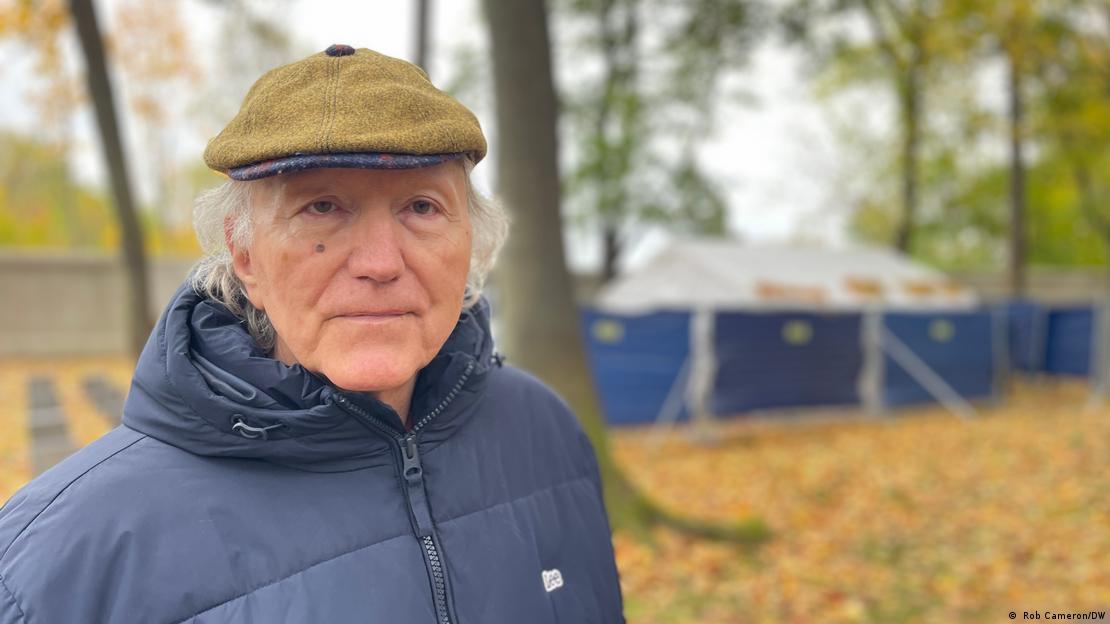

Dablice cemetery is seen as sacred for political prisoners, many of whom were sentenced to death in the 1950s, says Jiri Linek (pictured here)Image: Rob Cameron/DW

The three officers — Karel Sabela, Vilem Sok-Sieger and Miloslav Jebavy — were decorated war heroes, men who had fought the Nazis in France, North Africa and at home in what was then Czechoslovakia.

When the Communists took power in February 1948, the three men began planning a military coup aimed at overthrowing the nascent Stalinist regime.

According to their plan, Sabela's tank unit from the military garrison in Zatec was to move to Prague and assist in seizing key strategic locations such as ministries, the headquarters of Czechoslovak Radio and the telephone exchange.

Secret police, however, infiltrated the group and the operation was foiled before it began. Several dozen participants were put on trial. Five were hanged immediately; others received life sentences.

The right to a dignified burial

"Every person has the right to a dignified burial. And for victims of totalitarian regimes — who were not allowed that right — it is absolutely justified," said Petr Blazek, a historian specializing in the communist period.

"It's also the duty of the state to honor people who resisted totalitarianism and to show, through their stories, what that regime was really like," he went on.
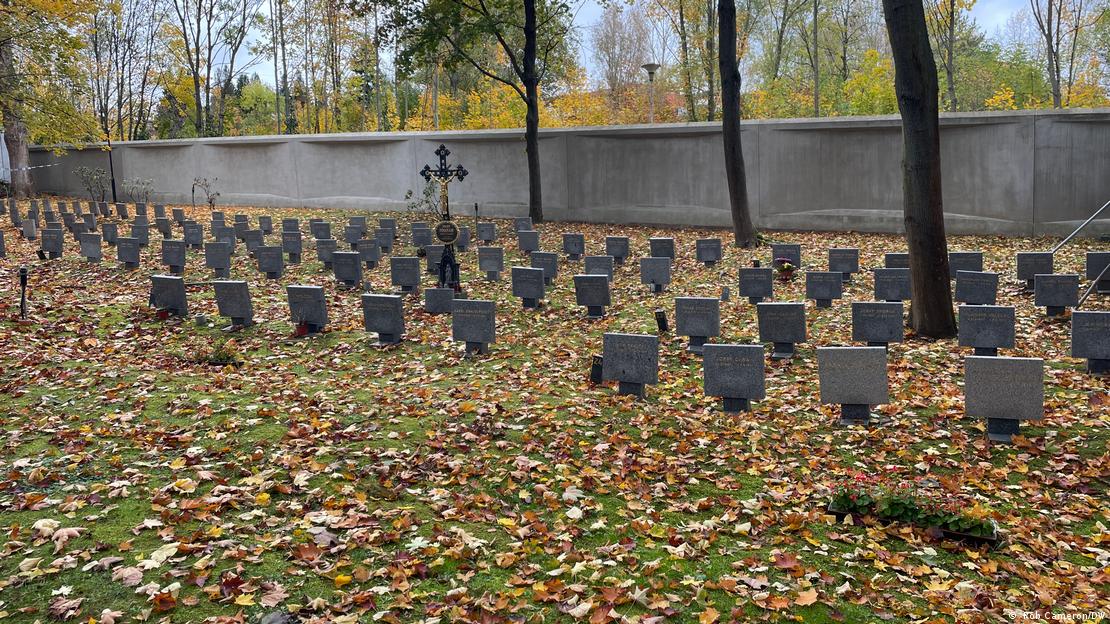

Plaques erected by the Association of Former Political Prisoners 1948–1989 bearing the names of people the association is relatively certain were buried in mass graves at Dablice cemeteryImage: Rob Cameron/DW

Historians still debate how real the coup plan was and how much was fabricated or manipulated by the regime to purge dissent.

Some sources suggest the secret police (the StB) may have provoked or exaggerated the plot to justify the arrests.

Reburial with their loved ones

"These people were victims," Blazek told DW. "It is absurd that some of them are buried here together with people who were murderers or convicted criminals."

There is, of course, a strong human element.

Several descendants of the army officers were present at the first day of the exhumations. They provided DNA samples to be compared with the corpses of the three men, once the correct bodies have been identified and removed from the mass grave.

If the match is complete, they will finally be reburied alongside their loved ones.
Social graves used for executed dissidents

"We know that there are four layers of coffins, and 10 coffins in each layer. So, there are 40 coffins in each mass grave," said Martin Cechura, an archaeologist from the Museum of Prague.
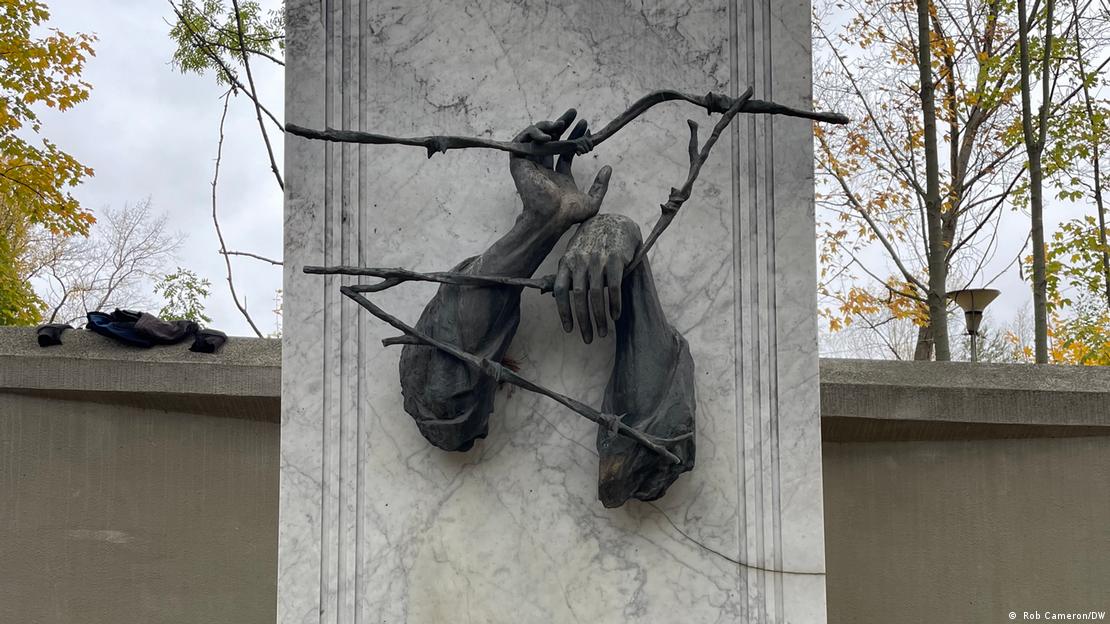
It is estimated that several hundred Communist-era political prisoners are buried in mass graves in the cemetery. Pictured here: a monument to the victims of communismImage: Rob Cameron/DW

"But we also know that each coffin may contain several individuals. Mass Grave No. 14 should contain the remains of 281 people — not only political prisoners; far from it," he went on.

"You see, these were social graves, where people without relatives were buried, stillborn babies, people whose bodies were dissected at the anatomy institute, and even amputated body parts," Cechura added.

Untangling this puzzle, sorting through this collection of corpses to extract the three executed officers is a task that requires great dignity and care.

Ultimately, it will go toward righting a historical wrong.

"Social graves were not invented by the communist regime. They have existed in Christian cemeteries since the Middle Ages. They were intended for people who had no one to bury them, no one to arrange a funeral," Cechura said.

"Of course, the regime used — or rather misused — these social graves to bury the victims of its repression. They treated them as if they had no relatives, even though they did. It was another level of punishment for the families, who were never told where they were buried," he added.

Solving an enduring mystery


There could be several hundred communist-era political prisoners buried here. Some are already honored with named plaques, the work of Jiri Linek and his organization, but many are not.

In time, he hopes, the ultimate mystery will be solved, one that has eluded Czech historians for decades.

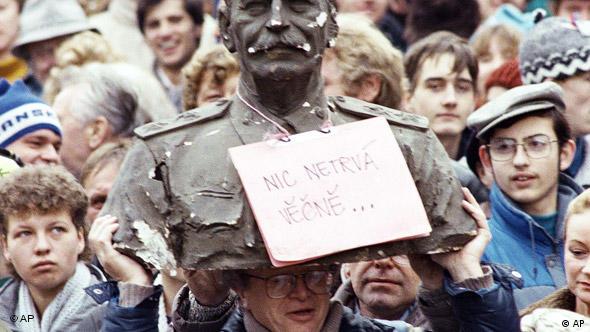
The Velvet Revolution, a peaceful revolt born of police brutality in late 1989, ended four decades of communism in what was then Czechoslovakia
Image: AP

In May 1942, a pair of British-trained paratroopers — Jozef Gabcik and Jan Kubis — assassinated Reinhard Heydrich, the acting Nazi Reichsprotektor of Bohemia and Moravia, one of the key architects of the "Final Solution."

They were part of a group of seven men who three weeks later were surrounded in the crypt of a Prague church after being betrayed. Following a gun battle with German SS and Wehrmacht troops, they took their own lives.

That much is known. But the question remains: Where are the bodies?

"We have confirmed that the Germans transported their remains to the Prague Institute of Anatomy. But what happened after that, we just don't know," historian Petr Blazek told DW.

"We know that Kubis and Gabcik's bodies were decapitated, but as for what happened next … the usual practice of the Anatomical Institute was to send remains here to Dablice, to these social graves," he went on.

There is already a special plaque to the seven paratroopers a short distance from the communist-era plots, based on information provided to a researcher by one of the former employees of the institute.

But whether their bodies truly lie here is unknown. And there is only one way to establish that theory beyond doubt.

Edited by: Aingeal Flanagan
Why is Myanmar's military scoring victories again?

CHINESE IMPERIALISM

Zsombor Peter
DW
07/11/2025

With backing from China, Myanmar's military junta has managed to recapture a string of key towns and highways and put rebels on the back foot.


After losing control of over half of Myanmar, the military is retaking strategic points
Image: Soe Zeya Tun/REUTERS

Myanmar is preparing to start a national election in December — at least to the extent that such polls are possible in a country officially ruled by a military junta and partly controlled by rebels after nearly five years of civil war.

UN experts have dismissed the coming polls as a "sham," engineered to maintain the generals' grip on power through proxy parties.

And yet, the junta seems to be in a hurry to create conditions for voting in as many places as it can. The military has scored a string of victories against rebels since June, recapturing towns and trade routes on several fronts in the east and either pushing resistance forces back or stalling them in place.

These victories are also likely to reinforce the government's position ahead of the vote, which is due to start on December 28 and continue into January.

"It seems like kind of a deadline for them," said security analyst Kyaw Htet Aung with the Institute for Strategy and Policy – Myanmar.
Military taking over gem mines

The junta is engaged in its most consequential counteroffensive in years, possibly since the civil war started in 2021, analysts told DW.


The military is "reopening trade routes, it's reopening logistics routes, it has a major surge in troop numbers, it's made significant reforms to the way it fights, it's on the offensive on the diplomatic and political front with this upcoming election, and it's got plenty of new equipment," said Morgan Michaels, a research fellow at the International Institute for Strategic Studies.

Even after recent victories, the junta is believed to fully control well under half the country. But analysts say the towns and roads it has recaptured are of high strategic value.

They include key trade corridors with both China and Thailand and gem and mineral mines that had been controlled by different resistance groups since the coup.

Rebels on the defensive

Resistance groups are not on the wane everywhere. In the west, the Arakan Army is still advancing towards the center of the country. The Kachin Independence Army continues bearing down on the military from the north and is mostly holding its ground.

But many of the other armed groups arrayed against the junta have moved from offense to defense since last year, said Su Mon, a senior analyst for Armed Conflict Location and Event Data, an independent research group that tracks conflicts around the world.

"That's the major shift. They've [gone] from an offensive position to a defense position in their controlled areas. And since then they are not able to defend those areas and [are] losing one town after another," she told DW.

China throttles trade and supplies for rebels


Since the Myanmar military seized power from a democratically elected government in February 2021, tens of thousands have been killed on all sides, and over 3.3 million civilians have been displaced.

UN investigators have accused the junta of committing war crimes, including rape, torture and murder, at an "alarming rate." But despite its brutality, the military has mostly been retreating before rebel groups, losing control of vast swaths of the country, including most of Myanmar's borders with Thailand, China and Bangladesh.

Analysts say the military's recent successes are partly due to the renewed support from China, which has billions of dollars invested in energy and infrastructure projects across Myanmar that it is keen to protect and expand.

Beijing had been engaging with both the junta and resistance groups in the first few years of the civil war. More recently, however, China has been gradually ratcheting up its diplomatic, economic and military support for the Myanmar regime.

Chinese officials brokered a ceasefire in January between the military and a powerful armed group that had routed the junta's battalions in the northeast, and another ceasefire last month with a second group that had been threatening the junta's powerbase in the center of the country.

At the same time, China has throttled vital border trade with resistance groups in order to keep them from attacking the junta forces. It has also used its connections with the powerful rebel group called the United Wa State Army (UWSA) to expand the embargo.

"The UWSA is the main source of military and finance support for many other groups…. and they've been cut off now," said Su Mon.


Smarter use of drones and planes on the battlefield


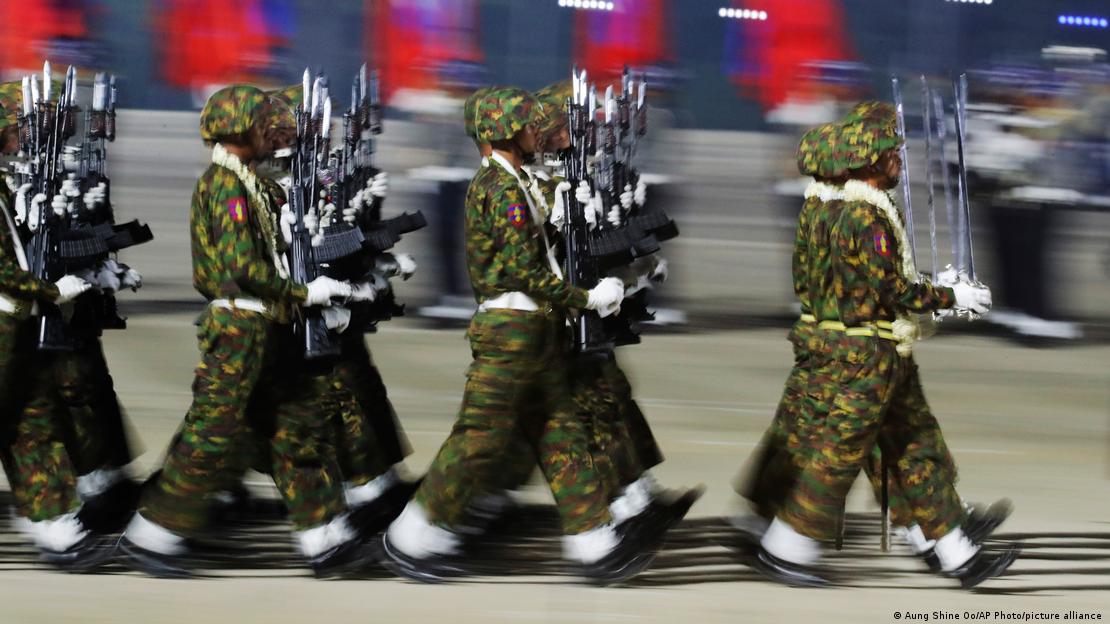
Another reason for the military's surge is the regime's renewed conscription drive. At least 60,000 soldiers are estimated to have joined the military's ranks since the junta started the draft last spring.

The drive has reinvigorated the junta battalions, which had been whittled down by casualties, desertions and defections, allowing the military to throw far more troops into battle than before.

A new recruitment drive has filled out the Myanmar military's ranksImage: Aung Shine Oo/AP Photo/picture alliance

Analysts also say the military is learning from its mistakes and getting better at fighting the battles at hand.

This includes vast improvements to its drone fleet and its use of air strikes. Su Mon said the military is now using it's the air force at the very start of engagements rather than after they've begun fighting the rebels.

Michaels said the regime has also passed greater control of the military from Min Aung Hlaing, who heads the regime, to Soe Win — believed to be a more competent general — and is now promoting more frontline commanders with battlefield experience.
Outlook for rebels 'pretty grim'

For all that, the analysts believe the military is still not poised for victory, nor are resistance groups poised for defeat.


"There is no military solution to Myanmar's conflict; there never has been. There can only be a political solution," said Michaels.

"I think we have to see what happens after the elections — if there's a new leadership dynamic, if the military makes more compromises or not, and if there's more ceasefires," Michaels added.

The likeliest path ahead, he said, is that the regime continues to divide the armed resistance groups, which were only loosely aligned to begin with, and make deals with them one by one.

At least for now, said Michaels, the outlook for the resistance and for Myanmar "is pretty grim."

Edited by: Darko Janjevic


Myanmar scam hub sweep triggers fraudster recruitment rush


By AFP
November 3, 2025


Late October raids roiled Myanmar fraud factory KK Park, sending more than 1,500 people fleeing over the border to Thailand - Copyright THAI NEWS PIX/AFP Sarot Meksophawannakul
Sally JENSEN

Recent raids on one of Myanmar’s most notorious internet scam hubs sparked a recruitment rush as fleeing workers scrambled to enlist at nearby fraud factories, experts and insiders told AFP.

Online scam hubs have mushroomed across Southeast Asia, draining unsuspecting victims of billions of dollars annually in elaborate romance and crypto cons.

Many workers are trafficked into the internet sweatshops, analysts say, but others go willingly to secure attractive salaries.

Late October raids roiled Myanmar fraud factory KK Park, sending more than 1,500 people fleeing over the border to Thailand — but many stayed behind to pursue new opportunities in the black market.

A Chinese voluntary scam worker told AFP that a few hundred people who left KK Park arrived at his own compound three kilometres (two miles) away on October 23 — lured by monthly salaries of up to $1,400.

The man spoke on condition of anonymity for security reasons, but shared with AFP a live location on a messaging app showing he was in Myanmar, near the Thai border.

“Some people will be picked up by unscrupulous bosses, while others will be picked up by good companies,” he said. “It all depends on your luck.”

Jason Tower, senior expert at the Global Initiative against Transnational Organized Crime, told AFP many KK Park scammers have simply been “re-recruited” by other gangs.

“There are some people looking for a new location to engage in scamming from,” he said. “They might see this as a job.”

– ‘Our chance to escape’ –

Webs of anonymous crypto payments and chronic under-reporting by embarrassed victims make losses to scam centres hard to quantify.

But victims in Southeast and East Asia alone were conned out of up to $37 billion in 2023, according to a UN report, which said global losses were likely “much larger”.

War-torn Myanmar’s loosely governed border regions have proven particularly fertile ground for the hubs.

The embattled junta — which seized power in a 2021 coup — has been accused of turning a blind eye to scam centres enriching its domestic militia allies.

But it has also faced pressure to curb the black market by its international backer China, galled at hubs recruiting as well as targeting its citizens.

Last month, the junta said its troops had occupied around 200 buildings in KK Park and found more than 2,000 scammers.

Analysts say the raid was likely limited and heavily choreographed — designed to vent pressure to take action without too badly denting profits.

But it nonetheless prompted an exodus of 1,500 people from 28 nationalities into Thailand, according to provincial Thai authorities.

Among them were around 500 Indian nationals and around 200 Filipinos.

Authorities face the daunting task of discerning trafficking victims from willing scammers.

Speaking to AFP on condition of anonymity, one Filipino man described fleeing KK Park on October 22 with around 30 compatriots as a pro-junta militia arrived to aid the crackdown.

“Everyone ran outside,” he said. “This was our chance to escape.”

Grabbing what few possessions he could, the man fled the compound he says he was trafficked into and crossed by boat to western Thailand.

– Sold for scamming –

With one expert estimating around 20,000 people had been working in KK Park — the vast majority believed to be Chinese nationals — those who fled to Thailand likely made up less than 10 percent.

But those who stayed behind are not necessarily willing participants.

After the KK Park exodus, the Chinese scammer at the nearby compound told AFP local armed groups scrambled to cash in — with unemployed scammers “sold” to other operations for up to $70,000.

Whether they are willing workers being headhunted or human trafficking victims is unclear.

The scammer who spoke to AFP reported hearing “booms every evening” after the raids, but dismissed it as “all for show” rather than a meaningful crackdown by Myanmar authorities.

And with the continuing flow of scam workers — willing or coerced — rights advocates say the problem can only be solved by targeting the Chinese bosses running the show.

“(They) must be arrested, prosecuted, and have all their assets seized,” Jay Kritiya from the Civil Society Network for Human Trafficking Victims Assistance told AFP.

“That’s the real crackdown.”
Billions at stake: Chancellor Merz backs European patriotism for steel

Copyright AP Photo

By Franziska Müller
Published on 07/11/2025 - EURONEWS

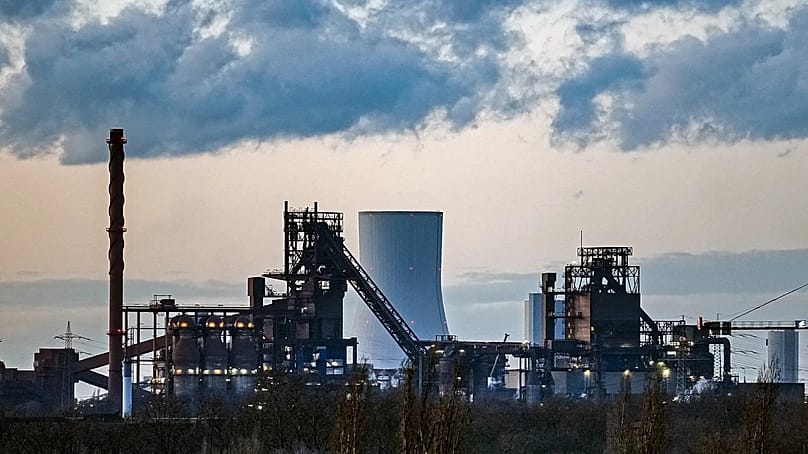
If German steel production moves abroad, researchers warn this could result in a loss of up to €50 billion per year in value added.

Germany’s steel industry is facing an “existential crisis”, Chancellor Friedrich Merz warned, as he signalled a shift toward greater economic self-reliance in Europe. He spoke alongside Finance Minister Lars Klingbeil following a summit at the Chancellery on Thursday, convened to find ways to secure the sector’s future.

Mr Klingbeil said that if Germany is to make significant investments in its defence industry, it should also be able to prioritise European and domestic suppliers.

“A little more ‘buy European’, a little more European patriotism — I think that would help,” he told reporters.

Chancellor Merz said he would support an EU plan aimed at protecting the bloc’s steel industry, adding that a joint Franco-German initiative could be in the works.

More than half a million people in Germany are employed in roles linked to steel production — from suppliers to customers. Rising energy costs and low-priced imports have left the industry struggling to remain competitive.

€50 billion at risk

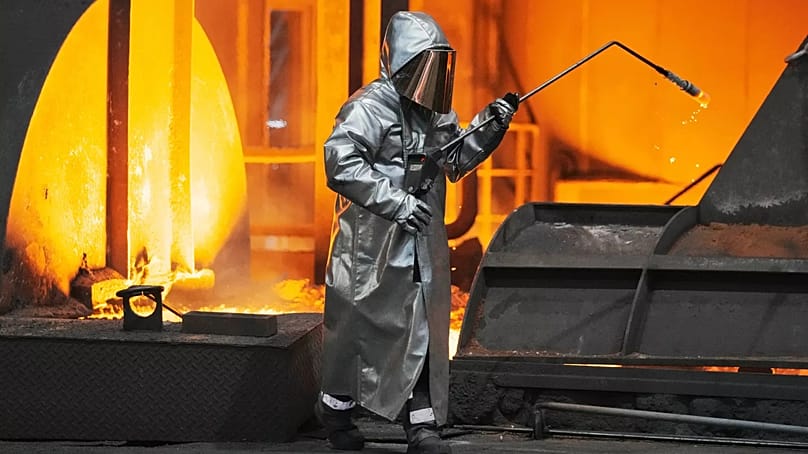
Steelmaking in Germany is heavily dependent on high temperatures, making it particularly vulnerable to soaring energy prices. As a result, German steel has become increasingly uncompetitive compared with imports.

In the worst-case scenario, the country could lose its status as an industrial powerhouse, with companies moving production abroad. A study by the University of Mannheim, commissioned by the Hans Böckler Foundation, warned that such a shift could cost the German economy up to €50bn a year in lost value added.

The German steel industry is suffering from high energy prices. AP Photo

The researchers estimated that at least 30,000 jobs could be lost if domestic production were to collapse. They said key sectors such as metal manufacturing, mechanical and electrical engineering, and the automotive industry would face sharply higher costs if forced to rely on imported steel.

To safeguard industrial capacity, the study recommends maintaining annual steel production of around 40 million tonnes in Germany to ensure demand can be reliably met in the long term.

US tariffs and Chinese subsidies

While Germany’s economy continues to stagnate, China has poured record levels of subsidies into its steel industry. The result is a massive expansion in production capacity, allowing Chinese firms to sell steel at highly competitive prices on the global market.

The United States has responded with steep import tariffs. Since President Donald Trump’s trade policies came into force, steel imports have faced additional duties — including a 50% tariff on European steel — creating major challenges for German exporters.

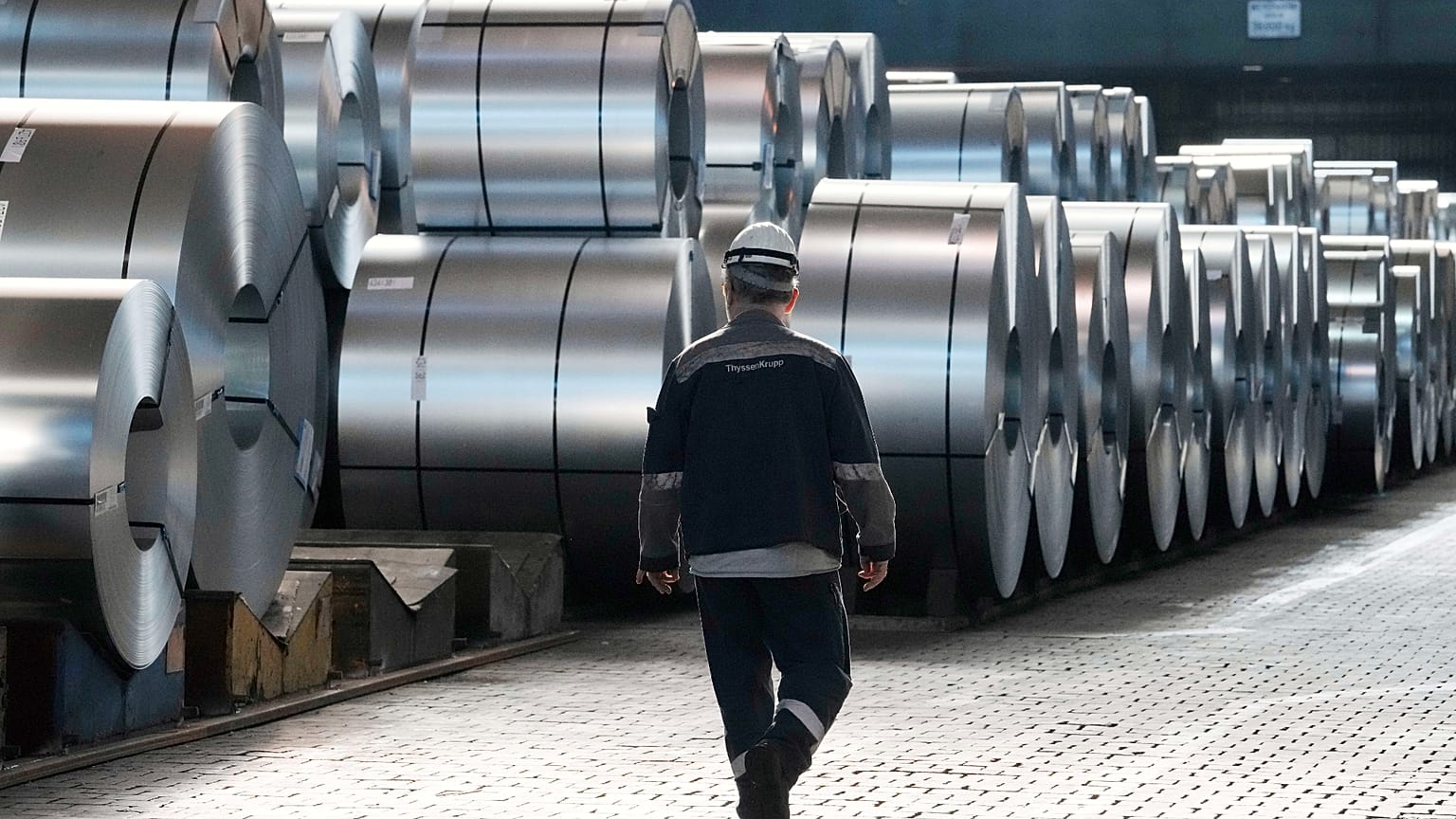
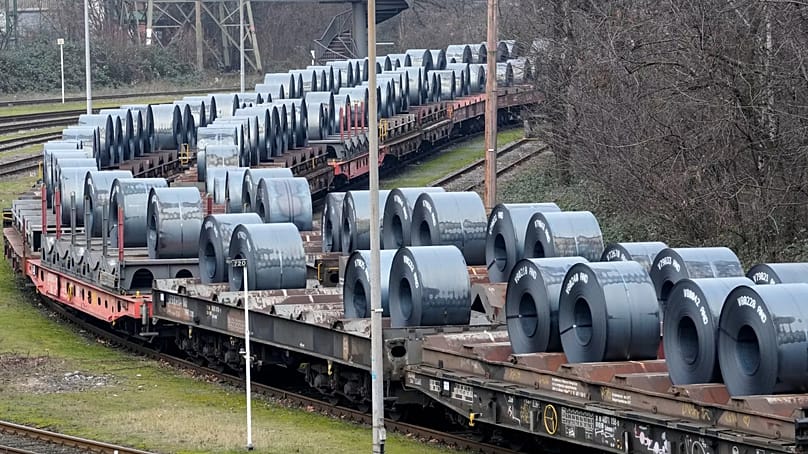
Steel is ready for transport in Duisburg. The industry can no longer export as much as it used to. 
AP Photo

Although the European Union is the world’s second-largest steel producer, it accounts for only about 14% of global output, according to figures from the industry body Eurofer. Asia dominates the sector, producing around three-quarters of the world’s crude steel, with Germany remaining the EU’s leading producer.

However, Europe’s steel output has been falling steadily. Eurofer data shows that EU crude steel production fell to 130 million tonnes in 2024, down from around 170 million tonnes in 2010. Germany also recorded a weak year for steel production, and at the end of 2024, its largest producer Thyssenkrupp announced plans to cut 11,000 jobs.

EU seeks tougher trade measures


Demand for steel across Europe has declined in recent years amid sluggish economic growth.

Even so, industry analysts warn that Chinese exports to the EU could increase further as Beijing redirects steel originally destined for the US, where higher tariffs now apply.

EU Commission investigations have found that some Chinese steel products — such as tin-coated and organic-coated varieties — have been sold in Europe below their production cost, prompting the imposition of anti-dumping duties. Brussels has described the situation as unfair competition.

In early October, the European Commission proposed extending and tightening tariffs on steel. Under the plan, the quota for duty-free imports would be halved, while tariffs on excess imports could rise to 50%. The proposal still requires approval from both the European Parliament and EU member states.
Germany’s options: energy costs under scrutiny

Germany has limited influence over global trade dynamics but may seek relief through domestic energy policy. One proposal is the introduction of an industrial electricity price aimed at reducing costs for energy-intensive sectors such as steel.

Trade unions and industry leaders have called for the government to move quickly. The powerful IG Metall union is demanding the introduction of an industrial electricity rate of five cents per kilowatt hour from 1 January 2026, as outlined in the coalition agreement.

Economics Minister Katherina Reiche (CDU) confirmed this week that a lower industrial electricity price would come into effect in 2026, though details of the cost and implementation are yet to be announced.

Thyssenkrupp is the largest steel producer in Germany and Germany in turn is the largest producer within the EU. AP Photo

Industry calls for cheaper energy and green investment

The German Steel Federation has also urged the government to ensure competitive electricity prices for manufacturers. Trade union and company representatives took part in Thursday’s summit at the Chancellery.

According to calculations by the German Economic Institute (IW), an industrial electricity price could save German companies up to €1.5bn a year. However, economists warn that if the measure is only applied for three years, as currently proposed, the impact would be limited.

Researchers from the University of Mannheim, in their recent study, also called for greater investment in facilities capable of producing more climate-friendly steel. Although the transition is costly, they said it was increasingly urgent to cut carbon emissions from the industry.

“An end to steel production in Germany would severely endanger the country’s entire industrial base — with serious consequences for the economy, society and political stability,” Jürgen Kerner, the deputy chair of the IG Metall union, told the German Press Agency (dpa).

Mr Kerner said both federal and state governments must “do everything possible” to safeguard Germany’s steel industry and make it fit for the future.
Poland is launching a new military training programme. How will citizens respond to it?


Copyright AP Photo

By Aleksandra Galka Reczko
Published on 06/11/2025 - EURONEWS

Poland is betting on strengthening defence preparedness. At the same time, surveys show differing attitudes among Poles towards involvement in defence.

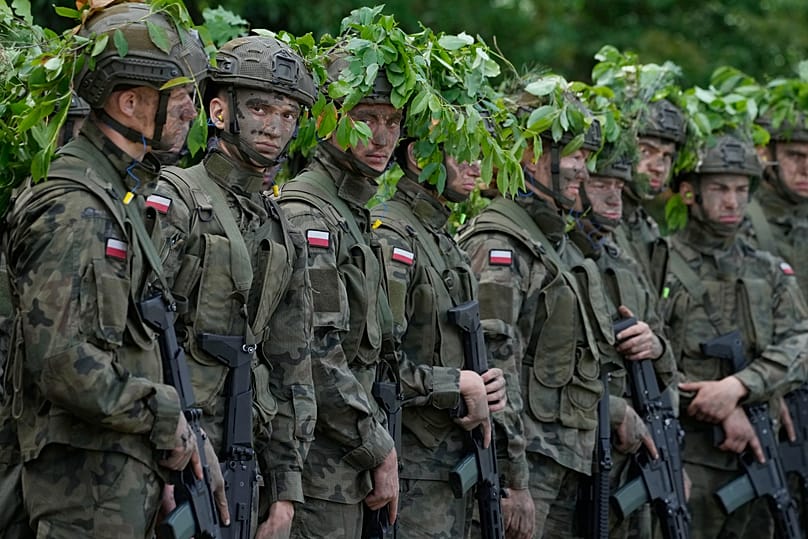
Poland has unveiled a new programme of universal and voluntary military training.

The so-called "wGotowości" (mReadiness) programme was announced by Chief of General Staff Gen Wieslaw Kukuła, Deputy Prime Minister and Minister of Defence Władysław Kosiniak-Kamysz and Deputy Head of the Ministry of Defence Cezary Tomczyk.

During a press conference, Kukuła explained that the programme envisages five lines of focus across two different pathways.

"Firstly, to strengthen the individual resilience of citizens and secondly to strengthen the availability, resilience and competence of the reserves," he said.

Importantly, resilience defence training is not equivalent to military service, nor does it culminate in an oath or entry on the reservists' list.

Kukuła also stressed that "the fundamental objective is to build deterrence capability."

"That is, to bring about a situation in which no reasonable person would decide to attack Poland because of the potential we will have at our disposal."

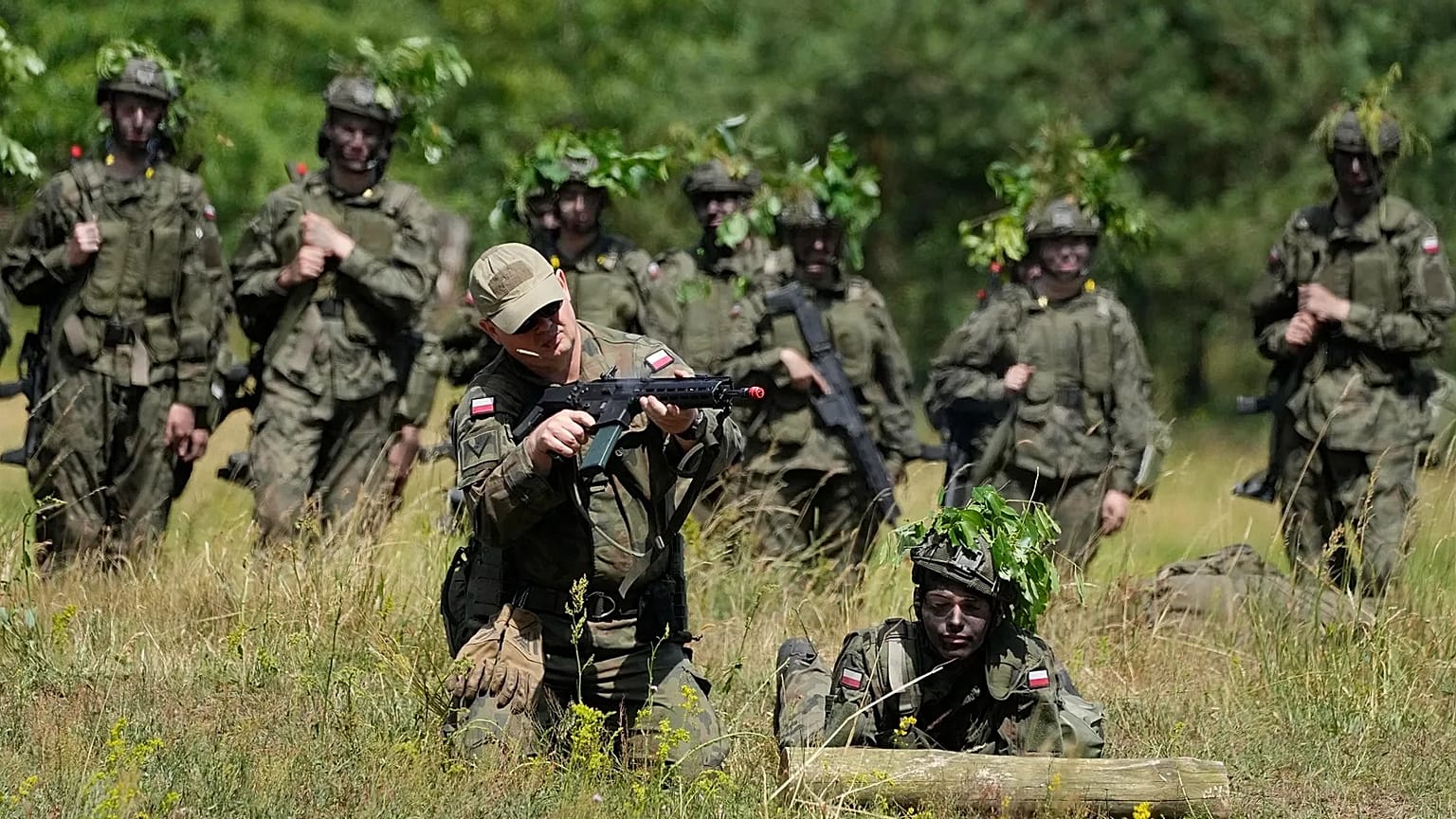
Volunteers in Poland's army practice shooting during training exercises in Nowogrod, 
20 June, 2024 AP Photo

The training will cover practical skills such as first aid, crisis survival, cyber hygiene and security basics. The sessions are one-day and will be held on weekends, as close to home as possible and those willing can choose a military unit.

The Ministry of Defence wants to encourage companies to send employees to joint training sessions.

According to Deputy Prime Minister and Minister of National Defence Władysław Kosiniak-Kamysz, the wGotowości programme is unique in NATO.

"In my opinion, there is no other country that would engage all its forces and resources so extensively and reach out to citizens so easily."

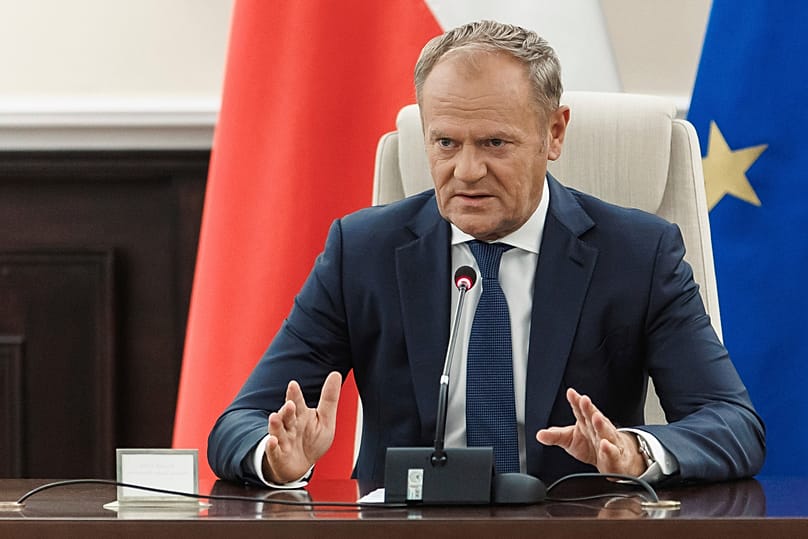
The initiative is part of the government's wider plans. In March this year, Prime Minister Donald Tusk reported on a similar programme, estimating that Poland would reach a military training capacity of 100,000 volunteers per year by 2027.


Polish Prime Minister Donald Tusk holds an extraordinary government meeting at the chancellery in Warsaw, 10 September, 2025 AP Photo


Poles divided on commitment to national defence


Poland has been at the centre of several security incidents since Russia's full-scale invasion of Ukraine more than three years ago.

Particularly high-profile was the violation of Polish airspace by Russian drones in September 2025. The situation triggered a NATO response and sparked discussions about the country's defence preparedness.

Public opinion polls paint a divided picture on whether Poles themselves are prepared for a conflict scenario.

According to an IBRiS survey for Radio ZET in August 2025, 44.8% of respondents declared that they would volunteer to defend the country in a war situation. In contrast, 49.1% responded negatively and 6.1% were undecided.

One in three Polish women said they would be ready to fight, while among men, more than half (54%) said so. The youngest are least enthusiastic; in the 18-29 age group, 69% said they would not come to the country's defence.
Almost half of Poles do not trust the army


An optimistic interpretation is offered by psychologist Professor Adam Tarnowski of the Nicolaus Copernicus University in Toruń. In an interview with Euronews, he stressed that the results of the poll can be interpreted as positive.

"Although this percentage seems small, with only about one quarter of people ready to defend the country, it is possible to form quite a decent army from this quarter."

Tarnowski points to another key problem: a lack of trust in the army. "Only half of Poles more or less state that our army would be able to defend the country. Therefore, enlisting in the army, which in the perception of these people is an army incapable of defending itself effectively, is also to be understood here as such a refusal response."


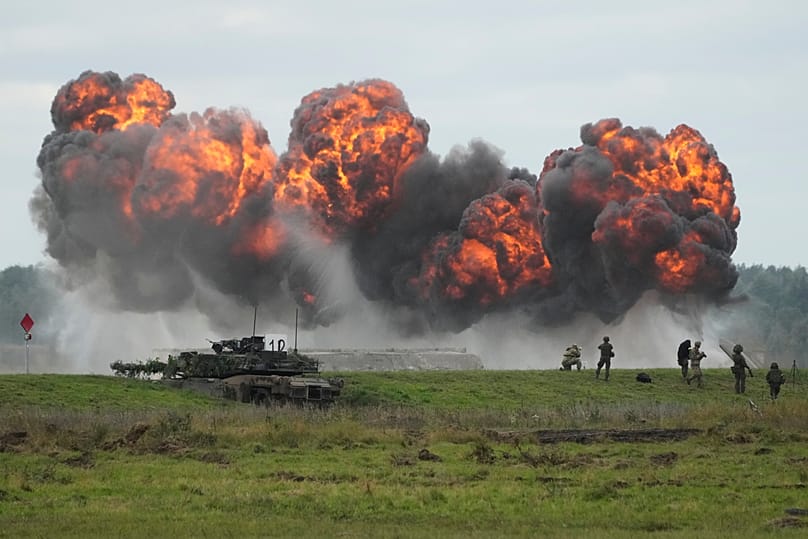
Smoke rises as Poland stages its biggest military exercise of the year in Orzysz, 17 September, 2025 AP Photo

"If I am going to the army, I would like to be sure that I will be well trained and well commanded," he explains.

In this statement, the psychologist refers to research by the Pollster centre from August 2025, which shows that only 41% of Poles believe in the Polish Army's ability to defend the country, while 48% have doubts.

Asked whether this reluctance to enlist is a sign of the times, Tarnowski recalls the strong pacifism that also prevailed before the Second World War.

"Perhaps the times are formatting us differently at the moment, but they are still the same people and at the end of the day they would react in a similar way. That is - as always - those who can, will help. Those who need to get on with their business will get on with their business, which is also important."


Ukrainians ‘live with danger every day, but refuse to give in’, Angelina Jolie says in Kherson visit


Copyright Maksym Kozutsky/Lviv City Hall

By Sasha Vakulina
Published on 06/11/2025 
EURONEWS


Angelina Jolie visited Mykolaiv and Kherson — some of Ukraine’s most dangerous southern frontline regions, where civilians describe daily Russian drone attacks as "human safari".

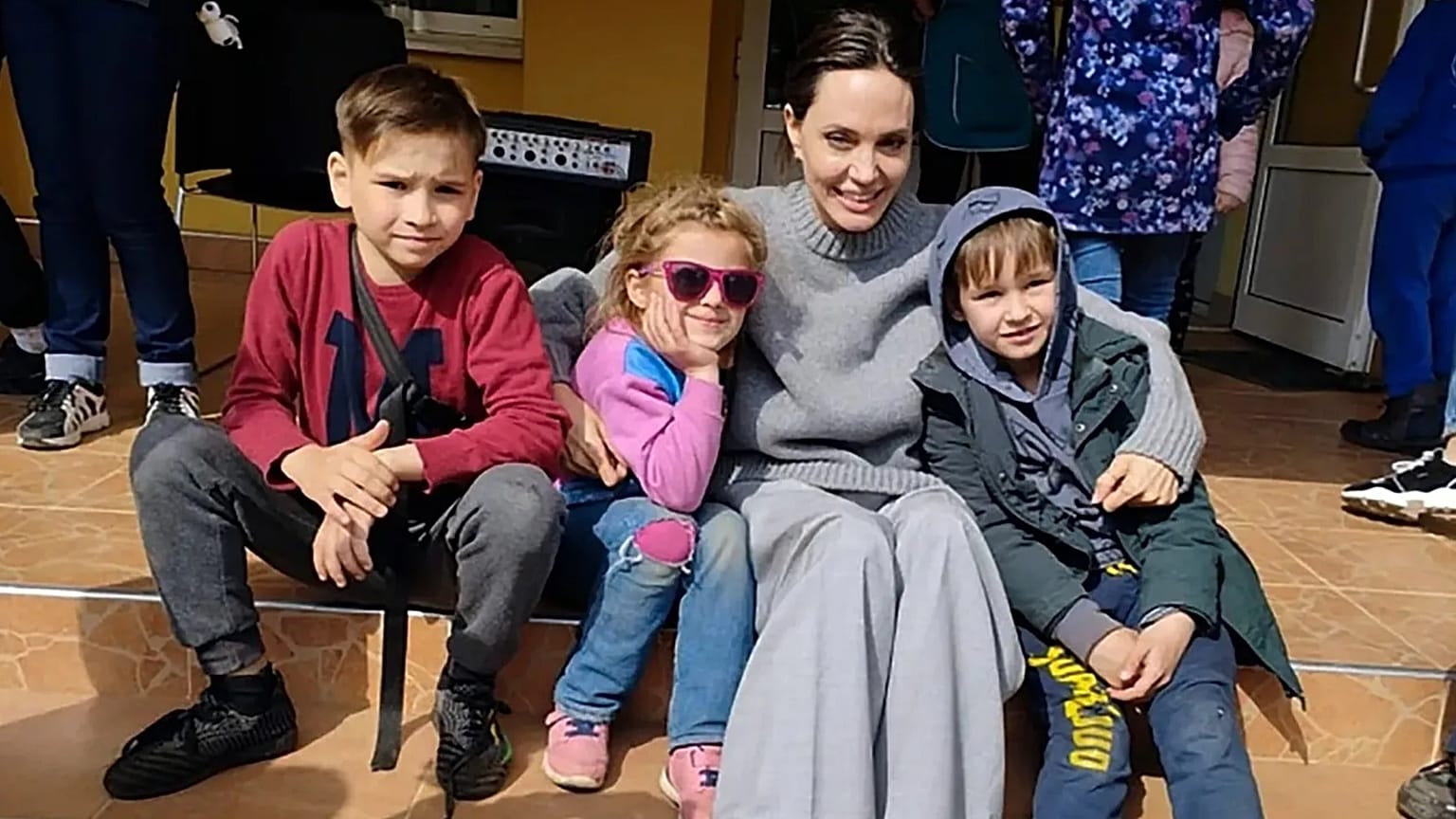
US actress Angelina Jolie visited Kherson and Mykolaiv on Wednesday, meeting medical staff, families and volunteers in some of the most dangerous regions in Ukraine.

According to the Legacy of War Foundation, Jolie was shown how medical and educational institutions in Ukraine's frontline regions have been relocated into reinforced underground spaces to continue their operations.

The Kherson region is partially occupied by Russian forces on the left bank of the Dnipro River. Kherson city — on the opposite bank of the river — is constantly targeted by Russian forces due to its proximity to the occupied area and therefore limitations of Ukrainian air defences.

"The people of Mykolaiv and Kherson live with danger every day, but they refuse to give in. At a time when governments around the world are turning their backs on the protection of civilians, their strength, and their support for each other is humbling," Jolie said in a statement released by the foundation.

Russian drone attacks on Kherson city have become so frequent that the residents describe Moscow’s strategy of constant attacks on civilians as "human safari".

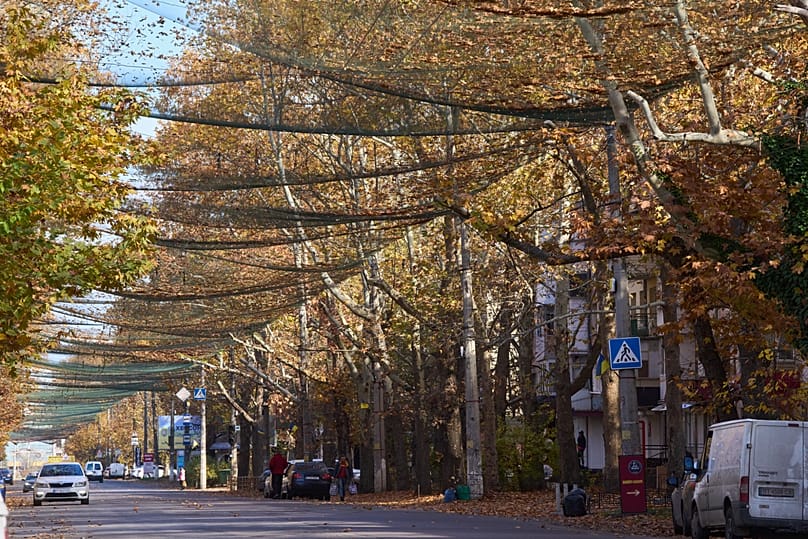
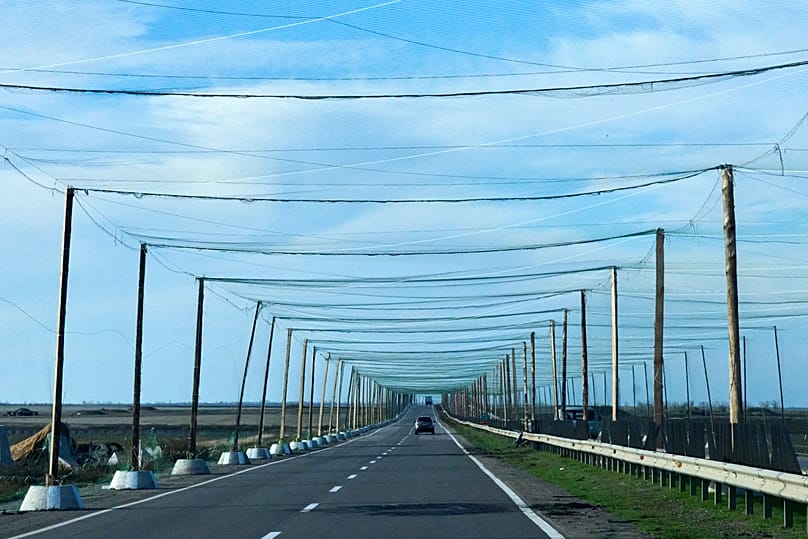
To protect the people and civilian infrastructure, major roads leading into the centre of Kherson are covered in improvised nets.

Local residents walk along the street covered with an anti-FPV-drone net in the frontline city of Kherson, Southern Ukraine, Monday, Nov. 3, 2025 AP Photo

According to the Legacy of War Foundation, Jolie was shown this anti-drone protection technique, which turns roads into a kind of protected tunnel.

"After nearly three years of conflict, exhaustion is visible, yet so too is determination. Families want safety, peace, and the chance to rebuild their lives. Diplomacy and the protection of civilians should not be allowed to fall away in a brutal contest of weapons and technology."

On 29 October, a Russian artillery strike hit a children's hospital in Kherson, injuring nine people, including four children.

Cars drive on the road covered with an anti-FPV-drone net at the approaches to the frontline city of Kherson, Southern Ukraine, Monday, Nov. 3, 2025 AP Photo

Domestic media outlets also reported that during Jolie's visit, a Ukrainian member of her security detail was detained by military enlistment officers.

The man in question is reportedly a reserve officer who lacked a valid medical commission certificate and was redirected to another location to settle the issue.

Local media outlets confirmed with the regional military recruitment office in Mykolaiv that Jolie visited the premises.

The actress previously visited Ukraine in the spring of 2022, just two months into Russia’s full-scale invasion.


As Islamophobia increases around Europe, which country sees the most anti-Muslim incidents?

Copyright Euronews

By Inês Trindade Pereira & Mert Can Yilmaz
Published on 06/11/2025 


Anti-Muslim incidents in the EU have increased since the Hamas attacks in October 2023, particularly in Austria, Belgium and Bulgaria.

Europe was the second most significant hotspot for Islamophobic incidents in 2024, according to the latest annual Islamophobia report of the Organisation of Islamic Cooperation (OIC).

Islamophobia often takes the form of online hate, which is relatively high in Europe compared to other regions across the globe.

"August and September witnessed a steady increase in Islamophobic manifestations, particularly in the United Kingdom, where debates over immigration policy intensified, and in Germany, where far-right demonstrations targeting Muslim communities gained momentum," the OIC report said.

Muslims represent the second-largest religious group in the EU, with around 26 million living in the bloc.

In the EU, nearly one in two Muslims said they experience racial discrimination, up from 39% in 2016, according to the latest report of the European Union Agency for Fundamental Rights (FRA).

This was especially felt in the labour and housing markets in the five years before the survey took place in 2022.

The FRA also pointed out that there has been a noticeable increase in anti-Muslim incidents in the EU since the Hamas attacks in Israel in October 2023, particularly in Austria, Belgium and Bulgaria.

For instance, Austria experienced an increase in anti-Muslim hate crimes, with over 1,500 incidents reported in 2023 — the highest number since 2015.

Austria (71%), Germany (68%) and Finland (63%) also reported the highest rates of discrimination among 13 EU countries between 2017 and 2022.

What forms does Islamophobia take?

Globally, far-right campaigns represent the largest category of incidents, at 25%.

Hate speech follows closely as the second most common occurrence, representing about a fifth of all incidents.

Discrimination and verbal and physical assault share similar results, together accounting for more than a quarter of all incidents.

In the EU, France and Germany are considered hotspots for Islamophobia due to heightened levels of anti-Islam activity, according to the OIC report.

It said that the high rate of incidents can be attributed to the resurgence of far-right political movements in countries like France, Germany, and Sweden, where anti-immigration sentiment often manifests as Islamophobia.

However, Europe's legal protections against discrimination are working to challenge and reduce Islamophobic attitudes and policies.

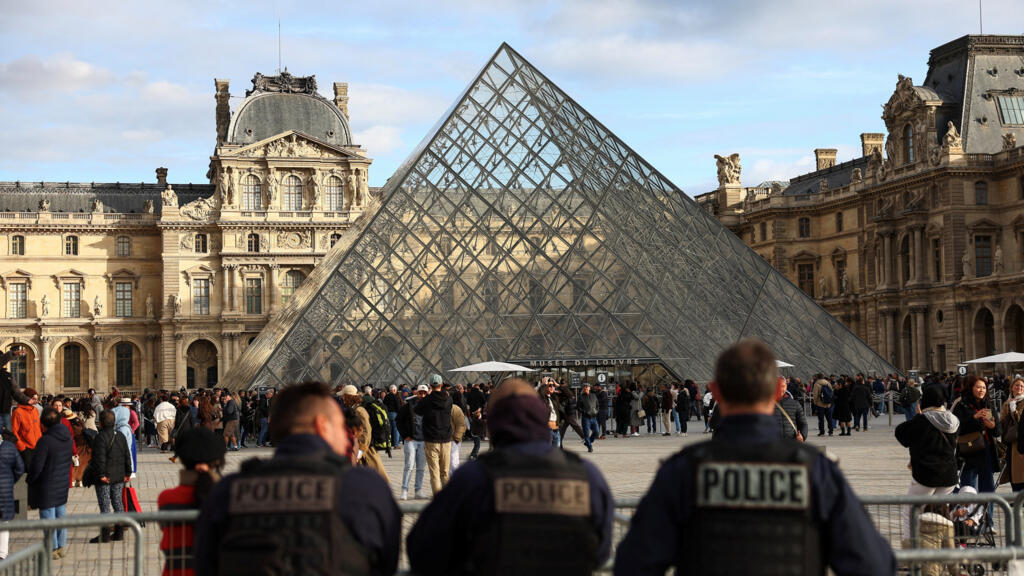
French auditors slam Louvre bosses over lavish spending, weak security

France’s top auditors sharply criticised Louvre Museum bosses on Thursday for spending millions of euros on high-profile exhibitions and expensive purchases instead of improving security and maintaining the historic building.


Issued on: 06/11/2025 - RFI

Auditors investigating spending at the Louvre Museum over six years found more cash had been spent on acquiring artworks than protecting the treasures inside the building. REUTERS - Abdul Saboor

By:Paul Myers


Nearly three weeks after thieves broke into the Paris museum and escaped with €90 million worth of precious jewels, the Cour des comptes (Court of Auditors), France’s public spending watchdog, released its findings on Louvre operations between 2018 and 2024.

“The theft of the Crown Jewels is, without a doubt, a deafening wake-up call,” said Pierre Moscovici, one of the senior figures in the committee.

“The management prioritised visible and attractive operations at the expense of the maintenance and renovation of buildings and technical installations, particularly those relating to safety and security,” he said.

Heist aftermath

On 19 October, four people used a basket lift to cut through a window in the Galerie d’Apollon shortly after the museum opened.

They escaped with treasures including Empress Eugénie’s diamond diadem and sapphires once worn by Queen Marie-Amélie and Hortense de Beauharnais.

A 38-year-old woman and a 37-year-old man were charged on 1 November over the theft. Two other suspects, aged 34 and 39, were arrested on 25 October and have partly admitted their role, prosecutors said.


Security gaps

The auditors’ report found that not enough money had been spent repairing galleries that welcomed nine million visitors in 2024.

“We are alarmed by the persistent delay in the deployment of security equipment to protect the works. These investments are essential to ensure the long-term functioning of the institution,” the auditors said.

A review of security carried out between 2015 and 2017 discovered flaws in the system but its findings were ignored, they added.

“The top priority today must be the renovation of the museum and the modernisation of its fire, security and safety infrastructure. The Louvre deserves this,” Moscovici said.

‘Failure to prioritise’


The report also pointed to the museum’s failure to prioritise projects, leaving it with a backlog of investments it cannot afford.

The auditors urged Louvre leaders to focus on essential projects such as safety, security and restoration, limit acquisitions and redesigns, and manage spending more rigorously.

They said the ministries overseeing the museum should shift performance goals toward maintenance and infrastructure rather than new departments or exhibitions.

The report also questioned plans for a new entrance on the Colonnade side to relieve congestion at the Pyramid and add 22,000m² of underground space, including a Mona Lisa gallery and new halls.

That project, launched without proper feasibility, financial or visitor studies, has already seen costs rise from €450 million to €667 million.

“Given the financial strain, the museum must prioritise essential infrastructure and safety upgrades over expansion projects,” the auditors said.
Kidnapped, killed or silenced: Africa's journalists increasingly under threat

Across Africa, journalists are being kidnapped, tortured and killed – often by people whose identities are known but who face no punishment. Reports gathered by RFI and press freedom groups show these incidents spreading from Burkina Faso to Guinea and eastern Democratic Republic of Congo, where journalists who refuse to toe the line are silenced or forced to flee.


Issued on: 06/11/2025 - RFI

A shuttered newspaper stand in Conakry during a 'press-free day' in February 2016, held in honour of journalist El Hadj Mohamed Diallo, who was shot dead during clashes in the Guinean capital. © Cellou Binani / AFP

In Burkina Faso, respected investigative journalist and editor of newspaper L'Evènement Serge Oulon vanished on 24 June, 2024 after an armed group stormed his home. He has not been seen since. Over the following months, around a dozen other journalists in the country were abducted in similar incidents.

Oulon's face appeared on the cover of the last published edition of L'Evènement in July 2024, as if the twice-monthly newspaper – one of Burkina Faso’s most respected outlets – is waiting for its editor to return before publishing again.

Security forces have also repeatedly forced their way into the Norbert Zongo National Press Centre in Ouagadougou, named after the journalist murdered in 1998 who became a symbol of press freedom in West Africa.

Silencing dissent

Captain Ibrahim Traoré, who seized power in Burkina Faso in a coup at the end of 2022, no longer tolerates dissenting voices. Only “patriotic journalists” are allowed to work in peace – those “who limit themselves to publishing articles pre-written by the presidency”, one Burkinabe colleague told RFI.

The rest – along with opposition figures, lawyers, magistrates, religious leaders and members of civil society – are routinely arrested, or conscripted to fight on the front lines against the jihadist insurgency that has shaken the country for a decade.

Some later reappear in short videos, dressed in military fatigues and reciting statements of repentance under visible duress.

But Oulon has not been among them. Is this because he refused to bend? Or because he is no longer being detained?

Gaza, Syria, Ukraine: Bayeux press awards hail courage under fire

Five days after his abduction, the Anti-Corruption Award was given to Oulon in his absence – an annual award presented by Burkina Faso's National Anti-Corruption Network.

The jury recognised “the rigour and meticulous work carried by a stripped-down, clear and limpid style” of a journalist “with ethics ingrained in his body”, a colleague said.

The last time Oulon received this award was for an investigation into embezzlement within the Volunteers for the Defence of the Homeland, a government-backed militia created to help the army combat jihadist insurgents, in which Traoré is implicated.

Summoned by military courts, ordered to reveal his sources and repeatedly threatened, Oulon stood firm – until his disappearance.

Disappearance in Conakry

In Guinea, Habib Marouane Camara – journalist and administrator of news site Le Révélateur 224 – was violently pulled from his car and arrested by gendarmes and soldiers on 3 December, 2024, as the sun set over Conakry’s gridlocked streets, witnesses said. Like Oulon, he had refused to submit.

The 36-year-old was a leading figure in Guinea’s media landscape. Audiences valued his sharp commentary, uncompromising views and outspoken defence of free expression.

“I’m living proof of that,” said Sékou Jamal Pendessa, secretary-general of the Guinean press professionals’ union. “When I was also arrested, he never stopped denouncing my detention and the responsibility of the government spokesman, Ousmane Gaoual Diallo.”

Camara knew he was in danger, particularly since he had defied the minister who was prosecuting him for defamation.

Since his disappearance nearly a year ago, the authorities have remained silent, prompting his wife, Mariama Lamarana Diallo, to write an open letter to transitional president Mamadi Doumbouya.

Global press freedom at 'tipping point', media watchdog RSF warns

In it, she expressed her anguish and that of her children, asking to “know the truth to have peace of mind”. She has received no reply.

On 6 December, 2024, the Dixinn Court of First Instance in Conakry found that Camara's arrest was "carried out without orders from the constituted authorities and outside the cases provided for by law”.

The NGO Reporters Without Borders (RSF) subsequently referred the case to the United Nations Working Group on Enforced Disappearances, which is already examining the cases of Foniké Menguè and Mamadou Billo Bah, two Guinean civil society figures abducted on 9 July, 2024.

With a drop of 25 places, Guinea recorded the steepest decline in the 2025 World Press Freedom Index published by RSF.

“It’s unfortunate, but the facts are there,” Pendessa said. “The main independent media have been banned by the regime, and not a day goes by without a journalist being threatened.”
Clampdown in DRC

The situation is equally dire in eastern Democratic Republic of Congo. According to RSF, more than 50 attacks against journalists have been recorded since 2024 in North Kivu province, controlled by the M23 rebel group.

“It’s a catastrophe, and I weigh my words,” said Tuver Tuverekweyo Wundi, former provincial director of Congolese national radio and television service in Goma. “Around 30 community radios have been silenced. Media professionals have no choice but to flee or submit to the new authorities.”

His colleague Fiston Wilondja never got that chance.

The body of Wilondja, from the Bukavu Media Monitoring Centre, was found on 5 August, 2024 “with a battery cable around his neck” after being “kidnapped, tortured, tied up, strangled and killed”, according to the Congolese National Press Union. He was still wearing his press card.

Reports from Gaza, Sudan, DRC honoured at French photojournalism festival

“The perpetrators were armed men identified in a rebel battalion, as the governor acknowledged, but there was never a trial – even though witnesses heard them say ‘you talk too much in the media’,” Wundi said.

Wundi fled Goma after 11 days in M23 detention. “I could no longer work. The rebels wanted me to sing the praises of their actions. So I took my conscience clause, so to speak,” he said.

Arriving in the capital, Kinshasa, Wundi was arrested again, this time by government intelligence agents, and spent four days in a cell.

A small consolation came when RSF awarded its press freedom prize this year to the Congolese organisation Journalist in Danger, for which he is the correspondent in Goma.

“It’s a great honour to see our work recognised, but now the real task begins – to keep informing people in the east,” he said.
States as perpetrators

These examples reveal a disturbing trend, RSF’s Africa director Sadibou Marong warned.

“Increasingly often, it is states or local authorities – the very ones who are supposed to protect journalists under international law – who commit these crimes,” Marong said.

So what can be done?

“Document relentlessly, denounce, file complaints, flood the courts so that traces remain,” Marong said. “So that one day, since no authoritarian regime is eternal, justice will finally be served.”

This story was adapted from the original version in French by RFI's Carol Valade.
Supreme Court allows Trump's passport sex marker restrictions


The US Supreme Court on Thursday allowed President Donald Trump’s administration to enforce a policy preventing transgender and nonbinary people from selecting passport sex markers that reflect their gender identity, a decision that marks the latest in a string of courtroom victories for the administration on issues of gender and identity.


Issued on: 07/11/2025 - By: FRANCE 24

International travelers wait to have their passports checked at O'Hare International Airport on September 19, 2014 in Chicago, Illinois.
 © Scott Olson, Getty Images North America, AFP


The Supreme Court on Thursday allowed President Donald Trump’s administration to enforce a policy blocking transgender and nonbinary people from choosing passport sex markers that align with their gender identity.

The decision is Trump’s latest win on the court's emergency docket and allows the administration to enforce the policy while a lawsuit over it plays out. It halts a lower-court order requiring the government to keep letting people choose male, female or X on their passports to correspond with their gender identity on new or renewed documents. The court’s three liberal justices dissented.

The high court has sided with the government in nearly two dozen short-term orders on a range of policies since the start of Trump’s second term, including another case barring transgender people from serving in the military.

In a brief, unsigned order, the conservative-majority court said the policy was not discriminatory. “Displaying passport holders’ sex at birth no more offends equal protection principles than displaying their country of birth,” it said. “In both cases, the Government is merely attesting to a historical fact without subjecting anyone to differential treatment.”


The court’s three liberal justices disagreed, saying in a dissent that such passports make transgender people vulnerable to “increased violence, harassment, and discrimination".

“This Court has once again paved the way for the immediate infliction of injury without adequate (or, really, any) justification,” Justice Ketanji Brown Jackson wrote, saying the policy stemmed directly from Trump’s executive order that described transgender identity as “false” and “corrosive".

Transgender and nonbinary people who sued over the policy have reported being sexually assaulted, strip-searched and accused of presenting fake documents at airport security checks, she wrote.

The Supreme Court majority said being unable to enforce the policy harms the government because passports are part of foreign affairs, an area of executive branch control. The dissenters, though, said it is not clear how individual identification documents affect the nation’s foreign policy.

READ MORE Slovak parliament approves constitutional change curbing rights of same-sex couples

The State Department changed its passport rules after Trump, a Republican, issued an executive order in January declaring that the United States would “recognise two sexes, male and female", based on birth certificates and “biological classification".

Transgender actor Hunter Schafer, for example, said in February that her new passport had been issued with a male gender marker, even though she had been listed as female on her driver’s licence and passport for years.

The plaintiffs argue those passports are inaccurate and can be unsafe for people whose gender expression does not match what is printed on the documents.

“Forcing transgender people to carry passports that out them against their will increases the risk that they will face harassment and violence,” said Jon Davidson, senior counsel for the ACLU’s LGBTQ & HIV Project. “This is a heartbreaking setback for the freedom of all people to be themselves, and fuel on the fire the Trump administration is stoking against transgender people and their constitutional rights.”


Sex markers began appearing on passports in the mid-1970s, and the federal government started allowing them to be changed with medical documentation in the early 1990s, the plaintiffs said in court documents. A 2021 change under President Joe Biden, a Democrat, removed documentation requirements and allowed nonbinary people to choose an X gender marker after years of litigation.

A judge blocked the Trump administration’s policy in June after a lawsuit from nonbinary and transgender people, some of whom said they were afraid to submit applications. An appeals court left the judge’s order in place.

Solicitor General D. John Sauer then turned to the Supreme Court, pointing to its recent ruling upholding a ban on transition-related health care for transgender minors and calling the Biden-era policy inaccurate.

White House spokeswoman Anna Kelly applauded Thursday’s order. “This decision is a victory for common sense and President Trump, who was resoundingly elected to eliminate woke gender ideology from our federal government,” she said.

Attorney General Pam Bondi also celebrated the order, saying there are two sexes and that Justice Department lawyers would continue to fight for that “simple truth".

(FRANCE 24 with AP)


West Bank's ancient olive tree a 'symbol of Palestinian endurance'

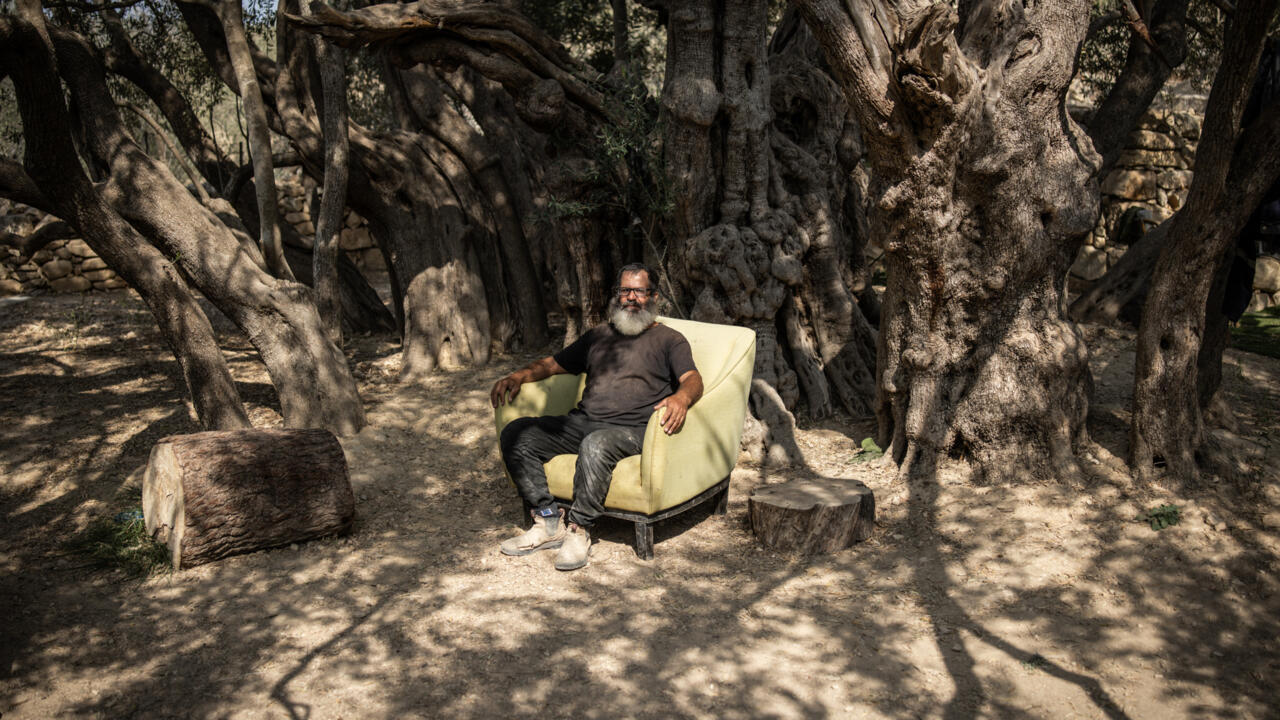
Al Walajah (Palestinian Territories) (AFP) – As guardian of the occupied West Bank's oldest olive tree, Salah Abu Ali prunes its branches and gathers its fruit even as violence plagues the Palestinian territory during this year's harvest.


Issued on: 07/11/2025 - FRANCE24


Italian and Japanese experts estimate the tree to be 3,000 to 5,500 years old
 © John Wessels / AFP

"This is no ordinary tree. We're talking about history, about civilisation, about a symbol," the 52-year-old said proudly, smiling behind his thick beard in the village of Al-Walajah, south of Jerusalem.

Abu Ali said experts had estimated the tree to be between 3,000 and 5,500 years old. It has endured millennia of drought and war in this parched land scarred by conflict.

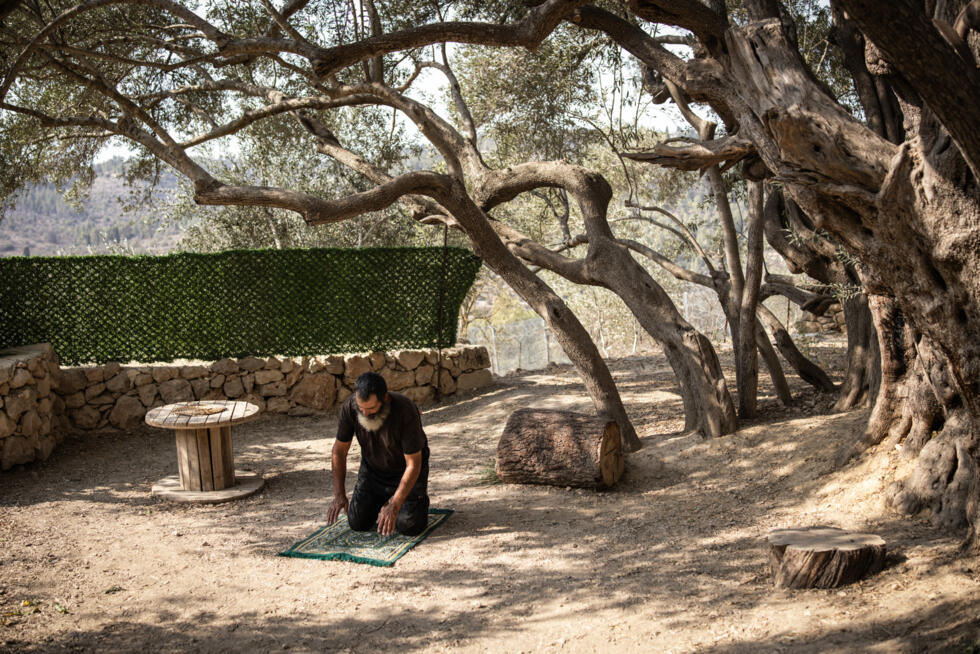
Around the tree's vast trunk and its dozen offshoots -- some named after his family members -- Abu Ali has cultivated a small oasis of calm.

A few steps away, the Israeli separation wall cutting off the West Bank stands five metres (16 feet) high, crowned with razor wire.


More than half of Al-Walajah's original land now lies on the far side of the Israeli security wall.

Yet so far the village has been spared the settler assaults that have marred this year's olive harvest, leaving many Palestinians injured.

Israel has occupied the West Bank since 1967, and some of the 500,000 Israelis living in the Palestinian territory have attacked farmers trying to access their trees almost every day this year since the season began in mid-October.

The Palestinian Authority's Colonisation and Wall Resistance Commission, based in Ramallah, documented 2,350 such attacks in the West Bank in October.
'Rooted in this land'

Palestinians and tourists welcome the tranquility offered by the tree
 © John Wessels / AFP


Almost none of the perpetrators have been held to account by the Israeli authorities.

Israeli forces often disperse Palestinians with tear gas or block access to their own land, AFP journalists witnessed on several occasions.

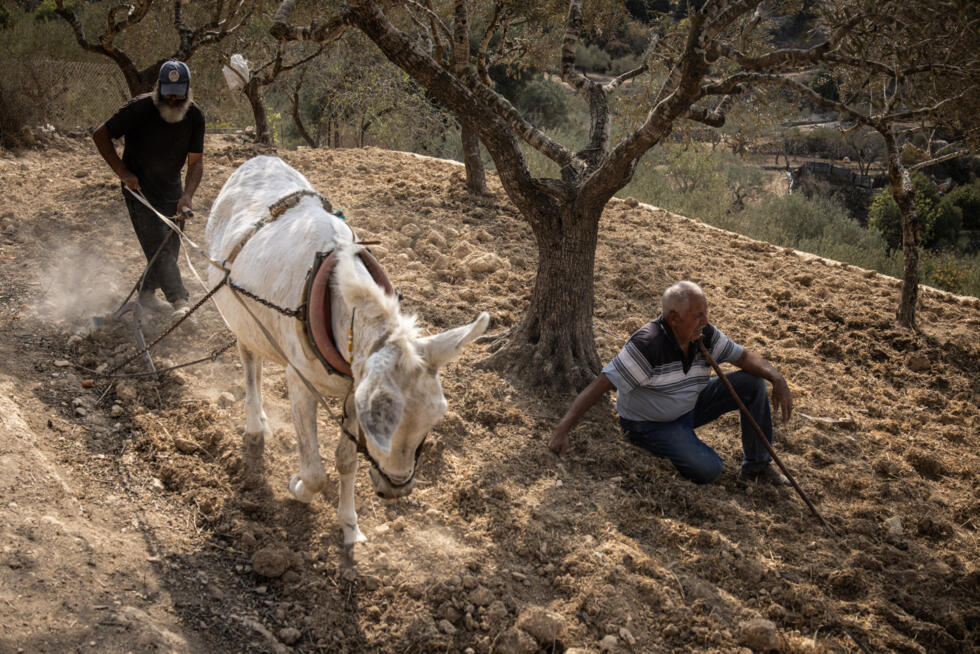
But in Al-Walajah for now, Abu Ali is free to care for the tree. In a good year, he said, it can yield from 500 to 600 kilograms (1,100 to 1,300 pounds) of olives.

This year, low rainfall led to slim pickings in the West Bank, including for the tree whose many nicknames include the Elder, the Bedouin Tree and Mother of Olives.

"It has become a symbol of Palestinian endurance. The olive tree represents the Palestinian people themselves, rooted in this land for thousands of years," said Al-Walajah mayor Khader Al-Araj.

The Palestinian Authority's agriculture ministry even recognised the tree as a Palestinian natural landmark and appointed Abu Ali as its official caretaker.

Most olive trees reach about three metres in height when mature. This one towers above the rest, its main trunk nearly two metres wide, flanked by a dozen offshoots as large as regular olive trees.

'Green gold'

The oil extracted from this tree seeds at a far higher price than that from other regular olive trees © John Wessels / AFP


"The oil from this tree is exceptional. The older the tree, the richer the oil," said Abu Ali.

He noted that the precious resource, which he called "green gold", costs four to five times more than regular oil.

Tourists once came in droves to see the tree, but numbers have dwindled since the start of the war in Gaza in October 2023, Abu Ali said, with checkpoints tightening across the West Bank.

The village of Al-Walajah is not fully immune from the issues facing other West Bank communities.

In 1949, after the creation of Israel, a large portion of the village's land was taken, and many Palestinian families had to leave their homes to settle on the other side of the so-called armistice line.

After Israel's 1967 occupation, most of what remained was designated Area C -- under full Israeli control -- under the 1993 Oslo Accords, which were meant to lead to peace between Palestinians and Israelis.

But the designation left many homes facing demolition orders for lacking Israeli permits, a common problem in Area C, which covers 66 percent of the West Bank.

"Today, Al-Walajah embodies almost every Israeli policy in the West Bank: settlements, the wall, home demolitions, land confiscations and closures," mayor Al-Araj told AFP.

For now, Abu Ali continues to nurture the tree. He plants herbs and fruit trees around it, and keeps a guest book with messages from visitors in dozens of languages.

"I've become part of the tree. I can't live without it," he said.

© 2025 AFP