‘Against Humanity’: Leaders Denounce Fossil Fuel-Loving Trump as He Skips Out on Global Climate Summit
“Every fraction of a degree means more hunger, displacement, and loss—especially for those least responsible,” said UN Secretary General António Guterres on Thursday. “This is moral failure—and deadly negligence.”

(L-R) Chile’s President Gabriel Boric, the Secretary-General of the United Nations, Antonio Guterres, Brazil’s President Luiz Inacio Lula da Silva, and the Governor of the state of Para, Helder Barbalho, attend the family photo during the Leaders Summit, ahead of the COP30 UN climate conference in Belem, Para State, Brazil, on November 7, 2025.
(Photo by Mauro Pimentel/AFP)
Stephen Prager
Nov 07, 2025COMMON DREAMS
As world leaders gathered in Brazil for this year’s global summit on the accelerating climate crisis this week, many took note of the absence of US President Donald Trump.
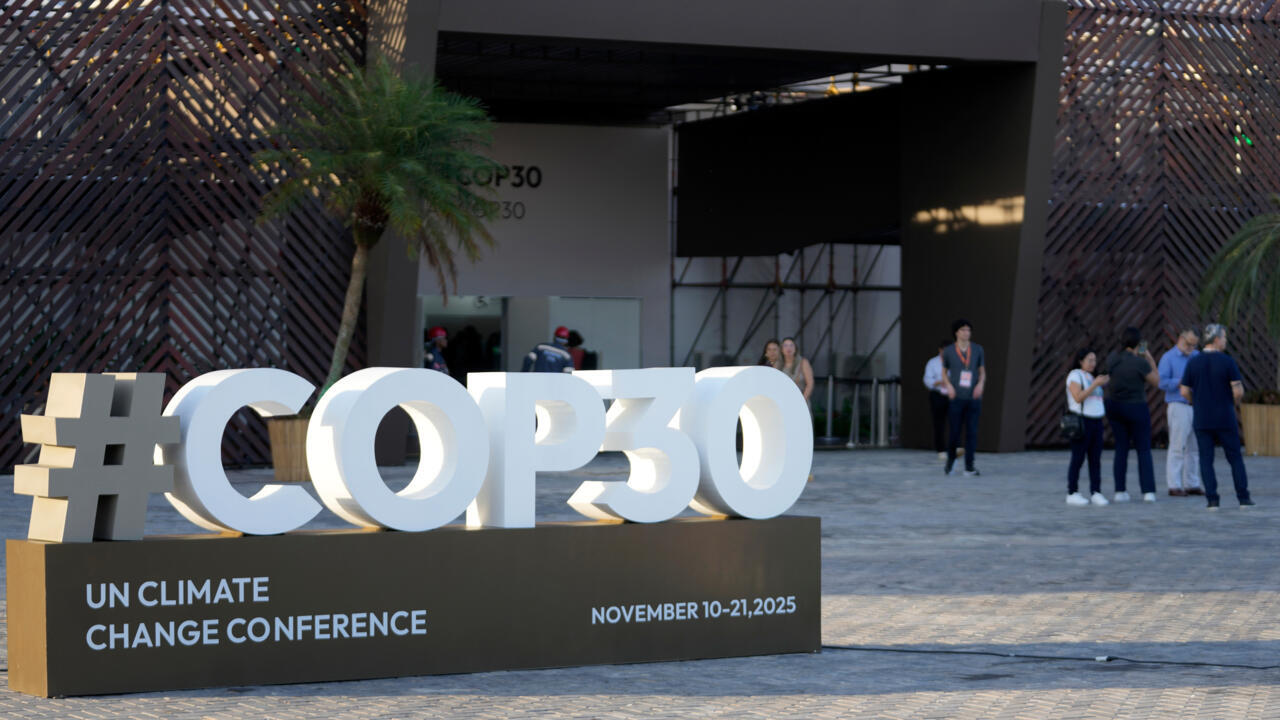
This year’s United Nations Climate Change Conference (COP30) summit comes on the tenth anniversary of the Paris Climate agreement, in which nations committed to adopting policies intended to keep global temperature increases below the threshold of 1.5°C above preindustrial levels, considered a tipping point at which many of the worst ravages of climate change will become irreversible.
Ten years later, progress has fallen far short of the mark, with leaders scrambling to keep the deal’s goals intact—an aim that is likely untenable without the cooperation of the US, the globe’s largest historical emitter of carbon.
America’s president has not only once again pulled the US out of the Paris agreement, but also sought to turn climate denial into public policy and spent his term in office thus far grinding American investment in renewable energy to a halt—actions viewed as extraordinary abdications of responsibility at a time when the globe is ever more rapidly approaching the point of no return for warming.
Fresh on climate advocates’ minds are Trump’s comments at the UN General Assembly in September, when he described climate change as the world’s “greatest con job.”
On Thursday, the World Meteorological Organization found that greenhouse gas emissions had reached a record high. Meanwhile, 2025 is on track to be the third hottest year on record, behind only 2024 and 2023.
“Every fraction of a degree means more hunger, displacement, and loss—especially for those least responsible,” said UN Secretary-General António Guterres on Thursday. “This is moral failure—and deadly negligence.”
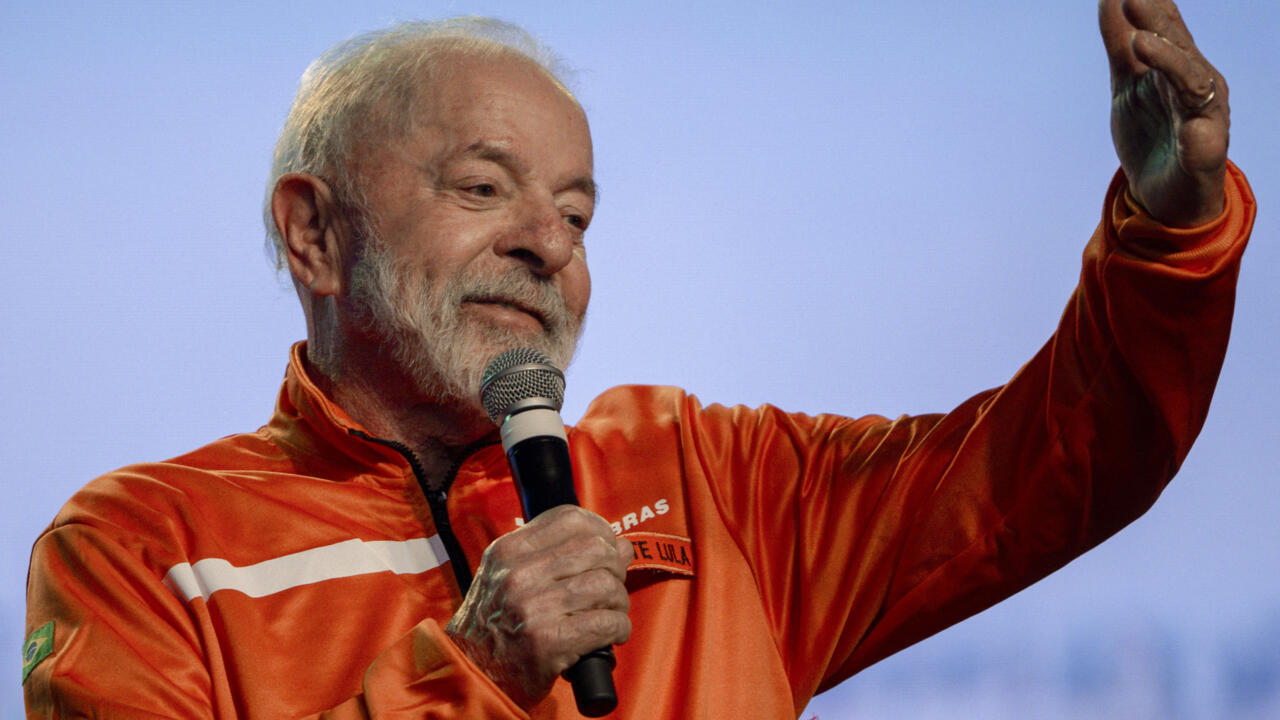
Brazilian President Luiz Inácio Lula da Silva, who has emerged as one of the world’s leading climate defenders from the heart of the Amazon rainforest, began the conference by delivering an indirect but unmistakable shot at Trump. He denounced the “extremist forces that fabricate fake news and are condemning future generations to life on a planet altered forever by global warming.”
Other Latin American leaders were more direct. Colombian President Gustavo Petro, whom Trump recently hit with sanctions and threatened with military action, denounced the US president as “against humanity,” as evidenced by “his absence” at the conference.
“The president of the United States at the latest United Nations General Assembly said the climate crisis does not exist,” added Chilean President Gabriel Boric. “That is a lie.”
In Trump’s stead, over 100 other state and local figures from US politics have traveled to Brazil to take part in the conference: Among them are California Gov. Gavin Newsom, New Mexico Gov. Michelle Lujan Grisham, and Wisconsin Gov. Tony Evers.
Another attendee is Phoenix Mayor Kate Gallego, chair of the Climate Mayors network, who recently applauded Tuesday night’s elections in the US. More than 40 candidates associated with the network came out victorious, as well as the self-described ecosocialist New York City Mayor-elect Zohran Mamdani.
“Our climate mayors did very well on the ballot,” Gallego said to applause at a local leaders forum for COP30. “We want to send this message from the US.”
But despite the US delegation, even with officials from the Trump administration absent, climate campaigners fear the White House may still seek to sabotage the conference from afar. Last month, the administration did just that when it used the threat of tariffs to strong-arm countries into killing what would have been a global-first carbon fee on shipping.
Even without Trump present, COP30 is crawling with fossil fuel lobbyists seeking to stymie progress. A report released Friday from the climate advocacy group Kick Big Polluters Out found that over 5,350 fossil fuel lobbyists have attended UN climate negotiations over the past four years. The corporations they represent are responsible for more than 60% of global emissions.
“These companies have defended their fossil interests by watering down climate action for years,” said Fiona Hauke of the German environmental group Urgewald. “As we head towards COP30, we demand transparency and accountability: Keep polluters out of climate talks and make them pay for a just energy transition.”
(L-R) Chile’s President Gabriel Boric, the Secretary-General of the United Nations, Antonio Guterres, Brazil’s President Luiz Inacio Lula da Silva, and the Governor of the state of Para, Helder Barbalho, attend the family photo during the Leaders Summit, ahead of the COP30 UN climate conference in Belem, Para State, Brazil, on November 7, 2025.
(Photo by Mauro Pimentel/AFP)
Stephen Prager
Nov 07, 2025
As world leaders gathered in Brazil for this year’s global summit on the accelerating climate crisis this week, many took note of the absence of US President Donald Trump.
This year’s United Nations Climate Change Conference (COP30) summit comes on the tenth anniversary of the Paris Climate agreement, in which nations committed to adopting policies intended to keep global temperature increases below the threshold of 1.5°C above preindustrial levels, considered a tipping point at which many of the worst ravages of climate change will become irreversible.
Ten years later, progress has fallen far short of the mark, with leaders scrambling to keep the deal’s goals intact—an aim that is likely untenable without the cooperation of the US, the globe’s largest historical emitter of carbon.
America’s president has not only once again pulled the US out of the Paris agreement, but also sought to turn climate denial into public policy and spent his term in office thus far grinding American investment in renewable energy to a halt—actions viewed as extraordinary abdications of responsibility at a time when the globe is ever more rapidly approaching the point of no return for warming.
Fresh on climate advocates’ minds are Trump’s comments at the UN General Assembly in September, when he described climate change as the world’s “greatest con job.”
On Thursday, the World Meteorological Organization found that greenhouse gas emissions had reached a record high. Meanwhile, 2025 is on track to be the third hottest year on record, behind only 2024 and 2023.
“Every fraction of a degree means more hunger, displacement, and loss—especially for those least responsible,” said UN Secretary-General António Guterres on Thursday. “This is moral failure—and deadly negligence.”
Brazilian President Luiz Inácio Lula da Silva, who has emerged as one of the world’s leading climate defenders from the heart of the Amazon rainforest, began the conference by delivering an indirect but unmistakable shot at Trump. He denounced the “extremist forces that fabricate fake news and are condemning future generations to life on a planet altered forever by global warming.”
Other Latin American leaders were more direct. Colombian President Gustavo Petro, whom Trump recently hit with sanctions and threatened with military action, denounced the US president as “against humanity,” as evidenced by “his absence” at the conference.
“The president of the United States at the latest United Nations General Assembly said the climate crisis does not exist,” added Chilean President Gabriel Boric. “That is a lie.”
In Trump’s stead, over 100 other state and local figures from US politics have traveled to Brazil to take part in the conference: Among them are California Gov. Gavin Newsom, New Mexico Gov. Michelle Lujan Grisham, and Wisconsin Gov. Tony Evers.
Another attendee is Phoenix Mayor Kate Gallego, chair of the Climate Mayors network, who recently applauded Tuesday night’s elections in the US. More than 40 candidates associated with the network came out victorious, as well as the self-described ecosocialist New York City Mayor-elect Zohran Mamdani.
“Our climate mayors did very well on the ballot,” Gallego said to applause at a local leaders forum for COP30. “We want to send this message from the US.”
But despite the US delegation, even with officials from the Trump administration absent, climate campaigners fear the White House may still seek to sabotage the conference from afar. Last month, the administration did just that when it used the threat of tariffs to strong-arm countries into killing what would have been a global-first carbon fee on shipping.
Even without Trump present, COP30 is crawling with fossil fuel lobbyists seeking to stymie progress. A report released Friday from the climate advocacy group Kick Big Polluters Out found that over 5,350 fossil fuel lobbyists have attended UN climate negotiations over the past four years. The corporations they represent are responsible for more than 60% of global emissions.
“These companies have defended their fossil interests by watering down climate action for years,” said Fiona Hauke of the German environmental group Urgewald. “As we head towards COP30, we demand transparency and accountability: Keep polluters out of climate talks and make them pay for a just energy transition.”
At COP30, nations target the jet set with luxury flight tax
By AFP
November 7, 2025

Rooted in the idea that a small elite of premium flyers should pay more for their outsized contribution to global warming, the proposal will likely pit them against the powerful aviation industry - Copyright GETTY IMAGES NORTH AMERICA/AFP/File Kevin Dietsch
Julien MIVIELLE
France, Spain and Kenya are among a group of countries spearheading a drive at the COP30 climate summit for a new tax on luxury air travel, a source close to the matter told AFP.
Rooted in the idea that a small elite of premium flyers should pay more for their outsized contribution to global warming, the proposal will likely pit them against the powerful aviation industry.
Diplomats from the coalition of more than 10 countries are pushing for more to come aboard.
“We want to expand the coalition and, in particular, bring in more European states,” the source said.
Business and first-class seats carry roughly triple the planet-warming emissions footprint of an economy ticket, while private jets emit up to 14 times more per passenger-kilometre compared to commercial flights.
Countries that do not yet have such a tax would commit to imposing levies on business and first-class tickets as well as private jets.
Those that already do — such as France — are pledging greater ambition, with steeper and more progressive rates. In practice, that could mean a dedicated surcharge on first-class travel.
For private jets, the tax could be tied to kerosene consumption, though other mechanisms are under discussion.
The initiative is led by the Global Solidarity Levies Task Force, a group launched in 2023 and co-chaired by Barbados, Kenya and France.
They have chosen COP30, held in Brazil’s Belem and billed as a moment for nations to move from climate pledges to action, as the runway to launch their proposal.
– ‘It’s only fair’ –
“We need innovative and fair financing,” French President Emmanuel Macron said Thursday at a leaders’ summit ahead of COP30, which officially kicks off Monday.
“With Kenya, Spain, Somalia, Benin, Sierra Leone, and Antigua and Barbuda, we have made significant progress toward a greater contribution from the aviation sector to adaptation,” he said. This group of countries also includes Djibouti and South Sudan.
“It’s only fair that those who have the most, and therefore pollute the most, pay their fair share,” Spanish Prime Minister Pedro Sanchez said Friday.
The move is likely to face headwinds from airlines, including Air France, which in March unveiled a new version of its “La Premiere” cabin — the first update since 2014.
Designed for long-haul Boeing 777s, the “suites” will feature five windows, an armchair and a chaise longue that converts into a bed.
Proponents of the tax believe that demand for ultra-luxury travel is only weakly affected by price, and that the ultra-wealthy will keep flying even if tickets become slightly more expensive.
“Properly designed aviation taxes can raise predictable revenue for climate and development finance, while reinforcing fairness and solidarity,” argues the coalition of countries, in a new document explaining the rationale.
Supporters cite the Maldives as an example. The tourism-dependent island nation charges steep departure taxes: $120 for business class, $240 for first class and $480 for private jets.
“There’s no reason why other countries can’t do the same,” the source told AFP.
Army of 5,000+ Fossil Fuel Lobbyists Has ‘Stranglehold on Climate Action’ at COP30: Report
“We must dismantle the corporate architecture of impunity and kick these big polluters out of policymaking,” said one campaigner. “Our future cannot be written by those who profit from its destruction.”

Activists demand exclusion of fossil fuel lobbyists and other big polluters from United Nations climate talks in Bonn, Germany on June 18, 2025.
(Photo by Kick Big Polluters Out)
Brett Wilkins
Nov 07, 2025
COMMON DREAMS
Big polluters led by the fossil fuel industry—which knowingly caused the climate crisis—are expanding their outsize presence and influence at the key event meant to tackle the planetary emergency, a report published ahead of this month’s United Nations Climate Change Conference in Brazil revealed.
The report, published Friday by the Kick Big Polluters Out (KBPO) coalition, notes that “over 5,350 fossil fuel lobbyists have attended UN climate negotiations in just four years, with 90 of the corporations they represent responsible for nearly 60% of all global oil and gas production.”
The analysis sounds the alarm on the “staggering scale of fossil fuel industry presence at the very negotiations that must urgently phase out their products” in order to meet the goal of keeping global temperature rise below 1.5°C as promised in the landmark 2015 Paris Agreement.
The world is failing to deliver upon that promise, and according to the report, “the primary reason for this failure is no secret—big polluters continue to be granted outsized presence, access, and influence at the very negotiations meant to address the crisis they knowingly caused.”
“COP30 is set to proceed with effectively zero protections against interference in place.”
“Among the world’s largest fossil fuel corporations, Shell sent a total of 37 lobbyists to COP26-COP29, BP sent 36, ExxonMobil sent 32, and Chevron sent 20,” according to KBPO. “These figures do not account for additional lobbyists from the fossil fuel industry’s associated trade groups.”
“As a result, they maintain a carefully orchestrated stranglehold on climate action, which consequently continues to fall way short of the strong and just global response we know we urgently need,” the report states.
KBPO warned: “Despite the scale of fossil fuel industry presence revealed by this data, COP30 is set to proceed with effectively zero protections against interference in place. Ahead of COP30 happening in Belém from November 10-21, more than 225 organizations and networks around the world wrote to the COP30 presidency asking them to commit to a polluter-free COP by ensuring no fossil fuel ties or sponsorship and by advancing an Accountability Framework that protects the integrity and legitimacy of the [United Nations Framework Convention on Climate Change].
“In response,” the report’s authors lamented, “little to no meaningful action has been taken to protect these talks from the fossil fuel industry and other big polluters.”
KBPO partner Fiona Hauke of Urgewald, an environmental and human rights advocacy group based in Germany, said in a statement Friday that “over the last three years, oil and gas companies that lobbied at COP have spent more than $35 billion each year looking for new oil and gas fields, exacerbating the problem the nations of the world had gathered to solve.”
“These companies have defended their fossil interests by watering down climate action for years,” Hauke added. “As we head towards COP30, we demand transparency and accountability: Keep polluters out of climate talks and make them pay for a just energy transition.”
Nerisha Baldevu, a KBPO member from groundWork/Friends of the Earth South Africa, asserted: “Corporate power is at the root of the climate crisis. Fossil, mining, and agribusiness giants are seizing our global institutions and turning climate negotiations into trade expos for polluters.”
“For climate justice, we must dismantle the corporate architecture of impunity and kick these big polluters out of policymaking,” Baldevu stressed. “Our future cannot be written by those who profit from its destruction.”
Nations’ Climate Plans Could Cause 2.5°C of Warming, Imperiling ‘Livable Future’
“Years of grossly insufficient action from richer nations and continued climate deception and obstruction by fossil fuel interests are directly responsible for bringing us here,” one expert said.

An aerial view shows cars and damaged property in a flooded section of road from Holland Bamboo to Middle Quarters in St. Elizabeth, Jamaica, on October 31, 2025, in the aftermath of Hurricane Melissa.
(Photo by Ricardo Makyn/AFP via Getty Images)
Jessica Corbett
Nov 04, 2025
COMMON DREAMS
A United Nations assessment released Tuesday—less than a week before the UN Climate Change Conference summit in Brazil—warns that countries’ latest pledges to cut greenhouse gas emissions under the Paris Agreement could push global temperatures to 2.3-2.5°C above preindustrial levels, up to a full degree beyond the treaty’s primary goal.
A decade after that agreement was finalized, only about a third of state parties submitted new plans, officially called Nationally Determined Contributions (NDCs), for the United Nations Environment Programme’s (UNEP) Emissions Gap Report 2025: Off Target.
RECOMMENDED...
Ahead of COP30, UN Report Shows 1.5°C Will Be Breached as Countries Pledge Just 10% Emissions Cut
While the updated NDCs—if fully implemented—would be a slight improvement on the 2.6-2.8°C projection in last year’s report, the more ambitious Paris target is to limit global temperature rise this century to 1.5°C. Already, the world is beginning to experience what that looks like: Last year was the hottest on record and the first in which the global average temperature exceeded 1.5°C, relative to preindustrial times.
As with those findings, UNEP’s report sparked calls for bold action at COP30 in Belém next week, including from UN Secretary-General António Guterres. He noted that “scientists tell us that a temporary overshoot above 1.5°C is now inevitable—starting, at the latest, in the early 2030s. And the path to a livable future gets steeper by the day.”
“1.5°C by the end of the century remains our North Star. And the science is clear: This goal is still within reach.”
“But this is no reason to surrender,” Guterres argued. “It’s a reason to step up and speed up. 1.5°C by the end of the century remains our North Star. And the science is clear: This goal is still within reach. But only if we meaningfully increase our ambition.”
UNEP Executive Director Inger Andersen also stressed that while inadequate climate policies have created the conditions in which now “we still need unprecedented emissions cuts in an increasingly tight window, with an increasingly challenging geopolitical backdrop,” reaching the Paris goal “is still possible—just.”
“Proven solutions already exist. From the rapid growth in cheap renewable energy to tackling methane emissions, we know what needs to be done,” she said. “Now is the time for countries to go all in and invest in their future with ambitious climate action—action that delivers faster economic growth, better human health, more jobs, energy security, and resilience.”
Climate campaigners responded with similar statements. Savio Carvalho, head of regions at the global advocacy group 350.org, said that “this report confirms what millions already feel in their daily lives: Governments are still failing to deliver on their promises. The window to keep 1.5°C within reach is closing fast, but it is not yet gone.”
“All eyes are now on Belém,” Carvalho declared. “COP30 must be a turning point, where leaders stop making excuses, phase out fossil fuels, and scale up renewable energy in a way that is fast, fair, and equitable.”
Rachel Cleetus, senior policy director for the Climate and Energy Program at the US-based Union of Concerned Scientists, said that “this report’s findings, confirming that a crucial science-based benchmark for limiting dangerous climate change is about to be breached, are alarming, enraging, and heartbreaking.”
“Years of grossly insufficient action from richer nations and continued climate deception and obstruction by fossil fuel interests are directly responsible for bringing us here,” she highlighted. “World leaders still have the power to act decisively to sharply rein in heat-trapping emissions and any other choice would be an unconscionable dereliction of their responsibility to humanity.”
Cleetus—a regular attendee of the annual UN climate talks who will be at COP30, unlike President Donald Trump’s administration—continued:
Costly and deadly climate impacts are already widespread and will worsen with every fraction of a degree, harming people’s health and well-being, as well as the economy. Policymakers must seize the opportunity now to accelerate deployment of renewable energy and energy efficiency—solutions that are plentiful, clean, and affordable—and transition away from polluting fossil fuels. Protecting people, livelihoods, and ecosystems by helping them adapt to climate hazards is also critical as higher temperatures unleash rapidly worsening heat, floods, storms, wildfires, drought, and sea-level rise.
Ambitious climate action can cut energy costs, improve public health, and create a myriad of economic opportunities. Richer, high-emitting countries’ continued failure to tackle the challenge head-on is undermining the well-being of their own people and is a monumental injustice toward lower-income countries that have contributed the least to this problem yet bear the most acute harms. It’s past time for wealthy countries to heed the latest science and pay up for their role in fueling the climate crisis. With alarms blaring, the upcoming UN climate talks must be a turning point in global climate action. Powerful politicians and billionaires who willfully ignore urgent realities and continue to delay, distract, or lie about climate change will have to answer to our children and grandchildren.
Jean Su, director of the Center for Biological Diversity’s Energy Justice Program, also plans to attend COP30.
“This report shows Earth’s livable future hanging in the balance while Trump tells climate diplomacy to go to hell,” she said. “The US exit from Paris threatens to cancel out any climate gains from other countries. The rise of petro-authoritarianism in the US shouldn’t be an excuse for other countries to backpedal on their own commitments. This report sends alarm bells to rich countries with a conscience to exercise real leadership and lead a fossil fuel phaseout to protect us all.”
The UNEP report was released on the same day that the German environmental rights group Urgewald published its Global Oil and Gas Exit List, which shows that a green transition is being undercut by fossil fuel extraction and production.
Other publications put out in the lead-up to COP30 include an Oxfam International report showing that the wealthiest people on the planet are disproportionately fueling the climate emergency, as well as a UN Food and Agriculture Organization analysis warning that human-induced land degradation “is undermining agricultural productivity and threatening ecosystem health worldwide.”
There have also been mounting demands for specific action, such as Greenpeace and 350.org urging governments to pay for climate action in part by taxing the ultrarich, and an open letter signed by advocacy organizations, activists, policymakers, artists, and experts urging world leaders to prioritize health during discussions in Brazil next week.
As Common Dreams reported earlier Tuesday, COP30 Special Envoy for Health Ethel Maciel said that “this letter sends an unequivocal message that health is an essential component of climate action.”
Julien MIVIELLE
France, Spain and Kenya are among a group of countries spearheading a drive at the COP30 climate summit for a new tax on luxury air travel, a source close to the matter told AFP.
Rooted in the idea that a small elite of premium flyers should pay more for their outsized contribution to global warming, the proposal will likely pit them against the powerful aviation industry.
Diplomats from the coalition of more than 10 countries are pushing for more to come aboard.
“We want to expand the coalition and, in particular, bring in more European states,” the source said.
Business and first-class seats carry roughly triple the planet-warming emissions footprint of an economy ticket, while private jets emit up to 14 times more per passenger-kilometre compared to commercial flights.
Countries that do not yet have such a tax would commit to imposing levies on business and first-class tickets as well as private jets.
Those that already do — such as France — are pledging greater ambition, with steeper and more progressive rates. In practice, that could mean a dedicated surcharge on first-class travel.
For private jets, the tax could be tied to kerosene consumption, though other mechanisms are under discussion.
The initiative is led by the Global Solidarity Levies Task Force, a group launched in 2023 and co-chaired by Barbados, Kenya and France.
They have chosen COP30, held in Brazil’s Belem and billed as a moment for nations to move from climate pledges to action, as the runway to launch their proposal.
– ‘It’s only fair’ –
“We need innovative and fair financing,” French President Emmanuel Macron said Thursday at a leaders’ summit ahead of COP30, which officially kicks off Monday.
“With Kenya, Spain, Somalia, Benin, Sierra Leone, and Antigua and Barbuda, we have made significant progress toward a greater contribution from the aviation sector to adaptation,” he said. This group of countries also includes Djibouti and South Sudan.
“It’s only fair that those who have the most, and therefore pollute the most, pay their fair share,” Spanish Prime Minister Pedro Sanchez said Friday.
The move is likely to face headwinds from airlines, including Air France, which in March unveiled a new version of its “La Premiere” cabin — the first update since 2014.
Designed for long-haul Boeing 777s, the “suites” will feature five windows, an armchair and a chaise longue that converts into a bed.
Proponents of the tax believe that demand for ultra-luxury travel is only weakly affected by price, and that the ultra-wealthy will keep flying even if tickets become slightly more expensive.
“Properly designed aviation taxes can raise predictable revenue for climate and development finance, while reinforcing fairness and solidarity,” argues the coalition of countries, in a new document explaining the rationale.
Supporters cite the Maldives as an example. The tourism-dependent island nation charges steep departure taxes: $120 for business class, $240 for first class and $480 for private jets.
“There’s no reason why other countries can’t do the same,” the source told AFP.
“We must dismantle the corporate architecture of impunity and kick these big polluters out of policymaking,” said one campaigner. “Our future cannot be written by those who profit from its destruction.”
Activists demand exclusion of fossil fuel lobbyists and other big polluters from United Nations climate talks in Bonn, Germany on June 18, 2025.
(Photo by Kick Big Polluters Out)
Brett Wilkins
Nov 07, 2025
COMMON DREAMS
Big polluters led by the fossil fuel industry—which knowingly caused the climate crisis—are expanding their outsize presence and influence at the key event meant to tackle the planetary emergency, a report published ahead of this month’s United Nations Climate Change Conference in Brazil revealed.
The report, published Friday by the Kick Big Polluters Out (KBPO) coalition, notes that “over 5,350 fossil fuel lobbyists have attended UN climate negotiations in just four years, with 90 of the corporations they represent responsible for nearly 60% of all global oil and gas production.”
The analysis sounds the alarm on the “staggering scale of fossil fuel industry presence at the very negotiations that must urgently phase out their products” in order to meet the goal of keeping global temperature rise below 1.5°C as promised in the landmark 2015 Paris Agreement.
The world is failing to deliver upon that promise, and according to the report, “the primary reason for this failure is no secret—big polluters continue to be granted outsized presence, access, and influence at the very negotiations meant to address the crisis they knowingly caused.”
“COP30 is set to proceed with effectively zero protections against interference in place.”
“Among the world’s largest fossil fuel corporations, Shell sent a total of 37 lobbyists to COP26-COP29, BP sent 36, ExxonMobil sent 32, and Chevron sent 20,” according to KBPO. “These figures do not account for additional lobbyists from the fossil fuel industry’s associated trade groups.”
“As a result, they maintain a carefully orchestrated stranglehold on climate action, which consequently continues to fall way short of the strong and just global response we know we urgently need,” the report states.
KBPO warned: “Despite the scale of fossil fuel industry presence revealed by this data, COP30 is set to proceed with effectively zero protections against interference in place. Ahead of COP30 happening in Belém from November 10-21, more than 225 organizations and networks around the world wrote to the COP30 presidency asking them to commit to a polluter-free COP by ensuring no fossil fuel ties or sponsorship and by advancing an Accountability Framework that protects the integrity and legitimacy of the [United Nations Framework Convention on Climate Change].
“In response,” the report’s authors lamented, “little to no meaningful action has been taken to protect these talks from the fossil fuel industry and other big polluters.”
KBPO partner Fiona Hauke of Urgewald, an environmental and human rights advocacy group based in Germany, said in a statement Friday that “over the last three years, oil and gas companies that lobbied at COP have spent more than $35 billion each year looking for new oil and gas fields, exacerbating the problem the nations of the world had gathered to solve.”
“These companies have defended their fossil interests by watering down climate action for years,” Hauke added. “As we head towards COP30, we demand transparency and accountability: Keep polluters out of climate talks and make them pay for a just energy transition.”
Nerisha Baldevu, a KBPO member from groundWork/Friends of the Earth South Africa, asserted: “Corporate power is at the root of the climate crisis. Fossil, mining, and agribusiness giants are seizing our global institutions and turning climate negotiations into trade expos for polluters.”
“For climate justice, we must dismantle the corporate architecture of impunity and kick these big polluters out of policymaking,” Baldevu stressed. “Our future cannot be written by those who profit from its destruction.”
“Years of grossly insufficient action from richer nations and continued climate deception and obstruction by fossil fuel interests are directly responsible for bringing us here,” one expert said.
An aerial view shows cars and damaged property in a flooded section of road from Holland Bamboo to Middle Quarters in St. Elizabeth, Jamaica, on October 31, 2025, in the aftermath of Hurricane Melissa.
(Photo by Ricardo Makyn/AFP via Getty Images)
Jessica Corbett
Nov 04, 2025
COMMON DREAMS
A United Nations assessment released Tuesday—less than a week before the UN Climate Change Conference summit in Brazil—warns that countries’ latest pledges to cut greenhouse gas emissions under the Paris Agreement could push global temperatures to 2.3-2.5°C above preindustrial levels, up to a full degree beyond the treaty’s primary goal.
A decade after that agreement was finalized, only about a third of state parties submitted new plans, officially called Nationally Determined Contributions (NDCs), for the United Nations Environment Programme’s (UNEP) Emissions Gap Report 2025: Off Target.
RECOMMENDED...
Ahead of COP30, UN Report Shows 1.5°C Will Be Breached as Countries Pledge Just 10% Emissions Cut
While the updated NDCs—if fully implemented—would be a slight improvement on the 2.6-2.8°C projection in last year’s report, the more ambitious Paris target is to limit global temperature rise this century to 1.5°C. Already, the world is beginning to experience what that looks like: Last year was the hottest on record and the first in which the global average temperature exceeded 1.5°C, relative to preindustrial times.
As with those findings, UNEP’s report sparked calls for bold action at COP30 in Belém next week, including from UN Secretary-General António Guterres. He noted that “scientists tell us that a temporary overshoot above 1.5°C is now inevitable—starting, at the latest, in the early 2030s. And the path to a livable future gets steeper by the day.”
“1.5°C by the end of the century remains our North Star. And the science is clear: This goal is still within reach.”
“But this is no reason to surrender,” Guterres argued. “It’s a reason to step up and speed up. 1.5°C by the end of the century remains our North Star. And the science is clear: This goal is still within reach. But only if we meaningfully increase our ambition.”
UNEP Executive Director Inger Andersen also stressed that while inadequate climate policies have created the conditions in which now “we still need unprecedented emissions cuts in an increasingly tight window, with an increasingly challenging geopolitical backdrop,” reaching the Paris goal “is still possible—just.”
“Proven solutions already exist. From the rapid growth in cheap renewable energy to tackling methane emissions, we know what needs to be done,” she said. “Now is the time for countries to go all in and invest in their future with ambitious climate action—action that delivers faster economic growth, better human health, more jobs, energy security, and resilience.”
Climate campaigners responded with similar statements. Savio Carvalho, head of regions at the global advocacy group 350.org, said that “this report confirms what millions already feel in their daily lives: Governments are still failing to deliver on their promises. The window to keep 1.5°C within reach is closing fast, but it is not yet gone.”
“All eyes are now on Belém,” Carvalho declared. “COP30 must be a turning point, where leaders stop making excuses, phase out fossil fuels, and scale up renewable energy in a way that is fast, fair, and equitable.”
Rachel Cleetus, senior policy director for the Climate and Energy Program at the US-based Union of Concerned Scientists, said that “this report’s findings, confirming that a crucial science-based benchmark for limiting dangerous climate change is about to be breached, are alarming, enraging, and heartbreaking.”
“Years of grossly insufficient action from richer nations and continued climate deception and obstruction by fossil fuel interests are directly responsible for bringing us here,” she highlighted. “World leaders still have the power to act decisively to sharply rein in heat-trapping emissions and any other choice would be an unconscionable dereliction of their responsibility to humanity.”
Cleetus—a regular attendee of the annual UN climate talks who will be at COP30, unlike President Donald Trump’s administration—continued:
Costly and deadly climate impacts are already widespread and will worsen with every fraction of a degree, harming people’s health and well-being, as well as the economy. Policymakers must seize the opportunity now to accelerate deployment of renewable energy and energy efficiency—solutions that are plentiful, clean, and affordable—and transition away from polluting fossil fuels. Protecting people, livelihoods, and ecosystems by helping them adapt to climate hazards is also critical as higher temperatures unleash rapidly worsening heat, floods, storms, wildfires, drought, and sea-level rise.
Ambitious climate action can cut energy costs, improve public health, and create a myriad of economic opportunities. Richer, high-emitting countries’ continued failure to tackle the challenge head-on is undermining the well-being of their own people and is a monumental injustice toward lower-income countries that have contributed the least to this problem yet bear the most acute harms. It’s past time for wealthy countries to heed the latest science and pay up for their role in fueling the climate crisis. With alarms blaring, the upcoming UN climate talks must be a turning point in global climate action. Powerful politicians and billionaires who willfully ignore urgent realities and continue to delay, distract, or lie about climate change will have to answer to our children and grandchildren.
Jean Su, director of the Center for Biological Diversity’s Energy Justice Program, also plans to attend COP30.
“This report shows Earth’s livable future hanging in the balance while Trump tells climate diplomacy to go to hell,” she said. “The US exit from Paris threatens to cancel out any climate gains from other countries. The rise of petro-authoritarianism in the US shouldn’t be an excuse for other countries to backpedal on their own commitments. This report sends alarm bells to rich countries with a conscience to exercise real leadership and lead a fossil fuel phaseout to protect us all.”
The UNEP report was released on the same day that the German environmental rights group Urgewald published its Global Oil and Gas Exit List, which shows that a green transition is being undercut by fossil fuel extraction and production.
Other publications put out in the lead-up to COP30 include an Oxfam International report showing that the wealthiest people on the planet are disproportionately fueling the climate emergency, as well as a UN Food and Agriculture Organization analysis warning that human-induced land degradation “is undermining agricultural productivity and threatening ecosystem health worldwide.”
There have also been mounting demands for specific action, such as Greenpeace and 350.org urging governments to pay for climate action in part by taxing the ultrarich, and an open letter signed by advocacy organizations, activists, policymakers, artists, and experts urging world leaders to prioritize health during discussions in Brazil next week.
As Common Dreams reported earlier Tuesday, COP30 Special Envoy for Health Ethel Maciel said that “this letter sends an unequivocal message that health is an essential component of climate action.”
OECD raises alarm about slow pace of climate action
06.11.2025, DPA

Photo: Britta Pedersen/dpa-Zentralbild/dpa
The Organization for Economic Co-operation and Development (OECD) is alarmed by a lack of ambition in tackling climate change and fears severe economic consequences.
Climate-related disasters have already caused rising social and economic costs, with damages exceeding €285 billion ($328 billion) and 16,000 registered deaths worldwide in 2024, the Paris-based OECD reported on Thursday.
Global measures to tackle climate change remain inadequate, it said. Stricter political measures, faster implementation and legally binding actions are urgently required to close the delivery gaps between ambitions and actual outcomes, the OECD said in its Climate Action Monitor 2025.
Climate action stagnating
Global measures to tackle climate change increased by only 1% in 2024, continuing the decline observed since 2021.
This can no longer be explained by the Covid-19 pandemic or the subsequent economic crisis but reflects a loss of momentum in implementing effective political measures, the OECD stated.
There is clear evidence of a global implementation gap in climate action, it said.
The costs of this inaction are rising, with increasing economic losses, social inequalities and looming environmental damage, warned the OECD.
It is not enough to merely formulate more ambitious goals, countries must also ensure that their commitments are translated into concrete actions, it said.
Climate targets hard to achieve
Currently, countries are not on the right track to meet their existing commitments, the OECD report showed.
Given the continuing rise in emissions and waning levels of climate action, the world remains far from achieving both the 2030 targets and the longer-term goal of climate neutrality, the OECD noted in its report.
EU environment agency reports 2.5% fall in emissions ahead of COP30
06.11.2025 DPA

Photo: Steffen Trumpf/dpa
Greenhouse gas emissions from European Union countries fell by 2.5% last year, continuing a long-term decline, the European Environment Agency (EEA) reported before the start of the UN Climate Change Conference (COP30) in Brazil next week.
"Now halfway between the start of this century and 2050, the EU is largely on track towards climate neutrality," the EEA said. The aim is to cut emissions by 55% from 1990 levels.
"Fundamental changes in the energy system, technological innovation in industry and greater public awareness have together driven a 39% reduction in emissions by 2024 compared with 1990 levels," the Copenhagen-based body added.
The 27 EU states were on track to achieve a cut of 54% by 2030, provided that current and planned measures were fully implemented, the EEA predicted.
The EU has set a target to become climate neutral by 2050.
This week, member states agreed to cut emissions by 90% by 2040 compared with 1990 levels.
The new target is a compromise, allowing five percentage points of the reduction to be achieved through international offsets under agreements with non-European countries. The European Parliament still needs to approve the deal.
The largest reductions were in the energy sector, as in previous years, with renewables taking over from fossil fuels. Smaller cutbacks were recorded in agriculture, construction and refuse disposal.
Slight rises were posted in industry and in national and international transport, and the EEA noted that sales of electric cars had declined in 2024.
"These patterns confirm that while some sectors are transforming rapidly, others must accelerate - or even reverse - their current trends," it said.
UN's Guterres: Missing 1.5 degree goal a catastrophic 'moral failure'
06.11.2025, DPA

Photo: Kay Nietfeld/dpa
The world has failed to keep warming within the critical 1.5 degrees Celsius limit set under the 2015 Paris Agreement, UN Secretary General António Guterres said on Thursday, calling it "a moral failure" and "deadly negligence."
Guterres said it is "inevitable" that the 1.5-degree threshold will be breached by the early 2030s due to humanity's continued reliance on fossil fuels.
"Every fraction of a degree higher means more hunger, more displacement, more economic hardship, and more lives and ecosystems lost," he said in Belém, Brazil, a city in the Amazon rainforest hosting the UN Climate Change Conference (COP30).
He demanded that governments speed up the renewable energy transition and stop the approval of "new coal plants and new oil and gas exploration or expansion."
He also urged governments to honor their pledge to halt global deforestation by 2030, describing the current response to the climate crisis as "fall far short of what is needed."
'Red line for humanity'
Guterres said the world is heading toward 2.8 degrees of warming this century under current policies. Yet he insisted the Paris target remains achievable if countries act decisively.
"Let us be clear: the 1.5 degree limit is a red line for humanity," he said. But, Guterres added, breaching it could yet amount to "temporary overshoot" that could then come back down.
"If we act now, at great speed and scale, we can make the overshoot as small, as short, and as safe as possible – and bring temperatures back below 1.5 degrees before the end of the century."
He blasted governments for continuing to channel vast subsidies into the oil, gas and coal industries, saying billions were being spent "on lobbying, deceiving the public and obstructing progress."
Leaders gather in Brazil ahead of COP30
Gutterres spoke as world leaders arrived for a summit in Belém on Thursday and Friday. Following their departure, the COP30 negotiations will officially get under way on Monday.
European leaders including German Chancellor Friedrich Merz, French President Emmanuel Macron and British Prime Minister Keir Starmer are among those attending. Senior officials from the European Union and the United Nations will also be present.
Brazil’s President Luiz Inácio Lula da Silva said he hopes the two-week event will produce tangible results. More than 70,000 participants from about 200 countries are expected.
The political backdrop is challenging: wars, economic uncertainty and fiscal strains are overshadowing climate efforts, while the United States under Donald Trump continues to expand its fossil fuel agenda. Washington will not send a high-level delegation to COP30.
On Thursday, leaders are set to launch a multibillion-dollar fund to protect tropical forests — the “green lungs” of the planet — and issue a joint call for stronger global wildfire management.
The summit will also promote Brazil’s sustainable fuels initiative, which aims to quadruple production and use by 2035, and unveil a declaration linking efforts to combat hunger and poverty with climate protection.
According to the WWF, nearly 7 million hectares of primary forest were lost in 2024 alone, despite a 2019 pledge by 140 countries to end deforestation by the end of this decade.
Lula calls for renewed commitment to Paris goals
Ten years after the Paris Agreement, Brazilian President Luiz Inácio Lula da Silva urged the international community not to abandon its climate targets, warning of severe human and material losses if global warming is not contained.
"The COP30 will be the COP of truth," Lula told the leaders gathered in Belém. He noted that it was the first time a COP summit was being held in the Amazon — "the greatest symbol of the environmental cause," home to thousands of species of plants and animals.
Lula called for greater "courage and determination" in tackling global warming. "It is time to take the warnings of science seriously," he said, adding that the climate crisis can only be solved through global justice.
"Climate justice is an ally in the fight against hunger and poverty," the leftist politician said.
Hosting COP30 in the Amazon, Lula said, underscores Brazil's effort to balance economic development with environmental protection. "The people of the Amazon are now rightly asking what the rest of the world is doing to prevent the collapse of their home," he said.
WMO: Record temperatures for last 3 years, with seas worst affected
06.11.2025, DPA

Photo: Jens Büttner/dpa
The year 2025 could turn out to be the second- or third-warmest since the industrial revolution, the World Meteorological Organization predicted on Thursday.
The prediction is based on the data the WMO will present on Monday to the UN Climate Change Conference, known as COP30, in Belém in Brazil.
The 2015-25 period had been the warmest 11 years since records began 176 years ago, the Geneva-based WMO reported. It added that 2023, 2024 and 2025 were the three warmest years. Every month since June 2023 had broken records, with the exception of February this year, it said.
Between January and August, the average temperature was around 1.42 degrees Celsius above the level between 1850 and 1900, the WMO said.
It noted that many African and Asian regions had experienced flooding, and that there had been wildfires in Europe and North America, as well as several hurricanes.
To date, 2024 has been the warmest year at 1.55 degrees above the reference levels.
The WMO noted that greenhouse gases had reached record levels in 2024 again and these were continuing to rise. Arctic sea ice grew less after the winter than at any time since records began.
While the rate of rise in sea levels had declined slightly because of natural phenomena, the upward trend was continuing, it said.
By AFP
November 4, 2025

The United Nations says that big polluting nations are not cutting greenhouse gas emissions fast enough to keep global warming within safer levels. - Copyright AFP/File MANDEL NGAN
Nick Perry
National commitments to slash heat-trapping pollution would limit global warming up to 2.5C this century — nowhere near enough to avoid devastating climate impacts despite a sweep of new pledges, the UN warned Tuesday.
Scientists are in broad agreement that warming above 1.5C relative to pre-industrial times risks catastrophic consequences, and every effort must be made to stick as close as possible to this safer threshold.
But the world is set to blow past 1.5C in a matter of years and planet-warming emissions keep rising, hitting a new record high in 2024, according to a report by the UN Environment Programme (UNEP).
The sobering assessment was published just days before world leaders gather in Brazil on Thursday and Friday ahead of the COP30 climate summit in the rainforest city of Belem.
With an overshoot of 1.5C now inevitable, focus has shifted to how quickly temperatures can be returned to less-risky levels.
“Our mission is simple, but not easy: make any overshoot as small and as short as possible,” UN Secretary-General Antonio Guterres said Tuesday at the launch of UNEP’s Emissions Gap report.
Big polluters most responsible for the crisis have been urged to pledge faster and deeper emissions cuts to bend the curve back to 1.5C by the end of the century.
Instead, the latest round of carbon-cutting targets announced ahead of the UN climate talks “have barely moved the needle”, concluded UNEP’s latest assessment.
“Ambition and action are nowhere near the levels needed globally or collectively,” Anne Olhoff, the report’s chief scientific editor, told AFP.
– ‘Bleak picture’ –
The latest assessment projects that the world’s collective commitments to tackle climate change, if enacted in full, would result in 2.3C to 2.5C of warming by 2100.
That poses an unacceptable threat to the survival of nations most at risk by rising seas and extreme weather, and the global failure to rise to this challenge will loom over COP30.
Scientists have strong evidence that warming above 1.5C — let alone a degree or more — increases not only the intensity of hurricanes, floods and other disasters, but the likelihood of catastrophic climate tipping points.
At 1.4C above pre-industrial times, the Earth is already too warm for most tropical coral reefs to survive, while ice sheets and the Amazon rainforest could suffer severe and lasting changes below 2C, with consequences for the entire planet.
Under the Paris Agreement, each round of climate pledges is supposed to be more ambitious than the last to keep long-term warming “well below” 2C and as close as possible to 1.5C.
Despite being obligated to do so, only around one-third of countries announced a 2035 emissions reduction target by September 30, UNEP said.
This year’s warming projections are 0.3C lower than last year, but Olhoff said little of that reduction was thanks to these latest pledges.
Updates to methodology accounted for 0.1C while another 0.1C was attributed to US commitments made under the Biden administration.
These gains are unlikely to materialise as President Donald Trump has vowed to pull the United States out of the Paris accord and ditch the climate policies of his predecessor.
“If we don’t include the US, then the progress is quite limited,” Olhoff said.
The dozens of other climate pledges made by governments in recent months “do not have a large effect on the temperature projections”, she added.
“That is a very bleak picture, you can say.”
– Record emissions –
Global emissions grew 2.3 percent in 2024 compared to the previous year, an increase driven by India followed by China, Russia and Indonesia.
This rise was quite high in the context of recent years “and comparable to the emissions growth in the 2000s”, the report said.
Wealthy and powerful G20 economies accounted for three-quarters of global emissions and of the six largest polluters, the EU was the only one to cut greenhouse gases in 2024.
As they come under pressure to set new and ever-more ambitious targets, UNEP said most nations were not even on track to meet their earlier 2030 goals.
Based on just the current policies in place, Earth is expected to be 2.8C hotter in 2100.
COP30 will seek to allay fears that climate action is on the back burner as the United States shuns the process, collective targets are missed and governments prioritise other concerns.
“We still need unprecedented cuts to greenhouse gas emissions, in an ever-compressing timeframe, amid a challenging geopolitical context,” wrote UNEP chief Inger Andersen in the report.
“While the Loss and Damage Fund sits almost empty, oil and gas companies are investing more than $60 billion each year into new exploration,” said one campaigner.

People stand on the the pier with a view of offshore oil and gas platform Esther in the Pacific Ocean on January 5, 2025 in Seal Beach, California.
(Photo by Mario Tama/Getty Images)
Julia Conley
Nov 04, 2025
COMMON DREAMS
The fossil fuel industry is “racing toward climate breakdown with its foot on the accelerator,” said one official at the German environmental rights group Urgewald on Tuesday as the group released its Global Oil and Gas Exit List.
The report shows that as world leaders prepare to meet in Brazil for the annual United Nations climate summit, any discussion they have there regarding a green transition is being undercut by massive expansion in oil and gas extraction and production, including in the fracking and liquefied natural gas (LNG) industries
Short-term expansion is up 33% since 2021, when the IEA issued its warning, with fossil fuel giants planning to bring 256 billion barrels of oil and gas equivalent (bboe) into production in the coming years.
Five companies account for about one-third of global short-term expansion: QatarEnergy (26.2 bboe), Saudi Aramco (18.0 bboe), ADNOC in the United Arab Emirates (13.8 bboe), Russian state-owned entity Gazprom (13.4 bboe) and US firm ExxonMobil (9.7 bboe).
Nils Bartsch, head of oil and gas research at Urgewald, said the largest fossil fuel companies in the world “are treating the Paris Agreement like a polite suggestion, not a survival plan.”
The analysis comes a decade after 195 countries signed the legally binding Paris Agreement, committing to develop and implement national climate action plans to draw down fossil fuel emissions.
“With 256 billion barrels of new projects on the table, this is not a transition—it is defiance,” said Bartsch.
The Paris Agreement also included a demand for wealthy countries to contribute funds to help the Global South mitigate and adapt to the climate emergency, and annual UN conferences have addressed climate finance, but the industry is still spending about 75 times more on oil and gas exploration than governments have pledged to the UN Loss and Damage Fund, according to the report.
On average, companies listed in the Global Oil and Gas Exit List (GOGEL) spent an average of $60.3 billion over the last three years on oil and gas expansion.
“Brazil is showing an alarming level of climate hypocrisy—presenting itself as a climate leader at COP30 while allowing oil and gas expansion right at the summit’s doorstep, threatening one of our most fragile ecosystems.”
The US has pledged just 17.5 million to the Loss and Damage Fund, while two of its biggest fossil fuel companies, Chevron and ExxonMobil, have spent $1.3 billion and $1.1 billion on oil and gas exploration, respectively, in the last three years.
“While the Loss and Damage Fund sits almost empty, oil and gas companies are investing more than $60 billion each year into new exploration, exacerbating the problem the fund is meant to alleviate. This is financial and moral negligence. Regulators and supervisory authorities need to start treating this as a risk, not a footnote,” said Fiona Hauke, oil and gas researcher and financial regulation expert at Urgewald.
The report was released a week before world leaders are scheduled to meet in Belém, Brazil for the 2025 United Nations Climate Change Conference (COP30), even as state-owned fossil fuel company Petrobras begins drilling in Foz do Amazonas Basin in the fragile, biodiverse Amazon rainforest.
Petrobras was named in GOGEL as the 15th largest fossil fuel exporter worldwide, currently spending $1.1 billion annually searching for new reserves, as Brazil prepares to host a meeting that is meant to focus on implementing emissions reduction plans.
“Brazil is showing an alarming level of climate hypocrisy—presenting itself as a climate leader at COP30 while allowing oil and gas expansion right at the summit’s doorstep, threatening one of our most fragile ecosystems,” said Nicole Oliveira, executive director of the Arayara International Institute in Brazil.
GOGEL also pointed to oil and gas expansion in the US under the Trump administration, with the US overtaking China as the number-one developer of gas-fired power even as a recent UN and World Bank report found that nine out of 10 renewable energy projects are cheaper than even the lowest-cost fossil fuel alternatives.
The US is home to the largest LNG export developer worldwide, Venture Global, as companies are planning an export capacity of around 847 million tons per year—a 171% increase from current operational capacity.
Urgewald noted that even TotalEnergies CEO Patrick Pouyanné recently acknowledged that the LNG sector is “building too much.”
“Analysts warn that if current plans proceed, the world could face an oversupplied gas market within five years, with far more capacity than global demand can absorb,” reads GOGEL. “Yet despite industry leaders acknowledging the risk, investment continues.”
“US fracking companies are producing far more gas than they can sell domestically,” adds the report, noting that the country is turning to Mexico as an export platform. “Now faced with a flood of excess gas, companies are racing to build new LNG facilities to liquefy their surplus and push it onto countries around the globe.”
Pablo Montaño, director of Conexiones Climáticas, Mexico, said new LNG projects “are not for the benefit of Mexicans.”
“They will import fracked gas from the US, liquefy it in Mexico and send it straight to Asia. Gas liquefaction is an incredibly dirty business,” he said.
Despite clear warnings from energy and climate experts, said Cathy Collentine, Beyond Dirty Fuels campaign director at the Sierra Club in the US, “fossil fuel expansion continues to put communities and the climate at risk.”
“Under the Trump administration,” she said, “we are seeing a disregard for both to do the bidding of Big Oil and Gas.”




.jpg)