It’s possible that I shall make an ass of myself. But in that case one can always get out of it with a little dialectic. I have, of course, so worded my proposition as to be right either way (K.Marx, Letter to F.Engels on the Indian Mutiny)
Wednesday, November 19, 2025
UK Government’s asylum proposals ‘cross a dangerous line’, warn campaigners and MPs
"This is headline chasing, not problem solving - a Government bowing to anti-immigrant, anti-rights politics."
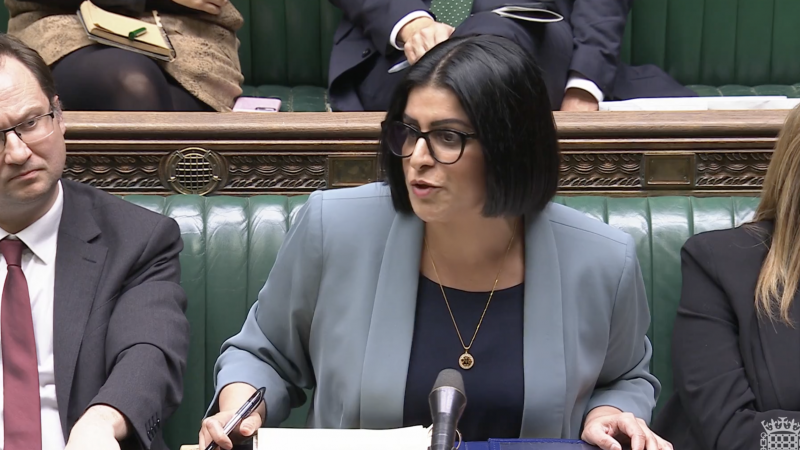
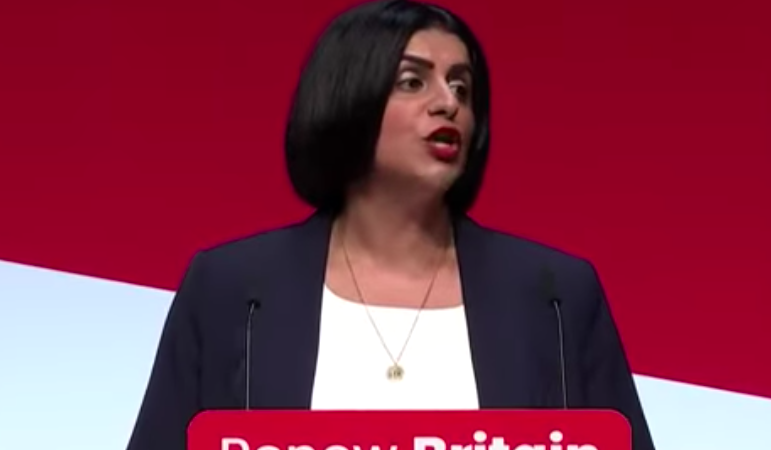
Charities and MPs have condemned Shabana Mahmood’s hardline plans to make it harder for asylum seekers and refugees to settle in the UK.
The proposals Mahmood set out yesterday include reviewing people’s refugee status every 30 months and forcing refugees to return to their home country if it becomes safe. The changes would mean those with asylum status would have to wait 20 years, rather than five, to become UK citizens.
Mahmood also said she would amend laws that guarantee housing and financial support to asylum seekers facing destitution.
The government also plans to make asylum seekers contribute to accommodation costs if they own a large number of “high-value” belongings.
In addition, the government will attempt to change how the European Convention on Human Rights (ECHR) is interpreted to stop asylum seekers using their rights to family life to avoid deportation.
Reform MP Danny Kruger invited Mahmood to join Reform UK, and far-right activist Tommy Robinson backed Mahmood’s reforms, sparking concerns among Labour backbenchers.
Amnesty International said that the proposals represent “a historic weakening of refugee protection” and warned that ministers are undermining the European Convention on Human Rights (ECHR) while claiming they want to remain within it.
Steve Valdez-Symonds, Amnesty International UK’s Refugee and Migrant Rights Director, called the Home Secretary’s plans “cruel, divisive and fundamentally out of step with basic decency”.
He added: “This is headline chasing, not problem solving – a Government bowing to anti-immigrant, anti-rights politics instead of standing up for the basic principles that protect us all.
“The moment a Government decides that fundamental rights can be switched off for certain people, it crosses a dangerous line that should never be crossed. This is how universal protections begin to rot. Once you strip rights from one group, you hand the licence to whoever comes next to strip them from others.
“This headline-chasing cruelty will not fix the immigration system. It will only fuel fear, worsen instability and give legitimacy to the most divisive politics. Anyone who cares about universal human rights needs to act now, because if rights aren’t upheld for everyone – especially those who lack public sympathy – then they are not rights at all, but mere concessions that those in power may permit or withhold as they please.”
Andrea Vukovic, Co-Director of Women for Refugee Women, said: “The Home Secretary stated that ‘illegal migration is tearing the UK apart’. The only thing tearing the UK apart is a politics devoid of humanity, compassion and dignity. These plans – borrowed from hostile systems around the world – represent more cruelty, more uncertainty and more hostility for people seeking safety here. It tells those with refugee status in the UK – who have fled war, persecution, and violence – that their protection is temporary and that they will never be welcome here. This is a dangerous step in the wrong direction.”
A Refugee Action spokesperson, said: “Politicians are tearing Britain apart. Instead of fixing our NHS, making housing affordable and reducing wealth inequality they are rolling out the red carpet for the far right.
“This racist package of hostility against people seeking safety will further divide our communities and create a two-tier society divided into people who are told they belong, and those who are told they don’t.”
The spokesperson added: “Deterrence policies like these may be a great distraction for a government worried about next week’s budget and wracked by political infighting, but they won’t stop Channel crossings nor build inclusive, thriving communities.”
The spokesperson also noted that in the UK, fifty families hold more wealth than half the population, warning that the government should focus on fair taxation and tackling inequality “instead of tormenting people who have done nothing to cause these problems”.
Former Labour leader Jeremy Corbyn said that Mahmood was “trying to appease the most ghastly right-wing forces all across Europe in undermining and walking away from the European Convention on Human Rights.”
Naomi Smith, chief executive of Best for Britain, said: “The fact that these proposals are being cheered by far-right extremists should give the government pause – but beyond being a clear moral failure, the data shows it is also a profound misjudgment of political strategy.”
Smith also highlighted that studies by election analysts show that “ramping up ever-harsher rhetoric on immigration and asylum never wins over Reform-curious voters, but does drive Labour voters toward the Lib Dems and Greens in England, and the SNP and Plaid in Scotland and Wales”.
“The government would be wiser to make the case for the international institutions and protections we all depend on.”
Green Party MP, Carla Denyer, called the plans “a new low”, saying the government was “plumbing the depths of performative cruelty, in hopes that the public won’t notice they have no answers to the real issues facing communities across this country”.
“Confiscating the belongings of people fleeing war and violence, and trapping refugees in perpetual limbo, where even those who have been granted asylum would have the constant threat of deportation hanging over their heads, undermining integration and making it impossible to put down roots. These are extreme, inhumane proposals from a desperate and failing government.
“The only way to prevent people making dangerous crossings by small boats is to open safe and managed routes for people to claim asylum in the UK. There are hints Mahmood could introduce such schemes – a sensible government would focus on this workable policy rather than divisive gimmicks.”
Olivia Barber is a reporter at Left Foot Forward
‘This is not triangulation, it is capitulation’
Olivia Blake 19th November, 2025
This week, the Home Secretary announced a programme of migration and asylum reforms, taking inspiration from Denmark’s immigration system.
That the centre left is also tipped to lose Copenhagen for the first time in the city’s electoral history should be a flashing warning sign for Labour. In Denmark, years of tightening immigration rules and ceding rhetorical ground to the far right did not neutralise the issue – it normalised it. In the process, it hollowed out the moral core of social democracy and left voters questioning what the centre left was for. Labour now risks repeating the same mistake.
When a Labour government begins to sound indistinguishable from the hard right on immigration, when its spokespeople parrot phrases like “golden ticket” and boast about making life harder for refugees – this is not triangulation, it is capitulation, and it represents a profound betrayal of Labour values. More dangerously sti
The fixation on so-called ‘pull factors’ is one of the most persistent myths in the migration debate. The idea that refugees risk their lives crossing seas because Britain’s asylum system is too generous has been repeatedly disproven by researchers, refugee agencies, and even the Government’s own evidence. People flee because of the push factors of war, persecution, famine, state collapse – not because of marginal differences in welfare entitlements or processing rules. No parent puts their child in a dinghy because of a generous British welfare system. For those escaping the Taliban, Assad, or Russian bombardment, the “choice” is not between hardship abroad and comfort in the UK; it is between danger and survival. The pull-factor narrative is not only false, it is a convenient distraction used to justify ever-harsher policies that do nothing to reduce crossings, succeeding only in dehumanising the people it affects. This is why so-called ‘deterrent’ policies always fail.
The UK has seen an increase in asylum applications in recent years compared to our EU neighbours, but it is worth considering this in context. Germany (250,550), Spain (166,145), Italy (158,605) and France (157,460) all received more applications than the UK (108,138) in 2024. Adjusted per capita, the UK still trends behind other EU nations, ranking 14th among the EU27 plus UK.
A humane system is possible: one built on safe routes that prevent dangerous crossings; on integration rather than exclusion; on tackling the backlog; where asylum seekers have the right to work and can contribute through taxation.
To build this system requires moral courage. It is about saying that the far-right don’t have the answers, but we on the left do. Above all, it requires honesty about the real source of deprivation in our communities: those who spent 14 years stripping public services to the bone while profiting from division, not people seeking safety.
Olivia Blake
Olivia Blake is the Labour MP for Sheffield Hallam.@_OliviaBlake
Asylum debate: Labour divisions laid bare as Mahmood stands her ground
James Moules 18th November, 2025
RogerMechan/Shutterstock.com
Shabana Mahmood came out fighting in the House of Commons yesterday after more than a dozen Labour MPs made their displeasure at the government’s asylum reforms known.
The Home Secretary told MPs: “If we fail to deal with this crisis, we will draw more people down a path that starts with anger and ends in hatred.”
But her new asylum measures have proved divisive on the Labour backbenches. Some MPs have voiced their support for the controversial proposals, but there has been no shortage of those expressing their visceral discomfort too.
Around 20 Labour MPs so far have gone public with their opposition to Mahmood’s plans, with many condemning the reforms in the strongest of terms.
York Central MP Rachael Maskell told Times Radio: “The dehumanisation of people in desperation is the antithesis of what the Labour Party is about.
Stroud MP Simon Opher said that “we should push back on the racist agenda of Reform rather than echo it.”
Allies of the government argue these measures are an essential tool to get a grip on a crisis that they claim is driving more and more voters into the arms of Farage and Reform.
Mahmood spoke of how the issue had been raised in her constituency, saying: “What unites all Britons, regardless of their background, is a desire for fairness and for a good system in which people can have confidence.”
But critics argue that many of the proposed reforms stretch the bounds of decency, and will only see more Labour voters abandon the party for the Liberal Democrats, Greens and Your Party.
Some left wing and soft left figures have argued the government should be placing greater focus on improving the cost of living and healthcare instead of leaning to the right on immigration.
Divisions deepen
However, Mahmood still has plenty of vocal backers in the PLP, with Hartlepool MP Jonathan Brash and Peterborough MP Andrew Pakes being among those to speak out in favour.
Could we see another rebellion? Possibly. It’s likely more Labour MPs will publicly express discomfort as the row rumbles on. But the Home Secretary has made it clear she’s up for the fight.
During the debate, Mahmood brought up her own experience of racism in Britain. “I wish I had the privilege of walking around this country and not seeing the division that the issue of migration and the asylum system is creating across this country,” she said.
The controversial plans include fast-tracked deportations, changes to the appeals process, and new rules to return those granted asylum to their home countries once those places are deemed safe.
It will also quadruple the length of time to achieve permanent status – from five years to 20.
Nottingham East MP Nadia Whittome said much of the reform programme “flies in the face of decency and compassion”.
The wider debate
The government’s proposals haven’t just sparked backlash within the PLP, with many left wing groups and humanitarian campaigners voicing concerns about the measures.
Dr Dora-Olivia Vicol, CEO of the Work Rights Centre said: “These changes will force refugees – people fleeing war, torture, persecution – into a state of permanent precarity for two decades.
“It is very difficult for people with time-limited leave to secure good work, as most employers look for certainty. Shutting refugees out of sustainable, secure work only pushes them closer to precarious roles where they can be exploited for profit.”
But at the same time, think tank More in Common polled several “Danish model” asylum policies ahead of the announcement and found strong public support for many measures – including pushing asylum seekers to return to their home countries once these places become safe.
A spokesperson for the union BFAWU said: “The BFAWU Executive Council is alarmed by the Home Secretary’s announcement yesterday, and by the direction it signals for the UK’s asylum system.
“The government’s statement that refugee status will become temporary, that the pathway to settlement will be significantly lengthened, and that support for people seeking safety may be withdrawn raises profound concerns about fairness, human rights, and the functioning of our economy.”
Government asylum reforms greeted with outrage within Labour
NOVEMBER 18, 2025
“The Home Secretary sounds like a Reform supporter,” said Nigel Farage. “Well done patriots,” said Tommy Roboinson. Shabana Mahmood’s proposed reforms to Britain’s immigration rules have drawn fulsome support from some obnoxious quarters – and outrage from Labour MPs and progressives.
There is so much wrong with the new regime proposed for refugees that it is difficult to know where to begin. Let’s start with motive.
“The new asylum proposals outlined by the Home Secretary are not driven by humanity, fairness or even economics,” writes Labour’s former Director of Policy Andrew Fisher. “They are driven by political cowardice.”
With reports of a new 20-year wait to secure indefinite leave to remain for those claiming asylum and populist gimmicks like seizing jewellery and assets from small boat migrants to help pay for accommodation, Keir Starmer’s 2020 pledge to have “an immigration system based on compassion and dignity” is well and truly dead.
If the aim of the changes is to halt the rise of Reform, they are likely to fail on this front. Manchester University Politics Professor Rob Ford points out: “Labour can never be the party of those who reject the asylum principle. Hardline immigration conservatism is owned by the right. Low-trust radical right voters will never believe an approach like this because they know it runs against the grain of the Party’s core electorate and history – so will fail.”
He concludes: “Labour seem to now come up with a new kamikaze nosedive operation to alienate social liberals while failing to attract Reform-curious voters every month.” He adds that, like Labour’s fiscal policy, it reinforces a belief among naturally Labour- leaning progressives that under Keir Starmer’s leadership, Labour “is a hostile environment to their values. But it substitutes nothing else.”
Labour MPs speak out
As well as accelerating the drift of Labour voters to the Greens, Lib Dems and others, Shabana Mahmood’s proposals are likely to provoke more internal division within the Party. Even moderate Labour MPs are incensed. Stella Creasy MP described the reform as “not just performatively cruel, it’s economically misjudged,” adding that “if you can’t stabilise your status, you will always struggle to get a job, a bank account or a mortgage, making it more likely you will be dependent on state or charity support.” She warned that “ICE-style raids on Britain’s streets” would be the only achievement of the Government’s “brutal” reforms.
Another usually loyal MP,Tony Vaughan, said the Government was taking a wrong turning: “The idea that recognised refugees need to be deported is wrong.” He added: “The rhetoric around these reforms encourages the same culture of divisiveness that sees racism and abuse growing in our communities.”
John McDonnell MP pointed out that Vaughan was “certainly not what the media would call a ‘usual suspect’. I suspect he is reflecting here what many in the PLP feel.”
Apsana Begum MP tweeted: “Policies to punish asylum seekers and refugees are a defeatist attempt to outdo Reform. There’s no dignity nor compassion in treating people fleeing persecution with appalling hostility and suspicion. It’s morally, politically and economically wrong and will only pave the way for a far-right government.”
Nadia Whittome MP agreed: “The government should be ashamed that its migration policies are being cheered on by Tommy Robinson and Reform. Instead of standing up to anti-migrant hate, this is laying the foundations for the far-right.”
Richard Burgon MP agreed, saying: “This approach isn’t just morally wrong; it’s politically disastrous.” He concluded: “This failing Labour leadership is choosing to fight on terrain set by Farage. In doing so, it is paving the way for the first far-right government in our history.”
Sarah Owen MP argued it was possible to take tough stance on illegal immigration, while having a “compassionate, fair and legal path for those seeking refuge.”
She added: “Taking jewellery from refugees is akin to painting over murals for refugee children. These repugnant ‘deterrents’ did not work for the Tories, and they won’t work for us.”
Stroud MP Simon Opher said Labour should “stop the scapegoating of immigrants because it’s wrong and cruel,” adding: “We should push back on the racist agenda of Reform rather than echo it.”
Alloa and Grangemouth MP Brian Leishman, who only recently had the Labour whip restored after being suspended for voting against the two-child benefit cap, also spoke out, as did Stourbridge MP Cat Eccles who said: “I’m massively disappointed and angry about what the Home Secretary is saying.”
MP for York Central Rachael Maskell said: “The dehumanisation of people in desperation is the antithesis of what the Labour Party is about,” and Middlesborough and Thornaby East MP Andy McDonald called the proposals “cruel, unfair and unworkable”.
Poole MPNeil Duncan-Jordan, who also recently got the Labour whip restored, said trying to steal votes from Reform was an “electoral dead end,” adding: “Kicking out recognised asylum seekers doesn’t speak to any of our values.”
Montgomeryshire and Glyndwr MP Steve Witherden said: “The problems the country faces won’t be solved by demonising asylum seekers.”Ian Byrne MP agreed, calling the reforms “morally bankrupt and politically disastrous.”
Diane Abbott MP was excoriating: “Draconian, unworkable and potentially illegal anti-asylum policies only feed Reform’s support. The government has learnt nothing from the period since the general election.”
Bell Ribeiro-Addy agreed: “The government’s latest asylum proposals seem calculated to do nothing but inflict more misery and uncertainty on people seeking safety in this country. This is not opposing the politics of hatred and division, this is holding the door open for them.”
In a detailed statement, Kim Johnson MP called the proposals “contemptible”. She added: “the government is choosing to attack the wrong 1%. Instead of taking from the most vulnerable, they’d do far better to focus on the billionaires who are really tearing this country apart.”
Paul Nowak, General Secretary of the Trades Union Congress, also added his voice. Speaking to Byline Times in advance of the Government’s latest plans, he said: “I’ve been very clear in terms of Labour: I don’t think you can out-Farage Farage.”
What is to be done?
A sensible debate about asylum would look at why record numbers of people are fleeing their home countries. AsAndrew Fisher points out, “Our far-from-ethical foreign policy sees British weapons currently brutalising innocents from Sudan to Palestine. We have a responsibility to stop funding conflict, but instead we are cutting international aid and continuing arms exports and political support for dictatorships and warmongers.”
“We need to do more to integrate asylum seekers quickly – that means allowing them to work, if they’re able, to support themselves – and providing language and health support for those who currently cannot,” says Fisher. But the last Tory Government cut free English lessons for those whose first language isn’t English and Labour has not restored them. Such an approach would not just be more ethical: it could save the Government money on asylum costs and provide extra tax revenues for the Treasury.
Olivia Blake MP agrees: “We often claim that the UK is welcoming, but these reforms undermine that narrative. Punishing people who have already fled danger, and stripping recognised refugees of stability, does not strengthen the system.”
She adds: “If we want an asylum system that works, the answer is simple: safe routes, faster decisions, the right to work for asylum seekers, and meaningful support for integration.”
Take action
Speaking this morning, Lord Alf Dubs described the proposals as “shabby” and called for more compassion in politics. Momentum agreed, adding: “Labour adopting anti-refugee rhetoric risks emboldening Reform to promote even more racist and radical measures against migrant communities.”
A draft motion for Constituency Labour Parties on the issue is being circulated.
UK Labour to Let Authorities Take Jewelry From Asylum-Seekers as Part of Sweeping New Immigration Crackdown “Labour won’t redistribute wealth from billionaires,” said former party Leader Jeremy Corbyn. “But they will seize belongings from those fleeing war and persecution.”
Protesters hold their banners, placards, and flags while they block the road during an anti-fascist counterprotest against a far-right anti-immigration protest on October 5, 2025, outside the Acacia Court in Faversham, UK. (Photo by Krisztian Elek/SOPA Images/LightRocket via Getty Images)
A new asylum policy announced Monday by the UK Labour Party will allow authorities to confiscate the jewelry and other belongings of asylum-seekers in order to pay for their claims to be processed.
The policy, which some critics said was “reminiscent of the Nazi era,” was just one part of the Labour Party’s total overhaul of the nation’s asylum system, which it says must be made much more restrictive in order to fend off rising support for the far-right.
In a policy paper released Monday, the government announced that it would seek to make the status of many refugees temporary and gave the government new powers to deport refugees if it determines it to be safe. It also revoked policies requiring the government to provide housing and legal support to those fleeing persecution, while extending the amount of time they need to wait for permanent residency to 20 years, up from just five, for those who arrive illegally.
The UK government also said it will attempt to change the way judges interpret human rights law to more seamlessly carry out deportations, including stopping immigrants from using their rights to family life under the European Convention on Human Rights (ECHR) to avoid deportation.
In an article for the Guardian published Sunday, UK Home Secretary Shabana Mahmood called the reforms “the most significant and comprehensive changes to our asylum system in a generation.” She said they were necessary because the increase in migration to the UK had stirred up “dark forces” in the country that are “seeking to turn that anger into hate.”
Nigel Farage, the leader of the far-right Reform UK Party, is leading national polls on the back of a viciously anti-immigrant campaign that has included calls to abolish the UK’s main pathway for immigrants to become permanent residents, known as “leave to remain.”
Meanwhile, in September, over 100,000 people gathered in London for an anti-immigrant rally led by Tommy Robinson, a notorious far-right figure who founded the anti-Muslim English Defence League (EDL). The event saw at least 26 police officers injured by protesters.
Last summer, riots swept the UK after false claims—spread by Robinson, Farage, and other far-right figures—that the perpetrator of the fatal stabbing of two young girls and their caretaker had been a Muslim asylum-seeker. A hotel housing asylum-seekers was set on fire, mosques were vandalised and destroyed, and several immigrants and other racial minorities werebrutallybeaten.
Mahmood said that if changes are not made to the asylum system, “we risk losing popular consent for having an asylum system at all.”
But as critics were quick to point out, the far-right merely took Labour’s crackdown as a sign that it is winning the war for hearts and minds.
Robinson gloated to his followers that “the Overton window has been obliterated, well done patriots!” while Farage chortled that Mahmood “sounds like a Reform supporter.”
Many members of the Labour coalition expressed outrage at their ostensibly Liberal Party’s bending to the far-right.
“The government should be ashamed that its migration policies are being cheered on by Tommy Robinson and Reform,” said Nadia Whittome, the Labour MP for Nottingham East. “Instead of standing up to anti-migrant hate, this is laying the foundations for the far-right.”
In a speech in Parliament, she chided the home secretary’s policy overhaul, calling it “dystopian.”
“It’s shameful that a Labour government is ripping up the rights and protections of people who have endured unimaginable trauma,” she said. “Is this how we’d want to be treated if we were fleeing for our lives? Of course not.”
The UK has signed treaties, including the ECHR, obligating it to process the claims of those who claim asylum because they face persecution in their home countries based on race, religion, nationality, group membership, or political opinion. According to data from the Home Office, over 111,000 people claimed asylum in the year from June 2024-25, more than double the number who did in 2019.
The spike came as the number of people displaced worldwide reached an all-time high of over 123.2 million at the end of 2024, according to the Norwegian Refugee Council, with desperate people seeking safety from escalating conflicts in Sudan, Ukraine, Myanmar, the Democratic Republic of Congo, and across the Middle East.
In her op-ed, Mahmood lamented that “the burden borne by taxpayers has been unfair.” However, as progressive commentator Owen Jones pointed out, the UKtakes in far fewer asylum-seekers than its peers: “Last year, Germany took over twice as many asylum-seekers as the UK. France, Italy, and Spain took 1.5 times as many. Per capita, we take fewer than most EU countries. Poorer countries such as Greece take proportionately more than we do.”
The Labour government, led by Prime Minister Keir Starmer, alread boasts that it has deported more than 50,000 people in the UK illegally since it came to power in 2024, but it has predictably done little to satiate the far-right, which has only continued to gain momentum in polls despite the crackdown.
Under the new rules, it is expected that the government will be able to fast-track many more deportations, particularly of families with children.
The jewelry rule, meanwhile, has become a potent symbol of how the Labour Party has shifted away from its promises of economic egalitarianism toward austerity and punishment of the most vulnerable.
“Labour won’t redistribute wealth from billionaires,” said former party leader Jeremy Corbyn, who is now an independent MP. “But they will seize belongings from those fleeing war and persecution.”
What changes to the UK asylum system are the Labour Government proposing?
Amid the threat posed by Farage and Reform’s rise in the polls, the government recognises that unless it can assert control and grip over the problem, there is a real risk it could lose to Reform.
With concern over immigration growing, and the issue now ranked by the public as one of the most important facing the country, the Labour government has made tackling illegal immigration a major priority.
Amid the threat posed by Farage and Reform’s rise in the polls, the government recognises that unless it can assert control and grip over the problem, there is a real risk it could lose to Reform.
Home Secretary Shabana Mahmood’s changes to the asylum system, billed as the most radical since the second world war, have caused a stir even among her own backbenchers. So, what are the major changes being set out?
1. Temporary settlement
Those granted asylum will have to wait 20 years to apply to settle permanently. Previously, they could begin this process after five years. Some have criticised this move, saying in the end the lack of clarity on status will prove more costly to the state.
In another major change, asylum status will only be granted on a temporary basis and subject to regular review every two-and-a-half years, meaning people could be returned to their home nation if it is deemed safe.
2. Changes to Right to family life
Amid growing frustration that human rights laws were being used to block deportations, the government is also looking to overhaul how human rights legislation is applied to migration court cases. Mahmood will bring forward a Bill to change how article 8 of the European Convention on Human Rights (ECHR), the right to family life, is applied in migration court cases.
3.Fewer appeals
Under the proposed changes fewer appeals will be allowed, with asylum seekers restricted to a single appeal, which, if fails, will see them deported.
4.New legal routes to the UK to be introduced
While the government is determined to tackle the pull factors on illegal immigration, it also says that it will introduce new legal routes for asylum seekers to the UK as a way to reduce the number of dangerous journeys in small boats.
The routes will be capped and are designed to give communities a greater say about the presence of refugees.
5. Visa bans
The government has also threatened to stop granting visas to people from three African countries – Angola, Namibia and the Democratic Republic of Congo – if their governments do not improve co-operation on removals of illegal migrants.
6. Asylum seekers with assets to contribute to cost of accommodation
The home secretary is also expected to announce that asylum seekers who have assets will be expected to contribute to the cost of their accommodation.
Basit Mahmood is editor of Left Foot Forward
Opinion
The truth about Trump's claim about Thanksgiving dinner
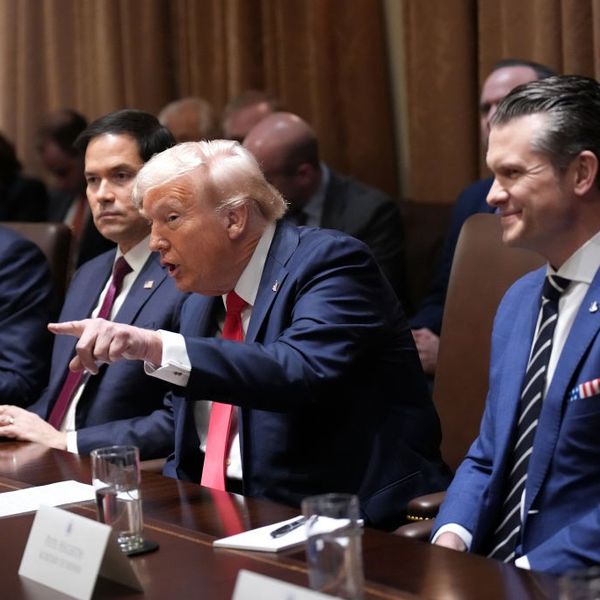
President Donald Trump wants Americans to believe “affordability” can be measured in terms of turkey and stuffing. On his social media platform he recently wrote: “2025 Thanksgiving dinner under Trump is 25% lower than 2024 Thanksgiving dinner under Biden, according to Walmart. My cost (sic) are lower than the Democrats on everything, especially oil and gas! So the Democrats’ ‘affordability’ issue is DEAD! STOP LYING!!!”
At a White House event the next day, Trump doubled down: “They came out and they said Trump’s Thanksgiving dinner — same things — is 25% less than Biden’s. … We are the ones that have done a great job on affordability, not the Democrats,” he said, calling Democrats’ focus on living costs a “con job.”
Here’s the problem: Trump’s claim isn’t based on federal data, independent analysis or even a consistent measure of prices. It’s based on a Walmart holiday promotion that changes every year. And because the lists aren’t remotely comparable, the claim doesn’t tell us much about affordability. So, in the name of “science” (and more than a little bit of curiosity), I decided to conduct a little experiment at the Walmart Supercenter off West New Circle Road in Lexington to see what was going on in the real world. Talking turkey about prices
To be fair to the president, Walmart did announce that its 2025 Thanksgiving basket is “25% cheaper” than last year’s. As many outlets have pointed out, however, the two lists are nowhere near the same. This year’s basket includes 15 products, six fewer than the 21 in 2024. Count each item individually, and it’s 22 this year versus 29 last year. The pecan pie? Gone. Sweet potatoes? Gone. Two cans of cream of mushroom soup were cut to one. Fresh onions, celery and corn muffin mix? Also gone. In their place, there were sometimes substitutes, and three boxes of macaroni appear on the 2025 list but not the 2024 list.
Both the 2024 and 2025 Walmart Thanksgiving lists have been scrutinized and critiqued by journalists, who noted that their contents shift from year to year, making direct comparisons unreliable. Yet no one I could find has conducted an apples-to-apples comparison using the same 2024 basket of goods and pricing those identical items for 2025 — a method more aligned with how economists measure inflation. In fact, that’s exactly how the Consumer Price Index (CPI) works: It tracks the cost of the same fixed basket of goods over time to determine how prices have truly changed.(Photo by Joe Raedle/Getty Images)
So that’s exactly what I did. Armed with last year’s Walmart Thanksgiving list, I went to the New Circle Road Walmart to find every item: same size turkey, same bag of potatoes, same cans of green beans and same cream of mushroom soup. Think of me as part bargain hunter, part social scientist. I prowled the aisles with the tenacity of someone who’s seen one too many “rollback” signs, even prompting a couple of Walmart employees to ask what I was up to.
What I found told a very different story than the one being shared by the president. Pricing last year’s exact basket in 2025 came to $59.37 or roughly $7.42 per person, about 6% higher than the cost of the same meal in 2024. (All food items were priced on Nov. 11.)
The turkey alone rose from 88 cents per pound to 97 cents per pound (around a 10% increase), and staples like onions, potatoes and gravy mix may have ticked up as well. Some canned goods may have held steady, but nothing meaningfully dropped. The exact per-unit prices in 2024 are unknown, though Walmart stated the meal “… serves eight people for less than $7 per person.” For anyone shopping with a list and a calculator rather than a campaign slogan, the verdict is clear: Thanksgiving isn’t getting cheaper, no matter how many exclamation points you put after a sentence. Facts over fanfare
Recreating last year’s full Walmart Thanksgiving basket in 2025 showed the truth: The same meal is about 6% more expensive — not 25% cheaper as claimed. Prices are still rising, even if the pace is a bit slower than the peak of inflation during the Biden administration.
I’ll admit this wasn’t a formal experiment conducted with all the rigor of a trained economist. I didn’t control for every variable or run multiple trials at multiple Walmart locations. But even a simple apples-to-apples comparison is far better than making bold statements without any data. Late night “truths” might grab headlines, but they are a poor gauge of affordability.
A sale on turkey or taters doesn’t capture the costs Kentucky families and families across the nation face every day like rent, gas, health care, child care and other essentials. Using a limited, ever-changing basket of groceries to claim that “Thanksgiving is cheaper” misrepresents what affordability looks like for real households.
If we care about honest debates on the economy and what affordability looks like, we need reliable, consistent data, not marketing gimmicks or “truths” based on a retail promotion. Tools like the Consumer Price Index, produced by the Bureau of Labor Statistics, exist for a reason: They track real changes in prices over time so policymakers, the Federal Reserve, and citizens alike can make informed decisions about the economy.
Plus, Kentucky families, who know the difference between a real deal and a “bless your heart” kind of deal, deserve an honest assessment of what’s getting more affordable and what’s not. And Kentucky families, who can stretch a dollar further than a Frankfort politician can stretch a mile of the Mountain Parkway, understand that true affordability isn’t determined by a catchy retail promotion; it’s measured with facts, not fanfare. When it comes to an honest assessment of affordability, leave the stuffing in the turkey, not in your economic analysis.
Trump ignoring 'economic misery' of Americans may sink his second term: analysis
Despite being an off-year slate of elections, the recent races in Virginia, New Jersey, Georgia, and New York City received an outsized spotlight as voters took to the polls to express their disapproval of President Donald Trump's administration. Across the board, Democrats who campaigned on affordability won races by significant margins, signaling voter discontent with Trump’s handling of economic issues.
In a Tuesday article, The Guardian’s Eduardo Porter noted that Trump campaigned to victory in 2024 on two issues: the cost of living and racial grievances, with the latter being expressed through pledges of mass deportations, removing “critical race theory” from schools and targeting diverse initiatives across the government and in the private sector.
However, Porter argued that since Trump's returning to the White House, the president has all but completely dropped efforts to tackle high prices of daily necessities. Instead, he has ramped up immigrations raids and ICE enforcement to historic levels, putting a particular focus on Democrat-led cities with diverse populations. As for the economy, Porter highlighted various Trump policies that have actively made matters worse for many Americans.
“Trump seems not only to have forgotten his promises on the economy, he also appears to enjoy stoking Americans’ economic anxieties,” Porter explained. “His array of tariffs against friend and foe has slowed the economy, stalling employment growth while it raises the prices of key necessities. His decision to end subsidies for health insurance plans under Obamacare will drastically raise premiums for millions of Americans. And there is probably no better strategy than ending [Supplemental Nutrition Assistance Program] food assistance payments — as he did during the government shutdown — to deepen the economic misery of the poor.”
The continued economic strain has caused voter outrage against Trump to spread further than just the typical left-wing opposition. In the recent elections, Democrats notched notable victories in deep-red states, including Mississippi and Georgia. Voter demographic data also shows a major shift away from Republican candidates by groups the swung for Trump in 2024, including young men and Latinos.
“It seems evident today that stoking Americans’ racial grievances will not be enough for Trump to cling to power,” Porter concluded. “He had to deliver on the economy too. And he hasn’t.
‘Trillion Dollar War Machine’: Understanding US Militarism and How to Dismantle It
William D. Hartung and Ben Freeman’s extremely timely and necessary book explains how today’s crises are the predictable consequence of an entrenched system of militarism, a politics captured by lobbies, and elite self-dealing.
This aerial photo shows the Pentagon on September 9, 2018. (Photo: Wiyre Media/flickr/cc)
At this very second, Washington is pouring billions into escalations toward a potential invasion of Venezuela that would set Latin America on fire, escalate tensions with neighbors, and trap US troops in another undefined quagmire. It has already conducted about a dozen strikes on unproven “drug boats” in the Caribbean, without congressional approval, a trial, or even demonstrated intelligence, killing innumerable Venezuelan and foreign civilians, while it has moved Naval strike groups and carriers near Venezuela’s shores. This is one of the disastrous and preventable results of American militarism, exceptionalism, and the military-industrial complex that fuels them.
Such is the context in which The Trillion Dollar War Machine lands on bookshelves. William D. Hartung and Ben Freeman’s extremely timely and necessary book explains how these crises are not a series of isolated events, but the predictable consequence of an entrenched system of militarism, a politics captured by lobbies, and elite self-dealing that traces its lineage back to President Dwight D. Eisenhower’s 1961 warning about the military-industrial complex.
Their diagnosis offers a map of the structural forces that continuously push America toward war, even when the public wants peace and even when national security (and economics) is the pretext rather than the driver. America engineers itself into these wars for elite interests.
As Hartung and Freeman detail, more than half of the Pentagonbudget now goes to private contractors. These corporations, especially the “Big Five” of Lockheed Martin, RTX (formerly Raytheon), Boeing, General Dynamics, and Northrop Grumman, have together absorbed more than $2.1 trillion in Pentagon contracts in the post-9/11 era. The book opens by reminding us that $8 trillion were wasted by the war machine on the wars in Iraq and Afghanistan.
The end of the world and MAD could be ushered in because Lockheed Martin and Congress can’t stop obsessing over their stocks and profits.
That sum alone could have fully decarbonized the US electrical grid; paid off every student loan in the country; and still had trillions left for climate resilience, healthcare, and democratic infrastructure. Even just maintaining the system as it is costs billions—America’s 750 military bases in 80 countries cost $55 billion a year to maintain. A lot of them, like in Guam, have also destroyed the environment, caused irreparable health effects, and stalled the local economy and democracy.
When Jamal Khashoggi was murdered, and Congress briefly considered blocking US weapons transfers to Saudi Arabia, lobbyists went to work behind the scenes to “derail the initiative.” In the same week they lobbied lawmakers, they donated to the same lawmakers’ campaigns. Everything about that should look like bribery. But because the military-industrial complex is woven into the legal, regulatory, and cultural DNA of Washington, it is perfectly legal. In fact, it’s just a regular Tuesday. This is the machinery that powers nearly every war the United States engages in.
Hartung and Freeman document how 945 lobbyists work directly for Pentagon contractors; how dozens of them are simultaneously registered as foreign agents; and how former members of Congress, Pentagon staffers, and even chiefs of staff for the nation’s most powerful leaders pass seamlessly through the revolving door to sell weapons to Egypt, Saudi Arabia, Qatar, and other authoritarian regimes. American foreign policy is shaped in lobbying offices, overpriced dinners, and backdoor negotiations with firms that openly expect “business benefits” from new wars. The consequences of this model are catastrophic for human life.
The book recounts how US weapons have fueled atrocities in Yemen, the Philippines, Nigeria, Egypt, and now Gaza, where the authors confirm what most of us progressives already knew; that most of the people killed “have nothing to do with Hamas.” They cite updated reporting that the Biden administration concluded more than 100 separate arms transfers to Israel in the first months of the war, without even informing Congress.
More than half of the conflicts on Earth involve US weapons on at least one side. The United States continues to arm regimes that Freedom House classifies as “not free,” even when those regimes commit torture, disappearances, mass detentions, and extrajudicial murders. Even this week, there has been reporting into Egypt’s continued use of torture and crimes against humanity in its “counterterrorism” efforts, with US weapons and taxpayer money. Wherever there is repression, inequality, or mass death, US weapons are often close by. The results do not make the US, or the world, safer, freer, or more prosperous; in fact, they do quite the opposite.
Hartung and Freeman trace how an arms industry that began as an adjunct to US defense has transformed into a permanent, profit-seeking entity that requires conflict to justify its existence. They revisit the “last supper” of the 1990s, when defense mergers consolidated the industry into a small cluster of giants, and the Pentagon volunteered billions in taxpayer dollars to subsidize those mergers, even giving executives multimillion-dollar “golden parachutes,” funded by tax money.
They revisit how the highly dangerous nuclear triad was shaped not by strategy but by “turf wars” between the Air Force and Navy, each desperate to preserve its slice of the budget. That’s right, the end of the world and MAD could be ushered in because Lockheed Martin and Congress can’t stop obsessing over their stocks and profits. Hartung and Freeman also revisit the disastrous Littoral Combat Ship program, the “Little Crappy Ship,” which was pushed through political pressure even after the Navy warned it was unfit for combat. M1 Abrams tanks were also sold to Ukraine, after being pushed by think tanks funded by defense contractors, even as the tanks resulted in catastrophic casualties for Ukrainian fighters. In every case, the logic is identical. Weapons are built because there is profit in building them, not because there is security in possessing them. Don’t fall for the tired arguments about “job creation” and “American manufacturing,” either; Hartung and Freeman show other, non-military economic sectors are much better at creating jobs, for cheaper. Most MIC jobs aren’t even unionized.
One of the book’s most disturbing contributions is its detailed exploration of how the war machine’s surplus equipment, tactics, and political culture flowed into policing. The authors describe a country where protesting can be met with military-grade rifles, armored vehicles, acoustic weapons, and tear gas developed for counterinsurgency. They note that more than 6,500 police departments have received $7 billion worth of Pentagon equipment through the 1033 Program. They argue that “it’s not the police, it’s a paramilitary force.” It’s simply the domestic mirror of the foreign policy problem (also called the Imperial Boomerang). Now, American communities live under the terror and oppression that much of the world has suffered through, in Washington’s own wars.
The authors argue for a “new peace network,” a coalition of movements that understand militarism as a unifying force behind poverty, racial injustice, surveillance, climate destruction, and authoritarianism.
The authors also underline the economic argument for dismantling the war machine. Military spending has become one of the least efficient job creators in the entire US economy. Investments in healthcare, education, climate resilience, and clean energy create far more jobs than investments in defense. Pentagon contractors, they show, are shedding union jobs at historic rates. Corporations like Lockheed Martin spend billions on stock buybacks rather than innovation. Automation will soon cut even more jobs. The economic bargain that once tied militarism to employment is dissolving. The authors argue that a just transition away from militarism is not just possible. It is necessary.
The authors also expose how deeply media culture is implicated in sustaining this system. Hartung and Freeman recount how Hollywood rewrites scripts at the Pentagon’s request in exchange for access to hardware. How think tanks funded by weapons manufacturers produce reports that conveniently recommend more weapons purchases. How television networks turn war planners into celebrities, how the Iraq War was sold through manufactured narratives, and how even major news organizations were swept up in the 9/11 wave of militarism. They highlight the “artificial consensus” that emerges when the same small circle of MIC-funded think tanks supply the experts for congressional hearings, television panels, and academic publications. This is why dissent is always framed as fringe, because it goes against an entire manufactured apparatus of propaganda and warfare, funded by taxpayer money and corporations.
The book is chock-full of these stories, each more infuriating than the other, but compiled in a way that could drive someone numb. However, do not despair; the authors, as they should, propose a successful path forward.
Every chapter offers a form of resistance, however small. They emphasize the importance of organizations like the Project on Government Oversight (or POGO), which, though it started out mostly getting attention from conspiracists and sci-fi enthusiasts, has defended whistleblowers and exposed fraud. They highlight reporting from independent outlets like ProPublica and FAIR that refuse to act as stenographers for the war machine, and progressive fighters in Congress like Sen. Elizabeth Warren (D-Mass.), Sen. Bernie Sanders (I-Vt.), and Rep. Ro Khanna (D-Calif.), who have pushed back from the inside.
They recount moments when insiders resisted corruption, when whistleblowers forced accountability, and when activists successfully shut down harmful programs. Public opinion overwhelmingly opposes new nuclear weapons, endless wars, and blank-check aid to repressive allies. The machine can be broken, but it takes an “all-hands-on-deck approach,” as the authors hammer home.
The book’s most hopeful chapter focuses on the much-needed peace movement. The authors argue for a “new peace network,” a coalition of movements that understand militarism as a unifying force behind poverty, racial injustice, surveillance, climate destruction, and authoritarianism. They highlight the Poor People’s Campaign, built on Dr. Martin Luther King Jr.'s vision, which brings veterans, workers, and marginalized communities into a shared struggle against economic exploitation and war. They emphasize that any new peace movement must bridge ideological divides, drawing support from libertarians, populists, progressives, veterans, and communities directly harmed by war and militarization. They warn against grifters and extremists who exploit anti-war sentiment to push bigotry or authoritarian agendas (one could maybe think of examples, like Tucker Carlson, Matt Walsh, Nick Fuentes, or even Donald Trump). They insist that a principled peace movement must be rooted in solidarity, democracy, and human dignity.
This is where Hartung and Freeman’s credibility matters. Both authors have spent years inside Washington, fighting the very system they describe. Freeman’s landmark investigations at the Project on Government Oversight reshaped our understanding of foreign influence, and his current work at the Quincy Institute, including with the Think Tank Funding Tracker, continues to expose the financial pipelines between authoritarian regimes and corporations, and US policymaking.
Their blueprint also includes campaign finance reform to sever the link between money and militarism. It includes transparency laws to expose think-tank conflicts of interest, robust whistleblower protections for insiders willing to confront corruption, new priorities for federal spending that center human needs rather than endless war, and, most importantly, reimagining foreign policy around genuine defense rather than global weapons distribution. They, for instance, point to arming Ukraine against Russia’s imperialistic invasion as a noble cause (with caveats of course, which they get into), but warn against arming Israel, whose wars in the Middle East are not defensive. But this can’t happen without people pushing relentlessly.
The book ends with a warning and a call to action. The war machine is everywhere. It exists in budgets; in lobby shops; in universities; in movies; in police departments; in political campaigns; at sports games; and in the language we use to talk about our politics, society, culture, and life. But monsters can be tamed. They can be disrupted, defunded, delegitimized, and replaced.
We must get informed (first by reading this book!), pressure our representatives, support whistleblowers, follow and strengthen genuine independent media, create and join movements fighting militarism, and refuse to accept that endless war is the price of life, freedom, and citizenship. We all have agency, power, and responsibility to stop the war machine. Time to organize.
Our work is licensed under Creative Commons (CC BY-NC-ND 3.0). Feel free to republish and share widely.
Joseph Bouchard Joseph Bouchard is a journalist and researcher from Québec covering security and democracy in Latin America. His articles have appeared in Responsible Statecraft, Reason, The Diplomat, Le Devoir, and RealClearPolitics, among others. He is a PhD student in Politics at the University of Virginia and a SSHRC doctoral fellow on Latin American Politics. Full Bio >
As Trump Issues New Threats to Mexico and Colombia, Democrats Push to End Unauthorized Aggression
Rep. Gregory Meeks, who introduced a war powers resolution, said Trump’s actions combine the “worst excesses of the war on drugs and the war on terror.”
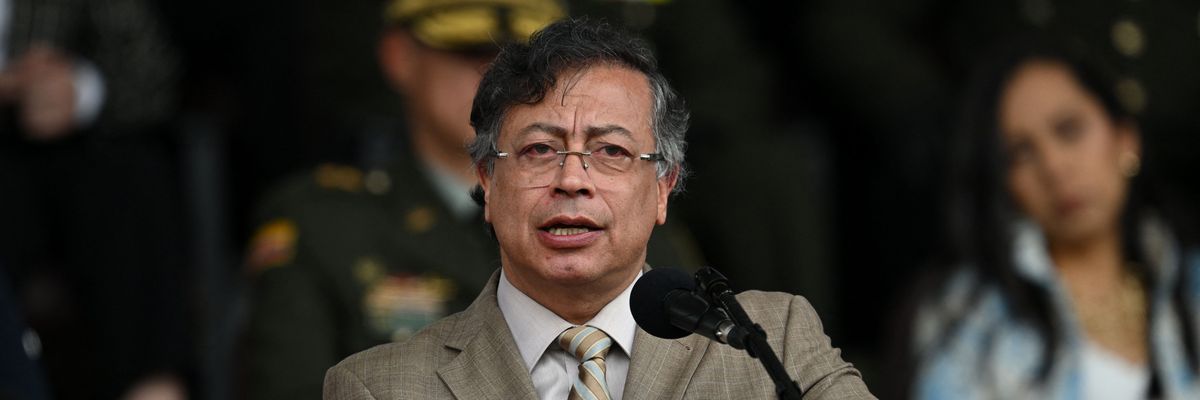
Colombia’s President Gustavo Petro delivers a speech during the commemoration of the 134th anniversary of the National Police and the promotion of officers at the General Santander Police Academy in Bogotá on November 13, 2025. (Photo by Raul Arboleda/AFP via Getty Images)
As Democrats in the US House of Representatives introduced their latest measure to stop President Donald Trump from continuing his attacks against alleged drug cartels without approval from Congress, the president said he wouldn’t “rule out” deploying US ground troops in Venezuela—and warned he could escalate attacks across Latin America, with possible strikes in Mexico and Colombia as well.
Shortly after the Department of Defense, called the Department of War by the Trump administration, announced its 21st illegal airstrike on what they’ve claimed, without evidence, to be “narco-terrorist” vessels mostly in the Caribbean—attacks that have killed at least 83 people—Trump told reporters in the Oval Office on Monday that he may soon begin similar operations against drug cartels in mainland Mexico.
“Would I launch strikes in Mexico to stop drugs? It’s OK with me. I’ve been speaking to Mexico. They know how I stand,” he said. “We’re losing hundreds of thousands of people to drugs. So now we’ve stopped the waterways, but we know every route.”
Earlier this month, following reports from US officials that the Trump administration had started “detailed planning” to send US troops to Mexico, the nation’s president, Claudia Sheinbaum, retorted that “it’s not going to happen.”
In his comments Monday, Trump threatened to carry out strikes in Colombia as well, saying: “Colombia has cocaine factories where they make cocaine. Would I knock out those factories? I would be proud to do it personally.”
Colombian President Gustavo Petro has been one of Latin America’s fiercest critics of Trump’s extrajudicial boat bombings, last week referring to the US president as a “barbarian.” Trump, meanwhile, has baselessly accused Petro of being “an illegal drug leader,” slapping him and his family with sanctions and cutting off aid to the country.
In response to Trump’s threats on Monday, Petro touted the number of cocaine factories that have been “destroyed” under his tenure. According to figures from the Colombian Ministry of Defense, around 18,000 of them have been taken out of commission since Petro took office in 2022, a 21% increase from Colombia’s previous president.
Immediately after Trump issued his threat against Colombia, he backpedaled, saying: “I didn’t say I’m doing it, I would be proud to do it.”
However, reporting from Drop Site News earlier this month has suggested that Sen. Lindsey Graham (R-SC) “was briefed by Secretary of War Pete Hegseth on the new list of hard targets inside Venezuela, Colombia, and Mexico in early October, and lobbied fellow senators on expanding the war to include drug-related sites in Colombia.”
The senator had alluded to the plans on CBS News’ “Face the Nation,” saying: “We’re not gonna sit on the sidelines and watch boats full of drugs come into our country. We’re gonna blow them up and kill the people who want to poison America. And we’re now gonna expand our operations, I think, to the land. So please be clear about what I’m saying today. President Donald Trump sees Venezuela and Colombia as direct threats to our country, because they house narco-terrorist organizations.”
On Tuesday, a group of Democrats in the US House of Representativesintroduced another measure that would stop Trump from continuing his attacks against alleged drug cartel members without approval from Congress.
The measure would require the removal of “United States Armed Forces from hostilities with any presidentially designated terrorist organization in the Western Hemisphere,” unless Congress authorizes the use of military force or issues a declaration of war. Previous measures to stall Trump’s extrajudicial attacks have been narrowly stymied, despite receiving some support from the Republican majority.
“There is no evidence that the people being killed are an imminent threat to the United States of America,” said Rep. Gregory Meeks (NY), the top Democrat on the House Foreign Affairs Committee, who introduced the resolution.
Meeks added that Trump’s campaign of assassinations in Latin America combines “the worst excesses of the war on drugs and the war on terror.”
Trump’s threats of military action come after Hegseth announced what he called “Operation Southern Spear” last week, which he said would be aimed at “remov[ing] narco-terrorists from our hemisphere.” In a description that evoked the 19th-century Monroe Doctrine, Hegseth wrote on social media that “the Western Hemisphere is America’s neighborhood—and we will protect it.”
In the Oval Office, Trump declared, without evidence, that with each strike his administration carries out against Venezuelan boats, “we save 25,000 American lives,” which experts say is obviously false since Venezuela plays a very minor role in global drug trafficking.
Several international legal experts have said Trump’s strikes constitute a war crime. Earlier this month, Oona A. Hathaway, a professor of international law at Yale Law School, said that members of the Trump administration “know what they are doing is wrong.”
“If they do it, they are violating international law and domestic law,” Hathaway said. “Dropping bombs on people when you do not know who they are is a breach of law.”
The Trump administration has argued that its actions are consistent with Article 51 of the UN’s founding charter, which requires the UN Security Council to be informed immediately of actions taken in self-defense against an armed attack.
The administration has not provided evidence that its attacks constitute a necessary form of self-defense. But last month, a panel of independent UN experts said that “even if such allegations were substantiated, the use of lethal force in international waters without proper legal basis violates the international law of the sea and amounts to extrajudicial executions.”
After ‘Disgusting Display’ at White House, Omar Says Congress Must Stop Trump Sale of F-35s to Saudis “Trump is prioritizing weapons-contractor profits and his own family’s business interests,” said US Rep. Ilhan Omar.
US President Donald Trump greets Saudi Crown Prince Mohammed bin Salman on November 18, 2025 at the White House. (Photo by Demetrius Freeman/The Washington Post via Getty Images)
The deputy chair of the Congressional Progressive Caucus said Tuesday that lawmakers should pull out all the stops to prevent US President Donald Trump from selling F-35s to Saudi Arabia following Saudi Crown Prince Mohammed bin Salman’s White House visit.
Rep. Ilhan Omar (D-Minn.) called the White House reception for bin Salman, who is commonly known as MBS, a “disgusting display” and a “new low in longstanding US support for the repressive monarchy,” pointing to Trump’s whitewashing of the crown prince’s role in the horrific murder of journalist Jamal Khashoggi in 2018.
Omar also condemned Trump’s attack on ABC News reporter Mary Bruce, who asked about Khashoggi’s murder during the crown prince’s White House visit.
“It is truly disturbing that the president of the United States dismissed Khashoggi’s entrapment, murder, and dismemberment at the hands of MBS’ assassins simply as, ‘things happen,’” said the Minnesota Democrat.
Omar called on fellow lawmakers to join her in working to block Trump’s “reckless and corrupt deals” with the Saudis, including his proposed sale of F-35 fighter jets.
“With announced sales of F-35 warplanes and billions in financial investments, Trump is prioritizing weapons-contractor profits and his own family’s business interests, including Jared Kushner’s private equity firm that took $2 billion from MBS,” said Omar, who noted that the Saudis have used US arms to devastating effect in Yemen.
The details of Trump’s proposed F-35 sale are not yet fully clear, but the US president indicated on Tuesday that the agreement would not include any conditions. The Saudi regime is one of the world’s worst human rights abusers, wielding the death penalty and other repressive tactics to violently crush dissent.
“We’re going to have a deal. They’ve going purchase F-35s,” Trump said Tuesday. “They’re buying them from Lockheed and it’s a great plane.”
Once Congress is formally notified of the proposed sale, lawmakers will have a limited window to consider a resolution of disapproval that, if passed, would block the transaction.
“While the defense industry and American billionaires will profit handsomely with the gifts Trump is doling out to MBS. The American people will be left holding the bill.”
During Tuesday’s meeting, Trump announced that his administration has designated Saudi Arabia as a “major non-NATO ally,” a status that enhances military cooperation between the two countries. Israel is also a “major non-NATO ally” of the US.
Omar said Tuesday that “no American soldiers may be sent into harm’s way to defend Saudi Arabia” as part of the agreement “without a debate and vote of authorization from Congress.”
“My Progressive Caucus colleagues and I are committed to ensuring that this remains the case,” she added.
The human rights group DAWN, an organization founded by Khashoggi, also voiced concerns about the security pact, warning in a statement that Trump is working to “protect a reckless, impulsive dictator, all in the interests of personal and corporate gains.”
“While the defense industry and American billionaires will profit handsomely with the gifts Trump is doling out to MBS,” the group added, “the American people will be left holding the bill.”
7 Years After Khashoggi Murder, Trump to Reward Saudi Crown Prince With Sale of F-35s
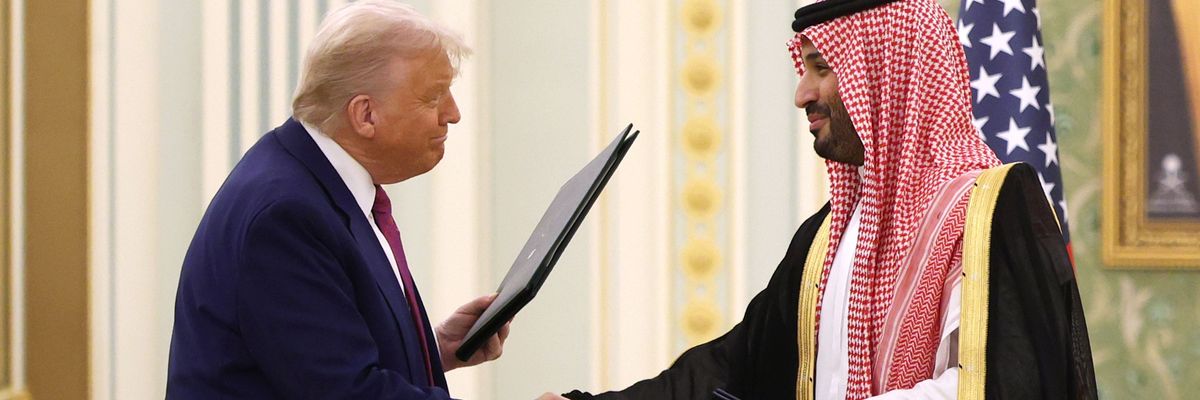
“Sadly, we have a president who prefers the Saudi model—an autocracy run by a trillionaire family—to democracy,” said US Sen. Bernie Sanders. US President Donald Trump and Saudi Crown Prince Mohammed bin Salman attend a signing ceremony at the Saudi Royal Court on May 13, 2025 in Riyadh, Saudi Arabia. (Photo by Win McNamee/Getty Images)
US President Donald Trump said Monday that he intends to authorize the sale of F-35 fighter jets to the autocratic kingdom of Saudi Arabia as the country’s leader, Crown Prince Mohammed bin Salman, heads to the United States for the first time since the horrific 2018 murder of journalist Jamal Khashoggi.
“We will be selling F-35s,” Trump told reporters in the Oval Office ahead of bin Salman’s arrival.
The Saudis, Trump added, “want to buy them, they’ve been a great ally.”
The Saudi crown prince, commonly known as MBS, is set to meet with Trump in the White House on Tuesday, heightening concerns among experts and watchdogs about a potential security pact and corrupt business deals with the kingdom. The New York Timesreported Monday that the Trump Organization, formally run by the president’s two eldest sons, is “in talks that could bring a Trump-branded property to one of Saudi Arabia’s largest government-owned real estate developments.”
“The prince is overseeing a $63 billion project that is set to transform the historic Saudi town of Diriyah into a luxury destination with hotels, retail shops and office space,” the Times noted. “Saudi officials toured the Diriyah development with Mr. Trump during the president’s official state visit in May, with the goal of piquing his interest in the project.”
Robert Weissman, co-president of the watchdog group Public Citizen, said Tuesday that “we’re seeing the complete merger of Trump’s business interests with US diplomacy and military policy.”
“Trump’s apparent authorization of F-35 sales to Saudi Arabia comes amidst reports of new Trump family business deals with the Saudi government and its affiliates,” said Weissman. “These deals seem poised to direct tens of millions into the Trump family coffers in exchange for little more than permitting the family name to be attached to development projects.”
The F-35 program, which is expected to cost US taxpayers trillions of dollars in the coming years, is widely seen as a boondoggle that primarily benefits massive defense contractors such as Lockheed Martin, the producer of the jets.
Internally, Pentagon officials have voiced concern that selling F-35s to Saudi Arabia could give China access to the jets’ technology.
“How are Americans supposed to think that Trump’s decision on F-35 sales, over internal objections, not to mention over human rights concerns, is unconnected to Trump’s business arrangements with Saudi Arabia?” Weissman asked.
US Sen. Bernie Sanders (I-Vt.) said in response to bin Salman’s upcoming White House visit that “this is the dictator who had a US columnist murdered for criticizing the Saudi royal family.”
“Sadly, we have a president who prefers the Saudi model—an autocracy run by a trillionaire family—to democracy,” Sanders added.
UN Approval of Gaza ‘Stabilization Force’ Slammed as ‘Denial of Palestinian Self-Determination’
CodePink said the plan “will leave Palestine in the hands of a puppet administration, assigning the United States, which shares complicity in the genocide, as the new manager of the open-air prison.”
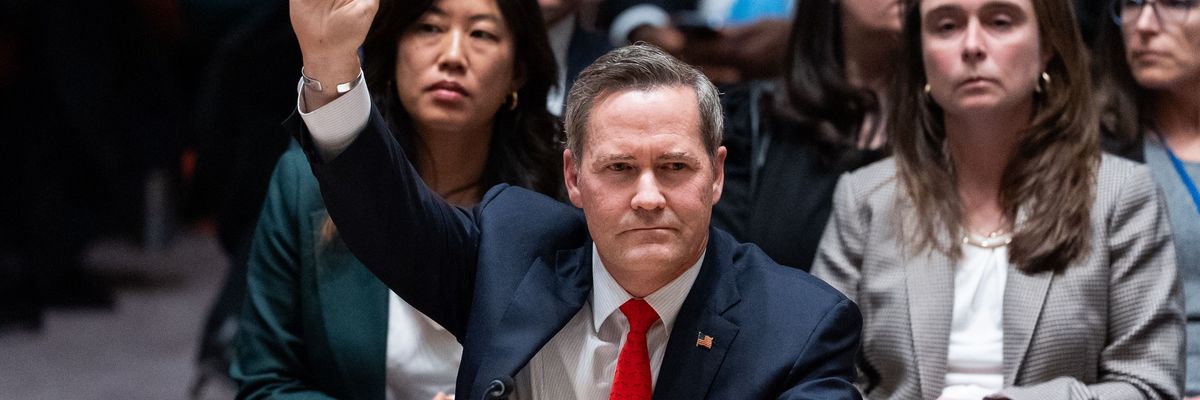
US Ambassador to the United Nations Mike Waltz raises his hand to vote in favor of a draft resolution to authorize a so-called international stabilization force in Gaza, on November 17, 2025 in New York City. (Photo by Adam Gray/Getty Images)
Palestine defenders decried Monday’s approval by the United Nations Security Council of a US plan authorizing a so-called international stabilization force for Gaza—a plan decried by one peace group as a denial of Palestinian self-determination.
While US Ambassador to the UN Mike Waltz hailed the approval of what he called a “historic and constructive resolution,” Hamas, which has ruled Gaza since 2007, rejected what it said “imposes an international guardianship mechanism on the Gaza Strip, which our people and their factions reject.”
“Assigning the international force with tasks and roles inside the Gaza Strip, including disarming the resistance, strips it of its neutrality, and turns it into a party to the conflict in favor of the occupation,” added Hamas, which the US labels a terrorist organization.
After waging war on Gaza for over two years, Israeli officials also rejected the resolution for opening the door to Palestinian statehood—which is officially recognized by around 150 nations but is vehemently opposed by Israel—with Prime Minister Benjamin Netanyahu calling such an outcome “unacceptable.”
The approved stabilization force will be tasked with securing Gaza’s borders, protecting civilians, facilitating humanitarian assistance, supporting a redeployed Palestinian police force, and supervising disarmament of Hamas and other militant resistance groups. Under the plan, Israeli occupation forces would fully withdraw from Gaza after the stabilization force achieves security and operational control of the Palestinian exclave.
Then, a transitional governing body—the so-called Board of Peace led by US President Donald Trump—would be established to coordinate security, humanitarian aid, and reconstruction. The plan, which builds on Trump’s 20-point peace proposal adopted in last month’s tenuous ceasefire, dangles the carrot of a pathway toward Palestinian self-determination and statehood under a reformed Palestinian governing authority.
Human Rights Watch criticized the vote in an X post stating that “the fact that the words ‘human rights’ don’t appear in the resolution adopted by the Security Council today speaks volumes.”
The US-based peace group CodePink said in a statement that “the resolution, while disguised as a peaceful and humanitarian proposal, is in reality a blueprint for the internationalization of the Israeli occupation and a complete denial of Palestinian self-determination.”
CodePink continued: The resolution imposes a two-year mandate to “secure borders,” “protect civilians,” and “decommission weapons,” with the stated goal of disarming Palestinian resistance. However, it does nothing to address and end the root cause of the violence: Israel’s ongoing siege, occupation, and ethnic cleansing. The United States, which armed and shielded the Israeli government unconditionally as it killed and displaced hundreds of thousands of Palestinians, should not be considered a neutral actor of good faith. A military force that answers to a “Board of Peace” chaired by the US president is an extension of US and Israeli interests, plain and simple.
“The establishment of a ‘technocratic Palestinian administration’ that answers to a US-led board will strip the Palestinian people of political agency,” CodePink added. “Essentially, it will leave Palestine in the hands of a puppet administration, assigning the United States, which shares complicity in the genocide, as the new manager of the open-air prison that Israel has already established.”
Members of the New York branch of the Palestine Youth Movement led a demonstration outside the US mission to the UN in Manhattan to protest the resolution.
“We see through this thinly veiled attempt to strip the Palestinian people of their sovereignty, self-determination, and right of return,” the group said on Instagram. “The people reject any and all occupation plans for Gaza. Our movement will continue to struggle against Zionism and imperialism until Palestine is free, from the river to the sea.”
US Labor Movement Cheers as House Members Force Vote to Restore Federal Workers’ Union Rights
“We commend every Democrat and Republican who signed the discharge petition to bring the Protect America’s Workforce Act to a vote, but the fight isn’t over,” said AFL-CIO president Liz Shuler.
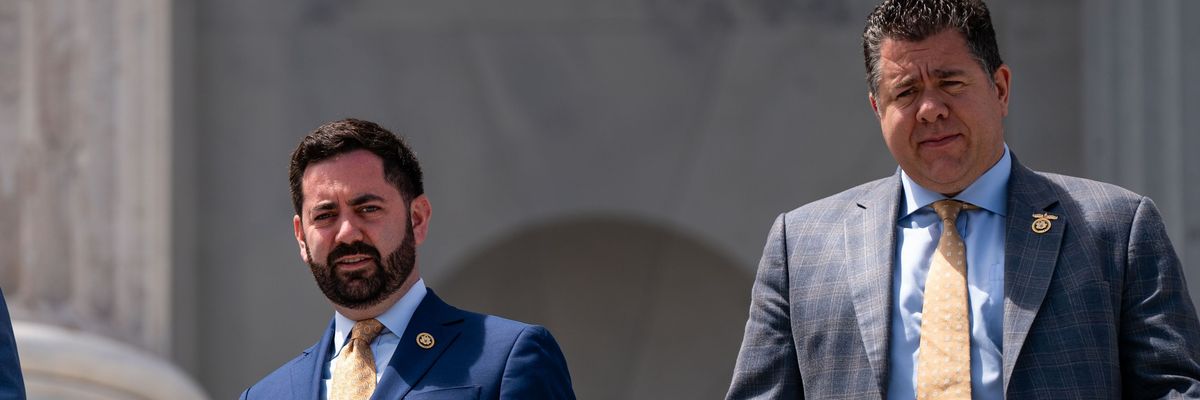
Congressmen Mike Lawler and Nick LaLota, both New York Republicans, walk down the steps of the House of Representatives on Capitol Hill in Washington, DC on April 30, 2024. (Photo by Kent Nishimura/Getty Images)
Two Republicans in the US House of Representatives on Monday added their names to a discharge petition that will now force a vote on legislation to restore the collective bargaining rights of hundreds of thousands of federal workers targeted by GOP President Donald Trump.
US Reps. Jared Golden (D-Maine) and Brian Fitzpatrick (R-Pa.) responded to Trump’s legally contentious executive order by introducing the Protect America’s Workforce Act in April. They began collecting petition signatures in June. At least 218 members had to sign it to override House Speaker Mike Johnson (R-La.) and force a vote on the bill.
Two New York Republicans, Congressmen Nick LaLota and Mike Lawler, signed the petition on Monday. It was previously signed by the sponsors, House Democrats, and GOP Reps. Rob Bresnahan (Pa.) and Don Bacon (Neb.). Their move came on the heels of an end to the longest government shutdown in US history, which left some federal workers furloughed and others working without pay.
“Every American deserves the right to have a voice in the workplace, including those who serve their country every single day. Supporting workers and ensuring good government are not opposing ideas,” Lawler said in a statement. “They go hand in hand. Restoring collective bargaining rights strengthens our federal workforce and helps deliver more effective, accountable service to the American people.”
“Speaker Johnson has run out of excuses to delay a vote on this legislation to restore federal workers’ rights.”
Golden, a former Blue Dog Coalition co-chair who recently announced his plans to retire from Congress after this term, thanked the newest signatories for joining the fight for his bill.
“America never voted to eliminate workers’ union rights, and the strong bipartisan support for my bill shows that Congress will not stand idly by while President Trump nullifies federal workers’ collective bargaining agreements and rolls back generations of labor law,” Golden said. “I’m grateful to Reps. LaLota and Lawler for bringing this discharge petition over the finish line, and I’m calling on Speaker Mike Johnson to schedule a clean, up-or-down vote on this bill.”
Liz Shuler, president of the American Federation of Labor and Congress of Industrial Organizations (AFL-CIO), the country’s largest federation of unions, similarly welcomed the latest signatures and set her sights on the House speaker.
“The labor movement fought back against the largest act of union-busting in American history by doing what we do best: organizing,” Shuler said in a Monday statement. “Working people built a bipartisan coalition to restore union rights to federal workers in the face of unprecedented attacks on our freedoms. We commend every Democrat and Republican who signed the discharge petition to bring the Protect America’s Workforce Act to a vote, but the fight isn’t over.”
“Speaker Johnson has run out of excuses to delay a vote on this legislation to restore federal workers’ rights,” she continued. “It’s time to bring the Protect America’s Workforce Act to a vote and restore federal workers’ right to collectively bargain and have a voice on the job.”
Everett Kelley, national president of the American Federation of Government Employees (AFGE)—which is the largest federal workers union, representing 820,000 people in the federal and District of Columbia governments—also applauded the development on Monday.
“An independent, apolitical civil service is one of the bedrocks of American democracy,” Kelley said in a statement. “Today, lawmakers stood up together to defend that principle and to affirm that federal workers must retain their right to collective bargaining. This is what leadership looks like.”
“Federal workers do their jobs every day without regard to politics. Today’s action honors that commitment,” Kelley asserted.
“AFGE will continue fighting until these essential rights are fully restored, including by fighting to retain Section 1110 of the must-pass National Defense Authorization Act,” he vowed, referring to an amendment to the NDAA that restores bargaining rights to hundreds of thousands of civilians working in the US Department of Defense.
While discharge petitions are rarely successful, this one secured the necessary 218 signatures following a similar victory last week, when the newest member of Congress, Rep. Adelita Grijalva (D-Ariz.), signed her name to an effort to force a vote on releasing files related to deceased sex offender Jeffrey Epstein.
‘This Is Our Reality’: Charlotte Residents Horrified After Border Patrol Arrests Women for Honking Car Horn
“Our city has gone from a thriving city to a standstill,” said one local official.
A resident holds up a sign to warn drivers of a possible Immigration and Customs Enforcement (ICE) operation in Charlotte, North Carolina, on November 16, 2025. (Photo by Peter Zay/AFP via Getty Images)
Residents in Charlotte, North Carolina are expressing outrage after two local women were arrested for honking their car horn to alert others that US Border Patrol was in the area.
Local news station WCNC reported on Monday that the two women, who are US citizens, were taken into custody in the city’s Plaza Midwood neighborhood after Border Patrol agents pulled them over and accused them of interfering in operations by honking their horn...
Video of the incident shows masked federal agents yelling at the women and demanding that they roll down their car windows. When the women do not comply, one officer smashes through the window and then he and other officers pull them out of the vehicle
.
The two women, who have not been identified, then spent several hours in an FBI facility before being released with citations.
Local resident Shea Watts, who took video of the encounter, told WCNC that he was feeling “somewhere between disbelief and just being really upset that this is our reality now” as he watched the incident unfold.
Watts also discussed his own interactions with the federal officers whom he was filming.
“I was already close to despair and feeling helpless and hopeless,” he said. “But I think just the reminder that if we see something, to document it. I tried to be respectful and ask questions and knowing my own rights, and I was told to back up a couple times, which, that’s fine, but at the end of the day, this all feels a little heavy handed.”
Charlotte has become the latest target of the Trump administration’s mass deportation operation, which has already drawn opposition from both local residents and elected officials in the North Carolina city.
NBC News reported on Monday that many Charlotte residents are living in fear of immigration operations in the city, with some local businesses closing down and some local churches reporting dramatic drops in attendance during the current operation.
Jonathan Ocampo, US citizen of Colombian descent who lives in the area, told NBC News that he’s started carrying his passport with him everywhere for fear of being mistaken for an undocumented immigrant.
“I’m carrying it here right now, which is sad,” he said. “It’s just scary.”
Charlotte city council member-elect JD Mazuera Arias told The Guardian on Monday that the immigration enforcement operations have had a chilling effect on the entire community.
“Our city has gone from a thriving city to a standstill,” he said.