Friday, November 28, 2025


Korea’s Coal Phaseout Could Trigger a Seismic Shift in Asian Energy Trade

  • South Korea will shut all coal-fired power plants by 2040, joining the Powering Past Coal Alliance and triggering a likely steep decline in Australian coal exports.

  • While Korea’s renewable capacity is rising—solar hit record shares in 2025—the country still trails other advanced economies and must accelerate deployment to meet climate targets.

  • Australia faces a potential 50% drop in coal export value within five years as both nations pursue more ambitious clean-energy strategies.

After decades of reliance on coal, South Korea has announced plans to close all coal-fired power plants by 2040. For Australia, this signals a likely steep decline in its coal exports in the coming decades, as one of its main trade partners reduces its coal use.

The Australian government is now preparing for a fall in its coal exports, as South Korea, the third-biggest importer of Australian coal, plans to shift away from the “dirtiest fossil fuel”. Australia expects to export around $1.5 billion worth of thermal coal to South Korea in 2025, according to the analytics firm Kpler. Korea is home to the world’s seventh-largest coal power fleet and accounts for around 8 percent of global trade. At present, coal contributes roughly 30 percent of the country’s electricity.

South Korea announced at the COP30 climate summit in Brazil this month that it would be joining the Powering Past Coal Alliance, a group of around 60 countries and 120 sub-national governments, businesses, and organisations that are phasing out the use of fossil fuels. Kim Sung-hwan, South Korea’s minister of climate, energy, and environment, said the move reflected Korea’s commitment to “accelerating a just and clean energy transition”.

Kim stated, “The shift from coal to clean power is not only essential for the climate. It will also help both the Republic of Korea and all other countries increase our energy security, boost the competitiveness of our businesses, and create thousands of jobs."

In response, James Bowen, the director of consultancy ReMap Research, said that Australian coal exports could fall in value by around 50 percent over the next five years. While Australia continues to rely heavily on coal exports for revenue, the government has recently introduced more ambitious domestic green energy plans. The government recently announced the aim to increase the proportion of electricity from renewable energy from about 42 percent over the past year to 82 percent by the end of the decade.

The pledge will mean the closure of 62 coal plants, with 40 having already established retirement dates. The announcement could well put pressure on other Asian countries that are still heavily reliant on coal, such as Indonesia and the Philippines, to consider an accelerated transition away from the fossil fuel.

In the past, South Korea has faced criticism for not working fast enough to transition to green. For example, the government aims for 20 percent renewable electricity by 2030, which is far below the global share of 60 percent renewable electricity outlined in the IEA Net-Zero Emissions scenario.

However, its renewable energy capacity has increased significantly in recent years. Green energy capacity in South Korea increased sixfold between 2013 and 2023, although greater electricity grid expansion and modernisation are needed to support this growth. 

In April, for the first time, fossil fuels contributed less than half of South Korea’s total electricity generation, at 49.5 percent, according to the global energy think tank Ember. This is the lowest contribution since the 50.4 percent figure recorded in May 2024. This was driven by a decline in coal generation, which fell to 18.5 percent in April. Meanwhile, fossil fuels contributed 60 percent of electricity generation on average in 2024.

South Korea’s coal output was 36 percent lower in April 2025 compared to April 2021, helping to reduce power sector emissions by an estimated 6.7 million tonnes of carbon dioxide. However, in 2024, the country’s power sector emitted five tonnes of CO2 per capita, which is roughly triple the global average.

Korea has begun to transition away from coal thanks to heavy investments in its clean energy sector. In 2024, South Korea’s largest source of clean electricity was nuclear, at 30 percent, while wind and solar power accounted for around 6 percent. In April this year, solar power contributed a record 9.2 percent share of electricity generation in South Korea, far higher than the previous 8.7 percent record in May 2024. South Korea added 1.56 GW of solar power between January and May 2025, which is 61 percent higher than during the same period of 2024. 

Nicolas Fulghum, a‍ senior data analyst at Ember, stated, “Recent months show faster deployment of solar power, but South Korea is still trailing behind other advanced economies that are driving rapid deployment of wind, solar and batteries. Enabling a faster rollout of these key clean energy technologies in the South Korean market represents a major opportunity to strengthen South Korea’s domestic energy supply and reduce dependence on imported gas and coal.”

South Korea’s ambitious goal to reduce its reliance on coal in the coming decades signals a significant shift in the global coal trade. However, while Korea has gradually ramped up its renewable energy capacity in recent years, the government must do more to accelerate the country’s green transition if it hopes to meet its climate targets and reduce dependence on coal in line with its recent pledge.

By Felicity Bradstock for Oilprice.com


Japan Won’t Quit Russian Oil and Gas

Crude oil and natural gas from overseas, including Russia, are important for Japan’s energy security, the country’s economy ministry told Reuters this week, noting the Sakhalin-1 oil and gas project in Russia’s Far East.

“Japan government continues to recognize that securing energy from overseas, including the Sakhalin Project, is extremely important for Japan's energy security,” the statement said. “We will take necessary measures to ensure that Japan's stable energy supply is not compromised,” the ministry also said.

Japan’s Ministry of Economy, Trade, and Industry was responding to a question by Reuters regarding the latest U.S. sanctions on Rosneft, Russia’s biggest oil producer and a shareholder in the Sakhalin-1 project, which also has the Japanese economy ministry as a shareholder. The project used to be operated by Exxon, but the supermajor left Russia in 2022.

Rosneft has 20% in Sakhalin-1, India’s ONGC Videsh holds another 20%, and a Japanese consortium comprising the economy ministry and several energy companies holds 30%. When the sanction barrage on Russia started following its invasion of Ukraine, the Japanese companies and the ministry were granted an exemption from the punitive action due to the country’s overwhelming dependence on foreign energy commodities.

Since then, Japanese government officials have repeatedly stated Japan would find it difficult to quit Russian energy. Besides Sakhalin-1, which exports crude oil to Japan, the country also buys liquefied natural gas from the Sakhalin-2 project. Russian LNG accounts for about 9% of Japan’s total liquefied natural gas imports. Utility JERA imports the gas from Sakhalin-2 under contracts expiring in 2026 and 2029

Last month, following President Donald Trump’s suggestion that Japan stop buying Russian energy commodities, the government reiterated its stance, with the economy minister noting the country had been “steadily reducing its dependence on Russian energy.”

By Irina Slav for Oilprice.com


India’s Nayara Energy Defies Sanctions With Record Russian Intake

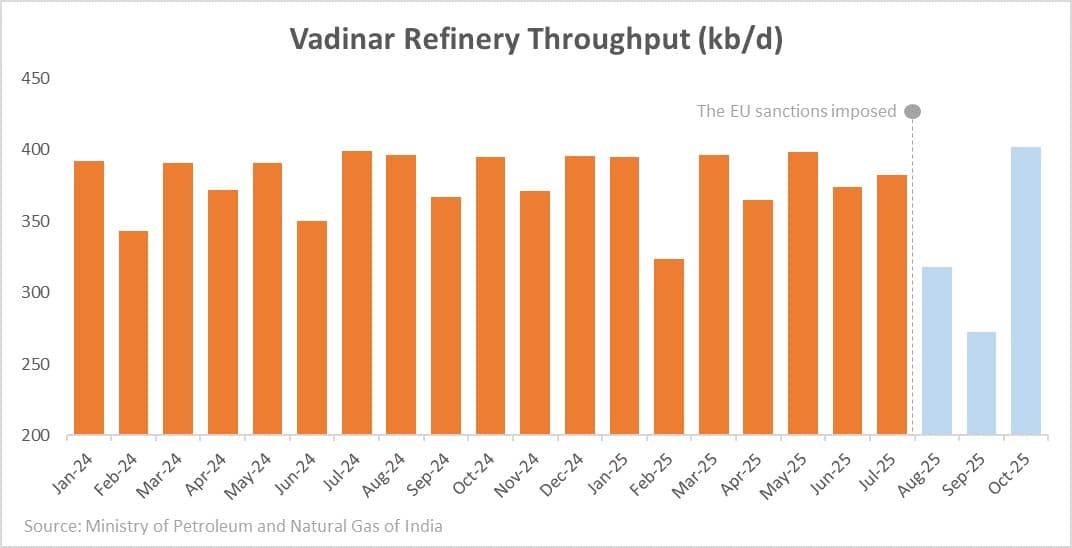
  • Crude intake at Nayara’s 400,000-b/d Vadinar refinery plunged to just 240,000 b/d after EU and US sanctions hit in August, but rebounded to 420,000 b/d in November.

  • Despite the U.S. sanctions wind-down deadline on 21 November, two Aframax tankers from Rosneft’s Ust-Luga terminal arrived at Vadinar since.

  • With traditional outlets constrained, Nayara lifted domestic sales to almost 100,000 b/d in October, and opened new export markets from Brazil and Turkey to Sudan.


Nayara Energy has spent the past four months navigating one of the most complicated sanction environments in its history, yet instead of retreating, the Rosneft-backed refiner is quietly re-wiring its entire crude-sourcing and fuel-export strategy. After EU sanctions in July forced its 400,000 b/d Vadinar refinery to slash throughput, and October’s US sanctions on Rosneft added further pressure, Nayara’s crude imports briefly collapsed to just 240,000 b/d, sourced from exclusively Russian suppliers. But by October and November, the company had staged a dramatic rebound, pushing intake back up to 390,000 b/d and then 420,000 b/d – exceeding even the refinery’s nominal nameplate capacity. By simultaneously deepening domestic sales and cultivating new buyers from Brazil to Sudan, Nayara appears to have found a way to turn sanctions risk into a trading opportunity, even as the official US sanctions wind-down deadline passed on 21 November and tankers from Russia’s Baltic Sea ports continued to dock at Vadinar undeterred.

After the EU imposed sanctions on Nayara Energy’s Vadinar refinery in July (citing its association with Russian crude supplied via Rosneft, which holds a 49% stake), the company struggled to keep the refinery running at normal rates. The measures triggered logistical disruptions, pushed away most vessel owners, and forced Nayara to scale back utilisation rates sharply. As Iraqi and Saudi suppliers refused to supply contracted volumes to Nayara, crude imports into Vadinar in August sank to 240,000 b/d, the lowest level in months, marking the first time the refinery was entirely reliant on Russian grades.

Related: Oil Prices Sink as Ukraine Agrees to Peace Deal

On the face of it, the pressure on Nayara was supposed to deepen when Washington sanctioned Rosneft in October. However, by late October, it became clear that Vadinar is bouncing back to strength rather than faltering. With its 400,000 b/d nameplate capacity as a benchmark, Nayara ramped up intake of Russian crude to 390,000 b/d that month, and then lifted imports further to 420,000 b/d in November to date – effectively running the plant at 105% capacity.

The official US sanctions wind-down period expired on 21 November, before which all buyers of Rosneft and Lukoil crude or products were required to conclude transactions. Yet Vadinar’s behavior suggested no intention of slowing down. Two Aframax tankers, both loaded at Russia’s Ust-Luga terminal for Rosneft, arrived at Vadinar on 22 and 24 November, indicating that sanctions alone were insufficient to interrupt flows.

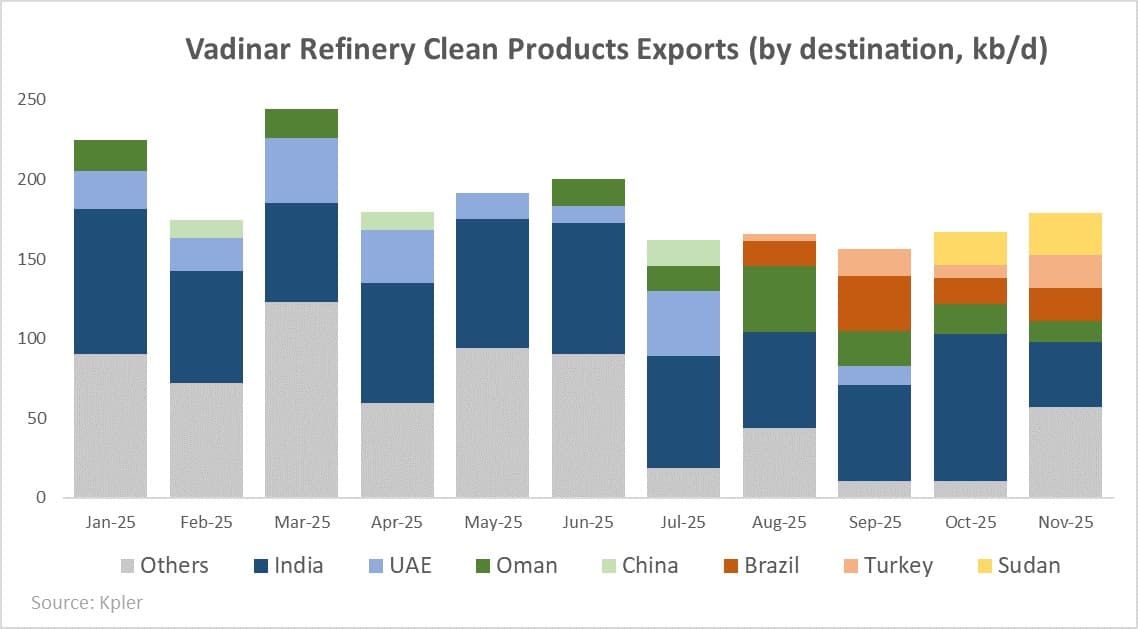
In August, the core question facing Nayara was no longer how to buy Russian crude, but where to sell its refined products. The company’s sharp decline in throughput and exports that month was partly the result of blocked outlets, as sanctions sealed off the Europen market altogether. The first, most reliable fallback was India itself: Nayara’s network of 6,500 retail stations (with another 400 outlets planned) offered an available channel to absorb its gasoline and diesel.

Then came an unexpected lifeline. In October, state-run Hindustan Petroleum Corporation (HPCL) reported operational problems at its Mumbai refinery after processing domestic crude with unusually high salt and organic chloride content, which led to corrosion in downstream units. Nayara stepped into the gap. Shipments of gasoline and gasoil to HPCL surged, helping lift domestic deliveries to around 90,000 b/d in October, according to Kpler.

With domestic channels strengthened, Nayara moved to diversify export outlets beyond India. Roughly a third of its November clean-products cargoes were directed to ship-to-ship hubs such as Fujairah (UAE) and Sohar (Oman) – a strategy commonly used to obscure final destinations in sensitive trades.

But the most striking change came from the emergence of new customers, notably Brazil and Turkey – countries that did not appear in Nayara’s client list over the past three years. In November so far, Nayara exported 21,000 b/d of clean products to Brazil and another 21,000 b/d to Turkey. These flows almost certainly reflect disruptions in Russian diesel exports after intensified Ukrainian drone strikes on Russian refineries, coupled with rising compliance risks for traders buying directly from Russia. Because Vadinar has processed exclusively Russian crude since August, its products offer these markets a politically safer, operationally simpler way to access the same molecules.

Yet the most consequential addition to Nayara’s portfolio may be Sudan. Since October, the Vadinar terminal has dispatched four cargoes totalling 1.3 million barrels of clean products to Sudanese ports. With Sudan engulfed in civil war and its only major refinery – the 100,000 b/d Khartoum (Al-Jaili) facility – destroyed in the summer of 2023, the country is entirely dependent on imports. Potential discounts on products refined from Russian oil make Vadinar an obvious supplier. Sudan, and other fragile markets across East Africa, have little incentive to observe Western sanctions, making them ideal long-term buyers for Nayara’s output.

Still, securing crude supplies might become increasingly challenging under full US sanctions. Nayara may attempt to insulate itself through smaller, opaque trading houses, using them as intermediaries to avoid purchasing directly from Rosneft.

Whether this workaround can be scaled is uncertain. But for now, Nayara Energy is demonstrating that a combination of discounted Russian crude, flexible logistics, opportunistic trading, and an expanding footprint in both domestic and sanctions-agnostic markets can keep one of India’s largest refineries running near full tilt – even as Western sanctions close in from both sides. Paradoxically, the pressure may be accelerating a broader shift: Western restrictions are pushing companies linked to Russian oil producers into new geographies, opening fresh trade routes, and supplying developing economies with cheaper fuel at a moment when they need it most. These developing markets gain more incentive to boost imports of discounted flows and give themselves a commercial edge, while many of the former Western buyers now find themselves managing the opposite outcome: higher prices, fewer sanction-free suppliers, and a tightening pool of accessible energy.

By Natalia Katona for Oilprice.com


U.S. Shale Starts to Crack Under $50–$60 Oil

  • U.S. shale producers are using new technologies to extract more oil from existing wells, even as rig counts fall and costs rise.

  • With oil trading near $55–60 per barrel, many producers—especially smaller independents—are struggling to maintain profitability.

  • Oilfield service activity is cooling, employment in the sector is declining, and local economies in the Permian are feeling the pinch.

Shale drillers are finding new and exciting ways to boost production in the Permian and elsewhere. This can make the industry more resilient to international price swings—but never fully resilient and never for very long. The pain from the prolonged price depression is beginning to bite in.

Back in October, Kpler warned that U.S. oil production could shed 700,000 barrels daily if international oil prices slid lower than $60 per barrel. The analytics firm cited drilled but uncompleted well data showing the inventory of these wells had shrunk by between 25% and 30% in the Bakken and the Eagle Ford basins since the start of 2025.

Now, Reuters is reporting that the Permian is also feeling the pinch, with towns dependent on the oil industry starting to suffer the economic consequences of a downturn. The publication interviewed industry executives and local business owners to find that the key industry of the region is retrenching, spending less, and idling rigs.

Everyone has, of course, heard about the layoffs in Big Oil majors. The majors themselves have framed it as part of a long-term strategy to become leaner. Reuters suggests that they are having trouble maintaining the workforce, citing Bureau of Labor Statistics data showing that overall employment in the U.S. oil industry declined by 4,000 between January and July this year. Over the same period, however, production of crude oil has continued to grow, creating a perhaps confusing picture.

Related: India’s Nayara Energy Defies Sanctions With Record Russian Intake

The confusion goes away once focus shifts to those drilling efficiency gains that Bloomberg’s Javier Blas detailed earlier this month, noting supermajors’ race to lower drilling costs in the shale patch by researching cheaper proppants, for instance, and surfactants that help the oil flow more easily from the rock. The focus, he wrote, citing the industry, was to maximize recovery rates from existing wells.

“The best place to find oil is where you already know you've got oil,” Chevron’s chief executive, Mike Wirth, told Blas in an interview. “We know where the oil is. If we left 90% of the oil behind, it would be the first time in history that we didn't figure out how to do it.”

So, that’s one reason drilling rigs are down—while production keeps climbing higher—but it is not the only reason, based on what Reuters reports from the Permian. “We've had dialogue with the administration, letting them know that oil prices in the low to mid $50s make returns increasingly difficult for investment. This will eventually make current production levels unsustainable,” the chief executive of Admiral Permian Resources told Reuters.

Meanwhile, as international prices decline, the cost of drilling a well has gone up by between 5% and 10% from last year, according to the boss of Latigo Petroleum. “The economics are completely upside down from where they were just in January. It's more expensive to drill a well and you're getting 20% less for your oil,” Kirk Edwards told Reuters.

Ironically, the pervasive perception of unrelenting production growth in the U.S. shale patch has become the chief reason for bearish oil price predictions, expecting supply to exceed demand for oil for a prolonged period of time. Analysts regularly cite record-breaking output numbers as evidence that oil supply keeps growing despite price movements, suggesting that U.S. shale is more resilient than what the industry itself says it is.

“Investment returns at $55 to $60 per barrel are not what they were at the same price five years ago because the best wells have been drilled,” Admiral Permian Resources’ CEO told Reuters, which also noted a slowdown in oilfield service activity as evidence of a broader downturn in the shale industry—even if the number of barrels per day produced by that industry are still climbing.

In fairness, that trend emerged earlier in the year as reported by the biggest oilfield service providers—every one of them reported slower business in North America and stronger business abroad. The early signs, therefore, were out there for everyone to see, but instead, analysts doubled down on booming shale output, driving a global supply overhang, which kept the pressure on prices high.

“Although majors and large independents can operate below $50/bbl, this price level would enforce cautious activity for most,” Kpler analyst Johannes Raubal wrote in October. “A severe, sustained $50/bbl scenario—a view held by some agencies and banks like Goldman Sachs—would cripple US crude supply,” he warned. Yet here’s JP Morgan, predicting continued growth in U.S. shale oil production, leading to a further slump in oil prices, potentially as low as $30 per barrel.

The trends in the U.S. shale industry suggest it will not come to that because production would stop growing long before that. And the first time the Energy Information Administration reports a negative change in output, prices will rebound like there was never a danger of a supply overhang, let alone one so substantial that it could push Brent crude below $40.

By Irina Slav for Oilprice.com


U.S. LNG Exports Set to Surge 40% as Europe Buys Record Volumes

Exports of liquefied natural gas from the United States are on track to book a 40% annual increase this month, hitting 10.7 million tons, projections from Kpler have shown, as cited by Bloomberg.

An ample supply of liquefied gas has already pushed natural gas prices down in Europe, with prices reaching the lowest in over a year earlier this week, even as the weather gets colder as winter advances. According to Bloomberg, prices could fall further in the coming months, even though winter is peak demand season, all thanks to the abundance of U.S. liquefied gas.

The United States turned into the world’s largest exporter of LNG in a matter of years as energy companies raced to build new liquefaction trains along the Gulf Coast in response to the surge in demand for a lower-emission alternative to coal. Last month, the U.S. became the first country to export 10 million tons of liquefied gas in a single month, enjoying solid demand from Europe, which earlier this year signed a commitment to buy significant volumes of both LNG and oil to get President Trump to lower tariffs.

Earlier this month, Reuters reported that the United States had become the first country to export 10 million tons of liquefied natural gas in a single month. Citing data from LSEG, the publication reported that U.S. LNG exports in October had hit 10.1 million tons, of which 6.9 million tons went to Europe, and another 1.96 million tons went to Asia. Europe accounted for 69% of total U.S. exports of liquefied gas, cementing the continent’s top spot among U.S. LNG clients.

As for the source of the LNG, two companies accounted for over two-thirds of the total exports: Cheniere Energy and Venture Global. The two sold 72% of the 10.1 million tons of LNG that the country exported last month.

By Irina Slav for Oilprice.com


Suriname’s Long-Awaited Oil Boom Finally Takes Shape

  • TotalEnergies and APA approved a $10.5B development plan for the GranMorgu project in Block 58, targeting 220,000 bpd starting in 2028.

  • Petronas is expanding its position with major gas and oil finds in Block 52, with first gas from Sloanea expected by 2030.

  • Suriname hopes these developments will revive its battered economy, though timelines and geological risks mean a Guyana-style boom is not guaranteed.


After the discovery of oil in Suriname’s territorial waters in January 2020, the government in the capital Paramaribo pitched its hopes on an oil boom matching that of neighboring Guyana. You see, decades of economic mismanagement, excessive spending, and corruption wreaked havoc on the former Dutch colony’s economy. Over the last decade, gross domestic product (GDP) collapsed, plunging by over 10%, hitting Suriname’s population of over 600,000 particularly hard. This exploded in violence during February 2023, with protestors storming parliament, placing greater pressure on the government to find a solution.

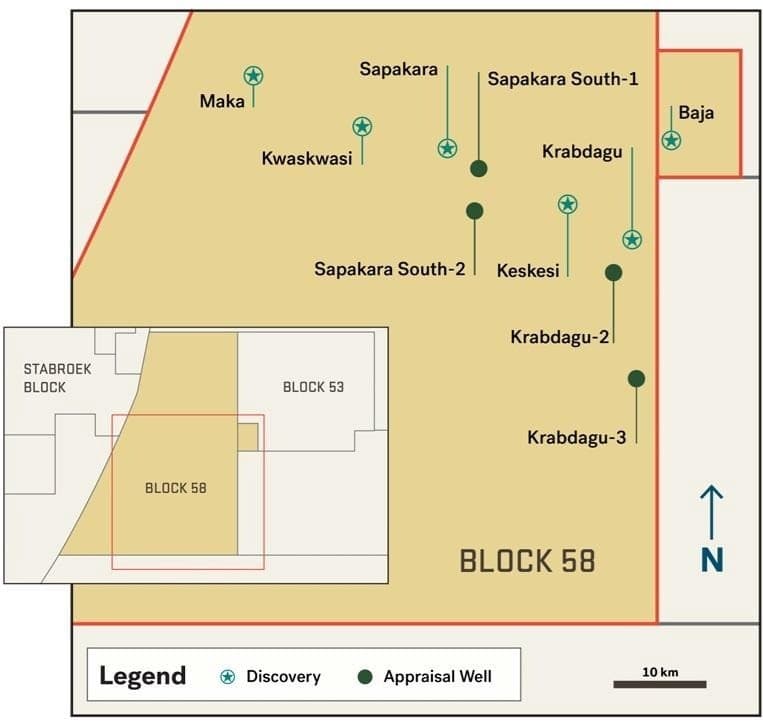
As Guyana’s oil boom gained momentum, with production commencing in December 2019, partners TotalEnergies and APA Corporation announced in January 2020 that they had made a significant oil discovery in Suriname’s territorial waters. This occurred with the Maka Central-1 wildcat well in Block 58 offshore Suriname. The well, which was drilled to 20,670 feet (6,300 meters), found 240 feet (73 meters) of oil pay and 164 feet (50 meters) of light oil and gas condensate pay. This was followed by four additional major discoveries in Block 58, where TotalEnergies is the operator holding a 50% working interest with the remainder held by APA Corporation. 

Suriname
Source: APA Corporation Investor Relations.

While there was considerable conjecture about when those discoveries would be developed, President Chan Santokhi was claiming as early as 2021 that Suriname would see first oil from Block 58 by as early as 2025. This proved to be wishful thinking on the part of Suriname’s former president. Not only does it typically take a decade or even more to develop major offshore petroleum projects, with a global average of seven to 10 years, but by 2022, TotalEnergies was increasingly concerned by a swathe of poor drilling results.

As a result, the French supermajor and APA by 2022 elected to delay the multi-billion-dollar final investment decision (FID) for Block 58. The main drivers of that decision were conflicting drilling and seismic results, along with the high gas-to-oil ratio of earlier discoveries. This delayed the development of Block 58, which is believed to contain up to 6.5 billion barrels of oil. That unforeseen development derailed Paramaribo’s planned economic recovery driven by oil extraction. During October 2024, TotalEnergies announced the final investment decision for Block 58, approving a $10.5 billion project to develop the Sapakara and Krabdagu oil discoveries.

The development called GranMorgu is targeting an oil reservoir estimated to contain more than 750 million barrels of recoverable oil reserves. The facility, which includes an all-electric floating production storage and offloading (FPSO) vessel with the capability to retain all gas produced from lifting operations, will be commissioned in 2028. The GranMorgu development will have a nameplate capacity to lift 220,000 barrels of crude oil daily. Suriname’s national oil company (NOC) Staatsolie exercised the right to acquire a 20% interest in the operation by raising the required funds through a combination of issuing bonds, cash reserves, and a syndicated loan.

When GranMorgu commences operations, it will make a significant contribution to Suriname’s beaten-down economy, although it may not be the economic silver bullet anticipated by Paramaribo. There is significant hydrocarbon potential in offshore Suriname, indicating the country is ideally positioned to enjoy a massive oil boom. Block 58 lies contiguous to the prolific Stabroek Block in offshore Guyana, where Exxon discovered at least 11 billion barrels of oil. There is considerable speculation that the abundant petroleum fairway contained in that oil block continues into Block 58. If this is the case, it will support further major oil discoveries and the development of facilities, which will boost production.

TotalEnergies, during June 2025, signed an agreement securing a 25% working interest in Block 53 offshore Suriname. The remaining 45% is held by APA, which is the operator, and Malaysia’s NOC Petronas with 30%. It is in this block that APA made the Baja-1 discovery in August 2022. The wildcat well which was drilled to 17,356 feet (5,290 meters), contains 112 feet (34 meters) of net oil pay. The petroleum system discovered forms part of the same structure as the Krabdagu discovery in Block 58. This points to the discovery possessing considerable potential, although APA returned most of Block 53, except for the area around the Baja-1 well to Staatsolie after the exploration period expired during December 2023.

Petronas is also enjoying success with its offshore hydrocarbon acreage in Suriname, where it holds interests in Blocks 9, 10, 48, 52, 53, 63, 64, and 66. It is 1.2-million-acre Block 52 offshore Suriname, where Petronas is the operator and controls 80% with 20% held by Staatsolie, which holds the most near-term potential. Exxon initially held a 50% working interest in the hydrocarbon acreage but chose to exit, transferring its share to Petronas, giving it a 100% stake, although Suriname’s NOC exercised its right to acquire 20% of the block.

During November 2025, Petronas declared the commerciality of the Sloanea natural gas field in Block 52. This was preceded by Staatsolie, in its role as Suriname’s hydrocarbon regulator, approving the development of a natural gas field for the Sloanea-1 discovery. The FID for the Sloanea-1 discovery is expected during the second half of 2026, with first gas slated for 2030. While neither party has yet to release information to quantify the volume of natural gas targeted, it is believed to be quite a substantial find.

Petronas also made two oil discoveries in Block 52 with the Roystonea-1 and Fusaea-1 wildcat wells during 2023 and 2024, respectively. Those petroleum discoveries are yet to be fully evaluated, but Block 52 is estimated to contain at least 500 million barrels of crude oil. Petronas also signed a production sharing contract (PSC) with Staatsolie for Block 66 in June 2025. This agreement awarded an 80% working interest to Malaysia’s NOC, with the remaining 20% held by a subsidiary of Staatsolie. By signing the PSC, Petronas, which is the operator, agreed to drill two exploration wells in the 837,687-acre block.

By Matthew Smith for Oilprice.com


India approves domestic rare earth magnet scheme

India approves domestic rare earth magnet scheme
/ Peggy Greb, US Department of Agriculture - PD
By bno Chennai Office November 28, 2025

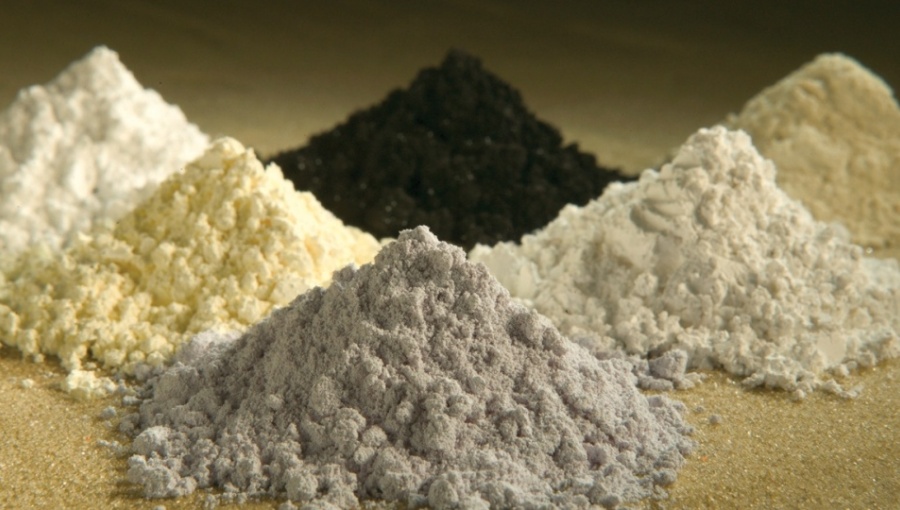
India has authorised final approval for a programme to establish an integrated manufacturing base for sintered rare earth permanent magnets. The plan commits INR72.8bn ($815mn) to create facilities capable of producing 6000 metric tonnes per annum of magnets, a move designed to reduce reliance on foreign suppliers and position the country more competitively in critical materials.

Rare earth permanent magnets are indispensable for electric vehicles, renewable power technologies, advanced electronics, aerospace systems and defence platforms. The initiative will support the entire production chain, from converting rare earth oxides into metals, then into alloys, and finally finished magnets suitable for industrial use. The government intends to select as many as five beneficiaries through a global bidding process, with each firm able to secure up to 1200 metric tonnes per annum of manufacturing capacity.

According to a press release by India’s Press Information Bureau, the scheme will run for seven years from the date of award, comprising a two-year period for facility installation followed by five years of incentive payments. New capacity is expected to support India’s plans to meet surging demand from electric mobility, consumer electronics and renewable energy sectors, where magnet consumption is projected to double by 2030 relative to 2025.

Until now the country has imported the bulk of its requirement. Although India hosts sizeable rare earth resources, the country has long faced a strategic gap in converting these minerals into high grade magnets. This vulnerability stems from limited domestic processing, dependence on imported intermediate materials and the near-monopoly held by foreign producers in downstream rare Earth technologies.

Domestic industries often contend with price volatility triggered by geopolitical tensions, export restrictions or supply disruptions from major suppliers. For electric vehicle(EV) manufacturers, this creates uncertainty around motor design and long-term sourcing arrangements, while renewable-energy developers face risks when procuring magnets for wind-turbine generators. Defence programmes that rely on precision engineered components also remain exposed to delays if overseas shipments are interrupted.

Furthermore, importing such crucial components for strategic systems can introduce the risk of sabotage at a very early stage in the arsenal that the defence systems will make up, especially if the supplier is an adversary as is the case for India with China being its main supplier for rare earth magnets.

India’s refining and metallisation capacity has historically lagged due to high capital requirements, environmental compliance costs and the absence of integrated processing infrastructure. The high capital investments and regulatory burden has deferred several sources of green field investment and pretty much kept the status quo intact. As a result, manufacturers typically rely on external suppliers for alloys and finished magnets, constraining value addition within the domestic economy. By establishing an integrated ecosystem, the new initiative aims to curb these vulnerabilities, reduce exposure to concentrated supply chains and build resilience against global market shocks.

However, money may not always be the answer as China can restrict the supply of processing equipment the supply and value chain for which it also controls globally, as was the case until end of October 2025 when some Indian companies were granted licenses to import rare earths and processing equipment as well as finished magnets which avoided the supply chain disruption for those companies at least temporarily.