Tuesday, December 02, 2025


Beijing and Tokyo trade barbs after maritime standoff

Beijing and Tokyo trade barbs after maritime standoff
/ Japan Coast Guard
By Mark Buckton - Taipei December 2, 2025

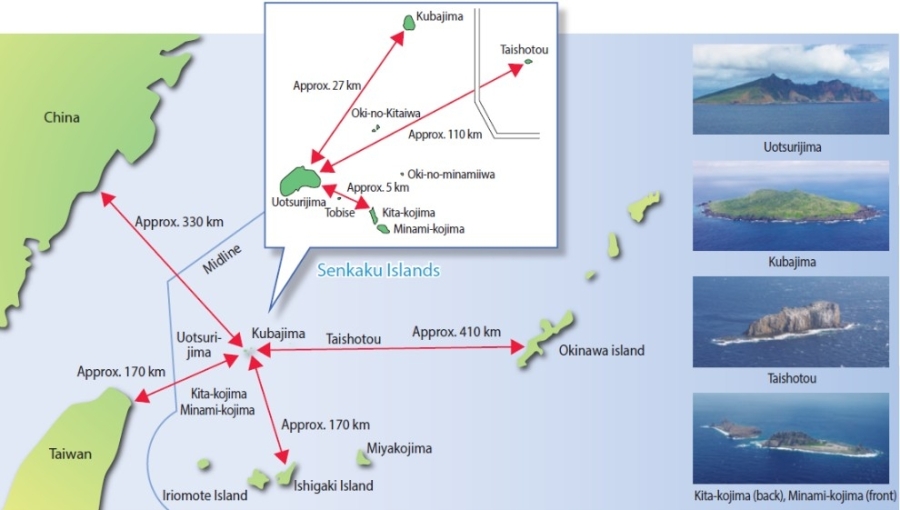
Chinese and Japanese vessels clashed rhetorically and at sea on December 2 in the latest flare-up around the Senkaku Islands (also known as Diaoyu Islands in China and Daioyuyai Islands in Taiwan), underscoring a deteriorating diplomatic climate between Asia’s two largest economies, local Japanese sources and the BBC have said.

China’s coast guard accused a Japanese fishing boat of entering what it described as Chinese territorial waters around the uninhabited island chain in the East China Sea. Its officers, according to state media, moved in to “warn off” the vessel and carried out what Beijing termed “necessary law-enforcement measures”. The islands are, however, Japan held and Tokyo has long rejected China’s territorial claim and a lesser claim by a Taiwanese county in the east of the self-governing island nation.

According to the BBC, Tokyo’s version diverged sharply. Japan’s coast guard said two Chinese vessels crossed into its territorial waters in the early hours of December 2, prompting a patrol ship to intervene and shield the fishing boat. The Japanese side said it ordered the Chinese vessels to leave and monitored the situation until they withdrew several hours later.

The latest run-in comes as relations sink to a new low following remarks by new Japanese prime minister, Sanae Takaichi, who told parliament last month that Japan could consider a military response if China launched an attack on Taiwan.

That comment provoked a swift backlash from Beijing, which regards the island as part of its territory. The friction has since spilled into broader political rhetoric and is increasingly shaping interactions between the two countries’ citizens.

The disputed island chain sits roughly 170km north-east of Taiwan and has been a persistent flashpoint. Although China and Japan agreed in principle in 2008 to pursue joint resource development in parts of the East China Sea, that accord has largely withered amid rising strategic rivalry. As a result, over the past decade, Chinese incursions into waters around the islands have grown more frequent, testing Japan’s capacity and resolve to enforce its administrative control.


AI-generated image of Assad in Moscow exposed as fake as Kremlin stays silent

AI-generated image of Assad in Moscow exposed as fake as Kremlin stays silent
AI-generated image of Assad in Moscow exposed as fake as Kremlin stays silent / bne IntelliNews
By bnm Gulf bureau December 2, 2025

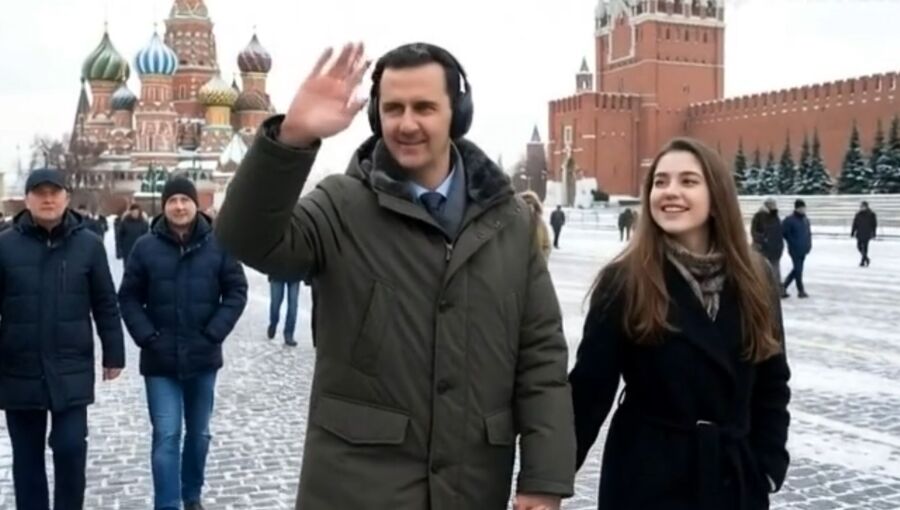
An image purportedly showing ousted Syrian President Bashar al-Assad walking in Moscow's Red Square with a woman circulated widely on social media before being revealed as artificially generated.

IntelliNews verified that the image was produced using generative artificial intelligence technology, with the video purportedly created on a system like Google’s updated AI software Nano Banana, which has taken the internet by storm in recent weeks.

Assad has not been seen publicly since fleeing to Russia after Syrian opposition forces seized control of Damascus on December 8, 2024, as reported by IntelliNews at the time.

The watermark "Mind Video AI" appeared on the right side of the image, identifying it as a product of an artificial intelligence content generation tool. Analysis of the viral image revealed multiple errors, including distorted building proportions in the background and irregularities in Assad's changing features, particularly the positioning of his hand holding a girl's hand who appeared alongside him in the photograph.

Technical examination using verification tools including Hive Moderation confirmed the image was AI-generated. Assad has made no public appearances since he departed from Syria nearly a year ago.

A statement attributed to him was published through the Syrian presidency's social media accounts, which remained under his former regime's control at the time.

Following the opposition takeover in Syria in December 2024, reports suggested Assad and his family found refuge in Moscow.

Russian Foreign Minister Sergey Lavrov previously said Assad's stay in Russia is purely for humanitarian reasons, adding that "Russia never abandons its friends."

New Syrian President Ahmad al-Sharaa met with Russian President Vladimir Putin for the first time since assuming power in Syria on October 15. The high-level talks, which lasted for more than two and a half hours, were held at the Kremlin on October 15. 

According to Syrian state's agency SANA, President al-Sharaa’s delegation sought strong guarantees from Moscow that remnants of the former regime's military forces would not be rearmed as part of efforts to rebuild Syria’s military apparatus.

The fake video emerged as the Kremlin confirmed it would not disclose any information regarding Assad's residence in Russia. Spokesman Dmitry Peskov said on December 1 that Moscow cannot provide details about the former Syrian leader's whereabouts.

When asked whether Assad had met President Vladimir Putin over the past year, Peskov replied: "No, we cannot provide any information on this matter."


Honduras presidential race deadlocked as Trump makes unsubstantiated fraud claims

Honduras presidential race deadlocked as Trump makes unsubstantiated fraud claims
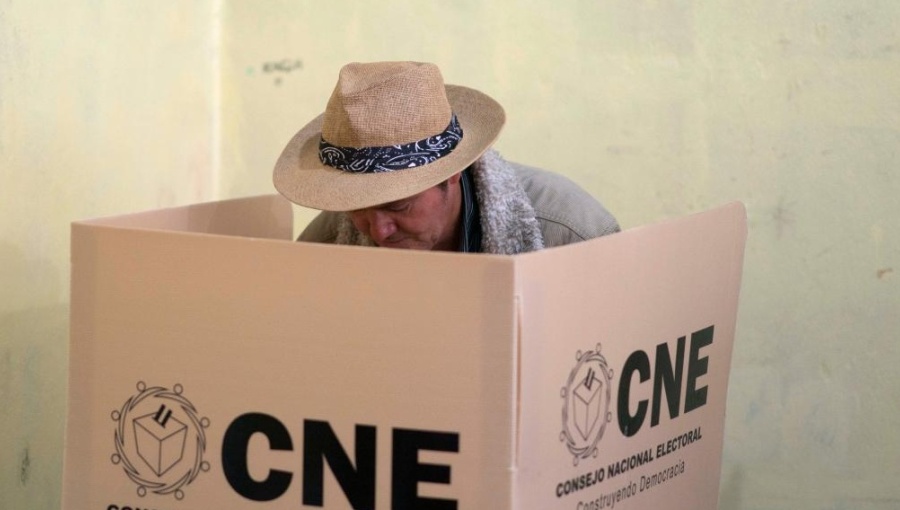
The electoral council (CNE) has 30 days to release final results from the November 30 election, though officials indicated results could be declared before Christmas if counting proceeds smoothly. / xinhua
By bnl editorial staff December 2, 2025

Honduras' presidential election remained deadlocked late on December 1 with two conservative candidates separated by just 515 votes, as election officials urged patience whilst they complete a hand count of ballots amid unfounded claims from US President Donald Trump of electoral irregularities.

With 57% of ballots tallied, Nasry Asfura of the National Party garnered 749,022 votes or 39.91%, narrowly ahead of Salvador Nasralla of the Liberal Party, who secured 748,507 votes or 39.89%, according to Honduras' National Electoral Council (CNE).

Rixi Moncada, the candidate of the ruling leftist LIBRE party backed by incumbent President Xiomara Castro, came in distant third with 19% of the vote, signalling what now appears like an inevitable rightward shift in the country.

Trump intervened in the Central American nation's election on December 1 night, claiming without evidence that Honduran officials had "abruptly stopped counting" votes and warning "there will be hell to pay" if results were changed. The president has publicly endorsed Asfura, threatened to cut off US funding if his pick did not win, and called Nasralla, a centre-right politician, a "borderline Communist."

However, CNE member Cossette López Osorio attributed the pause in preliminary results to a technical failure on the dissemination platform, not an intentional stoppage. She told CNN the Preliminary Electoral Results Transmission system was scheduled to suspend temporarily at 6:00 AM for processing before resuming at 9:00 AM.

"There was no decision made in this regard. It is not an express decision of the National Electoral Council; it is literally a technical failure on the dissemination platform," López Osorio said.

According to the New York Times, the country's electoral process involves initial digital reporting from polling stations, followed by manual verification of all votes. Complete digital transmission is hindered by unreliable internet access in some regions.

CNE president Ana Paola Hall described the race as a "technical tie" and said officials had finished reporting the first tranche of digitally transmitted votes in the afternoon, nearly nine hours before Trump's social media post.

"In the face of this technical tie, we must remain calm, have patience, and wait for the CNE to finish counting," Hall wrote online, praising the nation for its peaceful response.

More than six million Hondurans were registered to vote for president, 298 mayors and 128 members of the National Congress.

International election observers said the vote had few issues and pledged to continue monitoring the count. Despite the razor-thin margin, the country remained peaceful, with merchants starting to take down boards they had placed over shop windows as a precaution.

The calm stood in contrast to concerns ahead of the vote that the election could be contested after candidates repeatedly accused one another of planning to rig results. Those worries had raised fears Honduras could see a repeat of unrest following the 2017 election, when a similar delay in vote counting sparked disputed results and destructive protests.

López Osorio said approximately 43% of tally sheets remained to be processed due to the technical incident, whilst the remaining 57% had been scanned and transmitted normally. She emphasised that physical backups of each ballot exist for manual verification.

The CNE has 30 days to release final results from the November 30 election, though officials indicated results could be declared before Christmas if counting proceeds smoothly.

In a separate development, former Honduran President Juan Orlando Hernández was released on December 1 from a federal prison in Pennsylvania after receiving a full pardon from Trump. Hernández had been serving a 45-year sentence on drug trafficking and weapons charges following his conviction in March 2024.

The controversial former leader, who led Honduras from 2014 to 2022, belongs to Asfura's National Party, but the candidate tipped for victory has denied links to the controversial former leader. "The party is not responsible for his personal actions," Asfura said.

Trump announced last week he would pardon Hernández, claiming the Biden administration had "set a trap" for the former president.

Honduras conducts elections without a run-off, meaning the candidate with the largest share of votes secures the presidency.
 

South Africa charges international shipping lines with alleged cartel conduct on key China trade routes

South Africa charges international shipping lines with alleged cartel conduct on key China trade routes
/ bne IntelliNews
By bne IntelliNews December 2, 2025

South Africa’s Competition Commission has referred a case to the Competition Tribunal alleging that a group of international shipping lines colluded to fix freight rates on routes serving the country’s main ports. The Commission said it uncovered evidence of long-running coordination affecting automotive and containerised cargo.

The Commission said eight cargo shipping companies were involved in a scheme that charged the same rate increases on routes between Shanghai, Ningbo, and Shekou in China and Durban; between Durban and Hong Kong; and between Qingdao in China and Durban, from 2008 to 2018. It said routes between South Africa and West Africa were also affected.

Named in the case are Pacific International Lines South Africa, Mitsui O.S.K. Lines South Africa (TSE:9104), Evergreen Agency South Africa (TWSE:2603), COSCO Shipping Lines South Africa (SSE:601919; HKEX:1919), K Line Shipping South Africa (TSE:9107) and CMA CGM Shipping Agencies South Africa.

Investigators claim the carriers engaged in cartel conduct prohibited under the Competition Act, including alleged coordination of rates, surcharges and tender responses on roll-on/roll-off (RoRo) and certain container trades. The Commission said the practices occurred largely outside South Africa but had direct effects on domestic import and export lanes.

“The dismantling of the cartel will reduce the price of goods imported to South Africa for the benefit of consumers and will also reduce the costs of exports out of South Africa, which will, in turn, render the South African exports competitive in the world markets,” said Commissioner Doris Tshepe of the competition watchdog.

The alleged behaviour is said to date back several years, though the Commission did not publicly disclose the full timeline. Some carriers are reported to have approached authorities under the leniency programme, which allows reduced penalties in exchange for cooperation. The Commission noted that no findings of liability have yet been made.

The case mirrors international enforcement actions. Regulators in the EU, US, Japan and South Korea have previously fined RoRo carriers for price-fixing in vehicle-transport markets. South Africa’s referral covers routes used for automotive exports and manufactured imports through Durban, Gqeberha and East London.

South Africa’s automotive industry, responsible for about 14% of national manufacturing output, relies heavily on RoRo shipping for exports to Europe and Asia. The Commission said any artificial inflation in shipping costs would undermine the competitiveness of local producers, though it did not quantify potential impacts.

The referral comes as South Africa undertakes a broader reform of the freight logistics system. Port congestion, rail bottlenecks and declining performance at state operator Transnet have raised logistics costs, prompting a government-led market inquiry into port, rail and road-freight efficiency.

The Tribunal will review the Commission’s evidence and determine whether penalties — potentially up to 10% of annual turnover for first-time cartel offences — are warranted. The implicated shipping lines have not publicly commented on the allegations.


Relentless dismantling of the public education service in Greece

Tuesday 2 December 2025, by Andreas Sartzekis


In his obsession with privatizing education, Prime Minister Mitsotakis is intensifying and diversifying attacks to dramatically reduce public services. The mobilization commemorating the massacre of the Polytechnic students on November 17, 1973, is a significant event.


Against a backdrop of insufficient budget, there is a lack of teachers everywhere, and many premises are not renovated and are dangerous: last week, a ceiling fell on students in Euboea.

Attacks of all kinds

For some time now, right-wing propaganda has been trying to hide the real responsibilities by launching a veritable national smear campaign against teachers, portraying them as lazy and uninterested in students!

This odious campaign is explained, among other things, by the fact that the profession has for several years refused a so-called evaluation procedure, which aims to exclude teachers who refuse to turn themselves into little soldiers executing orders.

Linked to this "deprofessionalization" project is the new high school programme: national exams every year, with rote learning and additional evening classes in small, expensive private tutoring centres…

Blatant repression

The repression has recently taken on a dimension reminiscent, for some, of the country’s darkest periods. Repression against teachers’ unions (around 2,500 administrative prosecutions!) and against student unions.

University surveillance, with certain presidents at the forefront, like that of the Polytechnic University of Athens: cameras, ban on displays (a student has just been sentenced to 14 months in prison for a pro-Palestinian slogan on a wall of the university).

And intense police violence against demonstrations by school-aged youth, such as recently where parents and their young children were tear-gassed in front of the Athens rectorate, where they were protesting against the common practice of merging classes.

At the Polytechnic again, the president called the police to evacuate a student general assembly in support of the mobilization against the 13-hour workday law! Result: fifteen students were arrested, and the cessation of all prosecutions is one of the main current demands.

And, as a symbol of this Trump-like policy, a plan to exclude "eternal students" is being prepared. "Eternals," meaning first and foremost students who also have a full-time job and often need additional years to complete their studies: 285,000 students could be victims of this unprecedented measure of social selection, which the student movement obviously rejects.

Mobilization against the dismantling of public services

Against this relentless dismantling of public services and against social selection, the battle is being organized: following the successful mobilization of the National Education system on November 6 in some forty cities, the commemoration of the massacre of the Polytechnic students on November 17, 1973, is an important step. Already, at the Polytechnic, there is a mass of people of of all ages amidst the union and political stands, in a resounding response to Mitsotakis and his henchmen!

November 20, 2025.

Translated by International Viewpoint from l’Anticapitaliste.


Attached documentsrelentless-dismantling-of-the-public-education-service-in_a9283.pdf (PDF - 905.4 KiB)
Extraction PDF [->article9283]

Greece
We denounce the arrest and prosecution of 15 students and demand their acquittal of all charges
The return to slavery will not pass in Greece!
Andreas Kloke (1953-2025)
Anti-racist festival in Athens a great success against a backdrop of state racism
Greece: anger in the streets
Public services
Free public transport in Ukraine
Trump Takes Food from the Poor Poor during Budget Crisis
Because it won’t be the last blackout: What energy model and distribution system for the ecological transition?
Education: Final Declaration of the III World Congress against Neoliberalism in Education
Are teachers the (new) proletarians?


Andreas Sartzekis is active in the Fourth International Programmatic Tendency, one of the two groups of the Greek section of the Fourth International.

International Viewpoint is published under the responsibility of the Bureau of the Fourth International. Signed articles do not necessarily reflect editorial policy. Articles can be reprinted with acknowledgement, and a live link if possible.


Urban blue spaces: Quietly supporting food, income and community


Research team led by Göttingen University studies benefits of foraging in UBS in Indian cities


University of Göttingen

Women collect small fish, snails and other aquatic foods from a drying wetland in eastern India. A glimpse into the everyday lives of urban household workers from a wetland in Kolkata on their way home. 

image: 

Women collect small fish, snails and other aquatic foods from a drying wetland in eastern India. A glimpse into the everyday lives of urban household workers from a wetland in Kolkata on their way home.

view more 

Credit: Sukanya Basu


The rivers, lakes and ponds in cities – urban blue spaces also known as UBS – are increasingly recognised for their ecological and social roles. However, their contributions to sustainable food systems remains understudied. For this reason, an international research team led by Göttingen and Kassel Universities examined the extent and benefits of foraging for food in blue spaces across four major Indian cities. The items collected included fish, crabs, clams and plants as well as berries, mushrooms and flowers. The researchers found that bodies of water in cities played a critical role in food security and social inclusion. The results were published in the journal Nature Cities.


The researchers carried out face-to-face surveys with 1,200 foragers in urban blue spaces across four major Indian cities: Bengaluru, Mumbai, Kochi and Kolkata. They categorised the foragers into three groups – “rare”, “occasional” and “frequent” – and investigated the extent, practices and benefits of foraging. They found that women, the elderly, and marginalized communities most frequently collected, shared, cooked, and sold food products. Access to home or community gardens strongly motivated “occasional” foragers. “Frequent” foragers emphasized benefits relating to nutrition, income, culture, and community. “Occasional” foragers appreciated benefits related to nature and culture. Many foragers, despite being engaged in paid work, used their harvests to feed their families and share or sell surplus food.


“Our findings challenge the conventional perspectives on urban food foraging,” explains Dr Sukanya Basu who carried out this research at Göttingen University and is now Assistant Professor at Azim Premji University, India. She adds: “Urban waterbodies – lakes, wetlands, rivers – are not just ecological assets, they are often overlooked, vital spaces that support nutrition, livelihoods, and wellbeing, especially for vulnerable communities. Despite pollution and long-term degradation, waterbodies in Indian cities continue to sustain livelihoods, food practices and community life. The future urban planning must move beyond restoring water quality alone and consider how blue spaces can also support sustainable food systems and social inclusion.”


In conclusion, the research adds the issue of food security to a growing body of evidence that links the quality of urban blue spaces to biodiversity, attractiveness, safety and infrastructure – all with positive health outcomes. Integrating blue spaces into urban planning would foster a transformation to sustainable landscapes, as well as support traditional practices and marginalized communities. “Since the 1950s, rapid urban development, pollution and industrialization has led to the deterioration of many rivers, lakes and channels in cities,” says Tobias Plieninger, Professor of Social-Ecological Interactions in Agricultural Systems at the Universities of Göttingen and Kassel. “Our findings show that urban blue spaces need to be recognized as precious assets in towns and cities”.


The study was funded by the German Research Foundation (DFG).


Original publication: Basu S et al “Widespread practices and sustainability benefits of foraging in urban blue spaces of India,” Nature Cities (2025). DoI: 10.1038/s44284-025-00337-4

Webpage: https://azimpremjiuniversity.edu.in/people/sukanya-basu


A woman selling freshly foraged greens on a Bengaluru street, connecting urban consumers with wild local foods.

Credit

Sukanya Basu