Monday, December 15, 2025

The Handover of Boric to the Next Government of Chile: Debunking Myths of “Blatant Theft” and Bankruptcy

Source: Pressenza

Amid electoral polarization, the most reactionary sectors of the traditional right and the far right accuse the government of Gabriel Boric of having “robbed blatantly,” leaving the country on the brink of bankruptcy due to irresponsible use of sovereign bonds, having built “nothing” in infrastructure, and carrying a debt “far removed from GDP” that mortgages the future. These claims, repeatedly echoed on social media and in opposition-aligned outlets, oversimplify complex realities and exaggerate figures to generate panic.

However, official data from the Ministry of Finance, DIPRES, and international bodies such as the OECD and the IMF show disciplined fiscal management: gross public debt at 43.2% of GDP by the end of 2025 (the smallest increase in 17 years), record execution of public investment, and stable sovereign ratings (A/A2). There is no imminent crisis or massive diversion of funds; social spending increased responsibly post-pandemic without compromising sustainability.

Now let us address the much-discussed sovereign bonds cited by far-right sectors. We will define them properly, and then explain with examples for general understanding. First, sovereign bonds are debt instruments issued by the government to finance itself—like a collective loan from investors (banks, funds) that is repaid with interest. They are not exclusive to infrastructure: they can be used for any public expenditure authorized by law, such as administrative salaries, social programs, or productive investment, always under fiscal rules such as Chile’s Structural Balance rule.

Technically, Chile issued bonds in UF (inflation-indexed units), dollars, and euros; for example, US$1.6 billion in January 2025 (a 5.65% bond maturing in 2037), within an adjusted annual plan. They are not a black-and-white matter of “paying bills” versus “infrastructure”: the budget law allocates funds by categories, and under Boric (2022–2025), 68.3% of capital investment was executed (a historical record), financed in part by these bonds. Imagine a wealthy neighbor (the government) borrowing 100 pesos (a bond) to fix the roof (infrastructure) AND pay the electricity bill (social spending); if they did only one, they would collapse anyway. Boric used bonds for both: the National Infrastructure Plan (22,000 projects, US$366 billion through 2055) and the PGU/pensions, without bankruptcy because tax revenues grew by 7.5%.

Still complex? Let me revisit the neighbor example based on sovereign bonds for investment. This is how it works in real life: imagine your wealthy neighbor (the Chilean government) needs money to repair the house (infrastructure) and pay bills (social spending). They ask you to lend 100 pesos via a piece of paper (a sovereign bond), promising to return 105 in one year. You buy it in the primary auction; if you want to sell it earlier, you do so in the secondary market (like a stock exchange for shares). Boric issued bonds for all purposes: part went to real works (68% record execution, not zero), and to social spending without bankruptcy because tax revenues grew by 7.5%. Do not panic: opponents say “extremely indebted” or “built nothing,” but figures show fiscal control (deficit falling to 1.1%) and works underway. It is like the neighbor who fixed the roof and paid the electricity bill without incurring reckless debt.

At the start of the term (2022), Boric inherited a country with debt at 36% of GDP post-COVID; issuances increased moderately (around US$30 billion net over four years), but investment execution moved from low levels (2022–2023, due to inheritance and the pandemic) to record levels (91% identified in 2025). Claims that “nothing was built” ignore Ministry of Public Works projects such as the Chacao Bridge or the Biobío portfolio (1,890 projects, US$15 billion). Using the neighbor analogy: first borrowed modestly for emergencies (post-uprising social spending), then expanded to remodel the house (infrastructure in 2025), paying low interest (5.32% on a 10-year bond) thanks to international confidence in Chile. Analysis: not ideal (GDP growth around 2%), but controlled, not “theft.”

Evolution: 2022–2023 prioritized current spending (mainly health and subsidies) due to the crisis inherited from the Piñera government, raising debt to 39%; 2024–2025 shifted fully to investment (MOP +32% execution by May 2025), cutting 14 social programs for fiscal discipline. Bonds did not “cause bankruptcy”: amortizations are covered, and the deficit is declining to 1.1% of GDP in 2026. Returning to the neighbor analogy: initially borrowed for food (social), later for a garage (infrastructure); today sells old assets to pay, without selling the house. The opposition deliberately exaggerates by comparing with pre-pandemic levels, forgetting the global shock. The government of Gabriel Boric has acted financially responsibly within the global and cyclical context.

The thesis is supported by facts: Chile is not bankrupt nor outside norms. A debt of 43.2% of GDP is low compared to the OECD average (86%; the United States maintains debt at 108% of GDP, and Japan around 200%); in Latin America, Chile leads in sustainability (Peru 32%, Chile 43%, Ecuador 53%; versus Brazil 90% and Argentina 77%). Stable ratings prevent high interest rates; the IMF itself projects a downward path after 2027. “Blatant theft” has no basis: DIPRES audits confirm legal execution without massive diversions. The neighbor did not go bankrupt: borrowed responsibly, built, and pays.

Boric hands over the country at the end of 2025 with gross debt of US$148 billion (43.2% of projected GDP), a net financial position of -39%, and a structural deficit on a path to zero (target 2029). Compared with the OECD, this is very low relative to peer countries with similar GDPs (Spain 110%, Italy 140%). In Latin America, Chile ranks among the two lowest (Peru, Chile), below Brazil, Mexico, and Argentina, the region’s giants. As Chilean citizens vote today for the next government in the runoff, they can do so calmly: they inherit fiscal stability, long-term infrastructure plans, and market confidence—not a ticking bomb.Email

Claudia Aranda is a journalist in Pressenza's Chile team.

Myanmar’s Sham Elections, Civil Disobedience Movement, and Government of National Unity

Source: Pressenza

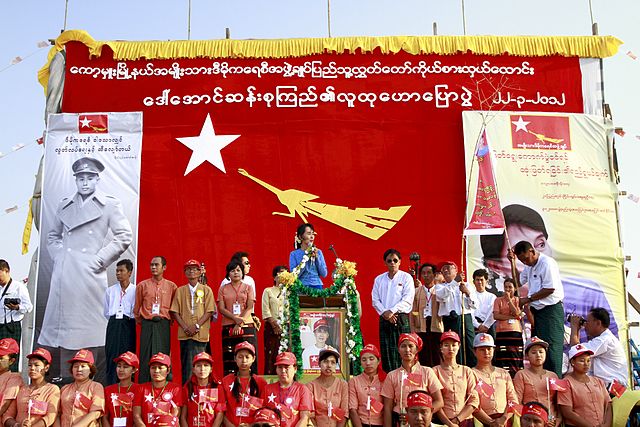
On December 29, elections will begin in Myanmar – the Burmese call them sham elections —which will be held until January 11, 2026, with a subsequent phase. Meanwhile, the junta’s army has been heavily bombing villages in the areas occupied by the Resistance for months, attempting to reclaim lost territory and gain a broader electoral base. According to the Burmese magazine Mizzima, the elections have been heavily promoted by China, which is pushing for international recognition of the junta; to this end, it will send observers to monitor the elections alongside Belarus and Russia. One wonders how these countries, which have never held democratic elections, can have observers experienced in democratic elections. They are not the only ones standing by the military junta; India is also actively supporting Myanmar’s elections by sending infrastructure, polling stations, and other resources, including observers to monitor the proceedings.

The elections have been called by the same military junta that seized power on February 1, 2021, ending the decade-long democratic experiment with the party led by Aung San Suu Kyi. In the last elections in November 2020, the party had garnered 80% of the vote, while the military junta’s party had garnered a humiliating 6%. Having imprisoned Aung San Suu Kyi, then seventy-six, and thrown away the key, the military junta launched a harsh crackdown, arresting political representatives of the Pro-Democracy Party, harshly repressing protests, and persecuting the hundreds of thousands of people who joined the vast civil disobedience movement, or CDM for short, that had swept not only the capital Yangon but also Myanmar’s major cities. At dawn on February 2nd, teachers, nurses, doctors, public administration employees, and students took to the streets, refusing to work and study in those facilities that no longer served the democratic government but the military junta. A shining example of mass civil disobedience.

Last September, I traveled to Thailand’s border with Myanmar to interview Burmese women exiles who were forced to leave their homeland and their lives. Staunch members of the Civil Disobedience Movement (CDM), they cannot return because they would be arrested. They live in exile and actively support the resistance fighting across the border. They recognize the National Unity Government (NUG), formed by parliamentarians elected in the last democratic elections of 2020, as their legitimate government. Their hope is to return the democratic government to Aung San Suu Kyi once the resistance has won.

K.S.M. was undoubtedly the most dramatic interview of all. Minister of Internal Affairs for the Lisu ethnic minority in Northern Shan State, where she hails, she was elected in the 2020 democratic elections. K.S.M. has not left the country and has decided to remain by her people’s side as minister of the NUG, the shadow government. She finds herself in the midst of war, with the military junta on one side and the ethnic minority’s troops fighting alongside the army for democracy on the other. Shan State is divided in two; the junta’s army controls the south, while the north is in the hands of the Resistance, allied with the Lisu. Ethnic minorities in Myanmar have been fighting military rule since 1962, when General Ne Win ended 14 years of democratic rule and their demand for a confederate state; their guerrilla forces have allied themselves with the Resistance in some areas.

The village where K.S.M. had to take refuge, had no water or electricity, and it was impossible to stock up on food because the junta’s army blocked the roads. She and the other villagers therefore find themselves in a dire situation: the junta’s planes bomb them every day, and the death toll in the village increases daily. K.S.M. is not the only NUG parliamentarian to find herself in a war zone. Half of the democratically elected government in 2020 is not in exile but is stationed inside Myanmar, and many of its ministers are living in hiding, sharing the fate of civilians targeted by the junta’s troops, who consider them its enemies. They share the fate of a population traumatized by the bombings: children unable to go to school and feeling even more abandoned, unable to process their trauma with their teachers and peers; adults unable to work, who have lost their jobs, who have lost their homes, who lack the money to rebuild their homes. K.S.M. is worried that if the military junta remains in power much longer, the country will sink deeper into trauma and poverty.

Even the democratic NUG government can’t do much for them. There’s no internet in their area, so contact with the NUG isn’t regular or up-to-date, and often it’s not even aware of their plight. The only way to communicate is through Starlink, an extremely expensive system, which she used to speak to me. K.S.M. must remain in Northern Shan State, and if the junta’s troops advance, she’ll be forced to abandon her village and take refuge in the forest with the surviving civilians. I ask her if there are any internally displaced person camps where they can take refuge, but she tells me it’s impossible to set them up because the bombings are constantly requiring civilians to move. She concluded our conversation by appealing to the international community to withdraw its support for “this terrorist military junta,” which is carrying out acts of war it shouldn’t, such as bombing villages, schools, and civilians, specifically aimed at killing children and women -does that remind you of anyone else?

Source: Mizzima News “Spring Revolution” 4 December 2025

The interview with K.S.M. is in “Resistenze. Da Gaza  all’Afghanistan al Myanmar,” by Fiorella Carollo, Multimage, November 2025.

Should the Left Criticize Zohran?

Source: Labor Politics

In late November, I argued that “way too much leftist discourse is polarized into denunciations vs. defenses of Zohran. A more useful & important debate is how to organize enough New Yorkers to win Zohran’s agenda — and to counteract the inevitable pressures on him from capital and the political establishment.”

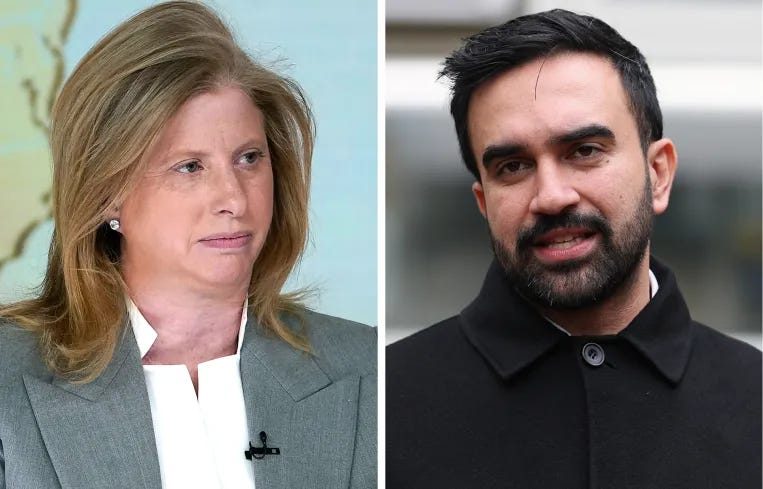
Others disagreed. A few days later, the pro-Palestine group Within Our Lifetime (WOL) posted a public sign-on statement announcing that Zohran’s decision to reappoint Jessica Tisch as NYPD Commissioner “betrays his campaign promises and aligns him with the NYPD’s legacy of policing, surveillance, and repression” and “effectively endorses the NYPD’s ongoing collaboration with the Israeli occupation.”

Tisch deserves our critique. She is a pro-Israel billionaire heiress who, as Ross Barkan notes, “sounds no different than a Long Island Republican when it comes to the topic of criminal justice.” But before digging into the debate over her reappointment, it’s useful to address an underlying strategic question: When and how should the Left criticize elected officials like Zohran?

Jessica Tisch and Zohran Mamdani

Criticism is Good. But What Kind?

On the general question of whether it’s necessary for socialists to criticize Left elected officials, history is full of examples of movements demobilizing and subordinating themselves to their friends in power. It would be a tragedy if that happened in New York City. Given the constraints and pressure he is under, and the overall weakness of working-class organization after fifty years of neoliberalism, Mayor Mamdani is bound to make many decisions the Left will disagree with; refusing on principle to ever voice criticisms or to take an independent stand would be a road to ruin for organizations like New York City Democratic Socialists of America (DSA) and the Left as a whole, demoralizing activists and undermining credibility with supporters.

But there’s no shortage of leftists who are generally willing to disagree with or diverge from our new mayor and other Left politicians. Many NYC-DSA leaders argued in favor of the chapter endorsing New York city council member Chi Osse’s bid to primary Hakeem Jeffries despite Mamdani’s vocal opposition. Most currents of DSA supported a public statement criticizing Rep. Alexandria Ocasio-Cortez’s vote against an amendment blocking funding for Israel’s Iron Dome. For my part, this week I wrote on Twitter: “Instead of asking for more donations, would love to see Zohran start asking supporters to join mass organizing fightbacks. Even the savviest governance and comms strategy can’t get far without more people power on the ground.”

We can visualize the Left’s approach on criticizing allied politicians as a spectrum with “openness to criticizing Left electeds” on one side, and “never criticize Left electeds” on the other.

Apart from those who end up muting their voices because they join an administration (or become staff of an elected official), most US radicals today are quite far on the “open to criticizing” edge of the spectrum. But contrary to what some very-online leftists seem to believe, there’s far more to effective socialist strategy than a willingness to boldly champion our ideas and to loudly voice criticisms of electeds who fall short. If that’s all it took, we’d have reached socialism long ago.

One frustrating thing about the debate over Tisch is that we were mostly talking past each other. While supporters of the WOL statement foregrounded the importance of criticizing politicians, critics like myself tried adding an additional dimension to the discussion: How much power do we currently have to confront the NYPD?

Pushing back against leftist elected officials is important. But effective Left strategy always should combine an openness to criticism of electeds with a rigorous power analysis. More specifically, the intensity of our criticism of Left politicians on a given issue should correlate with our degree of power.

Let me give two examples. Hopefully we can all agree that it would be unjustified to denounce Zohran for not taking steps to abolish capitalism in New York City (whatever that would mean) given that neither he nor we have the institutional mechanisms, popular mandate, or organized force to do so. That doesn’t mean Left organizations should stop advocating this goal. But it’s not a reasonable thing to fight Zohran on — unlike, say, if he were to renege on freezing the rent or pushing to tax the rich. Conversely, when I voiced a (low-intensity) criticism that Zohran could be doing more to plug his supporters into organizing fightbacks, that reflected an assessment not just that this was desirable, but that it was immediately feasible.

Instead of looking at the question of power narrowly as whether a politician has the technical ability to support a policy, we should employ a more multi-faceted power analysis to answer the following questions:

Power Analysis

  • How much does the public support that policy?
  • Do we currently have enough power to overcome concerted ruling class opposition to instituting that policy?
  • How strong are the mass organizations and movements supporting that policy? How strongly do they support it?
  • How much institutional power does the Left politician have to implement the policy?
  • Will passing the policy make it much harder to pass other urgent agenda points? Is the trade-off worth it?
  • Was that policy part of the Left politician’s campaign platform?
  • How strong would the popular backlash likely be if the Left politician supports that policy? Will it doom their re-election? How damaging would that be for Left organizations and movements?

My main issue with WOL’s statement, and its underlying strategy of relentless denunciation that is widely shared across the far left, is not that it takes a critical approach to Zohran’s bargains with ruling-class elites and institutions like the NYPD. It’s good for there to be pushback. But the real debate is over what kind of pushback. Unfortunately, the tactics used by these critics do not correspond to the amount of power we and our electeds currently have in relation to the NYPD.

This doesn’t mean giving up the fight. There are many ways to explicitly or implicitly criticize a mayor when our power on a given issue is still low. In such circumstances, our tactics should focus on winning over the public — our main source of power. And the intensity of our criticism of elected leftists should be tailored accordingly. When our power is low, it can be fine to start a public conversation by posting online or positively calling on a leftist elected to do something. But in that type of situation, we should avoid denunciations and we shouldn’t delude ourselves into thinking that social media agitation on its own does much to move the power needle.

Not Enough Power Against the NYPD

Critics of my argument will respond, “Wait a minute, it’s not true Zohran doesn’t have the power to fire Tisch.”

But how real is this power if it would prompt a police (and potential capital) strike to force Zohran to rehire her or to ignore the directives of a more progressive appointee? In Jonathan Ben-Menachem’s excellent article for The Nation, “If We Want Mamdani to Beat the NYPD, the Left Must Build Power,” he points to the strong historic precedent for this worry: “Bill de Blasio, whose campaign emphasized police reform more than Mamdani’s, also fought the police unions (and lost). Cops turned their backs on de Blasio and walked off the job — a classic police tactic, given that work slowdowns generate headlines reinforcing the myth that police pullbacks endanger residents.”

Whether we like it or not, firing Tisch at this moment risks sinking Zohran’s new administration in a losing battle before he’s even taken office — and before he’s cemented popular goodwill by delivering tangible improvements in their daily lives. And with everyone in the city and country looking at New York as a test case for socialist governance, the fate of all our bottom-up movements and organizations is tied to this administration.

A Left politician’s power to make a lasting change is quite limited if taking an unpopular step will create so much popular backlash that it all but guarantees that centrists or reactionaries will win the next election and reverse the progress made. Consider Mayor David Dinkins’ fight for police reform. He won the short-term policy fight to establish an independent Civilian Complaint Review Board, despite 10,000 cops who drunkenly rioted against this in 1992. But backlash against Dinkins’s push on policing fueled Rudy Giuliani’s narrow mayoral victory the following year, resulting in eight years of untrammelled police persecution of Black and Brown working-class communities.

The rise of Adams and Giuliani raises another point mostly overlooked by defenders of an intransigent approach: public opinion can play a major role in constraining the power of electeds and marginalizing movements. The main push to keep Tisch came from billionaires and establishment politicians. But public support for police and concerns about crime facilitated these elite efforts and constrained Zohran’s room for maneuver.

Online leftist echo-chambers provide a very skewed impression of where most people are at. If claims about police reform being a “winning issue” were true, we’d see a clear reflection in election results, in polling, or in millions of people in the streets. Rather, mass protests dried up after 2020. Eric Adams was elected mayor in 2021 on an anti-defund, pro-public safety message that particularly resonated with Black and Latino working-class voters. And recent polls show that only 18% or 22% of New Yorkers have an unfavorable opinion of Tisch — and that this opposition is significantly higher among college-educated voters. Even Latinos, the racial demographic most opposed to Tisch, overall favor her more than they oppose her.

Polls, of course, can be wrong (though normally at the margins) and people’s views can change. If Tisch continues collaborating with Trump’s Immigration and Customs Enforcement (ICE), and activists start doing concerted outreach to our neighbors about her role, her popularity could plummet and her ouster could become more feasible. But in the meantime, leftists should dial back the intensity of our criticisms of Zohran’s re-appointment decision and avoid misleading “betrayal” claims.

It’s good to push back against Tisch. But given how few people currently agree with us on this, the most appropriate and effective tactic would be something like a canvassing campaign to get hundreds of thousands of New Yorkers to sign a petition calling for Tisch’s ouster. That would allow — and oblige — anti-Tisch activists to go out and persuade those who either currently support her, or who don’t yet have thoughts about her one way or the other. If we can’t commit to putting in the low-risk but high-effort legwork of winning over community members door by door, conversation by conversation, why should we expect Zohran to risk his administration and his affordability agenda — and, with it, the momentum of a resurgent nationwide Left — over a premature fight that we don’t yet have the power to win?

Beyond the Echo Chamber

Though there will be instances where Zohran is being unjustifiably compromising or risk-averse, it generally makes sense to look at both his strengths and limitations as reflections of the balance of class forces on a given issue. And the sobering reality is that our electoral reach has rocketed far past our on-the-ground organized power. All the openings and challenges of this moment are concentrated in that power gap.

The way to help Zohran overcome establishment and billionaire opposition will mostly be “organize bigger and deeper” rather than “criticize harder.” Posting denunciations online or passing unenforceable resolutions on accountability too often function as substitutes for the much harder, and much more impactful, work of changing the relationship of forces.

Our late comrade Jane McAlevey once told me that organizers “wake up every morning asking how to engage the people who don’t agree with us—or who think they don’t agree with us. These folks are definitely not part of our social media feeds and they’re not coming to our activist meetings, they’re not there.” In the fight for affordability and justice, we should always keep in mind Jane’s challenge: “Do you spend most of your day talking to people who don’t agree with you? If you’re serious about building class politics, the answer is yes.”Email

Eric Blanc is an assistant professor of labor studies at Rutgers University, the author of We Are the Union: How Worker-to-Worker Organizing Is Revitalizing Labor and Winning Big (University of California Press, 2025), and an organizer trainer in the Emergency Workplace Organizing Committee.

Labor Isn’t a Special Interest. It Promotes the Common Good.

Source: Jacobin

Perhaps no one spends more time on Starbucks workers’ picket lines and helps turn away more Starbucks deliveries than Lenny Lamkin.

The seventy-three-year-old retired government worker has been a force of nature during the strike by Starbucks Workers United (SBWU) at stores across Chicago. His heartfelt pleas (and occasional reprimands) have convinced countless would-be Starbucks customers to take their business elsewhere, and he has educated many a Teamster about their contractual right and working-class duty to refuse to deliver milk and supplies to Starbucks stores.

Lenny might seem like an exception. How many retired people would rather spend their time fighting on the front lines of the class war than engaging in more relaxing activities? After all, if unions act like “special interest” groups that are narrowly focused on advancing the interests of their members, as a common narrative goes, we might expect nonworkers like Lenny to be generally less than enthusiastic about unions on average, or at least to be less supportive of unions than workers.

That was our prediction when we recently conducted what we believe is the first analysis of union sentiment among nonworkers.

But our results suggest there are probably more Lennys than you might have thought — or at least more would-be Lennys or Lenny-lites — waiting in the wings for inspiration, recruitment, and mobilization by the labor movement.

Contrary to our expectations, retirees and other nonworker groups — including the permanently disabled, homemakers, students, and the unemployed — have generally expressed more support for unions than workers, even after controlling for a range of other factors.

These statistical findings are yet another indication that unions are better understood as what we would call a “general interest group,” not a “special interest group.” They also underscore the potential for unions to collaborate with and mobilize not just nonmembers, but nonworkers — for example, by “bargaining for the common good.” As we’ll explain later, we chalk up the unexpectedly high union support of nonworkers to their material interests, “principled solidarity,” and insulation from anti-union messaging.

Labor’s Unlikely Champions

Looking at data going back to 1972, the permanently disabled (59.6 points), retired (53.9), unemployed (57.2), and students (55.4) have all registered higher average feeling thermometer readings toward unions than workers (52.7), according to an analysis of American National Election Studies data. These higher levels of support have remained relatively constant over time, though student support has increased while retiree support has moderated in recent years.

Most of these correlations are statistically significant and hold after controlling for other factors, including age, education, income, race, household union membership, and political ideology. (The only exception is the correlation between student status and higher union support, which disappears after adding control variables.) The positive predictive effects on union support of being disabled (3.5 points more support than workers) or retired (2.6 points more support than workers) are greater than or similar to the positive predictive effects of some other factors commonly linked to union support — including being low-income rather than middle-income (1.7 points), having less than a high school education versus having a high school degree (3.3 points), or identifying as a woman (2.2 points). Being a homemaker (1.7 points) or unemployed (1.0 points) are associated with more modest increases in union support. When we account for changes over time, the positive predictive effects of nonworker statuses on union support have also remained relatively consistent.

We don’t want to make a mountain out of a molehill. Some other demographic characteristics are much stronger predictors of union support. For example, being liberal has a positive predictive effect of 13.7 points compared to being conservative; identifying as black has a positive effect of 11.9 points compared to identifying as white; and belonging to a union household has a positive effect of 14.8 points.

But the simple fact that nonworkers are not less supportive of unions than workers is both encouraging and strategically revealing: It challenges the “special interest” narrative and underscores the promise of a specific form of coalitional work for the labor movement.

Exactly why nonworkers have generally been more supportive of unions than workers themselves is an open question. Union opponents might jump to argue that lower worker support is evidence that unions fail to perform for their main constituency. But the much higher support for unions among those who actually have an opportunity to exercise power through them — that is, unionized workers — weakens that interpretation. And abundant evidence that unions improve wages and job security, boost benefits and wealth, and provide greater protections against discrimination kills it off. Instead, we offer three relatively intuitive reasons that nonworkers tend to support unions more than workers.

The Special Interest of the Common Good

First, it is perfectly rational for nonworkers to support unions because unions typically promote policies that advance their material interests: Social Security and Medicare for retirees, unemployment benefits for the unemployed, and disability benefits for the disabled. As a major statistical study on the policy influence of the less well-off concluded, unions “would appear to be among the most promising interest group bases for strengthening the policy influence of America’s poor and middle class.” Unions also engage on a much wider range of issues than other generally pro-poor groups, such as the American Association of Retired Persons (AARP) or universities, and they are much more likely than those groups to lobby on issues “on which other powerful interest groups are aligned on the other side” – namely, businesses and the rich.

Second, we posit that nonworkers register relatively high levels of support for unions out of “principled solidarity.” Originally coined to explain greater support for unions among precarious workers, principled solidarity is rooted in empathy stemming from economic fragility. Principled solidarity predisposes the most economically vulnerable groups to be especially supportive of economic underdogs in principle, regardless of whether the underdogs in any given situation are more privileged than they are. Because the retired, permanently disabled, homemakers, and the unemployed are typically more economically vulnerable and precarious than workers, we suggest that, on average, they may feel more intense principled solidarity with unions than actual workers.

Another reason why nonworkers are so supportive of unions could be because they are less exposed to anti-union messaging. Many employers include anti-union messaging in their orientation for new workers. And workers can generally count on being subject to virulent anti-union messaging if their employer catches even a whiff of organizing. These campaigns warn that unions could take away their voice, reduce their wages and benefits, and cause them to lose their jobs. While contradicted by the facts, such warnings can be perniciously effective at undermining union support. However, nonemployed groups are less likely to have internalized this messaging than workers simply because they have worked less recently or not at all.

Organized labor can do more to both leverage and fully vindicate its status as a “general interest group.”

Recognizing that all of this is much easier said than done, we highlight five strategies for unions and activists to move in that direction. The first is for unions to organically expand their base of nonworker supporters by sponsoring more clubs and social activities open to non–union members. They could also launch initiatives that cater to nonworker groups, such as the permanently disabled and unemployed — think food pantries, tenant unions, unemployed councils, and student labor organizations, as Lenny suggests.

Overlapping with the first, the second strategy is for unions to invest in existing labor–community bridge organizations like Jobs for Justice and its local affiliatesAlliance for Retired Americans and local union retiree chapters, Working America, and student labor organizations, such as Students Organizing for Labor Rights at Northwestern University.

The third is to offer organizing training to nonworkers, equipping them with the skills to recruit and organize their peers and to salt employers if they enter the workforce. The Inside Organizer School,  Emergency Workplace Organizing CommitteeLabor Notes, and Organizing for Power have built models that unions should invest in and replicate with their own in-person trainings — all with an eye toward actively recruiting nonworkers.

The fourth is to seed or back community benefits agreement campaigns more aggressively. For instance, Lenny believes that the Northwestern Accountability Alliance — a labor–community  coalition that he helped anchor — could have won more concessions from Northwestern over a stadium rebuild if it had “inspired more worker and retiree involvement.”

The fifth strategy is for more unions to embrace the concept of “bargaining for the common good,” in which unions partner with community groups to negotiate “common good” provisions into their contracts.

Expanding Solidarity

Many of these initiatives have long existed but remain neglected or underfunded. To kick them into higher gear, rank-and-file activists must take the initiative and directly undertake or contribute to collaborative projects with the non-employed themselves. Formal union backing may follow once there are early successes to point to, but institutional buy-in isn’t needed for such efforts to bear significant fruit.

In the past, nonworkers who participated in the labor movement have sometimes exhibited more creativity, militancy, and progressivism than workers themselves. The homemaker auxiliary of the United Farm Equipment Workers of America (FE), for example, pushed “beyond whatever the men wanted” in its efforts to reinforce interracial solidarity — hosting an interracial dance in 1949, as historian Toni Gilpin has documented. This offers a lesson to unions seeking to fully leverage their status as a “general interest group”: Treat the non-employed as collaborators entitled to act on their own initiative, not as foot soldiers.

A Chicago Starbucks strike support committee — which is anchored by a number of unemployed people — offers an inspiring example of a community support initiative that has flourished in part by operating autonomously. The committee secured commitments from dozens of organizations to support the strike weeks before its launch and has coordinated that support with dedicated organizational liaisons throughout the walkout. A zealous participant in this initiative, Lenny sees an important role for nonworkers in the struggle ahead.

“There are plenty of retirees passing out flyers at Starbucks stores and joining pickets [and] there have been some students, but we could use more,” he said. “Unemployed workers of all ages could apply for jobs in nonunion Starbucks [locations] and help build the union.”Email

Kathy Copas is a PhD candidate in sociology at Northwestern University who uses quantitative methods to measure financial services access and affordability.