Monday, December 29, 2025


In 2025, global trade cracked as Europe hurt by US tariffs and new China shock

In July 2025, Commission's president Ursula von der Leyen and US president Donald Trump clinched a deal on tariffs and investments.
Copyright AP Photo


By Peggy Corlin
Published on 

Hit by US tariffs and Chinese weaponisation of critical goods, the EU became squeezed by the aggressive trade agenda of the world’s two largest economies. Brussels now ponders new alliances and new markets.

In 2025, the first shock came from Washington. But it wasn't the only one.

The world’s largest economy abruptly turned inward, rolling out a nationalist trade agenda and sweeping tariffs on partners worldwide.

Trade flows were forced to reroute - many of them towards Europe. At the same time, as tensions between the US and China escalated, Beijing began weaponising global dependence on rare earths, which are essential for Europe’s tech sector.

Then, European Commission President Ursula von der Leyen warned against the effects of a "second China shock," referring to the dramatic increase of Chinese exports and industrial overproduction that could flood the European market, putting domestic manufactures at risk.

Committed to its rules-based mantra, the EU found itself with little leverage to confront a new global trade order that is moving away from global cooperation and international rules, despite its efforts to diversify trade ties and tools for countermeasures.

As the war in Ukraine continues, Europe learned the hard way about its vulnerabilities, as its reliance on the US for security compromised the bloc's trade.

With Donald Trump's return to office, the White House launched its most aggressive trade offensive in a century, exposing the EU to higher tariffs just as China upped the pressure by restricting the exports of critical minerals needed to make everything, from planes to washing machines.

Walking a tightrope, the EU looked to Latin America, the Middle East and Africa to bolster new export markets - not without complications.

Euronews explores the moments that shaped the year on the trade front - and how the European Union reacted to a historic squeeze between the world's two superpowers.

2 April 'Liberation Day' changed everything

After decades of US-led “happy globalisation,” Trump unveiled a fresh tariff barrage on 2 April from the Rose Garden in the White House in Washington. Liberation Day shocked financial markets with the most sweeping tariffs in a century and rattled allies.

The EU was slapped a 20% levy as a response to a $300 billion trade deficit, which Brussels countered with its own figures: a broadly balanced relationship between the two equalised by a €157 billion EU surplus in goods and a €109 billion EU deficit in services.

Far from a $300 billion deficit claimed by the US, when taking into account goods and services, that figure becomes much smaller to some €50 billion.
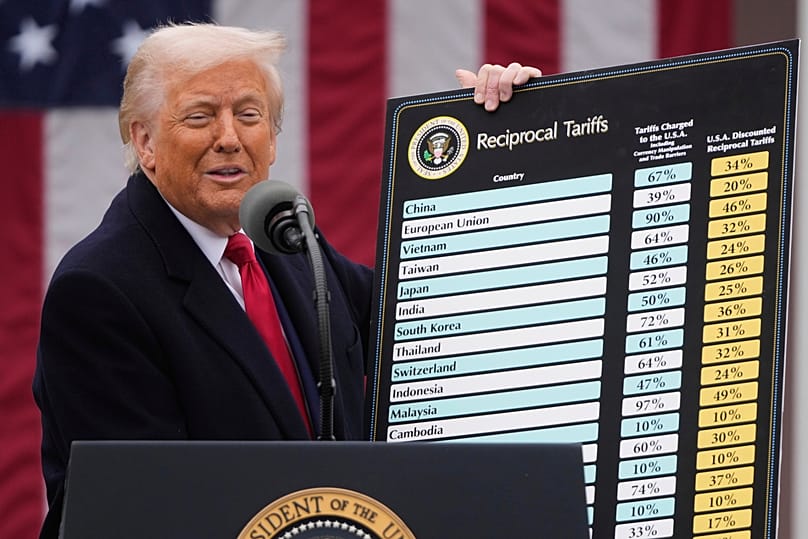
US president Donald Trump imposed tariffs on its trading partners across the world on 2 April 2025. AP Photo

US tariffs on steel and aluminium also rose to 25%, then to 50% by June, as Washington sought to reshore industry and counter China’s growing overcapacity. The European Union, therefore, became collateral damage in the competition between Washington and Beijing.

As the US raised barriers, governments worldwide rushed to renegotiate market access. Discussions between the EU and the US were tense, erratic, and dominated by threats. Trump dangled punitive tariffs on everything from European films to wines and spirits, at times threatening 200%.

Between April and July, European Commissioner for Trade Maroš Šefčovič flew to Washington 10 times. Talks involved US Commerce Secretary Howard Lutnick and Trade Representative Jamieson Greer - but real power rested with Trump and adviser Peter Navarro.

Washington also targeted what it called Europe’s “non-tariff barriers,” notably the EU’s Digital Markets Act (DMA) and Digital Services Act (DSA), which have become a political point of tension between the two and have only escalated since.

Brussels insisted regulation was a sovereign right while preparing retaliation lists covering up to €72 billion of US goods – which were suspended to keep talks alive. Von der Leyen even floated striking US services.

Among the member states some, led by France, raised the option of retailing using the Anti-Coercion Instrument adopted in 2023 which allows the EU to hit services, property rights and licences to counter economic coercion coming from foreign countries.

None of it materialised, with the European industry fearing more damage.

“The US has escalation dominance,” an EU diplomat told Euronews at the time.

Unbalanced deal detrimental to Europe and a win for the US

Europe’s dependence on US markets - and on Washington's military support for Ukraine -ultimately dictated the outcome. On 27 July, von der Leyen and Trump clinched a deal on a golf course in Turnberry, Scotland.

A joint statement published 21 August sealed it: zero EU tariffs on most US industrial goods, while the US tripled tariffs to 15% on EU exports, as well as inking commitments of $600 billion in EU investments in the US by 2028 and $750 billion in energy purchases.

Brussels sold it as the best possible outcome.

Across Europe, critics called it unbalanced, even humiliating.

The Commission's powerful director-general for trade, Germany's Sabine Weyand, acknowledged the constraints and even suggested it wasn't really a negotiation as the US had the upper throughout.

“(The trade deal) created a basis for engagement between the EU and the US on a lot of other issues,” she said. “We will have to see how far that will carry us, but at least we have another basis of engagement with the administration which wasn’t there before," Weyand said.

She also warned Europe is "paying the price for the fact we ignored the wake-up call we got during the first Trump administration - and went back to sleep. And I hope that this is not what we are doing now," referring to EU’s dependence on the US security umbrella.

Brussels is currently seeking more exemptions to lower tariffs on more products and relief from steel and aluminium tariffs, which remain stuck at 50%.

Digital rules as trade weapon for Washington

Washington has demanded that Europe cut its own industrial tariffs, requiring legislation now slated for 2026. The US is also demanding that Brussels soften the implementation of digital rules before it lowers tariffs on steel and aluminium.

The EU insists digital rules are off limits. But the pressure on the bloc is growing.

While most US administrations have often complained about what they perceive are a set of rules that target US Big Tech as the EU seeks to regulate where it cannot compete, Trump's White House is far more aggressive in tone and substance.

The US recently announced it would ban five individuals from entering the country, including former European Commissioner Thierry Breton, accusing him of pressuring social media platforms to censor and monitor content. The EU denies it censors posts.

The European Commission said it would uphold its sovereignty when it comes to setting policy and would take - if needed - "swift and decisive action" to enact it. French President Emmanuel Macron went further, suggesting that the US is using digital rules to coerce and intimidate the EU.

Far from being over, the trade war between the two seems to be shifting into the digital space, a key theme going into the new year.

'The EU has no leverage with China'

Despite tariff chaos, global trade grew in 2025.

Global goods imports rose 6.35% while exports climbed 6.24%, according to the St Gallen Endowment for Prosperity Through Trade (SGEPT), in Switzerland, an independent tracker of commercial policies.

Meanwhile, China, hit unprecedented milestone, posting a trade surplus of $1 trillion.

Blocked from the US, Chinese exports flooded Europe. Between November 2024 and November 2025, Chinese goods to the EU surged nearly 15%. In some member states, like Italy, that figure topped 25%, meaning a quarter of all imports came from China.

OECD data also showed steel overcapacity at 600 million tonnes in 2024.

In 2025, China weaponised EU's dependencies on critical goods. AP Photo

As a result, the imbalance is becoming more accurate.

Von der Leyen warned against the negative effects of a "second China shock" in reference to the first China shock produced between 1999 and 2007 that led to outsourcing manufacturing jobs and a surge of Chinese exports.

A second China shock could be even harder to digest as the EU market is already under an influx of Chinese goods, which are also becoming more advanced.

The French president also warned that the current imbalances cannot continue, reminding Beijing that the EU has an array of tools "from tariffs to anti-coertion measures" it could deploy if China refuses to cooperate, in an op-ed published in the Financial Times earlier this month.

Still, the EU has struggled to respond.

Tariffs on Chinese EVs in 2024 backfired. Beijing retaliated in 2025 with duties of up to 42.7% on pork and dairy, signalling it will not ease the pressure.

“EU's tariffs on EVs are really small compared to the appreciation of the euro,” Alicia Garcia Herrero, a China expert and chief economist for Asia Pacific at Natixis, told Euronews. “Plus, the EU is not really getting the investments it wanted.”

Diplomacy has also faltered. In July, a much-touted EU-China summit yielded little.

And then came the blow.

As global tariffs intensified, China began to restrict rare-earth global exports, jeopardising Europe’s auto, tech and defence sectors. Only after Trump met Xi Jinping in South Korea on 30 October did Beijing ease controls - sidelining EU diplomacy entirely.

The restrictions intensified after Dutch authorities seized control of chipmaker Nexperia, unleashing a tug of war between the European authorities and Beijing. To save face, the Netherlands handed back control of Nexperia to its Chinese owners and China agreed to ease some restrictions. But the episode signaled the limits of EU policy.

“The EU has no leverage with China, it has nothing to weaponise,” Herrero said.

Balancing the relationship remains a top priority for the Commission in 2026, but whether it can gather the political consensus to apply unprecedented tools such as the anti-coercion instrument, remains a question mark as the EU becomes squeezed between China and the US, facing retaliation from both.

Still, with the biggest single market in the world and more than 400 million consumers, the EU has cards to play.

Rules-based trade hanging by a thread

In 2025, Europe’s faith in global rules cracked, but Brussels hasn't given up on its role as the world's champion for international trade while trying to cut its dependencies.

Brussels doubled tariffs on steel coming from foreign countries and launched a new economic security doctrine to de-risk trade. Commissioner Šefčovič told Euronews one of the lessons learned this year is that everything "can be weaponised" in a new world order where trade is also used a tool to force politics.

"It very much underlines the lessons we've learned over the past years, and it doesn't concern only China. Today, everything can be weaponised," Šefčovič said. "For Europe, he argued, "it started with (Russian) gas, then it continued with critical raw materials and high and low-end chips. It can all be weaponised."

As a result, the EU doubled down on efforts to diversify trade ties too. It struck deals with Mexico, Indonesia, Singapore and revived talks with India, even if it failed to ink a deal before 2025 as it hoped for.

The EU also struggled to seal the Mercosur agreement after 25 years of negotiation with Argentina, Brazil, Paraguay and Uruguay. Italy and France pushed the signature to 2026, while a vote on safeguards meant to protect EU farmers fearing unfair competition from Latin American countries was also deferred to 2026

For critics, the EU failed to grasp the geopolitical significance of Mercosur. As global trade comes under attack, a deal of that magnitude would have shown the world that there is still strategic value - and benefits - in multilateral relations.

 FALSE FLAG AKA BULLSHIT

Lavrov threatens Ukraine after alleged drone attack on Putin's residence

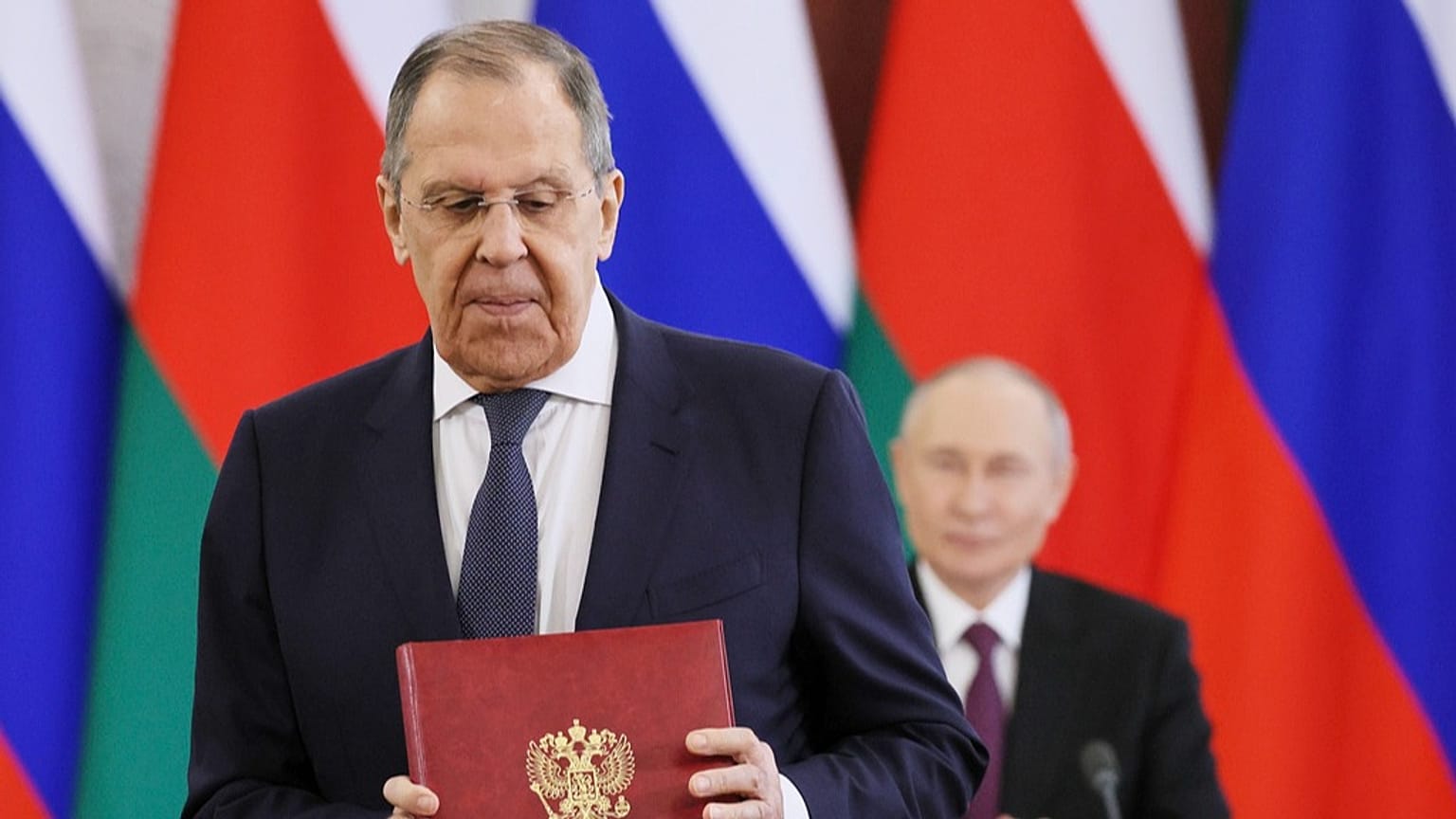
FILE: Russian Foreign Minister Sergey Lavrov attends a signing ceremony with Russian President Vladimir Putin in the background, in Moscow, 22 April 2025
Copyright AP Photo

By Aleksandar Brezar
Published on 

Russia's foreign minister said Moscow's negotiating position would change following alleged strikes on Putin's Novgorod region residence overnight on Monday. Zelenskyy dismissed the claim as an effort by the Kremlin to derail progress with Washington.

Russian Foreign Minister Sergei Lavrov said Monday that Moscow's negotiating stance would shift following an alleged Ukrainian drone attack on President Vladimir Putin's dacha in the Novgorod region.

"Such reckless actions will not go unanswered," Lavrov told Interfax news agency, accusing Ukraine of launching 91 long-range drones targeting the presidential state residence, also known as Valdai, overnight on Monday.

Lavrov did not clarify whether Putin was present at the residence during the alleged attack.

Russian foreign minister's figures contradict the official report from the Russian Defence Ministry, which claims that its forces took down a total of 89 Ukrainian drones overnight on Monday, 18 of which in the Novgorod region.

Euronews could not independently verify these claims.

Ukrainian President Volodymyr Zelenskyy shot back at Moscow's claims, calling it "another lie from the Russian Federation".

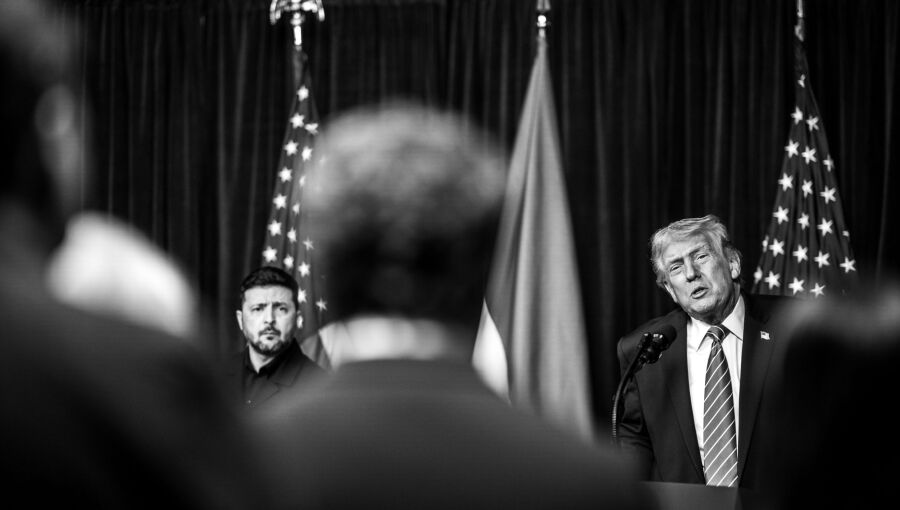
"It is clear that yesterday we had a meeting with (US President Donald) Trump, and it is clear that for the Russians, if there is no scandal between us and America, and we are making progress, for them it is a failure," Zelenskyy stated in a conversation with journalists on Monday afternoon.

"They do not want to end this war, they are only capable of ending it through pressure on them. Well, I am sure they were looking for reasons," he added.

Zelenskyy also warned that the Russian foreign minister's claim could be an overture for further strikes against civilian targets in Ukraine, including key government buildings in Kyiv.

"Everyone must be vigilant now. Absolutely everyone. A strike may be launched on the capital, especially since this individual, if one can call him that, said that they would select appropriate targets, which is a threat," he said.

Earlier on Monday, the Ukrainian leader said that Washington's 15-year security guarantees were one of the results of his meeting with Trump at Mar-a-Lago the day before, as US-led negotiations continue to aim at ending Russia's all-out war against Ukraine, now nearing its four-year mark.

Following Lavrov's words, Zelenskyy reiterated that "today, in principle, President Trump and his team (and) Europeans, I believe, need to get involved and work with the people who, just yesterday, said that they really want to end the war."

Ukraine and its allies have accused Moscow of intentionally stalling on any ceasefire or peace agreements, while the Kremlin repeated its maximalist demands as a prerequisite for talks to progress.

Meanwhile, the US president "concluded a positive call with President Putin regarding Ukraine," White House spokesperson Karoline Leavitt said in a brief post on X on Monday evening, without disclosing further details.

The Kremlin said Putin informed Trump of the alleged Ukrainian attack during the call and that this led to Moscow's change in its position in the negotiations as announced by Lavrov, Russian state-run media reported.

Asked about the alleged attack later on Monday, Trump — who spoke to the press in Florida together with Israeli Prime Minister Benjamin Netanyahu — said, "I don't like it, it's not good."

"It's a delicate period of time, it's not the right time. It's one thing to be offensive ... it's another thing to attack his house," the US president added. "I was very angry about it."

Quizzed on whether Washington had any intelligence to corroborate Moscow's claims, Trump said, "Well, we'll find out. You're saying maybe the attack didn't happen, it's possible too, I guess."

"But President Putin told me this morning it did."

After the meeting with Zelenskyy on Sunday, Trump said “we will see in a few weeks” whether the peace plan would work out, without setting a deadline or signalling a timeline.


Zelenskiy dismisses Putin residence attack claims as lies, warns of strikes on Kyiv

Zelenskiy dismisses Putin residence attack claims as lies, warns of strikes on Kyiv
Zelenskiy dismisses Putin residence attack claims as lies, warns of strikes on Kyiv following meeting with President Trump. . / bne IntelliNews
By bne IntelliNews December 29, 2025

Ukrainian President Volodymyr Zelenskiy dismissed Russian Foreign Minister Sergei Lavrov's statements about an alleged drone attack on Vladimir Putin's Valdai residence as lies intended to justify strikes on Ukrainian government buildings, Ukrinform reported on December 29.

Russian Foreign Minister Sergei Lavrov stated that Ukraine attacked a state residence of the Russian president in the Novgorod region with drones overnight on December 29.

"A strike could be launched on the capital. Especially since this person, if you can call him that, said that they would select appropriate targets. Well, that is, they are threatening," Zelenskiy told journalists.

The president stated he expected such rhetoric from the Russians. "You see, they are going further. Now, with their statement that some of their residences were attacked, they are simply preparing the ground for strikes on the capital and, most likely, on government buildings," Zelenskiy stated.

He recalled that in September there was already a strike on the Cabinet of Ministers of Ukraine building. "Therefore, everyone must be vigilant now, absolutely everyone," the head of state noted.

Regarding the substance of the statement, Zelenskiy described it as "another lie by the Russian Federation". Yesterday's successful negotiations with Donald Trump represent a failure for the Russians, he stated.

Lavrov claimed Ukraine attacked a state residence of the Russian president in Novgorod region with 91 drones overnight on December 29. Russian presidential aide Yuri Ushakov stated that Trump "was shocked and literally outraged" by the alleged attack during a telephone conversation with Putin.

The Kremlin claims came hours after Trump hailed progress in peace talks between Russia and Ukraine after almost four years of conflict.

Zelenskiy's comments follow that of Russian President Vladimir Putin, who warned US President Donald Trump that Moscow will respond to an alleged Ukrainian drone attack on a presidential residence in the Novgorod region, presidential aide Yuri Ushakov stated on December 29.

"From our side, it was clearly stated that such reckless terrorist actions will naturally not remain without the most serious response," Ushakov stated, according to Vedomosti.

Trump had hailed progress in peace talks hours before the Kremlin announced the alleged drone attack. The claims could not be independently verified.


Flu Cases Spike in US as HHS Continues to Push Anti-Vaccine Policies


Even though flu season is now entering its peak phase, experts say it’s not too late to get vaccinated.


December 29, 2025

The number of influenza cases in the United States is higher this year than last year, sparking concern that this flu season may be worse than usual due to lower rates of vaccination against the virus.

Seventeen jurisdictions across the U.S. report “high” or “very high” levels of influenza. The situation is hitting some areas harder than others, with areas in Georgia and Kansas seeing so many cases of childhood influenza that some schools have had to close.

Due to the holiday break, a federal report on flu counts in the country was not published last week. The most recent report from the Centers for Disease Control and Prevention (CDC), published on December 19, shows that there have been 4.6 million cases of influenza counted this season thus far, with 49,000 hospitalizations and 1,900 deaths — including two infant deaths counted in the last report alone.

The same report from one year ago saw a similar number of pediatric deaths but much lower numbers in the other metrics — just 1.9 million cases of the flu had been counted up to this point in the previous flu season, with only 23,000 hospitalizations and 970 deaths.

It’s possible that the reason this year’s flu season is off to such a bad start is that vaccination rates for the flu are lower — 13 million fewer vaccine doses have been administered this year than in 2024. Although the ideal time to get vaccinated is before the flu season hits in early fall, it’s still not too late to get vaccinated, as the peak for the season is just starting and will likely last through February, and the flu season overall will last well into the spring.


“Getting the vaccine is something that people, particularly those who are in high-risk groups, can do. It’s not going to eliminate their chance of getting infected, but it does mitigate their risk,” said Jesse Bloom, a viral evolution scientist at Fred Hutchinson Cancer Center, speaking to CBS News about the matter.

Why did flu cases increase this year? Notably, the CDC suspended its “wild to mild” flu vaccine campaign shortly after Trump took office in early 2025. The campaign, launched in 2023 and well received by the public, centered on a series of images of wild animals alongside their domesticated counterparts — demonstrating that the vaccine does not always prevent the flu, but can make infections go from “wild” to “mild,” lessening the chance of hospitalization or severe complications.

Instead, the CDC is spearheading a new campaign to “raise awareness and empower Americans with the tools they need to stay healthy during the respiratory virus season,” a Department of Health and Human Services (HHS) spokesperson said earlier this year. That spokesperson did not mention the role of vaccines in the new campaign.

The end of the “wild to mild” campaign comes as HHS has taken multiple anti-vaccination measures this year.

For example, the CDC recently called for ending hepatitis B shots for newborns, with the Trump administration wrongly claiming that the vaccine is unnecessary until age 12. Researchers have found that even a short delay in vaccination will likely lead to higher rates of hepatitis infection in infants, as well as severe long-term health complications and increased spending on health care.

The CDC also recently updated its webpage refuting the errant claim that there are links between vaccines and autism. Whereas the site previously noted that studies have demonstrated “no link between receiving vaccines and developing autism spectrum disorder (ASD),” new language on the page states that, “The claim ‘vaccines do not cause autism’ is not an evidence-based claim because studies have not ruled out the possibility that infant vaccines cause autism.”

The updates flout a plethora of studies — and experts have pointed out that the new language also ignores how the scientific method works in general.

“You can’t do a scientific study to show that something does not cause something else,” said Alison Singer, president and co-founder of the Autism Science Foundation, responding to the changes on the site. “All we can do in the scientific community is point to the preponderance of the evidence, the number of studies, the fact that the studies are so conclusive.”

The anti-vaccine language updates and policies are consistent with HHS Secretary Robert F. Kennedy Jr.’s long-held views on vaccines. In response to his disinformation on vaccines, a bipartisan group of six former U.S. surgeons general penned an open letter condemning Kennedy for endangering public health.

Kennedy’s inability to “restore trust” in HHS, as well as his “de-emphasis” of vaccines during the worst measles outbreak seen in decades, is deeply unsettling, the letter-writers said in October.

“Rather than combating the rapid spread of health misinformation with facts and clarity, Kennedy is amplifying it,” the former surgeons general added. “The consequences aren’t abstract. They are measured in lives lost, disease outbreaks and an erosion of public trust that will take years to rebuild.”


Scientists Say Public Engagement and Pressure Are Key to Reducing Nuclear Risks

Nuclear experts are urging the public to demand concrete steps to reduce the risk of devastation due to nuclear weapons.


By Jon Letman
December 29, 2025

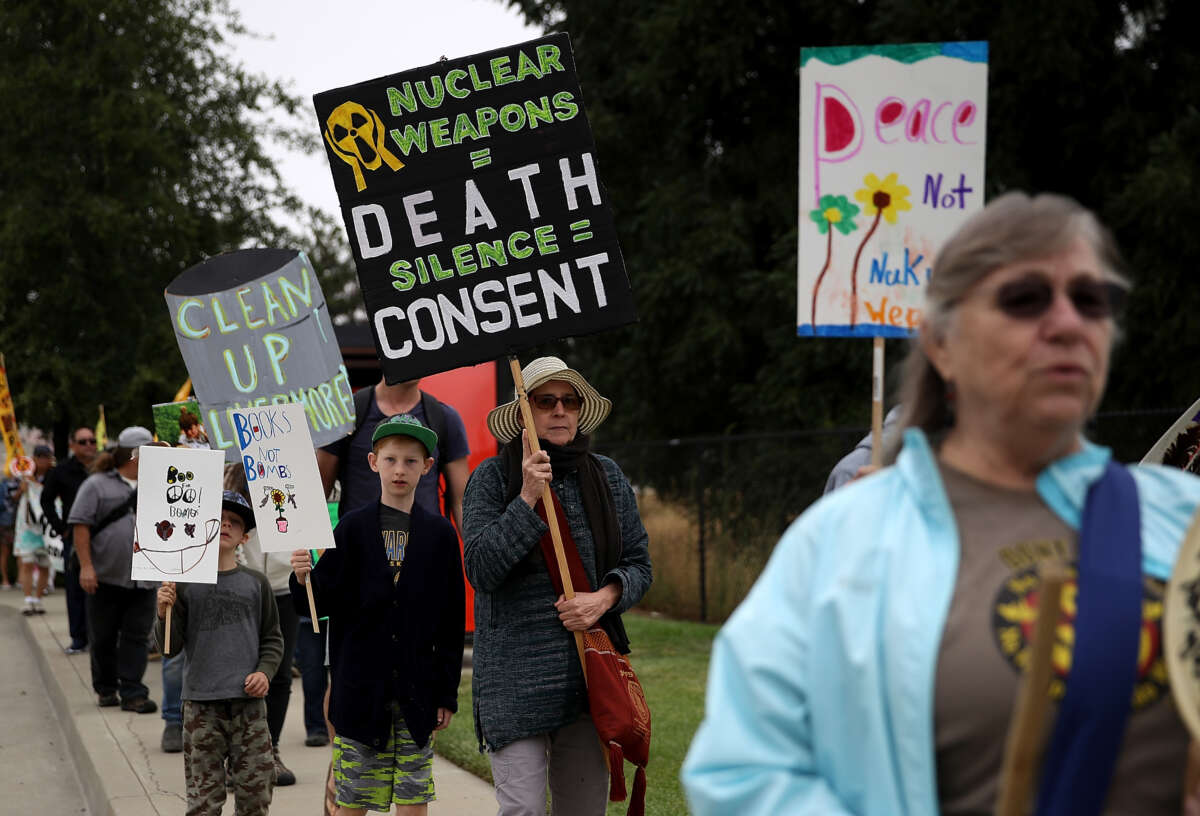
Protesters holds signs during a demonstration against nuclear weapons outside of the Lawrence Livermore National Laboratory on August 9, 2017, in Livermore, California.]
Justin Sullivan / Getty Images

Independent journalism at Truthout faces unprecedented authoritarian censorship. If you value progressive media, please make a year-end donation today.

Faster, stealthier missiles, accelerated weapons development, and the threat of an unrestrained nuclear arms race, set against the backdrop of a withering arms control regime, point to a worsening global nuclear threat as 2025 comes to a close. On top of that, just before meeting with China’s leader Xi Jinping in October, President Donald Trump abruptly, and very imprecisely announced in a social media post, “Because of other countries testing programs, I have instructed the Department of War to start testing our Nuclear Weapons on an equal basis.”

The suggestion that the United States might break with a more than three decade-long moratorium on explosive tests sparked a global wave of uncertainty, anxiety, and speculation about the impacts of a potential return to explosive nuclear testing. This comes in the final months of a year when five of the world’s nine nuclear armed countries have been engaged in active warfare. In May, India and Pakistan attacked each other with missiles, Russia has continuously bombed Ukraine, and the U.S. and Israel bombed Iran and other nations and territories.

Eighty years after the beginning of the atomic age, the deteriorating nuclear threat landscape is reflected in the symbolic Doomsday Clock, now set at 89 seconds to midnight, its closest-ever setting to global catastrophe, with the last U.S.-Russia arms control treaty expected to expire in early February.

On July 16, the 80th anniversary of the world’s first nuclear detonation, a gathering of 60 nuclear weapons experts and around 20 Nobel laureates assembled at the University of Chicago to come up with a list of pragmatic, actionable steps which they are urging world leaders to take to reduce the risk of nuclear war. That two-page document, the Nobel Laureate Declaration, calls for a recommitment to a moratorium on nuclear explosive testing, enhancement and expansion of nuclear diplomacy, and for scientists, academics, communities of faith, and civil society to create pressure on global leaders to take nuclear risk reduction measures.

Five of the nuclear experts and one Nobel laureate who were central to writing the declaration (now signed by 129 Nobel prize winners) spoke to Truthout to discuss what the exercise achieved and what they want to see happen next. Everyone interviewed for this story agreed that nuclear threats have increased in recent months, underscoring the urgent need to reduce risks and begin new conversations.


Conversations That Can Reach Policy Makers

“That conversation has been picked up by a lot of people around the world but it has not yet, in my opinion, changed the dial, but it is the beginning,” said Brian Schmidt, a professor of astrophysics at Australian National University and a Nobel laureate (2011 physics). “I see it as that first step, and we are now looking at how we do the next steps and keep bringing it up in conversations.”

Schmidt told Truthout that he has spoken to people across the political spectrum from the far left to the far right and “no one has said ‘I think nuclear war would be a good thing.’” Finding ways to reduce nuclear risks, Schmidt said, is “actually something that can be used to bind us together.”

The deteriorating nuclear threat landscape is reflected in the symbolic Doomsday Clock, now set at 89 seconds to midnight, its closest-ever setting to global catastrophe.

As nuclear nations increase spending and reliance on their arsenals with some people even calling for more countries to acquire nuclear weapons, Laura Grego, senior research director with the Union of Concerned Scientists, was under no illusion that a two-page document alone would change the world, but calls it a necessary step.

“I didn’t expect that everybody would put their pens down and say, ‘the laureates have spoken.’” Rather, she compared the declaration to a protest or demonstration which, by itself, does not bring immediate change, but must be part of a longer, sustained effort.

Even as Trump has made ambiguous and alarming statements about testing nuclear weapons, he has called for a comprehensive missile defense system called “Golden Dome” intended to “defend against all types of missiles from any adversary,” something Grego describes as “fantastical.” Others find the idea ill-defined and flawed. Anticipated costs for the system quickly surpassed $500 billion with some estimates in the trillions of dollars.

“This massive investment in strategic missile defense is really unhelpful,” Grego told Truthout. “It’s not just wasted money,” she said. In the long run it “probably makes the world less safe.” The Nobel Declaration calls on China, Russia, and the United States to “acknowledge the interrelationship between strategic offensive and defensive arms and forgo massive investments in strategic missile defense.”

Breaking through to policy decision-making circles, Grego said, can be difficult as they are often sequestered in the Pentagon and may not be elected officials responsive to voters. Grego says members of Congress are rarely questioned by their own constituents on nuclear issues and that lack of public input is just fine with the powerful, highly organized corporate interests who stand to make a lot of money building expensive weapon systems.

Grego urges people to call their representative’s office and to let them know if their votes don’t correspond to your views. In particular, on rarely challenged issues like nuclear weapons, small, incremental steps can have a positive impact.

“While there’s a lot of decision making that’s held in the Pentagon,” Grego said, “the purse strings are held by Congress and that’s still a powerful lever that we need to use better.”


Reviving Public Concern Over Nuclear Weapons Is Key


According to a recent YouGov survey, 69 percent of Americans think nuclear weapons make the world a more dangerous place. Nearly half (49 percent) of respondents approve of reducing the number of nuclear weapons in the U.S. arsenal.

Alexandra Bell, president and CEO of the Bulletin of the Atomic Scientists, and one of the chief organizers of the Nobel nuclear assembly, told Truthout that whenever there’s been a major reduction in nuclear threats, it followed years or decades of grassroots organizing and ongoing commitment, accompanied by public pressure with people saying, “we refuse to live in this world of increasing nuclear threats forever.” Major arms control achievements like the Limited Test Ban Treaty of 1963 or the agreement by the U.S. and Soviet Union to reduce nuclear stockpiles in the 1980s didn’t just happen. They were the result of sustained movements and public pressure.

“We’ve done this before. We figured out a way to reduce threats in the past and we kind of forgot,” said Bell. “We became complacent that we had dealt with this problem and we didn’t have to spend as much time and effort on it.”

She recognized that people today have a long list of concerns — the economy, health care, crime, the precarious state of democracy — but she said, “[We]’ve got to make room for the nuclear threat as well because it’s here whether or not you want to focus on it…and lack of attention is not going to make the problem better. In fact, it probably will make it worse and if we get the nuclear problem wrong, none of those other problems matter.”

She urged people to start talking about nuclear issues and ask their elected leaders how they are addressing the threat.

This Is Everybody’s Problem

Jeffrey Lewis, director of the East Asia Nonproliferation Project at the Middlebury Institute of International Studies, told Truthout “the risk [of nuclear war] is very, very low but obviously the consequence is impossible to imagine.” To that end, after the Nobel nuclear assembly, Lewis produced a short video that offers a vivid, terrifying snapshot of what a nuclear detonation would do to a city, in this case Chicago, the same city targeted in the movie A House of Dynamite.

He said the nuclear threat seems distant and gigantic, but, he added, “We know eventually our luck will run out.” He said, “We need to be gripped by some sense of urgency that we have made this deal with nuclear weapons to base our security on them and we know that deal is not going to work forever.” Given the enormity of a global nuclear catastrophe, Lewis said, “The fate of the world is everybody’s problem, and everybody has a role to play.”

When considering the possibility of reducing the nuclear risk, Lewis said that Trump has demonstrated a visceral reaction to the destructiveness of nuclear weapons which he believes is quite sincere. “It’s a shame because [Trump] has real political power,” said Lewis. “He has the political power to negotiate a verification protocol to the Comprehensive Test Ban Treaty (CTBT)” which, Lewis asserted, could make the Republican controlled Senate consent to ratifying the treaty which Lewis believes could earn Trump a Nobel Peace Prize. The United States is one of nine countries which have not ratified the CTBT, preventing it from entering into force.

Will Leaders Exercise Courage and Imagination?

Thomas Countryman, chairman of the board of the Arms Control Association and a 35-year veteran State Department diplomat, said the Nobel declaration would be significant if the public responded by demanding their elected leaders take steps to reduce nuclear danger. Those recommended steps could begin, he said, if there was a single leader among the nine nuclear weapons states who had the courage and moral conviction to prioritize nuclear risk reduction.

“I am somewhat encouraged that President Trump has said more than once that he is fearful of the effects of nuclear war. I think he appreciates how dangerous nuclear weapons are on a strong personal level,” Countryman said. “The problem is that neither he nor any of his counterparts in other nuclear weapon states have yet taken a meaningful step forward.” Although he has little confidence that Washington or Moscow will make significant progress on nuclear arms control in the next few years, Countryman says he has hope — “not confidence, but hope”— that China is in a unique position to do so.

Countryman will be watching the anticipated Trump-Xi summit in China next April closely. While he expects the meeting will focus on economic issues, it may be possible to address some nuclear matters too. He sees the opportunity for Trump and Xi to even take a very dramatic step of an announcement of a simultaneous ratification of the CTBT. “That may be too ambitious for both bureaucracies, but if both presidents have a little bit of courage and imagination, it could be done.” And while it could be possible, he fears there are “too many political and bureaucratic obstacles from any of the other nuclear armed states from moving forward on something dramatic.”

He conceded that conveying practical nuclear risk steps like those in the Nobel declaration is an uphill battle because, as he put it, in Washington, Moscow, and Beijing, “those who favor more nuclear weapons are in the ascendancy… all of them are feeling more confident and have the ear of their respective leaders much more frequently than those who are advocating for reduction of nuclear risk.”

Nations Must Play a Role in Building Awareness


Daniel Holz is a physics professor at the University of Chicago and chair of the science and security board of the Bulletin of the Atomic Scientists. As one of the chief organizers of the Nobel Assembly, he’s been closely following progress of the declaration which has included calls by the Vatican to reduce and eliminate all nuclear weapons, ongoing and future follow up meetings around the world, and in October, a presentation and discussion at the Permanent Mission of Norway to the United Nations. Included in the discussion before the largely diplomatic audience was the call for all countries to increase investments and research on the environmental, economic, and other impacts of nuclear conflict by a newly formed UN Independent Scientific Panel on the Effects of Nuclear War, the first of its kind since the 1980s. Of the nine nuclear armed nations, only China voted to support the study.

That UN study, like the Nobel declaration and depictions of nuclear weapons in books, music, movies, and popular media, as well as concerns about nuclear testing, nuclear proliferation, and the collapse of arms control, underscores the urgent need for more public engagement.

An increasing public perception of nuclear risk, Holz said, “leads to discussion, it leads to awareness, and it does lead to pressure on leaders” which is necessary to effect change. “Once the public is aware and engaged, as it should be, because they will be impacted if this goes wrong … then policy makers start to pay attention.”

“Unfortunately, it’s getting easier and easier to make the case that people should be aware.”


This article is licensed under Creative Commons (CC BY-NC-ND 4.0), and you are free to share and republish under the terms of the license.

Jon Letman
Jon Letman is a freelance journalist on Kauai. He writes about nuclear weapons, militarism, human rights and the environment in the Asia-Pacific region and beyond. Follow him on Bluesky.


Brutal analysis mocks 'prevailing Christian ethos in Donald Trump’s Washington'


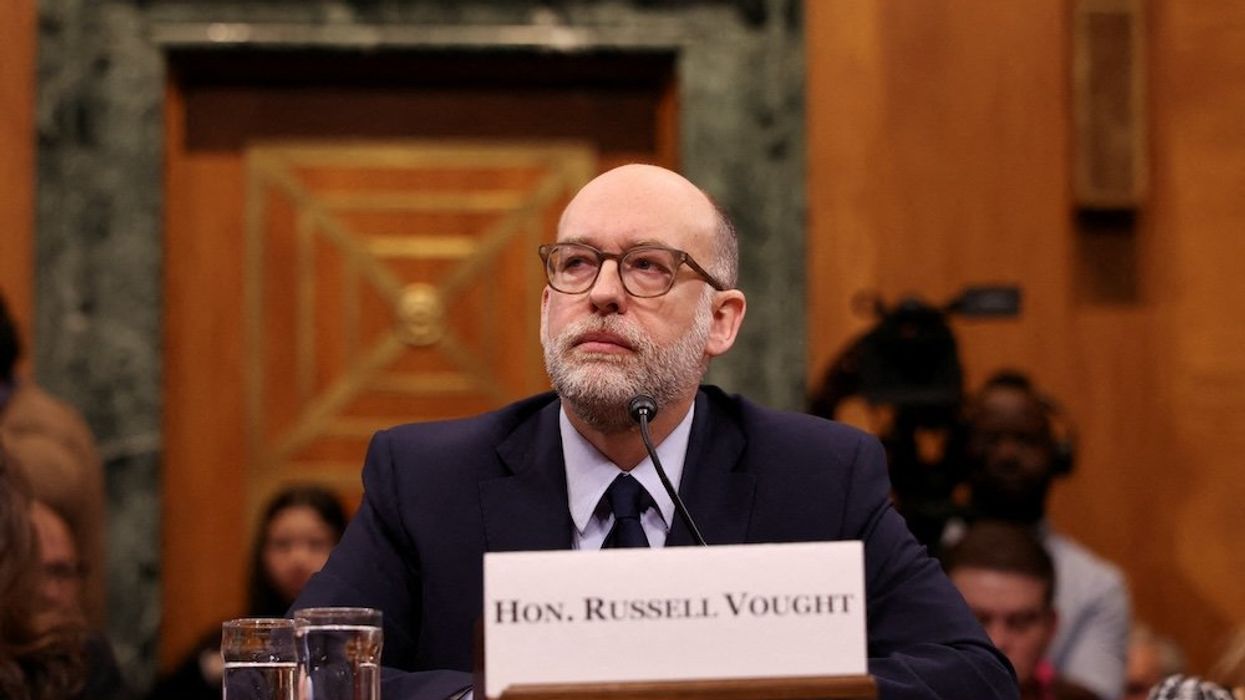
Russell Vought, U.S. President Trump's nominee to be director of the Office of Management and Budget (OMB), testifies before a Senate Budget Committee confirmation hearing on Capitol Hill in Washington, U.S., January 22, 2025. REUTERS/Kaylee Greenlee Beal/File Photo

Thomas Kika
December 29, 2025
ALTERNET


Ross Vought is often credited as the architect of Project 2025, and as Donald Trump's director for the Office of Management and Budget, he has helped oversee historically destructive government cuts throughout 2025. In addition to his standing as an "amoral political actor," per a new analysis from The New Republic, what sets him apart from the worst of the White House "hatchet men" is his claim to carry out his actions in the name of his "devout" Christianity.

Writing an extensive breakdown of Vought's tenure as OMB director on Monday, journalist Timothy Noah observed that "conservatives used to think you could be a political hatchet artist or you could serve the Lord." Now, he argued, "they say: Why choose?" This idea is typified by Vought, who has stressed his devout adherence to Christianity throughout his time in politics, suggested that the US is an exclusively Christian nation and written in defense of "Christian nationalism."

"Vought wishes trauma on civil servants and has inflicted same; boasts about turning his think tank into a 'Death Star'; panders to the right’s paranoid streak by claiming Marxists rule America; helps Trump withhold aid to Ukraine illegally after its leader declines to investigate the son of Trump’s 2020 opponent; and impounds congressional appropriations in gleeful defiance of court precedent," Noah wrote. "Pretty sinful, no? Not to Vought. While doing all this Vought proudly declares his deep devotion to the Christian faith."

Vought, he continued, does not practice any form of Christianity devoted to helping the poor or downtrodden, or any sort of "sentimental nonsense about the least among us." Noah highlighted a part of Project 2025 in which Vought decried the US Agency for International Development (USAID) as “a permanent and immiserating feature of the global landscape.”

"That’s a novel way to describe a program to alleviate global poverty," Noah wrote.

According to an October profile of Vought from ProPublica, when it was suggested that the agency's budget be cut in half, he countered that it should be brought as close to zero as possible. An estimate from Boston University estimated that these cuts have been responsible for "640,000 people, 430,000 of them children," with the total deaths estimated later being increased by 38,000.

"... How on earth does the prevailing Christian ethos in Donald Trump’s Washington, as practiced by Russell Vought, align with the Christianity that the goyim have been telling me about my whole life?" Noah wrote in conclusion, suggesting that "Vought would run over his own grandmother to serve his president," and "also do it to please his Creator."


TRUMP LIES

No, Trump Did Not End Taxes on Social Security

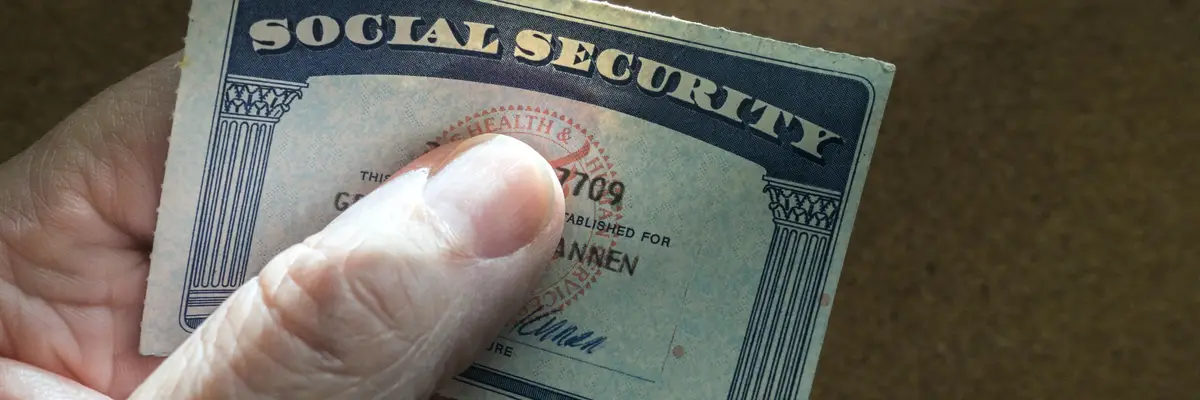
Time after time, fact-checkers and news outlets have pointed out that contrary to Trump and Vance’s claims, the “One Big Beautiful Bill” (OBBB) did not eliminate taxes on Social Security.


Martin Burns
Mary Liz Burns
Dec 28, 2025
COMMON DREAMS


Watching President Donald Trump’s speech on national television and Vice President JD Vance’s remarks at the Turning Point event in Arizona, we identified with Bill Murray in the movie Groundhog Day. For those who have not seen the movie, Murray plays a TV weatherman who is trapped reliving the same day, day after day. We felt exactly like Murray when both Trump and Vance claimed once again that they ended taxes on Social Security.

Time after time, fact-checkers and news outlets have pointed out that contrary to Trump and Vance’s claims, the “One Big Beautiful Bill” (OBBB) did not eliminate taxes on Social Security. Most recently, Factcheck.org on December 18 reported that:
Trump called the One Big Beautiful Bill Act he signed in July “perhaps the most sweeping legislation ever passed in Congress” and touted provisions that include “no tax on tips, no tax on overtime, and no tax on Social Security for our great seniors.” (As we have said, fewer seniors would pay taxes on Social Security benefits, but millions of Americans would still have to pay.)

On December 21, Yahoo Finance was quite blunt in assessing Trump’s failure to deliver on his promise to end taxes on Social Security:
Prior to and following his inauguration for a non-consecutive second term, Trump had promised to end the most disliked aspect of Social Security. While his plan received nothing short of thunderous applause and overwhelming support from seniors, he ultimately failed to deliver on his vow when the flagship “big, beautiful bill” was signed into law.

MSN back in July forcefully explained why the OBBB could not have eliminated taxes on Social Security:
First and foremost, the idea that the megabill eliminates federal taxes on Social Security—a claim Trump has made repeatedly of late—is plainly false. In fact, congressional Republicans relied on the budget reconciliation process to advance the package, and it’s procedurally impossible to change Social Security through this complex process.

Rather, as the New York Times reported, “older single filers will get the extra $6,000 deduction ($12,000 for couples), as long as their income falls under a certain ceiling (below $75,000 for single filers or $150,000 for married joint filers). Above those income levels, the deduction begins to decrease, and it goes away once single taxpayers’ income reaches $175,000 ($250,000 for couples).” What’s more, the deduction benefit won’t apply for Social Security recipients younger than 65.

Will the Trump administration continue to misrepresent the impact of the OBBB on Social Security? If the past several months is any guide, the answer is an unequivocal yes. Perhaps the Trump administration, to borrow another pop cultural reference, is operating on the George Costanza principle. For those not familiar with the comedy show Seinfeld, Costanza, a hapless character who constantly misrepresents things, explains that he operates on the principle that “it’s not a lie if you believe it.”


Martin Burns
Martin Burns has worked as a congressional aide, polling analyst, journalist, and lobbyist. He was on the campaign trail for Harris-Walz in Pennsylvania and North Carolina. In addition to Common Dreams, his work has been published by The Hill, Irish Central, and the Byline Times. Martin resides in Washington, DC with his wife, and regular coauthor, Mary Liz. His website is Martinburns.news.
Full Bio >

Mary Liz Burns
Mary Liz Burns is financial education consultant and content creator focusing on personal finance topics including retirement decisions, maximizing Social Security, and managing debt. She is a certified financial behavior specialist® with an MBA specializing in financial psychology, and is based in Washington, D.C.

Full Bio >
Alone for the Holidays? Blame Late Stage Capitalism

Loneliness is not an individual pathology. It is a failure of how we have designed our economy, our politics, and our shared spaces.


A person looks out through a window.
(Photo by Noah Silliman on Unsplash)

Sarah Van Gelder
Dec 29, 2025
Common Dreams


The holidays can be the loneliest time of year, when isolation, family fractures, and economic strain become especially hard to bear. The shopping frenzy and glittery lights don’t substitute for real belonging—they often make its absence more painful.

Worse, many people blame themselves for not feeling the cheer. Scroll through Instagram or watch a holiday film, and it appears as though everyone else is finding love, meaning, and connection this holiday season. If you’re not, it’s easy to believe you’ve done something wrong.

But loneliness is not an individual pathology. It is a failure of how we have designed our economy, our politics, and our shared spaces.

Self-help culture offers some useful advice about boundaries, rest, and self-care. But it rarely acknowledges the larger truth: Loneliness is not something most people can solve on their own. The answer isn’t “retail therapy” or a vacation in Maui. It’s building belonging into our collective experience.

We were expected to move for work, losing contact with extended family and friends, and compete our way to the top.

That means addressing an economic system that systematically excludes growing numbers of people from security, dignity, and meaning. It means reclaiming political system that have been captured by moneyed insiders. And it’s creating the shared spaces—especially in-person spaces—where people are welcomed to contribute, be known, and find support.


How Did Isolation Get so Widespread?

For decades, we were told that rugged individualism was the path to success. We were expected to move for work, losing contact with extended family and friends, and compete our way to the top. Relationships were treated as less important rather than necessities. Capitalism required a flexible labor force, and we reorganized our lives accordingly.

At the same time, political participation has increasingly been reduced to fundraising. Those without wealth are invited to donate or volunteer, but many sense—accurately—that real power belongs to those who can write big checks. The rest of us have little influence over the decisions shaping our lives.

The places that once supported everyday connection have also eroded. Public squares, community centers, and informal gathering places have been replaced by commercial spaces designed for efficiency and extraction, not belonging. And the economy that once supported a middle class has been hollowed out by big corporations with little use for Midwest steel mills or family farms, leaving behind empty downtowns, shuttered factories, and frayed social ties.

During the road trip across the United States that led to my book, The Revolution Where You Live, I encountered small towns and urban neighborhoods that were quiet, even desolate. That experience stayed with me during a visit to Tübingen, a town in Germany, where I asked a friend about a strange noise drifting through the streets. She laughed. “That is the sound of people talking,” she said. The town square had been closed to traffic and was filled with market stalls, laughter, and neighbors greeting each other as they shopped for holiday gifts.


Design Matters

Today’s loneliness epidemic creates vulnerability. When people lack meaningful connection, they are more susceptible to groups that promise belonging, identity, and purpose—whether at political rallies or in online spaces. For some, belonging is created by excluding other identities and even spewing hate. Research suggests isolation can contribute to radicalization, though it does not determine it. Belonging can be mobilized toward many ends.

Isolation also takes a toll on physical and mental health, contributing to higher rates of heart disease, strokes, diabetes, depression and even dementia, according to the Centers for Disease Control and Prevention.


What Would It Look Like to Design for Belonging Instead?

At a time of impending war, political extremism, climate crisis, and Immigration and Customs Enforcement raids, this may seem like the least urgent question to ask. But moments of upheaval are also moments of reinvention. The direction we take depends in part on whether people feel they have a place, a voice, and something to offer.

Designing for belonging starts with economic participation. Workplaces and businesses can be designed to offer participation, dignity, and a shared stake through cooperatives, employee ownership, and models that reward contribution rather than extraction. We can stop giving tax breaks and head starts to corporations that drain communities, and leave behind pollution and unemployment. Instead we can support enterprises with long-term commitments to place: those that make food, housing, healthcare, and childcare affordable and rooted.

People power grows out of connection—the some force that carries us through disasters and makes collective change possible.

It also means rebuilding shared spaces—places where people can simply be, or sing, talk, trade, make art, share food, teach, and support one another. Inviting places where people come to get to know those of different races, generations, ways of life—and where fear and prejudice lose their grip simply because people are no longer strangers.

Political and social movements can use language that invites people in as collaborators, not just donors or spectators. Belonging that is at the center of our work can counter the burnout that plagues so much civic and social change work. When people experience the dignity of having something to offer, the sense of community and mutual support can make participation as joyful as a good party

Belonging may feel like a squishy topic at a time of authoritarianism, war, and corporate dominance. But people power grows out of connection—the some force that carries us through disasters and makes collective change possible. Connection and belonging are easy to overlook when they are present, but when they are missing, our health, sense of purpose, and optimism suffer. Authentic connections are sources not only of well being but of power—and together they form the foundations for a better, more inclusive world.


Our work is licensed under Creative Commons (CC BY-NC-ND 3.0). Feel free to republish and share widely.


Sarah Van Gelder
Sarah van Gelder writes "How We Rise" on Substack substack.com/@howwerise and is founding editor of YES! Magazine.
Full Bio >


‘The Humanity Cohort’: Med School Graduates Offer Hope in Gaza

Israel has waged a systematic campaign to destroy Gaza’s healthcare delivery and to kill or imprison healthcare professionals, but these 168 students persisted.


A view shows the graduation ceremony held at al-Shifa Hospital in Gaza City, which suffered severe damage as a result of Israeli military attacks, for 170 doctors who earned their specialist certificates from the Ministry of Health on December 25, 2025.
(Photo by Saeed M. M. T. Jaras/Anadolu via Getty Images)


Kathy Kelly
Dec 29, 2025
Common Dreams

On Thursday, December 25, 2025, during Israel’s ongoing genocide against Palestinians, 168 students graduated from medical school, in Gaza. Wearing their white coats, they stood in front of the ruined façade of what was formerly Gaza’s largest hospital, the al-Shifa Medical Complex. As a backdrop, the destroyed building realistically conveys perils the graduates faced while earning their medical degrees. Throughout the last two years of their studies, they risked assassination, injury, arrest, imprisonment, and torture, as well as attacks on their own family members.

Israel has waged a systematic campaign to destroy Gaza’s healthcare delivery and to kill or imprison healthcare professionals. From October of 2023 to October of 2025, The World Health Organization documented 687 Israeli attacks on Gazan healthcare facilities and 211 attacks on ambulances. These attacks killed 985 people. In the same time period, Israel detained over 306 healthcare workers.

Health Care Workers Watch—Palestine, a nongovernmental organization, reports that 95 Palestinian healthcare workers are still in prison, 80 of whom are from Gaza. Prisoners who have been released from detention report that doctors are singled out for particularly brutal treatment.

Among the 80 Gazan healthcare workers who are still detained is the former director of Gaza’s Kamal Adwan hospital, Dr. Hussam Abu Safiya. On December 27, 2025, Dr. Abu Safiya began his second year of imprisonment.

In a better world, in a better future, we can hope that Palestinians graduating from medical school could assemble for an address delivered by Dr. Hussam Abu Safiya.

For over a year, prior to his incarceration, the Israeli military had subjected the Kamal Adwan hospital to repeated sieges and attacks. Dr. Abu Safiya and his staff, refusing to desert their patients, managed to increase the number of available beds in the hospital as theirs became one of the few hospitals still operating in northern Gaza.

On October 25, 2024, Israel raided the hospital, bombing its buildings, detaining many patients, and arresting all hospital staff, including Dr. Abu Safiya who was interrogated and released. On that same day, an Israeli drone attacked one of the hospital buildings and killed Dr. Abu Safiya’s 20-year-old son, Ibrahim. Dr. Abu Safiya buried his son on the hospital grounds and still refused to abandon the patients.

“The Israeli army does not know what it wants,” Dr. Abu Safiya told a reporter with the Electronic Intifada. “They detained me for a few hours and interrogated me about whether there were fighters inside the hospital, and demanded that I evacuate the hospital completely, but I refused and assured them that there were only patients inside the hospital. But 57 of the hospital’s medical staff were arrested... So we are suffering from a severe shortage of doctors, especially surgeons. Right now, we only have pediatricians—it is a huge challenge to work under these circumstances. I refused to leave the hospital and sacrifice my patients, so the army punished me by killing my son. I saw him die at the entrance gate—it was a great shock. I found a grave for him near one of the hospital’s walls, so that he could stay close to me.”

On December 27, 2024, when Israeli forces threatened to level the whole facility, Dr. Abu Safiya agreed to leave the hospital which was, by then, largely inoperable. An iconic video shows him, clad in his white coat, walking through the rubble toward two Israeli tanks.

He was held incommunicado, and then taken to the Sde Teiman prison, in the Negev desert, where he was interrogated and beaten before being transferred to the Ofer prison. There, he is held in solitary confinement. Only his lawyer has been allowed to visit him. She expresses rising alarm over his weight loss, inadequate healthcare, and frequent beatings.

Amnesty International says he has been forcibly disappeared and arbitrarily held without charge. Even though no charges have been brought against him, an Israeli court has extended his detention multiple times. On October 16, 2025, Israel’s Be’er Sheva District Court added an additional six months to his detention.

Who are the criminals? Israel and its partner, the United States, egregiously flaunt international law, committing numerous war crimes in the Occupied Palestinian Territory. Dr. Abu Safiya endures daily punishments in return for his courageous dedication to serving victims of war.

In a better world, in a better future, we can hope that Palestinians graduating from medical school could assemble for an address delivered by Dr. Hussam Abu Safiya. Together, they could uphold “the Humanity Cohort,” as the Gazan doctors who graduated in December 2025 call themselves, and safely commemorate the courageous healthcare workers who risked and lost their lives to care for patients during an Israeli genocide that is still ongoing. Confident that healthcare is never a crime, they could cite their fallen colleagues’ historic and extraordinary adherence to the United Nation’s core mission, “to save succeeding generations from the scourge of war.”


Our work is licensed under Creative Commons (CC BY-NC-ND 3.0). Feel free to republish and share widely.


Kathy Kelly
Kathy Kelly (Kathy.vcnv@gmail.com) is World BEYOND War’s board president and one of three rapporteurs who helped coordinate formation of the Merchants of Death War Crimes Tribunal.
Full Bio >