Monday, December 29, 2025

Aleppo: Battleground Of Coercion And SDF Integration – Analysis


By  and 


Key Takeaways

  • Aleppo as a Test Case: The renewed clashes in Sheikh Maqsoud and al-Ashrafiyah highlight how Aleppo functions as a ‘pilot zone’ for Damascus to apply pressure on the Syrian Democratic Forces (SDF) without opening a broader front, making localised coercion a template for integration enforcement.
  • Divergent Integration Goals: Damascus and the SDF have fundamentally different interpretations of ‘integration’, with Damascus seeking command-and-control restructuring and the SDF resisting political-military dismantlement. This divergence underpins the current friction.
  • External Actors Shape the Environment: Türkiye, the United States (US), Russia, Iran, and Israel actively influence incentives, signaling, and constraints, creating a multi-vector environment where local developments have broader regional implications.
  • Coercive Tactics over Open War: Post-‘halt-fire’ measures—movement restrictions, barriers, and supply controls—reflect calibrated coercion designed to extract concessions while avoiding large-scale escalation. Aleppo may set precedents for similar tactics elsewhere.
  • Watchpoints for Escalation: The immediate concerns include the end-of-year SDF integration deadline, Türkiye’s force posture, Israeli activity in Quneitra and Daraa, US deconfliction, and ISIS resurgence. Mismanagement of these triggers could cascade into broader instability.

Introduction: Renewed Clashes in Aleppo

Over the past week, Syria’s most consequential security development has not been a mass-casualty attack by ISIS or an Israel–Iran confrontation, but the sudden resurgence of armed clashes between the Government of Syria (GoS) and the Syrian Democratic Forces (SDF) in Aleppo—centred on the Kurdish-majority enclaves of Sheikh Maqsoud and al-Ashrafiyah.

The exchange of mortar and rocket fire, alongside heavier weapons, was followed quickly by a mutually declared ‘halt-fire’, intended to prevent escalation. Even so, tensions remained high: movement restrictions, new checkpoints, disrupted supply lines, localised displacement toward Afrin and other areas, and intermittent interruptions to electricity and basic services reflected a post-ceasefire environment resembling coercive bargaining more than genuine stabilisation.

Aleppo functions as a stress test of the March integration framework and its end-of-year deadline. The clashes erupted as Ankara and Damascus publicly pressed for the dissolution of the SDF’s existing command structure and full integration under GoS terms, while Washington advocated for a managed pathway that preserves counter-ISIS continuity and prevents a security vacuum. Sheikh Maqsoud and al-Ashrafiyah are not merely neighbourhoods; they are politically charged symbols of Kurdish autonomy inside a major GoS-controlled city, making the operational picture particularly sensitive.

Concurrently, Türkiye raises the cost of delay while framing the SDF as regionally aligned with Israel to justify potential kinetic action. Israel, Russia, Iran, and the United States (US) remain active in the background, shaping incentives, signalling constraints, and influencing both tactical and strategic calculations. Attribution narratives further complicate the picture: GoS-linked sources depict the SDF and Asayish as initiators, while SDF accounts blame ‘Damascus factions.’ Each side uses these narratives to signal domestic legitimacy, assign blame, and generate leverage over the integration track. The ceasefire, though temporary, prevented escalation that could have derailed the broader negotiation process at a critical moment.

Diverging Integration Goals

The core driver of the Aleppo clashes is the divergent understanding of ‘integration’. Damascus seeks restructuring that translates into genuine command-and-control authority: SDF forces nested within the Syrian army framework, Syrian army deployments into SDF-held areas, and meaningful alteration of the SDF chain of command. The SDF signals conditional willingness to discuss unit incorporation but resists integration framed as synonymous with dismantling its political-military system, including Democratic Autonomous Administration of North and East Syria (DAANES) governance structures, internal security mechanisms, and local control.


Recurring discussions about reorganising SDF forces into a limited number of divisions or brigades suggest an effort to preserve corporate identity and buy time—precisely the outcome that Ankara rejects. Aleppo thus becomes a ‘pilot zone’ through which Damascus can apply pressure via access, administration, and mobility, turning local governance arrangements and humanitarian entry points into instruments of negotiation, without opening a major front in the north-east.

External Actors and Strategic Pressures

Concurrently, Türkiye raises the cost of delay while framing the SDF as regionally aligned with Israel to justify potential kinetic action. Israel, Russia, Iran, and the US remain active in the background, shaping incentives, signalling constraints, and influencing both tactical and strategic calculations. Attribution narratives further complicate the picture: GoS-linked sources depict the SDF and Asayish as initiators, while SDF accounts blame ‘Damascus factions.’ The ‘halt-fire’ prevented escalation that could have derailed the broader negotiation process at a critical moment, even as underlying disputes persisted. Clashes in Aleppo coincided with the visit of Turkish Foreign Minister Hakan Fidan, who aimed to advance integration efforts. Fidan attributed the slow pace of integration to the SDF, accusing it of intentionally attempting to derail the process.

The US demonstrates counter-ISIS resolve while pushing for a managed political outcome, signalling tactical coordination where interests overlap and emphasising integration as a stabilising requirement. Russia is re-engaging primarily through diplomacy rather than battlefield arbitration, seeking to preserve influence, prevent exclusive Turkish or US dominance, and retain channels that can constrain Israeli freedom of action. Iran’s posture is opportunistic but constrained, seeking residual influence while facing Israeli pressure and operating in a less permissive Syrian environment. Israel is hardening a southern buffer and shaping Syria’s internal communal map, raising Damascus’ threat perception and complicating the GoS–SDF file.

Table 1: Actor Objectives and Strategic Levers in Aleppo

ActorStrategic ObjectivesTools / LeversLikely Short-term ActionsNotes / Constraints
GoS (Damascus)Monopoly of force; integrate SDF under state controlMilitary deployments, checkpoints, barriers, coercive measuresLocalised pressure in Aleppo; symbolic coercion without full escalationBalancing internal consolidation, international normalisation, ISIS risk
SDFPreserve autonomy; avoid dismantlementCeasefire compliance, controlled de-escalation, negotiation, leverage of external actorsDelay structural integration; seek guarantees from the US; protect Kurdish enclavesVulnerable to Turkish pressure and Damascus coercion
TürkiyeReduce SDF autonomy; prevent Kurdish consolidationPolitical messaging, threat of kinetic action, support for Syrian operationsPressure Damascus and the SDF; frame the SDF as a regional threat; readiness signallingConstrained by US deconfliction and regional optics
USCounter-ISIS; maintain stabilisation; manage the integration processMilitary strikes, deconfliction, diplomatic leverageCoordinate counter-terrorism efforts; push the integration framework; prevent a security vacuumMust balance GoS, SDF, Türkiye, and ISIS priorities
RussiaMaintain influence; mediate without direct arbitrationDiplomacy, political cover, selective security support

Source: Authors.

Damascus is pursuing a monopoly of force, but it cannot afford a destabilising war while simultaneously seeking international normalisation and internal consolidation. Publicly, GoS officials emphasise national unity and portray the SDF as deliberately delaying a broader state-building project.

Operationally, the post-clash measures observed in Aleppo—checkpoints, barriers, and alleged restrictions on movement and supplies—fit a pattern of calibrated coercion: applying pressure within a contained arena, extracting concessions, and avoiding the triggering of large-scale external backlash. Damascus also operates within a crowded threat environment, including the risk of ISIS resurgence, Israeli raids in the south, and localised communal frictions. This combination creates a strong incentive to discipline the SDF politically while keeping violence below thresholds that would expose state weakness or invite external intervention.

The SDF’s short-term strategy is to avoid isolation: de-escalate tactically, resist structural dissolution, and seek external guarantees. Public messaging emphasises ceasefire compliance and civilian harm claims in Sheikh Maqsoud and al-Ashrafiyah, while keeping the door open to negotiations and casting doubt on GoS intentions.

The SDF appears to prefer a longer runway—pushing substantive bargaining into 2026—on the logic that time serves as a protector of autonomy. That logic, however, collides with Ankara’s and Damascus’ shared framing of delay as stalling. The SDF’s core structural vulnerability lies in its position at the intersection of three external lenses: Türkiye’s counter-Kurdistan Workers’ Party (PKK) priorities, Damascus’ sovereignty imperative, and Washington’s counter-ISIS requirements. When these lenses align, even partially, around the principle of integration, the SDF’s manoeuvring space narrows sharply.

The US, Russia, Iran, and Israel in the Background

The US is simultaneously demonstrating counter-ISIS resolve while pushing for a managed political outcome, as GoS–SDF instability now constitutes a direct counter-terrorism risk. The recent large-scale US strike package against ISIS-linked targets carries political weight alongside its military effect: it signals decisive action against ISIS while implying that tactical coordination with Damascus can occur where interests overlap. This dual signalling increases US leverage over both sides. Damascus perceives an opening for security cooperation and incremental legitimacy, while the SDF is reminded that Washington’s priority remains counter-ISIS continuity and broader stabilisation rather than Kurdish maximalist outcomes.

US emphasis on integration as a stabilising requirement underscores a preferred end-state of incorporation without collapse, thereby avoiding a security vacuum that ISIS could exploit. The friction is definitional: Türkiye interprets integration as disbandment, whereas the US understands it as state incorporation with continuity. These definitions become incompatible if Ankara concludes that the post-deadline window represents the final opportunity to reshape the SDF through force.

Russia is re-engaging primarily through diplomacy rather than battlefield arbitration, seeking a seat in the reconfiguration of Syria’s security architecture. Moscow’s incentives are to preserve influence, prevent exclusive Turkish or US dominance, and retain channels that can be activated to constrain Israeli freedom of action when useful. Russia’s capacity to dictate outcomes is more limited than in earlier phases of the war, making its most likely role one of transactional mediation—offering political cover or limited security assistance in exchange for strategic positioning.

Iran’s posture is opportunistic but constrained. It has an interest in preventing a consolidated Syrian state aligned with Turkish and US preferences and in retaining residual networks, yet it operates under sustained pressure from Israeli actions and within a Syrian state environment that is less permissive than in earlier periods under Assad. The most plausible near-term Iranian approach is indirect: probing contested governance seams, amplifying anti-US narratives, and exploiting Arab–Kurd tensions rather than pursuing decisive intervention.

Israel is hardening a southern buffer while simultaneously shaping Syria’s internal communal map, raising Damascus’ threat perception and further complicating the GoS–SDF file. Israeli ground activity, checkpoints, and continued incursions in the south fuel local resentment and intensify Damascus’ imperative to project sovereignty. Parallel efforts to cultivate influence with local armed actors—particularly in Druze areas—add a second autonomy-sensitive file to Damascus’ agenda.

This dual focus on local armed actors is consequential, as it heightens suspicion of ‘externalised autonomy projects’ across Syria—both in the south and the north-east—and makes Damascus more receptive to narratives portraying the SDF as linked to external spoilers. Ankara’s allegations regarding SDF–Israel coordination therefore land in an environment already primed for securitised interpretations, irrespective of the underlying truth.

Risks and Watchpoints

The probability of some form of military action in the next two to six weeks is meaningfully elevated, but the most likely form remains limited and coercive rather than a full-scale campaign—unless the end-of-year deadline passes without a face-saving mechanism. Three scenarios stand out.

  1. Damascus Pressure: Damascus escalates pressure operations around symbolic friction points—such as the Aleppo enclaves—through selective deployments, controlled access restrictions, arrests, and the expansion of checkpoints in order to force concessions while keeping escalation below thresholds that would trigger US pushback or encourage Turkish unilateral action. The post-ceasefire controls observed in Aleppo are consistent with this pathway.
  2. Türkiye Intervention: A Türkiye-supported or Türkiye-enabled operation becomes more plausible if Ankara judges that the process is yielding cosmetic steps rather than irreversible integration. The cadence of warnings, readiness signalling, and joint-contingency language is designed to set the conditions for action. The principal brakes remain US deconfliction mechanisms and the risk of destabilising the counter-ISIS posture; yet Washington’s emphasis on integration may be interpreted in Ankara as tacit acceptance that the SDF must undergo fundamental change, even if kinetic escalation is not explicitly endorsed.
  3. Israeli Activity: Israeli activity in the south continues and may expand in a stop–start pattern, including raids, checkpoints, and targeted strikes. This elevates baseline volatility and increases the likelihood that Damascus securitises autonomy-related questions simultaneously across multiple theatres.

Table 2: Key Watchpoints and Risks in Aleppo

Watchpoint / TriggerLikely Action / EventPotential Strategic ImpactNotes / Risk Level
End-of-year SDF integration deadlineDamascus escalates pressure operations (checkpoints, restricted access)Forces concessions; raises tension without full warMedium–High: Could normalise coercive tactics
Turkish posture and messagingThreat of, or support for, kinetic actionCompresses SDF decision space; increases risk of localised escalationHigh: Timing and coordination critical
Israeli activity in Quneitra/DaraaExpanded raids, checkpoint networksRaises baseline volatility; pressures DamascusMedium: Limited but persistent destabilisation
US deconfliction and pressureMaintains operational constraints; signals stabilisation prioritiesLimits escalation; provides negotiation leverageMedium: Prevents worst-case outcomes if aligned with actors
ISIS or extremist resurgenceExploitation of friction zonesCould trigger US strikes and complicate local dynamicsHigh: Indirect but potentially destabilising
Humanitarian and civilian impactDisplacement, supply restrictionsIncreases local resentment; affects the legitimacy of GoS and SDFMedium: Amplifies political risk if mismanaged
Coordination failures between actorsMisinterpretation of moves by Türkiye, Israel, Damascus, or the SDFCould trigger misaligned responses or accidental escalationMedium–High: Risk of unintentional conflict due to multi-vector dynamics
Source: Authors.

Saying vs. Doing: Multi-Actor Dynamics and Implications

An integrated reading of ‘saying versus doing’ clarifies the trajectory. Türkiye communicates in the language of unity and peaceful resolution while simultaneously building political justification and operational optionality for force; framing the SDF as regionally aligned with Israel is a delegitimising move that pressures Damascus to treat Kurdish autonomy as a national-security threat rather than a negotiable administrative arrangement. Damascus, in turn, speaks the language of state-building while applying calibrated coercion in Aleppo, signalling a preference for command-and-control integration rather than a federated compromise.

The SDF emphasises de-escalation and negotiation while positioning for a longer timeline, implying confidence that it can outlast deadline pressure—an assumption that becomes riskier if Ankara and Damascus synchronise. The US articulates stability and counterterrorism priorities while demonstrating high-tempo counter-ISIS capacity and insisting on integration, creating an inherently unstable triangle that could fracture if Turkish pressure turns kinetic. Russia signals diplomatic engagement that can either facilitate deconfliction or complicate Turkish and Western plans, depending on what Moscow is offered. Israel increasingly frames its posture in permanent regional-security terms while actively shaping facts on the ground in southern Syria, narrowing Damascus’ political space to compromise elsewhere without appearing weak.

The immediate risk is not that Aleppo becomes a major front, but that it becomes the precedent: a first crack that normalises coercive tactics, employs access as leverage, and hardens attitudes—particularly if humanitarian entry and civilian displacement are used as bargaining chips. The strategic risk is a cascading security gap: GoS–SDF friction distracts from counter-ISIS operations at a moment when ISIS activity is sufficiently serious to trigger major US retaliation, creating openings for cells to regenerate in contested seams. The regional risk is multi-vector escalation if Turkish deadline pressure, Israeli southern actions, and instability in eastern Syria converge, producing an environment in which multiple actors conclude that moving first is safer than waiting.

Key watchpoints remain: tangible ‘irreversible steps’ in the integration process (command-chain changes, Syrian army deployments into SDF-held areas, absorption mechanisms) versus symbolic announcements; shifts in Turkish force posture and the tempo of political messaging as the deadline passes; US deconfliction posture and whether pressure on the SDF accelerates; and the pace and geography of Israeli activity in Quneitra/Daraa, particularly any transition from intermittent raids to sustained territorial shaping.

About the authors:

  • Scott N. Romaniuk—Senior Research Fellow, Centre for Contemporary Asia Studies, Corvinus Institute for Advanced Studies (CIAS); Department of International Relations, Institute of Global Studies, Corvinus University of Budapest, Hungary.

  • László Csicsmann—Full Professor and Head, Centre for Contemporary Asia Studies, Corvinus Institute for Advanced Studies (CIAS); Senior Research Fellow, Hungarian Institute of International Affairs (HIIA), Corvinus University of Budapest, Hungary.
Dubai: The Emerging Financial Mecca – Analysis


December 29, 2025 
By Richard Rousseau


Throughout history, cities have attracted investors, artists, entrepreneurs, and wealthy individuals from beyond their native countries and regions. The Hanseatic cities of the 13th and 14th centuries, for example, were at the heart of the revival of trade at the end of the Middle Ages. They were also places where more freedom reigned. Genoa and Bruges took up the mantle from the 15th century onward. Starting in the 17th century, Geneva and Switzerland became popular destinations because of their freedom and security.

Beirut, in the Middle East, acquired the status of a financial center and a meeting point of cultures in the 1960s and ’70s. Starting in the 1980s, Singapore also played a key role as an economic and financial magnet in Asia. In recent years, Dubai and the United Arab Emirates have emerged as preferred destinations for investing and securing capital.
New global financial hub

In less than fifty years, Dubai has transformed from a regional trading port into one of the world’s most dynamic financial centers. It is now the leading financial center in the Middle East, surpassing Bahrain and Riyadh. This financial shift began in the 1990s and was solidified by the establishment of the Dubai International Financial Centre (DIFC) in 2004. The DIFC is an offshore financial zone that operates under Anglo-Saxon law and is independent of the local legal system.

Dubai enjoys a stable political system and maintains excellent relations with the United States, Europe, China, and Russia. It is renowned for its high level of internal security and low crime rate. Its tax regime is competitive, offering no income tax, a moderate corporate tax rate of 9%, and total exemption within the DIFC zone. Thanks to these advantages, Dubai attracts wealthy individuals from the Gulf, India, Pakistan, and Africa, as well as Russian and Chinese families and, increasingly, European families. Privacy, the legal stability of the DIFC, and low corporate taxes further fuel this growth.

According to the British immigration consultancy Henley & Partners, the UAE has been top destination for high-net-worth individuals in 2025, with an anticipated 9,800 arrivals representing $63 billion in assets. This surpasses the United States (7,500 arrivals totaling $43.7 billion) and Switzerland (3,000 arrivals totaling $16.8 billion), putting the UAE far ahead of Singapore and Hong Kong. Over 130,500 millionaires have already settled in the UAE, including 81,000 in Dubai. Among them are 28 billionaires, which is a 98% increase from ten years ago.

For instance, Dubai is expected to surpass Paris, which has 160,100 millionaires and 22 billionaires. Wealthy families favor Dubai because they can easily establish themselves there. The city’s regulations are more flexible than those in Geneva, Singapore, or Hong Kong. Furthermore, Dubai offers all the amenities affluent individuals expect, including high-end services, a high-performing healthcare system, leisure activities, shopping malls, and luxury boutiques. The international airport provides access to capital cities worldwide, notably via Emirates, one of the world’s leading airlines.
dubai people cityThe Challenge of Islamic Finance

Dubai is competing with Kuala Lumpur to become the world capital of Islamic finance. The authorities also intend to establish the city as a hub for fintech companies to develop the crypto-asset market. Many cryptocurrency companies are leaving Hong Kong or London to establish a presence there. Within the DIFC, more than 8,000 financial institutions are present, employing 48,000 people. Twenty-seven of the world’s 29 most important banks have offices there, including five of the largest Chinese banks. JP Morgan, Goldman Sachs, HSBC, BlackRock, and others have also chosen Dubai.

Over the past ten years, the size of banking assets has grown 200% to reach $240 billion. The DIFC has also become a major insurance hub for Africa, the Middle East, and South Asia. However, Dubai is not without its weaknesses. Its rapid, speculative growth leaves it vulnerable to price changes and corrections in the financial or real estate sectors. The financial market is not very diversified, with few local companies listed. Reputational risk persists due to money laundering and opaque capital flows. After putting the UAE under close watch for a period of time, the Financial Action Task Force (FATF), an intergovernmental organization established in 1989 at the behest of the G7 to formulate policies aimed at combating money laundering and safeguarding specific interests, decided to include it on its gray list for the years 2022–2025.

Although this designation has since been lifted, the threat remains. The UAE Ministry of the Interior has stated that it has handled 521 money laundering cases in recent years in collaboration with international organizations. Over one billion dollars has been seized. In 2023, Dubai implemented a low corporation tax and a 5% Value Added Tax (VAT) to set itself apart from offshore havens. Being named a tax haven is no longer mainly advantageous for the wealthy.

Dubai does not seek to supplant New York or London; rather, it is positioning itself as a premier worldwide financial hub, comparable to Singapore. Dubai is currently ranked 11th among financial cities, whereas Paris has the 18th position, Shanghai is 8th, and San Francisco is 5th.

Dubai’s rise is based on a strategy combining political stability, legal innovation, and international openness. While the Gulf city remains exposed to certain structural risks, it continues to attract talent and capital at an unprecedented rate. It is now establishing itself as an essential link in the financial geography of the 21st century.


Richard Rousseau, Ph.D., is an international relations expert. He was formerly a professor and head of political science departments at universities in Canada, Georgia, Kazakhstan, Azerbaijan, and the United Arab Emirates. His research interests include the former Soviet Union, international security, international political economy, and globalization. Dr. Rousseau's approximately 800 books, book chapters, academic journal and scholarly articles, conference papers, and newspaper analyses on a variety of international affairs issues have been published in numerous publications, including The Jamestown Foundation (Washington, D.C.), Global Brief, World Affairs in the 21st Century (Canada), Foreign Policy In Focus (Washington, D.C.), Open Democracy (UK), Harvard International Review, Diplomatic Courier (Washington, C.D.), Foreign Policy Journal (U.S.), Europe's World (Brussels), Political Reflection Magazine (London), Center for Security Studies (CSS, Zurich), Eurasia Review, Global Asia (South Korea), The Washington Review of Turkish and Eurasian Affairs, Journal of Turkish Weekly (Ankara), The Georgian Times (Tbilisi), among others.
GLASS HALF FULL

Israel’s Calculus For A Second Strike On Iran: Nuclear Thresholds, Missile Asymmetry, And Regional Risk – Analysis

December 29, 2025 

By Scott N. Romaniuk and László Csicsmann


Key Takeaways:Strike Remains Plausible: A second Israeli strike on Iran is conditional but credible, driven by nuclear reconstruction, missile regeneration, and regional alignment.
Nuclear Pacing Risk: Iran’s growing 60% enriched uranium stockpile and constrained inspections compress Israeli decision timelines.

Missile–Defence Strain: The June 2025 war exposed a costly defence equation, turning missile exchange into an endurance and resupply contest.
Decision Triggers: Israeli action hinges on four judgements—nuclear restoration, missile regeneration, US political and military support, and regional spillover risk.
Escalation Calculus: Israel must balance pre-emptive action against the risk of multi-front escalation amid Tehran’s framing of a full-scale war.

Iran’s Nuclear Trajectory and Strategic Implications


In late December 2025, Iran’s nuclear and strategic posture has once again become a focal point of regional and global security concerns. Tehran’s refusal to allow the International Atomic Energy Agency (IAEA) to inspect nuclear facilities damaged by strikes earlier in the year has underscored a deepening impasse over verification and sovereign control, with Iranian officials demanding a codified post-war conditions framework before permitting access. At the same time, the head of Iran’s Atomic Energy Organisation publicly asserted that Western criticism targets Iran’s broader scientific progress rather than an alleged weapons programme, a framing that challenges international pressure and complicates diplomatic engagement.

Against this backdrop, Tehran’s rejection of renewed IAEA inspection demands has heightened anxieties in capitals including Jerusalem and Washington that Iran’s latent capabilities—particularly enrichment and missile-related technologies—could be rebuilt with reduced external visibility. These developments reinforce the strategic dilemmas facing Israeli decision-makers as they weigh whether pre-emptive options remain viable.

A second Israeli strike on Iran remains a live option and becomes most likely when Israeli leadership concludes that Iran is rebuilding the two capabilities that matter most for Israeli deterrence and homeland risk: rapid nuclear reconstitution under reduced visibility, and the capacity to sustain large ballistic missile salvos over multiple days. After the June 2025 Israel–Iran war, the strategic ‘taboo barrier’ against direct state-to-state blows is already broken, so the question is no longer whether direct action is imaginable, but whether the expected military gains outweigh the political and escalation costs in the weeks following the first night of strikes.

Iran’s nuclear trajectory remains the central pacing factor. The IAEA assessed in mid-2025 that Iran’s stockpile of uranium enriched up to 60% had reached the ‘more than 440 kg’ range, and that Iran’s overall enriched uranium stockpile had grown to many multiples of the Joint Comprehensive Plan of Action (JCPOA) cap. A key technical benchmark often used in policy planning is that roughly 42 kg of 60% material, if further enriched, is theoretically sufficient for one atomic bomb’s worth of weapons-grade uranium.

The strategic implication is not that a weapon is inevitable tomorrow, but that Iran retains a large ‘latent hedge’ that can be converted faster than diplomacy can typically move, especially if inspection access is constrained or delayed. The Supreme Leader has thus far hesitated to cross the nuclear threshold, as his legal opinion (fatwa) continues to deem the possession of nuclear weapons contrary to Islamic principles. However, an existential threat—such as a renewed Israeli attack—could alter the regime’s strategic calculus.
\

Missile Balance and Israel’s Defense Economics

The June 2025 war also reframed the missile balance as an inventory and resilience contest rather than a one-off shock. During the 12-day conflict, Iran fired on the order of 500 ballistic missiles toward Israel, in addition to large numbers of drones. Even with high interception rates, a limited number of impacts can still generate meaningful political pressure inside Israel because a handful of penetrations can produce casualties, damage critical infrastructure, and challenge public confidence. Open-source defence analysis after the war converged around the view that only a small share of missiles produced confirmed impacts, but the campaign consumed large quantities of expensive interceptors and depended heavily on United States (US)-enabled regional air defence coordination.

The operational lesson for Israel is uncomfortable: stopping Iran’s salvos is feasible, but sustaining that defence over time is also costly and stockpile-intensive. This asymmetry is reinforced by the absence of any binding international restrictions on the number of ballistic missiles Iran may produce, allowing Tehran to regenerate inventories at scale even as Israel and its partners face interceptor constraints.

Interceptor economics matter because they shape how long Israel and partners can hold the shield at maximum readiness while also retaining freedom for offensive options. Illustrative cost ranges cited in defence economics analyses place Iron Dome Tamir interceptors at approximately US$50,000 per shot, David’s Sling interceptors around the million-dollar class, and upper-tier systems in the multi-million-dollar class per interceptor. The exact unit costs vary by contract and configuration, but the strategic point is stable: a prolonged exchange that forces repeated high-end interceptions becomes a war of industrial depth and resupply politics, not just technology.

Israeli Decision Calculus: Triggers and Judgments


Israel’s decision calculus for another strike is likely to hinge on four interlocking judgements:Nuclear restoration: This judgement concerns whether Iran is believed to be restoring hardened or dispersed enrichment capacity faster than Israel can tolerate, particularly if the monitoring picture is degraded or constrained. The focus is on whether Iran could reconstitute key nuclear capabilities in ways that compress Israel’s decision timelines and reduce its ability to respond pre-emptively or with confidence.

Missile regeneration: This judgement evaluates whether Iran is rebuilding missile launchers, solid-fuel production, and operational tempo such that the next crisis would feature denser, more adaptive, and more survivable salvos. The concern is that Iran’s ability to overwhelm or systematically stress Israeli air defences could materially alter Israel’s risk calculus and the anticipated costs of any military operation.

US posture: This judgement examines whether Washington is prepared to support deterrence and defence in a renewed episode, including the integration of air defence systems, the flow of munitions, the provision of intelligence, and the political cover necessary to sustain Israeli action without triggering unwanted escalation or isolation. US support is a central enabling factor for both operational planning and the broader strategic framing of any strike. This judgement is shaped not only by formal US policy but also by elite political signalling. Prime Minister Benjamin Netanyahu’s recent visit to Mar-a-Lago and discussions with former President Donald Trump underscore Israel’s effort to reinforce the credibility of a military option and to ensure that the threat of force remains central to Washington’s Iran policy debate. Netanyahu has publicly argued that only the sustained possibility of military action can compel Iranian restraint, suggesting that Israeli planning assumes continued political space in Washington for escalation if intelligence thresholds are crossed.

Regional spillover: This judgement addresses whether a renewed Iran campaign would ignite Lebanon, Syria, Iraq, or maritime theatres in ways that would leave Israel strategically worse off even if Iranian facilities are damaged. It considers both the likelihood of direct retaliation and the cascading effects of regional entanglement that could compromise Israel’s broader security objectives, force prolonged homeland defence, or create political costs domestically and internationally. However, certain regional actors—most notably Saudi Arabia—have issued warnings to Israel against any further military intervention on Iranian soil. Gulf Cooperation Council (GCC) countries, probably with the exception of the United Arab Emirates (UAE), have increasingly come to perceive Israel as a potential security threat, particularly since Israel’s attack on Doha on 9 September.
Recent Indicators and Risk Assessment

Recent Iranian missile activity reinforces why miscalculation risk remains high. Missile drills and test activity signal readiness and deterrence, but in a post-June environment they are also interpreted through a worst-case lens as potential preparations for coercion or retaliation. For Israel, routine Iranian signalling now carries a higher probability of being read as an approaching inflection point, which can shorten decision timelines and increase the temptation to act pre-emptively.

Three plausible pathways lead to another Israeli strike, each with different triggers and shapes:Nuclear-driven strike: The first is a nuclear-driven strike, where the proximate trigger is a belief that Iran has begun reconstructing protected enrichment or conversion capacity in ways that would enable a faster and harder-to-stop breakout, especially if visibility is reduced. In this scenario, Israel prefers a time-bounded campaign designed to set back reconstruction, degrade key nodes, and re-establish fear of escalation inside Tehran, while attempting to keep the conflict from expanding into a multi-front regional war.

Missile-driven strike: The second pathway is a missile-driven strike, where the trigger is evidence that Iran is regenerating launcher survivability and salvo density to a point that the next crisis would overwhelm Israel’s defensive comfort margin. Here, Israel’s target set would skew towards production chains, storage sites, and command-and-control infrastructure, attempting to turn the conflict back into a depletion problem for Iran rather than a defence exhaustion problem for Israel.
Shock-driven strike: The third pathway is a shock-driven strike, where a major incident on another front is attributed to Tehran and treated as proof that deterrence has collapsed again; in that case, the strike becomes less about precise technical rollback and more about re-establishing a punitive red line.

There are also strong reasons for Israel to delay or avoid a second round unless compelled. Another strike carries a high probability of wider regional activation because Iran’s most reliable response options often run through distributed networks and geographically diverse launch areas rather than a single conventional front. A renewed direct war would also almost certainly force Israel into a prolonged period of elevated homeland defence, repeated disruptions to air travel and commerce, and a dependence on continuous interceptor resupply.

Even if Israel achieves tactical success against specific facilities, the strategic outcome can be ambiguous if Iran responds by hardening, dispersing, and moving closer to a posture of maximum ambiguity on nuclear intent while accelerating missile and drone programmes as the compensatory deterrent. Israeli Prime Minister Benjamin Netanyahu has not ruled out additional airstrikes, signalling that pressure on Iran’s missile programme and latent nuclear capabilities remains an active policy consideration, particularly if Tehran is perceived as rapidly rebuilding key capabilities.

The near-term outlook is therefore best described as conditional rather than linear. In the coming months, the probability of another Israeli strike rises materially if multiple indicators align at once: credible signs of Iranian reconstruction at key nuclear nodes under reduced monitoring, evidence of accelerating missile regeneration and launcher survivability, and a permissive US political and military stance. The probability falls if Israel assesses that Iran’s reconstitution pace does not yet create an urgent window, if Washington signals firm constraints, or if Israeli leadership judges that the second round would likely expand into a multi-arena war that produces high domestic cost without decisive strategic rollback.

Another Israeli attack on Iran is plausible and cannot be ruled out on a short horizon, but it is more likely to be triggered by a specific intelligence-assessed inflection point than by general hostility. The decisive variable is whether Israeli leadership comes to believe that waiting converts manageable risk into irreversible risk, and whether it believes a second strike can be executed without triggering an uncontrollable regional cascade.

Table 1. Strategic Drivers and Decision Pathways for a Second Israeli Strike on Iran
Category Key Considerations Decision Implications Potential Pathways
Nuclear Trajectory Iran’s enriched uranium stockpile (60%) ~440+ kg; Latent weapons-grade capacity (~42 kg per bomb); Potential for rapid breakout if monitoring is reduced Israel may strike if nuclear restoration accelerates beyond tolerable risk or compresses decision timelines Nuclear-driven strike: target reconstruction facilities, degrade key nodes, re-establish deterrence

Missile Capability ~500 missiles fired in June 2025 conflict; Interception is costly and stockpile-intensive; Potential to overwhelm Israeli defences with dense, adaptive salvos Israel may act if missile regeneration exceeds defensive comfort margins Missile-driven strike: target launchers, storage sites, production chains, and C2 infrastructure
Missile Production Asymmetry No binding international limits on Iranian ballistic missile production; Capacity to regenerate missile inventories at scale; Asymmetric cost exchange versus Israeli interceptors Sustained Iranian regeneration increases pressure for pre-emptive action before defensive exhaustion Missile-driven strike: prioritise industrial nodes, storage, and production bottlenecks

US Posture Willingness to provide political, logistical, and air defence support; Integration of munitions and intelligence; Signals regarding escalation tolerance and strike legitimacy Israel’s freedom of action depends on US operational backing and political cover All pathways contingent on US support for operational enablement and diplomatic insulation
Regional Spillover Risk of Lebanon, Syria, Iraq, and maritime theatres being activated; Potential for multi-front escalation and proxy mobilisation High regional risk may argue for delay, sequencing, or selective targeting Shock-driven strike: respond to major incident or deterrence collapse, reassert red line

Strategic Signalling & Political Thresholds Israeli leadership signalling willingness to strike again; Iranian framing of confrontation as full-scale war; Elevated miscalculation and escalation risk Lower political thresholds increase likelihood that tactical incidents trigger strategic escalation Shock-driven strike: rapid punitive action following perceived deterrence failure

Operational & Strategic Constraints Homeland defence strain; Interceptor resupply requirements; Risk of Iranian hardening, dispersal, or compensatory acceleration Strategic gains must outweigh escalation risks and domestic costs Decision conditional: strike triggered by specific intelligence-assessed inflection points
Source: Authors.

Conditional, Calculated, and Contingent

Israel’s next strike on Iran is not inevitable, but it remains plausible—and highly contingent on a convergence of nuclear, missile, and geopolitical indicators. The decision calculus is precise: strike too early, and Israel risks regional escalation and high domestic costs; wait too long, and latent Iranian capabilities could create irreversible risk. Effective strategy therefore hinges on intelligence-driven timing, calibrated targeting, and alignment with US support, all while anticipating potential regional spillover.

The strategic environment is further complicated by Tehran’s framing of the confrontation: Iranian officials have publicly declared that the country is engaged in a full-scale war with the US, Israel, and Europe, signalling a willingness to treat external pressures as acts of war. This posture raises the stakes for Israeli decision-makers contemplating pre-emptive action.

Policymakers should view Israel’s options not as linear but as conditional pathways, each shaped by nuclear restoration, missile regeneration, operational constraints, and strategic risk tolerance. The decisive variable is whether Israel judges that a second strike can degrade Iranian capabilities without triggering a cascade of escalation. In short, success depends on acting decisively—but selectively—when intelligence indicates an urgent inflection point amid Tehran’s heightened threat posture.

About the authors:Scott N. Romaniuk—Senior Research Fellow, Centre for Contemporary Asia Studies, Corvinus Institute for Advanced Studies (CIAS); Department of International Relations, Institute of Global Studies, Corvinus University of Budapest, Hungary.

László Csicsmann—Full Professor and Head, Centre for Contemporary Asia Studies, Corvinus Institute for Advanced Studies (CIAS); Senior Research Fellow, Hungarian Institute of International Affairs (HIIA), Corvinus University of Budapest, Hungary.


Will Trump’s climate criticism backfire? New poll shows most US voters support Paris Agreement

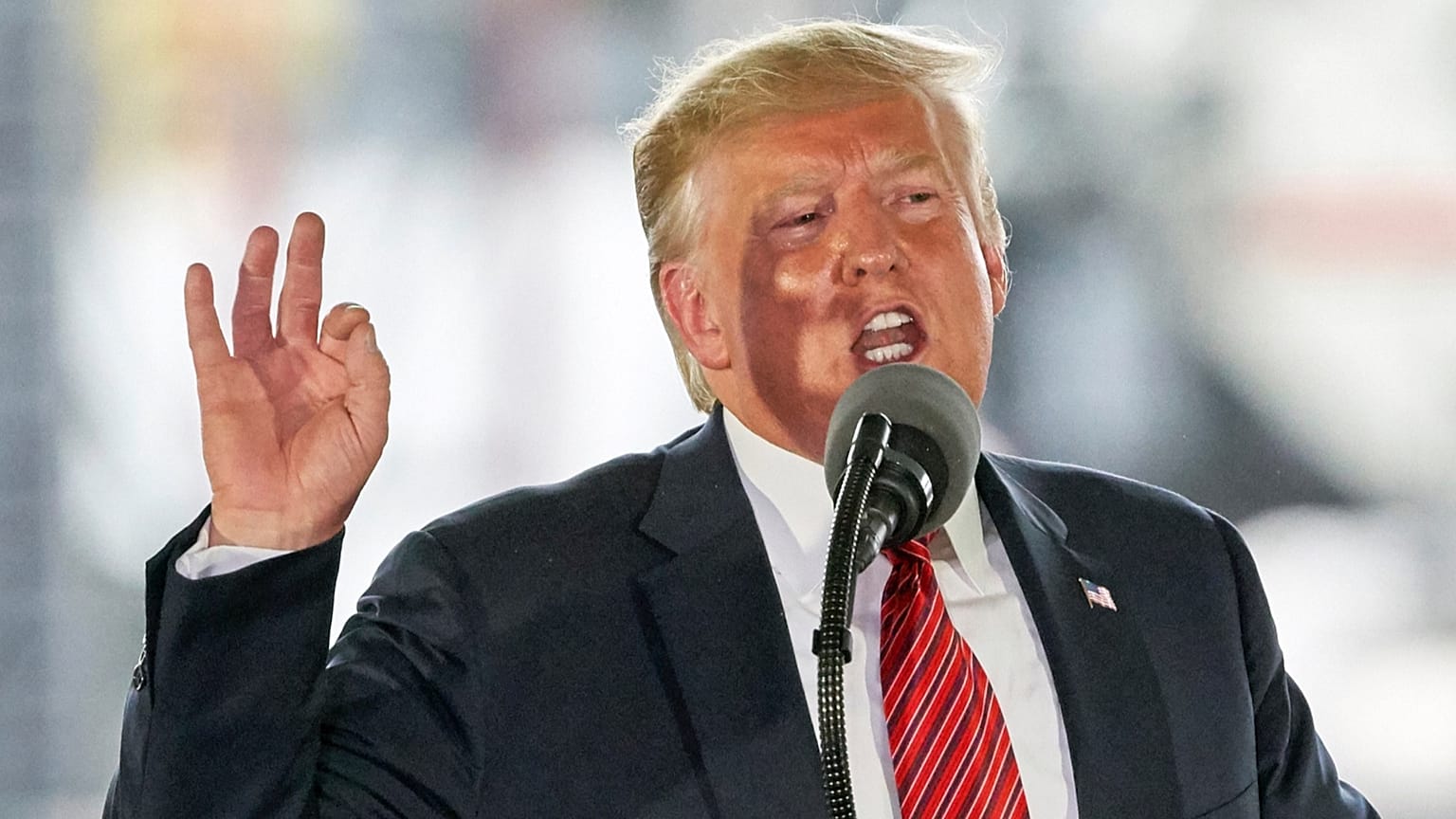
President Donald Trump speaks at Southwest Iowa Renewable Energy, an ethanol producer, in Council Bluffs, Iowa, Tuesday, June 11, 2019.
Copyright Copyright 2019 The Associated Press. All rights reserved

By Liam Gilliver
Published on 

New research shows that even Republican voters support funding more research into renewable energy sources.

Most registered voters in the US lean favourably towards green energy investment and climate commitments, despite Donald Trump’s blistering attacks.

The POTUS has consistently worked to boost polluting fuels that fry the planet, describing wind and solar power as “the scam of the century” and vowing not to approve any new projects.

He previously argued the concept of global warming was “created by and for the Chinese” to make US manufacturing non-competitive, and referred to wind energy as a “con job” during his trip to Scotland - urging Europe to “stop the windmills”.

Earlier this month, theUS Environmental Protection Agency (EPA) also removed all mention of fossil fuels – the main driver of global warming – from its popular online page explaining the causes of climate change. Now it only mentions natural phenomena, even though scientists calculate that the majority of the warming is due to human activity.

Despite the series of rollbacks, a new poll by the Yale Program on Climate Change Communication shows that the climate crisis is still a key consideration for US voters.

Where do US voters stand on global warming?

The nationally representative survey, which consists of 990 registered voters, found that 59 per cent would prefer to vote for a candidate for public office who supports action on global warming.

This was spearheaded by liberal Democrats (95 per cent) and a large majority of moderate/conservative Democrats (82 per cent). However, 42 per cent of liberal/moderate Republicans also said they would prefer a candidate supporting climate action - as well as 21 per cent of conservative Republicans.

41 per cent of surveyed voters said they would like to hear from political candidates about efforts to reduce global warming more often, while 35 per cent said global warming will be a “very important” issue to them in deciding who they will vote for in the 2026 congressional election.

Most US voters support green energy

More than 60 per cent of registered voters also think developing sources of clean energy should be a “high or very high priority” for the President and Congress.

In fact, the majority of participants supported a range of policies to reduce carbon pollution, such as restoring soil healthand bolstering green energy.

Even Republicans supported funding more research into renewable energy sources – with 73 per cent of liberal-moderate Republicans and 47 per cent of conservative Republicans backing the drive.

Despite Trump often criticising the appearance of solar and wind farms, 66 per cent of registered voters support transitioning the US economy from fossil fuels to 100 per cent clean energy by 2050.

This includes 96 per cent of liberal Democrats, 86 per cent of moderate/conservative Democrats, 57 per cent of liberal/moderate Republicans, and 26 per cent of conservative Republicans.

Should Donald Trump have left the Paris Agreement?

In 2015, almost 200 nations, including the US, signed a legally-binding treaty to hold the “increase in the global average temperature to well below 2°C above preindustrial levels” and pursue efforts to “limit the temperature increase to 1.5°C above preindustrial levels”.

Dubbed The Paris Agreement, the treaty is often seen as one of the biggest environmental commitments in history. However, just two years later, Trump initiated the process to withdraw from the treaty.

For the first time in 30 years, the US had no official representation at this year’s UN COP talks.

However, the poll found that 77 per cent of registered voters support US participation in the Paris Climate Agreement, with 64 per cent opposing Trump’s decision to pull out of the commitment.

While the majority of Republicans still support Trump’s controversial withdrawal, 35 per cent say they “somewhat” or “strongly” oppose the decision.

Why climate change is important to US voters

The survey shows there is still substantial support for climate-damaging activities such as drilling and mining fossil fuels on public land in the US (45 per cent) and drilling for oil in the Arctic National Wildlife Refuge (33 per cent).

However, a much larger proportion of the voter base is aware of the potential benefits of green energy. Almost half (49 per cent) think that renewables could improve economic growth and provide new jobs, while 65 per cent think global warming is affecting the cost of livingin the US.

*The poll consists of 47 per cent Democrats, 42 per cent Republicans, 9 per cent Independents, and 3 per cent of registered voters who didn’t select any political party but are still registered to vote.