Sunday, January 04, 2026

Israel begins revoking licenses of 37 international organizations delivering aid to Gaza

NGOs licenses would be canceled starting from January 2026, requiring them to end their activities by March

Zein Khalil and Rania Abushamala |04.01.2026 - TRT WORLD


JERUSALEM/ ISTANBUL

Israel on Sunday began revoking the operating licenses of 37 international organizations delivering humanitarian aid to the Gaza Strip, saying they failed to meet requirements under new registration rules, according to the Israeli broadcasting authority KAN.

On Tuesday, the Israeli government began sending official notices to dozens of international organizations informing them that their licenses would be canceled starting from January 2026, and requiring them to end their activities by March of the same year.

“Following the entry into force of the registration mechanism for international organizations in Gaza, the process of barring 37 international organizations from operating has begun,” said the broadcaster.

Israel claims that “these organizations collectively transferred less than 1% of total humanitarian aid throughout the war, and that the scope of aid will not be affected by this decision,” the broadcaster reported.

The broadcaster claimed that security investigations revealed the involvement of employees from Doctors Without Borders in “terrorist activities,” alleging that in two main cases, the organization withheld full information about the identities and roles of its staff.

However, according to the Israeli daily Haaretz, Israel’s decision in November to revoke the licenses of international relief organizations is rooted in purely political reasons.

Israel previously took similar steps against the UN agency for Palestinian refugees (UNRWA). In 2024, the Knesset passed legislation banning the UN agency’s activities in Israel, citing allegations that some UNRWA employees were involved in the Oct. 7, 2023, events, claims the agency has denied. The UN has said UNRWA adheres to strict neutrality standards.

Israeli authorities later escalated measures against the agency, passing a law to cut water and electricity supplies to UNRWA facilities.


Aid groups worry Israel’s ban threatens to choke humanitarian lifelines in Gaza

Israel has revoked licences of 37 humanitarian organisations, including Doctors Without Borders, Oxfam and the Norwegian Refugee Council.
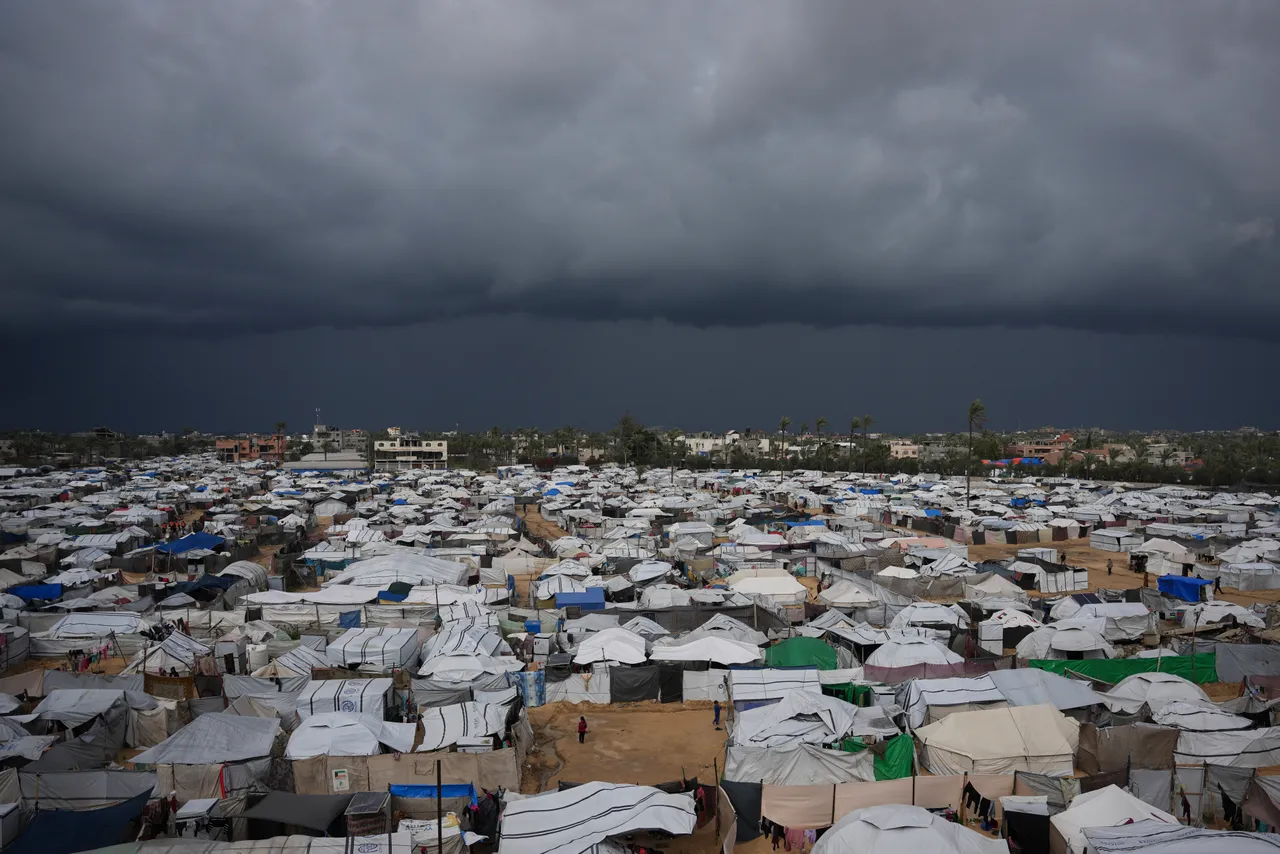
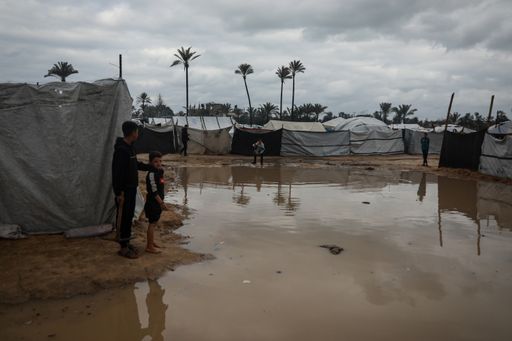
Palestinian children stand in an area surrounded by makeshift tents for displaced people in Deir al Balah, central Gaza, Saturday, December 27, 2025. / AP

Israel’s decision to revoke the licenses of more than three dozen humanitarian organisations this week has aid groups scrambling to grapple with what this means for their operations in Gaza and their ability to help tens of thousands of struggling Palestinians.

The 37 groups represent some of the most prominent of the more than 100 independent non-governmental organisations working in Gaza, alongside United Nations agencies. Those banned include Doctors Without Borders, the Norwegian Refugee Council, Oxfam and Medical Aid for Palestinians.

The groups do everything from providing tents and water to supporting clinics and medical facilities. The overall impact, however, remains unclear.


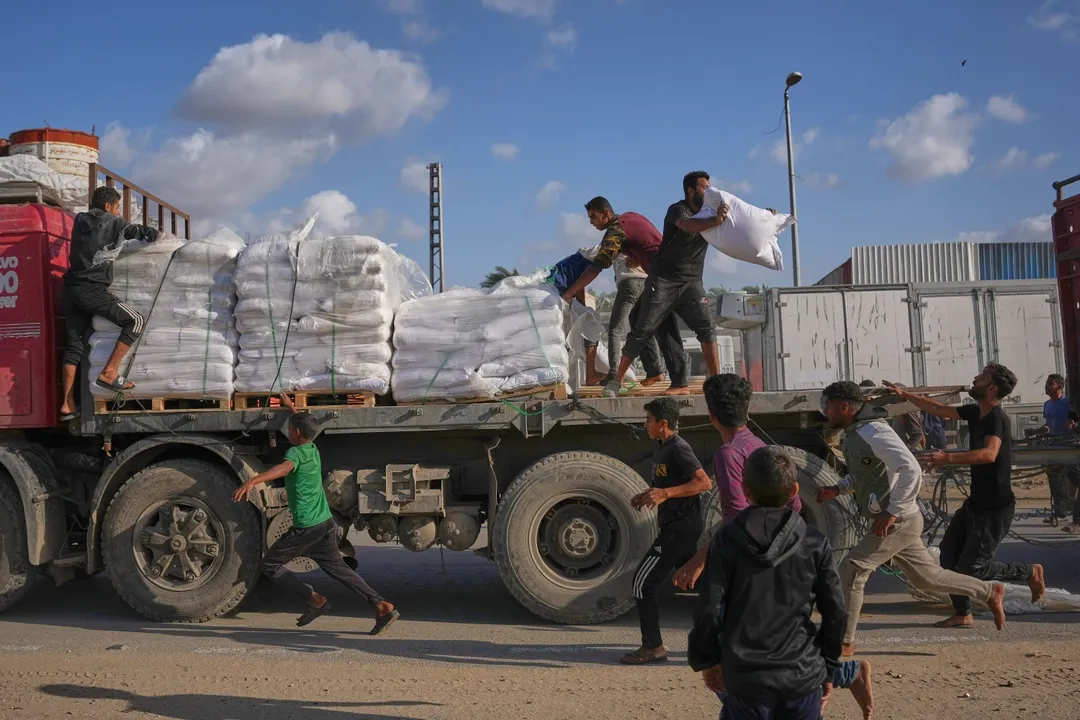
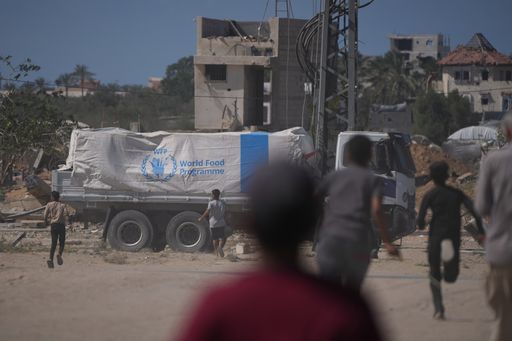
Palestinians grab sacks of flour from a moving truck carrying World Food Programme (WFP) aid as it drives through Deir al Balah in central Gaza, Saturday, November 15, 2025. /AP

The most immediate impact of the licence revocation is that Israel will no longer allow the groups to bring supplies into Gaza or send international staffers into the territory. Israel says all suspended groups have to halt their operations by March 1.

Some groups have already been barred from bringing in aid.

The Norwegian Refugee Council, for example, said it has not been allowed to bring in supplies in 10 months, leaving it distributing tents and aid brought in by other groups.
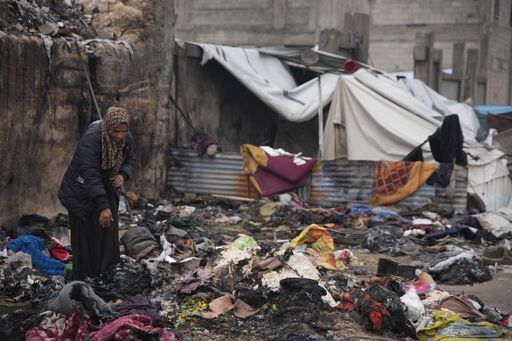
RelatedTRT World - Grandmother, grandson burn alive in Gaza tent as Israeli aid blockade drags on


Israel claims the banned groups make up only a small part of aid operations in Gaza.

But aid officials say they fulfill crucial specific functions. In a joint statement on Tuesday, the UN and leading NGOs said the organisations that are still licensed by Israel “are nowhere near the number required just to meet immediate and basic needs” in Gaza.

The ban further strains aid operations even as Gaza’s over 2 million Palestinians still face a humanitarian crisis more than 12 weeks into a ceasefire. The UN says that although famine has been staved off, more than a quarter of families still eat only one meal a day and food prices remain out of reach for many; more than 1 million people need better tents as winter storms lash the territory.
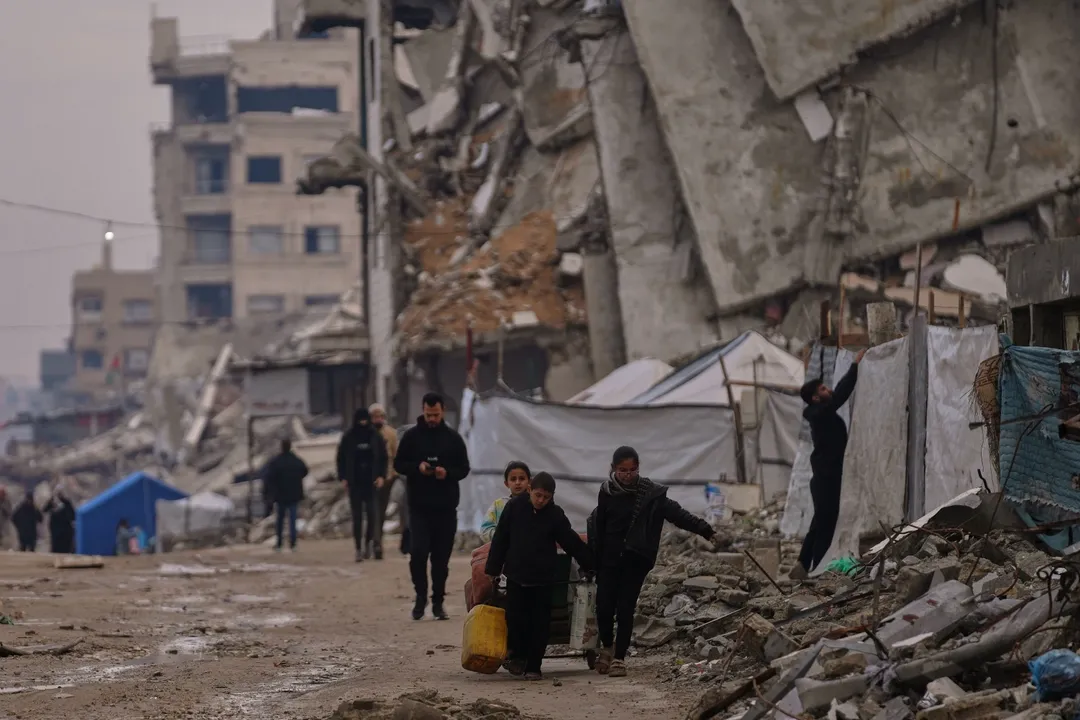

Palestinian children carry containers of water on a street surrounded by buildings destroyed during Israeli air and ground operations in the Sheikh Radwan neighbourhood, in Gaza, Tuesday, December 30, 2025. /AP
RelatedTRT World - Türkiye and seven other states press Israel to lift restrictions on Gaza aid


Why were licences revoked?

Earlier this year, Israel introduced strict new registration requirements for aid agencies working in Gaza. Most notably, it required groups to provide the names and personal details of local and international staff and said it would ban groups for a long list of criticisms of Israel.

The registration process is overseen by Israel’s Ministry for Diaspora Affairs and Combating Antisemitism, led by a far-right member of the ruling Likud party.

Israel says the rules aim to prevent Palestinian resistance group Hamas and others from “infiltrating the groups”, something it has claimed was happening throughout its two-year-old war on Gaza.

The UN, which leads the massive aid programme in Gaza, and independent groups deny the allegations and Israeli claims of major diversion of aid supplies by Hamas.

Aid organisations say they did not comply, in part, because they feared that handing over staff information could endanger them.

More than 500 aid workers have been killed in Gaza during the Israeli genocide, according to the United Nations.

The groups also said Israel was vague about how it would use the data.
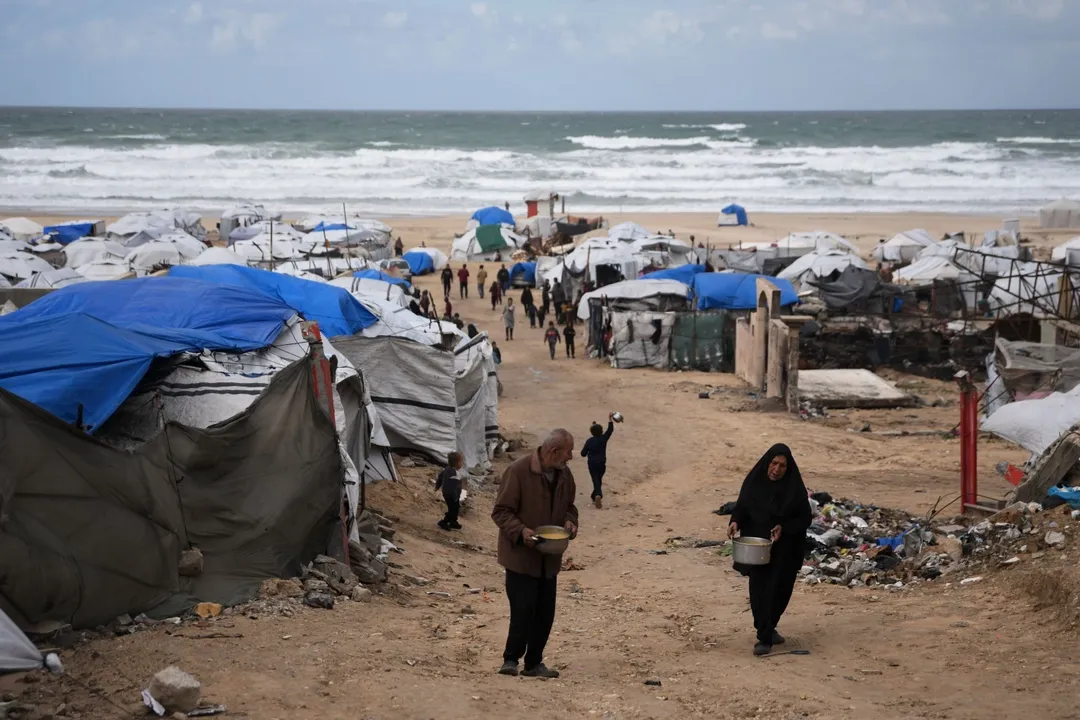

Palestinians receive donated food at a temporary camp for displaced people, on the beach near the port of Gaza City, Sunday, December 28, 2025. /AP

“Demanding staff lists as a condition for access to territory is an outrageous overreach,” Doctors Without Borders, known by its French acronym MSF, said on Friday. It said Israeli officials had refused its attempts to find alternatives.

A December report on MSF issued by an Israeli government team recommended rejection of the group’s licence. It pointed primarily to statements by the group criticising Israel, including referring to its campaign in Gaza as genocide and calling its monthslong ban on food entering the territory earlier this year as “a starvation tactic.” It said the statements “violated neutrality and constituted delegitimisation of Israel.”

MSF on Friday said that its statements cited by Israel simply described the destruction its teams witnessed in Gaza.


“The fault lies with those committing these atrocities, not with those who speak of them,” it said.

Aid groups have a week from December 31 to appeal the process.
RelatedTRT World - Israel kills two Palestinians, wounds 18 in Gaza despite ceasefire


Medical services could see biggest impact

Independent NGOs play a major role in propping up Gaza’s health sector, devastated by two years of Israeli bombardment and restrictions on supplies.

MSF said Israel’s decision would have a catastrophic impact on its work in Gaza, where it provides funding and international staff for six hospitals as well as running two field hospitals and eight primary health centres, clinics and medical points. It also runs two of Gaza’s five stabilisation centres, helping children with severe malnutrition.
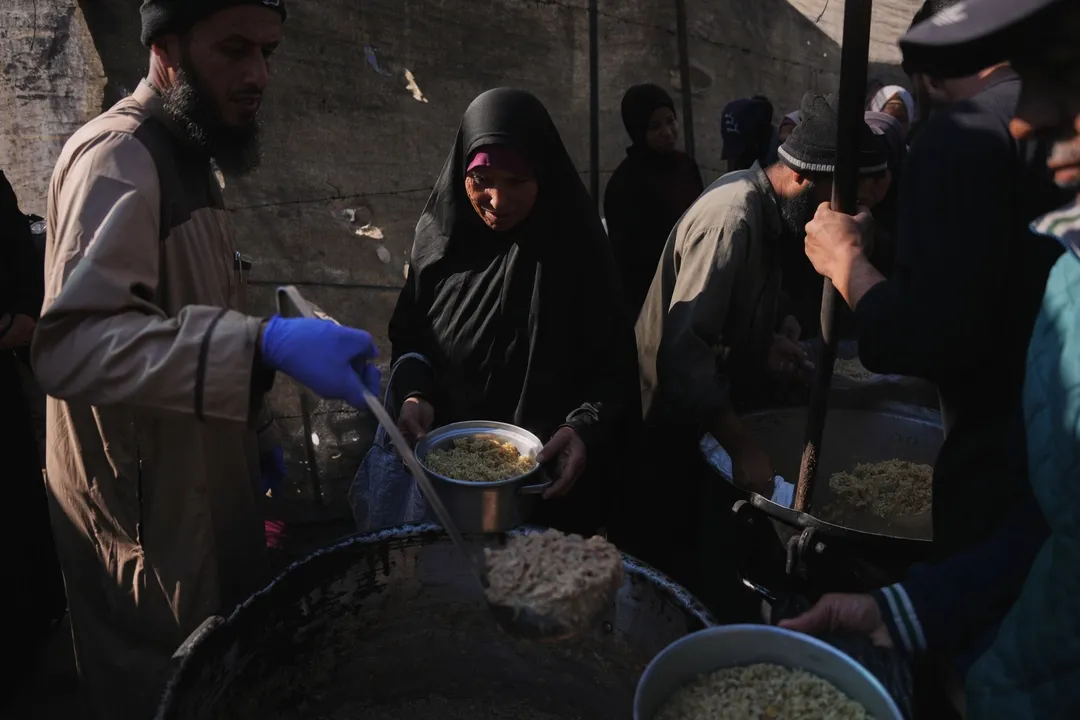

A Palestinian woman receives donated food at a community kitchen in Deir al-Balah, central Gaza, Thursday, December 25, 2025. /AP

Its teams treated 100,000 trauma cases, performed surgeries on 10,000 patients and handled a third of Gaza’s births, the group says. It has 60 international staffers in the occupied West Bank and Gaza and more than 1,200 local staff — most medical professionals.

Since the ceasefire began in early October, MSF has brought in about 7 percent of the 2,239 tonnes (2,032 metric tonnes) of medical supplies that Israel has allowed into Gaza, according to a UN tracking dashboard. That makes it the largest provider of medical supplies after UN agencies and the Red Cross, according to the dashboard.

Medecins du Monde, another group whose licence is being halted, runs another four primary health clinics.

Overburdened Palestinian staff

Aid groups say the most immediate impact will likely be the inability to send international staff into Gaza.

Foreign staff provide key technical expertise and emotional support for their Palestinian colleagues.

“Having international presence in Gaza is a morale booster for our staff who are already feeling isolated,” said Shaina Low, communications adviser for the Norwegian Refugee Council (NRC), which is one of the main NGOs providing shelter supplies and fresh water to displaced people.

NRC has roughly 30 international staff who rotate in and out of Gaza, working alongside some 70 Palestinians.

While any operations by the 37 groups in the occupied West Bank will likely remain open, those with offices in occupied East Jerusalem, which Israel considers its territory, might have to close

.
RelatedTRT World - Israel's NGO deregistration measures endanger humanitarian lifelines in Gaza, UN warns


Halt on supplies

Many of the 37 groups already had been blocked from bringing supplies into Gaza since March, said Bushra Khalidi, Oxfam's policy lead for Israel and the occupied Palestinian territories.

What changes with the formal licence revocation is “that these practices are now formalised, giving Israel full impunity to restrict operations and shut out organisations it disagrees with,” she said.

Some of the groups have turned to buying supplies within Gaza rather than bringing them in, but that is slower and more expensive, she said. Other groups dug into reserve stocks, pared down distribution and had to work with broken or heavily repaired equipment because they couldn’t bring in new ones.

Amed Khan, an American humanitarian philanthropist who has been privately donating medicine and emergency nutrition for children to Gaza, said the impact extends beyond the aid groups.

He relies on NGOs to receive and distribute the supplies, but the fewer groups that Israel approves, the harder it is to find one.

“It’s death by bureaucracy,” he said.
SOURCE:AP
Pro-Palestine activists vandalise Scotland aircraft factory linked to Israeli supplier

No groups have claimed responsibility for the vandalism of the factory, which included graffiti on walls and damage done to computers on site.

The New Arab Staff
04 January, 2026

A group of pro-Palestine activists stormed and vandalised an aerospace manufacturing factory located near Edinburgh, protesting its links to Israel.

Images posted online showed the Bruntons Aero Products site spray-painted with slogans in red, shortly after midnight on New Year’s Day.

The factory was targeted due to its supply of specialist parts for the arms and defence companies Leonardo and BAE Systems, both of which have garnered international criticism for their links to Israel amid the devastating war on Gaza.

The companies are accused of supplying the Israeli military with components for F-35 fighter jets used in attacks on the besieged enclave.

According to various reports, the group of activists also used hammers to cause damage to computers.

One slogan graffitied on the site read: "There’s only one way this ends". In other social media videos and photos, the activists said that "direct action" was the only way to stop companies from "supporting Israeli occupation crimes".

Police have said they are investigating the incident, with a Police Scotland spokesperson confirming "inquiries are ongoing" after they received a report of a break-in and damage at the premises.

No group has claimed responsibility for the incident yet; however, Leonardo’s factory in Edinburgh has previously been subjected to attacks.

In July, activists from Shut Down Leonardo Edinburgh drove a fence into a nearby factory belonging to the company and were later arrested. In another incident a month later, demonstrators against the war on Gaza blocked the entrance to the site by parking a van there.

The direct action comes as the death toll from Israel’s offensive in Gaza topped 71,385 on Sunday. Leading international rights groups accuse Israel of carrying out war crimes and have determined the war to be a genocide.

The war has plunged Gaza into a deep humanitarian crisis and triggered famine in parts of the enclave last year, resulting in scores of people dying from malnutrition.

Rights groups state that Israel is also accused of displacing the population, targeting civilian areas including hospitals and displacement camps, as well as heavily restricting emergency aid.

Similar protests against companies and factories linked to Israel have also taken place around the world.

In April, dozens of pro-Palestine activists mobilised in Morocco, where a Maersk ship suspected of transporting F-35 fighter jet components to Israel was believed to be.

Activists with BDS Morocco, MaskOff Maersk, and the Palestinian Youth Movement said they believed the ship was carrying a bulk shipment of "surface analysers", devices used for spot repairs on damaged F-35s — equipment deemed critical to maintaining the jets currently deployed by Israel to bomb Gaza.
South Korea’s Lee Jae Myung begins landmark China visit to meet Xi Jinping

4-day state visit marks Lee's first trip to China since taking office in June 2025

Berk Kutay Gokmen |04.01.2026 - TRT/AA


ISTANBUL

South Korean President Lee Jae Myung arrived in Beijing on Sunday for talks with Chinese President Xi Jinping, according to visuals shared by Chinese state media.

The four-day state visit marks Lee's first to China since taking office in June 2025, and also the first trip by a South Korean president to the country since 2019.

Lee will hold talks with Xi on Monday, marking their second meeting in just two months, following their meeting on the sidelines of the Asia-Pacific Economic Cooperation summit in Gyeongju in early November, when Xi visited South Korea for the first time in 11 years.

In his meeting with Xi, Lee is expected to discuss economic cooperation and peace efforts on the Korean Peninsula and would seek Beijing’s involvement in securing a breakthrough in resolving issues on the Korean Peninsula, according to Yonhap news agency.

South Korea aims to stably manage its relations with China, a key partner in trade, tourism and peace efforts on the Korean Peninsula while also maintaining a strong alliance with the US under the Lee administration's "pragmatic" diplomatic approach.

Lee’s visit to China coincided with ballistic missile launches by North Korea, China’s ally, on Sunday. It was Pyongyang’s first ballistic missile launch since November.

Accompanied by a large business delegation, Lee will also attend a Korea-China economic forum in Beijing on Monday to discuss expanding cooperation in artificial intelligence, green energy, supply chains and tourism, among other areas.

The two sides are expected to sign more than 10 memorandums of understanding for cooperation in various areas, according to his office.

Lee will meet Chinese Premier Li Qiang and Zhao Leji, China’s top legislator, before heading to Shanghai on Tuesday. There, he plans to attend a startup event with Korean and Chinese entrepreneurs before returning home on Wednesday.

On Friday, Lee told China's state broadcaster CCTV News in an interview that “respecting the one-China principle and maintaining peace and stability in Northeast Asia, including in the Taiwan Strait, are very important.”

China and South Korea formally established diplomatic relations in1992. The trade volume between the two countries reached $267.6 billion in 2024.

Separately, Irish Prime Minister Micheal Martin also arrived in Beijing on Sunday for a five-day official visit to meet Xi and Li, according to CGTN, which marked the first visit by an Irish premier in 14 years.

 Soundproofing foam in focus in probe of deadly Swiss bar fire


By AFP
January 3, 2026


The question of whether safety standards were respected has been debated since a bar fire in Crans-Montana, Switzerland, killed 40 people - Copyright AFP MAXIME SCHMID

The soundproofing foam covering the ceiling of a Swiss ski resort bar that went up in flames on New Year’s Eve, killing 40 people, is being closely scrutinised by investigators.

The question of whether safety standards were respected has been debated since the fire broke out at Le Constellation bar in Switzerland’s glitzy resort town Crans-Montana at around 1:30 am (0030 GMT) on Thursday, as the venue was crammed with young partygoers.

Beatrice Pilloud, the lead prosecutor in Switzerland’s southwestern Wallis canton, told reporters Friday that the leading hypothesis was that “sparklers or Bengal candles attached to champagne bottles and lifted too close to the ceiling” of the bar’s basement had ignited the deadly blaze.

One video shared on social media showed the low ceiling — covered with soundproofing foam — catching alight and the flames spreading quickly, as revellers continued to dance, unaware of the death trap they were in.

Once they realised, panic set in.

“The investigation is indeed focusing on the installation of this foam”, and it will have to determine whether this soundproofing material “is compliant” and whether it “caused the fire or not”, Pilloud said.


– ‘Very easily flammable’ –


For Freddy Rigaux, a former professional firefighter in France and a court-appointed expert, the material visible in videos shared online corresponds to products that are “easily, even very easily, flammable”.

It clearly did not meet the so-called M1 fire-resistance standards required for ceilings in public buildings in France, he said, explaining that M1-rated materials are combustible, but not flammable.

“They will degrade under the effect of heat, but will not produce flames, particularly flaming droplets as seen in the video,” he said.

When soundproofing foam is not treated with flame retardants, fire can spread very rapidly, the expert explained.


– ‘Inconceivable’ –


According to Romain Amisse, another court-appointed fire expert, the fumes emitted when such material burns are toxic, especially in very confined spaces, as is the case in the Le Constellation’s packed basement.

He said the Swiss tragedy was reminiscent of the Cuba Libre bar fire, which killed 14 people in Rouen, northern France, in 2016.

In Crans-Montana, “you have pretty much the same situation, with highly flammable foam on the ceiling that produces a lot of smoke”, he said.

David Zenouda, the vice-president of the Union of Trades and Industries in the Hotel and Catering Sector in Paris, said using the type of foam seen in the Crans-Montana images for soundproofing a venue was “inconceivable”.

“For soundproofing, we have specific materials for covering ceilings and walls, creating a kind of box within a box,” he told AFP.

What you want, he said, was to create a “box with a plasterboard panel… on which you place tar paper panels with rock wool, and then another panel”.

“It is very complex and requires significant investment,” he acknowledged.

By contrast, he said, the method that appears to have been used at the Le Constellation bar is equivalent to “soundproofing material for media booths or recording studios”, not for establishments open to the public.

The danger posed was “exactly the same” as if the bar managers had decided to cover their venue with nylon sheets, he said.

“Combined with the sparklers… the effects would have been the same.”


Criminal case opened against managers of Swiss bar after deadly fire

The blaze on New Year’s Day at Le Constellation bar in Crans-Montana left at least 40 people dead.

Aftermath of New Year’s Day fire at Swiss ski resort
Mourners pay tribute to the victims of the fire at the Le Constellation venue, Crans-Montana, Switzerland. | Jean-Christophe Bott/EPA

Swiss prosecutors have opened a criminal investigation into the two managers of a bar where a fire on New Year’s Day killed at least 40 people and injured more than 100.

The investigation includes the suspected offenses of negligent homicide, causing bodily harm by negligence and arson by negligence, the prosecutors’ office in the canton of Valais said in a statement on Saturday.

The likely cause of the fire at Le Constellation bar in Crans-Montana was sparklers on bottles being carried too close to the ceiling, a preliminary investigation found. The blaze began about 1:30 a.m. local time on Thursday, according to the reports.

Stephane Ganzer, head of security in Valais, told Reuters news agency that the investigation would determine if the bar had undergone its annual building inspections, but that the town had not raised concerns or reported problems to the canton. The bar is owned by a French couple, according to media reports. 

Swiss Justice Minister Beat Jans told a press conference in Crans Montana on Saturday that the first priority is providing the best possible medical care and identifying the deceased. Eight Swiss nationals among those killed were the first to be identified on Saturday, according to media reports.


France to suspend imports of certain fruits over banned pesticide residues

Decree to block products containing substances prohibited in EU aims to protect consumers and farmers, premier says

Beyza Binnur Donmez |04.01.2026 - TRT\AA


GENEVA

France will suspend the import of fruits containing residues of pesticides banned in the EU, French Prime Minister Sebastien Lecornu said on Sunday.

In a post on US social media platform X, Lecornu said: "A decree will be issued in the coming days, at the initiative of the Minister of Agriculture Annie Genevard to suspend the importation of products containing residues of substances banned in Europe: mancozeb, glufosinate, thiophanate-methyl, and carbendazim."

He said the measure will affect "avocados, mangoes, guavas, citrus fruits, grapes, and apples from South America and elsewhere," adding that they "will no longer be allowed to enter the country."

Lecornu said "stricter controls will be carried out by a specialized team to ensure compliance with our health standards."

He described the move as "a first step" to protect agricultural sectors and consumers and to combat "unfair competition," calling it "a true issue of justice and fairness for our farmers."
Japan’s Nuclear Talk Just Woke a Sleeping Dragon—and a Madman

January 3, 2026
By: Brandon J. Weichert

The National Interest 
Japan’s recent militaristic rhetoric has provoked the wrath of North Korea—but no one in Asia has any idea how Pyongyang will actually respond yet.

If there is any one thing that unites America’s Asian rivals, such as China and North Korea, it is a shared historical loathing of Japan. In recent weeks, the government of new Japanese prime minister Sanae Takaichi has provoked a verbal war with China over the issue of Taiwan’s sovereignty. It has claimed that, if China were to attack its democratic neighbor, Japanese forces would defend it.

That, in turn, has triggered a wave of historical resentment and recriminations—not only from China, but from North Korea. Of course, Japan is not only under threat from the People’s Republic of China (PRC) and its seemingly unstoppable rise to regional dominance. It is further threatened by North Korea’s mad dash for nuclear weapons supremacy—and the fact that Pyongyang is not apparently constrained by international norms on their development.

North Korea Draws a Red Line for Japan

North Korea’s government promptly declared that Japan’s nuclear weapons ambitions “must be prevented at any cost.”

Perhaps it was just a little brinkmanship on the part of the North Koreans, who have long been the subject of Japanese, American, and global ire due to their unrepentant pursuit of nuclear weapons. Pyongyang might believe the shoe is on the other foot.

Yet one cannot underestimate the historical significance behind Japan being allowed to fully rearm. The brutality of Japanese forces in World War II—specifically directed toward Koreans and Chinese—are well-documented. This is why the Chinese and both Koreas have spent years on edge over the prospects that Japan’s military power was slowly being restored under the guidance of their American benefactors.

Of course, China and North Korea are replete with their own histories of brutality. But outsiders should not discount the real pain that the two countries experience when they see and hear Japanese rearmament underway. Indeed, that can possibly be used by these countries to justify their own military buildup and aggression toward their neighbors.

Tokyo’s comments about rearmament were specifically geared toward China. Now, however, Tokyo must bear in mind the threat that Pyongyang is clearly making toward it.

And while self-defense is a time-honored tradition in international law, the fact remains that Tokyo’s new government may have inflicted a significant headache upon themselves needlessly. China was not necessarily threatening Japan.

While Japan always had to worry about North Korea’s nuclear arms buildup, Pyongyang was not actively threatening Japan—until the recent statements about rearmament came from Tokyo.

North Korea Is No Longer a Second-Rate Threat to Japan

For all the talk about Japan’s military superiority—and there can be no doubt that Japan’s military is more powerful than it has been given credit for—it is important for Tokyo’s policymakers to understand that North Korea’s nuclear weapons arsenal, along with its chemical and biological weapons stockpiles and its increasingly advanced ballistic missiles, make it a serious foe.

A military buildup by Japan will take time. And the more threatened North Korea feels by that buildup, the more likely its leaders are to lash out at Japan long before Tokyo is prepared to fight back.

North Korea’s growing nuclear weapon arsenal is estimated to be around 50 warheads (though we don’t know for sure, given the opaque nature of North Korea’s regime). Intelligence assessments indicate that there are more than enough materials to rapidly produce more nuclear weapons for North Korea. What’s more, Pyongyang has perfected their ballistic missile technologies significantly and today possess a robust array of missiles, from short-, medium-, intermediate-range, and intercontinental ballistic missiles.

There remains some argument among experts, but the US Defense Intelligence Agency (DIA) assessed a decade ago that the North Koreans had already mastered miniaturization of nuclear warheads. Now, North Korea is building submarine-launched ballistic missiles (SLBMs). Plus, Pyongyang’s alliance with Russia is giving it access to unprecedented new military technology—including advanced submarine technology—meaning that North Korea is now becoming a real regional powerhouse militarily.

As America Turns Inward, Japan Must Fend for Itself

Japan is understandably concerned about its position in a region that is quickly being upended by three trends: the rise of China, the advancement of North Korea’s military (thanks largely to Russia), and the reduction of American commitment to the Indo-Pacific. These three trends are clearly concerning to the Japanese government.

This is the real reason why Takaichi’s new government entered power by making such unusually bellicose statements. Tokyo really wanted to see what Washington’s reaction to the reaction of either China or North Korea would be. Thus far, it now sees that it is increasingly on its own

It is highly unlikely that Tokyo anticipated their comments about Taiwan’s sovereignty and China would have prompted such a nasty response from Pyongyang. Now, because of the historical grievances and the fact that the Indo-Pacific order is fundamentally changing, Tokyo will need to reassess the way it moves forward. Otherwise, China’s rise might be the least of its worries.

About the Author: Brandon J. Weichert

Brandon J. Weichert is a senior national security editor at The National Interest. Recently, Weichert became the host of The National Security Hour on America Outloud News and iHeartRadio, where he discusses national security policy every Wednesday at 8pm Eastern. Weichert hosts a companion book talk series on Rumble entitled “National Security Talk.” He is also a contributor at Popular Mechanics and has consulted regularly with various government institutions and private organizations on geopolitical issues. Weichert’s writings have appeared in multiple publications, including The Washington Times, National Review, The American Spectator, MSN, and the Asia Times. His books include Winning Space: How America Remains a Superpower, Biohacked: China’s Race to Control Life, and The Shadow War: Iran’s Quest for Supremacy. His newest book, A Disaster of Our Own Making: How the West Lost Ukraine is available for purchase wherever books are sold. He can be followed via Twitter @WeTheBrandon.

Kenya mourns legendary ‘super tusker’ elephant Craig after death in national park


Kenya’s elephant population has grown from 36,280 in 2021 to 42,072 in 2025

Saturday 03 January 2026 


The Amboseli Trust for Elephants said Craig had died of natural causes

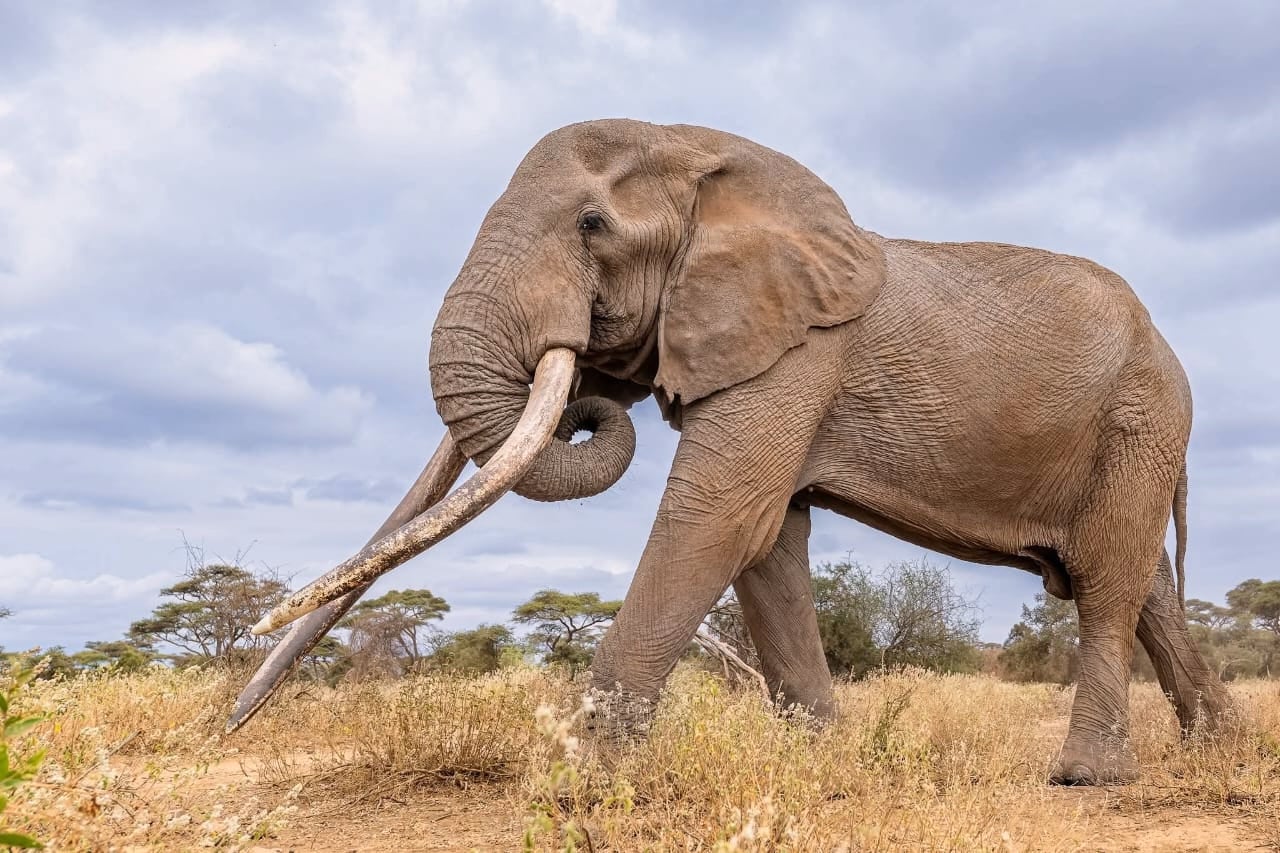
Kenyans are mourning the death of Craig, a beloved 'super tusker' elephant whose life in the wild symbolised the nation's growing success in protecting its elephant population from ivory poachers.

The bull elephant, aged 54, passed away on Saturday in Amboseli National Park, a protected area in southern Kenya popular with safari tourists. The Kenya Wildlife Service confirmed his death, describing Craig as 'the legendary super tusker famed for its immense, ground-sweeping tusks and calm, dignified presence'.

The Amboseli Trust for Elephants stated Craig died of natural causes, expressing gratitude to everyone who helped the animal 'live out his life naturally'.

Local broadcaster NTV aired a segment on the death of Craig, saying of the elephant that it was a rare creature as “one of the last remaining elephants identified as super tuskers in Africa.”

The term describes a bull elephant with tusks that weigh over 45 kilograms each. Tusks that size are so long that they scrape the ground as the elephant walks, according to the Tsavo Trust, a non-profit conservation group in Kenya. Females that grow long tusks are called iconic cows, the group says.

In Amboseli National Park, a protected area whose vegetation ranges from savannah woodland to open grasslands near the Tanzania border, Craig stood out as an attraction to tourists and a notable creature to conservationists working to protect elephants from poachers and other threats.

The elephant was said to be calm, “often pausing patiently as visitors photographed and filmed him,” the statement by Kenya Wildlife Service said.


This undated photo shows Craig, the iconic elephant with super tusks, died from natural causes on Saturday, Jan. 3, 2026 in Amboseli National Park, Kenya. (Kenya Wildlife Service via AP) (Kenya Widlife Service)

In 2021, Craig was adopted by beer maker East African Breweries through its popular Tusker brand, reflecting his prominence but also underscoring collaboration between conservation groups and others in Kenya.

Kenya’s national parks and reserves are home to a variety of wildlife species and attract millions of visitors annually, making the country a tourism hotspot.

The elephant population has grown from 36,280 in 2021 to 42,072 in 2025, the latest official figures show.

In the Mwea National Reserve, a protected area east of the Kenyan capital of Nairobi, the elephant population grew spectacularly, overwhelming the ecosystem and requiring the relocation of about 100 elephants in 2024.

The African savanna elephant is the largest land animal. Adult males weigh about six tons. Craig “fathered a number of calves, ensuring that his powerful bloodline and gentle character live on across generations," the wildlife service said.


Conservationists in Kenya pay tribute to beloved 'super tusker' elephant Craig

Kenyans are mourning the death of a beloved "super tusker" elephant named Craig

ByNICHOLAS KOMU  and RODNEY MUHUMUZA
 Associated Press
January 3, 2026,

NAIROBI, Kenya -- Kenyans are mourning the death of a beloved “super tusker” elephant whose long life in the wild came to symbolize the country's increasingly successful efforts to protect the mammals from ivory poachers.

The bull elephant who died on Saturday was named Craig. He lived in Amboseli National Park, a protected area in southern Kenya that is a favorite of safari tourists, the Kenya Wildlife Service said in a statement.

“Craig, the legendary super tusker famed for its immense, ground-sweeping tusks and calm, dignified presence, passed on at the age of 54," the statement said.

The Amboseli Trust for Elephants said Craig had died of natural causes. The conservation group said it was grateful to everyone who worked to help the animal “live out his life naturally.”

Local broadcaster NTV aired a segment on the death of Craig, saying of the elephant that it was a rare creature as “one of the last remaining elephants identified as super tuskers in Africa.”

The term describes a bull elephant with tusks that weigh over 45 kilograms each. Tusks that size are so long that they scrape the ground as the elephant walks, according to the Tsavo Trust, a non-profit conservation group in Kenya. Females that grow long tusks are called iconic cows, the group says.

In Amboseli National Park, a protected area whose vegetation ranges from savannah woodland to open grasslands near the Tanzania border, Craig stood out as an attraction to tourists and a notable creature to conservationists working to protect elephants from poachers and other threats.

The elephant was said to be calm, “often pausing patiently as visitors photographed and filmed him,” the statement by Kenya Wildlife Service said.

In 2021, Craig was adopted by beer maker East African Breweries through its popular Tusker brand, reflecting his prominence but also underscoring collaboration between conservation groups and others in Kenya.

Kenya’s national parks and reserves are home to a variety of wildlife species and attract millions of visitors annually, making the country a tourism hotspot

The elephant population has grown from 36,280 in 2021 to 42,072 in 2025, the latest official figures show.

In the Mwea National Reserve, a protected area east of the Kenyan capital of Nairobi, the elephant population grew spectacularly, overwhelming the ecosystem and requiring the relocation of about 100 elephants in 2024.

The African savanna elephant is the largest land animal. Adult males weigh about six tons. Craig “fathered a number of calves, ensuring that his powerful bloodline and gentle character live on across generations," the wildlife service said.

___ Muhumuza reported from Kampala, Uganda.


Saturday, January 03, 2026

Opinion

Germany: Anti-Palestinian racism on the rise


January 3, 2026
 Middle East Monitor.


Demonstrators holding Palestinian flags and placards gather at Oranienplatz in the Kreuzberg district and march through the city center during a pro-Palestinian demonstration calling for sanctions against Israel in Berlin, Germany on December 20, 2025. [Halil Sağırkaya – Anadolu Agency]

by Leon Wystrychowski


In 2003, the Antidiskriminierungsnetzwerk Berlin (Anti-Discrimination Network Berlin, ADNB) was founded in the German capital. Since then, it has published annual reports documenting various forms of discrimination and what is referred to in Germany as group-focused enmity. In December, the network presented its 2023/24 Anti-Discrimination Report, concluding that racist hostility had increased by around 20 per cent over the two-year period. According to the report, “anti-Muslim and anti-Black racism were particularly prevalent,” and the most common setting for incidents was the workplace. The report further states: “For 2024, we observed an unprecedented surge in anti-Palestinian racism in the context of employment.”


Main setting: The workplace


Since October 2023, employees with Palestinian backgrounds or connections have faced severe pressure, both from state institutions and in their private lives. In January 2025, the German parliament passed a resolution ostensibly aimed at tackling antisemitism at universities. In reality, its purpose is to exclude students and academics who speak out in support of Palestine from the higher-education sector. A study from September 2025 found that 85 per cent of German researchers believe that academic freedom is under threat due to the anti-Palestinian campaigns unleashed in Germany after 7 October 2023. Activists working for public institutions have also been dismissed for this reason – among them Palestinian activist Ahmad Othman and German lawyer and politician Melanie Schweizer.

Economic repression has not been confined to academia and public institutions. It has hit artists and cultural workers especially hard. Artists who express support for Palestine are being cancelled en masse and pushed out of artistic collectives. Media professionals have also been targeted. One particularly extreme case is that of German-Turkish left-wing journalist Hüseyin Doğru, whom the federal government placed on the EU sanctions list. As a result, the father of several children is no longer permitted to work anywhere in the EU or access social-security benefits. At the same time, he is barred from leaving Germany.

These attacks disproportionately affect Palestinians, leading some to conceal their identity. Yet anyone advocating for Palestine – whether ethnic Germans, Arabs or Jews – risks being targeted. Notably, however, migrants are affected especially often – including those from the Middle East, Africa, Southern and Eastern Europe, the UK and the Americas – as they are significantly over-represented in the Palestine solidarity movement.

Anti-Palestinian and anti-Muslim racism


As the ADNB notes, anti-Palestinian racism frequently “goes hand in hand with anti-Muslim racism”. Even so, the network has observed “new racist constructions that specifically reference Palestine” since October 2023. For this reason, the organisation has decided to record anti-Palestinian racism as “a distinct and independent form of racist discrimination,” documenting cases linked specifically to Palestine as such.

The report stresses that incidents of anti-Palestinian racism “span all areas of life: employment, schools and nurseries, public transport, and interactions with the police”. They include “bans on cultural symbols such as the kufiya”, “blanket accusations labelling people as antisemites or supporters of terrorism,” insults from passers-by, and “racial profiling by the police”. Hostility towards Palestinians has “escalated into an exceptionally intense form of racist discrimination within just a few months”. Despite this, it is still “not recognised as racism by most responsible institutions and actors”.

This is hardly surprising, given that these very institutions are driving and amplifying it. The report itself addresses this, criticising the media for contributing to the “criminalisation, defamation and stereotyping of Palestinians and pro-Palestinian individuals, as well as of protests in support of Palestine”. According to the ADNB, this incitement “creates the conditions and provides the fertile ground for an increase in discrimination, violence and racist agitation targeting Palestinian communities”.

The views expressed in this article belong to the author and do not necessarily reflect the editorial policy of Middle East Monitor.

Trump insiders put on notice they're subject to criminal prosecution over Venezuela attack

Tom Boggioni
January 3, 2026 
RAW STORY

In a multi-post attack aimed at the Donald Trump administration, Rep Sean Casten (D-Il) pointed out that the attacks on Venezuela, including an invasion of the country in the wee hours of Saturday, put staffers and military officials alike at legal risk.

In an expansive 14-post tirade on Blue Sky, the Illinois Democrats started off by writing, “The legal justification the WH gave us for attacking Venezuelan boats in int’l waters without Congressional approval was weak, and exposes the WH and military staff to domestic and international criminal prosecution. They have not even sought to justify strikes within Venezuela,” before adding, “Their justification - dutifully repeated by every sycophantic member of the House GOP was that some drugs kill Americans so any international actor who sells or traffics drugs is engaged in war against America. You can drive a bus through that logic, as I noted last month."

According to the lawmaker, nothing that he has heard from the administration leading up to the abduction of President Nicolás Maduro and his wife justifies the president's actions.

“Before we left Washington last month we were given a classified briefing by Hegseth and Rubio about Venezuela that contained no classified information other than details on the location of certain military assets that were irrelevant to the question at hand,” he reported before pointing out, “That presentation was disrespectful of Congressional time and power at best. Diversionary at worst.”

Making the case that Trump is not the only one who has to be held to account, he explained, “I have no respect for Donald Trump. He diminishes everything he touches. But focusing on him right now is like being bitten by your neighbor’s unleashed, unfenced rabid dog and focusing on the dog. If we don’t hold his enablers to account we’re going to keep getting bit.”

Blaming former Senate Majority Leader Mitch McConnell (R-KY) for letting the president of the hook for leading the Jan 6 insurrection, Casten noted, “None of which is to ignore or tolerate the rabid dog. It is only to remind us all that we don’t have a monarchy; but we risk devolving into one if SCOTUS, Johnson and Thune continue to believe it is more important to cower before a felon than to stand up for the Constitution.”

You can read his entire thread here.
US activists launch street ads exposing AIPAC funding ahead of midterms

A transparency platform has begun public advertising to highlight congressional candidates receiving funding from AIPAC ahead of the 2026 primaries.

The New Arab Staff
03 January, 2026

A US-based transparency platform has launched a public street advertising campaign highlighting donations received by candidates in the 2026 congressional elections from the American Israel Public Affairs Committee (AIPAC) lobby group, The New Arab's Arabic language sister site, Al-Araby Al-Jadeed reported on Saturday.

The campaign comes as primary races begin to take shape across the country.

The website, Track AIPAC, has for the first time begun placing advertisements in public spaces drawing attention to the money congressional candidates receive from AIPAC and other related groups. The initiative aims to inform voters about candidates who accept funding from the powerful pro-Israel lobbying network.

Track AIPAC was launched in April 2024 as an unofficial and independent oversight platform monitoring pro-Israel funding and its influence on US politics.

The site compiles its data from official sources, including the Federal Election Commission, to track donations from AIPAC members and affiliated entities, election spending during primary and general races, and the candidates who receive backing from the organisation.

The platform gained wider attention following the defeat of Democratic congressman Jamaal Bowman in the 2024 elections, during which the pro-Israel lobby spent $17 million opposing him. A further $9 million was spent to prevent the re-election of Cori Bush, an effort that was also successful.


The site was founded by Corey Archibald and Casey Kennedy, who sought to make complex political finance data more accessible by transforming it into visual charts and graphics.

After collecting and refining the data, the founders presented it in formats designed to be easily understood and tracked by the public. They have also recently launched a related initiative, Track Oil PACs, which monitors donations from oil companies to political candidates.

AIPAC is widely regarded as the most influential lobbying organisation in the United States advocating for Israel. It has long faced accusations of prioritising the interests of Tel Aviv over those of Washington.

As a result, some politicians from both the Republican and Democratic parties have, over the years, called for the organisation to be registered as a foreign entity under US law. American legislation permits the acceptance of funds from foreign lobbying groups provided they are formally registered - something critics say does not apply to AIPAC.


The founders of Track AIPAC revealed their identities in November after more than a year and a half of anonymity, saying they had received threats.

In an interview at the time, they said they planned for their website to influence primary elections and to turn financial ties to AIPAC into a political liability for candidates who accept its support.

They said they were angered by the role of political money in the defeats of Bowman and Bush, as well as what they described as attacks by the organisation on Senator Bernie Sanders and other politicians, arguing that there had been no serious challenge to AIPAC’s influence.

The campaign comes ahead of the US midterm elections scheduled for November, when all 435 seats in the House of Representatives will be contested, along with 34 of the 100 seats in the Senate. Members of the House serve two-year terms, while senators are elected for six-year terms.