Copyright AP Photo
By Euronews Farsi
Published on 10/01/2026 -
The methods used by Iran's women to push back against the country's authoritarian system have gone beyond cutting their hair and burning headscarves and in a more radical direction.
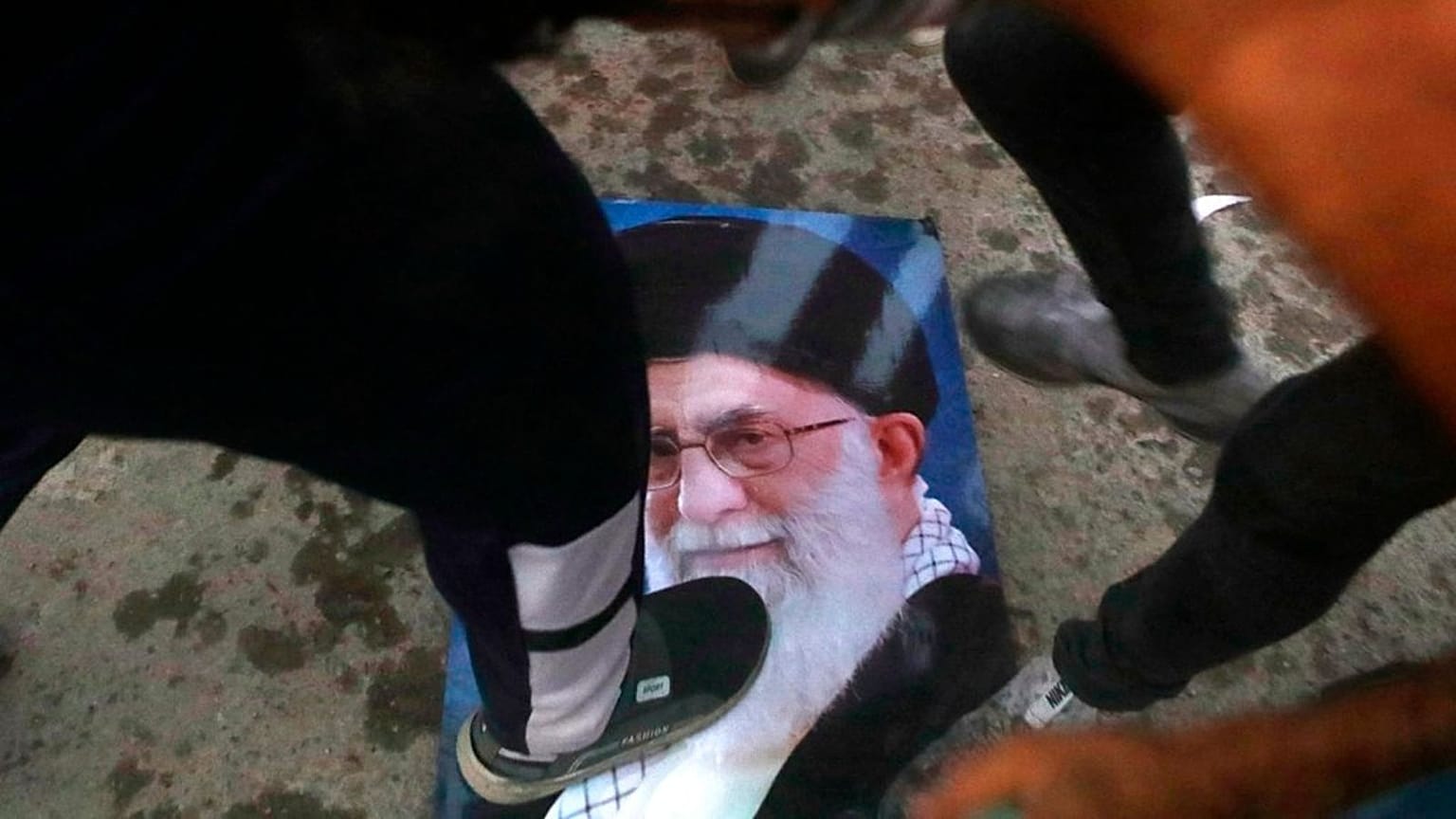
In November 2025, Omid Sarlak, a young man living in western Iran, posted a video on social media showing himself setting fire to a photograph of Iran's Ayatollah Ali Khamenei. Just hours after the video was published, his body was found inside his car with a gunshot to the head.
The same month, Samad Pourshah, a former political prisoner, carried out a similar act in protest against Sarlak’s killing, again burning a photograph of the supreme leader.
Hours later, security forces raided his home in the city of Yasuj. But he was not at home at the time and so avoided arrest and has been living in hiding ever since.
In September 2021, Qasem Bahrami, a critical Iranian poet, was arrested in Mashhad after also burning a photograph of Ali Khamenei. He was arrested and taken to an unknown location and for two months no information was available about his fate.
However, it seems that the Iranian regime's violent response to such acts of protest has not weakened the resolve of Iran’s women. On the contrary, it has pushed their struggle for freedom in a more radical direction.
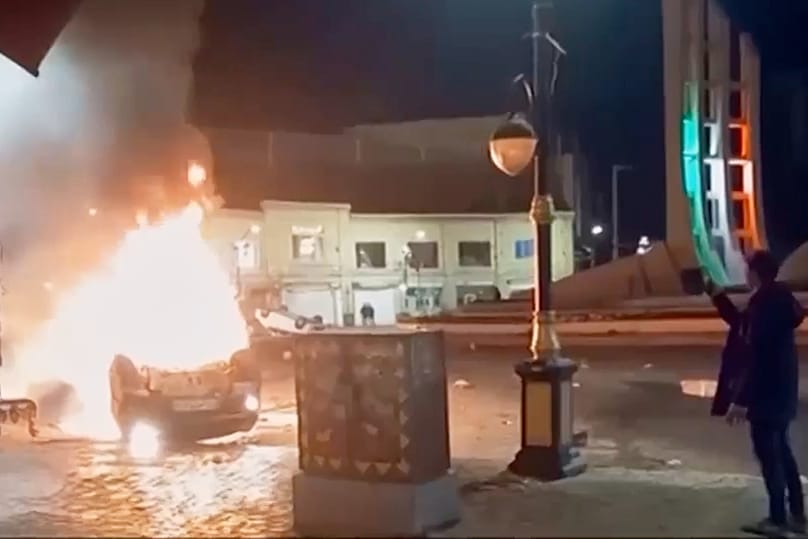
In recent days, alongside a new wave of nationwide protests, driven by public anger over economic hardship and worsening living conditions, videos have circulated widely on social media showing young women not only burning the ayatollah's portrait, but also using the flames to light their cigarettes.
In this act of protest, women have combined the burning of the Ali Khamenei's image with cigarette smoking, an activity that has long been restricted or stigmatised for women in Iranian society. Through this gesture, protesters appear to be rejecting both the political–religious authority of the regime and the strict social rules imposed on women.
Clips of this protest initiative have already been reposted thousands of times on social media around the world, making it increasingly difficult for Iranian authorities to contain it.
So, Iranian women, who had already captured global attention during the protests following the death of Mahsa Amini in 2022, through symbolic acts such as cutting their hair and burning their headscarves, have now gone a step further.
If, at the time, their actions were interpreted as a "symbolic rejection of the system's sexist and authoritarian policies," they now also take part in protests with bloody lips and perform gymnastics in the street in front of security forces.
From turban knocking to public nudity
Mahsa Amini died in detention at the age of 22 in 2022. She had been arrested for allegedly not wearing her hijab in accordance with government guidelines and her supporters believe she was beaten to death.
That incident sparked mass nationwide protests and after four months of brutal repression, during which more than 500 people were killed and over 19,400 arrested, the government managed to force the "“Woman, Life, Freedom" movement off Iran's streets. But it failed to bring an end to women’s struggle for their most basic rights.
Mass street demonstrations were violently suppressed, but resistance increasingly shifted toward symbolic and highly visible acts.
Over the past three years, Iranian society has witnessed an almost daily emergence of new forms of protest by women: appearing without hijab in universities and public spaces, knocking turbans off clerics' heads in streets, attending sport events such as marathons without a headscarf and even acts of public nudity, most notably Ahou Daryaei at Azad University in Tehran and another woman who stood naked on top of a police vehicle.
Schoolgirls' protests and the cost of poisoning
The other important feature of Iranian women's protest is that it is not restricted to any age.
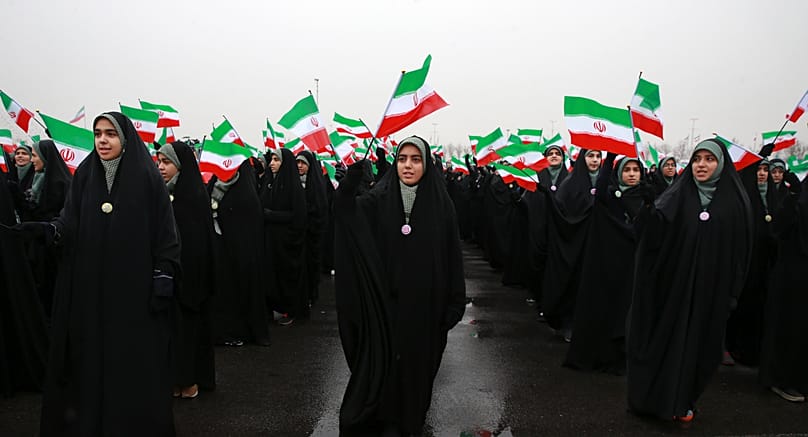
Previously, "Woman, Life, Freedom" protests even reached Iranian schools, where mainly female students sitting in schoolyards and chanted slogans against the regime. This was unprecedented in the almost five decades since the 1979 Islamic Revolution which established Iran's theocracy.
The government responded by arresting schoolchildren. Yet its anger did not appear to subside. In the months following the protests, reports emerged from across Iran of serial poisonings in girls' schools.
Students suddenly fell ill, lost consciousness and were rushed to hospitals with respiratory problems, heart palpitations and numbness.
Investigative reports indicated that more than 800 students were poisoned in schools in at least 15 Iranian cities in 2023.
The incidents continued for months. Iran's Ministry of Health eventually confirmed that a "very mild poison" had caused the symptoms.
At the time, even the deputy health minister, stated that "some individuals wanted all schools, especially girls' schools, to be shut down." One day later, he retracted his remarks.
The Iranian government denied any responsibility for the national incident and the perpetrators of the poisonings were never found.
Beyond 'food riots': Iran's protesters and the difficult path to compromise ahead

Copyright AP Photo
By Alain Chandelier
Updated 10/01/2026
EURONEWS
Contrary to the headlines in many media outlets calling Iran's protests merely "food riots," what is going on in the country is actually a deeper, more structured and complex movement.
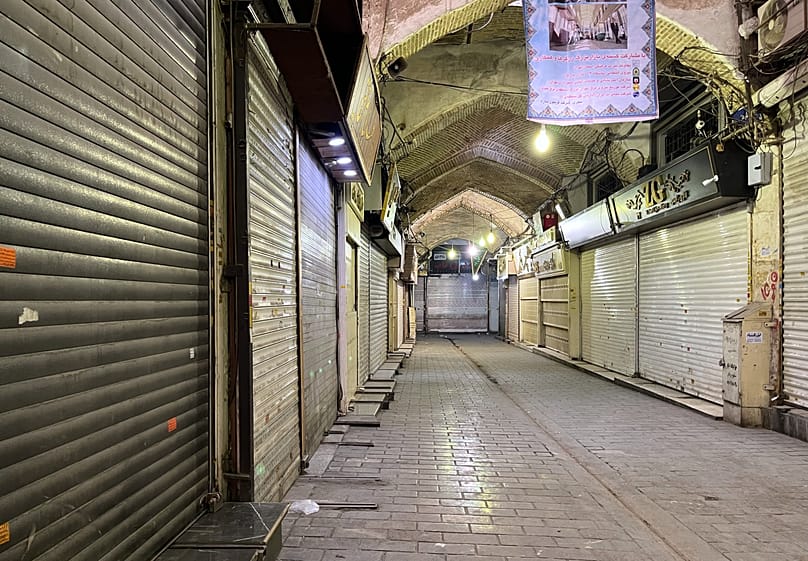
With2026 barely under way, the streets of Tehran, Mashhad, Isfahan and dozens of other cities in Iran are witnessing a wave of protests that ignited on 28 December in the Tehran Bazaar, sparked by a historic collapse of the rial.
While reports focused on the removal of currency subsidies and the skyrocketing cost of essentials, the frontlines were not occupied solely by the underprivileged.
There is a widespread, defiant presence of a “middle class pushed below the poverty line” and a “Generation Z deprived of any future.”
According to many analysts, this is not a classic 20th-century revolution for bread. It is a “Rebellion of the De-classed.”
These are individuals whose education, skills and cognitive standards belong to the global middle class, but whose economic realities have forced them into a visceral struggle for daily survival.
They have not taken to the streets just for cheaper bread. They are reclaiming their right to a future.
Iran is experiencing a phenomenon sociologists call “The Great Downgrade.”
According to official statistics, under the pressure of a 94% decline in public purchasing power and a 3,319% surge in the free-market US dollar exchange rate over the past eight years, full-time professionals such as software engineers, doctors and artists cannot afford a modest apartment or a new laptop.
In this context, individuals have not lost their cultural identity. They have lost their social standing, consumed by chronic inflation.
Imprisoned in a 'futureless present'
In a functional economy, time is an ally: you work, save, and move toward goals like buying a home or advancing education.
In Iran, time is the enemy.
When inflation outpaces savings, the faster you run, the further you drift from your aspirations. This generation is trapped in a “temporal straitjacket,” in which all energy is devoted to immediate survival, leaving no psychological space to imagine a brighter tomorrow.
To be de-classed is to be forced into a reverse time machine. Iran’s middle class feels pushed backwards into past decades.
Purchases that were routine ten years ago, such as an economical car, an international trip, or the replacement of digital devices, have become unattainable luxuries.
This sense of regression, while the world advances, generates a profound “status rage.”
When 'normalcy' becomes luxury
The cost of a “normal life,” including high-speed internet, global media access, personal choice in dress, and job security, has risen so sharply that it is effectively a luxury.
Protesters recognise they are paying the price for a 21st-century standard of living while experiencing a quality of life from a bygone era.

Falling below the 'floor of survival'
While the middle class mourns the loss of quality of life, marginalised groups are fighting for biological survival.
With skyrocketing prices for essential goods such as housing and protein, many are being excluded from the social cycle. Phenomena like sleeping on rented rooftops reflect the collapse of the survival floor.
A government that rose to power in 1979 on promises to support the underprivileged (mostazafin) is now seen in 2026 as the most blatant form of crony capitalism.
A small group of individuals closely tied to the government flaunt luxury cars and opulent lifestyles on social media, while preaching asceticism to the public.
This stark display has transformed poverty into a political injustice.

The alliance of 'empty stomachs, full minds'
In classic revolutions, the middle class often sides with the state out of fear of chaos.
In today’s Iran, however, the middle class sees itself as a fellow victim of the same system.
When a worker who hasn’t been paid for six months stands alongside a student who knows no job awaits them after graduation, a “mutual dialogue of suffering” emerges, fuelling a unified national movement.
Classical revolutions asked: “Who will govern?” Today’s protests ask: “How can we live?”
The demands for a normal life, free internet and a stable currency are not negotiations for political power; they are claims for the space to breathe.
Compromise is extremely difficult because the political system has shown it is willing to sacrifice citizens’ “normalcy” indefinitely to preserve its ideological dogmas.
State subsidies and charitable handouts can no longer soothe the humiliation of a people who recognise that their poverty stems from political mismanagement, not a lack of resources.
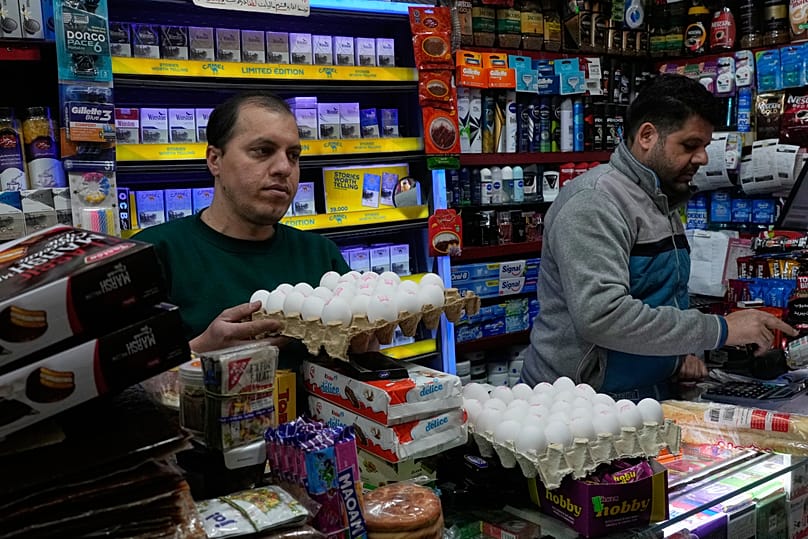
What the world is witnessing is not a cyclical disturbance but the emergence of a new political model.
This movement is led by a globally connected generation and a devastated middle class who have reached the same conclusion: the cost of silence now exceeds the cost of protest.
The goal is not to replace one ideology with another but to substitute an all-encompassing state ideology with the radical possibility of a “normal life” and a visible future.
Issued on: 10/01/2026 -
Major Iranian cities were gripped overnight by new mass rallies denouncing the Islamic republic, as activists on Saturday expressed fear authorities were intensifying their suppression of the demonstrations under cover of an internet blackout. “The determination on the streets of Iran and across the country is unprecedented... this is really essentially people fighting for their lives, feeling they have nothing to lose,” said Azadeh Pourzand, Senior Fellow at the Centre for Middle East and Global Order, noting the extreme fragility of the Iranian regime.
Video by: FRANCE 24
EU rejects violence against protesters in Iran, backs 'legitimate aspiration' for change
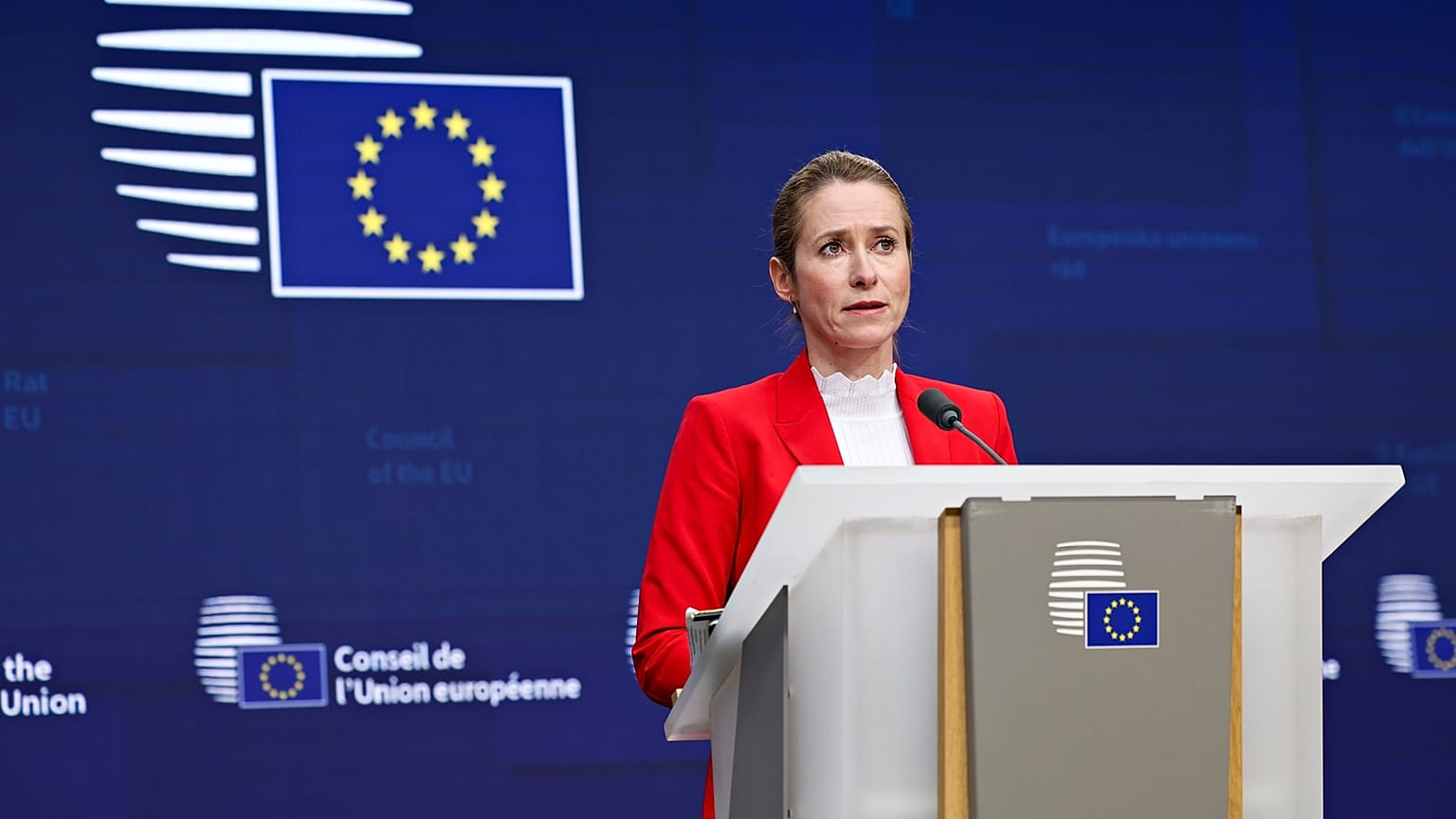
The crackdown on protesters in Iran has prompted an outcry among European leaders, with High Representative Kaja Kallas denouncing Tehran for its "disproportionate" and "heavy-handed" response.
The European Union has sharply condemned the crackdown on protesters in Iran who have taken to the streets to show their discontent over the Islamic Republic.
"The Iranian people are fighting for their future. By ignoring their rightful demands, the regime shows its true colours," High Representative Kaja Kallas said on Friday. "Images from Tehran reveal a disproportionate and heavy-handed response by the security forces. Any violence against peaceful demonstrators is unacceptable."
Separately, the European Commission denounced "the increasing number of deaths and injuries" and demanded respect for the right of peaceful assembly.
"The people of Iran are expressing their legitimate aspiration for a better life," a Commission spokesperson said during the daily briefing with journalists.
Asked whether the Commission was in favour of regime change as a result of the widespread demonstrations, the spokesperson noted that "regime change has not been part of our EU consolidated policy vis-à-vis Iran".
The protests began on 28 December, with demonstrators voicing their frustration at the country's faltering economy, skyrocketing inflation and free-falling currency. As the movement quickly spread across the country, it gradually morphed into open defiance against the theocratic regime as a whole, with chants of "Death to the dictator!" and "Death to the Islamic Republic!".
As the protests grew, Iran's Ayatollah Ali Khamenei said his government "will not back down"and vowed "no leniency". He also accused protesters of "ruining their own streets to make the president of another country happy" in reference to US President Donald Trump, who had previously warned Iran would get "hit very hard" if it killed its own citizens.
At least 42 people have been killed and more than 2,270 detained in Iran since 28 December, according to the US-based Human Rights Activists News Agency.
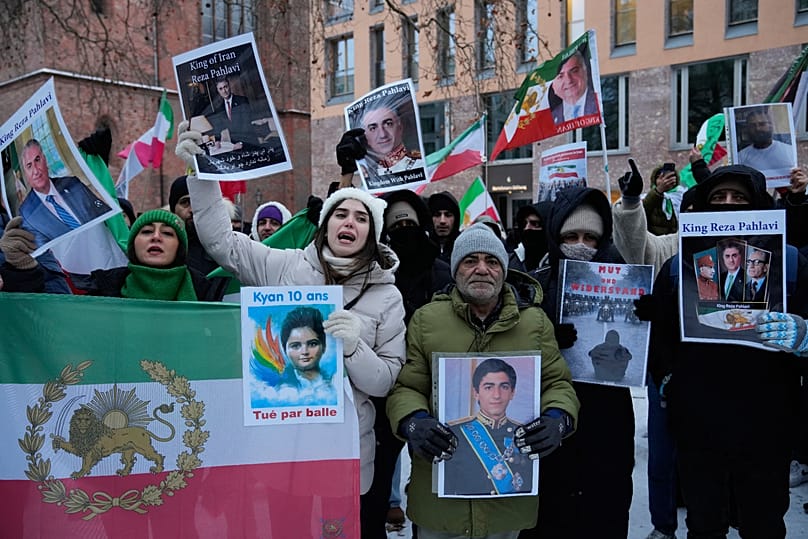
The latest escalation came on Thursday night after Reza Pahlavi, the eldest son of Iran's last shah, encouraged Iranians to fight for their freedom.
In a direct appeal, Pahlavi urged Europeans leaders to follow Trump's lead, "break their silence and act more decisively" in support of the Iranian people.
"I call on them to use all technical, financial, and diplomatic resources available to restore communication to the Iranian people so that their voice and their will can be heard and seen," he said. "Do not let the voices of my courageous compatriots be silenced."
In response to Phalavi's intervention, Tehran cut off access to the Internet and international phone calls, further fuelling the outcry at home and abroad.
"Shutting down the internet while violently suppressing protests exposes a regime afraid of its own people," Kallas said in her statement.
'Shackles of oppression'
Reactions from European leaders began pouring in on Thursday after the Internet shutdown and continued on Friday.
European Parliament President Roberta Metsola was among the first to weigh in, paying tribute to the "generation who want to tear off the shackles of oppression" and denouncing "the cruelty of a regime focused on self-preservation".
"We know the change that is underway," Metsola said in a social media video.
Belgian Prime Minister Bart De Wever said, "Courageous Iranians are standing up for freedom after years of repression and economic hardship. They deserve our full support."
His Swedish counterpart, Ulf Kristersson, echoed the message. "The self-evident demands for freedom and a better future can never in the long run be silenced with violence and oppression," Kristersson said on social media.
German Foreign Minister Johann Wadephul decried the "excessive use of violence" and urged the Iranian authorities to "adhere to their international obligations".
The Iranian Mission to the EU hit back at the expressions of solidarity with the protesters, describing them as "interventionist" and reflective of a "double-standard approach", in reference to Europe's response to the Israeli offensive on the Gaza Strip.
The protests come at a precarious time for Iran, following last year's 12-day armed conflict with Israel and the ensuing US strikes on its nuclear facilities. France, Germany and the United Kingdom later decided to reimpose UN sanctions on Iran over its non-compliance with the international agreement meant to curtail its nuclear programme.
Copyright AP Photo
By Babak Kamiar
Published on 09/01/2026 - EURONEWS
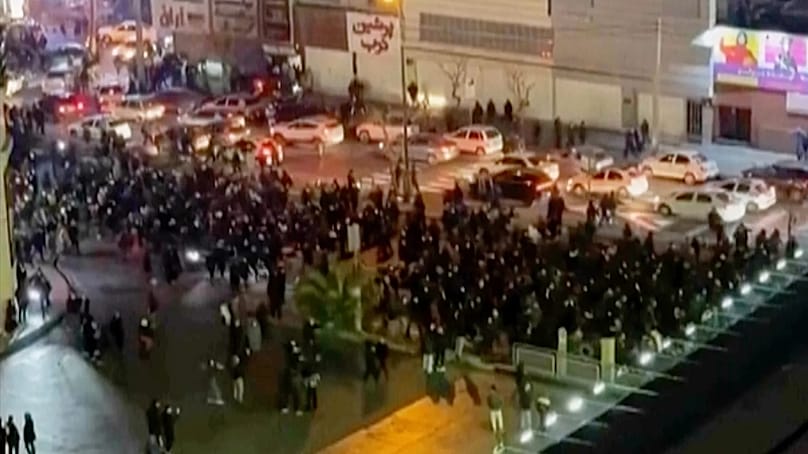
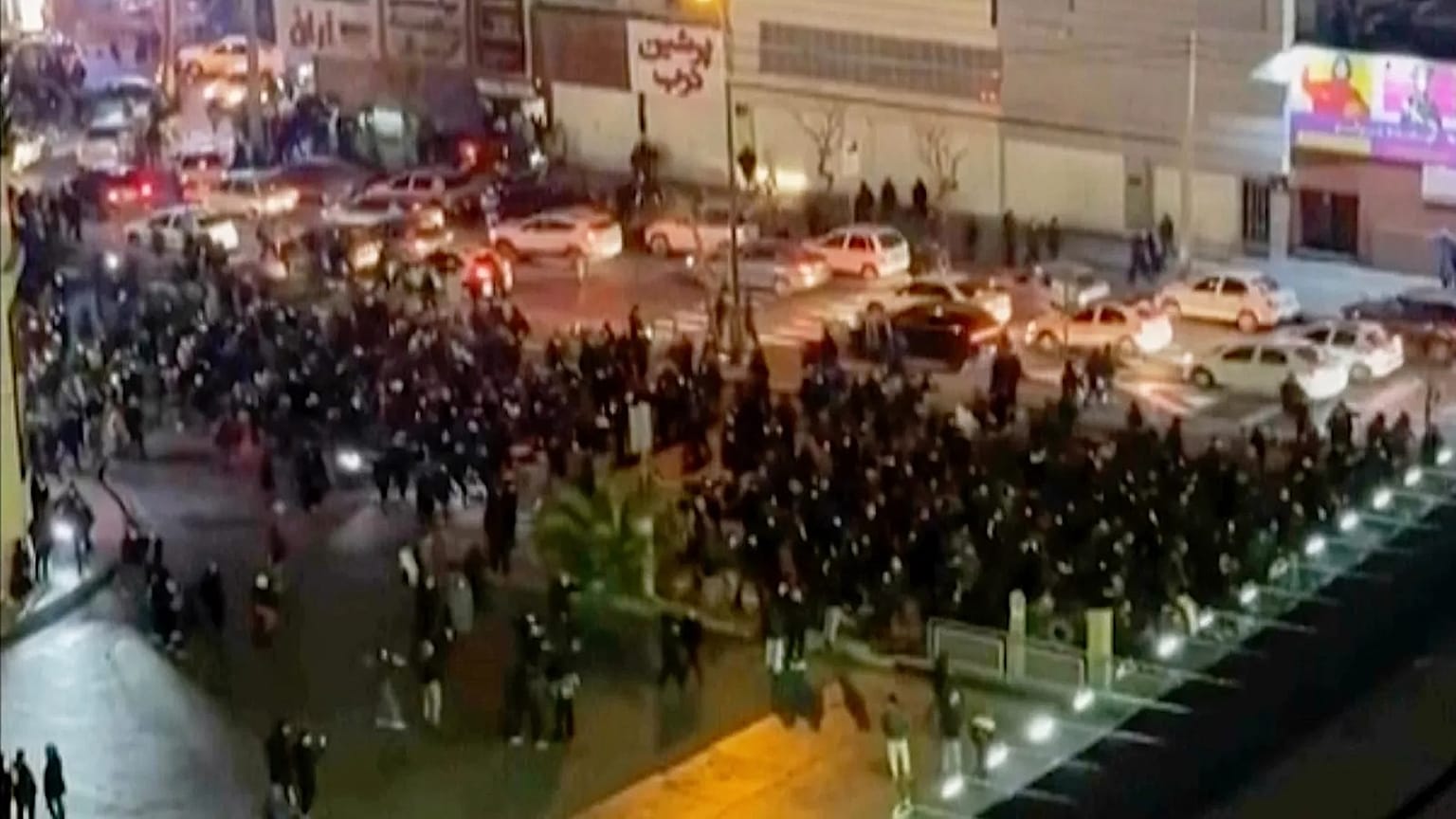
Street protests in Tehran have entered their 13th consecutive day, while since Thursday night widespread — and in some cases near-total — internet shutdowns have reduced communication with inside Iran to a minimum.
The limited images and videos circulating through social media and messaging apps suggest that protests are spreading to several cities across the country. However, due to severe connectivity restrictions, independent verification of all reports is not possible.
Images transmitted from Iran last night may remind a German audience of the days leading up to the fall of the Berlin Wall, while for many Iranians they evoke memories of the final days of the Shah Reza Pahlavi’s regime in 1979.
US President Donald Trump has described the events as “the biggest protests I’ve ever seen,” a remark that has received wide coverage in international media.
Given the speed of developments, the communications blackout, and the lack of a clear pictureof the balance of power inside the country, analysts are outlining several main scenarios for the near future.
One of the most prominent scenarios involves an escalation of repression. On Friday, Iran’s Supreme National Security Council issued a resolution announcing a “very decisive response” to the protests.
The council — the country’s highest security decision-making body — claimed that recent demonstrations had “deviated from legitimate public demands” and were being driven toward instability through “guidance and planning by Israel and the United States.”
While this official narrative diverges sharply from realities on the ground, it signals that the authorities are framing the situation as a national security threat.
Critics warn that such framing effectively paves the way for broader use of force, as protesters are no longer treated as dissatisfied citizens but as agents of an “enemy project”.
Meanwhile, the likelihood of harsher crackdowns, mass arrests, and even lethal force has increased. Although such measures may calm the streets in the short term, many analysts argue they would only deepen the regime’s legitimacy crisis and intensify accumulated grievances.
Images published on Friday suggest that a scenario similar to that previously observed in Sistan and Baluchestan may be repeating.
According to these images, security forces opened fire on protesters around Makki Mosque in Zahedan. This comes despite recent warnings from the Sunni Friday prayer leader of Zahedan — a critic of government policies — who had urged restraint and called for avoiding violence.
For many observers, ignoring these warnings signals the closure of mediation channels and a decisive shift toward purely security-based solutions.
Defections within state forces — or their further radicalisation
Erosion within the ranks of security and military forces represents one of the most critical scenarios.
Reports of large-scale protests in cities such as Mashhad — the birthplace of Iran’s Ayatollah Ali Khamenei — combined with Trump’s references to security forces fleeing, have drawn significant attention.
Economic hardship, growing awareness of the fate of similar regimes, and ongoing revelations about widespread corruption, elite lifestyles, and the presence of officials’ children in Western countries are all factors that could weaken loyalty within parts of the armed forces.
At the same time, some analysts believe last night’s developments mark a turning point. In their view, the Islamic Revolutionary Guard Corps (IRGC) may conclude that it has no option but to intervene fully.
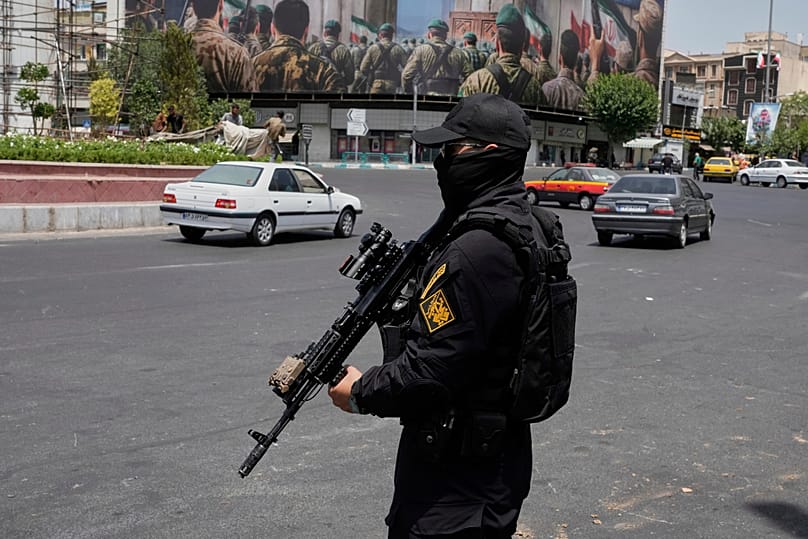
While such a move could generate fear and intimidation in the short term, a prolonged confrontation could significantly increase the risk of defections among loyal forces.
Still, analysts argue that no fundamental shift in the balance of power has yet occurred.
Under any of the emerging scenarios, they suggest, it remains unlikely that the Islamic Republic would readily relinquish control — even if maintaining that control requires enduring prolonged instability and internal erosion.
Alongside physical repression, “internet warfare” has become a central element of the government’s response.
Some experts speculate that authorities may be using tactics such as jamming or targeted disruption of satellite communications or Starlink infrastructure, in addition to a full internet shutdown — methods previously employed against satellite television networks.
If accurate, this would signal Iran’s entry into a more advanced phase of communications control and a deliberate effort to fully isolate the country’s information space.
Such measures themselves may reflect the depth of the regime’s concern over the persistence and expansion of protests.
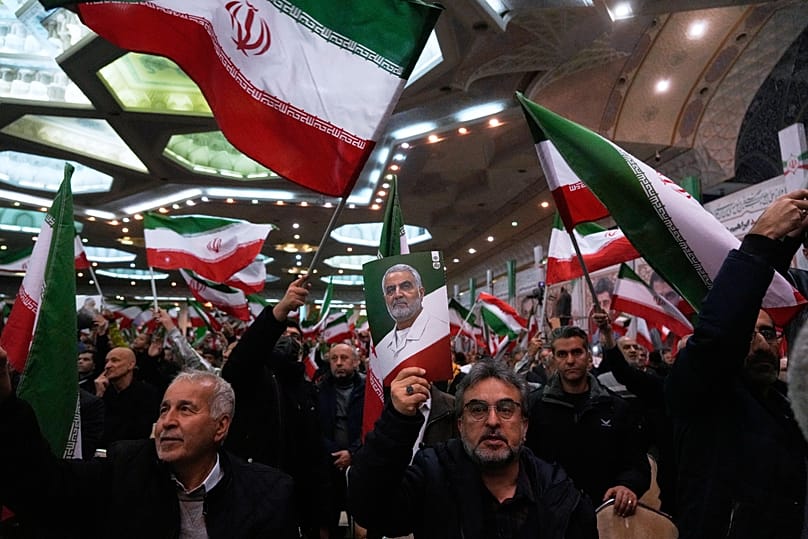
Trump, Pahlavi, and the possibility of a return to power
Trump’s remarks regarding Crown Prince Reza Pahlavi have added another layer of ambiguity to the crisis.
While Trump has described him as “a good guy,” reports suggest that — contrary to earlier indications — no direct meeting between the two is scheduled for next Tuesday at Mar-a-Lago.
Speculation over the cancellation ranges from legal considerations to efforts to avoid providing the Islamic Republic with justification for repression under claims of “foreign interference.”
Some observers, however, remain unconvinced by these explanations, given Trump’s track record.
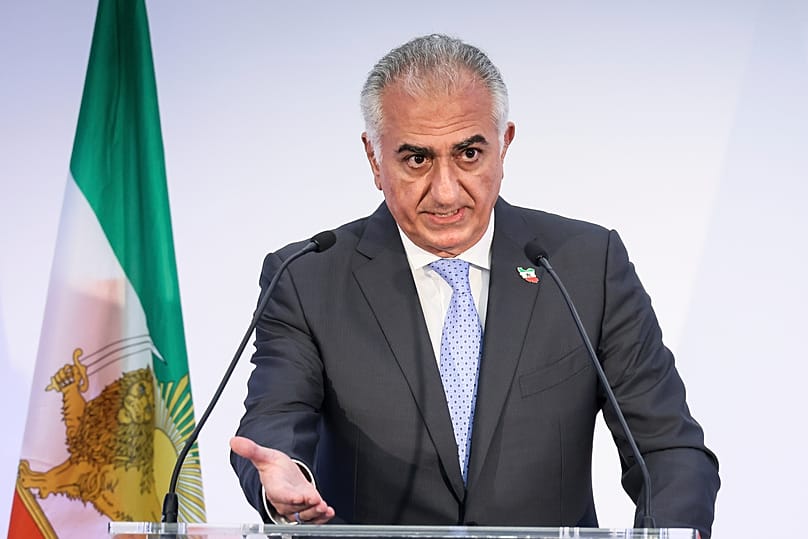
Meanwhile, according to several analysts, the public response to the call issued by the son of Iran’s last shah has exceeded initial expectations.
In parts of the demonstrations, chants have directly targeted the apex of power in the Islamic Republic, while in numerous instances references to the restoration of monarchy or the Pahlavi name have been heard — a shift in protest rhetoric compared to previous cycles.
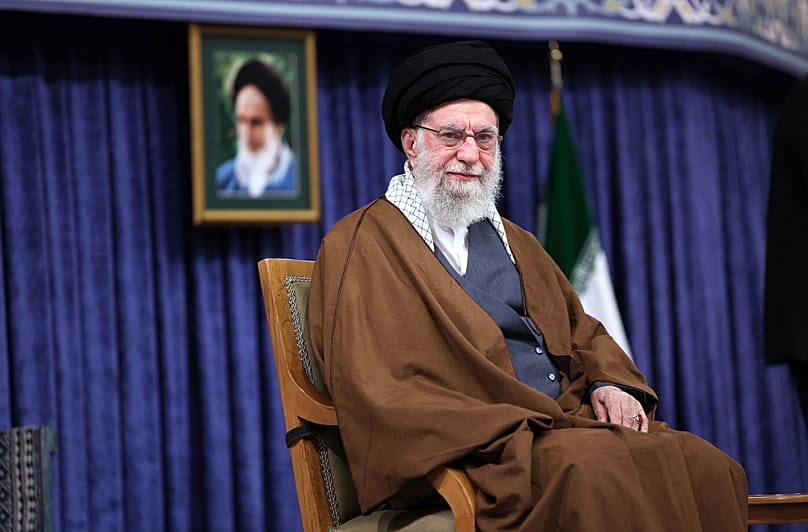
In contrast, Iran’s Supreme Leader Ali Khamenei reiterated on Friday that the system “will not back down.” In footage aired by state television, he again labelled protesters as “rioters,” claiming the demonstrations served Trump’s interests and were intended to please the US president. He also described protesters as “harmful individuals” to the country.
Internal reform and the 'Bonapartist' scenario
Until just days ago, this scenario was considered among the more plausible outcomes.
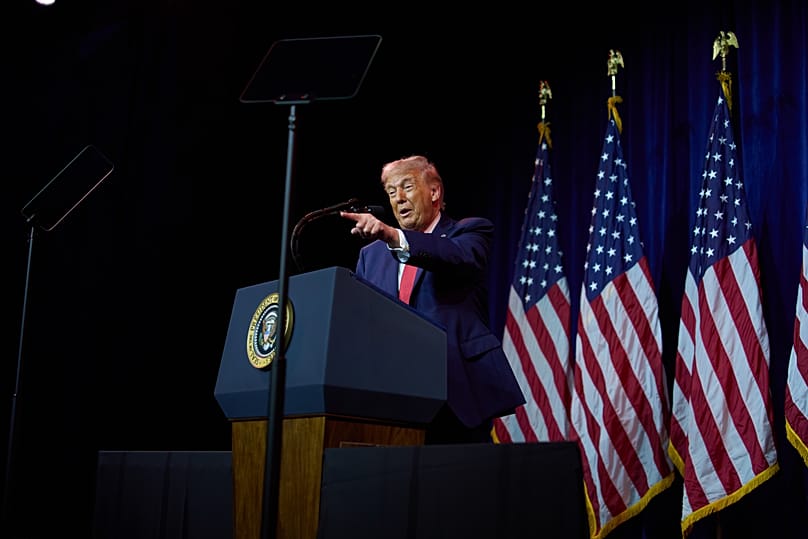
Given the high costs of regime change for the US, the Venezuelan experience following external intervention, and the fact that the continued existence of the Islamic Republic serves certain regional and global interests, the idea emerged that a figure from within the system might be tasked with reforms — stabilising the economy without fundamentally altering the power structure.
The key uncertainty has been identifying such a figure. Some pointed to former President Hassan Rouhani; others suggested the emergence of a lesser-known military figure — a “Napoleonic” saviour stepping in to restore order.
However, several experts dismissed Rouhani’s return as unrealistic, arguing that any attempt by him to reenter power would likely result in his removal by hardliners aligned with the ayatollah.
Trump’s recent remarks about Iran’s opposition — particularly Crown Prince Pahlavi — have influenced this equation.
Yet the broad public response to Pahlavi’s latest call, especially since Thursday, has significantly weakened this scenario, though it has not been eliminated entirely.
Neither Syria nor Venezuela?
Another scenario gaining traction involves the possible departure or flight of senior Islamic Republic figures, echoing elements of the Syrian model.
Reports have circulated about suspicious Russian flights, alleged transfers of gold from Iran, and speculation about a potential relocation of Khamenei and his family to Moscow.
Unconfirmed reports have also emerged regarding visa requests by the parliamentary speaker, Mohammad Bagher Ghalibaf, and his family for France, or the presence of Abbas Araghchi’s family during his trip to Lebanon.
By contrast, Venezuela’s experience under Nicolás Maduro indicates that, contrary to early expectations, the power structure has not collapsed and has so far remained intact.
This has led some observers to suggest that Trump’s primary objective may be the removal of Khamenei personally, followed by the assignment of authority to a figure within the system to manage the transition.
However, given the accelerating and expanding nature of the protests, it is unclear whether this scenario still carries the same weight.
A more prominent possibility now under discussion is a model that is neither Syria nor Venezuela, but one that results in the emergence of a leadership more closely aligned with the West.
Still, it remains uncertain what would follow the removal, death, or ouster of the Supreme Leader.
Would Iran face fragmentation, insecurity, or intensified ethnic and minority demands? Or could a “saviour” figure overcome the country’s deep structural crises?
In this context, questions also arise over how — and to what extent — promises of foreign investment and statements by figures such as Dara Khosrowshahi or Elon Musk might materialise.
Meanwhile, global powers such as China — and to a lesser extent Russia — are unlikely to remain passive and will almost certainly play a role in this historic recalibration.
Ultimately, if the signals transmitted from Tehran over the past hours reflect realities on the ground, the likelihood that the government will resort to higher levels of violence appears to be increasing.
However, with internet access largely cut off, these data points capture only a limited portion of voices within Iran, making it difficult to assess their full impact on protesters' decisions.



.png)