Wednesday, January 14, 2026


Faking It ‘Til We Break It


“Video showing Maduro allegedly torturing Venezuelan dissidents is going viral, with 15 million views and 81k likes already. The only problem? It is actually a scene from a movie.” This tweet from journalist Alan Macleod captured just one droplet in a flood of disinformation following the U.S. capture of Nicolás Maduro. As The Guardian noted, AI-generated images of the event reaped millions of views, instantly saturating social media with fiction.

This cycle repeated days later when Renee Good was killed by an ICE agent in Minnesota. NPR reported that “AI images and internet rumors spread confusion,” fueling a rush to judgment that bypassed all evidence. Rather than awaiting verified facts, the public retreated into partisan scripts: Democrats immediately condemned the agency, while Republicans vilified the victim. This reflexive tribalism illustrates a nation that has abandoned the patience of critical analysis in favor of viral, evidence-free outrage. This reflexive rush to judgment is now weaponized by a new tool of deception: the deepfake.

The emergence of deepfakes has introduced a volatile new dimension to the challenge of disinformation. This technology preys upon systemic vulnerabilities: a widespread lack of media literacy, a ‘greed is good’ hyper-individualism, and a techno-utopian ethos that prioritizes innovation over decency, truth, and social cohesion. The result is a fractured digital landscape where ethically bankrupt creators and profit-driven platforms engineered for engagement oversee the steady demise of civil society. This marriage of cutting-edge deception and ancient tribalism has created a perfect storm where the most successful lie wins and the truth is buried under a million algorithmically-driven clicks. To survive this era of manufactured outrage, we must move beyond passive consumption and demand systemic accountability for the engines of our deception.

The Mechanics of Deception

So-called AI is just the latest tool in a Big-Tech shed that fosters and incentivizes propaganda. Studies have long shown that falsehoods spread more widely than truth on social media, not due to individual behavior, but because Big-Tech platforms are engineered to incentivize the spread of false and misleading content.

AI has complicated the problem of disinformation. Seventy years ago, AI was envisioned as the pursuit of human-like cognitive reasoning; today, that label is frequently marketed to describe technologies that bear little resemblance to those original intellectual ambitions. Modern systems of so-called AI rely primarily on massive datasets and statistical pattern recognition. As a result, they are far from intelligent, and limited in their capacity. Indeed, AI bots are prone to getting things wrong and fabricating information: One study found that AI bot summaries of news content were inaccurate 45% of the time. Other studies have found AI fabricating information from 66% to over 80% of the time.

Beyond deploying bots that circulate misinformation, Big-Tech has released AI tools that empower average users to produce highly convincing, yet entirely fabricated, content with ease. For example, more than 20 percent of videos shown to new YouTube users are “AI slop,” meaning low-quality, mass-produced, algorithmically generated content designed to maximize clicks and watch time rather than inform. These types of deepfakes shaped audience interpretations of recent conflicts such as Israel-Gaza and Russia-Ukraine.

After Maduro’s extraordinary rendition, the internet was quickly flooded with AI-generated content designed to persuade Americans that his capture was an act of justice welcomed by the Venezuelan people. These posts showed Venezuelans supposedly “crying on their knees” to thank President Donald Trump for their liberation. One such video, flagged by Ben Norton, racked up 5 million views.

Similarly, after Good was shot and killed by ICE on January 7, 2026, deepfakes circulated online falsely claiming to reveal the face of the agent involved.

However, the image did not depict the actual agent, Jonathan Ross, an Iraq War veteran with decades of experience in immigration and border enforcement, who had been wearing a mask at the time of the incident.

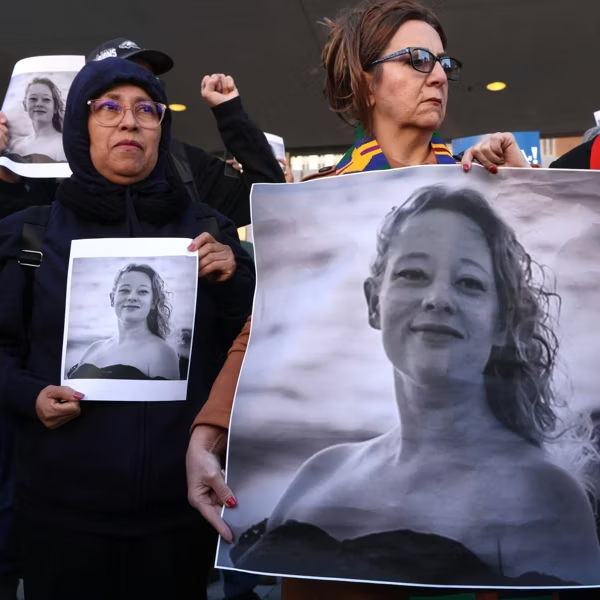
Ross was not the only one falsely identified; immediately after the shooting, photos circulated online claiming to be of Renee Good. In reality, the images were a confusing mix of a former WWE wrestler and another woman who had previously participated in a poetry contest with the actual victim. The digital desecration continued as users weaponized AI to undress an old photo of Good and manipulate images of her lifeless body, generating deepfakes that placed the victim in a bikini even as she lay at the scene of the shooting.

The Shield of Immunity: Section 230 and Beyond

At a time when approximately 90% of U.S. citizens have access to smartphones and 62% use so-called AI, the U.S. government has largely allowed Big Tech platforms and devices to remain unregulated. Indeed, U.S. policy has favored the tech industry for decades, prioritizing immense corporate profits over meaningful accountability for the societal impacts of these platforms.

Thanks to Section 230 of the Communications Decency Act (CDA), which protects internet platforms from legal liability for content users post, and a religious devotion to the idea that “what’s good for tech is good for America,” these companies enjoy total immunity. Similarly, Trump recently signed an Executive Order shielding the industry from AI regulations at the state level. These actions stem from a shared conviction among Big-Tech and its allies in government that regulation is the fundamental enemy of progress and innovation. The few regulations that do exist typically place the burden on users rather than on platforms, such as requiring individuals to show identification, which further contributes to the surveillance mechanisms that define these tools.

Classroom Capture: Big-Tech’s Educational Influence

In the absence of a robust regulatory framework, many argue that media literacy education offers the most promise for mitigating the influence of misinformation on the public. In the U.S., media literacy is broadly defined as “the ability to access, analyze, evaluate, create, and act using all forms of communication.” Indeed, media literacy education has been associated with a reduction in users accepting disinformation. However, the lack of a central education authority to establish a national curriculum, combined with opposition from traditionalists resistant to new media in the classroom, has significantly hindered the spread of media literacy education. Most Americans lack access to a formal media literacy education, even though more than three-fourths of the population believe it is a critical skill that everyone should develop.

While efforts to integrate media literacy into the classroom are growing, they are increasingly dominated by the very companies they should be critiquing. Big Tech has leveraged the vast wealth gained from harvesting user data to exert an outsized role in shaping educational standards. By offering content and programs for classroom use, these corporations provide tools of “corporate indoctrination.” Their curricula emphasize the opportunities of technology while framing issues like “fake news” and bullying as individual moral failures, such as a lack of character or excessive screen time, rather than systemic results of the dopamine loops and profit models the industry intentionally built.

In contrast, critical media literacy scholars argue that a robust education must teach students to interrogate power dynamics, ownership, platform design, and profit motives. However, because their work challenges the industry, these scholars receive almost no corporate funding and must rely on nonprofits and volunteer labor.

Despite these concerns, educational institutions are leaning further into corporate partnerships. For example, the California State University system, the nation’s largest public university with nearly half a million students, recently announced a $17 million deal with OpenAI, the creator of ChatGPT. This massive investment in “Big Tech” occurred even as the CSU system was simultaneously cutting faculty and staff positions across its 23 campuses.

From Social Capital to Content Creation

While Big-Tech algorithms are complicit, they are not solely to blame. In the post-Cold War era, the United States concluded that capitalism had definitively triumphed over all other systems, treating the Cold War as a final, accurate contest of ideas. This ushered in a fundamental shift in the nation’s cultural and political compass, famously epitomized by the mantra from Oliver Stone’s Wall Street: “greed is good.” Researchers like Robert Putnam, in his influential work Bowling Alone, noted that this shift eroded the social capital and communal bonds essential for a functioning democracy. This hyper-individualistic context has profoundly shaped every generation since, leading to what Jean Twenge and W. Keith Campbell refer to as a “narcissism epidemic.” The nation has become so individualistic that even some people associated with the left, which historically has believed in collectivism, such as Matt Taibbi and Cenk Uygur, joined conservatives in outrage when New York Mayor Zohran Mamdani used the word “collectivism” in his inaugural speech this month.

The resulting culture of narcissistic individualism has engendered a generation of ethically hollow influencers and content creators who worship at the altar of Big-Tech, sacrificing collective integrity for personal profit. As commentator Krystal Ball noted, the incentives for these creators are so perverse that even when videos, such as those regarding Maduro, are debunked, users continue to share them for engagement.

Perhaps the most egregious example is influencer Nick Shirley, who went viral for ‘exposing’ alleged fraud at daycare centers in Minnesota. Although the New York Times had previously reported on a legitimate multimillion-dollar fraud case in Minnesota, where the state and federal governments under the Biden Administration were actively prosecuting individuals for embezzling childcare funds, Shirley fabricated his own distorted narrative. He produced videos alleging a deeper, hidden layer of corruption that the government was supposedly ignoring; however, he relied on a blend of fabricated evidence and baseless accusations to support a “cover-up” narrative that simply did not exist. Nonetheless, Shirley’s video has over 100 million views within a week across different platforms. It was reposted by Vice President J.D. Vance and FBI Director Kash Patel.

Beyond merely inspiring copycat content, these viral fabrications were weaponized by the Trump administration to justify freezing federal funding in five Democratic-led states. Under the guise of addressing fraud and systemic misuse, the administration withheld billions of dollars earmarked for essential childcare and social services. Simultaneously, the Department of Homeland Security deployed as many as 2,000 federal agents to Minnesota in a massive law enforcement surge that resulted in Good’s death.

Shirley reflects a broader culture where viral lies are rewarded with wealth. In this environment, deception has become a viable business model because fraud no longer carries a social stigma when used for profit. Instead, it is often rewarded. Just look at Elon Musk. He is one of the richest men on Earth and was a distributor of some of the fake online content following Maduro’s capture. At the same time, Musk is expanding his wealth in the age of AI with tools that spread baseless racist conspiracies such as the myth of white genocide in South Africa, a new version of Wikipedia that refers to Adolf Hitler simply as “The Führer,” and AI tools that enable users to create deepfake images undressing women and children.

Instead of being treated like a James Bond villain, Musk is worshipped as an aspirational figure. He embodies the ultimate “fake it ’til you make it” con man: a self-brander who convinced the world he was a self-made, intelligent inventor, when in fact he relied heavily on $38 billion in government funding, investments from his father, and piggybacked on the creations of truly brilliant inventors.

The Architecture of Hypocrisy: Why One Standard is No Longer Enough

The toxicity of narcissistic content creators and hyperpartisan figures seeking to expand their brands in the attention economy goes beyond the mere production of falsehoods; it is a symptom of a culture seemingly unable or unwilling to shame even the most glaring contradictions.

For instance, many conservatives backed Trump when he labeled the law enforcement officer who shot a woman during the January 6 Capitol riot a “thug,” yet his allies staunchly defended the agents involved in the Good incident. In fact, even before an official investigation had been launched, let alone concluded, Vice President J.D. Vance argued that Ross possessed “immunity.” Furthermore, while these same circles argue that individuals must take personal responsibility for their actions, rejecting the idea that Trump’s rhetoric created the context for January 6, they paradoxically blame leftists for creating the environment that led to Ross shooting Good.

Yet, even these double standards pale in comparison to the reaction following Charlie Kirk’s death in September 2025. In the ensuing months, conservatives frequently bemoaned a lack of empathy and decorum from the left, which criticized Kirk’s legacy of divisive rhetoric while his wife and loved ones were still grieving. However, those same voices, with notable exceptions such as Tucker Carlson, refused to extend that same grace or “decorum” to the wife and loved ones of Good.

Fox News Channel’s Jesse Watters dismissed Good’s claim that she is a poet and mocked her for listing pronouns in her online bio, a relatively mild attack compared to others. Without evidence, former President Trump called Good a “professional agitator.” Secretary of Homeland Security Kristi Noem labeled her actions an “act of domestic terrorism.” Meanwhile, Vance described Good’s death as a “tragedy of her own making.”

They accompanied these baseless claims with rhetoric directly contradicted by witnesses and video. Trump falsely claimed that Good “viciously ran over” Ross who was recovering in the hospital. In reality, Good’s car did not run over anyone, and Ross walked away from the scene unassisted. Relatedly, a Department of Homeland Security spokesperson, Tricia McLaughlin, falsely claimed that multiple ICE officers were hurt. McLaughlin also falsely accused Good of “stalking agents all day long, impeding our law enforcement.” In reality, video evidence reveals that Good had been on-site for a few minutes. She had just dropped off her now-orphaned six-year-old child at school and was not blocking the road; in fact, cars can be clearly seen passing her vehicle throughout the footage. A crowd had gathered because an ICE vehicle was immobilized in the snow. Unlike the U.S. Postal Service, which is famously expected to operate in all weather conditions—under the creed, “Neither snow nor rain nor heat nor gloom of night stays these couriers from the swift completion of their appointed rounds”—ICE was visibly struggling to function in the elements.

These fabrications and baseless accusations reveal a profound callousness toward Good’s grieving family, most notably her wife and orphaned child. This stands in stark, bitter contrast to the demands for decorum and empathy that conservatives issued following Charlie Kirk’s death. One would expect a civilized nation to extend basic sympathy whenever a citizen dies: whether they are shot during a chaotic political protest or killed and denied medical attention. Faced with such blatant double standards, the nation must finally direct Joseph Welch’s famous rebuke of McCarthyism toward itself: ‘Have you no sense of decency, sir, at long last? Have you left no sense of decency?'”

Rhetorically, most claim to view these incidents as tragedies; in practice, however, they operate with blatant double standards: empathy for one side while displaying callousness, or even cruelty, toward the other. A more sophisticated culture would remember comedian George Carlin’s wisdom: “Let’s not have a double standard. One standard will do just fine.”

Conclusion

To restore the soul of a nation fractured by digital fabrication, there must be a collective refusal to continue this cycle of reflexive tribalism. Engaging in a perpetual war of “us versus them,” where truth is sacrificed for the sake of a partisan win, ensures that everyone loses, and the country remains a casualty of its own division. It is insanity to continue entrusting the national discourse to unregulated algorithms and narcissistic creators, expecting that more of the same will somehow yield a different, more unified result.

The time has come to demand a higher standard: one that prioritizes evidence over engagement and human decency over ideological dominance. By rejecting the lure of the deepfake and the ease of the echo chamber, a path can be cleared toward a more sophisticated culture, one that values critical analysis, insists on corporate accountability, and understands that without a single standard of truth and empathy, the foundations of a functioning democracy cannot hold.

Nolan Higdon is a Project Censored national judge, an author, and university lecturer at Merrill College and the Education Department at University of California, Santa Cruz. Read other articles by Nolan, or visit Nolan's website.
Trump Declares War on Everyone

Trump has unleashed violence on America’s streets for much the same reason he has unleashed violence on Latin America and is planning to unleash it elsewhere: to display his own strength.


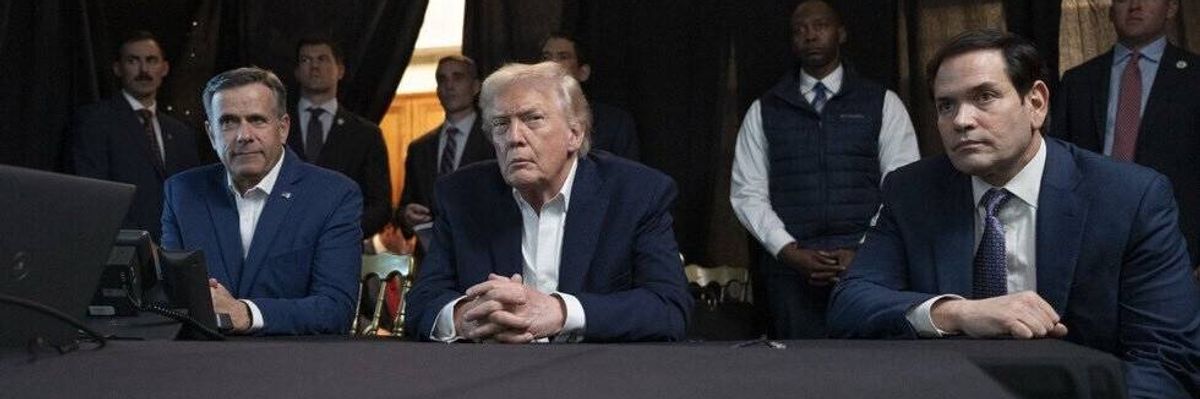
US President Donald Trump watches Venezuelan President Nicolas Maduro’s capture unfold in Washington, United States on January 3, 2026.
(Photo by Donald Trump’s Truth Social Account/Anadolu via Getty Images)

Robert Reich
Jan 13, 2026
Inequality Media

At the same time agents from Immigration and Customs Enforcement and Customs and Border Patrol are swarming into Minnesota and other states and cities, President Donald Trump is planning bombing raids on other countries.

Domestically and internationally, he is putting America on a war footing.

ICE is reportedly investing $100 million on what it calls “wartime recruitment” of 10,000 new agents, in addition to the 20,000 already employed. Its recruitment is targeting gun and military enthusiasts, people who listen to right-wing radio, who have gone to Ultimate Fighting Championship fights or shopped for guns and tactical gear, live near military bases, and attend NASCAR races. It’s calling for recruits willing to perform their “sacred duty” and “defend the homeland” by repelling “foreign invaders.”

Meanwhile, Trump has announced that he’ll ask Congress for a $1.5 trillion defense budget for the next fiscal year—a 66% increase over the 2026 defense budget Congress just authorized.

Trump is putting America on a war footing because war is good for him as it is for all dictators.

There’s coming to be no difference between Trump’s foreign and domestic policies.

Both are based on the same eight maniacal ideas:Might makes right.
Law is irrelevant.
America is at war with the world’s “radical left,” who are defined chiefly by their opposition to Trump.
Fear and force are better weapons in this war than hope and compromise.
The US stock market is the best measure of Trump’s success.
Personal enrichment by Trump and other officials is justified in pursuit of victory.
So are lies, cover-ups, and the illegal use of force.
Trump is invincible and omnipotent.

These ideas are at such fundamental odds with the norms most of us share about what America is all about and how a president should think and behave that it’s difficult to accept that Trump believes them or that his White House thugs eagerly endorse them. But he does, and they do.

Rather than some “doctrine” or set of principles, they’re more like guttural discharges. Trump is not rational, and the people around him trying to give him a patina of rationality—his White House assistants and spokespeople—surely know it.

The media tries to confer on Trump a coherence that evaporates almost as soon as it’s stated. The New York Timesbreathless coverage of its recent Oval Office interview with Trump—describing his “many faces”—is a model of such a vapidity.

According to the Times, Trump “took unpredictable turns” during the interview. But instead of seeing this unpredictability as a symptom of Trump’s diminishing capacities and ever-shorter attention span, the Times reported it as “a tactic he embraces as president, particularly on the world stage. If no one knows what you might do, they often do what you want them to do.”

Attempts to show inconsistencies or hypocrisies in Trump’s domestic or foreign policies are fruitless because they have no consistency or truthfulness to begin with.

Nor is it possible for the media to describe a “big picture” of America and the world under Trump because there is nothing to picture other than his malignant, impulsive, unbridled grandiosity all the way up and all the way down.

Trump has unleashed violence on America’s streets for much the same reason he has unleashed violence on Latin America and is planning to unleash it elsewhere: to display his own strength. His motive is to gain more power and, along the way, more wealth. (On Sunday, he even posted an image referring to himself as the “Acting President of Venezuela.”)

“Policy” implies thought. But under Trump, there is no domestic or foreign policy because it is all thoughtless. It is not even improvised. It is just Trump’s ego—as interpreted by the toadies around him (Stephen Miller, Russell Vought, JD Vance, Robert F. Kennedy, Marco Rubio, Kristi Noem) trying to guess what his ego craves or detests, or fulfilling their own fanatical goals by manipulating it.

We must stop trying to make rational sense out of what Trump is doing. He is a ruthless dictator, plan and simple.

All analyses of what is happening—all reporting, all efforts to understand, all attempts at strategizing—are doomed. The only reality is that an increasingly dangerous and irrational sociopath is now exercising brutal and unconstrained power over America and, hence, the world.

Trump is putting America on a war footing because war is good for him as it is for all dictators. War confers emergency powers. It justifies ignoring the niceties of elections. It allows dictators to imprison and intimidate opponents and enemies. It enables them to create their own personal slush funds. It distracts the public from other things (remember Jeffrey Epstein?).

War gives dictators like Trump more power and more wealth. Period.


© 2025 Robert Reich


Robert Reich
Robert Reich is professor emeritus of public policy at Berkeley and former US secretary of labor. His latest book is the No. 1 New York Times best-seller, "Coming Up Short."
Full Bio >

We’re running headfirst into a Mad Max world

Edwards, CA/USA - September 2018: The annual Wasteland Weekend post-apocalyptic festival takes place in the Mojave Desert where attendees live in a re-creation of the Mad Max films for five days.

Stan Cox
January 13, 2026 | 
ALTERNET

Let me start by putting things bluntly: Don’t bother to tell Donald Trump, but with his distinct help, we’re doing nothing less than cooking ourselves. Thanks to the continued use of fossil fuels in a staggering fashion and the growth of greenhouse gas emissions, almost half of the world’s population now suffers through 30 additional days of extreme heat annually. Heatwaves roll in thicker and faster every year.

On average, according to the medical journal The Lancet, 84% of the extremely hot days we’ve faced over the past five years would not have occurred without human-induced climate change that the American president seems intent on making so much worse. Heat-related deaths are already 63% more frequent than in the 1990s. That Lancet article also reported that heat- and drought-related hunger, as well as deaths from wildfire smoke and industrial air pollution, are breaking records globally almost yearly.

Climate Impacts Tracker dubbed 2025 “The Year of Climate Disasters,” noting,
“Flash floods tearing up a Himalayan village in India, hurricanes and wildfires ravaging the U.S., heatwaves and wildfires scorching Europe, record-breaking heat in Iceland and Greenland, torrential rains and floods roaring through Southeast Asia — 2025 marked yet another year of human tragedies, driven by extreme weather events.”

The number of environmental disasters and their destructiveness are only ratcheting up in step with increases in global greenhouse-gas emissions, ever more extraction of key minerals, the ever-greater exploitation of biological resources, and outbreaks of resource wars (most recently with the U.S. assault on Venezuela). All of that is linked to one crucial phenomenon: the single-minded pursuit of economic growth by the owning and investing classes. Not surprisingly, they reap the lion’s share of the benefits from such growth and bear next to none of its devastating consequences.

Though it’s seldom highlighted, the world economy has indeed reached an astounding physical scale. During the past century, resource extraction has doubled every 20 years or so. Indeed, humanity reached a grim milestone in 2021, when the global quantity of human-made mass — that is, the total weight of all things our species manufactured or constructed — surpassed the total weight of all living plant, animal, and microbial biomass on this planet. And worse yet, that mass of human-made stuff continues to grow, year by year, even as the natural world diminishes further.

In other words, our species is vainly striving to circumvent what’s come to be known as Stein’s Law from an aphorism credited to economic guru Herbert Stein: “If something can’t go on forever, it won’t.

Count on this: at some point, global economic growth will finally have to grind to a halt and shift into reverse. After all, if the corporate and political powers carry on with business as usual, such growth will end in chaotic, violent collapse. (Think Mad Max.) But if the elites can be thwarted and we can dramatically reduce our dependence on fossil fuels and other resources in a reasonably well-planned way, we might be able to avoid that fate.

That’s the pitch put forward by the degrowth movement. In essence, it’s a refutation of the “green growth” doctrine. (Green-growthers, ignoring Stein’s Law, claim that technological “innovation” will ensure that economies can continue to grow indefinitely.) In that debate, degrowth finally seems to be getting a leg up. A 2023 survey of nearly 800 climate-policy researchers found that almost three-quarters of them favored degrowth or no growth over green growth.

And here’s the reality the rest of us need to take in: societies could indeed achieve a distinctly better quality of life because of (not in spite of) degrowth, since full-scale restraints on the endless extraction and consumption of fossil fuels could force them to ensure that their limited resources would be used to satisfy basic human needs instead of being wasted on yet more increasing profits for the already wealthy few.

The growth-addled political and economic forces pushing us toward ecological doom are many and formidable indeed. And that makes it ever more important that people in rich, overconsuming countries like ours come to realize how important it is that we stand up to the forces of ecocide, while developing a more realistic vision of the better world that awaits us once we’ve jumped off the growth-by-carbonization bandwagon.

One way to bring that better world into sharper focus is to examine a few of the many miseries and dangers that degrowth would help us alleviate or even leave behind. What follows is just a handful of examples.

Goodbye, War Machine

Topping the list of American institutions and resources that a degrowth economy could starve would be the U.S. military-industrial complex. After all, the Pentagon is actually the largest institutional user of fossil fuels in the world. The greenhouse gases our military emits, even in peacetime, are believed to have a global-warming impact of 60 million metric tons of carbon dioxide annually. The Earth can’t handle that any longer.

To begin shrinking our military’s now trillion-dollar annual budget would not only prevent a significant amount of global warming but also save countless human lives and greatly enhance the quality of life in this country and across the planet.

With degrowth, for example, the Defense (not — thank you, Donald Trump, Pete Hegseth, and crew! — War) Department’s nearly three million employees, who enable the resource-heavy, deadly work of war-fighting, imperialism, and, if the Trump administration gets its way, the suppression of domestic political protest, can find themselves better jobs. After all, employees in all but the top echelons of the military, underpaid and exploited, endure often harsh working and living conditions. Zeroing out the Pentagon would free up a vast workforce to help meet people’s actual needs rather than killing all too many of us on this planet (most recently, at least 115 in the bombing of Venezuelan boats and 40 more in the January 3rd attack on Caracas). And they’d be better off losing those jobs.

Enlisted personnel receive such small paychecks that many are eligible for SNAP (“food stamp”) benefits, even if only 14% apply for them. Among the families of junior enlisted troops, 45% often can’t afford enough food. More than 286,000 of them don’t get an adequate variety or amount of food and, of those, about 120,000 report sometimes skipping meals and eating less than they need for fear of running out of money.

And that’s not all. A nationwide analysis suggested that towns and cities abutting military bases have higher crime rates (19% greater for property crimes and 34% for violent crimes) than similar towns not near such installations.

Worse yet, people living or working in or around military bases are often exposed to dangerous levels of toxic contamination over long periods and can also be plagued by noise pollution. Not surprisingly, studies have also found high rates of hearing loss among the troops. In the United States, almost 15% of active-duty personnel suffer hearing impairment of some sort (and it’s one of the most common health problems among veterans as well).

Dismantling our war machine would also help restore a better quality of life for tens of millions of people elsewhere. Consider the death and misery our military has inflicted during the past six decades on Indochina, Grenada, Panama, Iraq, Kuwait, the Balkans, Afghanistan, Syria, Yemen, Iran, and now the Caribbean Sea, the Eastern Pacific Ocean, and of course Venezuela.

As if that weren’t bad enough, for decades, our military-industrial complex has provided armaments to repressive, murderous regimes around the globe — Israel’s genocide of the Palestinian people being the most recent example.

Adiós, Vehicular Supremacy

In a much less resource-intensive American society, human needs would also no longer be subordinated to those of gasoline-driven motor vehicles, and our collective quality of life would improve dramatically.

Based on the importance of keeping this planet livable, any ecologically sane society would break free from what Gregory Shill has labeled “automobile supremacy” and that, of course, would be a particularly significant accomplishment for any degrowth movement in the United States or other wealthy countries.

As a start, motor vehicles are regularly among the top 10 causes of death for U.S. residents under the age of 55. Worse yet, pedestrian fatalities, which had been falling for decades, shot up by 71% between 2010 and 2023, while fatalities caused by increasingly taller, heavier, more aggressively armored pickups and SUVs climbed at precisely twice that rate, 142%.

With private gas-driven vehicles largely replaced by extensive transit networks, electric vehicles, and bike and foot traffic, we also won’t have to contend with as many road-raging drivers in armored pickup trucks the size of World War II tanks. We won’t face the health dangers posed by air and noise pollution from vehicle traffic. Our cities will have vastly more green space, because significant parts of the 30% of their soil surface now covered by concrete or asphalt solely to accommodate motor vehicles could be revegetated. And we won’t suffer the extra-blistering summer heat that comes with such over-paving.

With degrowth and the end of automobile supremacy, traffic jams will vanish into the past; we’ll no longer risk being killed while simply walking, biking along a roadway, crossing a street legally, or engaging in lawful, peaceful protest; and everyone will all too literally be able to stop driving everyone else crazy.

Farewell to So Many Other Fossil-Fuelized Plagues

Starving militarism and automobile supremacy of resources, while improving the quality of life of our communities, would also go a long way toward halting the ecological breakdown of this planet while the sources of many smaller-scale dangers and ills would also fade into the past. Taken alone, each might appear insignificant, but cumulatively, such culprits severely degrade the quality of life in our wildly growth-oriented economy. As just one example of something that, with degrowth, we could say “good riddance” to, let me suggest that loud-mouthed neighborhood bully, the leaf blower.

Generating wind speeds approaching those of an EF5 tornado, gas-powered leaf blowers blast out noise at 95 to 115 decibels (two to eight times louder than the safe upper limit set by federal agencies). Electric leaf blowers, while less noisy, still significantly exceed the maximum safe noise level near schools, hospitals, daycare centers, retirement homes, or anywhere else where there are vulnerable people present.

Most gas-powered blowers and other deafening lawn machinery are operated for long hours by commercial landscaping crews, whose ears are just a couple of feet from the roar. Often surrounded by other leaf blowers, lawn mowers, and gas-powered equipment, such workers commonly suffer hearing loss.

The noise of a leaf blower, like that produced by vehicular traffic and wind turbines, is rich in low-frequency sound that carries long distances, easily passing through walls. Exposure to such noise raises the risk of a range of health problems, including sleep disruption, mental stress, high blood pressure, heart ailments, stroke, and immune-system dysfunction.

And keep in mind that the substitution of leaf blowers for perfectly functional rakes is just the tip of the iceberg. Our economy is now chock-full of unnecessary products that diminish the quality of life and would be left in the nearest ditch if energy consumption were deeply reduced.

Hello Again, Night Sky

By ending profligate energy consumption, degrowth could also restore much-loved wonders of nature that the growth economy has stolen from us.

Consider the night sky. Since 2010, in cities and towns, as well as anyplace near them, “skyglow” (a bleaching-out of the night sky that hides stars from view) has been increasing at an astonishing rate of 10% a year.

This surge in light pollution has coincided with the rapid adoption of light-emitting diodes (LEDs) for streetlights and other outdoor illumination. Such LEDs produce far more light per watt of energy consumed than older light sources. Unfortunately, companies and municipalities have taken advantage of LED efficiency not by cutting their energy consumption, but by flooding parking lots, streets, billboards, sports fields, and car dealerships with even brighter light.

Most LED lighting now in use is rich in short wavelengths at the “cool-blue” end of the visible spectrum, which ensures that it will be scattered by the atmosphere more efficiently and so produce a rapid increase in skyglow. As a result, stars have all but disappeared from the night sky in cities, suburbs, and nearby rural areas.

Exposure to cool-blue light at night also threatens humans and other species by disrupting our circadian sleep-wake cycle. Among the impacts on human health are gastrointestinal disorders, diabetes, cardiovascular disease, and even cancer.

A degrowth society dialing down its energy use would not only reduce light and noise pollution but achieve significant advances in environmental justice. Brightly lit industrial and commercial facilities and parking lots are all too often placed in low-income, racialized communities. As a consequence, across the United States, light pollution is more severe in neighborhoods where a larger proportion of the population is Black, Latino, or Asian.

Amid mounting ecological and humanitarian crises and with Donald Trump still in the White House for another three potentially devastating years, the vanishing of the heavens may be regarded as a problem only for astronomers and aesthetes. But such a view badly underestimates how important the starry night sky has proven to be to our culture, scientific progress, and social cohesion. It was an unalloyed good, shared freely and equally by all humanity. And it could be so again if, with degrowth, we put our cities and towns on a dimmer switch.

To be clear, the degrowth movement’s not claiming that the way to prevent ecological and civilizational collapse is simply to play Whac-A-Mole by working our way through individual problems like traffic congestion or light and noise pollution. In fact, the point of degrowth is that societies should leave all such problems, including the potential disaster of climate change, in history’s trash heap. We’d reap myriad benefits by deeply cutting resource use while ensuring that collective sufficiency and justice for all become the focus of our world.

Copyright 2026 Stan Cox

Stan Cox, a TomDispatch regular, is the author, most recently, of Anthopause: The Beauty of Degrowth. His previous books include The Path to a Livable Future and The Green New Deal and Beyond. Find him on X and Bluesky at @CoxStan.


Conservative alarmed over poll showing 8 in 10 Republicans want 'fascist race war'


A supporter of President Donald Trump in Milwaukee, Wisconsin on August 23, 2023 (Image: Shutterstock)
January 13, 2026
 ALTERNET

Conservative Bulwark Editor Jonathan Last argued there are two groups of President Donald Trump's voters: Those who signed on to deport 20 million immigrants regardless of whether they had committed any crime, and those who signed on with Trump’s plan to remove only immigrants who were criminals.

“Because people are stupid, that first group of voters believed that there were 20 million undocumented immigrants who have committed felonies. This is not possible,” said Last. “The total number of people in jail in America today — this includes federal, state, local, and tribal land prisons — is just under 2 million. The number of undocumented immigrants who have committed serious crimes cannot be 10x the entire prison population of the United States. If it were, then daily life in America would look like Escape from New York.”

“So, some Trump voters were duped owing to their general ignorance and/or innumeracy. But others were not,” added Last. “Others signed up for Trump because of his second promise (the 20 million deportations) and viewed the first promise (about deporting only criminals) as the pap necessary to get the suckers onboard.”

The question Last wants to answer is how many “dupes” voted for Trump vs the avowed racists who simply want Brown people gone. To get his answer, Last reviewed an AP/NORC poll showing consistent 80 percent support for Trump’s immigration policies among Republicans. Then he compared that to a more recent YouGov poll showing 80 percent of Republicans still "approved" of U.S. Immigration and Customs Enforcement even after they shot and killed 37 year-old U.S. citizen Renee Good in footage that reveals no threat to agents.

“It seems pretty clear that, at best, one in five Trump voters were duped. The majority of them are getting exactly what they wanted,” Last said. "Now if Trump were to lose the support of 20 percent of Republican voters — or even 14 percent — it would be meaningful for Republican electoral prospects. Which is nice. The problem is that having 80 percent of Republican voters actively supporting a fascist race war is meaningful for our societal prospects.”

That’s a lot of racists in one party, said Last, but what’s worse is the tally of avowed racists occupying high federal positions, including “Vice President JD Vance, Deputy Chief of Staff Stephen Miller and Secretary of Homeland Security Kristi Noem," as indicated by a recent Homeland Security post claiming to seek the deportation of "100 million" deportations.

“There are 43 million foreign-born Americans. Most of them are legal immigrants. In order to perform 100 million deportations, DHS would have to round up every immigrant of any status —even naturalized citizens — and then also snatch 57 million American who are citizens by birth and deport them, too,” said Last.

“Want to guess who those other 57 million Americans might be?” Last asked, before sharing a recent U.S. Department of Labor X post ordering Americans “To remember who you are.” Last said this slogan is a dead ringer from Adolf Hitler’s own iconic “One People, One Country, One Leader” post from the 1940s. Couple that with a volley of blonde, blue-eyed propaganda posts from Trump’s Department of Labor, and you’ve got even more insight.

“On the one hand, it feels weird to say that the U.S. government is attempting some low-key ethnic cleansing,” said Last. “On the other hand, the reality is that we have a masked secret police force going door-to-door attempting to kidnap brown people; one government agency publicly daydreaming about deporting 100 million people; and another government agency saying that the ideal worker is a 20-year-old white guy.”

Last said this information mingles horribly with the White House’s obsession with white Americans’ falling fertility rate and it’s constant citation of “Stuff white people like” including false claims that white men who “did extremely well” in high school are not getting invited to college despite white men having a “significant advantage” during the application process.

Read the Bulwark report at this link.
CODEPINK Statement: Trump’s Threat to Bomb Mexico Is an Outrageous Step Toward War in Latin America


WASHINGTON - CODEPINK condemns President Donald Trump’s dangerous threat to “start hitting land” inside Mexico, a sovereign nation, a major U.S. ally, and home to 130 million people.

By declaring, “we are going to start now hitting land… The cartels are running Mexico,” Trump is openly threatening U.S. strikes and special operations on Mexican soil under the same failed “war on drugs” logic that has already devastated Latin America.

For more than 20 years, Washington has sold militarized drug policy as the solution. Plan Colombia, for example, poured billions of U.S. dollars into the Colombian military and police under the promise of cutting cocaine at the source. Yet even the U.S. Government Accountability Office review found that potential cocaine production in Colombia was higher in 2006 than in 2000.

The pattern is always the same: more troops, more weapons, more funding for security forces, and in return, more violence, more displacement, more human rights abuses. And the more weapons the U.S. pumps into the region, the more cartels acquire military-grade firepower of their own, often trafficked or diverted from the very same U.S. weapons pipeline. The only thing that doesn’t disappear is the drug trade.

Mexico’s President Claudia Sheinbaum has categorically rejected U.S. military intervention in Venezuela and Mexico, insisting that Mexico is a “free and sovereign country” and that foreign armies will not be allowed to operate on its territory. She has insisted that cooperation on security is possible, but only without violations of sovereignty: “Cooperation, yes; subordination and intervention, no.”

Trump claims cartels are “killing 250,000 to 300,000 Americans a year” and uses that to justify escalation. But we know that what actually drives the overdose crisis is a U.S. health system built around profit, not care, pharmaceutical companies and distributors that flooded communities with opioids and domestic demand, economic despair, and lack of treatment, not a lack of foreign bombs. The war on drugs has been a political cover to avoid confronting Wall Street pharma, poverty, racist policing, and a deadly health system at home.

We reject Trump’s attempt to dehumanize an entire nation, to normalize violations of the U.N. Charter, which explicitly prohibits the threat or use of force against the territorial integrity or political independence of any state, and to turn Latin America, historically a zone of peace, into a battleground for U.S. military experiments, fresh off the operation in Venezuela and open threats toward Cuba and Colombia.

If the U.S. can bomb Mexico under the excuse of “cartels,” then no country in the region is safe.

We stand with the people of Mexico, with President Claudia Sheinbaum’s rejection of intervention, and with all those in the region who say:No to U.S. wars. NO TO U.S. intervention
No to the militarization of Latin America
Yes to sovereignty, solidarity, and life.
Trump caught on hot mic vowing to axe 'garbage' regulations for Ford CEO

David Edwards
January 13, 2026 
RAW STORY


Fox Live/screen grab

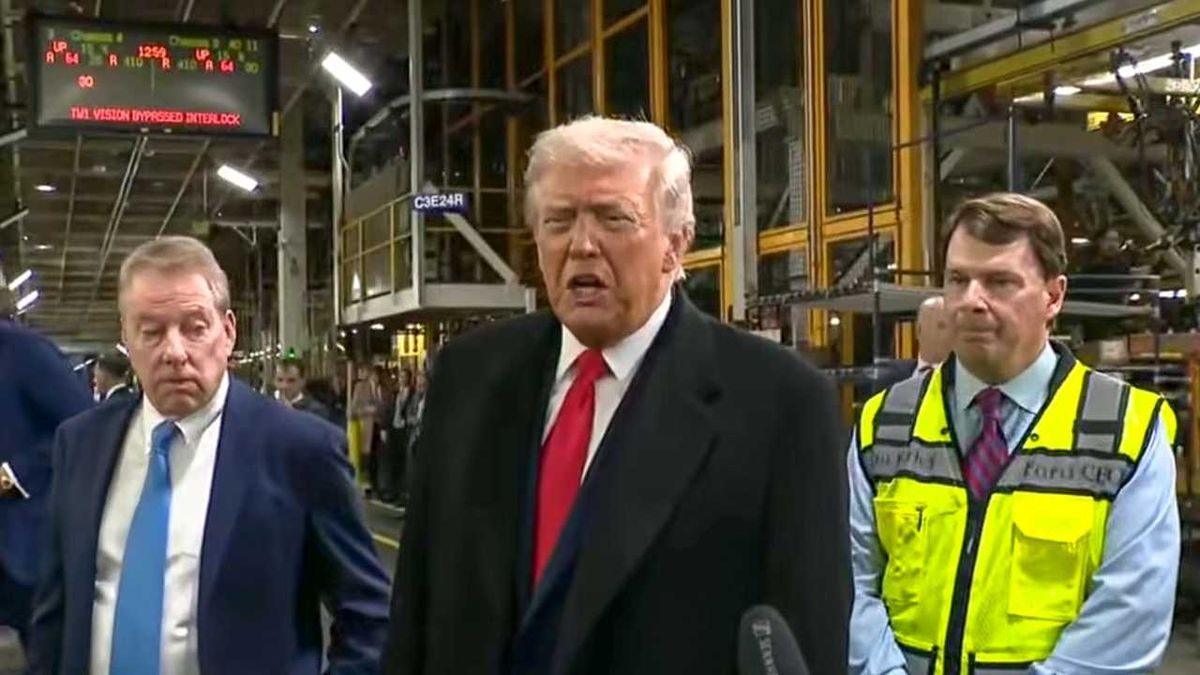
President Donald Trump was caught on a live microphone suggesting he would get rid of "garbage" environmental regulations at the request of Ford CEO Jim Farley.

As the president was touring a Ford factory in Michigan on Tuesday, he noted that Farley had "a lot of love" for making vehicles.

"And he really does. He calls me all the time," Trump could be heard saying. "Can we get rid of this environment of a piece of garbage?"

"No, he's been great," he added. "He's on a common sense basis. I don't know that much of it."

"You know a lot!" Farley volunteered.


We Can Honor Renee Nicole Good’s Life by Abolishing Death-Making Institutions

Those of us who see ourselves in Renee Good can take this moment to deepen our solidarities with all who are policed.
January 13, 2026

Thousands participate in a "No Wars, No Kings, No ICE" protest and march down Fifth Avenue in Manhattan against the policies of the Trump administration in New York City, New York, on January 11, 2026.
Jason Alpert-Wisnia / Hans Lucas / AFP via Getty Images

She could have been me. That was my first thought when I learned that Renee Nicole Good — a 37-year-old mother, poet, and community advocate — had been shot and killed by an Immigration and Customs Enforcement (ICE) agent. As a mother, an abolitionist organizer, and an artist, I felt that familiar twitching and burning, the despairing rage pooling under my skin, looking for an outlet.

Certainly, this is not the first time ICE has committed a tragic, outrageous murder in plain view. Last September, Silverio Villegas González, a 38-year-old father, was shot and killed by an ICE agent in a suburb of Chicago. Like Good, he had just dropped his kids off at school. Thirty-two people died in ICE custody last year alone, the highest number on record since ICE’s 2004 debut. Each stolen life is a universe of loss.

He could have been me.

So maybe I felt it all more personally — that subsonic sound of uncomfortable silence. Or, the comments that start, “Why didn’t they just…” I guess they think they can submerge the existential threat of unease under layers of themselves.

I get it. I do the opposite for the same effect. I lean in. As a white mother, I leverage privilege in solidarity like a shield, though I know I must be careful not to submit to the false promise of whiteness, to not believe I am impenetrable and disconnect from the very co-strugglers I love most dearly.

ICE’s Murder of Renee Nicole Good Was Not an Aberration — It Is the New Normal
US immigration agents have now shot 11 civilians in cars in four months. By Mike Ludwig , Truthout January 9, 2026


I got my start organizing with my co-workers in Minneapolis. We unionized the Uptown Borders bookstore, joining the United Food & Commercial Workers. Most of their members were food service and meat-processing workers, many of whom are immigrants. Sometimes the union would transport a badly injured worker to the hospital because the slaughterhouse didn’t want the state to find out if they were undocumented.

During my years in Minnesota, I also protested outside the Republican National Convention (RNC) in 2008. Thousands of us — unions, veterans’ groups, community organizations, families with kids — joined a decentralized “RNC Welcoming Committee,” demanding living wages, housing, health care, and an end to the never-ending “war for peace.” I marched while giving a piggyback ride to my fellow union member’s child. I watched military vehicles outfitted for combat line our route, and police in riot gear drag journalists along the pavement. Not so “Minnesota nice.”

I was reminded of all of this recently while protesting at the ICE facility in Broadview, Illinois. Masked agents pointed guns and released tear gas on protesters, journalists, and legal observers alike. They hit people with their cars. The public sidewalk became a monochrome mural painted with pepper balls aimed at our bodies, stinging in our throats. It became clear that none of us may ever appear human to them, or be compliant enough.

But you cannot comply enough with those who’ve decided it’s OK to kill you. I think of the survivors I work alongside everyday — survivors of gender violence charged for acts of self-defense or accountability to the violence of their abusers. ICE may have the same standard for perfect compliance as the prosecutors in those cases: to quietly disappear or politely die.

Since 2016, I’ve worked directly with over a dozen such survivors in Chicago alone, nearly all of whom are mothers of color. Currently, I am working in support of a mother who was eight months pregnant when her partner attacked her in her own home, slamming her head into the kitchen counter and hitting her in the face as he dragged her. She reached for something to defend herself — a knife — struck him in the leg with it, and soon after, he died. The state has charged her with first-degree murder.

I do this work as an abolitionist organizer and a survivor of intimate partner violence. She could have been me too, only I hadn’t really believed that either.

Driving to Lincoln, Illinois, in July 2024, I was picking up a friend, a fellow mother and survivor who’d served a full sentence of separation from her child, total loss of body autonomy, and poor care at the Logan Correctional Center. I prepared for what we believed would be a very remote chance of ICE presence. They had not been picking people up outside Illinois Department of Corrections facilities. Corrections staff, like police, were given orders not to assist ICE.

From the sidewalk near the main gate, I watched her approach and then cross the threshold into the “free world,” carrying a copy printer box, a corrections officer still holding her arm. I was already reaching out to her when three black SUVs squealed into the curb, and three men in unmarked black uniforms rushed out. They shouted something at her bewildered face. They grabbed her and forced her into one of their vehicles and drove off. It happened in under 20 seconds. I heard myself screaming at the turned back of the corrections officer, at the already long-gone SUVs.

All that was left was that box, spilling out family photos, portraits she’d painted, legal documents, and letters between loved ones. I gathered it all up. I braced myself to tell her family. When I did, my friend’s mother crumpled into her own lap and cried. I could feel her daughter plead with me to be wrong, still looking for her mother.

When I remember that day, I also now imagine the faces of Renee Nicole Good’s children when they were told of her death, and the faces of Silverio Villegas González’s children when they were told of his death,their own bodies struck by the sense that this never should have been possible. Even in my mind’s eye, I want to look away.

It was days before we found my friend in a Kansas detention center. We organized a freedom campaign with amazing attorneys. We sent each other expensive messages of hope and solidarity. Then one day, seven months later, the steady push against an iron wall gave way. There were 642 miles and a deportation order between us, and then she was at my front door. The clenched fist that is all of me is still not fully open.

But as painful as it is, I am grateful to have even started to breach the hard border of myself, into the soft places where my body meets the bodies of my co-strugglers. I feel how precious we all are, and I know that we cannot and should not concede another life to this. We don’t need martyrs, and Renee Nicole Good and Silverio Villegas González were not offering. Nor has anyone asked us to suffer more as the way we show up in solidarity.

Abolitionist co-strugglers have been pleading with us to see what’s been there all along, in between explosive episodes of more public violence, funding cycles, and alleged reforms. They have always known that it’s not about guilt or innocence, dangerousness, or all the other claims systems make. Militarized borders and heavily gated pathways to citizenship ensure a permanently exploitable class, much like felony convictions.

So, it makes perfect sense that our solidarity reads as a threat to the ruling class, and they are reading that right. We are attacking the fundamental principle of their design, which rests on the claim that the value of my life is inversely proportional to the life of whatever enemy they present. They want us to believe premature death-making is a predetermined moral good.

But we refuse to believe that. Our well-being is bound together and we know it; we feel it when we let ourselves feel fear and grief. We know in our whole bodies that they and she and he are me. We feel one another most in our daring hope.

And that brings me back to all this loss. I was afraid to even try and speak or write anything to hold the weight of this. But I don’t want a moment of silence right now, quietly naming the dead. I can’t name each human life stolen by police or ICE or those acting in the interests of white supremacist patriarchy.


We cannot let them convince us that these systems can be “reformed,” because they are doing what they were designed to do.

In honor of those whose lives were stolen, and as a promise to their children, to their parents, and to our own futures, we cannot let them convince us that these systems can be “reformed,” because they are doing what they were designed to do. We are supposed to feel fear and disgust at those whom Donald Trump deems “garbage people.” If you are the “garbage people,” you are supposed to slip quietly away, and certainly not protest. We are supposed to accept, even begrudgingly, that incarceration, deportation, marginalization, and paywalls to basic needs are necessary. We are asked to ignore the obvious and inescapable fact of our shared humanity, to refuse care, and deny grief.

As Minneapolis Mayor Jacob Frey and Minnesota Gov. Tim Walz publicly decry the violence of ICE, we should remember that they have opposed any actual policy changes that would defund police. They’ve called instead for “reforms.” These might result in temporary improvements for some, but largely reforms defend the expansion of systems, creating shinier cages that soon lose their luster.

Instead, we must look to groups like the Black Visions collective in Minnesota, a Black queer-and-trans-led organization that has long been committed to the abolition of systems of state violence. The collective has been central to campaigns to defund police and the broader criminalization apparatus that includes ICE, in the wake of George Floyd’s 2020 murder by police.

Detractors will claim that those campaigns failed, but I am seeing the fruit of their labor spilling into the streets. The community education and collective demands that were developed then bring us to this powerful moment. Not only in Minnesota, but in Illinois, New York, California, and more, where organizers are drawing from the abolitionist principles embodied in groups like Survived & Punished that have been fighting to free survivors of gender violence from the overlapping systems of immigration and criminal legal courts.

“None of us are free unless all of us are free.” I heard Gov. JB Pritzker quoting Fannie Lou Hamer in response to ICE violence, after he allocated nearly a billion dollars to build two new prisons in Illinois. But the No New Prisons Coalition in Illinois knows these systems are entangled at the root. They have brilliantly prefigured, along with survivors inside, the absurd claim of “trauma-informed” prisons and they have developed harm reduction strategies to move us toward the demand to close these cages forever.

As Silky Shah of Detention Watch Network has written about in her incredible book, Unbuild Walls, all of these systems of forcible family separation, incarceration, and capitalism rely on the same logic of dangerousness and scarcity. Our struggles are inseparable, and when we fail to work together, we fall together too.

Shah reminds us that back in 2020, in the wake of George Floyd’s murder by police, there was support for reducing detention centers to 10,000 beds. Currently, the administration is pushing for an increase to 50,000. And, as we have learned from the entire U.S. history of jails and prisons, we build it to fill it.

Some call this a flashpoint, but I hope it’s more like an earthquake, in which tectonic plates are overcome by stress, slipping and releasing wave after wave of energy. We don’t need this moment, ignited as it is by tragic deaths and record kidnappings, to fizzle into reforms that make minor improvements for a few, while sucking even more lives under.

The demands we are converging on now are visionary and urgent, and they are also necessary, practical, and winnable: to defund ICE and police, and to close detention centers and prisons, redirecting our resources toward housing, health care, child care, schools. Preventative caregiving and restorative justice are urgent, and this is the moment we can move them over the line. We can win.


I don’t want “justice” from the shooters — they have none to give. I’d rather make a demand of the death-making institutions: die, dissolve, decay.

I hope folks in Minnesota, who are feeling that burning under their skin, or the pressure of their own silence bursting, will connect with groups doing important work. Groups like Monarca are training rapid responders in communities across the Twin Cities and also in the predominantly white and conservative region of Western Wisconsin, where I grew up.

Renee Nicole Good was a writer. Had ICE not murdered her last Wednesday, I wonder what she would have written on Thursday, and every day after. I wonder how closely she would have hugged her wife and kids. What urgent, timely demands or call to action might she have made in the eternity of poetry?

If I could speak one thing, from “the priddly brook of my soul,” as Good wrote, to someplace sacred in us, it’s that I want us each to claim a space in this moment, affirm our cellular-level solidarity. I don’t want to make meaning out of death. I don’t want “justice” from the shooters — they have none to give. I’d rather make a demand of the death-making institutions: die, dissolve, decay.

Renee Nicole Good and Silverio Villegas González and so many more should be alive. We must defame, defund, and abolish these systems. We must empty all the cages, kick dirt over made-up borders, and fund the things that help us thrive, imagine, create. Free us all.

This article is licensed under Creative Commons (CC BY-NC-ND 4.0), and you are free to share and republish under the terms of the license.

Holly Krig
Holly Krig is the director of Organizing for Moms United Against Violence and Incarceration and a cofounder of the Chicago Community Bond Fund.


Campaigners Push GoFundMe to Remove Fundraisers for ICE Agent Who Killed Renee Good

“Until each and every campaign supporting Jonathan Ross is taken down, GoFundMe will remain complicit in legitimizing ICE’s campaign of terror and violence on our communities.”


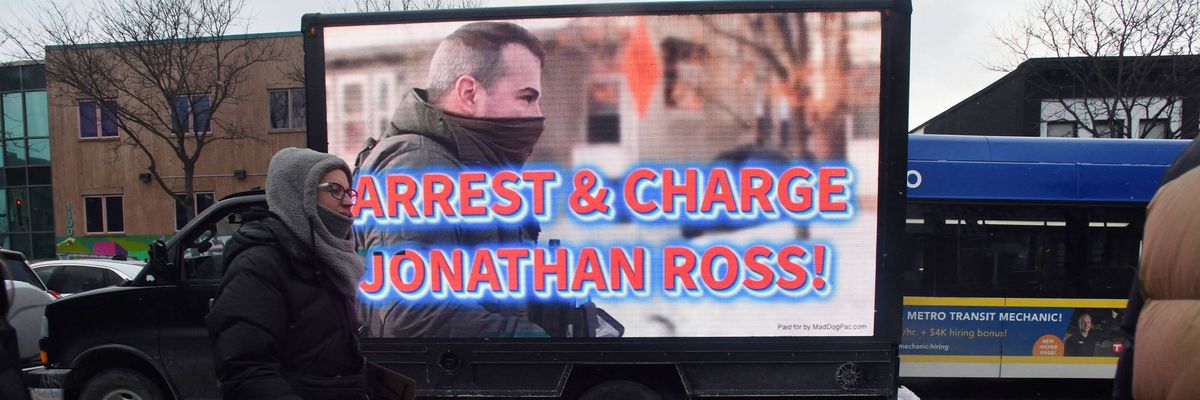
Protesters walk past a screen reading “arrest and charge Jonathan Ross,” the ICE officer who killed Renee Good, in Minneapolis, Minnesota on January 10, 2026.
(Photo by Octavio Jones/AFP via Getty Images)

Jake Johnson
Jan 13, 2026
COMMON DREAMS

The popular crowdfunding platform GoFundMe is facing mounting pressure to remove campaigns supporting Jonathan Ross, the Immigration and Customs Enforcement agent who shot and killed Renee Good last week in Minneapolis, sparking nationwide outrage and protests.

One GoFundMe campaign for Ross, a 10-year ICE veteran who has received full backing from the Trump White House, has raised nearly $600,000 as of this writing. The description of the campaign, started by a user named Clyde Emmons, states, “After seeing all the media bs about a domestic terrorist getting go fund me. I feel that the officer that was 1000 percent justified in the shooting deserves to have a go fund me.”


‘ICE Out for Good’: Weekend Rallies Nationwide After Killing of Renee Good


‘We Are Not Afraid’: Nationwide Protests Against ICE Killing of Renee Good, Fascist Trump

Trump administration officials have characterized Good, a 37-year-old mother of three, as a “domestic terrorist” and openly lied about the circumstances of her killing. President Donald Trump falsely claimed that Good “violently, willfully, and viciously ran over” Ross, despite video footage from multiple angles showing no such thing.

The top contributor to the GoFundMe campaign started by Emmons, who called Good a “stupod [sic] bitch who got what she deserved,” is Bill Ackman, who gave $10,000. The billionaire hedge fund manager wrote on social media that he “intended to similarly support the GoFundMe for Renee Good’s family” but it was closed by the time he tried to donate.

The advocacy group UltraViolet on Monday launched a petition urging GoFundMe to remove all fundraisers supporting or claiming to support Ross, noting that the platform’s policies bar fundraisers in support of individuals accused of violent crimes.

GoFundMe told The Intercept that the company is investigating Emmons’ campaign.

“Renee Good was murdered by ICE in cold blood and in plain sight. There can be no equivocation on the gross abuse of force which caused her death, nor can there be any doubt as to the contemptibility of GoFundMe campaigns to support her killer,” Nicole Regalado, vice president of campaigns at UltraViolet, said in a statement. “GoFundMe claims to be committed to helping people, and yet it continues to profit from our pain.”

“Until each and every campaign supporting Jonathan Ross is taken down,” Regalado added, “GoFundMe will remain complicit in legitimizing ICE’s campaign of terror and violence on our communities.”

State and federal investigators are currently examining Good’s killing, though the FBI has cut Minnesota officials out of the probe, intensifying concerns of a cover-up.

The New York Times reported Tuesday that federal investigators assigned to Good’s killing are “looking into her possible connections to activist groups protesting the Trump administration’s aggressive immigration enforcement, in addition to the actions of the federal agent who killed her.”

“The decision by the FBI and the Justice Department to scrutinize Ms. Good’s activities and her potential connections to local activists is in line with the White House’s strategy of deflecting blame for the shooting away from federal law enforcement and toward opponents they have described as domestic terrorists, often without providing evidence,” the Times added.
Top DOJ Officials Resign After Being Cut Off From Renee Good Killing Probe

“The Civil Rights Division exists to enforce civil rights laws that protect all Americans,” one former DOJ attorney said recently. “It doesn’t exist to enact the president’s own agenda.”


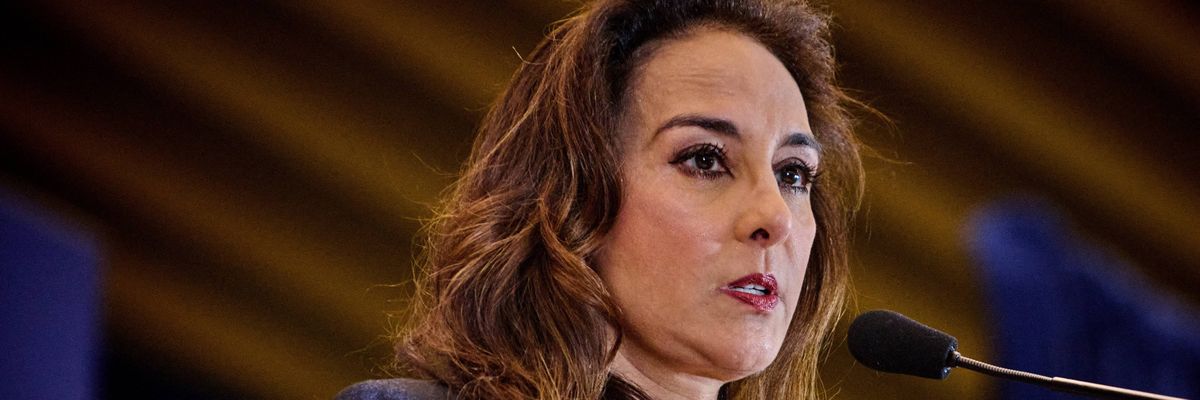
Harmeet Dhillon speaks at the National Conservative Convention in Washington DC on September 2, 2025.
(Photo by Dominic Gwinn/Middle East Images/AFP via Getty Images)

Julia Conley
Jan 13, 2026
COMMON DREAMS

President Donald Trump’s Department of Justice is seeing its latest mass resignation over its handling of the case of Renee Good, who was fatally shot by a federal immigration agent last week in Minneapolis.

Days after Harmeet Dhillon, assistant attorney general for civil rightsannounced that the agency’s Civil Rights Division would not be investigating the shooting—despite the fact that the office’s criminal unit would ordinarily probe any abuse or improper use of force by law enforcement—four top officials in the section have resigned.

As MS NOW reported Monday night, the chief of the criminal unit—listed on the DOJ website as Jim Felte—has resigned, as well as the principal deputy chief, deputy chief, and acting deputy chief. The outlet reported that other decisions by administration officials also contributed to their decision to leave.

The FBI announced late last week that it would be probing US Immigration and Customs Enforcement agent Jonathan Ross’ shooting of Good, who was killed while sitting in her car on a street in Minneapolis where ICE was operating—part of a surge of federal immigration agents who have been sent to the area in recent weeks, with the Trump administration largely targeting Somali people.

Despite video evidence showing that Good’s wheels were turned away from Ross, who was one of a number of officers who had approached her car and reportedly given her conflicting orders, the Trump administration is continuing to claim that she purposely tried to drive into the ICE agent and that Ross fired “defensive shots”—something law enforcement agents including ICE officers are trained not to do in situations involving a moving vehicle.

“It is highly unusual for the Civil Rights Division not to be involved from the outset with the FBI and US attorney’s office.”

As administration officials have aggressively pushed a narrative painting Good as a “domestic terrorist”—a designation that ordinarily would never be used by the government until a full investigation had been carried out—the FBI has blocked Minnesota authorities from conducting a probe, leading the state and the cities of Minneapolis and St. Paul to file a lawsuit Monday.

As the Washington Post reported Monday, the DOJ’s Civil Rights Division would typically work alongside the FBI “to guide investigatory strategy” on a case like Good’s. Prosecutors with the division were involved in trying the officers who killed George Floyd in MInneapolis and Tyre Nichols in Memphis.

“It is highly unusual for the Civil Rights Division not to be involved from the outset with the FBI and US attorney’s office,” Vanita Gupta, who led the division during the Obama administration, told the Post. “I cannot think of another high-profile federal agent shooting case like this when the Civil Rights Division was not involved—its prosecutors have the long-standing expertise in such cases.”

Hundreds of attorneys in the Civil Rights Division have resigned since President Donald Trump began his second term a year ago. Stacey Young, a former division attorney who left the DOJ soon after Trump was inaugurated, told NPR that the division is “not an arm of the White House.”

“The Civil Rights Division exists to enforce civil rights laws that protect all Americans,” Young said. “It doesn’t exist to enact the president’s own agenda. That’s a perversion of the separation of powers and the role of an independent Justice Department.”

Dhillon, who has said the division will work to carry out the president’s priorities, said last April that she was “fine” with the mass departure of civil rights attorneys.

“The job here is to enforce the federal civil rights laws—not woke ideology,” she said.

Dhillon’s announcement that the division would not investigate Good’s killing suggested that the DOJ views probing improper use of force cases as it has in the past as “woke ideology.”

The mass resignation at the Civil Rights Division comes a month after more than 200 former DOJ employees signed an open letter condemning “the near destruction of DOJ’s once-revered crown jewel.”

“The administration wants you to believe that career staff who fled the Division ‘were actively in resistance mode’ and ‘decided that they’d rather not do what their job requires them to do,’” said the former employeees. “That could not be further from the truth. We left because this administration turned the Division’s core mission upside down, largely abandoning its duty to protect civil rights.”

Now in the wake of Good’s killing, said one observer, the division under Dhillon’s leadership “refused to probe a murder. The people with consciences walked out.”

More prosecutors resign as DOJ orders investigation of Renee Good's widow

Travis Gettys
January 13, 2026 
ALTERNET


Leaked body cam video/X/screen grab

A half dozen federal prosecutors resigned over a Department of Justice push to investigate the widow of a woman killed by an Immigration and Customs Enforcement officer.

Six federal prosecutors in Minnesota who had been leading the sprawling fraud probe that prompted the recent immigration crackdown quit their posts Tuesday over DOJ's focus on investigating the wife of 37-year-old Renee Good rather than the ICE agent who shot and killed her, reported the New York Times.

"The stated reason for ICE agents being in Minnesota is because of the ongoing fraud claims around daycare and other services," noted British journalist James Ball, political editor for The New World. "The two prosecutors leading those investigations have now resigned in the wake of Renee Good’s shooting. Even the internal supposed logic of this deployment is falling apart."

Joseph H. Thompson, the second-ranking official at the U.S. attorney’s office who was overseeing the fraud probe that involved a number of Somali-run social service providers, was among the prosecutors who resigned in protest.

"Mr. Thompson, 47, a career prosecutor, objected to that approach, as well as to the Justice Department’s refusal to include state officials in investigating whether the shooting itself was lawful, the people familiar with his decision said," the Times reported. "The other senior career prosecutors who resigned include Harry Jacobs, Melinda Williams and Thomas Calhoun-Lopez. Mr. Jacobs had been Mr. Thompson’s deputy overseeing the fraud investigation, which began in 2022. Mr. Calhoun-Lopez was the chief of the violent and major crimes unit."

At least four other senior officials reportedly resigned from the Justice Department in protest after Harmeet Dhillon, the assistant attorney general for civil rights, decided not to investigate the ICE officer's killing of Good, who had been behind the wheel of a Honda SUV during an encounter with immigration agents last week in Minneapolis.

"Instead, the Justice Department launched an investigation to examine ties between Ms. Good and her wife, Becca, and several groups that have been monitoring and protesting the conduct of immigration agents in recent weeks," the Times reported. "Shortly after Wednesday’s fatal shooting, Kristi Noem, the secretary of homeland security, referred to Ms. Good as a 'domestic terrorist.'"

Thompson strongly objected to the DOJ's decision not to open a civil rights investigation into the shooting and was outraged by the demand to investigate Becca Good, who said in a statement after her wife's killing that they had “stopped to support our neighbors” when they got into a tense confrontation with ICE agents.

The career prosecutor initially tried to investigate the shooting in partnership with the Minnesota Bureau of Criminal Apprehension, a state agency that reviews police shootings, but senior DOJ officials overruled his decision.


Legal expert details 'next steps' after 'mass resignation' at DOJ over Minnesota demands


CNN legal analyst Elie Honig (Photo: Screen capture)
January 13, 2026
 ALTERNET

Legal analyst Elie Honig told CNN that after the mass resignation from the Justice Department's U.S. Attorney's Office in the Minnesota District, there could be some challenges with upcoming cases.

The New York Times confirmed on Tuesday that six prosecutors resigned, three of whom worked in the Minnesota District, after being told to target the partner of Renee Nicole Good.


Honig explained that these kinds of resignations are an example of the prosecutors "trying to tell us something" and "waving a flag" with their resignations.

"You do not see that happen. It's very rare before this administration came in, for career prosecutors, nonpartisan career prosecutors to resign in protest over something," he said. "And let me be clear about what is and is not relevant to this fatal shooting investigation: The actions and movements movements of Renee Good on that day, on that street, what she did immediately before the shooting, the way she moved her car backwards, forwards, all of that is very relevant in minute detail."

What is not relevant, however, are any of "her activities before that day, who she may have associated with [and] what her views towards ICE were." He went on to call them inappropriate to the case.

"They have nothing whatsoever to do with whether that shooting was justified justified or not," said Honig. "And so if that's the reason why these career prosecutors have resigned, then they are well supported in doing that, and I applaud them if that's the reason why."

CNN host Boris Sanchez asked what the next step is and whether the Trump administration would simply find someone else willing to "do their bidding."

Honig reiterated how rare it is for career prosecutors to resign, particularly those who've been there for a decade or more.

"These are people who've served across Republican and Democratic administrations alike," Honig said. "Many of these folks, including Mr. Thompson, served throughout the entire first Trump administration. So, it's really telling us something unusual when you see a mass resignation like this. What happens next is, somebody else gets put on the case."

The challenge, he said, is that it remains to be seen if it will be someone who is overtly partisan or who has any experience.

"The whole beauty of DOJ is that you have this very large pool of people who've been there for a long time, who have experience, who are not politically motivated, who can handle sensitive investigations like this. And when they resign, you're going to get replacements, and you may well get people who are less experienced and less impartial. And the results may show that," he closed.


Trump Vows ‘Reckoning and Retribution is Coming’ to Minnesota as ICE Brutality Mounts

The president’s declaration came as new reports documented brutality and other abuses carried out by federal immigration agents.


A US Customs and Border Patrol agents pulls the pin out of a canister of tear gas before tossing it towards residents in a residential neighborhood after a minor traffic accident in Minneapolis, Minnesota, on January 12, 2026.
(Photo by Madison Thorn/Anadolu via Getty Images)

Brad Reed
Jan 13, 2026
COMMON DREAMS

President Donald Trump vowed on Tuesday that “reckoning and retribution is coming” to the state of Minnesota as new reports documented the brutal actions of federal immigration agents throughout the US.

In a Truth Social post that was amplified by the official White House rapid response account on X, Trump addressed Minnesota residents and asked them if they “really want to live in a community in which their (sic) are thousands of already convicted murderers, drug dealers and addicts, rapists, violent released and escaped prisoners, dangerous people from foreign asylums and mental institutions and insane asylums, and other deadly criminals too dangerous to even mention.”

In reality, the operations being done in Minneapolis and across the US by federal immigration agents have little to do with taking violent criminals off the streets.

Recently released data flagged by Aaron Reichlin-Melnick, a senior fellow at the American Immigration Council, shows that a plurality of people detained by ICE in recent months have no prior criminal convictions.

Trump ended his message with an all-caps declaration to “FEAR NOT, GREAT PEOPLE OF MINNESOTA, THE DAY OF RECKONING & RETRIBUTION IS COMING!”

Trump’s vow of retribution came just hours after ProPublica published a lengthy investigation documenting 40 instances in which federal immigration agents across the country used “chokeholds and other moves that can block breathing,” including nearly 20 instances where agents “appeared to use chokeholds and other neck restraints that the Department of Homeland Security prohibits ‘unless deadly force is authorized.’”

The publication also identified several videos in which federal immigration agents were kneeling on the backs of people’s necks, similar to the way that former Minneapolis police officer Derek Chauvin knelt on the neck of George Floyd as he suffocated to death in 2020.

Eric Balliet, a former law enforcement official who worked at both Homeland Security Investigations and Border Patrol, told ProPublica that he has never seen immigration agents use such tactics before, even if they were arrested people suspected of serious crimes.

“I arrested dozens upon dozens of drug traffickers, human smugglers, child molesters—some of them will resist,” he said. “I don’t remember putting anybody in a chokehold. Period.”

Arnoldo Bazan, a 16-year-old US citizen who was put into a chokehold by federal immigration agents last year, told ProPublica that he “felt like I was going to pass out and die” because of it.

MPR News reported on Tuesday that immigration agents in Minneapolis have apparently been using license plate readers to identify local activists who have been observing and documenting operations in their neighborhoods.

John Boehler, a policy counsel with the ACLU of Minnesota, told MPR News that the agents’ actions appear to violate Minnesota state law, which says accessing people’s personal data in this manner can only be done if they are suspects in an active criminal investigation.

There is no reason, Boehler emphasized, that observers should be under any kind of criminal probe.

“Following or observing or reporting on federal agencies or federal activities is not a criminal activity—it’s protected First Amendment activity,” Boehler explained. “To be using those cameras, to use those license plate readers, to surveil protesters has a chilling effect on First Amendment rights, and that’s what we think the goal is.”
Joe Rogan compares Trump's ICE to Hitler's Gestapo: 'Is that what we've come to?'

David Edwards
January 13, 2026 
RAW STORY


The Joje Rogan Experience/screen grab

Podcast host Joe Rogan noted that there were similarities between the Nazi Gestapo and President Donald Trump's use of Immigration and Customs Enforcement (ICE) officers.

During an interview with Sen. Rand Paul (R-KY) this week, Rogan noted that many Americans viewed ICE officers as "murderous, military people that are on the streets of our city, and they're masked up, which is also a problem."

"Because if you get arrested by a cop, you're allowed to ask the cop, what is your name and badge number?" he remarked. "If you get arrested by an ICE agent, you have no such right. They're wearing a mask. They don't have to tell you s—t. That's a problem. That's a problem on our city streets, right? Because you could also pretend to be an ICE agent."

"And we shouldn't have militarized groups of people roaming the streets, just showing up with masks on, snatching people up," he continued. "It's complicated, obviously, but it's also very ugly. To watch someone shoot a U.S. citizen, especially a woman, in the face, where it's like, I'm not that guy. I don't know what he thought."

Rogan seemed skeptical of claims that the killing of 37-year-old Renee Good in Minneapolis was necessary.

"When people say it's justifiable because the car hit him, it seemed like she was kind of turning the car away," he said. "She didn't seem mentally healthy, but does that mean she should be shot in the head? Is there no other way to handle this?"

"And then I can also see the point of view of the people to say, yeah, but you don't want militarized people in the streets just roaming around, snatching people up, many of which turn out to actually be U.S. citizens that just don't have their papers on them," he added.

"Are we really going to be the Gestapo? Where's your papers? Is that what we've come to?"


DHS responds to Joe Rogan's 'Gestapo' concerns with a 'very straightforward' reply

David Edwards
January 14, 2026
RAW STORY


Fox News/screen grab

Department of Homeland Security spokesperson Tricia McLaughlin declined to deny that Immigration and Customs Enforcement (ICE) officers were behaving as the "Gestapo" after podcast Joe Rogan raised the concern.

During a Wednesday interview on Fox News, host Dana Perino noted that Rogan compared ICE to the Nazi Gestapo on a recent podcast.

"Joe Rogan, he's got questions about what's happening," Perino said, "and it's probably echoing what many people are thinking."

"How would the department respond to that concern that he raised?" she wondered.

"Well, this answer is very straightforward," McLaughlin replied. "If Tim Walz, if Mayor Frey, would let us in their jails, we wouldn't have to be there at all."

"Because we don't have state and local law enforcement's help, we do have to have a physical presence," she continued. "And I know in the interview as well, and what Joe Rogan just mentioned is the rampant crime we found, more than $9 billion. And we believe that's just the tip of the iceberg."

"If the state and local government would help there, if they would coordinate with the FBI, if they would coordinate with Homeland Security investigations, we would, on an expedited basis, be finding that fraud."

During his Tuesday podcast, Rogan acknowledged that ICE's militarization was problematic.

"You don't want militarized people in the streets," he remarked, "just roaming around, snatching people up, many of which turn out to actually be U.S. citizens that just don't have their papers on them? Are we really going to be the Gestapo? Where's your papers? Is that what we've come to?"