It’s possible that I shall make an ass of myself. But in that case one can always get out of it with a little dialectic. I have, of course, so worded my proposition as to be right either way (K.Marx, Letter to F.Engels on the Indian Mutiny)
Sunday, January 18, 2026
CU
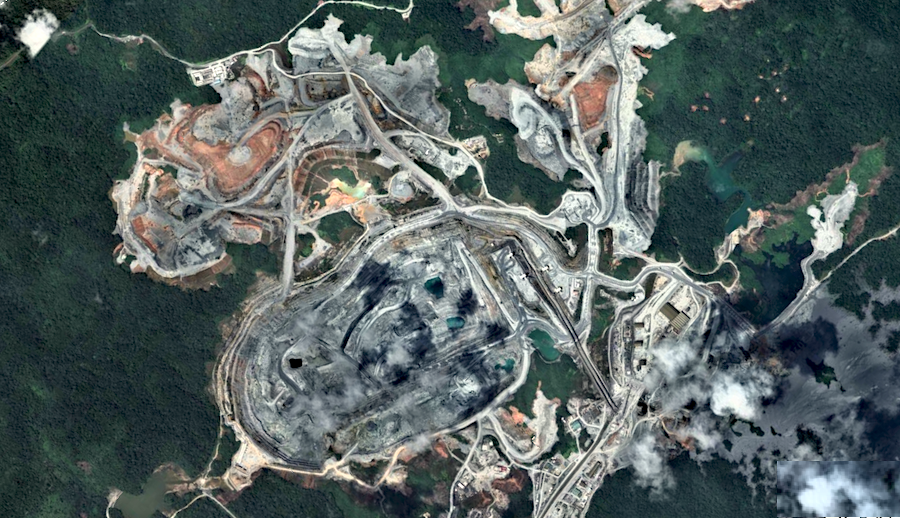
First Quantum nears stockpile processing at Cobre Panama copper mine
Bird’s-eye view of Cobre Panama mine. (Image: Google Earth.)
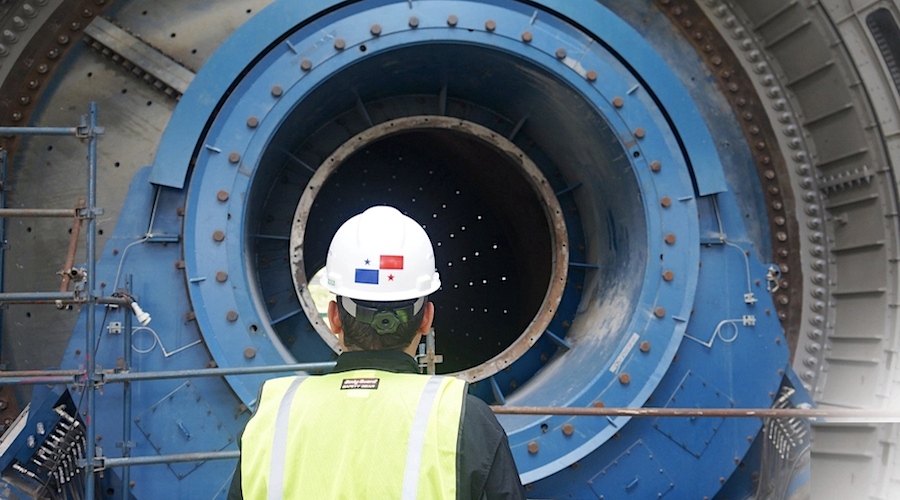
First Quantum Minerals (TSX: FM) welcomed Panama President Jose Raul Mulino’s plan to allow the removal and processing of stockpiled ore at its shuttered Cobre Panama copper mine, calling it a step toward stabilizing the site while discussions continue on its long-term future.
The Canadian miner said the government began executing a care and maintenance plan last year in preparation for processing about 38 million tonnes of ore mined before operations were suspended in 2023.
The stockpile is expected to yield about 70,000 tonnes of copper, with proceeds from concentrate sales helping offset preservation and maintenance costs in 2026, depending on regulatory timing.
Chief executive Tristan Pascall said the forthcoming permit is a positive development but does not amount to a reopening of the mine, adding that First Quantum remains committed to dialogue to resolve the dispute.
The company said it had revised its copper production guidance for the next two years. It nows expects to generate 375,000 to 435,000 tonnes of copper this year; 410,000 to 470,000 tonnes in 2027 and 430,000 to 490,000 tonnes in 2028.
BMO Metals analyst Matt Murphy said the bank sees the guidance adjustments as “a modest negative”, as First Quantum’s 2026 copper production guidance was reduced by about 15,000 tonnes. He noted the market may take some comfort in the likelihood that the miner could begin processing stockpiled ore at Cobre Panama in the coming months.
Murphy added that while 2027 guidance was also lowered by 20,000 tonnes, the 2028 production range represents a 20,000-tonne year-over-year increase.
Initial actions
The Mulino administration last year began taking steps to extract value from the idled mine, delivering key measures by the fourth quarter that included royalty payments, the launch of an independent audit and a partial restart of on-site power generation.
Authorities also sold more than 122,000 tonnes of copper concentrate stored at the site, generating nearly $30 million in royalties that were directed to public works such as health centre upgrades, school expansions, road repairs and improvements to water and electrical systems.
The plan allowed for the restart of the mine’s power plant, with the first 150-megawatt unit commissioned in the fourth quarter and reaching design capacity. The plant is now operating at an average of about 120 MW to support preservation activities and supply Panama’s national grid, while a second 150 MW unit is scheduled to be commissioned this month.
First Quantum and government officials said removing, processing and exporting the stockpiled ore would reduce environmental and operational risks linked to long-term storage, including the potential for acid rock drainage, while providing feed for the tailings management facility.
Timeline
On a preliminary timeline, processing could begin about three months after formal regulatory approval and take roughly one year to complete.
The work is expected to provide an economic boost, adding about 700 direct jobs to the current workforce of roughly 1,600, alongside indirect employment in transportation, logistics, equipment supply and food services.
Pascall said the company supports the President’s call for transparency and engagement and remains committed to dialogue to achieve an amicable and durable resolution at Cobre Panama for Panama and its people.
First Quantum said all activities will be carried out in coordination with the government and in strict compliance with the approved plan.
The mine once supplied about 1% of global copper production, and its closure has weighed on both Panama’s economy and First Quantum’s financial performance. Before the shutdown, Cobre Panama produced 350,000 tonnes of copper in 2022, accounting for about 5% of Panama’s GDP. According to the company, would have delivered $1 billion to the treasury and $2 billion to local suppliers if operations had continued.
Mulino said earlier this week the government aims to decide on the mine’s future by June.
First Quantum is scheduled to release its fourth-quarter and full-year 2025 financial and operating results on Feb. 10, after the close of trading in Toronto.
First Quantum backs Panama’s plan to allow stockpile processing at shuttered copper mine
Cobre Panama mine was First Quantum Minerals’ largest copper operation. (Image courtesy of Cobre Panama.)
Canadian miner First Quantum Minerals (TSX: FM) on Thursday welcomed Panama President Jose Raul Mulino’s plan, announced early this month, to allow the removal and processing of stockpiled ore at its shuttered Cobre Panama copper mine.
The company said processing of the ore stockpiles will allow it to mitigate the environmental and operational risks associated with acid rock drainage and ensure a supply of feed material to the leftover, or tailings, management facility.
First Quantum is awaiting formal approvals to carry out these activities in coordination with the Panama government.
The Cobre Panama mine, one of the world’s largest open-pit copper deposits, was closed in 2023 following protests from local residents over tax contributions and environmental impacts.
The processing of stockpiles does not constitute reopening the mine, and will not require any new extraction, drilling or blasting, the company said in a statement.
The mine formerly provided 1% of the global copper supply, and its closure has had an impact on both Panama’s and First Quantum’s financial prospects.
Earlier on Thursday, Mulino said the government aims to make a decision on the future of the copper mine by June.
(Reporting by Pooja Menon in Bengaluru; Editing by Sahal Muhammed)
Ivanhoe meets 2025 output targets as Kamoa-Kakula smelter ramps up
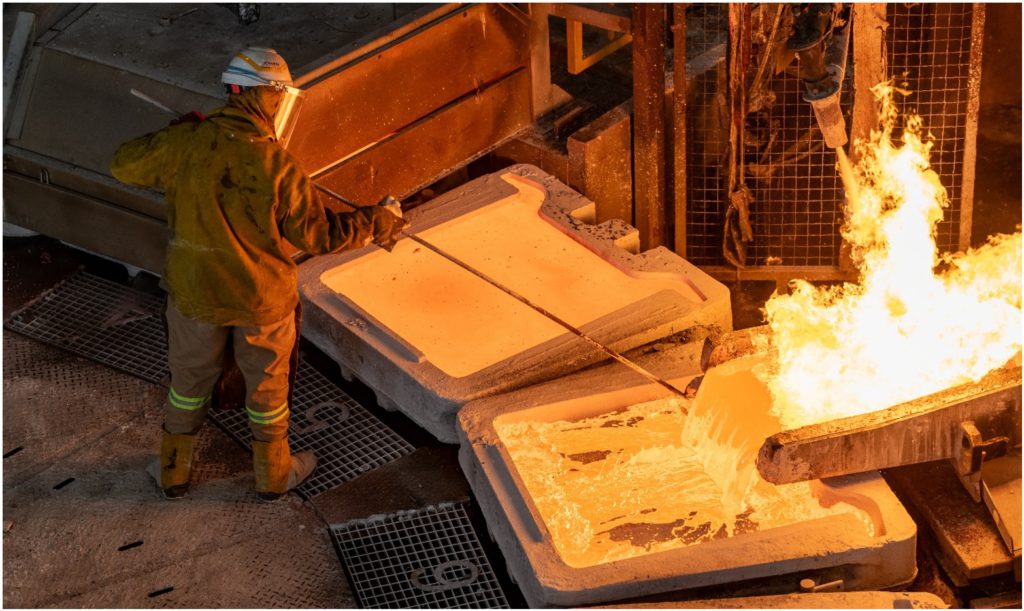
A smelter operator takes a sample while 99.7%-pure copper anodes are poured and cast at the Kamoa-Kakula copper smelter. Credit: Ivanhoe Mines
Ivanhoe Mines said on Thursday it met its 2025 output targets at the Kamoa-Kakula copper complex and Kipushi zinc mine in Congo and issued guidance pointing to a steady recovery after a year of disruptions and a pivotal smelter ramp‑up.
Kamoa‑Kakula is widely viewed as one of the world’s most significant new copper sources, making details of Canadian miner Ivanhoe’s 2025 output and steady 2026 targets critical in a market facing tight supply and slow project growth.
The mine’s ability to hold production within guidance, alongside the ramp‑up of its new smelter, reinforces Ivanhoe’s rising influence in the copper sector, while record output at Kipushi underscores its growing weight in zinc.
Kamoa-Kakula spent 2025 tackling water inflows that restricted access to higher‑grade ore and weighed on recoveries, forcing a staged de-watering push.
Ivanhoe said Kamoa-Kakula delivered 388,838 metric tons of copper in concentrate in 2025, landing within its 380,000–420,000 ton guidance range.
The result reflected record throughput from the Phase 3 concentrator and the early benefits of destocking as the mine transitions to on‑site smelting.
Ivanhoe reaffirmed 2026 copper output guidance at 380,000–420,000 tons, saying production should strengthen as underground dewatering progresses and higher‑grade areas become accessible.
A key milestone for the complex was the late‑2025 start‑up of Africa’s largest copper smelter, which the company said is now averaging 500 tons per day of 99.7%‑pure copper anodes.
First exports are expected imminently, it said.
Ivanhoe said the ramp‑up would cut logistics costs by more than halving the tons of material transported per unit of copper, while generating new revenue streams through sulphuric acid production.
Kamoa-Kakula’s 2026 copper sales are expected to be 20,000 tons higher than production as the inventory of unsold copper concentrate is destocked, mainly during the first half of the year, the results showed.
At Kipushi, Ivanhoe reported a record 203,168 tons of zinc in concentrate in 2025, achieving guidance after a strong second‑half recovery supported by improved power stability and a de-bottlenecking program completed ahead of schedule.
Ivanhoe set 2026 zinc guidance at 240,000–290,000 tons, adding that December production alone implied an annualized run rate exceeding 270,000 tons.
(By Maxwell Akalaare Adombila; Editing by Alexander Smith)
Codelco submits $1.3B plan to prolong Radomiro Tomic mine life to 2058
Chile’s state-run miner Codelco, the world’s largest copper producer, on Tuesday submitted a $1.3 billion continuity project to Chile’s environmental authority to request an extension of its leaching operations at its Radomiro Tomic mine until 2058.
The proposal aims to boost the mine’s capacity to an average of 725,000 tonnes per day, up from its current level of 675,000 daily tonnes, requiring pit expansion and new waste dumps and ore stockpile areas.
The plan seeks to extend the operation of the mine’s chlorinated leaching process at an average annual rate of 154,000 tons per day.
Leaching is a method of extracting metals and minerals from rock using liquid chemicals instead of melting or crushing.
The project also seeks to provide operational continuity to its waste treatment and dumping line, which uses chemical solutions to extract copper from ore rather than smelting.
Plans include expanding support facilities and installing a hydraulic barrier system with four wells to control water infiltration in the industrial area.
The project includes truck transport of 20,000 daily tons of ore or waste per year to Codelco’s Chuquicamata facility over the next 10 years.
Codelco’s Radomiro Tomic mine is one of the company’s three most prominent mines in Chile.
(By Fabian Cambero; Editing by Natalia Siniawski)
Codelco gets environmental permit for $2.8B Ministro Hales mine extension
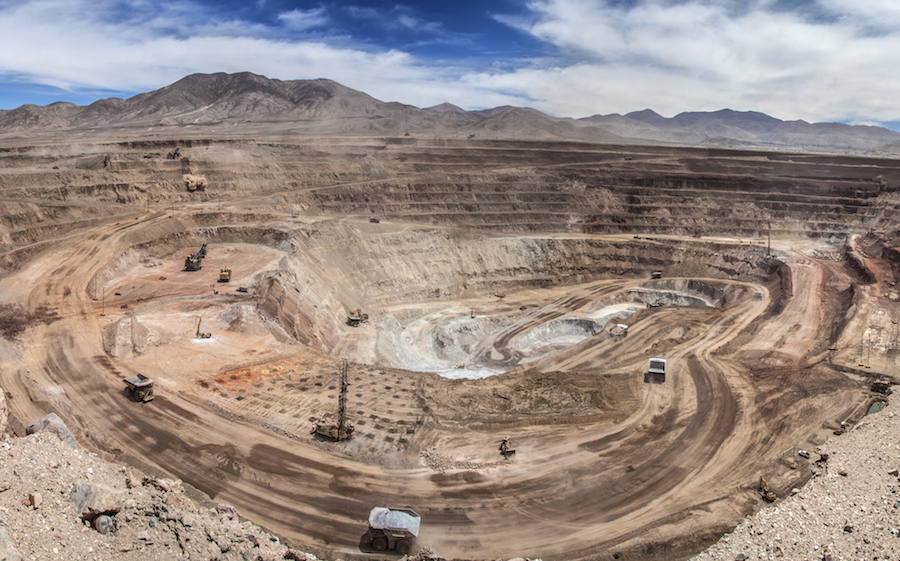
Chilean state-run miner Codelco said on Wednesday it had received environmental approval to extend the life of its Ministro Hales copper mine until 2054, a project that will require an investment of $2.8 billion.
The world’s largest copper producer said the initiative will allow the mine to increase production to 200,000 tons per year, up from the current 170,000 tons.
(By Fabian Cambero; Editing by Sarah Morland)
Sandvik partners with Vale Base Metals for autonomous surface drill fleet expansions
Sandvik will supply 16 surface drills with AutoMine readiness for Vale Base Metals’ copper operations in Brazil.
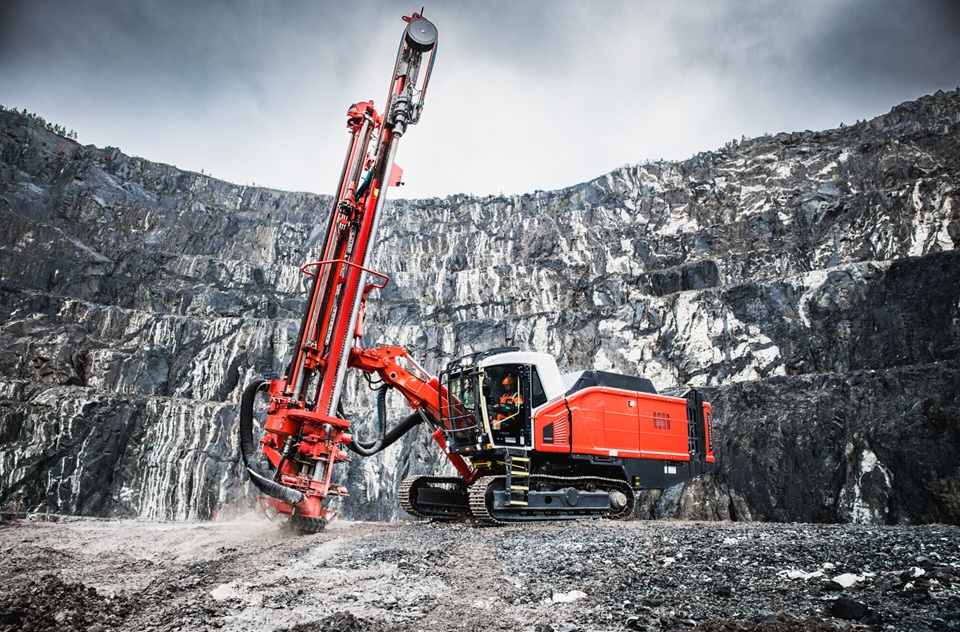
The orders include nine Sandvik DR416i rotary blasthole drill rigs and seven Leopard DI650i down-the-hole (DTH) drill rigs, as well as multi-year service and rock tools supply. The rigs will be equipped for fully autonomous drilling with Sandvik’s industry-leading AutoMine system.
Sandvik DR416i is a powerful and technologically advanced drill rig, designed for drilling rotary from 269.9 to 406.4 millimeters (10.625 to 16 inches). The Leopard DI650i is a self-contained, crawler-mounted, intelligent DTH drill rig for demanding high-capacity production drilling and pre-split, covering hole diameters from 115 to 203 millimeters (4.5 to 9 inches).
AutoMine is the most advanced level of automation and includes the AutoCycle capabilities. The AutoCycle enables fully autonomous operation of the surface drilling fleet, allowing multiple drill rigs to be operated from a remote-control room. This enhances operational safety, increases productivity and improves fleet utilization.
The equipment will be used at the Salobo and Sossego operations. Located in Canaã dos Carajás, southeastern Pará, the Sossego mine complex was inaugurated in 2004 as Vale’s first copper operation. The Salobo mining complex is located in Marabá, also in southeastern Pará. It holds the largest copper mineral reserve in Brazil.
“We’re excited to grow our surface partnership with Vale Base Metals, where we will provide our latest technologies and collaborate to optimize productivity and cost efficiencies,” said Mats Eriksson, president of mining at Sandvik.
“This achievement also marks a significant milestone for Sandvik … demonstrating our ability to deliver a comprehensive portfolio of surface solutions across all divisions. Our journey with Vale Base Metals began in 2021 with the initial DR416i trial at the Sossego mine.”
The orders were mostly booked in the second and third quarters of 2025, with the remainder in 2026.
Deliveries of the Sandvik DR416i rotary rigs began in the fourth quarter and will continue into Q2 2027. Four DI650i rigs will be delivered this year, and the final three in 2029.
FOSSIL FOOLS
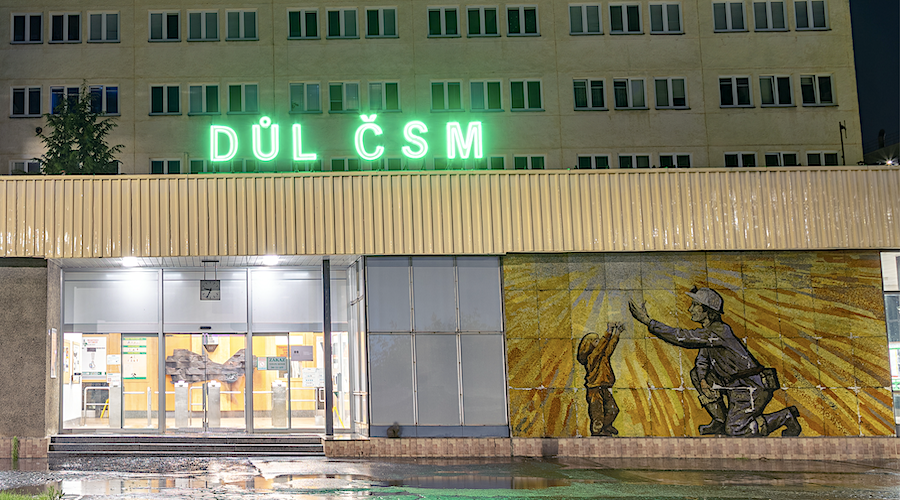
Last Czech deep coal mine closes as centuries-old industry reaches final day
The ČSM coal mine in Stonava, owned by OKD. (Stock photo by davidjancik.)
The last Czech black coal shaft will shut at the end of January, closing the door on more than 250 years of deep mining and bringing to an end an industry that powered the rise of heavy industry in Central Europe.
The final tons are being hauled this month from kilometre‑deep shafts at the CSM mine in Stonava, near the Polish border, as low coal prices and Europe’s industrial and environmental transition sap demand for what was once the region’s most prized resource.
State‑owned OKD had been preparing to shut down three years ago, until Russia’s full‑scale invasion of Ukraine in 2022 sent energy markets surging and bought the mine a short‑lived extension.
For the last time miners rattle into the dark on the underground railway, headlamps flickering across steel supports as machines drill into the coal face.
“It is sad that the shaft is ending, it is hard work but good work,” said Grzegorz Sobolewski, a Polish miner who is considering taking another job across the border in Poland, where shafts remain in operation.
“I will miss the work, I will miss the shearer,” referring to the cutting machine that slices coal from the face as it moves along the seam. Behind him, another miner shouted instructions over the roar of machinery – a sound soon to disappear from the basin.
OKD director Roman Sikora said the mine’s depth had become its weakness.
“Global coal prices are low, while our mining costs are ever greater with the ever greater depths we go to,” he said.
Industrial heartland faces post-coal future
Mining in the Ostrava region began in the late 18th century and turned a rural corner of the Habsburg empire into an industrial enclave.
Investors, including the Rothschild family, financed major industrial projects such as railways, steelworks and supporting infrastructure, helping draw tens of thousands of labourers into what became a powerhouse of heavy industry.
The industry got another boost after Communist nationalisation in 1948. In the 1980s, more than 100,000 miners worked the basin and OKD produced up to 25 million metric tons a year.
Much of that world collapsed after 1989 when communist‑era heavy industry unraveled, pits closed one by one and tens of thousands of miners lost their livelihoods.
When privatised OKD went bankrupt a decade ago, the state took it over to wind it down. By last October, OKD had mined just 1.1 million tons for the year and shrunk its workforce to 2,300, with another 1,550 to be let go in the coming months.
Workforce reshaped by decades of mine closures
Economist Jan Belardi of the Technical University of Ostrava said the 1990s and early 2000s were the hardest years, as the region grappled with mass redundancies and the slow arrival of new industries.
Today unemployment stands at 6.6% – still above the national average, but far from the levels of the post‑communist slump, bolstered by retraining schemes and foreign investors drawn to the area after the Czech Republic joined the EU in 2004.
“Being on the border with Poland and Slovakia, this region had a significant influx of foreign direct investment such as South Korea’s Hyundai,” he said.
Mining also leaves behind an environmental impact, including polluted lagoons or ground drops, and former mines’ surface installations.
The region is getting 19 billion crowns ($907.96 million) from the EU’s Just Transition fund for transformation of regions affected by the bloc’s decarbonisation policies, Belardi said.
In Poland, black coal mining still employs 70,000, and unions have won pledges to keep mining until 2049. In western Czech Republic, surface mining of lignite is expected to continue for several more years.
OKD itself is trying to shape a future above ground. The company aims to stay active in coal trading and develop new ventures including a battery park, a data centre and a small methane‑fuelled power plant using gas seeping from the old shafts.
“We have quite grand plans with OKD in the future,” Sikora said.
($1 = 20.9260 Czech crowns)
(By Radovan Stoklasa and Jan Lopatka; Editing by Louise Heavens)
US approves Warrior Met Coal’s mining plans in Alabama
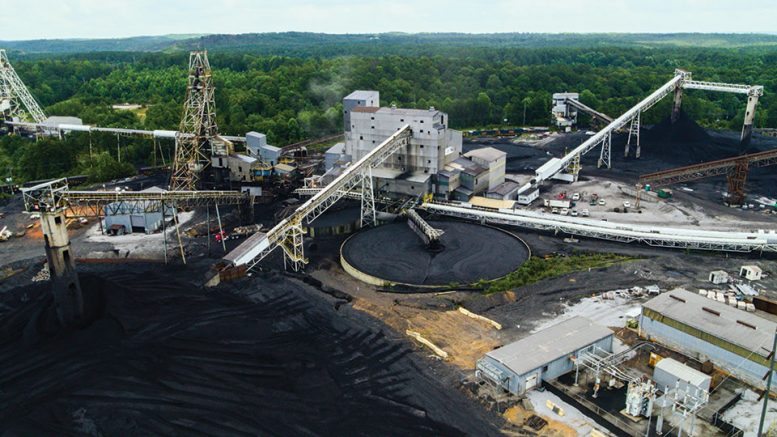
The preparation plant at Warrior Met Coal’s No. 4 met coal mine in Alabama. Credit: Warrior Met Coal.
The Office of Surface Mining Reclamation and Enforcement (OSM), a branch of the US Department of the Interior, has announced the federal approval of Warrior Met Coal’s mining plan for two sites in Tuscaloosa county, Alabama.
Leasing of the federal coal tracts was approved after OSM reviewed an EIS (environmental impact statement) prepared by the Bureau of Land Management and determined that the company’s mining plan adequately addresses “potential adverse environmental effects” and satisfies its responsibilities under the National Environmental Policy Act.
The approval authorizes the recovery of more than 53 million tons of metallurgical coal — a designated critical material under the Energy Act of 2020. Met coal is used to produce coke, an essential fuel for producing high-grade steel used in a wide range of applications, including manufacturing, automotive and construction.
Trump directed federal agencies to lift Obama-era limits on coal mining, leasing and exports. He instructed the Interior Department to locate coal deposits on federal lands, remove barriers to mining, and fast-track leasing processes.
The mining plans for Warrior Met Coal’s Mine No. 4 and Blue Creek Mine No. 1 were advanced under Executive Order 14241, Immediate Measures to Increase American Mineral Production, and Executive Order 14261, Reinvigorating America’s Beautiful Clean Coal Industry.
“Coal recovered from the approval of these mining plans will go to America’s allies for steelmaking,” OSM director Lanny E. Erdos said in a news release. “This will strengthen our national security by ensuring stable supply chains for critical defense materials and reduces reliance on rivals like China.”
At Mine No. 4, Warrior expects to extract about 16.9 million tons of met coal, extending the life of mine by seven years to 2046, while employing approximately 425 employees annually. At Blue Creek Mine No. 1, the company plans to extract about 36.3 million tons, extending the life of mine by 14 years to 2067, while employing approximately 500 employees annually.
Coal recovery from these mines is anticipated to generate more than $400 million in average annual economic output, the company said.
Heavy rainfall disrupts Australian metallurgical coal supplies
Heavy rainfall in northeast Australia has triggered floods that are hampering mine operations and disrupting supplies of metallurgical coal in the region.
Some coal miners have declared force majeure on portions of their shipments or warned customers of potential delays, according to traders, who asked not to be named as they are not authorized to speak to the media. The companies include Stanmore Resources Ltd., GM3 — a joint venture between Golden Energy and Resources and M Resources Ltd. — as well as Pembroke Resources Pty Ltd. and Fitzroy Coal Sales Pty Ltd.
Major miners such as Anglo American Plc and Glencore Plc have also been impacted but have not declared force majeure, the traders said. Argus Media reported that the road and rail disruptions had limited Glencore’s ability to supply copper concentrate for multiple days.
The disruptions follow an unusually wet start to summer in Queensland state, where some areas have seen rainfall close to their monthly precipitation averages weeks earlier than normal, due in part to Tropical Cyclone Koji.
Forecasters are warning that another weather system could form over the region from Monday, potentially compounding the impact on mining and transport operations.
Elsewhere in Australia, heavy rain is affecting parts of Victoria, with flash floods sweeping away cars on Great Ocean Road.
Stanmore, GM3, Pembroke, Fitzroy Coal, Anglo and Glencore did not immediately respond to requests for comment.
(By Paul-Alain Hunt and Katharine Gemmell)
LI
Brazil shuts down Sigma Lithium waste piles over safety concerns
Sigma Lithium is constructing the Grota do Cirilo project in a phased approach. (Image courtesy of Sigma Lithium.)
Brazil’s Labor Ministry has shut down three waste piles at Sigma Lithium’s flagship mine in the state of Minas Gerais, citing a “grave and imminent” risk to workers and the local community, according to documents seen by Reuters.
The order adds to Sigma’s ongoing struggle to restart the lithium mine, Brazil’s largest, with annual capacity of 270,000 metric tons of lithium concentrate. It has been inactive since October, the documents show.
The restrictions do not affect Sigma’s ability to operate or compromise its schedule for resuming production, the firm said in a statement. The miner denied any safety hazards, adding that the piles only contain soil, with no contaminants.
The piles remain a concern despite the shutdown, the ministry said in a statement, adding that a collapsed waste pile could cover nearby houses or spill into the Piaui River.
Shares plunge after downgrade
In November, the firm said during an earnings call that the mine would resume production in two to three weeks.
Last week, with the mine still non-operational, Bank of America downgraded the firm’s shares, citing a lack of clarity on when production would resume. Their assessment sent shares tumbling 15% in a single day.
On Tuesday, the Toronto-listed firm said it was advancing its plan to resume production.
Labor officials issued the decision to close access to the piles on December 5, and on Tuesday, they dismissed the company’s appeal to lift the order.
It is unclear if Sigma could produce lithium at the Grota do Cirilo mine, its only productive asset, without using the three prohibited piles, where the miner stacks waste after processing.
Sigma told inspectors that losing access to the piles would cause “significant operational and economic impacts, in addition to jeopardizing the continuity of mining activity,” documents show.
Industry leader now struggling
Once the biggest player in Brazil’s fledgling lithium industry, Sigma has struggled since 2023 with lower lithium prices and challenges expanding its mining operation.
The firm has also tangled with former co-CEO Calvyn Gardner, ex-husband of the current CEO Ana Cabral. Gardner is suing the company over mining rights and has voiced concerns about safety at Grota do Cirilo.
To resume using the prohibited waste piles, Sigma would have to present documents proving it has fixed issues identified by the inspectors, according to a Labor Ministry document.
A labor inspector who visited the site of the mine reported on November 12 a “partial rupture” of one of the piles near a school in the small town of Poco Dantas, which he cited as evidence of structural issues.
“The company was given ample opportunity to minimize its risks,” said a labor inspector in a January 6 report dismissing Sigma’s argument that the piles are safe.
Sigma said the piles are fully within the safety parameters established by authorities, which it is demonstrating to the ministry.
(By Fabio Teixeira; Editing by Brad Haynes and Rod Nickel)
Bill Gates’ Breakthrough, BMW and Canada back lithium refiner
Bill Gates’ Breakthrough Energy Ventures looks to invest in startups that are capable of cutting emissions by 500 million tonnes annually. Credit: Wikimedia Commons
Lithium refiner Mangrove Water Technologies Inc. secured $85 million from the Canada Growth Fund, BMW AG’s i Ventures and Bill Gates-backed Breakthrough Energy LLC.
The “structured financing package” will support the company’s commercial facility in Delta, which neighbors the US border south of Vancouver. It will also help the firm move toward a second, much larger plant, which could contribute to powering half a million electric vehicles per year, Canada’s Finance Department said in a statement Thursday.
The C$15 billion ($10.8 billion) arms-length government-backed Canada Growth Fund led the package with a contribution of up to $65 million, according to the statement. It has a mandate to spur investment in technologies that reduce emissions.
Industry Minister Melanie Joly said in the statement that her government is focused on “ensuring that the minerals mined in Canada are refined in Canada.”
A year ago, the firm closed a $35 million funding round with backing from Mitsubishi Corp., Asahi Kasei Corp., InBC Investment Corp., Orion Industrial Ventures, Export Development Canada and BDC Capital, as well as Breakthrough and BMW i Ventures.
At the time, founder Saad Dara said it was a critical solution to develop secure supply chains in the context of tense geopolitics between western countries and Asian markets.
(By Thomas Seal)
Lithium swings from glut to scarcity on Asia demand, Traxys says
Lithium facilities in northern Chile. (Image courtesy of SQM.)
One of the world’s biggest lithium traders is seeing a turnaround in the battery metal market as accelerating demand ends a glut that dragged down prices.
“We see a very healthy Asian demand and an under-supplied market at this point in time,” said Martim Facada, managing director for lithium trading at Luxembourg-based Traxys. “We think the market has legs to keep going up.”
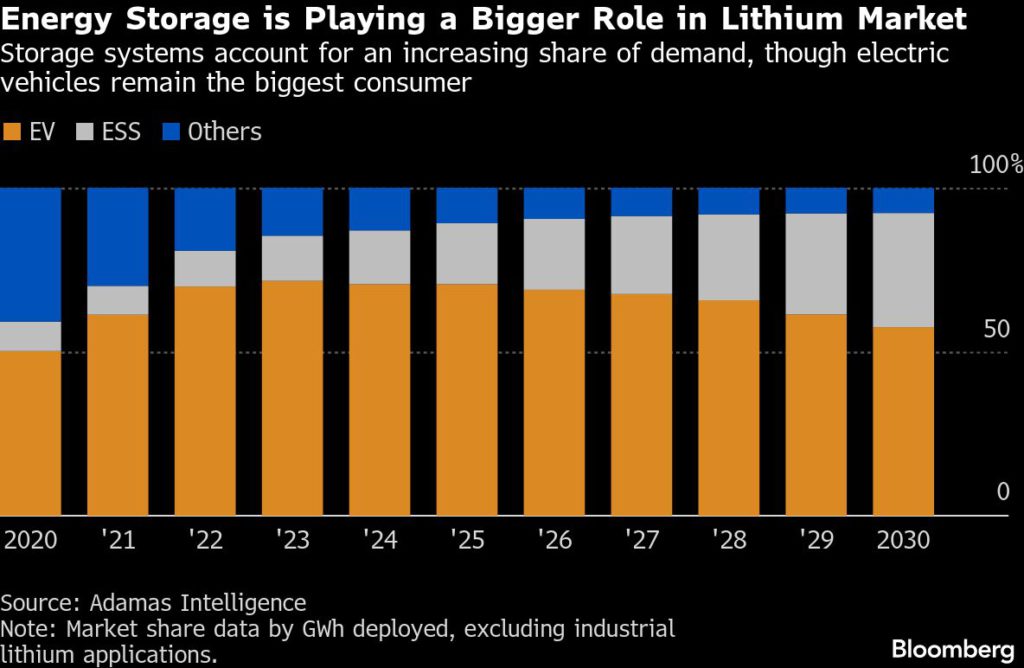
Lithium is emerging from a period of oversupply after record-high prices spurred supply growth at a time of disappointing demand. The ensuing price slump prompted some projects to be idled — and they’ll take time to restart, even as prices recover on strong electric vehicle and energy storage demand.
“A lot of money was lost across different parts of the supply chain,” Facada said in an interview. “We’re turning the corner now.”
He expects EV penetration in China to climb to 60% to 70% this year, calling that a “huge” boost for demand. That compares with slightly more than 50% currently. While EVs remain the dominant consumer of lithium, energy storage that balance grids are becoming an increasingly important source of growth.
Chinese lithium prices have more than doubled from last year’s lows, though they remain more than 70% below a late-2022 peak.
Traxys recently signed an agreement to buy lithium from Lilac Solutions Inc.’s Great Salt Lake project in Utah, where production is slated to begin in early 2028. Besides offtake, the trading house may also contribute part of the roughly $300 million Lilac is seeking to raise.
Lithium carbonate from the project is earmarked for sale domestically, according to Facada and Lilac chief executive officer Raef Sully, who spoke in the same interview.
“Even though US EV subsidies have rolled off and we’re not seeing the same pace of fully electric vehicle growth domestically, the global outlook for lithium and batteries remains very strong,” Sully said.
A volatile global order, intensifying climate extremes, and the race for critical minerals are reshaping mining in 2026. Geopolitics, investor expectations, and social tensions are converging on mines and supply chains worldwide, while ESG continues to be politically contentious in some jurisdictions. Yet the underlying drivers of risk, regulation, capital, and community expectation are as relevant as ever.
For 2026, the real question is less whether ESG matters and more how mining leaders focus on what really moves the dial: resilience, access to capital, licence to operate, and competitiveness. Below are our top ten ESG trends shaping the sector this year.
1: Geopolitics reshape mining’s risk landscape
Geopolitics is becoming a primary driver of mining risk; nearly half of respondents to White & Case’s Mining & Metals 2025 survey see geopolitical fragmentation as a key determinant of sector activity, ahead of traditional market fundamentals. Russia’s war in Ukraine, conflict in the Middle East, and recurring coups in parts of Africa are altering trade routes, raising costs, and complicating project delivery.
Strategic security analyses now position critical minerals as a theatre of great-power rivalry, with export controls, investment screening, stockpiling and “friend-shoring” becoming fundamental tools of statecraft. The context magnifies ESG risk, particularly across governance and human rights. In the year ahead, most mining leaders will need to treat geopolitics as core board-level risk, diversifying supply chains, scenario-planning for sanctions and conflict, and integrating geopolitical risk assessment into due diligence and strategic decision-making.
2: ESG backlash drives strategic recalibration
ESG and DEI have become lightning rods in wider political debates, yet most companies are refining rather than abandoning their strategies. In the US, over 100 anti-ESG bills had been introduced at state level by mid-2025, prompting many to walk back or rebrand DEI programmes amid legal and political pressure.
The current administration’s efforts to de‑emphasize climate and social risk in financial regulation has material impacts for companies with US-based financing,but haven’t eliminated ESG as a global capital requirement. The Conference Board shows 80% of large companies are reworking, not exiting, ESG, while HSBC’s 2025 corporate leader surveys found 95% now see climate transition as a source of growth, and nearly all expect sustainability to be critical to competitiveness. Amid polarisation and misinformation, the miners that thrive will be those that ditch the slogans, double down on material company issues, and communicate clearly how ESG underpins resilience and long-term value.
3: AI governance gaps create liability risk
Artificial intelligence is rapidly becoming core to mining ESG management and an ESG topic in its own right. Deloitte’s Tracking the Trends 2025 highlights AI, automation, and digital twinning for safety, productivity and environmental performance. Use cases include real-time monitoring of water, tailings, and air emissions, predictive maintenance and safety analytics, satellite-based land-use monitoring and automated Scope 3 accounting. Yet, ESG-focused analyses warn of the significant environmental footprints, social and labour issues, bias and explainability challenges, and cyber-security vulnerabilities.
Recent AI governance surveys suggest that two-thirds of organisations can’t reliably enforce limits on how AI systems are used, and six in ten lack effective kill switches. Left unchecked, AI quickly becomes a major governance liability.
4: Tailings governance shifts from voluntary to compliance
ICMM’s November 2025 progress report confirmed that 67% of member facilities have achieved full Global Industry Standard on Tailings Management (GISTM) conformance, with the remainder progressing more slowly than anticipated. Meanwhile, the November 2025 UK High Court ruling on BHP’s liability for Samarco shows that failure to meet standard-of-care tailings management standards can constitute negligence across multiple jurisdictions.
Looking ahead, the World Mine Tailings Failures database forecasts a further 13 catastrophic failures between 2025 and 2029, signalling that tailings governance is now an enterprise risk imperative. Expect lenders and regulators to increase focus on conformance for non-compliant facilities, scenario analyses exploring climate-induced failure triggers (e.g. extreme rainfall, seismic activity, permafrost thaw), third-party assurance and proper integration of tailings risk into capital allocation and financing decisions.
5: Critical minerals rush deepens social tensions
The rush for critical minerals is intensifying mining’s long-standing social and security risks. The IEA’s Global Critical Minerals Outlook 2025 forecasts steep demand growth and, absent stronger governance, more social conflicts over land, water, and labour. The Business & Human Rights Resource Centre’s Transition Minerals Tracker 2025 documents 835 allegations of abuse linked to major operations over the past 15 years, including 157 attacks on human rights defenders, 225 worker impacts and ongoing disproportionate harm to Indigenous Peoples.
UNODC’s 2025 Minerals Crime report documents expanding criminal and conflict-linked activity in artisanal mining, further heightening security and human rights risks. Meanwhile, rulings such as Gitxaała Nation v. BC in Canada embed Indigenous consultation obligations into permitting, as the minerals rush accelerates project timelines and fuels resource nationalism. The industry faces an uncomfortable tension: how to secure minerals essential to defence, energy and technology without repeating the inequality, violence, environmental devastation and corruption of past mining booms.
6: Climate impacts stress‑test transition plans
Climate change is already materially disrupting operations today. UNEP FI’s analysis of climate risks in metals and mining highlights escalating production losses, maintenance costs and stranded-asset risk from extreme weather, water stress and rising temperatures. KPMG’s 2025 Australian Mining Risk Forecast ranks climate change a top business risk, with fires, floods and cyclones increasingly affecting key producing regions.
Meanwhile, ISSB’s IFRS S2 standard is being adopted or considered across dozens of jurisdictions covering more than half of global GDP, with mandatory climate-related financial disclosures ramping up. In this context, transition plans must move from planning documents to site-level execution: credible, costed adaptation measures and integrated resilience planning will increasingly affect access to capital, insurance and permits.
7: Nature and water become investment dealbreakers
Nature and water risk are moving from “emerging topics” to hard screening filters, as biodiversity loss and ecosystem degradation become understood as systemic financial risks. A 2025 Oxford corporate nature risk perceptions survey found that nearly half of companies globally now view nature risks as financially material, with 43% saying physical nature risks already affect them today.
Barclays’ 2025 analysis of 250 mines has calculated that nature risks could cut mining company earnings by 25% over five years, and ICMM has backed up its nature-positive commitment with new implementation guidance. Meanwhile, TNFD’s 2025 status report confirms 730+ adopters, including 179 financial institutions with $22 trillion in assets. For mining, GRI 14: Mining Sector 2024 (effective 1 January 2026) formalises water use, land disturbance and biodiversity as material topics requiring more granular disclosure. Those that can’t demonstrate coherent nature and water strategies will find it increasingly hard to secure approvals and capital for both new projects and expansions.
8: Boards face rising shareholder scrutiny
Boards face rising pressure to demonstrate ESG competence and integrate material sustainability risks into corporate governance. 2025 marked a record number of activist campaigns, with boards increasingly challenged on capital allocation, climate strategy and governance. High-profile shareholder votes against climate and capital plans (such as Woodside Energy) show that boards can no longer just assume backing on ESG-material decisions.
Rising US anti-ESG activism also requires boards to equip themselves to defend strategic risk decisions. Director liability for ESG oversight is also rising across jurisdictions. For mining boards, this means developing demonstrable ESG literacy through structured competency building (such as the Responsible Mining Academy), formal governance structures (often dedicated sustainability committees), and early investor dialogue on material ESG decisions.
9: Value chain accountability shifts to enforcement
Regulators are ramping up pressure on companies to demonstrate value chain accountability, moving beyond policy statements to enforcement. Canada’s Fighting Against Forced Labour and Child Labour in Supply Chains Act has identified high-risk sectors and warned tolerance for boilerplate reporting will be short-lived.
In Australia, the recent statutory review of the Modern Slavery Act 2018 (Cth) recommends stronger obligations and penalties, and legal analyses anticipate stronger enforcement, with mining singled out for rising scrutiny. In Europe, CSRD and the forthcoming CSDDD embed mandatory human rights and environmental due diligence across supply chains. Miners will need to move beyond mere policy commitments and prepare to show evidence of effective identification, prioritisation and remediation of value chain risks, particularly forced labour, forced migration, and rights of Indigenous Peoples.
10: ESG reporting harmonisation and greenwashing enforcement intensify
ESG disclosure is converging around common standards and facing tougher enforcement, with miners increasingly judged on comparable, assured performance data, not glossy narratives. IFRS S1 and S2 standards are being woven into reporting regimes across dozens of jurisdictions, with mandatory climate disclosures starting from 2025. In parallel, CSRD is live in the EU, with ESRS reports and limited assurance becoming mandatory, and GRI 14: Mining Sector 2024 takes effect globally from 2026.
Regulators in Australia, the UK, EU and Canada have made greenwashing enforcement a priority, leading to investigations and fines. Expect a mix of cleaner claims, quieter messaging and growing “greenhushing” behaviour, but not always better disclosure. Companies face more pressure to align with converging internationally-recognized standards, as well as higher legal and reputational stakes if bold claims don’t match the underlying data. Those that can disclose robust, decision‑useful data will gain an edge with lenders, investors, communities and regulators.
Looking ahead
2026 will continue to challenge mining companies to move beyond generic ESG narratives and aspirations to disciplined execution on what really matters to their business: navigating geopolitics, building climate and nature resilience, managing the social fallout of the critical minerals rush, cleaning up value chains, and doing all of this in an environment of political polarisation and tighter regulation. This challenge will be less about “doing good” and more about protecting and creating value by reducing downside risk, securing scarce capital, winning permits and offtakes, and maintaining the trust of workers, communities, and governments.
Coming out ahead will be companies that integrate ESG into risk and strategy, focus on their material issues, rely on solid data, manage trade-offs transparently, and adapt pragmatically to complex local and global conditions.
* Elizabeth Freele and Rachel Dekker are co-founders of mining consultancy Sympact and online learning platform the Responsible Mining Academy, supporting companies to meet rapidly evolving expectations of business through advisory services, training, and thought leadership.
Disney’s Ultra-Large Cruise Ship Makes U.S. Stop on Delivery Run to Asia
Disney is only the third cruise company to have a cruise ship over 200,000 GT (DCL)
The ultra-large Disney Adventure (208,108 gross tons) is making a brief appearance in the United States during its delivery run to Asia. The cruise ship pulled into Port Canaveral, Florida, on January 15 for a reported 12-day stopover before she resumes the trip, which will ultimately arrive in Singapore, her year-round homeport.
Acquired by Disney in November 2022 from the bankrupt MV Werften shipbuilding, the ship was completed by Meyer Werft and reconfigured for the Disney brand. The company, according to unconfirmed reports in the German media, acquired the cruise ship for €40 million along with the commitment to complete the construction in Germany. The company reconfigured cabins, redid public spaces, including removing the designs for a large casino, and redid dining and other amenities to reflect the Disney style. Unconfirmed media reports said Disney had budgeted €1 billion, but the final product cost approximately €1.8 billion.
The ship was being built by the German shipyard, which was part of the Genting Hong Kong group and was to have been called Global Dream. She was reportedly designed to carry as many as 9,000 passengers and would have been based in Asia.
Disney says the passenger capacity for the ship is approximately 6,700. It is 341 meters (1,122 feet) in length with a beam of 46 meters (151 feet). The ship was completed at 208,108 gross tons, making Disney only the third cruise line, following Royal Caribbean and MSC Cruises, to have ships over the 200,000 gross ton threshold. The ship is more than 40 percent larger than Disney’s current largest ships in the Disney Wish class.
Disney Adventure docked in Florida on a stopover on its way to Asia (Port Canaveral)
The ship was outfitted with seven themed areas (Disney Imagination Garden, Toy Story Place, San Fransokyo Street, Town Square, Wayfinder Bay, Disney Discovery Reef, and Marvel Landing). The line kept elements such as the Genting design for the largest roller coaster at sea, while adding immersive experiences. Mechanically, the ship is reported to be methanol-ready, but a Disney spokesperson said they did not anticipate green methanol would be available in Singapore. They said the vessel will operate on a mix of sustainable and low-emission fuels, such as HVO (Hydrotreated Vegetable Oil).
Delivery of the ship had been delayed after the first sea trials, which began after she departed from Wismar, Germany, on September 1. She went to Bremerhaven for additional outfitting before undertaking a second series of sea trials. Delivery was completed on December 13, and she departed Germany on January 4 for the Atlantic crossing with a brief stop in Freeport, Bahamas, on January 14.
The ship arrived in Port Canaveral around dawn on January 15, and the port says she is scheduled to depart on January 27. The delivery trip will continue with a transit of the Panama Canal, a stop in Los Angeles, and then Tokyo. The maiden voyage from Singapore is scheduled for March 10. The line has made a long-term commitment to Singapore and initially will be operating 3- and 4-day cruises to nowhere.
Introduction of the Disney Adventure follows the launch in December 2025 of the Disney Destiny in Florida. It is part of the company’s multi-year expansion plan for the cruise line, which began operations in 1998. A fourth ship of the Disney Wish class is under construction at Meyer Werft in Germany for delivery next year. The line plans to reach 13 ships, having also ordered a new class of three smaller cruise ships due to start delivery in 2029 from Meyer. Disney and the operator of the Tokyo Disney Resort, Oriental Land Co., have also reached an agreement for Oriental Land to build another ship based on the Wish class for operations in Japan. That ship is also expected to launch in 2029.
Spain Busts Drug Smugglers Who Used “Monkey” Method and Hijacked Containers
Spainish police in 2024 showing off a record seizure (Policia Nacional)
Spanish authorities are reporting that they successfully broke up a large drug smuggling operation that had been responsible for bringing large amounts of cocaine from Colombia. They described a number of methods, including so-called “monkeys” to get the drugs aboard the containerships, dropping off near Spain, and hijacking vessels and small boats to retrieve the smuggled narcotics.
The investigation involved the National Police, Civil Guard, and Tax Agency, and they reported that it spanned months. Three different organizations were involved in parts of the operation, with links to the Balkan Cartel.
Last summer, the police responded to two containerships that reported stowaways and attempts at hijacking their vessels. In the first case, a vessel bound for Cadiz alerted the Maritime Rescue Service after stowaways were spotted on deck. When the police reached the ship, they believed at least three people tasked with retrieving the drugs made a hasty retreat. The police found 38 bales that had been removed from the containers and were on deck. The ship was taken to Cadiz, where the police reported they confiscated 1,355 kilograms of cocaine.
Another vessel traveling in Portuguese waters also reported that it had discovered stowaways aboard with rifles. They were attempting to commandeer the vessel and successfully offloaded several bales that had been hidden in the containers.
The police later apprehended a car in Malaga in October with 88 kilos of cocaine. That ultimately led them to three organizations, one operating in Colombia and Spain, and another linked to the Balkan Cartel that owned the drugs. They were being supported by a third group based in the Campo de Gibraltar region.
The investigation revealed that the organization was using so-called monkeys, i.e., young people from low-income families, who were good swimmers. They swam the drugs to the containerships and loaded the drugs onto the ships at sea. Members of the same group traveled to Spain to intercept the ships and hijack the containers before they reached the Strait of Gibraltar.
The group sometimes provided high-speed boats used to intercept the containerships. They said the crew from the small boats retrieved drugs that had been dumped overboard into the ocean or used military techniques to break into the containers to retrieve the smuggled cocaine. Sometimes the people on the small boats were subdued.
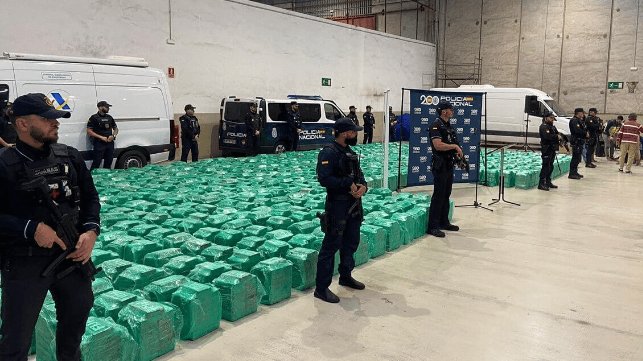
The police report that a total of 19 raids were carried out to break up the three rings. They seized 2,475 kilos of cocaine and found weapons used in the operations. They also seized €166,000 in cash, another €100,000 worth of jewelry and watches, eight high-end vehicles, and cans of gasoline. Furthermore, they found various nautical equipment, ladders, and GPS devices. The authorities have also frozen nearly €5 million in real estate assets and four cryptocurrency wallets. They also discovered multiple storage facilities used for the drugs.
A total of 30 people were arrested. The police believe the operation was responsible for smuggling large quantities of cocaine into Spain.

 A smelter operator takes a sample while 99.7%-pure copper anodes are poured and cast at the Kamoa-Kakula copper smelter. Credit: Ivanhoe Mines
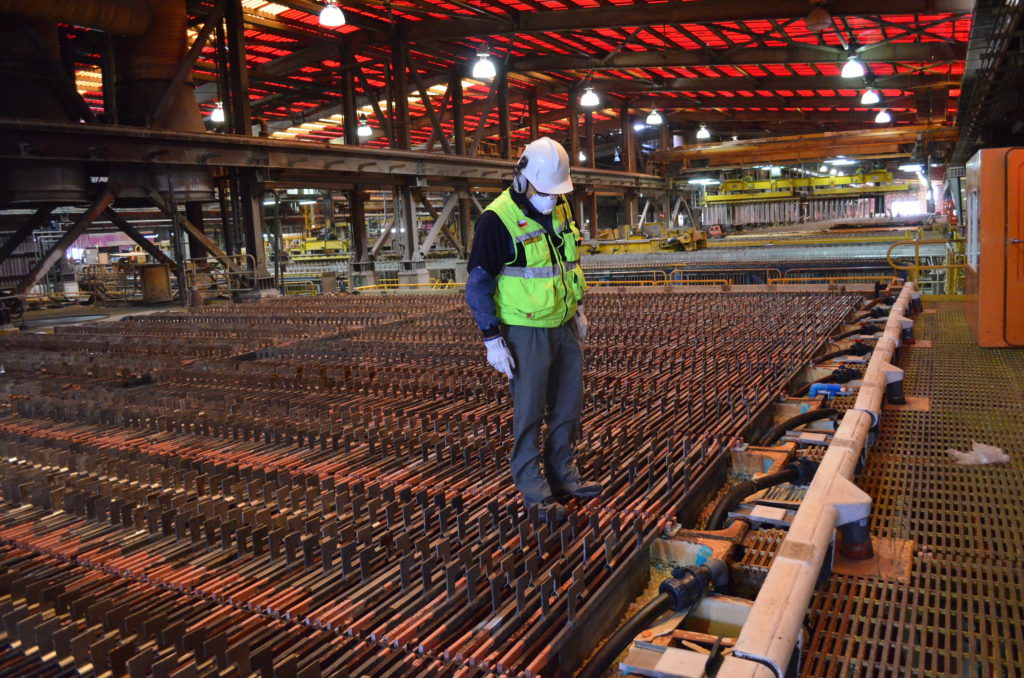 EW plant at Radomiro Tomic. Credit: Codelco | Flickr
 Chile’s Ministro Hales mine. (Courtesy of Codelco via Flickr)
 Di650i-leopard. Image: Sandvik.