Wednesday, January 21, 2026

New Chinese Constellations Dwarf Starlink Plans for Near-Earth Orbit

  • China has filed applications to reserve orbital slots for two massive satellite constellations, CTC-1 and CTC-2, totaling almost 200,000 satellites, which is a plan that would significantly exceed SpaceX's Starlink.

  • The large-scale filing has raised concerns among analysts and US officials about potential military or security applications, given China's treatment of space as a strategic domain and reports of unusual maneuvers by some of its existing satellites.

  • Many experts believe the proposal is likely an "orbital land grab" intended to reserve space for future use rather than a signal of imminent construction, due to the immense manufacturing and launch capacity required.

China has filed requests to reserve orbital slots for almost 200,000 satellites, prompting concerns it may be positioning itself to control large swathes of near-Earth space, according to the Daily Mail.

The applications, submitted on December 29 by the newly formed Institute of Radio Spectrum Utilisation and Technological Innovation, outline two constellations—CTC-1 and CTC-2—each with 96,714 satellites spread across thousands of orbits. If built, the system would dwarf SpaceX’s Starlink plans and could restrict access for rival operators.

Officials have offered little detail about the satellites’ role, fuelling speculation about military or security uses. According to China in Space, Nanjing University of Aeronautics says the network would support “Low-altitude electromagnetic space security, integrated security defence systems, electromagnetic space security assessment of airspace, and low-altitude airspace safety supervision services.” Analysts say this closely resembles SpaceX’s military-focused Starshield system.

The Daily Mail writes that the filings were made with the International Telecommunications Union (ITU), which allocates orbital spectrum. Once registered, other companies must prove their satellites will not interfere. While the spacecraft could have civilian uses, the move comes amid intensifying US-China competition in space.

Satellites now underpin modern warfare, forming part of the so-called “kill mesh.” The war in Ukraine has shown how vital satellite communications and jamming capabilities can be, and US officials have raised alarms about unusual manoeuvres by some Chinese satellites in geostationary orbit. One senior officer warned they are “sliding” across the GEO belt, behavior seen as inconsistent with normal communications missions.

China openly treats space as a strategic domain. President Xi Jinping has called it an “important strategic asset for the country that must be well managed and utilized and, more importantly, protected.” China’s satellite count has risen from about 40 in 2010 to roughly 1,000 today.

Despite the scale of the proposal, many experts doubt it will be realised. China would need to launch around 500 satellites every week for seven years—far beyond its current manufacturing and launch capacity. This has led analysts to suspect the move is an orbital “land grab,” reserving space for future use rather than signalling an imminent build-out.

As Victoria Samson of the Secure World Foundation put it, “It is possible they’re just trying to create some space for later on.” Even Chinese industry figures have played down the feasibility, with Spacety executive Yang Feng warning that “Leading in terms of filing applications does not mean surpassing in final execution,” citing major technical and capacity hurdles.

The move is notable given China’s recent criticism of SpaceX at the UN, where it argued that the unchecked spread of commercial satellite constellations “has given rise to pronounced safety and security challenges.”

By Zerohedge\

Elon Musk's xAI Data Center Sparks Environmental Legal Battle

  • The exponential growth in AI, particularly large language models, is creating a massive and unsustainable demand for energy, leading some companies like xAI to illegally operate data centers without proper air quality permits.

  • Big Tech firms are actively lobbying to block or water down legislation that would hold them accountable for their energy use and prevent them from transferring the financial burden of increased utility costs to households and small businesses.

  • The political and public backlash against the unchecked spread of data centers is growing, with communities successfully fighting projects in places like Indiana and using lawsuits to force regulatory action in Memphis.

As AI integration soars on a global level, the amount of energy consumed by large language models is also exploding. Everyone wants to be at the forefront of the AI revolution, but there are far fewer volunteers for figuring out how to source all that energy and source it sustainably – and even fewer volunteers to foot the bill for its skyrocketing resource needs. In fact, powering data centers has become such a tricky business that some AI moguls have been turning to illegal channels to keep the electricity flowing.

Last week, the Environmental Protection Agency (EPA) ruled that Elon Musk’s artificial intelligence company xAI has been illegally powering its massive Tennessee data centers through the use of a fleet of methane gas turbines. The turbines were operating without required air quality permits, but the company has been fighting the charges for a year and a half, claiming that their operations were exempt.

In fact, the company had identified and taken advantage of an existing loophole in the local county’s provisions, which allowed them to operate these generators without a permit as long as they moved the portable turbines once a year. However, the EPA revised these rules in order to fix the legal ambiguity and hold xAI accountable for its considerable emissions. 

 “At full capacity, xAI’s Colossus 1 datacenter uses 150 megawatts of electricity – enough power to run 100,000 homes – and the company plans to expand,” states a recent report from The Guardian. 

The firm is now operating with 12 permitted turbines, but at one point, xAI was operating with 35 unpermitted mobile generators. The ruling has been celebrated in Memphis, where community actives have been fighting the turbines for well over a year. “Our communities, air, water and land are not playgrounds for billionaires chasing another buck,” said Abre’ Conner, NAACP director of environmental and climate justice. The NAACP is responsible for a July lawsuit against xAI that helped bring the violations of the Clean Air Act to the attention of the EPA.

While this win is a great achievement for Memphis communities, a much larger problem persists. The scale of large language models’ electricity needs is mammoth and growing all the time, and finding the financial, physical, and energy resources to power it is going to continue to be a problem. In many ways, the artificial intelligence sector is the wild west – regulators are tripping over their own feet trying to keep up with the spread and advance of the tech sector, xAI is likely not the only company searching out loopholes and operating in legal and ethical gray areas.

Moreover, all that energy is really, really expensive, and Big Tech is doing everything it can to avoid footing the bill. In California, Silicon Valley recently managed to block new rules for data centers that would increase regulations and protect regular constituents from carrying the financial burden of their growing energy use. Instead of introducing forward-thinking but overdue legislation to control data centers’ impact on Californians, influential Big Tech representatives helped water the issue down to a law requiring regulators to write a report on the issue by 2027. 

“The measure began as a plan to give data centers their own electricity rate, shielding households and small businesses from higher bills,” CalMatters recently reported. “It amounts to a “toothless” measure, directing the utility regulator to study an issue it already has the authority to investigate,” the article went on to paraphrase critics’ views on the matter.

The public is fighting back against the spread of data centers in other parts of the country as well. Political candidates from both parties in Virginia are running their campaigns on anti-data-center platforms, and in Indiana, locals managed to shut down a Google plan to build a massive data center campus outside of Indianapolis. But the battle is just beginning. 

"We are witnessing a massive transfer of wealth from residential utility customers to large corporations—data centers and large utilities and their corporate parents, which profit from building additional energy infrastructure," Maryland People's Counsel David Lapp recently told Business Insider last year. "Utility regulation is failing to protect residential customers, contributing to an energy affordability crisis.”

By Haley Zaremba for Oilprice.com


Germany’s Coal Plants Return to Profit

The coal-fired power plants in Germany are profitable to run again amid surging electricity demand in a cold snap and a plunge in European carbon prices this week. 

Coal plants running on lignite, the dirtiest coal, returned to profit after carbon prices slumped by about 8% so far this week, following a jump in the previous week, analysts at Energy Aspects Ltd and LSEG told Bloomberg.

The plunge in carbon permit prices made coal-fired power plants in Germany more profitable to run than gas-fired capacity, according to the analysts. 


Coal generation is now back to profit in Europe’s biggest economy, for the first time since November. 

The cold snap, soaring demand, and faltering renewable output, especially solar in the winter, have resulted in coal and gas plants meeting almost half of Germany’s electricity demand this week, per data from Fraunhofer ISE cited by Bloomberg. 

Germany looks to phase out coal-fired power capacity by 2030, but it continues to rely on coal power plants when demand is high and renewable output low in the winter. 

At the end of last year, Germany’s ruling coalition slashed in half the capacity of new natural gas-fired power plants it aims to tender by 2032 in a significant scale-down from the previously planned 20 GW of new gas capacity. 

The governing coalition led by conservative Chancellor Friedrich Merz has reached a compromise on the energy policy as Europe’s biggest economy looks to balance energy security with its decarbonization goals. 

The government will tender 10 GW of new gas-fired capacity by 2032, to serve as flexible backup to wind and solar energy, as Germany also looks to phase out coal-fired power capacity by 2030. 

Germany, which in 2023 closed all its remaining nuclear power plants – is now seeking to balance the generation and transmission systems with new gas power plants.

By Tsvetana Paraskova for Oilprice.com 

Coal India unit valued at $2.2 billion after stellar market debut

Stock image.

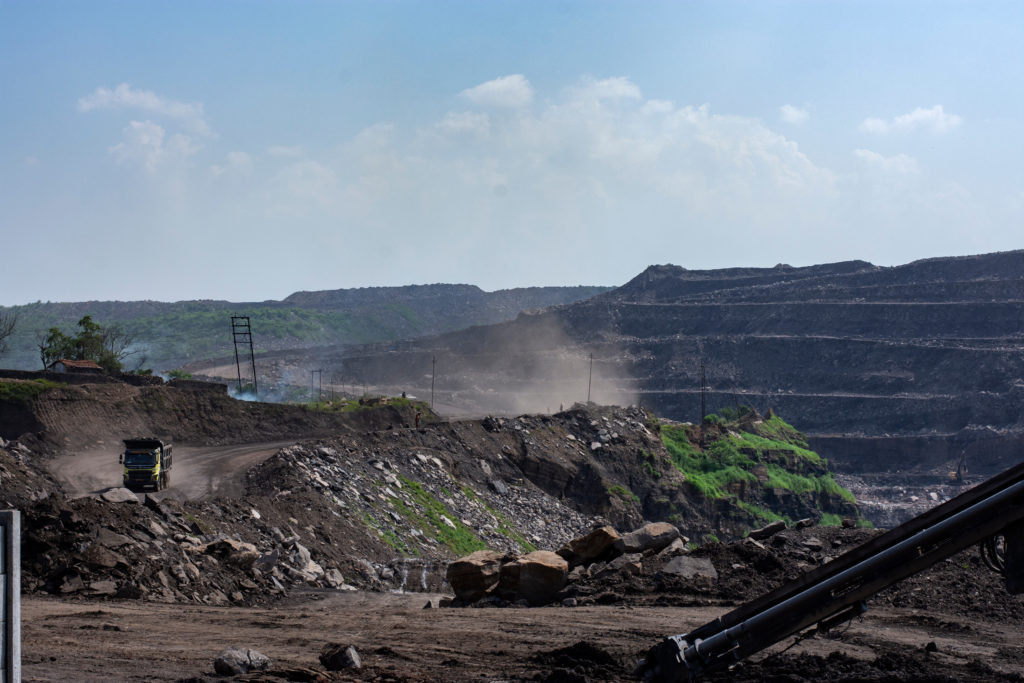
Shares of Bharat Coking Coal, India’s top coking coal miner, soared as much as 96% in their market debut on Monday, buoyed by optimism around the country’s steel sector.

The stock pared some of its gains to trade 83.4% higher at 42.19 rupees as of 10:26 a.m. IST on the National Stock Exchange of India, valuing the company at 196.48 billion rupees ($2.16 billion).

The shares listed at 45 rupees, compared to the issue price of 23 rupees. The benchmark Nifty 50 was down 0.6% on the day.

The company, which produces coking coal – a key steelmaking raw material – is a unit of government-owned Coal India, one of the world’s largest coal producers. This is India’s first mainboard listing of 2026.

“A combination of things like lower ticket price, reasonable valuations and strong parentage of Coal India have driven the surge in stock,” said Sunny Agrawal, head of fundamental equity research at SBICAPS Securities.

“One can look at Bharat Coking Coal as a proxy player for steelmakers, which currently enjoy a strong business outlook,” Agrawal added.

The $118.7-million IPO drew bids worth $13 billion last week, making it one of the most heavily subscribed state-run offerings in recent years.

India ranked as the world’s second-largest primary market in 2025 after the United States, according to LSEG data.

Bharat Coking Coal’s stellar listing reflects its strategic importance in India’s steel and metallurgical coal supply chain, said Shivani Nyati, head of wealth at Swastika Investmart.

The company plans to acquire coking coal mines in Australia and Russia in the next two to three years, its chairman and managing director Manoj Kumar Agarwal told Reuters last week.

($1 = 90.7910 Indian rupees)

(By Urvi Dugar and Vivek Kumar M; Editing by Janane Venkatraman and Sonia Cheema)


GEMOLOGY

Petra’s 42-carat blue diamond sparks hope for natural gems


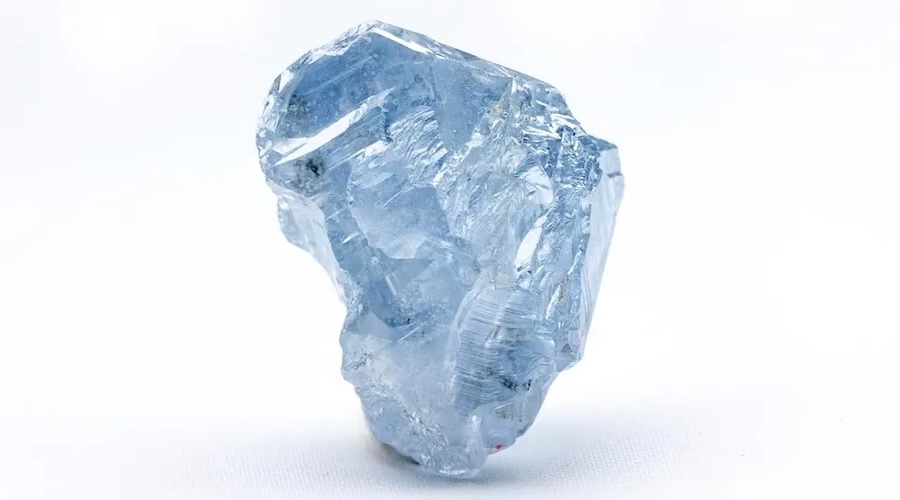
The 41.82-carat blue diamond unearthed at the Cullinan mine in South Africa. (Image courtesy of Petra Diamonds.)

Africa-focused Petra Diamonds (LON: PDL) has unearthed an ultra-rare blue diamond weighing just under 42 carats at its Cullinan Mine in South Africa, a discovery that could sell for as much as $40 million and is already being described as one of the most significant diamonds recovered in modern times.

The rough stone, officially measured at 41.82 carats, belongs to the type IIb category, which accounts for less than 0.1% of all natural diamonds. Independent sector analyst Paul Zimnisky told MINING.COM the gem stands out even among elite finds.

“This stunning stone likely represents the largest high-quality fancy-blue diamond recovered in modern history and could easily be worth tens-of-millions of dollars, perhaps making it the most important diamond recovered this decade,” he said.

Petra said specialists are still analyzing the diamond to determine how it should be cut and when it may eventually come to market. Type IIb diamonds owe their prized blue colour to traces of boron, which absorbs warmer tones, and stones of this size and quality are exceptionally rare.

Historic gems

Cullinan has a long track record of producing landmark stones. And fancy vivid blue diamonds larger than 10 carats have consistently commanded premium prices at auction.

The De Beers Cullinan Blue sold for $57.5 million in 2022, followed by the Mediterranean Blue, a 10-carat gem cut from a 31.94-carat rough discovered in 2023 and sold for $21.5 million at a Geneva auction in May 2025. 

In 2016, the 14.62-carat Oppenheimer Blue fetched 56.8 million Swiss francs ($71.3 million) at Christie’s in Geneva, setting a world record for a fancy vivid blue diamond sold at auction. That same year, a 24.18-carat intense blue diamond from Cullinan sold for $25 million, also in Geneva.

Rare 10-carat blue diamond could fetch $20M at auction
The 10.3-carat “Mediterranean Blue” diamond. (Image courtesy of Sotheby’s.)

Zimnisky said the latest recovery reinforces Cullinan’s unique status in the global mining industry.

“The Cullinan mine is certainly one of the most interesting and iconic mines in the world, across commodities,” he said.

“It has been in production since 1902 and has produced the largest gem-quality diamond in history, the 3,106-carat Cullinan Diamond, which was recovered in 1905 and currently resides in the British Crown Jewels. The mine has also produced most of the most valuable blue diamonds in the world, with the latest recovery added to the list.”

Located north-east of Pretoria, the Cullinan mine is expected to remain in production until the 2040s and continues to be a cornerstone asset for Petra.

Welcome boost

The discovery comes as the diamond industry faces weak demand, economic uncertainty and intensifying competition from lab-grown stones, pressures that have forced miners to cut costs, pause production and rethink their structure. Petra has struggled to generate sustained cash flow despite asset-streaming initiatives. 

Zimnisky said the high-profile find offers a rare boost for a battered sector. “This certainly represents some positive news for the diamond industry which has been hit from every angle the last few years,” he said. “The publicity around stones like this sell the ones bought by regular people.”

Petra confirmed Vivek Gadodia and Juan Kemp as joint CEOs in November after they had shared the interim role since February, with Gadodia leading corporate strategy and Kemp overseeing operations. Over the past year, the pair have focused on stabilizing the business while working through the company’s refinancing.

Looking ahead, Zimnisky said broader industry shifts could help lift sentiment. “2026 could be a pivotal year for the diamond industry with the potential for multiple meaningful catalysts including the sale of De Beers, a US trade resolution with India, and a new phase of natural diamond industry marketing via the Luanda Accord,” he said.

“Sentiment has got so dire that we could very well be at a turning point just as few are expecting it.”

Vale Indonesia says 2026 mining quota won’t be enough to meet demand from new smelters


Credit: Vale Indonesia

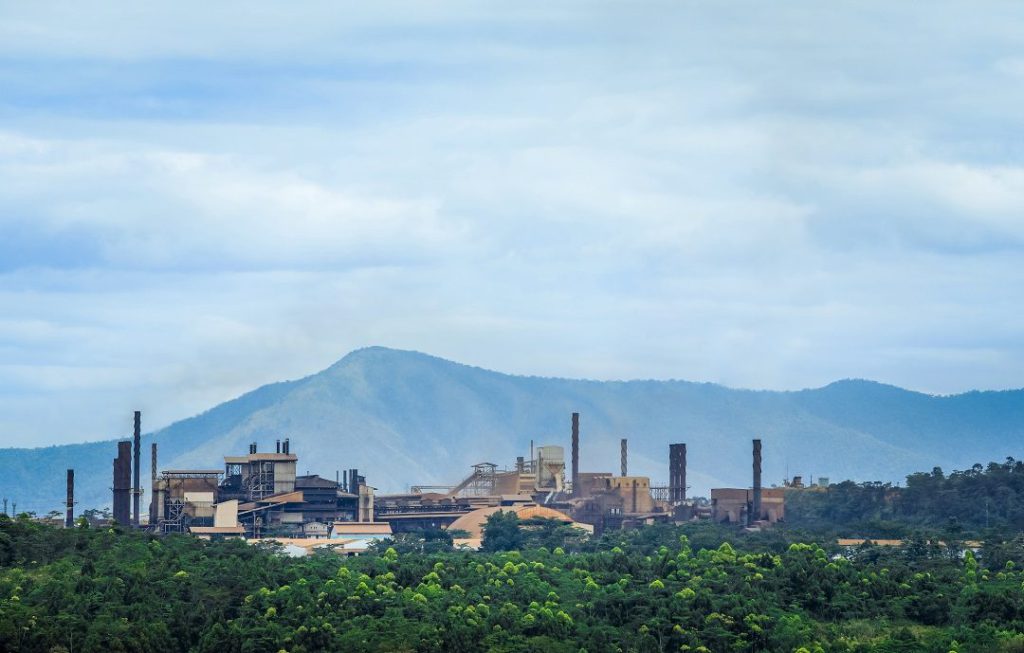
Nickel miner PT Vale Indonesia’s mining production quota approved for this year will likely be insufficient to meet demand from the smelters that will come online later this year, the company’s chief executive said on Monday.

Vale on Thursday said it had secured the go-ahead for its annual mining production quota, known locally as RKAB, and had resumed mining activities following a halt caused by approval delays.

In a hearing with members on parliament on Monday, chief executive Bernardus Irmanto asked for support regarding the company’s production quota.

“The quota granted for PT Vale, around 30% of what we requested, will most likely not be able to meet our commitments for the plants,” he said.

Without disclosing the exact volume, he said the company requested a production quota for this year that was based on the planned input for the upcoming plants.

“We worry that when the plants are completed, there won’t be ore for them,” he added.

He said he hoped the company would be granted an additional quota.

Vale and partners are currently constructing three high-pressure acid leaching (HPAL) plants to extract nickel materials used in electric vehicle batteries.

Its HPAL plant in Pomalaa in Southeast Sulawesi is expected to start up in August, while the development of its Bahodopi plant in Central Sulawesi is expected to be completed in the fourth quarter this year, Bernardus said.

The Pomalaa plant will have an annual production capacity of 120,000 metric tons of mixed hydroxide precipitate (MHP), which will require 21 million tons of limonite nickel ore a year, company data showed.

The Bahodopi HPAL will require 10.4 million tons of limonite nickel ore a year to produce 66,000 tons of MHP.

Vale and its partners are investing $4.5 billion in the Pomalaa project and $2 billion in the Bahodopi project.

Another plant, in Sorowako, Southeast Sulawesi, is expected to start operations next year.

In 2025, Vale’s nickel matte output was higher than planned, the chief executive said.

The company set an output target of 71,234 tons of nickel matte in 2025, and up to November had produced 66,848 tons, company data showed.

(By Fransiska Nangoy; Editing by David Stanway)

sia targets illegal mining on 190,000 hectares of forest land

Stock image.

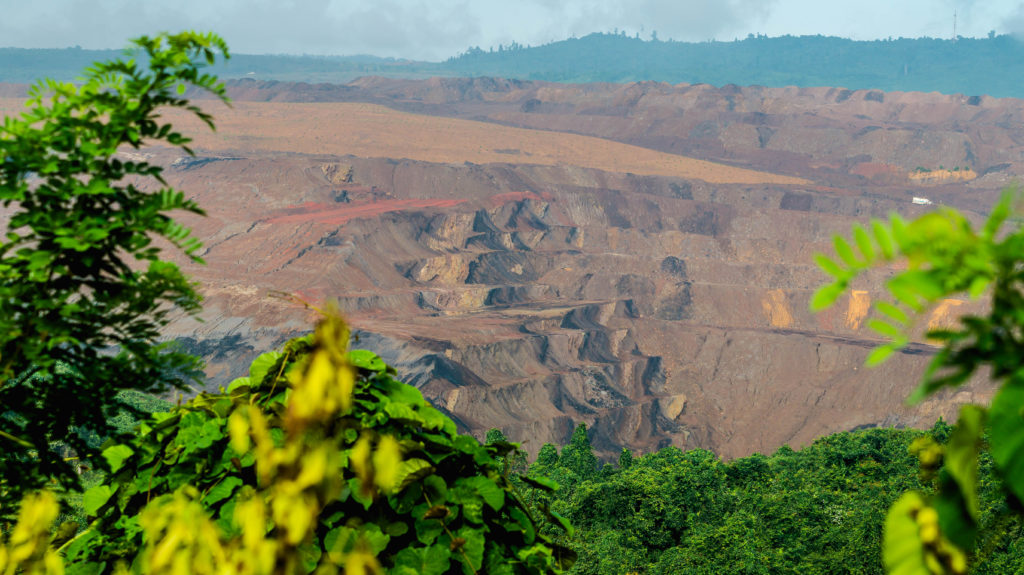
The Indonesian government could potentially seize mining activities across 190,000 hectares (733.59 square miles) of illegally cleared forest, the deputy forestry minister told a parliamentary hearing on Monday, as authorities tackle what they say is unlawful extraction in the resource-rich archipelago.

Indonesia’s unprecedented crackdown, which has seen military-led teams take over palm plantations and mines, has unnerved the industry, pushing up global palm oil prices over concerns it will hit output, and more recently, powering rallies in the prices of metals like tin.

“There were 191,790 hectares (mines) that do not have forestry use permits, which could be considered illegal,” Deputy Forestry Minister Rohmat Marzuki said. He did not name any of the companies involved or say how many were involved. Neither did he elaborate on what was being mined or provide any timeline for the seizures.

“The forestry task force has already obtained 8,769 hectares and this is still ongoing to reach 191,790 hectares,” he added.

“Along with the forestry task force, the forestry ministry remains committed in obtaining back the forest areas from illegal oil palm plantations and illegal mines,” Marzuki said.

The military-backed forestry task force said last week it had taken over 8,800 hectares of land where nickel, coal, quartz sand and limestone were being mined. It has also seized palm plantations across 4.1 million hectares (10.1 million acres), an area roughly the size of the Netherlands.

Indonesia’s Attorney General has assessed potential fines of 109.6 trillion rupiah ($6.47 billion) for palm oil companies and 32.63 trillion rupiah for mining companies, for operations in forest areas.

($1 = 16,935.0000 rupiah)

(By Bernadette Christina and Dewi Kurniawati; Editing by Gibran Peshimam and Kate Mayberry)


Barrick changes CFO as overhaul continues ahead of possible IPO

Stock image.

Barrick Mining Corp. appointed Helen Cai as chief financial officer, replacing Graham Shuttleworth whose departure adds to a string of senior exits at the Canadian miner amid speculation it could be acquired or broken up.

Cai, who has served on Barrick’s board since 2021, will take up the role of CFO and senior executive vice president on March 1, the company said Monday. Shuttleworth, who has been with Barrick since its acquisition of Randgold Resources in 2019, will work with Cai to ensure a smooth handover, the company added.

The announcement comes at a time of uncertainty for one of the world’s largest gold miners after the abrupt exit of Mark Bristow as chief executive officer in September.

Interim CEO Mark Hill has continued to shake up management since then — with several other leaders departing after Bristow — as the company weighs a potential initial public offering for its North American gold assets. The new vehicle is likely to become an acquisition target for Newmont, according to analysts including National Bank Financial analyst Shane Nagle.

Bloomberg reported last year that Newmont Corp. had studied a deal to gain control of the two companies’ prized Nevada mines, though its unclear how receptive Barrick would be to any overtures.

Barrick shares rose as much as 2.4% in Toronto Monday as precious metals extended their record-breaking rallies.

(By Sybilla Gross)

NI

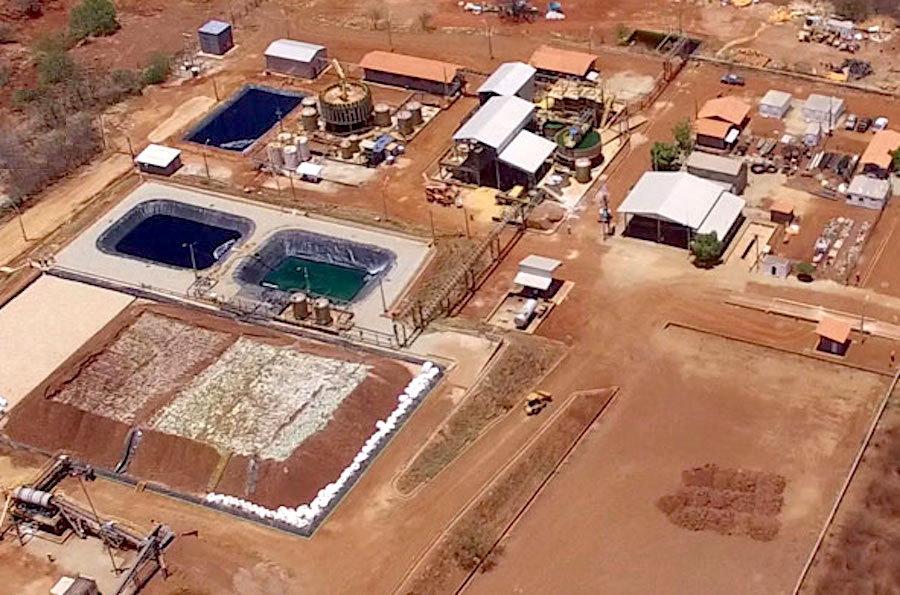
Brazilian Nickel, Westwin ink offtake MOU on Piauí project for US market 


PNP1000 is the initial, small scale commercial production project at Piauí nickel project. (Image courtesy of Brazilian Nickel.)

UK- based Brazilian Nickel (BRN), announced Tuesday that it has signed a non-binding agreement with Westwin Elements to supply high-grade Mixed Hydroxide Precipitate (MHP). 

Under the deal, BRN would sell Westwin up to 10,000 tpa of nickel in MHP and circa 240 to 400 tpa of cobalt in MHP extracted from the Piauí nickel project in Brazil, using the company’s low-CO2 laterite heap leaching process.  

Westwin would then refine the MHP into class 1 nickel powder and briquettes for the US market, advancing the goal of establishing a cost-effective critical minerals supply chain and supporting the overall funding of Brazilian Nickel’s flagship Piauí project, the company said.  

“This agreement with Westwin not only strengthens Brazilian Nickel’s funding structure, but, more importantly, confirms our proven capability to produce high-quality nickel and to position ourselves as a key player in the global critical minerals market,” Brazilian Nickel CEO Mark Travers said in a news release.  

“It underscores BRN’s strategic role in reinforcing supply chain resilience and our commitment to being a reliable, long-term partner to customers in key markets,” Travers said. 

“Establishing dependable supply-chain relationships is essential to restoring US refining capacity,” Westwin CEO KaLeigh Long said. “This agreement advances Westwin’s mission to convert responsibly produced feedstock into Class 1 materials inside the United States, strengthening supply chain security for advanced manufacturing and critical defense applications.” 

Brazilian Nickel last year signed preliminary offtake agreements with European processors Electro Mobility Materials Europe SAS and Königswarter & Ebell Chemische Fabrik, a wholly-owned subsidiary of Pure Battery Technologies, to strengthen the European battery supply chain and advance cleaner material sourcing, it said.  

BHP’s potash blowout overshadows Australia iron ore record

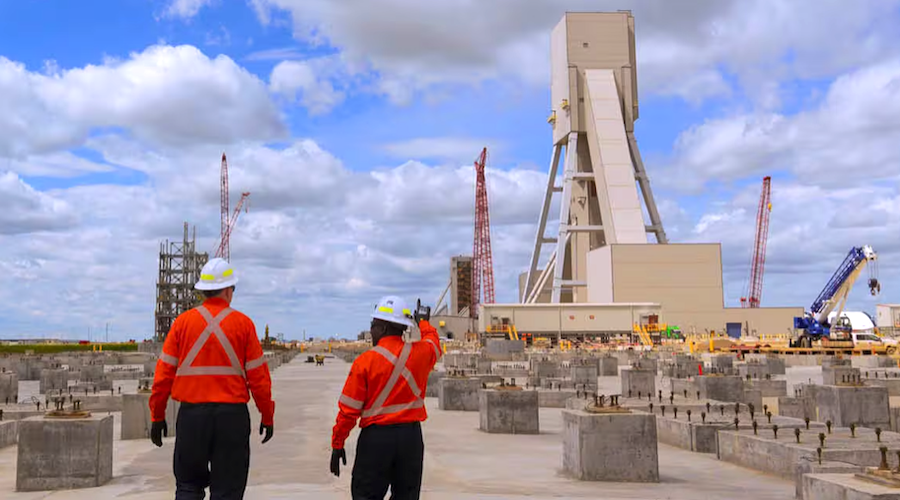
Construction at the Jansen potash project. (Image courtesy of BHP.)

BHP Group, the world’s largest miner, has again blown past cost estimates for its key Jansen potash project in Canada, raising projected investment in the first phase to $8.4 billion — $1 billion above the upper range of an already revised budget announced last year.

Cost and schedule overruns on large projects are not unusual in the sector, but potash — a key plank of BHP’s strategy as all miners scramble for growth — was approved in August 2021 at $5.7 billion. First production is now expected in the middle of 2027, though a second stage of development is still under review.

Production numbers released on Tuesday for the miner’s current core mines were broadly in line with analyst estimates, including record first-half output at its Australian iron ore operations. It produced 69.7 million tons of iron ore overall in its second quarter, up 5% on the same period a year ago, and reaffirmed its annual production guidance.

Realized prices for iron ore edged higher to $84.71 per ton. BHP has been locked in a dispute with China, the top consumer of its steelmaking ingredient, for months. State-owned trader China Mineral Resources Group Co. has sought to curb steel mills’ purchases from BHP, as part of a broader effort to increase the country’s negotiating clout and constrain miners’ pricing power.

The Melbourne-based miner said in its statement that it had responded by being more flexible with shipments, but added it had “seen some impact” to its selling price for iron ore. Other major foreign producers, including Brazil’s Vale SA, Rio Tinto Group, and Fortescue Ltd. will also need to negotiate with CMRG.

“China’s commodity demand remains resilient, supported by targeted policy measures and solid exports,” BHP chief executive officer Mike Henry said, adding momentum moderated in the second half of 2025, “notably in construction, manufacturing and infrastructure investments.”

Iron ore futures have managed to hold their ground in the last calendar year, gaining about 4% in 2025, but new supply could pressure prices lower over the coming quarters.

Production of copper dipped 4% in the three months to the end of December, to 490,500 tons. Realized prices jumped, however, as benchmark levels continue to track higher, breaking through $13,000 a ton.

BHP’s appetite to add to that number prompted it to make takeover approaches for rival Anglo American Plc., all rebuffed. The target has since agreed to tie up with fellow copper heavyweight Teck Resources Ltd. Rival Rio Tinto Group, meanwhile, is in talks with Glencore Plc over a potential takeover, again motivated by the desire to become a stronger force in the red metal.

BHP has bought two undeveloped projects in partnership with Canada’s Lundin Mining Corp. which they have dubbed Vicuña bordering Chile and Argentina. A technical report into Vicuña is expected in the coming months.

BHP’s Australia shares were little changed in early Tuesday trading at A$48.785.

(By Paul-Alain Hunt)

RIGHT WING GOVT

Former BHP executive to be appointed Chile’s mining minister

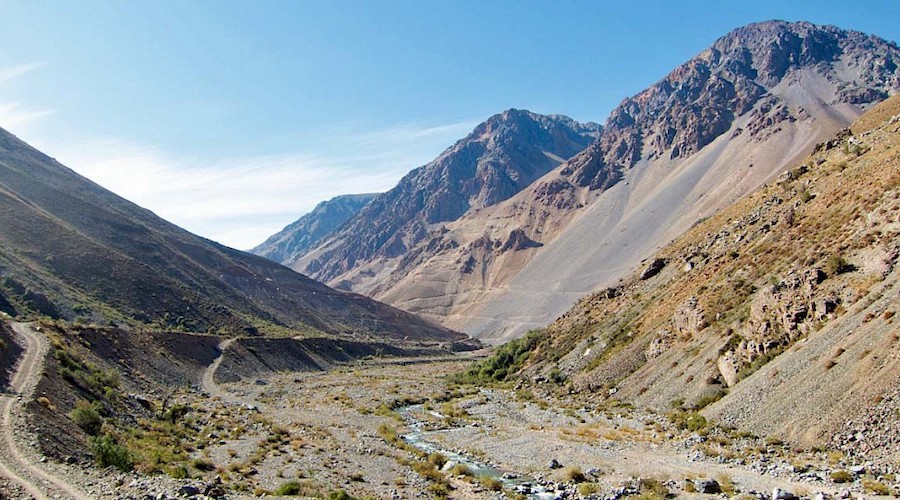
Vizcachitas copper project. (Image courtesy of Los Andes Copper).

A former BHP Group executive will become Chile’s next mining minister, overseeing efforts to boost copper and lithium production in the nation with the world’s largest reserves.

Santiago Montt, who has a doctorate in law from Yale University, will be named to President-Elect José Antonio Kast’s cabinet in a ceremony Tuesday evening, according to a person with knowledge of the matter. Newspaper Diario Financiero reported his appointment earlier Tuesday.

Montt has served as chief executive officer at Vancouver-based Los Andes Copper Ltd. for the past three years, after previously handling corporate affairs at BHP Minerals Americas for over a decade. He will take over from Aurora Williams as minister when Kast is sworn in on March 11.

The mining industry is hoping Kast’s pro-business agenda will help companies to accelerate expansion projects after decades of mostly stagnant copper production amid declining ore quality.

Montt has first-hand experience with the challenges of developing mining projects in Chile. As CEO of Los Andes Copper he’s been trying to move forward the Vizcachitas project in the face of resistance from communities concerned about environmental impacts.

“The incoming minister faces the critical task of accelerating a substantial $105 billion backlog in mining investments, while simultaneously revising and amending imminent reforms to the permitting framework and environmental assessment processes,” said Cesar Perez-Novoa, an analyst at BTG Pactual in Santiago.

Montt, a lawyer who also has a master’s degree in political science from Princeton University, didn’t immediately respond to a request for comment. Kast’s office declined to comment.

(By James Attwood)