A fresh transatlantic trade confrontation triggered by US President Donald Trump’s threat to impose sweeping tariffs on European allies over Greenland is raising concerns about economic fallout across the European Union, with Central and Southeast European member states likely to feel the impact indirectly through weaker demand from Germany and broader financial market turbulence.
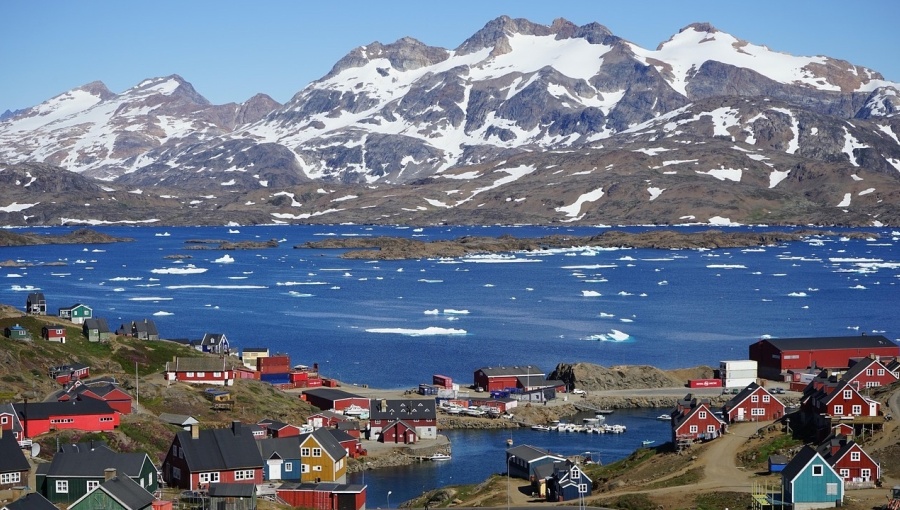
Trump has vowed to “100%” follow through on his threat to impose tariffs on European countries that oppose his demand for Washington to take control of Greenland, a semi-autonomous territory of Denmark. European allies have rallied behind Denmark’s sovereignty, with Copenhagen’s foreign minister warning that the US president “cannot threaten his way to ownership” of the Arctic island.
On January 19, Trump declined to rule out the use of force and said he would proceed with tariffs on goods arriving in the United States from EU members Denmark, Finland, France, Germany, the Netherlands and Sweden and fellow European countries Norway and the UK.
The eight countries had issued a joint statement on January 18, warning of escalation following US tariff threats.
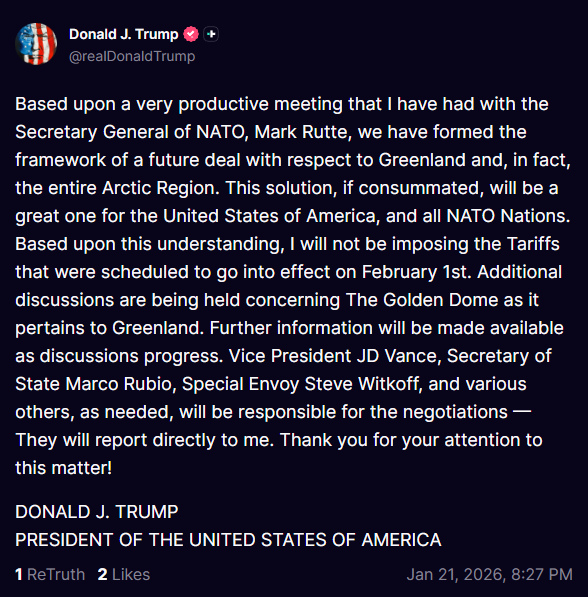
He wrote on his Truth Social platform: “Greenland is imperative for National and World Security. There can be no going back — On that, everyone agrees!”
Trump has said he will impose a 10% tariff “on any and all goods” sent from the eight countries from February 1, rising to 25% from June 1, unless Denmark agrees to sell Greenland to Washington.
Denmark has warned that any US military action in Greenland would spell the end of Nato. Several European countries have in recent days sent small troop contingents to Greenland in a largely symbolic show of solidarity.
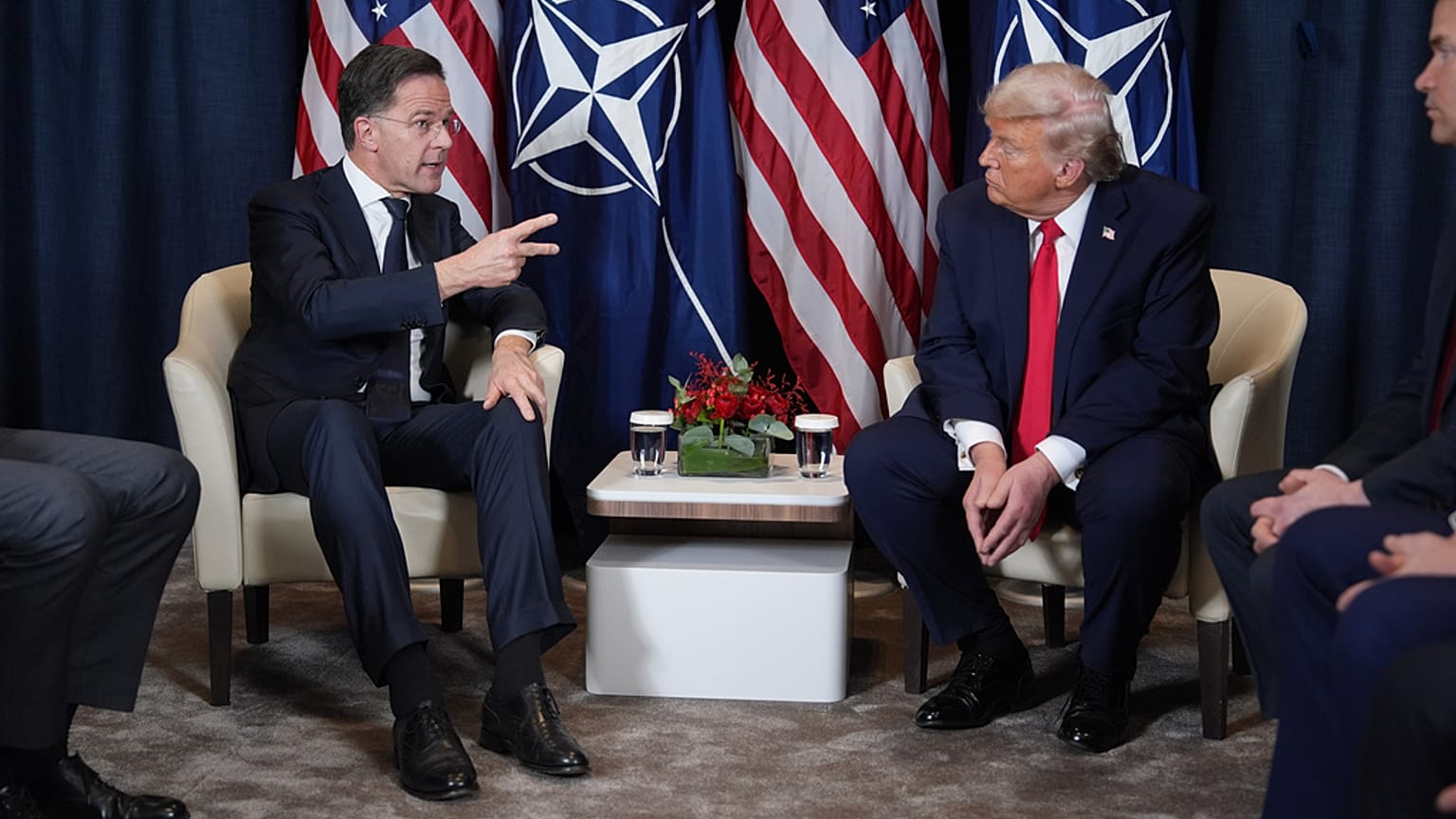
German Chancellor Friedrich Merz said the tariffs would benefit no one and expressed hope of meeting Trump during the World Economic Forum in Davos.
“We do not want this escalation. We do not want a trade dispute with the United States of America,” Merz told a press conference on January 19, newswires reported.
The European Union is set to hold an emergency summit in Brussels on January 22 to discuss its response. EU foreign policy chief Kaja Kallas told the European Parliament the bloc had “no interest to pick a fight, but we will hold our ground”.
“But trade threats are not the way to go about this,” she added. “Sovereignty is not for trade.”
Global markets sold off sharply on January 20 as investors feared a renewed US-EU trade war, recalling the economic damage caused by previous tariff disputes in 2025.
The S&P 500 fell 2.1%, its worst day since October, while the Nasdaq dropped more than 2.4% and the Dow Jones lost around 870 points. European markets also declined for a second day, with Germany’s DAX down 1% and the pan-European STOXX 600 falling 0.7%.
In 2025, earlier rounds of US-EU tariffs weighed on export-oriented economies across Europe, cutting growth forecasts, raising costs for manufacturers and weakening business confidence. This had an effect on Central and Eastern Europe, which is deeply embedded in German-led supply chains.
Fitch Ratings said in a report on January 19 that Germany would be the economy hardest hit by any new round of tariffs, with knock-on effects for its regional trading partners.
“The threat of Greenland-related US tariffs on European allies and European retaliatory measures … signifies a serious upsurge in transatlantic tensions, posing risks to trade and growth,” the rating agency said.
Fitch estimates that a 10% tariff could reduce European GDP by about 0.5% by end-2027, and that a 25% tariff would roughly double that impact. For Germany, GDP could be 0.8-0.9% lower under a 10% tariff scenario, and nearly twice that under a 25% shock.
“Germany, where we forecast GDP growth of 1.2% this year and 1.4% in 2027, would be hardest hit,” Fitch said.
Think tank Bruegel said in a statement that Trump’s move amounted to economic coercion. “It is difficult to think of a clearer case of economic coercion in breach of international law,” Bruegel said.
Fitch also said implementation was uncertain, as Trump would likely rely on the International Emergency Economic Powers Act (IEEPA), which is currently under review by the US Supreme Court.
Beyond trade, Fitch warned that the biggest long-term risk was geopolitical.
“Outside the trade and growth hit from tariffs, the main potential sovereign credit impact … is from the implications for the viability of Nato and the credibility of its collective defence commitment,” it said, adding that tensions could raise defence spending pressures across Europe and increase vulnerability to hybrid threats from Russia.
Impact in CEE and SEE
For Central and Southeast Europe, the damage would come mainly through Germany, which is the region’s largest export destination and a key hub in automotive, machinery and electronics supply chains.
Baltic states
Although Latvia, Lithuania and Estonia were not among the eight European countries that issued the joint statement on January 18, they have publicly aligned themselves with the message supporting Denmark.
Support for the joint position was confirmed on social media by Latvian Prime Minister Evika Siliņa, Lithuanian President Gitanas Nauseda and Estonian Prime Minister Kristen Michal, signalling Baltic solidarity with Denmark and wider European partners.
For Estonia, Latvia and Lithuania, any escalation would be felt mainly through indirect channels. While direct exports to the United States are limited, the Baltic economies are tightly integrated into EU supply chains, meaning tariffs could weaken demand from key partners such as Germany and weigh on manufacturing and growth. Previous US-EU tariff disputes, including measures imposed during the Trump administration, increased costs for exporters and undermined business confidence, with some estimates suggesting a full-scale tariff conflict could cut up to 0.5 percentage points from Lithuania’s GDP growth.
As small, open economies, the Baltic states continue to favour a coordinated EU response and negotiated solutions, but the episode highlights their exposure when trade tensions intensify between larger powers.
Bulgaria
A EU-US trade conflict over Greenland could have a knock-on effect on Bulgaria through its integration into European supply chains, even though the United States is not a major trading partner. Any escalation would hit Bulgarian exporters indirectly, as key partners such as Germany and Italy could face higher costs or weaker demand, weighing further on Bulgaria’s already strained trade balance.
Previous US tariffs have had a measurable impact on Bulgaria. Bulgaria’s economy ministry last year put the total hit to exports at about €620mn, with direct losses of €468mn and significant spillovers from EU trade. Exports to the United States were expected to fall by nearly one-third, shaving around 0.35% off GDP in 2025, despite the US accounting for only 3.3% of Bulgarian exports. The larger risk lies in prolonged disruption to EU demand, as elevated US tariffs on European goods dampen growth prospects for export-oriented economies like Bulgaria.
Defence Minister Atanas Zapryanov said on January 21 that Sofia does not plan to send Bulgarian military personnel to participate in the exercise in Greenland, Bulgarian National Radio reported.
Croatia
Croatian Prime Minister Andrej Plenković said on January 20 that Croatia supports dialogue with the United States and stands in solidarity with Denmark over initiatives related to Greenland, warning that careless rhetoric could harm transatlantic relations.
Speaking after his first day at the World Economic Forum in Davos, Plenković said Croatia’s position was “solidarity with Denmark and a reasonable solution through dialogue with the United States of America”.
The previous round of tariffs did not have a significant direct impact on Croatia, which is less dependent on manufactured exports than many of its regional peers, given its large tourism and services sector. However, it may be affected via a broader European slowdown, particularly in key partners such as Germany.
Czechia
The Czech finance ministry recently upgraded its 2026 growth forecast to 2.4%. However, the figures were released on January 19 just as the latest escalation in the trade wars between the US and EU began to pick up. Trade war escalation led to a series of worsening forecasts for the export-oriented Czech economy last spring, and this could be repeated in 2026 if a tariff war is not averted.
Czechia’s populist Prime Minister Andrej Babiš downplayed the Greenland dispute, saying he had bought a globe for for CZK15,000 (€618) to “exactly know where Greenland is” and that “arguments of President Trump about China and Russia are relevant, and agreement needs to be made.”
Hungary
Hungary, which has sought to cultivate strong political and economic ties with Washington, has refused to endorse a joint EU stance on the escalating diplomatic tensions over Greenland, marking a break with its EU partners on the issue.
Foreign Minister Peter Szijjarto said Budapest views the matter as a bilateral issue that should be resolved through direct negotiations between Washington and Copenhagen. The government has not responded to Trump’s threats to impose higher tariffs on more than half a dozen EU countries for opposing his ambition to take control of Greenland.
In line with Washington, Budapest has criticised the US-EU trade agreement reached last year as unfavourable to the bloc. Existing tariffs, including a 25% duty on vehicles and other products, have weighed on Hungary’s export-oriented economy, particularly the automotive sector, though their impact has been mostly indirect. Hungary’s direct exports to the United States remain limited, with negative effects felt primarily through the slowdown in the German economy.
Poland
Poland has avoided sending troops to Greenland and has sought to maintain close ties with Washington. Warsaw has been careful to avoid any direct rebuke of the US and instead stressed Poland’s focus on alliance cohesion.
“Poland looks after what is essential for our security, which is cooperation among allies with the US at the forefront. There is no Nato without the US Poland’s role is to connect,” Deputy Prime Minister Władysław Kosiniak-Kamysz said.
Denmark, “which we respect very much”, has exclusive rights over Greenland and should reach an understanding with Washington, Kosiniak-Kamysz also said.
“Among friends, there can be differences of opinion and emotions, but there must be no differences about the goal, which is building security,” the minister added.
But the US’ new security strategy, published in December, rattled Poland by apparently plotting to weaken the EU by breaking it up merely into a group of “sovereign nations”.
Poland has long relied on the US as its foremost security partner, having hosted US troops on its soil and spent tens of billions of złoty on American equipment.
“Dear American friends, Europe is your closest ally, not your problem … Unless something has changed,” Prime Minister Donald Tusk addressed the US on social media at the time.
Romania
In line with the position of President Nicusor Dan, Foreign Minister Oana Toiu avoided taking sides in the conflict between the European Union and the United States, prompted by Trump’s decision to take over Greenland “one way or another” — a conflict in fact not mentioned by either Toiu or Dan in their public communications.
Security and subsequent macroeconomic stability (cost of financing) impacts of the developments outweigh the trade implications of tariffs mentioned by Trump.
For Romania, which hosts US military assets on its territory and largely depends on the security provided by the alliance, given its proximity to Russia and weak military endowment, a weakening of the alliance followed by a weaker stance on the Eastern Flank is a worst case scenario to be avoided at any cost. Macro-economically, the first transmission channel is the cost of financing and the fiscal consolidation gains under these circumstances, more than economic implications.
"From our perspective, Romania's next steps must be de-escalation steps. Romania has a very clear interest in strengthening Nato, it has a very clear interest in the transatlantic relationship, both in terms of security and economic components,” Toiu told Euronews.
In a brief and ambiguous message posted on X, Dan reacted to the rising tensions between the United States and its European partners related to the transfer of Greenland from Denmark to the US.
“I am deeply concerned by the escalation in public statements between transatlantic partners and allies regarding recent developments. We have to resume talking directly to each other, at the appropriate diplomatic levels,” Dan tweeted.
Slovakia
The escalation of trade wars between EU countries and the US is expected to inflict a further blow on the Slovak economy, which has already been hit by US-imposed tariffs on imported goods, and which is dependent on Germany as its largest trading partner.
Slovakia is the largest car producer per capita worldwide and Germany is a key destination for its robust car industry.
“We don’t export some of the parts made in the automobile industry directly to the US, but export those to countries such as Germany, which the assemble cars and export those to the US, and would be negatively affected as well,” if Germany was targeted by the new US tariffs, Ján Oravec, chairman of the Inštitút slobody a podnikania (Freedom and Business Institute) was quoted as saying by the state broadcaster STVR.
Prime Minister Robert Fico, a political ally of Trump, has so far avoided direct criticism of the tariff threat after visiting Trump at his Mar-a-Lago residence. Foreign Minister Juraj Blanár said Slovakia preferred “diplomacy and peace, not tensions or fights”, while reiterating that Greenland was part of Denmark under international law.
Slovenia
US announcements about introducing additional tariffs on the European Union or individual member states are not in the interest of transatlantic relations, Slovenian Prime Minister Robert Golob said, RTV SLO reported.
“Announcements of additional tariffs against the EU or its member states do not contribute to good transatlantic relations. I believe the EU will respond to any possible measures in a unified way,” the Prime Minister’s Office said.
Foreign Minister Tanja Fajon said it was crucial for both the European Union and the European Commission to react clearly and decisively.
“This is a common market, and every step will be extremely important,” Fajon said, warning that the situation could set a dangerous precedent, particularly in relation to Greenland.
Contributions from reporters in Belgrade, Bucharest, Budapest, Prague, Skopje, Vilnius and Warsaw.