Wednesday, July 23, 2025


Reason.com

Trump's 'Deal' With Japan Is Another Loser for Americans

Yuri Gripas - Pool via CNP / MEGA / Newscom/RSSIL/Newscom

The Trump administration is touting a "massive" trade deal with Japan that was struck just days before the (still uncertain) August 1 deadline when higher tariffs are set to hit.

But, as with earlier "deals" struck with the United Kingdom and Vietnam, this agreement looks like a bad one for the United States. Not only does it raise taxes on American consumers, but it leaves American automakers at a distinct disadvantage relative to their Japanese competitors.

Under the terms outlined by Trump in a Truth Social post on Tuesday, imports from Japan will be subject to a 15 percent tariff when they enter the United States. Yes, that's lower than the 25 percent tariff that the president has been threatening to impose on Japanese imports, but it is still a huge tax increase relative to existing tariffs on Japanese goods.

Previously, the average tariff rate on American imports of Japanese goods was less than 2 percent, according to the World Bank's data. In other words, Trump's "deal" amounts to roughly a 650 percent tax increase on those imports. Those taxes, like all tariffs, will be paid by Americans.

The higher tariffs on imports from Japan will hit a wide variety of products, because Japan is one of America's biggest trading partners. Americans imported over $148 billion of goods from Japan last year, including billions of dollars worth of cars, machinery, industrial equipment, electronics, and pharmaceuticals. Trump's new deal will make all of those items more expensive.

Because cars are America's biggest import from Japan, that part of the deal is worth a bit more scrutiny. Indeed, when this deal is combined with some of Trump's other trade policy maneuvers, it looks like the White House might have delivered a huge victory for Japanese automakers—despite the Trump administration's professed interest in using tariffs to promote American manufacturing jobs.

Keep in mind that the Trump administration has already slapped 50 percent tariffs on steel and aluminum, both of which are essential to manufacturing cars. On top of that, American automakers are facing a 25 percent tariff on imported car parts. Those tariff hikes on raw materials and intermediate goods are driving up costs for American automakers like General Motors, which earlier this week blamed tariffs for a $1.1 billion drop in profits during the second quarter.

Now, the Trump administration is touting a deal that will apply a 15 percent tariff on cars imported from Japan (technically, it's a new 12.5 percent car-specific tariff on top of a 2.5 percent existing tariff on Japanese cars). In other words, it will be cheaper to import finished cars from Japan than it will be to import the steel, aluminum, and other parts necessary to build cars in the United States.

The American auto industry has already noticed. "Any deal that charges a lower tariff for Japanese imports with virtually no U.S. content than the tarrif imposed on North American built vehicles with high U.S. content is a bad deal for U.S. industry and U.S. auto workers," Matt Blunt, president of the American Automotive Policy Council, told Car and Driver. 

In all, Trump's deal with Japan means that American consumers of Japanese products are facing a huge tax hike, while American manufacturers are now at a distinct disadvantage when compared to companies making finished products in Japan.

It's also worth noting that the deal itself remains quite vague, at best. For example, Trump claimed that Japan has promised to invest $550 billion in America over the next few years, but the Japanese government can't simply order private businesses to do that. Additionally, Trump's announcement seems to lack many of the details typically included in trade deals. The White House has not yet released the text of the deal, and Japanese Prime Minister Shigeru Ishiba told reporters that he was still reviewing the agreement, according to The New York Times.

Despite all that, Trump is declaring victory. "It's a great deal for everybody," the president said on Tuesday night. In reality, this latest development in Trump's trade war once again demonstrates how his tariffs are distorting markets, harming Americans, and undermining his administration's economic goals.

The post Trump's 'Deal' With Japan Is Another Loser for Americans appeared first on Reason.com.

Nuclear fusion start-up claims to have cracked alchemy

 SCI-FI-TEK 70 YRS IN THE MAKING
Marathon Fusion claims to have discovered a method of converting mercury into gold - Marathon Fusion

The promise of turning base metals into gold has transfixed some of the greatest minds in history, from the ancient Egyptians to Sir Isaac Newton.

But now a Silicon Valley start-up claims to have finally cracked the millennia-old riddle of alchemy – by using nuclear fusion technology.

Marathon Fusion claims to have discovered a method of converting mercury into gold by bombarding mercury isotopes with high-energy neutrons.

The neutrons are released during nuclear fusion, when two hydrogen isotopes are forced together to form helium.

This means the alchemy process can be carried out alongside power generation.

“Unlike previous attempts, our method is massively scalable, pragmatically achievable, and economically irresistible,” Marathon Fusion said. “This marks the beginning of a new golden age.”

The company, which is developing ways of processing and recycling fuel for the nascent fusion industry, has published a scientific paper on the proposed transmutation method. It has not yet been peer-reviewed.

The history of alchemy stretches back thousands of years and has long focused on transforming metals into gold and seeking an elixir of immortality.

Over thousands of years, it has captivated thinkers such as Newton, the English physicist who developed the mathematical law of universal gravitation in the late 17th century.

Many dreamed of creating a “philosopher’s stone” that would be used as a catalyst for transmuting base metals such as lead into gold.

Marathon’s idea relies on substituting materials used in the well-understood process of nuclear fusion instead.

Fusion takes place when two isotopes of hydrogen, deuterium and tritium, are forced together to create helium, releasing high-energy subatomic particles called neutrons.

It is accomplished by heating the deuterium and tritium atoms to extreme temperatures of more than 100 million degrees Celsius and then confining them into a tight space so that they collide.

The process becomes self-sustaining when helium atoms collide with the fuel particles, transferring their energy and ensuring the reaction keeps going.

But fusion reactors typically contain other materials, including isotopes of beryllium, lead, or lithium, to ensure there is continuously enough tritium in the mix.

These are known as “multipliers” because when they are hit by a neutron, they release two neutrons in their place. These extra neutrons then react with lithium to produce tritium.

Radical transformation

Marathon’s method uses mercury-198, a common form of mercury, as a multiplier. When hit by a neutron, these atoms change into a less stable form called mercury-197.

Over a few days, those atoms then naturally break down into a stable form of gold.

Marathon claims this means the fusion process can be used to generate supplies of gold as a byproduct, “without any compromise to fuel self-sufficiency or power output”.

Using the new approach, the company says a fusion power plant with a capacity of about one gigawatt could generate 5,000 kilograms of gold per year.

The gold produced by the reaction is stable, but could contain some radioactive gold isotopes, potentially meaning it must be stored for up to 18 years, according to the company.

The start-up added: “Marathon’s techno-economic modelling suggests that fusion plants could create as much economic value from gold production as they do from electricity production, potentially doubling the value of these facilities, radically transforming the economics of fusion and of energy more broadly.”

Beyond gold, it also claimed the transmutation process could be used for making precious metals such as palladium, synthesising medical isotopes, or producing materials for “nuclear batteries”.

Marathon was founded by Adam Rutkowski, a former engineer at Elon Musk’s rocket company, SpaceX, and Kyle Schiller, who was a fellow at ex-Google boss Eric Schmidt’s research foundation, Schmidt Futures.

UK to ease planning rules for fusion projects

Monday, 21 July 2025


The UK government announced plans to develop a National Policy Statement to unblock fusion energy projects, making the UK the first country in the world to develop fusion-specific planning rules.
UK to ease planning rules for fusion projects
A cutaway of the STEP fusion plant (Image: UKAEA)

Currently, fusion projects must submit an application to the local authority with no set timelines for approval and no guidance on which sites are appropriate – potentially hindering the technology's development in the UK.

The plans will see fusion introduced into the Nationally Significant Infrastructure Project regime, putting fusion energy projects on the same footing as other clean energy technologies such as solar, onshore wind and nuclear fission. It will help fusion energy projects move faster along the process from identifying sites to the start of construction. 

"The introduction of a National Policy Statement will provide clarity to developers and streamline the planning process for fusion, giving applicants clearer guidance on where and how quickly projects can be developed," the Department for Energy Security and Net Zero said. "This will give industry certainty, break down regulatory barriers and get projects built quicker to cement the UK's position at the forefront of the global race for fusion."

"The future of fusion energy starts now," said Energy Secretary Ed Miliband. "We are ensuring the clean energy of the future gets built in Britain, supporting the creation of highly skilled jobs and driving growth into our industrial heartlands as part of our Plan for Change."

UK Atomic Energy Authority CEO Tim Bestwick added: "The inclusion of fusion energy in the Nationally Significant Infrastructure Project regime is a clear indication of the government's support for fusion. Fusion promises to be a safe, sustainable part of the world's future energy supply and the UK has a huge opportunity to become a global hub of fusion and related technology. 

"Fusion-specific planning rules will help provide certainty about investing in UK fusion developments, and strengthen the UK's position as a leader in the quest to commercialise fusion energy."

The government's Spending Review - released earlier this month - also delivered a commitment to invest more than GBP2.5 billion (USD3.4 billion) in fusion research and development. This includes progressing with the STEP (Spherical Tokamak for Energy Production) programme, which aims to develop and build a world-leading fusion power plant by 2040 at West Burton near Retford in Nottinghamshire. The demonstration plant is due to begin operating by 2040.

German officials up in arms over oil, gas deposit found in Poland


DPA
Tue, July 22, 2025 

Till Backhaus, Environment Minister of Mecklenburg-Western Pomerania, stands at the swimming area of the Inselsee. Stefan Sauer/dpa

Local politicians in north-eastern Germany were up in arms on Tuesday, after news broke that a major oil and gas deposit has been discovered in neighbouring Poland, with some experts also cautioning against extraction.

The find off the Polish Baltic coast by Canadian company Central European Petroleum (CEP) was hailed as a possible "breakthrough moment" in Poland, but officials across the border in Germany were quick to point out that extracting fossil fuels should not take priority in times of climate change.

"Our future does not lie in oil from the Baltic Sea, but in energy from the sun, wind and biomass," said Till Backhaus, environment minister of the coastal state of Mecklenburg-Vorpommern, which borders Poland.

"The project stands for a backward-looking industrial policy in terms of climate policy, which is contrary to the interests of the environment and tourism on the German side," he added.

Major breakthrough?

The Wolin East offshore oil field discovered by CEP is said to be located around 6 kilometres from the port city of Świnoujście on the fringes of north-western Poland. Parts of the city are located on the island of Usedom, which is divided between Germany and Poland.

According to the results of test drilling, the recoverable reserves of crude oil and natural gas are estimated at 200 million barrels of oil equivalent.

CEP said the Wolin East site is estimated to represent "the largest conventional hydrocarbon field" ever discovered in Poland and "one of the largest conventional oil discoveries in Europe in the past decade."

If the deposit is confirmed, this "may prove to be one of the breakthrough moments in the history of hydrocarbon exploration in Poland," said the country's chief national geologist Krzysztof Galos.

"The future development of this site may significantly contribute to strengthening Poland's energy security and reducing its dependence on external hydrocarbon suppliers," he told news agency PAP.

Mining could begin in three to four years, with the field estimated to be able to cover 4% to 5% of Poland's annual oil demand for several years, according to Galos.

CEP has held a licence for exploration off the western Polish coast since 2017.

Officials and experts sound alarm

Officials in the German part of Usedom were less euphoric, however, with the mayor of the town of Heringsdorf noting the area's status as a nature conservation area.

"We are a spa and holiday resort. We do everything we can to keep our beaches, our town and the sea clean," said Laura Isabelle Marisken. "Heavy industrial gas and oil extraction right on our doorstep, it's obvious that this is a massive intrusion into our natural environment."

The German Institute for Economic Research also advised against exploiting the oil field, noting not only possible considerable negative consequences for tourism, but also the risk of cross-border pollution caused by an accident.

"In addition, the promotion of fossil fuels thwarts climate protection goals," said Claudia Kemfert, head of the institute's Energy, Transport and Environment Department. "The costs and benefits [of the project] are therefore disproportionate."


Independent Driller Discovers Poland's Biggest Offshore Oil Reservoir

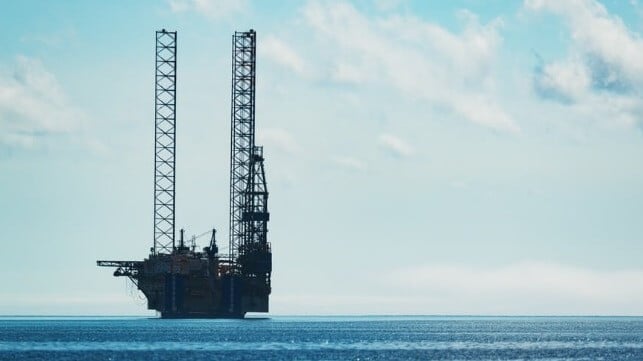
Jackup rig
File image courtesy iStock / Shauni

Published Jul 22, 2025 7:25 PM by The Maritime Executive


An independent Canadian E&P firm has discovered what it believes to be the largest offshore oil find in the nation's history. Though modest by global standards, it sets a new bar for oil and gas prospects in the Baltic.

According to Norwegian-owned, Calgary-headquartered driller Central European Petroleum (CEP), a new well near Wolin Island uncovered a reservoir with up to 22 million tonnes of oil (about 160 million barrels) and five billion cubic meters of natural gas. This is among the largest conventional oil discoveries in Europe in years. Across the rest of CEP's 600-square-kilometer concession area, it estimates that it has rights to another 11 million tonnes of oil and another 22 billion cubic meters of natural gas. CEP owns 100 percent of the Wolin lease area concession and has held the license since 2017. 

The new well appears to contain enough oil to double Poland's reserves. Poland produces about three percent of its own oil, and 20 percent of its own natural gas, according to the IEA; the new find would make a minor contribution to energy self-sufficiency, but if it were replicated in other areas of the underexplored Polish EEZ, it could make a significant difference, Poland's chief national geologist Prof. Krzysztof Galos told TVP. 

"It is also a positive investment signal that there could be more of these deposits, that it pays to look for raw materials in our basin, so who knows if there won't be more news on this from other investors," energy analyst Wojciech Jakóbik told Euronews. "This is further evidence that we have a change in Europe. Tough security is making us look again more favorably at gas and oil extraction."

Poland's foreign minister added that the discovery may even be a sign of divine favor, as it follows a string of other good news for Poland. In a social media post, minister Radoslaw Sikorski suggested that the successful drilling results mean that "God probably really loves the [coalition] government."


New Baltic Find Could Be Poland’s Largest Oil Discovery Ever

Central European Petroleum (CEP) has announced a major conventional oil and gas discovery off Poland’s Baltic Sea coast, in what could become the country’s largest hydrocarbon deposit and one of Europe’s most significant finds in the past decade.

The discovery was made at the Wolin East 1 (WE1) well, located roughly 6 kilometers from the port city of Swinoujscie in northwestern Poland. Preliminary assessments suggest the well contains an estimated 22 million tonnes of recoverable crude oil and condensate, along with 5 billion cubic metres of commercial-grade natural gas.

The broader concession area spans 593 square kilometers and may hold over 33 million tonnes of oil and 27 billion cubic metres of gas, significantly expanding Poland’s known reserves. As of 2023, the country’s estimated oil reserves stood at just over 20 million tonnes, meaning this single discovery could more than double the national total.

The WE1 well was drilled using a jack-up rig in 9.5 metres of water and reached a vertical depth of 2,715 metres.

“This is a historic moment for both Central European Petroleum and the Polish energy sector,” said CEP CEO Rolf G. Skaar. “Wolin East is more than just a promising deposit — it’s a joint opportunity to unlock the full geological and energy potential of the Baltic Sea.”

Polish officials have also emphasized the strategic implications. Krzysztof Galos, Undersecretary of State and Chief National Geologist, said the find could be “a breakthrough in the history of hydrocarbon exploration in Poland,” especially in underexplored offshore zones within the country’s Exclusive Economic Zone.

The discovery comes at a time when Poland is actively working to reduce its reliance on imported fossil fuels and strengthen energy security. CEP’s Polish subsidiary is managing the project, while the Canadian-based parent company—majority-owned by Norwegian investors—was originally founded to explore EU hydrocarbon prospects, particularly in Germany.

If confirmed through further appraisal, Wolin East could shift Poland’s energy landscape and add a new dimension to Europe’s upstream sector.

By Charles Kennedy for Oilprice.com