It’s possible that I shall make an ass of myself. But in that case one can always get out of it with a little dialectic. I have, of course, so worded my proposition as to be right either way (K.Marx, Letter to F.Engels on the Indian Mutiny)
Friday, August 22, 2025
Royal Navy Tracks Russian Destroyer Through the English Channel
THEY TOOK THE SHORT CUT
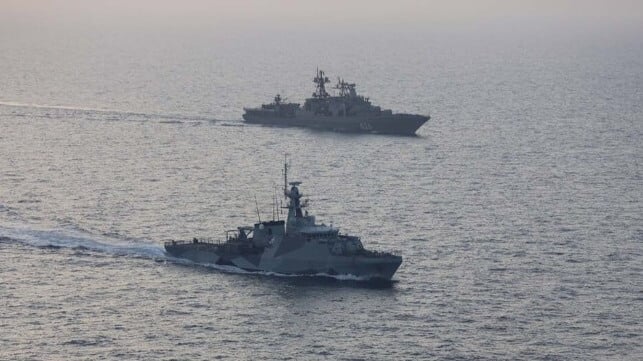
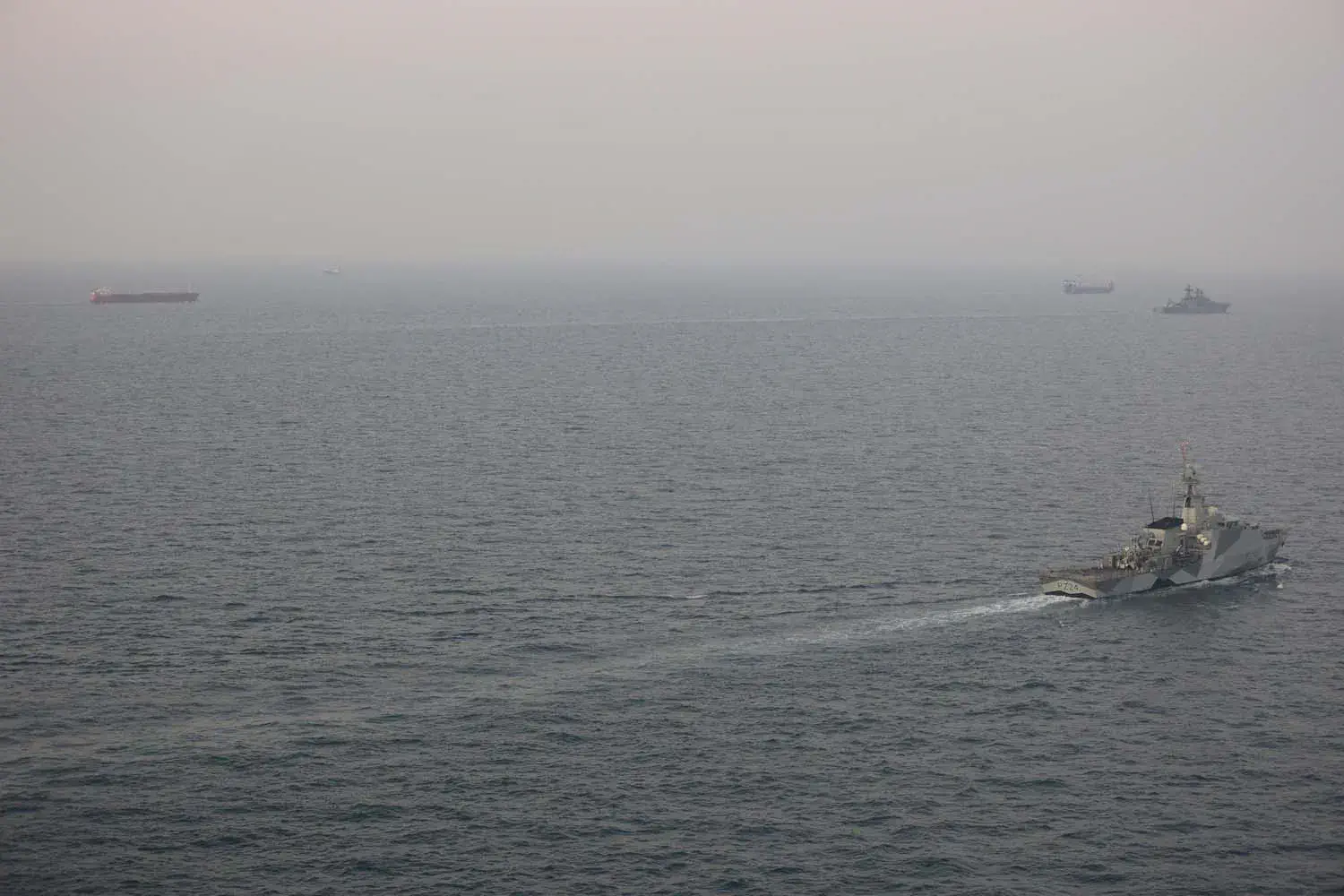
HMS Trent (foreground) escorts Vice Admiral Kulakov (Royal Navy)
The Royal Navy has tracked a Russian destroyer and two accompanying vessels through the English Channel, its latest mission to keep an eye on Russia's frequent naval movements in British waters.
The mission began when patrol ship HMS Trent picked up the trail of the Russian destroyer Vice Admiral Kulakov off Great Yarmouth. On August 10, Trent was seen following Kulakov westbound through the English Channel, bracketed by a steady stream of "shadow fleet" tankers. Ship spotter Dover Strait Shipping identified more than a dozen Russia-linked tankers passing through during a 24-hour time period around Kulakov's transit.
Clockwise from upper left: Skobelev, Sparta, Vice Admiral Kulakov, HMS Trent (Royal Navy)
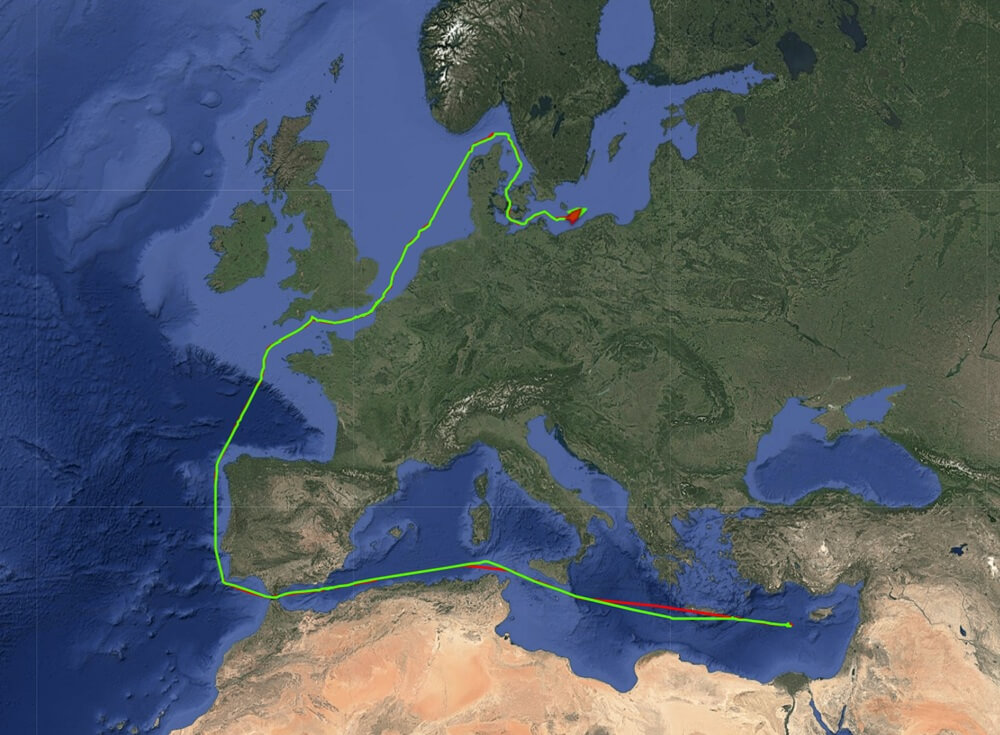
Kulakov continued onward to waters off Ushant, where the destroyer met up with the Russian military ro/ro cargo ship Sparta, a well-known and heavily-sanctioned vessel. AIS data suggests that Sparta was on a return voyage from the former Russian naval base at Tartus, where Russian forces have been demobilizing equipment. The tanker General Skobelev - often used by Russian forces as a fleet oiler - was sailing with Sparta and joined the convoy. Together, they turned and headed eastbound to go back through the channel. After a brief pause in Lyme Bay, off Britain's southern coast, they made the transit into the North Sea, then north to the Kattegat and into the Baltic.
Sparta (green) and General Skobelev (red) on the long voyage from the Eastern Mediterranean to the Baltic (Pole Star)
HMS Trent followed Kulakov throughout the round-trip voyage through the English Channel, according to the Royal Navy, as is standard practice when Russian warships transit UK waters.
Vice Admiral Kulakov is an Udaloy-class antisubmarine warfare destroyer, built to challenge the U.S. Navy's sub fleet in the late years of the Cold War. She was commissioned in 1981, entered a refit period in 1991, and returned to active duty 19 years later. A dedicated antisubmarine warfare platform, Kulakov carries a missile-launched torpedo system as her primary weapon, not a purpose-built anti-ship missile system.
Navy Fighter Pilot Rescued From the Sea Off Virginia
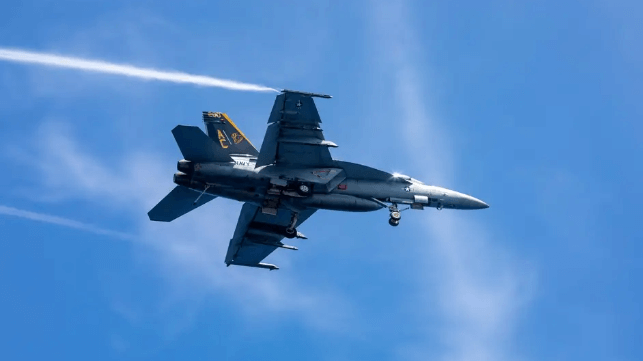
On Wednesday morning, a U.S. Navy strike fighter went down during a routine training flight off the coast of Virginia, and the pilot was rescued from the sea after spending about an hour in the water.
A Navy spokesperson confirmed that an F/A-18 Super Hornet from Virginia Beach-based Strike Fighter Squadron 83 was operating off the coast that morning, and at about 0950 hours, the pilot had to eject. The pilot survived, went into the water, and was found by Coast Guard SAR crews at 1121 hours. The rescuee was delivered to a hospital for a medical evaluation; the Navy has not provided further details on the pilot's condition. Given the rough surface conditions caused by Hurricane Erin in the mid-Atlantic, the pilot could have faced serious danger - and a challenging SAR scenario - if the timing or location had been different.
The wreck of the aircraft remains on the bottom, the Navy said. The service often recovers downed fighters from the seabed in order to investigate crashes and deter espionage.
It is the fourth Super Hornet that the Navy has lost since December. Three fighters assigned to the carrier USS Harry S. Truman were lost due to accidental causes during the Red Sea campaign in late 2023 and early 2024.
At $67 million per unit, the Super Hornet is about 30 percent less expensive than the stealthy F-35C; the Hornet's heavy payload and long range make it the mainstay of the service's carrier strike capabilities. The platform is older and non-stealth, but the Navy expects to keep it for decades, and it ordered 17 more Super Hornets in 2024 to offset attrition in the fleet.
ECOCIDE
Semi-Autonomous Barge Spills Fuel on Belgium's Albert Canal
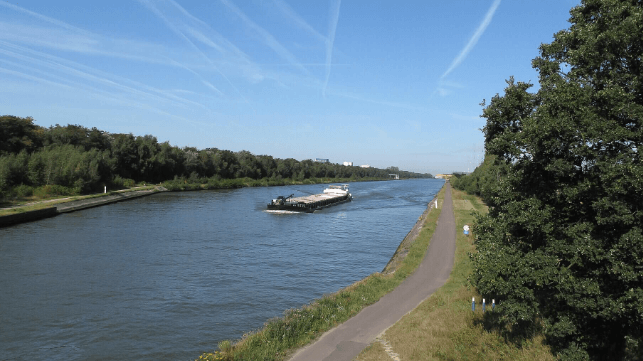
Barge traffic on the Albert Canal (Michielverbeek / CC BY SA 3.0)
A semi-autonomous barge has spilled fuel oil into a canal near Antwerp, prompting a cleanup operation and temporarily shutting down marine traffic on the waterway.
On Tuesday evening, the barge River Drone 4 passed through the Olen lock complex on the Albert Canal. Soon after, it began to leak fuel, and it released an estimated 10,000 liters into the water before the leak stopped.
Antwerp's municipal water utility draws drinking water from the canal, downstream of the spill site, and the city's mayor told Belgian broadcaster VRT that the damage from fuel contamination in the water system would be "incalculable." Luckily, the Olen lock complex was between the spill and the city, and there was no risk of transfer across the lock (so long as it remained out of operation). The waterway was closed, both to enable cleanup and to keep the lock complex shut.
A marine services company responded to the scene and began removing the fuel slick, first by containing it and then by absorbing it with sorbent booms. Work proceeded through the night, and marine traffic resumed at 1400 hours on Wednesday.
The Mars Food factory in Olen - which makes prepackaged rice for the Ben's Original label - temporarily shut down production because of the strong fumes from the spill. "To protect our employees and products from the odor, we preemptively halted all production," spokesperson Kathy Heungens of Mars Food told VRT.
The vessel itself reportedly sustained a puncture in a fuel tank above the waterline while transiting the Olen lock, Mayor Gebruers told HLN, and it should be easily repaired. The circumstances of the leak are under investigation, and the master of the barge has been questioned by Belgian authorities.
River Drone 4 is a 3,800-tonne inland barge with semi-autonomous capability, according to operator Naval Inland Navigation. Naval's fleet is fitted for remotely controlled navigation with the use of SEAFAR technology, a system that allows an offboard crew to operate the vessel from a shore control center. It is not yet established whether the vessel was being operated by an onboard master or an offboard control operator at the time of the spill.
Last December, sister vessel River Drone 5 had a collision with another inland vessel near Rotterdam. At the time of that collision, River Drone 5 was under the control of the onboard master, not Seafar's navigation system.
New Zealand Looks to Future for Troubled Interisland Ferry Service
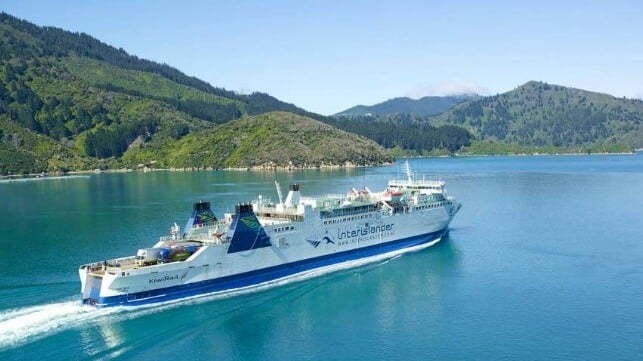
KiwiRail hopes the end of the iReX project with a settlement with Hyundai Mipo will mark a new beginning for the troubled ferries (KiwiRail file photo)
August has marked what many hope will be a turning point and the start of a new beginning for New Zealand’s KiwiRail and its troubled interisland ferry service. It reports that the previous iReX ferry program has been brought to a close with a final settlement with the shipyard, and this week it retired its oldest vessel as the first step in the modernization program.
The company provides a vital passenger and freight operation running RoRo ferries between the North and South islands. According to company data, each year it moves US$8.5 billion in freight, making more than 4,000 crossings. The company says it transports nearly 800,000 passengers and 250,000 cars annually on three vessels, the oldest of which was built in 1988, while the others were built in 1995 and 1998.
With government support, in 2020, it announced plans for two much larger ferries to enter service in 2025 and 2026. Each would have been 50,000 gross tons with a capacity for more than 1,900 passengers, versus the current ships, which have a maximum capacity of 650 passengers. They would also have accommodated 650 passenger cars versus the current 250. Contracts were signed in 2021 with Korea’s Hyundai Mipo Dockyard to build the vessels, which were to be hybrids with battery-electric power.
A new government elected in 2023 was critical of the project and reported it was canceling funding in part due to runaway cost estimates. KiwiRail terminated the order and began settlement negotiations with Hyundai Mipo. Last week, it was reported that a final settlement was completed at a cost of NZ$144 million (US$84.6 million). Along with a previous payment, KiwiRail reports the total cost was NZ$222 million (US$130 million) to Hyundai Mipo and an additional NZ$449 million (US$264 million), including costs of landside infrastructure.
“Doomsayers said cancelling the contract would cost the taxpayer the full NZ$551 million contract value, but these are some of the same people who accepted Project iReX ballooning from NZ$1.45 billion when approved in 2021 to Treasury warning it was on course to NZ$4 billion in 2023 thanks to eyes-bigger-than-their-mouths ambitions and absentee management,” said Ministers Nicola Willis (Finance) and Winston Peters (Foreign Affairs), in a joint statement on the settlement agreement.
They contend that there was not sufficient consideration given to the port infrastructure requirements for the two massive ferries. After winning the election, they allege they were confronted with “billion-dollar blowouts” due to the mismanagement by the prior government of the infrastructure projects.
“KiwiRail remains focused on working with Ferry Holdings Limited and the port companies to deliver two new rail-enabled ferries and the required infrastructure upgrades in Wellington and Picton by 2029. We’re looking forward to ensuring the safe and smooth transition of the new fleet into service for our people and customers when the time comes,” said Jason Dale, KiwiRail Chief Financial Officer.
The service has also experienced breakdowns, reports of poor maintenance, and management issues. In 2023 regulators said they would prosecute the company over maintenance issues which caused one of the vessels to black out during its crossing. In 2024, another one of the ferries went aground departing port with the investigation saying the crew did not know how to turn off the autopilot.
This week, the company began its plan by officially retiring the Aratere after its final sailing on August 18, a three-hour crossing between Picton and Wellington. The retirement of the vessel, which had been commissioned in 1999, is designed to permit the development of new port infrastructure. Aratere was the company’s only rail-enabled ferry, meaning freight cars were moved to the vessel and across the Cook Strait.
Aratere’s wharf in Picton is due to be demolished later this year as part of the new ferry project. Aratere required specialized wharf infrastructure to load and unload, including integrated rail tracks, so it cannot use Interislander’s other berths. Until the new ferries are delivered, freight will have to be transferred into trailers and trucks for the trip between the islands.
The ferry was laid up in Wellington with KiwiRail reporting it is considering options for its sale with a shipbroker. It says the plans for the new ferries are on schedule. Due for delivery by 2029, they will be larger, replacing all three current ships, and will reintroduce rail freight capabilities to the route.
Port of Auckland Gets Greenlight for Expansion Under New Fast-Track Regime
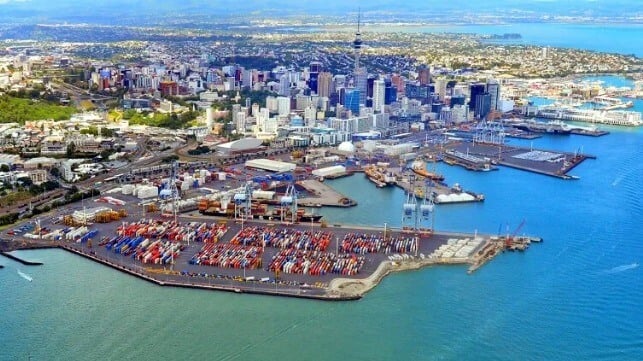
The expansion project will enhance Auckland and support growth for the port in cruise, container, and RoRo operations (file photo)
The Port of Auckland in New Zealand is finally set to embark on major infrastructure expansion projects aimed at enhancing its competitiveness. It is proceeding after getting a government greenlight under a new law designed to cut red tape in the approval process for huge infrastructure and development projects.
Under the Fast-track Approvals Act, Auckland’s wharf expansion project has become the first mega project to be granted consent. The greenlight now allows New Zealand’s main import terminal to proceed with the implementation of the Bledisloe North and Fergusson North projects, as well as the construction of a cruise passenger terminal and other upgrades.
The consent was granted by an expert panel set up under the Act, which was introduced in Parliament in March last year and enacted in record speed as part of the coalition government’s plan for its first 100 days in office. The Act, which received Royal Assent in December and became effective in February, establishes a permanent fast-track regime that makes it easier and quicker for large projects to gain approvals. The decision came just 66 working days after the panel was convened.
“The Act helps cut through the tangle of red and green tape and the jumble of approvals processes that have, until now, held New Zealand back from much-needed economic growth,” said Chris Bishop, New Zealand Infrastructure Minister.
Having become the first to get approval under the act, the Port of Auckland will, starting next month, embark on implementing key projects that are critical to future growth. The Bledisloe and Fergusson wharves expansion forms the core of the projects that will not only allow berthing of larger containerships but also make Auckland a hub for cruise shipping.
The Bledisloe North wharf project will include a new reinforced concrete-piled wharf at the terminal, giving it enough depth for large cruise ships and RoRos. For Fergusson North, the project involves a wharf extension that will enable the port to handle 10,000 TEU ships in the future. Currently, the port can only handle ships with a 5,000 TEU maximum capacity.
Auckland has termed the projects as once-in-a-generation infrastructure that is needed to serve the city for decades to come, not only by making the port “big ship capable” but also by providing long-term fit-for-purpose infrastructure. In February, the port that is owned by the Auckland Council revealed it intends to invest NZ$120 to NZ$150 million (US$70 to $88 million) over the next three to four years in infrastructure expansion.
“The Bledisloe North wharf extensions will enable larger cruise ships to berth, and increase New Zealand’s importing and exporting capacity,” said Bishop. The project will deliver lasting economic benefits by boosting the efficiency of a critical part of Auckland’s economy and supporting long-term growth.
Auckland’s infrastructure investments come when the port, the second largest after Port of Tauranga, is recording growth in container throughput to hit the 900,000 TEU mark in 2024.
The Auckland project was among a total of 149 projects on the fast-track list, with others involved in mining, power, and residential development, among others, being under consideration.
APM Terminals Plans $1B Investment to Develop Indian Ports
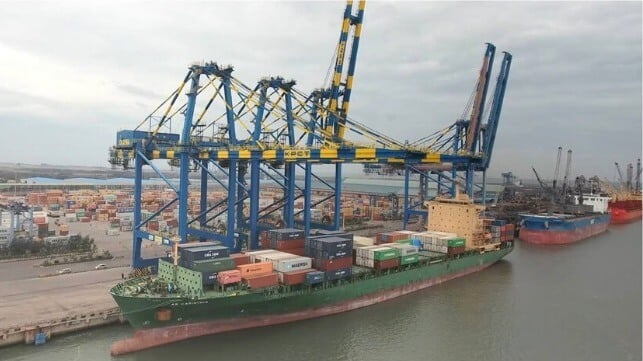
With Maersk's investment, India looks to develop new logistic hubs at the East Coast ports on the Bay of Bengal (Andhra Pradesh)
APM Terminals, the terminal operations for AP Moller-Maersk, has entered into an agreement with the authority overseeing ports on India’s east coast along the Bay of Bengal. Under the Memorandum signed in India on August 22, they plan to explore the development of ports to create an “Eastern Gateway” as part of India’s plan to expand trade.
According to officials, the agreement while help realize the vision of creating Andhra Pradesh as the logistics hub of the east. The region has more than 620 miles of coastline. The vision is to develop marine infrastructure such as ports, fishing harbors, and fish landing centers every 30 miles.
The region is currently home to Visakhapatnam, a port city and industrial center, which is the third-largest port by volume in India and one of the country’s 12 major ports. However, it is mostly a bulker port with smaller container operations in the region. The coast currently hosts a total of 15 ports in eight coastal districts, with five operational non-major commercial ports and four green field projects, which will be operational by 2026.
Working with APM, the goal is to accelerate port and terminal development in the state. APM has expressed its intent as part of the MoU to invest approximately $1 billion to modernize ports and terminals. They will focus on the development of the Machilipatnam, Mulapeta, and Ramayapatnam ports and infrastructure.
These are three of the ports currently being developed by the authority in the region. In June, the local authorities reported that Ramayapatnam Port was the most advanced with Phase 1 work nearly two-thirds (64 percent) completed. Both Machilipatnam and Mulapeta have completed more than 40 percent of their Phase 1 development.
APM is seen as a logical partner for the next phase of development, with the local officials noting that it is at the forefront of introducing advanced cargo handling technologies, promoting sustainable operations, and enhancing efficiency in container and bulk handling. APM Terminals has been present in India since 2004 and operates two key assets. The Gujarat Pipavav Port is located 152 nautical miles (10 hours steaming time) from Nhava Sheva in Mumbai. It was India’s first public-private port operation and has a capacity for 1.35 million TEU annually.
APM is also in partnership with India for the operations of APM Terminals Mumbai (Gateway Terminals India), which is the largest container facility in the country. Efforts are currently expanding its capacity above 2 million TEU annually.
UPDATE
U.S. Deports More Cruise Ship Crewmembers as Visa Review Expands
GESTAPO NATION
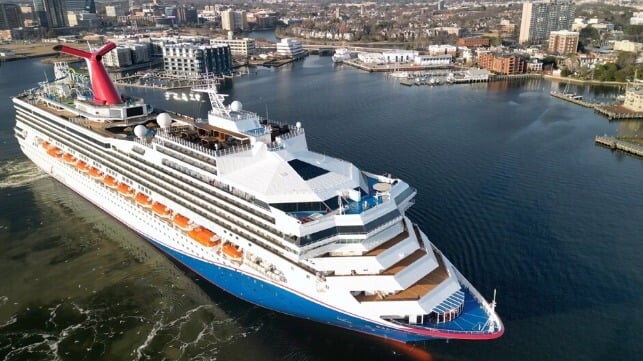
A total of 28 crewmembers out of the 1,000 working on Carnival Sunshine had been detained and deported (Carnival Cruise Line file photo)
Advocates for the Philippine community report that U.S. Customs and Border Protection (CBP) is continuing its enforcement efforts, rapidly deporting individual crewmembers off cruise ships that it says have violated their work visas. This comes as the Trump administration confirmed on Thursday, August 21, that it was expanding its review of all current U.S. visas and specifically suspending work visas for foreigners as commercial truck drivers.
The Pilipino Workers Center (PWC) reports CBP officers once again met the Carnival Cruise Line ship Carnival Sunshine last Sunday, August 17, when the ship returned to Norfolk, Virginia, from its weekly cruise. Four Filipino crewmembers out of a crew of over 1,000 people were reportedly taken into custody, removed from the ship, placed in a hotel under guard overnight, and flown out of the United States the following day.
The advocacy groups contend that the crewmembers are being “fast-tracked” for deportation with no legal process. They said no evidence, no charges, and no hearings are being conducted. Instead, the crewmembers are told they must sign deportation paperwork or face the potential of a $250,000 fine or jail time. As part of the deportation, they are also barred from returning to the United States for 10 years.
The group reports the four crewmembers taken into custody on Sunday were told they were being targeted because they participated in an online chat group that had links to child pornography. No evidence was presented, and the group says all four individuals denied the allegations.
The groups report that 28 crewmembers from the Carnival Sunshine have now been removed from the ship and deported since the crackdown began this spring. Over 100 crewmembers from various cruise ships around the United States, all holders of valid crew visas for work on commercial vessels, have been deported.
CBP confirmed the actions to 13News Now in Virginia, saying that the individuals were “found inadmissible and were denied entry into the United States,” as part of “ongoing cruise vessel operations” where immigration law is being enforced. The Pilipino Workers Center reports it is speaking with the Philippine government about the matter.
The U.S. State Department confirmed on Thursday that it is reviewing what it said are 55 million U.S. visas, looking for any violations that could lead to deportation. Associated Press noted there are 12.8 million foreigners with residency papers known as a “Green Card” and an additional 3.6 million people in the U.S. on visas. It believes the remainder of the 55 million figure is outstanding multi-entry visas where the people are not currently in the country.
Secretary of State Marco Rubio posted online that as part of the review, his department was suspending visas for commercial truck drivers. He wrote that foreigners operating large tractor-trailer trucks endanger American lines and undercut American truck drivers. The Trump administration has already increased rules to ensure English language competency for commercial truck drivers.
A portion of the drivers now being targeted are the ones who move containers from the U.S. ports and around the country. Advocates highlight an existing shortage of drivers and the potential to further impact supply chain operations.
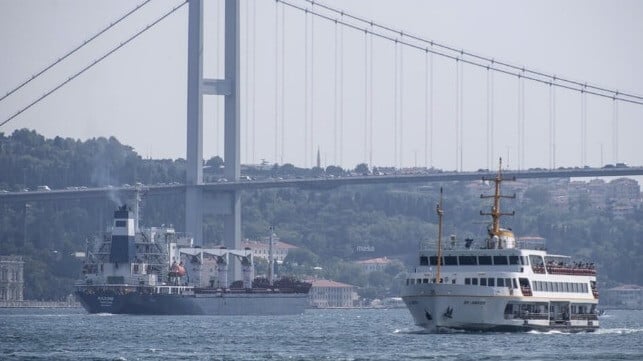
Report: Turkey Bars Ships with Ties to Israel and Suspends All Trade
Shipping between Turkey and Israel will reported be barred until there is a ceasefire in Gaza (UN OCHA file photo)
The Turkish government has reportedly taken steps to suspend trade with Israel and stop the movement of ships between the two countries, as well as possibly international shipping with an Israeli connection. The full extent of the moves is unclear pending official government statements, but it comes after the Houthis made it clear they were tracking shipping between the countries.
Officially, Turkey said it had suspended trade with Israel more than a year ago in May 2024, but both reports from Bloomberg and Reuters have tracked ongoing trade. Turkish ships have also been used to transport aid to the residents of Gaza (one is currently holding off the coast of Israel), and international shipping has made port calls between the two countries.
The Trade Ministry of Turkey told Reuters today, August 21, that it was moving to restrict exports on a wide range of products until a ceasefire is declared in Gaza. This is said to include building materials such as iron, marble, steel, cement, aluminum, and bricks, as well as fertilizer and construction equipment. Turkey has been a leading supplier of construction materials to Israel, with the Bank of Israel reporting more than $5.3 billion in exports from Turkey to Israel in 2023 before the prior embargo. Even after the 2024 move, unofficial numbers show $100 to $200 million a month in Turkish goods arriving in Israel, according to a report in the Israeli newspaper Globes.
Other reports today have indicated that the Turkish government is also quietly imposing restrictions on all shipping to Israel. Turkish media and Reuters were reporting without an official announcement, Turkey is beginning to impose a ban on any direct ship traffic between the two countries. The report said the instructions were being delivered verbally by the port authorities to agents and other representatives of the shipping companies.
Ships registered in Turkey are reportedly being told they can no longer call in Israeli ports. Israeli shipping companies are told their vessels are barred from Turkey’s ports.
Globes and Reuters, however, are suggesting the ban is more comprehensive. Their reports cite unnamed sources that say Turkish authorities are also asking for statements confirming ships are not linked to Israel or engaged in operations linked to Israel. They are also saying that transportation of military or hazardous cargoes to Israel is banned. It is believed the effort will also forbid the handling of any cargo or transshipment of cargo through Turkey to Israel.
At the beginning of August, the Houthi militants in Yemen increased their threats against ships and shipping companies calling in Israeli ports. As part of it, they cited the tracks of ships sailing between Israeli ports and Turkey as well as Egypt, warning that it was a violation of the group’s “embargo” on Israeli ports.
Turkey’s new move comes after repeated protests in multiple countries, primarily in the Mediterranean region, over the handling of cargo to Israel. Multiple ships have been targeted with accusations that they were carrying military equipment and materials to support the Israeli war effort. Shipping companies with U.S. government contracts to transport materials have also been accused of aiding the war effort.
The protests have also grown to include an Israeli-owned cruise ship carrying tourists to ports in the Eastern Mediterranean. The Mano Cruises Crown Iris was forced to skip ports and has also reported delays as protestors vented their anger over the war during the ship’s port visits.
Equinor Will Not Proceed with Australian Offshore Wind Projects
ONE STEP FORWARD, TWO STEPS BACK
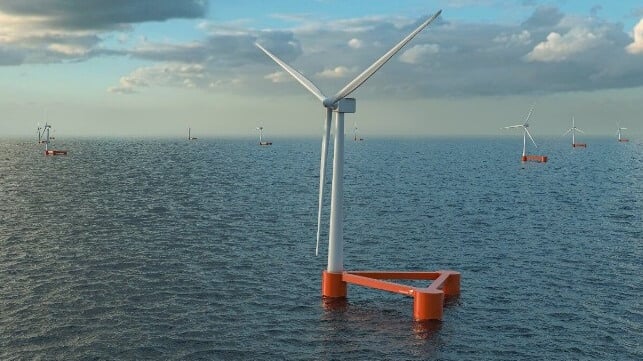
Novocastrin would be one of the first, large, deep-water floating wind farms (Equinor)
Equinor, one of the leading developers in the offshore and renewable energy industry, is not proceeding with its development projects in Australia, marking another setback for the developing industry. The Norwegian company had been working in Australia for the past few years and was positioned to be one of the first to develop a project.
Australia’s Energy Minister, Chris Bowen, said that Equinor and its Australian partner, Oceanex Energy, had been unable to agree on terms for the next phase of the development project. They had been selected by the government in February to receive a feasibility license to proceed with the research for the project, but according to Bowen, the company has decided to decline the license for the proposed Novocastrian Offshore Wind Farm.
Oceanex has spent years developing the plan and the local expertise for the project, which is one of the projects selected for the Hunter coast of New South Wales. The plan calls for a mega 2 GW floating wind farm located more than 12 miles offshore south of Newcastle. The proposed timeline expected construction to begin in 2028 and operations by 2031.
No official reason was given for the decision not to proceed, but it is being pointed out that Equinor has withdrawn from a number of projects both in Australia and elsewhere in recent months. Novocastrian was positioned according to Oceanex to be “at the forefront of deep-water deployment.”
Equinor had launched its partnership with Oceanex in 2022, citing the strong potential for offshore wind energy in Australia and the government’s strong desire to develop the industry. Oceanex is also developing offshore plans for the Illawarra and South Coast regions.
Equinor last month quietly withdrew from another project, its third in Australia, the Bass Offshore Wind Energy project. To be located near Tasmania in the Bass Strait, it calls for 70 to 100 turbines with a capacity of 1.5 GW. Equinor was working with the Australian company Nexsphere, which assumed full ownership of Bass from Equinor. Unlike Novocastrain, Bass has not yet been selected for a feasibility license.
Bowen said that Oceanex wants to continue to pursue the project, but it lacks the access to capital required. He believes that both Oceanex and Nexsphere will be shopping for new international partners.
The changing economics for offshore wind energy and the challenges of developing a new market have weighed heavily on Australia’s plans. Last month, Blue Float Energy, which is developing the plans for a Victoria offshore project, reported it was not proceeding. The plan calls for a 2 GW project for the Gippsland region, but reports said the company’s lead investor, Quantum Capital, determined the project was no longer commercially viable.
The changing economics have also challenged projects in other parts of the world. Ørsted recently announced it would not proceed with the Hornsea 4 project in the UK in its current proposed form. The company has also reported that it was unable to secure an investment partner in the United States for its Sunrise Wind project. It is planning to sell rights to its current shareholders to raise more than $9 billion, which will primarily be used to complete construction of the U.S. project.
Bowen reiterated that the Australian government remains firmly committed to renewable energy. Analysts, however, question whether the government can meet its goals as the leading offshore projects have stalled before reaching feasibility and the final investment decision.
Alaska Carrier is Latest to Suspend Transport of EVs Due to Fire Risk
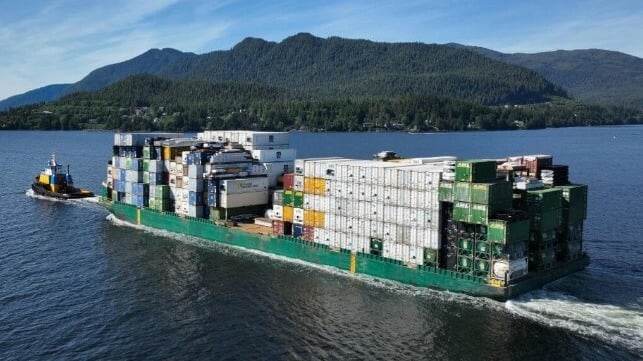
Alaska Marine Lines cited the fire danger in saying it will suspend transport of EVs and plug-in hybrids (AML)
Fire concerns and the potential for toxic, runaway fires spurred by lithium-ion batteries continue to weigh heavily on the shipping industry. Lynden’s Alaska Marine Lines has become the latest carrier to report it will no longer ship electric vehicles or plug-in hybrid electric vehicles due to the increased safety risk.
The company operates a vital cargo barge service across Alaska as well as to Hawaii. It is a vital connection for moving commercial freight and is used by Alaskans for shipping materials or to bring items from the “Lower 48.”
“Although we have previously shipped EVs and PHEVs, the increased complexity and fire risk associated with shipping large lithium-ion batteries on vessels at sea has caused us to reevaluate how to best keep our employees and equipment safe. While issues with lithium-ion batteries are infrequent, the inability to extinguish or contain this type of fire, especially while at sea, can lead to catastrophic results,” the company said in a customer statement released on August 12.
The new policy is effective immediately for Central Alaska, Western Alaska, and Hawaii. The company said it would continue to carry the vehicles for the next few weeks until September 1 for Southeast Alaska. The decision does not impact other hybrid vehicles, smaller electric recreational vehicles, e-bikes, and four-wheelers. Alaska Marine Lines said it will continue to reassess the ability to safely ship these vehicles as industry standards and safety procedures improve.
Alaska Public Media highlights that the restrictions will be especially hard for the Southeast, where electric vehicles are growing in popularity. It reports that the State of Alaska’s Alaska Marine Highway System and its ferries will continue limited transport of EVs.
The ferry system limits just two EVs per trip, and a spokesperson told KCAW Alaska that special precautions are in place on the ferries. They have designated spaces with more area around the two spots for EVs, and each ferry carries two special fire blankets designed to smother EV battery fires.
Alaska Marine Lines’ policy follows a similar decision announced by Matson in June. The carrier reported that its vessel from California to Hawaii and Guam would no longer transport EVs despite the precautions that it had put in place to control possible fires.
Similar policies have also emerged in Europe. Havila, for example, which carries cars on the Norwegian Coastal voyages, announced in 2023 that it was banning EVs and hydrogen vessels from its ships.
Marie Maersk Back Underway to Get Additional Assistance With Container Fire
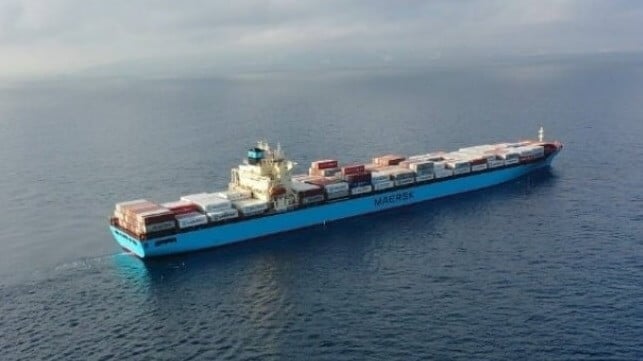
Marie Maersk is underway to get assistance with container fire (Maersk file photo)
More than a week after the crew of the containership Marie Maersk reported smoking coming from containers, the fire is controlled but likely still burning. The ship has resumed sailing as it works to get additional help from shore in its efforts to extinguish the fire.
“One container, which has been flooded with water, still shows an elevated temperature while being under control,” reports a spokesperson for Maersk. “Marie Maersk is sailing slowly eastwards off the West African coast to meet another supply vessel with additional firefighting equipment which will be loaded onboard.”
The last AIS signal from the containership showed it sailing at more than 10 knots eastward into the Gulf of Guinea. It had been holding off Liberia on the West Coast during the first phase of the firefight. The ship was bound from Rotterdam to Malaysia and then China when the smoke was spotted on the morning of August 13. The ship initially moved closer to shore so that equipment and personnel could be brought out to aid the efforts.
An external firefighting team boarded the vessel on Tuesday, August 19. Maersk reports together with the crew of Marie Maersk, they have the fire under control, while it is still not completely extinguished.
“The expert Crisis Response Team of Maersk remains in constant touch with the vessel crew, salvage operator, flag state authority, and classification society to take qualified decisions about the next steps,” the spokesperson told The Maritime Executive on August 22. The port of destination is “under contemplation,” with the goal of finding the best solution for the crew, Maersk’s customers and their cargo.
The ship has a rated capacity of just over 19,000 TEU, but it is unclear exactly how many containers are currently aboard and how many might be empties. Maersk says that due to the prevailing conditions in the affected cargo bays, it cannot confirm the exact impact of the fire on each container. The expectation is that the ship will be taken to a port of refuge to offload the damaged containers and ascertain the full extent of the damage.
Saturation Diving Begins Effort to Remove Fuel from MSC Elsa 3 Casualty
Divers will begin tapping the fuel tanks aboard the wreck of the MSC Elsa 3 (DGS)
Salvage efforts at the wreck site of the casualty MSC Elsa 3 have moved into a critical phase, reports India’s Directorate General of Shipping. Starting on August 20, saturation diving began on the hulk as the salvage team hired by MSC and the insurers started the efforts to pump the remaining fuel from the vessel.
It is a challenging operation because of the depth of the wreck, which lies at approximately 51 meters (167 feet), and the potential for adverse weather conditions. The operations were suspended in July after the first phase capped vents and ports that were thought to be weeping small amounts of fuel. The site, which is 14 nautical miles off the Indian state of Kerala on the West Coast, is exposed to the seasonal monsoons.
The salvage plan submitted by SMIT Salvage, the firm engaged by the shipowners and the Protection and Indemnity insurer North Standard, targets completion of the fuel extraction by September 25. SMIT was hired as a specialist for this phase of the effort, replacing the earlier salvage firm. They note the schedule is a tentative timeline for oil removal and associated activities, which may be impacted by weather conditions.
Estimates are that there was a total of 450 metric tons of fuel aboard the containership when it went down on May 25. It consists of approximately 85 tons of diesel, and the remainder is VLSFO (Very Low Sulfur Fuel Oil). Since the vessel sank, there have been small quantities of fuel on the surface, which have dissipated in the sea conditions.
The Directorate General is advising local fishermen and other vessels not to enter a one-nautical-mile exclusion zone around the operation. It is being supported by Diving Support Vessels and other crafts to ensure the safety and monitor for pollution.
In addition to the fuel removal, the DGS reports that so far, 655 tons of plastic nurdles have been collected from the coastal areas. There was a total of 650 containers aboard, of which the DGS says 66 have been recovered after washing up on the coast along with various other debris. Sri Lanka, which is hundreds of miles away, reports debris has also washed up on its shores.
MSC Mediterranean Shipping Company, the owners of the vessel, and the insurance companies continue to face a growing list of legal challenges associated with the casualty. The company has moved to limit its liability while rejecting the extent of the damage claims made by Kerala in court. The court has detained five MSC containerships while they were making port calls in India as security against various claims by fishermen and shippers who had cargo on the ship. Four of the vessels have been released after bonds were posted, but the MSC Akiteta II has been stuck in port for a month as it was attached as part of the $1 billion claim made by Kerala.
The company told the court that India is threatening trade and its supply chain. It said the terms in the case are setting a bad precedent that shipping companies would not be able to meet. Sri Lanka has filed separate claims for the impact on its environment from the wreck.
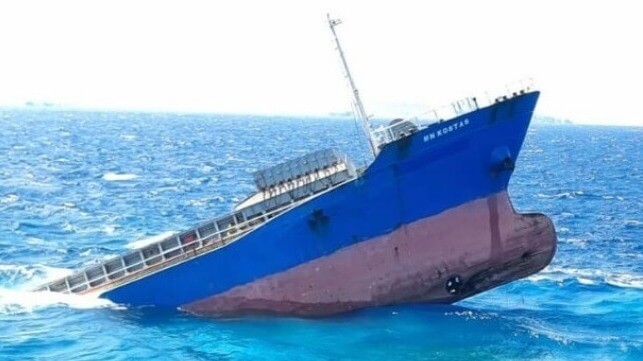
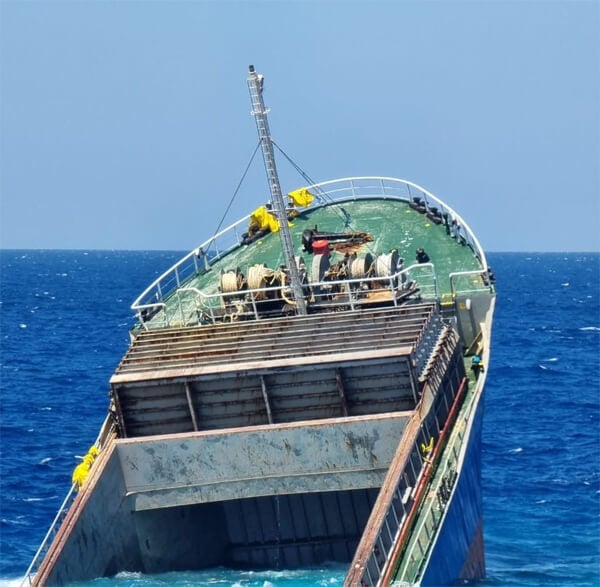
Greece Orders Owner to Remove Wreck After Grounded Cargo Ship Sinks
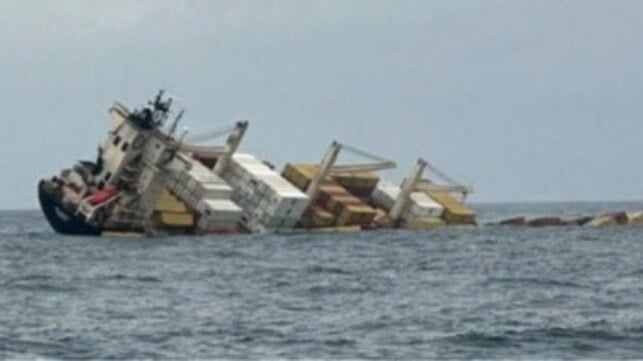
Cargo ship MN Kostas went down nearly a month after it grounded off Crete (Hellenic Coast Guard)
Greek authorities are investigating the circumstances of a cargo ship that sank off Crete on August 19 nearly a month after the vessel grounded and while a salvage operation was underway, The MN Kostas (5,800 dwt) however has been declared a shipwreck and maritime hazard with the Hellenic Coast Guard reporting the owner has been informed and ordered to remove the hulk.
Pictures from the site show the 106-meter (348-foot) vessel’s bow and forward section protruding from the water. The Hellenic Coast Guard termed it a “vertical sinking to the starboard side,” reporting the vessel went under during the morning hours of August 19.
Salvage operations had been underway for most of the month after the vessel grounded on July 24, approximately 3 nautical miles west of the northeastern tip of Crete. The vessel had loaded a cargo of gypsum in the port of Sitia on Crete and departed that evening bound for Lebanon. Built in 1994, the vessel was registered in Sierra Leone and had a crew of 14 aboard who were rescued and brought to shore by fishing boats and the port authority.
The captain and watch officer of the MN Kostas were being investigated for causing a shipwreck and failing to avoid collisions, which in this case was the reef. The authorities stated that the reef was marked on navigation charts.
The forward section of the vessel is protruding out of the water (Hellenic Coast Guard)
A local salvage company, Seagate, was retained after the grounding. It reports that 37 tons of diesel fuel were removed along with other potential pollutants, including lubricants and paints. They had also brought in a crane and a second ship and offloaded most of the gypsum cargo before the vessel sank. The Coast Guard reports ventilation and other opening had been sealed during the salvage operation.
Earlier this year, the same ship was cited for charges of failing to pay its crew, with the International Labour Organization reporting the crew was due nearly $18,500 in pay. It said the crew had only received half pay for four months, but that the situation was corrected. The vessel was managed by a shipping company based in Crete.
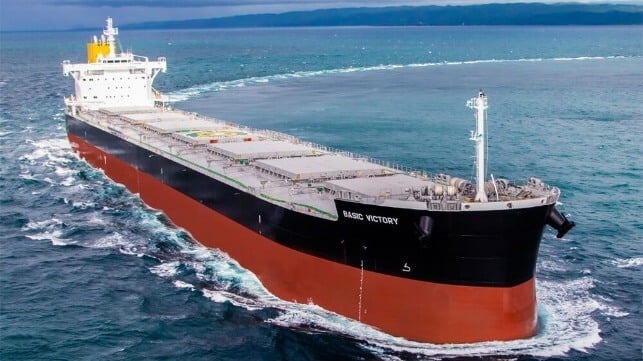
Australia Investigating After Bulker Blacks Out and Drifts Toward Newcastle
The bulker drifted within three miles of shore before it was able to restart its engine (Tsuneishi Cebu)
The Australian Transport Safety Bureau (ATSB) is investigating the circumstances around an incident where a larger bulker lost power and drifted dangerously close to Newcastle. It will be looking for critical safety issues, and if they are identified, the ATSB will immediately notify the operators of the ship and the port, and other relevant parties, so that appropriate and timely safety action can be taken.
The incident began on the morning of July 30 when the Marshall Island-registered bulker Basic Victory was holding offshore awaiting its berth. Newcastle is one of the busiest ports in Australia, reporting that it handles over 4,400 ship movements each year. Over 152 million tonnes of cargo are handled annually at the port.
The bulker, which was built in the Philippines in 2021, was about 20 miles off the Port of Newcastle while waiting to berth when it reported around 8:00 a.m. local time that its main engine had failed. The ship was drifting towards the coastline north of Newcastle and by about 1730 that afternoon had closed to within three miles of the nearest land.
The ship’s master reported the propulsion failure to Newcastle vessel traffic service and, as they were drifting close to shore, requested permission to anchor. Shortly afterward, the crew succeeded in restarting the main engine and the ship steamed clear of the coastline.
After the ship had berthed in Newcastle on August 7, ATSB reports its investigators boarded the ship for an inspection and to collect evidence, including interviewing the master and crewmembers. They also obtained recorded data and documentary evidence.
After repairs were completed, the Basic Victory sailed from Australia on August 9. The vessel is at sea bound for Japan, where it is due to arrive next week.
Australia has a reputation for its enforcement of safety regulations and detailed inspections of ships. The Australian Maritime Safety Administration has administered bans on ships that are repeat violators or have failed to undertake proper repairs and maintenance.
 Clockwise from upper left: Skobelev, Sparta, Vice Admiral Kulakov, HMS Trent (Royal Navy)