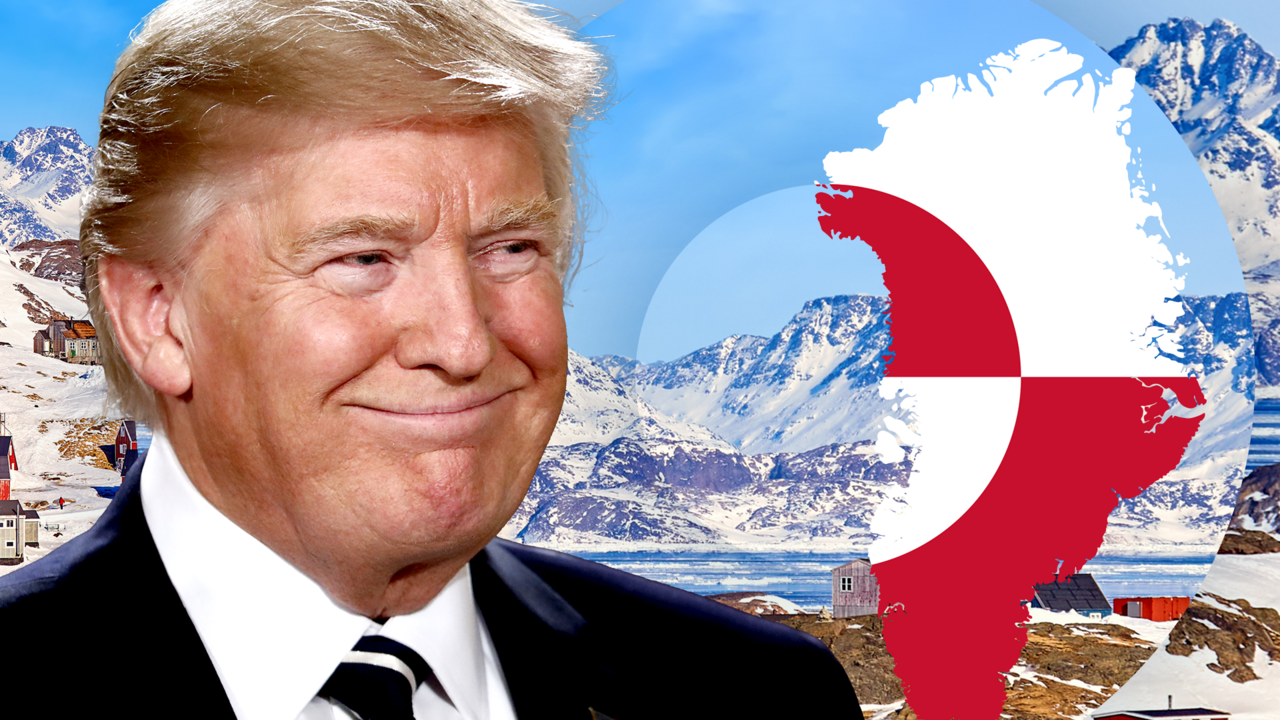
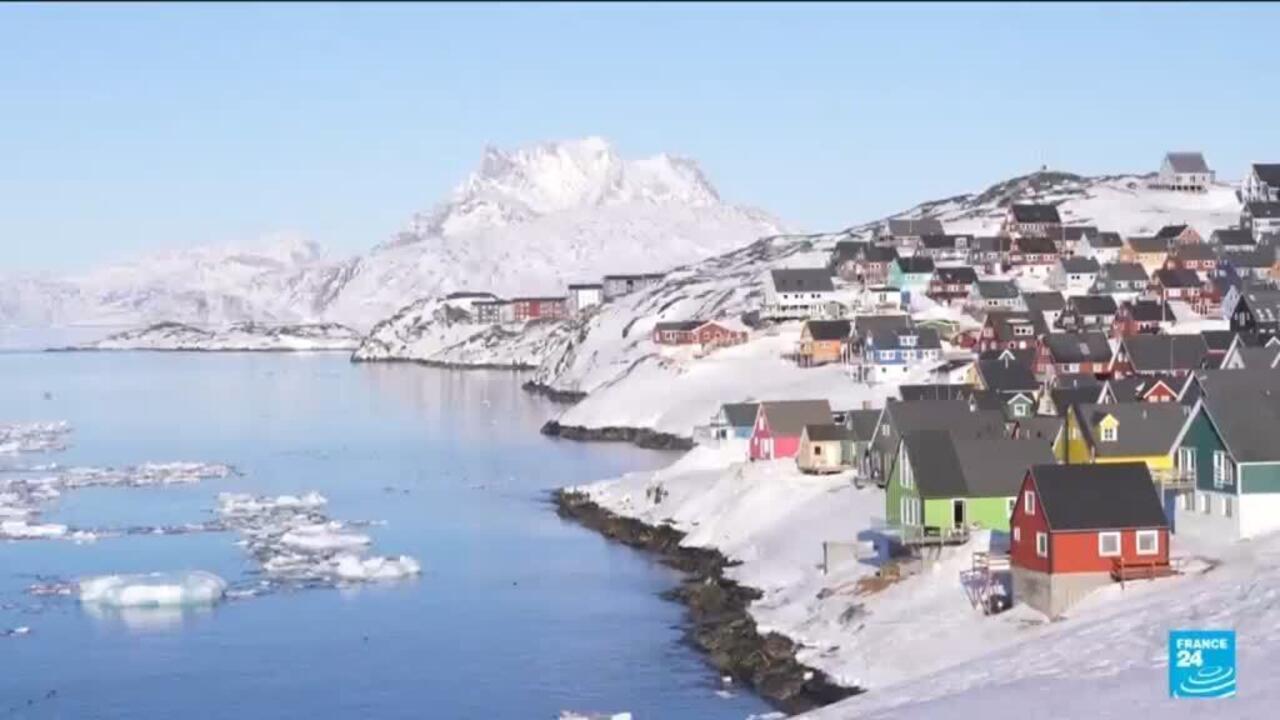
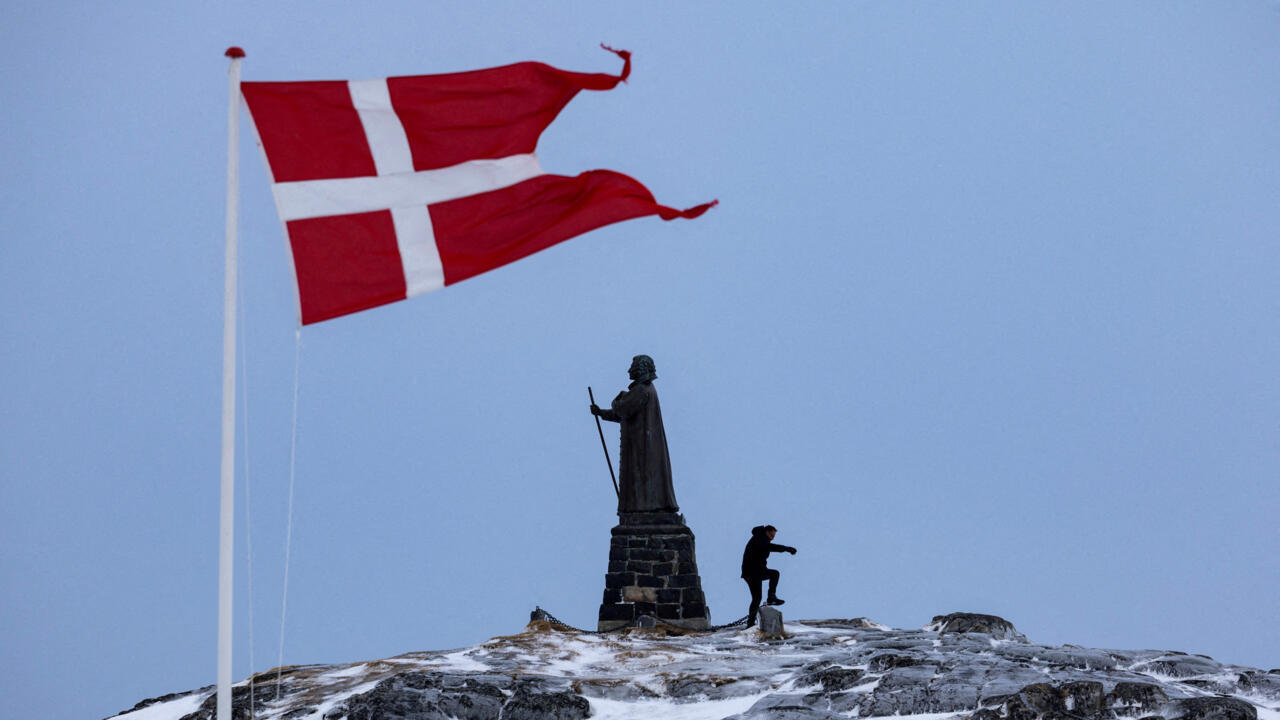
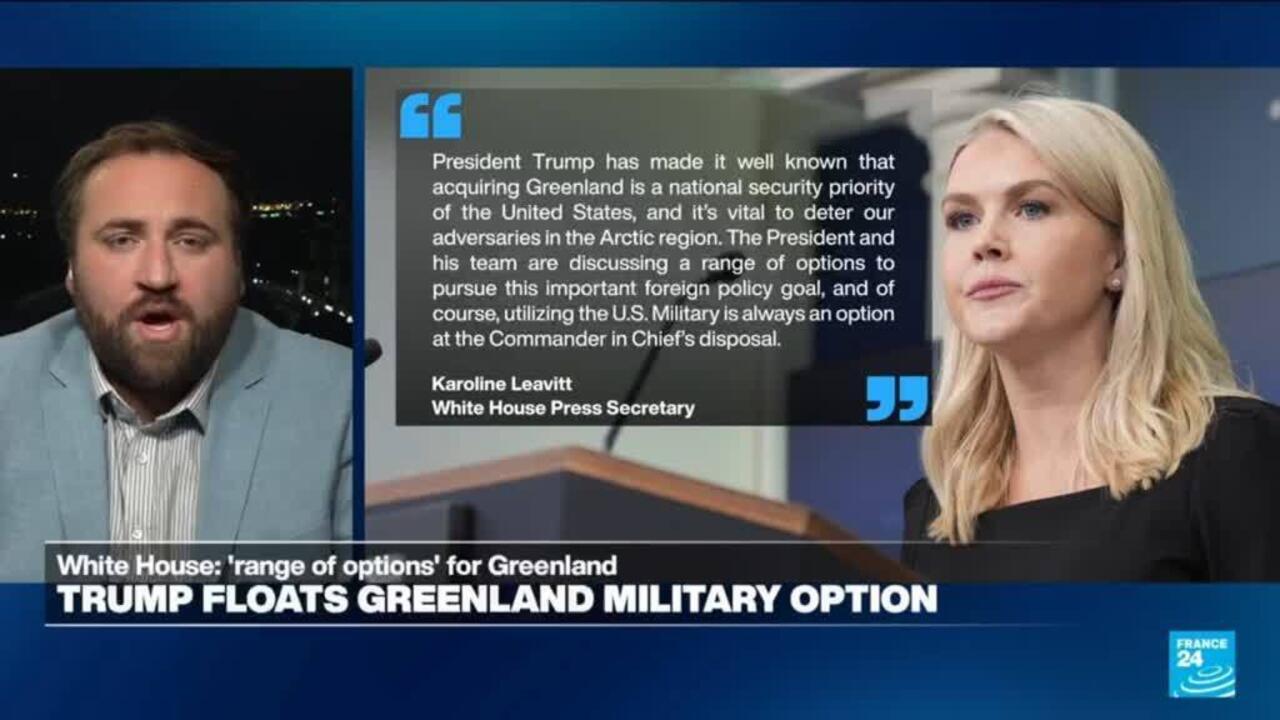
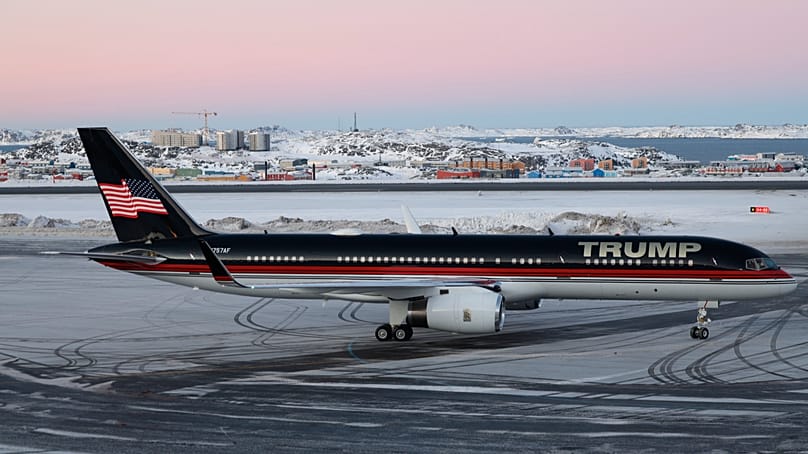
One of US President Donald Trump's senior aides has ramped up Washington's threat to take over Greenland, stating on Monday that no one would militarily challenge the United States over the future of the autonomous Danish territory.
In an interview with CNN, Trump's deputy chief of staff for policy Stephen Miller said it was Washington's "formal position ... that Greenland should be part of the US".
His comments followed the US president's renewed call for the strategic, mineral-rich Arctic island to come under Washington's control in the aftermath of the weekend military operation in Venezuela that resulted in the capture of Nicolás Maduro.
Miller questioned Denmark's right to "control" Greenland, which is a part of its kingdom.
"The real question is what right does Denmark have to assert control over Greenland? What is the basis of their territorial claim? What is their basis of having Greenland as a colony of Denmark?" Miller said during the interview with CNN on Monday afternoon.
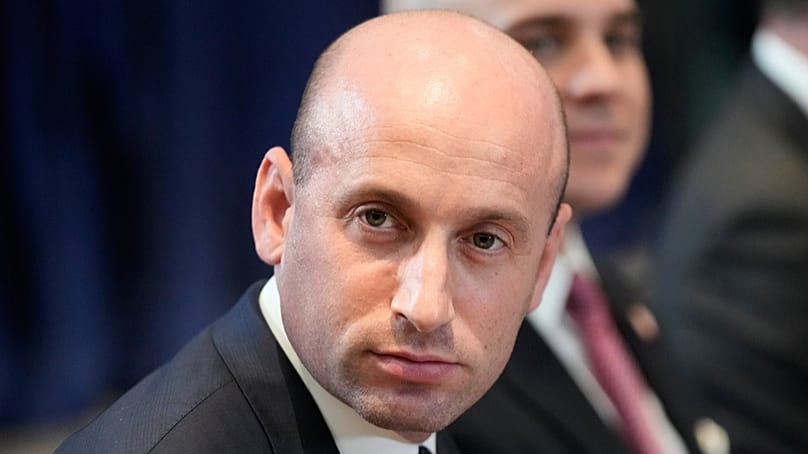
FILE: United States Homeland Security Advisor Stephen Miller reacts on the sidelines of the ASEAN Summit in Kuala Lumpur, Malaysia, Sunday, Oct. 26, 2025. Mark Schiefelbein/Copyright 2025 The AP. All rights reserved.
The top Trump aide also said the US "is the power of NATO. For the US to secure the Arctic region, to protect and defend NATO and NATO interests, obviously Greenland should be part of the US."
When asked if the US would rule out the use of force to annex Greenland, Miller said there was "no need to even think or talk about" a military operation in the Arctic island.
"Nobody is going to fight the US militarily over the future of Greenland," he said.
Miller is widely seen as the architect of several of Trump's policies, steering the president on his hardline immigration stance and domestic agenda.
EU leaders defend Greenland
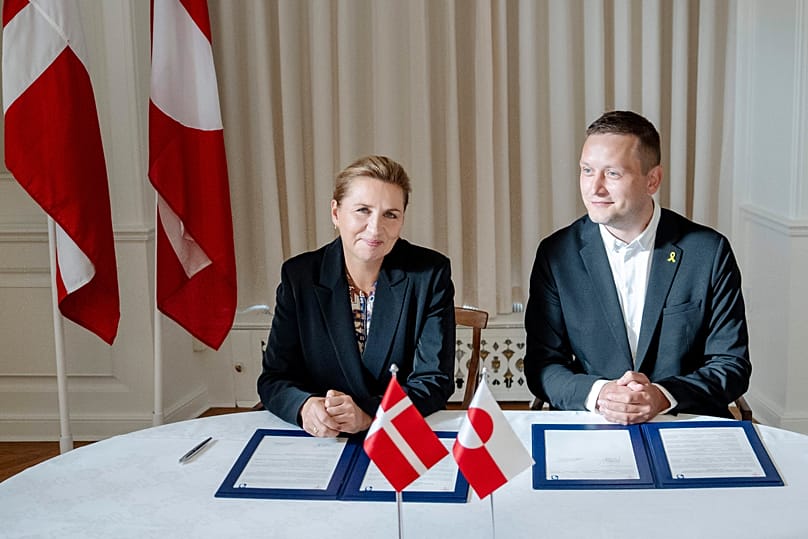
Meanwhile, leaders of six European nations — Denmark, France, Germany, Italy, Poland, Spain and the UK — issued a joint statement on Tuesday defending Greenland's sovereignty.
"Greenland belongs to its people," said the statement, which was later backed by Dutch Prime Minister Dick Schoof.
"It is for Denmark and Greenland, and them only, to decide on matters concerning Denmark and Greenland."
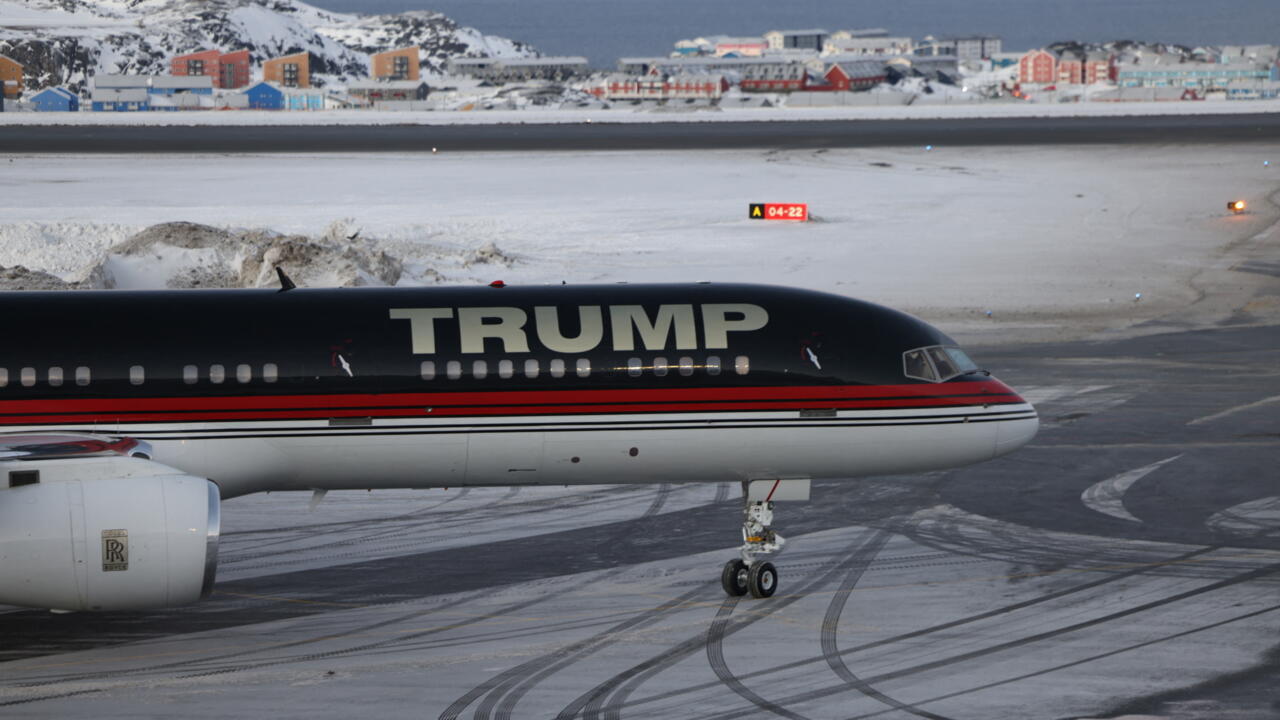
On Sunday, Trump doubled down on his claim that Greenland should become part of the US, despite calls by the Danish and Greenlandic leaders to stop "threatening" the territory.
"Greenland is covered with Russian and Chinese ships all over the place," Trump said while aboard Air Force One en route to Washington. "We need Greenland from the standpoint of national security, and Denmark is not going to be able to do it."
In response to those comments, Danish Prime Minister Mette Frederiksen said that a US takeover of Greenland would amount to the end of the NATO military alliance.
Greenland's Prime Minister Jens-Frederik Nielsen also issued a statement in which he urged Trump to abandon his "fantasies about annexation" and accused Washington of "completely and utterly unacceptable" rhetoric. "Enough is enough," he said.
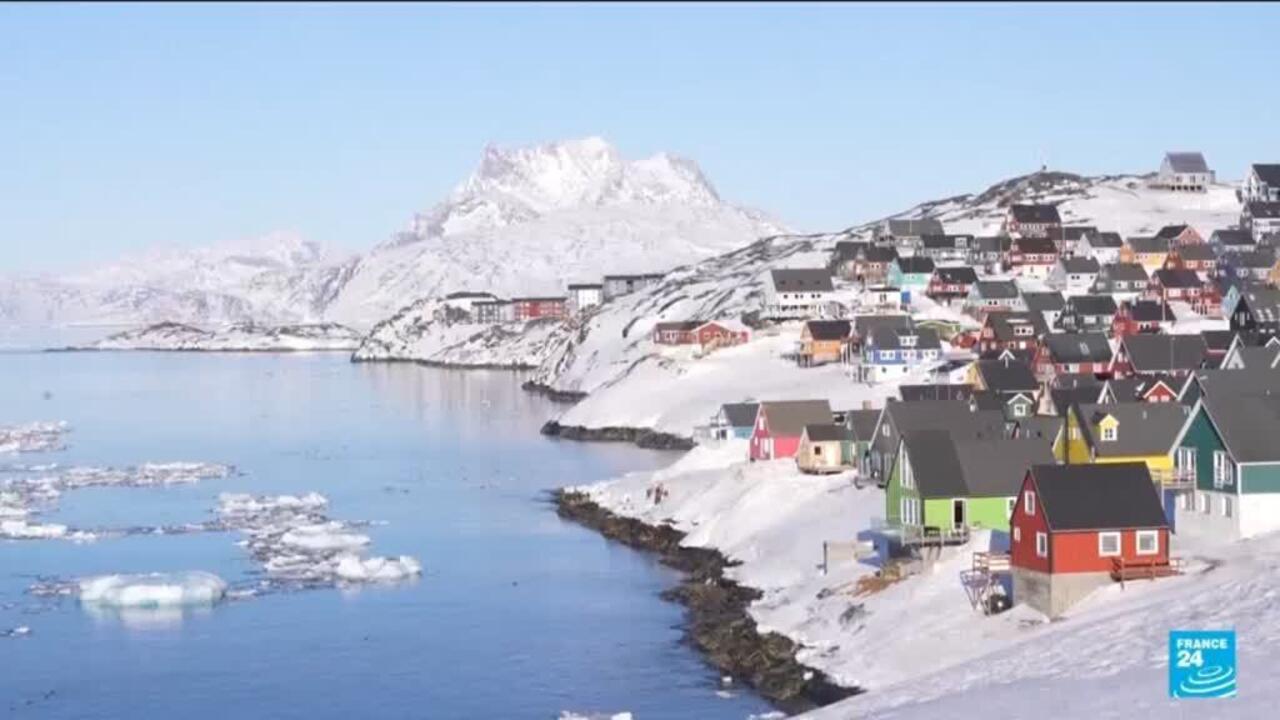
Greenland has been under Danish control since the early 18th century but gained home rule in 1979, although Copenhagen continues to oversee its foreign and security poli
The island holds vast mineral wealth, including rare earths, crucial for advanced technologies.
EurActiv
By Magnus Lund Nielsen
(EurActiv) — An independent Greenland with close economic ties to the United States would serve Washington’s interests and need not be coordinated with European allies, the newly appointed US envoy to Greenland Jeff Landry said on Tuesday.
The remarks come as US President Donald Trump steps up rhetoric on Greenland, arguing the US “needs Greenland for defence”. On Monday, Trump’s deputy chief of staff Stephen Miller questioned Denmark’s sovereignty over the island, an autonomous territory within the Danish realm.
However, Landry – who is also governor of Louisiana – sought to dial down concerns about annexation, saying he wanted to engage directly with Greenlanders.
“The president supports an independent Greenland with economic ties and trade opportunities for the United States,” he told CNBC on Tuesday.
US officials are widely reported to be considering a Compact of Free Association with Greenland – an arrangement Washington has with Pacific island states such as Palau and Micronesia – The Economist reported this week.
Asked on Tuesday whether the US would take Greenland by force, an idea Trump has previously floated, Landry urged caution.
“No, I don’t think so,” he said. “I can’t wait to have discussions with Greenlanders.”
Landry – who has yet to visit Greenland in his new capacity – also framed the issue as an opportunity for the US, praising Trump’s revival of the Monroe Doctrine. While Greenland is part of the Danish realm, it is geographically part of North America and closer to New York than Copenhagen.
Europe pushes back
Landry’s remarks came on the same day as eight European leaders, including French President Emmanuel Macron and German Chancellor Friedrich Merz, have urged Washington to respect the territorial integrity of Greenland and Denmark.
“I would like to express my deepest gratitude for this support,” Greenland’s home-rule leader Jens-Frederik Nielsen wrote on Facebook.
Asked whether US engagement with Greenland should involve European NATO allies, Landry deflected. “I think we should ask the Greenlanders,” he said.
“I think we should ask the Greenlanders,” Landry insisted.
He also rejected suggestions that the US overtures resemble Russia’s rhetoric on Ukraine.
“When has the United States engaged in imperialism? Never,” he said.
The US envoy argued that it is rather Europe that has done so in the past, which is how Denmark gained its foothold in Greenland in the first place.
Greenland gained expanded self-rule in 2009, transferring more powers from Copenhagen to Nuuk, though foreign policy remains largely under Danish control. Both Denmark and Greenland have since embraced the principle of “nothing about Greenland without Greenland”. Direct US–Greenland cooperation that sidelines Copenhagen could therefore clash with Danish law.
Greenland By Force: How A US Takeover Would Shatter NATO And Ignite Arctic Conflict – OpEd
January 7, 2026
By Simon Hutagalung
The United States faces a significant military and strategic crisis due to its proposed acquisition of Greenland by force. The acquisition would create instability within NATO while making the Arctic region more militarised, and it would push American military resources to their limits, which could lead to a major conflict between great powers, thus damaging the U.S. ability to maintain its position as a worldwide security authority. The research evaluates military consequences which would result from this action by placing the analysis within the context of alliance relations and operational difficulties and worldwide security systems, and upholding the legal framework of the United Nations Charter and the North Atlantic Treaty.
A coercive acquisition would trigger an immediate conflict with Denmark, along with its sovereign territory of Greenland, and all NATO member states. The action would break Article 2(4) of the UN Charter because it bans any form of military force which threatens or attacks the sovereign territory of any nation. The United States would be considered a violator of international rules because it has traditionally protected the rules-based international order. The reversal would lead to worldwide disapproval, which would damage Washington’s reputation as a moral leader and might result in military clashes in the North Atlantic region.
The past demonstrates how dangerous it becomes when people perform such actions. The 2014 Russian seizure of Crimea established a precedent which showed that state violations of sovereignty would generate security problems which would lead to extended conflicts. The alliance took economic measures and enhanced its Eastern border protection while Russia built permanent military facilities throughout the Black Sea area. The 1982 Argentine invasion of the Falkland Islands led to an expensive military conflict with the United Kingdom, which forced Argentina to maintain a permanent military presence on the islands while spending heavily on defence costs. The two situations show that forced land grabs create permanent military and political, and economic effects which surpass any expected strategic advantages.
The forced takeover of Greenland would harm NATO’s ability to preserve trust between its member nations. The North Atlantic Treaty contains Article 5, which requires member states to defend each other, but this provision would become ineffective when the United States faces an attack. The NATO allies would need to decide between taking action against Washington or giving up their commitment to collective defence. The alliance would experience a complete breakdown in both cases. The United States would lose international trust, which would result in reduced cooperation between nations for intelligence exchange and military training, and strategic development. The current security alliances between nations could transform because multiple countries which lose faith in U.S. actions will consider joining new defence partnerships with either the European Union or Russia, or China, which would create an unfavourable power dynamic for Washington.
The strategic location of Greenland serves as a crucial hub for all Arctic political operations. A coercive acquisition would trigger fast military expansion, which would expand across multiple surrounding countries. Russia would boost its Arctic military operations because it continues to expand its Arctic territory, while China would work to establish itself as a power that operates near the Arctic region. The United States could answer by building up its radar and missile defence capabilities throughout Greenland, but this action would create more diplomatic conflict and military competition. The Arctic region will face increasing competition for its newly accessible shipping routes because climate change has opened up these areas to navigation. The naval battles to control sea lanes would make strategic errors more likely, which would lead to an escalation of the conflict. The United States would start an unstable competition which would threaten the stability of a critical international area.
The military would face major operational and logistical challenges if it occupied Greenland. The process of securing the territory would require major military force deployments together with base construction and supply network development through the difficult Arctic environment. The extreme environmental conditions of extreme cold and ice and restricted infrastructure would create complex supply chain operations which need customised equipment and personnel training. The established requirements would redirect military resources away from different operational areas, which would lead to excessive strain on U.S. military units that currently operate across multiple international locations. The extended stay in Greenland would create an unaffordable situation, which would make it impossible to maintain military readiness in essential areas, including the Indo-Pacific region and the Middle East.
A coercive acquisition would create major security challenges which affect the entire world. The United States would experience a decline in its ability to deter because Washington would break its promise to support sovereignty and international law through its actions. International courts, together with sanctions programs, would impose legal penalties on the United States because they seek to hold U.S. military personnel and military operations accountable. The situation becomes dangerous because opposing nations could use this crisis to their advantage by having Russia and China establish themselves as protectors of international standards. The risk of great-power conflict would increase because the Arctic region would become a strategic area, which could lead nations to engage in military combat. The acquisition of Greenland would create more global instability than it would provide any security benefits to the United States.
The domestic effects of this situation would spread across all regions of the United States. The military faces potential civil-military conflicts because it needs to decide if it should follow orders which violate both military rules and ethical standards. The military will face two major challenges because service members will avoid participating in what they see as an unauthorised operation, which will harm both recruitment efforts and team morale. The congressional disagreement about this matter would create an obstacle which would block military budget approval and monitoring processes. The domestic strain would cause U.S. defence organisations to experience institutional failures, which would result in more national security risks.
The upcoming obstacles consist of various complex issues. The United States would become completely isolated because its foreign alliances would disappear, while security needs require multiple nations to work together. The Arctic region would become a new military competition area, which would require additional resources and personnel that the United States might not have enough to support. The operational challenges of military control during an occupation would exhaust all available military resources, which would reduce their capacity to defend other vital strategic locations. The domestic reaction against the United States would harm its internal power base because of political and military resistance from within the country. The problems demonstrate that the United States’ forced takeover of Greenland creates a major security risk which threatens both military capabilities and national defence strategies.
The forced takeover of Greenland would create instability within NATO while making the Arctic region more militarised, and it would push U.S. military resources to their limits and increase the chances of major power conflicts. The action would harm our national defence capabilities, while other nations would condemn us, and our military would become unable to operate as a unified force. The Constitution needs bipartisan leadership to protect its authority while preventing any actions which could result in permanent harm to national and international security.
The opinions expressed in this article are the author’s own.
ReferencesMessmer, M. (2026, January 6). US intentions towards Greenland threaten NATO’s future. But European countries are not helpless. Chatham House. https://www.chathamhouse.org/2026/01/us-intentions-towards-greenland-threaten-natos-future-european-countries-are-not-helpless Chatham House