It’s possible that I shall make an ass of myself. But in that case one can always get out of it with a little dialectic. I have, of course, so worded my proposition as to be right either way (K.Marx, Letter to F.Engels on the Indian Mutiny)
Monday, February 02, 2026
Not a Trump Anomaly: The Board of Peace and America’s Crisis-Driven Power Plays
The history of American power is, in many ways, the history of reinventing rules – or designing new ones – to fit US strategic interests.
This may sound harsh, but it is a necessary realization, particularly in light of US President Donald Trump’s latest political invention: the so-called Board of Peace.
Some have hastily concluded that Trump’s newest political gambit – recently unveiled at the World Economic Forum in Davos – is a uniquely Trumpian endeavor, detached from earlier US foreign policy doctrines. They are mistaken, misled largely by Trump’s self-centered political style and his constant, though unfounded, claims that he has ended wars, resolved global conflicts, and made the world a safer place.
At the Davos launch, Trump reinforced this carefully crafted illusion, boasting of America’s supposed historic leadership in bringing peace, praising alleged unprecedented diplomatic breakthroughs, and presenting the Board of Peace as a neutral, benevolent mechanism capable of stabilizing the world’s most volatile regions.
Yet a less prejudiced reading of history allows us to see Trump’s political design – whether in Gaza or beyond – not as an aberration, but as part of a familiar pattern. US foreign policymakers repeatedly seek to reclaim ownership over global affairs, sideline international consensus, and impose political frameworks that they alone define, manage, and ultimately control.
The Board of Peace – a by-invitation-only political club controlled entirely by Trump himself – is increasingly taking shape as a new geopolitical reality in which the United States imposes itself as the self-appointed caretaker of global affairs, beginning with genocide-devastated Gaza, and explicitly positioning itself as an alternative to the United Nations. While Trump has not stated this outright, his open contempt for international law and his relentless drive to redesign the post-World War II world order are clear indicators of his true intentions.
The irony is staggering. A body ostensibly meant to guide Gaza through reconstruction after Israel’s devastating genocide does not include Palestinians – let alone Gazans themselves. Even more damning is the fact that the genocide it claims to address was politically backed, militarily financed, and diplomatically shielded by successive US administrations, first under Joe Biden and later under Trump.
It requires no particular insight to conclude that Trump’s Board of Peace is not concerned with peace, nor genuinely with Gaza. So what, then, is this initiative really about?
This initiative is not about reconstruction or justice, but about exploiting Gaza’s suffering to impose a new US-led world order, first in the Middle East and eventually beyond.
Gaza – a besieged territory of just 365 square kilometers – does not require a new political structure populated by dozens of world leaders, each reportedly paying a billion-dollar membership fee. Gaza needs reconstruction, its people must be granted their basic rights, and Israel’s crimes must be met with accountability. The mechanisms to achieve this already exist: the United Nations, international law, longstanding humanitarian institutions, and above all the Palestinians themselves, whose agency, resilience, and determination to survive Israel’s onslaught have become legendary.
The Board of Peace discards all of this in favor of a hollow, improvised structure tailored to satisfy Trump’s volatile ego and advance US-Israeli political and geopolitical interests. In effect, it drags Palestine back a century, to an era when Western powers unilaterally determined its fate – guided by racist assumptions about Palestinians and the Middle East, assumptions that laid the groundwork for the region’s enduring catastrophes.
Yet the central question remains: is this truly a uniquely Trumpian initiative?
No, it is not. While it is ingeniously tailored to feed Trump’s inflated sense of grandeur, it remains a familiar American tactic, particularly during moments of profound crisis. This strategy is persuasively outlined in Naomi Klein’s The Shock Doctrine, which argues that political and economic elites exploit collective trauma – wars, natural disasters, and social breakdown – to impose radical policies that would otherwise face public resistance.
Trump’s Board of Peace fits squarely within this framework, using the devastation of Gaza not as a call for justice or accountability, but as an opportunity to reshape political realities in ways that entrench US dominance and sideline international norms.
This is hardly unprecedented. The pattern can be traced back to the US-envisioned United Nations, established in 1945 as a replacement for the League of Nations. Its principal architect, President Franklin D. Roosevelt, was determined that the new institution would secure the structural dominance of the United States, most notably through the Security Council and the veto system, ensuring Washington’s decisive influence over global affairs.
When the UN later failed to fully acquiesce to US interests – most notably when it refused to grant the George W. Bush administration legal authorization to invade Iraq – the organization was labeled “irrelevant”. Bush, then, led his own so-called “coalition of the willing,” a war of aggression that devastated Iraq and destabilized the entire region, consequences that persist to this day.
A similar maneuver unfolded in Palestine with the invention of the so-called Quartet on the Middle East in 2002, a US-dominated framework. From its inception, the Quartet systematically sidelined Palestinian agency, insulated Israel from accountability, and relegated international law to a secondary – and often expendable – consideration.
The method remains consistent: when existing international mechanisms fail to serve US political objectives, new structures are invented, old ones are bypassed, and power is reasserted under the guise of peace, reform, or stability.
Judging by this historical record, it is reasonable to conclude that the Board of Peace will eventually become yet another defunct body. Before reaching that predictable end, however, it risks further derailing the already fragile prospects for a just peace in Palestine and obstructing any meaningful effort to hold Israeli war criminals accountable.
What is truly extraordinary is that even in its phase of decline, the United States continues to be permitted to experiment with the futures of entire peoples and regions. Yet it is never too late for those committed to restoring the centrality of international law – not only in Palestine, but globally – to challenge such reckless and self-serving political engineering.
Palestine, the Middle East, and the world deserve better.
Dr. Ramzy Baroud is a journalist, author and the Editor of The Palestine Chronicle. He is the author of six books. His forthcoming book, ‘Before the Flood,’ will be published by Seven Stories Press. His other books include ‘Our Vision for Liberation’, ‘My Father was a Freedom Fighter’ and ‘The Last Earth’. Baroud is a Non-resident Senior Research Fellow at the Center for Islam and Global Affairs (CIGA). His website is www.ramzybaroud.net
Rethinking America’s Financial Plumbing
by Ellen Brown / February 1st, 2026
A Jan. 17 article on Quartz Markets by Catherine Baab reports that JPMorgan Chase, Goldman Sachs, Wells Fargo, Citigroup and Bank of America returned nearly all of their 2025 profits to shareholders. Goldman Sachs returned $16.78 billion on $17.18 billion in earnings, meaning 97.7% of its earnings went to shareholders. Wells Fargo, Citigroup, JPMorgan, and Bank of America collectively returned tens of billions more. Across the six largest banks, roughly $100 billion flowed to shareholders in a single year.
They are currently paid 3.65% on their reserves (substantially more than the banks pay on their customers’ deposits), simply for holding them in reserve accounts rather than using them to capitalize new loans. Tens of billions of dollars that were once remitted to the Treasury now land on bank balance sheets with no public benefit attached.
We subsidize the banks’ safety, underwrite their liquidity, and reward them for sitting on assets, without requiring them to invest in communities, build public wealth, or serve any public purpose. It all seems pretty outrageous; but as it turns out, the banks are doing what U.S. corporate law requires them to do. If they don’t follow the “shareholder primacy rule,” they could actually be sued by their shareholders.
The Rule of Shareholder Primacy
The rule comes from a 1919 Michigan Supreme Court case, Dodge v. Ford Motor Co., in which the court required Ford Motor Company to issue an extra shareholder dividend of $19.3 million that year. The court said:
A business corporation is organized and carried on primarily for the profit of the stockholders. The powers of the directors are to be employed for that end. The discretion of directors is to be exercised in the choice of men to attain that end and does not extend to a change in the end itself, to the reduction of profits or to the nondistribution of profits among stockholders in order to devote them to other purposes. [Emphasis added.]
According to Robert Rhee in a 2023 Stanford Law Review article, the case sat quietly for decades in the law books. He writes, “Dodge was never influential among courts and was ignored by academics until the neoliberal turn of the 1980s.”
The shareholder primacy rule is thus a judge-made doctrine, revived during an era of deregulation and financialization, which is now deeply embedded in corporate law. It is not a constitutional requirement, not a statute passed by Congress and not a democratic choice of the taxpayers. In fact, it directly contradicts the original American understanding of what a corporation was to be.
In the 18th and 19th centuries, corporations were not private profit engines but were public institutions, created by state legislatures to serve explicit public purposes — building bridges, canals, turnpikes, water systems and banks. Their charters limited duration, capped profits, restricted activities and could be revoked if the corporation violated its public obligations. As Rhee notes, early corporations were “public bodies designed to serve public purposes.” The idea that corporations exist solely to maximize shareholder value was an early 20th century judicial holding brought out of obscurity in the neoliberal era for political ends.
From Dividends to Buybacks: The Casino Model
For most of the 20th century, corporations returned profits to shareholders through dividends. But in 1982, the Securities Exchange Commission changed Rule 10b‑18, effectively legalizing large-scale buybacks of a corporation’s own stock. By reducing the number of shares outstanding, buybacks inflate earnings per share and drive up stock prices. They also enrich executives, whose pay is tied to stock price and who get bonuses in stock shares.
Unlike dividends, which are transparent, predictable, and relatively stable, buybacks follow the dynamics of a casino. The profit is paid, not by the company, but by the next buyer of the stock. That means someonedown the line becomes the “greater fool.” And the corporation still has possession of its own stock.
Meanwhile, according to Gallup, nearly 40% of Americans own no stock at all; and of those who do, a much smaller percentage owns bank stock. The Federal Reserve confirms that the top 10% of the population owns more than 90% of all equities. So when banks return their profits as shareholder buybacks, most Americans are not even at the gaming table.
A White House Critique
In her Quartz article, Catherine Baab observes:
[T]he White House has suddenly become very interested in both bank pricing and corporate buybacks. Last weekend, President Donald Trump warned that credit card issuers would be “breaking the law” if they didn’t cap interest rates at 10% for one year.
Never mind that no such law exists and he lacks the authority to create one. The threat was enough to trigger a Monday sell-off in bank stocks.
Meanwhile, Trump’s housing chief, Bill Pulte, told the Wall Street Journal that homebuilders are “making, in some cases, more money than they’ve ever made, and they’re buying back stock like never before.” Pulte hinted at penalties for companies that don’t help the administration in its purported efforts to push housing costs down. …
Baab was referring to a November 2025 move by federal banking regulators to finalize a proposal to ease capital requirements on the nation’s biggest banks. She writes:
After the change, Goldman sent 97.7% of earnings to shareholders. Wells Fargo, Citigroup, JPMorgan, and Bank of America collectively returned tens of billions, too.
Baab concludes:
Trump’s populism isn’t just hollow. It’s counterproductive, targeting prices in ways that harm affordability while the financial structures that concentrate wealth with those who already have it continue to accelerate.
Some Counter-arguments
While critics accuse the Administration of indulging corporate interests, Reuters reports that the White House is preparing an executive order to restrict dividends, buybacks, and executive compensation for defense contractors whose projects are over budget or behind schedule. This is a direct challenge to one of the most entrenched, bipartisan power centers in Washington.
Meanwhile, at the local end of the financial spectrum, Treasury Sec. Scott Bessent has been making the case for reviving America’s community banks — the institutions that actually lend to small businesses, farmers, first‑time homebuyers and local governments.
Inremarks before the Federal Community Bank Conference on Oct. 9, 2025, Bessent emphasized the collapse of new bank formation since 2008, the regulatory tilt toward megabanks, the need to restore local lending ecosystems, and a goal of “Parallel Prosperity” — Wall Street and Main Street rising together. He affirmed, “No longer will regulation serve to entrench big banks and empower Washington bureaucrats to the detriment of community banks and the clients they serve.”
This is a pro‑community move, and it opens the door to a deeper solution.
The Public Banking Alternative: When the People Are the Shareholders
If the law requires corporations to serve shareholders, then the simplest way to align banking with public needs is to make the public the shareholder. The best working model in the United States today is the Bank of North Dakota (BND) — a century‑old publicly-owned bank in a conservative state that partners with community banks to support local lending.
The BND finances infrastructure, keeps capital circulating in-state, and returns profits to the public treasury. It does not replace local private banks but strengthens them. And it proves that banks can do productive things with their money if the institutional design rewards it.
If the U.S. wants to redirect capital from buybacks to productive investment, it needs institutions designed for that purpose.
At the national level, H.R.5356, the National Infrastructure Bank Act of 2025, has been unanimously endorsed by the National Association of Counties among a long list of other endorsers. It mobilizes private capital for public infrastructure, creating long-term, low‑cost financing for projects that generate real economic value; and it is the kind of institution that China and other countries with modern infrastructure already have.
The Deeper Issue: America’s Financial Plumbing Is Misaligned
The real problem is that America’s financial plumbing is not aligned with the needs of the productive economy. We have built a system optimized for shareholder extraction and short‑term returns, which favors megabanks over community banks, the already-rich over struggling families, and private profit over much-needed public infrastructure.
If the problem is in the rules that banks are required to follow, then the solution is either to change the rules or to build institutions that serve the community while operating under the existing banking framework. This can be done with public-community banking partnerships on the model of the Bank of North Dakota and with a national infrastructure bank that serves public infrastructure needs.
At a time when we seriously need to bring the warring factions of our economy together, these banking arrangements can appeal to all political persuasions — to conservatives who value local control, to liberals who value public investment and to independents who are tired of a financial system that seems to serve no one but itself.
Tens of billions of dollars that once went to the public now land on bank balance sheets with no public benefit attached. Banks need to return to their original purpose to serve as public utilities. When the people own the banks, or at least some of them, maximizing shareholder profit means generating profits that flow back into the public arena, available to build schools, bridges, water systems, housing and the modern infrastructure needed to compete on the international stage.
“Tariffs,” President Donald Trump is fond of reminding us, “is the most beautiful word to me in the dictionary.” It’s the most beautiful word “because tariffs are going to make us rich as hell. It’s going to bring our countries businesses back that left us.”
And that’s how it started. On “Liberation Day,” on April 2, Trump announced a 10% minimum tariff on goods from all countries with some countries being hit with higher “reciprocal tariffs.” “For decades,” he explained, “our country has been looted, pillaged, raped and plundered by nations near and far, both friend and foe alike.”
But Trump’s use of tariffs and sanctions quickly broadened as a versatile tool for much more than returning business to America. First they became a blunt tool for regime change; then they became the go to tool for everything from foreign policy goals to election interference.
Iran and Venezuela have felt it the hardest. The JCPOA nuclear agreement promised Iran an escape from sanctions in return for limiting its civilian nuclear program. Though Iran verifiably kept its promise, the United States did not, and the first Trump administration unilaterally pulled out of the agreement. The result for Iran was the return to crippling sanctions that would grow worse when the United Kingdom, France, and Germany would follow with snapback sanctions. Since then, the list of sanctions on Iran has only grown.
Those sanctions created an economic and cost of living crisis in Iran that drove protestors into the streets. The protestors demanded economic reforms that the Iranian government was powerless to implement as long as they were strangled by U.S. sanctions. But they could not escape the hold of those sanctions without concessions that would be existential for survival of both the country and the government. American sanctions were being used as an economic weapon for regime change.
Ervand Abrahamian, Distinguished Professor of History at City University of New York author of The Coup: 1953, the CIA, and the Roots of Modern U.S.-Iranian Relations, told me that, as demonstrated by their refusal to consider Iranian olive branches, the tearing up of the nuclear agreement and the refusal to ease sanctions, U.S. policy toward Iran has always been about “increasing pressure until the regime collapses.”
And now, along with “decisive” military strikes, included on the menu of regime change tools is even more economic strangulation. One option reportedly under consideration is imposing a naval blockade that would stop Iran from exporting any oil.
A similar strategy was employed in Venezuela with an embargo and the seizing of tankers. In the wake of the military strikes that removed Nicolás Maduro came the economic warfare. On the edge of insolvency, Venezuela’s acting President Delcy Rodriguez was informed that all American demands had to be fully implemented before the United States would allow Venezuela to pump another drop of oil. Economic warfare would be used as a tool for “running” Venezuela and imposing U.S. foreign policy on its agenda.
Tariffs and sanctions have continued to be the tool for which the Trump administration reaches most readily for regime change in recent days. As American attention turns to Cuba, the Trump administration has reportedly set an end of year deadline for regime change.
Trump has roared that “THERE WILL BE NO MORE OIL OR MONEY GOING TO CUBA – ZERO! I strongly suggest they make a deal, BEFORE IT IS TOO LATE.” The U.S. has cut Cuba off from its essential Venezuelan oil supply. It is pushing Mexico, who in 2025 supplied Cuba with more oil than Venezuela did, to further strangle Cuba by cutting it off from its oil too. Last week, Mexico cancelled plans to send a shipment of oil to Cuba; though, Mexican President Claudia Sheinbaum later said that Mexico will continue sending oil to Cuba as humanitarian aid.
Going even further, some members of Trump’s team are pushing for “a total blockade on oil imports” to Cuba to collapse the economy and push out the government.” On January 29, Trump signed an executive order imposing tariffs on any country that sends oil to Cuba. U.S. Charge d’Affairs in the U.S. Embassy in Havan told his staff the same day that “now there is going to be a real blockade. Nothing is getting in. No more oil is coming.” As in Iran and Venezuela, economic warfare is being used as a tool for regime change.
But regime change is not the only job that economic warfare is being used for. It is also being used to influence foreign elections.
As Hondurans headed to the polls, there was a three-way race with no clear winner. That quickly changed when Trump interfered in the election with an economic threat. Trump told Hondurans that if they vote for the wrong candidate, they will face the economic bomb of abandonment. “If Tito Asfura wins for President of Honduras, because the United States has so much confidence in him, his Policies, and what he will do for the Great People of Honduras, we will be very supportive,” Trump said, “If he doesn’t win, the United States will not be throwing good money after bad.”
Trump was no less blunt in his economic interference in Iraq’s recent election. When the election left several parties scrambling to form a coalition, the United States threatened that, if Iran-allied groups are included in the government, the U.S. would target the Iraqi state, including blocking Iraq’s access to its own oil revenue.
But the uses of the economic tool have gone beyond regime choice and regime change. They have become a tool for coercing compliance with American foreign policy. Trump has weaponized the economy to become a key part of the arsenal of hegemony.
Acquiring Greenland has become a key plank in Trump’s foreign policy. He has identified ownership of the island as an “absolute necessity” for “national security.” In defense of the sovereignty of a European nation and horrified by the threat of a NATO ally against the territory of a NATO member, European leaders united in a defensive front for Greenland and Denmark. Trump attacked that defensive front by firing an economic missile. He announced that tariffs would be placed on “Denmark, Norway, Sweden, France, Germany, The United Kingdom, The Netherlands, and Finland…until such time as a Deal is reached for the Complete and Total purchase of Greenland.” Tariffs were being used, not to protect American markets, but to acquire the territory of a European and NATO ally.
But that’s not all. Tariffs have an even greater spectrum of use. As Trump sought to capture even more international influence through his board of peace, several leaders chose either to ignore their invitations or decline. One of the first leaders to decline was France’s Emmanuel Macron. In an attempt to coerce Macron and stanch any possible rebellion, Trump turned to tariffs as a weapon for enforcing U.S. foreign policy. “I’ll put a 200% tariff on his wines and champagnes. And he’ll join,” Trump said. France called the American response the use of tariffs as “threats to influence our foreign policy.”
Trump reached for the same tool against Canada. In an attempt to diversify when its most important trade relationship turned increasingly unreliable and threatening in the face of U.S. tariffs, Canada reached an agreement with China that would allow 49,000 Chinese electric cars into Canada at a reduced tariff of 6.1%. Far from a free trade agreement, the trade won concessions from China for Canadian exports and returned the number of Chinese cars allowed into Canada to pre-Canadian tariff numbers.
In an attempt to coerce Canada into aligning with a U.S. policy of keeping China out and America in, Trump said, “The last thing the World needs is to have China take over Canada. It’s NOT going to happen, or even come close to happening!” He then angrily posted, “If Governor Carney thinks he is going to make Canada a “Drop Off Port” for China to send goods and products into the United States, he is sorely mistaken… If Canada makes a deal with China, it will immediately be hit with a 100% Tariff against all Canadian goods and products coming into the U.S.A.”
Trump said he loved the word tariffs as a way to protect American markets and make the United States rich by bringing business back to the U.S. But they have swollen from an economic tool to an economic weapon that is increasingly being used as an enforcer of U.S. foreign policy and a weapon of regime change.
Ted Snider is a regular columnist on U.S. foreign policy and history at Antiwar.com and The Libertarian Institute. He is also a frequent contributor to Responsible Statecraft and The American Conservative as well as other outlets. To support his work or for media or virtual presentation requests, contact him at tedsnider@bell.net.
Dooming the Chagos Deal: The Diego Garcia Dilemma
by Binoy Kampmark / January 31st, 2026
When remote islands start to interest chatterboxes in think tanks and bureaucrats in foreign ministries, we can only assume that some matters will be exaggerated over others. With the Chagos Islands, there is one matter that is hard to exaggerate. The plight of its indigenous population has been horrendous, treated with brutish contempt by the British and the United States, banished from their homelands in the name of strategic interests. As Britain and its strategic footprint passed into the shade of US power, it became vital that Britannia perform the vital role of servitor, always assured that it would be a partner in the venture.
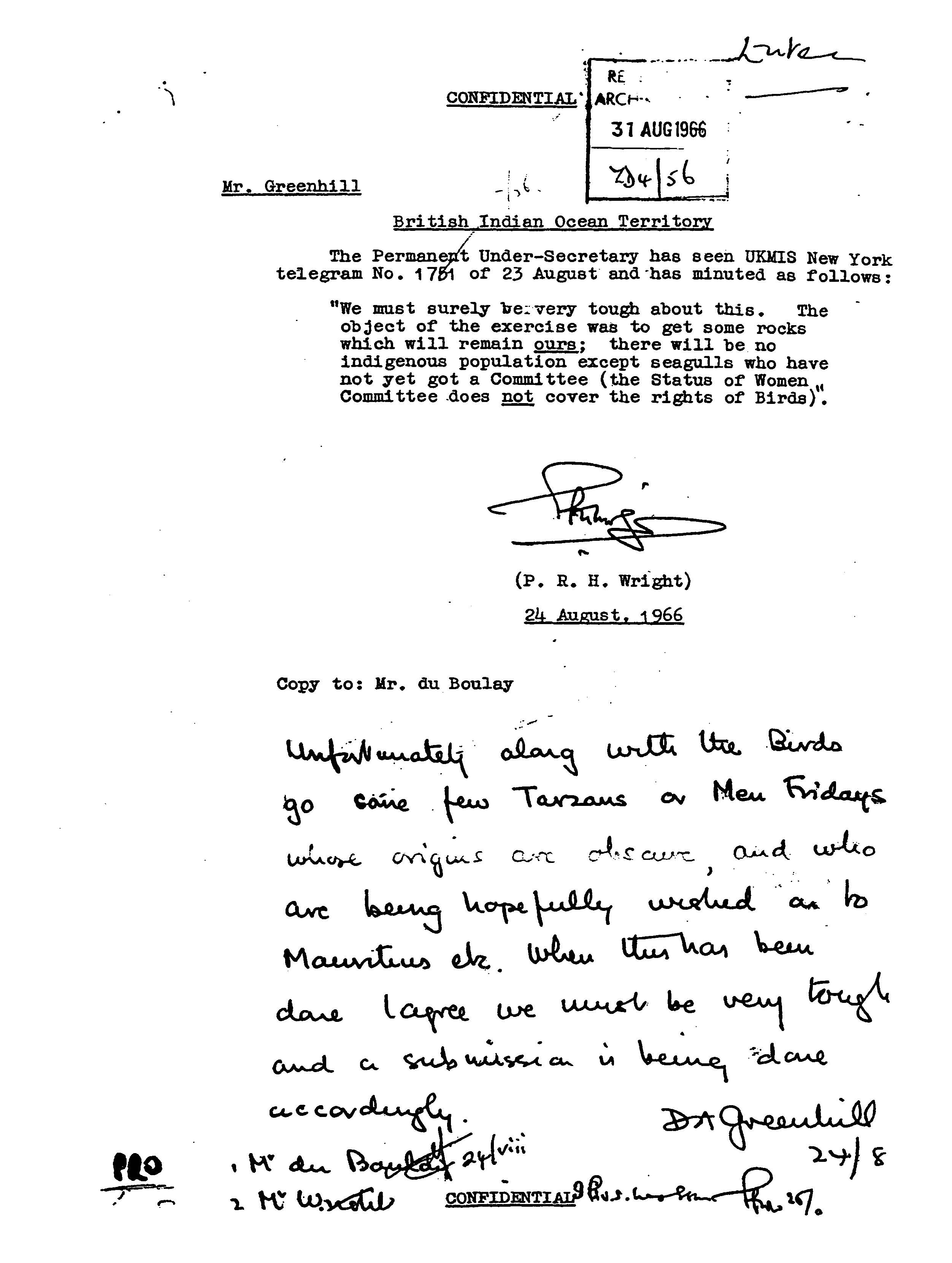
In 1965, the UK effectively prized Mauritian control over the Chagos Islands, officially known as the British Indian Ocean Territory, for £3 million. Mauritius has long argued that the parting of this territory was the unnecessary cost of securing its own independence. Acting in a manner typical of a power claiming to follow the rule of law, 3,000 islanders were subsequently evicted to Mauritius and the Seychelles over a period of time lasting till 1973. “The object of the exercise,” remarked the UK Permanent Under-Secretary in 1966, “was to get some rocks which will remain ours; there will be no indigenous population except seagulls who have not yet got a Committee (the Status of Women does not cover the rights of Birds).” Over the decades, the UK Foreign Office repeatedly thwarted the Chagossians’ valiant efforts to return to their islands. Various international bodies took issue with such stalling conduct, including the Permanent Court of Arbitration and the International Court of Justice.
In October 2024, a joint statement from London and Port Louis announced that all but one of the Chagos Islands would be relinquished to Mauritian control. “Following two years of negotiation, this is a seminal moment in our relationship and a demonstration of our enduring commitment to the peaceful resolution of disputes and the rule of law.”
While it was promoted as a glittering feat of decolonisation, the agreement suffered from two ailing flaws. The first was the conspicuous absence of Chagossian consultation and of any putative claims by the islanders. The second was the qualified transfer of sovereignty, centred on the largest island, Diego Garcia, which hosts a US strategic military base of outsized importance to Washington’s aims. “Under the terms of this treaty,” the statement goes on to mention, “the United Kingdom will agree that Mauritius is sovereign over the Chagos Archipelago, including Diego Garcia.” But the base retained its “vital role in regional and global security,” and the UK would effectively be exercising the sovereign rights of the Mauritian authorities for 99 years as part of a lease “to ensure the continued operation of the base well into the next century.” To palliate the bruising concession by Mauritius, Britain promised it “a package of financial support”.
The agreement received initial approval from US President Donald Trump, who, in February last year, said in discussions with Prime Minister Sir Keir Starmer that the lease arrangements were to his liking and that he would be “inclined to go along with your country.” There were also glowing words from US Secretary of State Marco Rubio, who called it a “monumental achievement”. The Starmer government, however, indicated one significant, and potentially crucial caveat. As UK Foreign Secretary David Lammy alluded to on ITV’s Peston programme, the agreement would fail without Trump’s approval “because we have a shared military and intelligence interest with the United States and of course they’ve got to be happy with the deal.”
But Trump’s new iteration as war maker and bugle of menacing threats, directed at adversaries and allies alike, places the arrangement at risk. Approving abductions of heads of state (Venezuela’s Nicolas Maduro), menacing the Kingdom of Denmark and Greenland over claimed strategic necessities that would require the island to be added to the US imperium, and now threatening Iran with military strikes, suggest that all bets are off.
In such a festering mood, Trump scorned the UK-Mauritius deal on Truth Social in a January 20 post. Stretching the truth, as is his wont, Trump huffed that “our ‘brilliant’ NATO Ally, the United Kingdom, is currently planning to give away the Island of Diego Garcia, the site of a vital US Military Base, to Mauritius, and to do so FOR NO REASON WHATSOEVER.” China and Russia, he went on to say, would have noticed. As they were powers that only believed in strength, the decision to give away such territory was one of “great stupidity” and explained the reason why (yet another strained link) Greenland needed to be acquired.
This has caused a flutter of panic in Downing Street, leading to conversations between UK and US officials about allaying concerns on Washington’s side. On January 28, Geraint Ellis, a spokesman for Starmer, suggested a picture of placid calm in the discussions. “The UK and US have worked closely together in developing the treaty, which will secure the joint base on Diego Garcia that’s vital to our national security.” The British government continued “to work closely with the US to ensure that the necessary arrangements are in place for the future operations of the base.”
This highly civil picture belies the broader forces at work, including British opposition politicians who have been feeding the Trump administration nuggets of dissent. Nigel Farage, a dedicated Trump fan and leader of the populist-right Reform UK party, has been making representations to Washington that the deal ought to be sunk. A number of British Conservatives, including former Boris Johnson aide Ross Kempsell, have also rallied against the agreement.
Kempsell, in a penned blog post for the political forum Politeia, shifted the focus to those Chagossian voices neglected in the negotiations. Mention is made of Misley Mandarin, the newly appointed first minister of the Chagossian government in exile, who called the deal “an insult”. Mandarin was “one of the many, many Chagossian voices who strongly oppose this dreadful deal. He is backed by the majority of Brits polled, as well as MPs and peers across Parliament – a rare cause uniting everyone from Reform to the Liberal Democrats.”
In a curious, near perverse convergence of circumstances, opposition to the UK-Mauritius treaty has congealed on both sides of the Atlantic for somewhat different reasons. Trump cites the rationale of might, China and Russia, and shows little awareness of the expelled islanders. The little Englanders on the conservative and populist side harbor dreams of Britannic relevance while citing a spurious concern for Chagossian welfare. The neocolonial overlooking of the Chagossians in the treaty adds that final note of repugnance to the whole affair.
To Be a Revolutionary Social Worker, or to be a Radical Worker, that is the Question
"Revolution is born as a social entity within the oppressor society." —Pedagogy of the Oppressed
by Paul Haeder / February 1st, 2026
The dichotomy between the social worker as a nine-to-five state agent and five-nine activist is a crucial one. The question can be summarised as: is there space, willingness and scope within social work to engage with broader structural issues that affect the lives of the people we work with?
I spent an hour with the Revolutionary Social Worker, who has a couple of Podcasts.
The radio broadcast comes to Lincoln County and Internet listeners on March 4, 6 PM, Pacific, over at KYAQ.org, 91.7 FM, my show, Finding Fringe. Listen to it. What follows below is me riffing with the subject matter, not a transcript of the interview, which is worth it’s weight in gold.
Christian Ace Stettler is a professor, podcaster, father, and founder of Revolutionary Social Work. My work is rooted in the belief that meaningful social transformation begins with personal transformation. I teach, speak, and write at the intersection of critical pedagogy, Indigenous knowledge, trauma healing, and social work practice.
I currently teach at the University of Alaska Fairbanks and co-host two podcasts: The Critical Social Worker and The Revolutionary Social Work Podcast, where I facilitate deep dialogue with guests from around the world exploring healing, justice, and becoming more fully human.
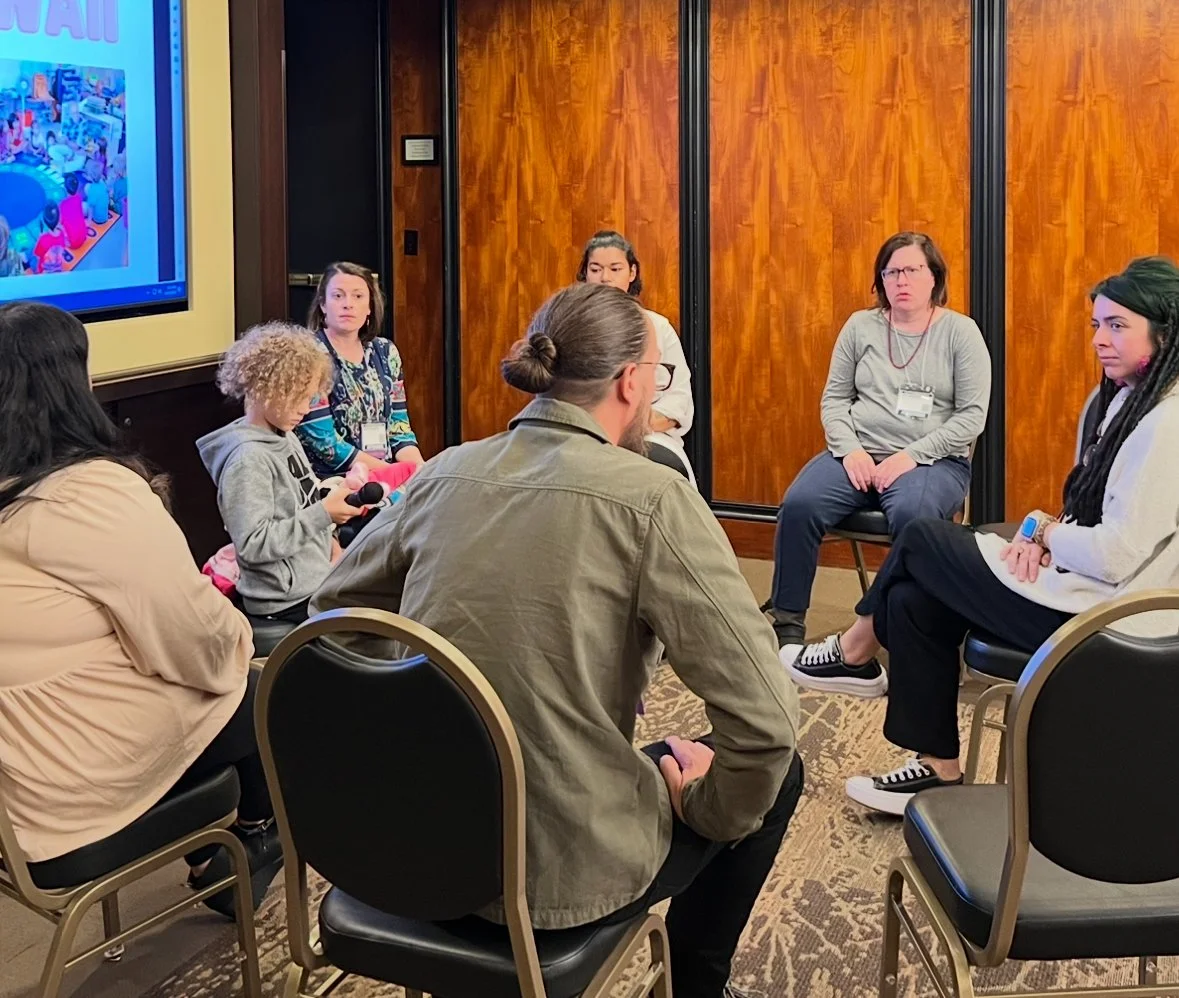
I also lead dialogic talking circles rooted in relational accountability, critical reflection, and kinship. These circles are not only a pedagogical tool but a personal and communal practice for liberation.
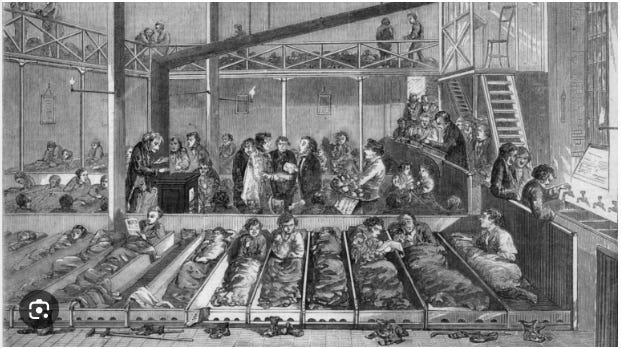
We are still in Dickensian times: Claims of the Charity Organisation Society, which in the 19th century insisted on portraying poverty as an issue exclusively linked to people’s feeble and manipulative personalities. [Sounds like EVERY single fucking one of the Semen Drip Brownshirt Trump’s Gang of Ghouls.]
This quote below is antithetical to the Trump Bigotry and Racism Doctrine as well at the Republican Party’s 50 Years of Hate ethos.
The idea of a settlement—as a colony of learning and fellowship in the industrial slums—was first conceived in the 1860s by a group of prominent British reformers that included John Ruskin, Thomas Carlyle, Charles Kingsley, and the so-called Christian Socialists, They were idealistic, middle-class intellectuals, appalled at the conditions of the working classes, and infused with the optimism, moral fervor; and anti-materialist impulses of the Romantic Age: people who read the soaring poetry of Wordsworth and Tennyson, the conscientious novels of Dickens, the liberal political thought of the Utilitarian philosophers Bentham and Mill. They were alarmed by a number of aspects of industrial capitalism: the growing gulf between the classes; the materialist ethos of the Industrial Revolution, and the emphasis on self-interest in classical economics; the terrible poverty of the average factory worker, and the brutal routinization of work, as the factory system replaced the individual craftsperson.
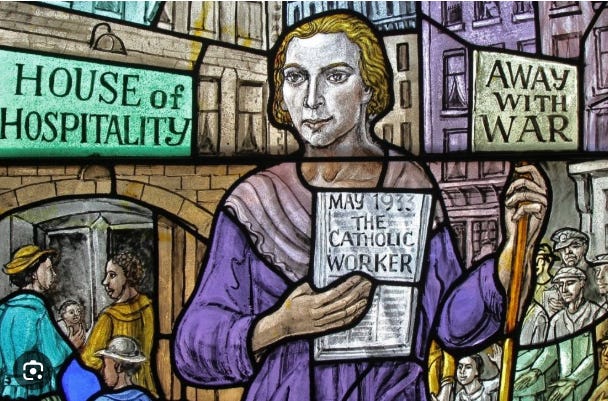
Jane Addams was a famous activist, social worker, author, and Nobel Peace Prize winner, and she is best known for founding the Hull House in Chicago, IL. Hull House was a progressive social settlement aimed at reducing poverty by providing social services and education to working-class immigrants and laborers (Harvard University Library, n.d.).
Jane Addams was born in Cedarville, IL in 1860, and she graduated from Rockford College in 1882. In 1888, while traveling in London, Addams visited the settlement house Toynbee Hall (Harvard University Library, n.d.). Her experiences at Toynbee Hall inspired her to recreate the social services model in Chicago. In 1889, she leased a large home built by Charles Hull, which she chose for its “diversity and variety of activity for which it presented an opportunity.” In her essay, “The Subjective Necessity for Social Settlements,” Addams stated that the settlement movement existed to add social function to political democracy, to assist the progress of humanity, and to express Christianity through humanitarian action (Tims, 1961).
Thus, with Hull House, Addams proposed to “provide a center for a higher civic and social life, to institute and maintain educational and philanthropic enterprises, and to investigate and improve the conditions in the industrial districts in Chicago” (Harvard University Library, n.d.). Addams sought to foster a place where social progress, education, democracy, ethics, art, religion, peace, and happiness could all be daily experiences (Tims, 1961). Hull House offered kindergarten and day care for children of working mothers, an art gallery, libraries, music and art classes, and an employment bureau. By its second year of operation, Hull House served more than 2,000 residents weekly. By 1900, Hull House expanded to include a book bindery, gym, pool, cooperative for working women, theater, labor museum, and meeting space for trade unions (Harvard University Library, n.d.).
Martín-Baró argued that by considering psychological problems as primarily individual, “psychology has often contributed to obscuring the relationship between personal estrangement and social oppression, presenting the pathology of persons as if it were something removed from history and society, and behavioral disorders as if they played themselves out entirely in the individual plane” (p. 27). Instead, liberation psychology should illuminate the links between an individual’s psychological suffering and well-being and the social, economic, political, and ecological contexts in which he or she lives. At Pacifica we work to widen the original focus of liberation psychology to include the ecological, and thus we speak of eco-liberation psychology and practices, in our Community Psychology, Liberation Psychology, Indigenous Psychology, and Ecopsychology.
While liberation psychology is most strongly established in Latin America, Martín-Baró’s work has become a rallying call to psychologists and cultural workers on all continents to place into conversation their theories and liberatory practices.
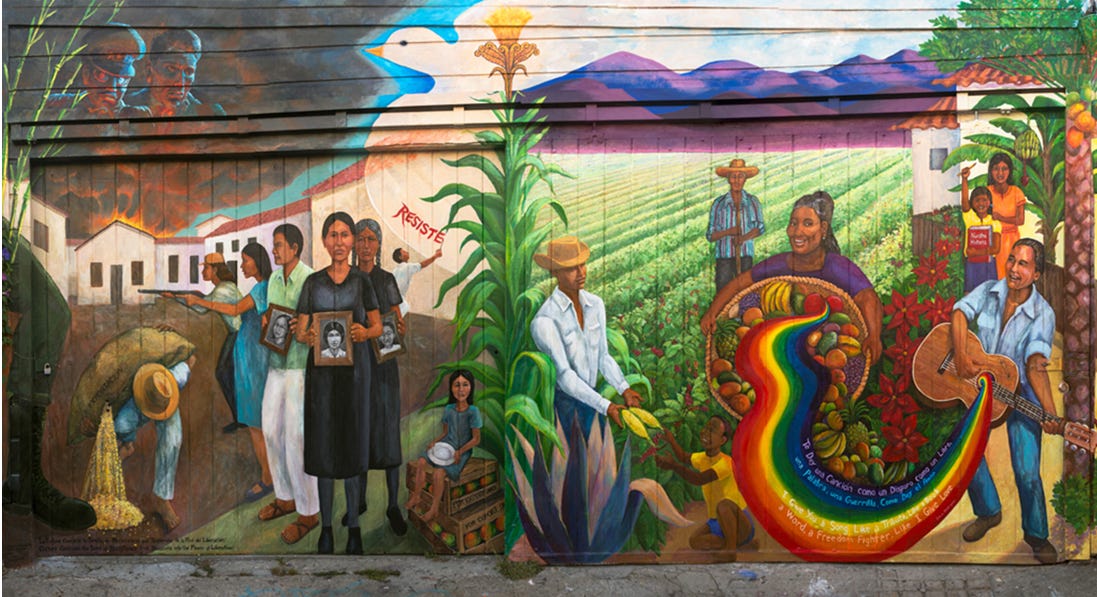
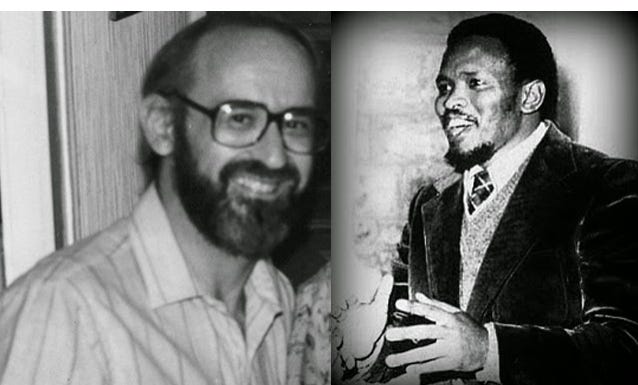
16 November marks the 37th anniversary of the killing of Ignacio Martín-Baró, the founder of Liberation Psychology in Latin America, along with 5 other priest-academics and two women workers by the Salvadorean army at their residence on the campus of the Unversidad de Centroamérica, San Salvador. It is fitting that today we bring you a typically beautifully written piece by Mohamed Seedat, in which he draws parallels between the work of Martín-Baró and Steve Biko, prominent leader in the Black Consciousness movement in the struggle against apartheid in South Africa.
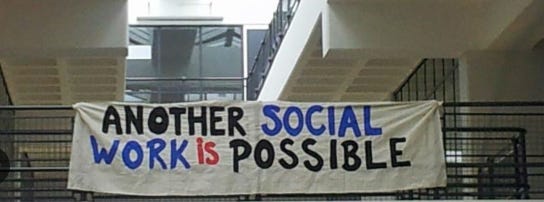
New radicalism in social work has been based on five main pillars: democracy, empathy, militancy, anti-oppressiveness and structural practice. These pillars form the acronym Demos, a powerful concept which refers to “the populace of a democracy as a political unit”. Contrary to dominant social work narratives which claim that social workers’ legitimacy stems from their identity as creatures of the statute, radical social work has earned its recognition through an ability to grasp and utilise the transformative political power of the people we work with.
Ace:
Many of my core values as a human being and person are centered around family. I involve my wife and children in everything I do. We never go anywhere alone. For example, if I am invited to a conference to speak, I bring along one of my little apprentices (my children) and we often go as a family. I work with Alicia (my wife) on all of my creative projects and my children are often co-facilitators of my talking circles.
My writing, speaking, and teaching are grounded in Revolutionary Social Work values:
Kinning | Challenge the Status Quo | Non-Partisan Commitment | Relational Grounding | Indigenous and African-Centered Wisdoms | Transformative Reflection | (Re)Connection | Love as Praxis | Unity | Social Work Beyond the Profession
The revolution must begin with ourselves. I’m committed to an education and practice that centers humanity, story, presence, and place.
I got turned onto Ace’s work while doing some research on Tiokasin Ghosthorse:
Ace and I covered a lot of territory, and we set down the foundation of genocide and the lack of response from his own brethren as a death by 200,000 dead Palestinian cuts.
Two years ago, Truthout: In a recent column for The New York Times, Pamela Paul described a shift in Columbia University’s School of Social Work toward a “radicalized” social justice framework. The piece has unearthed significant tensions within and outside the social work community, sparking heated debate about the role of social justice and a response decrying the so-called deterioration of social work.
What both pieces fail to recognize is the reality of social work’s historical and ongoing complicity in oppression and, to borrow a phrase from Martin Luther King Jr., “the fierce urgency of now,” especially during a genocide. Social work students like myself are organizing for a free Palestine in response to Israel’s genocide in Gaza. As we watch on-the-ground reporting from Palestinians sharing images and videos of their now-destroyed homes as they pull dead loved ones out from under the rubble, our profession fails to mobilize. This inaction reflects the failure of our leading social work institutions — most notably the National Association of Social Workers and the Council on Social Work Education — and of individual social workers who remain silent.
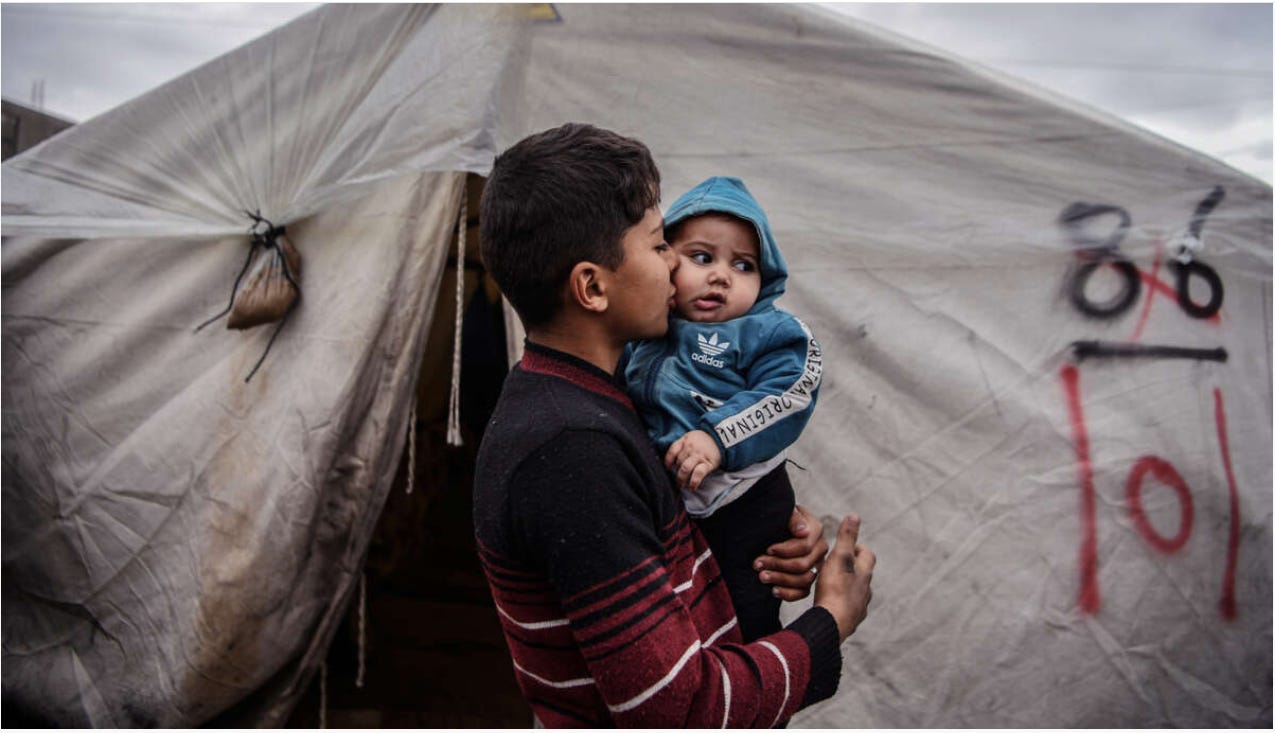
If our calling as social workers is to help those in need, we must support the 2.2 million Palestinians struggling to survive as the Israeli state relentlessly starves, bombs and displaces them before our very eyes. It is too late to help the tens of thousands of men, women and children killed by Israeli forces since October 7. But it is not too late for social workers to stand in solidarity with Palestine.
*****
Dear National Association of Social Workers,
The situation in Palestine and Israel is top of mind for many people right now, especially your Jewish, Muslim, Palestinian, and Arab members, and many other fellow social workers.
We, the undersigned, are writing to express our deep disappointment regarding the recent statements made by the NASW[1] concerning the recent violence between Israel and Gaza.
We are social workers. Our profession is rooted in social justice[2], identifying oppression, and being courageous on behalf of the vulnerable. That’s why NASW released its Antiracism Statement[3] – not because it was easy, but because it was and is right. That’s why we center the dignity and worth of our clients[4] in the work that we do.
Today we need to find our courage again: to hold empathy for those who have lost their lives no matter which country or ethnicity they are part of, while also holding accountable those who are acting oppressively. Policies of supremacy and apartheid have and always will harm the oppressed, disadvantaged groups and those they claim to advantage. They separate us from the dignity and worth of every human and prevent us from building a better future.
When our profession is silent in the face of documented human rights violations and what Amnesty International has labeled apartheid[5], it calls into question our commitment to our stated values both on the international stage and among refugee, immigrant, Muslim, Arab, and other communities of color living in the United States. It also alienates our colleagues who hail from these groups and perpetuates the idea that social work as a profession is not inclusive of communities of color.
We call on all social work organizations to call for Israel to uphold international law by stopping the genocide of Palestinians and collective punishment of Gazans, and to call for immediate cessation of the siege and destruction of Gaza.
We call on all individual social workers to learn about the antecedents of the current wave of violence[6], the international law on this issue[7], and the growing violations of international law[8], as documented by Human Rights Watch. Culturally sensitive care is critical, and for those of you who work directly with refugee, immigrant, and diaspora communities who are impacted more directly by the ongoing violence, please take the time to read more deeply. Haymarket books has provided some options for your edification: Free Ebooks for a Free Palestine! and HaymarketBooks-Palestine.
*****
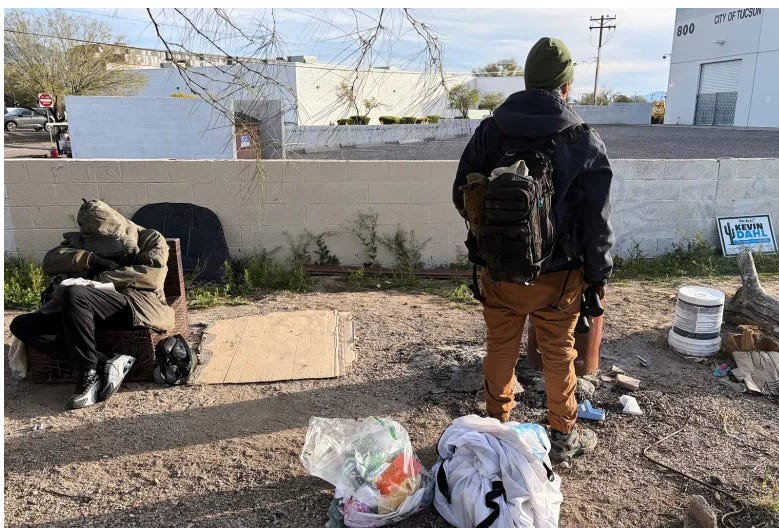
My own work in social services, working with Central American refugees in El Paso, as a case manager for foster youth/ homeless veterans/ just released inmates/ substance abuse citizens, employment specialist and direct support professional for adults with developmental disabilities, as well as being a teacher at community colleges and universities, well well, I have five PhDs worth of on-the-ground experience.
Most social workers at the county or state or VA level are not deep thinkers, never deeply critical of capitalism, and certainly are tied into the punishment and tokenism and redemption formula plied hard in this society.
Defund the Police/ Defund the Criminal Incarceration For-profit system.
Abolitionist social work is a theoretical framework and political project within the field of social work and an extension of the project of carceral abolitionism more broadly. Abolitionists seek to abolish punishment, prisons, police, and other carceral systems because they view these as being inherently destructive systems. Abolitionists argue that these carceral systems cause physiological, cognitive, economic, and political harms for incarcerated people, their families, and their communities; reinforce White supremacy; disproportionately burden the poor and marginalized; and fail to produce justice and healing after social harms have occurred. In their place, abolitionists want to create material conditions, institutions, and forms of community that facilitate emancipation and human flourishing and consequently render prisons, police, and other carceral systems obsolete. Abolitionist social workers advance this project in multiple ways, including critiquing the ways that social work and social workers are complicit in supporting or reinforcing carceral systems, challenging the expansion of carceral systems and carceral logics into social service domains, dismantling punitive and carceral institutions and methods of responding to social harms, implementing nonpunitive and noncarceral institutions and methods of responding to social harms, and strengthening the ability of communities to design and implement their own responses to social conflict and harm in the place of carceral institutions. As a theoretical framework, abolitionist social work draws from and extends the work of other critical frameworks and discourses, including anticarceral social work, feminist social work, dis/ability critical race studies, and transformative justice.
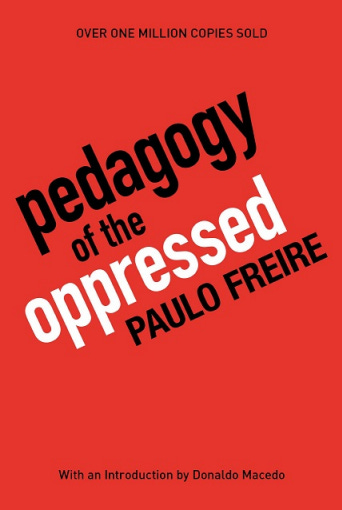
Paulo Freire’s invigorating critique of the dominant banking model of education leads to his democratic proposals of problem-posing education where “men and women develop their power to perceive critically the way they exist in the world with which and in which they find themselves; they come to see the world not as a static reality but as a reality in the process of transformation.” This offered to me—and all of those who experience subordination through an imposed assimilation policy—a path through which we come to understand what it means to come to cultural voice. It is a process that always involves pain and hope; a process through which, as forced cultural jugglers, we can come to subjectivity, transcending our object position in a society that hosts us yet is alien.
It is not surprising that my friends back in Cape Verde—and, for that matter in most totalitarian states—risked cruel punishment, including imprisonment, if they were caught reading Pedagogy of the Oppressed. I remember meeting a South African student in Boston who told me that students would photocopy chapters of Pedagogy of the Oppressed and share them with their classmates and peers. Sometimes, given the long list of students waiting to read Freire, they would have to wait for weeks before they were able to get their hands on a photocopied chapter. These students, and students like them in Central America, South America, Tanzania, Chile, Guinea-Bissau and other nations struggling to overthrow totalitarianism and oppression, passionately embraced Freire and his proposals for liberation. It is no wonder that his success in teaching Brazilian peasants how to read landed him in prison and led to a subsequent long and painful exile.
Oppressed people all over the world identified with Paulo Freire’s denunciation of the oppressive conditions that were choking millions of poor people, including a large number of middle-class families that had bitterly begun to experience the inhumanity of hunger in a potentially very rich and fertile country. Freire’s denunciation of oppression was not merely the intellectual exercise that we often find among many facile liberals and pseudocritical educators. His intellectual brilliance and courage in denouncing the structures of oppression were rooted in a very real and material experience, as he recounts in Letters to Cristina:
It was a real and concrete hunger that had no specific date of departure. Even though it never reached the rigor of the hunger experienced by some people I know, it was not the hunger experienced by those who undergo a tonsil operation or are dieting. On the contrary, our hunger was of the type that arrives unannounced and unauthorized, making itself at home without an end in sight. A hunger that, if it was not softened as ours was, would take over our bodies, molding them into angular shapes. Legs, arms, and fingers become skinny. Eye sockets become deeper, making the eyes almost disappear. Many of our classmates experienced this hunger and today it continues to afflict millions of Brazilians who die of its violence every year.
Paul Haeder has been a teacher, social worker, newspaperman, environmental activist, and marginalized muckraker, union organizer. Paul's book, Reimagining Sanity: Voices Beyond the Echo Chamber (2016), looks at 10 years (now going on 17 years) of his writing at Dissident Voice. Read his musings at LA Progressive. Read (purchase) his short story collection, Wide Open Eyes: Surfacing from Vietnam now out, published by Cirque Journal. Here's his Amazon page with more published work Amazon. Read other articles by Paul, or visit Paul's website.