Wednesday, July 07, 2021

Opinion: If you want to fix climate change, you need to fix this flaw in conventional economic thought

Thinking along the margins does no good when what’s needed is wholesale change
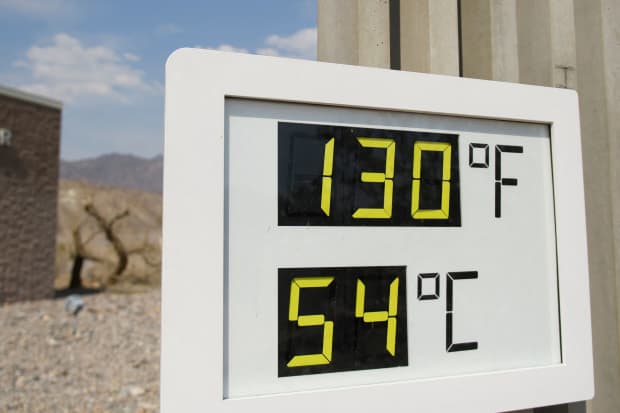

A thermometer at the visitors' center at Death Valley National Park in June.
 AFP VIA GETTY IMAGES

Published: July 7, 2021 
By Tom Brookes, an Gernot Wagner

BRUSSELS, Belgium (Project Syndicate)—Nowhere are the limitations of neoclassical economic thinking—the DNA of economics as it is currently taught and practiced—more apparent than in the face of the climate crisis. While there are fresh ideas and models emerging, the old orthodoxy remains deeply entrenched. Change cannot come fast enough.

The economics discipline has failed to understand the climate crisis—let alone provide effective policy solutions for it—because most economists tend to divide problems into small, manageable pieces. Rational people, they are wont to say, think at the margin. What matters is not the average or totality of one’s actions but rather the very next step, weighed against the immediate alternatives.


The most effective way to introduce new ideas into the peer-reviewed academic literature is to follow something akin to an 80/20-rule: stick to the established script for the most part; but try to push the envelope by probing one dubious assumption at a time.

Such thinking is indeed rational for small discrete problems. Compartmentalization is necessary for managing competing demands on one’s time and attention. But marginal thinking is inadequate for an all-consuming problem touching every aspect of society.
Economics’ power over public discourse

Economists also tend to equate rationality with precision. The discipline’s power over public discourse and policy-making lies in its implicit claim that those who cannot compute precise benefits and costs are somehow irrational. This allows economists—and their models—to ignore pervasive climate risks and uncertainties, including the possibility of climatic tipping points and societal responses to them.

A return to equilibrium—getting “back to normal”—is an all-too-human preference. But it is precisely the opposite of what is needed—rapidly phasing out fossil fuels—to stabilize the world’s climate.

And when one considers economists’ fixation with equilibrium models, the mismatch between the climate challenge and the discipline’s current tools becomes too glaring to ignore.

Yes, a return to equilibrium—getting “back to normal”—is an all-too-human preference. But it is precisely the opposite of what is needed—rapidly phasing out fossil fuels—to stabilize the world’s climate.

These limitations are reflected in benefit-cost analyses of cutting emissions of carbon dioxide and other greenhouse gases. The traditional thinking suggests a go-slow path for cutting CO2. The logic seems compelling: the cost of damage caused by climate change, after all, is incurred in the future, while the costs of climate action occur today. The Nobel Prize-winning verdict is that we should delay necessary investment in a low-carbon economy to avoid hurting the current high-carbon economy.

To be clear, a lot of new thinking has gone into showing that even this conventional logic would call for significantly more climate action now, because the costs are often overestimated while the potential (even if uncertain) benefits are underestimated.
Marginalized ideas

The young researchers advancing this work must walk a near-impossible tightrope, because they cannot publish what they believe to be their best work (based on the most defensible assumptions) without invoking the outmoded neoclassical model to demonstrate the validity of new ideas.

The very structure of academic economics all but guarantees that marginal thinking continues to dominate. The most effective way to introduce new ideas into the peer-reviewed academic literature is to follow something akin to an 80/20-rule: stick to the established script for the most part; but try to push the envelope by probing one dubious assumption at a time.

Needless to say, this makes it extremely difficult to change the overall frame of reference, even when those who helped establish the standard view are looking well beyond it themselves.

Against the backdrop of this traditional view, recent pronouncements by the International Monetary Fund and the International Energy Agency are nothing short of revolutionary. Both institutions have now concluded that ambitious climate action leads to higher growth and more jobs even in the near term.

Consider the case of Kenneth J. Arrow, who shared a Nobel Prize in Economic Sciences in 1972 for showing how marginal actions taken by self-interested individuals can improve societal welfare. That pioneering work cemented economists’ equilibrium thinking.

But Arrow lived for another 45 years, and he spent that time moving past his earlier work. In the 1980s, for example, he was instrumental in founding the Santa Fe Institute, which is dedicated to what has since become known as complexity science—an attempt to move beyond the equilibrium mind-set he had helped establish.

Because equilibrium thinking underpins the traditional climate-economic models that were developed in the 1990s, these models assume that there are trade-offs between climate action and economic growth. They imagine a world where the economy simply glides along a Panglossian path of progress. Climate policy might still be worthwhile, but only if we are willing to accept costs that will throw the economy off its chosen path.
Climate investments create jobs

Against the backdrop of this traditional view, recent pronouncements by the International Monetary Fund and the International Energy Agency are nothing short of revolutionary. Both institutions have now concluded that ambitious climate action leads to higher growth and more jobs even in the near term.

The logic is straightforward: climate policies create many more jobs in clean-energy sectors than are lost in fossil-fuel sectors, reminding us that investment is the flip side of cost. That is why the proposal for a $2 trillion infrastructure package in the United States could be expected to spur higher net economic activity and employment. Perhaps more surprising is the finding that carbon pricing alone appears to reduce emissions without hurting jobs or overall economic growth. The problem with carbon taxes or emissions trading is that real-world policies are not reducing emissions fast enough and therefore will need to be buttressed by regulation.

There is no excuse for continuing to adhere to an intellectual paradigm that has served us so badly for so long. The standard models have been used to reject policies that would have helped turn the tide many years ago, back when the climate crisis still could have been addressed with marginal changes to the existing economic system. Now, we no longer have the luxury of being able to settle for incremental change.

The good news is that rapid change is happening on the political front, owing not least to the shrinking cost of climate action. The bad news is that the framework of neoclassical economics is still blocking progress. The discipline is long overdue for its own tipping point toward new modes of thinking commensurate with the climate challenge.

Tom Brookes is executive director of strategic communications at the European Climate Foundation. Gernot Wagner is clinical associate professor of environmental studies at New York University.

This commentary was published with permission of Project SyndicateEconomics Needs a Climate Revolution


Deadly Northwest heat wave: ‘Without climate change this event would not have happened,’ study finds

‘This study is telling us climate change is killing people,’ environmental scientist says


The sun shines near the Space Needle in Seattle in June 28, as temperatures soared well above 100 degrees. ASSOCIATED PRESS


Published: July 7, 2021
By Associated Press

The deadly heat wave that roasted the Pacific Northwest and western Canada was virtually impossible without human-caused climate change that added a few extra degrees to the record-smashing temperatures, a new quick scientific analysis found.

An international team of 27 scientists calculated that climate change increased chances of the extreme heat occurring by at least 150 times, but likely much more.


The study, not yet peer reviewed, said that before the industrial era, the region’s late June triple-digit heat was the type that would not have happened in human civilization. And even in today’s warming world, it said, the heat was a once-in-a-millennium event.

But that once-in-a-millennium event would likely occur every five to 10 years once the world warms another 1.4 degrees, said Wednesday’s study from World Weather Attribution. That much warming could be 40 or 50 years away if carbon pollution continues at its current pace, one study author said.

This type of extreme heat “would go from essentially virtually impossible to relatively commonplace,” said study co-author Gabriel Vecchi, a Princeton University climate scientist. “That is a huge change.”

The study also found that in the Pacific Northwest and Canada climate change was responsible for about 3.6 degrees of the heat shock. Those few degrees make a big difference in human health, said study co-author Kristie Ebi, a professor at the Center for Health and the Global Environment at the University of Washington.

“This study is telling us climate change is killing people,” said Ebi, who endured the blistering heat in Seattle. She said it will be many months before a death toll can be calculated from June’s blast of heat but it’s likely to be hundreds or thousands. “Heat is the No. 1 weather-related killer of Americans.”

In Oregon alone, the state medical examiner on Wednesday reported 116 deaths related to the heat wave.

The team of scientists used a well-established and credible method to search for climate change’s role in extreme weather, according to the National Academy of Sciences. They logged observations of what happened and fed them into 21 computer models and ran numerous simulations. They then simulated a world without greenhouse gases from the burning of coal, oil and natural gas. The difference between the two scenarios is the climate change portion.

“Without climate change this event would not have happened,” said study senior author Friederike Otto, a climate scientist at the University of Oxford.

Investing Insights with Global Context

Understand how today’s global business practices, market dynamics, economic policies and more impact you with real-time news and analysis from MarketWatch.

What made the Northwest heat wave so remarkable is how much hotter it was than old records and what climate models had predicted. Scientists say this hints that some kind of larger climate shift could be in play — and in places that they didn’t expect.

“Everybody is really worried about the implications of this event,” said study co-author Geert Jan van Oldenborgh, a Dutch climate scientist. “This is something that nobody saw coming, that nobody thought possible. And we feel that we do not understand heat waves as well as we thought we did. The big question for many people is: Could this also happen in a lot of places?”

The World Weather Attribution team does these quick analyses, which later get published in peer-reviewed journals. In the past, they have found similar large climate change effects in many heat waves, including ones in Europe and Siberia. But sometimes the team finds climate change wasn’t a factor, as they did in a Brazilian drought and a heat wave in India.

Six outside scientists said the quick study made sense and probably underestimated the extent of climate change’s role in the heat wave.

That’s because climate models used in the simulations usually underestimate how climate change alters the jet stream that parks “heat domes” over regions and causes some heat waves, said Pennsylvania State University climate scientist Michael Mann.

The models also underestimate how dry soil worsens heat because there is less water to evaporate, which feeds a vicious cycle of drought, said Daniel Swain, a climate scientist at UCLA and the Nature Conservancy.

The study hit home for University of Victoria climate scientist Andrew Weaver, who wasn’t part of the research team.

“Victoria, which is known for its mild climate, felt more like Death Valley last week,” Weaver said. “I’ve been in a lot of hot places in the world, and this was the worst I’ve ever been in.

“But you ain’t seen nothing yet,” he added. “It’s going to get a lot worse.”

Microsoft’s shadowy presence in antitrust push is angering the rest of Big TechLast 

Software giant has avoided scrutiny while openly supporting actions against Apple, Amazon, Facebook and Google, and reportedly ducked rules being established in new antitrust bills

MARKETWATCH PHOTO ILLUSTRATION/ISTOCKPHOTO

By Jon Swartz
Updated: June 29, 2021 


For more than a year, Microsoft Corp. avoided Congress’ antitrust scrutiny with a deft strategy, but the software giant now finds itself the target of rivals’ anger for its finger-pointing tactics.

Much to the exasperation of Apple Inc. AAPL and Google parent Alphabet Inc. GOOGL GOOG, Microsoft MSFT and its president, Brad Smith, has publicly supported antitrust actions against them to gain a competitive advantage, sources close to both companies told MarketWatch. This prompted Apple’s vocal criticism of Microsoft during the Epic Games Inc.’s antitrust trial against the iPhone maker.


Now, insiders at Google, Amazon.com Inc. AMZN, +0.57%, and Facebook Inc. FB, -0.65% are increasingly claiming Microsoft has hypocritically presented itself as the White Knight of tech, unsullied by the anticompetitive behavior of Big Tech. All four companies under federal investigation — Alphabet, Amazon, Apple, and Facebook — declined to speak on the record. But representatives from all four emphatically made it clear to MarketWatch that Microsoft is overplaying the antitrust card to make up ground in key technology areas such as mobile and gaming where Microsoft has lagged behind its rivals.

The strategy has worked swimmingly: Microsoft topped $2 trillion in market value last week, joining Apple in the exclusive club while generally dodging the attention of antitrust investigations, a new package of Congressional bills, and lawsuits.

“Microsoft is the original bad actor,” civil liberties attorney Shahid Buttar told MarketWatch, echoing the gripes of Microsoft’s rivals. “It’s pretty laughable, considering what they’ve said about antitrust the past year. This is beyond cynical.”

Don’t miss: Big Tech was built by the same type of antitrust actions that could now tear it down

Microsoft’s diversionary tactics were called into question last week during markup of a package of sweeping antitrust bills designed to rein in Big Tech. Rep. Thomas Massie, R-Ky., claimed on the House floor that an early draft of the bills that would have covered Microsoft was rewritten to have the company carved out. Original versions of the draft bills, he pointed out, defined “online platform” as including “operating systems” while the amended versions that were introduced and approved define “online platform” to only include “mobile operating systems.”

This would mean Windows is not a covered platform under the bills. Earlier drafts also included a much lower total of monthly active users (500,000) to be a target of the bill, but it was raised to 50 million, which would exclude Microsoft’s Xbox videogame console. (The bills target companies based on the definition of a “covered platform” with 50 million MAUs or 100,000 monthly active business users run by a company with a market cap of more than $600 billion.)

“I’m trying to figure out why one of the big offenders of Big Tech has mysteriously evaded the scrutiny of this committee,” Massie said. “I’m talking about Microsoft… How is it not covered by these bills?”

A spokesman for Massie declined to comment further.

Investing Insights with Global Context
Understand how today’s global business practices, market dynamics, economic policies and more impact you with real-time news and analysis from MarketWatch.

On Thursday, the House Judiciary Committee passed the final piece of its Big Tech antitrust package. The six bills include one that severely limits acquisitions of competitors, and another that could force Facebook to cleave Instagram and WhatsApp from its holdings.

For more: Judge dismisses Facebook antitrust suit brought by FTC

Reaction from the other four members of Big Tech was quick and furious. The prevailing theme is that Microsoft — the focus of a major Justice Department investigation in the 1990s and early 2000s — is presenting itself as a “good monopolist,” in the words of one executive.

Learning from history, Microsoft — pilloried by rivals during its antitrust battle with the Justice Department in the 1990s and early 2000s — has weaponized the same issue this time around as part of a “master chess strategy,” as one former Microsoft exec now working at a Big Tech rival told MarketWatch.

Rep. David Cicilline, chairman of the House subcommittee that oversees antitrust, emphatically denied any bill was changed to exclude Microsoft and that the company did not have access to early copies.

“We shared drafts of bills throughout the investigation with people who participated in the investigation to get their feedback,” Cicilline said last week. “That happened all throughout the investigation and the drafting. So, they were shared with all of the people participating investigation.” (“I don’t know whether Microsoft would meet the test that is set forth in these five bills,” Cicilline told Axios on its Re:cap podcast on June 17.)

Cicilline did not respond to email messages seeking additional comments on the changes, and on his political contributions of more than $5,000 from Microsoft President Brad Smith. Cicilline said he has “sworn off” tech donations since his subcommittee first began its investigation in 2019. He took $1,000 this year from Glover Park Group, which counts Apple as one of its major clients. Apple does not have a corporate PAC.

See: Tech giants mount defense against House antitrust bills

Smith is a key strategist and frontman in Microsoft’s concerted campaign, and has effectively put the other four tech giants on their heels. For more than a year, Smith has publicly pointed figures at them, while making the case that the software giant is a good corporate citizen.

“When you create technology that changes the world, you have to assume a responsibility for the world that you’ve helped to create,” Smith told Nikkei in December 2020.

In April 2021, Smith renewed his attacks on Google over web content after urging antitrust bodies to review Apple’s App Store a year ago.

Shortly after the bills were introduced on June 11, Smith told Bloomberg three days later: “I think in many ways where this is going is a particular focus on technology platforms that serve as gatekeepers. In other words, they not only serve as a platform like an operating system, but people need to go through them to sell their commerce whether it’s a product that’s on Amazon or an app say in the Apple App Store or through a service like Google search. And I think that’s where we’re going to see more and more government focus.”

“Well, there are aspects of the legislation that was introduced in the house last week that absolutely applies to Microsoft and many other companies,” he later acknowledged to Bloomberg. “I think for all of us, it’s the time to step back, try to think broadly, look beyond ourselves and ask, what’s the right role of technology to serve the economy, our customers, the country, and the world?”

Additionally, Microsoft supports the European Union’s Digital Markets Act, which would require companies like Amazon, Apple, and Google with large numbers of customers to open their platforms to competitors such as Microsoft. Apple Chief Executive Tim Cook has argued the law would force Apple to permit side-loading apps on the iPhone, which is manually installing software from the internet or a file instead of through an app store. This, in turn, would wreak havoc on the privacy and security of consumers — not to mention expose them to ransomware and malware, he said.

At least one defender of Microsoft — Gus Rossi, who leads tech policy and advocacy at Omidyar Network — said the criticisms conveniently overlook that Microsoft was subject to the “last relevant antitrust investigation” 30 years ago.

“Its rivals have never been exposed to the scrutiny that Microsoft experienced years ago, and now they are trying to adapt,” Rossi told MarketWatch. “They are reacting as Microsoft did in the ’90s. It not only survived, but is a smarter company, policy-wise.”

For its part, Microsoft insists it did not lobby to be excluded from the new antitrust package. “The bills as proposed extends to all operating systems. While this may encompass Windows, which has more than 50 million daily active users, it already operates as an open platform that provides broad choice and opportunity to developers and consumers today,” a Microsoft spokesperson told MarketWatch.

The Smith-led antitrust offensive has earned behind-the-scenes rebukes from the other four members of the Big Tech pantheon, prompting one Apple exec to observe deep antagonisms that now fester between the two companies. Microsoft is also at loggerheads with Amazon, whom it beat out in a bid for a $10 billion cloud-computing contract with the Pentagon in 2019. Amazon is fighting the awarded contract in court.

For more: Big Tech is turning on one another amid antitrust probes and litigation

Microsoft’s antitrust crusade has drawn incredulous responses from those who closely follow antitrust developments in the corridors of tech.

Microsoft hovered on the periphery of the Epic Games’ antitrust lawsuit against Apple last month, with at least five witnesses with links to Microsoft testifying on behalf of Epic. That was as many witnesses as from Epic itself. What is more, Microsoft shielded itself from discovery in litigation by not appearing as a party or sending a corporate representative to testify. Lori Wright, vice president of business development at Microsoft, testified in a personal capacity.

Microsoft is not entirely free of antitrust concerns. In July 2020, Slack Technologies WORK, -0.02%, a provider of chat software for businesses, filed a complaint against Microsoft in the European Union, alleging that the company’s bundling of rival product Microsoft Teams with the widely used Office suite of business software was an anticompetitive abuse of its market power. Slack has agreed to be acquired by Salesforce.com Inc. CRM for $27.7 billion.

This article has been updated.
Opinion: The JEDI reboot allows U.S. to correct its mistake


By Therese Poletti
Published: July 7, 2021 

In the years it took to name Microsoft as cloud-computing partner for Defense Department, the multi-cloud approach became popular, and Pentagon now appears to aim in that direction after canceling previous award


The Defense Department on Tuesday canceled a large cloud contract previously awarded to Microsoft Corp. GETTY IMAGES/ISTOCKPHOTO

The abrupt cancellation of a large and important cloud-computing defense contract that took years to complete is actually good news for the country.

Since the earliest requests for proposal years ago for the Joint Enterprise Defense Infrastructure contract, or JEDI, the Defense Department’s approach was criticized by analysts and tech companies. The biggest concerns were that the contract called for a single-source provider and spanned more than a decade, a deal that would have locked the Pentagon in with one company and without redundancy plans as the tech ecosystem sprinted toward so-called multi-cloud deals.


So when the Pentagon canceled the 10-year, $10 billion contract in a surprise announcement Tuesday, only Microsoft Corp. MSFT, +0.82% really had a reason to complain. Microsoft’s victory in October 2019 was immediately clouded by a prolonged political battle and accusations by Amazon.com Inc. AMZN, +0.57% of favoritism by former President Donald Trump, who made it obvious on Twitter that he was no fan of then-CEO Jeff Bezos. The JEDI process was rife with lawsuits early on, as companies such as Oracle Corp. ORCL, +3.62% and IBM Corp. IBM, +0.75% complained about the lack of redundancy, and that the JEDI contract was going against standard industry practices.

For more: Therese on The early JEDI War and Amazon’s lawsuit

The Defense Department seems prepared to correct those issues, stating Tuesday that the new contract process will seek to create a cloud would be multi-vendor. It plans to solicit proposals from Amazon Web Services, or AWS, and Microsoft, because they are the only cloud providers that can meet its criteria.

“In the end, the government’s best interests are served by at least having some competition for service, innovation, redundancy, compliance, regulatory and security enhancements,” said Daniel Newman, principal analyst, Futurum Research. “I have long felt that the JEDI contract would be subject to intense post-award scrutiny and the most likely outcome would be a shared contract where the federal government would wind up utilizing the services of both AWS and Microsoft.”

Newman said he does not see the new contract as a 50/50 split, but that the new, shorter-term contract could be split approximately 30/70 between Amazon and Microsoft, respectively.

“If Microsoft gets more, it will be tied to the more comprehensive software suite,” he predicted.

From 2016: Tech is king of Wall Street, thanks to the cloud

While fast advances in technology can be impossible to meld with government procurement processes that take years, there are other benefits from calling a do-over on the past few years of work. Bernstein Research analyst Mark Moerdler said in a note that he believed Microsoft had benefited from the long delays.

Investing Insights with Global Context
Understand how today’s global business practices, market dynamics, economic policies and more impact you with real-time news and analysis from MarketWatch.

“During complex contracting processes (especially ones that are delayed many times), time does not stand still and government agencies have been moving along adding cloud capabilities,” he wrote. Microsoft has been expanding products it supports and its own partnerships with companies like Oracle and VMware Inc. VMW, +0.80%, and added functionality and capabilities to its own products, he said. “They have also likely been capturing cloud contacts and increasing utilization within the U.S. government.”

While the name of the new multi-vendor contract, Joint Warfighter Cloud Capability, may not be as cool as the former JEDI acronym, the new plans are more appropriate for a modern cloud-computing scenario. And that will actually be a good thing for everyone involved.
Man quits his film industry job and makes a business out of posting conspiracy theories online

Sky Palma
July 07, 2021

Shutterstock


Sean G. Turnbull, 53, is a former film producer and marketing manager for one of the country's largest retail corporations who lives in Minneapolis. For more than a decade, he has anonymously promoted conspiracy theories about "dark forces" in American politics on websites and social media accounts.

"Turnbull has identified himself online for 11 years only as 'Sean from SGT Reports.'" The Washington Post reports. "He has amassed a substantial following while producing videos and podcasts claiming that the 9/11 attacks were a 'false flag' event, a 'Zionist banker international cabal' is plotting to destroy Western nations, the coronavirus vaccine is an 'experimental, biological kill shot' and that the 2020 election was 'rigged' against former president Donald Trump, according to a Washington Post review."

According to Turnbull, his online operation is profitable enough for him to quit his job in film production.

While his accounts have been terminated by seven tech companies, including Twitter, YouTube and Vimeo, he's kept his business going by turning to new traffic sources. He also has generated revenue through subscriptions and donations and by advertising survival products and "precious metals," according to the Post, which found that his earnings were between $50,000 and $250,000 annually in 2019

Turnbull's website was cited in evidence presented against an Alabama man who was charged after he drove to Washington ahead of the Capitol riot on Jan. 6 with an arsenal of weapons and Molotov cocktails in his truck. Court documents included a handwritten note found in Lonnie Coffman's vehicle that referred to SGTReport.com as the "good guys."

Read his full interview with The Washington Post.
Amy Coney Barrett ruled in favor of one of her major backers without explaining her ties

Travis Gettys
July 07, 2021

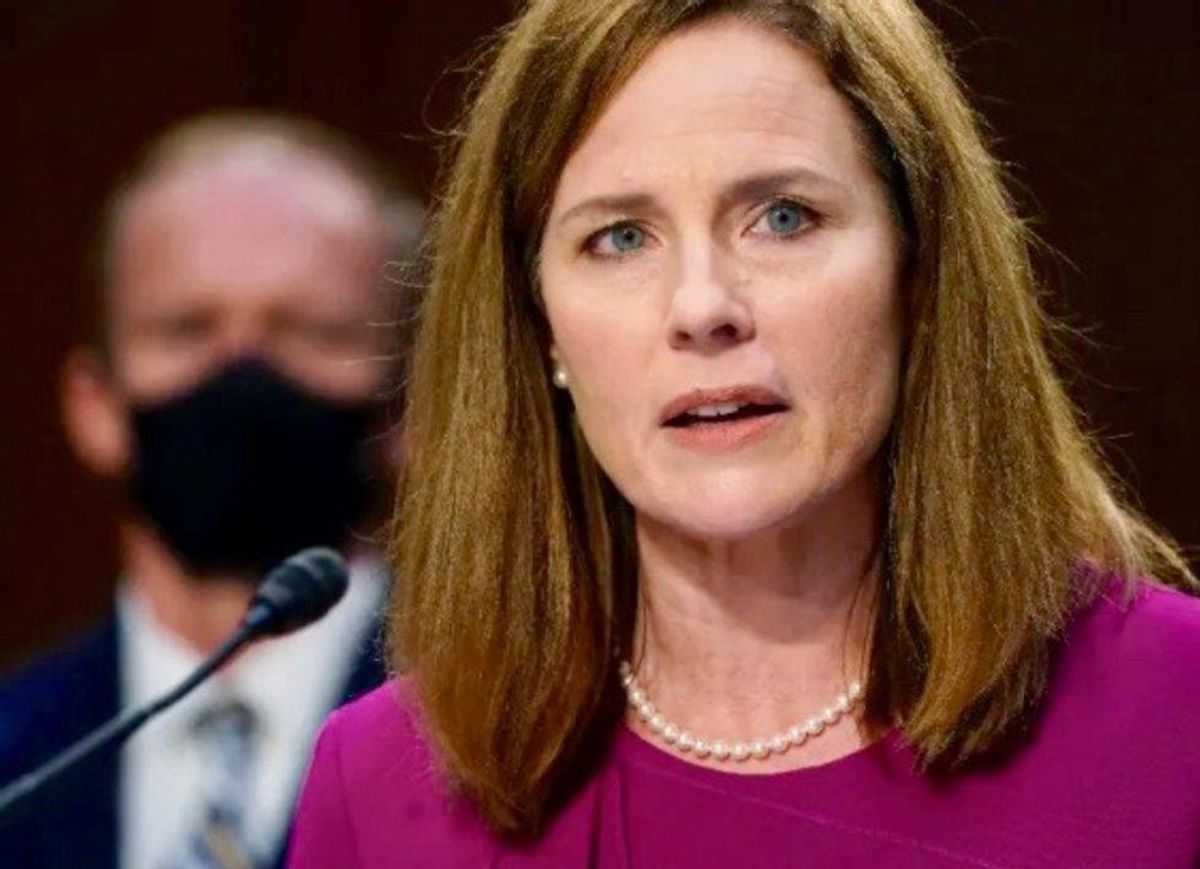
Amy Coney Barrett (AFP)

U.S. Supreme Court Justice Amy Coney Barrett ruled in favor of a major donor to her confirmation battle without explaining her ties to the plaintiff.

The Americans for Prosperity Foundation sued over a California law requiring charitable organizations to disclose the identities of their major donors to the state attorney general's office, but Barrett not only declined to recuse herself from the case -- she also vigorously took part in oral arguments and joined the majority opinion without addressing questions about her involvement, reported The American Prospect.

"There is no mechanism to force a justice to adhere to the Court's own prior rulings in their ethical conduct, or to hold them accountable for failing to do so," wrote columnist Steven Lubet. "Self-regulation, in other words, does not work. In fact, it creates an essential imbalance, as those justices who conscientiously follow recusal practices take themselves out of cases, while those with no such concerns do not."

The Koch-funded advocacy group publicly committed more than $1 million promoting Barrett's confirmation weeks before Donald Trump lost his re-election bid, and the newly minted justice was personally alerted to that backing in a letter from Sen. Sheldon Whitehouse (D-RI), Sen. Richard Blumenthal (D-CT), and Rep. Hank Johnson (D-GA) calling on her to recuse herself from the case.

The senators detailed efforts by Americans for Prosperity to secure Barrett's confirmation and pointed out that federal law provides that a Supreme Court justice is disqualified in any case where her "impartiality might reasonably be questioned."

The test outlined in the statute does not require evidence of bias, but only the showing of circumstances where a judge's "impartiality could reasonably be doubted," but Barrett never responded to the senators' letter or acknowledged their question about her involvement in the case, which the court found 6-3 in her donor's favor.

"It has been the Supreme Court's 'historic practice' to leave recusal questions to the determination of each individual justice, rather than submit them to the full court," Lubet wrote. "The unfortunate consequence of that approach is fully evident in this instance, where Justice Barrett has seemingly disregarded both a federal statute and a previous SCOTUS decision."
America is 'on the brink of collapse': Historian breaks down the post-conservative right's most glaring contradiction
Alex Henderson, AlterNet
July 07, 2021

White supremacists protesting (Screen cap via the David Pakman Show on YouTube)

Historian Joshua Tait is known for focusing on the history of conservatism in the United States. Ask Tait about the influence of the late William F. Buckley or the platform of President Ronald Reagan's 1980 campaign, and he can recite chapter and verse. But Tait has major issues with Trumpism, and in an article published by The Bulwark on July 6, he addresses one of Trumpism's glaring contradictions: claiming to have an "unapologetic" love of the United States while expressing an intense hatred of half of its populace.

"How is it that we hear the loudest jingoistic yelps from dismal patriots who cannot stand the state of the nation and half the people in it?," Tait argues. "Traditionally, the conservative right has prided itself on its heightened patriotism in contrast to the 'cosmopolitan' left…. An influential set of Trumpist intellectuals shows such disdain for progressives and 'elites,' and the country they supposedly corrupted, that their grandiose professions of love for country ring hollow."

In his article, Tait uses the term "post-conservative" to describe these liberal-hating Trumpistas — implying that they fall outside of traditional conservatism by failing to recognize Americans they disagree with as the loyal opposition.
Chris Matthews talks to Raw Story: Who would you bet on in 2024, Trump or Kamala?

"In a shift from earlier conservatives, key writers and publications from the pro-Trump and self-professedly post-conservative right have begun to see the United States not just at a critical point in its history, but in many ways, as past the point of no return," Tait explains. "They envisage America as under assault by disciplined and united leftists."

Tait cites Michael Anton and Glenn Ellmers, both with the Clairemont Institute, as examples of Trumpistas who view liberals and progressives not as the loyal opposition, but as haters of the United States. Anton, Tait notes, has said, "One side loves America, the other hates it — or can tolerate it only for what it might someday become." And in an article published by American Mind on March 24, Ellmers wrote, "Most people living in the United States today — certainly more than half — are not Americans in any meaningful sense of the term…. (They) may technically be citizens of the United States but are no longer, if they ever were, Americans."

Tait points out while it is nothing new for conservatives to argue that liberal and progressive ideas have been bad for the United States, the "post-conservative" Trump supporters go way beyond that.

"The narratives of decline identify various points at which the fatal misstep was taken — where everything started to go wrong," Tait explains. "Sometimes, it's (President Abraham) Lincoln, sometimes (President Woodrow) Wilson — often FDR or the 1960s. What's unusual about the Trumpist right is the extent to which they think that America is not just on the brink of collapse, but that it has already toppled. This may just be post-electoral defeat malaise, but increasingly, these American-greatness patriots appear to actively hate America and their fellow citizens."

President Joe Biden has emphasized that he considers himself president of all 50 states, including all the red states that Trump won in 2020. But Trump obviously doesn't see blue states as anything other than his enemies.

"In his public addresses," Tait observes, "President Biden has made a conscious effort to speak to all Americans. Donald Trump, by contrast, typically reverts to the language of us-versus-them — his people, the ones who want to make America great again, against their various enemies."

Trumpistas like to think that they represent "the real America," but Tait concludes his article by stressing that their "post-conservative" view is decidedly unamerican.

"Fundamentally at odds with modernity, the Trumpist intellectuals are at odds with the real America, but remain committed to the rhetoric of patriotism," Tait notes. "They are strangers in their own country, all the while professing to love it."
FORDISM=CAPITALISM
Vehicle production revs up in Argentina after pandemic slump

A total of 193,580 vehicles were manufactured in Argentina in the first half of the year – 123.9 percent more than in the same period last year.


CARS ON AN ASSEMBLY LINE AT A PLANT IN BUENOS AIRES PROVINCE. | NA

A total of 193,580 vehicles were manufactured in Argentina in the first half of the year – 123.9 percent more than in the same period last year, when production was all but paralysed by the coroanvirus pandemic, the Association of Automobile Manufacturers (ADEFA) reported on Tuesday.

The industry, one of Argentina’s largest, registered particularly strong numbers in June, with 40,035 units manufactured – 14.5 percent more than in May and 155.7 percent up on the same month the previous year.

ADEFA also said that in the first semester, automotive factories exported 107,877 units, which represents an increase of 102.7 percent compared to the same period last year when 53,222 vehicles were sold abroad.

In the domestic market, meanwhile, between January and June, 172,426 units were sold to dealers – 40 percent more than the 123,158 that were delivered in the first half of 2020.

"The results of the first semester underline the efforts made within the entire value chain since we resumed operations after the [coronavirus] quarantine to return to the path of growth, despite the logistical and health limitations at an international level," said ADEFA President Daniel Herrero in a statement.

Argentina’s economy has been showing signs of recovery of late, after registering a huge 9.9 percent contraction in 2020 as Covid-19 restrictions and lockdowns hit businesses across the country. That slump followed two previous years of recession.

Economic activity grew 28.3 percent in April from the previous year, according to data from the INDEC national statistics bureau, though it fell 1.2 percent compared to March, when a brief nine-day Covid-19 lockdown was imposed.

According to INDEC, gross domestic product rose by 8.2 percent in the first four months of this year, compared to the same period in 2020.


– TIMES/AFP


Brazilian presidential hopeful Eduardo Leite announces he is gay

"I am a gay governor and I am proud of it, declares Rio Grande do Sul state governor Eduardo Leite, as he denounces intolerable attacks from political rivals.


HANDOUT PICTURE RELEASED BY AGENCIA PIRATINI SHOWING RIO GRANDE DO SUL GOVERNOR EDUARDO LEITE TALKING ON A MOBILE PHONE AT HIS OFFICE OF THE PIRATINI PALACE IN PORTO ALEGRE, RIO GRANDE DO SUL, BRAZIL, ON MARCH 27, 2020. | FELIPE DELLA VALLE / AGENCIA PIRATINI / AFP


LATIN AMERICA | 05-07-2021 

A Brazilian governor and possible presidential candidate has come out as gay, causing a stir in a country experiencing an ultra-conservative wave under President Jair Bolsonaro, known for his homophobic comments.

"In this Brazil of little integrity, at this time, we have to debate who we are, so that everything is clear and there is nothing to hide," Eduardo Leite, the governor of Rio Grande do Sul state, told the Globo broadcaster in an interview broadcast last Friday.

"I am gay, I am a gay governor," the 36-year-old said, adding: "And I am proud of it."

Leite, seen as a centrist, chose Pride Week in Brazil to address gossip swirling around him ever since he became a potential presidential candidate for the PSDB social democratic party for elections in October 2022.

"Now with my participation in national politics, in this national debate, there have been ever-growing attacks by my rivals," he said.

"I go out to dinner with my boyfriend, I do not hide from anyone. But there has always been some brouhaha, some allusion, a joke from the president, attacks from other politicians. This is not right, it is not correct, it is not tolerable," he said.

According to the O Globo newspaper, this is the first time a presidential candidate has come out in Brazil, where homosexuals and members of the trans community are attacked on a daily basis.


His statement quickly became a dominant discussion point on social media, with many hailing Leite's "courage."

"Admiration and respect for my friend @EduardoLeite_" tweeted São Paulo governor Joao Doria, another PSDB presidential candidate.

Latin America's largest country is known for a strong culture of machismo and overt homophobia, not least on the part of Bolsonaro, who once declared he would rather his son die than be gay.

– TIMES/AFP


UNLIKE THE USA
Argentina’s Senate approves transgender job quota law

Senate backs sweeping legislation that reserves one percent of all public sector jobs for members of the trans community.


ARGENTINA | 28-06-2021 


ACTIVISTS HAIL THE PASSAGE OF THE TRANS JOB QUOTA LAW IN ARGENTINA'S SENATE. | NA: COMUNICACIÓN SENADO


In a major breakthrough for LGBTQ rights, Argentina’s Senate has approved sweeping legislation that mandates that one percent of all public sector jobs should be reserved transgender individuals.

LGBT+ activists hailed the trans quota law’s passage last Thursday, with many saying that it would “change lives'' for many in the trans community by including them in the formal job market.

The bill, promoted by the ruling Frente de Todos bloc and authored by legislator Gabriela Estévez (FdT-Córdoba), was approved by a 55-1 vote, with just six senators abstaining. It bears the name of campaigners Lohana Berkins and Diana Sacayan, who both passed away before its passage.

The initiative was backed by campaigning organisations, including the LGBTIQ+ League of the Provinces and the Federal Trans and Travesti Argentina Convocation.

The law’s approval is seen as a significant step forward for the trans community, which historically has had fewer job opportunities and are vastly underrepresented in leadership positions.

Apart from suffering widespread discrimination and stigmatisation, members of the trans community has an average life expectancy of 36 years, according to academic studies.

Studies by the Asociación de Travestis, Transexuales y Transgéneros de Argentina (ATTTA) have shown that 90 percent of the community is outside the formal job market while almost 95 percent "find themselves in situations of prostitution on the extreme fringes of society." Some 60 percent were unable to finish their schooling.

According to a separate 2017 survey in Buenos Aires City, only nine percent of trans people had a formal job and 70 percent were sex workers.

Senators voted overwhelmingly in favour of the law, which reserves one-percent of jobs in the public sector for members of the trans community.

The only vote against the regulation was from Córdoba's PRO Senator Ernesto Martínez, while the six abstentions were from Roberto Basualdo (PyT-San Juan), Julio Cobos (UCR-Mendoza), Silvia Elías de Pérez (UCR-Tucumán), Laura Rodríguez Machado (PRO-Córdoba), Humberto Schiavoni (PRO-Misiones), Belén Tapia (UCR-Santa Cruz).

PRO Senator Gladys González (Buenos Aires City) was among those who backed the law. In doing so, she inherently criticised her own previous vote against Argentina's historic equal marriage law back in 2010

"I did not understand and thus voted with a partial view, conditioned by the cultural, the religious, full of prejudices and ignorance," she admitted.

Senator Norma Durango, of the Frente de Todos ruling coalition, hailed the vote as a major breakthrough.

"We are discussing something beyond the transgender labour quota. We are discussing whether trans and LBGTQ people are going to be afforded rights that they are guaranteed, as citizens: human rights. That is what we are talking about,” she declared.

Undersecretary of Diversity Policies Alba Rueda, said that the legislation “enriches our society in the sense that diversity is a great strength of democracy and, in this way, we believe that we have great contributions for making the democratic quality of our country."

Women, Gender and Diversity Minister Elizabeth Gómez Alcorta also celebrated the news.

“This law arrives to repair a chain of exclusions that often begins in childhood. It is not admissible that in Argentina there are people whose life expectancy does not exceed 40 years, simply because of their desire to live according to their self-perceived identity,” she declared.

Follow suit

The new rules – which were initially introduced with emergency decree last year – apply to all three branches of the federal government, decentralised and autarchic organisations, non-state public entities and state-owned firms.

In a bid to encourage private businesses to follow suit, the law also offers tax incentives and soft loans for firms that recruit members of the trans community.

Experts say the codifying of the emergency decree into law will strengthen its enforcement.

To facilitate access to formal employment, the project indicates that "the requirement of educational completion [of a degree] cannot be an obstacle to entry and permanence in employment" and that "trans people are understood to be all those who perceive themselves with a gender identity that does not correspond to the sex assigned at birth." The law says that most criminal records should not be taken into account when hiring trans workers.

Argentina is something of a pioneer for human rights, legislating in favour of sexual diversity with its gay marriage law of 2010 and a gender identity law a year later.

Congress is pending another initiative that has been in the works for a long time: the Historical Reparation Law for trans people over 40 years old.
Argentina and the UK host virtual conference in name of LGBT+ rights

Argentina and the UK to host a virtual conference of the Equal Rights Coalition, as co-chairs of the intergovernmental body dedicated to the protection of the rights of LGBTI people across the globe.


IN THIS FILE PHOTO TAKEN ON NOVEMBER 2, 2019 A REVELLER HOLDS A RAINBOW FLAG DURING THE GAY PRIDE PARADE OUTSIDE THE CONGRESS BUILDING IN BUENOS AIRES. GOVERNMENT POSITIONS WILL BE RESERVED FOR TRANSVESTITES, TRANSSEXUALS AND TRANSGENDERS, ACCORDING TO A DECREE ISSUED ON SEPTEMBER 4, 2020. | AFP/RONALDO SCHEMIDT


This week, Argentina and the UK are to host a virtual conference of the Equal Rights Coalition (ERC), an intergovernmental body of 42 Member States dedicated to the protection of the rights of LGBTI people across the globe.

The conference, taking place today and tomorrow, is an opportunity to launch a new comprehensive strategy and five-year implementation plan which aims to increase international cooperation for the cause.

All 42 participant countries of the ERC — co-chaired by Argentina and the UK since 2019 — are expected to take part as well as representatives from civil society organisations and international bodies such as the United Nations and the World Bank.

Today’s opening session includes the participation of Wendy Morton (Vice-Chancellor of the UK) and Pablo Tettamanti (Vice-Chancellor of Argentina). On Wednesday Morton is also set to gather with Victoria Donda, head of Argentina’s National Institute against Discrimination, Xenophobia and Racism (INADI in its Spanish acronym), in order to announce the next steps of the ERC strategy.

The ERC was founded in 2016 at the Global LGBTI Human Rights Conference in Montevideo, and its work remains crucial in the field given that 69 countries continue to criminalise homosexuality.

The virtual gathering will be a major milestone in the lead up to the international event ‘Safe To be Me: A Global Equality Conference’ which will be hosted next June in the UK, coinciding with the 50th anniversary of the first official Pride marches in London.

“As co-chair of the Equal Rights Coalition, we are working with 41 partner countries to tackle discriminatory laws and prejudice globally,” said the UK’s Foreign Secretary Dominic Raab, adding that “the UK champions LGBT rights because we believe freedom and tolerance are a source of strength in communities at home and abroad.”

But in the run-up to this weeks conference, the UK’s Foreign, Commonwealth & Development Office (FCDO) was obliged to publicly apologise for the historic ban of LGBT individuals from working in the British Diplomatic Service.

The department’s Permanent Under-Secretary, Sir Philip Barton, reported: “The ban was in effect because there was a perception that LGBT people were more susceptible than their heterosexual counterparts to blackmail and therefore posed a security risk.”

"I want to publicly apologise for the ban and the impact it had on our LGBT staff and their loved ones, both here in the UK and abroad," he added.

– TIMES


WHO: World passes 'tragic milestone' of four million Covid deaths


The world passed the "tragic milestone" of four million recorded Covid-19 fatalities on Wednesday, the World Health Organization said, adding that the pandemic's true toll was probably higher.

The world passed the "tragic milestone" of four million recorded Covid-19 fatalities on Wednesday, the World Health Organization said, adding that the pandemic's true toll was probably higher.

WHO chief Tedros Adhanom Ghebreyesus announced the landmark had been reached, more than 18 months since the outbreak emerged in China in December 2019.

"The world is at a perilous point in this pandemic. We have just passed the tragic milestone of four million recorded Covid-19 deaths, which likely underestimates the overall toll," Tedros told a press conference at WHO headquarters in Geneva.

The UN health agency's director-general said some countries with high vaccination coverage were now "relaxing as though the pandemic is already over," dropping public health measures and planning to roll out booster shots.

But he said that far too many countries all over the world were seeing sharp spikes in cases and hospitalisation, due to fast-moving virus variants and a "shocking inequity" in global access to vaccines.

"This is leading to an acute shortage of oxygen, treatments and driving a wave of death in parts of Africa, Asia and Latin America," Tedros said.

"Vaccine nationalism, where a handful of nations have taken the lion's share, is morally indefensible

"At this stage in the pandemic, the fact that millions of health and care workers have still not been vaccinated is abhorrent."

Tedros said variants were currently outpacing vaccines due to the inequitable distribution of available doses, which he said was also threatening the global economic recovery from the Covid-19 crisis.

"From a moral, epidemiological or economic point view, now is the time for the world to come together to tackle this pandemic collectively."

– AFP
Biden seeks to strengthen options for workers with new executive order


By —Josh Boak, Associated Press
Jul 7, 2021 

President Joe Biden plans to sign an executive order that will reduce the ability of employers to prevent workers from going to rival firms and remove some of the state occupational licensing requirements that make it harder to land a job.

The order is designed to improve workers’ opportunities in the economy, increase their chances of employment and generate more competition among U.S. employers, White House press secretary Jen Psaki said Wednesday.

“This affects construction workers, hotel workers, many blue collar jobs, not just high level executives,” Psaki told reporters aboard Air Force One, adding that Biden “believes that if someone offers you a better job, you should be able to take it.”

The order would be a key test as to whether empowering workers will lead to pay hikes and smooth the way for them to move to parts of the country where their skills are most in demand. It also enables Biden to show in the 2022 congressional elections how Democratic policies are focused on workers, a key argument as Republicans have increasingly tried to frame their party as backing the working class.

The forthcoming order will direct the Federal Trade Commission to restrict and potentially bar so-called noncompete agreements, which have stopped workers in industries including fast food and Big Tech from going to other employers for higher pay. A 2019 analysis by the liberal Economic Policy Institute estimated that 36 million to 60 million workers could be subject to noncompete agreements.

The order also seeks to ban “unnecessary” occupational licensing that can hurt the earning power of military spouses, skilled immigrants and former prisoners. The requirements can limit the ability of teachers or hair stylists to move across state lines, while also making some spend money at for-profit schools to affirm skills they already have. Roughly 30 percent of U.S. jobs require a license, according to a 2018 FTC report.

This effort builds on work begun in 2015 by the Obama administration to get states to reduce the burdens from their licensing requirements.

The order will also toughen guidance to the FTC and the Justice Department to prevent employers from sharing wage and benefits data with each other so they can suppress worker incomes. The New York Times first reported Wednesday all the worker-focused elements of the order.

It was unclear when the order would be signed.
Sha’Carri Richardson’s Olympic Ban Over Weed Is America’s Fault


The rules are the rules. But whose rules are they? Turns out, they come from U.S. government research.
VICE NEWS
7.7.21

The saga of Sha’Carri Richardson—the fastest woman in the United States, banned from competing in the upcoming Tokyo Olympics after a drug test revealed she used cannabis last month—has united America in a way that COVID-19 could not.

The conventional wisdom from just about everyone—President Joe Biden, USA Track & Field (USATF), blabbermouths on Twitter, and Richardson herself—is that the 21-year-old athlete didn’t do anything terribly wrong when she smoked some weed to deal with emotional turmoil after learning from a reporter about her biological mother’s death, as she recounted Friday on the “Today Show.”

But, as Biden said on Saturday, “The rules are the rules. Whether they should remain the rules is a different issue, but the rules are the rules.” USATF hid behind the same tautology on Tuesday, when it announced that although Richardson’s suspension ends in time for her to participate in the 4x100-meter relay, she won’t run in Tokyo at all.

“While USATF fully agrees that the merit of the World Anti-Doping Agency rules related to THC should be reevaluated, it would be detrimental to the integrity of the U.S. Olympic Team Trials for Track & Field if USATF amended its policies following competition, only weeks before the Olympic Games,” the USATF said in its statement.

But exactly whose rules are these “rules” about cannabis in the Olympics? Turns out, they’re from the U.S government. The scientific basis originates from a research paper that relies solely on data collected decades ago by an employee at the National Institutes on Drug Abuse. That’s what’s denying a Black woman from Dallas a spot in an Olympic event she was favored to win.

And Biden could, in theory, change that.

“The whole world generally follows the United States, unfortunately not just in cannabis but in the whole war on drugs,” said Dr. Peter Grinspoon, a physician and professor at Harvard Medical School, who also writes and speaks about drugs. “They’ve also followed the U.S. largely in cannabis policy, to the profound detriment of millions of people, and of medicine, and research, and so forth.”

“If it’s performance enhancing, why did you spend 60 years saying it causes amotivational syndrome? And if it harms the athletes, how is it performance enhancing?”

Cannabis is banned in the Olympics by the World Anti-Doping Agency (WADA), which regulates the chemical intake of athletes in the Olympics and most professional soccer players (but not most major U.S. sports, nor the NCAA). Created after the doping scandal-plagued the 1998 Tour de France, WADA has updated its policy on cannabis several times in the past 20 years. Athletes can now use CBD, for example. But under the most recent “banned list” published in September, WADA still bans THC.

As explained by the U.S. Anti-Doping Agency—the outfit that manages the drug-testing program for U.S. Olympic athletes under WADA rules—WADA bans substances if they meet at least two out of three criteria. The substance must pose “a health risk to athletes”; it must have “the potential to enhance performance”; and, most ambiguously, it “violates the spirit of sport.”

Cannabis meets all three criteria, according to the science laid out in a paper titled “Cannabis in Sport: Anti Doping Perspective,” published in the November 2011 edition of the journal Sports Medicine.

A “controversial issue” that requires more research—many signatories to WADA’s World Anti-Doping Code didn’t want weed included at all, the article’s authors write—the paper’s authors nonetheless declared cannabis both deleterious and performance enhancing after a review of available research and literature. One justification offered was a statement from pro skateboarder Bob Burnquist, who once said in an interview that cannabis helps “relieve the pressure associated” with elite competition.

“There’s no evidence for that [classification] whatsoever,” said Grinspoon. “If it’s performance enhancing, why did you spend 60 years saying it causes amotivational syndrome? And if it harms the athletes, how is it performance enhancing?”

“What is this magical drug that’s bad in every possible parameter, even if the parameters contradict each other?” he added.

In its FAQs, the U.S. Anti Doping Agency says WADA published the paper. That is, WADA wrote its own rules. That’s only partially true. Two out of the paper’s three authors are WADA employees. But the third—who is listed as the lead author—is Marilyn A. Huestis, who worked for nearly 30 years as a toxicologist and researcher for the U.S. federal government’s National Institutes on Drug Abuse (NIDA).

Part of the National Institutes of Health—the same agency that also employs Dr. Anthony Fauci, America’s COVID-19 seer—NIDA is notorious in cannabis-research circles for only funding and publishing research that “shows” cannabis is harmful and bad.

That’s still true today, in 2021, when more than 120 million Americans, nearly half the country, live in states where adult-use cannabis is legal. And it was absolutely true in 2011, before a single state had legalized weed and when President Barack Obama’s administration was pursuing federal charges against medical cannabis patients.

The only “original data collected in cannabis research” cited in the paper was conducted by Huestis during her 27-year stint at NIDA: how cannabis is metabolized and absorbed into the body, and where in the body THC metabolites are found. That is, the only research justifying Richardson’s Olympic ban was created by the U.S. federal government, which still declares cannabis an addictive substance with no medical value.

Huestis, who’s now working as an independent toxicologist in semi-retirement and as a professor at Thomas Jefferson University in Philadelphia, declined to comment.

“I suggest you contact WADA media for any questions,” she told VICE News via email.

Neither NIDA nor WADA immediately responded to a request for comment. However, you can still draw a direct line from WADA’s ban to Huestis’ paper and NIDA. And NIDA is “very much known for, for lack of a better word, partisan view on cannabis,” Grinspoon added. “They’re very one-sided and negative.”

So while you can’t say that WADA took its cues directly from the White House, it’s not far off. And the federal government is still chiefly responsible for the paper that justifies not sending Richardson to run in the Olympics.

“If not absolutely influenced, it was a very disproportionate influence,” Grinspoon said.

Later research from other countries support Grinspoon’s analysis. In a paper published last year, Canadian and Swiss researchers found that “cannabis does not appear to positively affect performance, but the literature surrounding this is generally poor.”

Given WADA’s punitive ban—and the policies of other sports like Major League Baseball and the National Hockey League, which barely test for cannabis and don’t do much when a player does pee hot—“there is a need to improve our understanding of the effects of cannabis use on the athlete and perhaps adopt a clearer and overarching policy for the use of cannabis by athletes in all sports and at all levels,” they wrote.

As president, Biden could do that in a number of ways, such as by ordering a review of his government’s research, including the research cited in the paper. Until then, the rules will remain the rules, even if they’re bad rules, based on bad science.
UK High Court agrees to hear US appeal seeking Julian Assange’s extradition

By Jill Lawless
July 8, 2021 — 

London: Britain’s High Court has granted the US government permission to appeal a decision that WikiLeaks founder Julian Assange cannot be sent to the United States to face espionage charges.

The judicial office said on Wednesday, local time, that the appeal had been granted and the case would be listed for a High Court hearing. No date has been set.


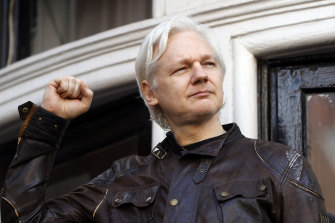
Julian Assange, pictured in 2017.CREDIT:AP


In January, a lower court judge refused an American request to send Assange to the US to face spying charges over WikiLeaks’ publication of secret military documents a decade ago. District Judge Vanessa Baraitser denied extradition on health grounds, saying Assange was likely to kill himself if held under harsh US prison conditions.

The judge ordered that Assange must remain in prison during any potential US appeal, ruling that the Australian citizen “has an incentive to abscond” if he were freed.

Assange, 50, has been in London’s high-security Belmarsh Prison since he was arrested in April 2019 for skipping bail seven years earlier during a separate legal battle.

Assange spent seven years holed up inside Ecuador’s London embassy, where he fled in 2012 to avoid extradition to Sweden to face allegations of rape and sexual assault. Sweden dropped the sex crimes investigations in November 2019 because so much time had elapsed.

US prosecutors have indicted Assange on 17 espionage charges and one charge of computer misuse over WikiLeaks’ publication of thousands of leaked military and diplomatic documents. The charges carry a maximum sentence of 175 years in prison.


Play video 
WikiLeaks
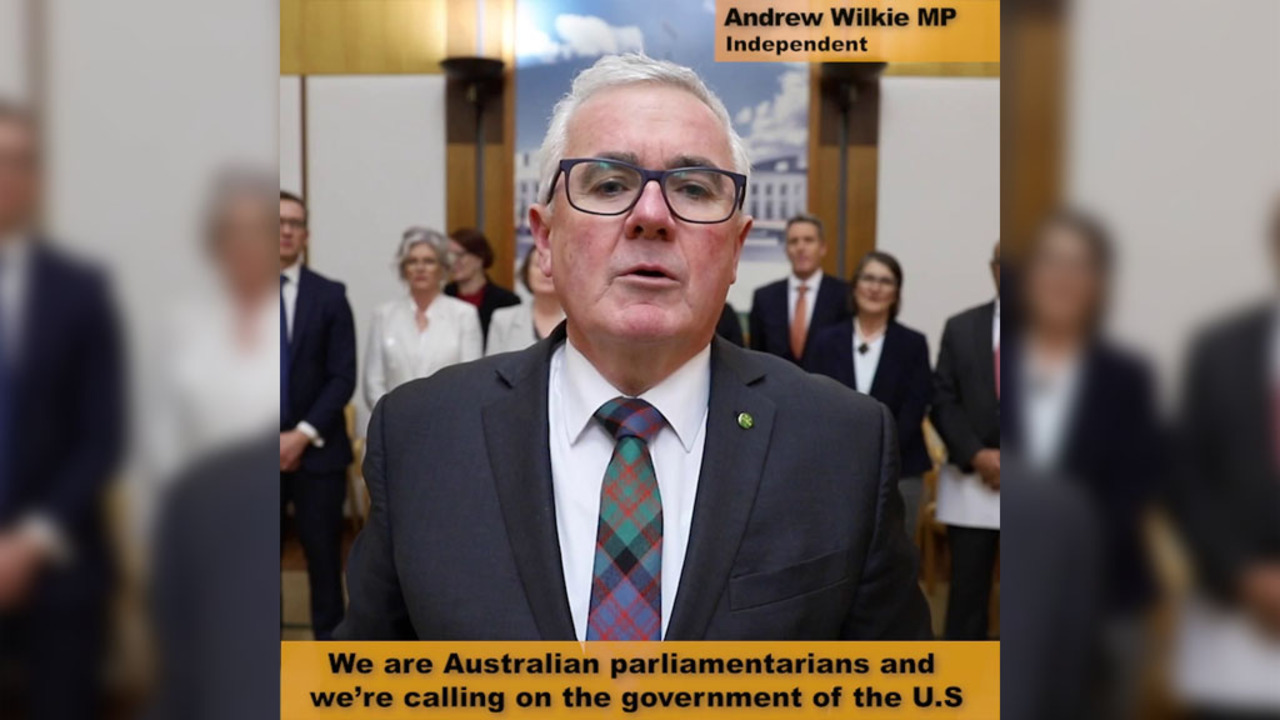
Australian MPs call on US President Biden to drop charges against Assange 


Several MPs and Senators have recorded this video message calling on US government to drop its Espionage Act charges against Julian Assange.

The prosecutors say Assange unlawfully helped US Army intelligence analyst Chelsea Manning steal classified diplomatic cables and military files that WikiLeaks later published. Lawyers for Assange argue that he was acting as a journalist and is entitled to First Amendment freedom of speech protections for publishing documents that exposed US military wrongdoing in Iraq and Afghanistan.

Assange’s fiancee, Stella Moris, urged US President Joe Biden on Wednesday to drop the prosecution launched under his predecessor, Donald Trump.


Moris, who has two young sons with Assange, said outside the High Court that the WikiLeaks founder was “very unwell” in prison.

“He won his case in January. Why is he even in prison?” she said.


“I’m appealing to the Biden administration to do the right thing. This appeal was taken two days before the Trump administration left office, and if the Biden administration is serious about respecting the rule of law, the First Amendment and defending global press freedom, the only thing it can do is drop this case.”


AP
IMPERIALI$M HIGHEST FORM OF CAPITALI$M
Tanzania president, Barrick CEO meet to review Twiga partnership progress

(Reuters) - Tanzanian President Samia Suluhu Hassan and Barrick Gold Corp top boss Mark Bristow met on Wednesday to review progress at the Canadian miner's operations in the African country, a meeting that Bristow called "highly constructive". Reuters/MONICAH MWANGI Tanzanian President Samia Suluhu Hassan addresses a joint Parliament session of Kenyan Members of Parliament and Senators in Nairobi

Barrick oversees the management of its assets in Tanzania through Twiga Minerals Corp, a joint venture formed in 2019 between the company and the government of Tanzania following a deal https://reut.rs/3yyrjGw to settle a long-running tax dispute between the parties.

Twiga Minerals manages the Bulyanhulu, North Mara and Buzwagi mines in Tanzania.

"We see the potential for more world-class gold discoveries here, but in order to achieve exploration success, we need to keep turning over our licences and assessing new ground," Bristow said in a statement.

The process of acquiring new licences is ongoing, he said.

In 2020, the government received more than $370 million in cash inflows from the Twiga partnership through taxes and dividends, the company said.

(Reporting by Rithika Krishna in Bengaluru; Editing by Devika Syamnath)
HAITI IS XAOS
EXPLAINER: Assassination threatens more chaos for Haiti


PORT-AU-PRINCE, Haiti (AP) — The assassination of President Jovenel Moïse seemed to have thrown an already turbulent nation into chaos on Wednesday, with a muddled line of succession. Here is a look at the situation:
© Provided by The Canadian Press

WHO WAS THE ASSASSINATED PRESIDENT?

Jovenel Moïse was a 48-year-old businessman and political neophyte when he was sworn in as president of Haiti on Feb. 7, 2017. The former banana producer inherited a nation in turmoil — one that had gone a year without an elected leader in place. He leaves it in chaos as well.

Taking office, he pledged to strengthen institutions, fight corruption and bring more investments and jobs to the hemisphere's poorest nation. “We can change Haiti if we work together,” Moïse said on the grounds of what used to be the national palace — one of many buildings obliterated by a January 2010 earthquake that killed thousands of Haitians.

But togetherness never arrived, and his administration was plagued by massive protests from the start. Even his initial election in 2015 was annulled, forcing a re-do that he also won. Critics accuse him of growing increasingly authoritarian. He had been ruling by decree for more than a year after dissolving a majority of Parliament in January 2020 amid a delay in legislative elections.

In February, Moïse told the U.N. Security Council that powerful oligarchs had made seven attempts to overthrow him. He also announced that month that about 20 people had been arrested in an assassination plot. But an appeals court later rejected the claim and released the accused plotters, who included a judge and a police inspector general.

___

WHAT DO WE KNOW ABOUT THE ASSASSINATION?

Details so far are slim. Interim Prime Minister Claude Joseph said highly trained gunmen, some speaking Spanish or English, killed the president at his home. The first lady also was shot and wounded. He said police and the armed forces were controlling security. A resident who lives near the president’s home compared the sound of the shooting to an earthquake. Bocchit Edmond, the Haitian ambassador to the U.S., described the attackers as “well trained professional commandos” and “foreign mercenaries.” But he did not comment on possible suspects or motives.

WHAT IS THE SITUATION IN HAITI?

The country has struggled with political instability — along with dire poverty and crime — since the end of the brutal dictatorships of Francois and Jean-Claude Duvalier from 1957 to 1986.

Criminal gangs this year have driven thousands of people from their homes, protesters demanding Moïse's ouster in 2019 shut down much of the economy and the country has yet to begin vaccinating its 11 million people against the new coronavirus, which is surging.

Bruno Maes, Haiti’s representative for the U.N.’s children agency, last month compared the gang situation to guerrilla warfare, “with thousands of children and women caught in the crossfire.” Pierre Espérance, executive director of the Haitian National Human Rights Defense Network, said gangs control about 60% of the country’s territory.

Police and the military, too, have been troubled, often targeted by gangs. Masked officers who said they belonged to a disgruntled faction stormed several police stations in March to free comrades who'd been accused of participating in a coup attempt. The army was re-inaugurated only in 2017. It had been disbanded in 1995 after the fall of a dictatorship.

Political strife has deepened since Feb. 7, when opposition leaders claim Moïse’s legal term had expired — five years after he would have taken office if the initial vote had been allowed. Moïse argued it ends in February 2022 since he wasn’t sworn in until 2017.

The government has been without a formal prime minister since April, when Joseph Jouthe resigned amid a spike in killings and kidnappings. His replacement has not yet been approved by the parliament.

With Moïse ruling by decree, the government has scheduled new elections for September and a possible runoff in November. The government also has pushed a referendum on a new constitution that critics allege might allow the president to extend his power. But that vote has also been delayed.

WHAT’S NEXT?

Authorities have closed the international airport and declared a state of siege.

Under the Haitian Constitution, the president of the Supreme Court would temporarily take over. But he recently died of COVID-19. The National Assembly would then select a new leader. But that's not possible because there's effectively no current legislature: The terms of the lower house members have all expired as well as two-thirds of those in the Senate.

That leaves the acting prime minister, Joseph, in charge along with his fellow government ministers, according to Haitian attorney Salim Succar, once chief of staff to former Prime Minister Laurent Lamothe.

But Joseph had only an interim role. Moïse was killed a day after he nominated Ariel Henry, a neurosurgeon, as Haiti’s new prime minister. He had not been confirmed, however.

___

Associated Press writer Ben Fox contributed from Washington.

The Associated Press

Reactions to assassination of Haitian president - 'abhorrent', 'vile'


(Reuters) -Following are reactions from world leaders and governments to the assassination of Haitian President Jovenel Moise.

© Reuters/Andres Martinez Casares FILE PHOTO: Haiti's President Moise speaks during the investiture ceremony of the independent advisory committee for the drafting of the new constitution at the National Palace in Port-au-Prince

UNITED NATIONS


U.N. Secretary-General Antonio Guterres condemned the attack and called for those responsible to be brought to justice.

"The Secretary-General calls on all Haitians to preserve the constitutional order, remain united in the face of this abhorrent act and reject all violence," U.N. spokesman Stephane Dujarric said. "The United Nations will continue to stand with the Government and the people of Haiti."

UNITED STATES

"We are shocked and saddened to hear of the horrific assassination of President Jovenel Moïse and the attack on First Lady Martine Moïse of Haiti," U.S. President Joe Biden said in a statement.

"We condemn this heinous act," he said, offering wishes for the first lady's recovery. "The United States offers condolences to the people of Haiti, and we stand ready to assist as we continue to work for a safe and secure Haiti."

COLOMBIA

Colombian President Ivan Duque called on the Organization of American States to send an urgent mission to Haiti to protect democracy. "We reject the vile assassination of the Haitian President Jovenel Moise. It is a cowardly act full of barbarity against the entire Haitian people," he said

FRANCE

French Foreign Minister Jean Yves Le Drian condemned what he described as a "cowardly assassination".

"All light must be cast on this crime that took place in a deteriorating political and security climate. I call on all actors in Haitian political life for calm and restraint," Le Drian said in a statement.

UNITED KINGDOM

British Prime Minister Boris Johnson said: "I am shocked and saddened at the death of President Moise. Our condolences are with his family and the people of Haiti. This is an abhorrent act and I call for calm at this time."

CANADA

Canadian Prime Minister Justin Trudeau said: "I strongly condemn the appalling assassination of President Moïse this morning. Canada stands ready to support the people of Haiti and offer any assistance they need."

ARGENTINA

Argentina's Foreign Ministry strongly condemned the assassination of Moise, reaffirmed its solidarity with Haiti, and expressed its rejection of the use of violence.

"Argentina hopes that peace and tranquillity will soon be recovered in the country and asks for respect for democratic institutions. It calls for the perpetrators of the crime to be quickly identified so that they can be held responsible for their actions."

BOLIVIA

President Luis Arce said: "We condemn these acts of violence. ..our condolences to the Haitian people."

(Compiled by Angus MacSwan; Editing by Paul Simao)