Wednesday, July 07, 2021

Fire erupts on ship at Dubai port after explosion that rocks city

No reports of casualties at Jebel Ali Port, one of world’s largest, as authorities say fire is under control.

Plumes of smoke rise from a container ship anchored in Dubai's Jebel Ali port as emergency services try to contain the fire, in Dubai, UAE [WAM/Handout via Reuters]

A container ship anchored at one of the world’s largest ports in Dubai caught fire late on Wednesday, local authorities said, after an explosion shook the commercial hub of the United Arab Emirates.

The blaze sent up giant orange flames on a vessel at the crucial Jebel Ali Port, the busiest in the Middle East, which sits on the eastern side of the Arabian Peninsula – but authorities said the situation is under control.

“A fire caused by an explosion within a container on board a ship at Jebel Ali Port has been brought under control; no casualties have been reported,” the Dubai Media Office (DMO) said on Twitter.

The combustion unleashed a shock wave through the city, shaking buildings and windows in neighbourhoods as far as 25 kilometres (15 miles) from the port.

At least three residents in the area of the blast, the cause of which remains unknown, reported windows and doors in their homes were shaken as a result of the incident.


There were no immediate reports of casualties at the port, which is also the busiest port of call for American warships outside of the US.

Early on Thursday, the Dubai government issued a statement saying that emergency services had brought the blaze under control. Authorities posted footage on social media of firefighters dousing giant shipping containers.

The glow of the blaze was visible in the background as civil defence crews worked to contain the fire.

The extent of damage caused to the sprawling port and surrounding cargo was not immediately clear. The cause of the fire also was not immediately known.

Port officials said they were “taking all necessary measures to ensure that the normal movement of vessels continues without any disruption”.

Mona al-Marri, director-general of the DMO, told Al-Arabiya TV that this incident “could happen anywhere in the world” and that the government’s communication office worked to issue statements quickly to avert rumours from spreading as the cause of the fire is being investigated.

The office said the ship, which was not identified, was preparing to dock at one of the berths “away from the port’s main shipping line”.

Al Arabiya said the Dubai government claimed the ship’s crew had been evacuated in time.

At approximately 11:45pm local time (07:45 GMT) residents of Dubai recording with their phones from high-rises posted frantic videos on social media showing a fiery ball illuminating the night sky.

Clemence Lefaix, who is staying near the blast site, posted a photo of a bright orange light against the night sky in front of apartment buildings.

“I was outside on my balcony. My friend saw something yellow coming [like] the sun. I took the picture and after [there was] a sound,” Lefaix told the AFP news agency.

The Jebel Ali Port at the northern end of Dubai is the largest constructed deep-water harbour in the world and serves cargo from the Indian subcontinent, Africa and Asia.

Operated by the Dubai-based DP World, the port has four sprawling container terminals that can berth some of the world’s largest ships. The port is not only a critical global cargo hub, but a lifeline for Dubai and surrounding emirates, serving as the point of entry for essential imports

DP World describes Jebel Ali Port as a “gateway hub” and a “vital link in the global trade network” that connects eastern and western markets. The company did not immediately issue any public statement on the blast.


SOURCE: NEWS AGENCIES
Trump brutally mocked after social media users track down the 'clown show' lawyers behind his latest lawsuit

Travis Gettys
July 07, 2021


President Donald Trump speaking with reporters on the White House lawn (screengrab)

Donald Trump claimed he would hold technology companies "very accountable" with the help of some "tobacco lawyers," and social media users who weren't banned from Twitter cracked up in laughter.

The twice-impeached one-term president announced he was suing Facebook, Google and Twitter for allegedly violating his First Amendment rights by kicking him off their social media platforms, but his threats weren't taken especially seriously by those who are still allowed to post content.


mRNA vaccine technology moves to flu: Moderna says trial has begun

Moderna aims for one seasonal shot for flu, COVID-19, respiratory viruses RSV and HMPV.


BETH MOLE - 7/7/2021

Enlarge

Moderna has given out the first doses of an mRNA-based influenza vaccine to participants in an early-phase clinical trial, the company announced Wednesday.

Moderna ultimately plans to test the vaccine on about 180 people in the Phase 1/2 randomized, stratified, observer-blind trial. The trial will look at safety, different doses, and immune responses.

The vaccine, called mRNA-1010, is designed to target four lineages of influenza viruses that circulate seasonally each year, just like the current quadrivalent flu vaccines on the market. The four virus lineages are those identified by the World Health Organization as the ones to target for disease prevention each year—seasonal influenza type A lineages H1N1 and H3N2 as well as influenza type B lineages Yamagata and Victoria. If mRNA-1010 is shown to be effective against the yearly plague in later-stage trials, Moderna aims to eventually bundle it with three other mRNA-based vaccines to create a yearly, one-stop shot.

In addition to influenza, this envisioned combination shot would target two other common, respiratory viruses that circulate alongside influenza—respiratory syncytial virus (RSV) and human metapneumovirus (hMPV)—as well as the COVID-19 coronavirus, SARS-COV-2, which some experts have speculated could become seasonal. Currently, there are no licensed vaccines against either RSV or hMPV. And it's unclear if SARS-CoV-2 will become seasonal and/or if annual booster vaccines will be necessary.

"We believe that the advantages of mRNA vaccines include the ability to combine different antigens to protect against multiple viruses and the ability to rapidly respond to the evolution of respiratory viruses, such as influenza, SARS-CoV-2 and RSV," Moderna CEO Stéphane Bancel said in a statement. "Our vision is to develop an mRNA combination vaccine so that people can get one shot each fall for high efficacy protection against the most problematic respiratory viruses."

Vaccine design


While the company is aiming high with its seasonal megashot, the influenza component alone stands to offer a significant improvement over current shots. To humanity's chagrin, available quadrivalent and trivalent annual flu vaccines tend to have low efficacy, generally in the range of only 40 percent to 60 percent. Some years, the vaccines' efficacy is even lower.


Moderna expects it can beat those numbers. Soaring on the success of its mRNA-based COVID-19 vaccine—which had a remarkable 94 percent efficacy in late-stage clinical trials—Moderna will aim its more advanced, targeted mRNA vaccine platform to fight influenza. The company currently has three mRNA-based vaccine candidates in development. After mRNA-1010, there's mRNA-1020 and mRNA-1030.

In general, mRNA vaccines work by delivering to human cells a snippet of a virus's genetic code, which is in the form of messenger RNA (mRNA). This type of RNA generally acts as an intermediary, communicating coded instructions from DNA to the cell's molecular machinery that translates the code into proteins. The mRNA snippets in the vaccines, however, communicate the blueprints for viral proteins, which the immune system can use for target practice. Once the cell's machinery translates the vaccine's mRNA code into a viral protein, the immune system uses that protein to train virus-targeting antibodies and cellular defenses.

To prevent COVID-19, the mRNA vaccines include the code for a portion of the SARS-CoV-2 spike protein. Copies of this protein jut from the virus's spherical body and help the virus break into human cells. As such, they're an easy and effective target for antibodies and other immune responses.

To prevent flu, mRNA vaccines could target key proteins that similarly jut from the influenza virus, namely hemagglutinin (HA or H) and neuraminidase (NA or N). Like spike, these proteins are critical for the flu virus's ability to invade human cells. But HA and NA come in different forms, which are represented in flu viruses' names as H and N (as in H1N1 and H3N2).

mRNA advantages

The mRNA-based vaccine strategy offers a highly precise way to target influenza viruses' HA and NA compared with current flu vaccines, which often rely on presenting whole viruses, weakened or inactivated, to the immune system. And the mRNA-based design makes the vaccines easy to tweak. If, for instance, a flu virus appears one season with a slightly different version of HA—as it very often does—the vaccine's coding would potentially take just an update to tailor that year's shot. This is a change that could be potentially be done swiftly, too.

When variants of SARS-CoV-2 began raising concern earlier this year, the CEO of BioNTech—which co-developed an mRNA-based COVID-19 with Pfizer—said the company could adjust its mRNA vaccine in just six weeks, if needed.

Perhaps the biggest advantage the mRNA-based strategy has over current flu vaccine, though, is that it doesn't involve eggs. Current flu vaccines are most often manufactured using fertilized hen eggs. Vaccine makers inject the virus into the eggs and allow the virus to create legions of clones. Then, vaccine makers harvest the viruses, purify them, weaken or kill them, and use them for vaccines. It's cheap and simple, and it's a method that has been used for decades.

But it's also time consuming, it requires a lot of eggs, and it may not produce high-efficacy vaccines. Weak or inactivated virus vaccines lack the precision of other vaccine strategies, like mRNA or recombinant proteins. With a whole virus, the immune system may try to attack many different features of the virus, some of which may not be very useful for thwarting the invader.

Flu toll

Moreover, humans are, well, different from chickens. And sometimes in the manufacturing process, flu viruses can begin to adapt to their fowl conditions. This appeared to be a problem in the 2017-2018 flu season, when a circulating H3N2 flu virus strain seemed to pick up a mutation in its HA during egg-based vaccine manufacturing. The mutation may have made the virus better at infecting chicken eggs, but in the vaccine, the mutation seemed to result in people developing antibodies that weren't as good at defeating the H3N2 virus circulating in humans.

That flu season, the influenza vaccine was estimated to have an overall efficacy of just 38 percent. The efficacy against type A influenza viruses specifically, which include H3N2, was just 30 percent. The 2017-2018 flu season ended up being the worst in the decade, with estimates of hospitalizations up to 810,000 and deaths up to 61,000.

Still, health experts urge everyone, every year, to get their flu shot. The flu, however benign it may sometimes seem, is a devastating infectious disease. Even a low-efficacy vaccine can help. The CDC estimates that influenza has sickened between 9 million and 45 million people every year since 2010. And in each of those years, it sent between 140,000 to 810,000 people to the hospital and killed between 12,000 to 61,000 people. In addition to the human costs, the economic burden of all of that is estimated to be $11 billion per year.
'He's bragging about it in Kentucky': Biden calls out McConnell for touting COVID-19 relief bill the senator voted against

Lauren Frias
INSIDER
JUL 7,2021

Senate Minority Leader Mitch McConnell and President Joe Biden. 
Chip Somodevilla/Getty Images; Alex Wong/Getty Images


President Joe Biden called out Sen. Mitch McConnell for touting the relief package he voted against.

McConnell told constituents Kentucky would see funding but said he did not vote for the legislation.

"He's bragging about it in Kentucky," Biden said in response.


President Joe Biden called out Senate Minority Leader Mitch McConnell for touting the $1.9 trillion COVID-19 relief bill after McConnell was among other GOP lawmakers who opposed it.

On Tuesday, McConnell talked about the benefits of Biden's American Rescue Plan and its impact on Kentucky, but he also mentioned how the package passed along party lines.

"It passed on a straight party line vote, not a single member of my party voted for it," McConnell said Tuesday. "So you're going to get a lot more money. I didn't vote for it, but you're going to get a lot more money."

He continued: "Cities and counties in Kentucky are getting closer to $7 or $8 million, and if you add up the total amount that's going to come into our state, $4 billion — that's twice what we were saying last year — so my advice to members of the legislature and other local officials is spend it wisely, because hopefully this windfall doesn't come again."

The Kentucky senator went on to add he thinks the US has "floated entirely too much money across the country," which he claimed contributed to inflation and "difficulty getting people back to work."

Biden clapped back at McConnell boosting the benefits of the COVID-19 relief package, saying the senator "loves our programs."

"He told me he wasn't going to get a single vote in order to allow me to get with the help of everybody here that $1.9 trillion ... program for economic growth," Biden said. "Look it up, man! He's bragging about it in Kentucky. 'It's a great thing for Kentucky; it's getting $4 billion to help for it.'"

After the relief package was passed earlier this year, McConnell was among the Republican members of Congress who slammed the legislation.

"This is a classic example of big government Democratic overreach in the name of COVID relief," McConnell said in a statement in March.

Like McConnell, GOP Rep. Madison Cawthorn of North Carolina praised health funding in his district that was a part of the COVID-19 relief package largely opposed by his party.

"Oftentimes this means providing relevant federal information on proposals that the congressman does not support," Cawthorn spokesman Micah Bock told NBC News. "There are portions of the American Rescue Plan that benefit NC-11, however, bills are not passed in portions, they are passed entirely or not at all, and this bill does significantly more harm than good."

GOP Sen. Roger Wicker of Mississippi also boosted the billions of funding going to support the restaurant industry as part of the relief legislation he voted against.

"Just because there's one good provision in a $1.9 trillion bill, doesn't mean I have to vote for it ... I think it's a stupid question," Wicker told CNN's Manu Raju on why he didn't support the whole package. "I'm not going to vote for $1.9 trillion just because it has a couple of good provisions in it."

Virgin Galactic's big space launch Sunday: Why you should pay attention

A flight 17 years in the making will carry British billionaire Richard Branson and a full crew from the New Mexico desert to the edge of space.


Virgin Galactic


Eric Mack
July 7, 2021 

Shortly after sunrise this Sunday, July 11, Virgin Galactic's SpaceshipTwo Unity and the carrier aircraft VMS Eve will take off from a lonely runway amid one of the most desolate stretches of desert in North America. A full crew will be aboard the suborbital spaceplane for the first time, including two pilots, three employees and the company's billionaire founder, Richard Branson.

One of the crew members, Virgin's chief astronaut instructor, Beth Moses, will be making the trip for the second time. But the star of the show will be the 70-year-old Branson, who has invested over 16 years and more than $1 billion to finally make the short trip to the edge of space, experience weightlessness and gaze upon Earth as only a privileged few hundred other humans have.

"I always envisioned as a kid that a spaceship should look like this," Branson told NBC News. "I just thought that's how you should fly to space."

But much more is at stake Sunday than just the high-flying dreams of one wealthy 

More than a million New Mexico taxpayers, including me, have invested nearly a quarter billion dollars to build Virgin Galactic's home at Spaceport America in the hopes its anchor tenant will create a new industry in the state.

"We couldn't be more excited to finally share this groundbreaking moment with the world," Gov. Michelle Lujan Grisham said in a statement. "The dawn of space tourism is happening right here."

There are also bragging rights to consider, as Branson has scheduled his flight to take place nine days before fellow billionaire Jeff Bezos rides one of his Blue Origin rockets to space for the first time on July 20. Branson has insisted there is no race between himself and Bezos, but the timing is difficult to discount.

Investors will be closely monitoring the test program Branson is participating in Sunday. Virgin Galactic is a publicly traded company worth over $11 billion as of July 6. And of course there are the company's 700 paying customers, who have waited patiently in line, ready to pay over $200,000 each for the ride.

Beyond that, there's a broader vision of easy access to space (or perhaps a planetary escape hatch, depending on your disposition) for humanity. Our species has been sending handfuls of humans to space for decades, but the rate of growth of the larger program of human spaceflight has been more or less stagnant for a generation or two now. And the possibility of regular civilians making it to space has remained at virtually zero, save for a few who managed to secure a seat by possessing the highest levels of either political or financial privilege.

Richard Branson and Virgin Galactic: See the space dream come to life See all photos
+12 More

Now, with Virgin Galactic, Blue Origin and also Elon Musk's SpaceX, we are finally on the precipice of moving from quirky one-off space tourists to regular commercial trips to microgravity, orbit and maybe even the moon, Mars and beyond, with some hyperfast point-to-point trips around the globe in between.

"I truly believe that space belongs to all of us," Branson says. "Virgin Galactic stands at the vanguard of a new commercial space industry, which is set to open space to humankind."

Sunday's flight may still be just one rich guy and his employees taking a very high-altitude joyride that will probably be over in under 90 minutes. But it also represents more than that, and it's been a very long road to reach this point.
Dead Man's Route


One of the longest and most arduous roads in history was the Camino Real de Tierra Adentro that linked Mexico City with Santa Fe and other points for nearly three centuries, between 1598 and the late 19th century. The most feared stretch of the over 1,500-mile (2,414-kilometer) journey was the Jornada del Muerto, or Dead Man's Route, north of Las Cruces. This flat, dry and desolate basin is 100 miles long and has been home to basically nothing forever, except now it hosts Spaceport America and Virgin Galactic's commercial spaceflight operations.

More specifically, you'll find New Mexico's publicly funded commercial spaceport near a spot that was once called Aleman. The name (as well as the name of the Jornada del Muerto) comes from a German fugitive who tried crossing the desert in the dry season in 1670. His remains where found, after being picked over and scattered by vultures, not far from the spot where Branson and crew will take off Sunday.

Despite the region's inability to produce much more than suffering over its history, hope somehow still springs from this dusty land. Just as generations traversed it for centuries seeking opportunity and fortune, Virgin Galactic has traveled its own tortured path, all the while keeping the faith that this empty yet quietly beautiful desert valley could be its gateway to a brilliant future.

Virgin Galactic was founded in 2004, and a little over a year later a deal was struck with New Mexico to base the company's commercial flights at the new spaceport, then expected to be completed by 2010. Everything seemed to be off and running. At one point, Branson predicted that Virgin could launch as many as 50,000 passengers to the edge of space in its first decade of operations, by about 2020.
Virgin Galactic aims to eventually launch thousands of passengers per year from Spaceport America. Eric Mack


The Spaceport officially opened in October 2011, but development of Virgin Galactic's unique horizontal launch system was slow-going. Unlike SpaceX or Blue Origin, which put passenger capsules atop vertically launched rockets, Virgin uses a custom carrier aircraft called WhiteKnightTwo that totes SpaceShipTwo, which is essentially a rocket-powered spaceplane, to an elevation where it is released to then ignite and blast its way toward space.

The company was still working to get the required speed and altitude out of SpaceShipTwo when a fatal mishap occurred during a test flight in California in 2014. SpaceShipTwo Enterprise broke apart shortly after ignition of its engine, leaving one co-pilot dead and another seriously injured. More delays and an investigation ensued, but Virgin Galactic was able to resume its test flights with a new SpaceShipTwo, the VSS Unity, by December 2016.

This is only a test

The last five years for Virgin Galactic have been much happier than the previous half decade, even with last year essentially lost to the COVID-19 pandemic. VSS Unity has outperformed its predecessor, carrying Moses as the first person in the passenger cabin in 2019. The company unveiled its astronaut lounge at Spaceport America later that year and also started trading on the New York Stock Exchange.

A series of unveilings -- of its flight suit, passenger cabin and the next-generation SpaceShip III joining the fleet -- have all led up to this Sunday. Branson and crew will take off from the center of the Dead Man's Route, using a forgotten section of dry earth to go places that centuries of miserable visitors to the same valley could scarcely dream of.

Watch this: First look inside Virgin Galactic's space passenger terminal
1:26


With all the hype around Branson's first trip to space, it's easy to forget that this is still technically a test flight. His role on the mission is ostensibly "to evaluate the private astronaut experience." After Unity returns to the ground, the company is still planning at least two more test flights before it will consider putting paying customers on board, likely no sooner than 2022 (although the company does have the FAA approval to do so already).

The details of Sunday's flight remain about as scarce as a watering hole between Las Cruces and Truth or Consequences, but we know that liftoff of WhiteKnightTwo is expected about 7 a.m. local time (6 a.m. PT). Based on previous test flights, it will be at least 30 minutes before the carrier craft reaches the altitude where VSS Unity detaches and ignites its rocket engine.

After blasting to an altitude of about 56 miles (90 kilometers) and floating around in microgravity for a bit, the spacecraft will return for a landing at Spaceport America, probably no more than 90 minutes after takeoff.

How to watch Richard Branson's Virgin Galactic flight

Virgin Galactic will have a livestream of the mission, dubbed Unity 22, and you can watch it right here. I will also be on the ground at Spaceport America all day Sunday, so you can also get updates and some behind-the-scenes details by following me on Twitter and Instagram @EricCMack.


Nevada runner to retrace escape from American Indian school


ED ANDERSEN / LYON COUNTY NEWS LEADER VIA AP

Ku Stevens runs on a road not far from the Stewart Indian School near Carson City in this photo taken on June 18, 2021. The Yerington High School cross-country runner plans to retrace later this summer route his great-grandfather took when he escaped from the school to his home in Yerington.

YERINGTON, Nev. (AP) — Ku Stevens will not let history be forgotten.


He’s calling it: “The Remembrance Run.”  
Later this summer, the senior-to-be at Yerington High School plans to retrace his great-grandfather’s journey in escaping from the Stewart Indian School outside of Carson City.

Stevens told the Reno Gazette Journal he was inspired earlier this year by the discovery of 215 children’s graves in Canada. The remains of the children were found on the grounds of the former Kamloops Indian Residential School.

The Stewart Indian School, which operated from about 1890 to 1980, was one about 200 military-style boarding schools for native students nationwide.

The boarding schools were part of a U.S. policy to force assimilation as part of treaty rights. They offered basic academics but emphasized patriotism, citizenship, and manual labor skills.

The government policies strictly forbade the students from practicing their traditions or speaking their languages; they had no contact with families, and aspects of their lives were severely controlled. They were cut off from their families, culture, and languages, the school’s historical site says.

Stevens’ great-grandfather, Frank Quinn, escaped from the Stewart Indian School and ran 50 miles (80.47 kilometers) when he was 8 years old to try to get back to his family home on the Yerington Paiute tribal reservation.

His route home went across the desert between Carson City and Yerington. He was returned to the school and escaped, again, three times in all.

Stevens’ great-grandmother Hazel, also a Paiute tribe member, was hidden by her family, who denied her existence when government officials came looking for her.

“The point of it all is to educate people on what happened to our people and what happened in Canada,” Stevens said of his run honoring Quinn.

“This is another thing to recognize what kinds of things they did to be with their families,” he told the newspaper.

Last year, state officials opened the 7,000-square-foot (650-square-meter) Stewart Indian School Cultural Center and Museum in the 1923 stone building that formerly housed the administration and student union.

Bobbi Rahder, director of the new museum, said alumni of the school have shared a wide variety of experiences they remember at the school.

Some recall the festive fanfare of basketball games, robust curriculum and swimming in the Olympic-sized swimming pool where students were baptized, Rahder said. But others recall being kidnapped by government officials and taken to the school in a cattle wagon before their long hair was cut off by school staff.

“Our job was to go through all the stories and try to show the variety of experiences and share them with people,” she told the Gazette Journal last year.

Stevens visited the grounds on Memorial Day to gather more information for his reenactment.

Stevens’ determination is already well established. He was the lone runner on the Yerington cross country team this spring. In track, he posted the second fastest time in the state in the 1,600-meter (4:23.16) and in the 3,200-meter (9:47.26).

Stevens, who works two jobs and tries to train early in the morning, raced in the mile at the Golden West Invitational in Sacramento in mid-June.

He said if any fellow runners get tired, they are free to ride in a support vehicle during the reenactment.

“It’s about remembering and education,” Stevens said. “Anybody can come out and run. It doesn’t matter what race you are. It’s about healing and bringing people together. It’s not just about remembering the segregation and the bad things of the past.”

Kahnawà:ke’s first female, LGBTQ2S grand chief

Kahsennenhawe Sky-Deer takes the reins of the community located south of Montreal, Canada, and north of the New York border


Kahsennenhawe Sky-Deer was elected grand chief of Kahnawà:ke Mohawk Territory. (Photo courtesy of Facebook via APTN National News)

JUL 7, 2021

APTN National News

The Kahnawà:ke Mohawk Territory has a long tradition of female leadership but has never had a female grand chief – until now.

Over the weekend, Kahsennenhawe Sky-Deer, 41, became the first woman and first person who identifies as LGBTQ2S to be elected to the post, replacing former grand chief Joe Norton, who died last year.

A woman leading the Mohawk territory is a “natural evolution,” Sky-Deer, a longtime councillor, said in a recent interview.

Women, she added, have always played an important role as custodians of the land, in passing down language and culture, and in governance.

Sky-Deer said she believes her upbringing and closeness to the Mohawk culture and language resonated with voters.

She said she chose to enter Kahnawà:ke politics in 2009 after working in a tobacco factory upon graduating from the University of Central Florida with a degree in psychology.

“I was like, `Oh my God, I didn’t go to school all these years to do this kind of work,”’ she said of the tobacco industry. “You know, I want to be working for my people trying to make change.”

Sky-Deer takes the reins of the community located south of Montreal, and north of the New York border, that is emerging from the COVID-19 pandemic and facing a number of issues, including a lack of housing and a need for more well-paying jobs for community members.

But first, she said, there’s a need for healing.

Kahnawà:ke has been deeply affected by the discovery of unmarked graves at former residential school sites in British Columbia and Saskatchewan, she said, adding that she wants to organize some activities to help uplift people’s spirits.

“There’s been a lot of anger and sadness and trauma, because everybody has a story in terms of how they’re impacted by the residential school experience, be it (that) their grandparents were survivors, their parents were survivors, or maybe just a friend or somebody they knew,” she said.

Sky-Deer is also aware that the very political system under which she was elected is controversial.

The band council structure was created under the federal Indian Act and has sometimes been run in a way that is inconsistent with the traditional, collective decision-making process of the Mohawk people, she said.

“How Mohawk people understand governance and the way the system is now is at odds with each other.”

As grand chief, she said she hopes to find a middle ground that balances the approaches so “people can feel like they have a voice in what’s going to happen and what’s coming, and that the council doesn’t just unilaterally make decisions.”


Sky-Deer said she’s eager to hit the ground running in her new post. Her first official council day was Monday, which began with a traditional tobacco-burning ceremony.

She said she believes she’s taking over at a time when the federal government is facing unprecedented scrutiny in regard to its relationship with Indigenous people. This added attention to Indigenous issues, she said, could create opportunities with regard to negotiations between her council and various levels of government.

Her message to her council and her community, she said, is that they have a voice in the process.

“Once they feel that, that’s empowerment, and when you feel empowered, the sky’s the limit.”

With files from the Canadian Press.
Seminole Tribe donates $250,000 to Surfside rescue efforts
The Florida tribe will also provide Hard Rock dinners to search-and-rescue workers and collect donations from guests, employees
SANDRA HALE SCHULMAN


JUL 3, 2021

Workers cut a large slab of concrete at the Champlain Towers South condo, Monday, June 28, 2021, in Surfside, Florida as the search continues for survivors at the site of the collapsed building. At least 20 people have died as of Friday, July 2, 2021, and more than 100 were still missing. (AP Photo/Marta Lavand

Sandra Hale Schulman
Special to Indian Country Today

The Seminole Tribe of Florida – owner of a restaurant and hotel empire that includes Hard Rock and Seminole gaming – has donated $250,000 to help their neighbors affected by the collapse of Champlain Towers South condominiums in nearby Surfside, Florida.

The tribe made the cash donation to the Support Surfside fund, which was created by the Coral Gables Community Foundation, the Key Biscayne Community Foundation, the Miami Foundation, the Knight Foundation, the Miami Heat and the Miami Heat Charitable Fund.

The Seminole contribution announced July 1 brought the total raised to more than $2.25 million.

“This is a terrible tragedy and our hearts go out to the many people affected by it,” Seminole Tribe of Florida Chairman Marcellus Osceola Jr. said in a statement. “The Seminole Tribe pledges to marshal our resources and do everything we can to help.”

Since the Hard Rock started with a café, workers at Hard Rock Café Miami will prepare and deliver 100 dinners each day starting Saturday, July 3, to help feed Miami-Dade Fire Rescue workers at the site.

“In keeping with one of Hard Rock’s founding mottos of ‘Take Time to Be Kind,’ Hard Rock and Seminole Gaming team members want to do something meaningful to help people affected by this tragic event,” said Jim Allen, chairman of Hard Rock International and chief executive of Seminole Gaming.

“Our Support Surfside Program is about reaching out to our neighbors in need and extending a helping hand,” Allen said.

The tribe is also conducting a public fundraising campaign at all restaurant, retail and hotel venues of Hard Rock and Seminole Gaming. Guests will be asked to round up their purchase amounts to the next dollar, with their change being donated to the Support Surfside fund, officials said in a press release.

Employees will be able to contribute directly to the fund with a match by Hard Rock and Seminole Gaming. Headquartered in Hollywood, Florida, a few miles west from Surfside, Hard Rock International and Seminole Gaming employ 50,000 team members worldwide.


Related stories:
Florida officials pledge probes into condo collapse
Condo building needed $9 million in repairs
Florida town deemed condo building in good shape

The 12-story condominium complex partially collapsed into a heap of rubble on June 24, killing at least 20 people. More than 100 people remain missing as of Friday, July 2. Search-and-rescue teams have remained at the site, though efforts have been hampered periodically by fears other portions of the building could shift or collapse.

Donations have poured in since the collapse. President Joe Biden visited the site Thursday, July 1, meeting with surviving families and promising to cover 100 percent of the rescue and recovery costs for the first 30 days.

“We are asking people to not send items like stuffed animals, blankets, clothing and household goods — as it takes time and money to store, sort, clean and distribute these items, which diverts limited resources away from helping those most affected,” the American Red Cross said in a news release.

For more information visit Support Surfside Fund.
The Wrap: Celebrities urge Joe Biden to stop Line 3
Headlines for Wednesday, July 7, 2021
INDIAN COUNTRY TODAY


White Earth chairman Michael Fairbanks joins Jane Fonda who came to stand against Line 3 on June 7 at Mississippi River crossing near Solway, MN (Photo by Mary Annette Pember, Indian Country Today)

Yá'át'ééh, relatives.

A lot of news out there. Thanks for stopping by Indian Country Today’s digital platform.

Each day we do our best to gather the latest news for you. Remember to scroll to the bottom to see what’s popping out to us on social media and what we’re reading.

Also, if you like our daily digest, sign up for The Weekly, our newsletter emailed to you on Thursdays. If you like what we do and want us to keep going, support and donate here.

Okay, here's what you need to know today:

Celebrities urge President Biden to stop Line 3

A letter signed by over 200 celebrities, Democratic donors, Indigenous environmental activists and allies urging President Biden to shut down construction of Enbridge Line 3 was delivered to the White House on Wednesday.

Actor Mark Ruffalo moderated a press call about the letter in which he and others urged the Biden administration to follow through with its promises to reduce the country’s reliance on fossil fuel, address climate change and support Indigenous rights.

Winona LaDuke reminded Biden that Indigenous voters played a key role in his successful election. “I drove people to the polls for you, Joe; many were first time voters,” she said during the call. LaDuke, a citizen of the White Earth Band of Ojibwe, is executive director of Honor the Earth, an Indigenous environmental activist group based in Minnesota.

Ruffalo said, “I call upon the President and the Army Corps of Engineers to suspend and thoroughly review the permit for the Enbridge Line 3 pipeline, a massive project that would not only intensify the climate crisis but violates the treaty rights of tribal nations.”

In a June 24 court filing, the U.S. Army Corps of Engineers urged a federal judge to deny a request by pipeline opponents to reverse its permit supporting construction of the pipeline, effectively supporting a Trump era decision.

The letter highlights the negative impacts of the pipeline on the rights and lifeways of Indigenous people, including endangering wild rice habitat and cultural resources.

“The time to deliver on the promise of a safe climate and good jobs in a clean energy-powered economy is the next 8 years. But the time-the only time to keep hope alive by preventing fossil fuel commitments that would foreclose that bright prospect is right now,” the letter read.

It was signed by Mark Ruffalo, Leonardo DiCaprio, Katy Perry, Joaquin Phoenix, Danny Glover, Jane Fonda, Louise Erdrich, Joy Harjo, Buffy Sainte-Marie and others.

Chinese social media giant WeChat shuts LGBT accounts

China’s most popular social media service has deleted accounts on LGBT topics run by university students and nongovernment groups, prompting concern the ruling Communist Party is tightening control over gay and lesbian content


By FU TING Associated Press
7 July 2021, 


BANGKOK -- China’s most popular social media service has deleted accounts on LGBT topics run by university students and nongovernment groups, prompting concern the ruling Communist Party is tightening control over gay and lesbian content.

WeChat sent account holders a notice they violated rules but gave no details, according to the founder of an LGBT group, who asked not to be identified further out of fear of possible official retaliation. She said dozens of accounts were shut down, all at about 10 p.m. on Tuesday.

It wasn't clear whether the step was ordered by Chinese authorities, but it comes as the ruling party tightens political controls and tries to silence groups that might criticize its rule.

WeChat's operator, Tencent Holding Ltd., confirmed it received an email seeking comment but didn’t immediately respond.

The Communist Party decriminalized homosexuality in 1997, but gay, lesbian, bisexual, transsexual and other sexual minorities still face discrimination. While there is more public discussion of such issues, some LGBT activities have been blocked by authorities.

The official attitude is increasingly strict, the founder of the LGBT group said.

Contents of the WeChat accounts, which included personal stories and photos of group events, were erased, according to the group's founder.

The former operator of a different group for university students, who asked not to be identified for fear of retaliation, called the step a devastating blow.

University officials asked students two months ago to shut down LGBT social media groups or to avoid mentioning their school names, according to the LGBT group founder. She said universities in the eastern province of Jiangsu were told by officials to investigate groups for women's rights and sexual minorities to “maintain stability.”

The U.S. said it was concerned the WeChat accounts had been deleted while merely expressing views and exercising freedom of speech. “We oppose the use of network restrictions to suppress freedom of expression online,” whether in China or anywhere else, State Department spokesperson Ned Price told reporters in Washington.

Surveys suggest there are about 70 million LGBT people in China, or about 5% of the population, according to state media.

Some groups have organized film festivals and other public events, but those have dwindled.

One of the most prominent, Shanghai Pride, canceled events last year and scrapped future plans without explanation after 11 years of operation.

China’s legislature received suggestions from the public about legalizing same-sex marriage two years ago, according to the official Xinhua News Agency. However, it gave no indication whether legislators might take action.
UNCLE JOE'S RAILROAD
Amtrak to buy dozens of new high-speed trains


This image provided by Siemens shows a rendering of one of the new Amtrak trains to be built in the U.S. by Siemens Mobility. Amtrak announced plans Wednesday to spend $7.3 billion to replace 83 passenger trains, some of which are nearly a half-century old. Siemens via AP

By TOM KRISHER
Associated Press
Published: 7/7/2021 

DETROIT — Amtrak plans to spend $7.3 billion to replace 83 passenger trains, some nearly a half-century old, though much of the funding must still be approved by Congress.

Amtrak said Wednesday that under the contract with German manufacturer Siemens AG, some of the trains will be hybrids, able to operate on diesel fuel and electricity where wires are available. The new trains will replace Amfleet, Metroliner and state-owned equipment starting in 2024.

The new engines and passenger cars will be built at a U.S. factory in Sacramento, California.

The new trains will have more comfortable seating, better ventilation systems, individual power outlets and USB ports, onboard WiFi, and panoramic windows. Amtrak CEO William Flynn says they’ll pollute far less than the older trains when operating in diesel mode.

The trains will go to lines in New York, New England, California, the Northwest, Virginia and elsewhere. The railroad has an option to buy 130 additional trains from Siemens.

Siemens says the first delivery will be in 2024 to the Cascades line in the northwest, with the rest continuing through 2030. Manufacturing will start in 2023. The trains will have an engine and roughly six to eight cars.

The contract will include equipment and a long-term parts supply and service agreement, the statement says.

In an interview, Flynn said the trains will be capable of traveling up to 125 mph, and they will be able to shift from electric mode to diesel without current delays due to switching engines. Trains often are limited to 90 mph by track conditions, he said.


Amtrak says money will come from about $200 million already approved by Congress, as well as future funding that has to be approved. “We expect that we will have annual funding for our portion of the train sets,” he said. “If there should be a moment in time when that money isn’t specifically available, we have the ability to finance the units as well,” Flynn said. That money would be repaid by states with trains, and passenger fares, he said.

Amtrak’s board has approved up to $4.9 billion for equipment, parts and service and $2 billion to modify its facilities. Initially Amtrak will buy 73 trains and a 20-year parts and service agreement for about $3.4 billion.

Amtrak ridership hit a record 32.4 million passengers in 2019 before the coronavirus pandemic hit, Flynn said. Passenger volume is about 62% of what it was before the pandemic, he said.

Prior to the pandemic Amtrak operated around 310 trains per day, but now it’s about 201. Flynn expects the schedule to be fully restored by September or October.

In 2016, Amtrak contracted with French train maker Alstom to build 28 high-speed trains for the Acela Express service in the Northeast Corridor.


The infrastructure bill proposed by the administration of President Joe Biden has $66 billion for freight and passenger rail. Biden regularly rode Amtrak between Washington and his home in Wilmington, Delaware, during his 36 years as a senator and has proposed a big increase in federal money for the rail service.

Supporters say that increased use of public transit and rail would reduce greenhouse gas emissions.
Biden mocks Ron Johnson for calling climate change 'bulls---'

BY ALEX GANGITANO - 07/07/21 


While touting his infrastructure plan in Illinois on Wednesday, President Biden poked fun at Sen. Ron Johnson’s (R-Wis.) reported remarks downplaying the dangers of climate change.

The president, speaking at McHenry County College in Crystal Lake, Ill., said that from 2010 to 2020, Illinois experienced 49 extreme weather events.

“Although, I heard today from the senator north of here that there — the Republican senator — is no global warming,” he said pointing to the crowd.

“Just so you know, there’s no such thing,” Biden added to laughs from the audience.

Johnson, according to CNN's KFILE, said at a Republican luncheon earlier this summer, “I think climate change is — as Lord Monckton said — bullshit.”

"By the way, it is," Johnson reportedly added.

Lord Christopher Monckton is a British climate change denier and conservative political pundit.

“But those weather events cost this state roughly $50 billion in damages,” Biden added in his remarks, referring to the Illinois extreme weather events.

“We’re going to upgrade the electric grid to make it more resilient to extreme weather and other threats. There’s a lot more the agreement’s going to do to encourage that physical infrastructure lays the foundation for a strong and durable and sustainable competitive economy,” he added.

Ron Johnson: Climate change is 'bulls---'

Overnight Energy: 'Eye of fire,' Exxon lobbyist's comments fuel...

In a statement to The Hill earlier Wednesday, Johnson said his opinions on climate change have been "consistent," through his years in public life.

"I am not a climate change denier, but I also am not a climate change alarmist," he said. "Climate is not static. It has always changed and always will change. I do not share Alexandria Ocasio-Cortez’s [D-N.Y.] view that the 'world is going to end in 12 years if we don’t address climate change.' Or President Biden saying the 'greatest threat' to U.S. security is climate change."

The president’s remarks in Illinois focused the need for investments in human infrastructure and clean energy, which are elements of a massive jobs and families plan that Democrats expect to pass through reconciliation.

 SPACE STUFF

Saturn's moon Enceladus, which is believed to have a vast ocean beneath its icy surface, may be a candidate to house microbial life, a new study published in Nature Astronomy by scientists at the University of Arizona and Paris Science and Lettres University suggests, Science Daily reports.

The authors made sure to clarify that their research does not in any way confirm the existence of extraterrestrial microbes on Enceladus, but they did determine, via mathematical models, that the moon's relatively high concentration of methane detected by the Cassini spacecraft is consistent with microbial hydrothermal vent activity on the bottom of Earth's oceans. The researchers were confident that the methane concentration measured by Cassini was too high to have been produced by known physical processes found on Earth, though that doesn't rule out the possibility that unrecorded abiotic processes are the cause, rather than something biological in nature.

Regis Ferriere, an associate professor at the University of Arizona, summed up the purpose of the study. "Obviously, we are not concluding that life exists in Enceladus' ocean," he said. "Rather, we wanted to underscore how likely it would be that Enceladus' hydrothermal vents could be habitable to Earth-like microorganisms. Very likely, the Cassini data tell us, according to our models." Read more at Science Daily.

A discovery found in Germany’s ‘Unicorn Cave’ hints at Neanderthal art

The 51,000-year-old carved bone suggests Neanderthals not only made simple tools, but art, too.


BY HANNAH SEO 
JULY 06, 2021
POPSCI
SCIENCE
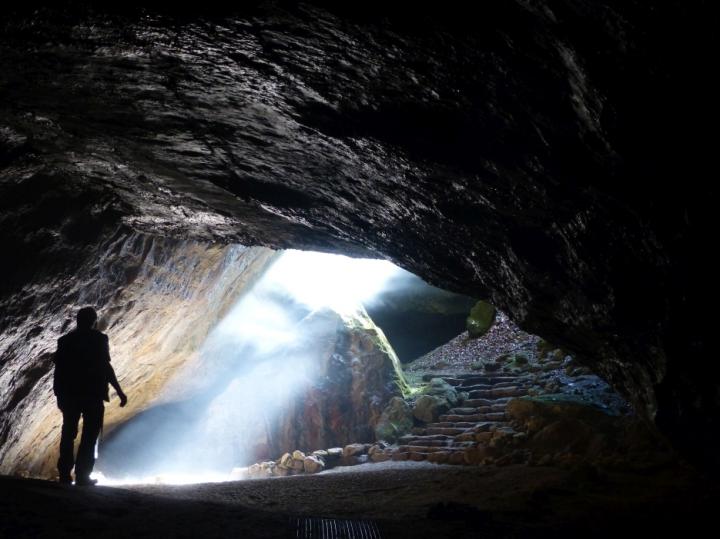
New Neanderthal bone art was discovered in the Germany's Unicorn Cave. Unicorncave/Wikimedia 

Neanderthals are often portrayed as Homo sapiens’s crude, primitive relatives, incapable of sophisticated culture, but new archaeological findings are subverting that narrative. In the latest example of Neanderthal art, archaeologists found a 51,000 year old bone carving in the mountain caves of Germany.

The carved foot bone of a giant deer, which shows a chevron-like pattern. V. Minkus, © NLD

Archaeologists were excavating materials from the prehistoric entrance to Einhornhöhle, or the “Unicorn Cave,” in the Harz Mountains in Germany when they found the 2.2 inch-long bone. Scientists identified it as a phalanx, or toe bone, of a giant deer, and radiocarbon dating suggested that it is at least 51,000 years old.


But what was most remarkable about this bone was how it had been modified: Etched into its surface were a series of lines creating a chevron-like pattern. The cuts were clean and uniform, and also served no obvious purpose, which led scientists to conclude that they must have been both intentional and symbolic. They published their findings in Nature Ecology & Evolution.

It’s clear that whoever made the bone carving took time and care. Microscopic analysis of the phalanx shows that the lines are etched pretty deeply, which suggests that the bone was boiled before carving to soften the surface. Giant deer were also not very common in the area at the time. All this evidence points to the idea that the phalanx art had some weighty significance, and was thoughtfully planned and executed.

“We were convinced this must be intentional and probably bears symbolic meaning,” Dirk Leder told VICE. Leder is an archaeologist at the Lower Saxony State Office for Heritage and led the research. But the exact meaning or function of that symbolism is a question that’s “difficult to answer,” he added.

[Related: Neanderthal genes are still helping humans today]

While it is most likely that the bony token is indeed a work of Neanderthals, scientists can’t rule out that it might have been done by Homo sapiens. Uncovered symbolic trinkets and small art pieces are artifacts typically attributed to early humans. But the age of the carved phalanx, 51,000 years old, predates the earliest evidence for humans in the area (about 45,000 years ago).

The paper therefore concludes that “an independent Neanderthal authorship for the engraved bone is thus the most plausible scenario.” This puts more weight behind the idea that Neanderthals might have developed symbolic behavior independently from Homo sapiens—a theory that’s been controversial in the field.


But evidence shows that Neanderthals partook in plenty of other activities that were meaningful if not functional—like burying their dead and decorating themselves with bird feathers. Perhaps now we can add bone talismans to the list.
What does Haiti President Moïse’s assassination mean for Haitians?

With no clear succession of power, it is up to the people of Haiti to navigate this new power vacuum and the international community to support and uplift them

Wen-kuni Ceant |
Jul 7, 2021
THE GRIO

A coup is typically described as the removal or seizure of a government and its powers — technically an illegal and unconstitutional seizure of power by a political faction, military or dictator. But in Haiti’s case, many are unsure of the circumstances that resulted in President Jovenel Moïse’s untimely death.

 
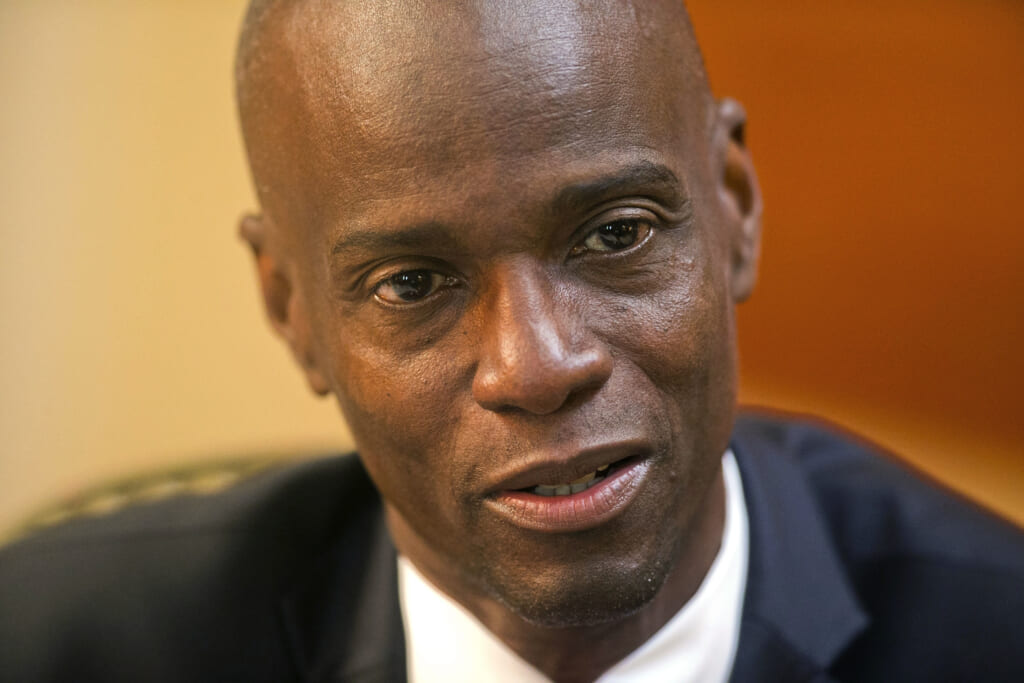
Haiti’s President Jovenel Moise speaks during an interview at his home in Petion-Ville, a suburb of Port-au-Prince, Haiti. Sources say Moise was assassinated at home, first lady hospitalized amid political instability. (AP Photo/Dieu Nalio Chery, File)

Around 2:45 Wednesday morning in Pelerin 5, President Moïse was assassinated and First Lady Martine Moïse severely wounded. Looking from the outside in, this may seem like an unprecedented attack, but for those who have been following the politics of the Moïse regime, this demise is not shocking.

For the last 12 months but certainly, since Feb. 7, (the date that his alleged term ended) there have been outcries for the removal of President Moïse, as many alleged he had overstayed his presidential term. Moïse had been coincidently running the country via presidential decree as both parliament and senate had been disbanded under his authoritarian rule.

His latest attempt at governance came in the form of his referendum agenda in an effort to effectively dismantle the Haitian constitution. Amongst these referendums included immunity for himself and any Haitian president while in office while doing away with the prime minister position in its entirety — opting instead to replace it with a vice president position.

Perhaps Moïse’s interest in doing away with the prime minister position is a reflection of his unlucky fortune with them —ultimately going through seven prime ministers before today’s assassination. His 7th appointee was tapped as recently as two days ago (July 5) and was not properly installed before the late president’s death.


Also Read:
Haitian leader’s killing draws condemnation, calls for calm

Ariel Henry, a neurosurgeon and former minister of interior was set to replace interim Prime Minister Claude Joseph — who has overnight become the most powerful man in the country as acting prime minister.

The chaos and unclear succession of power have left Haitians and the diaspora alike grasping for straws on what the future of Haiti will look like. The president of Haiti’s Cour de Cassation (Supreme Court) would naturally be the next in power — but the recent death of the last Supreme Court president, Rene Sylvestre, from COVID-19 complications makes matters even more perilous. No Supreme Court president, no senate and no parliament. Not to mention, the neighboring Dominican Republic has closed its borders and all flights in and out of the country have been immediately suspended until further notice.

But who is responsible?

Although not much is known about the attacks, there are allegations of an unidentified group of mercenaries taking the home — commando style. The language of the killers is unknown; some allege the group was communicating in Spanish, and others claim American English was the language of choice. Some allege the DEA’s (Drug Enforcement Agency) involvement while others implicate Latin America (this allegation has been staunchly denied by the DEA).

Haiti’s President Jovenel Moise, center, leaves the museum during a ceremony marking the 215th anniversary of revolutionary hero Toussaint Louverture’s death, at the National Pantheon museum in Port-au-Prince, Haiti. (AP Photo/Dieu Nalio Chery, File)

What is clear is that a trained paramilitary group carried out the attack, and the last time Haiti witnessed an assassination in office it resulted in the infamous occupation of Haiti by the United States Marines. This occurred after President Jean Vilbrun Guillaume Sam was murdered on July 28, 1915, and resulted in a 19-year marine occupation sanctioned by President Woodrow Wilson.

But what would happen if history repeated itself? One must only look to the past to see the detrimental effects that the U.S. Marine Occupation had on Haiti. After removing half a million dollars from the Haitian National Bank for “safe-keeping” in New York, they created the Haitian Gendarmerie — a military amalgamation of Haitian and American citizens controlled strictly by the U.S. Marine Corps. In this way, the United States controlled both the military and finances of the country. It wasn’t until President Franklin D. Roosevelt’s “Good Neighbor Policy,” that military forces officially withdrew from the country nearly 20 years later.

With no clear succession of power, it is up to the people of Haiti to navigate this new power vacuum and the job of the international community (UN, OAS, and individual nations) to support and uplift them as they navigate their way through troubled waters.


Wen-kuni Ceant is the CEO and Co-Founder of Politicking. She is a Fulbright Scholar and through the fellowship she studied health infrastructure in Senegal during the last year. She received her Masters in Public Health in Health Management and Policy in 2016 from Drexel University. Before Drexel, she attended Howard University, in Washington, D.C. where she graduated Phi Beta Kappa and with honors with a Bachelors of Science in Biology.
US Job Openings Rise to Record High, Layoffs Hit Record Low

A 'Now Hiring' sign is displayed at a fast food chain in Los Angeles, Calif., on June 23, 2021. (Mario Tama/Getty Images)

The Associated Press Jul 7, 2021

WASHINGTON—U.S. employers posted a record-high number of open jobs for the second straight month as a rapidly rebounding economy generates intense demand for workers.

The number of available jobs on the last day of May rose slightly to 9.21 million, from 9.19 million in April, the Labor Department said Wednesday. That is the highest since records began in December 2000. The previously reported figure for April of 9.3 million was revised lower.

The number of people quitting their jobs slipped in May from a record high in April, but remains elevated. And the percentage of workers getting laid off hit a record low in May, the report said.

The figures point to a tight job market, with employers forced to pay more to attract workers yet still struggling to fill open jobs. And many workers are leaving jobs for better-paying positions at other companies. It’s unusual for such dynamics to have kicked in with the unemployment rate still elevated at 5.9 percent in June, as the government reported last week.

In May, there was essentially one open job for every unemployed American, a situation that is far more typical of an economy with a much lower unemployment rate.

But the lingering effects of COVID-19 are keeping many potential workers on the sidelines. Some of those out of work are worried about the risk of getting the disease from large crowds, while many older Americans have retired early. And an extra $300 in weekly unemployment aid has allowed Americans to seek out higher-paying jobs rather than return 

Jennifer Lee, an economist at BMO Capital Markets, noted that job openings appear to have leveled off, with total postings jumping more than 10 percent in March and April, but barely rising in May.

“There are jobs … and there is an urgent need to fill them,” she said in a note to clients.

Open jobs rose in restaurants and hotels, education, and health care. They fell in construction, finance, and transportation and warehousing.

Employers have stepped up hiring, in part by offering higher pay. Job gains picked up in June, the government said last week, as employers added 850,000 jobs, the largest monthly increase since last August. The unemployment rate ticked up to 5.9 percent from 5.8 percent, though that was partly because some people started looking for work that month.

By Christopher Rugaber