Saturday, July 10, 2021

Study: More air pollution, worse COVID-19 outcomes

By Ernie Mundell & Robert Preidt, HealthDay News

The air people breathe -- and how much pollution is in it -- may make a difference in their outcomes when infected with COVID-19, a new study finds.

Researchers found that living in more polluted areas -- including near sewage water dischargers and in close proximity to heavy traffic -- was linked with a greater likelihood of being admitted to the intensive care unit and more likelihood of needing mechanical ventilation after infection with COVID-19.

"The key takeaway is that living in a more polluted neighborhood is an independent risk factor for severity of COVID-19 disease," said study author Dr. Anita Shallal, from the Henry Ford Hospital in Detroit.

According to the American Lung Association, Detroit is the 12th most polluted city in the United States, measured by year-round fine particle pollution.


Because low-income and minority populations often live in more polluted areas, the study also "calls attention to the systemic inequalities that may have led to the stark differences in COVID-19 outcomes along racial and ethnic lines," Shallal said.

"Communities of color are more likely to be located in areas closer to industrial pollution, and to work in businesses that expose them to air pollution," Shallal said.


The new research is scheduled for presentation during the online annual meeting of the European Congress of Clinical Microbiology & Infectious Diseases.

RELATED 18% of COVID-19 deaths in U.S. linked to air pollution, study finds

Dr. Theodore Maniatis, medical director at Staten Island University Hospital in New York City, said the findings "make perfect sense."

He said that the lungs work in a "delicate balance" that's easily compromised by dirty air. Anything that upsets that balance "will likely increase the risk of pulmonary infections and decrease the lungs' ability to clear such infections," said Maniatis, who wasn't involved in the new study.

In the study, Shallal's team collected data on where participants lived as well as data from the Environmental Protection Agency and other sources on local levels of pollutants including PM2.5, ozone, and lead paint.

RELATED Long-term air pollution exposure increases COVID-19 death risk, study says

They used this data to explore associations between COVID-19 outcomes and exposure to a variety of pollutants.

The results: COVID-19 patients who lived in areas with higher levels of PM2.5 and lead paint were more likely to require mechanical ventilation and be admitted to the ICU, compared to those living in less polluted neighborhoods.

In fact, each small increase in long-term PM2.5 exposure was associated with more than three times the odds of being mechanically ventilated and twice the likelihood of a stay in ICU.

However, it was not associated with a greater risk of dying, the study team reported.

They note that the study couldn't prove cause-and-effect, only that pollution was associated with worse COVID-19 outcomes.

The researchers also found greater risks for patients who were male, black, obese or with severe long-term health conditions. They were much more likely to need mechanical ventilation and to be admitted to the ICU.

Being male, obese or having severe long-term health conditions were also predictors of death following admission, according to the study.

Speaking in a meeting news release, Shallal said it's not yet clear "how air pollutants contribute to more severe disease."

But she theorized that "it's possible that long-term exposure to air pollution may impair the immune system, leading both to increased susceptibility to viruses and to more severe viral infections."

Added to that, "fine particles in air pollution may also act as a carrier for the virus, increasing its spread," Shallal said. "Urgent further research is needed to guide policy and environmental protection, to minimize the impact of COVID-19 in highly industrialized communities that are home to our most vulnerable residents."

Dr. Irene Galperin is chief of pulmonary medicine at Long Island Jewish Forest Hills, in New York City. Reading over the findings, she noted that "inhalation of fine particulate matter can lead to chronic inflammation, reduced immune response and diminished ability of the lung to heal and repair itself."

Galperin said that, "based on this latest study, [it's possible that] patients with history of such exposure are more likely to develop severe COVID 19 illness."

Experts note that findings presented at medical meetings are considered preliminary until published in a peer-reviewed journal.More information

The National Institute of Environmental Health Sciences has more on pollution and health.

Copyright © 2021 HealthDay. All rights reserved.
Marine Corps corporal gets 3D-printed teeth with jaw reconstruction


Marine Corps Cpl. Jared Murry undergoes an examination after jaw reconstruction surgery and placement of what the Defense Department called its first use of 3D-printed teeth. Photo courtesy of the Defense Department


July 9 (UPI) -- A Marine Corps member is the first recipient of the Defense Department's first jaw reconstruction using 3D-printed teeth, the Pentagon said on Friday.

A tumor prompted the removal of most of Cpl. Jaden Murry's jaw in a November 2020 surgery.

It was reconstructed using a portion of his fibula, or lower leg bone, but his lower teeth were made using a digital model, which was then printed into a physical replacement bridge and inserted in the new jaw.

Murry is a member of Logistics Battalion 7, Marine Corps Air Ground Combat Center at Twentynine Palms, Calif.

RELATED Losing wisdom teeth may enhance sense of taste, new research suggests

The surgery was conducted by a multi-department team of surgical specialists at the Naval Medical Center in San Diego.

"All of the providers worked as a team to keep his recovery on track," Lt. Cmdr. Daniel Hammer, maxillofacial surgical oncologist and reconstructive surgeon, said in a press release.

"We were able to safely remove his tracheostomy tube [inserted in a patient's neck when there are concerns about postoperative breathing] within a week of the surgery, and it was then we knew he was making strides in the right direction."

RELATED VA watchdog: Drunk pathologist misdiagnosed thousands of veterans

Murry is recovering in the Naval Center's Wounded Warrior Battalion, and on a diet of soft foods. A final prosthetic set of teeth will be available to him in about two months.

"Since his surgery, [OMFS specialists and I] see Jaden twice weekly for check-ups, and we're guiding his healing process," Hammer said in December. "To see him swallowing, speaking, walking and not using a tracheostomy tube one week post-surgery was a huge victory, both for [Murry] and for us."

The success is also a part of a program developed by the U.S. Armed Forces Institute of Regenerative Medicine whose researchers work to use the body's natural healing powers, in this case through the fibula transfer to the jaw, to improve head and face reconstruction.

Murry said that he is eager to resume his Marine Corps duties.

"I really look forward to getting back to a healthy mindset and working out, running and bodybuilding," he said, adding that he will seek pizza when he again can eat solid food.

THIRD WORLD USA
One-third of U.S. adults went without dental care, even before pandemic

By Steven Reinberg HealthDay Reporter

In 2019, a third of adults under 65 hadn't had a dental exam or cleaning in the past 12 months, a new study found, Photo by Bill Greenblatt/UPI | License Photo


Millions of American adults haven't seen a dentist in at least a year, a new U.S. government health survey reveals.

In 2019, before the coronavirus pandemic made dental visits difficult, a third of adults under 65 hadn't had a dental exam or cleaning in the past 12 months, according to the report from the U.S. Centers for Disease Control and Prevention.

And the problem was worse in rural America, the National Health Interview Survey showed. The authors suspect the reason is easy to explain.

"It was beyond the scope of study, but we kind of assumed there are fewer healthcare providers in the rural areas, compared to urban areas, so there's less access to dental care in rural areas," said study co-author Robin Cohen, a statistician at CDC's National Center for Health Statistics.

RELATED Study: 1 in 4 dentists has faced physically aggressive patients at work

Income and race also underpin the results, Cohen said.


The survey found:

In 2019, 65.5% of U.S. adults saw a dentist in the past 12 months.

More adults in urban areas than rural areas saw a dentist (67% versus 58%).

In both cities and rural areas, women were more likely than men to have visited a dentist in the past 12 months.

In urban areas, White adults (70%) were more likely than Hispanic adults (59%) or Black adults (62%) to have seen a dentist.

In rural areas, White adults (59%) were more likely than Hispanic adults (46%) to have had a dental visit.As income increased, so did the odds of seeing a dentist. And that was true in both rural and urban areas.


Dr. Jane Grover is director of the Council on Advocacy for Access and Prevention at the American Dental Association in Chicago. She said staffing shortages are a key contributor to access issues in rural America.

RELATEDCracked teeth another coronavirus scourge

"They may not have the staffing that many urban areas have -- I'm talking about the number of dental assistants and dental hygienists," Grover said.

Cost is another barrier to care, Grover said. Low-cost clinics can help in urban settings, and some clinics charge on a sliding scale based on patients' ability to pay.

In rural areas, these clinics can be few and far between.

Grover said more needs to be done to make dental care available to folks who can't afford it, no matter where they live. This includes involving dental students who can help provide services at little or no cost.

Grover said dentists can also work with pediatricians and primary care doctors to help patients get oral care.

"Dentists are health professionals that can not only address issues of the mouth, but can also offer connections and guidance for other aspects of your health," Grover said, emphasizing that dentists today do much more than clean teeth and fill cavities. A modern-day dentist realizes the mouth is connected to the rest of the body, she said.

"Many dentists have close working relationships with family doctors and pediatricians," Grover said. "Integrated care is really an accepted and embraced practice today as never before."

Regular dental visits are also important because conditions can be treated before they become serious and involve more time and expense, Grover noted. While many Americans avoided going to the dentist during the pandemic, she said care is now getting back to normal.More information

For more on dental health, see the American Dental Association.
SOURCES: Robin Cohen, PhD, statistician, National Center for Health Statistics, U.S. Centers for Disease Control and Prevention; Jane Grover, DDS, MPH, director, Council on Advocacy for Access and Prevention, American Dental Association, Chicago; U.S. Centers for Disease Control and Prevention, NCHS Data Brief, July 7, 2021

Copyright © 2021 HealthDay. All rights reserved.

Light over Turtle Island: Indigenous tales about North America’s creation

Lysandra Nothing

Zed Files is a Global News exclusive series exploring unusual, unexplained and legendary stories in Canada.


--


Who made the land and sky?

Indigenous people have been telling tales to answer that question since long before the settlers arrived in North America — and those tales are still being told today, as part of the rich oral tradition that lives on among many First Nations across Canada.

Read more: A Day to Listen: Amplifying Indigenous voices and working towards reconciliation

The stories vary from one community and storyteller to another, and they can teach a different lesson each time they’re told, according to Chantal Chagnon, an Ojibwe storyteller and artist from Muskeg Cree Lake Nation, Sask.

“Many people will have different perspectives, different interpretations, but it's about your personal experience and personal growth and what learnings you need from that story,” said Chagnon.

Perhaps no story is more essential than the origin of the sun and the land — a story that has been told many times across Canada’s Indigenous communities.
The origin of Turtle Island

Many Cree legends star Wasakajak, a shape-shifting trickster figure who often helps humanity.

In a Cree legend shared by Chagnon, Wasakajak helps the world recover from a great flood by venturing out with Beaver, Turtle and Muskrat to find soil.

It is said that the giant flood was the “Creator’s anger at the humans for destroying the land,” and that the Creator wanted a new start.

Beaver and Turtle failed in their searches, said Chagnon. Then the tiny Muskrat “stepped through the crowd and she popped out her chest really proudly and said she could do it.”


"It's a glimpse of a way of belief and understanding, a deeper meaning of culture."

Muskrat dove into the water and was out of sight for a long time. A “bubble of air surfaced” and all the animals grieved, assuming she had failed.

But she hadn’t. According to this legend, Muskrat floated to the surface with a small patch of soil in her paws.

“Wasakajak took the soil and rubbed it onto the turtle’s back and as he did, it got larger and heavier, and so it created all of the landmass that we see now,” Chagnon said. “This is why we call North America Turtle Island.

“He took a deep breath and blew to the east and as he did, Grandfather Sun came up from behind the clouds, and he warmed the earth. All of the seeds that were within the earth began to spring into life.

“Wasakajak blew to the south and the earth began to shake. Huge trees began to grow out of the ground. Mountains started to form, which led to valleys, and the hills and plains to deserts and to all of the land that we see now.”
Raven the lightbringer


According to another Indigenous legend from the Na-Cho Nyak Dun First Nation in northern Yukon, the creation of light came from a mythological figure known as Raven.

The legend outlines hardships that should still be familiar to much of humanity today: those of pregnancy, motherhood, sacrifices and love.

“We were all in darkness at one time, and there's a beautiful story about how Raven was able to trick the Big Sky Chief into giving him light so he can bring light to the world,” says Louise Profeit-LeBlanc, a traditional story keeper from the First Nation of Na-Cho Nyäk Dun in Mayo, Yukon.

The woman who gave birth to Raven was the second wife of the Big Sky Chief, a legendary being in the form of the sun.

The Big Sky Chief killed their first two children for “unknown reasons,” according to the legend told by Profeit-LeBlanc.

The first wife of the Big Sky Chief told the second wife there was an “island up at the other end of the land.” The second wife agreed to go because she could not stand the sight of the Big Sky Chief, who had killed her children.

When she got there, the grieving woman went into the sea in hopes of being pulled under the waves.

Read more: Kahnawà:ke elects first woman, LGBTQ2S member as Grand Chief

Profeit-LeBlanc says the woman encountered a “mysterious man” who appeared on the shore. He comforted her over the loss of her first two children and instructed her to “go back to her camp and make a fire.”

As the tale goes, she made the fire and was instructed to “place a stone in the fire” and then swallow it whole.

“She thought, ‘Oh man, he is trying to help me do the job quickly,’” said Profeit-LeBlanc, indicating the woman thought that the mysterious man wanted to help her find an easier way to die. “She threw it in her mouth. And she drank water quickly, so it didn’t burn her mouth or tongue.

“Not too long afterwards, she felt that familiar movement inside of herself, inside of her womb.”

She was pregnant. According to the legend, the woman gave birth to Raven under a tree. When Raven was able to fly, he grew tired of flying in the dark world, so Raven looked for light.


”These are stories that help people to continue to be resilient, strong and loving."

One day, Raven saw Big Sky Chief take the light out of a box. Raven decided he would steal that light.

Raven was flying when he saw the Big Sky Chief’s daughter bathing in the river. He turned himself into a spruce needle, which the woman swallowed.

Later, Raven transformed into a human infant and was “born” as the child of the Big Sky Chief’s daughter. Raven then asked his “grandpa,” the Big Sky Chief, if he could play with the ball of light. The Big Sky Chief said no, which “angered the mother,” and she opened the box and tossed the ball of light to Raven.

Raven immediately transformed again into his true form and flew off with the light. The Big Sky Chief transformed into an eagle and chased Raven across the land and over the ocean.

During the chase, Raven “knocked the ball of light into a cliffside,” and the piece that broke off became the moon and stars.

Raven fled across the ocean and eventually the eagle turned back. Raven “dropped the ball of light” in exhaustion and the light “began to rise over the horizon, becoming the sun.”

“This is the amazing thing about the oral tradition of Indigenous people. This story is packed with knowledge. It's packed with cultural knowledge, theoretical knowledge, what and how people help each other,” said Profeit-LeBlanc.

There are often multiple tales that tell the same story; in many cases, different Indigenous groups from all over Turtle Island have varied versions, showcasing the beauty of the oral tradition.


Buffalo and the first fire

In a Cree legend shared by Chagnon, humans learned how to create fire after it was stolen from the Thunderbirds, another group of mythological beings.

As the legend goes, Wasakajak kept a keen eye on the “two-legged,” a term used to describe humans.

“By the fourth year, the winter got really, really cold. It got so cold that the two-legged people started freezing to death and Wasakajak knew that something had to be done,” said Chagnon.

“Wasakajak went to the Creator, who said to him, 'Go and talk to the Buffalo and tell him the situation and see what the Buffalo are willing to do.'

“And so the Buffalo said, 'I'm going to teach all of the two-leggeds how to use every aspect of me. To know how to feed themselves through the winter with my meat, how to be able to cook it and dry it, but also how to make clothing out of my hide, how to smoke it, to make leather, how to be able to create blankets to be able to stay warm. I will teach them how to stretch my hide along with the lodgepole pine tree to create a teepee.'

“The people learned how to sustainably use the buffalo and never take more than what they needed, but it was still too cold and they were starting to die,” said Chagnon.

Read more: Canadian UFO sightings are up — but are aliens or COVID-19 to blame?

Wasakajak’s only option was to ask the Thunderbirds, who controlled the storms, to stop the cold weather.

“He said, “Thunderbird, Thunderbird, please stop with the weather, it's too cold for the two-leggeds.'”

In the legend told by Chagnon, the Thunderbirds agreed with Wasakajak about the weather being too cold, but they insisted that “there are plants that need that cold, to be able to replenish themselves for the years to come,” and that “there are animals that need the cold to be able to hibernate a lot longer. There are other animals that need the cold to be able to adjust and adapt and survive in a better way.”

“Wasakajak asked for fire instead, but the Thunderbirds said no.”

Chagnon says that in the legend, Wasakajak tried to steal one of the Thunderbirds’ fire eggs while they slept.

“He tripped over a root and he dropped the fire egg, and it started to roll down the hill towards the two-leggeds and left a trail of fire behind it.”

Wasakajak took shelter in some birch trees, which the Thunderbird attacked in anger. Its claws “left deep dark grooves in the tree,” which are the “same ones we see today on the bark,” said Chagnon.

The fire egg rolled into the midst of the two-leggeds, “who gathered around the fire and began to tell stories to one another.”

These stories and many more have been told around campfires for centuries. They don't always mean the same thing or include the same details or characters, but the legends and myths are all a part of our shared history, even if we come from very different places. Despite this, each legend and myth has important meaning.

“It's a glimpse of a way of belief and understanding, a deeper meaning of culture,” said Chagnon. “But storytelling is essential in any culture, because it teaches us about the world around us and it's a way to connect on a deeper level.”

Profeit-LeBlanc said: “These aren't just little made-up stories, you know.”

”These are stories that help people to continue to be resilient, strong and loving."


Climate change has already started reshaping the economy and it's only 
going to get worse


insider@insider.com (Juliana Kaplan) 
 
Roberto Cedomio prepares his bed at a cooling shelter run by the Salvation Army at the Seattle Center during a heat wave hitting the Pacific Northwest, Sunday, June 27, 2021, in Seattle. AP Photo/John Froschauer

Summer 2021 is a climate crisis, from the Florida condo collapse to the Northwest heat dome to NYC's tropical storm

Experts say people are becoming more aware of the climate crisis as a force, but not its wide-ranging effects.

Meanwhile, a potential infrastructure package with pared-down climate measures looms on the horizon.


The toll of the climate crisis on daily life has become increasingly clear. Just ask President Joe Biden.

"Interesting to me - I didn't raise it - but how many of the survivors and how many of the families talked about the impact of global warming," Biden told reporters after meeting with the families of victims in the Surfside, Florida condo collapse.

The tragedy in Southern Florida that killed at least 18 people and left as many as 145 missing wasn't the only sudden catastrophe with climate at its root this summer. Just days earlier, temperatures reached record-breaking highs in the Pacific Northwest amid a deadly "heat dome" that local medical officials eventually declared a "mass casualty event." Then, New York City's streets and subways flooded during a tropical storm that recalled Hurricane Sandy's devastation not too long ago.

The climate crisis - long a far-off warning or even political talking point - is suddenly a deadly reality. And it's starting to have what one expert called local effects, meaning it's really changing the way people live, hitting the food they eat, places they live, and especially their health. Climate change is an economic issue, now more than ever.

"People are talking about it as if it's now something we should be considering when talking about the risks that we face as a society - risks to infrastructure, risks to human life," Amir Jina, an assistant professor at the University of Chicago Harris School of Public Policy, told Insider.

Going outside will look different. UCLA environmental law professor Sean Hecht said the climate crisis changes "the parameters that have defined our built environment."
The climate crisis is already in your backyard, or your local store

In the Pacific Northwest, some grocery stores stopped selling perishables, and restaurants and other businesses temporarily shuttered due to the heat. Globally, a UN report finds that the world's food supply will be gravely impacted by the climate crisis without intervention, and that extreme weather could disrupt food supply chains.

"We are going to be seeing roads that aren't placed in places that make sense," Hecht said. Communities might not be equipped for less beach or snow, and farmers may need to adjust the crops they're planting. For instance, California's booming $6 billion almond industry was hit hard by a historic drought this year, The Wall Street Journal reported, with many farmers forced to simply raze trees they can no longer water.

"When the world changes around [climate change], these basic legal and then really human expectations start to not match the physical environment. And that creates a lot of conflict," Hecht said.

That was apparent for the New Yorkers wading through several feet of water to finish their commutes. Rep. Alexandria Ocasio-Cortez tweeted a video of the flooding and said it makes the case for her Green New Deal, which hasn't yet become law: 'The Green New Deal, which is a blueprint to create millions of good jobs rebuilding infrastructure to stem climate change & protect vulnerable communities, is unrealistic. 'Instead we will do the adult thing, which is take orders from fossil fuel execs &make (sic) you swim to work.'"

The economic impacts have already started, and they'll be unequal

While these extreme weather events illustrate the larger-scale impact of the climate crisis, the smaller-scale impact will hit your wallet soon.

On a macro scale, climate change cost the US economy $500 billion over the previous half-decade, according to a Fed official, and potentially over $1.775 trillion since 1980, according to the NOAA. Research by Tatyana Deryugina in the American Economic Journal found that the economic costs of hurricanes may be greater than previously thought - since the distribution of measures like unemployment insurance goes up.

On the individual level, Jina said the costs add up, too. "There's a set of risks involved in anywhere we choose to live or any economic activity we choose to engage in that we need to start thinking about a little bit more," he said.

And, of course, the costs aren't felt equally. As Hecht said, whenever there's disruption, people with more resources can better afford to address the disruption.
Sarah O'Sell transports her new air conditioning unit to her nearby apartment on a dolly in Seattle on Friday, June 25, 2021. O'Sell snagged one of the few AC units available at the Junction True Value Hardware as Pacific Northwest residents brace for an unprecedented heat wave that has temperatures forecasted in triple-digits Manuel Valdes/AP

Hecht says research "very consistently" shows that disruptions are harder on communities with fewer resources, which creates inequity by class, something that "also is correlated in large part with race." Research from Jina and other members of the Climate Lab finds that the poorest counties will take the largest income hit from the crisis.

As Healthline reports, the climate crisis disproportionately impacts people of color, such as comorbidities linked to racism exacerbated by rising temperatures, to being redlined into areas more likely to be impacted.
Infrastructure spending is (maybe) on the horizon

Meanwhile, climate measures - or lack thereof - have come to the forefront in President Biden's infrastructure proposals.

The bipartisan deal that the president struck with a group of senators omits some of his original climate proposals, and pares down spending on others. Democrats have already sent a list of climate demands for inclusion in a reconciliation bill, including equity for low-income communities and communities of color impacted by pollution, along with a carbon-free grid.

© Provided by Business Insider Climate change protesters disrupt candidate Joe Biden during a campaign event on October 9, 2019 in Manchester, New Hampshire. Scott Eisen/Getty Images

The federal government can be instrumental when it comes to addressing how we produce and consume energy, the experts said. Actually creating that infrastructure is one important step.

Biden has floated his infrastructure deal as one way to both generate jobs and address the impact of climate change, Insider's Ayelet Sheffey reported.

"We gotta make lemonades out of lemons here," Biden has said. "We have a chance to do something that not only deals with the problem today, but allows us to be in a position to move forward - and create real good jobs, by the way, generate economic growth."

Even though Biden has proposed spending up to $4 trillion on rebuilding infrastructure, not all of that is focused on climate initiatives. Meanwhile, although Ocasio-Cortez did not initially put a price tag on the Green New Deal, she later clarified its cost would be much higher. "It's not a fun number to say, I'm not excited to say we need to spend $10 trillion on climate, but ... it's just the fact of the scenario," she said in 2019.

"Let's make sure that when we build a house or rezone an area, that it's not just going to be repeatedly flooded every single year - where the potential insurance costs or the reconstruction costs are going to completely dwarf the construction costs," Jina said. "That just makes simple economic sense."

A big part of addressing the situation is in more "mundane" aspects, like updating building codes, Jina said.

Read the original article on Business Insider

White evangelical support for Donald Trump wasn't about partisanship -- it was about animus toward minorities

Chrissy Stroop, AltrNet
July 10, 2021

Evangelicals praying over Trump (Photo: Screen capture)

In the wake of the Pew Research Center's findings that 84 percent of the white evangelical Protestant vote went to former President Donald Trump in 2020, it is more important than ever for the American public to face the uncomfortable truth about the authoritarian Christian right's deleterious impact on society, culture and politics.

Some of us have been pushing for this conversation for years, with various iterations of relevant data and scholarship helping to elucidate key points. During the 2016 primaries, a few political scientists drew attention to a link between authoritarian personality traits and support for Trump. For Religion Dispatches, I wrote at the time, "if 'a desire for order and a fear of outsiders' predicts Trump support, the question of why white evangelicals are backing a trash-talking billionaire can be easily answered."

Although the mainstream press has only haltingly begun to take such analysis seriously, my conclusion, which was intuitive to me as someone who grew up in white evangelical subculture and attended Christian schools, aged well over the next few years, as the rubric of "Christian nationalism" became an important part of the relevant discourse. No one should have been surprised by evangelical Trump support, and that the American public has done such a poor job of grappling with the issue is a sad commentary on the fundamental weakness of American civil society.

One of the key roots of that weakness is the tendency of TV news and the legacy press to present "both sides" of any issue that can be framed as partisan. The right has long since learned to exploit this tendency by using manufactured "controversies"—where there is no serious controversy among experts in the relevant fields—to shift the Overton window in, for example, areas such as climate change. While a strong argument that American polarization is "asymmetric," and driven primarily from the right, has been available, this understanding has done little to improve the situation.

Could the national discussion of right-wing, white Christians as a distinct authoritarian "faction" that transcends party help us to escape from the trap of bothsidesism? Lilliana Mason, associate professor of government and politics at the University of Maryland, seemed to suggest as much in a recent Twitter thread exploring some of the implications of a new paper she and colleagues Julie Wronski and John V. Kane recently published in American Political Science Review.

The main finding of the paper, "Activating Animus: The Uniquely Social Roots of Trump Support," is that support for the former president was driven primarily by negative feelings toward discrete social groups primarily associated with the Democratic Party: African Americans, Hispanics, Muslims, and gays and lesbians.

Using a 2011 baseline that could be checked against later voting preferences, the authors show that animosity toward marginalized groups increased Trump support regardless of party affiliation, with a particularly strong effect among independents (a 30-percentage-point shift in Trump's favor vs. a 15-percentage-point shift among both Republicans and Democrats). The effect does not hold for other Republican leaders or the Republican Party in general. The authors found no similar effect of animosity toward groups primarily associated with Republicans—whites and Christians—on support for the Democratic Party. Thus, as the authors put it:

The observed relationship between group animosity and Trump support is neither an artifact of his serving as a de facto party leader nor a phenomenon that manifests symmetrically across candidates in the 2016 presidential campaign.

Rather, it appears that Trump support is uniquely drawn from animosity toward social groups linked with the out-party, whereas most other elites' political support is unrelated to these kinds of sentiments.

It would therefore be incorrect to "explain Trump's appeal with partisanship alone." These conclusions seem to be the basis of Mason's Twitter thread, in which she contends, "More than 'polarization,' we need to worry about the very real threat posed by an anti-democratic group that has always existed in the electorate, and [that] has taken control of parties to cover for their explicitly anti-democratic aims."

It is certainly true that this white Christian faction identified by Mason and her colleagues exists throughout American history not only as a bastion of white supremacist patriarchy, but also as something distinct from the political parties with which it may be aligned at any given time. It is not clear to me, however, that simply pointing out that American racists used to be mostly Democrats, but are now mostly Republicans, can do much to change the public discourse. After all, appeals to seemingly moderate Republicans to show "spine" or "conscience" in recent years have yielded precious few results in this post-2010 gerrymandering environment that has allowed the Tea Party and the Christian right to control the GOP. To be sure, the concentration of authoritarians in one of two major parties in a two-party system is a serious problem, but there is no simple way to dislodge the authoritarians from their power over the current Republican Party, which is more white and male than ever.

That being said, I wholly agree with Mason's contention that we need to talk about white right-wing Christians as the core of anti-pluralist, anti-democratic America. I'm not sure, however, that trying to make the case that doing so is "non-partisan" will have much impact when, despite the findings of Mason and her colleagues, the faction in question currently defines the GOP. Whether this argument will convince media gatekeepers, there's also still the issue of Christian supremacy, and the concomitant de facto taboo on subjecting Christian demographics to social criticism, to overcome.

Despite the challenges, I think it makes sense for American liberals and leftists, and for all Americans who support democracy and human rights, to push both these narratives. And they are more likely to have an impact the more they can be associated with relatable human faces and stories. I have worked over the last few years to elevate the voices of "exvangelicals" and the nonreligious to argue that we should be considered stakeholders in discussions of evangelicalism and the Christian right—as should anyone directly affected by their politics. This approach has yielded some results, and I believe it has legs, inasmuch as stories have power. The stories of those who have left the Republican Party because of the authoritarian faction's control may also be mobilized to change the national conversation, which is indeed a crucial part of the long game in politics. Whether it will be enough to avoid a long period of minority authoritarian rule by our racist, anti-democratic faction, however, is far from certain.

Residents of Canadian town destroyed by record-breaking fire return for glimpse of homes
Reuters
July 10, 2021


By Jennifer Gauthier

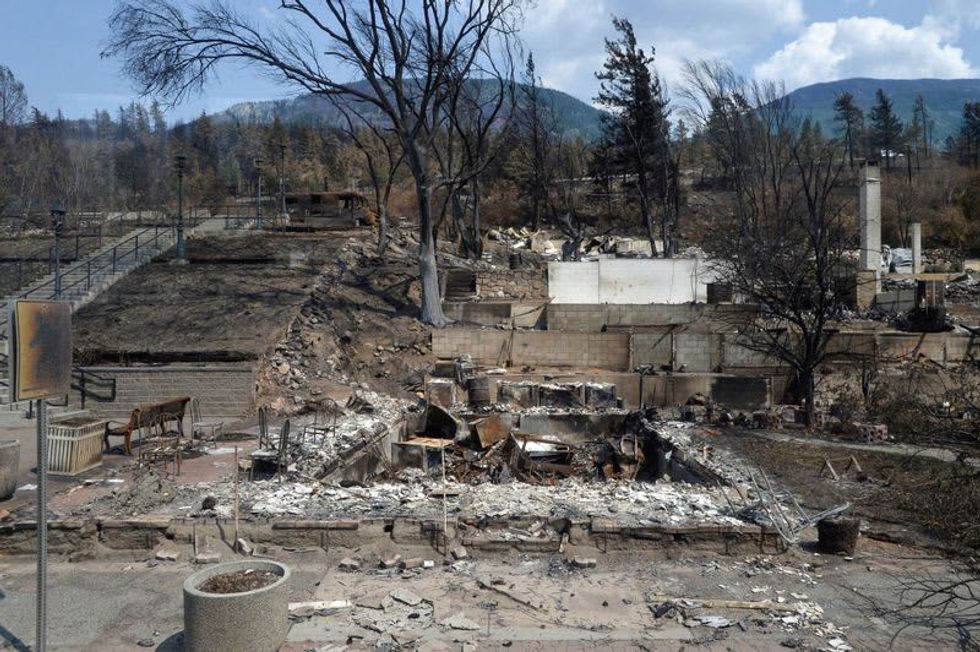
LYTTON, British Columbia (Reuters) - Residents of Lytton, British Columbia, were able to see the remains of their homes on Friday for the first time since they were forced to flee for their lives days ago.

The central British Columbia town made headlines at the end of June for breaking Canada's heat record - hitting 49.6°C (121.28°F) at its hottest - and was then almost completely destroyed in a forest fire caused in part by the heat wave.

The town of around 250 people had just minutes to evacuate on June 30, along with roughly 2,000 people living in nearby indigenous communities, after a forest fire was started by what authorities suspect was human activity.

Ninety percent of the town was destroyed, Lytton Mayor Jan Polderman said.

"A few buildings survived in town but nearly every home in the centre of the village is gone. Where many buildings stood is now simply charred earth," Polderman wrote in an open letter published in the Merritt Herald, the local newspaper. "We want everyone to know that their bravery was incredible in the face of this unimaginable horror."

Residents had not been able to return to the town until Friday due to ongoing fires and toxic substances in the area. Roughly 250 people - including residents and media - were taken on bus tours of the town on Friday afternoon, according to Thompson-Nicola Regional District, which organized the tours.

"Didn't get much sleep last night thinking about the bus tour into Lytton today," resident Edith Loring-Kuhanga posted on Twitter. "I know it's going to be heartbreaking but I need to go see our little town even though it's decimated!"

The scenes were a shock to residents, one told the Canadian Broadcasting Corporation.

"We've seen the videos, but until you actually see it, it's hard to believe," Chloe Ross said. "I understand why others don't want to go. Nothing about this feels real."

Two people died in the fire. The Royal Canadian Mounted Police, who have been coordinating family reunification efforts, said on Friday no one has been reported missing so far.

(Reporting by Moira Warburton in Vancouver and Jennifer Gauthier in Lytton; Editing by Sandra Maler)


Right-wing anti-vaccine hysteria hits fever pitch as Nazi comparisons grow

Jon Skolnik
July 10, 2021

Laura Ingraham speaking at the Values Voter Summit, photo by Gage Skidmore.

Right-wing scaremongering about the COVID-19 vaccine hit a fever pitch this week, from Fox News to some of the conservative movement's more fringe characters, with pundits placing particular emphasis on the apparent connection between President Biden's vaccine rollout and Nazi Germany.

The hysteria appears to have its roots in a Tuesday speech the president gave in which he encouraged volunteers to knock on doors.

"We need to go [sic] to community-by-community, neighborhood-by-neighborhood and, oftentimes, door-to-door, literally knocking on doors to get help to the remaining people protected from the virus," Biden said.
Chris Matthews talks to Raw Story: Who would you bet on in 2024, Trump or Kamala?

The White House later clarified the president's remarks, stating that only community volunteers would be leading the door-knocking effort to encourage vaccination — but that didn't stop right-wing pundits and politicians from pouncing on what they said was America's slide toward authoritarianism.

Fox News in particular dedicated hours of programming to its crusade against the administration's push to vaccinate the country against a virus that has already killed 600,000 Americans — with Tucker Carlson equating workplace vaccine requirements to forced sterilization, guest and right-wing activist Charlie Kirk using his appearance to compare vaccination to South African apartheid, and a rash of other hosts decrying the Biden administration's emphasis on vaccination.


"The focus of this administration on vaccination is mind-boggling," Fox host Brian Kilmeade said on Fox & Friends Thursday. "They're going to knock on your door, they're going to demand that you take it, and they're going to give you a third shot," he added during a bizarre rant the next day, giving no indication of what the third shot is or why it would be required.

Longtime Fox host Laura Ingraham also added to the fear mongering with a chyron that read "THE LEFT'S CONSTANT COVID POWER GRAB"

The message filtered down to the Republican party's Congressional members, who hammered home the idea that Biden was sending people door-to-door to force vaccines on people who did not want them — which is, of course, not true.

"The Biden Administration wants to knock on your door to see if you're vaccinated," Rep. Jim Jordan, R-Ohio, tweeted. "What's next? Knocking on your door to see if you own a gun?"

"How about don't knock on my door," echoed Rep. Dan Crenshaw, R-Texas. "You're not my parents. You're the government. Make the vaccine available, and let people be free to choose. Why is that concept so hard for the left?"

Missouri GOP Gov. Mike Parson – whose state saw the highest COVID-related deaths and hospitalizations in the last week, baselessly warned Biden "that sending government employees or agents door-to-door to compel vaccination would NOT be an effective OR a welcome strategy in Missouri!"

Other Republicans were more bombastic in their reaction to Biden's speech, not only bandying misinformation but painting an explicitly totalitarian picture of the president's vaccine rollout, often explicitly using the Nazi regime and the Third Reich as a comparison point.

"Biden has deployed his Needle Nazis to Mesa County," Rep. Lauren Boebert, R-Colo., tweeted on Thursday. "The people of my district are more than smart enough to make their own decisions about the experimental vaccine and don't need coercion by federal agents. Did I wake up in Communist China?"

Freshman Rep. Marjorie Taylor Greene, R-Ga., called the officials handling Biden's vaccine push "medical brown shirts." Historically, brown shirts refers to the paramilitary wing of the Nazi Party, called the SA, which carried out much of Adolf Hitler's bidding. Green's comments came on the heels of her last Nazi-related comparison, in which she said that mandatory mask-wearing was similar to the Nazi-era requirement that Jewish people wear identifying Stars of David on their clothing.

Conservative pundit Tomi Lahren also joined the chorus on Thursday, tarring flight attendants who enforce COVID health precautions as "Nazis of the air." Last year, as the Daily Beast noted, Lahren made headlines when she said that those who comply with social distancing rules are engaging in a form of "willful slavery."

Meanwhile, Charlie Kirk, the founder of conservative youth advocacy group Turning Point USA, eschewed a Nazi-era comparison, instead calling Biden's vaccination push an "apartheid-style, open-air hostage situation." He claimed that the administration would only let you "have your freedom back if you get the jab."

Conservative vaccine hesitancy, fueled by this militant anti-vaccine messaging, remains strong — despite pleas from numerous Republican governors to get vaccinated. Even Senate Minority Leader Mitch McConnell, R-Ky., admitted on Thursday that he's "perplexed" as to why so many Americans are refusing to get vaccinated.

Some on the left have speculated that it's the administration's very encouragement of vaccination – rather than the safety of the vaccine itself – that is largely contributing to right-wing resistance.

"The only solution may be reverse psychology," as Salon's Amanda Marcotte wrote last month. "People who want the pandemic to end need to, paradoxically, release the desire to see conservatives get vaccinated. The more zen that liberals (or people perceived to be liberals) are about vaccination rates, the less fun it is to try to piss liberals off by refusing to get the shot."
Colombians’ arrest highlights growing presence of private military contractors in Haiti
2021/7/9 
©Miami Herald
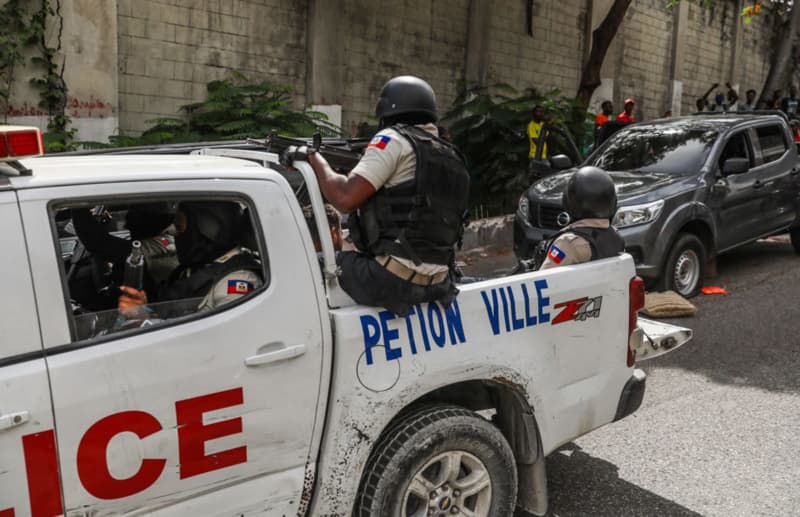
Two men, accused of being involved in the assassination of President Jovenel Moise, are being transported to the Petionville station in a police car in Port au Prince on July 8, 2021. - Valerie Baeriswyl/AFP/AFP/TNS

PORT-AU-PRINCE, Haiti — The arrests of 15 Colombians in the death of Haitian President Jovenel Moise has shocked many Haitians, already reeling from the middle-of-the-night assassination of the country’s leader. Less surprising, even as police publicized photos of the detained foreigners and the array of weaponry allegedly used in the attack on the president’s home, is the presence in Haiti of heavily armed, foreign former soldiers and private security contractors.

Over the past four years Haiti has faced waves of anti-government protests against Moise’s leadership and disarray in its weak national police force. It has seen a growing number of private security contractors and soldiers for hire in the midst of its own forces.

The growing presence of these soldiers of fortune coincided with the 2016 election of Moise after a tumultuous presidential vote that had to be re-run because of fraud allegations. They also coincided with the end of a long-running United Nations peacekeeping mission, as business owners and Moise could no longer depend on the so-called U.N. Blue Helmets for protection, and lacked trust in Haiti’s own police force.

The trend has worried Haiti watchers and the U.N., which had made strengthening the police a key focus of its 15-year presence in the country in the wake of increasing gang violence and political instability.

“With the disintegration of the (Haiti National Police), which had its own internal splits, to the explosion in gangs, which I now call ‘armed militias,’... the next logical step is escalation in an arms race to secure even more firepower and expertise than can be found on the local market: foreign mercenaries,” said William O’Neill, a Haiti security expert and international human rights lawyer who was involved in the rebuilding of the country’s police force.

The first recent sighting of foreign security contractors came in May 2018, during a Haitian Flag Day celebration in the city of Arcahaie. Three unidentified, heavily armed foreign security agents were seen in the president’s security detail. They were not members of the Haiti National Police, a former high-ranking Haitian police official told The Miami Herald, recalling the incident.

Three months later, as businesses were looted during what became known as “peyi lòk” — or country on lockdown — business owners in Port-au-Prince began contemplating private contractors from abroad to protect their property and investments.

Six months later, anti-government demonstrators clashed with police during protests and people took to social networks to share photos of re-branded police vehicles belonging to presidential palace guards with M-60 machine guns and photos of individuals who appeared to be foreigners standing in the middle of Haitian agents. Among them was a former member of a United Nations peacekeeping mission, hired as part of a Haitian government contract.

The police chief at the time, Michel-Ange Gedeon, later went on radio to denounce the presence of the military hardware, saying that no new specialized unit inside the Haiti National Police had been created and that it was the first time he was seeing the new equipment.

Three months later, Gedeon’s forces arrested five Americans and two other foreign nationals claiming to be on “a government mission” after they were found with a cache of automatic rifles and pistols on the streets of Port-au-Prince.

The men didn’t specify which government had hired them. But at one point, they told officers that “their boss would call our boss.” One of the men arrested, Christopher Osman, was a former Navy SEAL.

It was later revealed that one of the men arrested had previously worked in Haiti as a private security contractor.

Facing charges of illegal arms possession and other crimes in Haiti, the group was swiftly taken out of the country with the help of the U.S. Embassy and the State Department, with the approval of Haiti’s justice minister.

At a news conference a few months later, Moise was publicly asked to address reports that he had hired private military contractors to beef up his security in the midst of escalating violent protests and demands for his resignation. Moise responded that they were there to conduct an evaluation of his security.

Moise had been ruling by decree since January 2020 when he issued an executive order in March declaring a state of emergency, allowing the Haitian government to contract with foreign entities if need be to help with the country’s rising insecurity. The move followed the death of five police officers in a botched anti-gang raid in a seaside slum of the capital, and fellow officers angrily taking to the streets to protest the killings.

Now, retired Colombian soldiers are suspected of participating in the assassination of Moise. Of 28 people suspected of carrying out the killing, 26 of them are Colombian nationals and two are naturalized Americans of Haitian descent, Haiti’s interim police director Leon Charles told journalists late Thursday.

Colombian authorities on Thursday said at least two of the Colombians implicated in the Haitian president’s assassination are former members of the country’s army.

Colombia Defense Minister Diego Molano said the South American nation had received an official request from Interpol, the international police agency, for information about the Colombian suspects.

Molano said he had instructed Colombian police and the military to collaborate with Haitian authorities “in the face of the alleged participation of Colombians in that abominable act.”

He added Colombia had created a team of experts to help in the investigation.

The head of the Colombian Army also said that he had “received a clear order of the president of the republic Ivan Duque Marquez that we are willing to provide to the national police of Colombia all of the information regarding the events and where these two former members of the public force were involved, in this case the national army.”

On Friday, Duque announced that he was sending a team from Colombia to Haiti to assist authorities. The White House also announced that a team from the FBI and the Department of Homeland Security was on its way to Port-au-Prince to assist.

White House spokeswoman Jen Psaki announced that the Haitian government, currently being led by acting Prime Minister Claude Joseph, had asked for investigative help and security.

“We will be sending senior FBI and DHS officials to Port-au-Prince as soon as possible to assess the situation and how we may be able to assist,” she said.

Haiti Foreign Minister Bocchit Edmond said the government has asked the U.S. to freeze the U.S. assets of anyone who participated or planned the killing.

The use of private security forces in Haiti dates back to the mid to late 1990s when there was an explosive growth in domestic, Haitian-owned and operated private security companies, O’Neill said.

O’Neill said such forces have always been a concern for the U.N.

“A few were legitimate and fulfilled useful services, but many were not,” he said. “They in effect became private police forces, something we at the U.N. at the time worried a lot about because the government, with help from the U.N., was trying to create for the first time in Haitian history a professional police service that was not politicized or under anyone’s control.”
Majority of Brazilians support impeaching Bolsonaro, poll shows


RIO DE JANEIRO (Reuters) - For the first time, a majority of Brazilians support impeaching President Jair Bolsonaro, according to a poll released on Saturday, as serious graft allegations related to vaccine procurement hit the right-wing leader's already battered image.

© Reuters/ADRIANO MACHADO Outbreak of the coronavirus disease (COVID-19), in Brasilia

According to the survey by Datafolha, 54% of Brazilians support a proposed move by the country's lower house to open impeachment proceedings against Bolsonaro, while 42% oppose it. In the last Datafolha survey on the issue, released in May, supporters and opponents of impeachment were essentially tied.


In a separate Datafolha poll, released on Thursday, 51% of Brazilians said they disapproved https://www.reuters.com/world/americas/brazils-bolsonaro-disapproval-rating-rises-all-time-high-poll-2021-07-08 of Bolsonaro, the highest figure since he took office in January 2019.

In recent weeks, Brasilia has been rocked by allegations https://www.reuters.com/world/americas/bolsonaro-fires-brazil-health-official-after-new-vaccine-graft-accusation-2021-06-30 that federal officials solicited bribes to fast-track and overpay for the Covaxin vaccine developed by India's Bharat Biotech. In late June, Brazil's Health Ministry suspended https://www.reuters.com/world/india/brazil-suspend-indian-vaccine-deal-graft-allegations-probed-2021-06-29 the 1.6 billion-real ($304 million) procurement deal.

A Health Ministry official and a congressman https://www.reuters.com/world/americas/brazil-official-says-he-warned-bolsonaro-over-pressure-buy-bharat-vaccine-2021-06-23 have said they shared their concerns about the Covaxin deal with Bolsonaro, but that no action appeared to have been taken. Last week, a Supreme Court judge authorized an investigation https://www.reuters.com/world/americas/brazil-top-court-gives-nod-probe-into-bolsonaro-over-vaccine-deal-2021-07-03 into the president for dereliction of duty.

In a radio interview on Saturday, Bolsonaro said he had taken measures after the officials shared their concerns about the Covaxin deal, but he did not elaborate further.

"I meet with 100 people per month about the most varied topics imaginable," he told Radio Gaucha in southern Brazil. "I took measures in this case."

In addition to the vaccine scandal, uncovered amid an ongoing Senate investigation, a pair of deadly coronavirus waves this year have chipped away at the popularity of the former army captain https://www.reuters.com/world/americas/brazilians-protest-president-bolsonaros-response-pandemic-2021-06-19, who has consistently downplayed the pandemic's severity and sown doubts about the safety of vaccines.

Datafolha surveyed 2,074 Brazilians face-to-face on July 7 and 8. The poll has a margin of error of 2 percentage points, meaning results could vary by that much either way.

($1 = 5.2579 reais)

(Reporting by Gram Slattery in Rio de Janeiro and Eduardo Simões in Sao Paulo; editing by Jonathan Oatis)
Evangelical snowflakes censor the Bible
Paul Rosenberg, Salon
July 10, 2021

Photo: Shutterstock

Long before Donald Trump made attacks against "political correctness" a key theme of his 2016 election campaign, evangelical leaders like Wayne Grudem, author of "Systematic Theology", have railed against it, particularly when they see it invading their turf — with gender-neutral language in Bible translations, for instance. But a new study by Samuel Perry, co-author of "Taking America Back for God" (I've previously interviewed his co-author, sociologist Andrew Whitehead), finds Grudem himself involved in much the same thing.

"Whitewashing Evangelical Scripture: The Case of Slavery and Antisemitism in the English Standard Version," looks at how successive translations have changed in the English Standard Version of the Bible, for which Grudem serves on the oversight committee.

In revisions from 2001 through 2016, Perry shows, the word "slave" first gains a footnote, then moves to the footnote and then disappears entirely — in some contexts, like Colossians 3:22, though not others — to be replaced by the word "bondservant," which could be described as a politically correct euphemism. A similar strategy is used to handle antisemitic language as well, Perry shows.

It's one thing for politicians to hypocritically switch positions mid-air, or hold contradictory positions simultaneously, but it's quite another thing for theologians — or at least it's supposed to be. Evangelical Christians in particular are supposed to revere the literal truth of the Bible, not fiddle around with it to make it sound better to contemporary audiences. So Perry's findings deserve much wider attention, which is why Salon reached out to discuss what he discovered and what to make of it. The interview has been edited, as usual, for clarity and length.

Your paper examines how a recent Bible translation was successively revised to tone down and ultimately erase language supporting slavery and antisemitism — in effect, to make the Bible more "politically correct," more in tune with contemporary moral sensibilities, although those doing so would surely object to that characterization. How would you characterize their work?

It's a fascinating story. All Bible translations have to navigate these waters, so the English Standard Version is really just an example of it, and they're kind of a fascinating example because they have marketed themselves as an essentially literal translation that resists the PC push. The general editor, Wayne Grudem, had for years denounced contemporary Bible translations, like the New International Version, for doing those kinds of things: becoming PC, changing the language to conform to modern sensibilities, that kind of thing, especially with regard to gender.

So for years they have said, "Hey, we're not going to translate certain things in a gender-neutral fashion, because we want to be as literal as possible, and if you like that it's capitulating to the feminist PC culture." So ESV has marketed themselves as a very popular evangelical translation that is used most faithfully by complementarian Protestant Christians for that reason: because it's conservative and because it's supposed to be literal.

But at the same time, the fact that that the "slave" language in the New Testament is so obvious creates a real apologetics problem, because of all this talk about "slaves obeying your masters," and how slaves should subject themselves not only to good masters but bad masters, and how slaves should stay in the station of life where they were called. It creates this really ugly impression of the New Testament, and especially Paul advocating for slavery.

So what you can see in the English Standard Version is that with each successive wave, from the 2001 revision of the Revised Standard Version to the 2011 revision and then finally in 2016, our most recent revision, was that they started by introducing a footnote in 2001 to the "slave" word, and then in 2011 they replace the slave word and put it in a footnote, and then they said, "We're going to call this a bondservant. So it's different from a slave."

By 2016 they didn't use slave language at all. If you read that translation you would have no idea that the original translation — and I think the most appropriate translation — would be "slave." All you see is this kind of Christian-used churchy word "bondservant," which you never hear outside of a biblical reference. Nobody knows what that means, but it's a way that the English Standard Version and other Bibles like it can kind of say, "Hey, these are slaves, but they're not real, real slaves. They're not really bad slaves like we think of in the antebellum South, like chattel slavery. It's something different."

So they're changing the text on one hand, while pretending to be more faithful on the other?

Yes. What I write about this in this article is an example of the way evangelical Bibles try to do both things. On the one hand they're trying to appeal to people within their community, and to say, "Hey, we interpret the Bible faithfully and consistently," but at the same time there also trying to translate such that they can avoid charges that the Bible is socially regressive and condones oppressive relationships and is socially or culturally backward. So this is kind of an example of that.

In previous studies, I showed how the English Standard Version, in particular, had actually taken the Revised Standard Version of 1971 and made the gender language more conservative. So what they did with the slave language, they did the opposite with the gender language. They actually made gender language more complementarian, more about men's and women's roles, and that kind of thing.

So ultimately this is a broader project of mine on demonstrating how really Bibles are constructed by individual choices by groups who have incentives. I don't mean incentives monetarily, though sometimes money is involved, like the consumer market. All these Bibles have to sell. But oftentimes there are culture-war issues going on. They want to be able to demonstrate, "Hey, the Bible is not culturally regressive. Look, there's no slave language at all!" Or they want to be able to say that the Bible endorses women submitting to their husbands: "Look how clear it is right here!"

So what you can do is just adjust the language here and there in the translation and make it back your own theological preference, or the preference of the people you're trying to market that Bible to. And this is fascinating thing. It's so interesting when you think about how fluid the language can be, based on whatever purposes you need, whoever you're marketing that Bible to.

But that's part of a much broader phenomenon, isn't it? I mean, you specifically say that it's not unique.

Let me give you another example. This is one I don't talk about in the article. The English Standard Version has been adopted recently by the Gideons — you know, the people who put Bibles in hotel rooms. So for years, the King James Version was the Gideon Bible. They later moved to the New King James, but since 2012 the Gideons weren't going to use the King James anymore, they were going to use the ESV.

They worked out a deal with Crossway, the makers of the ESV, to adjust some of the language in the ESV to conform to the preferences that the Gideons wanted, because they had always had the King James Version and they liked that. So certain verses and texts in the ESV were modified to conform to the preferences of the Gideons, who were going to buy massive amounts of Bibles and wanted to bring it into greater conformity with the KJV. They're not drastic changes, yet the ESV folks were willing to compromise on the language. It was like, "Hey, if this is what your group needs, sure. We'll move some stuff to footnotes, we'll change stuff around here and there."

There's all kinds of things that go on like that, but in the example I'm talking about here it's about how this particular Bible which has a reputation for being anti-PC is pretty clearly moving toward greater political correctness, so that they can avoid the charges of promoting slavery.

What about the issue of antisemitism? That was handled differently but along similar lines, was it not?

Again, Wayne Grudem is a culture warrior. Within the last five years he became kind of a shill for Donald Trump. He went on record several times to talk about why Christians should vote for Trump, and wrote a shocking, breathtaking article where he argued that he didn't think Trump had ever intentionally lied. He said, like, Trump may bend the truth or may not know all the facts, but he never intentionally lied, which makes my head explode.

So Wayne Grudem is a culture warrior, politically active, a very conservative anti-PC guy. He had for years argued against any change. Especially in the Gospel of John, there's lots of instances where John talks about this group that literally is translated as "the Jews." That's exactly what he's saying, he's saying "the Jews." But if you actually read the things that he's saying about this group called "the Jews," it's really ugly. They are chasing the apostles around, they're persecuting Jesus, they're scheming, they're looking for an opportunity to kill him. They just look like murderous, scheming people. Paul does this several times as well. So most modern New Testament translations have modified that language. They don't translate that word as "the Jews" anymore because it sounds blatantly antisemitic. What they do is they translate it, like, "Jewish leaders" or "religious leaders" or something like that, so they specify, these are the bad ones, these aren't all the Jews.

But the ESV and Wayne Grudem have for years said, "Oh, you guys are PC wimps for doing that." But the editorial committee of the ESV has realized over time that it looks really, really ugly. So what they've had to do is to introduce footnotes over time, where they can qualify when they use that word "the Jews." They do it strategically, because it's not every time you see the word "the Jews." But every time you see the words "the Jews" and the context is "Hey, this is a really bad group of people," they put an asterisk there, and a footnote that says, "Hey, no, John is not referring to all the Jews. This is probably just a group of religious leaders who are persecuting Jesus and his followers."

These are just examples of how Bibles get modified and adjusted in order to make them more palatable and attractive, and by extension make Christianity more palatable and attractive. That's the end goal, and part of it is about making that Bible more usable and user-friendly. In a broader scheme, these people are Christians and they want people to find Christianity attractive too. They want to be able to guard against accusations that Christianity is OK with slavery and antisemitism. So you've got to head that accusation off by helping your people out a little bit, putting a footnote in there, changing the language.

You begin your article by saying, "Religious communities in pluralistic societies often hold in tension the task of reinforcing core identities and ideals within the community while negotiating public relations among those outside the community." You add, "Christian communities have sought to accomplish both projects materially through Bible modification." The first task is accomplished via what scholars have called "transitivity." What does that mean?

Transitivity is not my word. That was come up with by a scholar named Brian Malley, who is a cognitive anthropologist. About 20 years ago he wrote a great and, I think, very underrated book called "How the Bible Works." One of the things he writes about is how evangelical Bible study isn't really an attempt to get meaning out of the text, as if people were coming to it like blank slates. What happens within a group context is that groups come to the Bible with theological presuppositions. They already have an idea what the Bible is. What they do together is they basically try to explain how the text that they are reading affirms what they already believe.

So they'll come to the text and they'll find a verse and they'll try to fit that verse within their broader scheme. "OK, this is what we think God is all about, this is what we know he likes and prefers, this is what we believe." This is why you end up with so drastically different readings of the Bible. This is why when Democrats come to the Bible, Jesus ends up looking like a Democrat and when Republicans come to the Bible, he sure does look like a Republican. We oftentimes just bring our own biases and lenses and interpret a passage of scripture with that. So transitivity, and how Bible translations really reinforce this transitivity project, is because they can adjust the content of the Bible to support what the community already believes.

This is a more general process, right? It's not just the ESV?

This isn't just the English Standard Version, this is all of these translations. Really blatant examples would be things like the 1995 project called "The New Testament and Psalms, An Inclusive Version." This translation team took the New Revised Standard Version and said, "You know what, we don't believe that God would want to translate anything that would support racism, antisemitism, ableism or any kind of gender identity at all." So they went through that Bible and they removed all traces of gendered language — God is no longer "father," he is "a parent" or "father/ mother," Jesus is not "the son," he's "the child." So they made the Bible conform to their own beliefs of what they felt God would like and God would want. That was an example of a transitivity project. They were making the Bible conform to their own views, and ESV has also done that with respect to gender. They made the gendered language of the RSV more conservative, so that it would back up their own theological and cultural preference.

You have coined a new term, "intransitivity." What does that mean, and what's a good example?

The gendered language of the ESV is a transitivity move, making the text conform to your own tribal or cultural positions. "Intransitivity" refers to the idea that you're trying to eliminate the possibility of a negative evaluation of your own group or the Bible by translating a passage in a more culturally acceptable way. Establishing intransitivity means you're trying to cut off the possibility of a negative social interpretation.

So retranslating those passages about "the Jews" to be about "religious leaders" or "the Jewish leaders" or that kind of thing is an intransitivity project. It is a move to be able to cut off outsiders who say, "Hey Christianity is antisemitic and the Bible is antisemitic." They can say, "No, that's not how the verses read." The same with the slavery example. You cut off the negative social interpretations by saying "No, these are 'bondsmen,' not slaves."

You go on to say that this study examines the ways evangelical translation teams seek to accomplish both agendas simultaneously — the transitivity and intransitivity agendas — creating a "materialized instantiation of engaged orthodoxy." What does that mean?

"Engaged orthodoxy" is the sociologist Christian Smith's term. A little over 20 years ago he talked about evangelicals as this unique group, in that they hold two ideas in tension. One is that they want to be different from the culture and they want to have distinct theological identities, so they value theological conservatism. It's self-policing. You can see this now, it's the most obvious thing in the world. All the debates are about, you know, are we leaving our orthodox theological roots by coming to be more culturally adaptive or "woke" or whatever?

So evangelicals want to be orthodox, and they desire that aggressively. And yet a part of evangelical identity is also that we are not retreating from the world, we are engaging the culture. You can call it culture warfare, and that's part of it, but there's a mandate to transform the culture with the gospel. So engaged orthodoxy is this idea that we are fighting for cultural distinctiveness and orthodox theology, yet at the same time we are engaged in the fight, we are trying to influence people who are outsiders with the gospel, with the Bible and with our culture.

So when I say a "materialized instantiation of engaged orthodoxy," what I mean is that through both of these moves with the Bible — they're trying to modify the Bible to make it conform to their own theologically conservative faith, while at the same time modifying other parts of the Bible to avoid negative characterizations of the Bible and their faith — they're engaging in this process of engaged orthodoxy. They're trying to be orthodox and conservative, while at the same time not trying to put up unnecessary barriers to people finding the faith attractive. So they want to be conservative, but they don't want to be blatantly racist or blatantly oppressive, that's just too far, that's too much.

Yes. That sounds tricky!

They really find themselves in a pickle sometimes because of examples like Wayne Grudem, who trashes PC Bible modification, and says, "Hey, we need to be conservative and literal," yet at the same time they don't want to translate things too literally, because it ends up looking pretty negative if you're talking about slave language or antisemitism. So they have to be subtle, which is one of the reasons why they don't necessarily announce all the changes that they make. They just change stuff sometimes. Sometimes they announce it, sometimes they explain it. Other times they just kind of do it. They make changes and don't really broadcast that, because they want to make people feel like "Hey, this the Bible, not something that is our little project that we keep on modifying."

You draw attention to the fact that changes were made to the ESV in 2001 without being talked about, but then in 2011 they actually announced it in the preface. What did they say in that preface, and what did that accomplish?

In the preface they started to telegraph that they're going to change some of the slave language and gave a little bit of the reasoning. But the reasoning they provide is intended to support the change that they wanted to make for, I think, more politically correct kinds of reasons. So they're trying to have their cake and eat it, too. They want to be characterized as a literal translation that is faithful and they don't want to come across as capitulating to the culture or being politically correct, Grudem really backs them into a corner that way.

They don't sell to their target audience of conservative evangelicals on the basis of being politically correct; they sell because they're literal or because they're faithful. So what they were trying to do in that preface was explain that these words for slave in the Old Testament and New Testament—in the Old Testament it's ebed, and in Greek, in the New Testament, it's doulos. So what they're arguing in the preface is that, hey, in the Old Testament and the New Testament, sometimes that slave language, those words, could be used to define a broad spectrum of relationships. Sometimes it describes people who are legitimately like slaves, and other times it describes something more like a servant or a bondservant, somebody who's not necessarily volunteering for it, but who could benefit from the relationship and earn money, and even get their freedom someday.

So they're trying to set the reader up to say, "We sometimes translate these words differently depending on the context," because sometimes what they feel the authors have in view is not "slave" like we talk about in the South, where you are a slave on the basis of race, you are a slave for life and so are your children.

So that's their theory. How good a theory is it?

The only problem with that is that most scholars that I've read and respect on these issues would argue that what both the Old and New Testament authors have in mind really is a slave. It's not like this weird, churchy word "bondservant," which is intended, I think, to create some rhetorical difference between what a slave really was and this kind of nice version of slavery that Christians would like to pretend the Bible talks about.

But it doesn't really exist. It was still dehumanizing. It was still somebody who, like your children, was property. You were still owned by people and you couldn't just leave if you wanted to. That wasn't the deal. So it kind of attempts, on the part of evangelicals, to introduce an idea that, like, slavery wasn't so bad sometimes, rather than just saying, "Hey, it's a slave."

What happened in the preface in 2011 was that the ESV said, "We need to change these words so that we can make these relationships a little bit less offensive." Ultimately they're saying, "We don't want you to think, every time you hear the word 'slave' in the New Testament or the Old Testament, about Southern Dixie slavery, because that's really ugly. That sounds really bad." If the New Testament is saying "slave, obey your master," that sounds really horrible, and it is really horrible. That creates a problem that they try to solve with this translation.

You're focused on the key process of biblical revision. But there's a larger cultural process and historical record to consider. Historically, biblical references to slavery played a central role in justifying it, especially as abolitionist sentiment increased from 1830 onward. All the distancing in the world can't change that history. More recently, anti-abortion evangelicals have tried to claim the abolitionist mantel for themselves, likening Roe v. Wade to the Dred Scott decision, while also ignoring their own historical indifference, if not acceptance, to Roe when it was decided, given the Bible's silence about abortion. How do you think your analysis should be seen in terms of this broader framework of claiming spiritual, moral and political authority?

I think the strategy of Bible modification is actually a way to solve some of that historical, reputational problem. As you say, there there is a record of evangelical Christians using the Bible to condone and defend slavery as an institution, because it is obviously there and it's easy to do, given that the New Testament authors didn't condemn it in any way, and in many ways enabled and justified it as an institution,. That was readily used by pro-slavery advocates in the antebellum South, and under Jim Crow for issues like segregation. Even up to the late 1990s, Bob Jones University was citing biblical references for segregation or prohibiting interracial dating on campus.

Bible modification is a way that you can clean that up by saying, "You know what? These people were obviously misinterpreting scripture, because it's right there. Look, it doesn't say 'slave,' it says, 'bondservant'!" You can point back at this group of conservative Christians in the past as people who misunderstood the Bible, rather than reading it in the plain language like we have it now. That is very important in this evangelical culture of biblicism: They want to interpret the Bible in plain language, and to be able to do that you have to adjust the language, to make it conform to exactly what you want to say.

What about the anti-abortion side of this?

I haven't detected any instances of Bible modification that are "pro-life" angles, though I think you see gestures toward that. For example, Andy Schlafly, the founder of Conservapedia, said in 2009 that he was going to start something called the Conservative Bible Project, where they say explicitly, "We're going to going to retranslate the Bible to conform to conservative political leanings. We're going to fight the liberalism that has crept into Bible translations." They said on the front end that they were going to translate the Bible such as to highlight the pro-life implications of certain texts. They're transparently saying that they want to elevate this kind of cultural interpretation, this political interpretation, that is more squarely biblical. They're reverse-engineering it.

I was just looking at the phenomenon of proof-texting pro-life verses this morning. I was reading over Focus on the Family verses that they have put together to argue for pro-life positions. It is interesting how selective those texts end up being — texts about how "God does not punish the children for the sins of the parents." Using that as a response to, "Well, what what about abortion in the case of rape or incest" by pointing to those verses is a pretty selective reading, given that God explicitly commands the wiping out the Canaanites, including children, including women who were with child, including children who in the womb.

So there are obviously instances in the Old Testament where you can argue that Yahweh formally commands [abortion], and you get this obviously selective reading of key texts. From there, I think it's a pretty small step to, "OK, how do we how we get rid of these problematic verses? How do we make these verses conform?"

If I were to pay attention to where I think those changes might pop up, it would be passages where God in the Old Testament formally commands the wiping out of Canaanites, the putting to death of women with children or of young children. Those are particularly problematic, given the pro-life leanings of evangelicals.

What's the most important question I didn't ask, and what's the answer?

I would like to underscore that this isn't just a problem with the English Standard Version. The ESV is a really explicit example because they're relatively young and you can see how they're revised the text over time pretty clearly. So they end up being a really fascinating example of this.

But I think you can also see examples of the New International Version cleaning up its translation over time to become, in some ways, more politically correct. It's a fascinating story in itself, because in the mid 2000s you have all this controversy about gendered language, and the NIV feels pressured to say, "OK, we won't do this, we won't make the language inclusive," because all these evangelicals spoke out against it.

Well, eventually they did it anyway, in the form of what's called Today's New International Version in 2005. Well, that gets panned by evangelicals, nobody buys it, it's a sales failure. So they pull Today's New International Version off the shelves, and they no longer sell it. But then they did a revision of the NIV where they basically just snuck in all the translations they did in 2005, except now it's called the "New International Version, 2011 edition."

So that's an example of how the NIV translation team, the Committee on Bible Translation at Zondervan, wanted to appeal to evangelicals because that's their primary consumer market, while at the same time adjusting the text to be more user-friendly for those outside conservative evangelicalism. That's another example of this tendency toward Bible modification in the direction of both trying to appeal to one subculture while also trying to appeal to those outside the culture.