No Deal, No Retreat: Trump’s Unyielding Greenland Push Sparks Diplomatic Cold War in Arctic
White House pitches NATO logic, Nordic allies push back, Congress fumes as Trump reframes the Arctic as a missile-defense prize.
by Alex Raufoglu Jan. 15, 2026
Kyiv Post
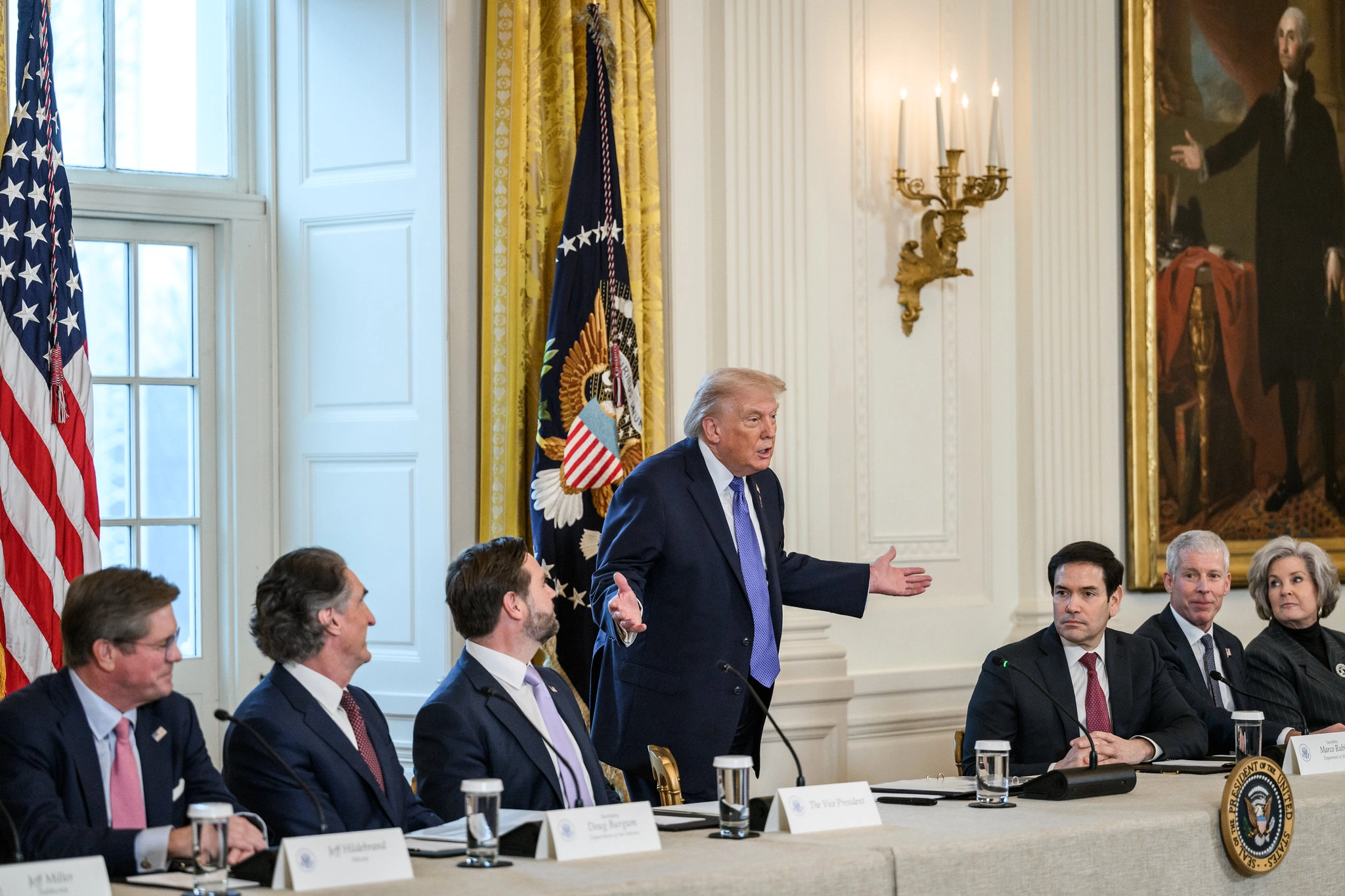 US President Donald Trump attends a roundtable in the East Room of the White House, Friday, Jan 9, 2026. (Photo by Molly Riley /White House)
WASHINGTON DC – US President Donald Trump is not backing off Greenland. Not after the polls. Not after the pushback from allies. And not after a string of unusually blunt warnings from Capitol Hill that the idea veers from provocation into peril.
Instead, the White House is doubling down – arguing that US ownership of the Arctic island would strengthen NATO, not fracture it – even as Denmark and Greenland say, again, that the answer is no.
Two US officials told Kyiv Post on Wednesday that the American delegation handed counterparts from Greenland and Denmark a substantive explanation of Washington’s national security concerns – concerns they believe NATO itself should share.
According to the officials, the administration made the case that US ownership of Greenland would not undermine the alliance but would instead advance NATO’s strategic posture in the Arctic.
The argument, they said, was framed as straightforward logic rather than coercion – a move officials privately described as a matter of “common sense.”
Washington is now hoping allies reach what those officials, without elaborating, characterized as a “common-sense decision.”
Nordic ministers said they would take the message back home and discuss it internally on Friday.
No deal for Trump
That diplomacy has done little to cool the US President’s resolve.
Trump on Wednesday morning again cast Greenland as central to his proposed Golden Dome missile defense project, writing on Truth Social that the US “needs Greenland for the purpose of national security” and urging NATO to help acquire the territory.
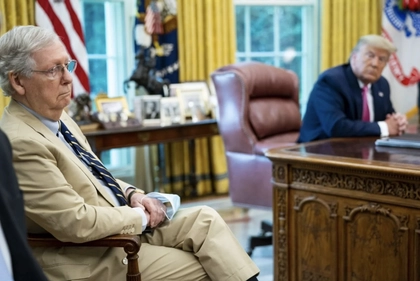
Real NATO Crisis Isn’t Europe – It’s Washington, McConnell Warns
The longest-serving party leader in US history defends the transatlantic alliance, rebukes talk of seizing Greenland, and argues that America – not its allies – has become NATO’s weak link.
“It is vital for the Golden Dome that we are building,” Trump wrote. “NATO should be leading the way for us to get it.”
Anything short of US control, he added, would be “unacceptable,” arguing that Russia or China will get it, and “that’s not going to happen.”
Hours later, that uncompromising stance collided with diplomatic reality inside the White House.
Danish Foreign Minister Lars Løkke Rasmussen and Greenland’s Foreign Minister Vivian Motzfeldt met with Secretary of State Marco Rubio and Vice President JD Vance in the first senior-level engagement since Trump revived his push to take over the Arctic territory.
The meeting was cordial – and inconclusive. “There remains a fundamental disagreement,” Rasmussen told reporters afterward.
Denmark owns Greenland and is responsible for its defense, though the island has an autonomous government. Rasmussen stressed that it is “absolutely not necessary” for the US to own Greenland to meet its security needs.
The three sides agreed to establish a high-level working group to address American concerns – an effort Rasmussen framed as an attempt to find common ground without crossing Denmark’s red lines.
“The group, in our view, should focus on how to address the American security concerns while respecting the red lines of the Kingdom of Denmark,” he said.
Motzfeldt said Greenland is committed to strengthening security cooperation with the US – but not at the expense of sovereignty.
Rasmussen also used the moment to challenge Trump’s narrative that Greenland is under immediate threat from Beijing.
“It is not a true narrative that we have Chinese warships all around the place,” he said. “According to our intelligence, we haven’t had a Chinese warship in Greenland for a decade or so.”
That rebuttal did little to slow a White House that is escalating pressure simultaneously on Iran abroad – and Denmark and Greenland at home.
Senate hits back
On Capitol Hill, the reaction has been sharper – and bipartisan.
More than eight in ten Americans oppose using military force to take Greenland, according to a new Quinnipiac University poll. 86% of respondents rejected the idea outright, while 55% oppose even attempting to purchase the island. Lawmakers are taking notice.
Senators Angus King (I-ME) and Lisa Murkowski (R-AK), co-chairs of the Senate Arctic Caucus, hosted Rasmussen and Motzfeldt Wednesday afternoon to urge de-escalation after the administration openly floated military options.
“There is no need whatsoever for the US to own or occupy Greenland in any way, shape or form to protect our national security interests in the Arctic,” King said, pointing to a 75-year-old defense agreement already granting US access
“Taking Greenland over by military force is almost unthinkable – to attack essentially a NATO ally,” he added. “That would be the greatest gift to Vladimir Putin that this country could possibly bestow.”
Murkowski was equally blunt. “Respect for the sovereignty of the people of Greenland should be non-negotiable,” she said.
Despite the outreach, Danish and Greenlandic officials acknowledged that their message had not landed.
“We didn’t manage to change the American position,” Rasmussen said. “It’s clear that the president has this wish of conquering Greenland. We made it very, very clear that this is not in the interest of the Kingdom.”
Denmark announced Wednesday it would boost its military presence in and around Greenland, with support from NATO allies – a move aimed at reassuring Washington without conceding sovereignty.
Greenlandic Prime Minister Jens-Frederik Nielsen said earlier this week his people would choose Denmark over the US if forced to decide.
Trump dismissed him outright. “That’s their problem,” the US President said. “I disagree with them.”
House floor erupts
The sharpest rhetoric came from the House. Congressman George Latimer (D-NY) used a five-minute floor speech to liken any seizure of Greenland to history’s most notorious territorial grabs, warning the US risked aligning itself with authoritarian aggressors.
“We are trying to burst into a room by force when the door is set wide open and the welcome mat is displayed,” Latimer said, citing existing agreements that already allow extensive US military access.
Any military action against Greenland, he warned, would violate NATO principles and dishonor Denmark’s sacrifices as an ally – including the 43 Danish soldiers killed supporting the US mission in Afghanistan.
“It is the Department of Defense, not the Department of War,” Latimer said. “God stop us if we become the thug.”
Now what?
For now, the White House is pressing its argument that Greenland is central to US and NATO security – and that allies should see it the same way.
Denmark and Greenland are preparing to take Washington’s message home, even as they insist their sovereignty is not up for negotiation.
The working groups will meet. The rhetoric will continue. And the gap between the US president’s ambitions and his allies’ red lines remains wide.
Trump wants Greenland. His allies don’t. Congress is alarmed. And NATO is being pulled into a fight it never sought – but can no longer avoid.
And as Washington insists this is about common sense, Europe is left wondering whose definition applies.

Alex Raufoglu is Kyiv Post's Chief Correspondent in Washington DC. He covers the US State Department, regularly traveling with US Secretary of State. Raufoglu has worked extensively in the South Caucasus and Black Sea regions for several international broadcast outlets, such as VoA, BBC, RFE/RL, etc. He holds an MA in Interactive Journalism from American University, Washington DC.
Kyiv Post
WASHINGTON DC – US President Donald Trump is not backing off Greenland. Not after the polls. Not after the pushback from allies. And not after a string of unusually blunt warnings from Capitol Hill that the idea veers from provocation into peril.
Instead, the White House is doubling down – arguing that US ownership of the Arctic island would strengthen NATO, not fracture it – even as Denmark and Greenland say, again, that the answer is no.
Two US officials told Kyiv Post on Wednesday that the American delegation handed counterparts from Greenland and Denmark a substantive explanation of Washington’s national security concerns – concerns they believe NATO itself should share.
According to the officials, the administration made the case that US ownership of Greenland would not undermine the alliance but would instead advance NATO’s strategic posture in the Arctic.
The argument, they said, was framed as straightforward logic rather than coercion – a move officials privately described as a matter of “common sense.”
Washington is now hoping allies reach what those officials, without elaborating, characterized as a “common-sense decision.”
Nordic ministers said they would take the message back home and discuss it internally on Friday.
No deal for Trump
That diplomacy has done little to cool the US President’s resolve.
Trump on Wednesday morning again cast Greenland as central to his proposed Golden Dome missile defense project, writing on Truth Social that the US “needs Greenland for the purpose of national security” and urging NATO to help acquire the territory.
Real NATO Crisis Isn’t Europe – It’s Washington, McConnell Warns
The longest-serving party leader in US history defends the transatlantic alliance, rebukes talk of seizing Greenland, and argues that America – not its allies – has become NATO’s weak link.
“It is vital for the Golden Dome that we are building,” Trump wrote. “NATO should be leading the way for us to get it.”
Anything short of US control, he added, would be “unacceptable,” arguing that Russia or China will get it, and “that’s not going to happen.”
Hours later, that uncompromising stance collided with diplomatic reality inside the White House.
Danish Foreign Minister Lars Løkke Rasmussen and Greenland’s Foreign Minister Vivian Motzfeldt met with Secretary of State Marco Rubio and Vice President JD Vance in the first senior-level engagement since Trump revived his push to take over the Arctic territory.
The meeting was cordial – and inconclusive. “There remains a fundamental disagreement,” Rasmussen told reporters afterward.
Denmark owns Greenland and is responsible for its defense, though the island has an autonomous government. Rasmussen stressed that it is “absolutely not necessary” for the US to own Greenland to meet its security needs.
The three sides agreed to establish a high-level working group to address American concerns – an effort Rasmussen framed as an attempt to find common ground without crossing Denmark’s red lines.
“The group, in our view, should focus on how to address the American security concerns while respecting the red lines of the Kingdom of Denmark,” he said.
Motzfeldt said Greenland is committed to strengthening security cooperation with the US – but not at the expense of sovereignty.
Rasmussen also used the moment to challenge Trump’s narrative that Greenland is under immediate threat from Beijing.
“It is not a true narrative that we have Chinese warships all around the place,” he said. “According to our intelligence, we haven’t had a Chinese warship in Greenland for a decade or so.”
That rebuttal did little to slow a White House that is escalating pressure simultaneously on Iran abroad – and Denmark and Greenland at home.
On Capitol Hill, the reaction has been sharper – and bipartisan.
More than eight in ten Americans oppose using military force to take Greenland, according to a new Quinnipiac University poll. 86% of respondents rejected the idea outright, while 55% oppose even attempting to purchase the island. Lawmakers are taking notice.
Senators Angus King (I-ME) and Lisa Murkowski (R-AK), co-chairs of the Senate Arctic Caucus, hosted Rasmussen and Motzfeldt Wednesday afternoon to urge de-escalation after the administration openly floated military options.
“There is no need whatsoever for the US to own or occupy Greenland in any way, shape or form to protect our national security interests in the Arctic,” King said, pointing to a 75-year-old defense agreement already granting US access
“Taking Greenland over by military force is almost unthinkable – to attack essentially a NATO ally,” he added. “That would be the greatest gift to Vladimir Putin that this country could possibly bestow.”
Murkowski was equally blunt. “Respect for the sovereignty of the people of Greenland should be non-negotiable,” she said.
Despite the outreach, Danish and Greenlandic officials acknowledged that their message had not landed.
“We didn’t manage to change the American position,” Rasmussen said. “It’s clear that the president has this wish of conquering Greenland. We made it very, very clear that this is not in the interest of the Kingdom.”
Denmark announced Wednesday it would boost its military presence in and around Greenland, with support from NATO allies – a move aimed at reassuring Washington without conceding sovereignty.
Greenlandic Prime Minister Jens-Frederik Nielsen said earlier this week his people would choose Denmark over the US if forced to decide.
Trump dismissed him outright. “That’s their problem,” the US President said. “I disagree with them.”
House floor erupts
The sharpest rhetoric came from the House. Congressman George Latimer (D-NY) used a five-minute floor speech to liken any seizure of Greenland to history’s most notorious territorial grabs, warning the US risked aligning itself with authoritarian aggressors.
“We are trying to burst into a room by force when the door is set wide open and the welcome mat is displayed,” Latimer said, citing existing agreements that already allow extensive US military access.
Any military action against Greenland, he warned, would violate NATO principles and dishonor Denmark’s sacrifices as an ally – including the 43 Danish soldiers killed supporting the US mission in Afghanistan.
“It is the Department of Defense, not the Department of War,” Latimer said. “God stop us if we become the thug.”
Now what?
For now, the White House is pressing its argument that Greenland is central to US and NATO security – and that allies should see it the same way.
Denmark and Greenland are preparing to take Washington’s message home, even as they insist their sovereignty is not up for negotiation.
The working groups will meet. The rhetoric will continue. And the gap between the US president’s ambitions and his allies’ red lines remains wide.
Trump wants Greenland. His allies don’t. Congress is alarmed. And NATO is being pulled into a fight it never sought – but can no longer avoid.
And as Washington insists this is about common sense, Europe is left wondering whose definition applies.
Alex Raufoglu is Kyiv Post's Chief Correspondent in Washington DC. He covers the US State Department, regularly traveling with US Secretary of State. Raufoglu has worked extensively in the South Caucasus and Black Sea regions for several international broadcast outlets, such as VoA, BBC, RFE/RL, etc. He holds an MA in Interactive Journalism from American University, Washington DC.
Trump’s ambitions in Greenland push Iceland closer to the EU
Concerns over US intentions and regional security are nudging Reykjavik towards Brussels
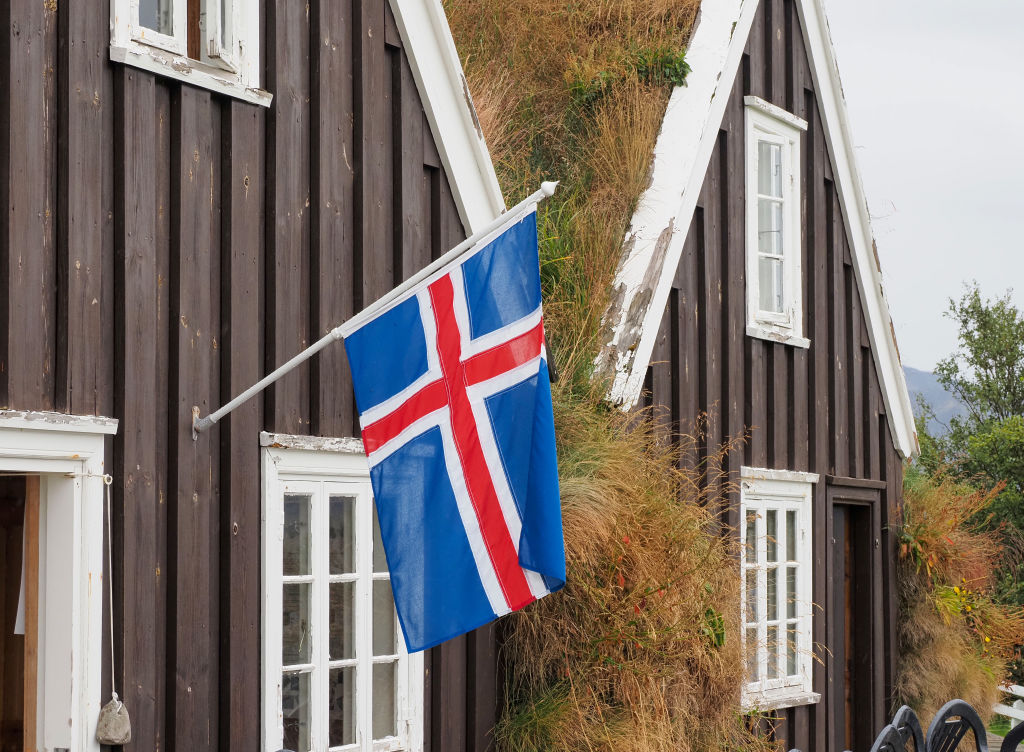
COPENHAGEN – Donald Trump’s repeated remarks about American ownership of Greenland are sending shockwaves far beyond the island itself, with the pressure now spilling over to neighbouring Iceland and pushing it closer to the EU.
Washington’s renewed interest in Greenland, an autonomous territory that is part of EU member Denmark, has reopened strategic fault lines across the North Atlantic, prompting fresh debate in Iceland over its long-standing distance from the EU. As security concerns rise and reliance on Washington comes under scrutiny, EU membership is increasingly discussed in Reykjavik not as an economic choice, but as a question of long-term defence and geopolitical alignment.
“The Greenland issue is forcing Icelanders to reexamine their international relations, and it is fueling the EU accession debate in Iceland to a significant extent,” Eirikur Bergmann, professor of politics at Iceland’s Bifrost University, told Euractiv.
For years, discussions about closer ties to the EU have surfaced regularly, with debates revolving around fisheries, sovereignty and monetary policy. But for the first time, Iceland – a country of around 390,000 people – is debating its relationship with the EU in security terms, driven in part by its geopolitical similarities with Greenland, according to Bergmann.
“All of the arguments that the US is bringing forth as reasons for why they must acquire Greenland, would apply to Iceland as well,” he said.
Greenland and Iceland are located in the same strategic corridor in the Northwest Atlantic, a region of growing military and commercial importance as global warming opens new shipping routes and increases access to natural resources.
The key difference between the two is political status. Iceland is an independent country and a NATO member in its own right, while Greenland is part of NATO through Denmark. Strategically, however, both occupy key positions between North America and Europe.
The idea of Iceland joining the European Union is not new. The pro-EU Social Democratic Alliance applied for membership during the 2009 financial crisis, but the bid was withdrawn in 2015 after power shifted to the eurosceptic Independence Party and the agrarian Progressive Party. Since then, Iceland’s ties with the bloc have been limited to the European Economic Area and the Schengen agreement.
Reliance on Washington under strain
Iceland’s current EU reassessment comes with particular urgency. The country is the only NATO member without a standing army, relying instead on the alliance and a 1951 bilateral defence agreement with the United States.
That reliance is now being questioned.
According to Bergmann, Iceland’s growing interest in the EU is not driven solely by Trump’s interest in Greenland. Reykjavik has begun reassessing Washington’s reliability as a security partner due to the Trump administration’s lack of commitment to international agreements.
EU membership as a means of safeguarding Icelandic interests and security is gaining ground in the public debate.
This reassessment has also been fuelled by the 15% tariff the US imposed on Icelandic goods in August 2025.
“The U.S. attack on Iceland’s vital interests changes matters fundamentally. It has long been clear that full Icelandic membership in the European Union would be sensible, but now it is hardly avoidable if we intend to defend our interests in the long term,” former Icelandic Prime Minister, Þorsteinn Pálsson, recently wrote in an op-ed in Arctic Today.
Upcoming referendum
Iceland’s Foreign Minister, Þorgerður Katrín Gunnarsdóttir, recently announced that parliament will present a resolution this spring on whether to hold a referendum on resuming EU accession talks.
“Developments in world affairs bring out that we should look at what is best suited to strengthening our defences and security,” she said last week, according to RÚV, the Icelandic National Broadcasting Service.
If the parliament approves the resolution, Icelanders will head to the polls within nine months. That suggests the Icelandic government could be aiming for a vote by spring 2027.
Opinion polls conducted in 2025 suggest a narrow majority in favour of EU-membership. A survey by Prósent found 45 percent supporting accession and 35 percent opposing, while a Gallup poll showed similar results.
If Icelanders vote ‘yes’, EU-membership could be a reality within just a few years.
No membership discussion on the Faroe Islands
Meanwhile, Trump’s ambitions in Greenland have not had the same effect on Iceland’s eastern neighbour, the Faroe Islands.
On the Faroe Islands – which, like Greenland, are part of the Danish kingdom – the debate over possible EU membership remains unchanged, Rogvi Olavson, a political researcher at the Tórshavn University of the Faroe Islands, told Euractiv.
According to Olavson, EU-related discussions take up little space in the public debate, and when they do arise, they focus primarily on fisheries.
“The perception of the EU in the Faroe Islands is much more about trade than security,” he said, adding that Trump’s remarks on Greenland have not altered that dynamic.
(cs, cm)

No comments:
Post a Comment