First Grain Shipment From Canada’s Churchill Port in Six Years

The Port of Churchill, located in Manitoba and Canada’s Arctic, checked off another important first in its efforts to revitalize the operation. This week, the port is loading its first grain shipments in six years, and this comes after its first critical minerals export in over two decades.
The FedNav bulker Federal Sprey (37,141 dwt) is currently alongside in the port. It is loading approximately 30,000 tonnes of Canadian durum wheat supplied by a company in Saskatchewan and being shipped to the Mediterranean. The grain traveled to the port on the rebuilt Hudson Bay Railway.
Several factors contributed to the end of the grain business from the port. The pandemic in 2020 and 2021 was a key factor, along with the high cost of shipping the grain and a failing rail line. The Canadian Wheat Board also ceased operations in 2021, which further hurt the industry. However, the Arctic Gateway Group acquired the port in 2018 from the U.S.-based OmniTrax with a goal of rebuilding the operations.
This week’s shipment is set to be the first of three grain cargoes to leave the port in 2026. Officials said they will ship over 100,000 tonnes of grain this year and predict there will be more in 2027. They said it was providing a significant boost for Manitoba’s agricultural business.
In addition to the grain exports, Churchill is also launching its exports of critical minerals. It has loaded zinc concentrate and next week expects to ship its first-ever cargo of potash. It has been mined in Manitoba.
This is in addition to the port’s role in loading out resupply ships traveling to the First Peoples' communities in the Arctic. A resupply ship departed the port earlier in the season, and another is due to arrive to carry supplies to Nunavut. The first supply ship of the 2026 season, Qamutik (12,760 dwt), departed Churchill on July 12, transporting a wide range of construction equipment, industrial supplies, trucks, and other goods.
Officials expressed their excitement at the developments during a ceremony to celebrate the grain shipment. They also pointed to new agreements such as a partnership with Belgium’s Port of Antwerp-Bruges International.
Critics of the expansion efforts and the government financial support argue that the shipping season is too short to make Churchill a meaningful contributor to Canada’s exports. They also say that rail and insurance costs are very high, and the port lacks sufficient storage capacity.
Arctic Gateway Group, however, points to its success in rebuilding the operations and hopes for expanded support from the Canadian government. It points to the critical role the port could play as Canada reshapes trade outside the United States and looks to more international markets.
The federal and provincial governments were also supportive of new studies that explored the potential to make the Port of Churchill into a year-round port. Canada’s CTV National News quotes Manitoba Premier Wab Kinew, who said earlier this year that the federal government had indicated it wants to see liquefied natural gas shipped from Churchill by 2030. He is also hopeful that the government will reconsider federal support for a larger port expansion project.
US Counters China’s Pacific Forays with Cook Islands Port Investment
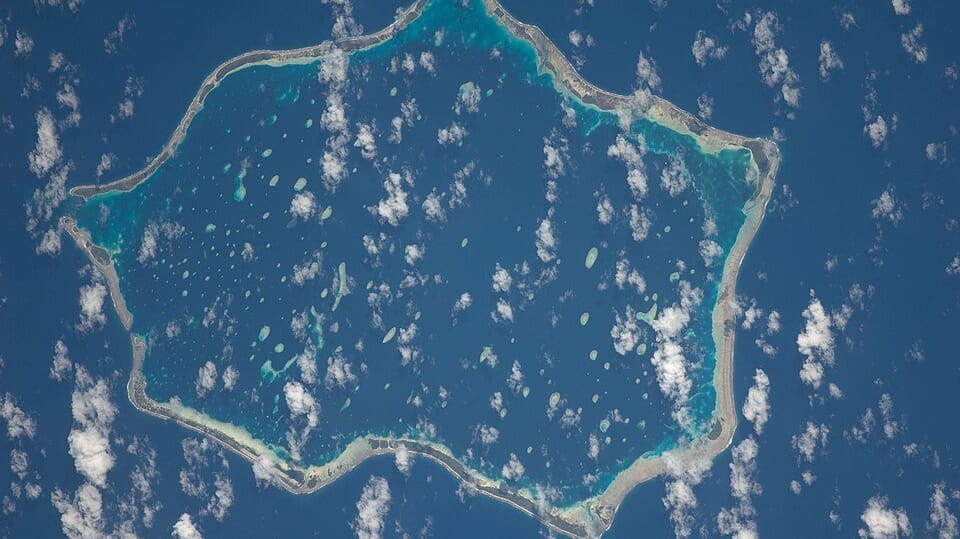
The U.S. government is taking actions to counter China’s incursions in the Cook Islands while pushing its own interests for critical mineral exploitation. Officials announced commitments for a significant investment to fund the upgrade of a port that once hosted a U.S. military base.
As Beijing continues to assert its influence in the Pacific region, the U.S. said that it is partnering with New Zealand to finance the upgrade of Penrhyn Port, which is located on the island of Penrhyn in the northern Cook Islands. The project is expected to cost $60 million, with the U.S. government providing $50 million and New Zealand $10 million.
The U.S. not only has historical ties with the Penrhyn atoll, which served as a military base during World War II, but the island is also strategic in Washington’s push to exploit deep-sea mining for critical minerals. During WWII, U.S. personnel constructed the port and an airstrip following a blockade of the South Pacific air ferry route by the Japanese. The base was used to station bombers alongside some 1,000 military personnel.
Apart from historical ties, the U.S. sees the port as a major asset in facilitating its critical minerals agenda. Early this year, Washington and the Cook Islands government signed a Critical Minerals Framework agreement to cooperate in the exploration of critical minerals, rare earths, and deep-sea mining in the Cook Islands' two million square kilometers exclusive economic zone.
“This project underscores the United States’ strong commitment to our partners in the Pacific and builds on the Critical Minerals Framework the United States and the Cook Islands signed earlier this year,” said Christopher Landau, U.S. Deputy Secretary of State.
Penrhyn, which is also called Tongareva, is the northernmost island in the Cook Islands, with the port located at the village of Omoka. Upgrading of the port is expected to have major benefits, specifically on safety and security, as well as expand transport links and economic opportunities for the northern Cook Islands. The project will be implemented by New Zealand.
Cook Islands Prime Minister Mark Brown said that the port is a critical lifeline for Tongareva in terms of allowing for safer landings, better access to services, and stronger connections between Pa Enua and the world. “This wharf upgrade complements our new domestic shipping investments and our own efforts in improving transport connections for our Pa Enua.”
Both the U.S. and New Zealand have been concerned by a decision by the Cook Islands government to sign a comprehensive strategic partnership with China. Signed in February last year, the agreement creates a framework for cooperation on areas like trade and investment, infrastructure, maritime, seabed mining, among others.
The Penrhyn Port upgrade project was announced during the 55th Pacific Islands Forum in Palau. For the U.S., investing in the project is aimed at countering Beijing’s growing influence in the Pacific region, cutting across diplomatic, economic, and security spheres.
ICTSI Expands Southern Africa Market Grip with TLG Acquisition
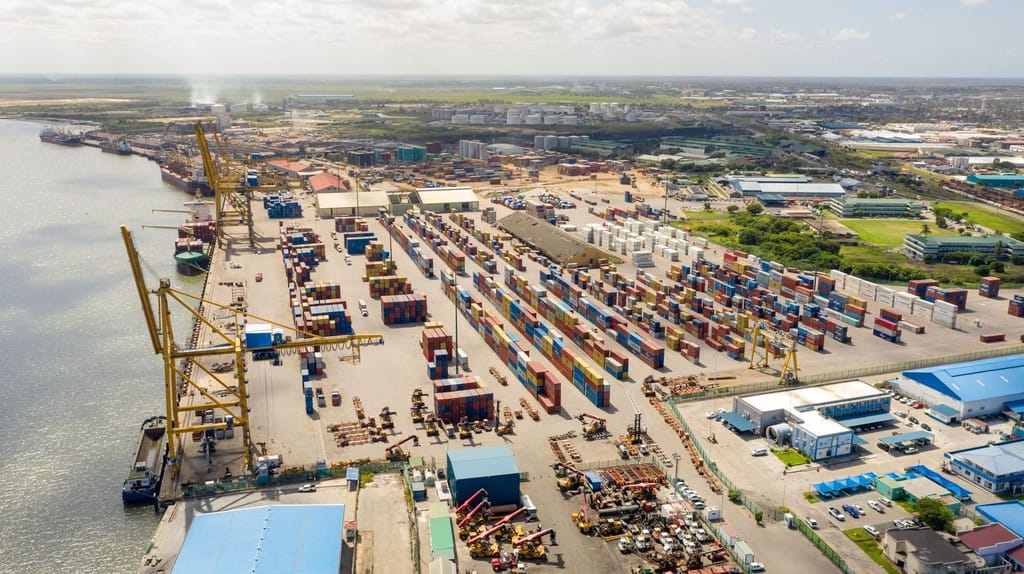
The Philippines-based ports operator ICTSI is signaling intentions to tighten its grip on the Southern Africa ports and logistics space. It entering into an agreement to acquire the South Africa-based The Logistics Group (TLG), an integrated logistics firm offering services across port, rail, warehousing and digital transport logistics.
ICTSI, which is already a major player in Africa with terminal operation interests in five countries including South Africa, revealed in regulatory filings that it has signed an agreement to acquire 100 percent ownership of TLG Acquisition Holdings.
The company did not reveal the amount it is paying to acquire TLG, which is currently owned by African Infrastructure Investment Managers (AIIM) and Mokobela Shataki Proprietary Limited. AIIM controls a 74 percent stake in TLG with Mokobela Shataki owning the remaining 26 percent. The two entities have been the shareholders of TLG for four years, having acquired the company that was started in 2019 in 2022.
The acquisition of TLG is strategic for ICTSI, which has deliberately been pushing to increase its presence in the African market that is fast emerging as critical in the global logistics and supply chains configurations. As an integrated port and cargo handling services provider, TLG has operations across Mozambique, Namibia, and South Africa where it handles a diversified range of bulk commodities and agricultural products across its portfolio of port facilities.
The Philippines-based ports operator reports that TLG will be a strategic addition to its southern Africa interests, a market where it has been seeking to dominate. Among its interests are the Matadi Gateway Terminal in D.R. Congo, and the Madagascar International Container Terminal.
In Africa, ICTSI is also the operator of the Onne Multipurpose Terminal in Nigeria and Kribi Multipurpose Terminal in Cameroon. The company’s entry into South Africa was delayed by court battles. In 2023, ICTSI was awarded a 25-year concession by Transnet to develop and operate the Durban Container Terminal (DCT) Pier 2, an award that was contested in courts by its rival APM Terminals. ICTSI got a major reprieve last year when the Durban High Court upheld Transnet’s decision.
Considering that DCT Pier 2 is the largest container terminal in Durban handling 72 percent of the port’s throughput and 46 percent of South Africa’s container traffic, the planned integration of TLG now expands ICTSI’s business beyond containers to other critical segments like bulk commodities, agricultural cargo and break bulk. TLG operates in countries where agriculture and mining are critical economic pillars.
As one of the world’s largest terminal operators, ICTSI has interests across 19 countries where it operates 34 terminals. The latest addition into its portfolio are two dry bulk port terminals at Brazil’s Port of Aratu that it acquired in July at a cost of $150 million.
On August 3, ICTSI released its first of half this year performance that showed its container throughput across its terminals increased by 16 percent to 8.1 million TEU compared to 6.9 million TEU in the same period in 2025. DCT Pier 2 was one of two terminals that significantly contributed to the growth, the other being the Batu Ampar Container Terminal in Indonesia.
During the period, ICTSI revenues increased by 27 percent to $1.9 billion from $1.51 billion while earnings before interest, taxes, depreciation and amortization grew by 24 percent to $1.2 billion compared to $990.5 million generated in the same period last year.

No comments:
Post a Comment