Saturday, September 05, 2026

Oligarchy and Redistribution: A Reply to Paul Krugman

 September 4, 2026

Photograph by Nathaniel St. Clair

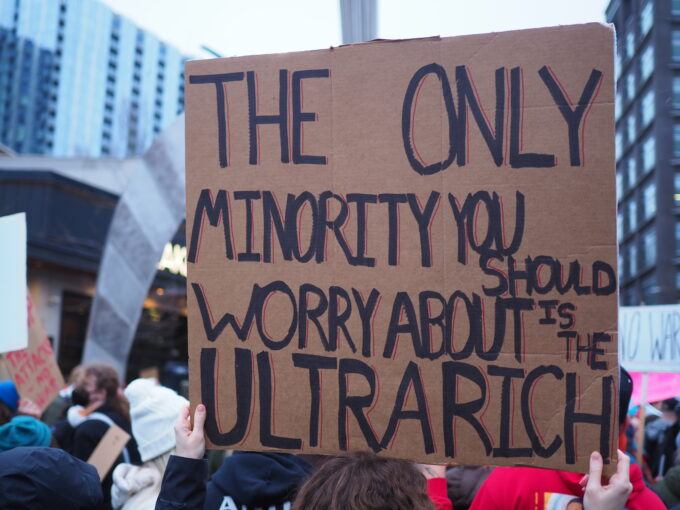
The Nobel Prize-winning economist Paul Krugman continues his “series on the rise of American oligarchy” this week by discussing “the decades-long dismantling of the system of progressive taxation.” Krugman defines oligarchy “as the extreme concentration of wealth and political power in the hands of a small number of people—not the 1 percent, but the .01 percent or even the .0001 percent, the 300 billionaires who made 19 percent of all reported federal political donations in the 2024 election.” He argues that widespread tax avoidance, and accordingly the plummeting of effective tax rates, is largely responsible for giving us a system of oligarchy.

Krugman admits that where he once saw the absurd inequalities of the present day as primarily the consequences of technological change and the market economy, “looking into the math” changed his mind, and it became clear to him that “much of the rise of the modern American oligarchy has been driven by deliberate policy.” The math Krugman is focused on is the tax gap and thus the effective tax rate. The problem for Krugman’s hypothesis is that the United States was already firmly an oligarchy when the tax gap was much smaller and the effective tax rate much higher. Oligarchy is not first and foremost a product of the system of taxation, and it never has been. It is rather a product of the pre-distribution of wealth through state-created special economic privileges.

Though the American “free market” is riddled with these political privileges, they are not well understood or formally quantified. Indeed, they are all but ignored by the economics profession and popular commentary. If we’re trying to address inequalities of both wealth and power—inseparable in practice—through more progressive taxation, then we have already conceded the game, leaving the pervasive legal privileges that create the problem untouched. The mainstream conversation on politics and economics (which some of us prefer to discuss as political economy, precisely because the two are historically and materially inseparable) should work to reestablish careful distinctions between redistribution and pre-distribution.

What economists must begin is the project of formalizing the study of state-granted privilege and quantifying these special giveaways to corporations and the ultra-rich—not only tax credits and other favorable tax treatment, but intellectual property rights, land transfers and eminent domain, professional licensure and barriers to market, arbitrary limitations on civil and criminal liability, and the countless other features of corporate capitalism that have nothing to do with “market forces” or economic freedom in itself. If we began to quantify these in a serious and rigorous way, we would quickly see that capitalism is a system rife with welfare for the infinitesimal billionaire ruling class. It is a system that shifts enormous quantities of wealth upward by systematically restricting opportunities for the popular masses as it creates special prerogatives for our corporate overlords.

Today’s U.S. government is a system of arbitrary administrative rule under the permanent control of interlocking elites in the major corporations and government agencies; this system of discretion under “expert” rule-making is much easier for oligarchs to manipulate than the one contemplated by the Constitution’s three-part structure, under which the people’s representatives are charged with making law. If elected officials don’t actually make the rules or shape public policy toward a level playing field, the common good, and equality of rights under the law, then it matters little or at all who wins any given election. Oligarchy is much easier to create and maintain when it is thus insulated from popular political pressure.

Capitalism is not a free market economy with some minor noise and deviations; regarding the math—the massive gaps of wealth and income and the actual, observable relations of domination and exploitation—capitalism is a continuation of feudalism and mercantilism in a different form, one under which there is intense competition between workers, but strong anti-competitive protections for capital. There is a reason that no liberal of the nineteenth century saw their philosophy as a defense of the capitalist or the capitalist system. Free trade and equal rights were once understood explicitly as a blow against elite, organized, government-aligned economic interests.

Properly understanding and quantifying the pre-distribution of wealth would require that we shift our analytical paradigm: rather than looking only at after-the-fact inequalities of income and wealth, we should also examine the structural rents built into our political and economic system before any taxes are taken. Pre-distribution in this context could be measured by the difference between inequality (and the various inputs, for example, wages, prices, profit margins, revenues, and capital accumulation processes more generally) under current conditions as opposed to a counter-factual situation of actually-competitive markets without special privilege and with widely distributed property.

In the final analysis, Krugman is correct about at least one thing, that what we are witnessing today is the consequence of public policy choices, not any supposedly neutral market forces or technological changes. Even the notion of a natural or pre-political economic system is a profound misunderstanding of historical and social realities. Instead of focusing on the system of taxes and redistribution, what happens after the benefits to capital have already done their job, we desperately need to start seriously examining the structure of the political and legal system that aggrandizes and protects capital at the expense of society at large.

Global Empire as Domestic Policy

by | Sep 4, 2026

While many mainstream commentators blanch at the characterization of the United States as an empire, the hard data show that it is today impossible to seriously dispute. The U.S. military operates between 750 and 800 bases around the world, located in around 80 foreign countries and territories. Because there is no fixed or standard definition of “base” for these purposes, there is no accepted number, and some estimates place the figure at closer to 900. The U.S. is also known to operate dozens of secret military bases and black sites, further complicating attempts to settle upon an exact and definitive number.

Just as the number of military bases is disputed, experts have continued longstanding disagreements about how best to tally up total military spending. As the Peter G. Peterson Foundation observed earlier this year, “The United States continues to lead the world in defense spending by a wide margin. In 2025, defense spending by the United States accounted for 33 percent of all military expenditures by countries around the world,” with its nearly trillion-dollar outlay that year exceeding the combined spending of the other six biggest military spenders. This number is down from 2025’s value of nine to six largely because several other countries dramatically increased their military spending (Germany, for example, upped its spending by 24 percent). Breaking Defense reports, “The Pentagon is betting big on a $1.15 trillion discretionary budget request with a further $350 billion coming from the reconciliation process — together adding up to a historic $1.5 trillion defense budget.” The Trump administration’s discretionary funding request of $1.15 trillion marks the first time in history that a discretionary defense request has exceeded $1 trillion on its own. In the previous budget, for FY 2026, the total number hit the $1 trillion mark with a combination of  $848 billion in discretionary spending and $113.3 billion in mandatory reconciliation spending.

The Project on Government Oversight (POGO) notes that many “obvious examples of programs many would consider ‘military spending’” under commonsense definitions are not a part of the Pentagon budget, including spending for veteran benefits, the Coast Guard, and even nuclear weapons. Looking at five different methodologies, a POGO report published in June points out that all five share at least one conclusion: “Military spending in the United States has long been radically underestimated.” (Not unrelated to this slippery accounting is that fact that the Pentagon hasn’t passed an audit in years, failing its eighth in a row at the end of last year.) This recent POGO report finds that “the true total military budget for the last fiscal year (FY 2025) was significantly higher than $1 trillion: It was likely between $1.5 trillion and $1.8 trillion.” If we count interest payments associated with debts for military spending, then “the range is between $1.7 trillion and $2.3 trillion.”

We rarely consider the domestic political implications of Washington’s globe-spanning empire, yet government spending on war and empire functions as the de facto national industrial policy of the United States, largely determining which cutting-edge technologies receive the most investment, which companies will enjoy massive state-guaranteed markets, and which physical objects will be the focus of the country’s industrial production capacity. Through the military empire, the state becomes both the architect of and primary consumer for a huge industrial sector. And while it has grabbed more headlines this year due to the parlous speculative bubble surrounding AI, the political consequences of the connection between the global military empire and the private sector tech industry remain woefully under-discussed in the mainstream discourse. The federal government is funneling billions to AI companies willing to work directly with the military, overpowering objections from employees and the investor market.

Just this week it was reported that “Palantir’s Maven Smart System, an artificial intelligence-powered military platform, is now an official program of record for the Pentagon.” The executive and strategic leadership of major technology companies also increasingly connects and overlaps with the military and national security establishment, often through the Pentagon’s Defense Innovation Unit and liaisons dedicated to recruiting talent and procuring products from the tech sector. As we have already witnessed for decades, cutting-edge technologies developed for the war and empire inevitably end up being deployed domestically against Americans inside the country. Now more than 50 years ago, the Senator Frank Church Committee showed that the intelligence agencies used programs originally designed for foreign surveillance to monitor Americans here at home without warrants. We still have not seriously reckoned with this connection between the policies and technologies of the empire and the ways our own government sees us and governs us.

Since classical antiquity, astute observers have understood that this kind of worldwide military empire is fundamentally incompatible with the rule of law, constitutional government, and even the thinnest definitions of democracy. The administration of such an empire demands secret and centralized forms of decision-making and thus necessarily precludes transparency, accountability, and popular sovereignty. Contemporary political language has managed to disguise what is patently a system of permanent war and empire in the terminology of a liberal and rules-based order of international law and free trade. We have consigned terms like imperialism and colonialism to the history books even as we continue these systems in different forms today. Even the liberal side of our mainstream discourse no longer seriously questions the political system of war and empire that actually governs the country. We will not understand the form of domestic politics we have in the U.S. today until we stop trying to separate it from the imperatives of empire.

Reprinted with permission from CounterPunch.

David S. D’Amato is an attorney, businessman, and independent researcher. He is a Policy Advisor to the Future of Freedom Foundation and a regular opinion contributor to The Hill. His writing has appeared in Forbes, Newsweek, Investor’s Business Daily, RealClearPolitics, The Washington Examiner, and many other publications, both popular and scholarly. His work has been cited by the ACLU and Human Rights Watch, among others.


Palestine

After a catastrophic summer, rebuilding hope in Palestine

Saturday 5 September 2026, by  Ã‰douard Soulier


In Gaza as in th West Bank, the situation has been catastrophic throughout the summer. As elections begin in Israel and Palestine, the challenge remains for us to relaunch mobilization and international solidarity.

In Gaza, the scorching heat in tents has further aggravated the suffering. The lack of basic necessities and electricity is making life hellish: hospitals can no longer provide real care, water cannot be properly pumped or filtered. According to a report published on 13 August by the IPC (Integrated Food Security Phase Classification), the world’s main body for monitoring famine, acute food insecurity remains widespread throughout the Gaza Strip.

Famine, bombings, colonial violence

Nearly 1.2 million people are in a food “crisis” situation (phase 3 out of 5) and more than 200,000 in “emergency” (phase 4). According to the IPC, nearly two million Gazans may soon face high levels of food insecurity. The report also estimates that 74,200 children under the age of five will need treatment for acute malnutrition by April 2027, including more than 11,400 for severe malnutrition, as well as 24,600 pregnant or breastfeeding women. After months of genocide and blockade, the health consequences will be felt for years to come.

Yet the bombing continued, maintaining a horrific level of death in Gaza. Israel went so far as to call the balloons and kites launched into the enclave a “threat,” warning that it would intensify its strikes and evacuate areas used as “launch sites.” The kites with which children play are thus presented as acts of war. One more pretext to bomb and displace the population.

In the West Bank, the situation is increasingly critical. Settler attacks, with the complicity of the army, have reached an unprecedented level: cattle theft, destruction of equipment and physical assaults, several times a day. Attempts at self-defence are immediately described as “terrorist” and repressed in blood, often collectively, in a reversal of the now systematic reversal of guilt.

There is no significant change to be expected for Palestinians in the first Israeli elections in four years, which will be held at the end of October. Massacre, genocide and colonial expansion have produced broad national unity: in the campaign, candidates are competing in radicalism against Palestinians. Neither the creation of a Palestinian state, nor the end of the occupation, nor even an end to the genocide are really defended. A large part of Israeli society seems to have internalized the idea of solving the “Palestinian problem” by violence.

Elections in the midst of genocide

In a grotesque mirror game, the Palestinian Authority also announced elections at the end of November. If they are not cancelled as in 2021, they will be the first since 2006. About 64% of Palestinians in the West Bank and Gaza are under 30 years old, so most have never voted. Under international pressure, the Palestinian Authority, despite being ultra-collaborative, is being asked to reform or risk losing part of its funding, particularly from Europe.

Following talks in Cairo, a coalition was formed around Hamas, the Palestinian Islamic Jihad and, more particularly, historical opponents or former members of Fatah. Left-wing groups are expected to announce soon whether they will join it. Such an alliance could threaten Abbas and his camp, so discredited is the Palestinian Authority. Unable to protect the inhabitants from the settlers, it has mainly worked over the past three years to neutralize Palestinian armed groups in the West Bank, to the point of appearing as a proxy force for the occupation.

However, it seems difficult to imagine that the elections will take place serenely in the midst of genocide, while the occupier targets, arrests or assassinates opponents who may run. Nearly 10,000 Palestinians are currently imprisoned, particularly for their political opposition. The precedent of 2006 also remains in the memory: Hamas’ electoral victory was not recognized by either Israel or the Western powers, paving the way for the blockade of Gaza.

However, these elections can provide Palestinians with the opportunity to rebuild national unity, to relaunch a hopeful political struggle and to renew mass opposition to genocide and occupation. The Israeli noose must still be loosened. After a catastrophic summer, the urgency is therefore to relaunch the mobilization to end impunity and to strengthen international solidarity.

28 August 23026

Translated by International Viewpoint from l’Anticapitaliste.

Libya

Trump approves militia law in Libya

Friday 4 September 2026, by Paul Martial


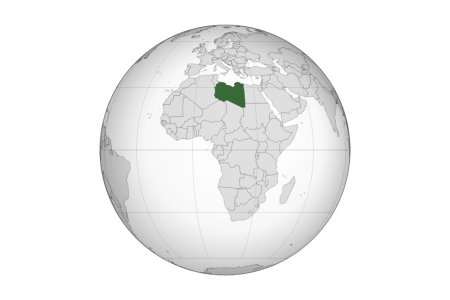
Absent from the Libyan scene since 2012, when its ambassador was assassinated by a jihadist group, the United States is back in force with the plan of Trump’s envoy, Massad Boulos, which aims to reunify the country, divided between two entities: the East and the South for Haftar, and Tripoli and the West for Dbeibah, the current prime minister.

A weakened regime

Both clans are facing significant difficulties. Dbeibah has had to deal with strong popular mobilizations that have taken place in Tripoli, but also in other cities such as Ain Zara or Hay al-Andalus, to protest against electricity cuts and, more generally, against the deterioration of living conditions. Although one of the organisations, Harak Abna’ Souq al-Jumaa, has put an end to the civil disobedience campaign, tension remains high. Especially since Dbeibah’s power is based on different militias, which sometimes clash with each other, as in the oil town of Zawiya.

The Haftar clan is facing other difficulties. Khalifa Haftar has chosen his successor, Saddam, as head of the army, from among his five sons, causing turmoil, particularly within the military apparatus. The attack that cost the life of Fawzi Al-Mansouri, head of the intelligence services, has undermined the discourse on total control by the security forces, which is so popular with European countries. Finally, the alliance between Haftar and the tribes of the south, particularly in the Fezzan region, has been shattered with the creation of an armed militia led by Mohamed Wardougou.

The Boulos plan

At the international level, Turkey, which supports Dbeibah, as well as Egypt and the United Arab Emirates, who support Haftar, have met with the opposing camp on both sides. It is in this context that the United States is making its diplomatic comeback with its plan, which aims to reunify the country from above, with a single administration, government and army.

The program would consist of appointing Saddam Haftar as president, while Dbeibah would retain his position as prime minister. The Haftar clan, favoured by this plan, is showing its goodwill by playing a central role in the release of the American hostage, the missionary Kevin Rideout, in Mali. The Libyan oil company National Oil Corporation has just paid its debts to American companies, including Baker Hughes and Halliburton.

As for Dbeibah, he has to deal with the militias. While some are opposed to the project, others are more circumspect, understanding that their opposition would place them outside the new government.

Financial and strategic gains

The United States is motivated by economic issues: to get its hands on oil reserves and to allow American companies to take advantage of a market with high potential. It is also a question of beating the pawn of the Russian troops of Africa Corps, present alongside the Haftar clan, and of strengthening their military grip on North Africa.

There is a risk that the Boulos plan will further destabilize the country, where everyone will seek to consolidate their power or acquire a new one, including by force. Indeed, power, whether acquired through negotiation or by arms, allows enrichment through smuggling, corruption and human trafficking.

The United States is playing the role of sponsor to establish peace between gangs, while removing the prospect of Libyans deciding the future of their country themselves by profoundly renewing the political offer.

28 August 23026

Translated by International Viewpoint from l’Anticapitaliste.

The Iran War’s Costly Cycle of Retaliation

Each U.S. strike may impose costs on Tehran while creating new commitments for Washington.

by | Sep 3, 2026

On August 30, U.S. forces struck two Iranian missile launchers on Larak Island near the Strait of Hormuz, saying the systems posed a threat to shipping. Iran answered by launching ballistic missiles at U.S. forces in Jordan. The exchange revived a seemingly simple question: What is the next response supposed to change? In the war with Iran, the relationship between military action and political results is neither linear nor predictable. A strike may destroy a target while changing Tehran’s calculations and triggering costs elsewhere. For Washington, the issue is therefore not simply choosing the next target, but determining whether each action moves the United States closer to a political objective or merely creates the conditions for another round.

The problem lies in the gap between the geography of an attack and the geography of its consequences. The United States can choose where to apply force, but it cannot exercise the same control over where it will bear the resulting cost. An attack in Iran can lead to pressure on U.S. forces elsewhere in the region, threats to partners and allies, disruption of shipping, and higher energy costs. Recent fighting around the Strait of Hormuz has shown how quickly military exchanges can spill into maritime traffic and oil markets. A limited operation can therefore acquire a reach far beyond its initial target.

That does not mean Washington should avoid using force. Deterrence without the ability to impose costs has little credibility, and failing to respond can also carry risks. If Tehran concludes that U.S. threats will not be enforced, it may judge further action to be less costly. The real choice is not between “responding” and “not responding,” but between responses that serve a defined political purpose and those that simply sustain the cycle. A credible response must impose a meaningful cost while avoiding a situation in which Washington has to strike again merely to prove the credibility of the previous strike.

This is why the meaning of “response” becomes more complicated once force is used. If Washington attacks to restore deterrence, success depends not only on the damage inflicted on Iran but on what Tehran does afterward and what new obligations the United States assumes. If Iran retaliates against U.S. forces, threatens allied infrastructure, or disrupts vital regional routes, Washington’s next decision becomes less independent. Force protection, allied defense, and freedom of navigation all enter the calculation. Each mission may be defensible on its own, but together they can create commitments that were not part of the original objective.

The costs of conflict are therefore generated well beyond the battlefield. Greater threats to U.S. personnel require more protection and readiness. Greater risks to partners increase pressure for additional security support. Insecurity along shipping routes can raise the costs of trade and energy. Even if Washington retains the operational upper hand, it may simultaneously enlarge the strategic responsibilities it must carry. Tactical success can be measured by whether a target was destroyed; strategic success must be measured by whether the United States emerges safer, with more freedom of action and fewer – not more – obligations.

That distinction also makes the definition of victory more demanding. Destroying a military target is an operational achievement. But if preserving the result requires more deployments, a higher state of alert, and broader protection of regional interests, the military gain has not necessarily become a strategic one. Deterrence is not measured only by the intensity of a strike. It succeeds when the adversary’s calculations change enough that further force becomes less necessary. If each operation requires another operation to validate the previous one, American power can become a mechanism for perpetuating the conflict rather than ending it.

This is how mission creep often develops. It rarely begins with a formal decision to enter a long war. More often, a sequence of individually limited steps accumulates: a strike to answer a threat, a deployment to protect forces, support for an ally, and another operation to secure shipping or other vital interests. The U.S. experiences in Iraq and Afghanistan showed how missions can expand beyond their original purpose without a single moment when the enlarged commitment is clearly announced. Each step may appear reasonable by itself; together they can produce a mission that did not exist at the outset. The cost is not only greater expenditure, but reduced freedom to disengage.

The Iran war makes that danger sharper because the two sides are vulnerable in different ways. The United States possesses far greater striking power, but it also maintains forces, bases, partnerships, and economic interests across the region that require protection. Iran does not need to match U.S. firepower directly to impose costs. It can distribute pressure across different points and force Washington to defend several interests at once. That does not amount to Iranian military superiority. It means military superiority does not translate automatically into political control. The United States may inflict greater damage while spending more resources and attention managing the consequences.

Washington’s hardest test, then, is not whether it can deliver the next blow. It is whether it can identify the point at which deterrence has been restored and further operations are no longer necessary. The United States must be able to defend its forces and interests, support allies, and respond to direct threats. But each action should be tied to a clear answer to four questions: What behavior is Washington trying to change? What cost is sufficient to change it? What additional commitments could the response create? And at what point does the mission end?

The final measure of success is not whether Washington can impose still more pressure on Iran; it can. It is whether that power can produce an endpoint rather than another obligation to respond. If every attack requires another attack to preserve the credibility of the last one, the United States may continue winning tactically while accumulating greater costs, commitments, and constraints. In this kind of war, victory is not simply the ability to strike harder. It is the ability to use force in a way that changes the adversary’s behavior while preserving the freedom to stop using it.