Showing posts sorted by date for query FRANTZ FANON. Sort by relevance Show all posts

Friday, November 28, 2025

PKK

47th anniversary
This is not the closing of history, but a new beginning that transforms the experience of the past into the founding will of the future. The road is not finished, only the place to walk has been transferred to us. They opened the road by paying the price, now will you grow that road by living?


HUSEYIN SALIH DURMUS
ANF NEWS CENTER
Thursday, November 27, 2025 


According to historical legend, the chief architect and stonemason Hiram Abif, whom he commissioned while building the Temple of Solomon, was killed by three of his journeymen who wanted to learn the secrets of craftsmanship by force.

Apprentices want to have knowledge and mastery the easy way instead of deserving it with effort, but Hiram chooses silence and death while passing the test of conscience. Reminding that the price of wisdom and mastery is loyalty, he says:

"Conscience is an uncompromising judge."

States can close a history, organizations can dissolve themselves, signs can be removed, archives can be silenced, in short, memory can be erased. But conscience does not close any decision book. Because conscience records not what is forgotten, but what is not replaced.

Today, we commemorate November 27 not as a "founding anniversary", but to stand in front of a threshold of conscience that was opened 47 years ago. Because today exists not to praise the past, but to lend money to the future.

It is not the day of an organization, not of a generation, but of the obligation of the truth. We are neither in the despair of those who say "everything is over" nor in the nostalgia of those who say "let's go back to the old days". Because this history is neither closed nor will it be repeated. This history is a passed down truth that will be continued.

When an organization is dissolved, only its sign ends, but the prices paid for it do not end. A group of brave hearts who had the courage to come together 47 years ago had neither the state, capital nor the army in their hands. There was only one sentence that rose from denial, poverty, prohibition and ignorance:

"We do not agree to this order, we reject it."

Today, that sentence may have abandoned its organizational form, its name, but it has not abandoned its morality. Because what is transferred is not the name, but the debt. And debt grows where we are most silent.

Frantz Fanon defines colonialism as a mechanism that occupies not only lands but also one's belief in oneself. A people first encounters an order that takes away its personality, but it re-establishes itself with its resistance. For this reason, the termination is not a loss, but a change in the form of the march that started with the rejection of the definition of exploited human being. History continues by carrying, not by owning.

The first reflex that makes a people revolutionary is this, before ideology: "The memory of not being put in the place of a human being, of being exploited." This struggle is not only the history of a political movement, but also the history of the re-establishment of human dignity. Because these people resisted not only because their lands were divided, but also because their names were erased, their graves were banned, their language was silenced, and their dead were banned from being buried.

Frantz Fanon says: "Colonialism is a judgment that prohibits the oppressed from humanity." Resistance, on the other hand, is that judgment


It is the mechanism that subjects the restitution to judgment.

A movement dies not when it loses its name, but when it loses its conscience. That is why what we are talking about in its 47th year is not a closure, but a matter of conscientious continuity. Because truth is made from price, not form.

The story of the last half century was written in three places as an atlas of struggle that feeds each other:

• Dungeon: The place where the body is imprisoned, the will cannot be surrendered, and resistance is coded

• The Mountain: Not an escape, but an irreversible vow

• Exile: Not distance, but the heavy distance of uninterruptible belonging and the first step to universality.

Fanon's definition of "a man with chained body but free soul" also describes the deep layer of this history. Because some bodies continued to think and produce even when they were in cells, some languages continued to speak even when they were silenced, and some souls continued to multiply even when they were alone.

These three places made the same sentence:

"We did not come back from here; so that you can continue from here."

He established a generation. A generation has protected. It lasted for a generation. Now the task of our generation is completely different:

It is not to repeat what they did, but to complete what they could not do.

Ibn Khaldun says:

"The first generation establishes, the second carries, the third consumes."

We are right above the third threshold. A historical burden was handed over, but an excuse was not handed over.

History does not ask "what did you see?" "What did you put in its place, were you able to enlarge it?" he asks.

And conscience always seeks the following as an answer:

"Were you able to carry what was left to you? Were you worthy?"

Fanon continues, "Each generation has to discover its own mission in relative uncertainty; he either fulfills it or betrays it".

And now the task is to carry that mission even in uncertainty. What our generation needs to be convinced of is not hope, but responsibility.


The address of the martyr Sinan Dersim, who left a deep impression on those who knew him during his 47-year testimony, to "WATER", which he recited accompanied by Rodrigo's Aranjuez Concerto, is actually a summary of revolutionary morality and a sign of the path to be followed. Some people are not carriers of an organization, but of a soul, they do not make noise, but they lead. They are like water, Water carries not only a substance but a memory as it flows. It carries the sound, color and trace of the place where it was born from every source. Just like the struggle that peoples and generations pass on to each other.

It finds its way by flowing from one to the other, it knows no obstacles. In some periods it gets blocked, in some places it becomes invisible, but it never gets disoriented. This is how the story of the last half century flowed.

"Water gives life as it flows; It breaks down when it gets stuck and waits. He does not make noise, but he mows the road patiently."

Our duty is not to destroy like a flood, but to carry it like water. Because water is like conscience, it rots when it is stopped, it repairs and grows when it can flow.

Today, November 27, is not a celebration, but a day of trust, a day of memory. Because a struggle is defeated not when it loses its name, but when it loses its meaning. We are here not to lose this meaning.

The PKK, the leading force of the Kurdistan Freedom struggle, has completed its historical form and mission, but the truth is still where it is. The struggle has neither ended nor dispersed, on the contrary, it is becoming a broader, deeper and more social force by carrying its half-century of accumulation and truth to a new level of organization.

This is not the closing of history, but a new beginning that transforms the experience of the past into the founding will of the future. The road is not finished, only the place to walk has been transferred to us.

And the question we are now being asked is:

"They opened the road by sacrificing themselves and paying the price, now will you grow that road by living?"

We are here.

We are taking over.

And we will complete it.

INSCRIPTION

This article

To mothers who buried their children but did not lose either their voice or resistance,

To the father who stands guard at the grave of his son, whom he raised with the deepest devotion and love,

To brave women who have lost their husbands but have not lost their loyalty,

To children who have heard their father's name but have never seen his face,

To the sisters, brothers and sisters who have lost their brothers but silently carry the burden and honor of brotherhood on their backs,

To the survivors of burned villages, bombed houses, plowed lands, to the unsolved perpetrators,

It is a debt of gratitude dedicated to a people who have been wounded along with their nature, to all revolutionaries who have chosen their honor, not the blessings and wannabes of the world.

Because a struggle is as real as it does not carry itself, but what is lived and died for it.

Sunday, September 28, 2025


Deepening Revolutionary Theory in a Time of Genocidal War and the Threat of Fascism


Now Online: Recording of talks at the online IMHO mini-conference on Saturday, September 13, 2025


Panel 1

Watch recording hereOn the 100th Anniversary of Frantz Fanon’s Birth: Why His New Humanism Matters Now More Than Ever - YouTube (60 minutes)

Speakers:

  • Ndindi Kitonga, Kenyan-American revolutionary educator and activist in Los Angeles
  • Peter Hudis, Oakton College, author of Frantz Fanon: Philosopher of the Barricades
  • Alex Adamson, organizer in the Greater Boston area, writes on queer, trans, and feminist decolonial philosophy and Marxism
  • Annie Olaloku-Teriba, is a columnist, podcast host and independent scholar of ‘Race’ and Imperialism


Panel 2

Watch Recording here: The Late Marx: Gender, Colonialism, Indigeneity - YouTube (46 minutes)

Speakers:

  • Kevin B. Anderson, UC-Santa Barbara, author of The Late Marx’s Revolutionary Roads
  • Melda Yaman, Istanbul University, feminist philosopher, author of Pathways from the Grundrisse to Capital
  • Wayne Wapeemukwa, University of British Columbia, writer on non-Western/Indigenous philosophy and Marxism


Panel 3

Watch recording hereMarx’s "Critique of the Gotha Program" 150 Years Later, and Today’s Organizational Challenges - YouTube (30 minutes)

Speakers:

  • Heather A. Brown, Westfield State University, author of Marx on Gender and the Family
  • Tomas MacAilpein, Scottish libertarian communist


*****

Sponsored by the:
International Marxist-Humanist Organization

More information:
arise@imhojournal.org  https://www.facebook.com/groups/imhorg/

Consider a donation to the IMHO to support our work:
bit.ly/IMHO-DONATE

I Am on Kirk’s “Professor Watchlist.” I Know How It Destroys Civil Debate.

I deeply value free speech and debate. The watchlist created by Charlie Kirk’s Turning Point USA is anathema to both.
September 27, 2025

Charlie Kirk, who founded Turning Point USA, speaks before former President Donald Trump's arrival during a Turning Point USA Believers Summit conference at the Palm Beach Convention Center on July 26, 2024, in West Palm Beach, Florida.
Joe Raedle / Getty Images

After the tragic murder of Charlie Kirk — one that I unequivocally found to be unconscionable, unacceptable, and sickening — I thought about his wife and children. I am married, and I have children. I can’t imagine the unspeakable sorrow that Kirk’s wife and children must be experiencing. So, I will continue to mourn his death and their loss. I do so because I believe in love, forgiveness, and the sanctity of human life. I also believe in the First Amendment. So, here we are.

In the aftermath of Kirk’s tragic death, a great deal is being discussed now about his legacy regarding free speech and open debate. What I have to offer to readers in this regard is my own very personal experience of the organization that Kirk founded — Turning Point USA (TPUSA).

How Kirk’s Organization Targeted Me in 2016


In 2016, TPUSA produced an online list titled “Professor Watchlist,” a site designed to identify professors who purportedly “discriminate against conservative students and advance leftist propaganda in the classroom.” I don’t “teach leftist propaganda in the classroom,” and I never discriminate against conservative students, but I was nevertheless placed on the list soon after its creation in 2016, apparently because I am a philosopher who examines the complex ways in which white people are socially and psychically complicit in the perpetuation of anti-Black racism in the United States.

There’s no way for me to know whether or to what extent my placement on the Professor Watchlist extended or intensified the ongoing avalanche of racist threats and slurs that I had already started receiving after I published an open letter in The New York Times in 2015 titled “Dear White America” — a letter that sought to challenge the racist “innocence” of white people and was the source that Turning Point USA cited as grounds for placing me on their watchlist. But being placed on the Professor Watchlist undoubtedly magnified the feelings of trepidation and outrage created by the racist invective constantly pouring down on me throughout that time.

In response to “Dear White America,” I received an ongoing series of hate messages via email, voice message, and postal mail such as:


Trump Signs Order Designating “Antifa” a “Domestic Terrorist Organization”
The executive order comes in the midst of the Trump administration’s widespread attacks on the First Amendment. By Elizabeth Weill-Greenberg , Truthout September 23, 2025

“Dear N***** Professor… You’re a f***ing smug N*****. You are uneducated with education. You are a f***ing animal. Just like all Black people in the United States of America.”

“Hey Georgie boy… You wouldn’t have a job if it wasn’t for affirmative action. Somebody needs to put a boot up your ass and knock your f***ing head off your shoulders…”

“There are two ways you can return to Africa: On a passenger ship, or in a coffin freighter. Choose quickly.”

“In a sane world, this ugly n***** would be just beheaded ISIS style. Make America WHITE Again.”

With apologies to those who already encounter this kind of triggering hate speech regularly and do not need more of it in their lives, I reprint these examples here to show the ways in which there is a failure of vulnerability to truly listen to those deemed “the other,” dreams of returning to a white mythical past of “racial purity,” an unabashed ascendancy of white nationalism, political disinformation about white “victimhood,” an intentional disregard for civic responsibility, and an intentional fomentation of hatred by a Trumpian regime hell-bent on creating and exacerbating racial, political, and religious divisiveness. All of this is at the heart of what is actually shutting down space for civil debate and free speech in this country.

My personal experience underscores how projects such as this watchlist are not really about protecting “civil debate” and “free speech,” as some of Kirk’s fans have argued.

And my personal experience of receiving this ongoing avalanche of hate in response to publishing an op-ed, and then being placed on the TPUSA’s Professor Watchlist as an additional response to the same op-ed, underscores how projects such as this watchlist are not really about protecting “civil debate” and “free speech,” as some of Kirk’s fans have argued.

The process through which I was placed on TPUSA’s list was anathema to public debate. Instead of writing an op-ed in response to my New York Times op-ed, or inviting me to a public debate on these issues, TPUSA instead added me to an online list that is — as I explained in another New York Times op-ed back in 2016 — essentially a new species of McCarthyism.

I would never dream of subjecting the people I disagree with most vehemently to a list like this. I have no desire to create a watchlist that monitors conservatives and fuels their public denial or subjects them to violent retribution; I don’t believe in shaming entire groups of people or targeting individuals through a list such as this.

The list — a dangerous and antidemocratic tool — follows a draconian playbook by spying on professors and labeling them as “troublemakers” for the U.S. establishment. It is a site for surveillance, control, name-calling. Functioning like a modern-day scarlet letter, the list can lead to ostracization, condemnation, and even the practice of self-silencing (because of the fear of being the object of actual or potential violence) for those who are placed on it.

Before placing me on this list, no one from TPUSA asked to speak with me. Kirk never asked to debate me about my views on whiteness, white privilege, or white embodiment. In being placed on the list, I was falsely labeled and marked in ways that are not true. I have recently listened to clips of Kirk complaining that there are those who didn’t listen to him; in the clips he expresses frustrations about times when others just made assumptions about things that he didn’t say, or distorted what he meant by what he said.

I understand his point because that’s exactly what his organization, TPUSA, did to me. I was placed on the list without a mumbling word about making sure that I was given democratic space to debate my position on whiteness. TPUSA sought to tar and ostracize me as an “enemy” of conservative thought without first inviting me for civil debate.
Conversations That Kirk and I Never Had

Kirk and I would have had much to debate if our engagement had involved an in-person conversation rather than his organization simply placing me on a McCarthyist shunning list. It appears that we disagreed on many topics.

For example, though Kirk never said that all Black women lack “the brain processing power to otherwise be taken really seriously,” he did accuse Joy Reid, Michelle Obama, Sheila Jackson Lee, and Ketanji Brown Jackson as “lacking” such brain processing power. All these women are Black and all of them graduated from Ivy League schools. So, what was the basis for Kirk’s insult? He can’t simply make such an egregious claim without that claim being mediated by the history of anti-Black racism. Indeed, his accusation was loaded with white racist overtones. So as not to miss Kirk’s nuance, he says these women lack such brain power because they have benefited from affirmative action. He says they stole “a white person’s slot to go be taken somewhat seriously.” The assumption that because they may have benefitted from affirmative action they are therefore not bright enough is a blatant non sequitur. He assumes that affirmative action involves the automatic lowering of standards. Affirmative action was never designed to discriminate, but to create an equitable playing field. To hold this position about brain power and affirmative action, it would follow, based upon Kirk’s reasoning, that white women, the group that has benefited most from affirmative action, are also cognitively incompetent.

Similarly, when asked about diversity, equity, and inclusion (DEI), Kirk responded, “Obviously [DEI is] about trying to destroy the excellence of the country and elevating racial tribal politics.”I’m not cherry picking here. Notice that he says, “obviously.” But to whom is this “obvious”? Certainly not to Black people, who have been enslaved in this country longer than we have been “free.” But let’s face it, the United States was founded upon white racial tribal politics.

Kirk also problematically raised the issue of race, affirmative action, and DEI while clarifying a statement that he made about Black pilots. Originally, his comment was within the context of United Airlines saying that it wanted 50 percent of its pilots to be people of color or women, which still disproportionately favors white men. Kirk went on to talk about how there are relaxed standards anytime there are racial quotas. And he extended his reasoning to air traffic controllers, professors, and college admissions.

He later clarified, “Boy, if I see a Black pilot, I’m now going to wonder is that individual qualified or were they selected because of their race.” He went on to assert that he had this thought not because of who he is, but because affirmative action and DEI hiring practices made him think that way.

Here’s the problem. Being a qualified Black pilot and benefitting from affirmative action or DEI hiring practices are not mutually exclusive. When I’ve seen a Black pilot, I don’t “hope” that they can fly the plane. I’m proud to see them. And if they have benefitted from affirmative action or DEI, this in no way creates trepidation for me about their qualifications. I am fine with the fact that United Airlines cares both about making sure some pilots are Black and also making sure that those same pilots are well-qualified.

This is a conjunction that Kirk rejected. Kirk also didn’t seem to understand why United Airlines would be concerned with the color of the skin of the pilot. To wonder about this is to pretend ignorance about white supremacy in this country. Since Kirk didn’t address this, I will. Actually, it is Kirk who was concerned with the color of the skin of pilots. His concern was part of the perpetuation of white racism and had everything to do with the whiteness of the skin of those pilots who have dominated aviation. United Airlines does not hire based upon racial quotas, which are illegal. Its aim was merely to open possibilities and opportunities for those who have been systemically and systematically excluded from the field and from the cockpit.

I hope that articulating my disagreements with Kirk here isn’t interpreted as a virulent attack. I just think that he was wrong on these issues. In a functional democracy, to disagree with someone is a politically protected right, and it ought to be productive of greater mutual understanding and clarity. In fact, philosophically and democratically, agonism (a creative tension between interlocutors) is to be valued and treasured. In his book The Multivoiced Body, philosopher Fred Evans argues that agonism exemplifies an enduring creative interplay between voices, “not a reaction to enemies.”
The Right Is Weaponizing Kirk’s Murder to Fuel Attacks on Democracy and Speech

To engage in critique and productive disagreement should be the lifeblood of a democracy, and of this fragile experiment known as U.S. democracy. Yet, Donald Trump, JD Vance, Stephen Miller, and many right-wing activists are using the tragic occasion of Kirk’s murder to foment retribution on those who disagree publicly with Kirk’s views. Indeed, they are effectively and anti-democratically weaponizing the death of Kirk.

Trump and his sycophants are implementing political repression, censorship, and politically targeting free speech, which means that those of us who believe in democratic speech, in dissent, in open and critical debate, are being targeted, are being silenced, are being marked for further violence. This is not new for Trump. As someone who aspires to be a political strongman, his modus operandi is to threaten to use government power to imprison and to prosecutethose who he sees as his political enemies, despite it being unconstitutional. The Justice Department is not, or should not be, a political tool to be wielded against one’s perceived or real political rivals.

The soul of this country is at stake, if it has a soul worth saving. I don’t say this flippantly. I say this because I mean it, and I am serious about it. I say it because I refuse to feign ignorance about what is happening to this country before our eyes. It is becoming increasingly fascistic. Is it now a crime to use that term, to speak freely? If it is, then that only confirms the truth that I speak.

The reactionary call for blood and collective punishment after the tragic murder of Charlie Kirk is a form of ethical debauchery and warmongering. For those who encourage it, especially those who identify as “Christians,” you might as well spit in the face of Jesus. Some of us — many of us — detest the murder of Kirk, even as we passionately disagree with his politics. I am one of those. As Frantz Fanon writes in Black Skin, White Masks, “Today I believe in the possibility of love; that is why I endeavor to trace its imperfections, its perversions.”

My question is, what do you believe in?


This article is licensed under Creative Commons (CC BY-NC-ND 4.0), and you are free to share and republish under the terms of the license.
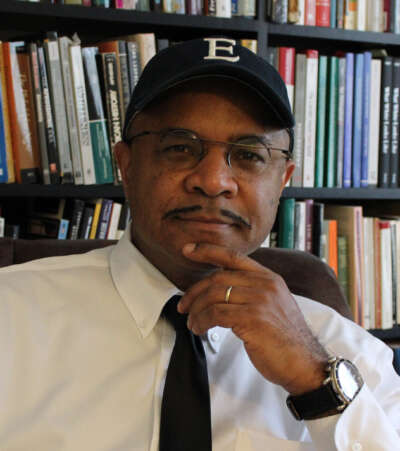

George Yancy is the Samuel Candler Dobbs professor of philosophy at Emory University and a Montgomery fellow at Dartmouth College. He is also the University of Pennsylvania’s inaugural fellow in the Provost’s Distinguished Faculty Fellowship Program (2019-2020 academic year). He is the author, editor and co-editor of over 25 books, including Black Bodies, White Gazes; Look, A White; Backlash: What Happens When We Talk Honestly about Racism in America; and Across Black Spaces: Essays and Interviews from an American Philosopher published by Rowman & Littlefield in 2020. His most recent books include a collection of critical interviews entitled, Until Our Lungs Give Out: Conversations on Race, Justice, and the Future (Rowman & Littlefield, 2023), and a coedited book (with philosopher Bill Bywater) entitled, In Sheep’s Clothing: The Idolatry of White Christian Nationalism (Roman & Littlefield, 2024).

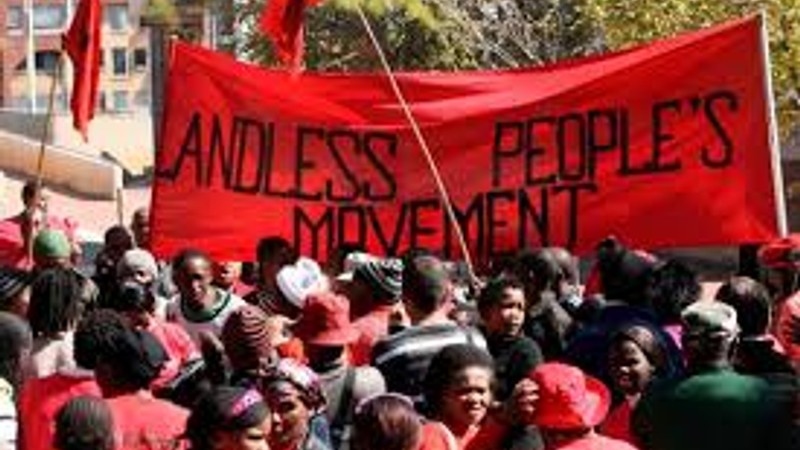
Wednesday, August 20, 2025


South Africa: Can the SACP help rebuild a democratic, militant left?

SACP

First published at Zabalaza for Socialism.

The South African Communist Party’s (SACP) decision to stand independently of the African National Congress (ANC) in the coming local government elections deserves to be welcomed. For decades, independent socialists and other militants have argued that the Party’s subordination within the Tripartite Alliance weakened the political independence of the working class and tied the fate of socialist politics to the fortunes of the ANC. The fact that the SACP has now resolved to stand on its own — even if belatedly — represents a potential step forward in re-conquering the independence of the working class and advancing class politics based on socialist renewal.

The ANC’s political hegemony is broken, its moral authority shredded, its electoral base fractured. Yet the political space that has opened has been filled largely by right-wing forces such as the Democratic Alliance, the Patriotic Alliance and other populist outfits. The left, meanwhile, has become weaker and more fragmented, precisely when the deepening social, economic and political crisis cries out for a clear, class-based alternative.

The question all strands of the left must ask is obvious: why is the left so weak today, given the scale of the crisis facing working-class and poor people? And what can be done to reverse the situation? If the SACP’s electoral turn is to be more than another false start — like NUMSA’s 2013 break from the Alliance that never resulted in a viable workers’ party and was collapsed — then it must be accompanied by deep soul-searching, rigorous debate, and a willingness to rethink political theory and strategy.

Lessons from the Alliance

Any renewal of socialist politics must begin with an honest reckoning of the past. Why did the SACP remain in the Alliance and in government even as the ANC became a vehicle for a predatory elite? Why did it remain loyal when the ANC imposed GEAR, entrenching neoliberalism? Why did it champion Jacob Zuma as a “left alternative” to Mbeki, only to find itself shackled to another corrupt, authoritarian project? Why did it defend the state in the aftermath of the Marikana massacre rather than standing unequivocally with the striking mineworkers?

The answers lie not just in tactical missteps but in the political framework that has guided the SACP for decades — shaped above all by Stalinism, and only partially challenged by renewalists like Joe Slovo, Ruth First and Chris Hani.

Stalinism and vanguardism

One root problem is the continued hold of Stalinist ideas. After the fall of the USSR, Slovo warned against bureaucratism and affirmed democracy as central to socialism in his paper Has Socialism Failed? Yet there was never a thorough reckoning with the Party’s core strategy.

The SACP retained a dogmatic conception of itself as the “vanguard of the working class.” This bureaucratic model substitutes an enlightened elite for the conscious self-activity of the masses, blurring the distinction between the role of the party and the role of the class.

This runs against Marx’s insistence that “the emancipation of the working class must be the act of the working class itself.” By confusing its own institutional survival with the interests of the working class, the SACP weakened resistance to neoliberal restructuring and undermined the principle that socialism means freedom — the democratic transformation of all aspects of society.

Stageism and the national democratic revolution

A second weakness lies in the Party’s conception of the “national democratic revolution” (NDR). Developed in the Stalinist era of the Comintern, it entrenched a rigid two-stage theory of revolution: first, a “national democratic” stage; later, a “socialist” stage. In South Africa, this was tied to the idea that apartheid was a “colony of a special type.”

While this framework acknowledged the importance of national and democratic struggles, it obscured the extent to which racial oppression was integral to capitalist accumulation. Thinkers like Harold Wolpe, Martin Legassick and Neville Alexander showed that racial capitalism cannot be reduced to “two economies” but must be understood through combined and uneven development — where the wealth of the “first world” enclaves depended on the underdevelopment of the townships and rural peripheries.

This stageist conception led the SACP to see deracialised capitalism as a stepping-stone to socialism, rather than a barrier to transformation. The failure of the transition since 1994 confirms the flaw: taking over the apartheid state and attempting to deracialise capitalism did not open the road to socialism — it blocked it.

Bureaucracy and the petty bourgeoisie

The SACP also underestimated the corrosive role of the post-apartheid petty bourgeoisie. Frantz Fanon’s critique of the “national bourgeoisie” proved prescient. Party leaders in parliament, government and the trade unions were incorporated into the new elite through salaries, perks and patronage. This created conflicts of interest that disposed them to defend the status quo rather than lead struggles against neoliberal globalisation.

Internationalism and campism

Another weakness has been the SACP’s distorted internationalism. Shaped by “campist” politics, it often subordinated solidarity to the defence of authoritarian regimes opposed to the US. This meant ignoring or even opposing genuine struggles from below — from workers’ revolts in Eastern Europe to uprisings in Syria and Iran. Even today, the Party struggles to critique Russia’s invasion of Ukraine, equating opposition to Putin with support for NATO.

True internationalism requires rejecting both imperialist camps and standing with workers and oppressed peoples everywhere.

Towards socialist renewal

The SACP’s electoral turn could be the spark for a new chapter, but only if it is part of a broader renewal of socialist politics, rooted in democracy, mass self-organisation and unity in struggle. This means:

  1. Reaffirming democracy as the essence of socialism.
  2. Recognising the plurality of the left and building united fronts.
  3. Rebuilding mass organisations and grassroots mobilisation.
  4. Uniting struggles around immediate class demands — jobs, basic income, land reform, housing, services — while fighting sexism, racism, xenophobia and ecological destruction.
  5. Reclaiming internationalism as solidarity from below, not alignment with authoritarian states.

A moment of possibility

The SACP’s decision to contest elections independently is long overdue. But if it becomes another vehicle for elite careers, it will sink into irrelevance. If, however, it sparks a deep reckoning with the Party’s legacy and bureaucratic habits, it could open the way for genuine renewal.

South Africa faces profound crisis — mass unemployment, collapsing services, inequality, gender violence, xenophobia, and ecological breakdown. The ANC has no answers. Right-wing populists offer only scapegoating.

The working class remains the only force capable of leading society out of this dead end. The choice before the SACP is clear: cling to old dogmas and repeat past errors, or embrace socialist renewal and help forge a democratic, militant left for the twenty-first century.

Interview


“Defeatism Has No Place” in Liberation Struggles, Frantz Fanon’s Daughter Says


For Black August, Mireille Fanon Mendès-France sets the record straight on her father’s revolutionary legacy.
August 19, 2025

Mireille Fanon Mendès-France, president of the Frantz Fanon Foundation, speaks during an anti-racist rally on September 5, 2020, in Paris, France.Thierry Nectoux / Gamma-Rapho via Getty Images


Public gatherings this week in Jackson, Mississippi and New Orleans, Louisiana — featuring an especially distinctive guest — will honor the legacy of revolutionary psychiatrist Frantz Fanon (1925-1961). The Black Alliance for Peace, an African internationalist organization committed to peace and opposition to war and imperialism, and Cooperation Jackson, which is building a solidarity economy anchored by worker-owned co-ops in West Jackson, are co-hosting several Black August events with Fanon’s eldest daughter. Mireille Fanon Mendès-France is a jurist, an educator, and an anti-racism expert who passionately shares her father’s commitment to rebellion against colonialism in its many forms. She founded the Frantz Fanon Foundation in 2007 to connect his theoretical work to ongoing anti-colonialist struggles like those Black communities throughout the Deep South are facing, especially the kind of ongoing mass displacement that occurred in the aftermath of Hurricane Katrina 20 years ago. Kali Akuno of Cooperation Jackson told Truthout that Fanon Mendès-France has a great deal to share about her father’s contributions in raising consciousness about what it takes to fight against fascism, “because that is what we are staring down.”

Fanon fought the Nazis in World War II with the Free French Forces. Later, he fought for independence against the reactionary colonial regime in Algeria, which, Akuno said, used Nazi tactics against the national liberation movement. “We are doing this consciousness raising in a period where they are deliberately erasing all oppositional history and knowledge, and they’re doing it very intentionally under the color of law. If we don’t recall the lessons of our earlier generations who fought against colonial erasure, who fought against white supremacy, then we’re gonna lose this battle before it even begins.” Akuno explained that a backdrop to all this is the ongoing genocide in Palestine; Fanon Mendès-France is directly tied into the struggle of Arab and North African/Southwest Asian people. “There’s many intersections that we’re trying to get at this year, and she’s one of the best people who encapsulates it all.”

Shortly before her travels to the U.S., Mireille Fanon Mendès-France spoke to Truthout by phone about combating disinformation about her father’s work, her eagerness to be in community in the U.S. with anti-colonial activists, and why defeatism is not an option. The interview that follows has been lightly edited for clarity and length.

Frances Madeson: The centenary of Frantz Fanon has inspired commemorative events all over the world — in Martinique, the Caribbean island where he was born on July 20, 1925, into French colonial dominance in the region; across Europe, where he studied psychiatry and began to write explicitly about the anti-Black racism he encountered there; in Africa, where he lived and was engaged during the bloody struggle for Algerian independence from colonial France; and in the United States, where he died prematurely from leukemia on December 6, 1961, at only 36 years old.

His main books — The Wretched of the Earth (1961) and Black Skin, White Masks (1952) — are still in print and have been translated into more than 25 languages. His singular contributions to anti-colonial psychiatry and humanism are widely studied and deeply embedded in the practices of a growing cadre of Fanonian psychoanalysts who deploy his insights in the service of fostering anti-colonial consciousness in the Palestine solidarity movement and beyond. One would think Frantz Fanon’s legacy would be a settled matter. But is it?

Related Story

How Can Philosophy Speak to a World in Crisis? The Answer May Lie in Our Bodies.
Pain and vulnerability can isolate us — or be the source of our deepest bonds, says philosopher Drew Leder. By George Yancy , Truthout January 7, 2024


Mireille Fanon Mendès-France: Unfortunately, no. The work of decolonial emancipation remains to be done. But before getting to these points, I would like to emphasize that this centenary has given rise to numerous events, particularly in Martinique. One was presented on March 15, 2025, by an organization founded by the Békés — who are descendants of former colonizers and enslavers who continue to control the island’s economy. This association, Tous Créoles, hosted an exceptional conference on Frantz Fanon entitled “Fanon the Humanist.”

Their aim was to demonstrate that the philosophy of Tous Créoles is in line with Frantz Fanon’s by extracting certain quotes and taking them out of context, thereby reinforcing their positions: “I am not a slave to the slavery that dehumanized my fathers. … I, a man of color, want only one thing: that the instrument never dominate man.” The use of these quotes supports their argument. Likewise, “There is no Negro mission; there is no white burden. There is a struggle for the triumph of human dignity, for the disappearance of human humiliation, whatever the origin of that humiliation.” These quotes can be interpreted in any way one wishes if one remains on the surface, but above all, they can be used to demonstrate that Frantz Fanon was not in contradiction with the dominant colonial thinking, particularly that of the Békés, who for several years have been trying to reverse the burden of proof by demonstrating, through this kind of instrumentalization of Frantz Fanon’s thinking, among other things, that they stand alongside the descendants of enslaved people.

These Békés are trying to do what successive Israeli governments have tried to do with the Palestinian people, victims of an illegal occupation that constitutes a war crime and genocide. The Békés try to impose their own agenda by showing their credentials to those they despise, because their colonizer’s unconscious has never abandoned the coloniality of power that led them to consider Black bodies as unimportant because they are commodifiable. Above all, they are trying to promote the myth propagated by the anti-Black (and anti-Arab and anti-Islamic) right wing of “living together,” which means that the dominated must accept the yoke of the dominant without ever questioning this ancestral domination rooted in the racist capitalist system. In twisting Fanon’s thinking to a message that descendants of enslavers and the enslaved should live together in harmony without any reckoning, this is an instrumentalization of Fanonian thinking, and part of a disturbing tendency toward normalization of institutional racism, négrophobia, and colonialism which we see constantly since October 7, 2023.

Why is there so much will to transform the thinking of Frantz Fanon to say things he did not say and to defend positions which are absolutely contradictory to his own? Why does Fanon become compatible with the most racist white thinking, which continues to enrich itself on the backs of Black people?

Let us not forget that Frantz Fanon was a man of rupture, no compromise with the enemy: as presented by the Békés, he becomes consensual, stripping him of his radicalism to make him acceptable to those who rejected him for decades, criticizing him for resigning from his position as chief physician at the Blida hospital and for committing himself intellectually, physically, politically, and in solidarity to the struggle for liberation of a people who had suffered under colonial rule for over a century.

In another event, organized by the Cercle Frantz Fanon, one of their speakers said that Fanon’s ideas are no longer accurate or relevant because in Martinique, or in Guadeloupe, which are overseas French colonies, there is no more colonialism. As proof, he said, “Have you ever seen a colonizer giving monthly social services to the colonized people? Have you seen in a colonized country, one family having two or even three cars!?” What is the benefit for participants at a conference organized as part of the centenary celebrations to listen to such statements? It is a non-starter, and, above all, it closes the debate. Does Fanon get him down? What does this thinker say to him about his difficulty in understanding the current world, which is part of a colonization that has never been abandoned but is truly violent? Is the return to the future here?

Fortunately, there was another event, a conference sponsored by the Caribbean Philosophical Association (CPA), and the Frantz Fanon Foundation organized one plenary. The foundation has close ties and works with grassroots organizations fighting for their rights while questioning their practices in the light of leaders who have reflected on the nature of anti-colonialist engagement from a decolonial approach. The goal was for the panelists to share their thoughts so that CPA participants could step outside their intellectual positions and confront the difficult economic situation. The economic sector is under a stranglehold by the Békés, as it was under the period of enslavement and after abolition.

In Martinique just last fall there was an economic riot: the Vie Chère protests against the high cost of living, during which 140 protesters were arrested and four were killed. Activists have filed a complaint against the high cost of living, aiming to put an end to decades of anti-competitive and abusive practices organized by the Békés with the full support of the government. This is a prime example of colonial power through economic capture, enriching a handful of actors at the expense of the “Non-Beings.” For the Frantz Fanon Foundation, it was also a question of reflecting, based on these struggles, on the role that a philosophical approach should play in the quest for radical change in the economic model of colonized territories.

I’m reluctant to share this with you, but since you’re coming to the U.S., I think you should know: A KKK flyer was distributed in Cincinnati, Ohio, widely enough that a city councilman felt compelled to issue a dignified rebuttal in a Facebook post. In it, he entreats state politicians to stop fanning damaging flames of racism about his city.

In the spirit of internationalism, you’re set to meet with two Black-led organizations unapologetically resisting the rise of a neo-Confederate order in the U.S. — the Black Alliance for Peace and Cooperation Jackson. What are you hoping to build with them?

We have no choice but to build alliances between dominated victims of négrophobia; alliances based on ethical principles considering that the fight against institutional racism and for land and human dignity are essential if we want to change the world. But this is not enough; everyone agrees, including the IMF [International Monetary Fund] and the World Bank. The essential principle on which we must agree is that no change will be possible within the racist, capitalist, and liberal system. This system has killed our ancestors and continues to spoil, kill, exclude, and commit genocide.

The poster you sent me, “Arm yourselves, white citizens of Cincinnati,” speaks loudly about this return to the future. We really need to be concerned and prepare ourselves. In the United States, will Black people have to endure the return of the KKK? Will those who claim to be in solidarity remain as silent as they were during the first six months of the genocide organized by the Israeli state with the complicit support of many members of the international community?

That is why meeting, exchanging ideas, sharing thoughts, and perhaps setting up an alert platform is part of the resistance struggle. If we do not resist and if we do not equip ourselves with the means to resist, we are, in a sense, dead. One might wonder if it is not too late, but in this fight, defeatism has no place.

Kali Akuno told Truthout that one of his aims for your joint events is to link the legacy of resistance and sacrifice in Africa with the history of struggle and resistance that came out of Hurricane Katrina, which he says is downplayed.

He was part of the New Day Collective’s sustained resistance to the ideology permeating the Green Dot Plan, an actual development plan floated in 2006 with a nefarious map to indicate where the priorities for the city’s recovery should be. Areas in the green dots would be left as open space in a bold land grab to create a “New” New Orleans — smaller, whiter and more affluent. From the heart of one of those green dots, their Fight Back Center was the epicenter of the struggle to save public housing throughout New Orleans for years. Yet, the center’s sustained role has been erased in dominant media narratives and the city’s militant history has not been widely celebrated in Katrina commemorations.

Akuno also says that in order to keep New Orleans from being further gentrified, a new struggle is going to have to be raised.

I agree with Kali; I’m also interested in discussing Fanon’s thinking, his thinking in action, with people touched by the Katrina disaster.

The trip is not just to make a declaration, or to pay tribute to Frantz Fanon, even if he helps us to continue the fight.

Are the outcomes of willful climate inaction — the terrifying wildfires, smoke-filled summer air, droughts, and floods and storms like Katrina — related to coloniality?

It is another way to kill the people, to maintain the permanent war against the people, to make their environment uninhabitable.

Looking to international institutions like the United Nations is not the solution. In fact, it’s part of our problem. The UN is the perfect example of paradoxical thinking — something for the people, but they act against the people.

The best example is Haiti: the cholera the UN spread, the mass death it caused, and everything they’ve done with The Core Group [a political entity formed by a UN Security Council Resolution in 2004; its creation was originally proposed as a six-month interim transition support measure, yet it endures to this day].

Even as we’re talking, there’s a palpable dread of imminent mass death in Gaza because the U.S. and Israel are actively starving the people. How is the emancipation of Black people in the U.S. related to the liberation, then emancipation, of Palestinians?

What we have to understand is what was done against African people from the mid-15th century until now, is the same paradigm in Gaza — a continuation of the permanent war against people, authorized by the early papal bulls of the Doctrine of Discovery. You want something, first you kill the people: like it was done in the transatlantic slave trade. The powerful fight against the people, because for this system, the problem is the people.

If we want to get our emancipation, we have to try to invert the relation of power, because until now, the capitalist system has been stronger than the social movement. But maybe we have to think about how to be in solidarity with people under attack, how to be engaged a little bit differently — what does it mean to be engaged and in solidarity with people who are fighting?


This article is licensed under Creative Commons (CC BY-NC-ND 4.0), and you are free to share and republish under the terms of the license.

Frances Madeson has written about liberation struggles in the U.S. and abroad for Ms. Magazine, VICE, YES! Magazine, The Progressive Magazine, Tablet Magazine, American Theatre Magazine and Indian Country Today. She is also the author of the comic novel Cooperative Village.

Thursday, August 07, 2025

War, Revolution, and the Future of Hope — Part 1


August 6, 2025
Source: Originally published by Z. Feel free to share widely.


Introduction

History teaches us that major social transformations have always occurred in the wake of two types of traumatic social upheavals: war and revolution. Although the sequence between war and revolution varies, the two social upheavals tend to occur in the same historical process of major social transformation, especially since the beginning of the 20th century. At the end of the historical process, it will be clear that neither war nor revolution alone could have explained the transformation that took place. Both war and revolution are human products and, as such, subject to risk and uncertainty, to the possibility and ambiguity of both success and failure, to a mixture of passion and reason, animality and spirituality, the desire to be and not to be, experiences of despair and hope. In both war and revolution, the meaning of history runs parallel to the absurdity of history, and its failures always circulate in the underground of its successes.

War and revolution are so complex and take so many forms that those who want to promote them rarely achieve what they set out to do, and those who want to prevent them are rarely able to do so effectively or without self-destruction. The social trauma they cause stems from the abrupt violence they involve, which can be destructive to lives and institutions, and often to both. The difference between war and revolution is most visible in their antidotes. The antidote to war in the contemporary era is peace, while the antidote to revolution is counter-revolution. The antidotes reveal the character of the social forces involved in both war and revolution. Those who want peace are the social classes that suffer most from war. Those who die in wars are soldiers and innocent citizens, not the politicians who decide them or the generals who command them. Both the soldiers who choose war or are forced to fight it and the innocent citizens most vulnerable to the risk of death belong to the historically less privileged social classes, members of the working classes, such as peasants and factory workers. On the contrary, those who want war are the social classes that run the least risk from the destruction it can cause and stand to gain the most from what follows destruction. Those who promote counterrevolution are the powerful minority social classes that benefit most from the status quo that revolution seeks to destroy. On the contrary, those who promote revolution are the exploited, oppressed, and discriminated social groups and classes who, despite being in the majority, find no other means than revolution to end the injustice of which they are victims.

Both war and revolution are extreme forms of class struggle, constituting an open struggle between life and death. But while war involves the death of the majority to defend the life of the minority, revolution involves the death of the minority to defend the life of the majority. The social and political forces that promote war are the same ones that promote counterrevolution. On the contrary, the social and political forces that promote revolution also promote peace, even if this may imply war against minorities (the so-called revolutionary war that marks many of the political trajectories of liberation in the global South).

The traumatic nature of war and revolution is all the more problematic given that war and revolution rarely unfold as planned or achieve their intended results, however profound the social transformations they make possible. The apparent necessity that drives peoples to war or revolution ultimately results in the most chaotic contingency. This is why the social forces that promote either of them emphasize necessity and conceal contingency, justifying them as a last resort in relation to other resources that could guarantee social transformation without war or revolution.

In modern and contemporary times, the social distribution of the fate of life and death has been decided according to two main modes of domination: capitalism and colonialism. These are two different modes, but they are so intertwined that one cannot exist without the other. In Marxist terms, this means that so-called primary or primitive accumulation is a permanent component of capitalism. It is always a violent accumulation involving destruction and death caused by powers that base their superiority on the ontological degradation of their victims, who are treated as subhuman. Historically, such victims have been serfs; slaves; races or castes considered inferior; and women. Ontological difference legitimizes the arbitrary exercise of superior power. Colonialism embodies the ineradicable dimension of identitarianism that exists in every class struggle.

The modern and contemporary era has been a fertile time for wars and revolutions. But perhaps for this very reason, it was also a time when the most political and institutional energy was invested in preventing both war and revolution. The main instruments were social reform, democracy, the end of historical colonialism, and international law, all based on epistemic and political assumptions that dominated the global North. These were instruments designed to reduce polarization between powerful minorities and powerless majorities and between the global North and the global South, without jeopardizing the continuity of colonial capitalism.

Social reform aimed to mitigate economic and social inequality between social classes by creating intermediate classes (the middle classes) that had nothing to gain from war or revolution.

Democracy aimed to reduce political and cultural power differences in order to make peaceful coexistence plausible, transforming enemies to be eliminated into political adversaries to be defeated through ideological argumentation (public opinion) and political participation (namely elections).

The end of historical colonialism aimed to put an end to the territorial occupation of a given country by a foreign power. Its objective was not to end colonialism, which, as I mentioned, is inherent to capitalist domination, but only its most violent version, which had prevailed over the last five centuries, with particular intensity since the Berlin Conference of 1884-85. Colonialism is any social relationship based on the ontological degradation of one of the parties, be it a human being, a social group, or a country. This degradation implies that a part of humanity is considered subhuman and treated as such. The creation of subhumanity aims to legitimize all kinds of arbitrary and violent power, whether it be the hyper-devaluation of labor, unequal contracts and treaties, discrimination, epistemicide, or extermination.

Finally, international law aimed to create peaceful coexistence between rival countries through norms, treaties, and conventions enforced by a mutual interest in respecting them (multilateralism). Especially after World War II, it became imperative that, for international law to function minimally and prevent war, there was a need for respect, at least apparent, for human rights, which in turn implied that democratic coexistence should prevail internally and diminish the appeal of revolution, and that international relations should be governed by an order that respected the national sovereignty of all countries, including those that were liberating themselves from colonialism. Dictatorships, like historical colonialism, ceased (temporarily?) to have political legitimacy.

Whenever these resources failed, peoples began their somnambulistic march toward war and revolution. A somnambulistic march because propaganda dominated by those who have the power to destroy peace and promote counterrevolution always manages to impose the ideology that it wants to avoid war and show the unnecessary, if not obsolete, nature of revolution. This has not prevented the path of revolution from continuing underground on the march toward war.
Where are we?

There are increasingly clear signs that our time marks the acceleration of the march toward war and revolution. We are witnessing the collapse of all four instruments that, since the end of the Second World War, have guaranteed the impossibility or unnecessary nature of war and revolution as the only means of social transformation. And, as was to be expected, the ruling power speaks more and more of war, supposedly to guarantee peace, with the arrogance of those who know they can destroy the voices that denounce the deception. And it is increasingly effective in concealing the underground march of revolution, discrediting as obsolete or subversive those forces that insist on speaking of capitalist-colonialist domination and transforming growing social polarization into a matter of national security and the strengthening of police repression.
Social reform

Social reform was based on the idea of progressive, gradual, peaceful social transformation that respected the legal framework while fighting to transform it within constitutional limits. This is how the economic and social rights of the working classes emerged, allowing them, for the first time in history, to plan their lives and those of their families and to buy the products they themselves produced.

It is clear that the brilliance of the reformist idea has faded. Social inequality is increasing within each country, while the idea of its social and political causes is disappearing; the extravagant wealth of an increasingly restricted minority is flaunted without shame; indifference reigns in the face of austerity and the loss of income imposed on the majority; there are poor people deserving of philanthropy, but there are no social classes or groups impoverished by the violation or erosion of their social rights; individual blame and personal success have more explanatory power than social and political responsibility for the misfortune of many and the social and political conditions offered for the success of others; investment in the welfare of citizens, families, and communities is an increasingly unbearable social cost, and the taxes needed to guarantee it are considered a social evil that must be minimized; the world has always been unfair, and our world is the least unfair of all previous ones; political parties that were born in opposition to revolution in the name of the civilizational superiority of reformism have surrendered to the arguments of their former adversaries on the right (in the worst cases, they have sold themselves to their adversaries’ money); the comforting religion that guarantees salvation in the next world prevails over the unsettling religion of priority given to the poor and oppressed and their liberation in this world. This is the cruel portrait of the counter-reformism in which we live.
Democracy

In its original form, democracy is popular sovereignty through majority rule for the benefit of the majority. Throughout history, it has taken many different forms, but until the consolidation of capitalism-colonialism as a form of domination, it was always a political regime ostracized because it was considered dangerous: majorities considered ignorant would be incapable of governing wisely. With the consolidation of capitalism-colonialism, democracy took on a dominant form that we call liberal democracy: universal suffrage, albeit initially very restricted; a plurality of parties that accept the rules of the democratic game; freedom of expression; free elections. Accepting the rules of the democratic game meant respect for two fundamental principles. First, abandoning revolution in favor of reformism. Second, not to question the foundations of capitalist-colonialist domination. To this end, the democratic game was restricted to one dimension of social life, which was designated as politics. All other dimensions were left out of this game and were only subject to its consequences: the space-time of production, family, and community life were considered as not belonging to the political world. This is why I have argued that liberal democracy managed to establish itself politically as a democratic island in an archipelago of despotisms.

On the other hand, assuming that there was a fundamental contradiction between capitalist-colonialist accumulation and popular sovereignty, liberal democracy decided to regulate (not resolve) it by separating two universes of values: the universe of values that have a price and can therefore be bought and sold (economic values, commodities or other products treated as such, for example, land and labor) and the universe of values that have no price and therefore cannot be bought or sold (political and ideological convictions). To ensure the separation of the two value universes, two conditions were considered essential: public or highly regulated financing of political parties; and the prevention of investment in other economic areas by those who invested in journalism, considered the privileged instrument for shaping public opinion.

Over the last 150 years or so, liberal democracy has worked for a small group of countries (the core countries of the world system, which we now call the global North) because, as the theory explained, certain socio-economic conditions were necessary to make liberal democracy viable, namely urbanization and agrarian reform to eliminate land rent, and the emergence of middle classes whose socio-economic position would prevent social polarization between exploited and oppressed majorities and exploitative and oppressive minorities. Only in this way could liberal democracy “regulate” the “natural” excesses of capitalist-colonialist accumulation. Such regulation required state intervention in the economy and progressive taxation. The two main objectives were to achieve some social redistribution in favor of the working classes and to prevent the return of the parasitic rentierism that had dominated the feudal era in the European context.

Everything changed in the 1980s without the majority realizing why this was prevented by the control of the media by the ruling class, which was consolidating its power at the time. This is how neoliberalism quickly became the dominant version of colonial capitalism. Responding to a structural crisis of capitalist accumulation (which began with the first oil crisis in 1973), the central objective of neoliberalism was to reverse the movement of social redistribution that had prevailed until then, at least in theory. It was now a question of allowing the massive transfer of income from the poorest to the richest, that is, from the working and middle classes to the capitalist class, especially its most predatory fraction – finance capital.

This meant total incompatibility with democracy. In order to disguise this incompatibility without resorting to coups d’état and dictatorships – which had lost their popular appeal given the memory of the horrors they had caused – it was necessary to subvert the principles and conditions of liberal democracy. The separation between the universe of priceless political values and the universe of economic values with a price tag was gradually eliminated through changes in electoral laws that allowed for potentially unlimited financing of political parties. Politics quickly became a universe where everything can be bought and sold. Corruption became a structural part of the political system, and the fight against corruption became an integral part of that system. As a result, democracy no longer claimed to regulate the “excesses” of capitalism and became regulated by them. Similarly, democracy no longer required socio-economic conditions to be viable and became the condition for all societies regardless of their socio-economic characteristics. And so it was globally imposed as a conditionality by multilateral financial institutions, notably the International Monetary Fund, the World Bank, and later the World Trade Organization.

In light of the structural criteria that underpinned liberal democracy, we are now living in a post-democratic period. We live in increasingly autocratic societies in which countries with greater economic and financial power have the media privilege of designating themselves as democratic and designating rival countries, or those yet to be exploited, as autocratic. All kinds of anti-democrats (fascists, populists, caudillistas, religious fanatics) can now be democratically elected. For these reasons, the second instrument or resource for preventing the extremism of war and revolution is collapsing, if it has not already collapsed.
The end of historical colonialism

The end of historical colonialism was not a selfless gift from the colonial powers. It was the result of the struggle of colonized peoples who fought against European invaders for centuries. It so happened that the devastation of innocent lives caused by World War II, including the lives of colonized peoples who had nothing to do with the imperialist rivalries that were at the root of the war, created an international environment more favorable to the success of liberation struggles. Curiously, these struggles involved a discussion about the means to be favored in order to achieve liberation, which posed an alternative between war/revolution (armed struggle) and peaceful negotiation. The debates between those who defended the first alternative, notably Frantz Fanon, and those who defended the second alternative, including Leopold Senghor, Kwame Nkrumah, Julius Nyerere, and Eduardo Mondlane, became famous in the anti-colonial world of the 1950s and 1960s. However, many of those who defended the second alternative recognized that, if it failed, the first one would have to be resorted to. They also prepared for a combination of the two options.

On the part of the colonial powers, the repression of the anti-colonial struggle was always violent. In some cases, the violence was so severe that the liberation struggle fully embraced the option of war/revolution. The most significant cases were the Algerian war of liberation against French colonialism, the Kenyan war of liberation against British colonialism, and the wars of liberation in Guinea-Bissau, Angola, and Mozambique against Portuguese colonialism.

Whatever the means by which liberation was achieved, it became clear to the new countries that the independence they had won was very partial. It was heavily conditioned by the international relations that characterized the modern world system, particularly with regard to relations between central and peripheral countries. Independence was a political phenomenon that had to coexist with various types of economic, financial, and military dependence. This issue was identified from the outset, with different nuances, by some of the founders of the new countries, from Kwame Nkrumah to Leopold Senghor, from Amílcar Cabral to Julius Nyerere, from Patrice Lumumba to Jomo Kenyata, from Ahmed Ben Bella to Habib Bourguiba, from Samora Machel to Sam Nujoma. The negative consequences of incomplete independence became more visible and serious as the years went by: dependent international relations, the continuation of unequal treaties, the plundering of natural resources, and growing financial and military subjugation.

The critical theoretical awareness of the limitations of political independence took different forms: neocolonialism and the work of Frantz Fanon in the 1960s, dependency theory in the 1970s, postcolonial studies in the 1980s, decolonial studies in the 1990s, and epistemologies of the South in the 2000s. All these perspectives have evolved in the decades since then. Common to all these perspectives is the central idea that political independence put an end to a specific form of colonialism, historical colonialism, but that colonialism continued in other forms and even intensified. In fact, even the end of historical colonialism was not total, as the Palestinian and Sahrawi peoples can particularly cruelly testify. And since the beginning of the millennium, we have witnessed the intensification of colonialism in multiple forms: the plundering of natural resources, unequal treaties and the imposition of austerity and debt by financial institutions (IMF and World Bank), the creation of agricultural reserves in sovereign territories, the treatment of immigrants, racism, the digital divide and, more recently, the “naturalization” of colonialism through artificial intelligence. We can even say that the current times are times of recolonization, the theorization of which has been facilitated by the global growth of far-right forces. We have been witnessing the justification and even apology for historical colonialism and the growing radicalization of criticism of different postcolonial theories, with attempts at silencing that go far beyond academic argumentation.
International law

Donald Trump’s second term as US president, beginning in 2025, is only the most grotesque symptom of the collapse of international law. But this collapse has been building for decades. Let us look at some of the signs.
The transformation of NATO into a military pact of global aggression

The first sign was “sold” internationally as the final triumph of international law. The collapse of the then Soviet Union in 1991 indicated that it would finally be possible to consolidate an international order based on rules that guaranteed peaceful coexistence between peoples and global respect for human rights. It was a mega-hoax. The main instrument for guaranteeing peace through deterrence between rival blocs was the two military pacts: the Warsaw Pact on the Soviet side and NATO on the Western side. While the Warsaw Pact was quickly dissolved for the obvious reason that it was no longer necessary, NATO not only remained but expanded and changed its character. It ceased to be an instrument of peace and defense and became an instrument of war and aggression in the service of US and European imperialist interests, acting throughout the world in the service of those interests, from the former Yugoslavia to Libya, from Iraq to Afghanistan.
Repression of regional autonomies

The second sign was the resistance of the Western Bloc against the Non-Aligned Movement, the group of countries that were liberating themselves from European colonialism, born in 1961 following the 1955 Bandung Conference. It was a group of countries that, in the name of national sovereignty, sought their own path to development, refusing to choose between Soviet socialism and Western capitalism. Along the same lines, these and other countries sought to establish a New International Economic Order, which was adopted by the United Nations General Assembly in May 1974. The central ideas were “trade instead of aid,” sovereign equality, and the right to self-determination. The Western Bloc, i.e., the core countries of the world system, led by the US, rejected all these proposals and, in the wake of the global debt crisis of the 1980s, imposed on the whole world the so-called Washington Consensus, which would enshrine the dominance of the neoliberal version of capitalism-colonialism.
Marginalization of the United Nations

The third sign, related to the previous one, was the growing marginalization of United Nations institutions in favor of multilateral organizations controlled by the major Western powers (IMF, World Bank, and World Trade Organization) and NGOs and foundations financed by the super-rich in the US, such as the Ford Foundation, the Bill and Melinda Gates Foundation, and the George Soros Foundation. The voice of most countries in the world system lost weight in the UN system, which, in contrast, became increasingly subservient to the geopolitical interests of the US and Western multinationals.
Global wars and regime changes

The fourth sign of the degradation of international law was the replacement of international activism in favor of peace and social justice by the international domination of increasingly expansive concepts of US national security through two mechanisms that sowed war, social injustice, and political instability throughout the world: the “global war” and “regime change.” Following the global war against communism, which began mainly after the Cuban Revolution in the 1960s, the “global war on drugs,” the “global war on terrorism,” and finally the “global war on corruption” emerged in succession. Each of these wars was designed to legitimize US interference in the internal politics of countries considered hostile to its economic and geopolitical interests.

In turn, the policy of “regime change” implies an even more pronounced violation of the sovereignty of countries. It involves manipulating internal politics with the aim of replacing governments, often democratically elected, considered hostile to the interests of Western capitalism-colonialism with governments subservient to those interests. Increasingly sophisticated counterinsurgency mechanisms are used, some state-run, others private (NGOs, foundations), with the growing participation of surveillance of citizens and “hostile” political organizations, the silencing of critical voices, and the use of social networks to provoke political instability and lead to the desired results with a democratic veneer (manipulated elections, notably through fake news and hate speech), the so-called soft coups. Recent examples include the “color revolutions” in post-Soviet societies, the Arab Spring, and the soft coups in Honduras (2009), Paraguay (2012), Ukraine (2014), Brazil (2016), or the military interventions in Iraq (2003), Libya (2011), etc. Both “global wars” and “regime changes” have been factors of political instability and have discredited the idea of democracy as an exercise of national-popular sovereignty, when they have not resulted in civil or regional wars and the installation of autocratic regimes of various kinds. The UN, the ultimate guarantor of international order according to norms, has watched all this helplessly. Whenever it has tried to resist through its most notable secretaries-general, it has had to watch them being humiliated, especially Boutros Boutros-Ghali and Kofi Annan. Finally, with António Guterres, it surrendered to the geopolitical interests of the US and promoted the infiltration of major medium-term agendas by lobbyists from large multinational companies, particularly in the case of the defense of biodiversity and the halting of ecological collapse.
The transition of the EU from ally to vassal

The fifth sign of the degradation of the international order, and perhaps the one with the most serious consequences, is the collapse of Europe in the face of declining US imperialism. For seventy years, Europe remembered that it had a historical responsibility for colonialism and that it had been the most violent continent of the 20th century, inflicting more than 78 million deaths on its citizens and colonized peoples in two wars.

This memory was fundamental in reminding us that Europe was divided but convinced of the virtues of coexistence and proud that its capitalist-colonialist bloc had built an alliance firmly anchored in the three instruments that enabled peace and prevented counterrevolution: social reformism, liberal democracy, and international law. But from the outset, a mega-hoax was germinating. The scam consisted of the countries that built the alliance that would come to be called the European Union being democratic countries and, as such, credible in building an international alliance unlike any previous one. An alliance that not only respected and empowered national democracies, but was itself democratic in its constitution and in the performance of its institutions. The reality was tragically different. There continued to be democratic European countries, but there was never European democracy. That is why the most savage version of colonial capitalism, neoliberalism at the service of US geopolitical interests, infiltrated Europe through European institutions, especially the European Commission. The democratic deficit of the European Union facilitated the penetration of forces seeking to destroy the social reformism, democracy, and international law that had characterized postwar democratic Europe. It is not surprising how easily the US has recently embroiled Europe in a war against Russia, the continuation of which is only in the US’s interest, orchestrating the severing of economic ties with Russia, which, by supplying cheap energy, partly guaranteed Europe’s prosperity, and launched Europe into a war and arms race to defend itself against a supposed Russian threat that European citizens do not see. The vassalage of the European Union led by the fifth column of US imperialism, into which the European Commission has been converted, is today scandalously exposed in four hoaxes, offshoots of the original mega-hoax.

First hoax: confusion has been created between the interests of NATO, whose military command is a US monopoly and therefore responds to US geostrategic interests, and the geostrategic interests of Europe, which, if they ever existed, have now been reduced to ashes.

Second hoax: European states are committing to spending 5% of their national budgets on weapons mostly purchased from the US, which can only be used when it is in the US’s interest. It is not just that their use is planned within the framework of NATO; it is that the most lethal weapons have closed codes that are the property of the US and can therefore only be used when the US authorizes it.

Third hoax: the money invested in armaments will be taken from the budget for social policies that have contributed to the relative well-being of a significant percentage of the population of each country and to the creation of the middle classes that have prevented the social polarization that feeds, with opposite ends, war and revolution.

Fourth hoax: the recent “agreement” on tariffs between “allies” (taxes imposed on products imported from Europe by the US) marks the consolidation of Europe’s vassalage. The blackmail agreement not only prevents Europe from achieving energy autonomy, but also subjects its financial economy to large investment funds and, therefore, to US financial capital. This blackmail agreement is only possible because there is no European democracy, even though there are democratic European countries. Disguised as a European Commissioner, the person who signed this blackmail agreement was the informal US ambassador to the European Union, an arms negotiator (and perhaps vaccine negotiator?) who was put in that position to carry out this mission. This is nothing new. Durão Barroso was an informal US ambassador to the European Commission (who can forget his staunch defense of the Iraq war?), and today, unsurprisingly, he is the non-executive chairman of the US financial giant Goldman Sachs International. Valuable services are well paid.
The international disorder imposed by Donald Trump

The latest sign of the degradation of international law is the conversion of the US into a pariah state in the light of the criteria that this country had invented to designate, as pariah states, those states that systematically violate the international order and human rights. Donald Trump’s second term has revealed to the world the deception that the first victims of US geopolitics have long known: the US is a country born of the genocide of indigenous peoples; a violent country that in 249 years of its existence has been at war with foreign countries for 222 years; a country that does not recognize allies or negotiations between equals, only its own interests and vassals to serve them, imposing conditions on them through blackmail; a highly conditioned democracy that only for a short period allowed democracy to regulate the “excesses” of capitalism-colonialism, the period of the New Deal. It is not surprising that today the only ally of the US is another pariah state, Israel, an alliance that aims to control the Middle East and its natural resources and block China’s access to Western Europe, after having blocked it via Russia and Belarus. This is a radical alliance that resorts to the most violent means of the colonialist and Nazi-fascist tradition of Europe: the ontological degradation of an entire people to subhuman status in order to “legitimize” their genocide, in this case, the Palestinian people. Together, they are the two most dangerous countries in the world, the greatest threats to peace and the most ardent promoters of counterrevolution.

Finally, the tariff war (taxes imposed by the US on products imported from different countries according to a logic that appears to be more political than economic) represents the paroxysm of blackmailing unilateralism by imposing different tariffs on each country. It has no economic logic and in this sense is something new in the liberal and neoliberal order of the last two hundred years. But on the other hand, its political logic is nothing new in the history of imperialism: divide and rule.
Conclusion

We live in the ruins of social reformism, democracy, the end of historical colonialism, and international law. History shows that dead ideas have a momentum of their own that allows them to survive as ghosts for a while. Meanwhile, social polarization increases, adversaries become enemies, and apologies for war and counterrevolution grow in the form of the global rise of the far right and the politics of hate. Underneath this movement runs the return of the idea of revolution. What does hope mean when humanity is sleepwalking toward war and revolution without knowing the sequence between them or the future after them? This is the theme of the second part of this essay.


ZNetwork is funded solely through the generosity of its readers.   Donate


Boaventura de Sousa Santosis the emeritus professor of sociology at the University of Coimbra in Portugal. His most recent book is Decolonizing the University: The Challenge of Deep Cognitive Justice.