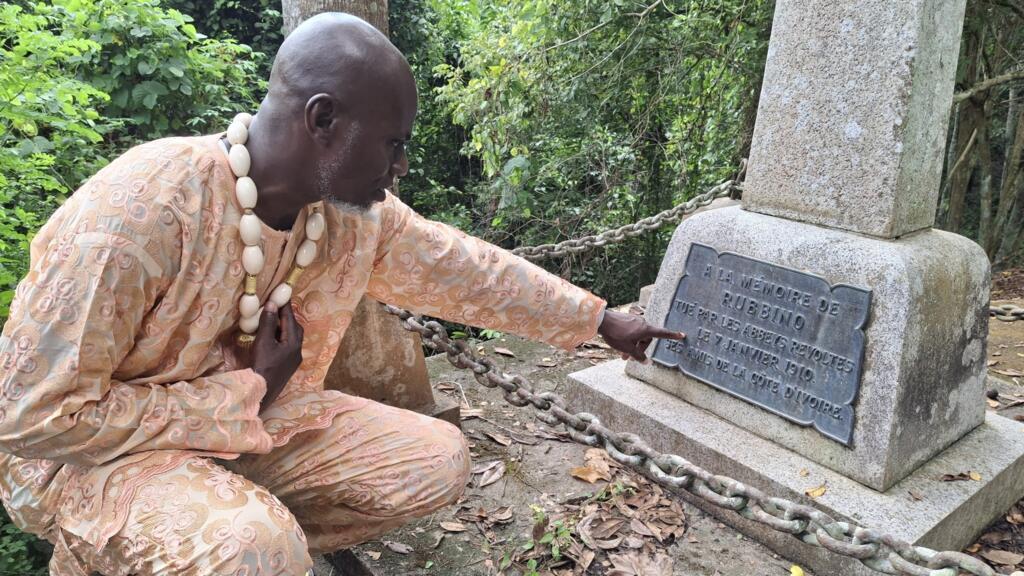
Residents of the village of Rubino, in south-eastern Côte d'Ivoire, continue to commemorate an uprising against a French colonial army officer killed there on 7 July 1910.
Issued on: 18/01/2026 - RFI
By:RFIFollow
ADVERTISING
The village is named after Rubino, the officer targeted in the revolt by the Abbé people. The uprising is remembered as an act of resistance against colonial rule, and the event is still commemorated more than a century later.
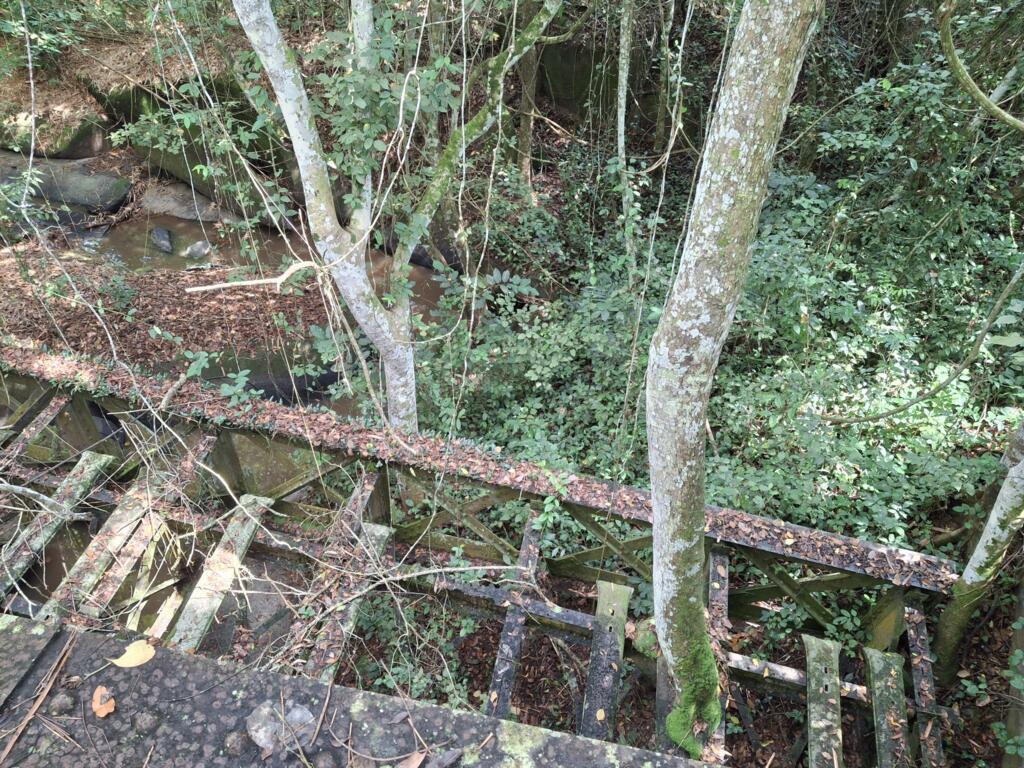
In the middle of a forest near Rubino, a dismantled bridge stands as a reminder of the revolt. The Abbé people removed its bolts by hand to stop a train carrying the officer.
Jean-Claude, a young man from the village, said the story is well known locally.
“When the train arrived, he couldn't cross. This is where Mr Rubino was caught and killed," Jean-Claude told RFI.
Anger over forced labour
The revolt was not only directed at the officer himself, but at the system he represented. The Abbé people rebelled against forced labour imposed during the colonial period.
Rubino worked for the French Company of West Africa (CFAO), a trading business active in colonial West Africa in the late 19th and early 20th centuries.
Eddie Patrick, a resident of Rubino, said the officer’s behaviour angered village elders.
“Rubino was a settler. He was presented as a trader, but in reality, he was trafficking gold. He harassed the villagers and robbed them of their possessions, which annoyed the village elders," Patrick explained.
"To put a stop to this behaviour, something had to be done."
The officer’s grave, located in the forest, has since become a spiritual place for the community.
Nanan Lambert Koffi Kokola, the chief of Rubino, said the site lies on sacred land.
“Because it is located on sacred land where spirits reside, of course, and rivers flow. For us, the Abbé people, it is a place where we come to meditate because it is here that our ancestors finally gained their freedom,” he said.
Railway history
After the revolt, a new railway line was built about 100 metres away from the original track.
Photographer François-Xavier Gbré documented the route in an exhibition titled Radio Ballast, revisiting different periods of the country’s history.
“This railway line has seen colonial times, modern times marked by independence, and is still in operation today. It spans three eras: colonial, independence and the contemporary period,” he said.
Today, the site attracts the occasional tourist or history enthusiast.
This article was adapted from the original version in French by RFI's Bineta Diagne.
FANON, Frantz
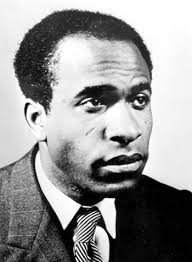
Like many canonical postcolonial thinkers, Fanon’s personal biography is often viewed as important in understanding his published work. Fanon was born in the French colony of Martinique in 1925. He studied at the Lycée Schoelcher in Fort-de-France, where he was taught by writer and poet Aimé Césaire. Fanon was involved in supporting the French resistance against the Vichy regime in the Caribbean, and against the Nazis in France (though he experienced daily racism while serving in the army). After the Second World War he went to study medicine and psychiatry in Lyon. Following his studies Fanon became involved in struggles against colonialism under the influence of African freedom fighters who went to France to garner support for their struggles. In 1953 he went to Algiers as head of the psychiatric department at the Bilda-Joinville Hospital. In Algeria Fanon was appalled by the difference in living standards between the European colonizers and the indigenous population, and by the racism experienced by the Algerians.
The 1954 Algerian revolt was met with a violent response involving torture, repression, physical abuse and widespread killings of Algerians by the colonisers. This served to radicalise Fanon and he supported the revolutionaries in secret for two years before resigning from his job at the hospital in 1956 and joining the National Liberation Front. He moved to Tunis, founded the Moudjahid (Freedom Fighter) magazine, and became a leading ideologue of the Algerian revolution. He travelled widely in Africa to speak on his anti-colonial ideas and was ambassador to Ghana for a period. Though Fanon was from the Antilles, following his experiences in Algeria he came to think of himself as Algerian. He died of leukimia in Washington 1961.
Fanon’s key works are Black Skins White Masks, A Dying Colonialism, The Wretched of the Earth, and Toward the African Revolution. Black Skins White Masks was published in 1952 but did not gain widespread recognition until the late 1960s. This was one of the first books to analyse the psychology of colonialism. In it Fanon examines how the colonizer internalises colonialism and its attendant ideologies, and how colonized peoples in turn internalise the idea of their own inferiority and ultimately come to emulate their oppressors. Racism here functions as a controlling mechanism which maintains colonial relations as ‘natural’ occurrences. Black Skins White Masks is written in an urgent, fluid style. It is both analytical and passionate, part academic text, part polemic. The book has provided a powerful and lasting indictment of racism and imperialism.
A Dying Colonialism is a historical document. It is a firsthand account of the Algerian revolution, describing how the Algerian people became a revolutionary force, and ultimately were successful in repelling the French colonial government. It is also, however, a philosophical discussion of the meaning of the conflict and what might come after it. Toward the African Revolution is a collection of articles, essays, and letters which spans the period between Black Skin, White Masks and The Wretched of the Earth.
The Wretched of the Earth was published just before Fanon’s death, very much with the Algerian independence struggle in mind. Prefaced by Jean Paul Sartre, the book offers a social-psychological analysis of colonialism, continuing his argument that there is a deep connection between colonialism and the mind, and equally between colonial war and mental disease. In The Wretched of the Earth Fanon argued for violent revolution against colonial control, ending in socialism. These struggles must be combined, he argued with (re)building national culture, and in that sense Fanon was a supporter of socialist nationalism. In The Wretched of the Earth, Fanon not only writes about violence in the international context, colonialism, national consciousness and freedom fighting, but he also includes a psychoanalytic investigation of mental disorders associated with colonial war. The book, then, continues his work of drawing connections between the inner world of subjugated individuals and the workings of international politics. This is something that has been continued by other scholars in the postcolonial tradition including Ashis Nandy and Ngugi wa Thiongo.
Essential Reading
Fanon, F. (1986 [1952]) Black Skins White Masks, London: Pluto Press
Fanon, F. (1970 [1959]) A Dying Colonialism, London: Penguin
Fanon, F. (2001 [1961]) The Wretched of the Earth, London: Penguin
Fanon, F. (1964) Toward the African Revolution, New York: Grove Press
Further Reading
Alessandrini, A. (1999) Frantz Fanon: Critical Perspectives, London: Routledge
Abdilahi Bulhan, H. (1985) Frantz Fanon And The Psychology Of Oppression, New York: Plenum Press
Gibson, N.C. (2003) Fanon: The Postcolonial Imagination, Oxford: Polity Press
Questions:
How does Fanon define decolonization? What does it entail?
What effect does colonization have on the individual and on the community, according to Fanon?
What psychological phenomenon does Fanon refer to in the title ‘Black Skin White Masks’?
How does the process of liberation work? How do peoples become ready for a new battle against colonialism, according to Fanon?
Discuss the complexity of Fanon’s understanding of violence in the context of colonialism.
Submitted by Lucy Mayblin

No comments:
Post a Comment