Tuesday, January 14, 2025


Marine Science Nonprofit Elects "The Ocean" to Join its Board
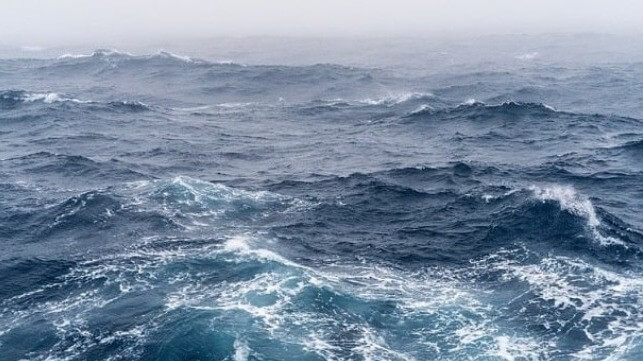
Southern Ocean wave action
Christopher Michel / CC BY SA 3.0

Published Jan 12, 2025 4:37 PM by The Conversation


[By Anna Turns]

The ocean absorbs more than 90% of the atmosphere’s excess heat trapped by human-emitted greenhouse gases. It plays a vital role in mitigating the climate crisis and our health relies on that of the ocean. But often, it is simply considered a place to extract useful resources such as food and minerals.

The charitable research institute Scottish Association for Marine Science (Sams) recently voted to make the ocean a trustee on its board, represented either by a specific person or a working group that can help hold the organization to account and speak up for the ocean’s interests. The Conversation spoke to Sams’ director, Nicholas Owens, a professor of marine science, about why he thinks this step could help charities, organizations, and businesses make decisions that are healthier for the ocean – and the planet.

How can the ocean be a board member?

The move to empower the ocean as a “board trustee” mirrors legal innovations, such as the recognition that rivers and ecosystems have legal “personhood” in countries such as Ecuador, India and New Zealand. In 2022, the Scottish beauty company, Faith in Nature, elected “nature” to its board, while adventure clothing brand Patagonia announced that Earth would be the US company’s only shareholder.

Human activities are disrupting marine ecosystems at an alarming rate. But most of these human activities are, to a significant degree, controlled by decisions taken in boardrooms. By considering how decisions will affect the ocean as a whole, our board can hopefully make significant improvements and inspire other organizations to prioritize ocean health and sustainable marine development above resource extraction or financial gain.

How significant is this move?

I believe that electing the ocean to be a trustee of Sams could be one of the most important decisions in our history. It challenges outdated models of governance and champions a future where the ocean’s voice is central to decision-making.

This might sound like a trivial gimmick, even whimsical. But after several months of careful discussion and debate, the trustees and I are convinced that even with a strong empathy for ocean conservation and a well-informed understanding of marine environmental matters, the decisions we tend to make are anthropocentric.

This is a fundamental step change. It’s a reminder to consider this extra dimension every time a decision is made at board level and to ensure that an ocean-centric perspective seeps into everything we do.

Swimming, sailing, even just building a sandcastle - the ocean benefits our physical and mental wellbeing. Curious about how a strong coastal connection helps drive marine conservation, scientists are diving in to investigate the power of blue health.

Why does a research institute run by and for humans need an ocean-centric perspective?

Human interests are usually given precedence, and concern is limited to the impact on the ocean rather than the long-term interests of the ocean. This anthropocentric approach is near universal.

Take, for example, the UN’s “ocean decade”, a major global research initiative that aims to unlock “the science we need for the ocean we want”. While the project is worthy and ambitious, the pronoun “we” is telling.

Some of the UN’s ocean decade ambitions are ocean-centric, at least in part, but most are focused on the food we take from the sea, the pollution we sometimes allow to enter the sea, and the marine urbanization we intend to develop offshore. While the ocean decade (from 2021 to 2030) is a magnificent way to mobilize the international marine science community, even the best-intentioned ambitions invariably prioritize human benefits.

So if this isn’t a gimmick, how will your board meetings now differ? Who will be speaking up for the ocean?

Our internal working group is currently deciding how to practically operate. For example, choosing between appointing one person (perhaps, an environmental lawyer) or a larger working committee to represent the voice of the ocean at each board meeting. Whatever the outcome, trustees will be holding our organisation to account from a less anthropocentric perspective.

More widely, this move has already started shifting the sorts of conversations our teams are having on a daily basis. From a research perspective, we’ve always been ethical, but now, this can be a catalyst for a deeper cultural change. I’m proud that lots of our staff are excited to work for an organisation that is taking this more considered approach.

What does it mean for your researchers and your marine research?

We already have teams focusing on the blue economy, investigating how best we can live alongside ocean ecosystems sustainably and mindfully without causing harm. But, some of the debates we have will change and affect the types of marine research we carry out in the future.

Take our deep sea research, for example. We carry out research to investigate deep-sea ecosystems. The results of our studies can be used for many purposes, including to inform the debate about deep sea mining licences.

If our research is not doing any harm, perhaps it’s fine for us to take samples and further investigate what’s there. But – and this certainly does take a leap in thinking – what would the ocean say about this? Should even research into such contentious topics be carried out?

This is a different way of looking at this argument, from a more neutral and less ego-centric perspective. By becoming more sensitive to the needs of the ocean environment, our suite of research interests may well evolve slightly in the future.

Could it lead to any negative consequences for the research institute?

Our current ethical policy is based on conventional norms. Taking an ocean-centric perspective could lead to different outcomes. If followed genuinely, this approach could result in poorer short-term financial performance. But we’re prepared to make a possible short-term sacrifice to ensure more positive outcomes for the ocean in the future.

Electing an ocean trustee is not just a practical step. It is a philosophical statement. By recognizing that humans are part of nature and not separate from it, this challenges anthropocentric models of governance that prioritize human interests over the natural world.

Our society’s survival depends on the health of the planet’s ecosystems. This philosophy is deeply rooted in many Indigenous cultures that consider nature a partner, not a commodity.

Anna Turns is Senior Environment Editor at The Conversation. Since studying biology, Anna has worked in the media for more than two decades, from TV production to magazine journalism and radio broadcasting. As a freelance environmental journalist, she has written regularly for many national publications including The Guardian, BBC Future, New Scientist and Positive News with a focus on solutions. 

This article appears courtesy of The Conversation and may be found in its original form here

Top image: Christopher Michel / CC BY SA 3.0 

The Conversation

The opinions expressed herein are the author's and not necessarily those of The Maritime Executive.

 

Canada Makes First Naval Deployment to Antarctica

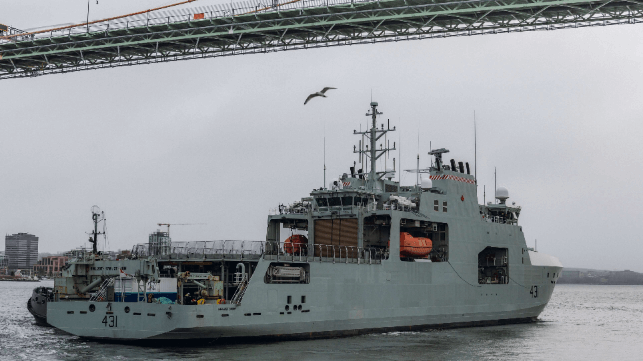
HMCS Margaret Brooke departs for Antarctica (Royal Canadian Navy)

Published Jan 12, 2025 10:31 PM by The Maritime Executive


Canada has made its first-ever naval deployment to Antarctica. Last week, the Royal Canadian Navy vessel HMCS Margaret Brooke departed Halifax bound for the South American and Antarctic regions. The deployment of the vessel marks the start of Operation Projection 2025, as Canada eyes to enhance its cooperation with partners in South America. In addition, the expedition is meant to support Canada’s Antarctic scientific research.

“It is a historic moment as our Navy takes a step further south, into the Antarctic region. The crew on board HMCS Margaret Brooke embarks on a long and strenuous journey that will bring forward Canada’s presence and diplomacy to nations throughout the Central and South Americas,” said Rear-Admiral Josée Kurtz, Commander of the Canadian Maritime Forces Atlantic.

HMCS Margaret Brooke is a Harry DeWolf – class Arctic and Offshore Patrol Vessel (AOPV). The vessel entered naval service in October of 2022 as the second AOPV delivered under the Canadian National Shipbuilding Strategy. The vessel is meant to enhance Canada’s presence in the Arctic waters. However, during this expedition, the vessel will for the first time show its operational capabilities in the Antarctic maritime domain.

The expedition is scheduled to last for four months, with the ship expected back in Halifax in May. 85 crew members are onboard, and scientists from the National Research Council will join the ship in Punta Arenas, Chile for a two-week tour south of the Antarctic circle.

“The scientists will be doing some core sampling (of the ocean floor), some oceanography and some marine geology. HMCS Margaret Brooke was deployed north of the Arctic circle this past summer. With this deployment south of the Antarctic circle, it will be the first Canadian warship to reach the northernmost and southernmost points of the Earth within the same year,” said Commodore Jacob French, Commander of the Canadian Atlantic Fleet.  


Iran's Spy Ship Activity Extends Beyond the Red Sea

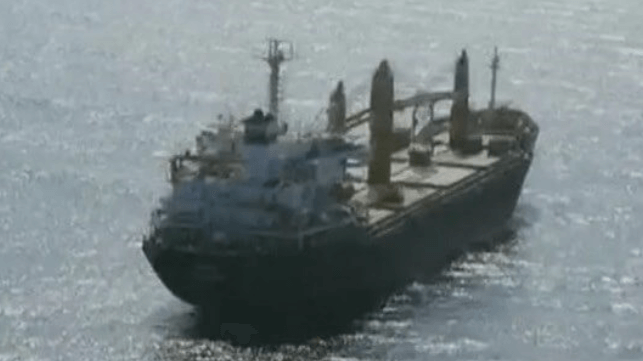
The Iranian spy ship Saviz has unusual aerials on its mast for a merchant vessel (Tasnim)
The Iranian spy ship Saviz has unusual aerials on its mast for a merchant vessel (Tasnim / CC BY)

Published Jan 12, 2025 1:38 PM by The Maritime Executive


Two U.S. Treasury-sanctioned ships have been the focus of attention for the maritime community interested in Iranian spy ship activity.  But these are not the only Iranian ships involved in intelligence activity contributing to attacks on merchant shipping.

Firstly the MV Saviz, and then the MV Behshad, maintained a picket position, stationary off the Dahlak Bank just inside Eritrean territorial waters in the Red Sea, from late 2016 until January 2024.  Both ships are controlled by the state-owned Islamic Republic of Iran Shipping Line Group (IRISL).  But their unusual patterns of activity, reporting in the Israeli press and the observed presence on-board of uniformed personnel, strongly suggested that the vessels were being operated by the Islamic Revolutionary Guard Corps (IRGC) Navy (Nesda). 

This designation was effectively confirmed when the Saviz was damaged by limpet mines on April 6, 2021, an attack subsequently acknowledged by Israel.  Saviz limped home to Bandar Abbas, and was replaced on station by her sister ship, the Behshad.  The Behshad too was forced from this position in January 2024, and took up station instead in the Gulf of Aden.  According to U.S. official speaking to ABC News the U.S. subsequently conducted a cyberattack against the Behshad, which abandoned its post off Djibouti and returned to Bandar Abbas in April 2024.

Both the Saviz and the Behshad will have played an important role in the collection of intelligence and its dissemination to Iran’s Houthi allies, in support of Houthi attacks on merchant shipping. Both vessels are equipped with standard maritime radars, one mounted forward atop a mast, a second mounted aft with a complex aerial array unusually high above the bridge, with a third radar or antenna protected by a radome on a second bridge mast. A detection range of 50 nm could be expected from such an array. 

Through a satellite receiver, the ships could also receive one-meter resolution imagery, with a less than 24-hour time delay, from Iran’s own Khayyam satellite (and probably also from the Russian Kanopus-V imagery satellite constellation). Both ships could also communicate with the Houthis’ fleet of fishing boat intelligence collectors, or launch its own small boats for scouting purposes. 

Fusing this all-source intelligence with data from aggregated Automatic Identification System (AIS) information, gathered from those ships traveling with their AIS systems turned on, both ships would be able to maintain an accurate maritime area activity plot, albeit not sufficiently timely to be used directly for target engagement by missiles or drones without closing approach target acquisition systems.

With the Saviz and Behshad now effectively chased away from the Red Sea and Gulf of Aden area, the same intelligence collection role has now likely been passed to Iran’s regular Navy (Nedaja), whose grey paint provides a degree of sovereign protection, although not necessarily from the limpet mine threat.  Currently, the Nedaja presence in the area is being maintained by the 100th Flotilla, consisting of the frigate IRINS Dena (F75) and logistics supply ship IRINS Bushehr (L422), due rotation shortly.

Saviz and Behshad, valuable assets still, have now been redeployed to safer waters.  Behshad now appears to be operating in the Straits of Hormuz area, usually off Qeshm, giving greater depth to Iran’s coastal defenses in this sensitive area.  Saviz is believed to still be on station in the northern Arabian Sea, where she was implicated in the attack by an Iranian Shahed-136 drone on the Indian-crewed chemical tanker MV Chem Pluto off Porbandar on December 23, 2023.  In the follow-up to the attack, the Indian Navy announced that they had boarded the Saviz in international waters but found nothing incriminating, a bold and resolute action for which no supporting evidence was provided and which was not accompanied by any complaint from Iran – but which appears to have brought similar such attacks to an end.

Also boarded and searched in the Indian follow-up was the IRISL container ship MV Artenos, suggesting that the Indian authorities believed this Iranian ship also had a role in the attack.  MV Artenos is an active merchantman and made 27 port calls in 2024, sailing normally between the Gulf and India.  It was also spotted in suspicious circumstances in the same month southeast of Socotra, and may therefore be acting in a covert intelligence auxiliary role.

Another Iranian container ship, the MV Shiba, also IRISL-owned and US-sanctioned, was tracked by UK commercial intelligence firm MariTrace behaving suspiciously in January 2024.  En route from Jebel Ali towards the Suez Canal, Shiba paused for 8 hours off Bandar-e Jask on January 10.  Resuming her voyage, her path would have crossed that of the tanker Suez Rajan, which was seized by the Nedaja the next day before being diverted to Jask. 

MV Shiba left from her normal commercial routing again several days later, leaving the Internationally Recommended Transit Corridor, sailing southwards to sail in close company with the Behshad for several days off Djibouti. The two ships were joined by IRINS Alborz (F-72) and IRINS Bushehr (422).  Again MV Shiba is active commercially, having made 43 port calls in 2024, but on tenuous evidence also appears to have an auxiliary intelligence role, well disguised by her legitimate commercial activity.  Other Iranian-owned merchantmen are likely to have a similar reporting role.

Much of Iran’s prosecution of asymmetric warfare makes an assumption that, whatever its own behaviors, its adversaries will be loath to break international conventions and the International Law of the Sea.  However, when those adversaries do take resolute action to protect their interests, the Iranians are exposed as defenseless and are deterred.  In this context the Nesda has not yet deployed its drone carriers Shahid Mahdavi (C110-3) and Shahid Bagheri (C110-4);  with their drone and missile arsenals, these highly vulnerable converted merchant ships pose a substantial threat – but only when they are not robustly challenged.


U.S. Sanctions Module Builder Wison Offshore for Working on Arctic LNG 2

Yamal LNG

Published Jan 13, 2025 7:47 PM by The Maritime Executive


Among other measures targeting Russia's energy sector, the Biden administration has sanctioned Zhoushan Wison Offshore for its role in supplying Novatek's Arctic LNG 2 plant with power modules - key equipment for bringing the blacklisted project online. 

According to the U.S. State Department, Wison supplied power generation modules for Arctic LNG 2's barge-based liquefaction trains, which (until recently) were under construction near Murmansk. After the modules were completed at Wison's plant, the company allowed them to be shipped to the Arctic LNG 2 construction site via a series of complex transfers. The modules were transshipped multiple times between different module carriers, including the U.S.-sanctioned ships Hunter Star and Nan Feng Zhi Xing, which have also been blacklisted for involvement in Russian energy projects. Some of these ships took steps to conceal their identity and location, the department noted. 

Wison is a leading offshore shipyard and module fabricator, and its blacklisting has implications for other customers. Among other projects, Wison is building the Nguya LNG floating liquefaction plant for Eni, a key part of the Italian supermajor's phase two development plans for new fields off Pointe-Noir. Nguya was just launched in November, and was 80 percent complete at that point; the effects of Wison's blacklisting are uncertain, but U.S. blocking sanctions typically complicate the process of making payments, since they prohibit the use of the U.S. banking system.

The State Department also sanctioned HongKong Yaqing Shipping Co. Ltd. for its role in transporting the modules from Wison, along with the company's heavy lift ship Ocean 28. It also designated two more LNG carrier operators, Skyhart Management and Avision Shipping, for managing two ships that took on blacklisted cargo from Arctic LNG 2. The department identified their vessels as the Mulan, Pravasi and Onyx. 

Also sanctioned were Rosatom Chief Executive Officer Alexey Likhachev and members of Rosatom’s board, including Vyacheslav Ruksha, head of the Northern Sea Route Directorate. In addition to its role in Russia's nuclear program, Rosatom is the operator of Russia's nuclear-powered icebreaker fleet and the manager of the Northern Sea Route - the long icebound stretch of coastal water north of Siberia. Ruksha, as head of the Northern Sea Route directorate, is Russia's lead manager for Arctic navigation between the Barents Sea and the Bering Strait. 


Shell Writes Down its Holdings off Namibia By $400 Million

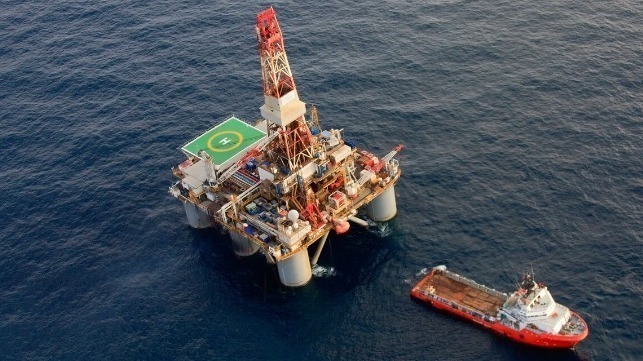
Rig with OSV
iStock

Published Jan 13, 2025 8:09 PM by The Maritime Executive


After three years and nine exploration wells, Shell has decided to write down the value of its lease area in Namibia's Orange Basin by $400 million. 

Shell has discovered oil in more than one of its wells in the block, but has decided that these prospects "cannot currently be confirmed for commercial development." Shell encountered geological challenges and technical difficulties during the drilling campaign, including low permeability in the formation, which makes extraction difficult. 

Namibia's energy ministry said Monday that despite the findings related to reservoir quality and subsurface complexity in the lease area, it believes that the basin still holds potential for development. "The collective discoveries from the nine drilled wells amount to significant volumes of hydrocarbon accumulations. The government of Namibia remains committed to developing these discoveries, which are believed to be commercially viable," the ministry said in a statement Monday.

On Monday, Namibian energy minister Tom Alweendo told The National that Shell was not walking away, and that it was a matter of finding more economical ways to develop the resource down the road. In a statement, he said that the write-down was unfortunate, but that E&P efforts off the country's shores "have barely begun to scratch the surface." 

Other nearby lease areas may prove better-suited to development. TotalEnergies is currently in the middle of an appraisal campaign in lease area PEL 56, not far from Shell's PEL 39. Other firms with active interests in lease acreage off Namibia include Woodside, Rhino Resources, Chevron, Namcor and Trago. Galp's Mopane prospect in PEL 83 may be commercially viable, and the Portuguese producer is looking for a partner to bring it to market. 

"The Namibia governement will continue working with dedicated companies to develop these resources and our plan to first oil are still on track," said Alweendo. "We remain confident that ongoing exploration efforts will reveal commercial opportunities and look forward to delivering first oil production in the near future."

The African Energy Chamber added that the Orange Basin's best prospects may be towards the north end, and that its gas reserves might prove to be commercially viable. The chamber also pointed to the promise and potential of the Walvis Basin, another Namibian offshore region with strong potential for gas development. 


Shell Finds Unexploded Bomb Next to Gas Pipeline for the Brent Field

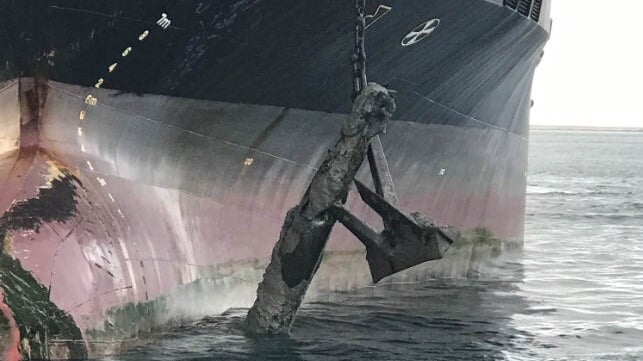
Unexploded ordnance is a recurring challenge in UK waters, as seen in this file image of a test torpedo recovered by a tanker in 2017 (Royal Navy file image)
File image: a test torpedo recovered by a tanker off Portland, UK in 2017. Unexploded ordnance is a recurring challenge in UK waters. (Royal Navy file image)

Published Jan 13, 2025 9:13 PM by The Maritime Executive


Shell has confirmed the discovery of an unexploded bomb next to a 40-year-old gas line running across the North Sea. 

Unexploded ordnance from World War II - and even earlier - is found regularly in UK waters, and it poses a potential hazard to navigation and development. During an inspection of the Far North Liquids and Associated Gas System Pipeline (Flags pipeline), Shell's staff located what they believe to be an unexploded bomb near the line at a position about 40 miles to the east of Shetland. 

Shell has launched an investigation into how this unexploded bomb came to be next to an operating subsea gas pipeline, and the supermajor has brought in a third-party advisor to examine the circumstances. The Maritime and Coastguard Agency has been notified, and a guard vessel has been stationed next to the location of the bomb. For now, the pipeline continues to operate as normal. 

The Flags pipeline was installed in 1982, in the heyday of North Sea oil and gas development. It is a 36-inch line stretching about 200 nautical miles north to south, and delivers wet gas from the Brent Field to the St. Fergus Gas Terminal in Scotland. In 2007, Flags was connected to the Tampen gas pipeline between Norway's Statfjord development and the UK. Shell and ExxonMobil share the pipeline's ownership.

An estimated 500,000 pieces of unexploded weaponry from WWI and WWII rest on the bottom in waters around Great Britain, according to a 2020 parliamentary study. Just last month, a Scottish fishing vessel brought up an unexploded antisubmarine mortar in the Firth of Forth near Edinburgh. The device contained about 80 pounds of explosives, and after the crew were evacuated, it was safely removed from the boat by an HM Coastguard bomb squad. The mortar was moved offshore and safely detonated in deeper water. 


Russia Claims Ukrainian Attack on TurkStream Subsea Pipeline System

Gazprom
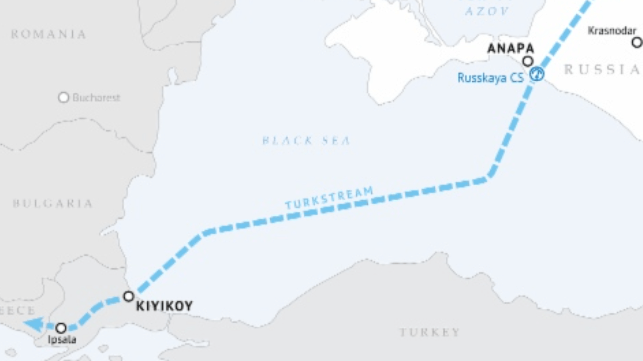
Chart courtesy Gazprom

Published Jan 13, 2025 10:57 PM by The Maritime Executive


On Monday, Russia's defense ministry claimed that its forces thwarted a Ukrainian attack on shoreside components of the TurkStream gas pipeline, the subsea line that connects Russian producer Gazprom to buyers in Turkey and the EU. 

TurkStream runs from a terminal near Anapa, Krasnodar to the Turkish town of Kiyikoy, west of Istanbul. The landing point is less than 100 miles from the border with Europe, and the line feeds gas networks in Hungary, Bulgaria, Serbia and neighboring states in southeast Europe. 

The Kremlin alleged Monday that Ukraine used a long-range drone strike to target the Russkaya compressor station on the Russian side of the pipeline. It claimed that air defense units shot down nine Ukrainian drones before they could hit the site, and that only minor damage was reported. The TurkStream line remains in operation, the ministry said. 

Ukraine has not commented on the alleged strike, but has repeatedly attacked Russian energy export infrastructure in retaliation for Russian drone strikes on the Ukrainian electric grid. 

TurkStream is one of the last Russian pipeline gas connections to Europe. Following the Russian invasion of Ukraine in 2022, a dispute over terms of payment resulted in a near-shutdown of westbound Russian gas, which had powered European economies since the Cold War. Though EU gas prices skyrocketed, the disruption was short-lived - and Europe began to decouple its energy markets from Russia, shifting instead to new sources like American LNG. 

The destruction of the Nord Stream pipeline system and the closure of the trans-Ukrainian pipeline network late last year have cut off most of Gazprom's access to Europe, with dire effects on its finances. The giant company was once a top earner for the Russian government; it posted a loss in 2023, its first in more than 30 years, and is now reportedly contemplating large-scale layoffs at its headquarters. The TurkStream (and the smaller BlueStream) are Gazprom's last functioning gas links to Europe. While other connections have been shuttered, the TurkStream's EU-bound transport volumes rose by 23 percent in 2024.  

Like Nord Stream, the TurkStream megaproject is a symbol of Russian influence. It was personally announced and inaugurated by Russian President Vladimir Putin, and remains among the most ambitious subsea pipeline projects ever constructed. It starts at the Russkaya compressor station, the most powerful facility of its kind in the world, then follows two parallel 32-inch pipelines running about 500 nautical miles under the Black Sea.  

TurkStream was among the first projects for Allseas' supersized pipelay/heavy lift ship, Pioneering Spirit, the largest vessel by displacement in the world.


Retailers Continue to Front-Load Imports into U.S. Ports

container offloading
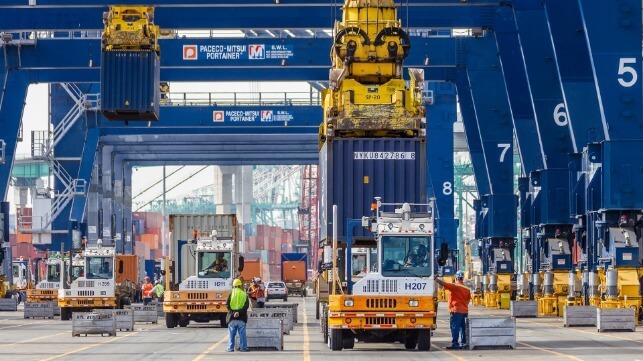
Import volumes continue high as importers are front-loading inventory into 2025 (Port of LA file photo)

Published Jan 13, 2025 6:13 PM by The Maritime Executive


Retailers are continuing to front-load their imports which is driving up the volumes seen at major U.S. ports. The National Retail Federation in its monthly read on container volumes expects the rush to get merchandise into the country will continue in part started by the fear of an East Coast port strike and now potential tariffs from the new Trump administration.

The Global Port Tracker showed an increase in volumes in the fall with November’s container imports up 14.7 percent over a year earlier. It was down slightly from October – 3 percent – but they also believed retailers were front-loading before the October International Longshoremen’s Association strike on the East Coast.

The current volumes are coming in significantly ahead of the NRF’s forecast. They believe it is a sign of the continuing front-loading. “Importers had already front-loaded,” said Ben Hackett of Hackett Associates noting it is “giving a boost to imports in December and early January.”

Volumes for November are approximately 14 percent over the forecast from the NRF for the month. They report without finalized numbers from the Port of New York New Jersey the TEU volume was 2.17 million containers in November. Further, while the numbers are not finalized for December, NRF believes the volume was 19 percent over its forecast. They are now projecting December at 2.24 million TEU.

Highlighting last week’s tentative agreement for the new ILA contract, Jonathan Gold, the NRF Vice President for Supply Chain and Customs Policy, said, “The agreement came at the last minute, and retailers were already bringing in spring merchandise early to ensure that they would be well-stocked to serve their customers in case of another disruption, resulting in higher imports. The surge in imports has also been driven by President-elect Trump’s plan to increase tariffs because retailers want to avoid higher costs that will eventually be paid by consumers. The long-term impact on imports remains to be seen.”

The NRF also raised its forecast for the full year 2024 saying with the recent surge they now expect the year will total 25.6 million TEU. That would be better than a 15 percent increase over 2023 and just 200,000 TEU short of the all-time record in 2021. That is an increase of 700,000 TEU over its previous forecast.

The momentum is also expected to carry into the first part of 2025. The NRF is calling for 10 percent year-over-year increases in both January and March but a soft February due to the timing this year of the Lunar New Year when many factors in China and Asia are closed. The early forecast sees an 8 percent increase year-over-year for April and nearly a 6 percent increase for May.

 THE SPECTRE OF JOHN TURNER

Mark Carney all but says he’s running to be Canada’s next prime minister in a Jon Stewart interview 

IT'S A SATIRE SHOW!


Canada 2020 Advisory Board Chair and former Governor of the Bank of Canada and Bank of England Mark Carney speaks during the Canada 2020 Net-Zero Leadership Summit in Ottawa, April 19, 2023.
 (Sean Kilpatrick/The Canadian Press via AP, File)


January 14, 2025


PALM DESERT, Calif. (AP) — Former central banker Mark Carney all but said he is running to be Canada’s next prime minister during an appearance on Jon Stewart’s ‘The Daily Show’ on Monday night.

This follows Justin Trudeau’s resignation announcement on Jan. 6 after facing an increasing loss of support both within his Liberal Party and across the country. He will remain prime minister until a new leader is chosen on March 9.

“You are running as an outsider,” Stewart told Carney.

“I am outsider,” the experienced financier said.

Carney, 59, is a highly educated economist with Wall Street experience, widely credited with helping Canada dodge the worst of the 2008 crisis while heading the country’s central bank. He also helped the U.K. manage Brexit as the first non-Brit to run the 319-year-old Bank of England since it was founded in 1694. His selection won bipartisan praise in Britain.

“Let’s say the candidate wasn’t part of the government. Let’s say the candidate did have a lot of economic experience” Carney said. “Let’s say the candidate did deal with crisis. Let’s say the candidate had a plan to deal with the challenges.”


RELATED STORIES

Canada: Liberals look for Trudeau's replacement as Trump threatens tariffs

Canada's Trudeau reshuffles his Cabinet as resignation calls mount and new election threat looms

Canada's Justin Trudeau faces calls to resign. Here's what could happen next

Carney ‘s main contender for the leadership of the Liberal Party is ex-Finance Minister Chrystia Freeland, whose abrupt resignation last month forced Trudeau’s exit. Both are expected to declare their candidacy in the coming days.

The political upheaval comes at a difficult moment. U.S. President-elect Donald Trump keeps calling Canada the 51st state and has threatened to impose 25% tariffs on all Canadian goods.

On the show, Carney said statehood won’t happen but the U.S. and Canada can be “friends with benefits,” generating laughter from the crowd.

Carney said Canada needed change as it faced an economic crisis with Canadians being very hard-pressed in the last few years because wages have not kept up with inflation and housing has become very expensive.

“Truth be told the government was not as focused on those issues as it could be,” he said. “We need to focus on them immediately. That can happen now and that is what this election will be about.”

The next Liberal leader could be the shortest-tenured prime minister in the country’s history. All three opposition parties have vowed to bring down the Liberals’ minority government in a no-confidence vote after parliament resumes on March 24.

Recent polls suggest the Liberals’ chances of winning the next election look slim. In the latest poll by Nanos, the Liberals trail the opposition Conservatives 45% to 23%. Carney said a change in Liberal leadership would give the party a chance.

He also said opposition Conservative leader Pierre Poilievre leader is “a lifelong politician” who “worships the market” but has never actually worked in the private sector.

Like other central bankers, Carney is a former Goldman Sachs executive. He worked for 13 years in London, Tokyo, New York and Toronto before being appointed deputy governor of the Bank of Canada in 2003. He has both financial industry and government credentials.

Carney talks tariffs, Trump, Liberal leadership in Daily Show interview

By David Boles, The Canadian Press
January 14, 2025 

Former governor of the Bank of Canada Mark Carney, who also served as governor of the Bank of England, speaks at the Sustainable Finance conference in Ottawa, Thursday Nov. 28, 2024. THE CANADIAN PRESS/Adrian Wyld

NEW YORK, Ont. — Mark Carney went on late-night television in the U.S. Monday to talk Trump, tariffs and carbon tax, but played coy on any plans to seek the Liberal leadership.

The former Bank of Canada and Bank of England governor appeared on “The Daily Show” with Jon Stewart for a 20-minute sit-down interview.

On the issue of president-elect Donald Trump's suggestion that Canada become the 51st state, Carney and Stewart joked about the two countries being a dating couple that had hit a rough patch.

Carney said statehood is not going to happen but the U.S. and Canada can be “friends with benefits,” generating a roar of laughter from the crowd.

On Trump’s threat of tariffs, Carney said Canada needs to prepare for a trade dispute like it did the last time Trump was in office.


When asked about the carbon tax, Carney noted that much of Canada’s emissions come from the oil industry and that needs to be cleaned up rather than trying to change the way everyday Canadians live in a short period of time.

Opposition Conservative Leader Pierre Poilievre has already been trying to paint the former top banker as a key architect of the Liberal carbon policy, calling him carbon tax Carney.

"For Canada, what we need to do is make sure that we're addressing these issues, doing our bit," said Carney.

"But we need to do it in a way that Canadians today are not paying the price."

Conservative deputy leader Melissa Lantsman said in a statement that it was clear after Carney's "scripted appearance" on American television that he was "trying to rewrite history to convince Canadians that he is not responsible for the policies that he and Justin Trudeau forced on Canadians and caused them so much misery over the last nine years."

"Carbon Tax Carney is a hypocrite," Lantsman said. "He can’t hide from the truth. He’s just like Justin."

As a longtime Liberal insider, adviser, and chair of the economic growth task force, Lantsman said Carney was "the furthest thing possible from an outsider."

"He supported Trudeau’s massive inflationary deficits which caused a 40-year high in inflation," Lantsman said. "He praised the punishing Trudeau carbon tax, even calling it a model for the world in his book. He supported every single Trudeau policy that doubled the debt, doubled housing costs, doubled gun crime, and doubled food bank use."

While not explicitly stating he'd run for Liberal leader, Carney labelled himself an “outsider” in Canadian politics and didn’t reject Stewart’s attempts to pin him down.

A source said Monday that former finance minister Chrystia Freeland will announce a run for the leadership in the coming days.

Ontario MP Chandra Arya and former Montreal MP Frank Baylis are the only two to officially join the contest.


The Liberal Party of Canada will choose its next leader March 9.

This report by The Canadian Press was first published Jan. 13, 2025.

David Boles, The Canadian Press
Dutch delve into family pasts as the names of accused Nazi collaborators released


Hundreds of thousands of people in the Netherlands have been looking for their relatives in a new database containing the names of some 425,000 people investigated for collaboration with the Nazis during World War II. Nazi collaboration is a controversial topic in the Netherlands and much of Europe and is often shrouded in family mystery. 

(AP video shot by Aleks Furtula)


An archivist opens a sliding file cabinet where documents, some regarding WWII collaboration, are stored at the NIOD Institute for War, Holocaust and Genocide Studies in Amsterdam, Netherlands, Friday, Jan. 10, 2025. (AP Photo/Aleks Furtula)

A portrait of Anne Frank is part of a replica of the home in Amsterdam where she hid, as part of a pavilion which opened at the National World War II Museum in New Orleans, Oct. 31, 2023. (AP Photo/Gerald Herbert, File)


Cardboard boxes line shelves where documents, some regarding WWII collaboration, are stored at the NIOD Institute for War, Holocaust and Genocide Studies in Amsterdam, Netherlands, Friday, Jan. 10, 2025. (AP Photo/Aleks Furtula)

A sheet of pictures of Anne Frank is displayed in Amsterdam, Netherlands, Oct. 4, 2024. (AP Photo/Peter Dejong, File)

An archivist walks by file cabinets where documents, some regarding WWII collaboration, are stored at the NIOD Institute for War, Holocaust and Genocide Studies in Amsterdam, Netherlands, Friday, Jan. 10, 2025. (AP Photo/Aleks Furtula)

BY MOLLY QUELL
AP
January 14, 2025

THE HAGUE, Netherlands (AP) — On Dutch Openness Day, this year’s release of secret documents from state archives suddenly left Peter Baas with fundamental questions about his father’s stature as a World War II resistance fighter.

While many were cleaning up the mess from New Year’s Eve fireworks on Jan. 1, hundreds of thousands of others in the Netherlands looked for their relatives in a new database containing the names of some 425,000 people investigated for collaboration with the Nazis from 1940-45.

Some looked out of curiosity, others out of concern.

A controversial topic

One of those names was Ludolf Baas, a resistance fighter who taped microfilm of Nazi atrocities to his body and smuggled it over enemy lines. “When I saw my father’s name, I was shocked,” Peter Baas told The Associated Press. He wondered if his father’s legacy was a lie and needed to find out if one of society’s ugliest stigmas would also stick to him.

“The publication of the list of names has caused great social unrest,” the NIOD Institute for War, Holocaust and Genocide Studies, said in a statement Friday. The research organization, founded days after the Netherlands was liberated, has called for the government to intervene.

Nazi collaboration is a controversial topic in the Netherlands and much of Europe and is often shrouded in family mystery and stifled under a cloak of silence. Initially, the Netherlands was long seen as a welcoming safe haven for persecuted groups. Many Jewish families, like that of famed diarist Anne Frank, fled Germany in the 1930s for the relative safety of their Dutch neighbors.

That changed when the Dutch surrendered to the Germans in 1940. Only 27% of the Dutch Jewish population survived the war, significantly less than the survival rate in France and Belgium and collaboration made persecution easier.

Eight decades after the war ended, many still worry about what that legacy means.

“You see the bullying even now,” Holocaust historian Aline Pennewaard says. She described social media posts denouncing Dutch politicians as Nazis because they shared a surname with someone on the list.

Privacy concerns


Plans to fully open the archives would have provided answers but Baas, who lives in France, found out he would not be able to easily obtain detailed information about his father’s case.

Originally, the National Archive wanted to make much more than just the names of suspects public. The organization had been working to digitize and publish all 30 million pages of materials, from secret police records to witness statements, on a newly created website.

Just before Christmas though, after a formal warning from the Dutch privacy watchdog that releasing the records would violate EU privacy rules, Dutch education minister Eppo Bruins intervened. Now, only the names and corresponding file numbers are immediately available.

To see his father’s dossier and understand why and how he was investigated, Baas would have to request to make an appointment with the archive and travel to The Hague, a 650-kilometer (404-mile) drive, to read his father’s file.

“This is a very complicated way to get your family history,” Baas said.

Despite such complications, the Dutch are lining up.

“The interest has been incredible,” Werner Zonderop, who works at the archive, told AP. Slots for the reading room are booked until the end of February. Every day, new appointment times open at midnight and fill up within minutes.
‘They should throw it open’

Documentary filmmaker Marieke van der Winden knows what it is like to confront the dark truth about family history. Her 2022 film “The Great Silence” showcases how taboo the subject of collaboration is for many.

Van der Winden found out at her mother’s funeral that her grandfather had worked with the Germans. After doing her own research, she discovered her grandparents, great-grandparents and several other family members had collaborated. “It was a family affair,” she told the AP.

The 58-year-old says it is important for later generations to understand what happened and supports putting the entire archive online. “They should throw it open,” van der Winden said.

Even many relatives of known collaborators have backed the publication of the archive.

“It is high time we discuss this with each other with openness and without reproaching relatives. We are part of this society, and the silence in our lives has had great and mainly bad consequences,” Jeroen Saris, the chairperson of the Recognition Working Group, said last year. His organization represents the family members of those who supported the Nazis during the war.

Deeply concerned about his father’s history, Baas managed to get a friend in the Netherlands to go and look up his father’s records, describing the cumbersome approach as “completely bizarre.”

According to the records, when his father was 19, he joined an organization that later merged with the Dutch Nazi party and he was investigated over that membership.

“A bad choice of a 19-year-old that was completely reversed by becoming an active member of the resistance,” Baas said.