Thursday, May 08, 2025

How Trump just turned America into crime syndicate


REUTERS/Craig Hudson

May 08, 2025
AlterNet 


Dwayne LaBrecque, a diabetic who lost several toes and part of his foot to infection, will be severely impacted by cuts to LIHEAP, the Low Income Fuel Oil Heating Program that Congress started in 1981 and Donald Trump and Elon Musk put on the chopping block.

After losing his job as a shipping manager, Dwayne’s income plummeted, making it difficult to support his fiancée and five children in rural Maine. He expressed grave concern about making it through next winter without this assistance, stating:
“If the president turned around and did away with that funding, I have no idea how we'd survive in the winter.”

But Trump and congressional Republicans don’t care: the budget Trump just released and they’re endorsing kills off LIHEAP.

Empathy is the ability to experience what another person is going through as a real sensation, a genuine emotion or even physical reaction, in body and mind. It’s what causes us to flinch or look away when we see a dog getting hit by a car or a fellow human experiencing real trauma.

Early on in my years rostered as a psychotherapist in the 1980s, I learned that there’s a subset of the human race — maybe we should call them “Lizard People” because they’re so cold-blooded — who literally lack the ability to experience what others are going through. Instead of being empathic, their processing of other people’s pain (or joy or elation or any sensation or emotion) is entirely intellectual.

They see what others are going through, but they don’t feel even a twitch of emotion; just an abstract understanding of what’s happening.

These Lizard People are usually referred to by folks in the mental health field as sociopaths or psychopaths. They represent a third of our prison populations (and account for 90% of violent crimes), around 1.5-4 percent of the general population, and a bit more than one-fifth (21 percent) of all our CEOs.

A few, who were born or raised with a strong moral compass even though they’re empathy-deficient, work hard to try to understand what others are going through.

Most, though, view empathy as a fundamental human flaw; they believe that because they’re not burdened by it they’re special, even superior to other humans. After all, they can do things that would keep most people up at night for years, all without thinking twice or any later reflection on their deeds.


People like this are often fond of quoting Nietzsche and his extensive pontifications about what he called the Übermensch, the “over-men” or “Super-men.” As he wrote in Will to Power #368:
“Pity is a waste of feeling, a moral parasite which is injurious to the health, ]which says] ‘it cannot possibly be our duty to increase the evil in the world.’ If one does good merely out of pity, it is one's self and not One's neighbor that one is succouring. Pity does not depend upon maxims, but upon emotions. The suffering we see infects us; pity is an infection."

Nietzsche attacked Schopenhauer’s idea that there is a “morality of pity” or empathy, as well as calling Christianity a “religion of pity.” Hitler was so impressed that he laid a wreath inscribed with “To a Great Fighter” at Nietzsche’s grave.

Much like Ayn Rand, Nietzsche also hated the modern (this was in the late 1800s) state, including the then-new (1883) German system of single payer free healthcare. He called liberal democracy the “new idol” that was, he said, in fact “the coldest of all cold monsters” because this modern form of government was based on empathy, on the common good, on the general welfare instead of greed and self-interest.


It’s this same lack of empathy that would allow Trump to gleefully keep Kilmar Abrego Garcia in an El Salvadoran concentration camp.

A lack of empathy is what would encourage JD Vance and Marco Rubio to gang up like schoolyard bullies against Volodymir Zelenskyy in the Oval Office, or allow Stephen Miller to reportedly think tearing children from their mothers was a good idea and let him “enjoy” seeing the pictures of crying kids as their mothers are led away.

In fact, empathy is at the core of modern civilization, and has defined civilized people for tens of thousands of years. As I lay out in detail in The Hidden History of American Democracy: Rediscovering Humanity’s Ancient Way of Living, concern for every member of their communities — regardless of gender, gender identity, or disability — is what led tribal people around the world to create largely egalitarian political structures throughout prehistory. Structures on which we based our Constitution.

Empathy is foundational to every major religion in the world; Jesus’ sacrifice of his life for his followers is the ultimate expression of empathy. “Love your neighbor as yourself,” “Love your enemies,” and the story of the Good Samaritan are among the highest expressions of empathy.


Empathy is the basis of unions, where workers band together to protect each other, and employers are required by law to recognize them.

It’s the basis of our public education system, where we all chip in to make sure that even the poorest and weakest among us can have a positive future.

It’s even the basis of business, where the core of good marketing is understanding what your customers need and the core of good management is having a sense of how to motivate your employees because you can imagine what they feel.

It’s also at the core of democracy, is the basis of modern law, and has been intrinsic to our constitutional system of governance since our nation’s first days. As so many of our nation’s Founders noted:

“The social compact would dissolve, and justice be extirpated from the earth, or have only a casual existence, were we callous to the touches of affection.” —Thomas Paine
“Common interest may always be reckoned upon as the surest bond of sympathy.” —Alexander Hamilton

It’s why the preamble and Article I of our Constitution both mention the “General Welfare,” and all persons in the United States are supposed to be beneficiaries of the due process rights guaranteed in the fourth through eighth amendments to the Constitution (Trump appears not to understand this).

It’s why the basis of Reconstruction, the New Deal, and the Great Society were all about lifting up people in distress and giving powerless workers the ability to fight back against poverty, hunger, and greedy CEOs.

Tragically, the Lizard People currently running our federal government appear to lack empathy. Trump keeps finding new and more brutal ways to punish and imprison people he dislikes; his latest kick is rebooting Alcatraz.

He doesn’t give a damn about Dwayne LaBrecque; hell, if he could figure out a rationalization for it he’d probably deport him.

Vance had to be corrected by the Pope when he argued that we should love our family more than the rest of humanity.

And Musk waxes poetic about his disdain for empathy and the policies it produces, referring to the crisis of “civilizational suicidal empathy” caused by progressive policies.
“The fundamental weakness of Western civilization is empathy,” he told an interviewer. “The empathy exploit—they’re exploiting a bug in western civilization, which is the empathy response.”

The simple reality is that empathy is the thing that differentiates a healthy, caring civilization from brutal regimes like Nazi Germany or Putin’s Russia. It built America and has — until recently — guided our progress, generation by generation, toward a “more perfect union” in which all members of society are valued and protected.

Post-Eisenhower Republicans, however, have chosen to embrace an America run by fossil fuel billionaires spending millions to deny climate change, bankers ripping off their customers and the nation’s students, and insurance company executives who deny healthcare payments to guarantee their own million-dollar bonuses.

These Lizard People condemn “bleeding heart liberals” while blithely cutting off food and education to poor children, prenatal and child care to young women, and housing to the homeless. They celebrate Trump’s efforts to kneecap food stamps, education, Social Security, Medicare, and Medicaid. They prioritize tax cuts for billionaires over the lives of families devastated by extreme weather, the sick, and the homeless.

A nation without empathy is not a nation at all; it’s merely a conspiracy to elevate the powerful while crushing the weak, a crime syndicate with a flag and an army. This ultimate expression of a governmental system based on the repudiation of empathy is called fascism, oligarchy, or authoritarianism.

Lacking empathy, our society is left an empty husk, a simulacrum of civilization, a hollow shell where the GOP’s mantra of “personal responsibility” echoes through government’s dusty, blood-stained halls as it poisons the pages of history.

It’s the takeover of the cold-blooded Lizard People, heralding the death of democracy as well as our essential humanity.

But only if we let them. Pass it on.


Trump tariffs to hit small farms in Maga heartlands hardest, analysis predicts


Major corporations are best placed to benefit from Trump polices at the expense of independent farmers


Nina Lakhani in New York
Thu 8 May 2025 
THE GUARDIAN

The winners and losers of Trump’s first tariff war strongly suggest that bankruptcies and farm consolidation could surge during his second term, with major corporations best placed to benefit from his polices at the expense of independent farmers.

New analysis by the non-profit research advocacy group Food and Water Watch (FWW), shared exclusively with the Guardian, shows that Trump’s first-term tariffs were particularly devastating for farmers in the Maga rural heartlands.


Farm bankruptcies surged by 24% from 2018 to 2019 – the highest number in almost a decade – as retaliatory tariffs cost US farmers a staggering $27bn.

Numbers of farms fell at the highest rate in two decades with the smallest operations (one to nine acres) hardest hit, declining by 14% between 2017 and 2022. Meanwhile, the number of farms earning $2.5m to $5m more than doubled.


Losses from the first-term trade war were mostly concentrated in the midwest due to the region’s focus on export commodities such as corn, soy and livestock that are heavily reliant on China. States with more diverse agricultural sectors such as California and Florida experienced lower rates of insolvency and export declines than in previous years, suggesting the trade war played a role, according to Trump’s Last Tariff Tantrum: A Warning.

The breakdown in closures suggests that Trump’s $28bn tariff bailout package in 2018-19 disproportionately benefited mega-farms while smaller-scale farms and minority farmers were left behind.

The top tenth of recipients received 54% of all taxpayer bailout funds. The top 1% received on average $183,331 while the bottom 80% got less than $5,000 each, according to previous analysis.

The number of Black farmers fell by 8% between 2017 and 2022, while white farmer numbers declined by less than 1%.
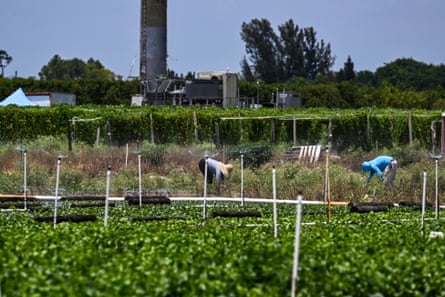
Workers on a farm n Homestead, Florida, on 25 April. Photograph: Chandan Khanna/AFP/Getty Images

“President Trump’s first-term trade war hurt independent farmers and benefited corporations, offering a warning of what is to come without a plan to help farmers adjust,” said Ben Murray, senior researcher at FWW.

“Trump’s latest slap-dash announcements will likely further undermine US farmers while benefiting multinationals who can easily shift production abroad to avoid high tariffs. Farmers’ livelihoods should not be used as a foreign policy bargaining chip. Chaotic tariff tantrums are no way to run US farm policy.”

The first 100 days of Trump 2.0 have led to turmoil and uncertainty for consumers, producers and the markets, amid an extraordinary mix of threats, confusing U-turns and retaliatory tariffs from trading partners.

Trump’s second trade war could prove even more damaging for US farmers and rural communities, as it comes on top of dismantling of agencies, funds and Biden-era policies to help farmers adapt to climate shocks, tackle racist inequalities and strengthen regional food markets. By the end of April, more than $6bn of promised federal funds had been frozen or terminated, according to the National Sustainable Agriculture Association’s tracker.

Rural counties rallied behind Trump in 2024, giving him a majority in all but 11 of the 444 farming-dependent counties, according to analysis by Investigate Midwest.

Last week, the agriculture secretary, Brooke Rollins, played down the likely harm to Trump’s farmer base, but said the administration was preparing a contingency bailout plan if farmers are hurt by escalating trade wars. “We are working on that. We are preparing for it. We don’t believe it will be necessary,” Rollins told Fox News. “We are out across the world, right now, opening up new markets.”

US farm policy has long incentivized large-scale monocropping of export commodities such as wheat, corn, soy, sorghum, rice, cotton – and industrial animal farming – rather than production for domestic consumption. This globalized agricultural system favors large and corporate-owned operations, while undermining small, diversified farms and regional food systems. It is a system inextricably tied to global commodity markets, and therefore extremely vulnerable to trade wars.

The 2018-19 bailout payments were set up in a way that, inadvertently perhaps, “subsidized, encouraged and promoted” the loss of smaller and mid-size farms to the benefit of mega-farms – in large part because the tariffs were implemented without a coherent plan to reform US farm policy and help farmers transition to domestic markets.

The number of large farms – those earning more than $500,000 – grew by 18% between 2017 and 2022. “The taxpayers are essentially being asked to subsidize farm consolidation,” the Environmental Working Group said at the time.

Trump’s first-term tariffs hit soybean farmers, who are highly dependent on China, hardest, with exports slumping 74% in 2018 from the previous year. The number of soybean farms fell almost 11% between 2017 and 2022 – a significant turn of fortune given the 9% rise over the previous decade. In fact, the only winners after Trump’s trade war were big farms, those harvesting at least 1,000 acres of soybeans, the FWW analysis found.

The 2018/19 tariff bailout package was also used to facilitate contracts and commodity purchases. A significant share went to the billion-dollar corporations which already have a stranglehold on the US food system, and rural communities.

Arkansas-headquartered Tyson Foods received almost $29m in federal contracts and purchases between August 2018 and July 2019, while Brazil-based JBS secured nearly $78m. JBS used its market power to undercut competition, winning over a quarter of the total $300m in taxpayer dollars allocated towards federal pork purchases, according to FWW.

The two multinationals currently control 40% to 50% of the US beef market, 45% of poultry and, along with two other corporations, 70% of the pork market.

Things could be even worse under Trump 2.0, with the president no longer seeming concerned by the markets or the polls.

John Boyd Jr, a fourth-generation Black farmer, has been unable to secure a farm operating loan since Trump’s tariffs sent commodity prices tumbling. USDA field offices that help farmers apply for credit and government subsidies, which Black, Native and other minority farmers were already disproportionately denied, are being closed in the name of efficiency.

Farmer John Boyd Jr during a break from bailing hay at his farm in Boydton, Virginia, on 27 May 2021. Photograph: Steve Helber/AP

“This administration is putting the heads of Black farmers on the chopping block and ridiculing us in public with no oversight and no pushback from Congress,” said Boyd, president and founder of the National Black Farmers Association, who farms soy, wheat, corn and beef in Virginia. “Trump’s tariffs are a recipe for complete disaster, and this time his voters in red states will also get punched in the face.”

Trump 2.0 tariffs against China are higher and broader, and also target scores of other agricultural trading partners. China is better prepared, having diversified its import markets to Brazil and other Latin American countries since Trump’s first trade war, while US domestic farm policy has barely changed.

“The administration seems completely blind to the harm that was done previously, and in many ways what’s happening now is already worse … The concern is that trades are stalled and nothing’s really flowing,” said Ben Lilliston, director of rural strategies and climate change at the Institute for Agriculture and Trade Policy.

In late April, China cancelled a 12,000-tonne order of US pork – the largest cancellation since the start of the Covid pandemic, suggesting Trump’s tariff war is already sabotaging trade.

“The lesson from last time is we didn’t get the money to the right farmers. But the longer-term lesson is that the US lost credibility in trade. US Secretary Rollins is going overseas to try to open up export markets but they seem to be in deep denial right now about the harm that’s already been done to these relationships,” Lilliston said.

A USDA spokesperson said: “President Trump is putting farmers first and will ensure our farmers are treated fairly by our trading partners. The administration has not determined whether a farmer support program will be needed at this time. Should a program need to be implemented in the future, the department’s goal will always be to benefit farms of all sizes.”

JBS, Tyson and the American Farm Bureau Federation, a lobby group, have been contacted for comment.
Coming this summer: Sweltering heat, severe weather and plenty of hurricanes


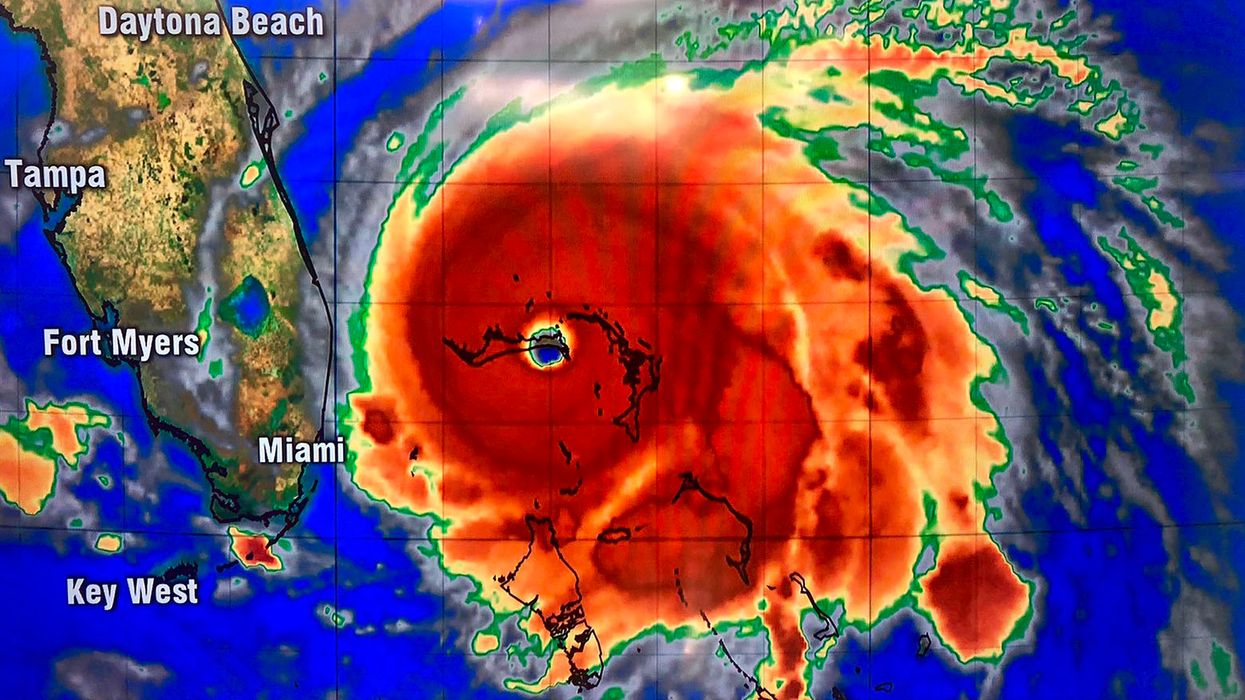
Hurricane Dorian (NOAA)
Matt Simon,
Grist
May 08, 2025

With less than a month to go until summer, weather forecasters have been dropping some troubling news about what might be in store. AccuWeather had already predicted an especially active season — which begins June 1 — with up to 10 hurricanes out at sea, and its meteorologists are now forecasting a hotter-than-normal summer on land. Last week, the company warned that the three months could bring “sweltering heat, severe weather, intense wildfires, and the start of a dynamic hurricane season” — an echo of last summer, which was the hottest on record. In some places, like coastal cities along the Gulf Coast, those hazards could combine into dangerous “compound disasters,” with heat waves and hurricanes arriving back-to-back.

This story was originally published by Grist


The Trump administration’s cost-cutting crusade could make this summer’s weather all the more perilous. Mass layoffs at the National Oceanic and Atmospheric Administration have hurricane forecasters worried that they’ll lose access to the data they need to make accurate predictions of where storms will make landfall and at what intensity. And as electricity gets more expensive and global warming forces households to run their air-conditioning more, advocates worry that the loss of federal support for people struggling to pay their electric bills could leave a swath of the population especially vulnerable.

President Donald Trump’s proposed 2026 budget, unveiled last week, would cancel the Low Income Home Energy Assistance Program, which provides $4 billion a year to help people pay electricity bills, said Alison Coffey, senior policy analyst at the Boston-based nonprofit Initiative for Energy Justice. “We are about to experience one of the hottest summers on record,” Coffey said. “And this is happening at a time when U.S. households are really, really struggling to pay their utility bills.”

AccuWeather’s summer forecast isn’t the kind you get for your local weather, so they can’t tell you if it will be raining in your town on the Fourth of July. Instead, this seasonal forecast looks at weather trends in March and April, as well as larger phenomena like La Niña and El Niño, the two bands of warm and cold water in the Pacific Ocean that influence the atmosphere above the western U.S. AccuWeather compares all that to how those spring and summer months looked in previous years to get an idea of what might unfold this time around.

AccuWeather says that temperatures could run higher than average across the vast majority of the country this summer. Its forecast also warns of warmer nights, especially in the eastern U.S. These make heat waves all the more unbearable as the human body can’t get the respite of a cool night to bring down the physiological stress.

The eastern U.S. could also suffer through heat waves punctuated by thunderstorms that load the atmosphere with humidity. Those conditions make the human body less efficient at sweating, raising the risk of heat-related illnesses and deaths. Heat kills more people in the U.S. than any other natural disaster, in part because it can aggravate existing conditions like heart disease and asthma.

Out West, the Dakotas, Montana, Idaho, Washington, and Oregon could see temperatures 3 degrees Fahrenheit (or more) higher than average. “The daytime highs are a bigger issue, [records] that could be challenged or broken in parts of the Northern Rockies and in the Northwest coming up this summer,” said Paul Pastelok, a senior meteorologist at AccuWeather.

High temperatures are going to increase wildfire risk, Pastelok added, because a dry, heat-baked landscape is a flammable landscape. Right now almost 40 percent of the U.S. is under drought conditions, double the area of last year. Some parts of the American West actually had a fairly wet winter, but that can also cause problems because strong-growing plants and trees can turn into fuel in the extra-hot summer heat. And as the season wears on, the landscape gets drier, so it’s more liable to burn catastrophically.

Day after day of relentless heat, especially if it’s humid out too, forces people to run the AC more to stay healthy. For the rich, that’s no problem. But lower-income folks suffer a high “energy burden,” meaning a $200 monthly utility bill is a much larger proportion of their income. Americans are also wrestling with an escalating cost-of-living crisis as rent and inflation march higher. With 1 in 6 American households now behind on their utility bills, according to the Initiative for Energy Justice, and 3 million of them having their power shut off each year, the danger is losing power during a heat wave this summer.

City dwellers face added risk here because of the urban heat island effect, the way sidewalks, parking lots, and buildings trap heat and make cities much hotter than surrounding rural areas. Lower-income neighborhoods get 15 to 20 degrees hotter than richer neighborhoods because they have fewer trees, which provide shade and cooling, according to Vivek Shandas, a climate adaptation scientist at Portland State University. “Those neighborhoods and the residents living in them just bear the brunt of that heat wave a lot more acutely than someone living in a more highly invested neighborhood, where tree canopy is lush.”


It will take a whole lot longer to fix the systemic issues that drive heat disparities in cities. But in the meantime, access to air-conditioning will be increasingly crucial as the planet warms. “Having financial assistance for low-income households to make sure that they can keep their electricity and their cooling on during the sweltering summer is more crucial than ever,” Coffey said.

This article originally appeared in Grist at https://grist.org/extreme-heat/summer-record-breaking-heat-hurricanes-liheap/.
.


'A blatant conflict': Trump just made 'aggressive step' toward fundamentally changing USPS

Story by Jake Johnson, 
Common Dreams
• 22h •


REUTERS/Kevin Lamarque© provided by AlterNet

President Donald Trump and the U.S. Postal Service's leadership have reportedly agreed to appoint a FedEx board member to succeed Louis DeJoy as postmaster general, heightening concerns that the administration is pushing the independent mail agency toward privatization.

The Washington Postreported late Tuesday that Trump and the USPS Board of Governors are expected to name former Waste Management CEO David Steiner to lead the Postal Service. Steiner is currently the lead independent director at FedEx, a Postal Service competitor.

Brian Renfroe, president of the National Association of Letter Carriers—a union representing nearly 300,000 active and retired letter carriers—called the decision to place Steiner at the head of the USPS "an aggressive step toward handing America's mail system over to corporate interests."

"Private shippers have been waiting to get USPS out of parcel delivery for years," said Renfroe. "Steiner's selection is an open invitation to do just that. This isn't just bad policy—it's a direct assault on the workers who keep the mail moving and the public connected. The damage will hit rural communities hardest, where the Postal Service isn't just a convenience—it's a lifeline. And make no mistake: If this appointment stands, it threatens 7.9 million jobs tied to the postal industry and service to over 300 million Americans."

"The board has the responsibility to do what is best for USPS," he added. "This decision is not only a failure in that responsibility but shows open contempt for the work of America's letter carriers and the public good."

"The Trump administration has been relentless in its attempts to privatize America's most trusted institution, both outwardly and behind the scenes."

The USPS Board of Governors—which is currently comprised of two Democrats, two Republicans, and an independent—is ultimately responsible for appointing the head of the mail service, who cannot be directly fired by the president.

The Post reported Tuesday that postal governors, who are appointed by the president and confirmed by the Senate, submitted three postmaster general finalists to the White House in recent days, including Steiner.

"Trump has the power to immediately reshape the [postal board] with five appointments: The board has four vacancies, plus a seat that is occupied temporarily," the Post noted. "Trump announced plans to nominate Anthony Lomangino, a GOP financier, to one of those roles."

Earlier this year, Trump considered but soon dropped a plan to fire every member of the postal board and bring the USPS under the direct control of his administration. The president has also spoken openly about privatizing the mail service, saying in the wake of his 2024 election win that "it's an idea that a lot of people have liked for a long time."

Rep. Gerry Connolly (D-Va.), the top Democrat on the House Oversight Committee, said in a statement Tuesday that "the Trump administration has been relentless in its attempts to privatize America's most trusted institution, both outwardly and behind the scenes."

"If these reports are true, it is a blatant conflict of interest and an attempt by President Trump to install a handpicked loyalist who he believes will put his interests over what may be best for the Postal Service and the American people," Connolly said of Steiner's selection. "The American people deserve a postmaster general who will stand up for an independent, fair, and accessible Postal Service and who will work with Congress to ensure Americans in all communities nationwide can continue to rely on this public service to deliver mail, medications, ballots, and more without prejudice."

Ford hikes prices on Mexico-produced models, citing tariffs


Published: 

Unsold Ford vehicles sit on display at a Ford dealership in southeast Denver on Nov. 28, 2024. (David Zalubowski / AP Photo)

DETROIT - Ford Motor is hiking prices on three of its Mexico-produced models effective May 2, becoming one of the first major automakers to adjust sticker prices following U.S. President Donald Trump’s tariffs.

Prices on the Mustang Mach-E electric SUV, Maverick pickup and Bronco Sport increased by as much as $2,000 on some models, according to a notice sent to dealers reviewed by Reuters.

(Reporting by Nora Eckert; Editing by Andrew Heavens)

Article written by Nora Eckert, Reuters

Barrick CEO vows to defend rights as Mali junta seeks more money

By Bloomberg News
Published: May 07, 2025 


Barrick Mining Corp. boss Mark Bristow says he has shown a willingness to cede ground in a dispute with Mali’s military junta, but won’t be waiving the company’s rights in order to restart a shuttered gold mine in the West African nation.

The veteran mining executive voiced frustration with the discussion process as authorities in Mali push for a bigger contribution from the Loulo-Gounkoto complex, one of Barrick’s most important assets. The two sides reached an agreement on three separate occasions only for the government to walk them back, Bristow said in an interview Wednesday.

“It’s frustrating that it’s not operating because this country really needs that contribution,” Bristow said. “On a positive side, we are very much engaged in discussions. I never give up.”Barrick reports US$474M first-quarter profit up from US$295M a year ago

The cash-strapped junta running Mali has demanded payments for alleged back taxes from Barrick. It also wants the Canadian firm to adhere to new legislation that would give the state a larger stake in the mine and higher royalties.

The impasse is hindering Barrick’s ability to fully exploit record gold prices, with only the company’s flagship mines in Nevada providing it with more output and income than Loulo-Gounkoto. Bristow spoke after Barrick reported a sharp drop in first-quarter output from a year earlier.

Exports from Loulo-Gounkoto – which produced 723,000 ounces of gold last year – have been blocked since November, prompting Barrick to stop mining there in January. The company paid Mali US$85 million last October while negotiations were ongoing. Mali has since seized 3 tons of gold from the mine and detained four employees, in what Bristow calls an abuse of humans rights.


Mali officials have repeatedly told Barrick they don’t intend to expropriate the mine, Bristow said, adding that any major company with the ability to operate the facility wouldn’t be inclined to do so given Barrick’s experience.

A Mali mining ministry spokesperson declined to comment, while a finance ministry official didn’t respond to a call and text seeking comment.

“We’re still looking to find a way that’s going to be constructive for both stakeholders — the Malian people and ourselves,” he said.

With assistance from William Clowes and Katarina Höije.

James Attwood, Bloomberg News

©2025 Bloomberg L.P.
Canadian government ‘fact check’ dismisses Trump administration claims about border


Story by Stewart Bell
• 1d • GLOBAL NEWS


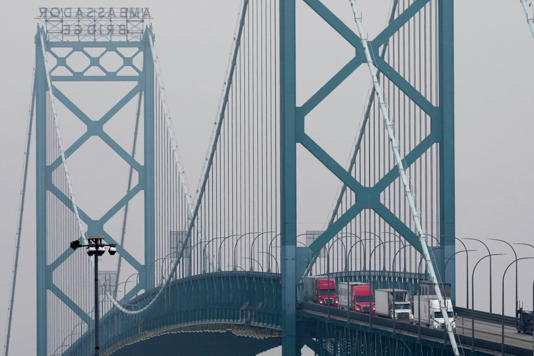
FILE - Trucks enter into the United States from Ontario, Canada across the Ambassador Bridge, Monday, Feb. 3, 2025, in Detroit.© AP Photo/Paul Sancya, File

The Trump administration’s claims that Canada's border is a national security threat do not stand up to scrutiny, according to an internal government report obtained by Global News.

Responding to claims by Republican politicians that hundreds of suspected terrorists cross illegally into the U.S. from Canada, the report countered that such incidents were “limited.”

Republican members of Congress have described Canada as “a major threat," claiming the “porous northern border” was a crisis that needed to be addressed through legislation.

"The actual statistics from U.S. Customs and Border Protection, however, do not support these claims," the Canadian government's Integrated Terrorism Assessment Centre wrote.

Marked “Secret/Canadian Eyes Only,” the report was written a week after President Donald Trump was sworn into office. A copy was released to Global News under the Access to Information Act.

Prime Minister Mark Carney visited the White House on Tuesday amid a trade war initiated by Trump, which he has justified partly by citing the flow of illegal migrants and fentanyl from Canada.

Video: Carney tells Trump Canada is “never for sale” during White House meeting

Pro-Trump lawmakers signed a statement last year claiming the Biden administration's "neglect" of the northern border had left the U.S. vulnerable to an "unprecedented surge" of illegal migrants crossing from Canada, among them "known terrorists."

“Media have reported that politicians in the U.S. have expressed concerns in relation to the Canadian border,” said the report, which described itself as a “fact check” of American statements.

“Further, the new U.S. president has threatened to impose a steep tariff on imports from Canada as of 1 February 2025, citing concerns that include illegal migration.”

“Media reporting also specifically indicates irregular crossings (i.e. those who cross between points of entry) are dramatically increasing with ‘hundreds of terror suspects’ being arrested."

But the Canadian report said that since 2022, only six suspects flagged by the U.S. Terrorist Screening Data Set, or TSDS, had tried to make their way south between border posts, the report said.

“Irregular entries along the northern border remain a fraction of similar entries seen at the U.S. southern border,” it said. “Further, of such entries, there are extremely few known instances of someone holding a U.S. TSDS record.”

At border crossing facilities, 358 people on the TSDS list tried to enter the U.S. from Canada last year, compared with 484 in 2023 and 313 in 2022.

But those numbers have steadily declined as a proportion of the total volume of travellers, the report said.

Even those on the watchlist were not necessarily dangerous, since the TSDS “includes a variety of individuals, not just those deemed to be current and credible threats to national security,” it said.

“It also includes those affiliated with such individuals as well as individuals requiring further investigation.”

Global News
Carney says he asked Trump to stop making comments about Canada being the 51st state
View on Watch

More on Canada
Search for missing Nova Scotia kids continues as stepfather seeks expanded effort

The report also said that extremists crossed borders for reasons other than carrying out attacks.

“Some Canadians have sought to travel to the U.S. in order to attend events (extremist-affiliated or co-opted), likely seeking to forge stronger ties with like-minded individuals,” ITAC wrote.

It cited the example of Active Club white nationalists who use fitness and martial arts to attract followers, and see themselves as fighters training to take on "a system that they claim is deliberately plotting against the white race."

“While travel is not necessarily linked to violent extremism, such travel by those who engage in extremist activities can allow them to reinforce networks, share information, and strengthen capabilities, all of which could ultimately lead to violence,” it said.

Video: Jan. 6 rioter pardoned by Trump still in Canadian custody

But the travel goes both ways.

In January, Canadian immigration officials arrested an American convicted over his role in the Jan. 6, 2021, insurrection at the U.S. Capitol building in Washington, D.C.

He was later pardoned by Trump, along with about 1,500 others the report called “extremists, conspiracy theorists and militia members” convinced by false claims the 2020 election was stolen.

Other recent examples include Patrick Matthews, a Manitoba neo-Nazi arrested in Delaware in 2020.

On July 28, 2024, the RCMP arrested Ahmed Eldidi and his son Mostafa in Toronto for allegedly planning an ISIS attack. Mostafa had entered Canada from Iowa, where he was a student.

The RCMP arrested Pakistani citizen Muhammad Shahzeb Khan in Quebec on Sept. 4 as he was allegedly on his way to New York to conduct an ISIS mass shooting at a Jewish centre.

The U.S. announced in December that it had deported a Jordanian with “ties to terrorism,” after he illegally crossed the border from Canada. But he had actually entered Canada from the U.S. in 2017.

Stewart.Bell@globalnews.ca


Power utility TransAlta expects Alberta data centre deal this year


Updated: 

A TransAlta wind farm near Pincher Creek, Alta., Wednesday, March 9, 2016. THE CANADIAN PRESS/Jeff McIntosh

CALGARY —Power producer TransAlta Corp. is hoping to sign agreements this year with prospective Alberta data centre partners that would draw on natural gas-fired electricity it generates in the province.

“We continue to focus on securing exclusivity with key partners by mid-year with detailed design and definitive agreements expected by year-end,” CEO John Kousinioris told a quarterly analyst conference call Wednesday.

“A data centre would be operational 18 to 24 months after signing definitive agreements.”

Data centres, used in artificial intelligence and other high-tech industries, are massive operations that require an immense amount of electricity to run and cool off computer servers.

Alberta’s technology minister has said the province hopes to see $100 billion worth of artificial intelligence data centres under construction in the next five years. Some utilities have discussed plans to ink deals that go “behind the meter,” meaning one of their plants feeds power to a specific user rather than the broader grid.

Kousinioris told analysts he expects TransAlta to supply around 90 per cent of a data centre partner’s needs, with the rest being drawn from the wider market.

Earlier this year, TransAlta entered into a partnership with Nova Clean Energy LLC, which develops renewable projects in the western United States. Under the deal, TransAlta is providing Nova a US$100 revolving credit facility and US$75 million term loan. TransAlta, in turn, has the exclusive right to buy Nova’s late-stage development projects.

Also Wednesday, TransAlta reported its first-quarter profit fell compared with a year ago.

The utility said it earned a profit attributable to common shareholders of $46 million or 15 cents per share for the quarter ended March 31.

The result compared with a profit of $222 million or 72 cents per share for the same period in 2024.

On an adjusted basis, TransAlta says it earned 10 cents per share in its latest quarter, down from an adjusted profit of 41 cents per share a year ago.

Revenue totalled $758 million, down from $947 million in the same quarter last year.

This report by The Canadian Press was first published May 7, 2025.on continued to generate realized prices well above spot prices.

This report by The Canadian Press was first published May 7, 2025.

Alberta legislature Speaker Nathan Cooper to resign seat, become rep to United States


Jack Farrell, The Canadian Press


Newly-elected speaker of the house Nathan Cooper speaks after being voted in, in Edmonton on May 21, 2019. THE CANADIAN PRESS/Jason Franson© The Canadian Press

EDMONTON — The Speaker of the Alberta legislature is resigning his seat in the assembly to become the province's representative to the United States.

"Serving this assembly has been one of the greatest honours of my lifetime," Nathan Cooper said Wednesday in a speech to the house announcing his resignation.

"Working as the assembly's chief diplomat has equipped me in, and to be ready for, my next role serving Albertans in a new and meaningful way."

Cooper will replace former Edmonton-area member of Parliament James Rajotte as Alberta's U.S. representative. He held the role for nearly five years.

A government news release says Rajotte will now serve as a senior adviser to Premier Danielle Smith.

"In this evolving landscape, Alberta must maintain and build on our ties with U.S. officials, and Nathan Cooper is the right choice to fill this important role," Smith said in the release.

"I look forward to continuing to work closely with Nathan as we advocate for Albertans and for our province’s interests in Washington and across the U.S.”


The government says Cooper will be based in Washington and will look to attract investment, expand trade opportunities and maintain relationships to keep Alberta connected to decision-makers south of the border.

Cooper told the house that he will officially resign as Speaker on Monday, and an election of legislature members for a new Speaker will take place Tuesday.

The Speaker's role is to preside over debates and proceedings in the house in a non-partisan manner. The Speaker also doesn't vote on legislation.

In his speech Wednesday, Cooper said his nearly six years in the role made him the eighth-longest-serving Speaker in Alberta's history.

"I've sat through 345 question periods, totalling 287 hours or 12 full days of question periods," Cooper said.

"I presided over 2,195 hours of debate or 91 full 24-hour periods, and a whopping 17.9 million words have been spilled on the floor of the assembly."

He was first elected in Olds-Didsbury-Three Hills as a member of the Wildrose Party in 2015.

When the party merged with the Progressive Conservatives two years later, Cooper became the United Conservative Party's first leader on an interim basis before it held a formal leadership race and former premier Jason Kenney was given the reins.


Cooper was elected Speaker by fellow MLAs following the 2019 provincial election and was re-elected to the role in 2023.

He found himself in hot water in 2021 after he was one of 16 United Conservative caucus members who signed a letter speaking against COVID-19 public health restrictions imposed by Kenney's government.

The following week he apologized for not remaining neutral on government matters, as is expected from the Speaker.

On Wednesday, Cooper received a standing ovation from both sides of the house as he rang in the last question period under his watch.

"Honourable members we will have order!" he yelled sarcastically while the clapping and cheering continued.

House leaders from both parties also gave speeches thanking Cooper for his time as Speaker.

"Mr. Speaker we all know we will miss the chamber time with you, with a well-timed joke to break the tension, with your careful and steady hand in managing this chamber," said government house leader Joseph Schow.


Opposition house leader Christina Gray said the job of the Speaker "is not for the faint of heart" but it's a job that Cooper handled admirably.

"Your fairness, humanity, knowledge and deep respect of parliamentary tradition has absolutely made this legislature more thoughtful and more respectful," Gray said.

Individual members from both parties shared the same sentiment with reporters earlier Wednesday, with Parks Minister Todd Loewen saying Cooper kept shenanigans to a minimum.

"He provides good balance in there and is able to keep rein on some of the people that are — and of course I may have been in that place myself a couple times — creating ruckus in the legislature," he said.

Opposition NDP education critic Amanda Chapman said Cooper was well regarded and fair.

When asked if she'd want to fill the shoes he leaves behind, Chapman said she wasn't "the right kind of nerd" to be Speaker.


"You have to be really into all of the parliamentary wonkiness, although it would be cool because I think that you get a portrait in one of the galleries," she said.

Cooper said he will officially resign his seat in the assembly next month, which will leave Alberta with three vacant ridings that the premier will need to call byelections for.

With Cooper's seat empty, the United Conservative Party will hold 46 seats in the 87-seat house. The Opposition NDP currently has 36 seats and there are two Independent members.

This report by The Canadian Press was first published May 7, 2025.

Jamie Sarkonak: Alberta's separation threats weaken hand against Liberals


Opinion by Jamie Sarkonak
• 1d •

National Post


A rally and counterprotest for the Alberta separatist movement drew hundreds of people to the Alberta Legislature on Saturday, May 3, 2025.

In a livestreamed address Monday, Premier Danielle Smith indicated that, though she doesn’t support Alberta’s separatist movement, she will certainly use it as leverage in negotiating a new deal for the province. It’s a bold strategy, but it’s hard to see it playing out.

What the premier wants is not independence, but a new “binding agreement” between the feds and the province that makes a number of guarantees — land corridor and seaport access for energy exports, an end to net-zero constraints (including plastics regulations, EV mandates and corporate climate disclosure requirements), the repeal of the Impact Assessment Act, and boosted per-capita equalization payments equivalent to those received by B.C, Ontario and Quebec.

She also demanded that the feds promise to never place export taxes on Alberta resources without the province’s consent — a demand no doubt in response to the trade war. In January, polling showed that 82 per cent of Canadians supported slapping export taxes onto oil exports to the U.S., and 72 per cent support in the Prairies; Smith has strongly opposed export taxes on oil throughout the trade war.

That’s all fine and good; provinces demand things all the time. But in Alberta’s case, the premier is inflating the expectations of her followers by making a few unmeetable demands, and preparing to channel the resulting anger and disappointment into doomed dealmaking efforts that, at worst, will harm the country’s conservative movement overall.

Take the first insurmountable obstacle: equalization reform. Since 1957 , the federal government has used the taxes it’s constitutionally empowered to collect to support the budgets of less-prosperous provinces. Currently, the formula is designed to excuse Quebec’s refusal to be a team player in Canada’s broader energy economy (Quebec’s hydro revenues don’t count towards the province’s revenues, which results in the province receiving far more federal welfare than it should). With a federal Liberal minority government, we shouldn’t expect that to change.


Related video: Doug Ford dispels talk of feud with Danielle Smith, maintains he's against Alberta separation (Global News)
Duration 2:37

Albertans make more money, pay more in federal taxes and thus contribute more per head to the federal pool of funds than the rest of the country. The provincial government can’t do anything about it any more than the feds can direct the province’s funding of individual school boards within its borders. That’s why Alberta’s first run at changing equalization by former Alberta premier Jason Kenney didn’t go anywhere, and why subsequent province-level chest-thumping won’t help; for reform to work, it will take a reform-friendly government in Ottawa — say, a Conservative majority willing to wean anti-energy Quebec from the federal welfare teat.

Smith runs into similar jurisdictional hiccups in demanding port access and cross-country corridors. These are ultimately matters of federal jurisdiction. Now, if this country had competent people running it, it would be aggressively working to get more interior products out to the coast, ideally opening new ports in the process. But alas, that’s not what Canadians voted for. Asking for it is one thing, but Canada’s highest “binding agreement,” the Constitution, says that ports and interjurisdictional transport are the federal government’s business.


It’s not all bad — the premier is absolutely right to fight potentially unconstitutional laws, which she has done vigorously. The challenges to the Impact Assessment Act and Clean Electricity Regulations are underway, and the fight on federal plastics regulation has already been won. Threatening more challenges and then backing those words up with court filings is what should be done. But there are other fronts on which she has no chance in winning — and that’s where separatist flirtation comes in.

It was an obvious tactic by Smith to advance legislation that eases the way of citizen-driven referendums onto the ballot. Doing so transfers the thorny decision of whether to put independence on the ballot from the premier to a political process over which she has no direct control but which she designed knowing full well that a certain group would be using it. Responsibility is diffused, and “democracy” can always be invoked to defend it.

The best a referendum can do is start up the Alberta independence process, which, if successful — and that’s unlikely — would be a disaster for the ensuing nation. Any qualms about tidewater access would be dwarfed in the post-separation scenario (separatists would point to a United Nations treaty that in theory opens the way to port access for landlocked states, but that’s no guarantee for favourable port access). Threatening to secede when independence gets you even farther from your current demands is simply unserious.

The same goes for arguments for U.S. statehood, by the way. Alberta’s frustrations with its confederation deal — too few MPs in the House of Commons; too few senators — trace back to its late addition to the federation and the lesser leverage that came with. It’s delusional to expect that the U.S. in 2025 would offer a better entrance bonus to this majority-Democrat-leaning province.

Alberta should be treated better, but Quebec-style fight-picking with Ottawa isn’t a winning route. Yes, Quebec throws separatist-tinged tantrums to get what it wants, but it comes across as bratty and spoiled. Yes, the federal government, in turn, comes across as a bad parent, giving the province the equivalent of candy for its bad behaviour. But the separatist movement doesn’t offer a fix; that’s going to take electing a federal Conservative government with the guts to put Quebec in its place.

Alberta’s tantrums, led by its minority of secessionists, will only cultivate an eyeroll-inducing victim complex that sours the entire country towards our province. Taken further, it will potentially threaten both the United Conservative Party’s unity in Alberta and the prospects of a Tory victory in a future federal election.