Friday, May 09, 2025


Source: Resilience

The recent Climate Change Committee report on the UK government’s lack of preparedness for climate breakdown reveals negligence at a historic scale.

The report lays bare years of successive Governments’ failure to prepare the UK for the breakdown that is now upon us, with far worse to come.

From heat exposure to rising flood risk to national infrastructure, homes and harvests, countless lives and livelihoods are at severe risk. Conservative estimates project impact to the UK economy into hundreds of billions, before 2050.

Faced with these stark facts, can any of us still believe that the government is primed to simply come and save us? Awareness is dawning among UK communities that it’s down to all of us to respond to the dangerous climate change we’re experiencing here and now. In our cities and neighbourhoods, at work, and everywhere else that we have power. Yes, Government must act urgently. …And with this taking too long, and worse changes to come, hyper-local, community-based adaptation action is the shape of our future.

Despite popular protestations, raising awareness of adaptation does not disrupt or delay the urgent case for limiting climate breakdown through global decarbonisation. Quite the oppositedecarbonisation and adaptation need each other. What’s more, more often than you think, they’re the same thing…

…This is the vision of strategic adaptation. From housing retrofit to upland flood management, community led and ecologically sound adaptation measures can draw down carbon, and protect against impacts; reduce emissions and reduce energy bills. All while transforming public awareness of the climate threat and building the democratic support we desperately need for climate mitigation: a win-win-win-win.

Watch this space for more on climate adaptation from the CMp’s forthcoming Strategic Adaptation For Emergency Resilience (SAFER) campaign, including:

– building the case and the field for hyper-local community based adaptation action

– our demand that Government produce appropriate adaptation policy and implementation response, to fulfil their most basic responsibility: protecting its citizens (and their children) from wholly foreseeable threats.

The recent chaos caused by a major power outage in Portugal and Spain is a timely demonstration of the vulnerability of  contemporary industrialised societies. Every such ‘warning shot’ builds the case for serious disaster-preparedness, and for ‘redundancy’ and back-up plans to become standard systems approaches. The time to act is now, not after an unprecedented disaster.


Source: Jacobin

For decades, the Western aid industry became ever more powerful in Sudan, even as it grew quieter about the reasons for underdevelopment. Rather than combat the root causes of poverty, NGOs served only to alleviate the number of deaths.

During the second half of the 1980s, Oxfam ran an extensive food aid program among Beja nomads in Sudan’s arid Red Sea Hills. The Beja had lost around half of their cattle and sheep during the severe drought of 1984. Based on extensive household and nutritional surveillance, Oxfam operated what was claimed to be a humanitarian “food for recovery” program. Using targeted food assistance, it promised, future stress sales of livestock could be prevented, thus helping the Beja to recover their herds.

Sometime in 1987, as Oxfam’s country representative for Sudan, I was in the wrap-up session of a periodic visit to its Port Sudan office. The humid sea air did nothing to reduce the oppressive afternoon heat. Having gone through day-to-day organizational issues with the team, the closing conversation took an unscripted turn.

Doubtless informed by growing knowledge of conditions in the Red Sea Hills and the regional government’s attitude, the question of what Oxfam was “actually doing” speculatively bubbled to the surface. While the “food for recovery” idea made a strong public case for donor support, there was a suspicion that there was more to it than that.

The government had done little to nothing to help the Beja. There were no rural services, appropriate provision, or even meaningful concern. The Beja were a neglected, second-class citizenry and there was no sign that this would improve soon. Previously unarticulated, at least collectively, the team formed the opinion that Oxfam was not only replacing an absent government but going further. While satisfying external sponsors, the claim to be supporting herd recovery also served to downplay legitimate Beja concerns, while also moving the government out of the spotlight. Unwittingly, Oxfam was helping keep a political lid on things; its slick humanitarian sales pitch concealing a real-world pacificatory role.

The unscripted end of the program review had a sobering effect. A meeting of minds had taken place and a seemingly illicit insight had been shared. It would remain unvoiced, however: a private, insider opinion. People moved on and, eventually, Oxfam’s Red Sea operation would be abandoned, the touted “food for recovery” having never materialized.

Western humanitarianism has, to be sure, a long history. Used here, however, the term is a container for a new and distinct set of contingent social, political, and technical practices that emerged between the 1970s and 1990s. Rather than saving lives or livelihoods, these practices are better understood as functioning to regulate the level of excess death in the neocolonial world.

The world-historic transformation in the global economy during the decades in question provided the material basis for the changes in humanitarianism described here. The United States, UK, and other Western economies de-industrialized and financialized, bringing to a willed end the West’s long manufacturing dominance. Put simply, a new defining division of the world occurred between interconnected Western consumer economies and Asian producer economies. Together with the rise of neoliberalism, this new, if partial, international division of labor was celebrated as the “no alternative” era of “globalization.”

Disturbing this teleological “triumph of the market” narrative, however, a different but necessary Africa–West Asia axis took form during the same phase of finance-led imperialism. This development forcefully denotes capitalism’s continued reliance on primitive accumulation: rather than unequal exchange per se, the physical resources, social capital, and labor of this spatial axis were slated for external plunder and ecological extractivism through war, legalized theft, and violent dispossession. Compared to what existed before, the measurable effects of the ensuing decades of violence and displacement have been aptly summed up by Ali Kadri as “de-development.”

It is no accident that the Africa–West Asia axis of dispossession was Western humanitarianism’s main site for trial runs of its new “life-saving” regulatory practices. On every measure — careers, expenditure, growth, and influence — NGOs benefitted from the wages of imperialism. Breaking with liberal humanitarianism’s earlier traditions of autonomy from (if not antipathy to) Western foreign policy, Western humanitarianism, by and large, became pro-US and anti-communist. Deeply implicated in the neocolonial recapture of independent former colonies, by the 1980s Western humanitarianism was advocating a postmodern, complexity-based worldview.

Western humanitarianism would be eclipsed after the devastating US-led “war on terror” in the early 2000s. Yet excavating the regulatory practices that arose in the preceding decades offers striking examples of the need for self-criticism in the cause of liberation and a sustainable world.

The NGO Invasion

International NGOs expanded rapidly along the Africa–West Asia axis during the 1980s. Given the relative speed of this event, we could rightly call them an “invasion.” It was a time of de-industrialization in the West, and of the Left’s drift to the Right as the Soviet Union collapsed. Many disillusioned comrades sought solace by joining the NGO expeditionary force. Reflecting the neoliberal Zeitgeist, especially the privatization of public services, the invasion was paid for by the transfer of Western aid funding away from states to an expanding private NGO sector.

The NGO invasion can also be seen to resonate with aspects of the “new” imperialism that emerged a century earlier. Toward the end of the nineteenth century, the landmass of the colonized world grew rapidly, its administration reaching new heights of barbarity, as reflected in a series of what Mike Davis termed “late-Victorian holocausts.” Paradoxically, a central moral justification that spurred new imperialism was “anti-slavery.”

During the “Scramble for Africa,” imperialists would equate unfettered black sovereignty with the tyranny of slavery, despotism, and, by implication, humanitarian disaster. When Britain occupied Egypt in 1882, given the prevalence of domestic slavery, this racial equation between slavery and despotism was used to define Egyptians as unfit to govern. As explored by Adom Getachew, during the 1920s, the same fears were at play as Liberia and Abyssinia — both slave-owning societies — were incorporated and managed within the League of Nations as “unequal sovereigns.”

Several decades later, a similar sense of impending disaster also informed the rearguard action of Sudan’s colonial Political Service to forestall that country’s independence in 1956. Western humanitarianism has not lost this fear of black sovereignty but simply reworked its parameters.

The rapid appearance of NGOs along the Africa–West Asia axis during the 1980s announced Western humanitarianism’s neocolonial phase. NGOs were the practical means of community-level recapture within the proxy structure of US-led imperialism. Rather than anti-slavery, the driving force of Western humanitarianism was now, as the irreverent outbursts of the band Band Aid’s Bob Geldof epitomized, an “anti-authoritarianism” directed, in particular, at the bureaucracy of African states. To paraphrase one aspect of Hannah Arendt’s somewhat controversial appreciation of Britain’s contribution to the new imperialism: the NGO invasion, with its antiauthoritarian critique, attracted the idealistic best among Western youth.

The invasion was also symptomatic of the political rupture among the metropolitan left regarding its earlier anti-imperial agitation. The spirit of the era was captured in Jean-François Lyotard’s 1979 declaration that the time for grand narratives was over. The following year, the Iron Lady herself, Margaret Thatcher, complemented the French theorist with her notorious pronouncement that “there is no alternative” to neoliberalism.

Western Humanitarianism

Among NGOs, the rejection of grand narratives was largely aimed against Marxism, especially the Marx-inspired structural accounts of underdevelopment that were popular at the time. In 1985, the French chapter of Médecins Sans Frontières (MSF) publicly declared its break with the Third Worldism that had hitherto defined left-wing internationalism. Adopting an openly pro-US, pro-Israel, and anti-communist position, it dissociated capitalism from the violent dispossession then strengthening its grip along the Africa–West Asia axis. Attempts to draw such connections were derided as “ideology.” Having declared the world politically fit for purpose, MSF would henceforth devote itself to humanitarianism 101 — that is, “saving lives.”

But why, if capitalism was benign, did lives need saving? It is here that the racial connection between the anti-slavery of new imperialism and the antiauthoritarianism of modern NGOs emerges. In an update of the liberal worldview that equated emancipated black sovereignty with humanitarian disaster, for MSF the culprit wasn’t imperialism, it was the emergence of disaster-producing, independent totalitarian African states. Henceforth, moreover, MSF would have no hesitation in calling them out. Especially if they claimed a left-wing or independent agenda.

If MSF secured the neocolonial bridgehead, it was British academics, such as Randolph Kent and David Booth, and NGOs, like Oxfam and Save the Children, that explained how to understand a world where “capitalism” and “imperialism” had been magicked away. Causal narratives were deemed invalid because of the chaotic “complexity” of the interactions between people, things, and nature. General laws or determining relations were impossible.

What was, essentially, a celebratory rationalization of ignorance, served to render the outside world unknowable beyond immediate experience. Problems were tied to specific times and places, allowing no general historical connections to be drawn. If French political revanchism reached out to neoliberalism, British empiricism linked Western humanitarianism to quantification, cybernetics, and machine-learning.

Forged in the imperial struggle against Marxism and mid-twentieth-century attempts at independent worldmaking, during the 1980s a cybernetic worldview took shape within Western humanitarianism — decades before the seamless spread and lock-in of corporate machine-thinking or artificial intelligence.

Naturalizing Conflict

The mid-1980s Sudan famine was a site of competing national and international agendas. Waving the humanitarian flag, the NGO encampment that was rapidly set up marked the end of Sudan’s quarter-century experiment in self-directed development. NGOs had been few before 1984; within a couple of years, over a hundred were registered in the capital Khartoum. At the time there was no shortage of Marx-inspired structural accounts of famine. Such insights, however, were quickly swept away in the disorientating moment of neocolonial recapture.

Aside from the liberal fear of black sovereignty, as I argued in Global Governance and the New Wars, the drivers of intercommunal conflict were argued to be multiple and place-specific, taking in the social, economic, and environmental factors. For Western humanitarianism, intercommunal warfare had no generalizable or overriding cause beyond the scarcity and ignorance that afflicted those involved. The West’s publicly funded “aid industry” would interpret the coming decades of violence and instability through the ahistoric but quantifiable lens of cybernetic complexity.

On the ground, however, since the 1950s, the expansion of commercial agriculture had progressively undermined subsistence agriculture. From the end of the 1970s, US-authored structural adjustment accelerated this dissolution by reorientating Sudan’s agricultural production toward exports. Already under strain, the resulting possibilities for profit transformed the former reciprocity between herders and farmers into an exploitable relation of permanent war. The resulting periodic bouts of paramilitary resource extractivism, ecological destruction, polarizing racial violence, and forced migration eventually spiraled into Sudan’s long-anticipated state fracture of 2023.

With its unwillingness to generalize, Western humanitarianism normalized the evolution of Sudan’s violent neocolonial economy. Four decades of funding-friendly humanitarian emergencies followed, masking a brutal assault by mercantile capital on society and nature. While creating little real knowledge of Sudan — that is, knowledge that would be of practical use to those struggling against impoverishment while fighting for their rights, land, and resources — these were profitable decades of institutional growth for the aid industry.

Predicting Famine

Structural accounts of famine had scandalized its use as a weapon in the ongoing social civil war and called for economic reform and political protection. So-called “complexity” thinking instead normalized famine, transforming it into a predicable outcome of a probabilistic dataset of behavioral signals and alerts. Famine was, after all, to be expected in an “underdeveloped” country.

While its cause may be “complex,” fortuitously, NGOs developed a “technology” to predict the occurrence of famine — a dual-use technology that would also prove useful in the competition for media attention and funding. Since the 1970s, it had been known that variations in local market prices for food, livestock, or labor often prefigured atypical behavioral patterns among farmers and herders. Such changes became a proxy for the imminence of famine.

During the 1980s, Sudan was a laboratory for Famine Early Warning (FEW). The rationale was that a timely alert allows early intervention, which saves more lives. Initially, FEW relied on the labor-intensive collection of price and population-movement data from geographically dispersed markets and collection points. Centralization, hand-held calculation, and dissemination routinely took weeks. The significance of the manual nature of this early predictive technology should not be missed.

As I argued in Post-Humanitarianism, FEW was an ecology of grounded activities amounting to an established socio-technical problem-solving practice, a decade or more before the facilitation afforded by generalized computing, and three decades before its codification with the breathless arrival of remotely sensed “digital humanitarianism.”

Rather than technology being a determining external force, FEW is suggestive of a counter-history where technology is a socially determined tool at the center of capitalism’s ceaseless civil war. As a “pure” technology of prediction, FEW has never worked. Even if death is foretold, in an unequal world some lives are more valued than others. As a socially determined technology, FEW is inseparable from the historical ecology of practices, institutional agendas, and political struggles that define Western humanitarianism’s neocolonial phase of recapture and politico-cultural pacification.

Regulating Death

Famine Early Warning was especially important to the development of Western humanitarianism’s regulatory role. For a given population, prediction requires the existence of a quantifiable mortality benchmark that, once breached, allows a humanitarian emergency to be officially declared. However, any benchmark, other than one pegged to European norms, necessarily involves a process of racialized socio-cultural bargaining pursuant to a measure of excess death appropriate to “underdevelopment” while also morally acceptable to Western consumers.

The counter-history of Western humanitarianism tells not of saving lives but of the technology-driven attempt to regulate excess death along the Africa–West Asia axis of neocolonial predation and violence.

Since the 1970s, there has been a secular rise in the level of malnutrition deemed to constitute a humanitarian emergency. Levels that justified the mid-1980s NGO invasion of Sudan had, by the 1990s, become “normal” for Africa. This trend was brought to summation in 2004 with the creation of the UN’s Integrated Food Security Phase Classification (IPC). As a set of benchmarks, the IPC scale has been widely celebrated as the “gold standard” of humanitarian practice. Until recently, at least, it was credited with helping the aid industry control the scourge of famine.

However, in an indication of the experiential chasm now dividing Western consumer societies from the majority world, few have posed the obvious question: What would an IPC-declared emergency look like if transposed to Europe? A shocking truth lurks within this question. In the British case, during the peak of the COVID-19 crisis, the excess death rate, from all causes, was around 60,000 per year. This barely registers on the IPC disaster scale. On a per capita basis, for a full-blown UN humanitarian emergency to be declared in the UK there would have to be well over four million excess deaths per year! These figures give some impression of the appalling levels of excess death that neocolonialism has normalized in the majority world.

For Western consumer societies, imperialism and colonialism are “history”: legacy issues that, at most, require some reparational amends. To suggest that the ongoing, indeed intensifying neocolonial phase of US-proxy wars is just as violent as colonialism, perhaps even more so, is to risk derision. For many countries on the Africa–West Asia axis, however, including Sudan, the UN’s high bar for excess deaths suggests otherwise. When we consider the toll of four decades of permanent war — the dispossession, immiseration, and displacement; the destruction of livelihoods, public infrastructure, and the biosphere; the austerity, urbicidal decimation, and the scattering to the wind of professional classes — a different picture is waiting to be drawn.

Western Humanitarianism in Crisis

Western humanitarianism, as outlined above, entered a period of crisis with the launch of the US-led war on terror. With its polarizing “with or against us” ethos, large areas of Africa and West Asia effectively became a free-fire zones. As international backing for humanitarian access and an associated concern for “human rights” disappeared, the aid industry defensively bunkered itself. The insularity of aid workers has since increased, together with a dependence on machine-driven remote management. Helped by budget cuts and increased managerial oversight, the aid industry’s regulatory role came adrift in the mounting violence and impunity of recent decades.

What did Western humanitarianism leave to the world, in the stead of the structuralism and political radicalism that it displaced? Here we are confronted with the “humanitarian paradox.”

At the heart of this paradox is that despite having been in Sudan for fifty years, for example, NGOs have little real knowledge of that country. As an agent of neocolonial recapture and pacification, the aid industry is incapable of creating useful knowledge for those struggling against neocolonialism and the violence, dispossession, and impoverishment it has unleashed. While dedicated to “saving lives” and supporting “rights,” the aid industry cannot furnish a peoples’ history, so to speak. By way of concealing this paradox, we find in Western humanitarian discourse several countervailing reflexes.

Regarding the Horn of Africa, the last few years have seen recurrent, self-serving predictions of the “famine to come,” each seeking to attract the attention of otherwise busily militarizing Western states. Many hope that the banner of “climate change,” backed by the objectivity of science and its ability to obfuscate decades of institutional complicity while renewing a security-driven urge to intervene, will keep Western humanitarianism marching on.

The liberal call to rally against climate change draws a convenient line under decades of aggravated intervention and development failure. But even when liberals do address the reality of escalating neocolonial violence, we find yet more iterations of liberalism’s long-standing racial fear of unfettered black sovereignty: that is, the threat posed by independent “totalitarian” African states, their corrupt incumbents, and rapacious non-state wannabes. Important here is the fashionable academic embrace of the transactional politics of the neoliberal “political marketplace” where everything has a price. Dedicated research programs are now busy “mapping” this unregulated space where, devoid of imperial designs, African tyrants and regional hegemons regularly sell each other down the river, so to speak.

The paradox of Western humanitarianism lies in its inability to constitute a peoples’ history of resistance and struggle against neocolonial oppression. The only history that Western humanitarianism is capable of producing is celebratory or egotistical accounts of its own technologies of intervention, surveillance, and digitalization.

Sanctions as Civilizational Warfare

Framed as hard diplomacy, economic sanctions are a subtler form of warfare—one that erodes sovereignty, punishes civilians, and extends colonial power under a new name.
May 7, 2025
Source: Africa Is a Country


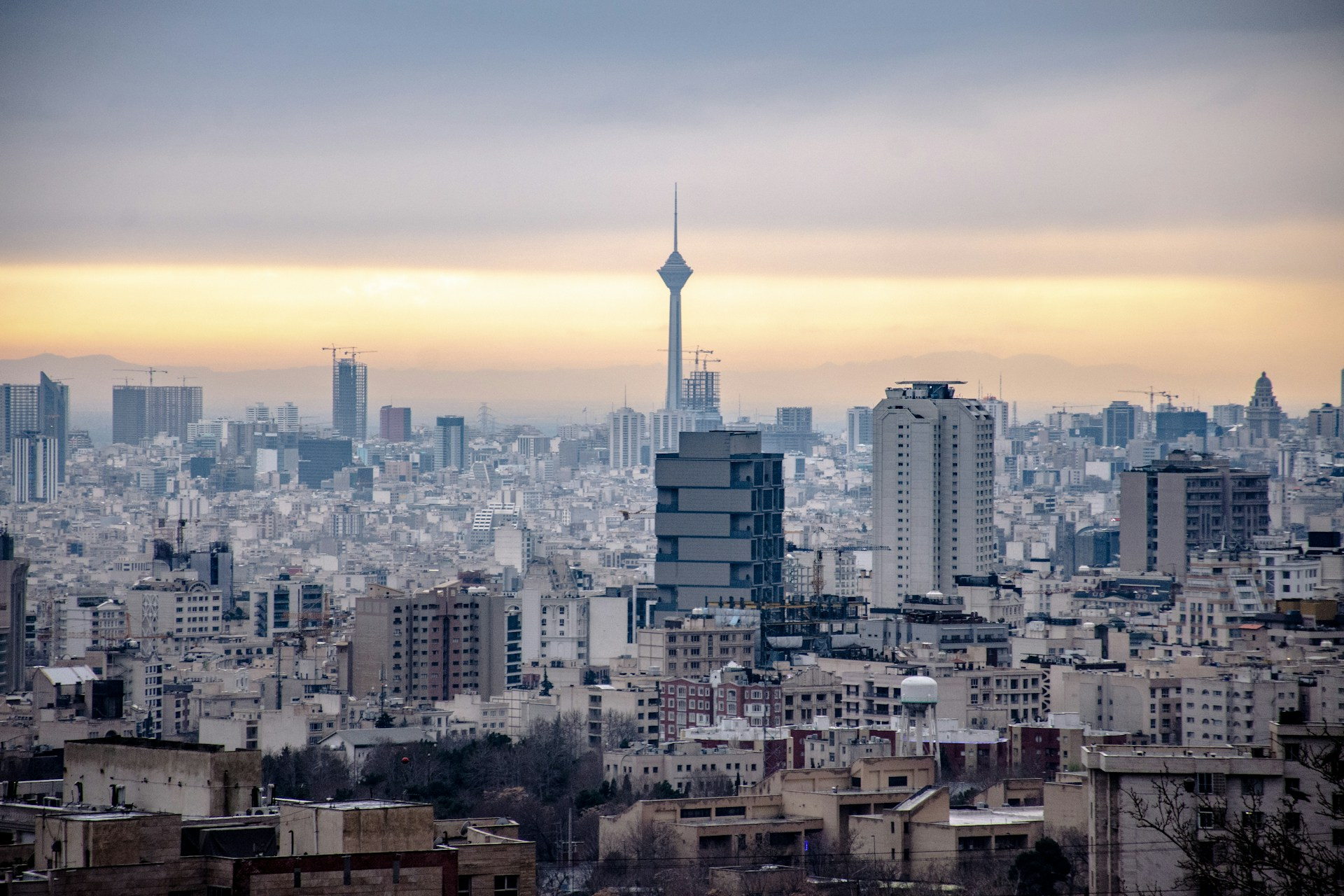
Tehran, Iran. Photo by hosein charbaghi on Unsplash.


In today’s multipolar world, economic sanctions have become a primary tool of American foreign policy. While they are typically framed as nonviolent targeted mechanisms for influencing “rogue” regimes, a deeper inspection suggests that sanctions operate as instruments of civilizational warfare—seeking not only to alter policy but to dismantle the cultural coherence and sovereign legitimacy of states in the Global South.

What is “civilizational warfare?” By this, we mean a campaign that attacks a nation’s identity, social fabric, and place in the world order. It is a strategic and ideological tool in US foreign policy. Sanctions are wielded to declare that a targeted country is outside the bounds of the “civilized” international community and must be brought to heel—or broken. Unlike conventional military action, this method uses banks, trade embargoes, and diplomatic isolation as weapons. The aim is to erode not just a government’s capabilities but a society’s confidence, memory, and dignity as an independent civilization. This logic is disturbingly familiar from the colonial playbook: imperial powers often imposed blockades or withheld resources to “discipline” populations they deemed inferior. In modern form, economic coercion has replaced gunboats, yet the underlying goal remains the same—to force a sovereign people into submission by undermining their very civilization.

Iran’s experience under the “maximum pressure” campaign is emblematic. Since the US unilaterally withdrew from the JCPOA nuclear deal in 2018, successive sanctions have crippled not just Iran’s economy but its access to scientific collaboration, cultural exchange, and even life-saving medicines. As Richard Nephew, the architect of these sanctions, wrote: “An effective sanction is one that inflicts pain—strategically and sustainably.” The aim is not limited to regime behavior change, but includes the slow erosion of the state’s internal equilibrium and civilizational continuity. Indeed, Iran’s rich cultural and scientific life became a target; when even cancer medications and academic journals are cut off, it feels like an assault on Iran’s very identity and resilience as a nation.

Venezuela presents a parallel case. US and EU sanctions have deepened the country’s humanitarian crisis, curbing its ability to import food and medical supplies and worsening hyperinflation. The United Nations special rapporteur on the negative impact of unilateral coercive measures, Alena Douhan, noted in her 2021 and 2023 reports that these sanctions had “exacerbated pre-existing calamities” and violated the Venezuelan people’s right to health and development. This is not diplomacy—it is siege by economic means. The Venezuelan economy, once buoyed by vast oil reserves, has been asphyxiated, contributing to mass migration and the collapse of social programs. In effect, an entire society is being strangled to undermine a political project that Washington opposes.

In Syria, the US Caesar Act of 2019 intensified collective suffering by targeting key sectors essential to postwar reconstruction. The UN Office for the Coordination of Humanitarian Affairs (OCHA) reported in 2023 that the sanctions “continue to undermine civilian infrastructure and obstruct humanitarian operations.” By paralyzing Syria’s recovery process, the sanctions prolong instability and misery well beyond the end of open conflict. Rebuilding schools, hospitals, and homes becomes nearly impossible when any transaction could violate sanctions. For Syrian civilians—many already traumatized by a decade of war—this economic asphyxiation ensures the hardship continues in peace time. It is a grim extension of war by other means, hindering a proud nation from healing and rebuilding its life.

Zimbabwe’s experience adds another dimension to this global pattern. After Zimbabwe’s government reclaimed white-owned farms in a bold land reform around 2000, the US and EU imposed sanctions ostensibly targeting the political elite of President Robert Mugabe’s regime. In reality, these measures plunged Zimbabwe’s economy into a tailspin—industries in cities like Bulawayo shut down, hospitals and schools ran short of basic supplies, and the national currency collapsed​. For over two decades, ordinary Zimbabweans have borne the brunt of these sanctions, which regional African leaders have decried as “illegal” and a violation of the basic human rights of ordinary people​. This was punishment beyond a policy dispute: It sent a message that defying Western economic interests—in this case, upsetting colonial-era land ownership patterns—would result in crippling isolation. As with Iran or Venezuela, the sanctions in Zimbabwe undermined the country’s ability to sustain its civilizational gains (from education to infrastructure) after independence, effectively waging an economic war to negate its postcolonial sovereignty.

Taken together, these cases reveal a strategic logic: Sanctions are not neutral instruments. They are neocolonial in function and intent. Instead of deploying troops, powerful nations deploy spreadsheets—weaponizing access to global finance, trade, and institutional legitimacy. The goal is not just containment of the targeted state, but the re-engineering of that nation’s trajectory in a way that aligns with Western preferences. In essence, the sanctioning power arrogates to itself the right to decide how these societies should evolve. Whether the stated justification is nuclear nonproliferation, “democracy promotion,” or human rights, the common denominator is an attempt to either remake the targeted society in the West’s image or grind it down through isolation.

Such measures also erode international norms. Most of these unilateral sanctions lack UN Security Council approval and violate principles enshrined in international law, including nonintervention and sovereign equality. Even European officials have grown uneasy with the overreach. In a speech to the European Parliament in February 2023, EU foreign policy chief Josep Borrell warned that “sanctions without precision become ethically indefensible.” Meanwhile, leaders in the Global South openly reject the legitimacy of this coercion. The Southern African Development Community has condemned the sanctions on Zimbabwe as “illegal” and called for their immediate and unconditional removal, noting that they violate the basic rights of Zimbabweans​. At the United Nations, year after year, an overwhelming majority of member states vote to condemn the US embargo against Cuba—183 countries did so in one resolution—calling it a “cruel and illegal” siege. Such global dissent highlights how far unilateral sanctions stray from the multilateral principles that ostensibly govern the world order. A system in which a powerful nation can economically besiege another at will is a recipe for cynicism and mistrust in international relations.

Most troublingly, sanctions disproportionately harm ordinary people. A 2022 report by Human Rights Watch noted that US sanctions had significantly impeded access to insulin and cancer treatment in Iran. In Venezuela, child malnutrition rates soared in part due to the financial blockades preventing food imports. Syria’s families, too, have faced fuel shortages and aid bottlenecks due to sanctions, even in the wake of natural disasters. This collateral damage is not accidental—it is structurally embedded. The architects of sanctions understand that by crippling a nation’s economy, they inevitably inflict suffering on its civilians. In fact, they bank on that suffering to foment unrest or weaken the population’s support for their leaders. It is society’s most vulnerable—children, the sick, the elderly—who pay the price for these grand geopolitical maneuvers.

If war is politics by other means, then sanctions are warfare by subtler yet equally destructive means. They target memory, identity, dignity—components of what might be called a nation’s civilizational infrastructure. Over time, the academic knowledge eroded, the cultural exchanges foregone, and the lives lost to medicine shortages all chip away at the heritage and cohesion that define a society. Sanctions punish not just policy but presence—sending the signal that a people’s very existence as a sovereign culture is intolerable unless it conforms. And for the Global South, they represent the persistence of a long colonial logic: that sovereignty is negotiable and dignity conditional. The rhetoric may have shifted from the overt racism of colonial times to the technocratic language of “rules-based order,” but the underlying power dynamic—who gets to live with dignity and who is made to suffer—remains uncomfortably similar.

As new powers emerge and the world moves toward a more pluralistic order, it is essential to question the moral and strategic legitimacy of sanctions. A system that normalizes collective punishment under the guise of diplomacy is one that deepens global inequality and delegitimizes global governance itself. The notion that one civilization can bludgeon another into compliance belongs to a bygone era. In the 21st century, such economic warfare does not stabilize the world—it only fans the flames of resentment and resistance. The time has come to dismantle this civilizational siege warfare, before it cripples the very international order its proponents claim to defend.


Peiman Salehi
Peiman Salehi is a political analyst based in Tehran. His writing focuses on resistance narratives, multipolarity, and the crisis of liberalism.


Affirming the Spirit of Bandung Today

The world might seem to be on the cusp of a new era, but the Global South still has to awaken from the nightmare of the last 500 years.
May 7, 2025


The Bandung Conference in April 1955 has achieved the status of a mythical moment in the history of the Global South. There have been many accounts that have highlighted its downsides—among them, the underrepresentation of leaders from Sub-Saharan Africa and the absence of anyone from Latin America, the way Cold War geopolitical rivalries found their way into the meeting, its legitimization of the nation-state as the principal unit of interaction among the peoples of the post-colonial world to the detriment of other avenues of expressing and harnessing solidarity, and the disappointing aftermath exemplified by the India-China frontier war in the Himalayas in 1962.

Despite these undoubtedly important though arguably revisionist assertions, the “Bandung Moment” has achieved mythical status since, while its expression in the conference proceedings may have been less than perfect, the spirit of post-colonial unity among the rising peoples of the Global South pervaded the conference. Moreover, this spirit of Bandung has been a constant spur to many political actors to reproduce it in its imagined pristine form, leading to dissatisfaction with successive manifestations of Third World solidarity. To celebrate the spirit of Bandung is not simply to mark 70 years since the Asia-Africa Conference, but to affirm what being faithful to its principles and ideals means today.

The Bandung document was primarily an anti-colonial document, and it is heartening to note that so many governments and peoples in the Global South have rallied behind the people of Palestine as they fight genocide and settler-colonialism in Gaza and the West Bank. The role of South Africa in lodging and pursuing the charge of genocide against Israel in the International Court of Justice, with the formal support of 31 other governments, is exemplary in this regard.

Bandung and Vietnam


April 2025 , the seventieth anniversary of Bandung, is also the fiftieth anniversary of the reunification of the Socialist Republic of Vietnam. The celebrations over the last few days in Ho Chi Minh City brought back images of that decisive defeat of the American empire—the iconic photos of a tank of the People’s Army smashing through the gate of the presidential palace in Saigon and the frenzied evacuation by helicopter of collaborators from the rooftop of the U.S. embassy. In retrospect, the defeat in Vietnam was the decisive blow dealt to American arms in the last century, one from which it never really recovered. True, the empire appeared to have a second wind in 2001 and 2003, with the invasions of Afghanistan and Iraq, respectively, but that illusion was shattered with the panicked, shameful exit of the United States and its Afghan subordinates from Kabul in 2021, the images of which evoked the memories of the debacle in Saigon decades earlier.

The defeats in Vietnam and Afghanistan were the dramatic bookends of the military debacle of the empire, which had massive repercussions both globally and in the imperial heartland. Bandung underlined as key principles “Respect of the sovereignty and territorial integrity of all nations” and “Non-intervention or non-interference into the internal affairs of another country.” It took determined resistance from the peoples of Vietnam, the Middle East, and other parts of the world to force the United States and its allies to learn the consequences of violating these principles, but it was at the cost of millions of lives in the Global South. And it is by no means certain that the era of aggressive western interventionism has come to an end.

Ascent and Counterrevolution

The economic dimension of the struggle between the Global South and the Global North since Bandung might have been less dramatic, but it was no less consequential. And it was equally tortuous. Bandung was followed by the founding of the Non-Aligned Movement in Belgrade in 1961, the formation of the Group of 77, and the establishment of the United Nations Conference on Trade and Development (UNCTAD). This upward arc in the struggle of the Global South for structural change in the global economy climaxed with the call for the New International Economic Order (NIEO) in 1974.

Then the counterrevolution began. Taking advantage of the Third World debt crisis in the early 1980s, structural adjustment was foisted on the Global South via the World Bank and the International Monetary Fund, United Nations agencies like the UN Center for Transnational Corporations were either abolished or defanged, and the World Trade Organization (WTO) supplanted the General Agreement on Tariffs and Trade and sidelined UNCTAD. The “jewel in the crown of multilateralism,” the WTO was meant to discipline the Global South not only with trade rules benefiting the Global North but also with anti-development regimes in intellectual property rights, investment, competition, and government procurement.

Instead of the promised “development decades” heralded by the rhetoric of the United Nations, Africa and Latin America experienced lost decades in the 1980s and 1990s, and in 1997, a massive regional financial crisis instigated by Western speculative capital and austerity programs imposed by the International Monetary Fund ended the “Asian Economic Miracle.”

Although most governments submitted to IMF-World Bank structural adjustment programs, some, like Argentina, Venezuela, and Thailand resisted successfully, backed by their citizens. But the main area of economic war between North and South was the WTO. A partnership between southern governments and international civil society frustrated the adoption of the so-called Seattle Round during the Third Ministerial Conference of the WTO in Seattle. Then during the Fifth Ministerial Conference in Cancun in 2003, developing country governments staged a dramatic walk out from which the WTO never recovered; indeed, it lost its usefulness as the North’s principal agency of global trade and economic liberalization.

Rise of China and the BRICS

It was the sense of common interest and working together to oppose northern initiatives at the WTO that formed the basis for the formation of the BRICS (Brazil, Russia, India, China, South Africa), which gradually emerged as an alternative pole to the U.S.-dominated multilateral system in the second decade of the twenty-first century.

The anchor of the BRICS was China. A country that had beaten imperialism over five decades of struggle in the first half of the twentieth century, the People’s Republic confidently entered into a devil’s bargain with the West: in return for offering cheap labor, it sought massive foreign investment and, most important, advanced technology. Western capital, seeking super profits by exploiting Chinese labor, agreed to the deal, but it was China that got the better end of the bargain, embarking on a crash industrialization process that made it the number one economy in the globe as of today (depending of course on which metric one uses). The Chinese ascent had major implications for the Global South. China not only provided massive resources for development, becoming, as one analyst put it, the “world’s largest development bank.” By reducing dependence on the Western-dominated financial agencies and Western creditors, it also provided policy space for Southern actors to make strategic choices.

The obverse of China’s super industrialization was deindustrialization in the United States and Europe, and coupled with the global financial crisis of 2008, this led to a deep crisis of U.S. hegemony, sparking the recent momentous developments, like Trump’s trade war against friends and foes alike, his attacks on traditional U.S. allies that he accused of taking advantage of the United States, his abandonment of the WTO and, indeed, of the whole U.S.-dominated multilateral system, and his ongoing retrenchment and refocusing of U.S. economic and military assets in the Western hemisphere.

All these developments have contributed to the current fluid moment, where the balance in the struggle between the North and South is tipping towards the latter.

Rhetoric and Reality in the Global South Today

But living up to and promoting the spirit of Bandung involves more than tipping the geopolitical and geoeconomic balance towards the Global South. The very first principle of the Bandung Declaration urged “Respect for fundamental human rights and for the purposes and the principles of the Charter of the United Nations.” Nehru, Nasser, and Zhou En Lai played stellar roles in Bandung, but can it be said that the governments they represented have remained faithful to this principle? India today is ruled by a Hindu nationalist government that considers Muslims to be second-class citizens, the military regime in Egypt has engaged in egregious violations of human rights, and Beijing is carrying out the forcible cultural assimilation of the Uygurs. It is difficult to see how such acts by these governments and others that initiated the historic conference, like Burma where a military junta is engaged in genocide, and Sri Lanka with decades of a violent civil war, can be seen as consistent with this principle.

Indeed, most states of the Global South are dominated by elites that, whether via authoritarian or liberal democratic regimes, keep their people down. The levels of poverty and inequality are shocking. The gini coefficient for Brazil is 0.53, making it one of the most unequal countries in the world. The rate for China, 0.47, also reflects tremendous inequality, despite remarkable successes in poverty reduction. In South Africa, the gini coefficient is an astounding 0.63, and 55.5 percent of the people live under the poverty line. In India, incomes have been polarizing over the past three decades with a significant increase in bilionaires and other “high net worth” Individuals.

The vast masses of people throughout the Global South, including indigenous communities, workers, peasants, fisherfolk, nomadic communities, and women are economically disenfranchised, and in liberal democracies, such as the Philippines, India, Thailand, Indonesia, South Africa, and Kenya, their participation in democracy is often limited to casting votes in periodic, often meaningless, electoral exercises. South-South investment and cooperation models such as the Belt and Road Initiative and free trade agreements frequently entail the capture of land, forests, water and marine areas, and extraction of natural wealth for the purposes of national development. Local populations—many of whom are indigenous—are disposessed of their livelihoods, territories, and ancestral domains with scant legal recourse and access to justice, invoking the specter of home grown colonialism and counterrevolutions.

Bandung, as noted earlier, institutionalized the nation-state as the principal vehicle for cross-border relationships among countries. Had global movements like the Pan-African movement, the women’s movement, the labor movement, and the peasant movement been represented at the 1955 conference, the cross-border solidarities institutionalized in the post-Bandung world could perhaps have counteracted and mitigated, via lateral pressure, elite control of national governments. Those advocating for the self-determination of peoples, and for the redistribution of resources, opportunities and wealth within national boundaries, would perhaps not have been demonized and persecuted as subversives and threats to national interests.

During this current moment of global transition, as the old Western-dominated multilateral system falls into irreversible decay, the new multipolar word will need new multilateral institutions. The challenge, especially for the big powers of the Global South, is not to create a replica of the old Western-dominated system, where the dominant powers merely used the UN, WTO, and Bretton Woods institutions to indirectly impose their will and preferences on the vast majority of countries. Will the BRICS or any other alternative multilateral system be able to avoid replicating the old order of power and hierarchy? To be honest, the current political-economic regimes in the most powerful countries in the Global South do not inspire confidence.

Bandung and the Continuing Specter of Capitalism

At the time of the Bandung Conference, the political economy of the globe was more diverse. There was the communist bloc headed by the Soviet Union. There was China, with its push to move from national democracy to socialism. There were the neutralist states like India that were seeking a third way between communism and capitalism. With decades of neoliberal transformation of both the Global North and the Global South, that diversity has vanished. Perhaps the greatest obstacle to a new, equitable global order is the fact that all countries remain embedded in a system of global capitalism, where the pursuit of profits remains the engine of economic expansion, both creating great inequalities and posing a threat to the planet. The dynamic centers of global capitalism may have moved, over the last 500 years, from the Mediterranean to Holland to Britain to the United States and now to the Asia Pacific, but capitalism continues to both penetrate the farthest reaches of the globe and deepen its entrenchment in areas it has subjugated. Capitalism continually melts all that is solid into thin air, to use an image from a famous manifesto, creating inequalities both within and among societies, and exacerbating, indeed threatening to render terminal, the relationship between the planet and the human community.

Can we fulfill the aspirations of Bandung without bringing forth a post-capitalist system of economic, social, and political relations? A system where people in all their diversity and strengths can participate and benefit equally, free from the violence of bigotry, racism, patriarchy, and authoritarianism, and from the slavery to endless growth that is destroying the planet? That is the question, or rather that is the challenge, and the “unfinished business” of Bandung. The 10 principles that form the basis of the Bandung spirit are reflected in international human rights law but have been cynically manipulated to serve particular geopolitical, geoeconomic, racialized, and gendered interests. Being faithful to the spirit of Bandung in our era therefore, requires us to go beyond the limits of Bandung. The Bandung Spirit continues to signify ideals of anti-colonialism, anti-imperialism, peace, justice, self-determination, and solidarity—ideals that were shaped by the peoples of Asia and Africa at the forefront of struggles for liberation from colonialism and resistance to imperialism, who gave their lives for liberty. Despite the achievement of independence from colonial occupation—with significant exceptions like Palestine, West Papua, and Kanaky—struggles of rural and urban working classes for freedom from capitalist exploitation and extractivism, and from fascist alliances between capital and authoritarian states continue.

“History is a nightmare from which I am trying to awake,” declares a character in a famous novel. The world might seem to be on the cusp of a new era, with its promise of a new global order, but the Global South still has to awaken from the nightmare of the last 500 years. It is not coincidental that the birth of capitalism also saw the beginning of the colonial subjugation of the Global South. Only with the coming of a post-capitalist global order will the nightmare truly end.


Walden Bello
Walden Bello is currently the International Adjunct Professor of sociology at the State University of New York at Binghamton and Co-Chairperson of the Bangkok-based research and advocacy institute Focus on the Global South. He is the author or co-author of 25 books, including Counterrevolution: The Global Rise of the Far Right (Nova Scotia: Fernwood, 2019), Paper Dragons: China and the Next Crash (London: Bloomsbury/Zed, 2019), Food Wars (London: Verso, 2009) and Capitalism’s Last Stand? (London: Zed, 2013).
From Pahalgam, Voices That Ought To Shame the Sectarian Zealot

A young woman who lost her husband and a chief minister of a bruised union territory have shown why the worst folly that the state and society could commit now is to engage in practices and policies that continue to distrust Kashmiris.

May 6, 2025
Source: The Wire


Image of the Lidder River in Pahalgam by Slyronit, Creative Commons 4.0


Himanshi and Vinay Narwal were married a week before the young naval officer was murdered by Islamist terrorists at a meadow near Pahalgam.

Yet while sectarian vigilantes have been busy carrying out vendetta across the country against Kashmiri Muslims – students, vendors etc – the one person who might have been expected with justification to seek revenge, the so-bereaved Himanshi, has wasted no time after losing her beloved husband to say: “We do not want people going after Muslims and Kashmiris.”

May we please invite the nation to salute this young woman for the incredible catholicity of her mind, and for inspiring us all to eject from the body politic the sectarian virus that has made of national loyalty a partisan domain and unleashed a season of hate which has riven the collective psyche heinously.

That Himanshi has expressed this most needed sentiment sitting next to an MLA of the ruling party adds piquant meaning to the moment.

Another voice that the powers-that-be and the polity at large had better heed is that of the chief minister of the Union Territory of Jammu & Kashmir – Omar Abdullah.

In his address to a special session of the J&K assembly, Abdullah observed with force and feeling how Kashmiris have, this once, chosen publicly to denounce both the terrorists and Pakistan, even from the altar of the iconic Jamia Masjid.

Issuing from that, he has wisely admonished that while terrorism may be curbed by strong-arm means, it can be eradicated only when the mass of Kashmiris make bold to repudiate it

And, looking at how that moment seems to have arrived, the worst folly that the state and society could commit is to engage in practices and policies that continue to distrust Kashmiris.

The need of the hour is to own and include them in a praxis that abjures punitive modus operandi, and discriminatory procedures.

In that context, the question has been asked whether the course adopted by the state in blasting houses of suspected terrorist sympathisers without the least due process is the right course to follow.

Should this be construed as a policy of collective punishment, it is hardly to be expected that Kashmiris – already bruised by the revocation of their cherished special status and the humiliating diminution to a union territory, the first and only time that has happened in independent India – are likely to sustain the conviction that they have for the first time expressed without let or hindrance.

There are wisecracks who argue that Kashmiri Muslims are now strident against Pak-sponsored terror only because they fear losing the bounty that tourists bring.

This cynical view must be discarded with force if the positive fallout of the tragedy in Pahalgam is to be sensibly garnered to good national purpose.

Moreover, it may be asked if Kashmiri Muslims are the only people in the world who fear the erosion of their livelihoods?

And if they do, that only puts them in the company of some 70% of Americans who now, in polls, tremble at the thought of the recession that a mad man’s pet caprice is likely to bring about.

Nowhere do allegiances shift more with the changes in livelihood prospects than among the elite who deride the hoi polloi for being so canny.

Returning to the noble admonition uttered by Himanshi, let ruling spokespersons in high places now be heard to echo what she has said; for, until the sentiment she has expressed also becomes state policy, we may not expect anything lasting to come from the carnage in Pahalgam.


Badri Raina
Badri Raina is a well-known commentator on politics, culture and society. His columns on the Znet have a global following. Raina taught English literature at the University of Delhi for over four decades and is the author of the much acclaimed Dickens and the Dialectic of Growth. He has several collections of poems and translations. His writings have appeared in nearly all major English dailies and journals in India.


Workers in India Are on the March
May 7, 2025
Source: Globetrotter and No Cold War Perspectives


Ninety percent of Indian workers are in the unorganised sector. This does not mean that they are outside trade union structures, but only that most workers must fight very hard to form unions. There are unions in the formal sector, of course, but there are also unions in occupations that are designed in such a way as to make unionisation difficult.

For instance, rural health care workers do not work in a factory or in a shop, but across vast distances with very little contact with each other. And yet, rural health workers – or Accredited Social Health Activist (ASHA) workers, as they are called – have fought to set aside every barrier and build trade unions. The ASHA workers are hired by the Indian Ministry of Health and Family Welfare as part of the National Rural Health Mission. Rather than treat them as workers, the Government of India pretends that they are ‘volunteers’. Therefore, according to the Indian government, there are over 1 million ASHA volunteers in India, making just this section the largest volunteer workforce in the world. As volunteers, they are not entitled to collective bargaining or any union rights.

However, over the past five years, the ASHA workers have organised themselves against all odds into the ASHA Workers and Facilitators Federation of India (AWFFI), affiliated to the Centre of Indian Trade Unions (CITU), the union body of the Communist Party of India (Marxist).

The National Rural Health Mission shows that ever since ASHA workers went into the field in 2013, the maternal mortality rate has fallen by 83%, while the infant mortality rate has decreased by 69%. All the studies of rural health in the past decade show that the reason for these dramatic improvements is the labour of ASHA workers. And yet, treated as volunteers, these workers do not get paid the minimum wage and do not get any necessary benefits (such as maternity leave). Their labour is recognised by the government’s own studies, but they are not rewarded with decent working conditions and a living wage. On 20 April 2025, the ASHA workers held a convention at which they pledged to go on a multiple-day nationwide strike in August.

But even before then, the joint platform of trade unions that brings together most of the confederations of unions met in Delhi to announce a nationwide general strike on 20 May 2025 for higher minimum wages and fixed working hours as well as for a rollback of the government’s anti-worker policies. Since 1991, Indian trade unions have held a general strike at least twenty-four times. In recent years, over 250 million Indian workers have joined these strikes. The demands are varied, but are largely around the defence of labour laws and for higher remuneration. This year’s general strike is no different.

Strikes are an important instrument to send a message to the capitalist class that the workers have not vanished, despite the low numbers in the formal sector. Workers continue to assert themselves, strike action after strike action, across India on basic issues for decency of work and wages. A recent fifty-day strike at a Samsung factory in Tamil Nadu saw the managers accept the unionisation of 1,350 of the plant’s 1,850 workers; this is only the second time that Samsung has allowed for a union in one of its factories in the world. It was a very determined strike, which was supported by a range of urban and rural unions. At the conclusion of the strike, The Hindu, the main newspaper in the state of Tamil Nadu, found that this state has had the largest number of recorded factories in the country (26%), with only 16% of India’s factories. Because of these strikes, the state’s capitalists lost 15% of working days. Nonetheless, the state is one of the most industrialised in the country and has one of the highest Gross Fixed Capital Formation in India. Strikes do not force capital owners to flee if they find that the productivity of labour in the area is high and if they decide not to go elsewhere, given the uncertainties of being able to build a reliable workforce. That means that workers, despite the precariousness of working conditions, continue to have the ability to strike and win.

Workers are on the march in India. Hundreds of millions are ready to strike on 20 May, many of them having been on the streets on 1 May to celebrate their day. They know that if they do not fight, they will be destroyed. They fight to win.


Vijay Prashad
Vijay Prashad is an Indian historian, editor, and journalist. He is a writing fellow and chief correspondent at Globetrotter. He is an editor of LeftWord Books and the director of Tricontinental: Institute for Social Research. He is a senior non-resident fellow at Chongyang Institute for Financial Studies, Renmin University of China. He has written more than 20 books, including The Darker Nations and The Poorer Nations. His latest books are Struggle Makes Us Human: Learning from Movements for Socialism and (with Noam Chomsky) The Withdrawal: Iraq, Libya, Afghanistan, and the Fragility of U.S. Power. Tings Chak is the art director and a researcher at Tricontinental: Institute for Social Research and lead author of the study “Serve the People: The Eradication of Extreme Poverty in China.” She is also a member of Dongsheng, an international collective of researchers interested in Chinese politics and society.