Friday, May 09, 2025


Trump and America: One-hundred days in the waiting room of fascism

Wednesday 30 April 2025, by Dan La Botz

Since taking office 100 days ago, President Donald Trump has been engaged in destroying America’s liberal, democratic state and its social welfare systems, taking away citizens’ and non-citizens’ rights, and attacking the institutions of civil society such as universities and the media. Trump’s attack on our government and our society has shocked, disoriented, and disconcerted the American people. The resistance has been growing, but is still too divided, small, and weak to stop Trump

Trump dominates the Republican Party that controls not only the presidency, but also Congress and the Supreme Court. Trump created and put billionaire Elon Musk in charge of the Department of Government Efficiency which has run riot through government departments and agencies carrying out mass firings of hundreds of thousands of federal workers and cutting the budget of social welfare programs. Trump has signed 137 executive orders, many of them directed to ending diversity, equity, and inclusion programs that deal with racism. The flurry of actions by Trump, Musk and others are too numerous to list, so we look at only a few areas.

Trump, and his immigration team, Stephen Miller and Tom Homan, are ramping up mass deportations of immigrants. In August the Trump administration will end temporary protective status (TPS) which provides the right to live and work in the United States for 800,000 immigrants from 16 countries. They will have to leave or be subject to deportation to Haiti or Ukraine or wherever they’re from. Trump’s ultimate goal is to deport 11 million undocumented immigrants and he is prepared to do so under a 1798 law known as the Alien Enemies Act which allows the president to deport immigrants without a hearing. Hundreds of immigrants have been rounded up in violation of the Constitution and without due process and deported and imprisoned in El Salvador. Trump has said that he is also prepared to deport U.S. citizens in the same way.

Trump and his Secretary of Health Robert F. Kennedy Jr. have taken an axe to the two most important government public health institutions in the United States: The Centers for Disease Control (CDC) and the National Institutes of Health (NIH). They plan to cut the CDC from 82,000 to 62,000 employees. At the NIH 1,200 are being laid off and 30,000 scientists have had their research funding abruptly terminated. And $2.7 billion will be cut from research grants.

Kennedy who has promoted conspiracy theories is an anti-vaxxer who now faces the largest measles outbreak in decades. In 2000, the United States declared that thanks to vaccination measles had been eliminated, but now, due to the anti-vaxxers who refused to vaccinate their kids, there are almost 900 cases of measles in 29 states, with two children and one adult dead. We risk a national epidemic.

The Republicans are anxious to extend Trump’s 2017 tax cuts for the rich from 2025 to 2034 at a cost of $4.5 trillion in federal revenue. At the same time, the Internal Revenue Service workforce that collects the taxes is being reduced from 102,000 to 65,000 employees, so fewer taxes will be collected. All of that means that with less income, there must be less spending. The New York Times writes that “The proposed budget for the 2026 fiscal year would cut billions of dollars from programs that support child care, health research, education, housing assistance, community development and the elderly.”

The situation is frightening, dangerous. The resistance largely takes the form of legal action. Some 186 lawsuits have been brought against the Trump administration and in 122 of them the courts have at least temporarily paused the closing of agencies and firing of workers. There have been national protests that brought millions into the streets, but so far nothing is stopping Trump.


Dan La Botz
Dan La Botz was a founding member of Teamsters for a Democratic Union (TDU). He is the author of Rank-and-File Rebellion: Teamsters for a Democratic Union (1991). He is also a co-editor of New Politics and editor of Mexican Labor News and Analysis.

International Viewpoint is published under the responsibility of the Bureau of the Fourth International. Signed articles do not necessarily reflect editorial policy. Articles can be reprinted with acknowledgement, and a live link if possible.

May Day in America, is it now here to stay?

Sunday 4 May 2025, by Dan La Botz

May Day is not a holiday in the United States. In most states and cities, it is not celebrated. In some places, in schools or public parks, people put up a May pole and dance around it to celebrate the arrival of spring. We did that in my elementary school in Chicago when I was a child. The official Labor Day in the United States, which is a national holiday, is celebrated on the first Monday in September and marks the end of summer and students’ return to school. But maybe this year things finally changed.

On this May 1, International Labor Day, hundreds of thousands of Americans joined scores of rallies and marches in all 50 states to protest President Donald Trump’s devastating first 100 days in office. They protested the shutdown of government departments, the layoffs of hundreds of thousands of workers, the ending of food programs for children, the disabled, and the elderly, cuts in health care, the illegal deportation of immigrants, and tariffs and the trade wars, and the many other terrible things Trump has done.

This is the latest in a series of national protests against Trump and this one had a different character. When I joined the protest in New York City there were many unions present: the Transportation Workers Union that run’s the city’s subways, the Retail, Wholesale, Department Store Union, the United Food and Commercial Workers Union, the Communication Workers, the Professional Staff Council of the City University, and others. The presence of the unions meant that there were more Blacks and Latinos in this protest than in earlier ones. And so, the protest had a different feel, a working-class character.

Unions marching on May Day is something rare in the United States and in most places something relatively new. In 1882, before the Haymarket events in Chicago, New York unions who were fighting for the eight-hour day, organized a labor day march in September. Then the national union federation called for strikes in May to win the eight-hour day.

On May 1, 1886 German anarchists in Chicago organized prolonger workers strikes and protests in support of the eight-hour day, but on May 3 the police attacked the demonstration. The next day there was a protest rally at Haymarket Square, but police attacked it too. Then a bomb was thrown either at the police or at the workers, and eight radicals were arrested, tried and convicted of the bombing, and four eventually hanged. To honor the martyrs of Chicago, the International Socialist Conference of 1889 adopted May Day as the International Workers Holiday.

American workers then had two options, the September Labor Day, which became a national holiday in 1894, or May 1. Where the Socialist or Communist Parties had a presence, there were May Day celebrations, but in most places the September holiday prevailed. When after World War II, the Cold War broke out accompanied by an anti-Communist crusade and Senator Joseph McCarthy’s persecutions of Communist, May 1 celebrations waned. President Dwight D. Eisenhower proclaimed May 1 as Law Day. At the same time, the Soviet Union turned the holiday into a demonstration of its military might with parades of tanks and missiles in Red Square in Moscow.

In the 1960s and 70s, it was Latino immigrants, Puerto Ricans in New York City and Mexicans in San Francisco and Los Angeles who began to reintroduce May Day workers rallies and marches in their communities. In 2006 in a fight for immigration reform, hundreds of thousands of Latinos demonstrated in Los Angeles and Chicago on May Day, giving the event the character of a general strike. But still the holiday didn’t catch on among the rest of the population.

This year’s protests against Trump, against his authoritarianism, and his reactionary agenda may have put this holiday back on the national calendar as American workers join the rest of the world’s proletariat in the streets on May 1. We’ll see next May 1.


Source: The Socialist Project

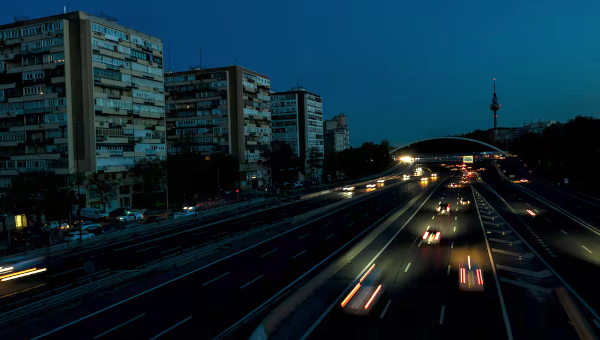
Last Monday [April 28], the entire Iberian Peninsula lost power overnight. The causes that led to the fluctuations in the electrical grid are still unknown, and we must reject any misinformation or opportunism in this regard. In this sense, the working class, through its unions and social organizations, must have the right to participate in the investigation of the causes of the event. However, the political dimension of the event goes beyond the specific causes. The public discussion generated by the blackout will have short- and medium-term consequences. That is why we want to highlight four conflicting elements.

1. Neither nuclear nor fossil fuels provide us with security. We strongly reject any renewed commitment to promoting nuclear and thermal power plants. Nuclear power depends on uranium extraction, poses a continuous risk, and ties us to the indefinite management of nuclear waste. Furthermore, in the case of the blackout, nuclear power plants were the first to shut down, worsening the situation. Thermal power plants generate dependence on gas extraction and imports and are leading us toward climate devastation. The only path we must take is toward a 100% renewable electricity system that eliminates fossil fuels and facilitates an energy transition for other sectors, such as industry and transportation. This poses additional challenges for the management of the electricity grid, but sufficient solutions exist to address them.

2. The energy transition is urgent, and private profit is an obstacle. Our electricity system was privatized through various reforms between 1988 and 1998, and this has serious consequences for the energy transition. This divided the generation, transmission, distribution, and marketing of electricity, opening the door to fragmented and uncoordinated private initiatives. The electricity system operator (REE) is 80% privately owned, and despite the 20% public stake, its behavior is geared toward maximizing dividend distribution. This makes it difficult to develop the investments necessary to move toward a 100% renewable electricity system. Generation remains dominated by the electricity oligopoly, and renewable development is driven by profit maximization. This means that renewable energy installations are carried out in a haphazard manner, prioritizing the lowest-cost locations and aggressively deploying them across the territory, generating legitimate unrest along the way and slowing down if profit expectations decline. Distribution networks in the hands of the private companies of the electricity oligopoly imply a lack of investment and maintenance, and privatized distribution prevents guaranteed access to a basic electricity supply, generating more than 7,000 deaths from energy poverty each year.1 Overall, a privatized electricity system represents obstacles of scale, speed, and coordination to developing the urgent energy transition.

3. The energy transition also requires other sociopolitical transformations. Beyond the electricity system, abandoning fossil fuels requires much deeper transformations. This entails enormous political battles, aimed at achieving a reduction in energy demand through energy-efficient housing renovations, reducing dependence on private vehicles and massively expanding public transportation, or structurally transforming the industry to meet social needs. None of these transformations are guaranteed, and without them, an energy transition will not be possible. That is why we must foster the struggles and conflicts that advance in each of these areas.

4. There is no time to waste; we need planning and public ownership. The urgent energy transition demands that we free ourselves from the private ownership that hinders and slows down the necessary transformations of the electricity system and many other sectors. While the electricity companies amass millions in profits each year, there is still a long way to go. We need greater planning and coordination capacity, and that is not possible while these companies prioritize dividend distribution. Likewise, the current use of public participation in companies like REE makes no difference to their corporate behavior. That’s why we must emphatically affirm the necessary socialization of the entire electricity system. Public ownership is a necessary condition for taking control of the energy transition and ensuring planning. This public ownership must serve as a lever to expand the democratic participation of working people and the affected territories, and to promote other sociopolitical transformations that reduce energy demand.

In short, the public discussion following the blackout cannot be limited to the technical causes; it must address the political and economic roots, framing the dispute around an ecosocialist transition with democratic planning. It is obvious that capitalist governments are not going to promote transformations in this direction. Their objective is to guarantee private profit, even at the cost of investing public resources to achieve this goal. To change this logic, we need a working-class political movement that fights in an organized way for improvements here and now, but that also aims for the constitution of another type of state, capable of confronting the great challenges we face as a society. If the ruling class has opted for the rearmament plan, the working classes must be committed to an ecosocialist transition that reorganizes the use of resources and proposes a different way of being in the world.

At this moment, this is reflected in two slogans:

For the expropriation of the electricity companies!
Public planning and ownership for the energy transition!

Endnotes

  1. The attributed deaths are apparently extrapolated from the kinds of data reported here.