Monday, May 12, 2025

UK's Starmer, under pressure from Farage, tightens migration rules

Published : May 12, 2025 - KOREAN HERALD
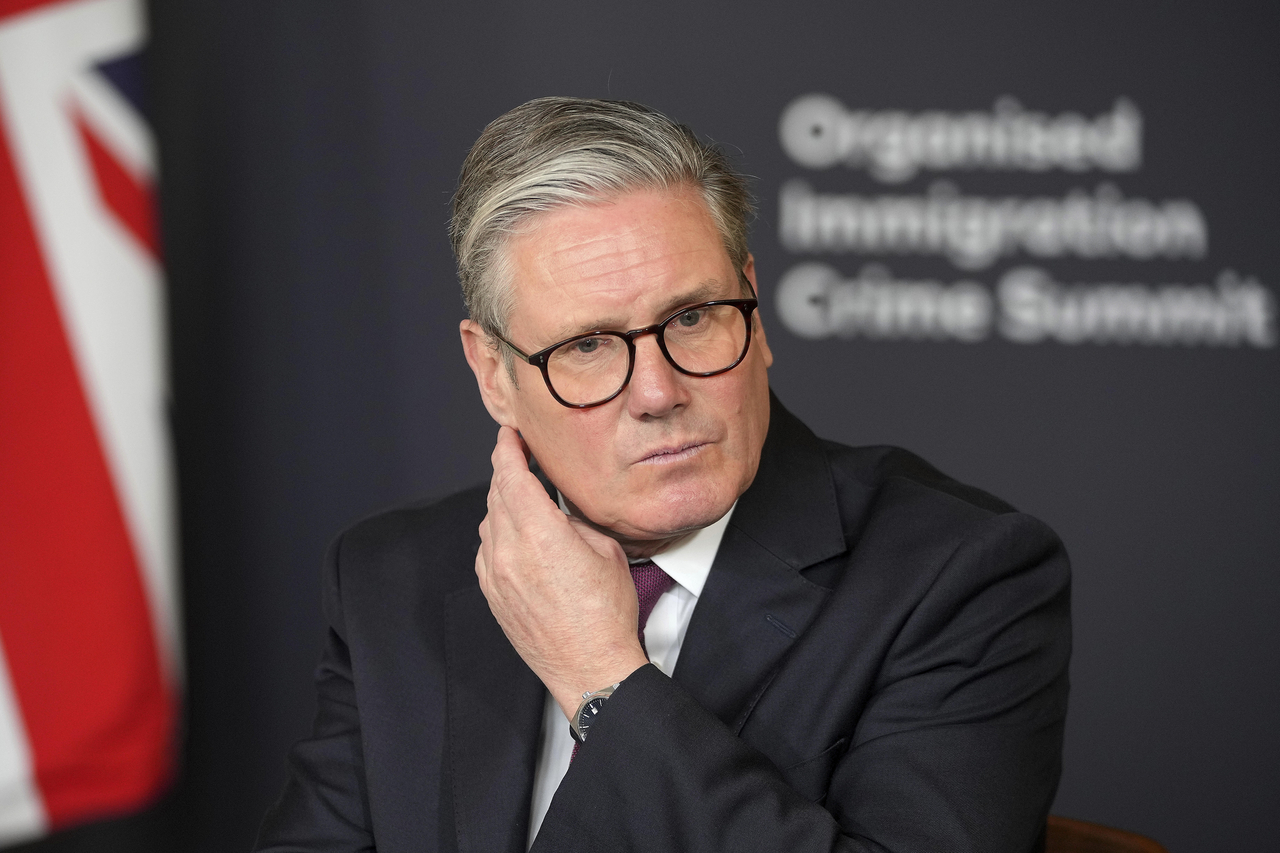
Britain's Prime Minister Keir Starmer (AP-Yonhap)

LONDON (Reuters) -- Prime Minister Keir Starmer announced a new salvo of measures to toughen up Britain's migration system on Sunday, saying many immigrants would have to wait longer before getting the status they need to claim welfare.

Starmer's government -- which was due to publish plans for new legislation to reduce immigration on Monday -- is under pressure to counter the rise in popularity of Nigel Farage's right-wing, anti-immigration Reform UK party.

Over the weekend, Interior Minister Yvette Cooper announced plans to restrict skilled worker visas to graduate-level applicants, prevent care sector firms from recruiting abroad and require businesses to increase training for local workers.

"Every area of the immigration system, including work, family and study, will be tightened up so we have more control," Starmer said in a statement. "Enforcement will be tougher than ever and migration numbers will fall." Under the changes, automatic settlement and citizenship for people who move to Britain will apply after 10 years, up from five years now, although highly skilled workers -- such as nurses, doctors, engineers and AI experts -- would be fast-tracked.

Migrants who are in the UK on visas are typically ineligible for welfare benefits and social housing.

The government also said it plans to raise English language requirements to include all adult dependents who will have to show a basic understanding of English. It said the change would help integration and reduce the risks of exploitation.

"This is a clean break from the past and will ensure settlement in this country is a privilege that must be earned, not a right," Starmer said.

"And when people come to our country, they should also commit to integration and to learning our language," he said.

The number of European Union migrants to Britain fell sharply after Brexit but new visa rules, a rise in people arriving from Ukraine and Hong Kong and higher net numbers of foreign students led to an overall surge in recent years.

Net migration -- the number of people coming to Britain minus the number leaving -- hit a record 906,000 in the year to June 2023, up from 184,000 who arrived in the same period during 2019, when Britain was still in the EU.

Employers' groups are worried that tightening the rules on foreign workers will make it harder for companies to fill vacancies.

"This major intervention in the labour market will leave many employers fearful that in tackling concerns about immigration, government goes after the wrong target," Neil Carberry, chief executive of the Recruitment and Employment Confederation, said.

Being open to skilled workers was essential for Britain "but so is a controlled, affordable and responsive immigration system that keeps investment flowing to the UK," Carberry
 said.

Keir Starmer to ensure settlement in UK a 'privilege' and 'not a right' in massive overhaul of immigration system

Sir Keir Starmer is set to announce an overhaul of the immigration system to ensure "settlement in this country is a privilege" and "not a right" as Immigration White Paper is unveiled


Charlotte Fisher
11 May 2025

MANCHESTER EVENING STANDARD

Net migration figures reached 728,000 last year

Prime Minister Sir Keir Starmer will pledge that “every area” of the immigration system will be “tightened up” as he unveils massive new reforms on Monday. The changes largely affect visa and citizenship requirements in a bid to "ensure settlement in this country is a privilege that must be earned, not a right."

Migrants will be told they need to spend a decade in the UK before they can apply for citizenship and English language requirements will be increased for all routes into the UK, as ministers look to bring down net migration which reached 728,000 last year.
Article continues below

The Prime Minister will say that “enforcement will be tougher than ever and migration numbers will fall” as a result of the policies in the Immigration White Paper, set to be unveiled on Monday, May 12.

It comes after Home Secretary Yvette Cooper said on Sunday that the care worker visa would be closed for overseas recruitment. The skilled visa threshold will also be raised to require a graduate qualification under the white paper.

“Every area of the immigration system, including work, family and study, will be tightened up so we have more control,” the Prime Minister is expected to say on Monday.

“Enforcement will be tougher than ever and migration numbers will fall.”

Officials hope this will help people integrate and be able to find employment. However despite the changes, ministers will not be putting a target figure on net migration numbers.

Ms Cooper told Sky News that doing so left previous governments with “broken promises”.

“We’re not going to take that really failed approach, because I think what we need to do is rebuild credibility and trust in the whole system,” she added.


Migrants must ‘learn our language’ under Starmer’s immigration crackdown


Migrants and their dependents will be required to show a greater understanding of English under the reforms which the Prime Minister says will make settlement in the UK a privilege to be earnt

Article thumbnail image
The Government is set to announce a major crackdown on immigration (Photo: Oli Scarff/Getty Images)

bookmark

Keir Starmer has pledged that immigrants will be made to “commit to integration” and improve their standard of English if they want to settle in the UK, as part of Labour’s new immigration crackdown.

Under the changes, due to be outlined in a white paper on Monday, immigrants will have to wait up to 10 years before they can apply for residency unless they can prove a “lasting contribution” to the British economy.

Care worker visas are set to be halted altogether, and care homes will instead be encouraged to train and hire people already in the UK.

Migrants arriving on skilled worker visas face tighter rules and will need to have a graduate qualification or a higher salary to be eligible.

Starmer will use a speech on Monday ahead of the white paper’s launch to promise that these tough new reforms will ensure the immigration system is “controlled, selective and fair”.

“This is a clean break from the past and will ensure settlement in this country is a privilege that must be earned, not a right,” he is expected to say.

“And when people come to our country, they should also commit to integration and to learning our language.”

Labour’s plan to cut immigration

Quicker deportation of foreign criminals:  The Home Office will be given new powers to streamline the deportation of foreign criminals. Ministers will now be notified of all convictions involving a foreign national in the UK, rather than only those with a custodial sentence of over one year. Foreign nationals with criminal records overseas may also face removal. Short-term visa holders can now have their visas cancelled and be blocked from future applications.

Restrictions on care worker visas: The care worker visa route for overseas recruitment will be closed. Employers will be expected to hire from within the UK, either from among British citizens or foreign workers who already have a visa.

Tighter rules for skilled worker visas: Eligibility for skilled worker visas will now require a graduate-level qualification or a higher salary threshold. Access to lower-skilled roles will be restricted and they will only available in sectors listed as critical to the UK’s industrial strategy. A new Labour Market Evidence Group will assess which sectors have shortages that require overseas workers.

Training British workers: Employers in high-migration sectors will have to invest in UK-based training before recruiting from abroad. Sectors set to be targeted include IT, telecommunications, and engineering, which are deemed to recruit from abroad disproportionately.

Crackdown on visa overstayers: The Government will restrict visas for nationalities with higher overstay or asylum rates. Financial documents will be scrutinised more closely, and access to taxpayer-funded accommodation will be limited.

Longer permanent residence wait: The minimum residence period for indefinite leave to remain will be extended from five to ten years. Fast-track routes will be limited to high-skilled individuals. Those with limited UK ties or long absences may face additional checks before securing permanent status or applying for citizenship.

English language tests:  Work visa applicants must now meet an English standard equivalent to an A-level. The requirement also applies to adult dependents. The change raises the threshold from the current GCSE-equivalent level. Applicants must show they can write detailed texts and communicate fluently on complex topics.

The Conservatives, however, have warned that the reforms are a “white flag” and that Labour has “failed” to go far enough to tackle the issue of rising migration.

Shadow home secretary Chris Philp accused Labour of “boasting about returns built entirely on the back of Conservative groundwork” and urged the Government to go further to control migrant numbers.

“If Labour were serious about immigration, they’d back our binding immigration cap and back our plan to repeal the entire Human Rights Act from immigration matters. But they have got no grip, no guts, and no plan,” he said.

Under the plans, a fast-track route will remain for “high-skilled, high-contributing individuals”, such as NHS staff, engineers, and AI specialists, allowing them to bypass the 10-year wait.

Language requirements will also be raised across all visa routes, with adult dependents required to “demonstrate a basic understanding of English” for the first time.

The Home Office said these new, stricter rules would help migrants “integrate into their local community, find employment and [reduce] the risk of exploitation and abuse”.

Currently, migrants are only required to be able to read and speak English at a level equivalent to a GCSE qualification, but the Government wants to require all visa applicants to demonstrate that they can speak English to A-level standard in the future.

Employers will be targeted as part of the immigration crackdown. Companies will now be expected to prove they are investing in UK workers before they can sponsor visas for overseas staff.

Announcing this change on Sunday, Home Secretary Yvette Cooper said that under the Conservative government “employers were given much greater freedom to recruit from abroad while action on training fell”.

She added: “Overseas recruitment soared at the same time as big increases in the number of people not working or in education here in the UK.

“The last government lost control of the immigration system, and there was no proper plan to tackle skills shortages here at home. This has undermined public confidence, distorted our labour market, and been really damaging for both our immigration system and our economy.”

Cooper also announced that the white paper would include measures to speed up the deportation of foreign criminals.

Currently, the Home Office is only informed that a foreign national has been convicted of crimes if they also receive a prison sentence, and deportations usually only occur if that sentence is for more than a year.

The changes will ensure that the Home Office is informed about all convicted foreign nationals, regardless of whether they receive a prison sentence.

New powers will be set up allowing the Government to more easily deport recent immigrants who have committed crimes in other countries.

Sunday, May 11, 2025

UK to limit skilled visas for graduate-level jobs in key migration reform


British PM Keir Starmer faces growing pressure to reduce net migration following the strong performance of Nigel Farage's anti-immigration Reform UK party in this month's local elections.

In Short

  • UK plans to end 'failed free market' immigration policy
  • To restrict skilled worker visas to graduate-level jobs
  • British PM under pressure to cut net migration

The British government outlined plans on Sunday to end what it called the "failed free market experiment" in mass immigration by restricting skilled worker visas to graduate-level jobs and forcing businesses to increase training for local workers.

British Prime Minister Keir Starmer is under pressure to cut net migration after the success of Nigel Farage's right-wing, anti-immigration Reform UK party in local elections this month.

Under the government's new plans, skilled visas will only be granted to people in graduate jobs, while visas for lower-skilled roles will only be issued in areas critical to the nation's industrial strategy, and in return businesses must increase training of British workers.

The Labour government said the changes will be part of a policy document, known as a white paper, to be published on Monday setting out how ministers plan to reduce immigration.

High levels of legal migration were one of the major drivers behind the vote to leave the European Union in 2016 with voters unhappy about the free movement of workers across the bloc.

After Britain eventually left the EU in 2020, the then Conservative government reduced the threshold to allow workers in categories such as yoga teachers, dog walkers and DJs to be eligible for skilled worker visas.

"We inherited a failed immigration system where the previous government replaced free movement with a free market experiment," Yvette Cooper, the British interior minister, said in a statement. "We are taking decisive action to restore control and order to the immigration system."

While post-Brexit changes to visas saw a sharp drop in the number of European Union migrants to Britain, new work visa rules and people arriving from Ukraine and Hong Kong under special visa schemes led to a surge in immigration.

Net migration, or the number of people coming to Britain minus the number leaving, rose to a record 906,000 people in the year to June 2023, up from the 184,000 people who arrived in the same period during 2019, when Britain was still in the EU.


UK Government to close care worker visa for overseas recruitment, says Cooper


NATION CYMRU
11 May 2025 
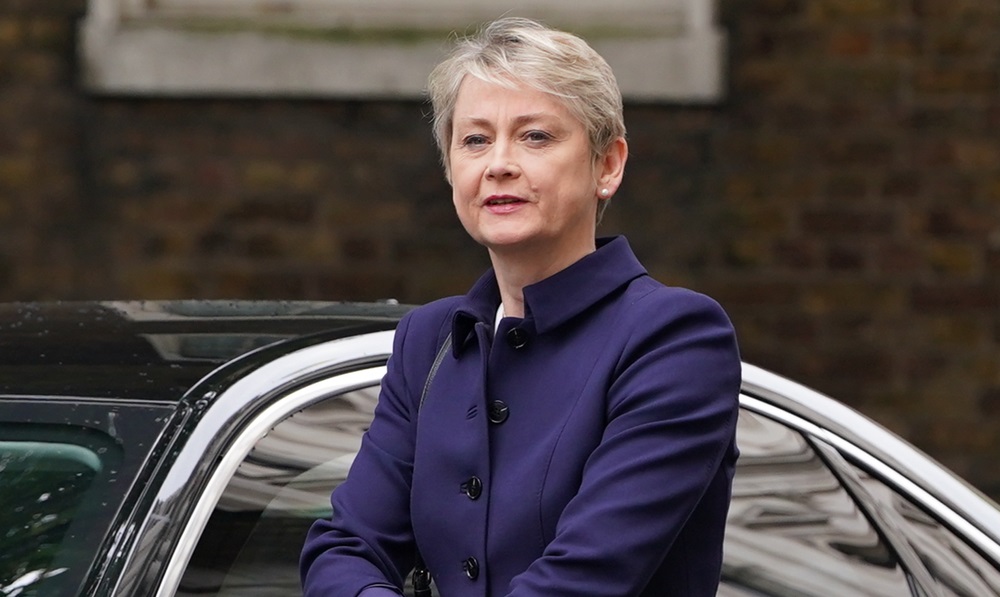
Home Secretary Yvette Cooper. Photo Lucy North/PA Wire

The UK Government is going to close the care worker visa for overseas recruitment as part of its immigration reforms, the Home Secretary has said.

Yvette Cooper said rules around the visa will be changed to “prevent” it being used to “recruit from abroad”, but that companies will still be able to recruit from a pool of thousands of people who came to the UK on care visas for jobs that did not exist.

Ministers are due to publish their Immigration White Paper on Monday which will also include changes to skilled visa thresholds and tighter restrictions on recruitment for jobs on skills shortages.

Officials are looking to bring down net migration, which reached 728,000 in 2024, but ministers are not going to set an overall target, which Ms Cooper labelled as a “failed approach”.

‘New restrictions’

The Home Secretary told Sky News on Sunday Morning with Trevor Phillips that ministers are going to “introduce new restrictions on lower-skilled workers” because “what we should be doing is concentrating on the higher-skilled migration and we should be concentrating on training in the UK”.

“We will be closing the care worker visa for overseas recruitment,” she added.

Under current rules, to qualify for a care worker visa a person must have a certificate of sponsorship from their employer with information about the role they have been offered in the UK.

The Home Secretary told the BBC the rules around the system will change to “prevent” it being used “to recruit from abroad” but “we will allow them to continue to extend visas and also to recruit from more than 10,000 people who came on a care worker visa, where the sponsorship visa was cancelled”.

“Effectively they came to jobs that weren’t actually here or that were not of a proper standard,” she added.

“Care companies should be recruiting from that pool of people, rather than recruiting from abroad, we are closing recruitment from abroad,” Ms Cooper said.

“We’re doing it alongside saying we need to being in a new fair pay agreement for care workers,” she added.

Reduction

She told the BBC programme that she expects the changes to skilled worker visas combined with changes to the care visa which “will come in in the course of this year” will lead to a “reduction of up to 50,000 fewer lower-skilled visas over the course of the next year”.

However, she declined to put a number on the overall net migration target, telling Sky News it left previous governments with “broken promises”.

“We’re not going to take that really failed approach, because I think what we need to do is rebuild credibility and trust in the whole system,” she added.

Shadow home secretary Chris Philp said he would support the changes to care worker visas, but the 50,000 “tweak” is “not enough”.

“We would go further and tomorrow we intend to push to a vote in Parliament a measure that would have an annual cap on migration voted for and set by Parliament to restore proper democratic accountability, because those numbers were far, far too high,” he said.

Skills shortages

According to the Home Office, with the White Paper there will be tighter restrictions on recruitment for jobs with skills shortages, businesses will be supported to take on more British workers and employers will be told to develop plans to train staff in the UK.

In an attempt to reduce the number of low-skilled workers coming to Britain, the skilled visa threshold will be increased to graduate-level.

Officials will also set up a labour market evidence group to examine which sectors are reliant on overseas workers.

The department have also said there will be reforms to deportation and removal rules. Under the proposals, the Home Office will be informed of all foreign nationals convicted of offences and officials say it will make it easier to remove people who commit offences.

The Liberal Democrats have called on the Government to “step up” and pay care workers “properly”.

The party’s health and social care spokeswoman Helen Morgan said: “Labour must step up and take proper action to address recruitment shortages including paying our care workers properly and rolling out a plan for career progression.

“This action must be taken without delay to ensure patients can receive the high quality care they need.”

The white paper comes less than a fortnight after Reform UK took control of 10 councils in England in the local elections.

Nigel Farage’s party also beat Labour to victory in the Runcorn and Helsby parliamentary by-election.

Deputy leader Richard Tice told Sky News on Sunday that the party’s strong performance in the local elections was “because people are raging, furious, about the levels of both legal and illegal immigration”


Industry and union attack plans to ban overseas care worker recruitment


Care England has labelled the change a ‘crushing blow to an already fragile sector’.


Home Secretary Yvette Cooper appearing on the BBC 1 current affairs programme, Sunday With Laura Kuenssberg (BBC/PA)


PA Media
Caitlin Doherty
11 May 2025 

Plans to end overseas recruitment for care workers have been labelled as “cruel” and ministers told the sector would have “collapsed long ago” without foreign staff.

The Government has been urged to “reassure overseas workers they’ll be allowed to stay” after Yvette Cooper announced that recruitment from abroad would be closed.

Care England has labelled the change a “crushing blow to an already fragile sector”, while Unison has said that “hostile language” has seen applications for care visas “fall off a cliff”.

Martin Green, Care England’s chief executive accused the Government of “kicking us while we’re already down”.

“For years, the sector has been propping itself up with dwindling resources, rising costs, and mounting vacancies,” he said.

“International recruitment wasn’t a silver bullet, but it was a lifeline. Taking it away now, with no warning, no funding, and no alternative, is not just short-sighted – it’s cruel.”

According to figures released in January 2025, applications to come to the UK on a health and care worker visa fell sharply last year.

Overall there were 63,800 applications between April and December 2024, compared to 299,800 a year earlier.

A ban on overseas care workers bringing family dependants with them to the UK came into force in 2024.


Applications to come to the UK on a health and care worker visa fell sharply last year, according to figures released in January (Jeff Moore/PA)
PA Archive

Christina McAnea, general secretary of the Unison union said that the “NHS and the care sector would have collapsed long ago without the thousands of workers who’ve come to the UK from overseas”.

“Migrant health and care staff already here will now be understandably anxious about what’s to happen to them. The Government must reassure these overseas workers they’ll be allowed to stay and continue with their indispensable work,” she added.

She also called on the Government to “stop describing care jobs as low skilled” and “get on with making its fair pay agreement a reality”.

The Independent Care Group told the Government it has got it “badly wrong”.

Chairman Mike Padgham said that “we do try to recruit staff from this country, but we simply haven’t been able to get the numbers we need”.

“There are currently around 130,000 vacancies in social care. Overseas recruitment brought in around 185,000 much-needed workers. ”

Ms Cooper said rules around care visas will be changed to “prevent” them being used to “recruit from abroad”, but that companies will still be able to recruit from a pool of thousands of people who came to the UK on care visas for jobs that did not exist.

The Home Secretary told Sky News on Sunday Morning with Trevor Phillips that ministers are going to “introduce new restrictions on lower-skilled workers” because “what we should be doing is concentrating on the higher-skilled migration and we should be concentrating on training in the UK”.

“We will be closing the care worker visa for overseas recruitment,” she added.

Under current rules, to qualify for a care worker visa a person must have a certificate of sponsorship from their employer with information about the role they have been offered in the UK.


Restricting staffing during shortage has the care sector worried

Like in the NHS, there is a chronic shortage of carers, with an estimated 70,000 domestic care workers leaving the sector over the last two years.


Nick Martin
People and politics correspondent @NickMartinSKY
Sunday 11 May 2025 

 Sky News

Image:Residents of a care home in Newport play Bingo

"A crushing blow" is how Care England described government plans to scrap the social care visa scheme, which allows carers from abroad to work in the UK.

It is a move which care providers say makes the crisis in social care even worse.

Read more: Care homes face ban on overseas recruitment

The government admits that social care is on its knees. But that's nothing new.

For decades, social care has creaked under the pressure of an ageing population.

Restricting staffing during a staffing crisis has a lot of care providers worried.

A care home resident plays Bingo

They say they struggle to recruit from within the UK and have become more and more reliant on foreign workers.

More on Social Care

Care providers warn system is 'at breaking point'


Like in the NHS, there is a chronic shortage of carers, with an estimated 70,000 domestic care workers leaving the sector over the last two years.

But this is not the first time that changes to immigration rules have impacted the care sector.

Minister reveals new immigration plans

The home secretary says new plans to tackle immigration will see 50,000 fewer visas issued this year alone.

In 2023, changes led to a dramatic 70% fall in international recruitment in just three months.

Providers say that without access to international workers, there is a real risk of significant workforce shortages.

That means that providers cannot meet this growing demand for care, which undermines the quality of care for thousands of people across the UK.

Political analysis: Policy may assuage voters' concerns - but risks harming struggling care sector

Skills for Care, the organisation that monitors the workforce in the sector, estimates that an additional 540,000 care workers will be needed by 2040 to meet population needs.

This raises critical questions about where these workers will come from if neither the funding nor the migration route exists.

Caught in the middle: the old and vulnerable.
China remains steadfast in upholding international economic and trade order

ANN | China Daily 
Published May 12, 2025 

— Courtesy China Daily

AT the request of the US side, China and the United States kicked off on Saturday a high-level meeting on economic and trade affairs in Geneva, Switzerland. China decided to make contacts with the US side after taking full account of global expectations, national interests and appeals from US businesses and consumers.

China possesses strong resilience and ample policy tools to safeguard its legitimate rights and interests. It stands ready to work with the international community to jointly oppose all forms of unilateralism, protectionism and economic coercion.

Whether the road ahead involves negotiation or confrontation, one thing is clear: China’s determination to safeguard its development interests is unshakable, and its stance on maintaining the global economic and trade order remains unwavering.

The United States’ reckless abuse of tariffs has flagrantly contravened World Trade Organisation rules and destabilised the global economic order. Far from serving any legitimate purpose, these punitive duties represent a deliberate attempt to upend the multilateral trade system, inflicting damage on the rightful interests of countries around the world.

Beijing stands ready to work with the international community to jointly oppose all forms of unilateralism and protectionism

For the United States itself, its tariff offensive amounts to economic self-harm: while it cannot cure underlying structural problems, it has triggered financial market volatility, fueled domestic inflation, eroded industrial capacity and raised the risk of recession.

As the world’s two largest economies, China and the United States share a profound stake in ensuring the soundness and steadiness of their commercial ties. The US business and academic communities have consistently stressed that international trade is not a zero-sum game but should foster mutual benefit and shared success. US policymakers should heed these rational and objective voices, and take concrete steps to restore China-US trade relations to a path of healthy and stable growth.

Given mounting calls for economic stability, the decision to sit down for negotiations represents a positive and necessary step to resolve disagreements and avert further escalation. But as China has consistently emphasised, meaningful dialogue can only proceed on the basis of mutual respect, equal consultation and mutual benefit.

If Washington is truly committed to resolving trade frictions through dialogue, it must first confront the harm its tariff-driven policies have inflicted not only on the global trading system, but also on its own economy and citizens.

It must honor established international trade rules and adhere to principles of fairness and justice. Talks should never be a pretext for continued coercion or extortion, and China will firmly reject any proposal that compromises core principles or undermines the broader cause of global equity.

Confronted with US protectionism and economic bullying, China has deployed decisive countermeasures and rallied multilateral support through the United Nations and other global forums to amplify the call for justice. China’s actions defend not only its own legitimate development rights but also the shared interests of the wider international community, particularly smaller and developing nations.

China has taken note that some economies are also engaged in negotiations with the United States. It must be emphasised that appeasement cannot secure peace, nor can compromise earn respect. Upholding principled positions and defending fairness and justice remain the right way to safeguard one’s legitimate interests.

At its heart, this is not just a trade dispute — it is an encounter between two fundamentally different visions in this age of economic globalisation: one rooted in openness, cooperation and shared growth; the other driven by confrontation, exclusion, and zero-sum mentality.

The talks in Switzerland mark a crucial step towards resolving the issue. However, its ultimate resolution requires sufficient strategic patience and perseverance, as well as the international community’s steadfast support for justice. China entered the Geneva talks with confidence in its solid economic fundamentals. Its economy grew by 5.4 percent year-on-year in the first quarter of 2025; in 2024, its total goods imports and exports surpassed 43 trillion yuan (about 5.94 trillion US dollars), with a more diversified set of trading partners and improved export composition.

Meanwhile, policy innovation and market vitality are working in tandem: new fiscal and monetary measures, ranging from interest-rate cuts to targeted support for innovation and social welfare, have further bolstered growth prospects and strengthened China’s ability to weather external shocks.

At a time when globalisation is under strain and protectionism is on the rise, China has chosen not to lock itself up. Instead, it has doubled down on opening up, advancing trade and investment liberalisation with renewed determination and creating opportunities for shared development across the globe.

China’s position is clear: no matter how the global landscape shifts, it will remain committed to openness, using the reliability of its own development to help offset the uncertainties facing the wider world.

Trade wars and tariff battles yield no winners. A stable and constructive China-US relationship serves the interests of both nations and the world at large. It is through sustained dialogue, responsible management of differences and deeper win-win cooperation between the world’s two largest economies that the global economy can gain the confidence and momentum it urgently needs.

Published in Dawn, May 12th, 2025
Online foot soldiers


Umair Javed 
Published May 12, 2025


The writer teaches sociology at Lums

AMIDST worsening ties between India and Pakistan, a noticeable feature was the differences in how citizens of both countries responded to the threat and fallout of violence. Pakistanis mostly, though not exclusively, turned to humour and nihilism around the possibility of Indian incursions. Indian social media, on the other hand, was dominated by jingoistic calls for escalating violence and revenge.

Events of the past week confirmed what many have observed for at least the past two decades: on national security issues, mainstream Indian political parties, news media, the cultural sphere, and internet using citizens tend to follow the state’s line tout court. The outcome of this homogeneity is an information ecosystem with little scepticism, no reluctance towards the idea of violence, and a deluge of misinformation. At the time of writing — before the ceasefire was announced — Indian news and social media accounts had proudly declared the destruction of Karachi, Lahore, and Islamabad, a fact that apparently eluded the residents of these cities.

None of this stands to absolve Pakistani news actors and social media users. There is a long history of anti-India jingoism on this side as well. In the current stand-off, celebrities who posted conciliatory messages after the first wave of cross-border attacks were heavily criticised and labelled as sell-outs by social media users.

But, before Pakistan’s retaliatory strikes against India, the overall atmosphere remained tinged with a degree of scepticism towards kinetic action and mainstream news reporting. This reluctance was not the outcome of some progressive, pacifist turn among Pakistani urbanites, but instead, the result of the last three years of domestic politics.

The fallout between the PTI and the state has led the latter’s favourability to drop among large segments of the population most likely to voice their views on the internet. The urban middle classes (among other groups), from KP through Punjab to Karachi, have parked their loyalties with Imran Khan, and in opposition to his incarceration.

Political legitimacy in India is generated not through tangible material gain but through right-wing communalism, nationalism, and the selling of — unattainable — dreams.

But there is another factor at play here as well. The economic crisis of the last few years has exacted a heavy toll on Pakistanis as a whole. There is a sense of disillusionment and exhaustion with the status quo, and with a government that has failed to keep up even the bare minimum of its end of the bargain. With struggles for both political rights and basic economic survival taking centre stage, generating support for the kinetic actions of a government lacking popular legitimacy would have appeared difficult.

The Indian state does not face such a crisis of legitimacy, at least in its heartlands. But the way this legitimacy is created and sustained deserves further scrutiny. Some suggest that the Indian state under Modi delivers on economic growth, basic security, and a rise in the standard of living, which explains the full-throttled support that it gets online.

But the reality is far more complex. It is well documented now that the gains of rapid economic growth in India have increasingly accrued to the top. Since liberalisation began in earnest, wealth differentials have ballooned considerably. As per the World Inequality Database, the top one per cent now holds about 33pc of national wealth while the bottom half of the population holds about 6pc; in 1991, these shares were 16pc and 9pc, respectively.

Among firms, there is a growing tendency towards monopolisation, aided by the state, that cuts across different sectors. As detailed in a paper by Pranab Bardhan, the 20 most profitable firms generated 14pc of total corporate profits in 1990, 30pc in 2010 and 70pc in 2019. These monopoly capitalists with close ties to the state now have a large footprint in Indian news media as well, which partly explains the lopsided nature of national security reporting in the country.

Mounting income and wealth inequality, and the creation of an enclave economy (which mostly caters to the needs of the well-off), are undisputed facts. India’s structural transformation is a strange one in so far that agriculture contributes a small share (15pc) to total output, yet employs nearly 45pc of the labour force. The vast majority of Indian workers, especially in the populous northern and central states, find themselves in low-skilled informal work that operates barely above basic subsistence levels.

In this context, political legitimacy is generated not through tangible material gain but through right-wing communalism, nationalism, and the selling of (unattainable) dreams. To the vast swathes of young men, the shiny enclaves of tier-1 cities like Mumbai and Bangalore are shown as a possible future, as long as they oppose the enemy (domestic minorities and their allies beyond borders), and fall in line behind the ruling party in its civilisational mission of Hindutva dominance.

The outcome of this strategy is what we see on the internet today. Organised troll and disinfo armies intervene not just in South Asian matters, but in right-wing discourse around the world. And they are ably supported by plenty of regular citizens chomping at the bit for war, laying out violent fantasies of conquest, and dreaming of restoring masculine honour.

This formula is proving to be remarkably successful for Modi and the broader right-wing Indian ecosystem. They can continue to deliver economic growth to their ultra-rich benefactors, and allow for just enough to trickle down to sustain a conservative middle class. For everyone else, especially those subsisting on the margins, temple politics, the tadka of Hindua cultural dominance, and dreams of ‘Akhand Bharat’ will remain sufficient. All the while drowning out and bullying dissident and progressive voices, and making the possibility of peaceful coexistence in the region ever more remote.

X: @umairjav

Published in Dawn, May 12th, 2025
AI opportunity

Published May 12, 2025 
DAWN


TIME is running out. According to the latest Human Development Report, published by the UNDP this past Tuesday, Pakistan ranks among the 26 states that scored the lowest on its Human Development Index. In terms of quality of life, it is ranked at a measly 168th out of 193 countries. It is the only country in South Asia, apart from Afghanistan, that is listed in the ‘low human development’ category. The rest of the 24 are in Sub-Saharan Africa. But there is a silver lining in this dark cloud. This year’s report, which focuses on the possibilities unlocked by AI for human development, notes that, if adopted strategically, technology can significantly enhance human potential. It has now been a year since the UNDP’s Pakistan arm published the National Human Development Report 2024, which had been subtitled ‘Doing Digital for Development’. Disappointingly, the agency has noted that Pakistan’s digital landscape remains largely unchanged since then, even though it is home to one of the world’s largest workforces of freelancers and promising AI talent. Pakistan’s problem is that it has struggled to address digital inequalities, which mirror existing socioeconomic divisions.

A large chunk of Pakistan’s population of some 250m is at risk of economic impoverishment if the state does not prioritise investments in digital development. Half of the country still does not have access to smartphones, computers and even basic internet services, according to UNDP. With the rise of AI, the ‘have nots’ — especially the 42pc of the workforce that is currently engaged in automatable jobs, as estimated by the agency — are at risk of being left further impoverished while the privileged few — those who not only have access to modern technologies but also to tools that can teach them how to utilise them — are catapulted forward. It is these inequalities that Pakistani policymakers must be constantly wary of and work to mitigate as AI gradually becomes more mainstream and starts threatening jobs held by low- or unskilled workers. As the UNDP points out, legislative measures, like the National AI Policy 2024 introduced by Pakistan, are just not enough: the state needs to proactively ensure universal access to digital tools, affordable infrastructure and public sector readiness to reap the benefits of the AI transformation. The opportunity is there: it is a matter of whether we take it or get left behind.

Published in Dawn, May 12th, 2025
The nuclear factor

Maleeha Lodhi
Published May 12, 2025
DAWN


The writer is a former ambassador to the US, UK and UN.


IT was April 1994. Pakistan’s army chief Gen Waheed Kakar was on an official visit to Washington. Pakistan was under military and economic sanctions imposed by the US on the nuclear issue in 1990. As a result, a wide range of military equipment including 28 F16s that Pakistan had paid for was embargoed.

Against this backdrop, the nuclear issue dominated most of Gen Kakar’s meetings. In one meeting with top US military and State Department officials, which I also attended as Pakistan’s ambassador to Washington, our American interlocuters offered to release all our equipment including the planes if Pakistan agreed to freeze its nuclear programme and allow a one-time inspection to verify a cap on enrichment. Gen Kakar listened patiently and then politely told his hosts: “Gentlemen, I come in friendship but we in the East do not measure our relationship in planes and tanks. You can keep our F16s and our money. Our national security is non-negotiable.”


I recall this meeting as one example of how resolutely and uncompromisingly Pakistan maintained its position on an issue vital to its security. Had it not done so and caved into international pressure it would not have acquired the nuclear capability which is and has been the guarantor of the country’s security. There has been no all-out war between Pakistan and India since both neighbours became nuclear powers, despite regular crises, skirmishes and military confrontations.

The latest crisis has again thrown this into sharp relief. True, India has acted on its doctrine of limited war under the nuclear threshold, to try to push the boundaries and enlarge space for this in every successive crisis. It has also become the first nuclear power to attack another nuclear state by missiles and air strikes. It has sought to create a ‘new normal’ by launching kinetic actions in mainland Pakistan whenever there is a terror attack in occupied Kashmir, for which it holds Pakistan responsible without evidence.


Pakistan’s strategic capability remains the guarantor of its security against a full-scale war.

In the latest crisis, India used all the instruments of modern, hybrid warfare — ballistic missile strikes, drones, disinformation, psy-ops and weaponising water to undermine deterrence. But Pakistan’s conventional capabilities deterred India from provoking an even larger conflict. Pakistan’s counteractions (initially downing Indian fighter aircraft) imposed heavy costs on India for its aggression. Retaliating to the second round of unprovoked Indian attacks, including on its air bases, Pakistan launched a military operation involving air strikes, missiles and armed drones against Indian military bases and infrastructure in and much beyond Kashmir. A ceasefire followed soon after brokered by Washington and announced by President Donald Trump.

Pakistan’s military response was designed to re-establish deterrence while blunting the aims of limited war and thwarting India’s effort to seek space for conventional war under the nuclear overhang. India’s reckless actions escalated the crisis to a dangerous level and drove it into uncharted territory — almost to the edge of all-out war. But its military brinkmanship had to stop well short of Pakistan’s known nuclear red lines. Thus, were it not for the nuclear factor, a full-scale war could have broken out.

The story of Pakistan’s pursuit of a nuclear capability is worth recalling to remind ourselves of the formidable challenges that were faced — and overcome — to acquire it. Confronted with an implacable adversary Pakistan initially pursued a strategy of external balancing by forging military alliances with the West to counter India and its hegemonic ambitions.

But the lesson of the country’s defeat and dismemberment in 1971 was that it could only depend on itself for its security. India’s nuclear explosion in 1974 was a turning point. It convinced Pakistan of the imperative to acquire nuclear weapons. Western countries, however, sought to punish Pakistan for India’s explosion by adopting discriminatory policies and denying it technology.

Pakistan faced innumerable obstacles in its nuclear journey. It braved Western embargoes, sanctions and censure, US opposition and unrelenting international pressure to stay the course. It took the country 25 years of arduous effort to build a strategic capability and even longer to transform that into an operational deterrent with an effective delivery system. That objective could not have been achieved if successive civilian and military governments had not all pursued this regardless of costs but confident that a firm national consensus backed the effort.

The book Eating Grass by Feroz Khan, published some years ago, describes the fascinating interplay between geostrategic shifts, key political and scientific figures and evolution of strategic beliefs, which shaped Pakistan’s nuclear decisions. It is a riveting insider account of the country’s quest for a nuclear capability and the challenges it encountered. Its title is inspired by Zulfiqar Ali Bhutto’s much-cited remark that if India built the bomb, “we will eat grass, even go hungry, but we will get one of our own”.

Khan explains how Pakistan mastered the nuclear fuel cycle despite heavy odds. He credits this not to a few individuals but to the collective determination of hundreds of people in the civil-military establishment. However, what ultimately determined nuclear success was the cadre of scientists and engineers whose talent was tapped in the country’s early years and who were motivated by the resolve not to let India’s strategic advances go unanswered.

A book that focuses on a different aspect of Pakistan’s nuclear journey is The Security Imperative: Pakistan’s Nuclear Deterrence and Diplomacy by Zamir Akram, an outstanding diplomat. Nuclear diplomacy played a critical role in the country’s efforts to develop a strategic capability which Akram chronicles with illuminating insights. A key theme of his book is how Pakistan’s diplomacy navigated through the discriminatory landscape erected by the West, while advancing its nuclear and missile programmes.

As a diplomat I witnessed first-hand the international pressure mounted on the country. Pakistan was asked to unilaterally sign the Comprehensive Test Ban Treaty, agree to inspection of its nuclear facilities, sign up to negotiations for a Fissile Material Cut Off Treaty in the UN’s Conference on Disarmament and curb its missile development. Pakistan said no to all of the above to protect its security interests.

Because of such decisions and the exceptional efforts of those who built Pakistan’s strategic capability its security is assured against a full-fledged war by India. Similar commitment is needed to deal with internal challenges, especially to build a strong, self-reliant economy so that the country is not vulnerable to external pressure.


Published in Dawn, May 12th, 2025
Keep calm, carry on

Rafia Zakaria 
Published May 10, 2025 

The writer is an attorney teaching constitutional law and political philosophy.


EIGHTY years ago this week, the Germans surrendered unconditionally to the Allied Forces. This week, King Charles of England began a four-day commemoration of that event. It seems like an ironic anniversary celebration, particularly from the perspective of South Asia where we are poised at the brink of a large-scale war. The cynics among us cannot help but consider the possibility of a third world war beginning on the same days of May when World War II ended.

The details of war, some verified and confirmed and others less so, are everywhere in conversations, text messages, Instagram reels, TV shows, TikTok, etc. Schools open, schools closed, exams proceeding, exams cancelled, work schedules gone awry, business trips that cannot be taken, concerns about the availability of food, etc — all of it amounts to creating confusion and dread. One friend told me that she had stored up two months of groceries in her deep freezer, and is adding to it every day.

This seemed a bit extreme to me. However, people respond to uncertainty in unusual ways. The ordinary person in war situations has little control over what his or her government chooses to do. At the same time, the impact of the decisions of their governments and militaries are inevitably felt most by these same ordinary people.

It is the nature of the human mind to try and create certainty, and the inherent unpredictability of war is a challenge to this. The current barrage of information with doses of misinformation presents a situation in which individuals try to mitigate feelings of helplessness. Hoarding food is one way to do this — to feel that one can be prepared for terrible circumstances whose details are yet not known. People feel something must be done and to prepare for the worst. Then because of one’s preparations they imagine themselves as somewhat safe.

War is the ultimate disruption in human life.


War is the ultimate disruption in human life. The continuing sense of crisis is traumatising in its ability to cast one into some parallel universe where the certainties of the old do not apply. In the accounts of the people who endured the travails of World War II, there are stories of attempts to create some semblance of normalcy even in the shadow of complete devastation. Even after schools were closed, parents tried to set up lessons for their children at home. When tea or coffee was not available, some burnt rice and added it to hot water and drank it in the morning-to keep up the ritual of having a warm drink to begin their day. Maintaining this routine of familiarity, clinging to the rhythms of a normalcy that is gone is essential for survival.

Survival, therefore, is not a matter of physical security alone. The trauma of war is not simply that of living or dying; it is — as the younger generations of South Asians would learn in the event of a full-scale conflict — a matter of enduring a million other smaller traumas. Ever since the terror attack on Pahalgam on April 22, people have had trouble focusing on work, focusing on studies, focusing on the other details of life that otherwise are central to our existence. The spectre of conflict means everything else has

less meaning and yet everything still has to be done. Work assignments have to be completed, exams to be taken, children fed, and chores completed. The tension of looming doom takes a heavy toll on human psychology. When war ends, even the living are left with the weight of having survived the debilitating burdens of many small traumas.

In the current situation, there are claims and counterclaims and attacks and retaliations. Drones are raining down. Rhetoric is at fever pitch; each side touts its strength and killing abilities. To be against killing and against war in this moment is likely to be deemed unpatriotic. So very few would raise their voice against the utter senselessness of ego, bombs and the ability to kill large numbers. Everyone seems to forget about the human devastation if hostilities were to be translated into the deployment of nuclear weapons — how complete an end that would be.

It is possible, as the Palestinian poet Mahmoud Darwish once wrote, leaders will declare war and then leaders will shake hands. Hostilities that began will ultimately end. Only the mother waiting for the dead son or the girl waiting for her father or the wife waiting for the husband will be left with their loss. For those that incur those losses, the war will never end — it will continue for the rest of their lives.

rafia.zakaria@gmail.com

Published in Dawn, May 10th, 2025
All’s well here

Muna Khan 
Published May 11, 20
DAWN


I WANTED to start this piece by writing the amount I spent last year on wellness treatments. I was unable to do so for two reasons: the first being that midway through accounting, I was embarrassed by the amount I’d spent for pain-management related work. Second, I could not ascertain whether a grossly expensive injection of Botox (almost Rs100,000 — don’t judge, I was desperate at the time for pain relief) constituted wellness or fell under the purview of conventional medicine. If wellness is the opposite of illness, and everything related to the pain in the neck hadn’t worked so far, because I was avoiding steroid-based painkillers, then Botox should count as wellness.

By that definition, so should exercise — yoga and strength training (Rs48,000) plus walking (free unless you count the Fitbit I bought a few years ago). What else counts? One-day breath-work session (Rs7,000)? Let’s not forget the prescription supplements I had to procure from the UK (Rs70,000), then have delivered to my friend in the UAE and wait until someone could bring them to Karachi. This doesn’t include the costs involved in embarking on an elimination diet — removing gluten, wheat, dairy, red meat and sugar. It was an expensive venture but it was perhaps the most effective for treating inflammation. That reminds me, I should also include the fees for the functional medicine doctor too (Rs15,000).

As you can imagine from the aforementioned, I have spent a lot of money on wellness in my quest to avoid illness.

Although my pain fluctuates — folks with chronic pain are familiar with good days, bad days — I have made great strides in other areas of health, like gut and brain clarity. There are many studies that show the inextricable link between the two — healthy gut means healthy mind.

Wellness has been reduced to a product or service one can buy.

However, all this has resulted in depleted bank accounts. And a regret for choosing such a poor-paying profession.

Wellness doesn’t come cheap.

According to the Global Wellness Summit Report 2024, roughly one in every $20 is spent on wellness in the US, and the global wellness economy is expected to rise to $8.5 trillion by 2027.

The report says global wellness spending falls into personal care and beauty, physical activity, healthy eating, nutrition and weight loss, public health and prevention, and wellness tourism. New categories like mental wellness, wellness real estate, and workplace wellness are gaining momentum, valued at $181 billion, $398bn, and $51bn, respectively.

But who is wellness for and why is it not egalitarian, irrespective of class and gender, ethnicities and tribes. I’m so happy that people can take time off for mental health reasons, but let us remember who can afford to do so.

Some scholars have said wellness can be traced to ancient times, even religious belief, that says your body is your temple. That translates to ‘my body is mine to protect’. I shall eat, work out, drink as I please and now, I have more access to, for example, organic produce in Pakistan. Self-care, thus, becomes exclusionary because it ignores how my well-being comes at the cost of someone else’s labour.

In the last decade, I have come across more experiential-based offerings in the wellness industry in Pakistan like sound baths, breath work, guided meditations, cacao ceremonies, yoga retreats in the mountains and so forth. There’s a wonderful two-day wellness festival too which aims to be inclusionary. There was certainly a boom in such offerings during the pandemic which made isolation and by extension a reset, mandatory. With more time to be online, consumers and retailers grew in abundance. A better version of you was possible if you have the money for it.

Therein lies the rub: the wellness industry provides a sense of community but it is paradoxically individualistic. Its messaging is to fix yourself, to make you feel morally superior to others who, frankly, do not have the means to focus on their health. It also ignores the role of genetics and environmental factors.

Wellness thus has been reduced to a product or service you can buy. The pandemic gave people an opportunity to go outside but as soon as the lockdowns eased, and capitalism returned with full force, the outdoors was replaced with more ‘spaces’ to practise wellness.

People want to achieve ‘high-level wellness’ as Dr Halbert L. Dunn wrote in 1959 in a scientific journal as “a condition of change in which the individual moves forward, climbing towards a higher potential of functioning”.

What, however, is that functioning for? I worry that we are trying to become more functional for more work. I wasn’t able to find that answer but I hope I’ve given you room to pause and reflect on these questions. Be well.

The writer is an instructor of journalism.

Published in Dawn, May 11th, 2025