Monday, May 12, 2025


Fact-checking claims about the UK's geoengineering experiments

A cloudy sky with rain and sun beams.
Copyright Canva
By James Thomas
Published on 

New government-funded trials to test ways of reflecting sunlight to tackle climate change have been met with misleading claims and conspiracy theories.

Misinformation is circulating online after a recent announcement that the UK government is going to fund outdoor geoengineering experiments.

Geoengineering refers to deliberate, large-scale interventions in the Earth's environment to try to stave off the effects of climate change. It takes two main forms: solar radiation management (SRM), where a small portion of sunlight and heat is reflected back into space to cool the Earth, and carbon dioxide removal.

The UK is focusing on the former, with the government allocating some £56.8 million (€67 million) to the project, according to reports. The experiments will work with sun-reflecting particles in the stratosphere and spraying seawater on reflective clouds.

The Advanced Research and Invention Agency (Aria), which is backing the plan, has said that the tests will be small in scale, and that they will also look into how geoengineering could be governed internationally

It's believed that if geoengineering proves to be safe, it could be used to cool the planet and slow global warming, giving more time to tackle the climate crisis.

Yet despite assertions that the UK's plans are in the experimental stage, they haven't stopped social media users from claiming that the country has already been engaging in geoengineering for years without public consent as a way to control the population.

The claims also feed into the widely debunked "chemtrails" conspiracy theory, whose believers insists that some vapour trails from planes contain harmful chemicals that are sprayed over the public around Europe or that others are being used to dim the sun and block out the light.


A selection of social media posts alleging geoengineering and chemtrail conspiracy theories around Europe

EuroVerify put these notions to experts, who resoundingly rejected them.

"It would be impossible to conduct large-scale weather modification experiments in secret. It just can't be done," said Jim Franke, researcher at the University of Chicago's geophysical sciences department.

"The amount of aircraft needed to fly this material to where it needs to go, and the radiative effect, would be easily obtainable by publicly available information," he added.

Wolfgang Cramer, professor of global ecology and researcher at CNRS, the French National Centre for Scientific Research, said that while there is plenty of valid criticism of geoengineering, it's disingenuous to accuse governments of looking into it with malicious intent.

"I am sure that governments such as the UK and others have an honest purpose, that there's a real wish to solve one problem of humanity," he told EuroVerify. "I think there's a debate about this,* and there are not necessarily bad guys and good guys."

They also refuted assertions that the UK's geoengineering experiment announcement is a cover for the fact that it and other countries have already conducted SRM in secret for years.

"That's complete nonsense, there's absolutely no evidence for that," Cramer said, noting that people should be careful not to confuse SRM experiments with cloud seeding techniques used in some parts of the world to increase precipitation and produce rain.

"That's not what I'm talking about when I talk about solar radiation management, because solar radiation in this definition is the long-term manipulation of the radiation balance of the atmosphere," he added.

Franke made a similar point, noting that some isolated, small-scale experiments have been carried out in the past, in addition to geoengineering computer simulations, but ultimately it's unreasonable to think that governments could have been carrying out such wide-ranging procedures for so long.

"Papers get published [by reputable universities] about geoengineering, so I'm sure that trickles into the online spheres and is misinterpreted in whatever way people interpret those things," he said. "There's material being generated which can be fed into this kind of conspiracy."

Why is geoengineering so controversial?

The international community's generally sluggish attempts to slash greenhouse gas emissions have sparked widespread frustration and prompted many to turn to geoengineering in search of a weapon against global warming.

However, the scientific community is divided on the technology's merits, in part due to the perception that it would divert resources away from tackling the root cause of climate change and reduce motivation to decarbonise, and also partly due to questions about how such schemes would be governed internationally.

"Technically and financially, [SRM] would be possible," said Cramer. "It would require a fleet of aircraft positioned around the planet in critical places that would basically fly day and night and inject the particles into the atmosphere."

"You could, based on model calculations, reduce global mean temperature a little bit by doing so," he said.

However, he added that his main concerns about SRM geoengineering are how long it would all take to come into effect, how much different parts of the world would benefit from it, and how it would be overseen.

"It will probably take a decade or so before you can even see the effects," he said. "And some areas would see more warming, others would see a lot less, maybe even to the point where they wouldn't even be happy about it."

"You will clearly have winners and losers ... The atmosphere is a highly dynamic structure, and if you want to control the amount of radiation that goes through it at every point in time and every point of space, due to the chaotic nature of the atmosphere, this cannot be done."

Experts say that a global SRM scheme would require an international body to govern its implementation, leaving it vulnerable to the political whims of the day. Any given country could in theory decide to withdraw at any point, thus harming the initiative and undoing any progress made.

The body would also potentially have to last for decades or even centuries until global temperatures had been sufficiently reduced and SRM slowly phased out, requiring significant financial and technical resources.

On the unwanted environmental effects, meanwhile, Franke said that SRM geoengineering could provoke a slowdown of the hydrological cycle.

"If you reduce incoming solar radiation a little bit, you will reduce evaporation and the atmospheric transport of water vapour and then the corresponding precipitation," he said. "So this general slowdown of the hydrological cycle could have regional impacts as far as reduced rainfall in some regions."

He added that pending further research, the extent and magnitude of this is still highly uncertain, and so whether or not solar geoengineering is beneficial in terms of water availability to people and plants across the globe is an open question.*

Other side effects, such as harming photosynthesis in plants due to a reduction in sunlight, have also been raised as a potential issue, but they are not well understood and are precisely why further research and experiments are needed.

Nevertheless, computer modelling so far does show that a moderate amount of SRM "would reduce almost all key climate hazards", Franke said.

"Pick whichever climate hazard is most relevant to your area: extreme wet-bulb temperatures in the summertime; some sort of coastal erosion driven by sea level rise; snowpack; ice sheet melting," he said. "Whichever it is, for pretty much all of them, solar geoengineering moderates that climate hazard."

"I am pro-researching geoengineering, I'm not pro-implementing geoengineering," Franke added. "The decision to do this has to be made by some international coalition of governing bodies, and using hopefully the best available research to do so."


Pasturised

The cottagecore, romantic path to starvation and environmental breakdown.

By George Monbiot, published in the Guardian 7th May 2025

The fire that has just destroyed 500 hectares (1,230 acres) of Dartmoor should have been impossible. It should not be a fire-prone landscape. But sheep, cattle and ponies have made it so. They browse out tree seedlings, preventing the return of temperate rainforest, which is extremely difficult to burn. In dry weather, the moor grass, bracken and heather covering the deforested landscape are tinder.

The plume of carbon dioxide and smoke released this week is one of the many impacts of livestock grazing. But several recent films, alongside celebrities, politicians, billionaires and far-right podcasts, seek to persuade us that cattle and sheep are good for the atmosphere and the living planet. This story, wrapped in romantic cottagecore, is now the most active and seductive frontier of climate-science denial. It is heavily promoted by the meat industry, which is as ruthless and machiavellian as the fossil fuel industry. It sows confusion among people desperately seeking to do the right thing in an age of misinformation.

In reality, beef and lamb are the most land-hungry and climate-damaging of all farm products. Their climate impacts range from the methane and nitrous oxide the animals produce to the huge areas they need for grazing, which could otherwise support wild ecosystems far richer in carbon, such as forests and wetlands. As usual, Brandolini’s law applies: refuting such stories requires an order of magnitude more effort than spreading them.

So here we go again, with the publication of two reports in the space of a week. I’ve visited the farm that commissioned the first one, FAI Farms in Oxfordshire, and found the staff sincere and well-meaning. Their “study” was funded by McDonald’s, “to support McDonald’s belief that well-managed beef production has an important role to play in a thriving global ecosystem”.

The FAI Farms report claims that “the farm as a whole is beyond net zero … sequestering more carbon than it is emitting from our beef enterprises”. But it shows no such thing.

The report claims, using results from its carbon calculator, that the emissions from its livestock and machinery are outweighed by the carbon it is sucking up. But its actual carbon sequestration figures come fromjustthree fields, each sampled in four locations, out of the 105 fields on the farm. The sampling was repeated after three years. Already, this fails to meet the threshold for statistical significance, let alone produce results for the whole farm.

But it gets worse. In one of the three fields, the sample locations were changed: those results should have been eliminated. In the second field, bales of hay were brought in to feed the cattle: in other words, carbon was imported from elsewhere on the farm. That should also have been eliminated. The third field was ploughed and re-seeded between the sampling sessions, introducing an unquantified variable. Eliminate that too and, er, nothing remains.

Even worse, bulk density (the amount of soil in a given volume) was measured in the second sampling, but not in the first. If you don’t know how much soil you have, you don’t know how much carbon it contains.

In other words, it’s a right old mess, without a single usable data point. Yet while the main body of the report warns that the tests are “not representative of the farm as a whole” and “we therefore urge caution”, no such caution features in its executive summary or publicity highlights. (FAI Farms has been contacted for comment). Research of this quality is all too common among livestock farms claiming carbon savings.

The work of FAI Farms is cited in the second report, published this week by an organisation called the Sustainable Food Trust (SFT). Founded by a very charming cattle farmer, Patrick Holden, the trust, in my view, does the opposite of what it says on the tin. But his excellent connections (he is King Charles’s farming adviser) guarantee massive publicity.

The SFT’s report promotes cattle and sheep grazing on temporary meadows (leys), which are ploughed at some points in the rotation to produce crops (an example the report cites grows crops in two years out of 10). It claims that a “nationwide transition” to such farming systems “would help address climate change, restore biodiversity and deliver a wide range of social benefits”. It urges us to stop eating pigs and chickens and eat cattle and sheep instead, while consuming far fewer arable crops, as its proposals would, it admits, greatly reduce output. This, it claims, is not a problem, as grain would no longer be needed to feed chickens and pigs.

The report makes some interesting points about how impacts are measured. But I was struck by its own measurement omissions. How much land would be needed under this system to produce the crops we eat? Would we become even more dependent on imports, taking grain from hungrier people overseas or commissioning the destruction of forests, savannahs and wetlands? Given that cattle and sheep in almost all systems require supplementary feeding, and are far less efficient converters than chickens and pigs, would this proposal really ensure that less grain was needed? And what would it do to the price of food?

When I spoke to Patrick Holden, he admitted that the price of food would soar. He directed me to a previous report by the SFT. I read it and found some heroic assumptions: no more land or food imports would be required for their plan, as long as everyone in the UK eats less food and adopts a highly prescriptive “healthier” diet (which strangely seems to involve plenty of cheese), and is prepared to pay much more for food, and as long as we reduce food waste by 50%. Given that, thanks to the innovative work of groups such as FareShare, much of the usable food that would otherwise be wasted is already brought back into the system, and most of what remains is “post-consumer” (hands up if you want to root through someone’s bin), it’s hard to see how this could be achieved.

You could sprinkle the same magic dust over any food system and claim to have fixed the problem. As for the amount of supplementary grain the cattle and sheep would need, the previous report states merely that “a small amount of supplementary feed is assumed”. Right, that sorts it out.

If such claims arose from any other sector, we would recognise them for what they are: industry lobbying. But because their bucolic imagery chimes with deep cultural themes, enthusiasm for such non-solutions extends all the way from McDonald’s to King Charles. The phenomenally complex challenge of feeding the world without devouring the planet will not be met through wishful thinking and romantic simplicities.

www.monbiot.com

Bananas under threat as rising temperatures killing crops – report

An analysis found 60% of the most suitable banana-growing areas in Latin America and the Caribbean could be lost by 2080.


Consumers and businesses are being urged to choose bananas certified as Fairtrade (Kirsty O’Connor/PA)

Rebecca Speare-Cole
 Evening Standard.
MAY 12, 2025

Bananas are coming under increasing threat from climate change, with farmers saying extreme weather is “killing” their crops, according to a report.

An analysis by international development charity Christian Aid released on Monday shows rising temperatures and climate-related pests are putting bananas at risk.

It found that nearly two-thirds of the most suitable banana-growing areas in Latin America and the Caribbean – a region responsible for around 80% of the world’s banana exports – could be lost by 2080 due to climate impacts.

Bananas grow in a temperature range of between 15-35C but are also very sensitive to water shortages, meaning increasingly extreme weather is affecting the plant’s ability to photosynthesise.

Diseases such as fusarium tropical race 4 have also emerged as a growing threat in recent years, causing the loss of entire farms across Latin America.

Christian Aid cited farmers from the region who say their farms are “dying”, which in turn is affecting their income.

Aurelia Pop Xo, 53, a banana grower in Guatemala, said: “Climate change has been killing our crops.

“This means there is no income because we cannot sell anything. What is happening is that my plantation has been dying.

“In the past, there was a prediction that this would happen in the future, but it has come earlier, and this is because we are not taking care of our motherland, our ecosystems, and this is very worrying for our kids, and especially for our grandkids.”

In light of the findings, Christian Aid is urging developed nations to urgently reduce their carbon emissions to stem the growing impacts of climate change.

It also calls for international climate finance to support banana growers and agricultural communities to adapt to the changing climate.

Osai Ojigho, Christian Aid’s director of policy and campaigns, said: “Bananas are not just the world’s favourite fruit, but they are also an essential food for millions of people.

“The lives and livelihoods of people who have done nothing to cause the climate crisis are already under threat.”

Ms Ojigho called on countries to use this year’s deadline for new UN national climate action plans as an opportunity to accelerate the transition away from fossil fuels and ensure climate finance “reaches people in desperate need of it”.

Elsewhere, consumers and businesses are being urged to choose bananas certified as Fairtrade, which ensures farmers are paid more for their crops.

Anna Pierides, Fairtrade Foundation’s senior sustainable sourcing manager for bananas, said: “Without fair prices, banana farmers simply cannot make ends meet.

“Fairtrade is committed to raising incomes, living standards and the resilience of banana producers to enable them to deal with the changing climate and to continue farming.

“One way businesses can support this is through our Shared Impact initiative, which brings buyers together to ensure longer-term sourcing commitments, greater transparency and more opportunities for banana growers to sell more on Fairtrade terms.”

Holly Woodward-Davey, project co-ordinator at Banana Link, which works across the banana supply chain, said: “The climate crisis and the associated biodiversity crisis demand a rethink of industrial food production systems, which depend on the use of increasing amounts of harmful chemicals.

Governments must continue to take decisive action to reduce greenhouse gas emissions and ban the most toxic chemicals while investing in transitions to fair, stable and healthy food systems.”

'Stop the dither and delay': Nurses issue strike warning to Streeting over pay

Royal College of Nursing general secretary Professor Nicola Ranger will warn ministers to come up with a 'significant' pay offer or face 'escalation'

Article thumbnail image
Wes Streeting has been warned that nurses may strike this summer unless issues over pay can be resolved (Photo: Jordan Pettitt/PA)
bookmark

The head of the UK’s biggest nursing union has warned staff may strike again unless the Government comes up with a “significant” pay offer.

At its annual congress in Liverpool, Royal College of Nursing (RCN) general secretary and chief executive, Professor Nicola Ranger, will warn ministers “not to sail too close to the wind” when it comes to announcing a pay deal and believes the situation will “escalate” if the profession is left “ailing and underpaid”.

Last month, the NHS Pay Review Body (PRB) recommended a pay rise of about 3 per cent for nurses for the year 2025-26 but the Government has yet to announce its offer. It has previously budgeted for a 2.8 per cent uplift to staff pay.

Nurses in England rejected the 5.5 per cent pay rise they were offered last year having been left fuming after the Government awarded junior – now resident – doctors a 22 per cent deal over two years. The deal brought the doctors’ strikes to an end.

However, the British Medical Association will launch a fresh ballot for industrial action at the end of the month after it said Health Secretary Wes Streeting had refused to promise them a return to 2008 levels of pay within two years.

‘Stop the dither and delay’

The RCN has been warning for months that another “poor by comparison” deal for nurses would make further industrial action more likely. Prof Ranger said she will not tell nurses to strike but warned the situation could escalate and called on ministers to “stop the dither and delay” over a new deal.

In a keynote speech to delegates on Monday she will also warn that staffing levels are “dreadfully unsafe” and urged nurses not to accept corridor care as “the norm”.

Striking nurses on a picket line outside University College London Hospital during strike action in London, UK, on Monday, Feb. 6, 2023. Healthcare workers will walk out in record numbers this week, crippling the National Health Service and piling pressure on Prime Minister Rishi Sunak to resolve multiple disputes over pay for public-sector workers. Photographer: Carlos Jasso/Bloomberg via Getty Images
Striking nurses on a picket line outside University College London Hospital during strike action in London (Photo: Carlos Jasso/Bloomberg via Getty)

“In the NHS, your pay award was due six weeks ago,” Prof Ranger is expected to say. “Government should stop the dither and delay and make the announcements. It has now been a whole month since the Pay Review Body gave its report and recommendations to government but still no news.

“We need a significant pay rise for nursing and for every NHS employer to be given the full money to pay it – anything else is a cut to patient services.

“I’m not here to tell you we’re going on strike. You will decide how you feel and we will plan together the best way to get what nursing needs. But I ask ministers not to sail close to the wind. If you continue to insult this profession, leave it ailing and underpaid this summer then you know how this could escalate.”

Better deal for nurses in Scotland

Nurses, midwives and healthcare staff across Scotland have been offered an 8 per cent pay increase over two years – a 4.25 per cent increase in 2025-26 and a 3.75 per cent rise next year.

The offer – which the Government said would cost around £701m – will also be protected by an “inflation guarantee”, meaning pay increases will always be at least 1 per cent above the Consumer Price Index (CPI) rate.

Unison said it would consult its members on the Scottish government proposal with a digital ballot while RCN Scotland said its board was considering the offer “in detail”. GMB Scotland, one of the biggest unions in NHS Scotland, and the Scottish Ambulance Service will also ballot members on the pay offer.

One RCN member in England told The i Paper: “Many of us felt hard done by after the 5.5 per cent offer only to see doctors, who carried on striking, get significantly more than that.

“This time the Government says it has only enough money for a 2.8 per cent rise but if that is confirmed it will go down very badly – especially when you look at what nurses in Scotland are being offered – and raise questions about wider NHS pay across the UK.”

Last week, NHS trusts in England revealed they are cutting thousands of nursing and other clinical roles to meet demands to fill a £6.6bn deficit. Health unions criticised the move and also warned it could lead to industrial action this summer.

The deficit within the NHS comes as Rachel Reeves faces missing her target to balance the budget by the end of the decade by £62.9bn, piling pressure on the Chancellor to raise taxes and restrict pay rises in the public sector.

Staffing levels ‘dreadfully unsafe’

Prof Ranger will also use her speech on Monday to warn over unsafe staffing levels and corridor care.

It comes after a damning report by the RCN, published in January, claimed patients are dying in corridors and sometimes going undiscovered for hours.

“Right now, staffing levels are dreadfully unsafe,” Prof Ranger will say. “One registered nurse to 15 to 20 patients. One nurse told me she was the only person left in charge of 40. It’s taking advantage of your goodwill and you take home guilt when you’ve not been able to deliver high quality care.

“Safety is not an optional extra – it should be the standard. Caring for patients in corridors is not ‘the norm’ and we have to be clear we do not accept it. These tough times require political leaders that are tougher and reach for the big ideas, not modest tinkering. Nursing needs investment, recognition and to be valued.”

A government spokesperson said: “This Government inherited a broken NHS with an overworked, undervalued and demoralised workforce. We hugely value the work of talented nurses and midwives, and through our plan for change we are rebuilding the NHS for the benefit of patient and staff, and ensuring nursing remains an attractive career choice.

“One of the first acts of this Government was to award nurses an above-inflation pay rise for the first time in years, because we recognise that their pay has been hit over previous years. We are carefully considering the recommendations from the NHS pay review body and will update as soon as possible.”

One in four UK employers plan to make redundancies in next three months, report claims

The number of candidates for advertised jobs has increased substantially

Alan Jones
Monday 12 May 2025 
THE INDEPENDENT


open image in galleryA woman walks towards the door of Job Centre Plus in Shrewsbury town center, Shropshire (Getty Images)

The number of employers expecting to increase staff numbers in the next three months has fallen to a record low outside of the pandemic, new research suggests.

One in four employers plan to make redundancies in the next three months, the report added.

A survey of 2,000 businesses found issues such as rising employment costs and growing global uncertainties.

The Chartered Institute of Personnel and Development (CIPD) said the rate of employers expecting to increase headcount has fallen sharply among large private sector employers, and in retail in particular.

James Cockett, senior labour market economist at the CIPD, said: “From April, employers across the UK have begun to feel the full effect of increases to National Insurance Contributions and the National Living Wage outlined in last year’s budget.

“They’re also looking at the potential impact of the Employment Rights Bill on employment costs and plans, and this comes at a time of global uncertainty. Employer confidence is low, which is being reflected in their hiring plans.

“The Employment Rights Bill is landing in a fundamentally different landscape to the one expected when it formed part of the Labour manifesto in summer of last year.

“It was always going to be a huge change for employers but they’re operating in an even more complex world now. It’s vital the government works closely with employers to balance the very real risk of reductions in investment in people, training and technology with their desire to reduce poor employment practice.”


 People stand outside the Job Centre in Chatham (AFP via Getty Images)

It comes as the number of candidates for advertised jobs has increased substantially, according to recruiters.

The recent increase was largely because of job losses amid company restructuring efforts and redundancies, as well as a reduction in recruitment activity, according to research among 400 recruitment agencies.

Demand for staff weakened in April, said the Recruitment and Employment Confederation (REC) and KPMG.

Neil Carberry, REC chief executive, said: “Given the wave of costs firms faced in April, maintaining the gradual improvement in numbers we have seen over the past few months is on the good end of our expectations.

“While we are yet to see real momentum build, hopes of an improving picture in the second half of the year should be buoyed by today’s data.

“The biggest single drag factor on activity right now is uncertainty. Some of that can’t be helped, but payroll tax costs and regulation design is in the Government’s gift.

“Businesses have welcomed positive discussions with ministers on the Employment Rights Bill, but now it is time for real changes to address employers’ fears and boost hiring.

“A sensible timetable and practical changes that reduce the red tape for firms in complying with the Bill will go a long way to calming nerves about taking a chance on someone.”
‘Generational shift’ in free childcare will give women freedom, says Phillipson

The expansion of funded childcare began being rolled out in England in April last year for working parents of two-year-olds.


Education Secretary Bridget Phillipson (PA)

PA Wire
Jessica Coates

Women will be given added “freedom” to have more children by expanded government-funded childcare, the Education Secretary has said.

Starting Monday, working parents of children who turn nine months old before September 1 can apply to access up to 30 hours of free childcare per week, until their child is old enough to start school.


Education Secretary Bridget Phillipson told the Daily Mail the scheme, originally introduced by the previous Conservative government, would give working mothers more freedom to balance work and family life.


“They will be able to make choices about the career that’s right for them, the hours that they want, but also [have] the freedom to think about family size and how many children they want to have, with support from the Government around childcare hours,” she said.

“That brings huge benefits to working women and this is a generational shift in terms of the new funding that’s been put in place.”

The expansion of funded childcare began being rolled out in England in April last year for working parents of two-year-olds.

Working parents of children older than nine months are currently able to access 15 hours of funded childcare a week, before the full rollout of 30 hours a week to all eligible families in September.

The Labour Government announced up to to 4,000 childcare places are set to be rolled out at new or expanded school-based nurseries in England from September.

Ms Phillipson said she had been “flat out to make sure we’ve got as many places available as possible”.

The Department for Education (DfE) has approved the first round of funding for 300 school-based nursery projects across England.

Each successful school, which were able to apply for up to £150,000, will receive the amount of funding they bid for to repurpose or extend existing spaces and deliver childcare provision.

The first 300 school-based nurseries will offer an average of 20 places per site and up to 6,000 new places in total, with up to 4,000 set to be available by the end of September, the DfE said.

It comes after schools were able to bid for a share of £15 million funding in October to deliver up to 300 new or expanded nurseries across England.


Labour said in its manifesto that it would open an additional 3,000 nurseries through “upgrading space” in primary schools.

Jason Elsom, chief executive of Parentkind, said: “Parents often struggle with finding good quality childcare, and many will welcome this investment, especially as parents with more than one child may be saved from the mad dash from nursery to school in the morning and afternoon.”

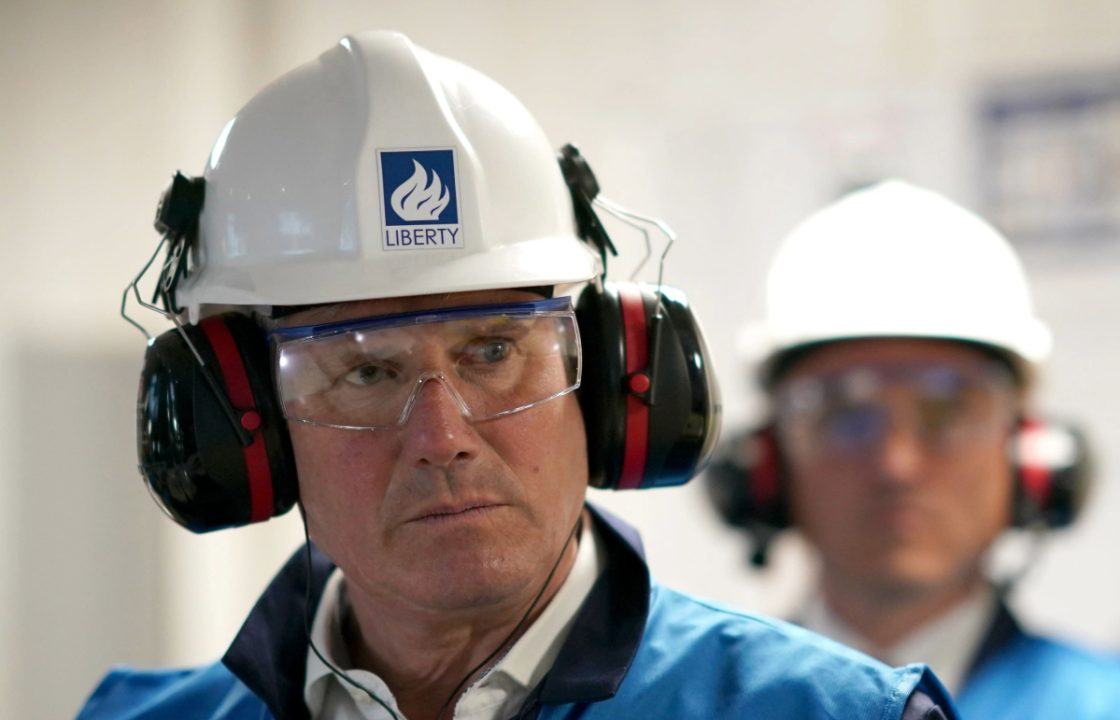
Starmer says he is ‘horrified’ steelworks are mothballed due to SNP’s ‘bad deal’

The Prime Minister said the Scottish Government had failed to find work to keep the sites thriving.

LABOUR NATIONALIZED BRITISH STEEL

PA MediaThe Prime Minister said the SNP had no industrial strategy
 (Ian Forsyth/PA)

PA Media

Sir Keir Starmer has said he is “horrified” that steelworks in Lanarkshire have been effectively mothballed, and is calling on John Swinney to step in to revive them.

The Prime Minister said the SNP-run Scottish Government had failed to find work to keep the sites thriving after negotiating a “bad deal” which saw them being bought by a new owner.

The plants at Dalzell and Clydebridge were bought by the Liberty House group in 2016, backed by a £7 million loan from the Scottish Government.

The group, which is part of Sanjeev Gupta’s GFG Alliance, also owns the Lochaber aluminium smelter.

The Labour leader’s comments come after the US trade deal which was reached on Thursday – which cut tariffs on cars, steel and aluminium.

Mr Swinney’s party said Sir Keir was attempting to “wash over” his own industrial failures.

Writing in the Sunday Times, the Prime Minister said: “I’m proud we’ve secured a deal that slashes tariffs on the steel and aluminium industries to zero.

“This Labour government will always support our proud steel industry. So I’m horrified that the Dalzell and Clydebridge steelworks in Lanarkshire are lying mothballed, with workers on furlough.

“All because the SNP negotiated a bad deal and have had no industrial strategy to bring work to those mills.

“We’re standing up for Scottish steel – now Swinney needs to step in and get those plants up and running again.”

It is understood that some staff at Dalzell in Motherwell have been furloughed and there is no work going through the plant.

The Prime Minister also highlighted the trade deal with India, which cuts costs on the crucial Scottish export of whisky.

SNP MP Pete Wishart laid the blame on the UK Government, saying it had failed to back the Scottish industry in contrast to the action taken to protect plants south of the border.

He said: “The audacity of Keir Starmer to attempt to wash over the UK government’s betrayal of Scottish industry is insulting.

“They put emergency support in for Scunthorpe steelworks and deliberately legislated to exclude Scotland and therefore, Dalzell works from any such help, now or in the future.

“Westminster did nothing to help the SNP save Dalzell. It did nothing to help us save Lochaber. And now it has done nothing to save Grangemouth.”

He added: “Like the Tories, Labour are making it abundantly clear that Scotland will always be an afterthought for Westminster. The SNP is the only party that will always be on Scotland’s side.”

 Man dubbed 'king' of asylum seeker hotels becomes billionaire


Graham King is named as a new billionaire on the Sunday Times' latest Rich List


Conor Gogarty 
Investigations editor
 11 May 2025
WALES ONLINE

Protest outside the gates of Penally Asylum Camp
(Image: Laura Clements/WalesOnline)

A controversial businessman has become a billionaire after profits surged at his business housing asylum seekers. Graham King, sometimes called the "Asylum King", is the founder of Clearsprings Ready Homes, which has a lucrative contract to provide asylum seekers with accommodation in Wales and England.

The Sunday Times reports that the 58-year-old has seen a 35% jump in his fortune in the past year, resulting in him being named as a new billionaire on the newspaper's Rich List. He made his debut on the Rich List last year when he appeared at number 221 with a worth of £750million.

That figure has soared to £1.015 billion in this year's list, putting him in 154th place.

Get the latest Wales Online breaking news on WhatsApp

Our community members are treated to special offers, promotions and adverts from us and our partners. You can check out at any time. More info

Mr King has been involved in several controversies in Wales.

In 2016 he was criticised for accepting a 379% payrise — meaning an annual packet of £960,000 — for his role as an executive of the firm running Cardiff asylum centre Lynx House, which just months earlier had been hit with allegations of overcrowding and mould infestation, as well as asylum seekers wearing wristbands to receive meals.


In 2021 inspectors described the conditions in two of Clearsprings’ asylum centres — one being Penally Camp in Pembrokeshire — as “decrepit”, “impoverished” and “rundown”.

One asylum seeker who was housed at Penally said that living there was the "worst thing to happen to me" since he left Syria.

The centre closed in the fallout from the report.

In 2023, Clearsprings Ready Homes' plans to convert Stradey Park Hotel in Llanelli into an asylum centre attracted fierce criticism.

Carmarthenshire council and many locals opposed the move, which would have resulted in around 100 job losses.

A makeshift base for protesters was set up outside the hotel before the Home Office finally scrapped the plans.

The Sunday Times links Mr King's rising wealth to an increase in the number of people claiming asylum in the UK from 91,811 in 2023 to a record figure of 108,138 last year.

A backlog in processing asylum claims led to an estimated 38,000 asylum seekers being housed in 222 hotels and a further 66,000 in other accommodation in the last year.

Clearsprings was founded in 1999 as a property company in Mr King's home county of Essex.

Its latest big UK Government contract is a deal to provide accommodation in the south of England and Wales, running until September 2029. The Home Office estimates this is worth £7.3billion, having previously valued it at £1billion.

The firm's profits climbed from £74.4million to £119.4million in the year ending January 2024, according to the Sunday Times, which "conservatively" values the business at £1.015billion. King owns more than 99% of the shares, the newspaper reports.