Saturday, May 24, 2025

Rio Tinto’s Chile deal is a bet on unproven tech and lithium price bounce

Reuters | May 22, 2025 | 
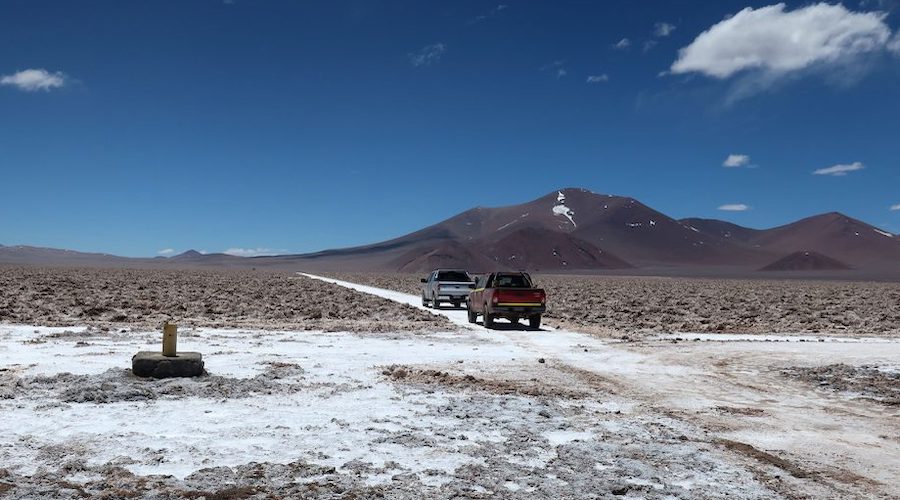
The Maricunga lithium project sits on its namesake salt flat, Chile’s second-largest in terms of reserves. (Image courtesy of Lithium Power International.)

Global miner Rio Tinto will tackle one of the biggest technological challenges in the lithium industry as it takes the lead in Chile’s first major projects involving the battery metal in years, alongside state-run mining companies Codelco and ENAMI.


Codelco’s Maricunga project and ENAMI’s Altoandinos project represent a new pivot in Rio’s lithium ambitions and a turning point for Chile, which for many years had only two companies – Chile’s SQM and US-based Albemarle – extracting the metal that powers electric vehicles.

Rio will spearhead the operational side of both projects, with nearly 50% ownership at Maricunga and 51% at Altoandinos.

The plans came the same week that Rio announced on Thursday the surprise departure of its CEO Jakob Stausholm, who led the miner’s big bets on lithium, later this year.

As Rio raises its profile in lithium, a major challenge will be deploying new technology, called direct lithium extraction, or DLE, to separate the ultralight metal from salty brine liquid. It is meant to be more environmentally friendly and efficient than conventional methods, industry experts say, but has yet to be proven widely in the industry and has never been used in Chile at commercial scale.

The technical challenge comes against a backdrop of uncertainty for lithium prices, which have fallen nearly 90% since late 2022 due to oversupply and weak demand for EVs.

“Scaling it in line with global demand timelines remains uncertain,” said Nicole Porcile, a partner at mining consulting firm Anagea. “The ability to deliver at scale, efficiently and reliably will be a decisive factor in the project’s competitiveness and investor confidence.”

Rio has a DLE pilot plant at its Rincon project in Argentina, and recently acquired US-based Arcadium, which employs a mix of DLE and traditional extraction methods.

That DLE know-how gave Rio an edge over three final competitors to partner with copper giant Codelco, said a person familiar with the Maricunga deal. Still, Rio and Codelco must now hammer out which kind of DLE will work sustainably and effectively at Maricunga, one of the world’s most lithium-rich salt flats.

“That’s certainly the goal: to develop and operate this in the most environmentally friendly manner possible because Codelco is well aware that they’ll be under the microscope,” the person said.

Codelco’s search for a Maricunga investor attracted Middle Eastern, Chinese and Western companies, the person added, speaking on condition of anonymity because the talks were private. Construction is expected to start in three to five years, once environmental permits are updated.

Codelco has proposed a gradual transition to DLE, but Rio Tinto is aiming to use DLE from the start, with lower costs relative to other DLE projects, said a second person familiar with the matter.

Argentina experience

Rio told Reuters its Argentina experience provided strong footing for future projects.

“We are therefore confident in the application of our technology to Maricunga and potentially to other lithium salt flats in Chile,” a spokesperson said.

Rio will spend up to $900 million at Maricunga, and lead design, construction, operation and sales. At Altoandinos, it plans to initially contribute $425 million to the project to fund studies required before a final investment decision.

Rio is the only major mining company to bet heavily on lithium, accelerating its push with a second deal in six months at a time of low market prices.

“We have not heard from investors that they want to see further investment in lithium,” RBC Capital Markets said in a note.

Codelco hired investment bank Rothschild to scout for candidates for the Maricunga project. And at the same time, it is set to soon close a deal to partner with Chile’s SQM at the Atacama salt flat.

Benchmark Minerals analyst Federico Gay noted that Rio and Codelco will have to carefully prioritize. “Too many fronts (are) open for both companies, in a moment when justifying large investments for lithium is challenging.”

Rio, which could be granted an intellectual property permit if its DLE technology is used for the project, will hold a majority of seats on a technical committee with Codelco, and will move to a 50-50 split once production begins, according to a filing with Chile’s financial regulator.

ENAMI ran its own selection process separately, attracting bids from Chinese electric vehicle maker BYD, French miner Eramet, and South Korean steel group Posco, as well as financing proposals from China’s CNGR Advanced Material Co Ltd and South Korea’s LG Energy Solution.

(By Daina Beth Solomon and Clara Denina; Editing by Rod Nickel and Jamie Freed)

Chile’s ENAMI says lithium venture with Rio Tinto to start production in 2032


Reuters | May 23, 2025 | 


Chile’s Atacama region. (Image by LMspencer | Stock Photo.)


Chile’s state-run mining firm ENAMI aims for its new Rio Tinto lithium partnership at Altoandinos to begin production in 2032 with 35,000 metric tons of the battery metal per year, and ramp up over three years to 75,000 tons, ENAMI company chief Ivan Mlynarz said on Friday.


The Altoandinos project, as well as the Maricunga project that Rio Tinto was tapped this week to spearhead alongside state-run copper producer Codelco, will give the global miner a critical role in Chile’s lithium industry alongside long-established players SQM and Albemarle.

Rio Tinto will initially put forward $425 million to the project, which ENAMI said will require a total investment of $3 billion.

ENAMI previously estimated the Altoandinos project capacity to be 60,000 tons a year, before new studies showed more resources than expected, particularly at the La Isla salt flat.

Mlynarz said ENAMI plans for the project to start with direct lithium extraction (DLE), an innovative method that has yet to be used in Chile, and that Rio Tinto is testing at its Rincon project in Argentina.

ENAMI has begun testing DLE options from various companies, and Mlynarz said early results from Rio Tinto’s technology look promising, paving the way for its potential use on the project.

“The results have been encouraging with Rio Tinto, and it has the advantage of having the operator use their own technology,” Mlynarz said.

He added that the partnership needed approval from international regulatory agencies, but that ENAMI in the meantime would continue exploration studies, with the hope that Rio Tinto will take the lead in 2026.

“We need to keep working in the salt flat because both ENAMI and Rio Tinto know that timing is key,” Mlynarz said.

(By Daina Beth Solomon; Editing by Alexander Villegas)


Rio Tinto board looks for new CEO who knows mining better

Bloomberg News | May 23, 2025 | 
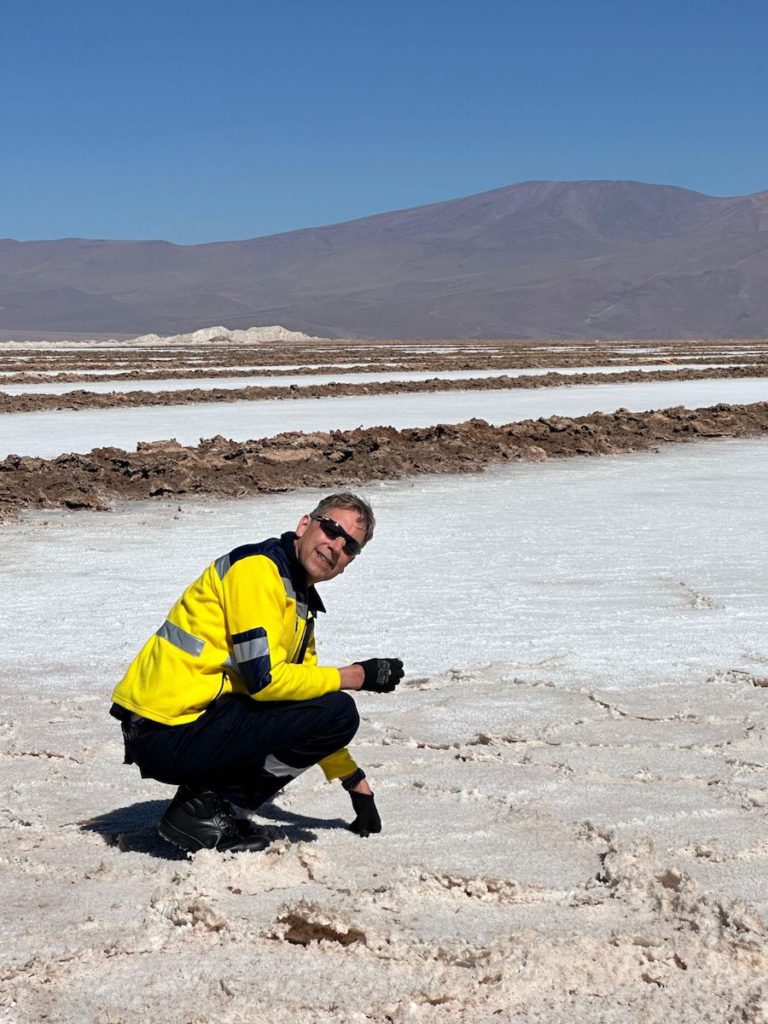


Jakob Stausholm visits the Rincon project. (Image: Jakob Stausholm | LinkedIn.)


When Jakob Stausholm took the top job at Rio Tinto Group, his task was to repair the reputation of a company that had just blasted through a 46,000-year-old sacred Aboriginal site and bungled its response. Now the world’s second-largest miner has decided it needs a boss that can lead it into the future.


Then, Stausholm, a sober Dane who came to Rio as chief financial officer after time at AP Moller-Maersk A/S and Shell Plc, stepped into the least desirable job in mining. He has repaired relationships and edged the company toward new investments, including lithium — a battery material most of his rivals have shunned.

But the company, whose board asked Stausholm to stand down, is now looking for a boss that can make the most of Rio’s crucial growth assets, including the Oyu Tolgoi copper and gold mine in Mongolia and the vast Simandou iron ore deposit in Guinea. To set a path for the coming decades will mean prioritizing operational expertise and a track record, according to people familiar with the company.

That could put Simon Trott, head of Rio’s iron ore business, in the running alongside aluminum executive Jérôme Pécresse to replace Stausholm when he leaves later this year, according to the people. They asked not to be named as the conversations are not public.

“It’s not something that you are candidate for, it’s something that you’re eligible” for, Pécresse said Friday in an interview on BNN Bloomberg Television. “It’s for the board to decide who is eligible and who is not.”

Chief commercial officer Bold Baatar, a former investment banker who has been instrumental in bringing Simandou to production after years of delays, is also being considered but is not thought to be a front-runner, the people said.

“Stausholm came on board at a time of crisis and he’s resolved many of the strategic issues that the company was hampered by at the time,” said Rob Stein, a Macquarie Group Ltd. research analyst. “Now the strategic priority appears to be growth, and the new CEO may be a growth-oriented leader — as opposed to Jakob who was a cultural change agent.”

Rio’s ability to run its mines and aluminum smelters significantly improved under Stausholm, but right from the start of his tenure there were tensions with some investors around his lack of technical expertise. By comparison, Stausholm’s peers at BHP Group, Anglo American Plc and Glencore Plc have spent decades in the industry.

As the mining company prepares for its next major push, board members increasingly felt more operational experience was required at the top of Rio. Stausholm’s departure caught the market by surprise, but the people familiar with the firm said the exit was expected.

Trott, who helped repair relationships in Australia after the social responsibility disaster of Juukan Gorge five years ago, is widely seen as having strong relationships and diplomatic skills, the people said.

Pécresse only joined Rio in October 2023, but is credited with turning around the aluminum unit, long a headache for the company.

The miner’s “next five years appear very operation driven,” said Matthew Haupt, portfolio manager at Wilson Asset Management, which holds the company’s stock. “It’s probably a good time for Jakob to find a new challenge.”

As the mining sector begins to shift its focus to expansion and deals, Stausholm took the first step toward bringing Rio back to the fray, with the acquisition of Arcadium Lithium Ltd. last year, and has invested in projects including Rincon in Argentina. It’s a major bet on a commodity, which rivals like BHP Group consider to be too small and geologically abundant, at a time of dismal prices thanks to a persistent global glut.

It was still a first step toward easing the company’s heavy dependence on iron ore, the steelmaking ingredient which accounts for more than 80% of underlying earnings. The commodity has generated billions in cash flow, but its future is less certain as China’s growth plateaus.

Still, Stausholm’s successor will also have to face big questions on Rio’s deal strategy and what role the company will play in any major consolidation.

Stausholm was directly involved in talks about a potential deal with Glencore Plc last year that went on for months, which could have created the world’s biggest miner.

While Rio has never publicly discusses the talks, its willingness to engage with Glencore jolted many in the industry. The deal ultimately fell down with the two sides far apart on valuation, the people said, rather than any strong divisions with Rio on the combination.

In an internal message to Rio Tinto employees, Stausholm said the company expected to announce a successor before third-quarter production results, typically published in October.

(By Paul-Alain Hunt and Thomas Biesheuvel)


South Africa Launches Oil Giant to Revive Energy Sector

South Africa has officially launched the South African National Petroleum Company (SANPC), a new state-owned oil enterprise designed to consolidate and energize the country’s long-stalled hydrocarbons sector. Formed from the merger of PetroSA, iGas, and the Strategic Fuel Fund, SANPC will operate under the Central Energy Fund and is already integrating staff and assets to streamline operations. The aim? Reducing oil imports, bolstering energy security, and tapping into over R95 billion in potential investment.

The move comes just months after South Africa quietly allowed several of its coal-fired plants to exceed emissions limits in a desperate bid to avoid more blackouts. With the country still generating 85% of its electricity from coal and facing a chronic energy shortfall, SANPC represents a dual play: secure domestic energy while positioning itself as a more formidable player on the global stage.

Foreign oil majors are already sniffing around. Shell is offloading downstream assets in South Africa, and traders like Trafigura and NOCs like Aramco and ADNOC are circling. Meanwhile, TotalEnergies and QatarEnergy are pushing ahead with high-risk exploration offshore South Africa, betting that the Orange Basin's oil riches don’t stop at Namibia’s border. Activist lawsuits and bureaucratic messes haven’t stopped them.

South Africa is trying to thread an impossible needle—keeping the lights on, appeasing climate financiers, and luring foreign capital to a regulatory minefield. SANPC might just be the bureaucratic bazooka it needs to start hitting those targets. Or, like the Luiperd gas project before it, it could get tangled in its own red tape.

But as Energy Minister Gwede Mantashe bluntly put it, “We have oil, we have gas, so we must exploit it.” The era of passive potential is over. Now comes the messy business of execution.

By Julianne Geiger for Oilprice.com

SOUTH AFRICA

Sibanye-Stillwater rushes to rescue 260 trapped gold miners


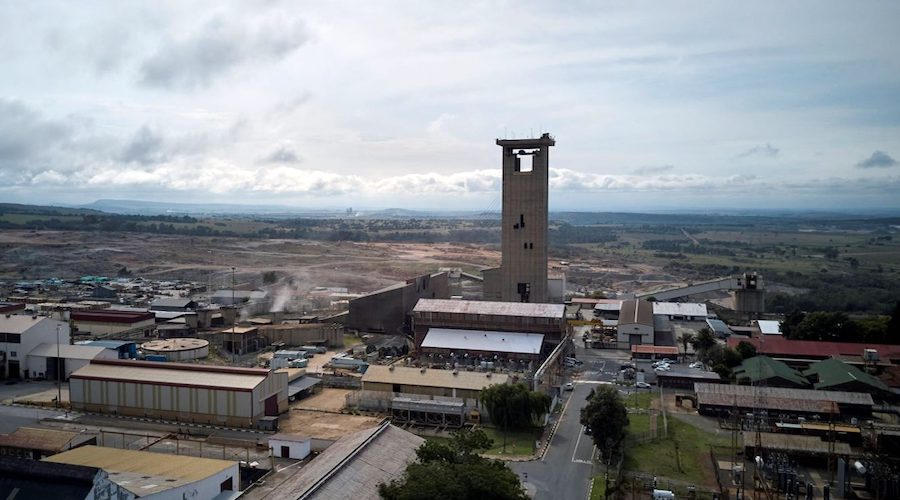
The Kloof operation now consists of three producing vertical shafts, namely No. 1, 7 and 6. (Image courtesy of Sibanye-Stillwater.)

Precious metals producer Sibanye-Stillwater (JSE: SSWJ) (NYSE: SBSW) confirmed Friday that nearly a third of the 260 workers trapped underground at its Kloof gold mine, about 60 km west of Johannesburg, South Africa, have been safely brought to the surface.

The company said the remaining 181 miners are safe, with access to food and water, and are gathered at an underground assembly point within Kloof, one of its deepest operations. Rescue efforts continue and Sibanye is aiming to hoist them out “soon”.

An early investigation found that a sub-shaft rock winder skip door opened unexpectedly at the loading point, damaging Shaft 7 and preventing safe passage.

After a detailed risk assessment, Sibanye determined it was safer for workers to stay at the sub-shaft station than attempt a long walk to the surface.

The National Union of Mineworkers (NUM), which represents workers at the Kloof mine, criticized Sibanye’s handling of the incident.

“We are very concerned because the mine did not even make this incident public until we reported it to the media,” NUM spokesman Livhuwani Mammburu said in a statement.

Mammburu added that the miners have now been underground for nearly 24 hours and that Sibanye has repeatedly changed its timeline for the rescue.

Mining accidents remain a grim reality in South Africa, home to some of the world’s deepest and oldest gold mines. In January, at least 78 bodies were recovered from an illegal mine after police cut off supplies in a crackdown that highlighted the risks of unregulated mining. The government estimates illegal mining cost the country over $3 billion last year.

The Kloof mine produces 14% of Sibanye’s total gold output and includes two other active shafts. In 2023, the company closed Shaft 4 due to safety and economic concerns. At year’s end, the mine employed about 8,900 people, including contractors.


Greenland Approves European-Backed Mine in Remote Fjord

Lease area's waterfront access site, red, on Greenland's rugged western coast (Pole Star / NASA)
Lease area's waterfront access site (red) on Greenland's rugged western coast (Pole Star / NASA)

Published May 22, 2025 9:09 PM by The Maritime Executive


Greenland's government has issued a new mining lease to a French-Danish consortium for extracting anorthosite, a silicate mineral used for making aluminum and fiberglass. The license covers provisions for shipping, and the area includes a stretch of waterfront that could be used for industrial access at the ultra-remote mine site. 

The new lease grants permission for development to Greenland Anorthosite Mining AS, a consortium led by French mining firm Jean Boulle Group. Other participants include  state investment funds from Greenland and Denmark; Greenland's public pension fund; and the Danish bank Arbejdernes Landsbank. 

The site (63 18 N / 50 07 W) is located south of the capital of Nuuk on Greenland's rugged west coast, inland from the village of Qeqertarsuatsiat. According to the partners, the resource is uniquely large and of "particularly excellent quality" for making E-glass - the high-tensile silicate glass used for fiberglass reinforcement. High-grade anorthosite is a less carbon-intensive feedstock for E-glass than traditional sources, the firm says; it can also be used as an alternative to bauxite for aluminum production.

The site is at the end of a long fjord, and it includes a small stretch of waterfront. The lease agreement anticipates shipping access: it specifies that any vessels used to serve the project (for development or for export) must meet appropriate Polar Code provisions; must carry a properly-licensed local pilot; and must carry insurance from a P&I Group member. 

When developed, the lease area will be the second active anorthosite mine in Greenland. Under the lease terms, the partnership has to begin resource exploitation by the end of 2028 or seek an extension. If all terms are met, the lease will last for 30 years. 

The lease agreement with a European consortium comes at a time of high tension with the White House over Greenland's mining rights and its continued existence as a sovereign territory. However, this particular application has been in the works with local support since at least 2020, long before the recent tensions began. Greenland Mineral Resources Minister Naaja Nathanielsen told media that despite the well-publicized American interest in the island's minerals, American mining companies have yet to commit to any investment deals - at least, not with the currently-available lease terms. Local rules require up-front investments in development, and it is not as easy in Greenland to acquire a lease and hold it for future use, Aalborg University associate professor Jesper Willaing Zeuthen told Newsweek. 


Finland’s Next Generation Corvette is Launched

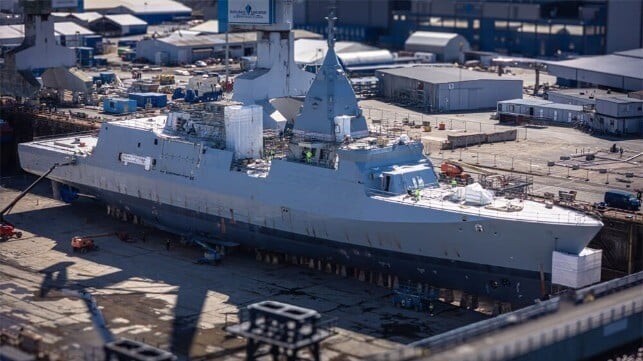
Finnish corvette prepared for launch
First corvette moved out of the indoor build hall during the launch process (Rama)

Published May 22, 2025 9:22 PM by The Maritime Executive


The first multi-purpose corvette built for the Finnish Navy as part of the Squadron 2020 project was launched at the Rauma shipyard in Finland on Wednesday, May 21. The company is highlighting it as a significant milestone in the project to build four of the most capable vessels designed to operate year-round in all weather conditions in the Baltic.

“The building of these corvettes will advance the shipbuilding industry and technological know-how in Finland,” said Mika Nieminen, CEO of Rauma Marine Constructions (RMC). “We have increased the capacity of Rauma shipyard purposefully while strategically implementing significant investments in the shipyard area. Rauma shipyard is now in peak condition.”

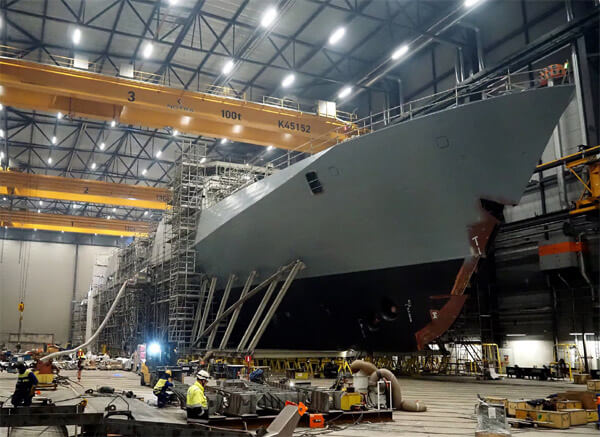
The company notes that significant investments have been made in the Rauma shipyard throughout the 2020s to strengthen the shipyard’s shipbuilding infrastructure and independent production capacity. A new closed multi-purpose hall was completed for the construction of the multi-purpose corvettes to ensure good working conditions, while additional investments have been made in steel production, a launching barge, and heavy transfer ramps. The indoor hall was required for security during the construction.


The hull for the first vessel was completed in February 2025 (Rama)


Work began at the end of October 2023 on the first of the vessels which the yard says will have no counterparts worldwide. Pohjanmaa-class corvettes will be equipped with advanced monitoring capacities for air, surface, and underwater surveillance and will be capable of laying navy mines, performing defense actions against surface vessels, submarines, and various airborne targets, and conducting maritime operations. 

The design of the corvettes pays particular attention to shock resistance, noise levels, and stealth technology, highlights RMC. The vessels measure 117 meters in length and will have a crew of 70. They will have a speed of 26 knots.

The keel for the first of the vessels, a block weighing 56 tonnes, was laid in April 2024. Construction began on the second corvette in October 2024 while the hull of the first vessel was completed in February. Keel laying for the second vessel took place on May 8.


The technical part of the launch process was initiated at the beginning of May when the multi-purpose corvette was moved along the heavy transport ramp to the launching barge and transferred to the harbor. In the harbor, the ship was launched with the help of the barge and then towed to the shipyard’s dry dock for further work, including the mast installation. 

“The newly launched vessel is a strong indication of the close and goal-oriented co-operation between the Finnish Government, the Finnish Defence Forces, the Finnish Defence Forces Logistics Institute, the Finnish Navy, Rauma Marine Constructions, Saab and all our industrial partners”, states Timo Ståhlhammar, Project Director of RMC’s Squadron Project.

RMC reports the Squadron 2020 project is proceeding on schedule. The building pace will accelerate as work on the second and subsequent multi-purpose corvettes progresses. The project is scheduled to be completed in 2029.


Brazil Green-Lights MSC's Purchase of Maritime Conglomerate Wilson Sons

Wilson Sons
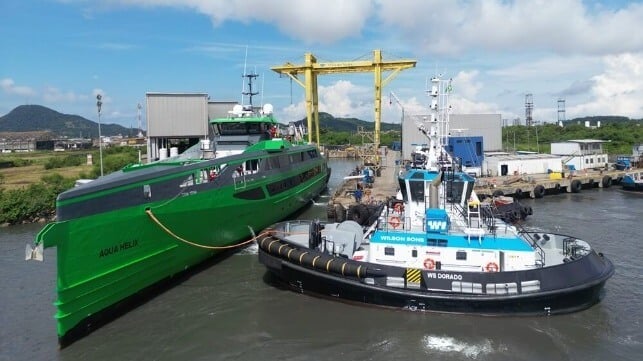
File image courtesy Wilson Sons

Published May 22, 2025 9:59 PM by The Maritime Executive


Brazilian regulators have approved MSC's planned takeover of Wilson Sons, paving the way for the sale's closing. 

Last October, MSC announced plans to buy a 56-percent stake in Wilson Sons from Ocean Wilson Holdings, which had been rumored to be considering a sale since at least 2023. At least one other firm considered placing a bid, but MSC ultimately secured a deal at a price of $760 million. Once the purchase is completed, MSC will launch a public tender offer for the remaining shares in the company, bringing the total transaction value to about $1.35 billion. 

Wilson Sons has been in business in Brazil's ports and towage industry for more than 180 years, and has interests spanning the full breadth of the nation's maritime sector. It has Brazil's largest tugboat fleet, nearly two dozen offshore vessels through a joint venture, two offshore-industry terminals, two container terminals, a shipyard, a freight logistics division and a shipping agency, among other assets. The purchase would dovetail with MSC's acquisition of Brazilian coastwise carrier Log-In Logistica in 2021, giving it a foothold in Brazil's cabotage trade. 

It is one of a string of acquisitions that the Aponte family - owners of MSC and Terminal Investment Limited (TIL) - is looking to add to its global ports portfolio. On Thursday, Hong Kong-based ports giant CK Hutchison confirmed that TIL is leading a consortium to buy out Hutchison's global container terminal network, amounting to more than 40 terminals. The transaction is said to be worth about $23 billion - assuming that Hutchison can overcome opposition from Chinese regulators. 


Carnival Cruise Ship Rescues Four People and Three Dogs from Disabled Boat

rescue
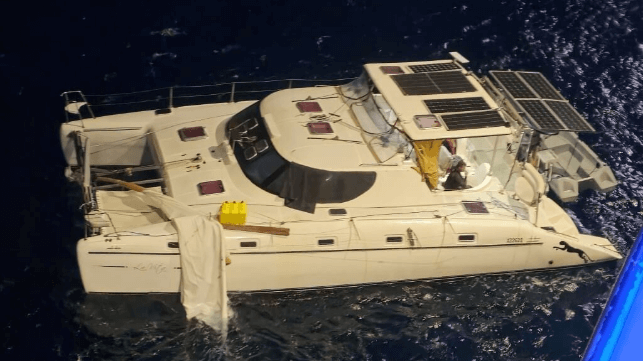
Carnival rescued four people and three dogs from a disabled catamaran (photos courtesy of Carnival Australia)

Published May 22, 2025 7:56 PM by The Maritime Executive


Carnival Cruise Line’s Carnival Splendor (113,300 gross tons) homeported in Sydney, Australia has taken aboard some unusual passengers in the form of three dogs rescued along with their human companions from a disabled sailboat in the South Pacific. All are doing well and the dogs, which have turned into sailors, are getting some extra attention while aboard the cruise.

The cruise ship departed Sydney on May 19 for an 8-night trip to Vanuatu and New Caledonia with a reported 3,300 passengers aboard. Overnight it received instructions from the Maritime Rescue Coordination Center in Noumea about a distress call.


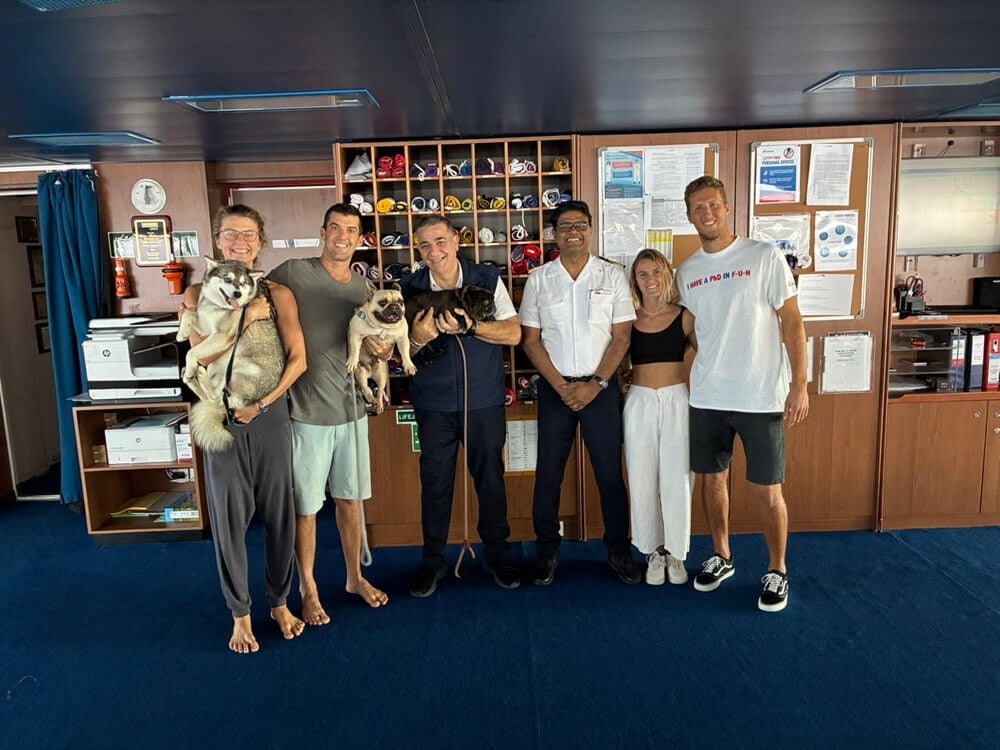
All the survivors aboard the Carnival Splendor


Four sailors from Australia, Germany, and Italy issued the distress call around midnight on Wednesday, May 21, reporting that their vessel, a catamaran, was disabled in heavy seas. They said that the mast of the vessel had broken and that its motor was also disabled. The boat was off the coast of New Caledonia.

Carnival reports its cruise ship immediately headed toward the location of the disabled boat. It was able to reach the vessel five hours later and completed the rescue.

The two couples and their three dogs were safely transferred to the Carnival Splendor. They are reported to be in good condition and receiving food, water, and medical assistance. They are also being given a cabin to rest after their ordeal.


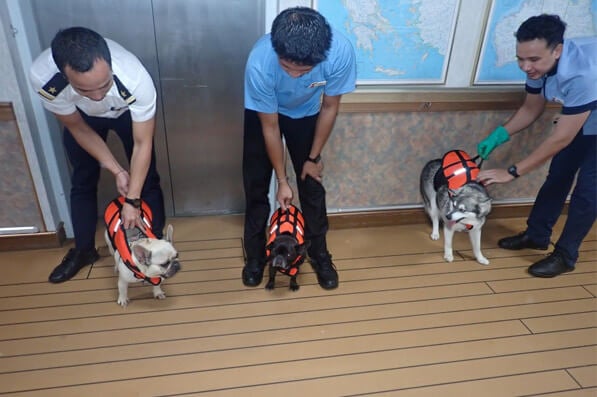
Three special "passengers" are getting a little extra attention on the Carnival Splendor


The reports said the catamaran had departed on May 14. The four people were intending to circle Australia and then travel to Fiji. They said the dogs were becoming seasoned sailors. One couple was living aboard the catamaran with the three dogs and intended to sail around the world. 

A spokesperson for Carnival told the Australian media that it was always a priority to respond to emergencies and they were glad the ship was in the right place at the right time to help. They were happy to welcome the people and their dogs aboard.

The cruise ship resumed its trip and the four survivors (and their dogs) are getting a short cruise. On Friday, the Carnival Splendor is stopping at an uninhabited island that the cruise line calls Mystery Island (Inyeug Island) in Vanuatu. The ship will then continue to Noumea on Saturday, where they expect to disembark the people and their dogs.

Birdon Starts Production of ASC-M Prototypes for United States Marine Corps

Birdon

Published May 23, 2025 9:20 PM by The Maritime Executive


[By: Birdon]

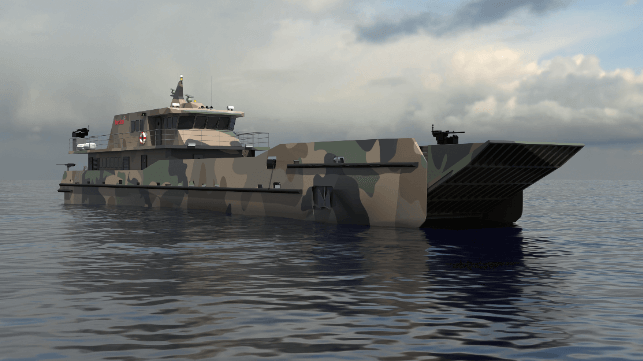
The U.S. Marine Corps Warfighting Laboratory (MCWL) selected maritime engineering leader Birdon to design and build two prototype vessels to demonstrate emerging concepts under the Marine Corps’ Force Modernization objectives.  The resultant Birdon Ancillary Surface Craft (ASC), marks a critical step forward in delivering next-generation landing craft solutions to inform future capabilities, tactics, and procedures.

MCWL and Birdon collaborated to balance requirements, operational capabilities, cost, and producibility.  The team focused on advanced design concepts to improve production automation, requiring fewer hours to build each craft.  The collaboration resulted in moving from concept to an affordable, production friendly design, ready for construction in less than 12 months.  The incorporation of automated production features allows for the rapid scaling of output to meet future demands.

Birdon CEO Jamie Bruce said Birdon’s ASC design was selected for its superior capabilities and ability to be customized for the unique challenges of the U.S. Marine Corps operating environments. “Our naval architects and marine engineers designed this craft from the ground up, integrating cutting-edge sonar and fuel systems to enhance operational success,” he added.

The ASC is designed to carry up to 40 embarked troops and 54 tons of cargo, with exceptional maneuverability, stability, and long-range ocean transit capability. To ensure safe landings on uncharted beaches, Birdon worked with a specialist sonar company to develop and integrate an advanced forward-looking sonar system, allowing operators to detect obstacles and assess beach gradients well ahead of the vessel. The vessel is designed to beach and de-beach in gradients significantly shallower than existing landing craft can support, providing enhanced, safe amphibious operations capability.

Birdon’s ASC design also features a cutting-edge fuel delivery and transfer system that allows for efficient vessel-to-vessel or vessel-to-land fuel transfer, supporting extended operational range and flexibility in challenging environments.

Birdon has partnered with C&C Marine and Repair (C&C) to build two vessels at their Belle Chasse, LA facilities. Construction on the first vessel is set to begin in the summer of 2025, with delivery scheduled one year later, demonstrating Birdon’s commitment to expediting capability to the warfighter, and a collaborative approach in defense and maritime manufacturing.

Tony Ardito, Birdon President said the partnership offers other strategic advantages, stating, “C&C’s capabilities and proximity to Birdon’s New Orleans operations make them the ideal partner for this project. Their ability to scale production gives us the flexibility to meet future demands.”

This collaboration with the U.S. Marine Corps underscores Birdon’s position as a trusted partner to the U.S. Department of Defense. With five U.S.-based facilities and a focus on strengthening the local shipbuilding industrial base, Birdon continues to deliver innovative and reliable maritime solutions that enhance U.S. defense capabilities.

The products and services herein described in this press release are not endorsed by The Maritime Executive.


Fincantieri & Enra Energy Solutions Sign Strategic Collaboration Agreement

Fincantieri

Published May 23, 2025 8:42 PM by The Maritime Executive


[By: Fiincantieri]

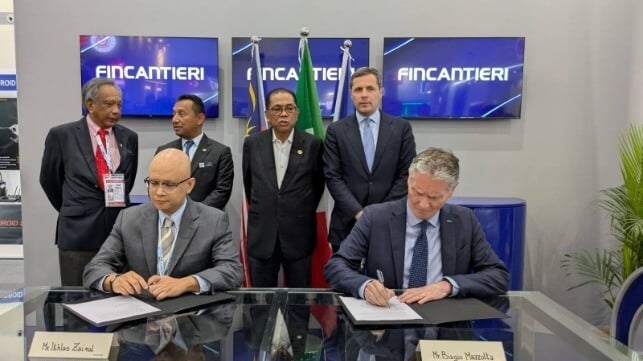
On the occasion of the Langkawi International Maritime and Aerospace Exhibition (LIMA), currently ongoing, Fincantieri and Enra Energy Solutions (EES) signed a Technical Collaboration Agreement to support the Royal Malaysian Navy’s “15 to 5” strategic fleet renewal program. The signing took place in the presence of the Malaysian Minister of Defence, H.E. Dato’ Seri Mohamed Khaled bin Nordin, and the Italian Undersecretary of State to the Ministry of Defence, Hon. Matteo Perego di Cremnago, and wasformalized by Biagio Mazzotta, Chairman of Fincantieri, and Ikhlas Zainal, Chief Executive Officer of Enra Energy Solutions.

The initiative marks a key step in enhancing Malaysia’s naval capabilities while fostering significant national industrial participation. The agreement paves the way for a partnership focused on delivering and supporting next-generation naval vessels, including Multi Role Support Ships and Littoral Mission Ships batch 3. These platforms are designed to improve operational readiness and resilience amid an evolving regional security landscape.

Fincantieri, one of the world’s leading shipbuilding groups and a reference partner for the Italian and US navies, brings extensive expertise in high-tech naval platforms. The Group plays a pivotal role in international defence cooperation initiatives, contributing to programs across multiple allied nations. EES is a prominent Malaysian company with a proven track record in maintenance, repair, and logistical support services. Through this collaboration, EES will play a vital role in strengthening the local ecosystem of maritime defence solutions.

This partnership underlines Fincantieri’s broader commitment to developing long-term industrial cooperation with national players in strategic regions. It aims to integrate local capabilities into advanced defence programmes, generating added value through the transfer of technology, know-how, and industrial skills.

Biagio Mazzotta, Chairman of Fincantieri, commented: "Southeast Asia represents a key geography for the future of the maritime defence industry. Our collaboration with Enra Energy Solutions in Malaysia is a concrete step in building a robust industrial partnership that combines global experience with local excellence. We are proud to contribute to the Royal Malaysian Navy’s strategic vision and to support the development of a resilient local defence ecosystem."

The products and services herein described in this press release are not endorsed by The Maritime Executive.


ABS Approves First of Its Kind LCO2 Barge for U.S. Operation

CCS barge

Published May 23, 2025 9:47 PM by The Maritime Executive


[By ABS]

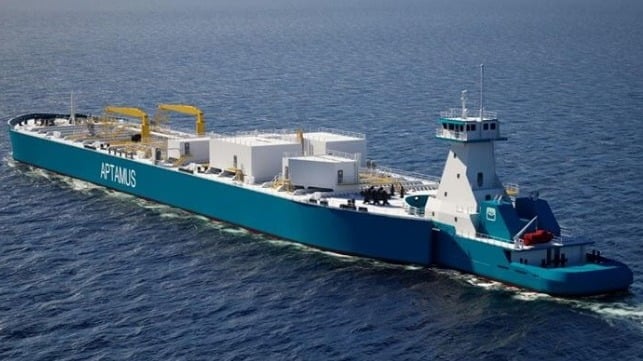
ABS awarded approval in principle (AIP) to Overseas Shipholding Group, Inc. (OSG), the parent company of Aptamus Carbon Solutions, for its preliminary design of a liquefied carbon dioxide (LCO2) barge.

The development of the barge design is a core component of the Tampa Regional Intermodal Carbon Hub (T-RICH) project to receive, store and process emissions from Florida industries for transport to regional sequestration sites.

The articulated tug and barge unit (ATB) is a first-of-its-kind to service carbon capture projects in the U.S. The cargo handling system design is based on medium pressure LCO2 Type-C tanks and is capable of transporting 20,000 mt of cargo. Maximum operating pressure has been determined by track record studies and market trends, and with consideration of loading capacity and holding time.

ABS completed design reviews based on class requirements, specifically including the latest ABS requirements for building and classing liquefied gas tank barges. 

“The safe transportation of CO2 plays a vital role in the carbon value chain, and ABS is proud to use our expertise as the world’s leading classification society for gas carriers to support this milestone project for U.S. operations,” said Gareth Burton, ABS Senior Vice President, Global Engineering.

“This AiP represents another historic milestone in Aptamus’ journey to lead the development of CO2 storage and marine transportation in the United States,” said Jeffrey Ross Williams, Aptamus President. This ABS AiP is another big step in our journey to lead the U.S. maritime industry in designing the technology required for success in our nation’s emission reduction goals and in pursuing new and expanding business opportunities in the global energy transition,” said Williams.

“Aptamus is proud to have developed the first known LCO2 vessel specifically designed for operation in the coastal waters of the United States,” said Kent Merrill, Aptamus Vice President of Marine Projects. “Articulated tugs and barges (ATBs) are popular and effective in the U.S. for the carriage of petroleum products for several reasons, and those advantages hold true for LCO2 vessels as well. We look forward to the continued detailed development of the design, including designing the tug to utilize green methanol or other green fuels and technologies. We thank ABS for their valued partnership on this project, as well as other engineering contributors like Corban Energy Group and Herbert Engineering Corporation.”

The products and services herein described in this press release are not endorsed by The Maritime Executive.