Saturday, May 24, 2025

Trump signs orders to revive US leadership in nuclear power

Bloomberg News | May 23, 2025 |
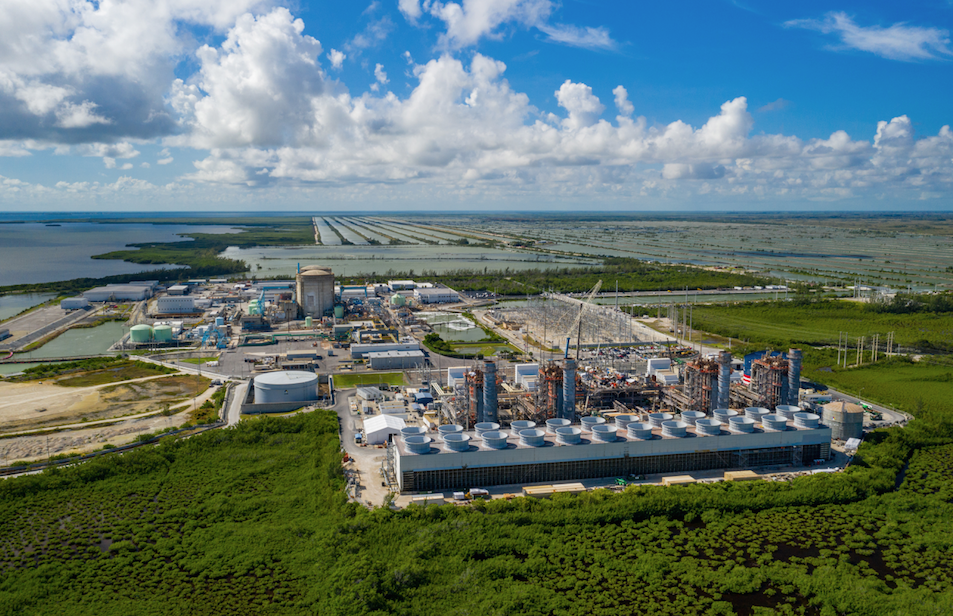

Nuclear power generation fusion station reactors in Homestead, Florida. Stock image.


President Donald Trump on Friday signed orders meant to accelerate the construction of nuclear power plants, including small, untested designs that offer the promise of rapid deployment but haven’t yet been built in the US.


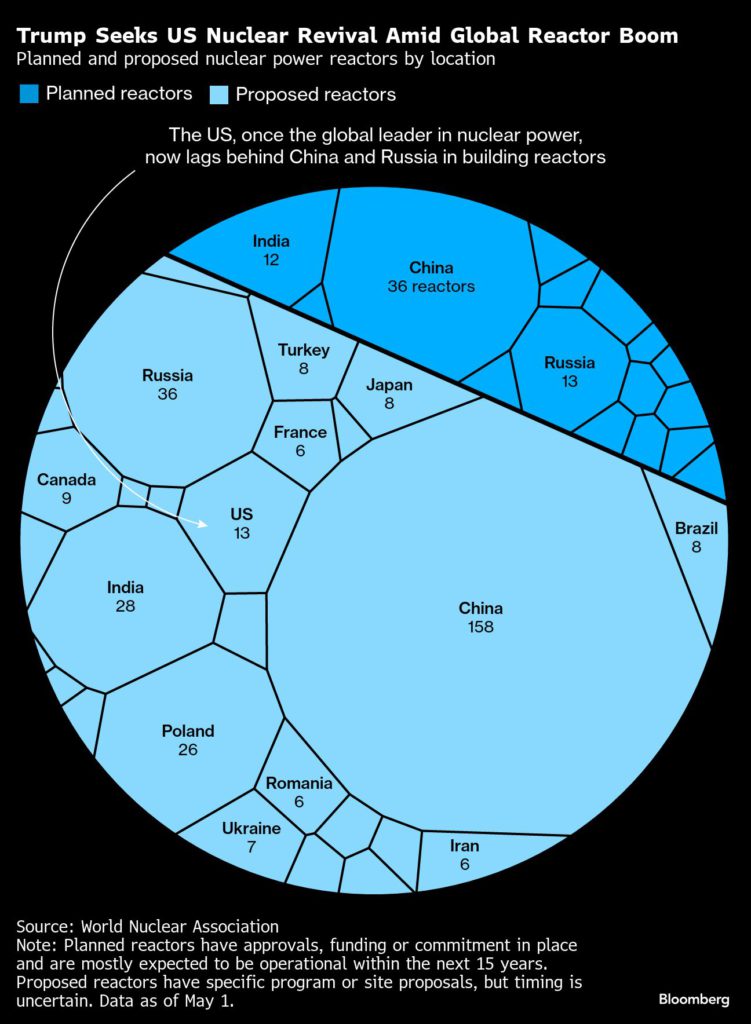
The effort is a bid to meet a coming surge in electricity demand and help the US reclaim its edge in nuclear energy. While the country was once the leader in deploying and producing nuclear power, it’s finished building only two new reactors in the last 30 years and shuttered existing plants, even as China and Russia race to deploy them.


Trump’s initiative to unleash nuclear energy could give a boost to an emission-free source of power that’s championed as a climate-friendly alternative to electricity generated by burning coal and natural gas. However, the president has cast nuclear energy as a complement, rather than a replacement, for fossil fuels.

“We’re signing tremendous executive orders today that really will make us the real power in this industry,” Trump said as he issued the directives in the Oval Office, adding that nuclear technology “has come a long way, both in safety and costs.”


Trump was joined by Interior Secretary Doug Burgum, Defense Secretary Pete Hegseth and energy industry executives including Constellation Energy Corp. CEO Joseph Dominguez and Jake DeWitte of Oklo Inc.

The initiative represents the latest bid by an American president to jump start the domestic nuclear industry, which has languished in recent decades. Former President Joe Biden last year laid out a plan to triple US nuclear capacity by 2050, and Trump’s new plan aims to quadruple it. It also comes as technology companies are clamoring for power to supply energy-hungry data centers.

The effort is likely to give a boost to companies developing small reactors, including Last Energy Inc., Oklo, TerraPower LLC and NuScale Power Corp.

One of the orders also aims to get 10 large, conventional reactors under construction by 2030, potentially benefiting Westinghouse Electric Co., whose gigawatt-scale AP1000 design was the last commercial nuclear unit built in the US and has been embraced worldwide.

Trump’s nuclear initiative also would encourage the use of government financing to support the restart of shuttered nuclear plants, target 5 gigawatts worth of upgrades at existing sites and help spur the completion of others — potentially aiding South Carolina utility Santee Cooper’s bid to resume building two reactors at its V.C. Summer plant, where soaring costs prompted the company to halt construction in 2017.

However, Trump’s nuclear push comes as lawmakers move to phase out a government subsidy that’s seen as critical to helping propel construction of new reactors and support existing plants. Developers have said the change would create a significant barrier to building nuclear plants.

Under a bill that passed the House early Thursday, new and expanded advanced nuclear projects would be eligible to receive clean energy tax credits only as long as they begin construction by the end of 2028, while tax credits for existing nuclear power plants would expire at the end of 2031.

Trump’s initiative aims to spur construction of at least one reactor at US military installations. That would allow nuclear energy to power and operate critical defense facilities and AI data centers, a senior White House official said. And, because that approach doesn’t involve commercial plants, it lets developers bypass the customary approval process through the Nuclear Regulatory Commission.

In the meantime, the NRC would also get an overhaul. Trump is ordering a reorganization of the agency and a culling of its workforce in consultation with the president’s Department of Government Efficiency cost-cutting program, along with fixed timelines for license approvals and “a wholesale revision” of its regulations.

While some developers have decried the lengthy and expensive process to secure NRC approval for proposed designs and renew licenses for existing facilities, some nuclear power advocates worry the effort may backfire by sparking regulatory upheaval and uncertainty. If new reactor designs can’t be fully vetted within the president’s proposed 18-month deadline, they warn, the models could even be rejected altogether, an outcome that would likely undermine Trump’s deployment goals.

Trump is also ordering the NRC reconsider radiation limits, saying its reliance on safety models assuming there is no safe exposure threshold has led to “a myopic policy of minimizing even trivial risks.”

Some energy experts have expressed alarm about the president’s plan to strengthen the domestic supply chain for nuclear fuel, potentially creating a market for reprocessed radioactive material and surplus plutonium stockpiles. Former US Energy Secretary Ernest Moniz this week warned that the proposal may lead “to the creation of additional stocks of weapons-usable materials.”

China makes thorium-based nuclear energy breakthrough using past US work

The president is also embracing the Energy Department’s Loan Programs Office as a potential source of financing for nuclear projects. Under Trump’s orders, the office would be directed to prioritize activities and resources for restarting shuttered plants, increasing output at existing sites, completing construction of unfinished reactors and building new advanced-nuclear units.

Constellation’s Dominguez said current permitting processes waste time, especially as data center operators and hyperscalers seek out 24/7 power supply. “We need to do this for America,” he said alongside Trump.

Reactors currently supply almost a tenth of the world’s power, including about 100 gigawatts of capacity in the US. Advocates say the industry needs to grow threefold by 2050 to help avoid the most catastrophic consequences of climate change. Like wind and solar plants, nuclear generates electricity without producing the greenhouse gas emissions that drive global warming. But reactors also have the advantage of running around the clock, delivering the non-stop power that’s in-demand from artificial intelligence companies and data center operators.

The US was at the vanguard of installing nuclear power plants for decades, but China is now the world’s top builder, with roughly 30 reactors under construction. Russia, meanwhile, has spent years honing its own technology and has exported reactors to buyers in India, Iran and elsewhere.

(By Jennifer A. Dlouhy)


Nuclear Stocks Surge on Trump Reactor Approval Plans

  • President Trump is expected to sign executive orders to streamline the approval process for new nuclear reactors and to strengthen U.S. nuclear fuel supply chains, aiming to boost the industry.

  • News of these potential orders has caused nuclear stocks, such as NuScale and Oklo, to surge significantly in after-hours trading.

  • The White House is considering various measures to increase U.S. nuclear capacity to 400 GW by 2050, including overhauling NRC licensing and authorizing reactor deployments on military and DOE property.

President Donald Trump is expected to sign executive orders as early as Friday to boost the nuclear energy industry by streamlining reactor approvals and reinforcing fuel supply chains, Reuters reported on Thursday afternoon.

Four sources familiar with the matter told Reuters that the forthcoming orders aim to simplify the regulatory process for approving new nuclear reactors and to strengthen nuclear fuel supply chains amid mounting concerns over U.S. dependence on foreign suppliers.

The news sent nuclear stocks soaring in the after hours session, with names like NuScale and Oklo up 13% and 17%, respectively. 

As we noted less than a week ago, both names are moving forward with SMR permitting and plans. Sam Altman-backed Oklo says it is navigating what CEO Jacob DeWitte calls “good uncertainty” as potential Trump administration executive orders could accelerate Nuclear Regulatory Commission (NRC) licensing, expand military and Department of Energy (DOE) nuclear roles, and boost U.S. nuclear fuel supply chains, according to UtilityDive.

On Oklo’s Q1 2025 earnings call, DeWitte confirmed the company is engaged in a “pre-application readiness assessment” with the NRC, aiming to smooth its formal license submission for a newly upsized 75-MW reactor design in Q4 2025. The company still targets late 2027 or early 2028 for first power production at its Idaho National Laboratory (INL) site.

DeWitte noted the recent departure of OpenAI CEO Sam Altman as Oklo board chair removes a potential conflict of interest should OpenAI become a future power customer. Oklo already holds about 14 GW in nonbinding agreements with data centers and industrial operators.

The White House is weighing four nuclear-related executive orders, including directives to overhaul NRC licensing with an 18-month deadline for new applications, reconsider radiation exposure limits, and authorize military and DOE property for reactor deployments—potentially bypassing standard NRC approvals.

These efforts aim to boost U.S. nuclear capacity to 400 GW by 2050, up from about 100 GW today. While the NRC is already implementing changes from last year’s ADVANCE Act, further reforms could shorten Oklo’s expected 24- to 30-month licensing timeline.

The UtilityDive report says that Zero Hedge favorite Oklo is also among eight companies eligible for the military’s Advanced Nuclear Power for Installations program, enabling on-base reactor deployments. It’s developing nuclear fuel fabrication facilities capable of reusing spent fuel that would otherwise sit in long-term storage.

Meanwhile, as we noted on X this evening, OKLO is now up 9x since Jim Cramer said "I can't even look at it" back in October 2024. 

By Zerohedge.com


DEREGULATION 

US approves Utah uranium mine after two-week environmental review

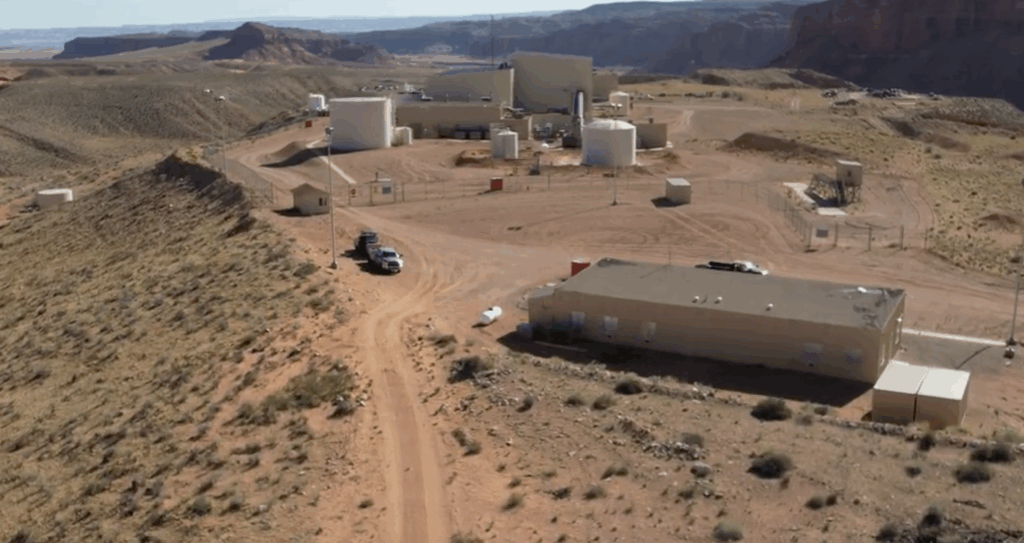
Shootaring Canyon uranium mill in Utah. Image: Screenshot from Anfield Energy presentation.

The Trump administration approved Anfield Energy’s proposed Velvet-Wood uranium mine project in Utah on Friday after a rapid 14-day environmental review as part of a new process to fast-track permitting of energy and mining projects.

Such studies typically take years because of the large potential environmental consequences of uranium mining.

The Canadian company’s project is the first approved under an emergency process for the Interior Department to permit energy facilities on federal lands. The new procedures are in response to President Donald Trump’s national energy emergency declaration, made on his first day in office in January in an effort to boost domestic energy supplies, bring down fuel prices and bolster national security.

Anfield filed its plan of operations for the mine on April 1, according to documents on an Interior Department website.

“This approval marks a turning point in how we secure America’s mineral future,” Interior Secretary Doug Burgum said in a statement. “By streamlining the review process for critical mineral projects like Velvet-Wood, we’re reducing dependence on foreign adversaries and ensuring our military, medical and energy sectors have the resources they need to thrive. This is mineral security in action.”

Anfield was not immediately available for comment.

The Velvet-Wood mine project in San Juan County will produce uranium, used in both nuclear energy and nuclear weapons production, as well as vanadium, a metal than can be used in batteries or to strengthen steel and other alloys.

It is located at the site of a previous mining operation.

(By Nichola Groom; Editing by Leslie Adler and Cynthia Osterman)


Nuclear Batteries Could Bring Power to Space and the Ocean Floor

  • Nuclear batteries offer a power source that can last for decades, utilizing radioactive materials and their decay to generate energy, making them ideal for remote and extreme environments.

  • Both the United States and China are at the forefront of developing these nuclear battery technologies, with companies like Zeno Power and Betavolt producing advanced models for various applications.

  • The potential applications of nuclear batteries range from powering space missions and oceanographic equipment to potentially enabling consumer electronics that require charging much less frequently.

"With great power competition rising, the ocean floor, Arctic, and lunar surface are becoming the front lines of global security and economic progress — but they remain energy deserts," says Tyler Bernstein, the Chief Executive Officer of a venture-backed nuclear battery startup called Zeno Power. Zeno Power just received $50 million in Series B funding to continue its work to develop nuclear batteries for extreme environments. “With this round of funding, we’re on track to demonstrate full-scale systems in 2026 and deliver the first commercially built nuclear batteries to power frontier environments by 2027,” Bernstein continued.

Nuclear batteries hold immense potential for frontier innovations because they can last for decades, or even a century, without needing a charge. The way that the battery powers itself is through capturing the particles emitted by radioactive materials as they decay, and harness their energy. Since these radioactive materials – such as Strontium-90, Nickel-63, and Carbon-14 – have lengthy half-lives, these batteries have enormous potential for longevity.

Zeno Power’s investing tractio is just the latest development in a long legacy of nuclear battery experimentation in the United States. The U.S. government began experimenting with nuclear batteries way back in the 1950s through NASA, and the nation led the global research and development charge for 70 years. But now, the United States is quickly being overtaken by China.

While Zeno Power is closer to getting its batteries off the ground, Chinese labs are already producing them. Early last year, China-based nuclear battery company Betavolt rolled out a tiny, coin-sized nuclear battery named BV100 with an estimated half-century lifespan thanks to its use of Nickel-63. “But this battery isn’t just a lab innovation,” reports Popular Mechanics. “It’s already being mass produced, with the intention to power technologies ranging from medical and aerospace devices to future smartphones.”

Betavolt’s technology differs from that of “traditional” (for lack of a better term) nuclear batteries. Rather than using a thermoelectric method, like NASA’s models, Betvolt’s “betavoltaic batteries” use a radioactive emitter and semiconductor absorber which is specifically designed to capture beta particles – the electrons and positrons that are emitted by the decaying Nickel-63. While this process produces less power than NASA’s thermoelectric method, their power production is reliable and incredibly long-lasting, with potential to endure a century or even longer.

Another team of researchers in China has been working on another nuclear battery with a 100-year lifespan based on Carbon-14. However, Carbon-14 is much more rare than Nickel-63, suggesting that Betavolt’s technology will be more scalable. In both cases, China seems to have enough supplies of these isotopes to make the research and development of these technologies worthwhile. “Mimicking its photovoltaic playbook for solar energy, China is building the entire supply chain for these devices within its own borders,” Popular Mechanics reports. 

Meanwhile, on the other side of the Pacific Ocean, Zeno Power has “locked in a strontium-90 fuel supply” from the U.S. Department of Energy, and boasts contracts with the Department of Defense and NASA, totalling tens of millions of dollars according to reporting from Axios. The company is also collaborating with the commercial space sector, and is working with the lunar robotics company iSpace-U.S. to “develop nuclear-powered systems that can survive the extreme cold of the lunar night” according to Space News. 

“Nuclear energy is having a renaissance, and Zeno is at the forefront of bringing it to places no other energy can reliably go,” said Lior Prosor, partner at Hanaco Ventures, one of Zeno’s key funders. “Zeno’s nuclear batteries will have an immediate impact in defense and space, and long-term potential to transform how energy is delivered in remote and distributed environments.”

The potential for scaling these technologies range from the high-minded (think outer space and the ocean floor) but could also lead to more practical day-to-day innovations like a cell phone that never needs to be charged. The disruptive potential is enormous and constantly evolving. Together, the United States and China are the clear frontrunners in the nuclear battery battle, but some European nations and South Korea are also making headway on their own models.

By Haley Zaremba for Oilprice.com

THE ULTIMATE GREENWASHING; H2

Green Hydrogen Faces Reality Check in Europe

  • Despite bold targets and public optimism at the World Hydrogen Summit 2025, only 6% of green hydrogen projects in Northwest Europe are being implemented, and just 9% have reached final investment decision.

  • The absence of a functioning commodity market for green hydrogen is a major barrier.

  • EU governments continue to push forward with nearly €2 billion in subsidies and funding announcements, but the fundamental issues remain.

Realism is still far away in the European green hydrogen sector; the IEA reports significant constraints. It is high time to bring a more realistic approach to the forefront of our strategies.

Realism still seems to be out of reach when the world hydrogen sector has been sailing into the Port of Rotterdam, all having coffee at the World Hydrogen Summit 2025. The last day's optimism has been vented by major green hydrogen producers, technology suppliers, and a wide range of governments, led by the Dutch government and its counterparts from Oman, Algeria, Australia, and other far-fetched regions. While hearing the optimism and official strategies, realities on the ground are much more tricky—or even negative—especially when looking at real project volumes in place or the bankability of most other projected investments. While the European Union and the Dutch or German governments are pushing—via subsidies and market manipulation—a possible growth of supply and demand for green hydrogen, or its derivatives, green ammonia or methanol, market fundamentals are all red.

As stated by the OECD energy watchdog in Paris, the International Energy Agency (IEA), in its latest Northwest European Hydrogen Monitor 2025, strategies and implementation are still not in sync. In its report, which was presented by Greg Molnar, gas analyst at the IEA, at the World Hydrogen Summit 2025 in Rotterdam, Northwest Europe is at the forefront of low-emission hydrogen developments, as it accounts for 40% of total European hydrogen demand. At the same time, NW-Europe also holds vast and untapped renewable energy and carbon storage potential, mainly in the North Sea. While massive investments are being made in setting up the so-called green hydrogen backbone—a NW-European hydrogen pipeline network supported by Germany and the Netherlands—demand is still fledgling or doesn’t exist. While plans (NL, Belgium, Denmark, Germany, and the UK) promise to reach a 30–35GW electrolyzer capacity by 2030, no real progress is made. As Molnar indicated in his presentation, only 6% of the total projects mentioned or discussed at present are being implemented. At the same time, only 9% of total projects under discussion are reaching FID. The reality is that most strategies are hit by a lack of investments, a lack of demand, too-high price settings, and no or very meager bankability.

Even though the IEA officially doesn’t mention it, nor does any other green hydrogen party at present, there is no market without getting a green hydrogen commodity market working. Establishing a viable commodity market is not just a necessity—it is the backbone of the industry. Without a possible price point developed for green hydrogen and derivatives, the financial world will not be willing or interested in taking the risk. The bankability of projects that cannot show a feasible margin or projected income stream is out of order. As shown in most other commodity markets, such as crude oil, price points make a commodity financially attractive. Without a possible volatile but working commodity market, the need for long-term contracts—based on subsidy schemes or government interference—is not a strategy that should be followed.

While speaking on the sidelines of the Summit in Rotterdam, some participants also questioned the current full-scale push for green hydrogen, not green ammonia or other options. While markets are looking for low-emission or renewable energy solutions, choices are being made by politicians and others based on their assumptions, not based on technical and commercial facts. (Green) ammonia is a much easier and more functional alternative, as it doesn’t have the same transport issues, doesn’t need vast new vessels, and poses fewer risks when emitted into the air. Current developments are based on strategies that seem neither feasible nor functional, especially when looking at the price levels of green hydrogen versus other alternatives. Competitiveness is not there, and assessments indicate that it will not even reach price levels that could become commercially interesting before 2040. Enforcing green hydrogen as a fuel by increasing emission tariffs or other instruments should—especially in Europe—not be taken as an option, considering the dire state of mainstream industrial sectors and transportation within the European Union and the UK.

The IEA, as representative of its member governments, still advocates a renewed push to integrate regional markets, targeting synergies. However, as history has proven, the choices made by companies will ultimately shape the future of the European green hydrogen sector, often contrary to the perceived goals of governments or NGOs.

Still, European governments seem to be sticking to their already fledgling strategies. The European Union has allocated almost €1 billion for renewable hydrogen production projects. The latter will be mainly used as a subsidy, indicating a subsidy range of €0.20 to €1.88 per kg of green hydrogen. The EU also stated that it has selected 15 renewable hydrogen projects to receive €992 million in budget funding. This funding in five countries is slated to produce around 2.2 million tons of hydrogen over 10 years. The EU ETS system funds the total.

The market is also eagerly awaiting the next auction of the European Hydrogen Bank, which is scheduled for the end of 2025 with a budget of up to €1 billion. During the World Hydrogen Summit, Dutch Minister Hermans announced that the Netherlands and Germany agreed to invest around €600 million in the acquisition of green hydrogen, trying to push the market to become more fluent. The latter will be organized via Hintco, set up by H2 Global. The latter will be a competition-based sales process, entailing a 10-year green hydrogen purchase agreement (HPA). The latter is still interesting, as the whole process also allows for the inclusion of green ammonia and methanol.

While market participants—such as suppliers, manufacturers, and governments—maintain a clear optimistic view, the reality is still bleak. Investments are lacking, subsidies are distorting most progress, and demand is not available. It is crucial to reconsider strategies and realize that green hydrogen will be part of the solution (by 2050) but will not dent hydrocarbon or nuclear demand. The time for action is now.

By Cyril Widdershoven for Oilprice.com


Musk Defends Tesla, Warns of Consequences for Protesters


  • Elon Musk condemned recent politically motivated attacks against Tesla.

  • Despite backlash and protests—including vandalism and arson—linked to his political support of Trump and far-right parties, Musk said he has “no regrets” and emphasized his commitment to maintaining control over Tesla.

  • Musk tied his continued leadership at Tesla to securing “reasonable control,” rejecting the idea of remaining without a favorable pay deal.

Elon Musk has issued a stark warning to those behind violent attacks against Tesla, vowing criminal consequences for what he described as “evil” acts of politically motivated vandalism and threats.

Speaking in a virtual interview at the Qatar economic forum on Tuesday, the Tesla and SpaceX chief executive said he had taken the recent wave of violence and backlash “personally”, and was unequivocal in his condemnation of those behind them.

He said: “I’m not someone who has ever committed violence, yet massive violence was committed against my companies.”

“To damage some innocent person’s car, to threaten to kill me… What’s wrong with people?”, he added.

Musk claimed that several individuals responsible for various attacks on Tesla showrooms or cars were already facing jail time, and added: “We’re coming for you… the people that funded and organised them too will go to prison”.

Recent Elon Musk backlash

Tesla has recently faced waves of protests, both violent and peaceful, following its boss’s political interventions, including the support of president Donald Trump and far-right European parties, as well as his leadership position of the US Department of Government Efficiency (DOGE).

Some protests were performed through vandalism and arson, while certain incidents are even being reportedly treated as domestic terrorism by the FBI.

Asked whether he regretted the political movements that ignited this backlash, Musk was resolute, saying: “I did what had to be done.”

China Is on Its Way to Becoming World’s First ‘Electrostate’

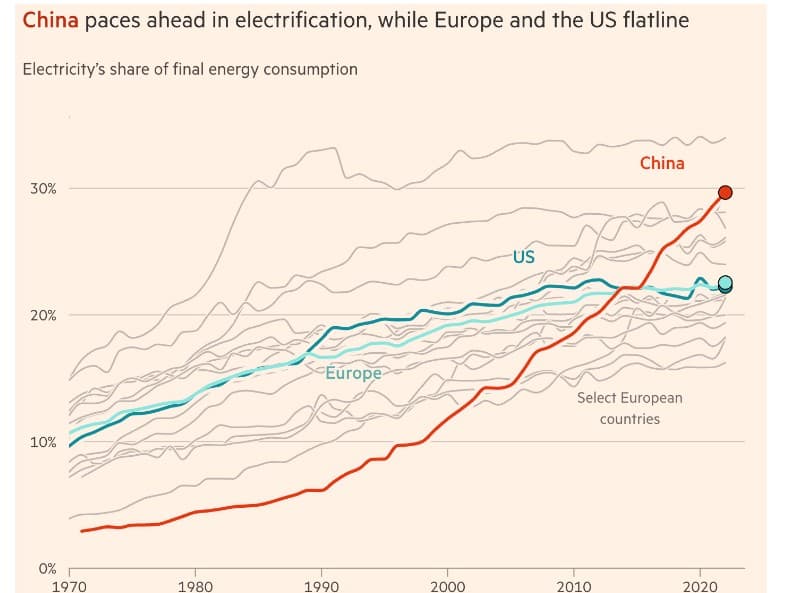
  • China leads the world in electrification, with a 30% electrification rate—far ahead of the U.S. and EU at ~22%—dominating sectors like transport and industry.

  • Massive investment in electric vehicles, high-speed rail, and renewables has positioned China as a superpower in clean energy technologies, with renewables now making up 10% of GDP.

  • Despite progress, China’s ongoing coal expansion complicates climate goals, as the country remains the largest greenhouse gas emitter, raising doubts about its transition timeline.

Many people are perhaps familiar with the term “petrostates”, which usually denotes oil-rich nations that are deeply intertwined with the oil industry, often facing economic and political challenges due to oil price fluctuations and the potential decline in hydrocarbon resources. Saudi Arabia, Iraq, the United Arab Emirates (UAE), Kuwait, and Iran are some of the world’s leading petrostates. But with the world’s electrification drive now in full gear, scientists have coined the term “electrostates” to refer to countries that have made the most progress transitioning away from processes and technologies that rely on fossil fuels to electrically powered alternatives.

According to the International Energy Agency (IEA), electrification is “one of the most important strategies for reducing carbon emissions from energy.” And, as in many other scientific arenas, China has emerged as the nation that is leading the electrification race, ahead of the United States and Europe.

According to a study, China’s electrification rate has hit 30%, significantly ahead of the U.S. and the EU and US where the electrification rate has plateaued at ~22% in recent years.

The study defines the electrification rate as the share of electricity in final energy consumption versus energy coming from fossil fuels. According to the study, the U.S. still leads the world in the electrification of buildings; however, China recently caught up to the U.S. and Europe in industrial electrification, and has overtaken both in the electrification of transport. In 2024, electric vehicles (EVs) made up approximately 47.9% of the total passenger car sales in China, a huge increase from 2020, when plug-in EVs accounted for just 6.3% of total sales. In comparison, electric vehicles accounted for less than 23% of new car sales in Europe over the timeframe.

The rapid expansion of China’s modern rail network has also helped supercharge the electrification of the country's transport sector. China boasts a 45,000 km high-speed rail network, five times the size of the EU’s. That figure is expected to expand to 60,000km by 2030.

China
China
Source: Climate Energy Finance

China’s President Xi Jinping has been largely credited with the country’s remarkable electrification journey. When Xi became the leader of the Chinese Communist Party in 2012,

China had emerged as the world’s second-largest economy and the United States’ archrival nuclear power. However, the country was still highly dependent on other countries for its energy needs. China’s oil and coal imports were surging to record highs, exposing the country to potential supply disruptions amid growing geopolitical tensions.

Fast forward to the present, and China is not only rapidly advancing towards energy security but also controls the critical minerals that underpin technologies of the future.

“Nobody had been seriously worrying about energy security or supply chains for armaments and critical industries and food because everyone thought that went with the Cold War,”

says Andrew Gilholm, head of China analysis at consultancy Control Risks. “Meanwhile, China has been working on that for years.”

China now leads the 4th Industrial Revolution, making huge strides in electrification, renewable energy, artificial intelligence (AI), robotics and the Internet of Things. And, just as oil and gas drive the petrostates of the Arab world, clean energy technologies are powering China’s growth.

To wit, renewable energy accounted for a record 10% of China’s GDP in 2024, driving a quarter of economic expansion, the Centre for Research on Energy and Clean Air (CREA) has revealed.

Beyond energy security and economic growth electrification is expected to play a critical role in addressing climate change.

“We cannot see any way to a zero-carbon economy except through massive electrification,”

Lord Adair Turner, head of the Energy Transitions Commission, said.

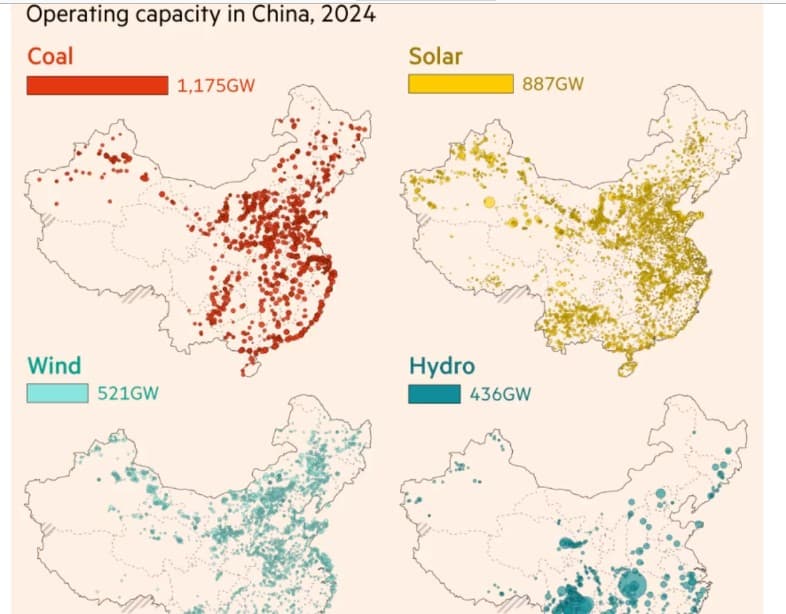
This is particularly critical for China, which remains the world’s biggest polluter and emitter of greenhouse gases. China’s power sector emissions hit record highs last year, driven by a surge in coal consumption. However, the country’s progress in electrification and the transition to renewable energy will be able to mitigate some of the damage.

Coal remains a controversial topic in China, with Beijing indicating it will start phasing down coal consumption between 2006 and 2030. Whereas this suggests a gradual decline rather than a complete and immediate phase-out, the IEA predicts that coal generation in China will likely peak around 2025 and decline thereafter. However, recent reports indicate that China is still building new coal plants, which raises questions about the commitment to phasing down coal use: Reuters has reported that China plans to keep building coal-fired power plants through 2030.

By Alex Kimani for Oilprice.com


Petrobras Strikes Deal With Unigel to Reclaim Key Fertilizer Plants

Petrobras (NYSE: PBR) announced on Thursday that it has signed an agreement with Proquigel, a subsidiary of Brazilian chemical company Unigel, to settle ongoing legal and contractual disputes. The deal—pending ratification by the Arbitral Tribunal—will restore Petrobras' operational control over the Fertilizer Plants of Bahia (FAFEN-BA) and Sergipe (FAFEN-SE).

This resolution marks a strategic move by Petrobras to reenter the domestic fertilizer market, a sector the company had distanced itself from in recent years amid cost-cutting and divestment efforts.

Strategic Context

This agreement follows a disclosure made on May 9, 2025, and is in line with Petrobras' 2025–2029 Strategic Plan, which outlines a renewed focus on value creation through vertical integration. By reclaiming these assets, Petrobras intends to revitalize its presence in nitrogen-based fertilizer production, a segment closely tied to Brazil’s vast agricultural sector and aligned with the broader energy transition strategy.

Petrobras plans to resume operations at the plants through a public tender for Operation and Maintenance (O&M) services, ensuring adherence to corporate governance standards and internal protocols.

Background

Petrobras had previously leased out the FAFEN units to Proquigel as part of a broader privatization and asset divestment initiative. However, operational and legal disputes emerged, leading to stalled production and arbitration proceedings. This new agreement not only ends those disputes but also positions Petrobras to leverage its natural gas supply for ammonia and urea production, reducing dependence on imports and strengthening domestic value chains.

The reinstatement of these plants comes as global fertilizer markets remain volatile and Brazil, one of the world's top agricultural producers, continues to seek greater self-sufficiency in fertilizer inputs.