Monday, June 02, 2025


Ukraine’s audacious Operation Spiderweb drone attack destroys nuclear bombers deep inside Russian territory
SAVING HUMANITY FROM WMD

Ukraine’s audacious Operation Spiderweb drone attack destroys nuclear bombers deep inside Russian territory
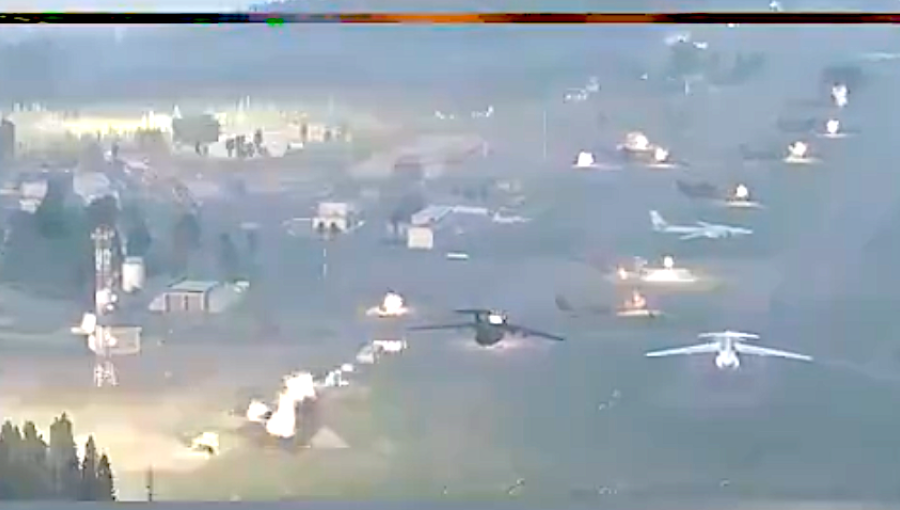
Ukraine destroyed a third of Russia's long range nuclear capable bombers in an audacious drone attack deep in Russian territory. / bne IntelliNews
By bne IntelliNews June 2, 2025

Operation Spiderweb unleashed a swarm of Ukrainian drones, launched from trucks, that destroyed a third of Russia’s nuclear-capable long-distance bombers, parked on the runway thousands of kilometres from the front line.

The surprise attack on the Belaya Air Base in the Irkutsk Oblast deep inside Russia’s Far East, near the border with Mongolia, destroyed 34% of Russia’s long-distance bombers, which sat defenceless on the tarmac as operators in Kyiv guided explosive drones down on top of them, targeting their fuel tanks in the wings. (video)

The surprise attack that destroyed some 40 aircraft caught Russian forces completely off guard. The airfield is located some 4,300 km away from the front line and is out of reach of even Ukraine’s longest-range drones.

“An absolutely brilliant result. A result achieved solely by Ukraine. One year, six months and nine days from the start of planning to effective execution. Our most long-range operation. Our people involved in preparing the operation were withdrawn from Russian territory in time. I thanked General Maliuk for this success of Ukraine. I instructed the Security Service of Ukraine to inform the public about the details and results of the operation that can be disclosed,” Ukrainian President Volodymyr Zelenskiy said in a social media post.

Other airfields were also targeted, including the Olenya Air Base in the Murmansk Oblast, Belaya Air Base in the Irkutsk Oblast, Ivanovo Air Base in the Ivanovo Oblast and Dyagilevo Air Base in the Ryazan Oblast. The Kremlin said a total of “five terrorist attacks” had been carried out but said they had been repelled.

Ukraine sent a reported six trucks into Russia, of which four reached their target, carrying a load of attack drones housed in wooden crates that were launched on reaching their destination to devastating effect.

Zelenskiy said the attack was organised by the Ukrainian Security Service (SBU) and had been 18 months in preparation.

“We spent over a year and a half preparing this operation. Our “office” in Russia was set up right next to a regional office of the Federal Security Service (FSB). 117 drones were used, striking 34% of Russia’s strategic cruise missile carriers at their airbases,” Zelenskiy said in a post on social media.

The FPV drones were smuggled into Russia well ahead of the attack, hidden under the roofs of mobile wooden cabins in half a dozen trucks. Once the trucks had arrived in the vicinity of the military bases, the cabin roofs were opened remotely, releasing the dozens of remotely operated drones that zoned in on the nearby bases.

Two of the trucks didn’t make it to their destination. Video footage released on social media shows what appear to be Russian officers desperately trying to stop the drones launching from the truck, when they were remotely detonated destroying the truck. Zelenskiy said briefly that the Ukrainians that smuggled the drones into Russia had all been “withdrawn in time”. It is not clear if the drivers of the trucks were aware of what they were carrying.

Amongst the bomber hit were Tu-22M3 Long-Range Strike Bombers, Tu-160 and Tu-95 strategic bombers that can be equipped to carry nuclear missiles. Russia has a total of 47 Tu-95 bombers, of which just over a third have been destroyed, significantly degrading the Kremlin’s nuclear strike capabilities. The total value of the damage to Russia is estimated at over $2bn and the planes will take years to replace.

New tactics

Ukrainian President Volodymyr Zelenskiy described the operation as "an absolutely brilliant result" and said the Ukrainians' actions will "undoubtedly be in the history books".

Ukraine has been switching tactics recently. As US military aid begins to dwindle and the Western allies argue over how support for Ukraine should continue, Zelenskiy has been increasingly taking the fight into Russia. In recent weeks Ukraine has launched large-scale drone attacks on Russian targets that have also hit buildings in Moscow.

bne IntelliNews staff in the Russian capital report that civilian air traffic has been disrupted by the threat of drone attacks on airports throughout the country, but especially in the southern and European parts of Russia.

However, the truck-launched drone attack is a potential game-changer, as the mobile launch platform erases the front line and puts all of Russia’s territory within range of Ukrainian attacks.

On the same day, two bridges collapsed in Bryansk, crushing a passenger train passing underneath and killing a reported half a dozen people. The cause of the collapse of the bridges remains uncertain, with some reports claiming it was a coincidence, with the Russian Ministry of the Interior initially blaming it on an attack by Ukrainian partisans operating inside Russia.

Another bridge collapse happened in the Kursk region. The incident occurred at the 48th kilometre of the Trosna-Kalinovka motorway in the Zheleznogorsk district, as a freight locomotive was crossing the bridge. There were no fatalities. 

Bankova has yet to comment on the bridge collapse, but the SBU never comment on special operations carried out on Russian territory and no clarification is expected.

Istanbul talks

The strike came as a Russian delegation arrived in Istanbul for the next round of ceasefire talks. Ukraine has already produced a detailed list of 22 demands; however, the Kremlin has yet to release the details of its list of demands due to discussion on June 1.

'Operation Spiderweb’: How Ukraine destroyed over a third of Russian bombers
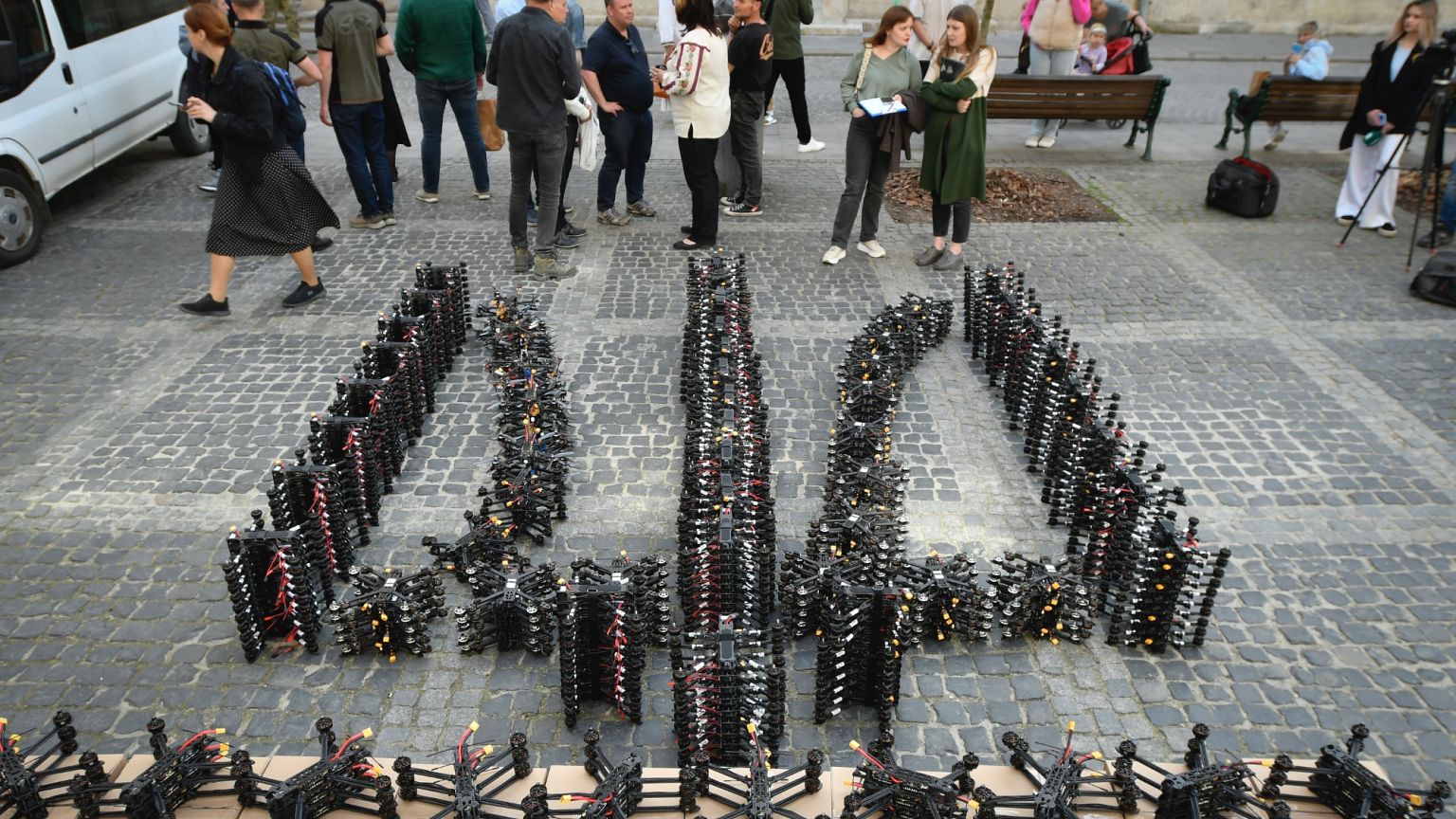
Over 800 FPV drones placed in the shape of Ukraine's state emblem, the trident, are seen in central Lviv, western Ukraine, Friday, May 10, 2024.
Copyright AP Photo


By Sasha Vakulina
Published on 


Ukraine has destroyed over a third of all Russian missile carriers in a coordinated drone attack on Sunday orchestrated from within Russian territory. How was "Operation Spiderweb" planned, and how was it executed?

Ukraine’s Security Service (SBU) reported on Sunday that over a third of all Russian missile carriers have been hit in a coordinated drone attack aimed at different airfields in Russia located thousands of kilometres apart.

More than 40 aircraft are known to have been hit, including the A-50, Tu-95, and Tu-22 M3, causing overall damage of more than €6 billion. 

Ukrainian President Volodymyr Zelenskyy said "Operation Spiderweb" had made "an absolutely brilliant result" which was "achieved solely by Ukraine."

The Ukrainian president also shared more details on how the operation was carried out, explaining that 117 drones had been used, each with its own pilot. 

"The most interesting thing — and we can already say this publicly — is that the 'office' of our operation on Russian territory was located right next to the FSB (Federal Security Service) of Russia, in one of their regions,” he said in a post on Telegram. 

In a major blow to Russia’s security services, Zelenskyy said Ukraine managed not only to execute the operation but also to safely withdraw the people involved. They were operating "in different Russian regions — in three time zones."

“Our most long-range operation. Our people involved in preparing the operation were withdrawn from Russian territory in time," he explained.

Zelenskyy said it took Kyiv "one year, six months, and nine days from the start of planning to effective execution." 

He thanked the head of Ukraine’s Security Service, General Vasyl Malyuk, and asked him to reveal the details and results of the operation to the public. 

"Of course, not everything can be revealed at this moment, but these are Ukrainian actions that will undoubtedly be in history books," he added. 

"Ukraine is defending itself, and rightly so — we are doing everything to make Russia feel the need to end this war. Russia started this war, Russia must end it," Zelenskyy wrote. 

What we know so far about Operation Spiderweb

Although Ukraine’s security service has not revealed more details at this stage, Ukrainian outlets are reporting exactly how the operation was executed, referencing SBU sources. 

According to these reports, first-person-view (FPV) drones were smuggled deep inside Russia and hidden inside trucks in mobile log cabins.

The cabins' roofs were then opened remotely, and the drones proceeded to launch their attack on Russian military bombers. 

Russia’s Irkutsk Governor Igor Kobzev confirmed that the drones that attacked a military base in Siberia's Sredniy were launched from inside a truck. In a post on Telegram, he said that the launch site had been secured and there was no further threat to people's lives.

Russian outlets also reported that other attacks were launched in a similar manner, with drones emerging from the backs of trucks.

Social media footage widely shared by Russian media appears to show the drones rising from inside containers, while the panels lie discarded on the road. One clip appeared to show men climbing onto a truck in an attempt to intercept the drones. 
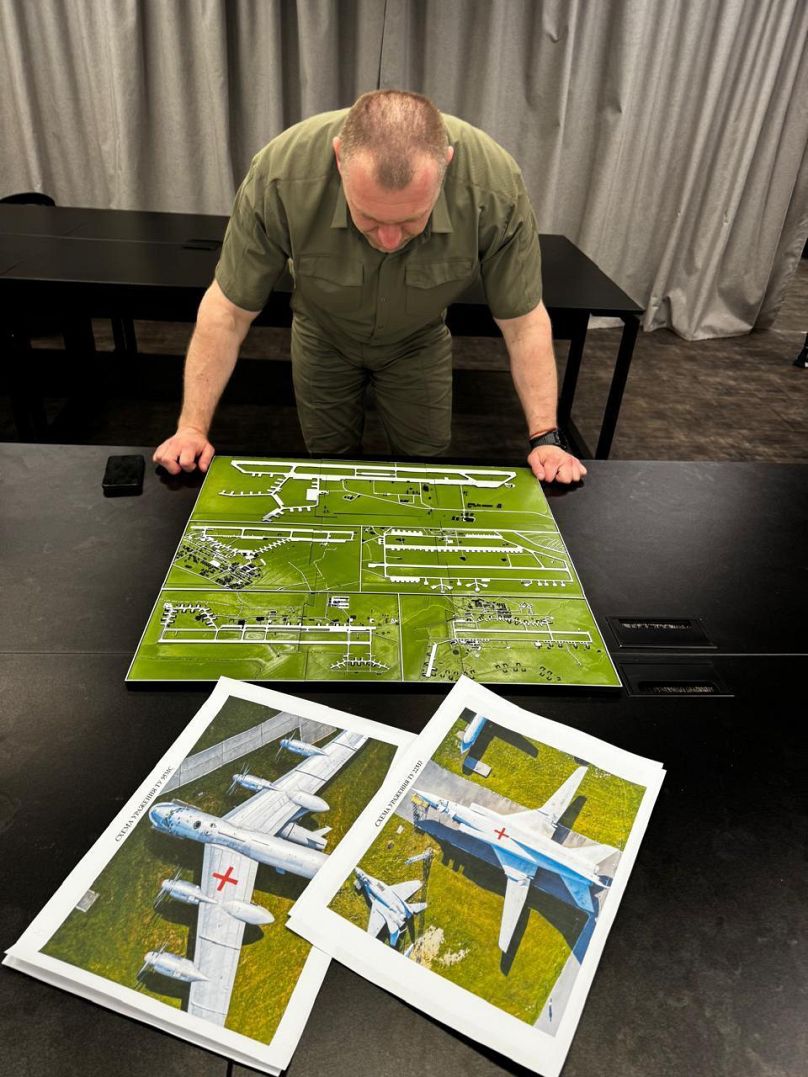
SBU head General Vasyl Malyuk looking at the photos of Russian bombers and the airfields.
SBU head General Vasyl Malyuk looking at the photos of Russian bombers and the airfields. Ukraine Security Service

SBU operations

"Operation Spiderweb" is not the first unconventional operation to be carried out by Ukraine’s Security Service. 

In October 2022, the SBU struck the Kerch bridge, which had been illegally built by Russia after its annexation of Crimea in 2014. 

The explosion, which Russian authorities said was caused by a truck bomb, badly damaged the bridge which links Moscow-occupied Crimea and Russia.

The targeting of Russian bombers, which have been carrying out massive missile attacks on Ukrainian cities, was previously considered almost unthinkable. Moscow had made sure to keep them well out of the range of Kyiv’s weapons, both homemade and those supplied by allies. 

Olenya air base is located in Russia's Murmansk region, around 2,000 km from the border with Ukraine. Belaya air base is in Russia's Irkutsk region, in south-eastern Siberia and over 4,000 km east of the frontline. These two airfields were among the hardest hit during Sunday's operation.

Another notable aspect of the "Operation Spiderweb" was the choice of weapons. Kyiv used FPV drones, which are produced in Ukraine en masse and are widely used and appreciated by the military due to their affordability. 

FPV drones typically cost only a few hundred euros, while a Russian A50 radar detection aircraft, which was reportedly hit today along with other planes, costs over €300 million. 

Ukraine’s presidential advisor and former minister of strategic industries Oleksandr Kamyshin has said Ukrainian manufacturers have the capacity to produce over 5 million FPV drones per year. 


COMMENT: Chinese firms carving up Tesla's once solid brand recognition

COMMENT: Chinese firms carving up Tesla's once solid brand recognition
Chinese firms carving up Tesla's once solid brand recognition. / Bram Van Oost - Unsplash


By no - Taipei Office June 2, 2025

Back in 2020, the world’s electric vehicle (EV) revolution had a clear front-runner. Tesla, under the ever-visible hand of Elon Musk, was not just a carmaker; it was a cultural phenomenon. Its futuristic vehicles, soaring stock price and aggressive global expansion painted a picture of a company far ahead of its competitors. 

China, then Tesla’s second-largest market after the United States, seemed like fertile ground for further conquest.

Five years later and the global EV landscape has changed somewhat.

While Tesla remains a powerful player in the EV market, its star has dimmed, particularly in China, today the world’s largest EV market and increasingly its most competitive. Once considered Tesla’s great growth engine, China has instead become a cautionary tale in how quickly fortunes can reverse, especially when local competitors start playing not just catch-up, but leapfrog.

China’s EV ascent

Much of the shift can be attributed to the meteoric rise of China’s domestic EV industry. In 2020, Chinese manufacturers such as BYD, NIO, Xpeng and Wuling were largely seen as producing budget-friendly alternatives to Western brands. Their offerings were often limited in range, design and prestige. But these were not signs of weakness; rather, they reflected a deliberate first phase of market entry: a concept across so many sectors that the world fails time and time again to recognise – that China plays the long game.

As such, today Chinese EV firms are no longer just building affordable city cars. They are designing, engineering and selling high-performance, premium vehicles that rival and, in many cases, exceed what Western firms like Tesla offer. In areas such as battery technology, AI-powered driving assistants and integration with domestic digital ecosystems, Chinese firms are leading the charge.

On the back of this, BYD has emerged not only as China’s dominant EV producer but as a global titan. The company, which famously pivoted from producing traditional combustion vehicles to focusing exclusively on EVs and hybrids, now outsells Tesla in pure EV volume in some quarters and has established a significant export footprint, with growing demand in Europe, Southeast Asia and Latin America.

A market that outgrew its guest

Tesla’s early success in China was built on brand prestige, technology allure and the novelty factor. But prestige is fragile, especially in a market as discerning and fast-moving as China’s.

To this end, over the past two years, Tesla’s brand image in China has suffered a series of blows. Quality complaints, perceived arrogance in public relations, safety incidents and CEO Elon Musk’s often polarising global persona have all contributed to a cooling of enthusiasm. His relationship with President Donald Trump doesn’t help either. 

More recently, Tesla has struggled to respond nimbly to a market defined by ultra-fast innovation cycles and deep local understanding; areas where Chinese firms now have a decisive edge.

Moreover, Chinese EVs are now deeply integrated into the country’s digital infrastructure. Voice assistants tuned to China’s many local dialects, seamless payment and entertainment integration via WeChat and battery swap stations tailored to city planning make many local EVs feel more “Chinese” in the best sense – intuitive, smart and culturally aligned.

Policy, scale and ambition

The rise of China’s EV industry is not solely the result of consumer preference though. A robust and consistent industrial policy has helped turbocharge the sector’s development. Government subsidies, mandates on EV quotas, infrastructure investment and a focus on domestic battery supply chains have all helped Chinese firms scale rapidly and innovate boldly.

The result is a domestic EV market that no longer needs Tesla to feel like it’s in the future. 

In fact, Tesla often seems slightly behind the curve in China and elsewhere in East Asia, particularly when compared with newer Chinese models boasting features like in-car karaoke lounges, retractable dashboards or augmented-reality windshields.

Even more strikingly and key to the long-term survival of firms like BYD, Chinese automakers are no longer content to dominate at home. BYD, NIO, Geely (through its Zeekr and Polestar brands) and others are rapidly expanding into overseas markets, often with a more adaptable and locally sensitive approach than Tesla has ever taken.

In Southeast Asia Chinese EV brands are aggressively courting governments and consumers, offering affordable vehicles backed by strong aftersales networks and infrastructure partnerships. In Europe, Chinese EVs are increasingly seen not as curiosities but as serious contenders to local brands even if regulatory and trade tensions are beginning to mount.

Tesla’s narrowing road

None of this is to suggest that Tesla is doomed but its grip on the narrative of the EV future is loosening, especially in Asia.

In China, Tesla has gone from being an object of aspiration to a less distinctive choice. It is now just one among many. And in an EV landscape that is becoming more diverse, more competitive and more locally attuned, that lack of distinction could prove fatal.

The new vanguard

China’s transformation from EV underdog to global trendsetter, meanwhile, is perhaps one of the most significant shifts in the automotive industry in decades. What was once a Tesla-led global transition to electrification has become a more pluralistic, multipolar race. It is one where China now leads not just in volume, but in design, ambition and execution.

Aggressive Online Baby Formula Campaigns Must End – OpEd

A woman feeding her baby. A new WHO resolution aims to curb digital marketing of baby formula. Copyright: Andrea Piacquadio

By 

Breastfeeding saves lives. It is one of the most powerful, proven investments in child survival, development and health. And yet its practice is being undermined — not by science, but by sophisticated and often misleading digital marketing.


More than half of new parents are exposed to online promotions for formula milk, often disguised as medical advice or peer support. In some countries, that figure rises to over 90 per cent.

What these aggressive campaigns for breast milk substitutes (BMS) do not tell parents is that breast milk is essential for building a child’s immune system — something formula simply cannot do. They also ignore a critical risk: formula must be mixed with water, and in communities without safe water access, this often leads to illness and infection in young children.

Digital marketing campaigns are targeting parents at their most vulnerable — when they are seeking guidance, not manipulation. These tactics distort choice by drowning out trusted, evidence-based information with biased, misleading promotion.

This not only undermines public health principles and a decade of progress in breastfeeding promotion, it also puts the health and future of entire generations at risk.

These digital marketing tactics contravene a longstanding global framework. The International Code of Marketing of Breast-milk Substitutes, adopted by the World Health Organization (WHO) in 1981, was designed to protect families from precisely this kind of exploitation.


Yet, as a 2022 WHO and UNICEF report revealed, formula companies now spend up to 70 per cent of their marketing budgets on digital tools — from apps and virtual baby clubs to paid influencers and online forums — harvesting personal data and pushing targeted promotions in breach of the Code.

In response, WHO member states adopted a landmark resolution at the World Health Assembly in Geneva this week (26 May) to curb digital marketing of breast milk substitutes and protect parents’ right to accurate, transparent information. Led by Mexico and Brazil and supported by nine country members of the UN-hosted Scaling Up Nutrition (SUN) Movement, this resolution is a critical step forward.

The science on breast milk is long proven. By providing essential nutrition, strengthening immunity, and supporting cognitive development, breastfeeding can radically change the health and economic outcomes of mother and child.

Scaling up breastfeeding globally could prevent 823,000 unnecessary child deaths and 20,000 deaths from breast cancer every year. It has been linked to a 20 per cent reduction in the risk of physical and cognitive stunting.

These recognised advantages of breast milk had begun to take hold. Since 2012, rates of exclusive breastfeeding have risen from 37 per cent to nearly 48 per cent in 2021. Three quarters of these children live in low- and lower-middle-income countries, which represents important, tangible progress.

But digital platforms spreading misleading formula marketing are cutting into this progress, with inadequate breastfeeding responsible for 16 per cent of child deaths each year.

The new resolution gives countries a new framework to take action. Translating this into results will, however, require further coordinated efforts across sectors.

First, stronger enforcement is essential. Countries need robust monitoring and accountability systems to track violations and respond effectively. Vietnam offers a promising model: with support from the SUN Civil Society Alliance, it has launched the AI-powered Virtual Violations Detector, which identifies breaches of the Code in real time and alerts regulators, enabling swift action and targeted advocacy.

Another step will be to align fragmented policies across civil society and health systems. Harmful breast milk substitute marketing flourishes in disconnected systems, such as when health workers lack guidance, civil society is under-resourced, or tech platforms are unregulated. To close these gaps, governments must adopt an approach that brings all actors to the table.

Finally, it is equally important to support positive campaigns that champion breastfeeding. It is not enough to restrict harmful marketing — parents need support and encouragement to make informed decisions.

El Salvador has shown through its “Nacer con Cariño” (Born with Love) national policy how the promotion of breastfeeding can be integrated into prenatal and delivery care. Since its implementation in 2021, 69,000 babies have been born under this respectful care model and, thanks to the training of more than 1,000 breastfeeding counsellors supported by the SUN Movement, the country has far surpassed the global exclusive breastfeeding targets of 50 per cent for 2025, reaching a rate of more than 65 per cent.

Informed parents make empowered choices, and empowered choices give every child the best possible start in life.

Together with the resolution on the extension of the World Health Assembly nutrition targets, and the commitments made by countries at the Nutrition for Growth Summit in Paris earlier this year, we have a renewed mandate to act. Let’s make sure we use it and ensure this resolution moves from Geneva into meaningful action and change online and on the ground.

This article was produced by SciDev.Net’s Global desk.

Afshan Khan

Afshan Khan is Assistant Secretary-General of the United Nations and coordinator of the Scaling Up Nutrition (SUN) Movement.


Green Flashpoints: How The Surge In Renewable Energy May Spark A New Era Of Global Conflict – Analysis


The Grand Ethiopian Renaissance Dam (GERD). Photo Credit: Ethiopian Electric Power Corporation (EEPCO)


By 

As the world races to transition from fossil fuels to renewable energy, a new energy order is beginning to emerge—one that promises cleaner air and climate resilience but also portends fresh geopolitical tensions.


The shift to solar, wind, hydrogen, and rare earth-powered technologies is not merely a technological revolution; it is a profound geopolitical reordering with the potential to ignite a new spectrum of global conflict. From the strategic control of critical minerals to green technology rivalry, energy access disputes, and economic power realignment, the green transition may ironically generate new fault lines even as it attempts to heal the planet.

The End of Oil Wars?

For much of the 20th and early 21st centuries, access to oil and gas has been a key driver of global conflict. The 1991 Gulf War, the 2003 Iraq War, and Russia’s strategic hold over Europe via gas pipelines all reflect the centrality of hydrocarbons in world politics. As Daniel Yergin, author of The Prize: The Epic Quest for Oil, Money, and Power, notes, fossil fuels have underpinned not only energy security but also military logistics, alliance structures, and strategic coercion.

With the rise of renewables, some analysts, such as Meghan O’Sullivan in her book Windfall: How the New Energy Abundance Upends Global Politics and Strengthens American Power, argue that energy geopolitics will soften. Renewables are decentralized, locally producible, and harder to weaponize. However, this optimistic view overlooks a critical reality: while fossil fuels are geographically concentrated, the raw materials and technologies required for the green transition are also limited and unevenly distributed, introducing new battlefronts.

The New Strategic Commodities: Lithium, Cobalt, and Rare Earths

Unlike oil, which is pumped and transported via tanker or pipeline, renewable energy infrastructure is built with minerals—vast amounts of them. The International Energy Agency (IEA), in its 2021 report The Role of Critical Minerals in Clean Energy Transitions, warned that a single electric vehicle requires six times more mineral inputs than a conventional car, and a wind power plant requires nine times more mineral resources than a gas-fired plant.

This demand has turned materials like lithium, cobalt, nickel, graphite, and rare earth elements into the new “black gold.” These minerals are geographically concentrated: 60% of global cobalt comes from the Democratic Republic of Congo (DRC), 50% of lithium from Australia, 80% of rare earth processing from China. This imbalance introduces both supply chain vulnerabilities and potential zones of competition.


As noted by Foreign Policy (July 2023), China’s near-monopoly on rare earth processing gives it leverage over the West, similar to OPEC’s role in the 1970s. In 2020, Beijing threatened to cut off rare earth exports to Lockheed Martin amid tensions over Taiwan. The U.S. has since responded with the CHIPS and Science Act, and new mining initiatives in Australia and Latin America, seeking to “de-risk” rather than decouple from China.

Resource Nationalism and Green Colonialism

The strategic importance of these minerals has led to renewed interest in resource-rich nations, particularly in Africa and Latin America. Bolivia’s vast lithium reserves—dubbed the “Saudi Arabia of lithium”—have become the center of global bidding wars. Elon Musk’s 2020 tweet about “couping whoever we want” in Bolivia (later deleted) after a pro-lithium government was ousted sparked accusations of “green imperialism.”

As The Guardian (Feb 2023) reported, indigenous communities in Argentina, Chile, and Bolivia are increasingly protesting lithium extraction projects over water depletion, environmental degradation, and lack of benefit-sharing. The so-called “green transition” risks replicating the exploitative dynamics of past resource rushes, inflaming local unrest and geopolitical tensions as states compete for strategic access.

Moreover, as Nick Buxton and Ben Hayes argue in The Secure and the Dispossessed, there is a risk that climate action becomes securitized—framed as a zero-sum struggle over dwindling resources—leading to militarized responses to local opposition and migration pressures. In this framing, environmentalism itself could become a justification for conflict.

The Hydrogen Race: New Rivalries in Old Geographies

Beyond minerals, green hydrogen—produced from renewable electricity—has emerged as the next frontier in clean energy. Countries like Germany, Japan, and South Korea, short on solar landmass, are looking to import green hydrogen from sun-rich nations like Namibia, Morocco, and Australia.

This shift introduces new geopolitical dependencies. For instance, Germany’s multi-billion euro hydrogen agreements with North African states could tie its future industrial competitiveness to the political stability of regions that have historically seen unrest. As Der Spiegel (April 2024) warned, over-reliance on green hydrogen imports from politically unstable regions may reproduce the same energy insecurity that plagued Europe’s dependence on Russian gas.

Moreover, Gulf countries like Saudi Arabia and the UAE are pivoting from oil to green hydrogen, using their capital and geopolitical clout to dominate future energy markets. NEOM’s green hydrogen project in Saudi Arabia is being positioned as a global hub. As highlighted in The Financial Times (March 2024), this could reshape regional power hierarchies and revive competition among Gulf states for energy hegemony, potentially destabilizing an already fragile Middle East.

Infrastructure Conflicts and Grid Colonialism

Control over electricity transmission infrastructure could also become a source of conflict. Unlike oil, which is stored and traded in tankers, solar and wind energy require extensive grid interconnectivity to stabilize supply. Initiatives like the EU’s “SuperGrid,” the African Union’s “Desert to Power” initiative, and China’s “Global Energy Interconnection” plan reflect growing ambitions to build transnational electricity networks.

However, as scholar Andreas Goldthau points out in The Geopolitics of the Global Energy Transition, such mega-grids require political alignment, technical interoperability, and shared regulatory norms. If these grids are dominated by a few players—China in Asia, the EU in Africa—they risk becoming tools of political influence. Nations left out of these infrastructures may become energy-insecure and marginalized.

Conflicts may also arise within states. In India, land acquisition for solar parks in Rajasthan and Gujarat has led to protests by farmers and indigenous communities. As Al Jazeera (January 2024) reported, the clash between national climate goals and local livelihoods is emerging as a new axis of internal tension.

Technological Protectionism and Green Trade Wars

The green race is also spurring techno-nationalism. The Inflation Reduction Act (IRA) passed by the U.S. in 2022, which includes subsidies for domestically produced electric vehicles and solar panels, has provoked backlash from allies like the EU and South Korea. Brussels responded with its own Green Deal Industrial Plan to defend European industry.

As the New York Times (October 2023) reported, this has triggered a green trade war between the West and China, which still dominates the global solar panel, battery, and electric vehicle markets. In 2024, the U.S. imposed new tariffs on Chinese EVs over alleged “overcapacity,” while Beijing filed WTO complaints, threatening retaliatory action.

These skirmishes could escalate as countries compete not just to go green, but to own the green economy. Intellectual property disputes, export restrictions on key technologies, and investment screening in critical sectors are likely to rise, creating an environment of suspicion and economic fragmentation.

Water and Climate Security Intersections

Renewable energy is also highly water-dependent. Hydropower, green hydrogen production, and even lithium extraction consume significant water resources. In water-stressed regions like Central Asia, North Africa, and the Middle East, this may intensify competition over transboundary rivers and aquifers.

For instance, Ethiopia’s Grand Renaissance Dam, intended to supply renewable hydropower to millions, has triggered regional tension with Egypt and Sudan. As noted by the Carnegie Endowment (2022), the dam’s completion could lead to prolonged geopolitical friction if water-sharing mechanisms fail.

Climate change will act as a conflict multiplier, creating migration flows, agricultural decline, and energy demand spikes. In this volatile context, renewable energy infrastructure becomes both a lifeline and a target—vulnerable to sabotage, cyberattacks, and geopolitical leverage.

Who Controls the Narrative?

Lastly, the question of global leadership in the energy transition is itself a geopolitical contest. China has positioned itself as the green manufacturing superpower. The EU sees itself as the norm-setter, pushing for global standards through its Carbon Border Adjustment Mechanism (CBAM). The U.S. is attempting to lead on innovation and capital allocation.

But the Global South, often cast as a supplier of resources or a site of carbon offsetting, is demanding a voice. At COP28 and beyond, countries like India, Brazil, and South Africa have argued for “just transitions” that include technology transfers, debt forgiveness, and inclusive governance.

As Jason Bordoff of Columbia’s Center on Global Energy Policy argues, the green transition could either entrench existing hierarchies or democratize energy access. Which path is chosen will depend on whether energy justice becomes a serious global commitment—or an afterthought.

Conclusion: A Paradox of Peace and Peril

The shift to renewable energy promises a cleaner, more sustainable planet. Yet, as with all transformative technologies, it will redistribute power, provoke competition, and—if mismanaged—ignite conflict. From critical mineral rushes and techno-protectionism to hydrogen geopolitics and infrastructure rivalries, the green revolution carries risks that mirror and magnify existing global tensions.

Policymakers must anticipate these flashpoints. Strategic stockpiling, diversified supply chains, fair mining practices, and multilateral coordination over technology and standards are essential. But perhaps most critically, the world must ensure that the energy transition uplifts rather than exploits. If not, the age of renewables could become not the end of energy conflict—but its green reawakening.


Syed Raiyan Amir

Syed Raiyan Amir is a Senior Research Associate at The KRF Center for Bangladesh and Global Affairs (CBGA).