It’s possible that I shall make an ass of myself. But in that case one can always get out of it with a little dialectic. I have, of course, so worded my proposition as to be right either way (K.Marx, Letter to F.Engels on the Indian Mutiny)
Friday, June 06, 2025
Thailand Works to Advert Disaster as Rickety Cargo Ship Sinks on Coral Reef
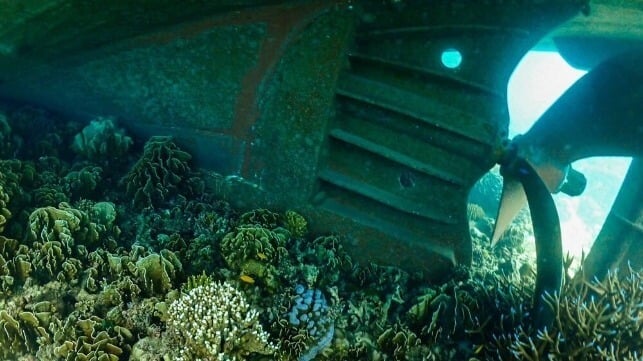
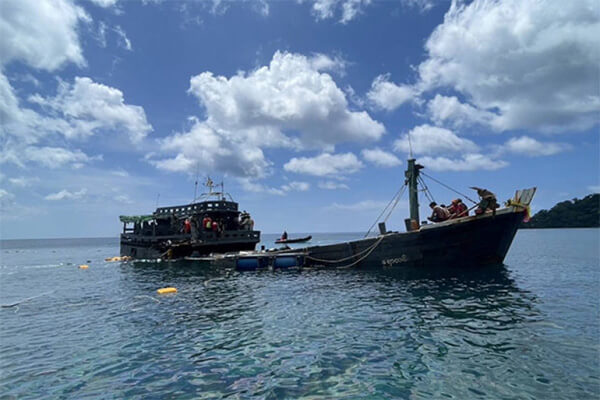
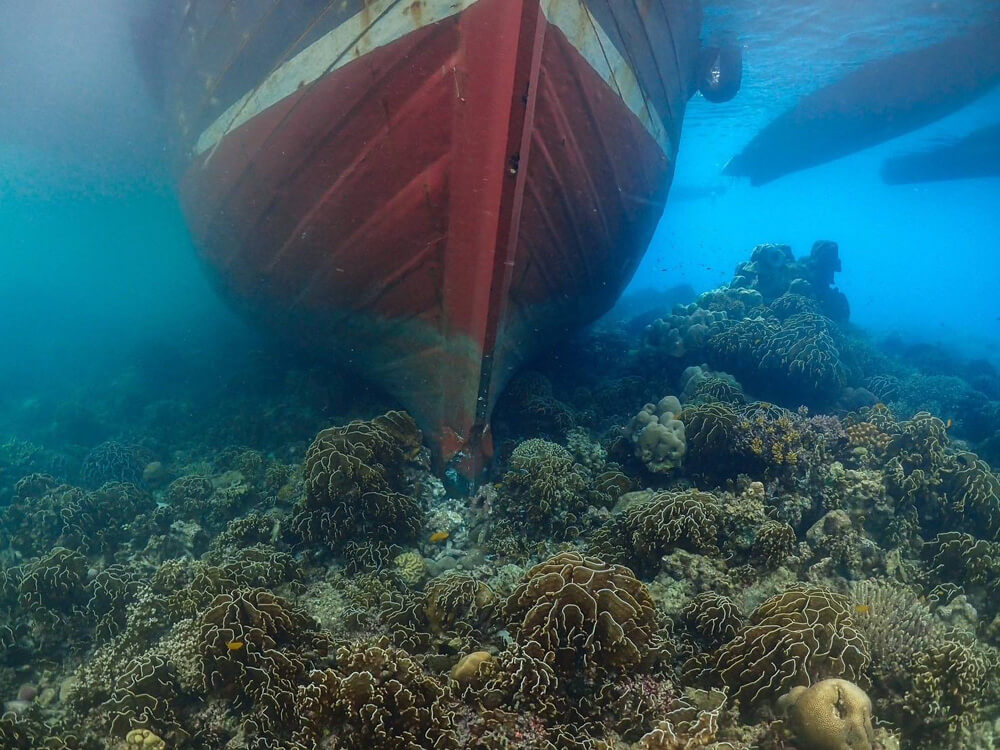
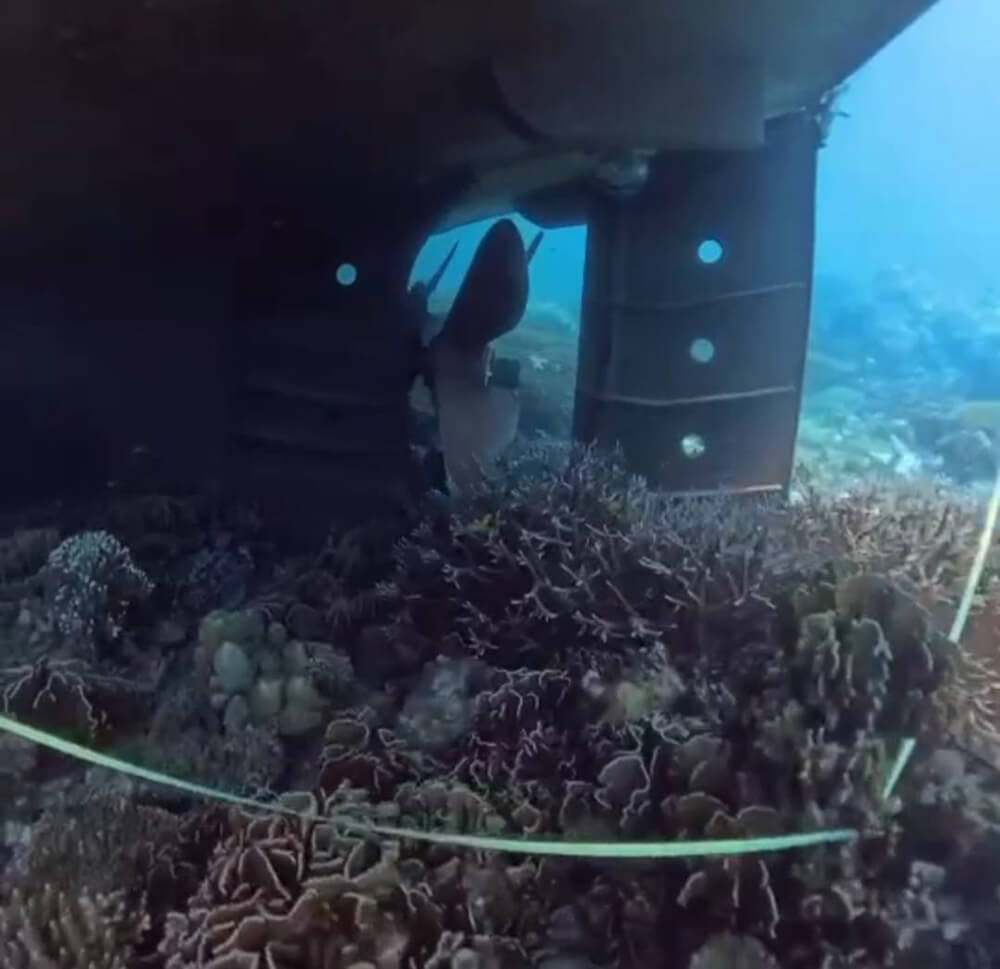
Myanmar cargo ship sitting of Thai coral reef (photos courtesy of Dept. of National Parks)
The authorities in Thailand are working to address the grounding and sinking of a rickety wooden cargo ship from Myanmar that has hit one of the country’s premier coral reefs. The vessel grounded and partially sunk damaging at least 75 meters (approximately 250 feet) of precious Blue and Deer Coral and has the potential to leak oil into the environment.
The wooden 100-tonne cargo ship named Ayar Linn sank on Sunday, June 1, after grounding on the reef in the Mu Ko Surin National Park in the Surin Islands of the Andaman Sea. Thai officials report it is one of the most famous diving and marine life viewing sites in the world. It is within the National Parks in Thailand.
The vessel stranded off Jak Bay in the northern parts of the province and then sank spilling its cargo onto the reef. It has 7,700 liters of diesel onboard.
Divers were sent to inspect the region and report a 75-meter trench of damage in the reef with the worst portions being between meters 45 and 75, where the vessel is now stuck. The coral under the vessel has been crushed and a line of coral, especially the tall species, was broken. In addition, the vessel spilled bags of cement as well as significant amounts of cardboard, rags, truck tires, hoses, and other debris that is littered on the reef.
The divers were initially attempting to seal the values on the fuel tanks. Efforts were also underway to pump the fuel from the partially submerged vessel. The Department of National Parks, Wildlife, and Plant Conservation working with other agencies called for oil booms that could also be strung to contain any fuel leaks.
They said a full salvage mission can not be carried out at this time because it is monsoon season. The danger of strong waves and winds makes any salvage operation risky. They are working with the other authorities to develop an approach for managing the situation.
The Kuraburi Police Station is also collecting relevant evidence as well as checking the ship’s documents, and entry and exit from the country. They are planning to lodge a complaint against the owner of the vessel and seek compensation.
The authorities are also asking citizens and tourists to avoid approaching the area for safety and to allow the recovery operation to proceed.
New research challenges long-held belief of coral reefs as oases in marine deserts
Credit: Jordan M. Casey/University of Texas at Austin
Coral reefs are likely one of the most common subjects of nature documentaries and hold special interest to the world for their diverse beauty and productivity. Often, they are depicted as a thriving oasis surrounded by a clear blue ocean devoid of nutrients and plankton. While these reef systems certainly do exist, a new study released today in Current Biology shatters the long-held notion and belief that coral reefs are oases in marine deserts, a notion that became known as “Darwin’s Paradox.”
In fact, the study shows that, although reefs are indeed among the world’s most productive ecosystems, their existence in nutrient-deprived oceans is the exception rather than the rule and, importantly, not linked to Charles Darwin either. The study was funded in part by the U.S. National Science Foundation.
The narrative of Darwin’s paradox has evolved over the past few decades and has since become a staple in mainstream media and high-profile publications.
“While the narrative is really compelling, it is both factually and historically wrong, which can have important implications for how we manage coral reef ecosystems,” said senior author Simon Brandl, assistant professor at the University of Texas Marine Science Institute.
The oases in the desert hypothesis implies that reefs are closed systems that are largely independent from conditions in the surrounding waters.
“Our findings suggest that the majority of the world’s coral reefs exist in conditions where surrounding waters may very well be able to sustain much of the fabulous productivity on reefs,” Brandl said.
This has large implications, since links between the reefs and surrounding oceans may be modified by a variety of human impacts, including nutrient runoff and global warming effects that may alter nutrient and phytoplankton distributions throughout the tropics.
To better understand coral reef systems and their global distribution, the authors tested both parts of the alleged paradox: high productivity (i.e. oases) and limited resources available in surrounding waters (i.e. deserts). To examine productivity, they analyzed the net primary production of coral reefs against a wide range of other ecosystems, demonstrating that the productivity of coral reefs is only matched by coastal wetlands, while most other habitats on Earth, including forests, rivers and lakes, or even coastal upwelling zones, lag far behind.
To test the surrounding “desert” component, the authors measured both direct food sources of coral reef organisms (i.e., phytoplankton) and their nutrient sources in tropical ocean waters using both satellite data and empirical measurements. Remarkably, they found that most coral reef systems thrive in intermediate or elevated nutrient concentrations and in areas where chlorophyll a—a green pigment used by phytoplankton to absorb sunlight and an indicator of the level of photosynthesis by phytoplankton—is twice the median range for tropical oceans and double for oligotrophic oceans or “deserts.” In fact, 80% of coral reefs occur in conditions that scientists would generally classify as nutrient enriched.
Poignantly, not only the paradox’s meaning, but also its attribution to Darwin is fundamentally wrong. Using a combination of manual review and text mining, the authors show that Darwin’s cited work does not include any mention of coral reef productivity or the role of surrounding oceans, nor would Darwin have had an understanding of ocean conditions deep enough to arrive at the alleged conclusion. Attribution to Darwin was likely made (and persisted) due to his gravity and name recognition; and it likely persisted because a large-scale in-depth global review has not been completed until now. This demonstrates that scientists must not be afraid to rethink and challenge existing knowledge.
“With this study, we hope to cast a more quantitative light on coral reefs and what allows them to be so productive,” said Brandl.
Their persistence across a broad range of oceanic conditions indicates that linkages between reef animals and their prey are more complex and context-dependent than previously thought. As human impact continues to enrich coastal oceans with nutrients and rising temperatures change plankton communities surrounding reefs, additional effort should be put into understanding these linkages and energy flow.
“Our analysis shows that coral reefs are truly unique in their capacity to produce an abundance of life, but how this occurs depends on where these reefs are located and, unfortunately, how human impact will change local conditions,” Brandl said.
Brandl is joined by his colleagues Renato Moris, lead author at Université Paris Sciences et Lettres, Larissa Patricia-Valerio from Central Queensland University, and Pauline Narvaez and Valeriano Parravicini from Université Paris Sciences et Lettres. The work was supported by RAMS’s Branco Weiss Fellowship Society in Science, PSL Junior Fellowship, and a U.S. National Science Foundation Award to Brandl.
Where do you go when you’re a fish and you need a skincare treatment? Coral reefs contain natural “beauty salons,” lively social hubs of activity where fish “clients” swim up and wait to be serviced by smaller fish cleaners. The little cleaners dart under and around their much bigger clients — even entering their mouths — cleaning their scales of bacteria and parasites like a team of car washers servicing a Buick. Sometimes cleaners even rub against their clients, providing a soothing massage.
But aside from skincare benefits, what role might busy cleaner fish stations play in spreading microbes and bacteria — for good or ill — throughout the reef?
A study published in the journal Marine Ecology Progress Series is the first to investigate the influence of cleaner fish stations on reef microbial diversity. It is led by scientists from the University of California, Davis, and Woods Hole Oceanographic Institute (WHOI) in collaboration with the University of Miami Rosenstiel School of Marine, Atmospheric, and Earth Science.
Could busy cleaning stations, like some medical clinics, be hotspots for spreading bacteria and pathogens? Conversely, could they help spread beneficial microbes among reef communities? Such questions carry important implications for protecting and restoring coral reefs.
“How pathogens or microbes are moving around a reef could be critically important to understanding how individuals will be affected,” said lead author Anya Brown, an assistant professor with the UC Davis Bodega Marine Laboratory and a National Geographic Explorer who conducted the study while at WHOI. “We know microbes play a role in coral bleaching, for example. This study really lays a foundation for using cleaner fish stations as a way to study movement of microbes around the reef environment.”
Cleaner fish and reef health
One hardworking fish is the cleaning goby, a pinky-sized fish with a boldly colored stripe running along its length. To understand how the presence of cleaner fish stations influence microbial diversity, the researchers experimentally removed cleaning gobies from cleaner stations on two Caribbean reefs in Puerto Rico and St. Croix in June 2021. They compared water nutrients and microbial communities of the surrounding reef area with and without gobies. This also included resident damselfish, frequent clients of cleaner gobies.
They found that more fish visited sites where cleaner fish were present compared to where they were removed in both Puerto Rico and St. Croix. They also found that cleaner fish do influence damselfish and reef microbial diversity, but the extent of their role depends on substrate type and the specific reef environment, as each reef carries a unique microbial signature. In the study, client fish, nutrient concentrations and water bacterial cell densities varied throughout the sites.
The authors say the results highlight yet another potential impact of cleaner fish and the need to further demystify their role in shaping reef microbial diversity and transmission.
Tiny fish can have big impact
“While larger organisms on coral reefs attract the most attention, the study underscores the huge impact tiny organisms such as these fish can have and how important they are to helping healthy reef ecosystems function,” said coauthor Paul Sikkel, a research professor at the Rosenstiel School’s Department of Marine Biology and Ecology. “While cleaner fish are well-known for their role in consuming parasites and reducing stress in other fish, this is the first field study to quantify their effects on microbes of other fish and the surrounding coral reef environment.”
Additional coauthors include Amy Apprill and Jeanne Bloomberg of Woods Hole Oceanographic Institution (WHOI), Gina Hendrick and Matthew Nicholson of the University of Miami Rosenstiel School, and Marta Soares and Raquel Xavier of the University of Porto in Portugal.
The study was funded by the National Science Foundation, WHOI, and The Foundation for Science and Technology in Portugal.
Cleaner gobies set up "shop" in coral reefs, attracting bigger fish "clients," who come to have their scales cleaned of parasites and bacteria. Scientists are studying the role these little fish play in reef microbial diversity.
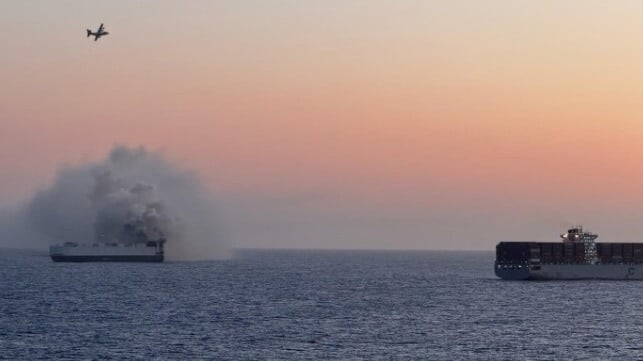
After abandoning the car carrier Morning Midas in the mid-Pacific, efforts are continuing to monitor the position of the vessel while salvage experts rush to the scene. A team from Resolve Marine is expected to take nearly four days to reach the burning ship which is approximately 300 miles southwest of Adak in the Aleutians.
The managers of the vessel, Zodiac Maritime, reported that smoke was discovered on one of the car decks of the vessel around 1400 local time on June 3. According to the U.S. Coast Guard, there are a total of 3,048 vehicles on board including 70 fully electric and 681 hybrid, partially electric vehicles. Zodiac says the smoke was initially seen emanating from a deck carrying electric vehicles.
Due to the intensity of the fire, and with concern for crew safety, Zodiac reports the decision was made to abandon the ship. The 22 crew went into one of the lifeboats and were picked up by the containership Cosco Hellas which had diverted to the scene.
“We are proud of the diligent efforts of our crew in responding to the fire onboard,” said a spokesperson for Zodiac Maritime. “They immediately activated the vessel’s well-drilled emergency firefighting protocols and deployed the onboard fire suppression systems, all of which were fully operational.”
Recent pictures from the U.S. Coast Guard which has been overflying the scene show smoke emanating from the vessel. Zodiac notes that no pollution has been seen and the Morning Midas remains afloat but is still on fire.
Resolve Marine has been appointed and their first tug carrying a team of salvage specialists and specialized equipment is already traveling to the vessel. However, Zodiac says they will not reach the vessel until approximately June 9.
Until the salvage team can reach the vessel, Zodiac reports it can monitor the vessel via the onboard satellite-connected systems. However, this only allows for tracking the vessel’s location, with limited ability to monitor other onboard conditions.
Once the salvage team reaches the vessel, it will assess its condition and provide necessary support. An additional fire-fighting tug, capable of ocean towage, is being arranged to provide further support.
The vessel had called at multiple ports in China with the local media confirming it is operating under charter for SAIC Anji Logistics. Bloomberg says it has several brands of cars aboard including models from Chery Automobile Co. and Great Wall Motor Co. The vessel was heading to Lázaro Cárdenas, Mexico.
A summer like no other: inside 2023’s record-smashing North Atlantic marine heatwave
In a UNSW-led Nature study published today, researchers say that an off-the-scale marine heatwave in the North Atlantic Ocean in 2023 was caused by record-breaking weak winds combined with increased solar radiation – all on the back of ongoing climate change.
From Greenland to the Sahara and across to the Americas, the waters of the North Atlantic Ocean warmed at an unprecedented speed in the summer of 2023.
“The intensity of the warming in that single summer was equivalent to about two decades worth of warming for the North Atlantic,” says lead author Professor Matthew England from UNSW Sydney.
“While these extreme temperature events are typically only temporary, we can expect they’ll become more frequent in the future.”
Ironically, at the time, Prof. England was researching a region of cooling in the North Atlantic. This so-called ‘cold blob’ southeast of Greenland is one of the more unusual consequences of global warming – a sign of the Atlantic Meridional Overturning Circulation (AMOC) slowing down, which is a scenario made famous by the Hollywood movie, The Day After Tomorrow.
These waters had been cooling for the past 50–100 years, so when Prof. England and his team saw water temperatures spiking across the region, they realised they were watching something unusual unfolding.
"We even asked ourselves if this was the circulation making a temporary comeback, but the rate of warming was far too rapid for that,” Prof. England says.
No chill
The ocean can be thought of as two layers: an upper layer that’s directly affected by solar radiation, and the cooler deep ocean. With more exposure to the Sun during spring and summer, the upper ocean gradually warms.
Co-author Associate Professor Alex Sen Gupta, also from UNSW, says the rate of warming depends on the thickness of the ocean’s upper layer.
“A thin layer will warm faster, much in the same way that a pan of water on a stove with less water will warm faster than a pan with more,” A/Prof. Sen Gupta says.
He says the thickness of the layer in summer is set by the winds that churn up the surface waters and mix heat throughout it.
In June and July of 2023, the North Atlantic winds were weaker than ever recorded, “so the upper layer of the ocean was thinner than ever recorded,” A/Prof. Sen Gupta says.
In some areas it was only 10 metres deep, compared to the usual 20–40 metres deep, according to calculations made by co-author Dr Zhi Li, also from UNSW, who led the analyses of ocean observations for the study.
“This meant that the Sun heated the ocean’s surface more rapidly than normal, which is what led to those record-breaking temperatures,” says Dr Li.
He says the temporary thinning caused by weaker-than average winds was also bolstered by global warming.
Long-term warming causes the surface ocean to become less dense, suppressing the ability of winds to mix the upper ocean.
“So we were also dealing with a long-term thinning of the upper layer,” Dr Li says.
A sunburnt ocean
There was possibly also a further unexpected, localised factor that summer.
In 2020, new international rules were introduced to reduce the sulphur pollution emitted by ships. The aim was to improve air quality around the world’s major shipping lanes.
But clearer skies can have an unintended side effect: less aerosol pollution means fewer ‘seeds’ for clouds. Less cloud cover means more sunlight can reach the sea surface – especially in the North Atlantic, which is a high-traffic shipping area.
However, Prof. England says this effect was secondary, only contributing to localised regions of enhanced warming. Most of the blame he says, still lay with the lack of wind.
“Reducing sulphate emissions is good for reducing air pollution,” he says. “Though it has the unfortunate effect of allowing additional warming of the ocean’s surface, because less sunlight is reflected back to space.”
The combination of weak winds with reduced mixed layer depths and clearer than average skies meant the rapid warming became a full-basin marine heatwave.
And as the warming waters radiated heat back into the atmosphere, this triggered a series of consequences on land.
Continental scale crises
While a quiet crisis was unfolding at sea, the air masses travelling over the top of the ocean were picking up heat to scorch cities across Europe.
Deadly 40+ degree Celsius heatwaves across Germany, France and Italy broke temperature records, while torrential rains devastated parts of Spain and Eastern Europe.
Back underwater, the coral reefs of the Caribbean were bleaching under severe heat stress. Hurricanes, which only occur during summer, fuelled by ocean heat, intensified into disasters. That season, Hurricane Idalia hit Florida – causing eight deaths and damages worth $3.6 billion USD.
“This wasn’t just a small area of warm water off one coast,” says Professor Stefan Rahmstorf from the Potsdam Institute for Climate Impact Research (PIK), another co-author of the study.
“This was the entire North Atlantic, with impacts on weather systems, human lives, marine ecosystems and society.”
Preparing for the future
As climate change continues to thin the ocean’s surface mixed layer, heat from the Sun will continue to concentrate and warm it more readily.
Prof. England says this means marine heatwaves in the North Atlantic are only set to get worse in the future, with extremely costly consequences for ecosystems and society.
“Severe marine heatwaves often only last for a few weeks or months, but this one in the North Atlantic left a legacy that persisted for more than a year,” he says.
“Unfortunately, the frequency and intensity of marine heatwaves is only set to worsen in the coming decades and beyond.
“The only way to stop this trend is to phase out our use of fossil fuels.
A new study has revealed for the first time that ancient carbon, stored in landscapes for thousands of years or more, can find its way back to the atmosphere as CO₂ released from the surfaces of rivers.
The findings, led by scientists at the University of Bristol and the cover story of the journal Nature, mean plants and shallow soil layers are likely removing around one gigatonne more CO₂ each year from the atmosphere to counteract this, emphasising their pivotal and greater part in combating climate change.
Lead author Dr Josh Dean, Associate Professor in Biogeochemistry and UKRI Future Leaders Fellow at the University of Bristol, said: “The results took us by surprise because it turns out that old carbon stores are leaking out much more into the atmosphere then previous estimates suggested.
“The implications are potentially huge for our understanding of global carbon emissions. Plants and trees take up CO2 from the atmosphere and can then lock this carbon away in soils for thousands of years.
“Our findings show some of this old carbon, as well as ancient carbon from rocks, is leaking sideways into rivers and making its way back to the atmosphere. We don’t yet know how humans are affecting this flow of ancient carbon, but we do know plants and trees must be taking up more carbon from the atmosphere today to account for this unrecognised release of old carbon.”
Rivers transport and release methane and carbon dioxide as part of the global carbon cycle. Until now, scientists believed the majority of this was a quick turnover derived from the recycling of recent plant growth – organic material broken down and carried into the river system in the past 70 years or so. This new study indicates the opposite, with more than half – some 60% – of emissions being attributed to long-term carbon stores accumulated over hundreds to thousands of years ago, or even longer.
The international research team, led by scientists at the University of Bristol, University of Oxford and the UK Centre for Ecology and Hydrology, studied more than 700 river reaches from 26 different countries across the world.
They took detailed radiocarbon measurements of carbon dioxide and methane from the rivers. By comparing the levels of carbon-14 in the river samples with a standard reference for modern atmospheric CO2, the team was able to date the river carbon.
Co-author Prof Bob Hilton, Professor of Sedimentary Geography at the University of Oxford, explained: “We discovered that around half of the emissions are young, while the other half are much older, released from deep soil layers and rock weathering that were formed thousands and even millions of years ago.”
The research was supported by funding from UK Research and Innovation (UKRI) Natural Environment Research Council (NERC).
Co-author Dr Gemma Coxon, Associate Professor in Hydrology and UKRI Future Leaders Fellow at the University of Bristol, said: “Rivers globally release about two gigatonnes of carbon each year, compared to human activity that results in between 10-15 gigatonnes of carbon emissions. These river emissions are significant at a global scale, and we’re showing that over half of these emissions may be coming from carbon stores we considered relatively stable. This means we need to re-evaluate these crucial parts of the global carbon cycle.”
Further building on these findings, the researchers plan to explore how the age of river carbon emissions varies across rivers the study was not able to capture, as well as investigating how the age of these emissions may have changed through time.
Paper
‘Old carbon routed from land to the atmosphere by global river systems’ by Joshua F. Dean et al in Nature
Journal
Nature
Image depicts the global carbon cycle with trees and plants absorbing CO₂ and it being released back into the atmosphere from rivers via deep and shallow soil layers.
Credit
University of Bristol / sciencegraphicdesign.com
Image shows the research as the cover story of Nature.
‘Old carbon routed from land to the atmosphere by global river systems’
Article Publication Date
4-Jun-2025
Six decades of data on North Atlantic phytoplankton reveal that their biomass has decreased up to 2% annually across most of the Atlantic Ocean, with potentially widespread implications for the wider food web under climate change
Six decades of data on North Atlantic phytoplankton reveal that their biomass has decreased up to 2% annually across most of the Atlantic Ocean, with potentially widespread implications for the wider food web under climate change
Article title: Large, regionally variable shifts in diatom and dinoflagellate biomass in the North Atlantic over six decades
Author countries: Canada
Funding: This work was supported by grants from the Simons Foundation (549935 to AJI, 549937 and 986772 to ZVF), the Ocean Frontier Institute (NWABCP to AJI and ZVF), and Discovery grant awards from the National Science and Engineering Research Council of Canada (AJI, ZVF). The funders had no role in study design, data collection and analysis, decision to publish, or preparation of the manuscript.