Friday, June 06, 2025


Barrick’s Loulo-Gounkoto mine faces more legal uncertainty in Mali

Loulo-Gounkoto complex. (Image by Barrick Gold).

A Malian court has once again postponed a ruling on whether to place Barrick Mining’s (TSX: ABX; NYSE: B) Loulo-Gounkoto gold complex under provisional administration, delaying the hearing until June 12.

This marks the fourth adjournment in the ongoing legal battle between the Canadian mining giant and Mali’s military-led government, centering on disputes over taxation and control of the mine.

Background

The conflict began in 2023 when Mali introduced a new mining code that increased taxes and expanded the government’s stake in mining operations.

Barrick has resisted transitioning to this new code, arguing that its existing agreements should remain legally binding.

In November 2024, Malian authorities blocked Barrick’s gold exports and seized approximately three tonnes of gold, citing alleged unpaid taxes.

The situation escalated further with the detention of four Barrick employees and the issuance of an arrest warrant for its CEO Mark Bristow on charges including money laundering and financing of terrorism. The company rejects all allegations.

In response to the Malian government’s actions, Barrick has sought intervention from the World Bank’s arbitration tribunal, the International Centre for Settlement of Investment Disputes (ICSID).

The company has requested “provisional measures” to halt Mali’s efforts to place the mine under provisional administration while arbitration is ongoing.

Barrick maintains that the government’s actions are without legal basis and undermine the principles of due process and mutual respect that should govern partnerships between sovereign states and long-term investors.

Talks are stymied by the regime’s lack of mining expertise, CEO Mark Bristow told The Northern Miner in a recent interview.

The suspension of operations at Loulo-Gounkoto since January 2025 have had significant financial repercussions for Barrick. The company is incurring approximately $15 million per month in maintenance and salaries while losing an estimated $1.24 billion annually in revenue due to the halt in production.

Consequently, Barrick has removed Loulo-Gounkoto from its production forecasts until at least 2028.

Following the ruling postponement, shares of Barrick gained 0.6% in New York, giving the company a market capitalization of approximately $35 billion.


CANADA

Mining sector wants action, not promises, says Calibre CFO

Calibre Mining chief financial officer Daniella Dimitrov. (Photo: MINING.COM.)

As Canada’s premiers tout a new national framework to speed up approvals for major resource and infrastructure projects, Calibre Mining chief financial officer Daniella Dimitrov says the mining sector remains unconvinced.

Speaking to MINING.COM at THE Mining Investment Event in Quebec City, Dimitrov welcomed federal and provincial commitments to shorten permitting timelines, but said governments need to move from words to action.

For Dimitrov, Canada’s fragmented approach and lack of detail are still major obstacles.

“I feel sometimes we’ve got 13 countries, not one,” she said. “We need to lay out performance metrics and that we can hold governments accountable, and we need execution.”

At a recent summit in Saskatoon, Prime Minister Mark Carney and all 13 premiers agreed to identify projects of “national interest” and streamline approval processes. Carney has promised legislation to reduce federal permitting from five years to two.

Dimitrov highlighted that the meeting ended without naming any specific projects and left the criteria to elect them unclear.

“There were no projects announced following that meeting. The criteria has some ambiguity. I’m not sure exactly what it means to have to determine that a project can be successfully executed—whether that’s capital, whether that is certain economics, whether that’s having the appropriate supply chain.”

She added that while Ontario and the federal government have announced steps to accelerate permitting, not all changes have been well received.

“There is concern around the speed and the urgency that it might come at the risk of reducing consultation or not having appropriate consultation.”

A lawyer by trade, Dimitrov stressed that meaningful engagement is key to building support for permitting reform. She also underscored the urgent need for clarity, especially as Canada aims to boost infrastructure investment in response to trade tensions with the United States. The mining industry, she said, needs assurance that policy ambitions will be matched by concrete timelines, and certainty for investors.

“Capital is sitting on the sidelines and saying, well, how do I get the certainty that ultimately we can achieve the permitting and that we can achieve the consent agreements and the participation that’s needed in order for me to actually invest that capital?”

Despite her concerns, Dimitrov remains optimistic about the industry’s future. Her own path reflects the sector’s evolving complexity and gives her a clear view of what’s at stake. She began her career as an investment banker at Sprott before transitioning into legal leadership as general counsel for the Dundee Group of companies. 

She later moved into operations, overseeing acquisitions as director of integration, and later entered the mining sector through roles in corporate development and regulatory governance. 


British Columbia, First Nations partner on land use project plan for resource development

Fieldwork near Stewart, Northwestern British Columbia. Image: AME.

Canada’s British Columbia, in partnership with the Tahltan, Taku River Tlingit, Kaska Dena, Gitanyow and Nisga’a First Nations, has launched a land-use planning initiative in the northwestern part of the province.

The initiative, which is set to begin in the coming weeks, involves the engagement of industry, community and other partners to implement “world-class” land-use plans that will provide greater clarity to stakeholders, the BC government stated.

Last week, Premier David Eby outlined the government’s vision for attracting mining investment to the province, particularly in the mineral-rich northwest.

The vision, Eby emphasized, is to realize an opportunity for tens of billions of dollars in investment and thousands of jobs throughout the province.

The plan involves partnering with First Nations to achieve large-scale conservation and strengthen reconciliation envisioned by the Declaration on the Rights of Indigenous Peoples Act (DRIPA), the BC government said in a news release.

“These are foundations to establishing areas for Indigenous-led conservation for precious land and watersheds in some of the most pristine and rugged wilderness in Canada and for clearly identifying areas where critical minerals may be developed,” the release reads.

Over the next year, the BC government, Tahltan, Taku River Tlingit, Kaska Dena, Gitanyow and Nisga’a Nations will undertake expedited, inclusive land-use planning and essential stakeholder and public engagement.

The project plan

Land-use planning will be in an area covering about 16 million hectares in the northwestern corner of the province, near the Alaska and Yukon borders.

The aim is completion of plan development within a year through engagement with and input from communities, First Nations, regional districts, industry, tenure holders, recreation users and conservation organizations through identification of areas for conservation of biodiversity, including wild salmon, caribou, sheep and other sensitive species, and cultural values.

There will be clear identification of areas open to potential development, including mineral exploration and development, with clear sustainability and environmental safeguards supporting improved permitting efficiency and effectiveness, the provincial government said, adding that existing land-use plans and strategic engagement agreements that clarify requirements for expedited implementation of the northwest vision will be updated.

There will be a one-year pause on new mining-tenure registrations in just under one-third of the land-use planning area to support the joint planning process, while allowing permitting and exploration for existing projects and mineral claims to take place.

The plans created through these collaborative processes will define what can occur on the land base, identifying important areas for both Indigenous-led conservation and areas for potential natural resource development to create a wealth of new opportunities for economic development.

AME response

The Vancouver-based Association for Mineral Exploration (AME) issued a response to the project plan, saying it is encouraged by “earlier than normal” engagement with government in these land use planning processes and a commitment for AME to be at the table with the government, First Nations and other interested groups.

“AME shares the government’s aspiration for certainty, including establishing clear areas for critical minerals and precious metals exploration and development,” board chair Trish Jacques said in the statement.

“While there are good signs at this early stage – from the accelerated one-year land use planning process, to allowing notice of work permitting and existing tenures to continue throughout the planning area – mineral explorers have invested hard work and money in areas that may be considered sensitive,” Jacques said.

“AME will continue to advocate to protect mineral exploration and development for the benefit of all British Columbians.”

Rio Tinto revising cost of Serbia lithium project


Illustration of the Jadar above-ground facilities. (Image courtesy of Rio Tinto Serbia.)

Rio Tinto is revising the cost of its Serbian lithium project that the European Commission identified as one of 13 strategic new critical material projects, Chad Blewitt, managing director of the Jadar lithium mine, said on Wednesday.

The project is contested by green groups and many Serbs on environmental grounds, and sparked massive street protests in 2022 which led the government to revoke all Rio Tinto’s exploration licences. The Constitutional Court overturned the decision last year and reinstated the licences.

“The last time we went out to market and looked at the budget, it was over 2.55 billion euros ($2.91 billion). So we are currently in the midst of updating that capital cost,” Blewitt told Reuters.

“The strategic project status that we received today requires us to meet European Union environmental and human rights standards, and that will be reflected in the final capital cost.”

He could not be drawn into an estimate of the revised cost or timeline for the project – which was initially forecast to start production in 2027 – saying the Anglo-Australian giant also needed to obtain a field exploitation licence.

“Once we… get the licence, we can then go and update the project schedules and have a look at costing. So I don’t want to give a definitive date.”

Rio is the only major mining company to bet heavily on lithium – used in electric vehicle batteries – accelerating its push over the past six months with three new deals: its $6.7 billion buy of US-based Arcadium Lithium and two projects in Chile for more than $1 billion.

With the lithium market in the doldrums as a wave of new supply overwhelms weaker-than-expected demand for EV batteries, it will take years to know whether this bet will have paid off, although demand projections for the metal are more positive into the next decade.

If implemented, Rio Tinto’s Jadar project could meet 90% of Europe’s current lithium needs. But protesters in Serbia have threatened to block roads and railways if the project goes ahead.

“Whatever happens next will involve multiple stages of scrutiny and public consultation,” Blewitt said. “It (the project) positions Serbia at the forefront of the green and digital revolution.”

($1 = 0.8748 euros)

(By Ivana Sekularac and Clara Denina; Editing by Emelia Sithole-Matarise)


Nippon Steel, US seek 8-day pause in litigation to resolve deal concerns

Credit: US Steel

Nippon Steel and the Trump administration on Thursday asked a US appeals court to extend a pause in their litigation for eight days, to give them more time to reach a deal allowing the Japanese firm to buy US Steel for $14.9 billion.

The court is likely to approve an extension of the pause, first granted on April 7 when US President Donald Trump ordered a second national security review of the tie-up. That pause was set to expire on June 5.

“A continued abeyance is warranted given … the ongoing efforts to reach a resolution that would fully resolve petitioners’ claims,” the companies and the government said in their filing.

The request for a short pause signals the companies and the government believe they are closing in on a deal, welcome news for investors who have anxiously followed the deal’s bumpy path since it was announced in December 2023.

Both former President Joe Biden and Trump asserted last year that US Steel should remain US-owned, as they sought to woo voters ahead of the 2024 presidential election in Pennsylvania, where the company is headquartered.

Biden blocked the deal in January on national security grounds, prompting lawsuits by the companies, which argued the national security review they received was biased. The Biden White House disputed the charge.

The steel companies saw a new opportunity in the Trump administration, which began on January 20 and sought a pause in the litigation to open a fresh 45-day national security review into the proposed merger in April.

But Trump’s public comments, ranging from welcoming a simple “investment” in US Steel by the Japanese firm to floating a minority stake for Nippon Steel, created confusion.

Trump on Friday lauded an “agreement” between Nippon Steel and US Steel at a political rally but stopped short of approving the companies’ diplomatically sensitive merger.

(By Alexandra Alper; Editing by Stephen Coates)

US Steel deal seen closing by merger deadline on Trump pivot

Credit: US Steel

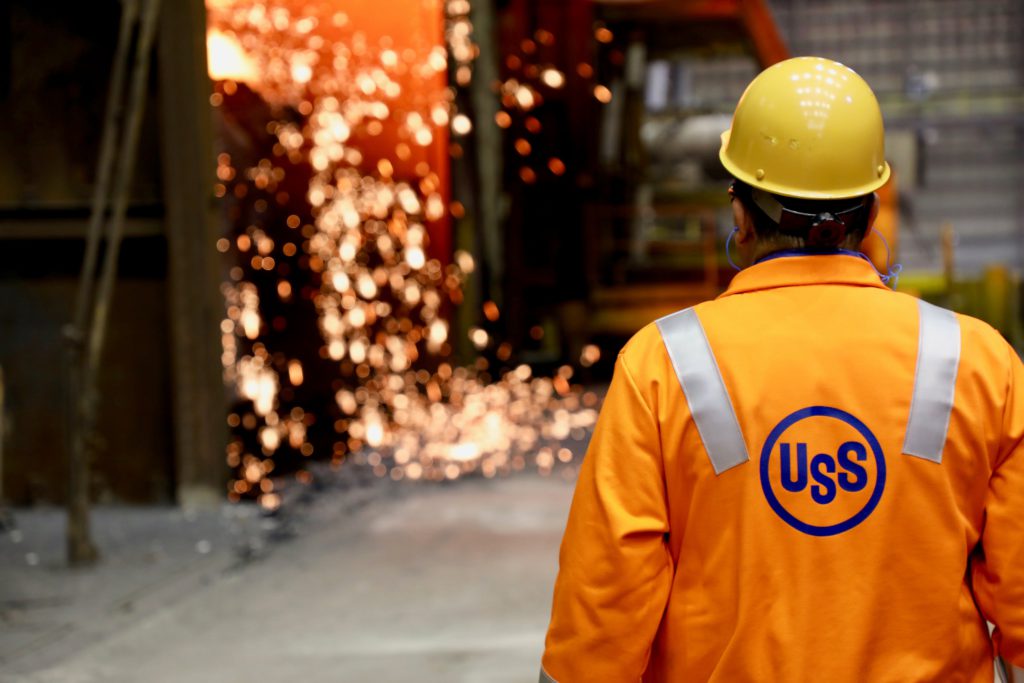
Nippon Steel Corp. and United States Steel Corp. are on pace to finalize their $14.1 billion combination with US President Donald Trump’s administration ahead of a deal deadline later this month, capping an 18-month saga to combine the steelmakers into the world’s second-largest producer.

Talks on the deal between the companies and the US government are ongoing and expected to reach a conclusion before a June 18 merger agreement deadline, according to people familiar with the matter, speaking on condition of anonymity given that talks are confidential. US Steel and Nippon Steel declined to comment. A Treasury Department spokesperson declined to comment.

The companies, their investors and advisers to the deal are still awaiting final terms marking the end of Nippon Steel’s takeover of the US steelmaker, but talks with the Committee on Foreign Investment in the United States are progressing and poised to be finalized before the deal deadline, said the people.

However, final details have not been fully ironed out and talks are ongoing, the people said. Failure to reach a deal could mean reopening the merger agreement at least partially and potentially spur new fronts of negotiation.

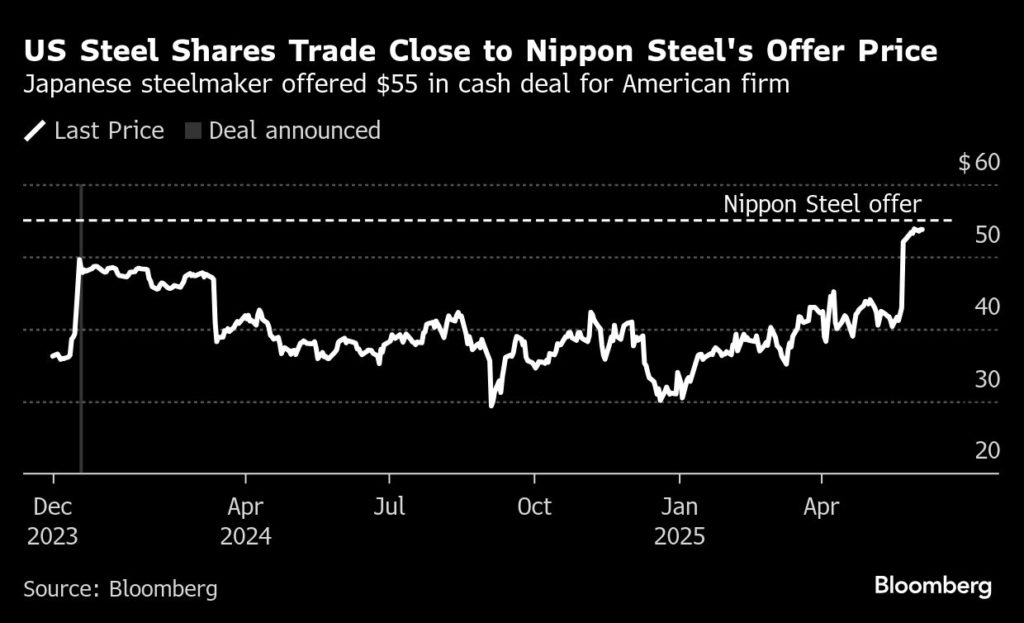
US Steel shares jumped as high as $54.24 after the Bloomberg report — the highest since Nippon Steel’s $55-a-share offer was announced in mid-December 2023 — before paring gains.

A final deal would clear the way for the Japan-based steelmaker to finally own the once-iconic American producer — albeit with some measures of American control, such as over board seats. Trump’s self-proclaimed “big deal” that extracted further concessions from Nippon Steel would also add decades of life to existing US Steel mills that have long beleaguered the company’s bottom line due to their urgent need for significant, and unavailable, capital investments.

The agreement includes a requirement that US Steel, as a subsidiary, will retain its headquarters in Pittsburgh. The deal also includes provisions for a US management team, a majority of US nationals on the board and US government approval of “key” board positions, Senator David McCormick, a Pennsylvania Republican, told FOX News Sunday earlier this week. It’s also poised to require an American chief executive officer, some of the people said.

Trump said Friday that US Steel workers would receive a $5,000 bonus and that $2.2 billion of a $14 billion proposed investment would be earmarked to increase steel production at the Mon Valley Works facility. Another $7 billion would be spent to modernize steel mills, expand ore mining and build facilities across Indiana, Minnesota, Alabama and Arkansas. And, he added, US Steel wouldn’t announce layoffs or outsourcing, and its blast furnaces must remain at “full capacity” for at least 10 years.

While some investors have worried about Cfius finalizing terms by a certain date, people familiar with the matter said the security panel’s decision wasn’t bound to a due date given its investigation wasn’t done through a typical process.

US Steel’s recent stock performance suggests investors are optimistic the deal will succeed. Shares of the American steelmaker have been trading above $53 a share since May 27 — close to Nippon Steel’s all-cash offer.

(By Joe Deaux and Josh Wingrove)

#METOO

Ex-Master Arraigned on Criminal Charges of Sexually Assaulting USMMA Cadet

ABOUT TIME

Department of Justice
DOJ has brought charges against a master mariner for the first time in a generation (DOJ photo)

Published Jun 5, 2025 5:54 PM by The Maritime Executive


A former master in the U.S. merchant marine has been arraigned on charges that he sexually assaulted a cadet from the U.S. Merchant Marie Academy assigned to the bulker he was commanding in 2019. Lawyers for the victim are hailing it as a watershed moment in U.S. justice highlighting that it is the first time in more than a generation that criminal charges have been brought in this type of assault at sea.

The case came to light in 2022 as part of a larger scandal in which female cadets at the service academy spoke up about the culture at sea and the school and the assaults they had experienced. The first two cadets, then known as Midshipmen X and Y, settled complaints out of court with the shipping line while it prompted a broader investigation into the academy’s Sea Year when cadets are assigned to working ships as well as the environment on a campus in Kings Point, New York.

The case of Captain John Merrone was first exposed by CNN in October 2022 which reported that two cadets were alleging that he had drugged and assaulted them in his stateroom. According to a Coast Guard administrative complaint obtained by CNN, the two cadets were called to the captain's stateroom, and he offered them both a drink. They told the Coast Guard that they became incapacitated, at which point the master allegedly raped one and attempted to assault the other.

The U.S. Department of Justice arraigned Merrone today, June 5, 2025, on five counts related to sexual assault, drugging the victims to become incapacitated, and assaulting them while they were incapacitated. He voluntarily surrendered to the FBI in South Carolina where he lives and was brought to Brooklyn, New York for the arraignment. 

“This is a watershed moment for the maritime industry,” said attorney Ryan Melogy, founder of Justice4Mariners, who represents the victims. “We have not seen the DOJ bring criminal charges for a sexual assault at sea aboard a U.S.-flag cargo vessel in more than a generation. This is a huge, historic turning point for maritime safety.”

Court papers revealed the assaults happened in 2019 aboard the U.S. flagged bulker Liberty Glory, operated by Liberty Maritime of New York. 

Merrone voluntarily surrendered his license in October 2022 after the case became public and it was reported that the U.S. Coast Guard was pursuing an administrative action against the master. Media reports at the time said he was being accused of both sexual assault and violating company policies on the use of alcohol. By surrendering the license, he was able to stop the USCG action and reports said the union also expelled him.

It came out in the media reports that Merrone had also been accused in 2011 of sexually assaulting a woman in Florida. A jury convicted Merrone of false imprisonment and two counts of simple battery, but an appeals court reversed the conviction in 2013. Merrone retained his license and continued to sail. It was unclear if the case had been disclosed to either the USCG or his employer.

“This case is about more than one captain — it’s about a broken system consisting of U.S. government agencies, maritime labor unions, and commercial shipping companies that have worked cooperatively for decades to protect known sexual predators and silence their victims,” added Melogy.

While Merrone is the first in years to be arraigned in federal court on criminal sexual assault charges, other seafarers have also faced charges in the broader scandal which also led to reforms in the Sea Year program and at USMMA. In 2023, an electrician who had been accused of sexually harassing Midshipman Y also voluntarily surrendered his license before the USCG could convene its action against him.


MOL Announces Plans to Retire Pioneering Japanese Cruise Ship

Nippon Maru cruise ship
Nippon Maru has been a constant in the Japanese cruise market for 35 years (MOL)

Published Jun 5, 2025 6:34 PM by The Maritime Executive


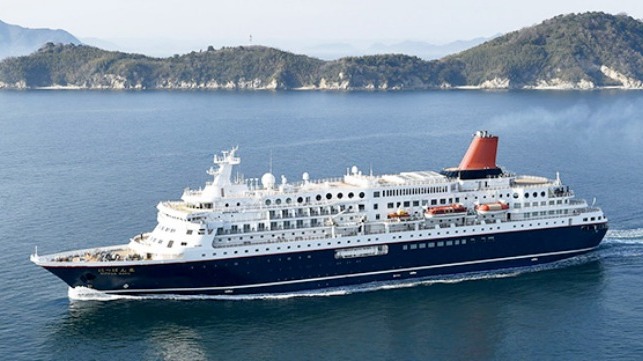
MOL Cruises, the leisure operation for Japan’s Mitsui O.S.K. Lines, plans to retire its pioneering cruise ship Nippon Maru in May 2026. While the company has a long heritage in passenger shipping, cruising has been a small part of the Japanese leisure industry with only the Nippon Maru consistently operating in the market with other ships coming and going over her 35-year career. 

Nippon Maru (22,472 gross tons) was built in 1990 by Mitsubishi for MOL to maintain a presence in the cruise business but was only marketed in Japan. It continued the company’s passenger operations which trace back to the 1880s and the founding of the predecessor companies Osaka Shosen and Mitsui Sensen, which operated trans-Pacific passenger services into the 1960s. MOL converted to cruising in 1972 and in response to the rising demand in Japan for leisure cruises decided to buy and then build modern cruise ships.

The Nippon Maru remained very popular in part because she offered cruises around the Japanese islands reaching smaller ports not accessible to larger cruise ships. She offered a focus on cultural enrichment and traditional Japanese culture.

“With full hearts and deep gratitude, we bid a bittersweet farewell to Nippon Maru, which has served us well for over 35 years,” said Tsunemichi Mukai, President of Mitsui Ocean Cruises, a new brand launched in 2024 to carry on the company’s cruise operations. “Though a difficult decision, it is time to retire her for operational and economic reasons. We're excited to carry on her legacy of fine hospitality aboard our new luxury ships, Mitsui Ocean Fuji and our recently announced second ship, where many of our cherished crew will continue to serve.”

The ship, which will be officially retired on May 10, 2026, in Yokohama, has since traveled 2,877,642 nautical miles or approximately 133 times around the earth. She operated over 2,000 cruises, hosting more than 600,000 passengers, and visiting over 400 ports in and out of Japan. In addition to her domestic cruises, she operated longer voyages including nine world cruises.

MOL reports the legacy of Nippon Maru and her contribution to the Japanese cruise industry will be honored during her final season between February and May 2026, with several cruises and events, featuring special commemorative gifts and menus.


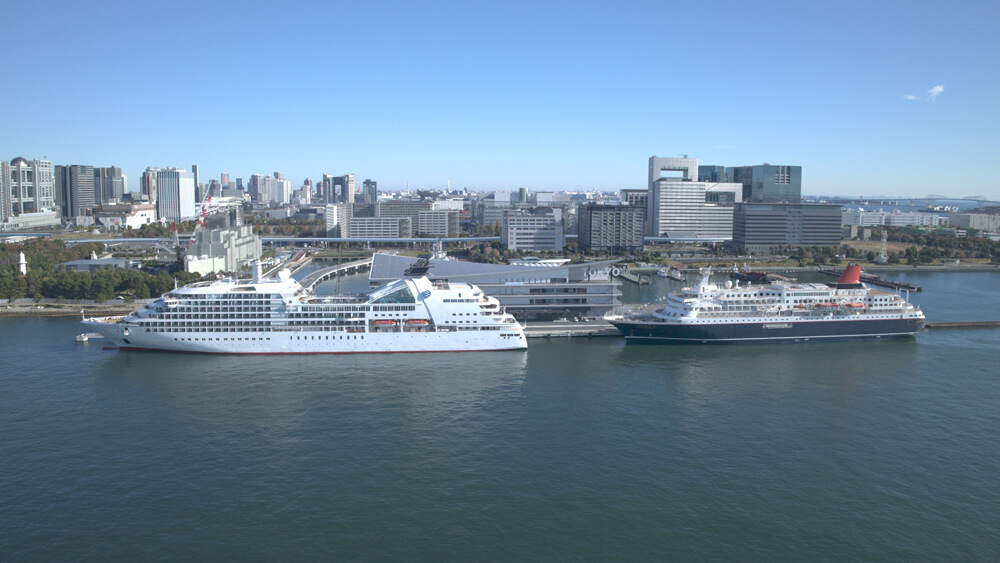
Nippon Maru (right) is being replaced with Mitsui Ocean Fuji (left) and a sister ship also acquired from Carnival Corporation' Seabourn (MOL)


The company is continuing with its plan to diversify the commercial shipping operation expanding passenger service both with cruises and ferries. In late 2022, the company revealed plans to build two 35,000 gross ton cruise ships and while it continues to study construction options, it acquired the Seabourn Odyssey (32,500 gross tons) from Carnival Corporation’s Seabourn Cruise Line and relaunched it at the end of 2024 as the Mitsui Ocean Fuji. In March 2025, it was revealed that they had made a strong cash offer and agreed to acquire a sister ship, Seabourn Sojourn (32,500 gross tons), also from Carnival Corporation for delivery in May 2026. The new cruise line is marketing the acquired ships and is expanding marketing into the international market as it seeks to develop Japan’s role in the cruise industry.

MOL’s expansion into the international market comes as the Japanese cruise market is growing. NYK recently took delivery on a newly-built cruise ship named Asuka III from Meyer Werft in Germany. The ship enters service in July. 

Japan’s Ryobi Holdings, a diversified company that includes operations in transportation and tourism, also announced plans at the end of 2023 to enter the cruise market. It ordered a luxury, yacht cruise ship to be built in Portugal for delivery in 2027.


Red Sea and Suez Canal Traffic Increases But Carriers Still Avoid Transits

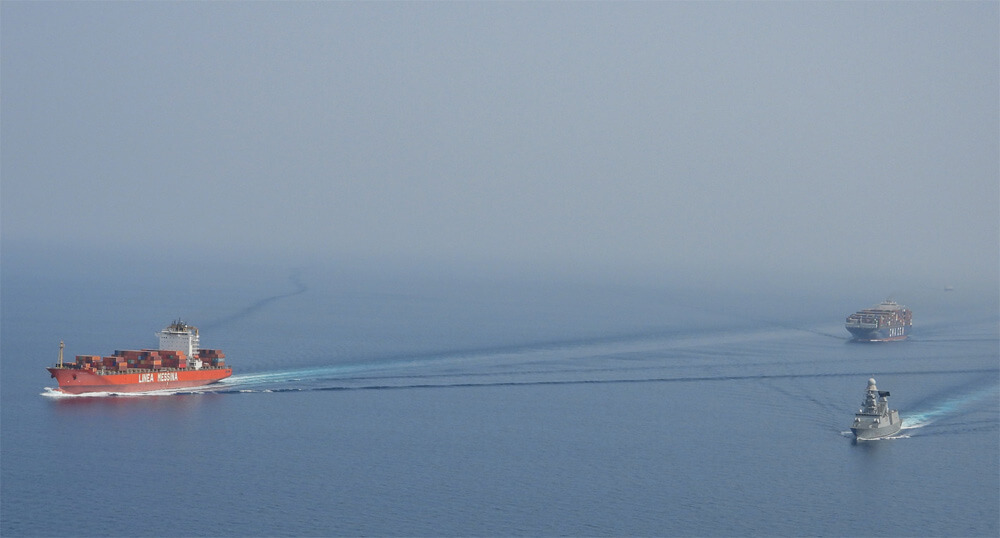
warship escorting merchant ship in the Red Sea
Close protection continues for merchant ships transiting the Red Sea (EUNAVFOR Aspites)

Published Jun 5, 2025 7:28 PM by The Maritime Executive


June 5 marked a historic day for the Suez Canal as it is 50 years since it reopened after the Arab-Israeli War of June 1967 closed the canal for eight years. Egypt marked the occasion as it again attempts to rebuild traffic in the canal following the attacks of the Houthis in 2023 and 2024 that chased away most vessels.

Egypt announced its latest efforts in May reporting it would offer large containerships a 15 percent discount on fees. The 90-day promotion was an attempt to lure the major east-west traffic between Asia and Europe into the canal. The Suez Canal Authority also hosted a meeting with representatives of the major carriers reporting that they were receptive to restoring the diverted routes.

The commander of the EU effort to protect ships, Rear Admiral Vasileios Gyparis of the Hellenic Navy who overseas EUNAVFOR Aspides told Reuters traffic is up 60 percent from the low point in August 2024. He reported they are seeing 36 to 37 ships a day up from a low of around 20 a day. However, he admitted to Reuters that it is still below the 72 to 75 a day before the Houthis launched their attacks in late 2023.

Similarly, the Suez Canal has not announced its current daily average. In August 2022, however, it highlighted a new record of 89 vessels making the passage in a single day. It typically averaged over 60 vessels a day.


HMS Prince of Wales and its carrier strike group transited the Suez Canal on May 24 (Royal Navy)


The lack of the return is despite the Houthis not having attacked a merchant ship in 2025, although they continue to assert that they will attack any vessel associated with Israel. They suspended all attacks when the Gaza ceasefire went into effect in January but resumed targeting U.S. warships when the U.S. unleashed a barrage at the orders of Donald Trump in March. The U.S. announced a ceasefire in May and despite reports the Houthis were rearming, they have not fired on ships, including there were no reports of attacks as the UK sent the carrier HMS Prince of Wales and her carrier group through the region in recent days.

The Aspides commander told Reuters the operation has “provided close protection to 476 ships, shot down 18 drones, destroyed two remote-controlled boats, and intercepted four ballistic missiles.” Aspides began its patrols in February 2024. As of mid-May, it marked 15 months saying it had supported more than 830 merchant vessels.


ITS Andrea Doria providing close protection to merchant ships in the Red Sea (EUNAVFOR Aspidtes)


Aspides reports that it continues its close protection operations with the EU extending its mission at least to February 28, 2026. It highlighted at the end of May, a French frigate in the operation escorted both a tanker and a CMA CGM containership. ITS Andrea Doria, an Italian Navy destroyer, took a Linea Messina containership and several CMA CGM vessels through the region also in late May.

CMA CGM, however, told The New York Times in a story appearing today that it was “sending a small number of vessels through the Red Sea.” It said it did not plan to resume transits through the Suez Canal on a large scale in the short term, “unless security conditions allow it.” The New York Times reports tracking sites showed at least five CMA CGM vessels transiting the Red Sea in recent weeks.

Other major carriers have also said they have no short-term plans to resume their normal routes. CEO of AP Moller-Maersk, Vincent Clerc said, The New York Times highlights, that he thought it is still far from the threshold to return to the Red Sea routing.


CMA CGM Pursues Port Investment in Algeria

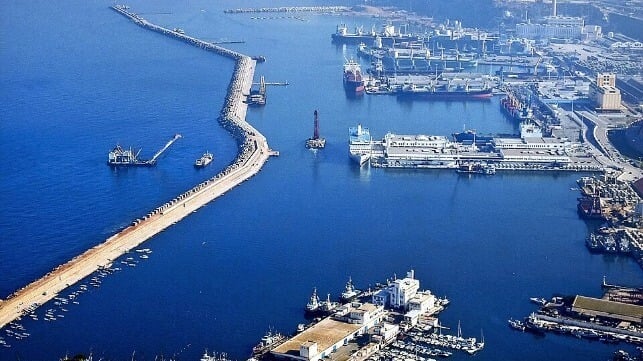
Oran Algeria
Oran AlgeriaPort of Oran is strategically located and close to industrial centers in Algeria (Habib Kaki -- CC BY 3.0)

Published Jun 5, 2025 3:43 PM by The Maritime Executive


CMA CGM is moving ahead with its investment deal in Algeria. It comes as the French carrier is building its logistics and terminal operations including in the Mediterranean where it recently announcement that it would modernize Syria’s Latakia port and has a long-standing agreement to redevelop the port of Beirut. 

The ocean carrier’s CEO Rodolphe Saadé met on June 2 with the Algerian President Abdelmadjid Tebboune. They discussed two discussed upcoming port projects by the shipping giant. The meeting was initially scheduled in April but a diplomatic dispute between Algeria and France led to the delay. Algeria’s ties with its former colonizer, France, have been lukewarm over the years. However, the relationship deteriorated in April leading to expulsion of diplomats from both sides. 

CMA CGM appears keen to overcome these difficulties and move forward with its projects in Algeria. “We can be an ally of Algeria in developing infrastructure and making Algerian ports true regional hubs. I strongly believe in the potential of this country,” Saadé told the local media.

With CMA CGM scaling its footprint in the Mediterranean region, Algerian port sector presents a good opportunity for this ambition. Algeria is increasingly diversifying its economy to cut reliance on oil and gas exports. Central to this shift is a revamp of the port sector to cater for the rising container shipping traffic.

CMA CGM has shown interest in modernizing the ports of Oran and Djen Djen. This will help in decongesting the Port of Algiers, which is currently experiencing delay challenges with vessel waiting times exceeding seven days. 

In Oran, CMA CGM reportedly wants to lease the container terminal through its subsidiary, CMA Terminals. The goal is to expend the terminal to have a capacity of handling over one million TEUs annually. According to local media reports, a technical team from CMA Terminals has almost finalizing an investment plan for Oran port, likely to be made public by end of this year.

To improve its intra-med connections, CMA CGM is also considering a feeder shipping line between Marseille and Oran, reducing the transit time to less than 48 hours. The service will be operated by its subsidiary La Méridionale, which was acquired in 2023.


Top photo by Habib Kaki -- CC BY 3.0


U.S. Imports Plunged in April as Trump Infers Deal is Reached with China

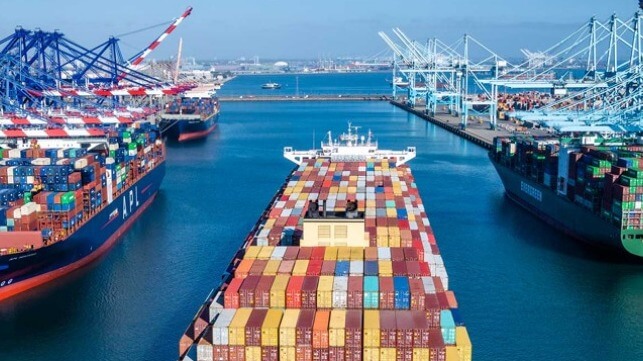
containership arriving in port
Ports were expecting strong declines in May and June as the trade war intensifies (Port of Los ANgeles file photo)

Published Jun 5, 2025 3:19 PM by The Maritime Executive


The U.S. government released the official data for trade numbers, imports, and exports, for April confirming what port officials said that volumes were plunging due to the tariffs but it also created a record decline in the U.S. trade deficit. The data came as Donald Trump spoke with China’s leader Xi Jinping and later told reporters both sides were going on the terms of a trade deal.

Trump launched the trade war and tariffs to close the U.S. trade deficit and the numbers for April show the first effects. The U.S. trade deficit was down by half to $61.6 billion, the lowest in 19 months. The good trade deficit was down by more than 46 percent to $87.4 billion. 

Analysts highlighted that shippers had rushed to move goods, especially imports into the U.S. in the first quarter to get ahead of the tariffs, a point that was confirmed by major ports which reported strong volumes. However, in April and May ports such as Los Angeles reported volumes were dropping quickly reaching a level 30 percent below 2024 levels.

The U.S. government data confirmed this with imports off more than 16 percent in April and specifically goods off nearly 20 percent. The data showed a $3.5 billion decline in the imports of household goods including cellphones and other electronics. Industrial supplies and materials were also off dramatically ($23 billion) as well as growing declines in vehicles, parts, and engines. 

A positive note for ports and the economy is that good exports grew to a record $190 billion in April. This included industrial supplies, materials, finished metals, and crude oil.

Speaking with reports in the Oval Office later on Thursday, Trump said he had a good call with China’s leader about trade and that both sides were reviewing the terms of an agreement. He said “We have a deal,” but that is being interpreted to mean the agreement which delayed the tariffs of talks as China in its official readout said more talks would follow. Trump said reciprocal invitations had been extended and that he and Xi Jinping would be visiting each other in the future.

All of this came as Alphaliner reported today that volumes through the Panama Canal were at all-time highs in the first five months of the year. Its analysis shows that containership traffic set a record with over 1,200 crossings in both directions of the canal. It said this is up 10 percent year-over-year and four percent over the previous best in 2022. Alphaliner said the increase was driven by smaller, Neo Sub-Panamax vessels (7,500 to 10,000 TEU).

Analysts have speculated without the announcement of a formal trade deal between the U.S. and China shippers would rush volumes into the United States during the previously announced 90-day pause. Carriers were reported to already be repositioning vessels to meet demand from China. This comes after the U.S. ports said that they were seeing the first large numbers of blanked sailings for May and June since the early days of the pandemic in 2020.

Trump’s Homeland Security Dept. Cancels Order for Incomplete USCG Cutter

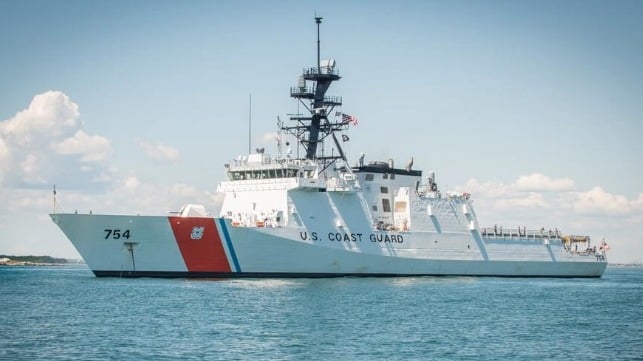
USCG Legend-class cutter James
USCG James was commissioned in 2015 as the fifth ember of the Legend-class (USCG photo)

Published Jun 5, 2025 9:20 PM by The Maritime Executive


The Department of Homeland Security is reporting that it canceled the order for the eleventh Legend-class national security cutter which was to be named USCG Friedman. Production for the vessel began in 2021 at HII’s Ingalls Shipbuilding in Pascagoula, Mississippi, but the project has been dogged by concerns.

Ingalls had a sole source contract as the only builder for the class which began delivering in 2008 and was designed to replace 12 aging 378?foot Hamilton-class high-endurance cutters that have been in service for 40 years. At 418 feet long, the Legend-class NSC has a maximum speed of 28 knots and a range of 12,000 nautical miles. The tenth ship, USCG Calhoun was delivered in October 2023.

Work had begun for number 11 in May 2021. HII reported that the start of fabrication signified the first 100 tons of steel had been cut. USCG said the vessel was due for delivery in 2024 and plans called for it to be homeported in Charleston, South Carolina with four other Legend-class cutters.

“Huntington Ingalls owed us this cutter over a year ago,” said Homeland Security Secretary Kristi Noem. “This project was over time and over budget. Now the money can be redirected to ensuring the Coast Guard remains the finest, most-capable maritime service in the world.”

According to the announcement for Homeland Security, canceling the contract with HII will save the U.S. over $260 million. They have also agreed that the Coast Guard will receive $135 million in parts that will be used to retrofit, upgrade, and maintain the Coast Guard’s existing fleet of 10 Legend-class cutters.

Congress has been highly critical of the USCG’s problems with its shipbuilding projects both for the cutters and the Polar Security Icebreakers. USCG had reported to Congress that there were issues with the project saying that construction of the 11th ship had been halted since at least November 2024 with the ship 15 percent complete. It blamed “material conformance concerns,” and said that the Coast Guard and the shipbuilder were working to resolve the issue.

The Coast Guard has also planned a 12th vessel in the Legand-class. Congress was yet to appropriate funds for the vessel but some long-lead elements were reportedly being ordered. 

Homeland Security highlights canceling the project will save money that can be used as part of the recently announced Force Design 2028 project to overhaul USCG operations and command structure. However, it did not address how the USCG will allocate resources for the two planned vessels which were scheduled as replacements for the older class which is now entirely decommissioned. The USCG had deferred the decommissioning of the last two Hamilton-class cutters, John Midget and Douglas Munro, to 2020 and 2021 while the rest of the class was replaced with the new cutters by 2018.


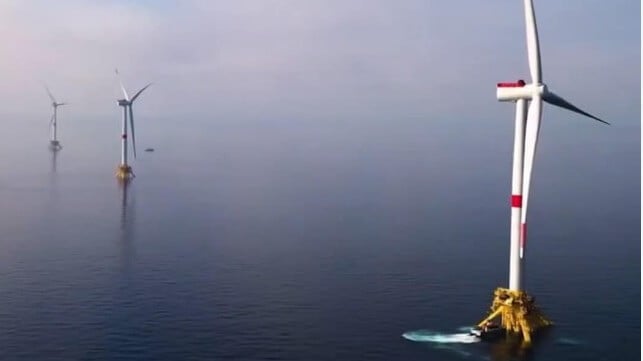
France Commissions the First Floating Wind Farm in the Mediterranean

France floating wind farm
Three floating turbines are the first in France and the Mediterranean (EDF)

Published Jun 5, 2025 10:55 PM by The Maritime Executive


The Provence Grand Large, located off the Gulf of Fos (Bouches-du-Rhône) in the Frnch Mediterranean has been fully commissioned. The unique floating wind farm is the first in France and across the entire Mediterranean basin and the companies believe it will be a model to advance the next phase of offshore wind energy.

The project has been under discussion since 2011 as they worked to involve all the key stakeholders and develop the pioneering technology. It was selected by the state in 2016 and also received support from the European Union. An independent committee was also established in 2022 to monitor the program and bring together scientific experts.

The resulting Provence Grand Large wind farm is a pilot project with three floating wind turbines installed 17 km (approximately 10.5 miles) off the coast of Port-Saint-Louis-du-Rhône. It has a capacity of 25 MW. It was developed through a partnership between EDF Renewables, Enbridge, and the Canada Pension Plan Investment Board (CPP Investments).

Bernard Fontana, Chairman and CEO of EDF, called it an important project for the country's energy sovereignty. He said the pilot farm is actively participating in France's energy transition while supporting the emergence of a cutting-edge industrial sector with innovative technologies. 

The installation relies on a unique anchoring technology. Built by Siemens Gamesa Renewable Energy, the farm's three wind turbines are installed on floats with taut anchor lines inspired by a technology used to stabilize oil platforms. Developed by SBM Offshore and IFP Energies Nouvelles, they report the technology is suitable for deep-sea areas and provides excellent float stability. It however is the first adaptation for offshore wind turbine floats.

Built by Prysmian, the dynamic cables, which adapt to the movements of the floats, transport the electricity produced by the Provence Grand Large wind turbines. Connected to underwater and then onshore cables, they ensure the transmission of the generated electricity to the onshore connection station operated by RTE.

 EDF says the experience from this project will be invaluable in carrying out the construction of its second floating offshore wind farm, Méditerranée Grand Large, for which it was awarded the contract in December 2024. This next project will be developed in partnership with Maple Power. The future Grand Large wind farm in the Mediterranean will be located 25 km (15.5 miles) off the Mediterranean coast with a capacity of approximately 250 MW.

The French government has set a target of a total capacity of 45 GW from offshore wind farms. Its plan aims to commission around 50 offshore wind farms by 2050.

EDF Renewables with Maple Power and its shareholders highlights it developed and commissioned France's first offshore wind farm with a capacity of 480 MW, the Fécamp offshore wind farm, off the coast of Saint Nazaire. They are also building the Calvados offshore wind farm (450 MW) and developing the Dunkirk (600 MW) and Manche Normandie (1 GW) offshore wind farms.