Saturday, June 07, 2025


Salvage Teams Making Progress Removing Boxes and Fuel from MSC Baltic III
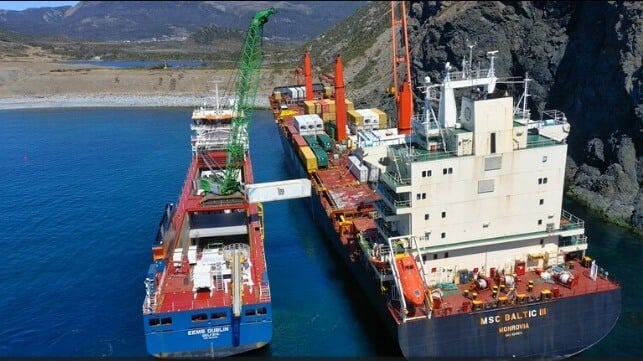
salvage of grounded containership
Containers being moved to the EEMS Dublin positioned alongside (Canadian Coast Guard)

Published Jun 6, 2025 2:46 PM by The Maritime Executive


The Canadian Coast Guard reports the salvage teams working at the site of the grounded containership MSC Baltic III are continuing to make progress. They highlight that it remains an ongoing operation that is expected to take time.

Weather which had been a factor during the winter and early spring has improved giving the teams easier access to the vessel. In addition, one of the local mayors reported a light vehicle road was expected to be completed this week to give access for personnel into the remote area on the western shore of Newfoundland. The road is not for the removal of material from the ship.

Container removal has also begun in part to give the teams more access including to fuel tanks that they have so far not been able to reach. The Canadian Coast Guard reports approximately half of the heavy fuel has been removed in a process of heating it and pumping it to storage tanks placed on the deck of the vessel. It is then pumped into tanks on a barge and moved to Corner Brook where it is being loaded onto other MSC vessels. The Coast Guard estimates the vessel had approximately 1,600 metric tons of heavy fuel and marine gas oil onboard.

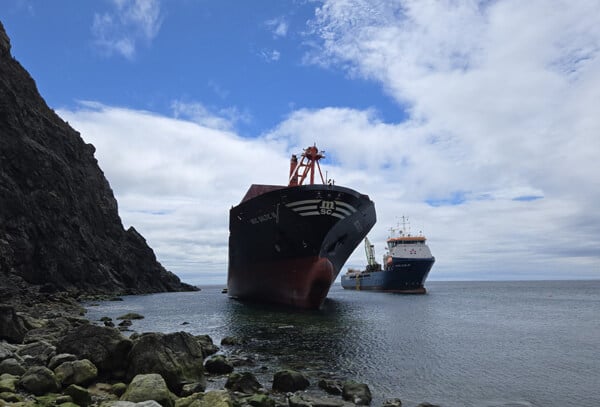
The ship grounded on the shore in a remote cove on February 15 after losing power in a winter storm. The crew was airlifted by helicopter to safety. The salvage operation has been ongoing for three months.

The salvage team placed a cargo ship, EEMS Dublin, alongside. The 6,000 dwt open hatch vessel can come alongside. It has provided a walk-to-work platform to reach the MSC Baltic III. Also, images show a crane vehicle has been put on the vessel that is being used to hoist containers from the MSC Baltic III to the deck of EEMS Dublin. The Canadian Coast Guard reports as of this week 115 containers have been removed, which is about a quarter of the boxes that were on the vessel when it grounded. 


Initially, a few boxes with plastics and potential pollutants were removed. Now they are removing more boxes for access. The ship had a total of 470 containers with reports that half were empties.

The Coast Guard said the focus remains on fuel removal and mitigating pollution. Previously it reported the discovery of a few tar balls on the shoreline thought to be coming from the ship. A Coast Guard spokesperson says that the team continues to monitor the shoreline and that there have recently been some minor observations of oil including a small number of tar balls of various sizes.

The ship has sustained significant hull damage with earlier reports that the engine room and cargo holds were flooded. The Canadian Coast Guard expects to continue to see small amounts of residual oil escape from the vessel over time.

To date, there have been no public comments on how the vessel might be removed from the shoreline. The Coast Guard has previously said with the damage it was not possible to remove the vessel at this time.

 

It’s Time for Shipping to Properly Regulate Plastic Pollution

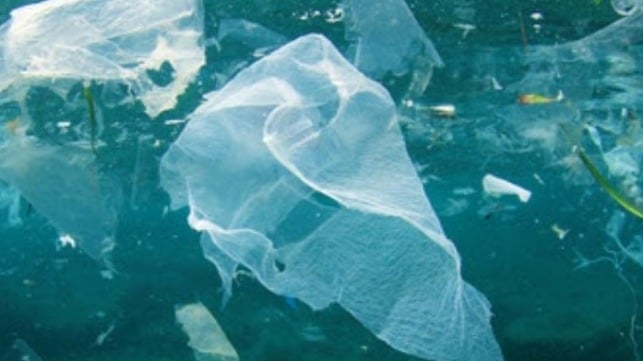
ocean plastic
Industry is joining environmentalists in calls for regulations on plastics pollution (file photo)

Published Jun 6, 2025 4:54 PM by Emma Forbes-Gearey


In the vast expanses of the world's oceans, a silent yet pervasive threat is taking shape: nurdles. These tiny, pre-production plastic pellets, measuring between 2 to 5 millimeters in diameter, are fundamental to the plastics industry, serving as the building blocks for a myriad of plastic products. However, their small size belies the significant environmental and potential health hazards they pose.

The start of 2024 highlighted the ongoing problem of plastic nurdle pollution. In January, the news reported a significant incident involving a spillage of nurdles from a shipping container caused by a storm the vessel encountered in December 2023. Over 1000 sacks of plastic nurdles were lost from a Danish ship, and 25 tonnes of plastic pellets fell from a Liberian vessel. These spills had a considerable impact on Spain, where vast quantities of nurdles washed up on the coastline and are notoriously hard to collect.

Nurdles pose a significant threat to marine ecosystems because they are often spilled during transportation, resulting in millions of nurdles entering the marine environment annually. Due to their minuscule size, they are not always readily visible except when they wash up in unusually huge quantities. Often mistaken for food by a wide range of marine species, they are ingested once they enter the ocean. This misidentification is particularly dangerous for smaller marine organisms, as it can lead to internal injuries, blockages, and starvation. Furthermore, as nurdles break down over time, they can release harmful chemicals, especially if they have absorbed toxic substances. These chemicals may contaminate the food chain and disrupt the delicate balance of marine ecosystems.

One of the most concerning aspects of nurdle pollution is its ability to accumulate in remote and pristine areas. Ocean currents and wind can transport nurdles across vast distances, carrying them to even the most isolated islands and coastlines. This widespread distribution makes it challenging to contain and clean up nurdle pollution, further exacerbating its negative impact on marine life.

Plastic nurdles leaking into the environment can be argued to be potentially worse than an oil spill. In the rare occurrence of an oil spill, most of it can be cleared away by specialized equipment, dispersants, biological agents, or via nature alone. However, when these plastic pellets enter the marine environment, they could end up anywhere depending on currents, making recovery at sea very difficult. Most of the recovery can only be done when it hits land, and over time they get buried in beaches, which makes recovering every nurdle impossible.

This was the case with the X-Press Pearl disaster in 2021. Following the fire and subsequent sinking of the ship, plastic pellets were found in the bellies and gills of local fish and washed up on Sri Lankan beaches as far as the eye could see. This is not the only case of nurdles spilled from containers. In 2017, approximately 2.25 billion nurdles spilled from a moored ship in Durban, South Africa. It was reported in various news outlets that these nurdles traveled as far as the southwest coast of Western Australia.

Global Efforts to Mitigate Nurdle Pollution

At MEPC 82 in October 2024, some progress was made towards tackling the plastic pollution problem, however, there was a lack of concrete decisions and enforceable legislation. Delegates approved the guidelines on good practice relating to clean-up of plastic pellets from ship-source releases. These provide practical guidance for government authorities on issues such as contingency planning, response, post-spill monitoring and analysis, and intervention and cost recovery.

In addition, the committee continued discussions on the development of mandatory regulations to address plastic pellets released from ships. These would build on the non-mandatory recommendations for the carriage of plastic pellets by sea in freight containers approved by MEPC 81, and the aforementioned best practice guidelines. While it is a positive step to see IMO discussions held and guidelines developed, given the significance of the plastic pollution challenge, the implementation of mandatory regulations as soon as possible is essential. 

 In January 2025, the Sub-Committee on Pollution Prevention and Response (PPR 12) agreed to a draft action plan to address Marine Plastic Litter from ships. The plan dictates the need to develop mandatory measures to reduce environmental risks when plastic pellets are transported by sea in freight containers. This was to be reviewed in the MEPC 83 that occurred in April 2025.

While significant progress has been made in recent years, the challenge of mitigating nurdle pollution remains substantial. The widespread distribution of nurdles and the ongoing production of plastic products make it difficult to eliminate this environmental threat, especially while the industry continues to wait for mandatory regulations. However, by continuing to implement effective prevention and cleanup measures, and by promoting sustainable practices, it is possible to significantly reduce the impact of nurdles on marine ecosystems and human health.


Emma Forbes-Gearey is the Loss Prevention Officer for West P&I


The opinions expressed herein are the author's and not necessarily those of The Maritime Executive.


Scientific Mission to Map Barrels of Radioactive Waste Dumped in the Ocean

nuclear waste barrels
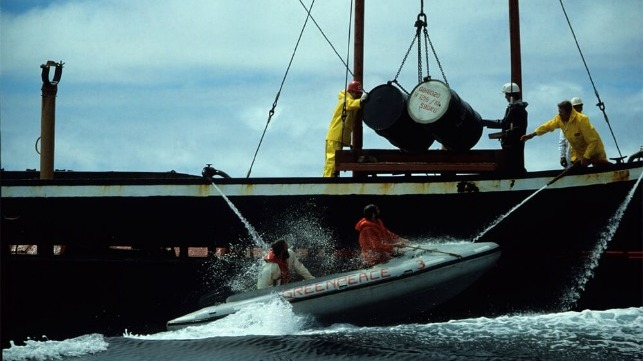
Greenpeace protesting the duping of the barrels in the early 1980s (Greenpeace Sweden photo)

Published Jun 6, 2025 5:09 PM by The Maritime Executive


A team of scientists is preparing to take to the sea to carry out a critical mission of mapping and studying a nuclear waste disposal site that is littered with thousands of drums that were dumped by European countries in the North Atlantic Ocean.

Starting mid-June, the team intends to sail to the Abyssal Plains in the Northeast Atlantic Ocean where they plan to map out over 200,000 barrels containing radioactive waste which were dumped over a four-decade period spanning from 1946 to 1990. The drums are believed to be at depths of between 3,000 and 5,000 meters (1.8 to over 3 miles) and were sealed in bitumen or cement before being dumped into the ocean.

The Nuclear Ocean Dump Site Survey Monitoring (NODSSUM) project aims to map the main immersion area, understand the behavior of radionuclides in the deep ocean, and interactions with the ecosystem. The drums are said to contain mainly radioactive waste from the development of nuclear power produced by several European countries between 1949 and 1982.

According to declarations to the International Atomic Energy Agency made by the dumping states, the barrels contain low or intermediate-level radioactive residues like process sludge, contaminated metal parts, ion exchange resins, and laboratory and office equipment among others. Though the radioactive activity of the waste is believed to have decreased significantly since its immersion due to the natural decay of the isotopes, there are concerns that some long-lived elements may remain.

From June 15, scientists will be in the North Atlantic waters for a month-long mission to locate and detect possible leaks. The team is led by the French National Center for Scientific Research (CNRS) and includes scientists from the French Research Institute for Exploitation of the Sea (Ifremer), and the Nuclear Safety and Radiation Protection Authority (ASNR) among other organizations.

During the period, the team intends to crisscross the dumping sites by deploying the French Oceanographic Fleet underwater vehicle UlyX. Using its high-resolution sonar, the Ifremer-operated robot will navigate at approximately 70 meters above the seafloor to map and identify the barrels and will approach a distance of 10 meters to photograph them and identify areas for water, sediment, and fauna sampling.

Ultimately, the scientists will be able to analyze the presence of radionuclides in the water and their impact on the marine environment. The research ship they are using is equipped with radioactivity measurement instruments.

Based on the results of the first mission, a second expedition that is still in the planning stages will involve the deployment of a remotely operated robot or a manned submarine to carry out studies and samples in the direct vicinity of the barrels. The team is putting a strong emphasis on safety and has no intention of bringing the drums to the surface. 

“Beyond the minimization of risks, the logistics would be too complex and without scientific interest. The objective of the project is to assess their state in situ, using underwater vehicles, and to study the environmental conditions around them,” states NODSSUM on its website.

The NODSSUM expedition is part of the Prime Radiocean project that is involved in missions that seek to better understand radioactive waste risks in marine environments, thus contributing to the development of safer and more sustainable nuclear waste management policies.


New Zealand Calls for Banning Substandard Vessels Based on 2023 Incident

New Zealand towing containership
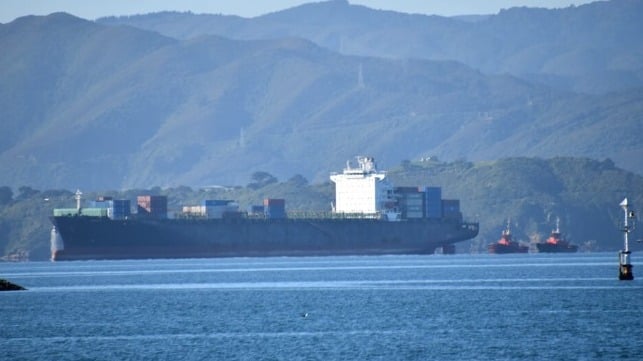
Shiling being towed back to port after her third mechanical problem in months in 2023 (Maritime New Zealand)

Published Jun 6, 2025 5:37 PM by The Maritime Executive


Maritime investigators in New Zealand are calling for the banning of substandard ships from the country’s water to avoid potential disasters. In the wake of the release of the final report on the near catastrophic incidents involving container ship Shiling, which twice had to be rescued and towed back to port in 2023, the investigators as saying that New Zealand can take a cue from Australia and ban substandard ships.

The Transport Accident Investigation Commission (TAIC) contends that the Singapore-registered Shiling, which had a notorious history of mechanical problems, should never have been allowed in New Zealand waters. TAIC is calling on the Ministry of Transport to pass a law giving Maritime NZ the authority to ban certain ships from the country. The Australian Maritime Safety Authority has the powers, which it has repeatedly utilized in banning ships deemed unsafe.

In the case of Shiling, the telltale signs were already evident even before the boxship twice experienced engine failures in New Zealand waters in a span of less than a month in 2023. Evidence pointed to the fact that the ship was a disaster in waiting from as early as 2018 when she was classified as a “high risk” vessel under the Tokyo Port State Control (PSC) statutes.

In 2020, a year after Shiling Navigation purchased the vessel and tapped Asian-Alliance Ship Management as the operator providing liner services between New Zealand and ports in Asia, inspections in Russia, China, and Chile detected a total of 19 deficiencies in five PSC inspections.

The same happened in New Zealand where Maritime NZ had issued 16 deficiencies against the ship during three PSC inspections between March 2022 and March 2023, with the last one coming just a month before the first major incident. It is also emerging that twice, in February 2022 and July 2022, the Shiling suffered engine failures while arriving and departing the Port of Wellington.

“The Commission found that the Shiling had a history of deficiencies and that it’s virtually certain the ship wasn’t seaworthy while in New Zealand,” said Naveen Kozhuppakalam, TAIC’s Chief Investigator of Accidents.

Owing to its troubled history, it was just a matter of time before a serious incident could occur. It did not take long for the 294-meter (965-foot) long ship built at HD Hyundai Heavy Industries in 2005 with a capacity of 5,117 TEU to experience its first major incident.

On April 15, 2023, the Shiling was under pilotage at Wellington. Just after initiating a turn into the Wellington Harbour entrance channel, the vessel suffered a blackout that caused the main engine to stop. The momentum of the turn carried the ship into the shallow waters of Falcon Shoal, where the bridge team succeeded in using both the ship’s anchors to stop the ship from grounding. She was subsequently towed dead-ship by tugs back to its berth.

Maritime NZ issued a detention order against the Shiling and carried out detailed inspections that identified numerous deficiencies. For the next 25 days, the boxship remained at Wellington undergoing repairs to its generators and rectification of the deficiencies identified.

On May 10, the Shiling departed Wellington bound for Singapore. Normal operational standards entail that while a vessel is in port, any accumulation of oily water must be stored in tanks for later controlled discharge away from any coastline. Due to the length of the Shiling’s stay at Wellington, the various tanks used to store oily water were at capacity.

The engine room bilges were confirmed as dry before the ship departed with the chief engineer intending to begin pumping out the tanks through the approved oily water separator once the ship was outside New Zealand’s territorial waters.

Owing to adverse weather forecasts for the Tasman Sea, the master decided to take shelter near the New Zealand coast and wait for about 36 hours for the weather to abate. At about 2300 on May 11, the Shiling departed the sheltered waters bound for Singapore. Because the engineers had been unable to begin pumping out the oily water holding tanks, additional oily water that had been produced while the ship remained in sheltered waters had filled the engine room bilges and begun accumulating on the engine room tank top.

When the ship entered the Tasman Sea, it began to roll, and the free water on the tank top entered the void under the main engine sump, where three rubber diaphragms were located. The fact that all three rubber diaphragms deteriorated with age allowed the bilge water to enter the lube-oil tank, causing the lube-oil pumps to lose pressure and the main engine to stop. New Zealand’s inspectors later concluded the diaphragms had gone uninspected for years.

Given the contamination of the lube oil tank, the engineers were unable to restart the main engine. Without propulsion, the Shiling settled beam-on to the waves and began rolling heavily. At 0828, the master radioed the New Zealand Marine Operations Center to request towing assistance. At 1056, due to continued heavy rolling, the master made a mayday call and a tow vessel responded, managing to rescue the container ship to the sheltered waters of Golden Bay and eventually back to Wellington.

For the next 45 days, the Shiling remained at Wellington undergoing surveys and repairs to the main engine, further repairs to the generators in connection with the first incident, and repairs to several other systems identified as substandard. On July 7, the ship was finally allowed to depart New Zealand for Singapore.

In both incidents, there were no injuries reported for the ship’s 24 crewmembers or environmental pollution. Following the release of the final report, TAIC has gone ahead to issue several recommendations, key of which is banning substandard vessels from New Zealand’s waters.

ECOSIDE

Supertanker Disconnects from Pipeline in Storm Causing Oil Slick

oil spill
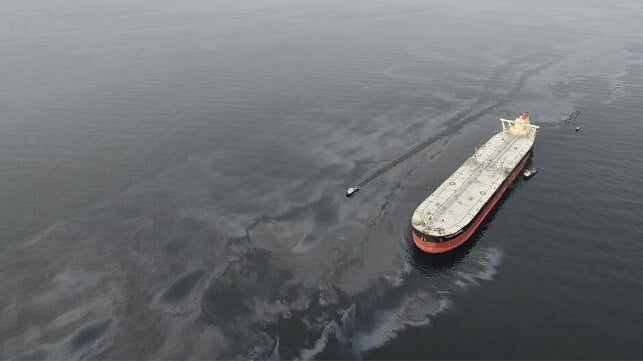
Oil spill after supertanker disconnected from offshore pipeline during storm (ThaiMecc)

Published Jun 6, 2025 8:48 PM by The Maritime Executive


Thai Oil along with multiple government agencies are racing to contain an oil slick that occurred overnight as a supertanker owned by Japan’s Mitsui O.S.K. Lines disconnected from an offshore pipeline connection during a storm. Oil dispersants, booms, and skimmers are being deployed to contain the spill.

The National Maritime Interests Protection Center (ThaiMecc) initially reported that an estimated 10 cubic meters or approximately 10,000 liters of oil had spilled in the Si Racha District southeast of Bangkok on the Gulf of Thailand. Later reports doubled the estimate to 20,000 liters.

The supertanker Phoenix Jamnagar (311,798 dwt – registered in Singapore) was at the offshore terminal connected to the pipeline. The vessel which was built in 2019 is reported to be operating under charter to Thai Oil.


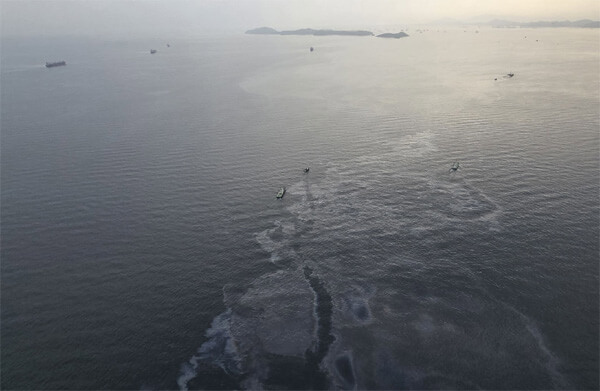
Spill was drifting to the south at 1 to 2 knots (ThaiMecc)


The spill happened around midnight on June 5 due to unexpected severe weather conditions, including high waves and sudden strong winds. The company initiated a process to stop the oil transfer but during the sudden storm, the breakaway coupling worked as designed to prevent damage to the ship or pipeline. It disengaged causing the spill which officials report took 30 minutes to stop. Safety values permitted what is being called a small amount of oil.

Officials were reporting that booms were strung at 399 and 600 meters but the spill spread to create a slick covering an area estimated at 10 meters by 10 meters (32 feet) and being driven southward at a speed of 1 to 2 knots. 

Boats and helicopters with dispersant were crossing the area and a skimmer had also been deployed. The goal was to complete the skimming operation by Friday afternoon. 

Thai officials said the focus remains on protecting the marine environment. They believe it was an accident caused by the sudden storm. No damage was apparent to the tanker or the pipeline.


Car Carrier With EVs and Hybrids is Burning and Abandoned Mid-Pacific

car carrier
The vehicle carrier Morning Midas has been abandoned in the mid-Pacific (USCG photo from June 3)

Published Jun 4, 2025 10:33 AM by The Maritime Executive


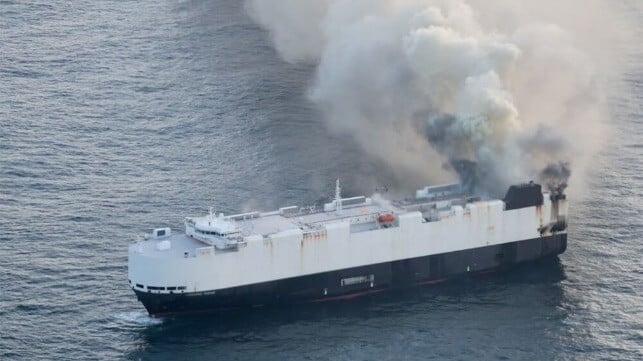
The vehicle carrier Morning Midas was abandoned on Tuesday afternoon, June 3 in the mid-Pacific some 300 miles southwest of the remote Aleutian Islands after the crew was unable to control a fire aboard. The crew was rescued uninjured by a passing merchant ship while the U.S. Coast Guard Alaska was coordinating the effort.

The vessel, which is managed by London-based Zodiac Maritime, is reported to be carrying a total of 3,048 vehicles, with 70 being fully electric vehicles and 681 being partial hybrid electric vehicles. It was heading from China to Lázaro Cárdenas, Mexico. Lloyd’s is reporting the vessel is operating under charter to China’s SAIC Anji Logistics.

“Smoke was initially seen emanating from a deck carrying electric vehicles,” reported a spokesperson for Zodiac Maritime. “The crew immediately initiated emergency firefighting procedures using the vessel’s onboard fire suppression systems. However, despite their efforts, the situation could not be brought under control.”

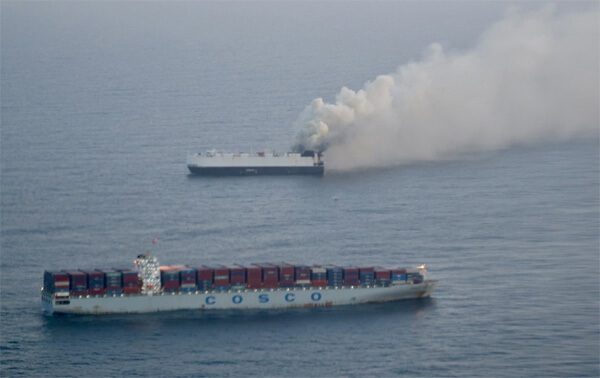
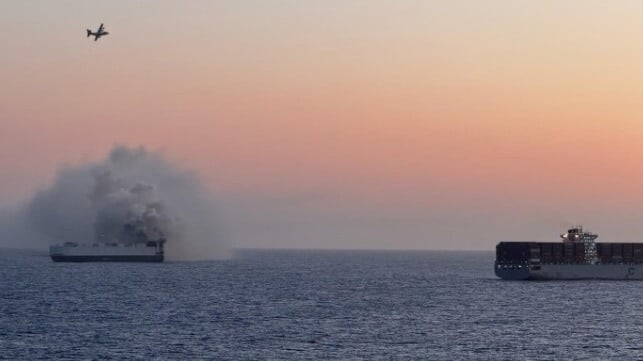
In consultation with the United States Coast Guard, the 22 crew abandoned the vessel using its lifeboat. The Coast Guard reports three merchant ships were directed to the scene and that the containership Cosco Hellas (107,500 dwt – registered in Malta) rescued the crew. They are all reported to be in good condition. 


Morning Midas and the rescue ship Cosco Hellas (USCG photo)


The U.S. Coast Guard Alaska also diverted the crew of U.S. Coast Guard Cutter Munro to the area, directed the launch of a C-130J Super Hercules aircrew from Coast Guard Air Station Kodiak, and positioned an MH-60T Jayhawk helicopter aircrew in Adak in the Aleutians. 

In the latest update from the U.S. Coast Guard on June 4, they are reporting the status of the fire is currently unknown, but smoke is emanating from the vessel. Morning Midas is estimated to have approximately 350 metric tons of gas fuel and 1,530 metric tons of very low sulfur fuel oil (VLSFO) onboard. 

Morning Midas (12,250 dwt) is a Liberian-flagged Pure Car and Truck Carrier (PCTC), built in 2006 in China at Xiamen Shipbuilding Industry. The vessel was cited during a port state inspection in Bremerhaven in October 2024 for unspecified issues with fire safety and launching arrangements for rescue boats, but it did not result in a detention. A subsequent standard inspection in Portland, Oregon by the U.S. Coast Guard in January 2025 found no issues with the vessel.

Electric vehicles have been a constant concern for the shipping industry with numerous reports of car fires. The fires are more difficult to handle because of the batteries prompting insurers and the industry to issue specific warnings about the handling of EVs. They have been believed to be the source of several other fires aboard ships.


Video: Monitoring Continues of Burning Car Carrier Drifting in the Pacific

car carrier fire
Smoke continues to come from the Morning Midas which is abandoned and drifting in the Pacific (USCG)

Published Jun 5, 2025 2:22 PM by The Maritime Executive


After abandoning the car carrier Morning Midas in the mid-Pacific, efforts are continuing to monitor the position of the vessel while salvage experts rush to the scene. A team from Resolve Marine is expected to take nearly four days to reach the burning ship which is approximately 340 miles southwest of Adak in the Aleutians.

The managers of the vessel, Zodiac Maritime, reported that smoke was discovered on one of the car decks of the vessel around 1400 local time on June 3. According to the U.S. Coast Guard, there are a total of 3,048 vehicles on board including 70 fully electric and 681 hybrid, partially electric vehicles. Zodiac says the smoke was initially seen emanating from a deck carrying electric vehicles.

Due to the intensity of the fire, and with concern for crew safety, Zodiac reports the decision was made to abandon the ship. The 22 crew went into one of the lifeboats and were picked up by the containership Cosco Hellas which had diverted to the scene.

“We are proud of the diligent efforts of our crew in responding to the fire onboard,” said a spokesperson for Zodiac Maritime. “They immediately activated the vessel’s well-drilled emergency firefighting protocols and deployed the onboard fire suppression systems, all of which were fully operational.”


Recent pictures from the U.S. Coast Guard which has been overflying the scene show smoke emanating from the vessel. Zodiac notes that no pollution has been seen and the Morning Midas remains afloat but is still on fire.

Resolve Marine has been appointed and their first tug carrying a team of salvage specialists and specialized equipment is already traveling to the vessel. However, Zodiac says they will not reach the vessel until approximately June 9.

Until the salvage team can reach the vessel, Zodiac reports it can monitor the vessel via the onboard satellite-connected systems. However, this only allows for tracking the vessel’s location, with limited ability to monitor other onboard conditions.

Once the salvage team reaches the vessel, it will assess its condition and provide necessary support. An additional fire-fighting tug, capable of ocean towage, is being arranged to provide further support.

The vessel had called at multiple ports in China with the local media confirming it is operating under charter for SAIC Anji Logistics. Bloomberg says it has several brands of cars aboard including models from Chery Automobile Co. and Great Wall Motor Co.  The vessel was heading to Lázaro Cárdenas, Mexico.


EU deplores US sanctions against ICC judges, including Slovenians


Copyright European Union, 2025.


By Jorge Liboreiro
Published on 06/06/2025 -


Slovenia has asked Brussels to intervene after the US targeted one of its nationals, Judge Beti Hohler, as part of new sanctions against the ICC.


The European Union has roundly deplored the United States for sanctioning four judges of the International Criminal Court (ICC), including one citizen from the bloc, Slovenia's Beti Hohler, further deepening the divide between transatlantic allies.

The sanctions, which also target nationals from Benin, Uganda and Peru, were announced on Thursday by US Secretary of State Marco Rubio, who said the decision was based on the court's "baseless and politicised" investigations of war crimes allegedly committed by US forces in Afghanistan and Israel in the Gaza Strip.

The second probe led to arrest warrants on Israel's Prime Minister Benjamin Natayanhu and former Defence Minister Yoav Gallant. Judge Hohler ruled in favour of the orders.

As a result of the measures, the four judges will be unable to access their property and assets on US soil and will be blocked from making transactions with American entities. The bans risk hindering the magistrates' ability to perform their day-to-day work.

"We call on our allies to stand with us against this disgraceful attack," Rubio said.

Rubio's call was met with the opposite reaction: emphatic support for the Hague-based tribunal and forceful rejection of the sanctions.

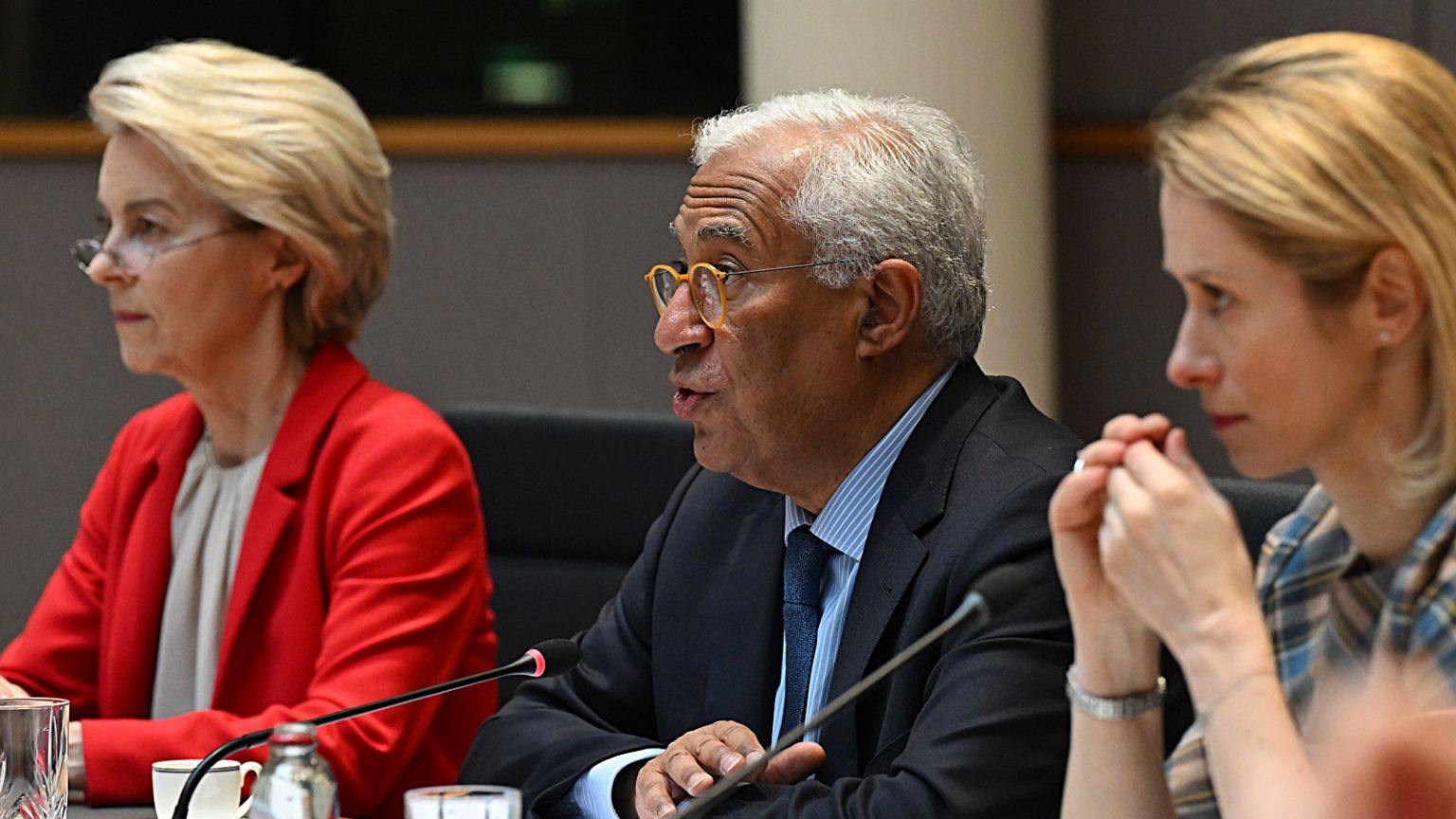
"The ICC holds perpetrators of the world's gravest crimes to account & gives victims a voice. It must be free to act without pressure," said Ursula von der Leyen, the president of the European Commission.

"We will always stand for global justice & the respect of international law."

António Costa, the president of the European Council, voiced a similar message.

"The EU strongly supports the International Criminal Court, a cornerstone of international justice," Costa wrote on social media.

The ICC "does not stand against nations—it stands against impunity. We must protect its independence and integrity. The rule of law must prevail over the rule of power."

High Representative Kaja Kallas stressed the ICC "must remain free from pressure and true to its principles."

The Netherlands, which serves as the host country for the ICC, also expressed strong condemnation, stressing the tribunal's work must remain "as unhindered as possible".

"The Netherlands disapproves of the new sanctions against officials of the International Criminal Court," said Dutch Foreign Minister Caspar Veldkamp.

"Independent international courts and tribunals must be able to carry out their work without hindrance. We stand firmly behind the Court."


Extraterritorial effects


Rejecting outside "pressure on judicial institutions", the Slovenian government said it would provide Judge Beti Hohler with "all necessary support in the performance of her mandate in the current situation".

The country called on Brussels to immediately activate the so-called blocking statute, a decades-long regulation meant to protect EU individuals and companies from the extraterritorial application of sanctions by non-EU countries.

The law was introduced in reaction to the sanctions that Washington introduced in 1996 against Cuba, Iran and Libya, which had ripple effects on European operators that engaged in legitimate trade with the three countries, particularly Cuba.

The blocking statute came back to the fore in 2018, when the first Donald Trump administration withdrew from the Iran nuclear deal, reintroduced sanctions that had been previously lifted and threatened to punish companies for doing business with Tehran, regardless of their geographic location or ownership.

Although Brussels tried to mitigate the damaging impact of these secondary sanctions, many European companies voluntarily cut off relations with Iran out of fear of losing access to America's highly profitable, dollar-based market.

A Commission spokesperson said the executive would "closely monitor the implications before we decide on any next steps", such as the activation of the blocking statute, which is the Commission's prerogative but depends on a qualified majority among member states. "We have to take one step at a time," the spokesperson said.

In a statement, the ICC insisted it would "continue its work undeterred, in strict accordance with the Rome Statute and the principles of fairness and due process".

"Targeting those working for accountability does nothing to help civilians trapped in conflict. It only emboldens those who believe they can act with impunity," it said.

"These sanctions are not only directed at designated individuals, they also target all those who support the Court, including nationals and corporate entities of States Parties. They are aimed against innocent victims in all situations before the Court."

The US, which is not a party to the 1998 Rome Statute, has long had tense relations with the ICC, viewing with suspicion its ability to conduct probes into nationals around the world. The arrest warrant against Netanyahu was met with bipartisan condemnation in Washington and prompted a renewed assault by the Trump administration.

Earlier this year, Hungary openly defied the ICC by ignoring the warrant and inviting Netanyahu to Budapest. Hungary later announced its intention to withdraw from the Rome Statute, becoming the first member state to do so.

This article has been updated with more reactions.

Rubio, Trump Accused of Criminal Obstruction for Sanctioning ICC Judges

"Sanctioning ICC judges for doing their work on behalf of justice is a flagrant attack on the rule of law," said one critic.


U.S. Secretary of State Marco Rubio speaks during a June 3, 2025 event in Washington, D.C.
(Photo: Saul Loeb/AFP via Getty Images)


Brett Wilkins
Jun 06, 2025
COMMON DREAMS


Human rights defenders on Friday accused U.S. President Donald Trump and Secretary of State Marco Rubio of criminal obstruction after Rubio announced sanctions targeting four International Criminal Court judges who authorized an investigation into torture allegations against American troops in Afghanistan and arrest warrants for fugitive Israeli Prime Minister Benjamin Netanyahu.

Rubio sanctioned International Criminal Court Judges Solomy Balungi Bossa of Uganda, Luz del Carmen Ibáñez Carranza of Peru, Reine Adelaide Sophie Alapini Gansou of Benin, and Beti Hohler of Slovenia "pursuant to President Trump's Executive Order 14203." The order was issued in February and sanctioned ICC Prosecutor Karim Khan and accused the Hague-based tribunal of "baseless actions targeting America and our close ally Israel."

"Have Marco Rubio's State Department lawyers read him Article 70 of the Rome Statute on obstruction of justice?"

"These four individuals have actively engaged in the ICC's illegitimate and baseless actions targeting America or our close ally, Israel," Rubio added. "The ICC is politicized and falsely claims unfettered discretion to investigate, charge, and prosecute nationals of the United States and our allies."

Two of the sanctioned judges authorized a probe of U.S. war crimes in Afghanistan. The other two green-lighted warrants for the arrest of Netanyahu and Yoav Gallant, his former defense minister, for alleged war crimes and crimes against humanity in Gaza, including weaponized starvation and the murder of Palestinians—at least 54,607 of whom have been killed since Israel began its assault and siege of Gaza following the October 7, 2023 Hamas-led attack, according to the Gaza Health Ministry.

The ICC's Assembly of State Parties—the court's governing body—said in a statement Friday that the U.S. sanctions are a "regrettable" effort to "impede the court and its personnel in the exercise of their independent judicial functions.

Kenneth Roth, a professor at the Princeton School of Public and International Affairs and former director of Human Rights Watch, on Friday accused Trump and Rubio of "obstructing justice under Article 70 of the Rome Statute," the treaty establishing and governing the ICC.


Christoph Safferling, director of the International Nuremberg Principles Academy—a Germany-based foundation "dedicated to the advancement of international criminal law and related human rights"— said Friday that 80 years after the the Nuremberg Trials of Nazi war criminals, "obstructing the ICC is an affront to the commitment to justice and the rule of law."

"The court carries forward this legacy and calls for our steadfast support in the fight against impunity," Safferling added.

United Nations High Commissioner for Human Rights Volker Türk said Friday that he was "profoundly disturbed" by the U.S. sanctions.

"Attacks against judges for performance of their judicial functions, at national or international levels, run directly counter to respect for the rule of law and the equal protection of the law—values for which the U.S. has long stood," Türk added.

European Commission President Ursula von der Leyen said the European Union "deeply regrets" the Trump administration's move.


Slovenia's Foreign Ministry said that "Slovenia regrets the announced sanctions by the U.S. government against four judges of the International Criminal Court, including a judge from Slovenia," and "rejects pressure on judicial institutions and influence on judicial operations."

"Courts must act in the interests of law and justice," the ministry continued. "In the current situation we will support the judge, who is a Slovenian citizen in carrying out her mandate." Due to the inclusion of an E.U. member state on the sanctions list, Slovenia will propose the immediate activation of the blocking act."

The E.U.'s blocking statute is meant to protect businesses in the 27-nation bloc from adverse consequences of foreign—particularly U.S.—sanctions.

During the first Trump administration, former Secretary of State Mike Pompeo sanctioned then-ICC Prosecutor Fatou Bensouda and Prosecution Jurisdiction Division Director Phakiso Mochochoko for investigating U.S. war crimes in Afghanistan. This, even after the ICC Pre-Trial Chamber II announced it would not grant a request by Bensouda to open an investigation into the alleged torture of prisoners held in U.S. military and secret CIA prisons in Afghanistan, Poland, Romania, and Lithuania.

In 2021, Khan angered human rights defenders by announcing he was seeking approval to resume an investigation into potential war crimes in Afghanistan committed by the Taliban and the Islamic State—but would exclude alleged crimes perpetrated by U.S. forces.

U.S. and Israeli officials often note that neither country is a party to the Rome Statute. However, the court has affirmedr its jurisdiction "in relation to crimes committed on the territory of Palestine, including Gaza," as well as "over crimes committed by Palestinian nationals inside or outside Palestinian territory."


Responding to the U.S. sanctions, Amnesty International secretary general Agnès Callamard said Friday that "this is an attack against international justice and the fight against impunity."

"Governments who believe in a rule-based order must take all necessary measures to protect the four judges against the impact of the sanctions," she continued. "They must assure the ICC of their full support. They must voice their commitment to the independence and impartiality of the ICC clearly and loudly. They must implement all arrest warrants and support the ICC in all its investigations."

"International justice is a battleground. It has been so from the very beginning," Callamard added. "Victims know so all too well. We will keep fighting and resisting all attempts to derail, undermine, destroy the search for justice and the rule of law."

In April, the ACLU filed a lawsuit in a Maine federal court on behalf of Matthew Smith, co-founder of the human rights group Fortify Rights, and international lawyer Akila Radhakrishnan arguing that Trump's sanctions against Khan violate their First Amendment rights.

Venezuelan family feels full force of Trump’s crackdown

By AFP
June 6, 2025


Mercedes Yamarte blinks back tears as she thinks about her family split asunder by President Donald Trump's immigration crackdown - Copyright AFP Federico PARRA
Moisés ÁVILA, with Margioni Bermudez in Maracaibo

Mercedes Yamarte’s three sons fled Venezuela for a better life in the United States. Now one languishes in a Salvadoran jail, another “self-deported” to Mexico, and a third lives in hiding — terrified US agents will crash the door at any moment.

At her zinc-roofed home in a poor Maracaibo neighborhood, 46-year-old Mercedes blinks back tears as she thinks about her family split asunder by US President Donald Trump’s immigration crackdown.

“I wish I could go to sleep, wake up, and this never happened,” she says, as rain drums down and lightning flashes overhead.

In their homeland, her boys were held back by decades of political and economic tumult that have already prompted an estimated eight million Venezuelans to emigrate.

But in leaving, all three brothers became ensnared by politics once more, and by a US president determined to bolt the door of a nation once proud of its migrant roots.

For years, her eldest son, 30-year-old Mervin had lived in America, providing for his wife and six-year-old daughter, working Texas construction sites and at a tortilla factory.

On March 13, he was arrested by US immigration agents and summarily deported to a Salvadoran mega jail, where he is still being held incommunicado.

The Trump administration linked Mervin and 251 other men to the Tren de Aragua — a Venezuelan gang it classifies as a terrorist group.

Washington has cited tattoos as evidence of gang affiliation, something fiercely contested by experts, who say that, unlike other Latin American gangs, Tren de Aragua members do not commonly sport gang markings.

Mervin has tattoos of his mother and daughter’s names, the phrase “strong like mom” in Spanish and the number “99” — a reference to his soccer jersey not any gang affiliation, according to his family.


– The journey north –

Mervin arrived in the United States in 2023 with his 21-year-old brother Jonferson. Both hoped to work and to send some money back home.

They had slogged through the Darien Gap — a forbidding chunk of jungle between Colombia and Panama that is one of the world’s most dangerous migration routes.

They had trekked north through Mexico, and were followed a year later by sister Francis, aged 19, who turned around before reaching the United States and brother Juan, aged 28, who continued on.

When the brothers entered the United States, they registered with border officials and requested political asylum.

They were told they could remain legally until a judge decided their fate.

Then US voters voted, and with a change of administration, at dawn on March 13, US immigration agents pounded the door of an apartment in Irving, Texas where the trio were living with friends from back home.

Immigration agents were serving an arrest warrant when they saw Mervin and said: “You are coming with us too for an investigation,” Juan recalled.

When the agents said they had an arrest warrant for Mervin too, he tried to show his asylum papers.

“But they already had him handcuffed to take him away,” Juan said.

He was transferred to a detention center, where he managed to call Jonferson to say he was being deported somewhere. He did not know where.

Three days later, Jonferson saw his brother among scores of shorn and shackled men arriving at CECOT, a prison built by El Salvador’s President Nayib Bukele to house alleged gang members.

Jonferson saw his handcuffed brother kneeling on the floor staring off into space. He broke down crying and called his mother.

She had also seen Mervin in the images. “My son was kneeling and looked up as if to say: ‘Where am I and what have I done to end up here?'” said Mercedes.

“I have never seen my son look more terrified” she said.


– The journey south –

After his brother’s arrest, Jonferson had nightmares. The fear became so great that he fled to Mexico — what some euphemistically describe as “self-deportation”.

There, he waited a month to board a Venezuelan humanitarian flight to return home.

“It has been a nightmare,” he told AFP as he rode a bus to the airport and from there, onward home.

Juan, meanwhile, has decided to remain in the United States. He lives under the radar, working construction jobs and moving frequently to dodge arrest.

“I am always hiding. When I go to the grocery store I look all around, fearful, as if someone were chasing me,” he told AFP asking that his face and his whereabouts remain undisclosed.

As the only brother who can now send money home, he is determined not to go back to Venezuela empty-handed. He also has a wife and seven-year-old son depending on him.

But he is tormented by the thought of his brother Mervin being held in El Salvador and by the toll it has taken on the family.

“My mother is a wreck. There are days she cannot sleep,” Juan said.

“My sister-in-law cries every day. She is suffering.”


– The journey home –

Jonferson has since returned to Maracaibo, where he was greeted by strings of blue, yellow, and red balloons and a grateful but still forlorn mother.

“I would like to be happy, as I should. But my other son is in El Salvador, in what conditions I do not know,” Mercedes said.

But her face lights up for a second as she hugs her son, holding him tight as if never wanting to let him go.

“I never thought the absence of my sons would hit me so hard,” she said. “I never knew I could feel such pain.”

For now, the brothers are only together in a screen grab she has on her phone, taken during a video call last Christmas.
US court says Trump can bar AP from key White House events for now


By AFP
June 6, 2025


White House Press Secretary Karoline Leavitt speaks during the daily briefing in the Brady Briefing Room of the White House in Washington, DC, on March 19, 2025. - Copyright AFP Mandel NGAN

President Donald Trump can bar The Associated Press from some White House media events for now, a federal appeals court ruled Friday, pausing a lower court order to give access to the US news agency’s journalists.

AP journalists and photographers have been barred from the Oval Office and from traveling on Air Force One since mid-February because of the news agency’s decision to continue referring to the “Gulf of Mexico” — and not the “Gulf of America” as decreed by Trump.

In April, district court judge Trevor McFadden deemed that move a violation of the First Amendment to the US Constitution, which guarantees freedom of speech and of the press.

But on Friday, a panel of judges with the Washington-based federal appeals court ruled that, pending appeal, the government could go ahead and bar AP from “restricted presidential spaces,” which it said did not fall under First Amendment protections.

“The White House therefore retains discretion to determine, including on the basis of viewpoint, which journalists will be admitted,” the ruling said.

“Moreover, without a stay, the government will suffer irreparable harm because the injunction impinges on the President’s independence and control over his private workspaces,” it said.

– ‘Big WIN’ –

Following the ruling, Trump hailed on his Truth Social platform the “Big WIN over AP today.”

“They refused to state the facts or the Truth on the GULF OF AMERICA. FAKE NEWS!!!”

White House Press Secretary Karoline Leavitt echoed the sentiment, posting to X, “VICTORY! As we’ve said all along, the Associated Press is not guaranteed special access to cover President Trump in the Oval Office, aboard Air Force One, and in other sensitive locations.”

The AP, a 180-year-old news organization that has long been a pillar of US journalism, has so far refused to backtrack on its decision to continue referring to the “Gulf of Mexico.”

In its style guide, it highlights that the Gulf of Mexico has “carried that name for more than 400 years” and the agency “will refer to it by its original name while acknowledging the new name Trump has chosen.”

Trump has long had an antagonistic relationship with most mainstream news media, previously describing them as the “enemy of the people.”

Since his return to the presidency in January, his administration has sought to radically restructure the way the White House is covered, notably by favoring conservative podcasters and influencers.

Two weeks after barring the AP, the White House stripped journalists of the nearly century-old power to decide which organization’s employees will be members of the daily pool of reporters and photographers covering presidential events.

His administration has also pressed to dismantle US government-funded overseas outlets Voice of America, Radio Free Europe/Radio Liberty and Radio Free Asia, and is seeking to starve National Public Radio (NPR) and the Public Broadcasting Service (PBS) of federal funds.
U.S. mental health crisis: Is it medication or the system to blame?


ByDr. Tim Sandle
DIGITAL JOURNAL
June 6, 2025


This file handout photo provided to AFP on November 16, 2021 by Pfizer shows the making of its experimental Covid-19 antiviral pills, Paxlovid, at its laboratory in Freiburg, Germany - © AFP Dimitar DILKOFF

Children’s mental health has recently dominated U.S. headlines. Some commentators have blamed psychiatric medications, sparked by RFK Jr.’s “Make America Healthy Again” (MAHA) flawed report and its now-criticized use of non-existent sources. Others pointed to social media and technology addiction as the real threat.

Leading psychiatrists and medical experts from the U.K. say both arguments miss the mark. Several professionals argue that overmedication is not caused by medicine or screens—instead it is driven by a suboptimal system. Examples include: Short appointments, limited access to therapy, and slow regulatory approval for non-drug treatments. These are factors that are leaving some patients behind.

Dr. Hannah Nearney, Psychiatrist and Founder of Anchor Psychiatry Group / Flow Neuroscience has told Digital Journal: “We shouldn’t add to the panic—medication is not causing the mental health crisis as it’s often portrayed. Overmedication happens when the system fails—not because the science is wrong, but because the way we manage and deliver care is flawed. Blaming the medicine distracts from the real issue: people aren’t getting the time, attention, or access to the range of therapies they need.”

In May, the U.S. CDC revealed that more than 1 in 10 adults take antidepressants. Despite that, the prevalence of depression among the U.S. population has increased by 60% in the past decade.

According to Nearney , in the U.S. psychiatry system, prescribing two or more medications at once is common. The duration of use is also problematic—the average U.S. patient remains on antidepressants for 5 years, while clinical trials for such typically last 8 weeks.

“Patients may be prescribed multiple drugs at once in a bid to improve their symptoms, or to alleviate side effects from the initial medications,” Nearney continues, adding: “Whilst in some cases this can be clinically appropriate, this runs a greater side-effect burden risk for the patient to bear and we still know far too little about the effects of combining psychotropic medications in the long term.”

There are several concerns about the negative effects of psychiatric overmedication, Nearney observes: “Overmedication is a problem not only because the root cause of the illness remains unaddressed, but because patients may experience side effects—from common chronic fatigue, weight gain, and sexual dysfunction to severe cases of serotonin syndrome, neurological disorders, and years of dependence or withdrawal symptoms.

Nearney notes that many also suffer due to misdiagnosis, as the U.S. healthcare system incentivizes short, high-volume appointments due to insurance reimbursement models and staffing shortages, with psychiatric consultations lasting 15 to 20 minutes on average.

“It is rarely enough time to understand a patient’s full psychological and social context. In such circumstances, psychiatrists are often pressured to prioritize quick symptom management over complex long-term treatment,” Nearney surmises.

As an example, treating depression with medications alone may not be effective for several reasons. In fact, up to 30% of depression cases fail to respond to at least two antidepressants, highlighting the need for alternative therapies. In those cases, healthcare professionals use evidence-based tools like cognitive behavioural therapy, light therapy in cases of seasonal depression, neuromodulation techniques, and prescribe patients a healthy diet, sleep hygiene, and physical activity if applicable.

In terms of neuromodulation techniques, Nearney calls out tDCS as an effective, convenient, and well-tolerated neuromodulation treatment used in many countries (including the UK)—yet despite strong evidence, it still faces a lengthy wait for FDA approval.

In contrast to drug-free devices, counselling is a standard and approved way to treat depression. However, less than 40% of the U.S. adolescents and adults with such a condition receive therapy from a mental health professional due to the flaws in the country’s healthcare system, Nearney concludes.