Saturday, June 07, 2025

China’s Viral Soft Power and America’s Self-Inflicted Wounds


 June 6, 2025

Soft power, the ability to get what you want through attraction rather than coercion, has long been a cornerstone of international influence. For decades, the United States has arguably been the global leader in this domain, its allure stemming from its democratic ideals, economic dynamism, technological innovation, and vibrant cultural exports.

However, as the recent Economist article “How China Became Cool” suggests, the landscape of soft power is undergoing a profound transformation. While China finds unexpected success in cultivating a “cool” image through bottom-up cultural phenomena and technological prowess, the United States, exemplified by its recent treatment of institutions like Harvard University, appears to be paradoxically undermining the very foundations of its own enduring appeal.

The rise of China’s “cool factor” is a narrative far removed from the “turgid party propaganda” that has historically fallen flat overseas. Instead, its success is being built by forces seemingly independent of overt state control: charismatic Western livestreamers like IShowSpeed, who showcase China’s rich history, friendly people, and advanced technology with genuine awe. His “China’s different, bro” exclamation, delivered to 38 million followers, carries more weight than any official press release. This organic endorsement, amplified by global platforms like TikTok, taps into a youth demographic less concerned with political narratives and more interested in cultural vibrancy and technological innovation.

Beyond the viral videos, Chinese cultural products are making significant inroads. The global success of video games like Genshin Impact and Black Myth Wukong, steeped in Chinese folklore and appealing to millions outside Mandarin-speaking spheres, demonstrates a powerful, attractive cultural export that bypasses traditional media gatekeepers. Chinese electric vehicles, consumer drones, and breakthroughs in artificial intelligence like DeepSeek further project an image of a technologically advanced and innovative nation.

This “bottom-up” soft power, arising from cultural exports and technological advancements that resonate directly with global audiences, is arguably far more effective than any government-led campaign. It presents a China that is dynamic, creative, and forward-looking, capable of inspiring genuine interest and admiration, particularly among younger generations who value authenticity and engagement over curated messages.

America’s Eroding Appeal

In stark contrast to China’s evolving approach, recent developments in the United States, particularly concerning esteemed academic institutions like Harvard University, illustrate a worrying trend of self-inflicted damage to its soft power. Historically, American higher education has been an unparalleled magnet for global talent, a symbol of intellectual freedom, rigorous inquiry, and open discourse. Institutions like Harvard embody the promise of meritocracy, innovation, and the free exchange of ideas—core tenets of American exceptionalism that have drawn generations of students and scholars to its shores.

However, in recent times, Harvard, along with other elite universities, has been subjected to intense political scrutiny and intervention. Following highly publicized congressional hearings, where university presidents faced aggressive questioning regarding campus discourse, specifically around issues of free speech, antisemitism, and anti-Zionism, a chilling effect has been observed. The public spectacles, the threats of defunding, and the political pressure exerted on these institutions project an image of a nation struggling with its own foundational values.

When a government appears to dictate the terms of academic discourse, or when political considerations seemingly override principles of academic freedom and institutional autonomy, the message sent globally is profoundly damaging. It suggests that intellectual inquiry is not as free as purported, that dissent can be suppressed, and that institutions of learning are vulnerable to political whims. For aspiring students and scholars worldwide, who once saw American universities as bastions of unfettered intellectual pursuit, these actions cast a shadow of doubt. Why pursue an education in a country where academic independence seems under threat, when other nations are actively projecting an image of dynamic innovation and openness?

A Paradoxical Shift in Global Influence

This paradox is striking: while China finds new, organic ways to appeal to global youth through culture and technology, the United States risks alienating the very intellectual and cultural elites it has historically attracted. The politicization of education, the perceived curtailment of free speech, and the public shaming of academic leaders undermine the fundamental principles that once made American soft power so compelling. This is not about the specific content of campus debates, but about the processand the implications of external political intervention into traditionally independent spheres.

The implications for global influence are significant. As Brand Finance and the Alliance of Democracies Foundation polls suggest, global attitudes towards China have warmed, while America’s popularity has, in some respects, dipped. This is not solely due to external factors, but also to internal actions that contradict the very values the United States champions abroad. A nation’s soft power is strongest when its actions align with its stated ideals. When academic freedom is questioned, when open debate is politicized, and when institutions are used as pawns in domestic political battles, the magnetic pull of American values weakens.

Of course, the “China cool” narrative isn’t without its complexities. There are “hard limits” to China’s global appeal, stemming from its “authoritarian system” and “human rights” record. Nevertheless, the undeniable effectiveness of these new, bottom-up soft power strategies in shaping international perceptions is a development that simply cannot be overlooked.

The battle for global hearts and minds is fought on ever-evolving terrain. China’s newfound “cool” demonstrates that genuine attraction arises from cultural resonance and tangible innovation, often from the ground up. Conversely, the United States, by allowing political interference to erode the autonomy and perceived intellectual freedom of its most esteemed institutions, risks squandering the very soft power assets that have long distinguished it. For soft power to be truly effective, it must stem from a consistent commitment to the values it claims to embody. The actions taken today towards institutions like Harvard will reverberate globally, shaping perceptions of American ideals far more profoundly than any carefully crafted diplomatic message.

This first appeared on FPIF.

Jianlu Bi is a Beijing-based award-winning journalist and current affairs commentator.His research interests include international politics and communications. He holds a doctoral degree in communication studies and a master’s degree in international studies. He also writes for the SCMP, Foreign Policy In Focus, TRT World, IOL, the Citizen and others.


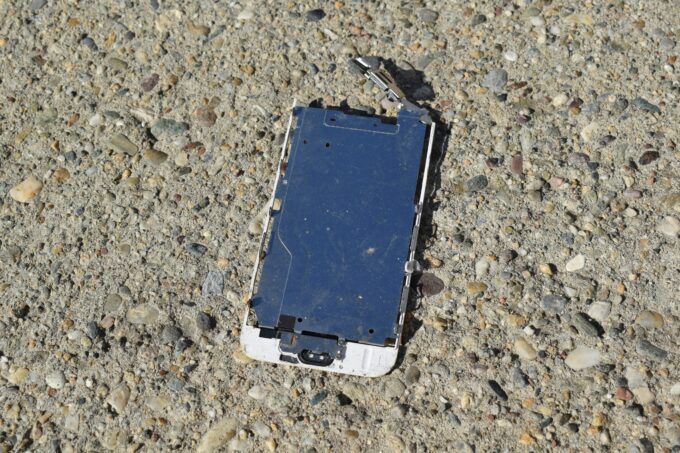
A World Without iPhones?


 June 6, 2025

Image by Marija Zaric.

Recently, I’ve been turning off my iPhone — all the way off! — for 10 to 30 minutes at a time. I leave it somewhere in the house, while I try to live IRL (“in real life”), washing dishes, hanging up laundry, or even going for a walk, phoneless.

In this hyper-connected world of ours, doing so, even for such a short time, often feels like an enormous act of self-deprivation — no podcasts, no long-distance communication with those I’m closest to, no social media, no para-social relationships, no steps of mine being counted, or micro-health-tracking going on. So much, in other words, missing in action. I’m not a digital native. In fact, I am what they call a late adopter. I didn’t get a cell phone until the fall of 2003. So I remember when it was normal to go about your business without a powerful computer attached to your person. Even with that perspective — recalling the not-so-long-agos of answering machines and public phones with grubby buttons and Internet cafes — I feel unsettled when I’m untethered from my digital leash and experiencing what might pass for freedom, even for a few minutes.

But as unsettling as it is, I also want to start new patterns. Lawyer friends tell me that activists often turn their phones off for the first (and maybe only) time as they commit acts of political property destruction. It’s almost a rite of passage for the newly politicized, and it’s as incriminating as the massive data trails that other activists might leave.

Did you hear about the Tesla saboteur? Home from college in Boston for spring break, the 19-year-old wanted to express his rage at billionaire Elon Musk’s government takeover. He went to a Kansas City Tesla dealership in the middle of the night and used a homemade Molotov cocktail to set a Cybertruck on fire. The fire spread, destroying charging stations and setting a second truck aflame, causing more than $200,000 in damage. He was caught in the act — at least in data terms. The cameras at Tesla (and inside Tesla vehicles themselves) pinpointed the time of the property destruction, while images of someone who looked like him were caught on multiple cameras in the vicinity.

As for new patterns, turning off my cellphone for a period of time every day means a small window of datalessness that offers a twenty-first-century version of rebellion. It dams up the stream of free data that flows from my device with every tap-tap and swipe. By doing so, I create a tiny space for surprise, for rebellion, for precious secrecy.

I don’t have any plans to sabotage a Tesla showroom, nor am I in a current conspiracy with anyone trying to stop a shipment of U.S. weapons to the Israeli Defense Forces for its genocidal campaign against Gaza. I’m not trying to organize a workers’ strike at my kids’ school or local grocery store. To my shame, I’m not actively planning any of these actions. For those who don’t want to make rookie activist data mistakes, the Internet (and here’s a nod toward the irony) is full of crash courses on security culture and avoiding self-incrimination or entrapment through careless reliance on tech.

As I power down that ubiquitous device, I remind myself of my own power, too. Yes, I still know how to get places without a map app. I know the answers to the random trivia that comes into my mind any day. (Who sang that song? Who was president in 1954?) Or I can live with the not-knowing. Amazingly enough, I’ve discovered that I still know how to live in my own mind alone, without being distracted or entertained by a podcast. I’ve realized that just because I have the urge to reach out to so-and-so, it doesn’t actually mean that it has to happen that very second. It’s bracing and helpful to remember I can live without this device.

Dehumanizing Technology?

I’m well aware of the research on how bad the online world can be for anyone, especially young people. And believe it or not, my kids — 11 and 12 — still don’t have cellphones and don’t live online. They don’t play video games on and off all day long or have access to their own devices at home. But that doesn’t mean that they’re living some Montessori or Waldorf fantasy of Luddite delight. I kind of wish they were. But that life is for a much higher income bracket than mine. It’s worth noting that many in the tech world take great pains to shield their children from this technology. Every other kid on my daughter’s bus undoubtedly has a phone and I’m sure she’s craning to look over someone’s shoulder whenever she can. My son’s friends all have phones — no surprise in this world of ours — and play video games regularly. He’s a little left out of the chatter about this or that gaming platform, but I’m not giving in just so he can fit into a culture that I don’t think is all that healthy to begin with.

As a parent, I think a lot about the kind of world I’m preparing my kids for. And I guess there’s an argument to be made for preparing them for a world lived largely online, since that’s where we are these days. But I’m going to try and hold the line and reject that very world as much as humanly possible. (Humanly indeed!)

I want my kids running, swimming, noticing the world around them, creating art, hearing bird songs and cries of warning, reading good books (or even not-so-great ones) — almost anything but playing video games and diving into the deep end of a cyber-cesspool of bullying, eating disorders, and a fixation on looks.

I read about the connections between video games and war fighting today and in the future. And it’s strange (at least to me) to imagine war as a video game and the degradation that goes with it. After all, dehumanization is the name of the grisly game these days for the Israeli Defense Forces. Soldiers are taught that the Palestinian people — even children — are less than fully human. Technology may not make them feel that way, but it certainly does make it easier to execute orders involving collective punishment, total surveillance, technological harassment, and ethnic cleansing.

Spending Time with Jennifer Lopez

On Wednesdays, my kids walk to the library, where they can log onto public computers and watch unboxing videos or tutorials on contouring (whatever that may be!). And then they have to walk home in time for dinner. It’s a little over a mile round trip, and I figure it’s a good trade-off. I tell them that they can have a smartphone when they can pay for it themselves, but in my dreams what I’d really like would be a communications device that, in order to use, they had to power with a bicycle or a hand crank. I would want it to feel like work. Because it’s not a value-neutral object and the network it relies on is not value-neutral either. At every juncture, this technology that we take for granted has a high labor, material, and environmental cost.

My daughter Madeline is 11. I notice her putting ever more attention into her appearance, primping and carefully considering her outfits. Still, she smiles when she looks in the mirror, delighting in her strong sense of style and dancing to the beat of her own drummer. Her once-a-week plunge into YouTube hasn’t dissipated her sense of self the way daily (hourly?) immersion would. She plays softball, runs at recess, and has a healthy appetite. She isn’t isolated from the world, and she and I talk about body image, aging, and the way old-fashioned media, social media, and AI create impossible standards for women.

Recently, we watched an ad featuring the multi-hyphenate Jennifer Lopez who, at the age of 55, is acting, singing, dancing, and representing high-end brands like a full-time mogul model. “Gosh, Mom. I can’t believe she is older than you,” Madeline said with the unalloyed frankness of the young. She didn’t have to mention my wrinkles and rolls and masses of white hair. It was all implied in her incredulous tone.

“Well, my Love, it’s not my job to look a certain way,” I replied.

Jennifer Lopez is, of course, a knockout. I have loved her since Out of Sight and Jenny From the Block. As a public figure and a professional beauty, she’s in a position to maintain her looks, no matter what the cost. She undoubtedly spares no expense when it comes to trainers, treatments, makeup, and clothes to keep that look (or at least something close to it), and then computers and lighting do the rest.

Believe me, it’s good to have these conversations with my kid, to have her understand the effort and cost that go into looking like Jennifer Lopez, or any other celebrity. As I pointed out to Madeline, I don’t have a deal with a face-cream company or a clothing line or a perfume outfit or some kind of alcohol company that requires me to devote myself to my persona. And in her own fashion, she heard me.

As I reflect now, I realize that, without such conversations, she might think she’s supposed to look that way, too, and that there’s something wrong with her if she doesn’t. That degraded sense of self is easy pickings for our consumerist culture which sends unrelenting messages that this or that product will fill the hole.

Making the Future Different?

All my yellow thumbs up, all my mindless clicks and swipes, the time traps I fall into — full disclosure: it’s videos of thrifters on the hunt for deals and the posts of the hauls they buy to resell that grab me every time! That’s my weak spot. But every minute online is captured in a huge data profile of ME that I can’t contest or contrive or unravel. But I can turn away. Turn off the iPhone. Turn away from the screen. Disconnect the stream of data. This pervasive technology and its promises of ease and a frictionless existence are a downright lie. After all, the same technological framework powers DoorDash and the weaponized drones that are now raining terror down on children just like mine in Gaza.

I live far enough away from Gaza (in so many senses) that I could mindlessly embrace DoorDash while rejecting killer drones. But now that I’ve made the connection, I can’t un-make it. So I am going to say as big a NO as possible to both.

As the world gets more networked and more automated, the basic knowledge of how to survive in it gets lost, commodified, or controlled. How to find and purify water, how to grow and prepare food — lost! The “cloud” won’t bring rain to end drought conditions. The Internet is not going to feed us in a supply chain collapse. These are the things that keep me up at night, so without freaking out too much, my kids and I work on life skills together. Eye contact, stamina for walking, tolerance of discomfort, strategic decision-making, map-reading, determining threat levels, and assessing someone’s trustworthiness. These are all skills that will help my kids in a distinctly precarious future.

A few years ago, an artist named Simon Weckert borrowed a few dozen iPhones from friends, put them in a red wagon and took a walk through the streets of Berlin. With just an hour or so of lag time, Google Maps showed all the streets and roads he had walked on bottlenecked in traffic jams. Video of his mobile art piece shows him strolling down the center of empty roads. It’s absorbing to watch that video, a split screen of him in a yellow jacket with the jaunty gait of a wagon puller and those red-lined Google Maps. Weckert’s performance demonstrates how our sense of reality is mediated by, filtered through, and dependent on a technology we simply don’t fully grasp or understand.

What we see isn’t what is real. In these dystopian Trumpy days, deep in our bones, we know that. Trump rants about White genocide and radical-left judicial monsters and tweets out AI-constructed images of himself as the Pope, a Jedi master, a golden statue in a renovated Gaza resort. What we see isn’t what’s real. And yes, I am in awe of it. I am afraid of it. I know it cannot feed me. I know it is trying to cleave my attention from the question of how we survive this violent present and make a different and far better future.

Peter Maurin, who co-founded the Catholic Worker movement with Dorothy Day, was fond of saying that we make the future different by making the present different.

So, I am turning my iPhone off. It makes my present different. Will it make the future any different?

It won’t hurt to try!

This piece first appeared on TomDispatch.

Frida Berrigan is the author of It Runs In The Family: On Being Raised by Radicals and Growing into Rebellious Motherhood. She is a TomDispatch regular, writes occasionally for WagingNonviolence.Org, and serves on the Board of Kirkridge Retreat and Study Center. She has three children and lives in New London, Connecticut, where she is a gardener and community organizer.