Sunday, June 08, 2025

EU backs 'cornerstone of international justice' after US sanctions ICC judges


The European Union on Friday threw its support behind the world’s top war crimes court after the United States sanctioned four of its judges in retaliation for having issued an arrest warrant for Israeli Prime Minister Benjamin Netanyahu and for opening an alleged war crimes case into US troops in Afghanistan.


Issued on: 06/06/2025
By: FRANCE 24
Video by: Catherine VIETTE

01:52The International Criminal Court (ICC) in The Hague, the Netherlands, March 11, 2025. © Robin Utrecht, ANP, AFP/ File picture


The EU gave its backing on Friday to the International Criminal Court after Washington imposed sanctions on four ICC judges, and EU member Slovenia said it would push Brussels to use its power to ensure the US sanctions could not be enforced in Europe. EU member France also said it was renewing its call on the US to withdraw all sanctions against the court.

“The ICC holds perpetrators of the world’s gravest crimes to account and gives victims a voice. It must be free to act without pressure,” European Commission President Ursula Von der Leyen said on social media platform X.

Antonio Costa, president of the European Council, which represents national governments of the 27 member states, called the court “a cornerstone of international justice” and said its independence and integrity must be protected. US President Donald Trump’s administration imposed sanctions on four judges at the ICC in retaliation for the war tribunal’s issuance of an arrest warrant for Israeli Prime Minister Benjamin Netanyahu and a past decision to open a case into alleged war crimes by US troops in Afghanistan.


The US order names Solomy Balungi Bossa of Uganda, Luz del Carmen Ibanez Carranza of Peru, Reine Adelaide Sophie Alapini Gansou of Benin and Beti Hohler of Slovenia.

The US sanctions mean the judges are now on a list of specially designated sanctioned individuals. Any US assets they have will be blocked and they are put on an automated screening service used by not only American banks but many banks worldwide, making it very difficult for sanctioned persons to hold or open bank accounts or transfer money. Trump’s initial order announcing sanctions on the ICC also said that US citizens who provide services for the benefit of sanctioned individuals could face civil and criminal penalties.

France said on Friday it backed the International Criminal Court after Washington imposed sanctions on four ICC judges, and said it was renewing its call on the United States to withdraw all its sanctions against the court.

"France expresses its solidarity with the judges targeted by this decision, and reaffirms its unwavering support for the ICC and its staff, whose role is essential in the fight against impunity," the French Foreign Ministry said in a statement.
Slovenia urges EU to block sanctions

Slovenia urged the EU to use its blocking statute, which lets the EU ban European companies from complying with US sanctions that Brussels deems unlawful. The power has been used in the past to prevent Washington from banning European trade with Cuba and Iran.

“Due to the inclusion of a citizen of an EU member state on the sanctions list, Slovenia will propose the immediate activation of the blocking act,” Slovenia’s foreign ministry said in a post on social media site X late on Thursday.

ICC president Judge Tomoko Akane had urged the EU already in March this year to bring the ICC into the scope of the blocking statute.

The new sanctions have been imposed at a difficult time for the ICC, which is already reeling from earlier US sanctions against its chief prosecutor, Karim Khan, who last month stepped aside temporarily amid a United Nations investigation into alleged sexual misconduct.

The court’s governing body, which represents its 125 member states, on Friday condemned the US government’s decision to retaliate against judges.

“These ... are regrettable attempts to impede the Court and its personnel in the exercise of their independent judicial functions,” the Presidency of the Assembly of States Parties said.

(FRANCE 24 with Reuters)


Pakistan, broken innocence: An exclusive investigation into sexual violence at madrasas


REPORTERS © FRANCE 24
From the show
Reporters

In Pakistan, more than 2 million children frequently attend madrasas – Koranic schools that offer free religious education to the most disadvantaged. But behind the walls of these revered institutions lies a chilling reality: thousands of children are subjected to sexual violence in deafening silence. Our correspondents bring us a special 31-minute investigation. Warning: viewers may find this report disturbing. 

"All the boys in the village were talking about the risk of being raped in the madrasas ... I didn't think it could happen to me," 14-year-old Hassan tells us. Without flinching, the teenager recounts the horror of the rape he suffered at the hands of the mullah who ran the Koranic school he attended in Pakistan. Our reporters met him at his home, two months after the attack. 

From the rural province of Punjab to the offices of the capital Islamabad, our reporters Shahzaib Wahlah and Sonia Ghezlai, in collaboration with Talha Saeed, gathered unprecedented eyewitness accounts: a former pupil, now himself an aggressor, who bears witness to the cycle of violence; a father whose son was thrown off the roof of his madrasa after being raped; as well as activists who risk their lives to break the silence. 

06:20   REPORTERS © FRANCE 24

This special 31-minute documentary is the result of a year's investigation into a hermetically sealed world, where each eyewitness account was obtained at immense risk to those who agreed to appear on camera.


US Supreme Court grants DOGE access to Social Security data on millions of Americans


The US Supreme Court on Friday allowed members of the Trump administration's Department of Government Efficiency (DOGE) to access Social Security Administration records containing confidential data on millions of Americans while a legal challenge plays out.

Issued on: 07/06/2025 -
By: FRANCE 24

The court's conservative majority sided with the Trump administration in the first Supreme Court appeals involving DOGE.


A divided US Supreme Court on Friday granted President Donald Trump's Department of Government Efficiency (DOGE) access to the social security data of millions of Americans.

The decision came after the Trump administration appealed to the top court to lift an April order by a district judge restricting DOGE access to Social Security Administration (SSA) records.

"SSA may proceed to afford members of the SSA DOGE Team access to the agency records in question in order for those members to do their work," the top court said in a brief unsigned order.

The three liberal justices on the Supreme Court dissented, with Justice Ketanji Brown Jackson saying the move poses "grave privacy risks for millions of Americans".


"Social Security numbers, birth dates, addresses, bank-account numbers, medical records – all of that, and more, is in the mix," Jackson said.

"The Government wants to give DOGE unfettered access to this personal, non-anonymized information right now – before the courts have time to assess whether DOGE's access is lawful," she said.

In her April ruling, District Judge Ellen Hollander banned DOGE staff from accessing data containing information that could personally identify Americans such as their social security numbers, medical history or bank records.


Social security numbers are a key identifier for people in the United States, used to report earnings, establish eligibility for welfare and retirement benefits and other purposes.

Hollander said the SSA can only give redacted or anonymised records to DOGE employees who have completed background checks and training on federal laws, regulations and privacy policies.

The case before Hollander was brought by a group of unions which argued that the SSA had opened its data systems to unauthorized personnel from DOGE "with disregard for the privacy" of millions of Americans.

DOGE, which has been tasked by Trump with slashing billions of dollars of goverment spending, was headed at the time by SpaceX and Tesla founder Elon Musk, who has since had a very public falling out with the president.

Trump has been at loggerheads with the judiciary ever since he returned to the White House, venting his fury at court rulings at various levels that have frozen his executive orders on multiple issues.

(FRANCE 24 with AFP)
Brazil urges United Nations to take lead role in Russia-Ukraine peace efforts

Brazil's President Luiz Inacio Lula da Silva on Saturday called on the United Nations to assemble a group of countries tasked with seeking a resolution to the Russia-Ukraine conflict.


Issued on: 07/06/2025 - 

Russian President Vladimir Putin greets President of Brazil Luiz Inacio Lula da Silva, left, ahead of the Victory Day military parade in Moscow, Russia, Friday, 9 May, 2025. AP - Alexei Nikolsky

Lula reiterated a comment he had made at a news conference with France's President Emmanuel Macron this week, during a state visit.

While both Macron and Lula praised the strong ties between France and Brazil, Thursday's press conference highlighted diverging views over Russia's invasion of Ukraine.

Macron stressed that Kyiv and Moscow should not be treated as equals, in contrast to Brazil's proclaimed neutral stance on the conflict.

"There is an aggressor, which is Russia. There is a victim, which is Ukraine. We all want peace, but we cannot treat the two belligerents equally," said Macron, stressing that Brazil had "a very important role to play" in finding a solution to the conflict.


Lula put forward the suggestion that "the UN can become a protagonist in this matter again", calling UN Secretary-General Antonio Guterres "a good man".

Listen to both sides

The United Nations chief should "propose a group of friends" to both Ukrainian President Volodymyr Zelensky and Russian leader Vladimir Putin, who would then "talk with them both, listen to their respective truths and then build an alternative", Lula said.

"What I am proposing is the creation of a commission consisting of countries that are not involved in the war to talk with Zelensky and Putin," he said.

Neither side would "get what they want but they can get what is possible", he said. "Neither 100 percent of Zelensky's position, nor 100 percent of Putin's position."


Last month, Lula said he wanted to "strengthen and rebuild a strategic partnership" with Russia during a trip to Moscow to mark 80 years since the defeat of Nazi Germany alongside other world leaders.

In contrast to most European countries, Lula maintains friendly relations with Moscow, while France has been one of the most vocal supporters of Kyiv since Russia invaded Ukraine in February 2022.

Lula, who in July is to host the next summit of the BRICS group of nations in Rio de Janeiro, said that Putin was invited to the meeting despite a warrant for his arrest issued by the International Criminal Court over alleged unlawful deportation of Ukrainian children to Russia.

Prisoner swap

A second round of direct peace talks between Russia and Ukraine opened this week in Istanbul, after a first round failed to secure a pause in more than three years of fighting.

But a major prisoner exchange – the only concrete outcome of peace talks so far – was in doubt on Saturday after Moscow and Kyiv accused each other of delaying and thwarting the swap.

Kyiv and Moscow had agreed to release all wounded soldiers and those aged under-25 that had been captured – more than 1,000 people on each side.

Russia said it would also hand back 6,000 killed Ukrainian soldiers.

Moscow on Saturday accused Ukraine of not turning up to collect the dead bodies and not agreeing a date to swap the captured soldiers, while Kyiv said Russia was playing "dirty games" by not sticking to the agreed parameters for the exchange.
'Manipulations', 'dirty games'

"The Ukrainian side has unexpectedly postponed for an indefinite period, both the acceptance of the bodies and the exchange of prisoners of war," Russia's top negotiator Vladimir Medinsky said on social media.

Responding to Russia's accusations, Ukraine's Coordination Headquarters for the Treatment of Prisoners of War said no date had been agreed for the return of bodies.

It also said a list of names Russia said would be released did not match the terms of the agreement.

"Unfortunately, instead of constructive dialogue, we are again faced with manipulations," it said in a statement on social media.

"We call on the Russian side to stop playing dirty games and return to constructive work to bring people back to both sides and to clearly implement the agreement in the coming days," it added.

The spat came hours after Russia launched a massive aerial attack across Ukraine, heavily targeting the city of Kharkiv.

At least eight people were killed in the overnight barrage and frontline shelling in total, officials said.

(with AFP)
Cameroon's forgotten crisis displaces nearly a million people

Yaoundé – Cameroon’s overlapping conflicts have pushed almost one million people from their homes. A new report says the crisis is both under-funded and under-reported. RFI spoke to some of those forced to flee, now struggling to survive far from home.


Issued on: 08/06/2025 - RFI

Ruth Che Ndukong and her children are among Cameroon's one million internally displaced people. © Ngala Killian Chimtom


By:Ngala Killian Chimtom in Yaounde


Constance Banda sits on a wooden stool, her hands moving steadily as she washes her children’s clothes – three of the six look on, as at the end of the hall her four-year-old daughter cradles her tiny, two-week-old sister.

“I gave birth to her here,” Banda tells RFI, a brief smile emerging. “She offers me solace."

The bungalow where Banda and her family now live was once part of a government poultry farm in Mvogbessi, in Cameroon's capital Yaoundé. The farm was abandoned after bird flu struck Cameroon in 2016, killing more than 15,000 birds.

Today, this building is home not just for Banda and her children, but for dozens of other internally displaced people from Cameroon's war-torn North West and South West regions.

“It’s very hard for us here. My children sometimes go for days without food. My husband is a bricklayer, but he works for people and they hardly pay him," says Banda.

This abandoned poultry farm is now home to internally displaced people. © Ngala Killian Chimtom

Her neighbour, Ruth Che Ndukong from Akum village, has a similar story of loss and migration. Seven years ago, she was mourning the death of her mother when gunmen attacked.

“I came here seven years ago. It was just at the beginning of the crisis. We were burying our mother when gunfire stormed the burial grounds. It was terrifying. So we decided to flee.”

Ndukong said life hasn’t been easy since she arrived in Yaoundé, as she worked flour into dough. “I survive by making and selling doughnuts,” she explained. “It’s the only thing you can make with limited capital."


Multiple crises in the country

The experiences of these two women highlight the hardships endured by almost 1 million internally displaced people across Cameroon.

“Many of them are barely surviving. Many are exploited, because they are vulnerable," said Willibroad Dze-Ngwa, a lecturer of history and political science at the University of Yaoundé 2.

Cameroon is grappling with multiple crises leading to this mass displacement, including a Boko Haram insurgency in the north, a refugee influx from the Central African Republic, and the protracted Anglophone crisis that has afflicted the country for more than eight years.

Banda and Ndukong are victims of the latter – which initially manifested as peaceful protests by teachers and lawyers in these regions who were challenging the imposition of French within Anglophone educational and judicial institutions.

The situation escalated into violence following the government's hardline response. Subsequently a separatist movement developed, which resorted to armed conflict against the state, demanding the secession of the Anglophone regions to form a new nation, Ambazonia.


The roots of the conflict lie in Cameroon's colonial past. The country had been colonised by Germany, but after the First World War it was split between France and the United Kingdom. The UK took control of the areas now known as the North West and South West regions, while France ruled the rest.

When independence came in 1960, the British and French-ruled parts of Cameroon decided to join together in a federation. But this came to an end following a controversial referendum in 1972, which saw the country abandon the federal system to become a unitary state.

Anglophone Cameroonians – who make up around 20 percent of the country's 28 million people – view this change as the majority Francophone population trying to absorb them, and anger over this exploded into conflict in 2016.
Constance Banda has been displaced along with her husband and six children. © Ngala Killian Chimtom


Aid cuts and lack of coverage


As the people of Cameroon suffer through these crises, the latest report from the Norwegian Refugee Council has put the country at the top of the list of most neglected displacement crises.

As well as noting the lack of funding to deal with the situation, in the wake of recent overseas aid cuts by several Western countries, the report highlights the relative lack of media coverage.

It reports that the displacement crisis in Cameroon was mentioned in 28,800 articles in English, Spanish, French and Arabic in 2024 – 15 times fewer mentions than the war in Ukraine, which was mentioned in 451,000 articles.


Theodore Lontum Wankuy, of the Big Steps Outreach Network NGO, told RFI that many of his organisation's programmes have been derailed by aid cuts.

“We used to receive aid from Canada and the UN, but that UN assistance is no longer available after the Trump administration cut funding to UN agencies. The US previously supplied about 80 percent of UNDP funding. That support has been cut, meaning that door has been slammed shut for us. Consequently, many of our projects have been put on hold,” he said.

Both Banda and Ndukong said that since they arrived in Yaoundé, they haven’t received any assistance from the government or from NGOs.

“We basically live from day to day. You aren’t always sure where your next meal will come from,” Ndukong told RFI.

Banda added: “All I pray for is for the fighting to end so that we can return a rebuild our lives."


Lifting of Syria sanctions provides boost to Turkish construction firms

Issued on: 08/06/2025 -

The lifting of international sanctions on Syria is opening the door to major reconstruction deals, with Turkish companies keen to capitalise on this. A multi-billion-dollar energy contract signed last week is expected to be the first of many.


People ride a motorbike past a damaged building in Aleppo as US President Donald Trump announced tht he would order the lifting of sanctions on Syria, 14 May. 
REUTERS - Mahmoud Hassano

In Damascus, under the watchful eye of Syrian President Ahmed al-Sharaa, Turkish construction firms Kalyon GES Enerji Yatırımları and Cengiz Enerji signed a $7 billion (€6.1 billion) energy deal.

They were joined by Qatar's UCC Holding and the United States-based Power International. The contract aims to rebuild Syria’s electricity network, badly damaged by more than a decade of civil war.

"Today, we signed a very big agreement in Damascus. A contract was signed for the production of approximately 5,000 megawatts of electricity to meet Syria's electricity needs," Kalyon chairman Orhan Cemal Kalyoncu told RFI.

"We have a strong partnership and the means. God willing, we will start working as soon as possible."

Sanctions lifted

The deal was made possible after the US lifted sanctions on Syria last month, and the European Union eased financial restrictions. This released frozen Syrian funds and gave energy-rich Arab states a green light to invest.

Rebuilding cities and restoring electricity are among the main tasks Syria’s new leadership is facing.

"Aleppo [Syria's second largest city] is two hours away from Turkey's southern border, so I don't think meeting the Syrian construction needs will be a problem for Turkey," said Veysel Yayan, secretary-general of the Turkish Steel Producers Association.

Turkish contractors are able to operate in difficult environments and can quickly deliver large-scale projects, Yayan added.

They are equipped to bring in everything needed – from materials to machinery – and complete construction in a matter of months, he said, even in places where others would struggle.

Political connections


Turkey’s construction industry has strong political ties, with President Recep Tayyip Erdogan closely linked to some of the country’s biggest building firms.

In addition, his government backed the rebel group Hayat Tahrir al-Sham during the civil war – the same group now led by Syria’s current president, al-Sharaa.

"I look at the countries [in the region] with excess capacity to provide Syria the cement construction materials, the wherewithal, and the engineering capacity – Turkey is the only one," said Atilla Yesilada, a political analyst at New York consultancy firm Global Source Partners.

"So, not just because of political relations with Tahrir al-Sham necessarily, but because of economic necessity, Turkey will be the cheapest provider."


Economic lifeline

During the war, Turkish firms built thousands of basic homes in rebel-controlled parts of Syria. The reconstruction of the country could now offer a lifeline to Turkey’s struggling construction industry.

"The construction material industry, the contracting sector and the steel sector, we do not have the slightest problem in supplying all kinds of materials that Syria will need as soon as possible," Yayan said.

"The most basic challenge for us is financing. That is, we are not in a position to start rebuilding in Syria without financing."

With restrictions lifted, billions in frozen Syrian funds are being released. Gulf states are also starting to commit money to support rebuilding efforts.

"It is also in the interest of the European Union, I would say lift the sanctions because [countries] like Germany, they have 1 million Syrians who live there," said Huseyin Bagci, professor of international relations at Ankara’s Middle East Technical University.

"Establishing the new airports, roads, opportunities for the people to come and go and get property or get their properties back... they are all positive developments [for] Syria," he added.

The speed and success of Syria’s reconstruction will be key to meeting public expectations of President al-Sharaa and stabilising the country. While for Turkey, it offers the prospect of a major economic boost.


Cocaine is 'no worse than whiskey', says Colombia's president

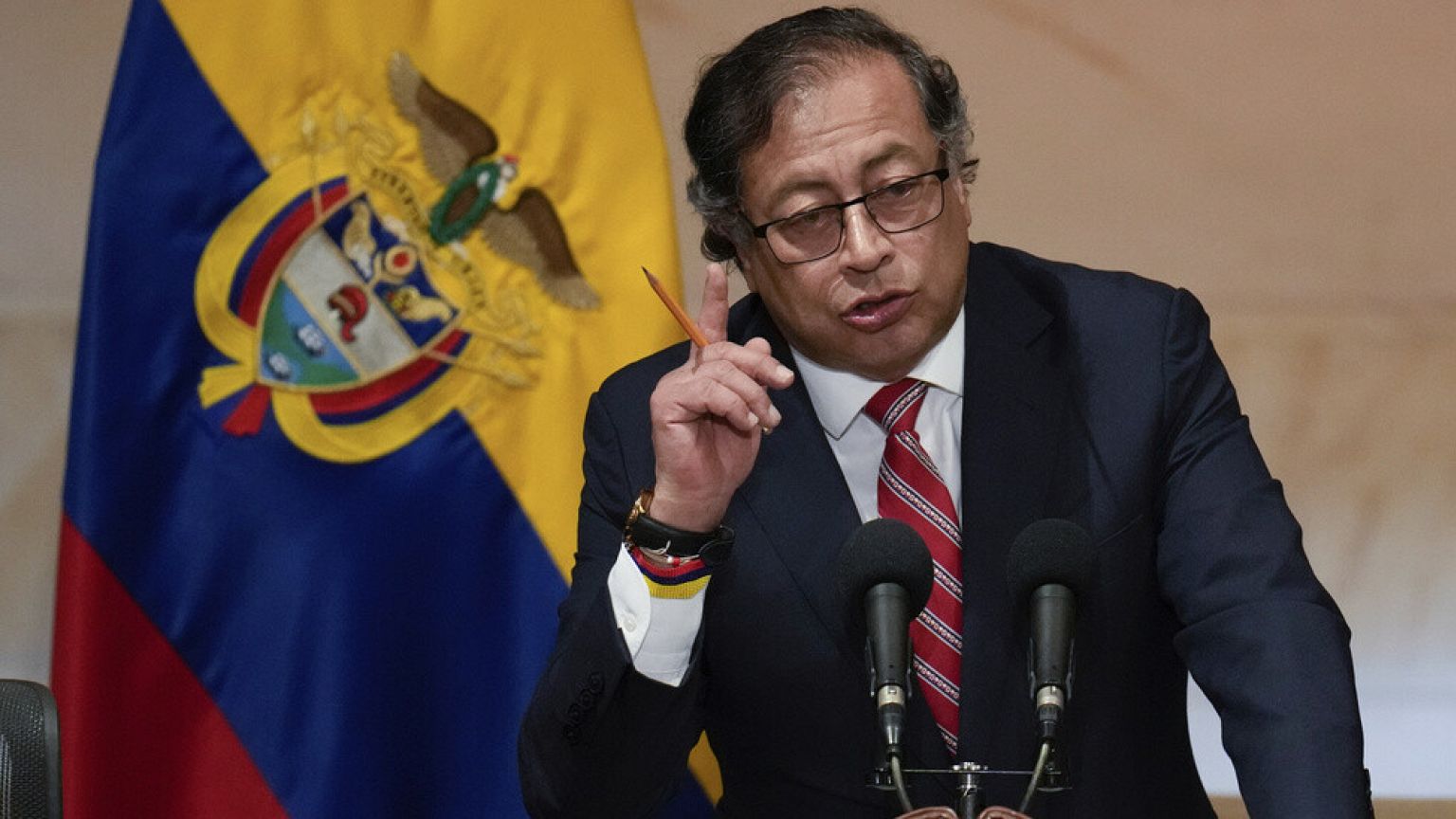
FILE: Colombia's President Gustavo Petro delivers a speech during the inauguration of a congressional session in Bogota, Colombia, on July 20, 2023.
Copyright Fernando Vergara/Copyright 2023 The AP. All rights reserved


By Kieran Guilbert
Published on 

During a six-hour governent meeting that was broadcast live, Colombian President Gustavo Petro said legalised cocaine could be "sold like wine".

Colombia's President Gustavo Petro has said that "cocaine is no worse than whiskey" and that it is only illegal because it comes from Latin America.

The leftist leader — who has struggled to contain rising cocaine production in the South American nation since taking power in August 2022 — made the comments this week during a six-hour ministerial meeting that was broadcast live for the first time ever.

"Cocaine is illegal because it is made in Latin America, not because it is worse than whiskey," said Petro, a former member of the M-19 guerrilla movement.

"If somebody wants peace, the business (of drug trafficking) has to be dismantled," he added. "It could be easily dismantled if they legalised cocaine in the world. It would be sold like wine."

Colombia is by far the world's biggest cocaine producer, and cultivation of coca leaves — the drug's base ingredient — reached a record high in the country in 2023, the UN Office on Drugs and Crime (UNODC) said. About 253,000 hectares of farmland in Colombia were planted withcoca in 2023, a 10% rise from the previous year, the UNODC found.

During the meeting, Petro also pointed out that fentanyl "is killing Americans and it is not made in Colombia", referring to a drug that is part of the opioid crisis in the US and believed to cause about 70,000 overdose deaths annually in the country.

"Fentanyl was created as a pharmacy drug by North American multinationals" and those who used it "became addicted," he added.

Petro's comments could ruffle feathers in Washington, as US President Donald Trump has made cracking down on drug trafficking a priority and threatened tariffs against Mexico and Canada over the illicit flow of fentanyl into the US, among other issues.

Just last month, Bogota and Washington were embroiled in a bitter feud over immigration that nearly triggered a trade war between the longtime allies. Trump had threatened tariffs and sanctions on Colombia after the South American country refused to accept military flights carrying deported migrants from the US. Bogota eventually backed down.

 Colombian presidential candidate Miguel Uribe Turbay shot at a rally in Bogotá.


Copyright Copyright 2025 The Associated Press. All rights reserved

By Christina Thykjaer & Euronews en español with AP
Published on 08/06/2025

Senator and presidential candidate Miguel Uribe Turbay is in critical condition after the attack, which is being investigated by the authorities.

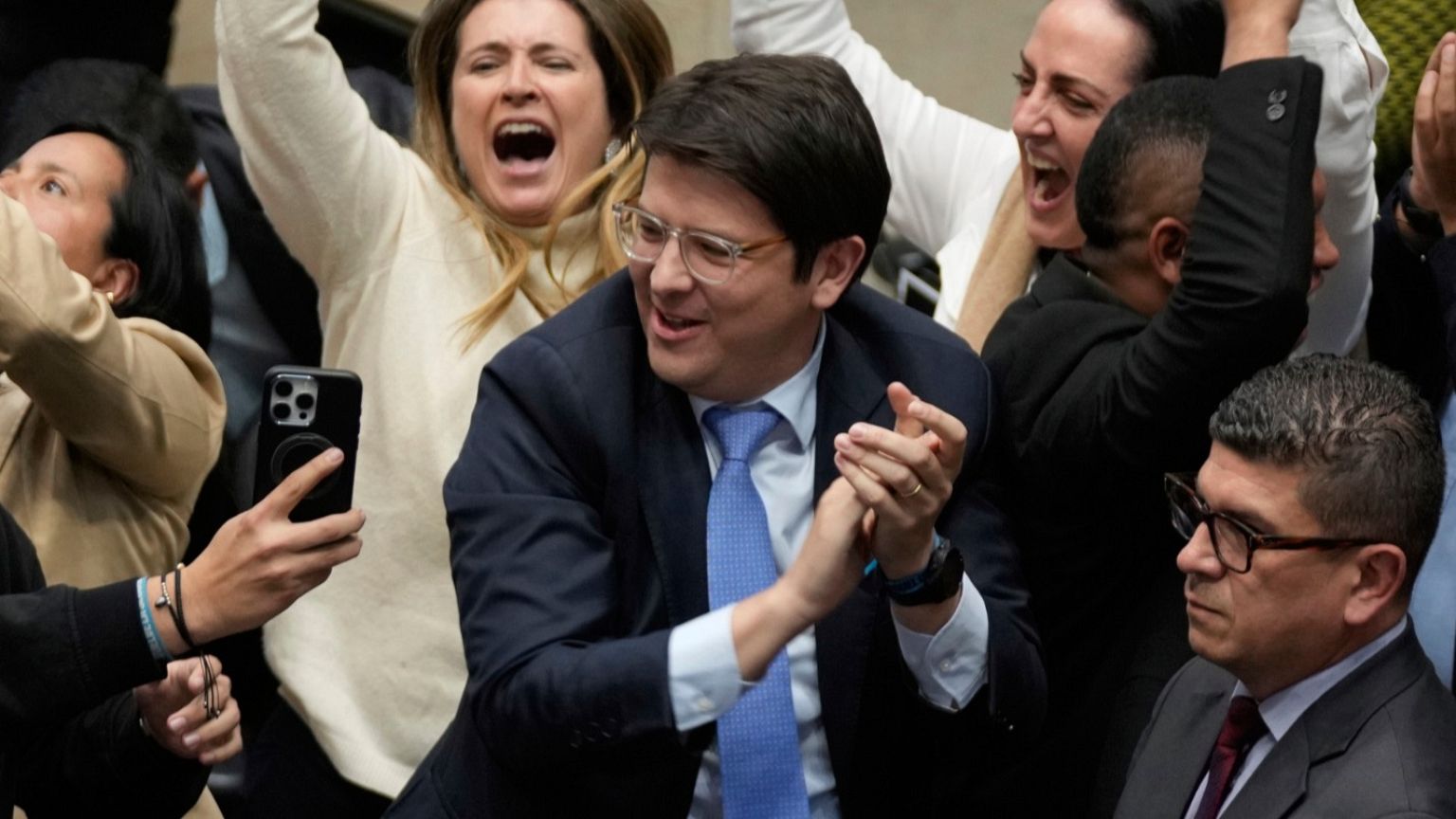
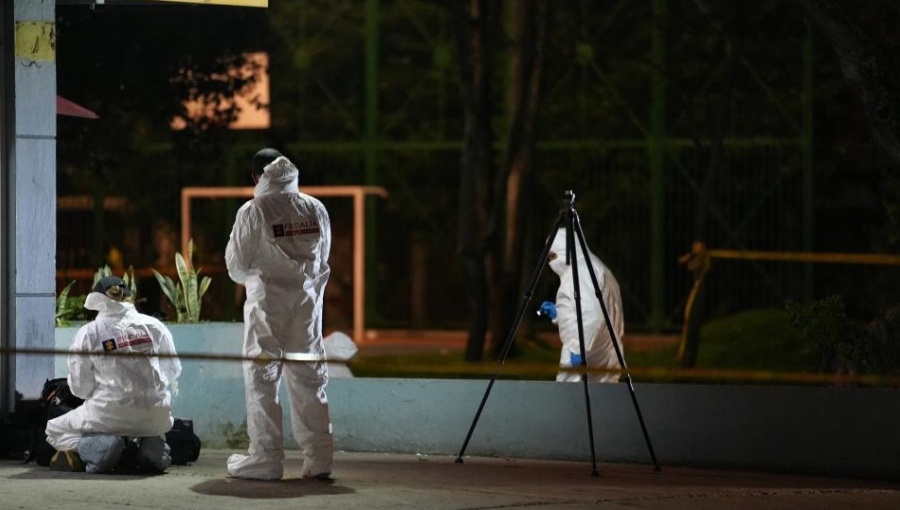
Colombian Senator Miguel Uribe Turbay, a possible candidate in next year's presidential elections, was shot and wounded at a campaign rally in Bogotá on Saturday, officials say. His party, the conservative Democratic Centre, issued a statement calling the incident "an unacceptable act of violence".

The attack occurred in a park in the Fontibon neighbourhood when armed assailants shot him in the back, said the Democratic Centre party, the party of former president Alvaro Uribe (not related).

Images circulating on social media show Uribe Turbay, 39, covered in blood and held by several people. A medical statement from the Fundación Santa Fe hospital said the senator was admitted in critical condition and is undergoing a "neurosurgical and peripheral vascular procedure".

"Miguel is fighting for his life," his wife, María Claudia Tarazona, wrote on the senator's X account, asking Colombians to pray for him. The Attorney General's Office, which is investigating the attack, said the senator was shot twice in the attack, which also left two other people injured. According to the entity's statement, a 15-year-old teenager was arrested at the scene with a firearm.

I am Maria Claudia Tarazona, Miguel's wife. Miguel is currently fighting for his life. Let us ask God to guide the hands of the doctors who are treating him. I ask everyone to join together in a chain of prayer for Miguel's life. I put my faith in God.


The Colombian government announced that it is offering a reward for the capture of all those responsible. "Respect life, that is the red line," wrote President Gustavo Petro in a message on his X account. Shortly after that post, Petro cancelled a planned trip to France "due to the seriousness of the events", according to a presidential statement.

Late Saturday night, after leading an extraordinary session of the Security Council, the first leftist president in Colombia's history promised "total transparency" in the investigation and to get to the intellectual authors of the attack. He also announced an investigation into possible lapses in the senator's security detail.
Son of a journalist who was kidnapped and murdered

Uribe Turbay is the son of a journalist who was kidnapped and murdered in 1991 during one of the country' s most violent periods. Colombia will hold presidential elections on 31 May 2026, at the end of Petro's term. The senator announced his presidential candidacy in March.

The director of the National Police, General Carlos Triana, said that at the time of the attack, Uribe Turbay was accompanied by councillor Andrés Barrios and 20 other people. A minor who allegedly participated in the attack was captured at the scene and was being treated for a leg injury, he said.

Reactions were swift across Latin America. The president of Chile, Gabriel Boric, said that "there is no space or justification for violence in a democracy", while the president of Ecuador, Daniel Noboa, stated that "we condemn all forms of violence and intolerance". Both presidents offered their solidarity to the senator's family.

Colombian opposition senator in critical condition after assassination attempt

Colombian opposition senator in critical condition after assassination attempt
The June 7 attack has stirred memories of Colombia's darkest chapters of political violence, particularly the late 1980s and early 1990s when multiple presidential candidates were assassinated. / xn
By bnl editorial staff June 8, 2025

Opposition Senator Miguel Uribe Turbay remains in a critical state following an assassination attempt during a political rally in Colombia's capital, with doctors reporting he has survived initial surgery after sustaining gunshot wounds to the head.

The 39-year-old politician, who has declared his intention to seek the presidency in 2026, was targeted by a gunman whilst addressing supporters in Bogotá's Fontibón district on the afternoon of June 7. Medical staff confirmed he underwent emergency surgery and has now entered what officials described as "critical hours" of recovery.

His wife, María Claudia Tarazona, appealed for prayers on social media, writing on X that her husband was "fighting for his life."

The incident unfolded around 5 p.m. as Uribe delivered remarks to roughly 250 attendees at an outdoor gathering. Eyewitness accounts and mobile phone footage captured the moment gunshots rang out, with the senator subsequently seen wounded and bleeding before being rushed to hospital.

Authorities have detained a 14-year-old suspect found in possession of a 9mm Glock pistol, as confirmed by Defence Minister Pedro Sanchez. The minor sustained injuries during the arrest and is receiving medical treatment whilst in custody.

Colombia's leftist President Gustavo Petro has launched a full investigation into the attack, describing it as evidence of state security failures. Speaking in a televised address lasting over 40 minutes on June 7 evening, Petro stated that protecting Uribe's life remained the immediate priority.

"What is most important today is that we focus on ensuring that Dr. Uribe Turbay remains alive. That is the priority," the president said, as quoted by La Silla Vacia. He characterised the incident as "a failure of the government, of the state" whilst condemning attempts to exploit the violence for political advantage.

"The political use of these hours, of such a serious and painful event... is disgusting," Petro declared, rejecting what he termed opportunistic responses to the shooting.

The president has cancelled a scheduled diplomatic visit to France and convened emergency security meetings with senior ministers and police chiefs. According to Reuters, authorities have announced a reward equivalent to approximately $730,000 for information leading to those who orchestrated the attack.

The shooting has prompted sharp criticism from Washington, with US Secretary of State Marco Rubio directly blaming the Colombian government's rhetoric for creating conditions that led to the violence, AFP reported.

"This is a direct threat to democracy and the result of the violent leftist rhetoric coming from the highest levels of the Colombian government," Rubio said. "President Petro needs to dial back the inflammatory rhetoric and protect Colombian officials."

Leaders across Latin America, including Chile's Gabriel Boric and Ecuador's Daniel Noboa, have also condemned the attack and offered solidarity to Uribe's family.

Uribe represents Colombia's most established political dynasty. His grandfather, Julio César Turbay Ayala, served as president from 1978 to 1982, whilst his mother, journalist Diana Turbay, was murdered by Pablo Escobar's cartel in 1991 after being taken hostage.

The senator, who graduated from Harvard and entered Congress in 2022, formally announced his presidential campaign last October at the site where his mother died. "I could have grown up seeking revenge, but I decided to do the right thing: forgive, but never forget," he said during that announcement.

As a leading figure in the right-wing Democratic Center party, Uribe has positioned himself as a vocal critic of President Petro's administration whilst advocating for increased security measures and foreign investment.

The June 7 attack has stirred memories of Colombia's darkest chapters of political violence, particularly the late 1980s and early 1990s when multiple presidential candidates were assassinated. The most notable victim was Luis Carlos Galán in 1989, killed by Escobar's hitmen. Galán's son now serves as Bogotá's mayor.

"The atrocious attack against Sen. Miguel Uribe is a new and deep wound in our democracy," Mayor Carlos Fernando Galán said. "Political violence has cost our country too much blood."

This marks the third assault on a presidential candidate since 2002, following previous attacks on both former President Álvaro Uribe and current President Petro during their respective campaigns.

Despite a landmark 2016 peace agreement that formally ended five decades of internal conflict, Colombia continues to grapple with violence from criminal organisations and armed groups, particularly in rural regions.

Supporters have maintained vigils outside the hospital where Uribe is being treated, holding candles and Colombian flags whilst praying for his recovery. The country's next presidential election is scheduled for May 2026.


Slovak parliament passes resolution against anti-Russian sanctions after opposition boycott backfires

Slovak parliament passes resolution against anti-Russian sanctions after opposition boycott backfires
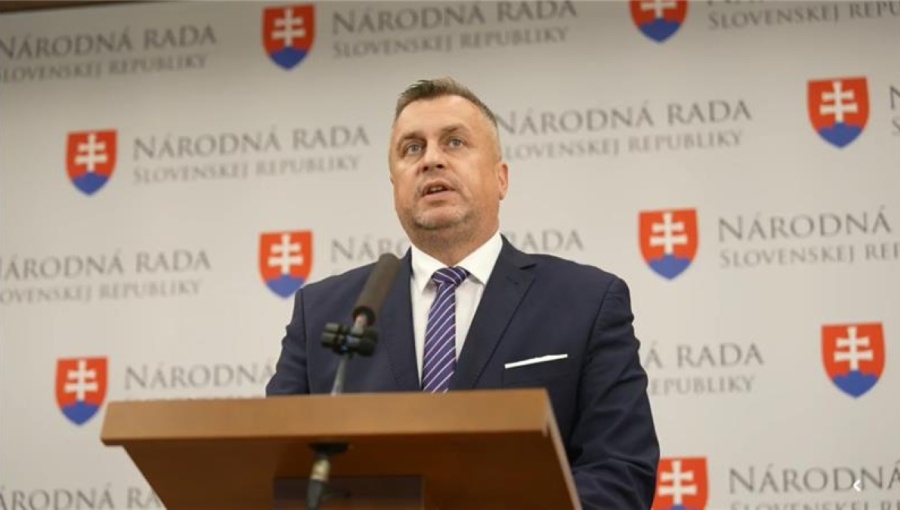
SNS leader Andrej Danko. / bne IntelliNews


The Slovak parliament has passed a resolution urging members of the populist left-right cabinet of Robert Fico not to vote for new EU sanctions directed against Russia.

The opposition tried to boycott the motion by leaving the session, so making the parliamentary session invalid, but one opposition legislator was registered as present, pushing the number of present legislators to 76, the lowest possible quorum for a valid session in the parliament of 150, while 51 of the present legislators backed the motion.

“National Council of the Slovak Republic [parliament] states that the sanctions policy and trade curtailments against the Russian Federation contribute to the growth of energy prices and disrupt supply chains, which weakens competition and economic benefits of the Slovak business,” the resolution reads.

It is unclear whether Fico, who has repeatedly threatened to block further EU sanctions against Russia but has never actually dared to do so, will observe the memorandum on the EU level.

Only last week Fico reiterated that he backs the EU sanctions against Russia and the regime of Vladimir Putin if these do not collide with Slovak interests.

“If these are sanctions which do not threaten our own interests, then we go ahead as part of unity in the European Union. At the same time, if these are sanctions which could threaten national interests of the Slovak Republic, then we will veto these,” Fico was quoted as saying by the Slovak press agency TASR.

The passing of the resolution was not expected, as not all the ruling coalition legislators backed it, particularly in the ranks of the centre-left Hlas, but it was celebrated by ultranationalist SNS, whose leader Andrej Danko stated at a press conference inside the parliament building that “I am proud that the parliament passed it.”

“I want to thank SNS legislators for bravery, and to Smer legislators for joining [in backing the motion] and at the end of the day we achieved something which I think will now resonate in the European Union,” Danko was quoted as saying by the state broadcaster STVR and other Slovak media.      

Opposition parties were quickly criticised, including from their own ranks, for the bodged boycott attempt, prompting Michal Šimečka, chairman of the largest opposition party, centrist Progressive Slovakia, to state that “I am sorry that – because of technical failure – the tactic to block the parliament did not work, like we managed to do in the past.”

“I would never imagine pointing fingers immediately after the voting at the concrete colleague,” Šimečka wrote in a statement shared on his Facebook social media page.

Liberal ex-Minister of Foreign Affairs Rastislav Kačer asked ironically on his Facebook page, “when agent Fico votes for the sanctions at the nearest EU Council in contradiction to this memorandum, will the National Council hold a vote of confidence against him for disrespecting the parliament?”

“I am asking on behalf of a friend who does not always understand the complexity of our politics,” Kačer added, hinting at Fico’s balancing act of keeping his ruling coalition, which includes radical pro-Kremlin SNS and more moderate Hlas, together.

The country's Minister of Foreign Affairs, Juraj Blanár of Fico's populist Smer party, who caused outrage in Slovak diplomacy by holding meetings with his Russian counterpart Sergei Lavrov and for replacing seasoned diplomats with recent Moscow’s elite MGIMO graduates, was quick to signal that it may not be possible for the cabinet to observe the passed resolution.

“It is necessary that its [possible] execution is addressed by the National Council and other state bodies relevant for adopting and implementing sanctions,” Blanár told the country’s media on June 5.   


Britain already at war with Russia warns Fiona Hill - The Guardian

Britain already at war with Russia warns Fiona Hill - The Guardian
Britain is already at war and can no longer rely on the US for help, former top Russian advisor to US president Trump warns. / bne IntelliNews
By bne IntelliNews June 8, 2025

Britain is already at war with Russia and can no longer rely on the United States as a stable ally, the former top US Russia expert Fiona Hill told The Guardian in an interview. 

The well respected and former advisor to President Donlad Trump on Russia, Hill was one of the three authors of the UK’s recent strategic defence review. Speaking to, Hill described the UK’s position as precarious and called for urgent national cohesion in response.

“We’re in pretty big trouble,” Hill said, portraying the UK as caught between “the rock” of an increasingly hostile Russia and “the hard place” of Donald Trump’s volatile US. A dual national who served as the White House’s chief Russia adviser during Trump’s first term, Hill described the moment as “a major pivot point in global affairs”.

Hill said Moscow now viewed the war in Ukraine as the start of a campaign to re-establish military dominance in Europe. “Russia has hardened as an adversary in ways that we probably hadn’t fully anticipated,” she said. Citing poisonings, assassinations, cyber-attacks, sabotage and threats to undersea infrastructure, she concluded: “Russia is at war with us.”

Hill has warned of such risks since 2015, when she co-authored a book on Vladimir Putin. “We said Putin had declared war on the west,” she said. “He obviously had, and we haven’t been paying attention to it.” She argued that the Russian president views the conflict in Ukraine as “part of a proxy war with the United States”, and had drawn support from China, North Korea and Iran based on that framing.

Hill warned that Britain should not expect the same security guarantees from Washington as in the past. “The UK is having to manage its number one ally,” she said, cautioning that the goal was to avoid a rupture. Trump, she added, “is not an administration, it is a court” – a reference to what she characterised as a transactional leadership style driven by personal interest.

While Hill acknowledged Trump’s “special affinity for the UK” due to family ties and admiration for the royal family, she expressed concern about the spread of US-style populism in Britain. “The same culture wars” could take root, she said, noting that Reform UK had made recent electoral gains. She warned against imitating efforts like Elon Musk’s so-called Department of Government Efficiency (Doge), which she linked to mass layoffs.

Britain’s response, Hill argued, must go beyond conventional defence. “We can’t rely exclusively on anyone any more,” she said. The UK must build “a different mindset” focused on resilience, with practical steps such as first aid training in schools and expanded cadet programmes. “What you need to do is get people engaged in all kinds of different ways in support of their communities,” she said.

Hill contended that the very nature of warfare is evolving. “The Ukrainians are fighting with drones. Even though they have no navy, they sank a third of the Russian Black Sea fleet,” she noted. Traditional metrics – such as troop numbers or naval power – were no longer the sole indicators of military capability.

She recalled a remark from a family friend on her appointment to the defence review team: “‘Don’t tell us how shite we are, tell us what we can do, how we can fix things.’” Her goal, she said, is exactly that – not only to sound the alarm but to provide a path forward.