It’s possible that I shall make an ass of myself. But in that case one can always get out of it with a little dialectic. I have, of course, so worded my proposition as to be right either way (K.Marx, Letter to F.Engels on the Indian Mutiny)
Monday, June 09, 2025
Protected Antarctic oceanic life threatened by ships anchoring, first underwater videos show
First video footage shows impacts of anchor and chain damage caused by cruise, research, fishing, and private vessels on Antarctic sea floor and animals, highlighting critically understudied conservation issue
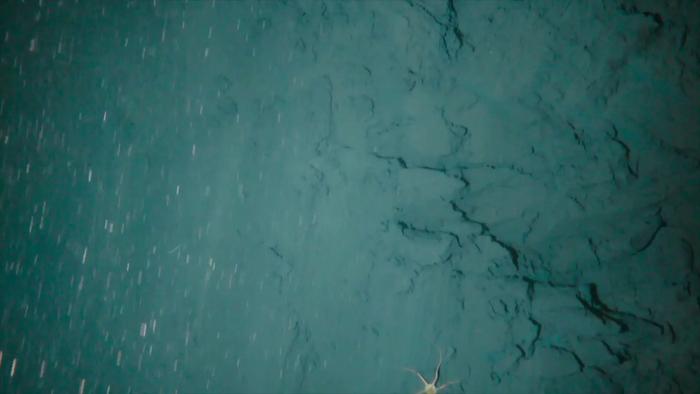
Striations, grooves, and mud deposits from anchor retrieval were visible in the substrate of the ocean floor. At the disturbed sites, little to no marine life was present. Credit: Matt Mulrennan / KOLOSSAL.
Ships operate in every ocean, and even the most remote waters aren’t off-limits. When they anchor, they leave behind a footprint. Anchoring cannot only disrupt marine life but also may damage undersea cables or pipelines, disrupt communication and cut off power supply.
Yet, global ship activity and therefore anchoring is becoming more widespread, even in the most remote regions of the planet. Now, an international team of scientists has gathered the first video evidence of anchoring and chain damage in Antarctic waters. The team’s results are now published in Frontiers in Conservation Science.
“This is the first time the impacts of ship anchoring and chain damage are documented in Antarctic waters. Activities in Antarctica have a lot of strict rules around conservation, yet ship anchoring is almost completely unregulated,” said first author Matthew Mulrennan, a marine scientist and founder of KOLOSSAL, an ocean exploration and conservation nonprofit in California.
“Documentation is way overdue, given the importance of these ecosystems and the protections we place on them. Anchoring impacts are understudied and underestimated globally. It’s so important to recognize and mitigate the impacts across all industries and limit planned anchoring,” added co-author Dr Sally Watson, a marine geophysicist at the National Institute of Water and Atmospheric Research in New Zealand.
Localized destruction
While there are no reliable numbers, at least 195 tourism, research, and fishing vessels, as well as private yachts were recorded in anchorable depths in Antarctica – usually confined to no more than 82.5 meters – during the 2022-23 season. Likely more ships operate there without licenses.
During the austral summer of that year, researchers used underwater cameras to observe the seafloor at 36 sites across the Antarctic Peninsula and South Georgia Island. Footage was captured close to the surface, midwater, and one meter above the sea floor. It showed disturbances to the seafloor and marine life where ships had anchored. Striations, grooves, and mud deposits from anchor retrieval were visible in the substrate of the ocean floor. At the disturbed sites, little to no marine life was present. Instead, the researchers observed crushed sponge colonies and a lack of benthic biomass. Directly adjacent to the anchoring sites, marine life flourished.
“The observed damage was a near miss to three giant volcano sponges, believed to be the oldest animals on the planet which may live up to 15,000 years,” Mulrennan said. Many other species, including Antarctic sun stars, giant Antarctic octopus, sea spiders, and a variety of fish were recorded at anchorable depths.
“The weird and wonderful animals that are impacted, like sponges, are important for filtering water, carbon sequestration, and providing shelter, food, and complex habitats which benefit the whole marine ecosystem, including penguins and seals – the animals tourists come to see,” Mulrennan pointed out.
Lasting impacts
Many of the species that live at anchorable depths in Antarctica are slow-growing, sessile, and can only be found in Antarctica. Those factors make them particularly vulnerable to disturbances. “We know that anchor impacts in tropical reefs can last a decade. In muddy sediment the scours can still be visible over a decade later,” Watson said. “Ecological recovery is really site specific. Things in cold waters are much slower growing than in warmer temperatures so I expect that recovery would take longer the higher the latitude.”
Future research, the team said, should examine short- and long-term impacts of anchoring on the seabed, recovery periods, and impacts on broader ecosystem function. Without databases recording anchoring frequency, however, telling how widespread the issue is and developing timescales of recovery hinders the development of mitigation measures.
“Anchoring is likely the most overlooked ocean conservation issue in terms of global seafloor disruption; it is on par with the damages from bottom trawling,” Mulrennan concluded. “It’s a pressing environmental issue, but it’s out of sight, out of mind.”
Striations, grooves, and mud deposits from anchor retrieval were visible in the substrate of the ocean floor. The researchers observed crushed sponge colonies. Credit: Matt Mulrennan / KOLOSSAL.
The researchers recorded giant volcano sponges, Antarctic sun stars, giant Antarctic octopus, sea spiders, and a variety of fish at anchorable depths. Credit: Matt Mulrennan / KOLOSSAL.
This year marks the opening of the United Nations Decade of Action for Cryospheric Sciences, an international initiative focused on the rapid changes occurring in glaciers, snow cover, ice sheets, sea ice, and permafrost and their impacts on the planet. MBARI’s cutting-edge research and technology will play a critical role in this effort, providing important data about the Arctic seafloor and the Southern Ocean.
“Ice-covered ocean and land are integral to the health of our planet and host unique communities of life. The Decade of Action for Cryospheric Sciences provides an opportunity to collaborate to better understand and protect these critically important polar environments. As a leader in ocean science and engineering, MBARI is well-positioned to play a major role in international efforts to take the pulse of polar regions and help discovery in uncharted waters,” said MBARI President and CEO Antje Boetius, a global leader in polar research.
Snapshots of MBARI’s work in the Arctic and Southern Ocean:
Investigating changes to the Arctic seafloor
Scientists have only recently been able to access the seafloor at the edge of the Canadian Arctic due to climate change impacts on sea ice.
Researchers have used MBARI’s autonomous underwater vehicles to conduct mapping surveys of the seafloor in this region, revealing remarkably complex underwater terrain. Data show dynamic and dramatic changes to the seafloor caused by the melting of ancient submerged permafrost as well as current cycles of melting and freezing seawater. MBARI’s research can help guide policymakers’ decisions about underwater infrastructure in the Arctic. This summer, MBARI researchers will return to the Canadian Beaufort Sea to continue this work.
MBARI’s collaborators on this body of work include researchers at the Geological Survey of Canada, Fisheries and Oceans Canada, the Korean Polar Research Institute, and the US Naval Research Laboratory.
Monitoring carbon and climate in the Southern Ocean
SOCCOM uses robotic BGC-Argo floats with advanced sensors developed by MBARI researchers to continuously log data about ocean conditions, including chemistry and productivity. There are currently more than 100 SOCCOM floats operating in the Southern Ocean. SOCCOM data are publicly available, allowing researchers around the world to access this remote part of the world. MBARI also leads SOCCOM’s outreach efforts, including a program to bring live data from SOCCOM’s robotic floats to the classroom.
Studying seafloor processes in Antarctica
The flow of water from the seafloor to the ocean at the land-sea interface—known as submarine groundwater discharge—plays an important role in ocean biogeochemistry, marine ecology, and seafloor geology. This process has been challenging to study in Antarctica, where climate change is likely causing fresh to brackish water to leak from the seafloor.
MBARI researchers are working to quantify submarine groundwater discharge along the Antarctic Peninsula and understand its environmental impacts. Preliminary findings suggest submarine groundwater discharge occurs at a higher rate in Antarctica than at similar depths in temperate environments, and this research will help refine future climate models at regional scales.
Assessing the biodiversity of the Southern Ocean
Environmental DNA (eDNA) allows scientists to detect the presence of organisms from the tiny bits of genetic material—cells, skin, waste, and mucus—they leave behind. eDNA provides a powerful tool for assessing the biodiversity of aquatic environments.
MBARI’s Environmental Sample Processor (ESP) and Filtering Instrument for DNA Observations (FIDO) allow researchers to collect and study eDNA in remote environments. Earlier this year, MBARI, in collaboration with the Australian Antarctic Program, sent ESP and FIDO instruments on the research icebreaker Nuyina on an expedition to the Denman Glacier region in East Antarctica to evaluate applications for this eDNA technology in the Southern Ocean.
About MBARI
MBARI (Monterey Bay Aquarium Research Institute) is a non-profit oceanographic research center founded in 1987 by the late Silicon Valley innovator and philanthropist David Packard. Our mission is to advance marine science and engineering to understand our changing ocean. Learn more at mbari.org.
The Time Has Come to Establish the International Arctic Ocean Sanctuary In addition to accelerating efforts to reduce global carbon emissions to reverse global warming, governments must urgently adopt strong, permanent protections for the entire Arctic Ocean. A polar bear walks on ice in the Beaufort Sea. (Photo: Pablo Clemente-Colon/ NOAA National Ice Center)
On World Ocean Day, and the eve of the United Nations Ocean Conference in Nice, France opening Monday, the Arctic Ocean ecological crisis needs to be top of the list for attention by governments.
Given the well-documented, catastrophic decline of the Arctic Ocean sea ice ecosystem in recent decades due to climate change, coupled with the increasing threats and impacts from industry and military activity in the region, it is imperative that governments establish an International Arctic Ocean Sanctuary to preserve this extraordinary ecoregion as a global commons for peaceful, non-commercial, scientific purposes.
Covering approximately 5.4 million square miles, the Arctic Ocean is one of the most extraordinary and vibrant regions of the global ocean, and plays an important role regulating Earth’s climate.
Combined with the effects of climate change, industrialization and militarization would further accelerate the ecological and social collapse of the struggling Arctic Ocean region.
The Arctic marine ecosystem is globally unique, productive, and remains relatively unexplored. The ocean biome supports more than 7,000 identified species, many of which are found nowhere else on Earth—polar bears, walrus, several kinds of ice seals, narwhals, beluga whales, bowhead whales, some of the largest populations of seabirds in the world, and many unique fish and invertebrate populations. It hosts cold seeps, hydrothermal vents, stunning benthic habitats, a rich pelagic ecosystem that remains surprisingly active during winter darkness, and supports the subsistence cultures of coastal Indigenous Peoples.
However, this unique polar marine ecosystem is now one of the most endangered regions of Earth’s biosphere, suffering effects of climate change more severely than anywhere else. Arctic sea ice has declined by more than half in the last 50 years, losing about 1 million square milesin both summer and winter, has thinned from an average of four meters to about one meter, and could disappear entirely in summer by 2035. Multiyear sea ice has all but vanished. This remarkable decline has been caused by global carbon emissions from human activity, mainly fossil fuel use.
The loss of Arctic sea ice over the last half-century constitutes one of the largest declines in ecological habitat on Earth, rivaling the loss of tropical rainforests. The resultant Arctic Ocean ecological crisis is now severe, and predicted to get much worse in coming decades.
In addition to devastating impacts of climate change in the Arctic Ocean, commercial interests are clamoring to exploit ice-free offshore areas for oil and gas, methane hydrates, minerals, commercial fishing, shipping, and tourism. And Arctic coastal nations have made Extended Continental Shelf (ECS) seabed claims (pursuant to U.N. Law of the Sea, Article 76) beyond their 200-mile Exclusive Economic Zones (EEZs), a dangerous territorial expansion into international waters with an eye toward resource extraction.
As Arctic nations and others (China, India, etc.) advance their own parochial interests across the region, there is a growing competitive race to exploit Arctic offshore resources and to project military power across the region to secure these competing national interests. As such, the risk of military confrontation across the Arctic Ocean is escalating. Combined with the effects of climate change, industrialization and militarization would further accelerate the ecological and social collapse of the struggling Arctic Ocean region, and would clearly compromise the ability of the bioregion and its people to survive the 21st-century climate crisis.
In fact, the resource and political tensions in the Arctic Ocean today are remarkably similar to the Antarctic after World War II, that were resolved then by the leadership of U.S. (Republican) President Dwight D. Eisenhower proposing and negotiating the historic 1959 Antarctic Treaty. The international Treaty, now with 58 nation-state members, permanently protects the extraordinary 5.5 million square-mile Antarctic continent as a global commons for peaceful, scientific purposes, free from nuclear testing, military operations, economic exploitation, and territorial claims. The Antarctic Treaty remains the single greatest conservation achievement in history.
The same opportunity now presents itself with the Arctic Ocean. In addition to accelerating efforts to reduce global carbon emissions to reverse global warming, governments must urgently adopt strong, permanent protections for the entire Arctic Ocean to give this region and its people the best chance possible to survive the 21st-century climate crisis. Given the pace of decline, this may be our last best chance to do so.
While Arctic nations have begun protecting some areas off their coasts, still less than 5% of Arctic Ocean waters are in permanently protected status. This is clearly insufficient.
The proposed circumpolar Arctic Ocean Sanctuary must fully protect not only international waters beyond coastal state 200-mile EEZs across the 1.1 million square mile Central Arctic Ocean (as is currently proposed), but also the highly productive waters within the EEZs of Arctic coastal nations—Canada, Norway, Denmark and Greenland, Russia, and the U.S., where most ecological activity, human impact, and threat occurs. The sanctuary should permanently prohibit oil and gas leasing, mineral leasing, commercial fishing, military activities, improve shipping safety, reduce pollutants, and enhance scientific research.
To be sure, it is a big ask of the five Arctic coastal nations to contribute some of their claimed territory into a globally protected area, but this was the right thing to do in 1959 in the Antarctic, and it is the right thing to do now for the Arctic.
While the current federal administrations in the Russia and U.S. habitually oppose any and all environmental conservation proposals, perhaps presidents Vladimir Putin and Donald Trump might see this as a historic legacy in the midst of the environmental havoc they have caused, a chance to be remembered as Eisenhower is today for his leadership in negotiating the Antarctic Treaty. And just to note, former President Joe Biden ignored this request entirely, enacted no comprehensive permanent protections in the U.S. Arctic Ocean off Alaska, and made no effort to begin discussions on the International Arctic Ocean Sanctuary.
Global society has a historic choice to make with the imperiled Arctic Ocean. Should we continue our competitive industrial and military expansion into one of the last wild areas of the world, further degrading a region already unraveling due to human-caused climate change? Or should we protect and sustain this magnificent place for all time, giving it and its inhabitants, human and non-human, the best chance possible to recover from climate change this century?
How we answer this question will tell us a lot about ourselves and our future.
Our work is licensed under Creative Commons (CC BY-NC-ND 3.0). Feel free to republish and share widely.
Rick Steiner is a conservation biologist in Anchorage, retired professor with the University of Alaska, and author of Oasis Earth: Planet in Peril (available as a free download here: https://www.oasis-earth.com/oasis-earth-planet-in-peril). Full Bio >
Antipsychotic medications reduce vehicle crashes in drivers with schizophrenia
Taking antipsychotic medications as prescribed lowers the risk of a car crash for drivers with schizophrenia, according to new research published in CMAJ (Canadian MedicalAssociation Journal) https://www.cmaj.ca/lookup/doi/10.1503/cmaj.250020.
Schizophrenia can cause hallucinations and disorganized behaviour that affect the ability to safely operate a motor vehicle. Most people with schizophrenia are prescribed antipsychotic medications that improve many of these symptoms. Researchers hypothesized that these medications may also reduce the risk of a motor vehicle crash — but only if patients continue to take the medication as prescribed.
Dr. John A. Staples and colleagues at the University of British Columbia in Vancouver, BC, used 20 years of population-based health and driving data to examine 1130 motor vehicle crashes involving drivers with a diagnosis of schizophrenia and prior treatment with antipsychotics. They found that taking antipsychotic medication as prescribed significantly reduced the odds of a crash.
“We found that perfect adherence to antipsychotic medication (relative to complete nonadherence) was associated with a 50% reduction in the odds of a crash,” notes Dr. Staples. “We believe our results suggest that antipsychotic medications reduce crash risk among individuals with schizophrenia.”
The findings have important implications.
“Our results provide one more reason for doctors and family members to encourage people with schizophrenia to take their antipsychotics as prescribed. We think our results also suggest that health systems should put more resources into programs to support antipsychotic adherence among people with schizophrenia,” says Dr. Staples.
He adds, “If a driver with schizophrenia isn’t taking their medications as prescribed, should their driver’s licence be temporarily suspended? This approach deserves some consideration. But we also know that people with schizophrenia are often marginalized, with limited opportunities for employment and social engagement. Taking away their driver’s licence might make them more isolated. We think more research is needed so that policy-makers can understand these risks before enacting a policy that might be coercive or harmful.”
Girls ages 7 to 18 use an average of six products for average cost of $168 per regimen
As summer nears, authors caution only 26% of daytime skin care regimens contain sunscreen
Videos ‘emphasize lighter, brighter skin’ and set a high standard of beauty
CHICAGO --- It turns out when teens on TikTok say, “Get ready with me,” it can be more harmful than they might realize.
In the first peer-reviewed study to examine the potential risks and benefits of teen skin-care routines posted on social media, scientists at Northwestern Medicine found girls ages 7 to 18 are using an average of six different products on their faces, with some girls using more than a dozen products. These products tend to be marketed heavily to younger consumers and carry a high risk of skin irritation and allergy, the study found.
The findings will be published June 9 in the journal Pediatrics.
Each teen daily skin-care regimen costs an average of $168 (which the authors estimate typically lasts a month depending on the size of the products), with some costing more than $500, the study found. As the summer nears, the study authors cautioned only 26% ofdaytime skin care regimens included sunscreen — arguably the most important skin care product for any age range, but particularly for kids.
The top-viewed videos contained an average of 11 potentially irritating active ingredients, the study found, putting the content creators at risk of developing skin irritation, sun sensitivity and a skin allergy known as allergic contact dermatitis. Prior evidence has shown that developing such an allergy can limit the kinds of soaps, shampoos and cosmetics users can apply for the rest of their lives.
“That high risk of irritation came from both using multiple active ingredients at the same time, such as hydroxy acids, as well as applying the same active ingredient unknowingly over and over again when that active ingredient was found in three, four, five different products,” said corresponding author Dr. Molly Hales, a postdoctoral research fellow and board-certified dermatologist in the department of dermatology at Northwestern University Feinberg School of Medicine.
For example, in one video included in the study, the content creator applied 10 products on her face in six minutes.
“As she’s applying the products, she begins to express discomfort and burning, and in the final few minutes, she develops a visible skin reaction,” said senior author Dr. Tara Lagu, adjunct lecturer of medicine and medical social sciences at Feinberg and a former Northwestern Medicine hospitalist.
Videos ‘emphasized lighter, brighter skin’
“We saw that there was preferential, encoded racial language in some cases that really emphasized lighter, brighter skin,” Lagu said. “I think there also were real associations between use of these regimens and consumerism.”
These videos offer little to no benefit for the pediatric populations they’re targeting, the study authors concluded. What’s more, given how the algorithms work, it’s nearly impossible for parents or pediatricians to track exactly what children or adolescents are viewing. Lastly, there are dangers beyond skin damage, Hales said.
“It's problematic to show girls devoting this much time and attention to their skin,” Hales said. “We're setting a very high standard for these girls. The pursuit of health has become a kind of virtue in our society, but the ideal of ‘health’ is also very wrapped up in ideals of beauty, thinness and whiteness. The insidious thing about ‘skin care’ is that it claims to be about health.”
Studying teens in the TikTok environment
In the study, Hales and another researcher each created a new TikTok account, reporting themselves to be 13 years old. The “For You” tab was used to view relevant content until 100 unique videos were compiled. They collected demographics of content creators, number and types of products used and total cost of regimens and then created a list of products used and their active and inactive ingredients. The Pediatric Baseline Series used in patch testing was used to identify ingredients with elevated risk of inducing allergic contact dermatitis.
Funding for the study was provided by the National Institute of Arthritis and Musculoskeletal and Skin Diseases of the National Institutes of Health (grant number 5T32AR060710-11). Other Northwestern authors include Drs. Amy Paller and Walter Liszewski, and medical student Sarah Rigali.
Journal
PEDIATRICS
Article Title
Pediatric Skin Care Regimens on TikTok
Article Publication Date
9-Jun-2025
Who gets targeted in online games? Study maps harassment risk by gender, age, and identity
Sexual harassment in online gaming is not an isolated phenomenon—it’s part of many players’ daily experience. According to the GamerVictim research project, led by the Miguel Hernández University of Elche (UMH) in Spain, one in five gamers has experienced sexual victimization in online gaming environments. The study also reveals that women, LGBTQIA+ individuals, and older players are the most affected groups across various forms of harassment.
GamerVictim found that sexual victimization affects approximately 20% of a sample of over 1,800 Spanish gamers. Regarding hate-motivated incidents, such as insults based on race, gender, sexual orientation, or political views, the prevalence ranges from 20% to 30%, depending on the type of aggression.
“Toxicity and harmful behaviors are common in online gaming environments and affect a significant portion of players,” explains Mario Santisteban, professor of Criminal Law at UMH and one of the project researchers. The survey data show that being a woman, identifying as LGBTQIA+, or being an older player significantly increases the likelihood of victimization. Other influencing factors include the number of hours spent gaming weekly and the amount of personal information shared.
The research team, affiliated with the Crímina Center for the Study and Prevention of Crime at UMH, analyzed four main categories of problematic behavior in online gaming: social violence (such as insults and hate speech), sexual harassment, economic abuse, and problematic gaming behavior.
These experiences, the study warns, have real consequences: anxiety, low self-esteem, poor mental health, and even withdrawal from gaming. Moreover, many victims also end up reproducing toxic behaviors themselves. That is, players who are insulted for personal or ideological reasons are more likely to insult others in the same way, reinforcing a cycle of violence within gaming communities.
“Competitive games that pit two teams against each other—like multiplayer online battle arena (MOBA) games—tend to concentrate high toxicity levels,” says Santisteban. “These environments bring together many users in limited digital spaces with ineffective control systems, facilitating disruptive or violent behavior.” Still, Santisteban emphasizes that we know very little about what happens in most online games, so studies like GamerVictim are critical.
In response to these findings, the research team argues that game developers must be more active in protecting users. “They are in the best position to adapt game design and implement preventive measures,” says Santisteban. Proposed solutions include automated detection systems, practical reporting tools, and incentives for prosocial behavior. The team also highlights that the European Union’s Digital Services Act can be a key tool to promote transparency and user protection in online gaming spaces.
GamerVictim is the acronym for the PROMETEO 2023 – CIPROM/2022/33 project, titled Phenomenological and victimological analysis and legal responses to problematic behaviors in new digital communities around video games. UMH professor of Criminal Law Fernando Miró Llinares leads the project, which includes researchers from the Universitat Oberta de Catalunya, the Universitat de València, the University of Girona, and the University of Zaragoza. The project is funded by the Generalitat Valenciana’s Department of Innovation, Universities, Science, and Digital Society.
CANADIAN,EH
From puck drop to brain pop
New study from Waterloo researchers shows how a hockey fan’s brain reacts to key moments in games
What’s happening inside the brain of a passionate hockey fan during a big game? A new study from the University of Waterloo gives us a closer look at how the brain functions when watching sports, with data showing how different a die-hard fan’s experience is from that of a casual viewer.
The researchers found that during offensive faceoff opportunities, fans deeply invested in hockey showed more activity in a part of the brain called the dorsal medial prefrontal cortex. This area is connected to emotional involvement and evaluative thinking — the mental processing we use to judge and interpret what’s happening around us.
“We found that for fans who really love the sport, these faceoffs were moments of intense mental engagement,” said co-author of the study, Dr. Luke Potwarka, a lead researcher in Waterloo’s department of Recreation and Leisure Studies.
“It seems these plays signalled that something important was about to happen, something casual viewers may not notice in the same way.”
Using a non-invasive brain imaging method called Functional Near Infrared Spectroscopy (fNIRS), researchers tracked brain activity in 20 participants as they watched a professional European ice hockey game. Their goal was to understand how fan engagement shows up in the brain and whether intense fans respond differently during key game moments.
Surprisingly, the researchers noticed that no brain difference was seen during more obvious events like scoring chances, likely because even casual fans recognize when a goal is significant. However, faceoffs, which require more knowledge of the game’s strategy, seemed to trigger deeper cognitive engagement in passionate fans.
This research is important because it moves beyond traditional methods, like surveys and self-reports, which can miss real-time and subconscious reactions.
“Thoughts and feelings often happen below the surface,” said Potwarka, director of Waterloo’s Spectator Experience and Technology Laboratory. “Brain imaging gives us a more accurate look at how fans are actually experiencing the game as it unfolds.”
The findings could help broadcasters, sports marketers and content creators better understand what keeps fans engaged and improve how live sports are presented.
“This is just the beginning,” said Adrian Safati, a PhD candidate in Waterloo’s Department of Psychology who contributed to the study. “Future studies could use this approach across different sports to learn more about what keeps fans truly hooked.”
Trump Is Dragging America Back to Pre-Civil Rights Norms
Permission to dehumanize comes from the top down. This is what the Trump era continues to teach us, as well as how politically convenient it is. Detainees are transferred from buses operated by the GEO Group to a plane chartered by U.S. Immigration and Customs Enforcement (ICE) at King County International Airport on April 15, 2025 in Seattle, Washington. (Photo: David Ryder/Getty Images)
Basically, everyone knows that “making America great again” means making America racist again—making racism the cultural norm again, unlocking the cage of political correctness and freeing, you know, regular Americans to strut again in a sense of superiority.
This cultural norm was “stolen” by the civil rights movement. Prior to the changes the movement wrought—I’m old enough to remember those days—polite ladies at church could say, “Oh my, that’s very white of you.” And lynchings were not only normal but quasi-legal, or so it seemed, far more likely to result in postcards than convictions.
To worship racism is to deny full humanity not simply to “them” but to yourself.
Permission to dehumanize comes from the top down. This is what the Trump era continues to teach us, as well as how politically convenient it is. Dehumanizing a particular group of people—turning them into “the enemy” of the moment—is such a useful governing tool. And creating the enemy isn’t limited to waging war.
America, America! Half democracy, half slave-owning autocracy: God bless our founding racism, let’s make America as great as it used to be. Here’s how this is done, asAxios reports: In a tense meeting last week, top Trump aide Stephen Miller and Homeland Security Secretary Kristi Noem demanded that immigration agents seek to arrest 3,000 people a day... according to two sources familiar with the meeting.
Why it matters: The new target is triple the number of daily arrests that agents were making in the early days of Trump’s term—and suggests the president’s top immigration officials are full-steam ahead in pushing for mass deportations.
No wonder Immigration and Customs Enforcement (ICE) tagents seem like such brutal racists. It’s their job. Perhaps most of them believe in the moral necessity of their work—getting “illegals” out of the country, even if, oh gosh, they’re here legally. But even if they don’t. this is the work they have to do.
It’s not too difficult to scrape past the superficial terms “legal” and “citizenship” to spot the collective dehumanization of brown people. Americans capable of understanding life only in us-vs.-them—me-vs.-you—terms are getting what they long for.
This was exemplified in a recent CNN story about a surge in arrests of fake ICE agents—ordinary American guys harassing, assaulting, and/or pretending to arrest brown people. In one incident, a South Carolina white guy stopped his car on a rural road, blocking the car of brown men behind him. One of the victims recorded the incident on his cellphone.
“You all got caught!” the fake agent blathered. “Where are you from, Mexico? You from Mexico? You’re going back to Mexico!”
He then grabbed the keys from the ignition and started jiggling them in the driver’s face as he mocked his accent. One of the passengers made a call on his cellphone, causing the fake agent to admonish him: “Now don’t be speaking that pig-Latin in my fucking country!” He then slapped the phone out of his hand.
Ah, the enemy! What the incident makes public is not simply the sense of fear the Trumpers are instilling in ordinary Americans, but the fact that they’re returning those ordinary Americans to a sense of... uh, self-worth. We’re better than they are.
But of course this creates fear among everyone in the group declared to be non-American: “the enemy.” As Maribel Hernández Rivera of the American Civil Liberties Union noted to CNN after watching the video: What we’re seeing here is we have leadership at the top that dehumanizes people who are immigrants and now this is the outcome of that dehumanizing. You end up having a violation of people’s rights, people see and hear this and they feel emboldened to go against immigrants.
Yes, this is part of who we are. Us-vs.-them hatred, fear, and contempt is basic humanity, simplified to its lowest common denominator. It’s so easy to seize a sense of hatred and contempt for an “other”—for someone who seems different. But to worship racism is to deny full humanity not simply to “them” but to yourself. You’re living as half of who you are, locked solely in your certainties—in what you know or think you know—and denying yourself the chance to learn and grow. What someone prone to racism really fears isn’t “the other”—he may well worship having a clearly defined enemy—but, rather, life’s complexity: the unknown.
Removing books from libraries is one example of this—you know, books that make people “uncomfortable,” because they push them beyond their certainties (racist or otherwise). So is the Trump-ICE invasion of universities: arresting and deporting students who make, let us say, politically incorrect statements about Israel’s genocide in Gaza. As author Christine Greer asked, “What is the point of a university if we have homogeneity of thought and silence?”
Interestingly, we’re also witnessing a seemingly opposite sort of educational confrontation, as Trump education secretary Linda McMahon recently defended a New York state high school’s right to maintain an Indigenous American name for its sports teams: “the Chiefs.” The state had imposed a ban on stereotypical mascot names. As a spokesperson for the National Congress of American Indians said, “These depictions are not tributes—they are rooted in racism, cultural appropriation, and intentional ignorance.”
No matter! America has a right to maintain its stereotypes, that is to say, keep them in public view, front and center. Toss in a few hoots while you’re at it.
I believe this much: We’ll continue to evolve beyond this smirking certainty, regardless how difficult it will be to do so and regardless how long it takes.
Our work is licensed under Creative Commons (CC BY-NC-ND 3.0). Feel free to republish and share widely.
Robert C. Koehler is an award-winning, Chicago-based journalist and nationally syndicated writer. Koehler has been the recipient of multiple awards for writing and journalism from organizations including the National Newspaper Association, Suburban Newspapers of America, and the Chicago Headline Club. He's a regular contributor to such high-profile websites as Common Dreams and the Huffington Post. Eschewing political labels, Koehler considers himself a "peace journalist. He has been an editor at Tribune Media Services and a reporter, columnist and copy desk chief at Lerner Newspapers, a chain of neighborhood and suburban newspapers in the Chicago area. Koehler launched his column in 1999. Born in Detroit and raised in suburban Dearborn, Koehler has lived in Chicago since 1976. He earned a master's degree in creative writing from Columbia College and has taught writing at both the college and high school levels. Koehler is a widower and single parent. He explores both conditions at great depth in his writing. His book, "Courage Grows Strong at the Wound" (2016). Contact him or visit his website at commonwonders.com. Full Bio >