Monday, June 09, 2025


Rio Tinto in bailout talks for Australian aluminum smelter, AFR reports

NATIONALIZE IT UNDER WORKERS CONTROL

Credit: Rio Tinto

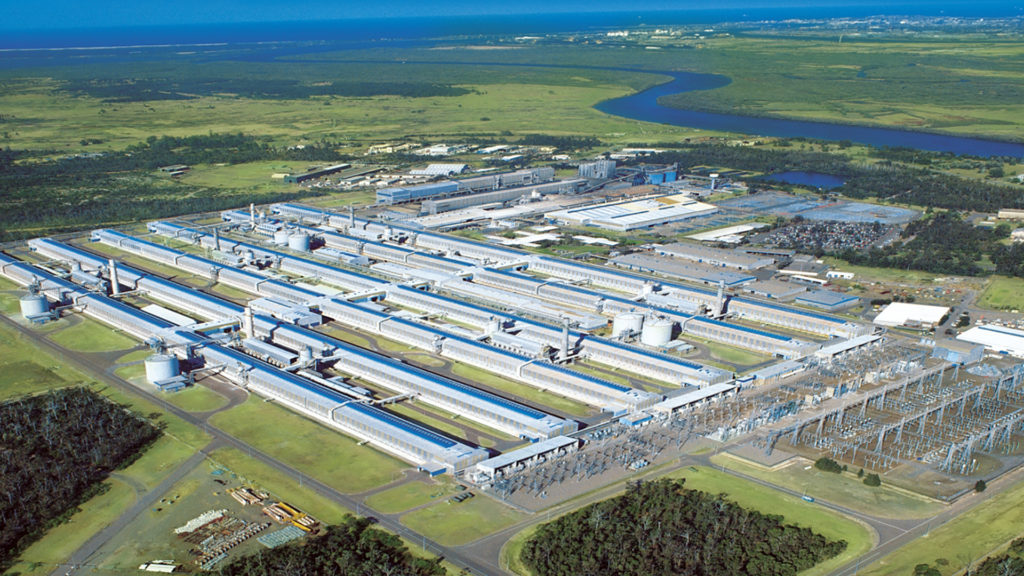
Global miner Rio Tinto is in talks with Australian federal and state governments about a multibillion-dollar bailout for its struggling Tomago aluminum smelter in New South Wales state, the Australian Financial Review reported.

The newspaper, citing sources it did not name, reported late on Friday that talks centred on the smelter’s electricity contract for 2026 to 2029 and federal production tax credits.

Rio and the offices of New South Wales Premier Chris Minns and Prime Minister Anthony Albanese did not immediately respond to Reuters requests for comment on the report.

The future of the facility, majority owned by Rio, has been uncertain for months due in part to spiralling energy costs, according to the report.

In February, Rio, the world’s largest iron ore producer, said it would decide the smelter’s future by mid-year.

The facility about 125 km (80 miles) north of state capital Sydney uses around 10% of New South Wales’ power supply to produce 590,000 tonnes of aluminum per year. In addition to Rio, it is owned by CSR and Hydro Aluminium.

Australia’s centre-left government in January pledged A$2 billion in production credits to help support the country’s four aluminum smelters, including the Tomago facility, switch to renewable power before 2036.

(By Sam McKeith; Editing by William Mallard)

Stausholm dismisses rift rumours as Rio opens $2B mine
Stausholm dismisses rift rumours as Rio opens $2B mine
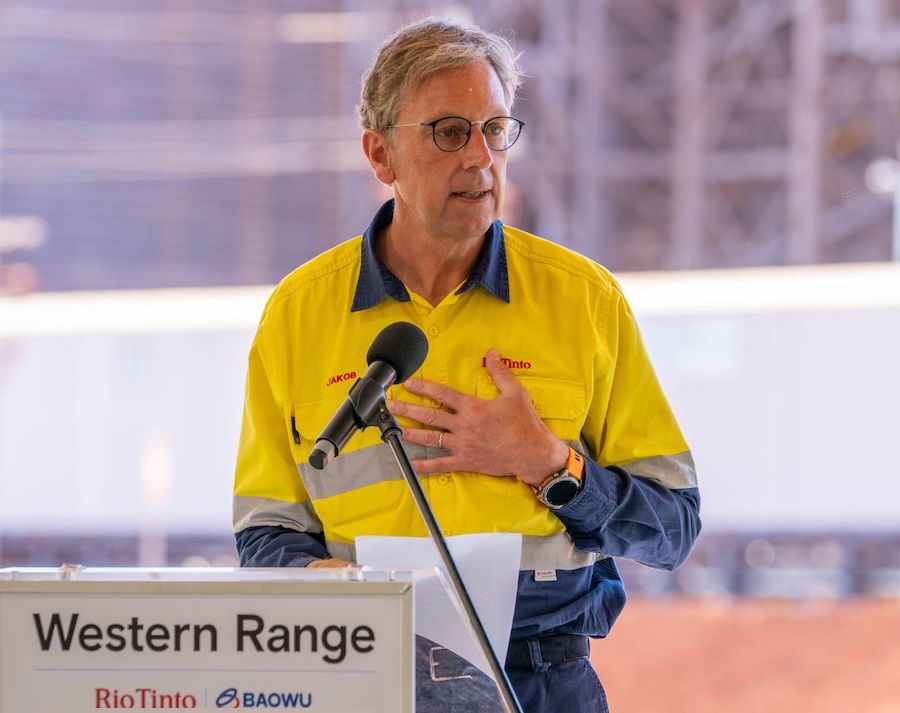
The opening of the Western Range mine could be Stausholm’s last visit to the Pilbara as CEO. (Image courtesy of Jakob Stausholm’s LinkedIn.)

Rio Tinto’s (LON: RIO) (ASX:RIO) departing chief executive Jakob Stausholm insists there is no rift between him and chairman Dominic Barton, despite reports that have fuelled speculation about tensions within the board over strategic direction.

Speaking publicly for the first time since the announcement of his departure two weeks ago, Stausholm addressed the rumours at the official opening of Rio’s $2-billion Western Range iron ore joint venture with China’s Baowu in Western Australia’s Pilbara region. 

The executive said the management team and board remained “absolutely aligned” on the company’s values, strategy, and performance assessment, downplaying any suggestion of internal division. He also said his successor could “very well be” an internal candidate.

Stausholm, who joined Rio in 2018 and became CEO in 2021, stepped in after the company’s controversial destruction of 46,000-year-old Aboriginal rock shelters. The incident prompted the resignation of then-boss Jean-Sébastien Jacques following investor and Indigenous backlash.


As chief executive, Stausholm pushed Rio beyond its traditional Pilbara iron ore base. He secured approvals for the long-delayed Simandou iron ore project in Guinea, expected to begin production later this year. Under his leadership, Rio also acquired Arcadium for $6.7 billion and launched a $900-million lithium joint venture with Chilean state-owned Codelco.

But while Rio’s workforce has grown by 22% to roughly 60,000 employees since his appointment, annual revenue has declined by nearly $10 billion. 

Iron ore prices, for years Rio’s key profit driver, are projected to fall further, prompting the board to demand greater focus on cost discipline and operational efficiency. 

Stausholm, who saw himself as a strategic thinker, not a cost-cutter, ultimately agreed to step aside.

The Danish executive also faced mounting shareholder pressure, including a campaign led by Palliser Capital and over 100 investors to revisit the company’s dual listing in London and Sydney. Shareholders rejected the proposal earlier this month.

Some investors questioned Rio’s aggressive expansion into lithium amid a slump in prices. While demand forecasts for the battery metal remain strong into the next decade, the payoff on Stausholm’s bet remains uncertain.

The Western Range launch may be Stausholm’s final visit to the Pilbara as CEO. The new mine has a production capacity of up to 25 million tonnes of iron ore per year and is expected to sustain Rio Tinto’s Paraburdoo mining hub for roughly two decades. 

It also marks a milestone in cultural engagement, becoming the company’s first project to implement a co-designed Social, Cultural and Heritage Management Plan with the Yinhawangka traditional owners.


Western Range iron ore mine marks a new beginning, says OUTGOING Rio Tinto CEO
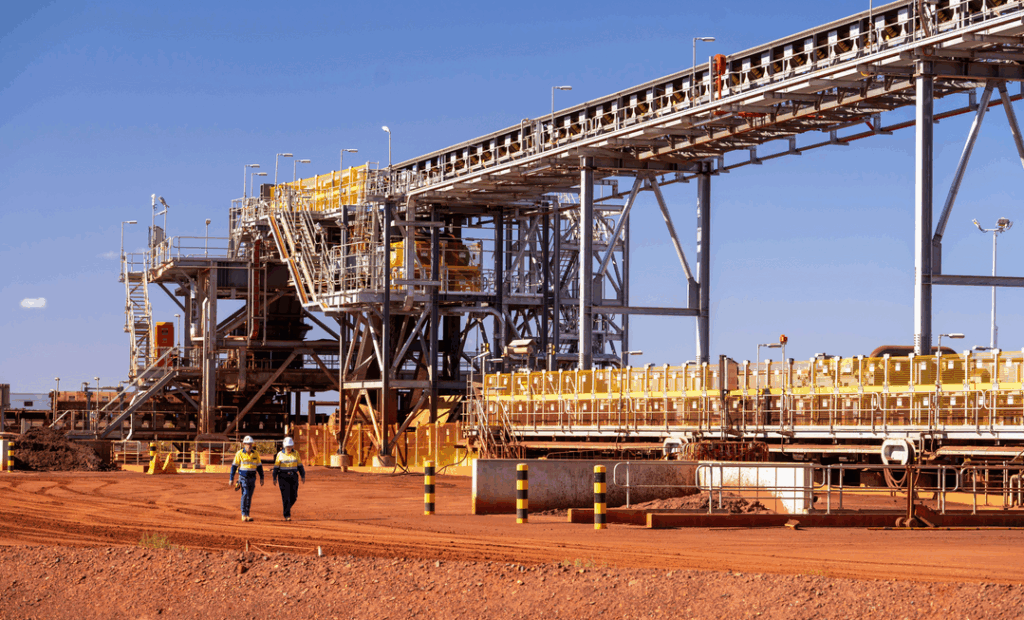

Western Range iron ore mine in Australia’s Pilbara region. Image from Rio Tinto.

Rio Tinto (LSE/ASX: RIO) chief executive officer Stausholm was in Western Australia’s Pilbara region Friday, attending the opening of the company’s new Western Range iron ore mine.

Stausholm said the opening of the $2 billion Western Range mine represented a new beginning following the scandal surrounding the company’s destruction of the culturally significant Juukan Gorge caves in 2020.

It is also Rio’s first project to feature a co-designed social, cultural and heritage management plan with Traditional Owners.

“I could not be more proud of seeing how we have worked in deep partnership with the Yinhawangka People,” Stausholm said at the event.

“It’s a new way of working together, really taking the guidance from them on how we develop the mines of the future, applying new technology, applying our safe production system.”

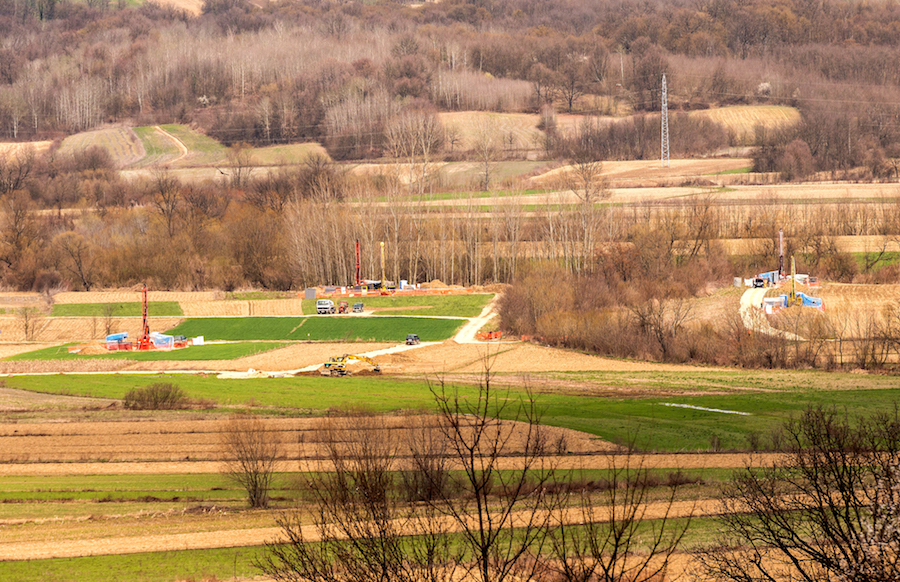
Western Range is a joint venture between Rio (54%) and China’s Baowu (46%) and comprised the construction of a primary crusher and 18km-long conveyer system to the existing Paraburdoo plant.

The mine will produce up to 25 million tonnes per annum of iron ore and secures the future of the Paraburdoo hub for up to 20 years.

Western Range is the first of $13 billion of replacement mines planned for Rio’s Pilbara iron ore business. 

The $1.8 billion Brockman Syncline 1 project was approved in March, while the Hope Downs 1 and West Angelas projects are progressing through the approvals phase.

Last month, Fortescue (ASX: FMG) chairman Andrew Forrest warned the Pilbara was at risk of becoming a “wasteland” if iron ore miners didn’t decarbonize.

“It is for us as companies to make sure that the Pilbara ore remains relevant,” Stausholm said.

“And how do we do that? We do that in partnership, like you see today, with Baowu, working on how we can decarbonize the supply chain. If we find the right solutions – and we will – then the Pilbara will be the source for many, many decades.”

Succession plan

The opening comes after Rio announced the shock departure of Stausholm last month.

Stausholm has disputed reports of a rift between him and chairman Dominic Barton, saying there was no “dis-alignment”.

“It’s very important to say, we in the management team and the whole board is absolutely aligned around the values of Rio Tinto, about pursuing the four objectives, about our strategy and the strategic choices, and about the assessment of our performance, so there is no dis-alignment,” he told reporters.

One of the major strategic changes during Stausholm’s tenure has been the move into the lithium sector. Stausholm said the board was “absolutely aligned” on lithium, describing it as a “next pillar” for Rio.

“Think about it, some visionary people 50, 60 years ago said Rio Tinto should go into iron ore,” he said.

Market focus shift?

Much of the iron ore market’s attention has shifted from Australia’s Pilbara region the Simandou project in Guinea. The massive mine is set to begin exports in November and forecast to reshape global iron ore flows, but analyst say the launch of Western Range is a timely reminder of the Pilbara’s enduring importance.

Predictions of its decline, made by some observers and politicians, seem premature.

Rio Tinto plans to invest $13.3 billion in the Pilbara over the next five years. This capital will fund both maintenance of current operations and the development of new mines capable of delivering 130 million tonnes of annual output. That figure nearly mirrors Simandou’s planned production of 120 million tonnes per year by 2030, but at significantly lower cost and lower geopolitical risk.

Rio awarded last week a $157 million contract to construction and mining firm NRW Holdings, a move widely seen as a precursor to formal board approval for the Hope Downs 2 and Bedded Hilltop projects. A final investment decision is expected as early as July.

By comparison, Simandou’s development will require $23.2 billion, about 70% more than Rio’s Pilbara spend, for less output and in a jurisdiction fraught with political instability.

The Pilbara’s established infrastructure (railways, ports, car dumpers, and shiploaders) offers a decisive advantage. Despite Australia’s rising labour costs and shifting industrial relations landscape, the region remains the world’s lowest-cost source of large-scale iron ore supply.

Even with a leadership transition ahead, the financial case for staying the course is compelling. Rio’s $20 billion wave of Pilbara investment is unlikely to be reversed.

The world’s second largest miner is not alone. BHP, Fortescue and Hancock Prospecting are also preparing to replace aging mines.

Meanwhile, the push toward green iron, championed by Fortescue’s Andrew Forrest, adds another layer of opportunity.

August 2026 will mark 60 years since the first shipment of iron ore left the Pilbara for Japan. It may have been built on the past, but the Pilbara looks set to shape the future.

U$ FERTILIZER

Mosaic cuts 2025 phosphate forecast on plant setbacks, shares drop

Image: Mosaic

The Mosaic Company (NYSE: MOS) has lowered its full-year 2025 phosphate production guidance as the fertilizer giant navigates a series of operational challenges across key US facilities.

The revision weighed on its stock, which slipped more than 4% in Friday trading for a market capitalization of $11 billion.

Mosaic now expects to produce between 7.0 and 7.3 million tonnes of phosphate this year, down from its previous guidance of 7.2 to 7.6 million tonnes. Second-quarter phosphate sales volumes have also been scaled back to 1.5–1.6 million tonnes, compared to the earlier forecast of 1.7–1.9 million tonnes.

Despite the production setback, Mosaic raised its pricing outlook for diammonium phosphate (DAP) to $650–$670 per tonne, citing strong market conditions. This marks an increase from the prior forecast of $635–$655 per tonne.

The company said its Bartow phosphate facility in Florida is operating at its target rate and is expected to deliver over 500,000 tonnes in Q2, consistent with an annual run rate exceeding 2 million tonnes.

However, at its New Wales facility, commissioning delays for new gypsum handling systems continue to limit output. Although production at New Wales is set to rise more than 20% from the first quarter, Mosaic noted that ramp-up of the first of three new systems took longer than planned. Installation of the remaining systems is expected to wrap up by early July, potentially boosting the site’s run rate to 3 million tonnes annually.

Elsewhere, the Riverview facility underperformed due to extended downtime aimed at resolving bottlenecks. Mosaic anticipates the plant will reach a run-rate equivalent to 1.6 million tonnes annually in the third quarter.

In Louisiana, routine maintenance revealed additional repair needs, resulting in prolonged outages and lost output. In the third quarter, Louisiana is expected to perform at its target annual run rate of 1.4 million tonnes.

Mosaic’s potash business remains on track, with no changes to its guidance, it said. The company continues to target second-quarter sales of 2.3–2.5 million tonnes and full-year production of 9.0–9.4 million tonnes.


MOSAIC ALSO OPERATES IN SASKATCHEWAN, CANADA 

THE REGINA ROUGHRIDERS FOOTBALL STADIUM IS CALLED MOSAIC


Debswana curbs diamond production as weak demand persists

Credit: Debswana

Botswana’s Debswana Diamond Company is temporarily pausing production at some of its mines, cutting output in response to prolonged weakness in the global diamond market, it said on Friday.

The global diamond market has experienced a downturn since the second half of 2023, which caused Debswana to cut production by 27% to 17.93 million carats in 2024. Debswana, which accounts for about 90% of Botswana’s diamond sales, reported a 46% drop in sales revenues last year.

The company, a 50-50 joint venture between Botswana’s government and global giant De Beers, now plans to reduce output to 15 million carats in 2025, it said in a statement.

“Debswana Diamond Company continues to prudently navigate the challenging market conditions, including sustained low demand across the diamond pipeline and emerging pressures such as US-imposed tariffs,” it said.

Debswana is temporarily pausing production at Jwaneng Cut 9 and Orapa mines, after suspending operations at its Letlhakane tailing plant and Jwaneng Modular plant in April.

The temporary stoppages are expected to deliver significant cost savings across fuel, electricity, and other production consumables, Debswana added.

Long-term initiatives such as the Jwaneng underground project, to convert Debswana’s flagship open pit mine to an underground operation, will continue, but selected capital projects will be slowed down to save costs.

No job involuntary cuts are planned, although the company continues to offer voluntary separation, it added.

Botswana gets 30% of its revenue and 75% of its foreign currency earnings from diamonds and the current market downturn resulted in the economy contracting by 3% in 2024. The International Monetary Fund has forecast a further 0.4% contraction this year.

(By Brian Benza; Editing by Nelson Banya and David Evans)

WAIT,WHAT?!

Pinochet’s former son-in-law to exit SQM shareholder group

(Image courtesy of SQM.)

Julio Ponce, the former son-in-law of Chile’s late dictator Augusto Pinochet, announced his departure from the holding companies through which his family owns a major stake in lithium miner SQM.

Under a proposed simplification of the SQM ownership structure, the number of holding companies will be reduced to two from six, according to a regulatory filing Thursday. In a separate emailed statement, Ponce “bequeathed” control of the shareholder group to his daughter Francisca.

The withdrawal of the controversial 79-year-old entrepreneur comes at a key moment for SQM. The world’s No. 2 lithium supplier has agreed to partner Chile’s state copper giant Codelco in its prized Atacama brine operations in a bid to extend operations beyond a 2030 contract expiry. That tie-up is facing opposition from some Chilean politicians and major SQM shareholder, Tianqi Lithium Corp., and still requires approval from Chinese antitrust regulators.


Ponce was part of a management buy-out of the state-owned SQM in the 1980s, when Pinochet was in power, becoming chairman in 1987. Francisca is the third of four children born to Ponce and Veronica Pinochet, daughter of Augusto, before their marriage was annulled.

In a storied career leadig the company, he fended off a 2006 takeover attempt by PotashCorp. by signing a pact with Japanese trading firm Kowa. He resigned as chairman in 2015 amid a probe over illicit political campaign financing, which led to a $30 million settlement with the US Securities and Exchange Commission and a fine for SQM’s then-CEO. Ponce himself was not charged. He also fought allegations of market manipulation in courts, and successfully reduced a record $70 million fine.

“The story of this endeavor, and my own, has been inundated with myths, criticisms and controversies that have ultimately yielded to the evidence of the facts, the results and the magnitude of what has been achieved,” Ponce wrote Thursday. “That is why now — at the time, place and manner that I have so decided — I also want to announce that I will no longer be a protagonist in this story.”

In a reorganization proposal outlined by Ponce’s Norte Grande SA, a series of corporate actions will see just two holding companies emerge: Soc. de Inversiones Oro Blanco and Potasios de Chile.

SQM shares were up 0.5% at 4:03 p.m. in Santiago. Norte Grande climbed as much as 20%, the steepest intraday gain since late 2015.

(By James Attwood)


Serbian farmers vow to oppose Rio Tinto lithium project even after EU labels it strategic


Jadar is estimated to contain 10% of the world’s reserves of lithium, the primary raw material for the production of the batteries that power electric vehicles. (Image courtesy of Rio Tinto)

Zlatko Kokanovic, a farmer from Serbia’s Jadar region, is determined to stop development of a Rio Tinto lithium project, identified this week as strategic by the European Commission as it aims to cut dependency on China for mineral resources.

Lithium is a key component in batteries for electric vehicles and mobile devices. The mine in the Jadar valley would eventually meet 90% of Europe’s lithium needs should it go ahead.

But like thousands of protesters, including many other farmers, who have sought to block development of the project in recent years, Kokanovic is worried about pollution of farmland in a region where a majority of people live off agriculture.

“There are some things the money cannot buy,” Kokanovic, a father of five children who is one of the largest milk producers in Gornje Nedeljice and a leading activist in the region, told Reuters.

“I want to tell them (Rio Tinto) not to try to develop the mine or there will be unrest,” he added.

Rio Tinto has not given a start date for the project, which is expected to produce 58,000 metric tons of lithium carbonate annually, but has pledged to develop the mine cleanly.

“The project will be delivered to the highest levels of transparency, to the highest levels of environmental protection and human rights standards,” said Chad Blewitt, Rio Tinto’s managing director for the Jadar project.

“The European Union and European Commission never substitute, they never sacrifice those high standards.”

Blewitt had told Reuters on Wednesday that the company is revising the cost of the project.

Rio Tinto’s lithium project has been contested by green groups for years and sparked massive street protests in EU-candidate Serbia in 2022.


In 2021 and 2022, Serbian environmentalists collected 30,000 signatures in a petition demanding that parliament enact legislation to halt lithium exploration in the country.

The government revoked all Rio Tinto’s exploration licences in 2022, before the Constitutional Court overturned the decision last year and reinstated them.


Government officials say the mine will boost Serbia’s economy.

How protesters can stop a project that has domestic and international approval is unclear. But recent student protests in Serbia, where hundreds of thousands have taken to the streets and succeeded in collapsing the government, show the strength of civil society in the Balkan country.

Kokanovic remains determined.

“My message to them is not to even try (to excavate lithium in Jadar), unless they want this government to be toppled fast.”

(By Fedja Grulovic and Ivana Sekularac; Editing by Edward McAllister and Kirsten Donovan)


China says it may speed up rare earths application approvals from EU


Stock image.

China is willing to accelerate the examination and approval of rare earth exports to European Union firms and will also deliver a verdict on its trade investigation of EU brandy imports by July 5, its commerce ministry said on Saturday.

Price commitment consultations between China and the EU on Chinese-made electric vehicles exported to the EU have also entered a final stage but efforts from both sides are still needed, according to a statement on the Chinese Commerce Ministry’s website.

The issues were discussed between Chinese Commerce Minister Wang Wentao and EU Trade Commissioner Maros Sefcovic in Paris on Tuesday, according to the statement.

The comments mark progress on matters that have vexed China’s relationship with the EU over the past year.

Most recently, China’s decision in April to suspend exports of a wide range of rare earths and related magnets has upended the supply chains central to automakers, aerospace manufacturers, semiconductor companies and military contractors around the world.

The ministry said China attached great importance to the EU’s concerns and “was willing to establish a green channel for qualified applications to speed up the aproval process.”

In a separate statement the commerce ministry issued later on Saturday, it said China was willing to further strengthen communication and dialogue with relevant countries on rare earth export controls as it recognized that demand from sectors such as robotics and electric vehicles had risen.

Brandy, EVs

The ministry earlier said that Commerce Minister Wang during the meeting “expressed the hope that the EU will meet us halfway and take effective measures to facilitate, safeguard and promote compliant trade in high-tech products to China.”

Chinese anti-dumping measures that applied duties of up to 39% on imports of European brandy – with French cognac bearing the brunt – have also strained relations between Paris and Beijing.

The brandy duties were enforced days after the EU took action against Chinese-made electric vehicle imports to shield its local industry, prompting France’s President Emmanuel Macron to accuse Beijing of “pure retaliation”.

The Chinese duties have dented sales of brands including LVMH’s Hennessy, Pernod Ricard’s Martell and Remy Cointreau.

Beijing was initially meant to make a final decision on the brandy duties by January, but extended the deadline to April and then again to July 5.


China’s Commerce Ministry said on Saturday that French companies and relevant associations had proactively submitted applications on price commitments for brandy to China and that Chinese investigators had reached an agreement with them on the core terms.

Chinese authorities were now reviewing the complete text on those commitments and would issue a final announcement before July 5, it said.

In April, the European Commission said the EU and China had also agreed to look into setting minimum prices of Chinese-made electric vehicles instead of tariffs imposed by the EU last year.

China’s commerce ministry said the EU had also proposed exploring “new technical paths” relating to EVs, which the Chinese side was now evaluating.

(By Brenda Goh and Zhang Jindong; Editing by William Mallard, Tom Hogue and Tomasz Janowski)

China’s rare earth weapon changes contours of trade war battlefield


China has signalled for more than 15 years that it was looking to weaponise areas of the global supply chain, a strategy modelled on longstanding American export controls Beijing views as aimed at stalling its rise.

The scramble in recent weeks to secure export licences for rare earths, capped by Thursday’s telephone call between US and Chinese leaders Donald Trump and Xi Jinping, shows China has devised a better, more precisely targeted weapon for trade war.

Industry executives and analysts say while China is showing signs of approving more exports of the key elements, it will not dismantle its new system.

Modelled on the United States’ own, Beijing’s export licence system gives it unprecedented insight into supplier chokepoints in areas ranging from motors for electric vehicles to flight-control systems for guided missiles.

“China originally took inspiration for these export control methods from the comprehensive US sanctions regime,” said Zhu Junwei, a scholar at the Grandview Institution, a Beijing-based think tank focused on international relations.

“China has been trying to build its own export control systems since then, to be used as a last resort.”

After Thursday’s call, Trump said both leaders had been “straightening out some of the points, having to do mostly with rare earth magnets and some other things”.

He did not say whether China committed to speeding up licences for exports of rare earth magnets, after Washington curbed exports of chip design software and jet engines to Beijing in response to its perceived slow-rolling on licences.

China holds a near-monopoly on rare earth magnets, a crucial component in EV motors.

In April it added some of the most sophisticated types to an export control list in its trade war with the United States, forcing all exporters to apply to Beijing for licences.

That put a once-obscure department of China’s commerce ministry, with a staff of about 60, in charge of a chokepoint for global manufacturing.

The ministry did not immediately respond to Reuters‘ questions sent by fax.

Several European auto suppliers shut down production lines this week after running out of supplies. While China’s April curbs coincided with a broader package of retaliation against Washington’s tariffs, the measures apply globally.

“Beijing has a degree of plausible deniability – no one can prove China is doing this on purpose,” said Noah Barkin, senior adviser at Rhodium Group, a China-focused US thinktank.

“But the rate of approvals is a pretty clear signal that China is sending a message, exerting pressure to prevent trade negotiations with the US leading to additional technology control.”

China mines about 70% of the world’s rare earths but has a virtual monopoly on refining and processing.

Even if the pace of export approvals quickens as Trump suggested, the new system gives Beijing unprecedented glimpses of how companies in a supply chain deploy the rare earths it processes, European and US executives have warned.

Other governments are denied that insight because of the complexity of supply chain operations.

For example, hundreds of Japanese suppliers are believed to need China to approve export licences for rare earth magnets in coming weeks to avert production disruptions, said a person who has lobbied on their behalf with Beijing.

“It’s sharpening China’s scalpel,” said a US-based executive at a company seeking to piece together an alternative supply chain who sought anonymity.

“It’s not a way to oversee the export of magnets, but a way to gain influence and advantage over America.”

Decades in the making

Fears that China could weaponise its global supply chain strength first emerged after its temporary ban of rare earth exports to Japan in 2010, following a territorial dispute.

As early as 1992, former Chinese leader Deng Xiaoping was quoted as saying, “The Middle East has oil, China has rare earths.”

Beijing’s landmark 2020 Export Control Law broadened curbs to cover any items affecting national security, from critical goods and materials to technology and data.

China has since built its own sanctions power while pouring the equivalent of billions of dollars into developing workarounds in response to US policies.

In 2022, the United States put sweeping curbs on sales of advanced semiconductor chips and tools to China over concerns the technology could advance Beijing’s military power.

But the move failed to halt China’s development of advanced chips and artificial intelligence, analysts have said.

Beijing punched back a year later by introducing export licenses for gallium and germanium, and some graphite products. Exports to the United States of the two critical minerals, along with germanium, were banned last December.

In February China restricted exports of five more metals key to the defence and clean energy industries.

Analysts face a hard task in tracking the pace of China’s approvals following the Trump-Xi call.

“It’s virtually impossible to know what percentage of requests for non-military end users get approved because the data is not public and companies don’t want to publicly confirm either way,” said Cory Combs, a critical minerals analyst with Trivium, a policy consultancy focused on China.


(By Laurie Chen, Michael Martina and Victoria Waldersee; Editing by Kevin Krolicki and Clarence Fernandez)

Trump set to waive some legal requirements to boost critical minerals

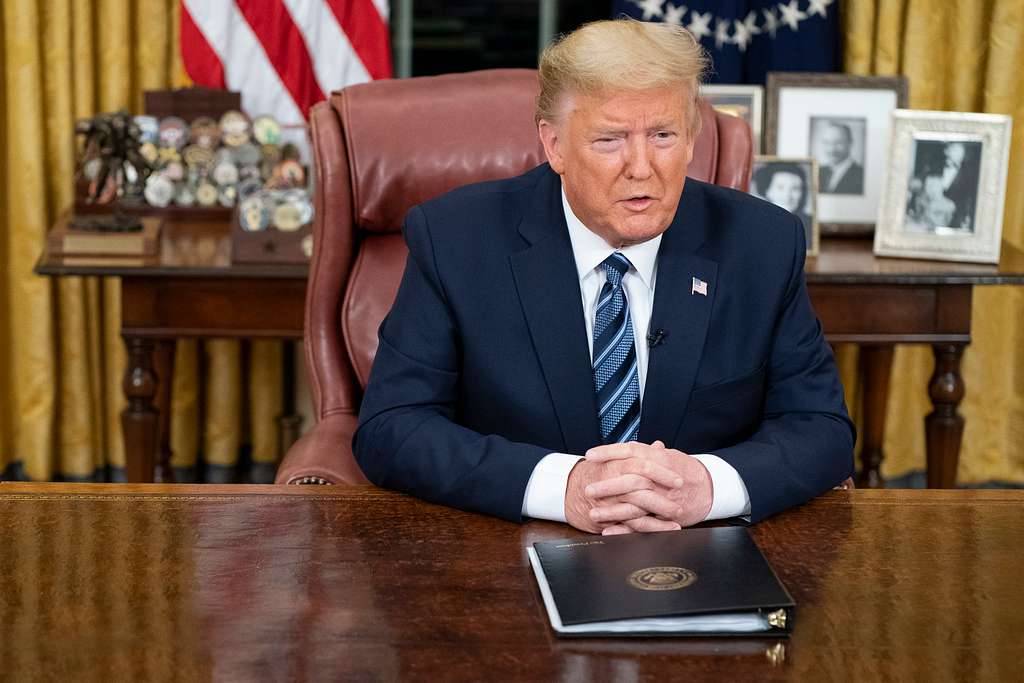
US President Donald Trump. Credit: Picryl

President Donald Trump is set to use emergency powers and slash legal requirements – including some congressional funding approvals – relating to a law aimed at lifting US production of critical minerals and weapons, according to a document seen by Reuters.

Trump’s action would apply to the Defense Production Act, a US law that grants the president broad emergency powers to control domestic industries and resources during national security emergencies.


The move would represent the latest attempt by the White House to reshape a critical mineral industry dominated by China, the top US economic rival. China is using its leverage in response to Trump’s trade war, recently halting critical mineral exports and rattling global supply chains.

The document is expected to be published on the Federal Register on Wednesday, the government web site shows.

Trump invoked the Korean War-era law in March to help boost domestic production of critical minerals used to make consumer goods, computer chips, robots and advanced weaponry.

The law places some restrictions on the president’s authority, such as requiring the White House to seek congressional approval for projects over $50 million and forcing project delivery dates within a one-year time frame.

The president can waive those requirements in the event of an emergency and Trump is expected to invoke those powers, according to the document seen by Reuters on Tuesday, ahead of its expected publication.

The White House did not immediately respond to a request for comment.

Former President Joe Biden signed similar waivers to speed up production of vaccines and medical equipment during the Covid-19 pandemic.

John Paul Helveston, a professor at George Washington University, said US investments in critical minerals represent a long-term solution to the problem, leaving the nation vulnerable to China’s trade policy in the short run.

“This all means that if the US wants to have access to these minerals over the next 5-10 years, the US will have to maintain a trade relationship with China,” Helveston said.

(By Ernest Scheyder and Jarrett Renshaw; Editing by Trevor Hunnicutt and Chizu Nomiyama)


Navigating a Multi-Fuel Future: Innovation at the Heart of the Transition

Auramarine

Published Jun 6, 2025 10:03 AM by Auramarine


The global maritime industry is advancing toward its decarbonization goals, and one message is becoming increasingly clear: there will be no single solution or silver bullet. While future fuels will be a key driver, the sector is preparing for a multi-fuel future, where a variety of low- and zero-carbon options will coexist, each suited to different vessel types, trading patterns, and regulatory environments. Whichever fuel ship owners opt for, they need to be safe, fit for purpose and underpinned by reliable fuel supply systems.

With over 50 years of experience in developing next-generation fuel supply systems, Auramarine is playing a critical role in supporting this transition by building technologies that are fuel-agnostic and capable of adapting to fast-changing requirements. However, in a landscape still marked by uncertainties, ranging from fuel pricing to flexibility and global availability, ensuring confidence and risk mitigation in day-to-day fuel handling remains a pressing priority.

Methanol and ammonia: Growing roles and challenges

Looking toward 2050, many analysts expect a significant share of marine fuel demand to be met by methanol and ammonia. For instance, the International Energy Agency estimates ammonia could make up 44% of marine fuel use, while Lloyd’s Register forecasts 20%.

Both fuels offer promising Greenhouse Gas (GHG) emissions reductions but price, availability, a robust regulatory framework to ensure safety and the development of the right bunkering and supply infrastructure will be key factors in driving their widespread uptake.

Ammonia, for example, carries more complex safety requirements. From gas and leak detection to crew training, ammonia’s adoption will rely on robust safeguards and regulatory clarity. Safety measures include gas and leak detection, ammonia capture, reliquefying and ammonia release mitigation (ARMS) functions.

Adopting alternative fuels, therefore, isn’t a straightforward ‘plug-and-play’ exercise; it requires holistic consideration of the vessel design, supply chain readiness, safety measures, crew training and more.

Innovation in focus: Auramarine Water Content Analyser

At Auramarine, our focus has been on enabling the industry to use alternative fuels safely, efficiently, and reliably at sea through robust research, development, experience, and partnerships. As methanol gains traction as a marine fuel, one critical challenge is emerging: water contamination. The presence of water in methanol can increase fuel consumption, an issue exacerbated by the limited availability and relatively high cost of methanol. Ensuring the quality of methanol is therefore essential, not only for operational efficiency but also for managing fuel costs effectively.

In response to this need, we have developed the Auramarine Water Content Analyser (AM Water Content Analyser). Launched at Nor-Shipping 2025, the technology is designed to measure and report the concentration of water in methanol, helping ship operators proactively monitor fuel quality. By doing so, they can maintain optimal engine performance and achieve cost efficiencies through consistent fuel quality.

Put into the context of the energy transition, consider a ro/ro vessel using 27,000 tonnes of green methanol annually. With green methanol priced around €1,196 per tonne, a 5% water contamination could lead to losses exceeding €1.6 million over the course of a year. Detecting and responding to such issues early can prevent both cost overruns and operational delays.
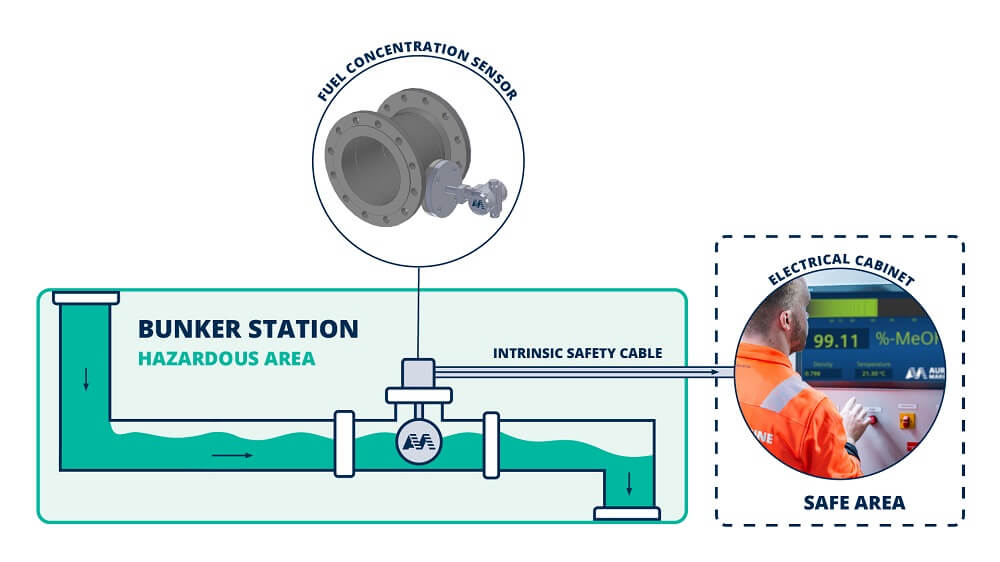
Auramarine’s technology is installed directly to the methanol process piping and uses a sensor to provide continuous data on water concentration. This allows operators to verify the quality of their fuel before and during use, which is especially valuable in remote or tight-schedule operations.

The AM Water Content Analyser is a strong example of the incremental, highly practical technology that will support the broader adoption of cleaner fuels. It also illustrates the importance of closing smaller, operational gaps that could otherwise slow the pace of fuel transition.

Looking ahead: Integration, collaboration, and confidence

As vessels built today will likely still be operating in 2050, the imperative for flexibility and future-proofing operations is clear. Fuel supply systems must be adaptable to different fuel types, offer safety by design, and be backed by comprehensive research, training and lifecycle support to ensure their ongoing integrity and operational efficiency

Operators must be able to rely on consistent quality and performance, both from the fuels and the systems that support them. Whether it’s real-time quality monitoring for methanol or integrated safety systems for ammonia, the marine sector will depend on technologies that address specific, real-world operational challenges.

The broader takeaway is that while the path to decarbonization may be complex, progress is being made step by step. By focusing not only on the fuels themselves, but on the supporting technologies that enable their safe and efficient use, the industry is laying the groundwork for a resilient, multi-fuel future.

To learn more about the Auramarine Water Content Analyser, visit: https://www.auramarine.com/am-water-content-analyser/

The opinions expressed herein are the author's and not necessarily those of The Maritime Executive.


U.S. Smuggling Trial Sheds Light on Iranian Arms Trafficking

The dhow intercepted by the boarding party from USS Lewis B. Puller, January 11, 2024 (US Navy)
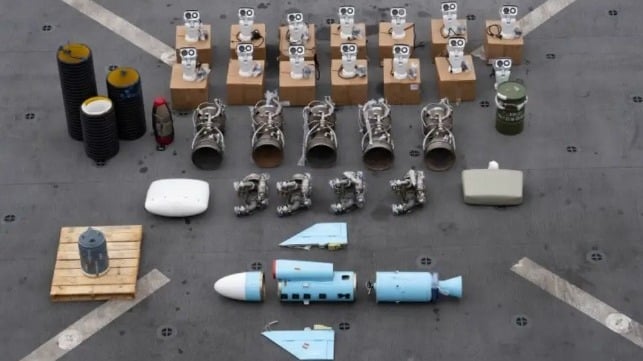
Missile parts seized by the boarding party from USS Lewis B. Puller, January 11, 2024 (US Navy)

Published Jun 8, 2025 9:38 PM by The Maritime Executive


In a jury trial at the United States Federal Courthouse in Richmond (Virginia), the Pakistani captain of a dhow has been found guilty of a series of charges related to the supply of advanced conventional weaponry to Houthi rebels in Yemen, and of providing material support to Iran’s Islamic Revolutionary Guard Corps (IRGC). Muhammad Pahlawan was also found guilty of threatening his own crew in an attempt to confuse the naval boarding party that intercepted his dhow.

The interception was carried out in the Arabian Sea off the coast of Somalia on January 11, 2024, and was executed by US Navy and Coast Guard personnel from the USS Lewis B. Puller (ESB-3). Two SEALS who were part of the boarding party lost their lives when the captain of the dhow attempted to carry out evasive maneuvers.

Among the weapons and equipment found on the dhow were critical components for medium-range ballistic missiles and anti-ship cruise missiles, including a warhead and propulsion, engine and guidance components. The equipment seized was of types used by the Houthis against a range of targets, including merchant shipping.

The case is unusual: crews of dhows intercepted with weapons aboard by coalition forces are normally turned over to local authorities, thereby avoiding the burden and costs of imprisoning crews who are often unwitting accessories. In this instance, along with the captain, another member of the crew was charged with misleading FBI investigators. All the remaining Pakistani crew members were detained under federal material witness laws, being assessed as flight risks. Detention of the whole crew, as well as seizure of arms aboard the dhow, enabled FBI investigators to gain a thorough understanding of the dhow’s modus operandii and the IRGC’s system of arms smuggling.

Between August 2023 until he was intercepted on January 11, 2024, Pahlawan captained his dhow on multiple smuggling trips, in which he loaded up at IRGC-controlled facilities in Iran, sailed across the Arabian Sea to points off the coast of Somalia, and then cross-decked cargos of weapons to smaller boats which had come out from and then returned to fishing ports on the Houthi-controlled coastline of Yemen. Each voyage was coordinated by two Iranian brothers, Shahab and Yunis Mir’kazei, both of whom were IRGC officers. The IRGC officers provided the coordinates for the points where trans-shipments were to take place, with mobile phone devices and contacts. Pahlawan was paid in cash for each journey. 

The IRGC method of using transshipment to smaller boats is well-described in successive annual UN Security Council Panel of Experts on Yemen reports. Cross-decking to smaller boats helps both to reduce the risk of detection on the most vulnerable leg of the arms shipment route, and also the consequent loss of cargo should an interception occur.

Pahlawan will be sentenced in September, and he could face up to 20 years in jail.


More Iranian Ships Inbound with Ballistic Missile Propellant

Iran
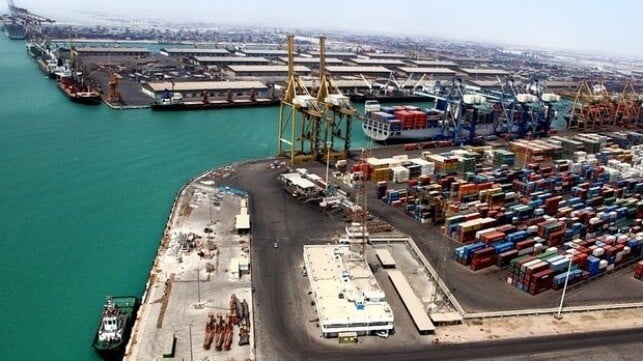
Bandar Abbas Port (Mehr News Agency - CC by 4.0)

Published Jun 8, 2025 9:58 PM by The Maritime Executive


Iran is reportedly procuring a further consignment of sodium perchlorate from Chinese manufacturers, as feedstock to produce ammonium perchlorate used to fuel Iran’s solid-fueled ballistic missiles, according to a report in The Wall Street Journal. The newspaper was unspecific about the source of the information, other than it was provided by “officials” in Washington - which does not necessarily mean that the leak originated from US government sources.

Sodium perchlorate when further refined in Iran into ammonium perchlorate makes up 70 percent of the standard fuel load of most of Iran’s solid-fueled ballistic missiles. The Islamic Revolutionary Guard Corps (IRGC) inventory of solid fuel ballistic missiles contains both longer range missiles such as the Khybar-Shikan and Fattah, used in Iran’s True Promise attacks against Israel. But it also includes shorter range missiles such as Fateh-110 and Zolfaghar systems exported to Russia for its war on Ukraine. 

Iran was spotted shipping Fath-360 solid fueled ballistic missiles to Russia across the Caspian Sea in January, and is believed to have increased its exports since then. The US base at Al Asad in Iraq has been attacked on at least two occasions by Iranian Fateh-313 solid fuel ballistic missiles. The Houthi solid fueled Palestine-2 missile being used currently for attacks against Israel is believed to be either an Iranian Fattah missile, or a derivation of it assembled locally in facilities which have probably since been destroyed in recent US/UK air attacks.

The WSJ report indicates that the new consignment, to be shipped in pellet form, will be sufficient to fuel 800 ballistic missiles. MVs Golbon and Jairan, the two ships which carried Iran’s first consignment of sodium perchlorate, loaded a total of 58 containers, sufficient apparently to fuel 240 missiles. Hence, it appears that the new consignment is more than three times as large as the first, and will need to be shipped in about 185 20-foot containers. Not just for capacity reasons, but also because of its dangerous cargo status and the need to disperse the risk, the consignment looks as if it will again need at least two container ships, probably more, to bring the material safely home to Iran. As an IRGC- controlled activity, the import responsibility for the shipment is likely to be assigned to Islamic Republic of Iran Shipping Lines (IRISL), as was the first consignment.

At least three medium-sized container ships owned by IRISL are currently in the CMK/K14 anchorage off Shanghai. MVs Barzin (IMO 9820269), Rayen (IMO 9820245) and Behta (IMO 9349590), under these or previous names, have all been subject by name to US Treasury sanctions, as IRISL has been. For the present, besides their ownership, current location and cargo-carrying characteristics, there is nothing to link these ships to the consignment which the WSJ reports is inbound to Iran.

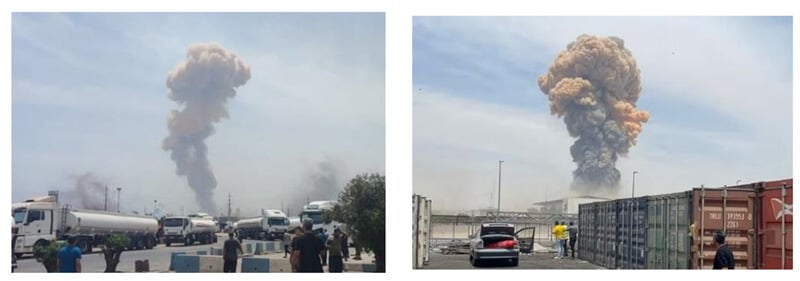
The initial explosion at Bandar Abbas Commercial Port, April 26 (Tasnim News Agency - CC by 4.0)


To the annoyance of reformist-aligned politicians in Iran, the authorities in Bandar Abbas have still not been able to provide a convincing explanation as to what exploded so violently in the Rajaei Port container park on April 26. Reports that the material which exploded was sodium perchlorate off MVs Golbon and Jairan have not been countered. Satellite imagery has clearly identified the primary source of the explosion within the port logistics area at 27.124011°N 56.068211°E. But recently-published video on social media shows that in the aftermath there were at least three separate fires burning in the container park, with one seen being tackled by a water-carrying helicopter, suggesting that simultaneous sabotage at different points may have occurred. However, the size of the projected new consignment adds further weight to the attribution, suggesting that the first consignment of material was destroyed and needs to be replaced. In any case, Iranian missile production - and the need for solid rocket fuel - has significantly increased in recent months, because of increased exports to Russia and elsewhere and the need to replace stocks expended in the True Promise attacks against Israel.


Fires burning in the Rajaei Port container park days after the initial explosion on April 26 


Post the safe return of MVs Golbon and Jairan, the US Treasury announced on April 29 that it had sanctioned an additional six companies and six individuals based in Iran and China for their roles in the network procuring ballistic missile propellant ingredients on behalf of the IRGC. Besides those sanctioned in Iran, five Chinese companies based in Hunan and Shandong Provinces involved in the manufacture of dual-use chemicals have been sanctioned: Yanling Chuanxing Chemical, Dongying Weiaien Chemical, China Chlorate Tech, Shenzhen Amor Logistics and Yanling Lingfeng Chlorate. 

Elsewhere, another IRISL ship known historically to have been involved in arms shipments is on its way home from Libya. The MV Elyana (IMO: 9165827) had lingered for three weeks in an anchorage off Tobruk, but left on May 30, possibly having come into the port briefly on the day of its departure. By June 5 the MV Elyana was stationary in the Suez South Anchorage, post a southerly transit of the Suez Canal, and will presumably soon set sail via the Bab el Mandeb for Bandar Abbas. 


Australia Honors Lost American Warships From WWII With New Protections

USS Lexington and sister ship USS Saratoga off Honolulu, 1932 (USN file image)

Published Jun 8, 2025 4:04 PM by The Maritime Executive


The wrecks of three U.S ships, including the first U.S Navy aircraft carrier to be lost during World War II, are set to be accorded special preservation status after Australia added their final resting place off the Australian coast was added to the country’s National Heritage List.

The USS Sims, the USS Neosho and the USS Lexington, which participated in the Battle of the Coral Sea during WWII, have been granted a special honor that includes extra protection after the Battle of the Coral Sea Site was added to the list.

The site is located about 1,000 kilometers off the northeast coast of Australia in the middle of the Coral Sea. The four-day battle in May 1942 was a significant turning point during WWII. Japanese forces had enacted Operation MO with the intention of capturing Tulagi in the Solomons and Port Moresby in New Guinea. Had they been successful, the occupation would have led to Japanese aerial dominance over northeast Australia and the sea lanes connecting Australia with the United States. 

U.S and Australian allied forces were decisive in defeating the Japanese in the battle, which introduced a new mode of fighting that relied on airpower rather than cannonfire. The entire four-day battle was fought using aircraft and aircraft carriers and marked the first time naval engagement took place without opposing ships ever making contact. The Battle of the Coral Sea had significant casualties, with the U.S losing over 600 servicemen.

In 2018, a search led by US billionaire Paul Allen's research organization located the wreck of Lexington, which went down during the battle with the loss of 216 crew and 35 aircraft.

Australia, which regards the Battle of the Coral Sea as the "Battle that saved Australia," has now added the site where the three ships are resting to the National Heritage List. Sitting more than 3,000 meters below the ocean surface, the shipwrecks are incredibly well preserved.

“The Second World War was a time of such terrible and unimaginable loss suffered by so many and the Battle of the Coral Sea was central to keeping Australians at home safe,” said Murray Watt, Minister for the Environment. “By including the site on the National Heritage List, we can ensure greater protection for a number of historic shipwrecks while preserving a significant piece of world history for future generations.”